WILD NEPHIN AND THE BANGOR TRAIL

DSCN2475


I could have been the loneliest man in Ireland.
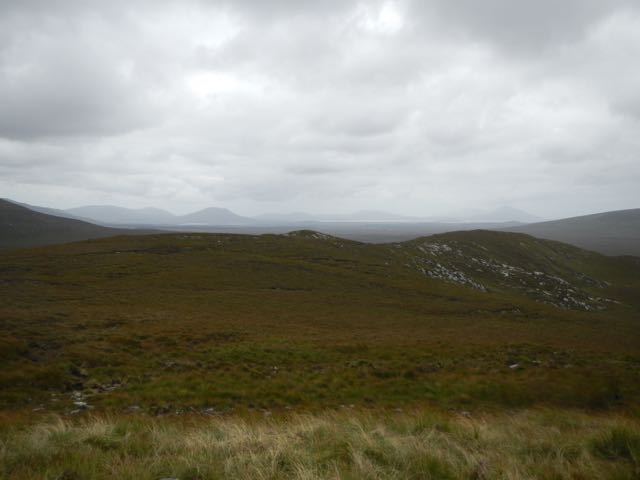
Camping out on a shoulder of Slieve Carr, facing west across the sea of bog towards the great pyramid of Slievemore on Achill Island,I was truly, deeply alone.
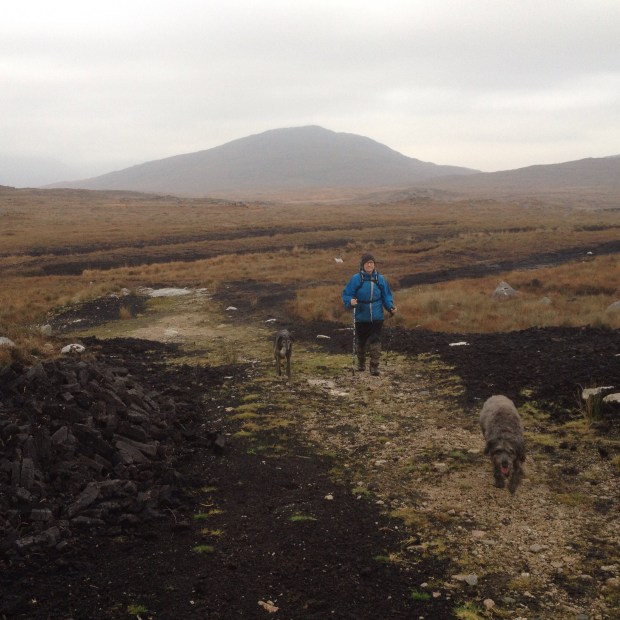
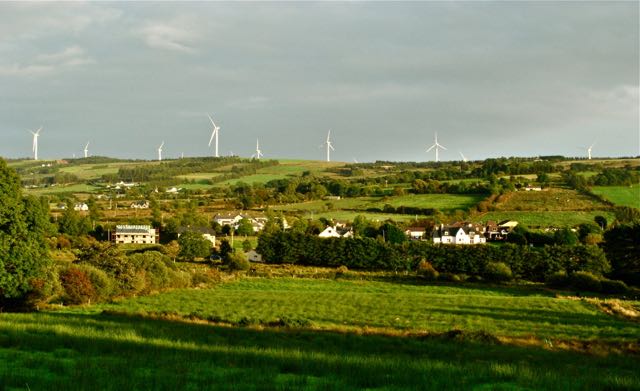
On the Bangor Trail in the Ballycroy National Park , part of the newly designated 22,000 acre wilderness area in the Nephin Beg mountain range, this was as far as it’s possible to get in Ireland from roads, buildings or people.
I had a few sheep for company and midges, countless millions of them swooping and swirling like a murmuration of starlings.
Retreating to my tent after dinner I swear I could hear them buzzing in their multitudes, like a swarm of bees.

DSCN2481

Slopping through sucking bogDSCN2521 whilst being eaten alive by bloodsucking insects might not appeal to the average sedentary vacationer, but I loved it.

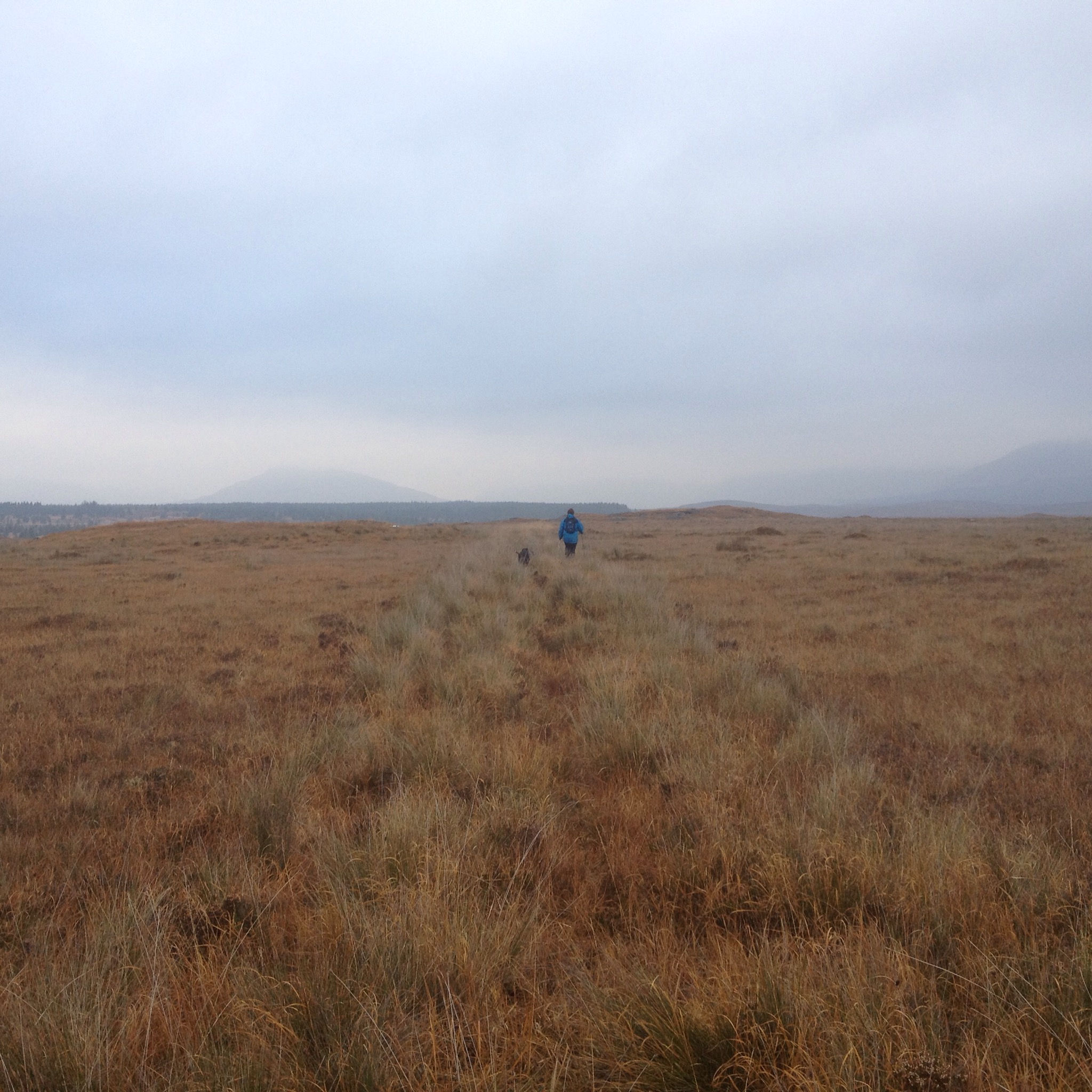
I loved the vastness of nothing. Nothing but mountain sky and bog and a tiny thread of a trail weaving its way north to south from Bangor to Newport in County Mayo.DSCN2487

An old drovers road, a trade route,the way home for the few far-flung home steads that once clung to a precarious living in this wild place.

DSCN2479

The great naturalist Robert Lloyd Prager wrote of this place,

“Where else even in Ireland will you find 200 mi.² which is houseless and roadless. Nothing but Brown Heather spreading as far as the eye can see…I confess I find such a place not lonely or depressing but inspiriting. You are thrown at the same time back upon yourself and forward against the mystery and majesty of nature and you may feel dimly something of your own littleness and your own greatness.”

I had started out from the old bothy DSCN2555 at the Letterkeen looped walks trailhead and was very alarmed on my way there above Furnace Lough to see the ominous spread of Rhododendrum Ponticum. In some areas it was already established into dense woodland and was clearly on the march across the hills, thousands of single stems standing sentry in their shiny green foliage.

DSCN2459On a recent hike through Killarney National Park I had witnessed the results of a 30 year war waged against the foreign invader and the news from the front was not good.
What would happen in the wilderness area where the land management policy was going to be hands off I dreaded to think.DSCN2546


DSCN2461

This new initiative sees Coillte working with the department of arts, heritage and the gaeltacht, the national park and local landowners to set aside an area to go wild and to go wild in. The first of it’s kind, the plan is to eventually have 1 million hectares across Europe going” back to nature”.

I had decided on a circular route. 30kms on the trail to Bangor, then hitch a spin down the N59 east for about 14kms to where i could join up with the western way. From there it was 25kms back south, mainly through forest, to the Letterkeen bothy.

DSCN2464

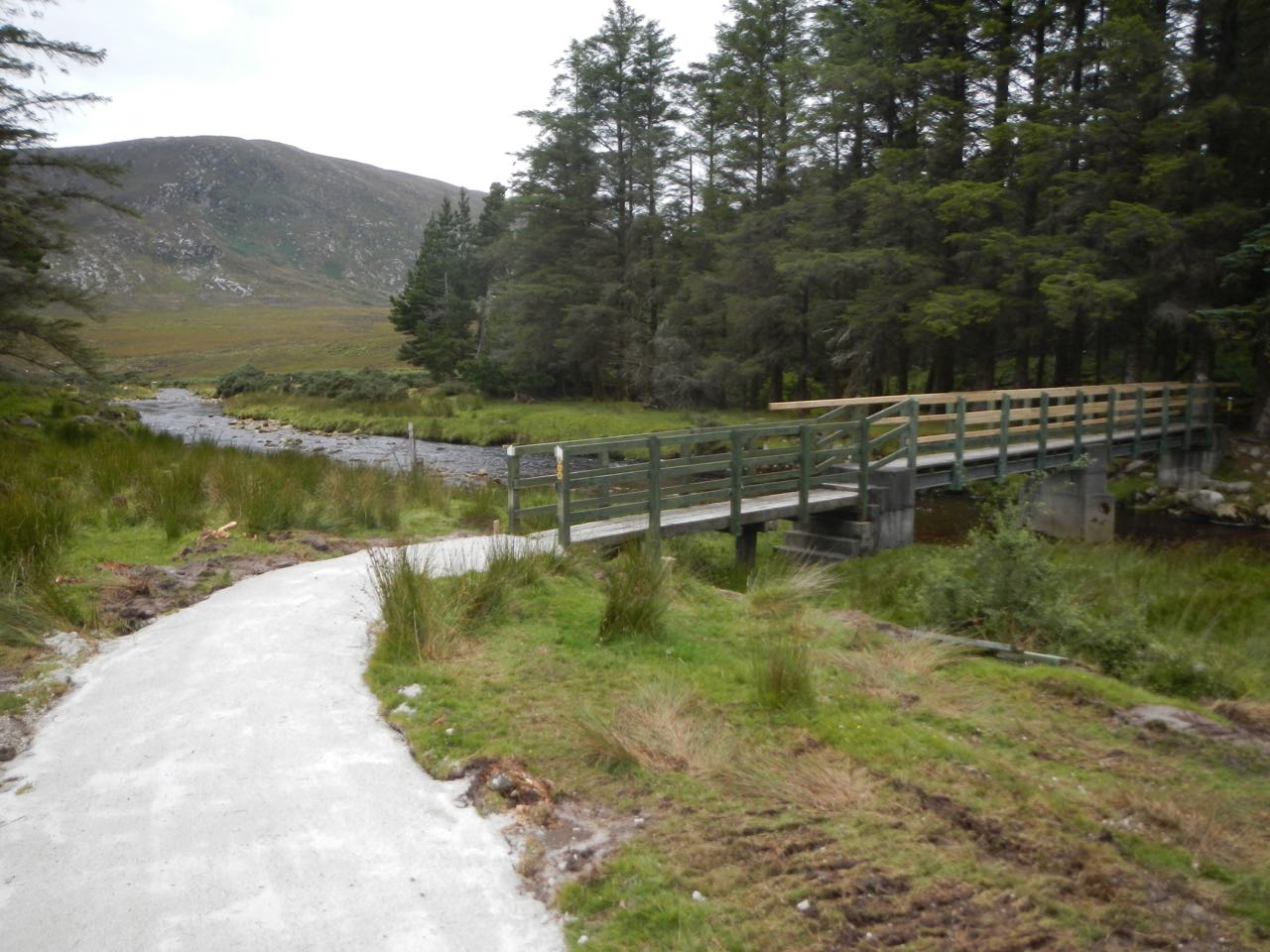
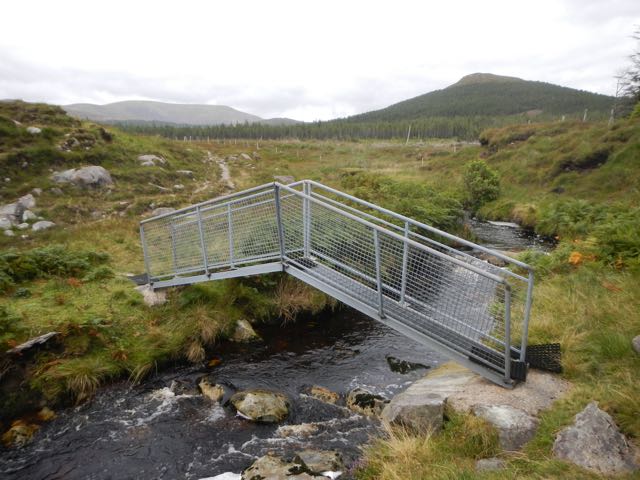
A few yards from the bothy I crossed the Altaconey River and not long after crossed it again on a new steel footbridge.

DSCN2466

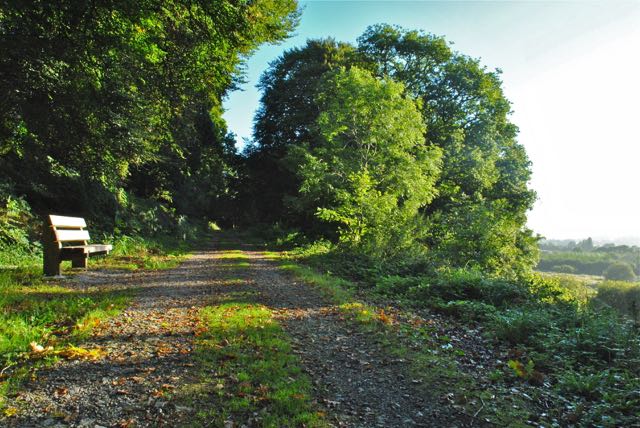
This end of the trail was dry and solid underfoot on a well marked stony track.

DSCN2468

After about 5kms, at a point where one of the loops veered off to the rightDSCN2471 I came upon one of the wooden hut shelters erected by the Mountain Meitheal volunteers and had lunch while reading the log book there and soaking up the silence .From a notice on the wall I discovered that there was another hut on the Western Way on the other side of Nephin Beg and decided to stay there the following night.

DSCN2474

Shouldering my pack I carried on up the trail and, leaving the forestry behind, headed into the vast open landscape with the brown bulk of the mountains rising from the bog ahead.

DSCN2519

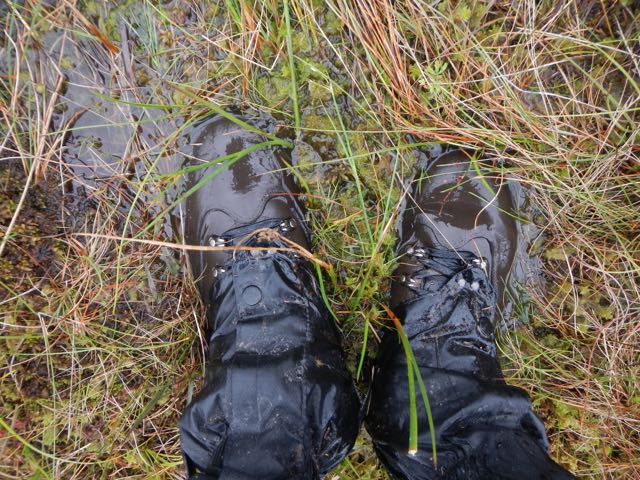
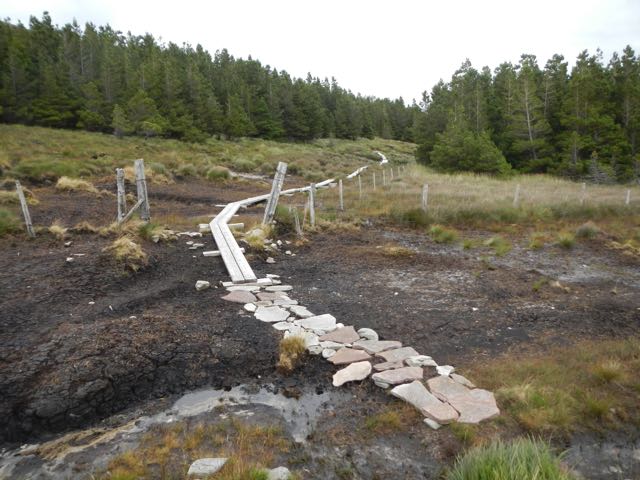
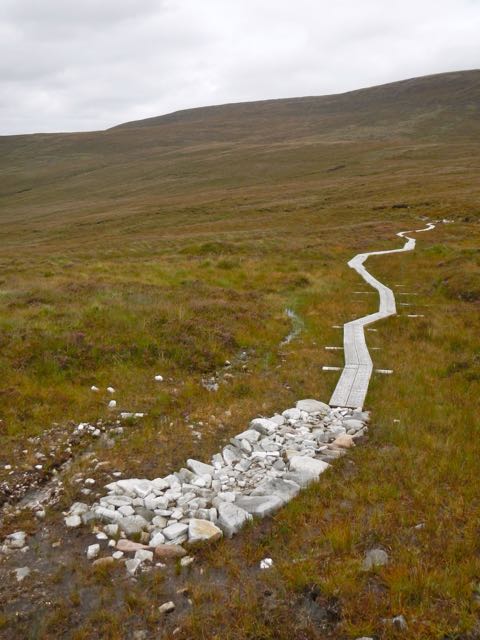
The going became harder and the ground became softer as I crossed what is basically a giant sponge. In places sections of boardwalks have been constructed to carry you over the quagmire, but over a 30km trail it could only be a token gesture towards dry boots.It was calm and still and any resting resulted in an attack by the midges which convinced me to head to higher ground to camp in the hope of finding a breeze.

DSCN2493

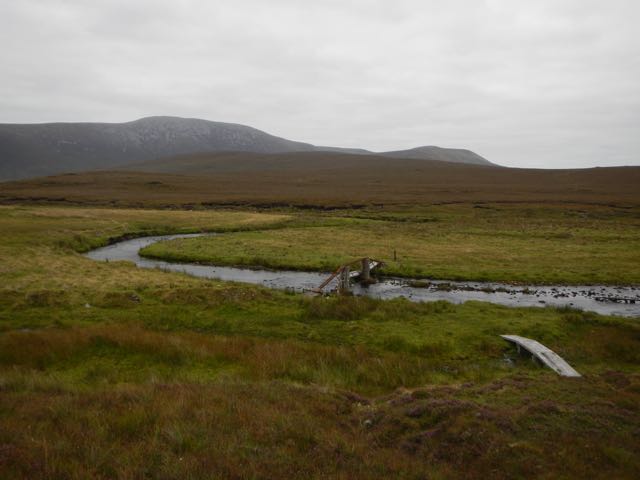
In the morning I headed down to the river valley that cut a meandering course through the boggy wilderness till I reached the broken footbridge across the Tarsaghaunmore River where I managed to scramble across on the wreckage without wetting my socks.

DSCN2506

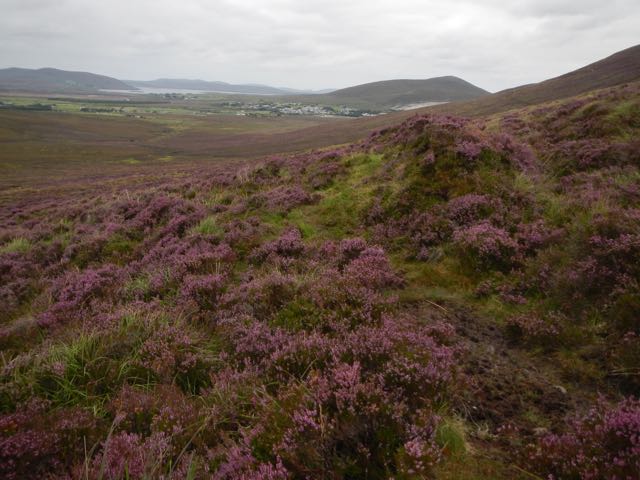
A couple of hours later, as I crossed the purple heather covered hills on the approach to Bangor I spied a lone figure who turned out to be a park ranger, out checking on track work, as surprised as myself to meet anyone else out there . We talked about plans to establish other huts and  camping areas, the on going track establishment and the need to balance increased accessibility with an unmanaged “wild” environment.

DSCN2527

Another half hour brought me into town where,after a pint and a sandwich, I got a lift.  After a day travelling across the landscape at walking pace, the car seemed to hurtle us over the bog at brake neck speed and 10 minutes later I was back to 4kms per hour on the Western Way.

A long boreen led back towards the mountains and an isolated farmhouse on the edge of the forestry .

DSCN2530

Entering the plantation took me into a different world. From the wide open spaces of bog and sky and seemingly limitless horizons my world became shrunk and enclosed.

DSCN2541

The forestry tracks made for easy hiking and a couple of hours and 10kms later I gratefully came upon a sign that led me up a side trail to the shelter nestling under Nephin Beg. This trail continued up towards Scardaun Lough and the pass through the mountain range.

DSCN2536

Reading the hut log book I could see that people used the shelter as a base before tackling the peaks above that rose to 720mts on Slieve Carr.Feeling   too weary to contemplate such exertion I cooked up my dehydrated meal, erected my tent inside the shelter to avoid the midges and slept.

In the morning the remaining 10 kms back to the Bothy did not take long. I past areas where Coillte had been doing some selective clearing

DSCN2539

and it’s going to be very interesting to see how this exciting experiment in “re-wilding”goes.


Connemara

With a month to go before I head off on the GR131 across the Canaries I needed to get out into the wilds with a pack on my back for some training not only in hiking with a load but in blogging about it afterwards on the mobile.
So we headed off west past Galway and Oughterard to Maams cross where we turned south across the russet  autumnal  bog.
At the top of Camus Bay we turned right towards Roundstone and when we met the water again we pulled over at the start of an old turf cutters track which led deep into the soggy wilds.

 The cloud was low the air still and moist. We were in a world of water, above us around us and below our feet.

IMG_0045

IMG_0045

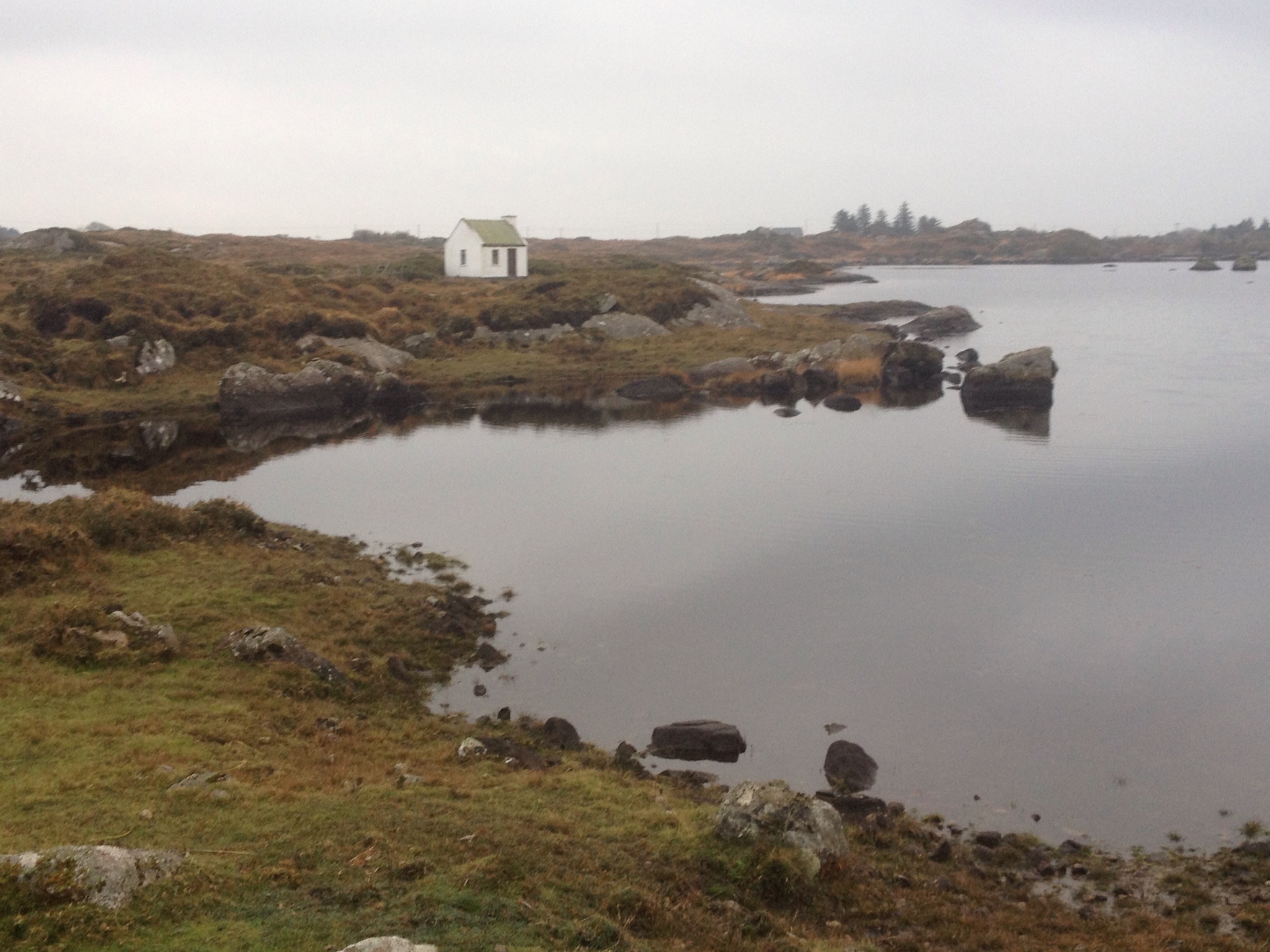
The numerous lakes had miniature cottages beside them which we assumed were for sheltering fishermen trying to hook a salmon.

IMG_0052

When the stone paved track ran out we followed the trail marked on the map, now long gone into the bog.

IMG_0051-1

The waterlogged ground quaked and wobbled like a waterbed beneath our feet as we made our way north towards the Maamturk mountains rising out of the horizon.
It was easy to see how nasty it would be in a disorienting mist with little or no features to guide you through the quagmire.
After a stop for a silent sandwich gazing over the vast emptiness we returned to the car and carried on to Cashel House hotel, a lovely dog friendly old school country house with acres of well established gardens we spent the afternoon wandering around.
Up early with the hounds I took a stroll along the shore

IMG_0057

before a hearty breakfast to get us up Cashel Hill standing 311mts above us in a beautiful clear blue sky.
Passing the church we followed the track up the hill above the top of Cashel bay

IMG_0061

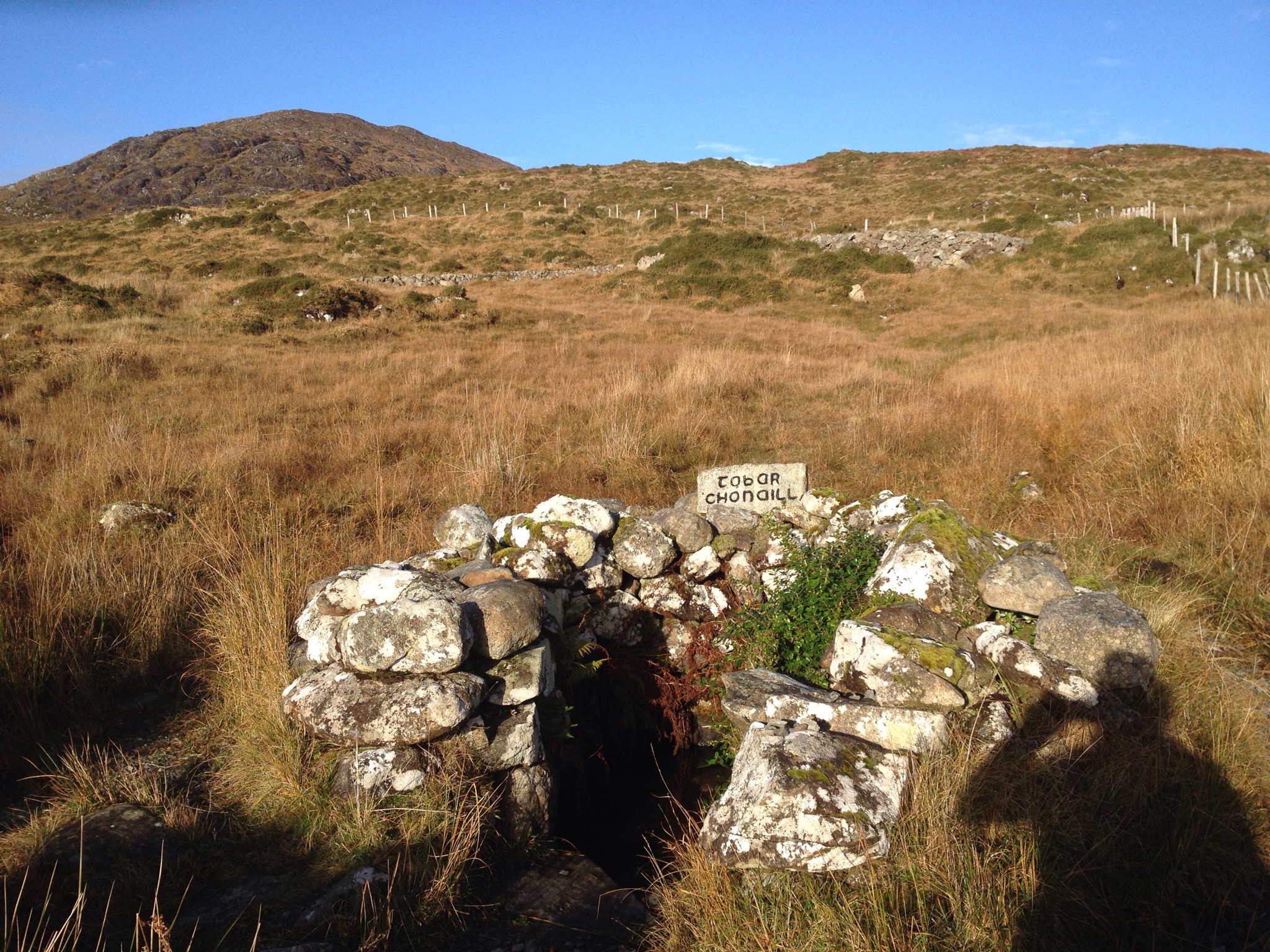
and shortly arrived at an ancient graveyard complete with a ring fort and holy well of St Conaill.

IMG_0062
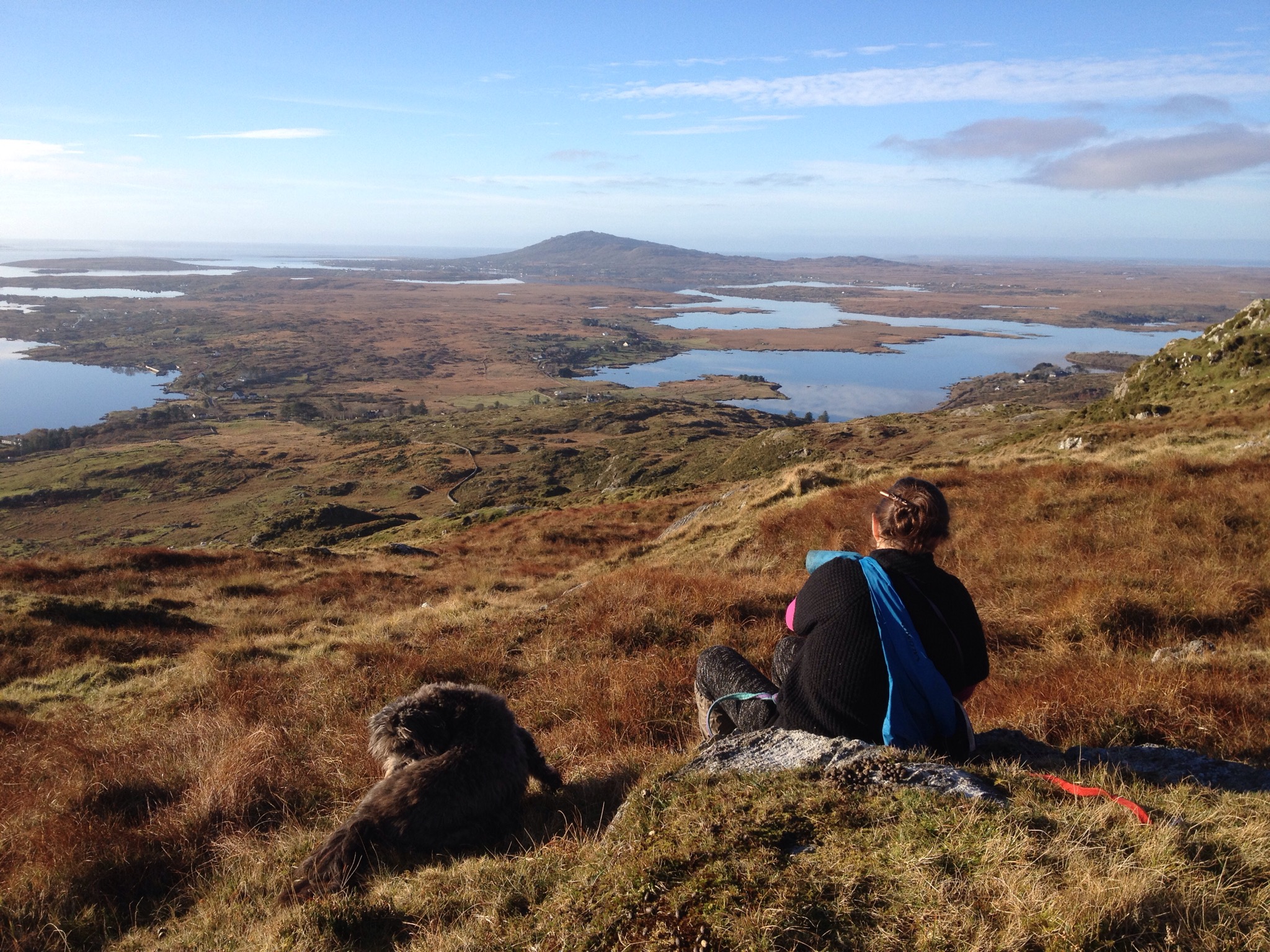
A steep climb with a few rest stops to admire the unfolding vistas brought us the summit trig point and perhaps the best view of the Twelve Bens and Maumturks in the whole of Connemara.

IMG_0067

IMG_0065

IMG_0075

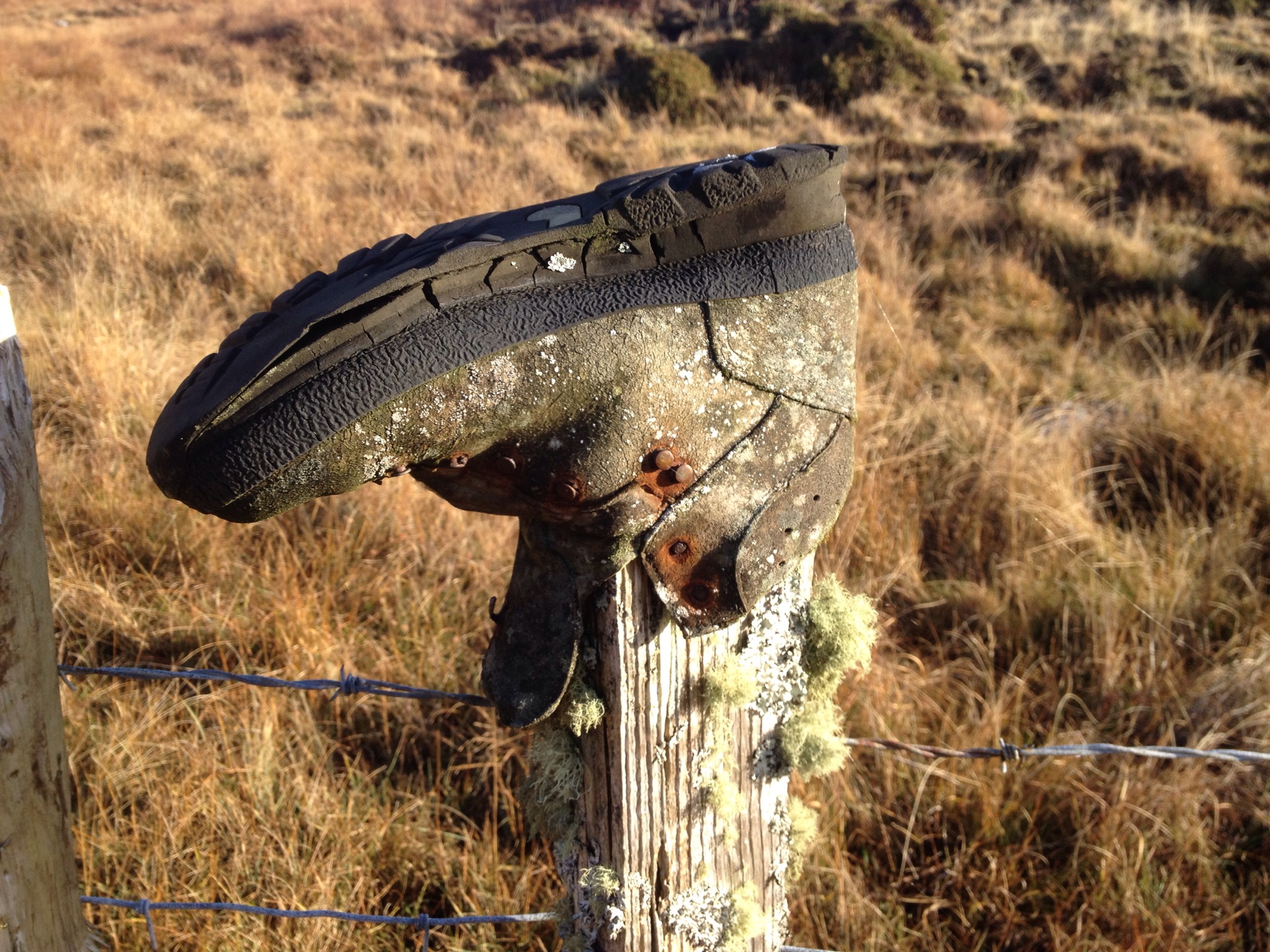
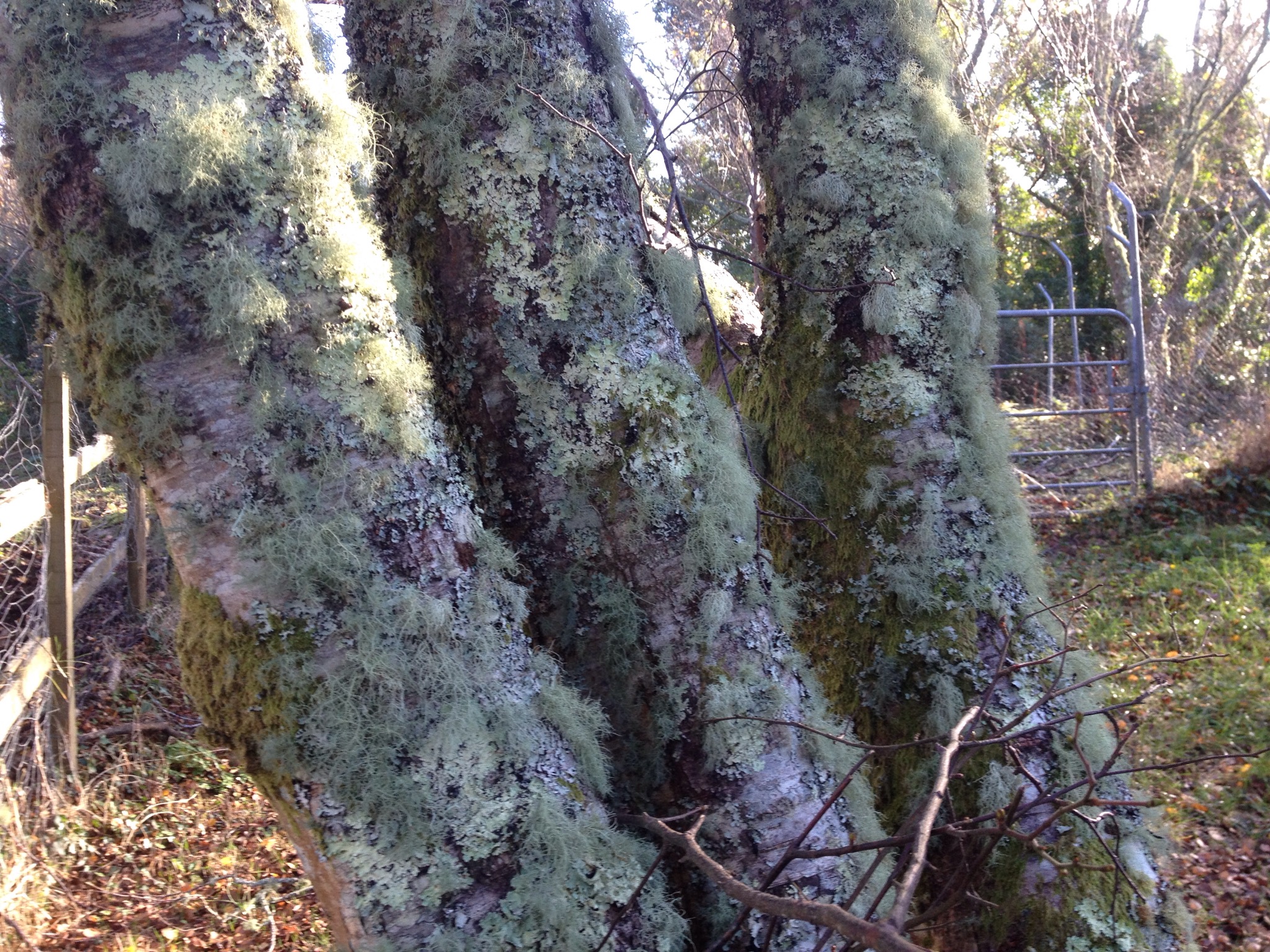
As always the steep descent was tough on the knees, especially with a heavy pack on, but we wanted to explore the coast a little more in the glorious sunshine so after clambering down past forlorn footwear and lichen covered trees

IMG_0064    IMG_0077


we motored on South to a big beach near Carna.

IMG_0081

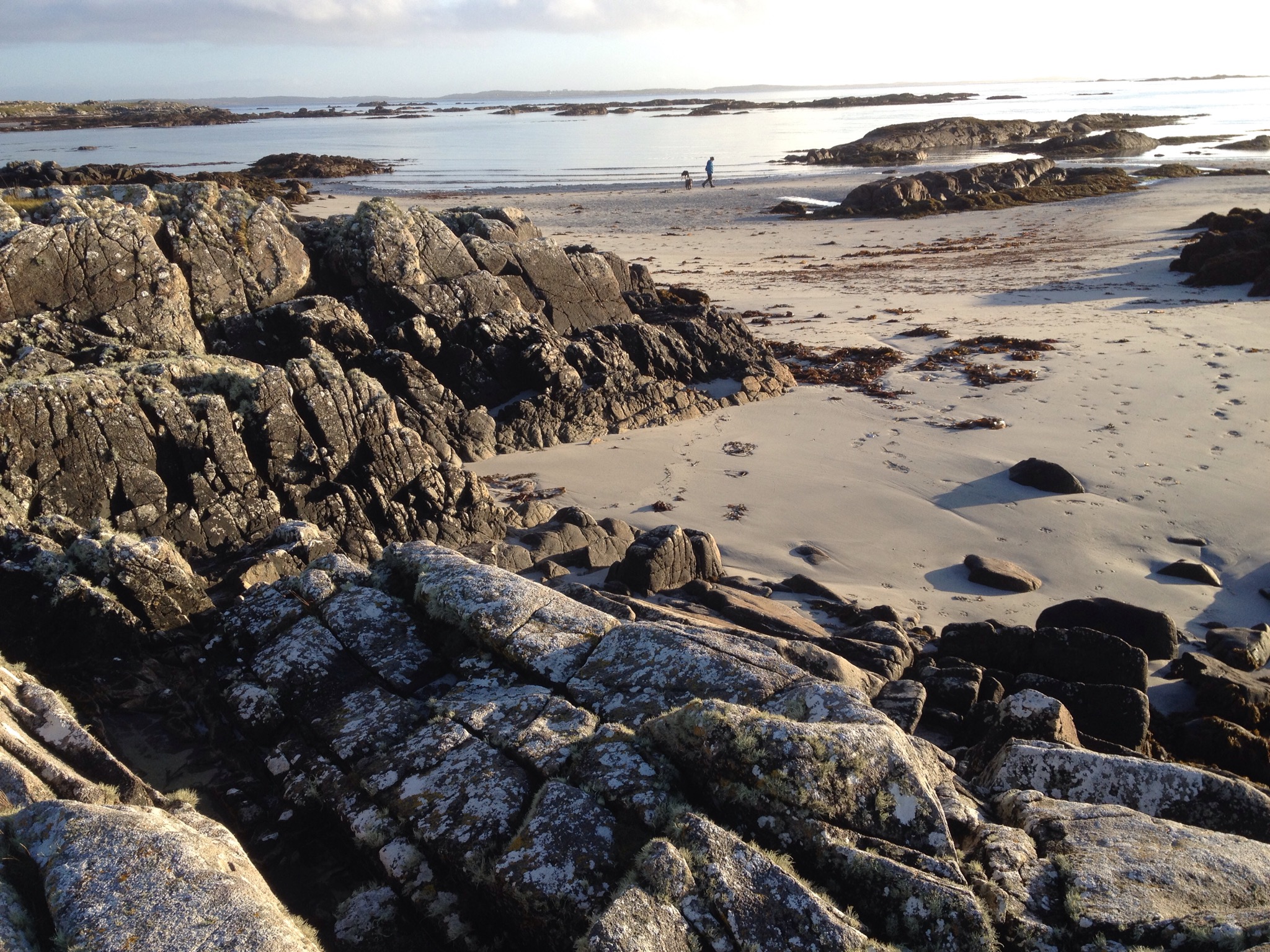
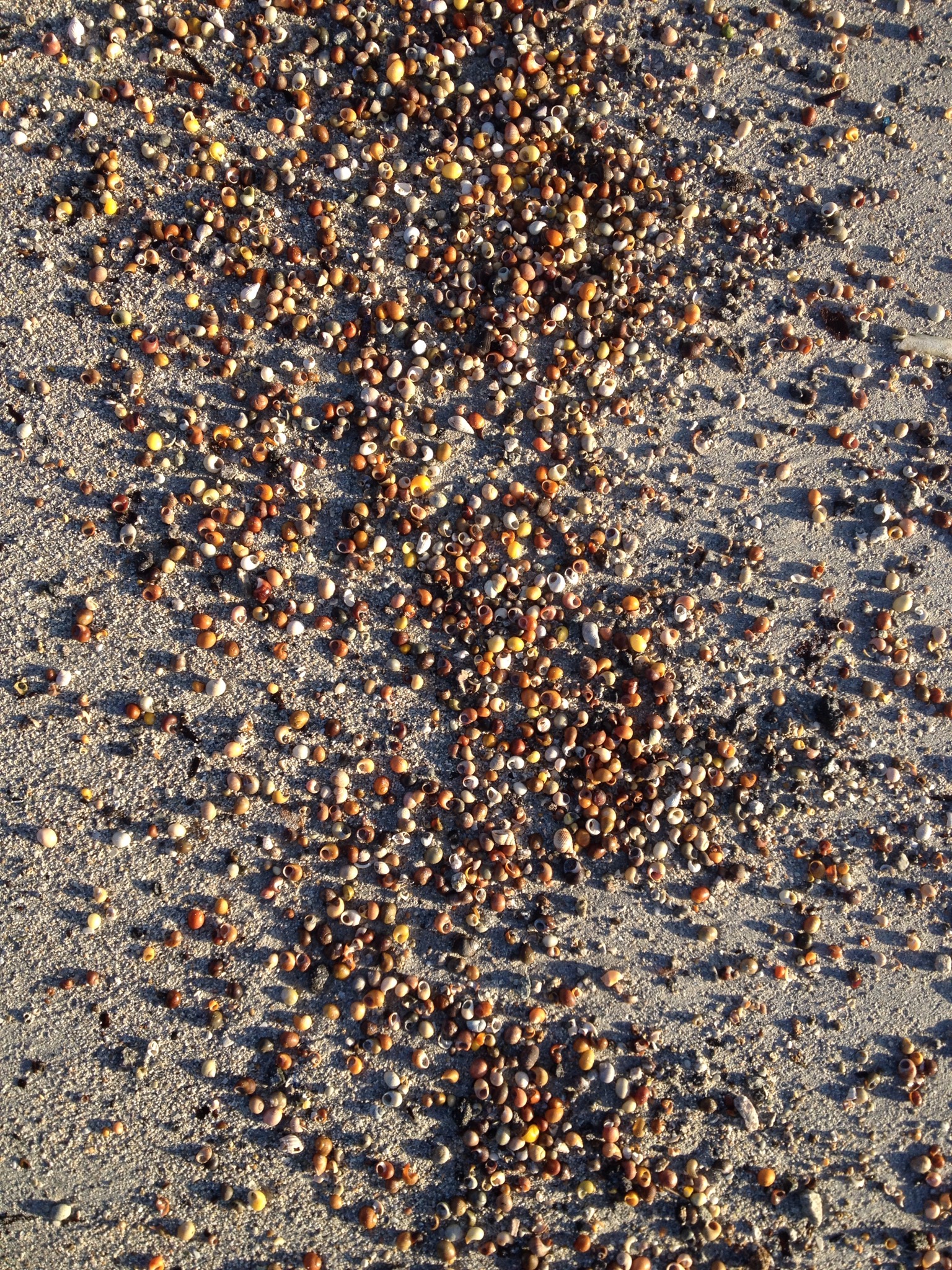
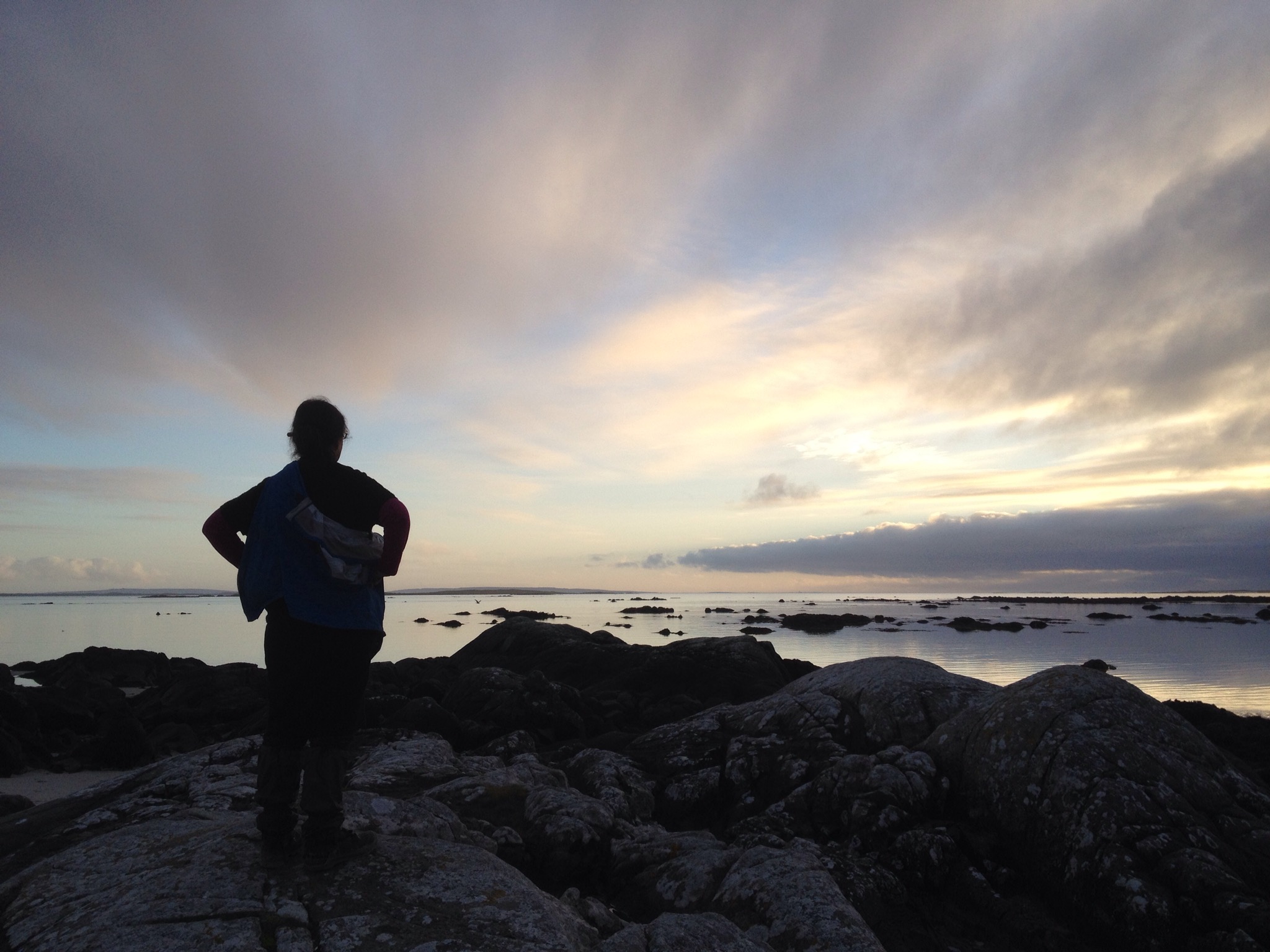
A low tide football pitch and shell covered sands led us towards Finish Island but the waters were not low enough to cross over so we stood gazing into the fading light.

IMG_0079

IMG_0078  IMG_0082


A WALK TO THE PICOS

SAM_0406

A WALK TO THE PICOS

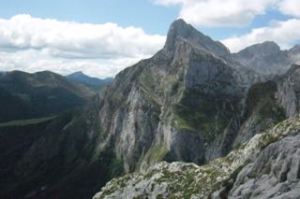
Whilst kissing a piece of the cross of Jesus in the Chapel of the 5th century monasterio of Santo Toribio de Liebana it struck me that it was a satisfying if unusual ending to our week long trek over the Cordillera Cantabrica.

The Monastery was tucked into the folds of the wooded foothills of the Picos de Europa in Northern Spain and this sacred relic, encased in a silver crucifix has drawn pilgrims for hundreds of years and made the site, with its promise of absolving a life time of sin, as much as must see destination for the devout as Rome, Jerusalem and Santiago de Compostela.

We had spent 5 days hiking roughly 100kms of the waymarked gr 71 across the Parque Natural Saja-Besaya and Spain’s largest National hunting reserve, along ancient stone paved lanes between delightful villages, foresters tracks through the oak and beech forests and drovers roads high on the grassy mountain slopes accompanied by the symphony of cow and horse bells.
SAM_0479


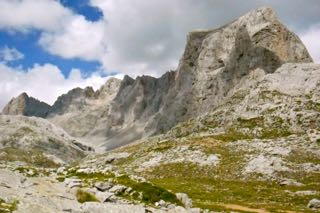
Headed East to West the goal of the Picos grew larger and more majestic, drawing us onwards through a landscape still inhabited by wolves, mountain cats, brown bears and wild boar, though the only ones we saw were in the old photos hanging in most bars of hunters proudly displaying their trophies.

SAM_0507

The gr 71 is neatly split into day sections of 20 kms usually involving an ascent and descent between valley bottom hamlets where accommodation and food is available, but don’t expect shops, night clubs or english speaking.

SAM_0485

This is deeply rural Spain and doesn’t see too many tourists – we didn’t come across any other walkers on the trail, having the tranquil forests and vast open vistas of the high Sierras to ourselves.

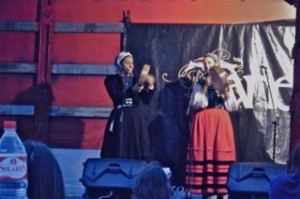
After flying into Santander we took the train for an hours journey winding up the Besaya river valley to Barcena de Pie de ConchaSAM_0412and the start of the gr 71. As luck would have it not long after we checked in to Casa Ferrero (+34 942 841303), the loud blasts of firecrackers and bangers signaled the beginning of a night’s fiesta and we followed the locals down to the riverside showgrounds where an articulated lorry had been converted into a stage upon which a troupe of Cantabrian singers in traditional dress were shaking their tambourines and giving lusty voice to folk songs whilst the tarpaulin covered bar dished out wine, beer and sidra, the local cider poured from a height to fizz it up and orujo, the very pokey liquor made from grape skins and flavoured with a variety of fruit.
SAM_0404

Returning to the small hotel our hostess served us dinner. Struggling with her English dictionary she offered us pumpkin landing which turned out to be stuffed courgette.

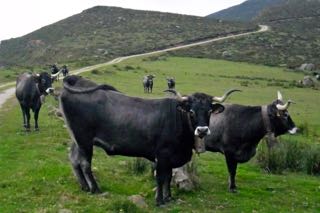
Not withstanding occasional linguistic stabs in the dark, the meals we ate every evening after an appetite raising days trek were always delicious. The epitome of hearty mountain food, cocido or fabada was one of the favourite dishes. A thick steaming stew with cabbage, white beans or chickpeas and a vegetarians nightmare of porkmeat, ham, chorizo, black pudding, beef, sometimes boar or deer and the occasional ear, snout or trotter – it certainly filled the gap. Also on the menu sometimes was Carne de Caballo, or horse meat, which explained the numbers of stout and stocky hispano/Breton horses grazing the high commonage alongside the Tudanca cow SAM_0421– a breed famous for producing a rare and succulent steak. With delicious soups and seafood on offer for starters and local cheesses fruits and cakes for pudding, all washed down with a bottle of fine house red, it would be curmudgeonly to haggle over the 12 euro bill.

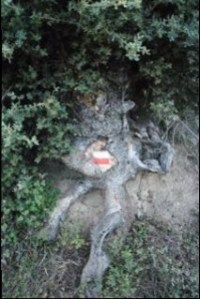
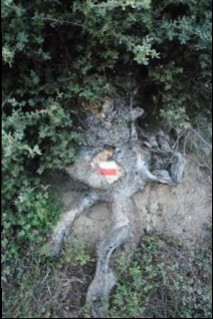
Setting off on our first morning, after tostado e café, we came across an information board mapping out the stage from Barcena di Pie de Concha to Barcena Major, a distance of just over 20 kms.  At the start of each days hike we could check the boards for the route, the ascents and descents and rough timescale for completion, although the distances given didn’t always seem accurate. The red and white stripes of the gr walkways daubed on walls, trees and rocks were fairly frequent over most of the walk, which is covered by 1:50,000 map nos: 81, 82, 83 published by the Centro Nacional di Informacion geografica ( HYPERLINK “http://www.cnig.es” http://www.cnig.es)
The long narrow street leading out of the village was lined by thick steel rails and posts sunk into purpose built holes in the roadside, which were being dismantled by a team of workmen. We had evidently missed a bull run the day before.

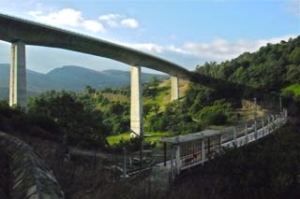
One of Cantabrias’s most well preserved Roman built roads led off towards Somaconcha 5 km to the South but we followed the Red and white stripe markers, leading us under the new A67 linking Santander with Palencia and Madrid. The modern Spanish highways are as awe inspiring as the 2,000 year old stone ones of the Romans, perched on towering concrete pillars to soar high above the woods and valleys, though unlikely to last as long.
SAM_0414

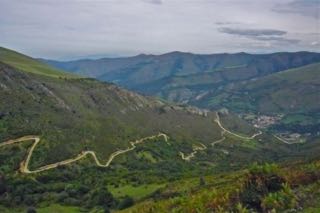
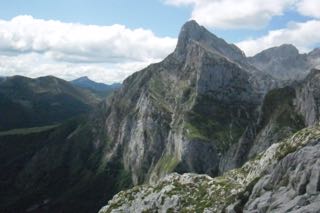
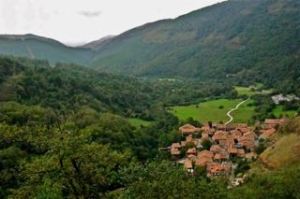
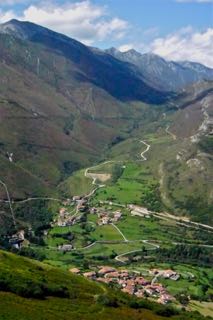
Through Pujayo, where San Lorenzo’s feast day on the 10th August is marked by men trying to climb a greased wooden pole, and up and up the zigzag dirt track for 5 km to the ridge, below Pico do Obios (1,222m). This is where you get a good view of the landscape the gr71 takes you through. All around, receding into the distance are the rounded folds of thickly forested mountains with their grassy tops circled by golden eagles and griffon vultures. In the valley bottoms far below clearings in the woods shelter stone and wooden barns and farmhouses surrounded by small fields and gardens .SAM_0479

After crossing the Sierra de Barcena spotted with purple heather and yellow gorse, we needed to keep our wits about us to follow a badly waymarked section across the flank of Pico do Guarda and then down a wet and muddy track through a beech and oak forest to Barcena Major, reputedly the oldest village in Cantabria.SAM_0423
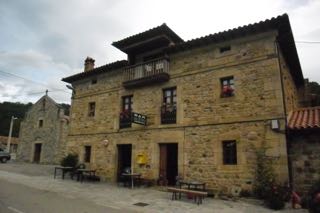
Cobbled alleyways and Plaza’s are line with well preserved and renovated buildings. Their cut stone and timber framed balconies festooned with a kaleidoscope of blooms. Unchanged for centuries it was declared an historic artistic site in 1979 and grants helped to transform the isolated village by improving the access road – although the residents may drive into it. We stayed at the charming Posada Reserva Verde (+34 942 741013)SAM_0425 and because of the visiting tourists there are a number of places to eat and shops selling produce typical of the area.
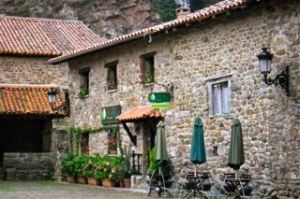
The next day’s stage meandered through the undulating countryside and sun dappled forests surrounding tiny hamlets of Colsa and Los TojosSAM_0434 reaching Saja after about 13 kms, allowing time to cool off in the pools of Rio Argozo before checking into our farmhouse accommodation (Casa de Labranza Sajos +34 942 741223). The crowing of the cockerels, barking of the dogs and mooing of the cows in the farmyard below got us up and out early the next day for a pleasant slog up the foresters track through the towering beech woods of the Parque Natural. These trees grew well on the slopes here to an altitude of about 1,000m before giving way to birch, mountain ash and holly and finally opening up on to high grazing land with views west to the Sierra de Pena Sagra at over 2,000m the highest we will pass on the gr71.
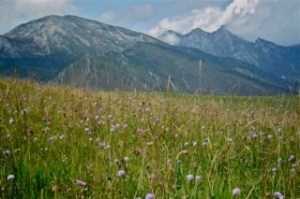
SAM_0465

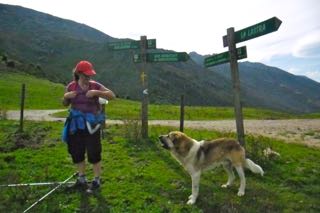
Following the track past hay meadows full of wild flowers we could see below us the red tiled roofs of the barns and farmhouses scattered around the Sobayo valley and soon the cliffs above the dammed gorge of the Rio Nansa. SAM_0467 A knee jarringly steep descent brought us to Tudanca 17 km from Saja another historic/artistic village, with a flurry of grant aided building actively restoring the ancient houses. Not having booked a place to stay we decided to head on to Pejanda, another 16 km, which involved another 660m ascent to Collado do Joza la Abellou, (where we shared our lunch with a large mountain dogSAM_0470 left on duty to guard (from Wolves?) and corral the horses and cows before doubling back on ourselves to follow an ancient stone paved path along the contours of El Potro, high above the Embalse, or reservoir, de la Colilla SAM_0471. As we walked down through the heather, broom and bracken and back into boulder strewn oak woods the path was blocked by a landslide and we had to retrace our steps a little way before finding another waymarked path over a gully to meet up with our original route.

Another 5 km of gentle descent on a forest track through the oaks surrounded by the diggings of wild boar, brought us down to a tarmac road and 1 km later the very welcome sign of Pejanda and Casa Molleda (+34 942 729008) SAM_0475 our stop for the night. A couple of well earned cerveza in the bar hung with all manner of handmade wooden implements and instruments SAM_0478 and a fortifying meal in the restaurant ensured a good nights sleep.

The information board outside the Casa indicated a 20 km section the next day with an ascent from 850m to 1,450m at Collade de las Invernillas followed by about 5 km of roughly level ground along the southern flank of Pena Sagra before dropping back down to 850m at Cahecho. We had been joined by one of the routes of the pilgrimage to Santa Toribio as well as the PR (shorter then the multi day gr’s) and consequently our way was marked by a plethora of red and white stripes, yellow crosses and yellow and white stripes and a mysterious blue and white chevron.

Care needed to be taken to follow our route after about 3 km when the gr peeled off and up to the right quickly gaining altitude and views of the Sierra ridge above us and the many abandoned farmsteads below. This must have been tough country to farm in with isolation, wild animals and wild weather to contend with. We, on the other hand, had enjoyed benign September weather with no rain all week and as we headed through the pass or Collado and along a beautiful section of pathway, freshly cleared of Spanish broom by some industrious rangers, the sun shone brightly giving us an excuse to rest up a while beside a tiny stone building on a knoll looking Westwards towards the massive limestone bulk of the rugged Picos. SAM_0487

The gr71 route marked on the map we had seemed to have been effected by some new road building and we ended the days hike by approaching Cahecho along about 3 km of hard tarmac. The improved vehicle access has resulted in more renovated accommodation becoming available in the picturesque village with its viewpoint or mirador offering 360˚ views of the area. We stayed in Posada La Torcaz (+34 942 730501) where our friendly hostess, after pouring us a complimentary after dinner shot of oruja, proudly displayed a tourist poster featuring her home.

SAM_0507

A short 8 km stroll down through the ancient chestnut and oaks in the morning sunshine brought us, after 4 days of quiet solitude in the empty vastness of the Reserva Nacional, into the bustling honey pot town of Potes with its medieval quarter full of tourists and everything they might spend money on.

The gr71 continued 30km from here up into the Picos for two more day stages to Bejes and finally to Sotres, but as we had to catch the bus back to Santander from Potes we didn’t have enough time. We did, however, have time for a scenic bus ride 24km to Fuente Dé and the cable care 750m up the sheer face of El Butron. Taking only 3.5 minutes it was certainly the easiest and also the most spectacular ascent of the week with white knuckle, vertigo inducing views of the natural amphitheatre directly below.SAM_0516         SAM_0517        SAM_0546
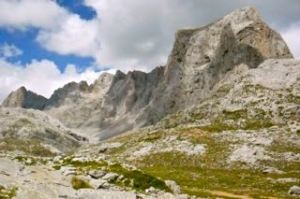
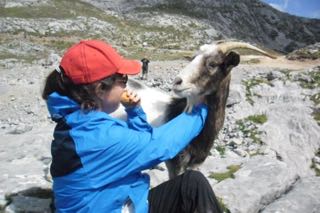
The cable care is operated by Cantur, a regional tourist body that also runs Aliva hotel, (where we were heading for the night, set in spectacular surroundings 1,666m up in the National Park. Stepping gratefully off the gently swaying cable car we avoided the souvenir shops and café and emerged into a stunning mountain scape of jagged white limestone peaks to the north and range after range of the Cordillera Cantrabica disappearing into haze to the South. Soaking up the magnificent view we had to fight off some very inquisitive mountain goats determined to eat our picnic. SAM_0520

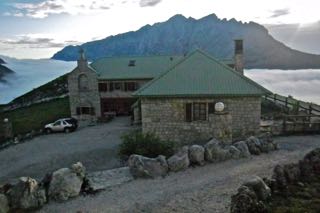
4 km of track following the pr24 led us through the pass of Horcadina de Covarrobres and past the Chalet Real (originally a Royal hunting lodge) to the green metal roofed buildings of Aliva where you can stay in hostel type rooms above the restaurant and bar or in private en suite rooms sleeping 2 or more in a separate building.

The lady who booked us in couldn’t have been more helpful, offering us guidebooks and maps from their library and telling us that as guests of the hotel we could get discount on the cable car and a free jeep ride back to it.

The Picos de Europa are very popular for adventure sports and the hotel caters for many groups from far and wide all Summer and is open at weekends and holidays in the Winter for those who like to play in the snow. The restaurant was certainly buzzing that evening and people looking for a table with a view can drive up from Espinama in a 4WD.

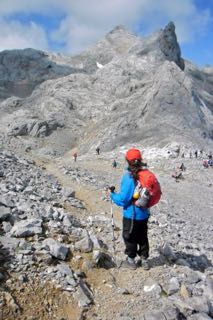
In the morning we were floating above a sea of cloud SAM_0531 and after availing of the Jeep ride back to the pass we walked for a couple of hours north west on the pr23, a hauntingly desolate but awe inspiring route SAM_0550 across the rugged limestone beneath towering cliffsSAM_0536 to the Collado Horcados Rojos at 2,345m. An easy to remember altitude with a memorable view of the fabled Naranjo de Bulnes, the Picos signature peak.SAM_0549
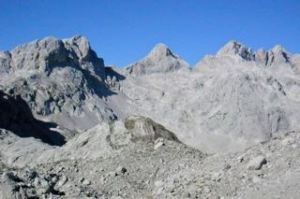
Returning to our hotel in Potes and a beer before dinner we realised we wouldn’t really complete our journey until we had walked the remaining 5 km of the pilgrimage route to the monasterio de Santo Toribio de Liebana.

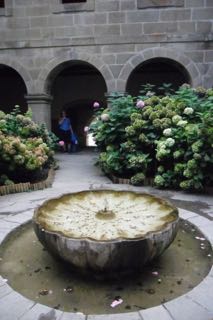
Arriving shortly before it closed for the night we were throwing some lucky irish coins in the cloister fountainSAM_0554when we heard sounds from the adjoining church. Following them, we barely had time to join the dozen people sitting in the pews before the priest called us up to kiss the cross. The timing,and the weeks walk, had been perfect.

Walkabout

ON THE TRAIL IN WESTERN AUSTRALIA

DSCN0665
Want to go Walkabout?
Fancy a few days, weeks, or months in the Bush?
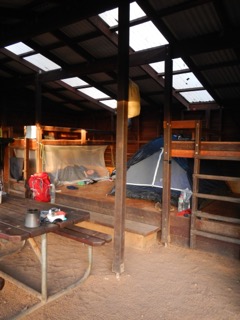
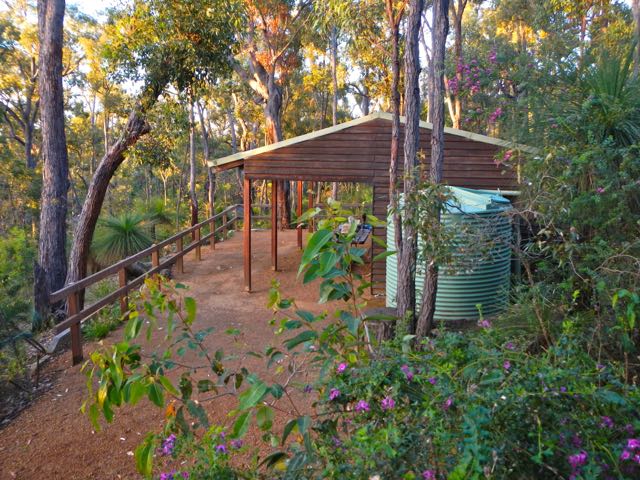
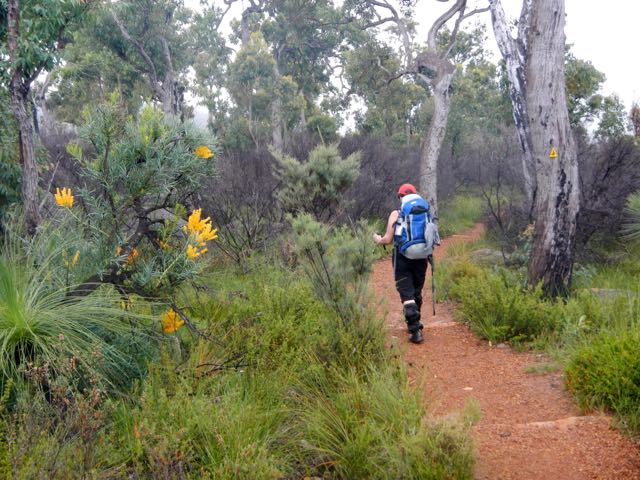
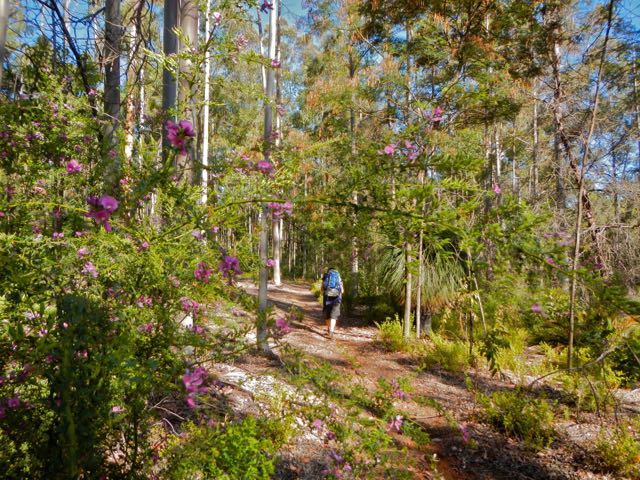
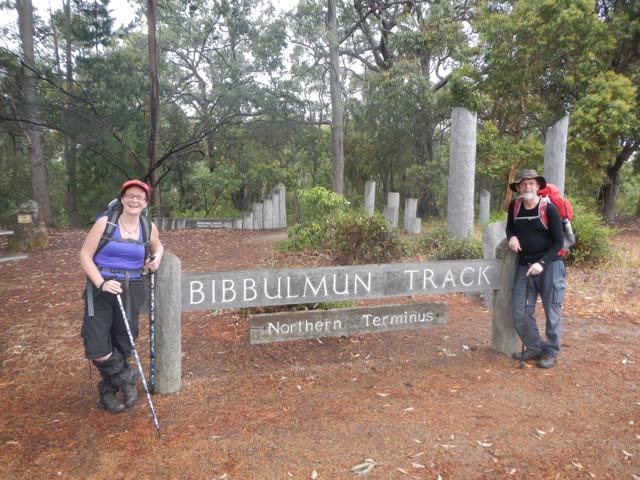
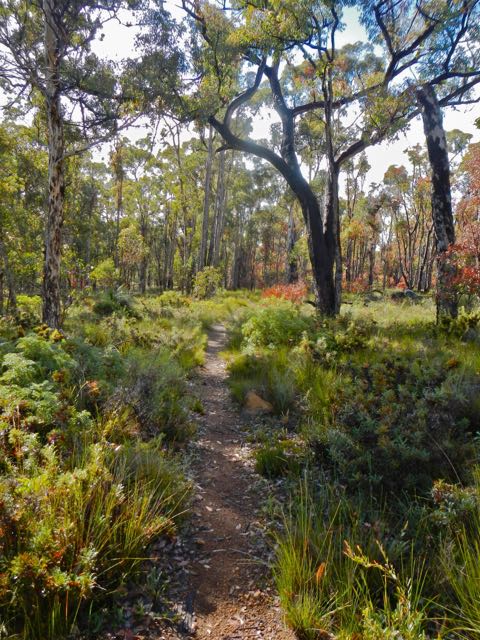
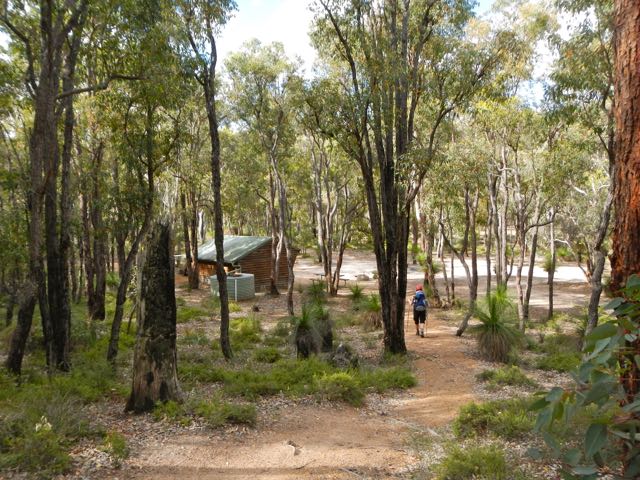
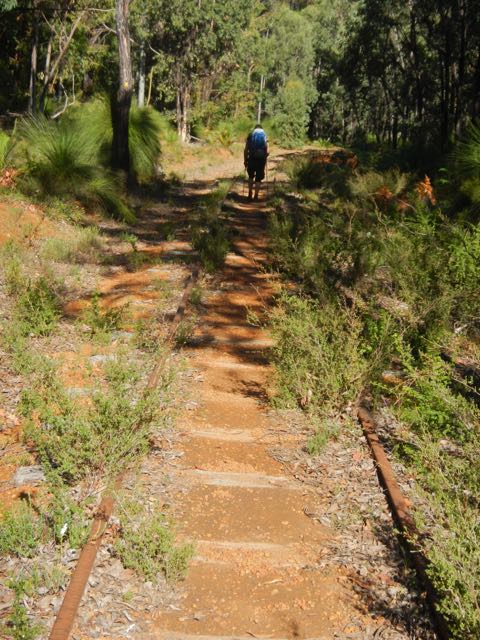
In W.A. the Bibbulmun hiking track runs 960 beautiful forested kilometers from Perth to Albany on the south coast, studded with free sleeping huts for 8-15 people with DSCN0608 - Version 2     camping sites, picnic table, fire pits, water tanks and dunnies (long drop toilets) every 10-20 km.DSCN0606 - Version 2

From an idea first mooted by bushwalker Geoff Schafer in 1972 the much developed and re-aligned route has been in it’s current form since 1998. Named after a group of the indigenous inhabitants, the Bibbulmun Nyoongar people, it recognizes their practice of walking long distances for ceremonial gatherings and seasonal migration, and is marked every 500m or so by a little yellow triangle depicting a Waugal, a rainbow serpent or water snake deity that in the dreamtime travelled through the Australian southwest creating the hills, rivers and lakes.DSCN0783

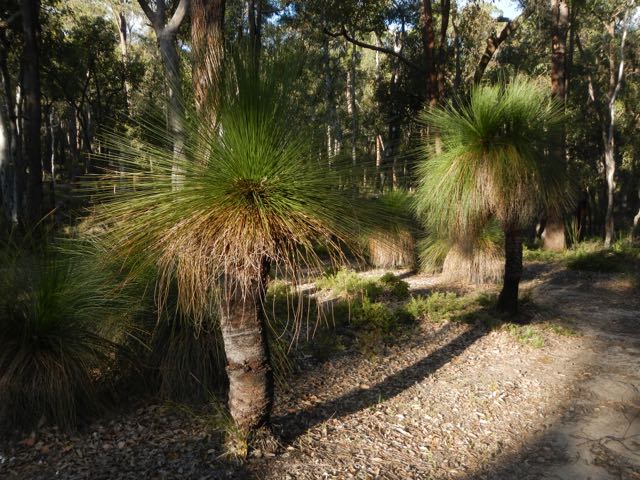
During it’s long meandering passage south from Perth the track takes you through the seemingly endless Jarrah, Marri, Tingle and Karri forests of the Darling Plateau, wends it’s way through wetlands and creeks under the paperbarks, flooded gums and swamp banksia and emerges onto the lowlands of a coastal plain of sand dunes, limestone and granite cliffs and headlands for the final leg along the seaside to Albany, through the heath like Kwongan, one of the worlds most diverse types of vegetation.

DSCN0555 - Version 2Now recognized as W.A’s leading example of eco-tourism, virtually the entire length of the Bibbulmun is in a conservation zone of some kind. With an ethos of minimum impact and “pack it in pack it out” , the complete absence of any rubbish is a testament to the 1000’s of walkers and a welcome change from some european routes. It was originally conceived as a way of encouraging people to “go bush” and discover the natural wonders of Australia’s southwest and is now managed by the Dept of Environment and Conservation with huge support from the volunteers of the Bibbulmun Track Foundation.DSCN0807 - Version 2

The Dept of Justice provided work crews from prisons to develop the track and build the huts and campsite facilities, which was deemed a great success for both the project and the prisoners, whose declining rate of recidivism was seen as proof of the significant boost in their self esteem engendered by the positive and constructive work on the trail.

Although every year many hikers undertake 2 month long end to end treks, the majority of track users are walking for a few days at a time and some for just a few hours.
If you don’t want to go it alone, carrying all your gear and food and sleeping in the huts or camping, there are commercial operations including ones run by the D.E.C. and Friends of the Bibbulmun that will organize accommodation in towns off the
trail, ferry you and your gear, and supply a guide if wanted.

. DSCN0550In Perth last December, with 10 days available to us, we set off to hike 2oo km down to the first town on the trail, Dwellingup. We had organised a couple of food drops at road crossings after 3 and 7 days to cut down on bulk in our packs but carried a tent as well as our bedding, cooking gear, clothes, mozzy net and water. As it turned out we had the huts to ourselves and didn’t need the tent but at other times of the year the trail can get busy with up to 20-30 people at the camps at night.
The summer temperatures were rising and although the forested route gives plenty of shade it seemed prudent to rise with the sun at 5 ish and walk in the cool of the morning, if necessary holing up somewhere for a few hours midday.DSCN0573 The noisy dawn chorus of squawking birds ensured we were up early and after tea and breakfast we would “pack up” and hit the trail through the awakening forest in glorious soft side light on a tide of earthy aromas rising in the growing warmth.
The trail surface is usually a soft and forgiving narrow path, occasionally veering onto old 4WD tracks of red pea gravel weathered down from the Darling Range granites. These are the remains of the oldest rocks in the world and can make for some tricky descents when it can seem like you’re hiking on ball bearings.

DSCN0679 - Version 2You’re very likely to see kangaroo and wallaby in the morning and evening and at night your torch may pick out a possum or echidna, a hedgehog like creature with a long thin snout.
A huge 3,500,000 hectare feral fox eradication program, involving dropping 1000’s of poison baits from planes has enabled threatened native species, which are unaffected by the poison, to become re-established and so you may have a night time visit from a “back from the brink” quenda or bandicoot.
You’re likely to see a lot more emu poo than emu, which may be just as well, as the males, if minding chicks, can become aggressive.
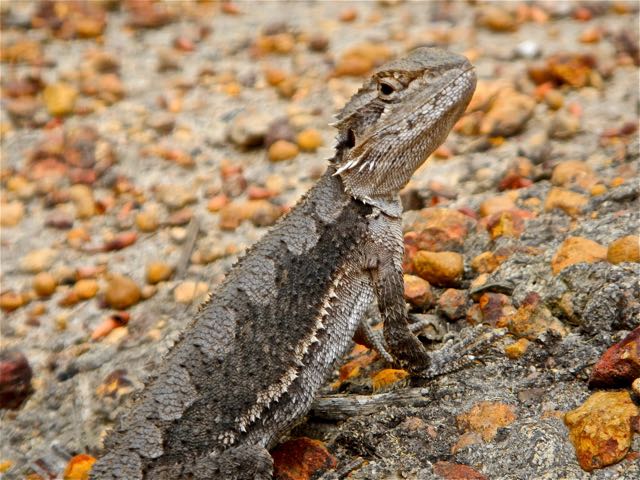
In the warmer months you could cross paths with lizards, snakes and skinks although they will probably hear you coming and beat a hasty retreat. A sensible precaution against snakes is always to wear boots and trousers or gaiters. DSCN0640 - Version 2
The most likely pests to encounter are the smallest. The march fly has a bite like a Horse fly and are satisfyingly slow to escape revenge. Midges, sandflies, ticks and mosquitoes can also be a nuisance best avoided by insect repellant and a net at night, which can also give security to anyone with arachnophobia.
We had lots of webs of the strange horny christmas spider across the path, which although harmless were unpleasant on the face and necessitated waving our walking poles ahead of us. We knew we had become hardened when, after a week on the trail, we could be blasé about sharing a dunny with a redback spider.
“Track fit” is a phrase to describe a body and mind comfortable with a long days backpacking on the trail and we felt ourselves gaining this status as the days rolled by one step at a time.

DSCN0644 - Version 2

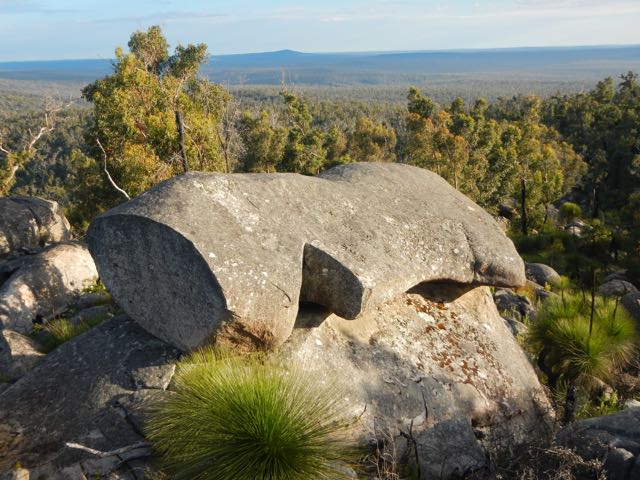
Unlike many other long distance hikes, the distance travelled can be hard to gauge given the tree shrouded horizon, so it was exciting, and exhausting, to climb to the bald granite peaks of Mt Randall, Cuthbert, Vincent, Wells and Cooke for extensive views across the vast forests we had traversed. Looking around 360 degrees of
unbroken greenery it was hard to imagine the vast deserts beyond. DSCN0616

For the first 100 km from Perth the huts are roughly every 10km allowing for either nice easy days or, as we did, double or even triple hutting- stopping for a rest, some food, signing the trail register and carrying on.
DSCN0582 - Version 2

Whilst at the huts, the register with details of age, nationality, start and finish points etc and the accompanying log book for longer entries made for a great evenings entertainment. Reading the comments (and ages) of past end2enders was inspirational as were the reports of the common struggles of those with more lowly objectives.
It was heartening to read of the school classes and other groups of youngsters experiencing “the great outdoors”- sometimes with 18 kg packs ! It seemed that outdoor education featured quite strongly in the school curriculum. The secondary school “journey or expedition”courses include skills and knowledge important to outdoor pursuits, minimum impact practices and reading the weather as well as personal and organization skills, group dynamics, first aid, risk management and leadership.
I wonder how the health and safety policies in our schools would cope with courses where ” methods to enhance personal growth are learnt, including those where experiencing challenging activities is the focus. This requires students to step outside their comfort zone, tackle fear and experience unexpected outcomes”
How many of our students, or parents for that matter, would see a place for a long hard trek and sharing a dunny with a poisonous spider on the school syllabus?
More entertainment was supplied in the logs by following the comments of some of the track regulars with trail names such as “The Mad Axeman”, “BigFoot” and “Pack Animal”. They seem to virtually live on the track, doing one E2E after another and bestow their wisdom upon lesser hikers. Pack Animal, who I believe holds the E2E record at 18, gives his address as ℅ Bibbulmun Track and plans to get a Waugal tattooed on the sole of his foot !

DSCN0794

For the second 100 km stretch we were more conditioned for the longer distances between huts although the last few Km of the day were always the longest and the sight of the hut was a great relief.DSCN0567 - Version 2
Time for a brew of tea- off with the boots- fill in and read the register-a rest before cooking the nights dehydrated dinner- a slow meander around the campsite gazing at the flora and fauna in the dappled evening light and then, as the sky grew dark- the birds settled down and the stars come out, we climb into our mossie net, lie down on our mats and after a short read fall into a tired but satisfied sleep by 9- ready to be up at 5 to do the whole glorious thing all over again.

DSCN0806 - Version 2

It was with schizophrenic feelings of pleasure and satisfaction but also sadness and loss that we walked into Dwellingup’s Information Centre to sign off the track after our last mornings walk of 20 km.
The town, whose history and fortune is inextricably tied to the forests surrounding it was devastated by a wild bushfire in 1961.
Since then a programme of controlled burning to remove fuel from the forest floor has helped to ensure against a repeat disaster and is a throwback to the fire based management techniques practiced by theAboriginal people for thousands of years. DSCN0672 - Version 2

The only buildings to survive the ’61 fire were the nursing and post offices and the Community Hotel, recently refurbished, where we were looked after by English ex- pat John and his wife Andrea, supplying us with cold beer, fish and chips, shower, a soft bed and even washed our malodorous clothes in their washing machine.
All of which was fantastic- but wouldn’t have been half as nice if we hadn’t hiked 200 km of the Bibbulmum Track to get them.
I can’t imagine how good the beer will be in Albany when I get around to hiking the other 750 km.

Steve Barham .

A WALK IN THE PARQUE

DSC_0073

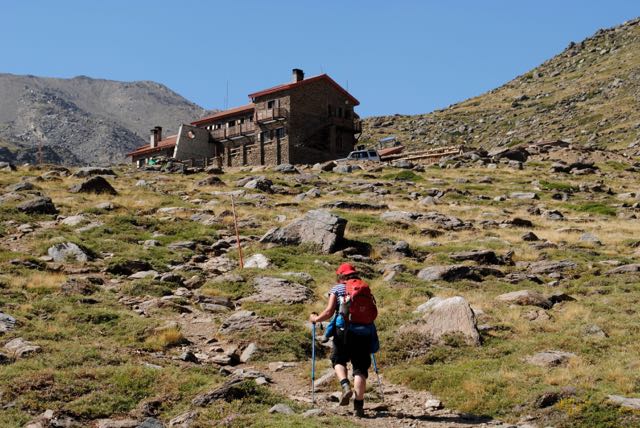
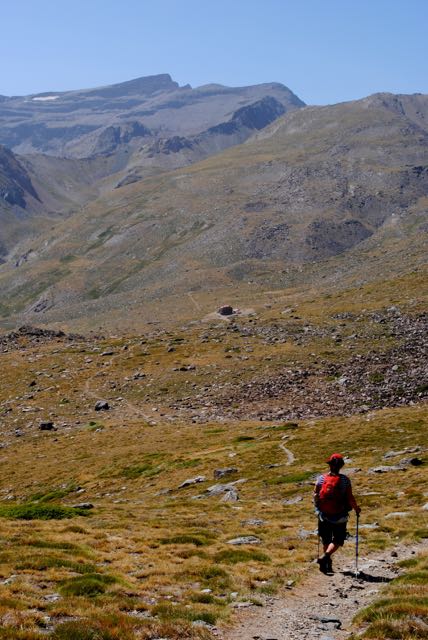
Treking in the Parque Nacional De Sierra Nevada, Spain’s highest mountain range, has many rewards and in the heat of summer one of the best is a swim in the Med an hour after hiking down from the 3500 mt peaks.
Floating in the cooling waters off a busy beach packed with holiday makers it seemed a parallel universe to the empty and wild landscape in which we had spent the last 3 days.
If you want to clamber around the top of Spain without crampons or skis you need to wait till June/ July for the snow to recede- in the Spring or Autumn a snowboarding trip followed by a swim in the sea is an even more surreal experience.
The highest peaks can be accessed either from the northern Granada side in Prado Llano, Euope’s most southerly ski resort or from the southern, Alpujarran side, walking up the old mule tracks that weave their way into the mountains from the white cubist style villages of Capileira and Trevelez. Such is the number of these tracks linking the cortijos, or farmsteads, which reach over 2000mts that there are a wealth of routes short or long to explore. In the higher ranges there are many guided hikes and horse treks or you can avail of a service where you can walk unencumbered while somebody brings up all your gear by horse, sets up camp, cooks your dinner and opens the champagne.

DSC_0014
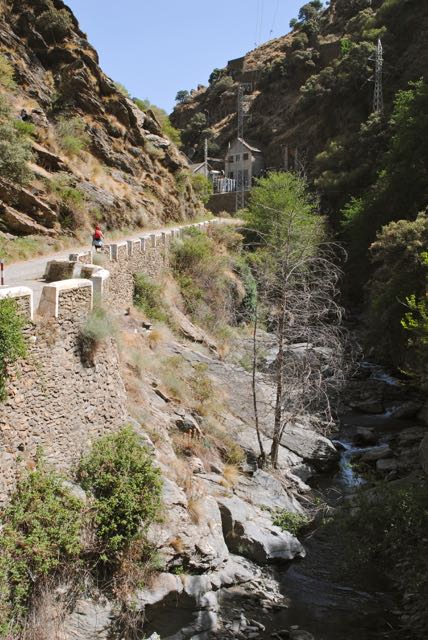
We had a less decadent itinerary when we set off from the hydropower station at La Cebadilla (1500mts) in the gorge of the Poqueira River a few kms north of Capileira. We had devised a roughly circular route from the Refugio Poqueira (2500mts) to take in the peaks of Mulhacen, ( 3479mts) the Iberian peninsula’s highest, and it’s near neighbor La Alcazaba (3364mts) the fortress, named for it’s formidable cliffs on three sides.
Due to the National Park status of 83000 hectares of the Sierra Nevada range, the area is highly protected and although camping is allowed with certain provisions you are required to notify the park authorities of your intentions. In practice however, if you behave sensibly and sensitively and camp or bivvy no more than one night in the same place, a blind eye is likely to be turned. These are serious mountains and as the D.O.E. leaflets on safety states-” Passing through the Sierra Nevada involves a high risk of accidents” and all the usual precautions should be followed.
DSC_0018

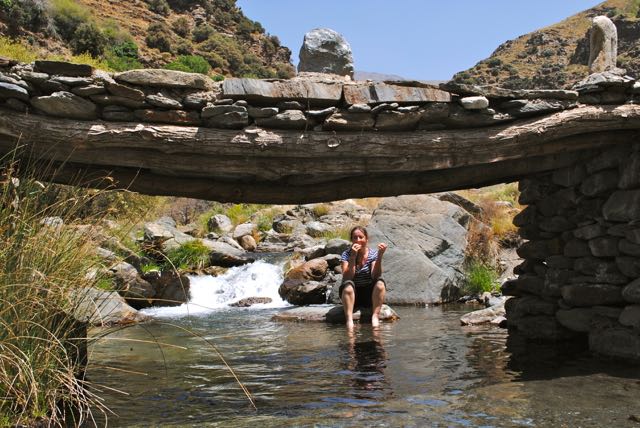
Everything was benign as we climbed the rugged track up the sides of the snow melt river gorge. We were grateful for the shade offered by the steep hillsides and groves of holm oak, chestnut, walnut and willow. At this relatively low altitude there was an abundance of wild roses, foxgloves and even bracken to remind us of home but here the warm air was full of a multitude of butterflies and the heady scent of thyme as we crushed it underfoot. The refugio came into view far above as we crisscrossed the river on simple bridges of wooden poles and flat stones, and above that the lower peak of Mulhacen looking deceptively close.
Although signed at only 5.7 kms from La Cebadilla the 1000mt ascent took us over 4 hours with time spent cooling our feet in the pools DSC_0027

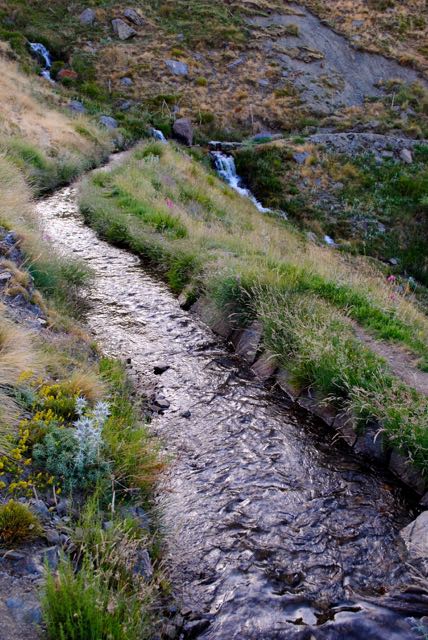
and imagining life in the abandoned farmhouses scattered around us with their simple flat roofed construction and perfectly circular threshing floors projecting from the steeply sloping hillsides.A tough gradient took us up to the still used Cortijo de Las Tomas at 2150mts and over two of the areas acequias, the awe inspiring irrigation canals originally built by the Moors that contour the mountains delivering life giving water to hundreds of farmsteads .

DSC_0167
DSC_0051

Cresting a ridge, the sturdy stone built Refugio Poqueira was a welcome sight and the cold beers on arrival a welcome taste. The refugio is open all year and can cater for over eighty people although after a busy weekend there were only three others sharing the facilities with us that night. The hardworking young couple who run the place offer four course dinner, breakfast, and supplied us with packed lunches for the following two days. You can also stock up on an assortment of requisites from compeed to chocolate and get advice on routes and conditions.
The next morning we headed off up the Rio Mulhacen valley following the tall orange posts that guide climbers and skiers during the snowy seasons. Leaving the last of the running water behind, at 3000mts we came to the trans sierra road that until closed to public use in 1994 was the highest in Europe.Crossing the sierra at 3229mts just below Mt Veleta it’s an impressive piece of engineering but looking at it’s rough and narrow surface and precipitous drops we found it hard to imagine day trippers out for a Sunday drive.
DSC_0064 - Version 2

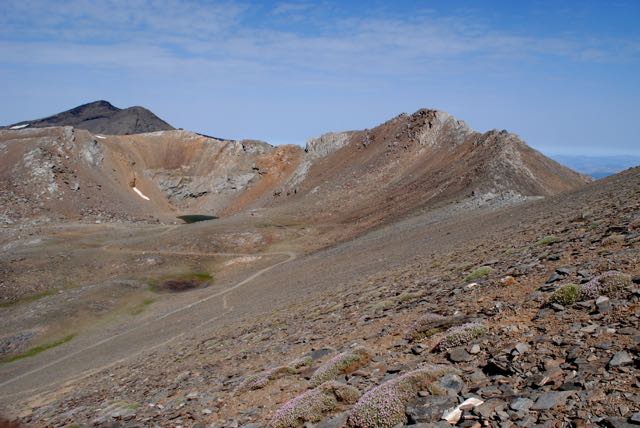
The altitude was making itself felt as we trudged up the steep and shaley western flank of Mulhacen. To the northwest was the peak of the Puntal de la Caldera and the squat stone dome of the basic mountain refuge near a lake at its feet with tiny figures resting outside. As we climbed, views to the north beyond Granada opened up above the Caldera and we often stopped not only to take them in but also a little more oxygen.DSC_0070The once tiny figures below us at the Refugio Caldera passed us by, cheerily greeting us as they hiked on up. We saw them again as we reached the top- running off down a trail to bag another summit. We were happy to bask in the sun at the highest point on mainland Spain, to inspect the offerings at the little summit shrineDSC_0079

and enjoy our packed lunch under the watchful gaze of a cabra montes or mountain goat. The vista all around was sublime, rendered softer by a heat haze produced by a windless 20c -hard to imagine at 3500mts.
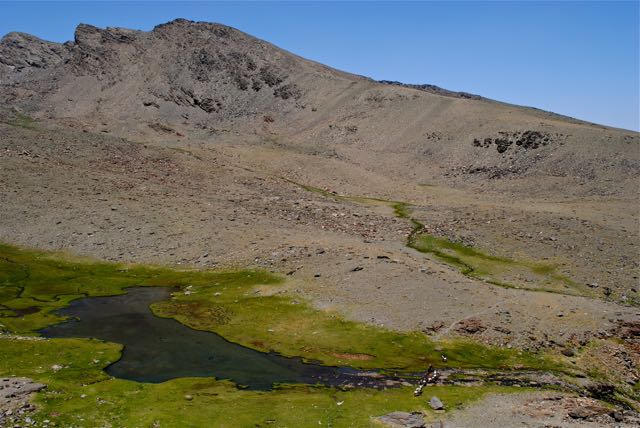
We studied the approach to the jagged heights of Alcazaba then set off down the ridge towards Canada de Siete Lagunas where we were going to bivvy. Siete Lagunas,at 3000mts, is a hanging glacial valley of seven beautiful lakes fed by many springs and rivulets that drops off to the southeast where the lowest lagoon, Hondera, shaped like a dog, empties it’s waters into Rio Culo de Perro (Dog’s Arse River!)
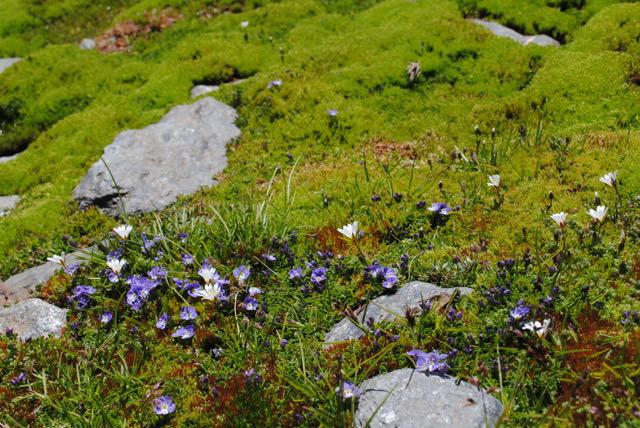
The area contains a number of low circular or horseshoe shaped stone wall enclosures built by campers to protect them from the worse of the wind that can rip around the valley floor, one of which was to be our home for the night. As with much of the high sierras, from a distance the valley had looked pretty austere but up close a wonderfully varied microcosm revealed itself. Alpine flowers in exquisite colors emerged from pin cushion mounds of 40 shades of greenDSC_0138and a small group of cows munched contentedly on the lush grasses before being called by the matriarch of the herd up the steep zig zag path out of the valley and into the vastness beyond, leaving us alone- with the foxes.
I had read about the increase in foxes scavenging food from campers at Siete Lagunas and posters at the refugio had warned of them. The advice was not to leave food in a zipped up tent as they would tear their way into it and the only real deterrent was a dog. So after we had finished our dinner, before settling into our sleeping bags for the night, I carefully stove all our remaining food into the bottom of my pack which I covered with rocks. Then we lay back and, as the sky darkened, watched the milky way appear above the sierras. Just as we fell Isleep we were startled by a sudden noise. Opening my eyes I looked straight into those of a fox at our feet, it’s snout in our other pack. My involuntary yelp drove it back over the wall and investigations revealed a forgotten chorizo sausage,which we promptly eat, sticking out of a side pocket. Falling back into a wary slumber we listened to a duet of the fox and a dog of some other campers barking at each other across the lake.
As the moon rose the temperature dropped and the wind picked up. A loud whooshing noise up the head of the valley was followed after a few tense seconds by a short but sharp buffeting. It was wild and elemental but the sky remained clear and we were cosy enough in our bags.
In the morning we stowed our packs against the bivvy wall and made our way up the shoulder of Alcazaba in a strong and gusty wind, climbing across a sea of shattered rock and shale to the final ridge to the summit.

DSC_0124 The cliffs fell away vertigiously to the north and the buffeting wind kept us well away from the precipice on the last couple of hundred metres. Our efforts were well rewarded by the views of the dramatic north face of Mulhacen and the spine of 3000mt peaks snaking away eastwards below us.
Although the sun shone brightly the wind chill got us off the top fairly fast and back down to the top of the shoulder. From there we returned to Siete Laguna by a more direct but much steeper route- scrambling down the north end wall of the valley allowing us to explore the higher lakes as we followed the streams back to Laguna Hondera.
Rested after a leisurely lunch we headed off, up out of the valley, looking back down to see a line of horse trekkers crossing the Culo de Perro.DSC_0149

Going south we worked our way across the long shoulder of Mulhacen past the last compacted snowfields following cairns that led us down to the trans sierra road at 3000mts. From here we could see the Mirador de Trevelez (2680mt) a couple of kms to the south, to where hikers and daytrippers can get minibuses from Capileira, saving them the long climb from the village. We quickly lost height to cross paths with a couple of fresh looking bus passengers at Hoya de la Iglesia. From here a pole marked trail led us down to the refugio

.DSC_0159

Much busier than on our previous nights stay we mixed with about 40 cyclists, climbers and hikers on the sunny terrace, relaxing weary muscles over a beer whilst gazing down across the ranges to the sea.

Setting off under another clear blue sky in the morning, we retraced our original route alongside the tumbling river through clouds of butterflies stopping only to gorge ourselves on plump juicy cherries picked from the orchard of a long deserted cortijo.
Our descent to the car was much quicker than the ascent, so before long we were having lunch at a chiringuitos, a beachside seafood restaurant followed by a refreshing swim that restored us to a state where we were once again looking forward to our next hiking trip.

Great Southern Trail

DSC_0281

Back on Track

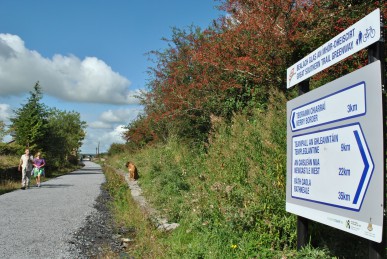
On the day it was reported that the popular Great Western Greenway in Mayo had just won an international eco award, I set out to explore its unsung southern counterpart.  The Great Southern Trail is a 40 km greenway developed for off road walking and cycling down the old Limerick – Tralee railway, the last major line to be closed in Ireland.  The whole stretch can easily be cycled or not so easily hiked in a day.  If you want to walk it , it makes more sense to take 2 or 3 leisurely days over it, either staying in towns along the route or camping, giving you time to explore the suggested loops off the track on quiet backroads.

So far the route is open from Rathkeale to the Kerry border 4 km beyond Abbeyfeale and plans are in place to extend the trail to the North but so far the hopes of a Greenway running all the way to Tralee have been stymied by a stand off with North Kerry landowners.  This is somewhat bizarre as the line, finally abandoned in 1987, is unique in Ireland in that the land has not been sold back to the farmers but is still owned by CIE and as such has rights of way.  A recent door to door survey confirmed huge support for the trail and a public meeting on the 19th October made progress on hopes for a 9km extension to Listowel.

There are no vertigo inducing ridge walks or muscle straining summit assaults and the scenery is not jaw dropingly wild and remote but the Great Southern Trail has a lot in its favor when considering a hiking destination.

You won’t get your feet wet

The surface is all firm, graveled and well drained, so you don’t need those heavy hiking boots.  It is also mostly very sheltered by diverse hedgerows of all the native species and beech, sycamore and more, so it’s suitable when more exposed walks would be hard going.

Accessibility

With the trailhead near the end of the Mid-West M20 motorway system, it won’t take as long as more remote locations to get to or back from. There are many places along the trail to join or leave so its easy to tailor a walk to suit ability or time.

Gentle on your body

The going is easy – open to young and old and even prams.  You can push yourself with speed or distance if you want – but you won’t need mountain rescue after a fall and the level ground is great for dodgy knees.

Dog friendly

Going for a long hike with dogs in Ireland has problems.  It is virtually impossible to take dogs into the hills – the farmers understandably don’t like it.  Coillte land is usually canine friendly but although much of it is in beautiful locations it is somewhat monotonous and very limited when looking for an unbroken stretch of 40kms.  Canal tow paths are good but  by their very nature cross flat terrain whereas the Great Southern Trail passes through some lovely hilly country.  So much so that the track up to Barnagh Station from Newcastle West with its gradient of 1 in 60 was a feared climb in the steam age and meant that the trains could only carry half the load possible on the rest of the railway network.

History

The Great Southern Trail is a route, not only through lush countryside but also through a fascinating past, industrial, political and even agricultural.

The trailhead is at Rathkeale station, now home to the Palatine museum, dedicated to the hundreds of German Protestant refugees who were successfully settled around 1710 on the lands of Sir Thomas Southwell of Castle Matrix just outside of town.

Starting down the trail with my dogs through a dense  tunnel of greenery and crossing over the River Deel I came upon a sign for Castle Matrix offering teas, tours and B+B.  Hoping to fortify myself for the hike ahead with a cuppa, I set off down the overgrown boreen but was unable to rouse anyone from the somewhat forlorn looking castle tower.

DSC_0181

Sir Walter Raleigh had given some of the first potatoes in Ireland to Southwell who grew them in the land around the Castle and distributed the seed crop throughout Munster in 1610.

Leaving behind the busy and noisy N21 we soon passed under the first of five fine cut stone bridges on the leg to Ardagh.  The hedges were quite tall and dense either side of the trail making it very sheltered but allowing only tunnel vision to the hills beyond Newcastle West rising up above the track line.

DSC_0188

The first optional loop comes off the track around here leading North East then South West past Cahermoyle House where William Smith O’Brien, the Irish Nationalist and rebellion leader had a home.  Found guilty of high treason he was sentenced to be hung, drawn and quartered but after a petition for clemency was signed by 20,000 Irish people he was transported to Tasmania, returning after an unconditional pardon 7 years later.  The mansion now standing was built for his son Edward in 1870 and has become a nursing home.

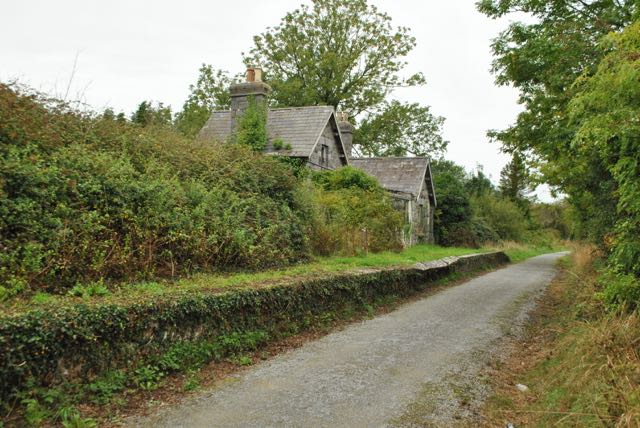
After an hour or so the views opened up across the verdant pastureland of the Golden Vale before we arrived at the platform and station buildings of Ardagh, now sadly derelict and slowly returning to nature.

DSC_0194

From here it is a short stroll into Ardagh village and only another 4 km to Newcastle down the first section of track to be cleared and surfaced by the Great Southern Trail Action Group.  The dead straight, due North/South track leads to a housing estate surrounding the old Station buildings on the edge of town.  Newcastle is a sizable and pleasant town with the restored Medieval Desmond Castle and riverside walks through the Demense grounds.  With plenty of pubs, restaurants and accommodation this could make a good overnight stop being roughly a third of the way along the trail.

The next 13 km section of the trail up to the Barnagh tunnel and then down to Templeglantine is perhaps the most attractive with far reaching views over the Limerick plain especially if the 6km Rooskagh loop up into the hills is included.  After an initial slight descent we reached an old level crossing with an attractive house and garden proudly displaying homemade signals and railway memorabilia.

After crossing a river the trail started to curve and climb gradually toward the forestry clad slopes of Sugar Hill.DSC_0202  Soon after crossing the restored Ferguson’sViaduct, the noisy N21 comes alongside and must be crossed after 200m or so to admire the views across to the Galtee and Silvermine Mountains and to follow the stand alone kilometer of track to the tunnel.  Approached by a raised embankment at first and then a very deep, shady and mossy cutting the 100m tunnel is home to 8 or 9 different bat species and some extravagant ferns.

.DSC_0220

A short stretch South of the tunnel including Barnagh Station have yet to be cleared so after a fruitless attempt to battle my way through the overgrown vegetation and flooded cutting I conceded defeat and retraced my steps to the N21 and after another short stretch of tarmac walkway, re-emerged onto the trackbed.  Although the road stays quite close from here to Abbeyfeale the pleasant views and quiet otherworldliness of the abandoned railway are enough to detach you from the traffic hum, as you slowly wind down the valley towards the cluster of buildings visible at Templeglantine – the windmills sprouting on the ridge above a reminder of the rebirth of other technologies older by far than the steam trains.

DSC_0228The village, 500m down a farm lane to the left is a good overnight stop, either at the Devon Hotel or, has I did, camping beside a picnic table just below the school.

With the dogs keen to get going on the last 15km the next morning we climbed above the mist on the last optional loop, cutting back to the track early to enjoy the section through the beech, oak and chestnut trees of Tullig wood, stopping at a well placed bench for breakfast overlooking the Serpentine meanderings of the Allaghaun river.

DSC_0249

After a kilometer or so the woods thin and the views open out onto a broad flat river plain.DSC_0274

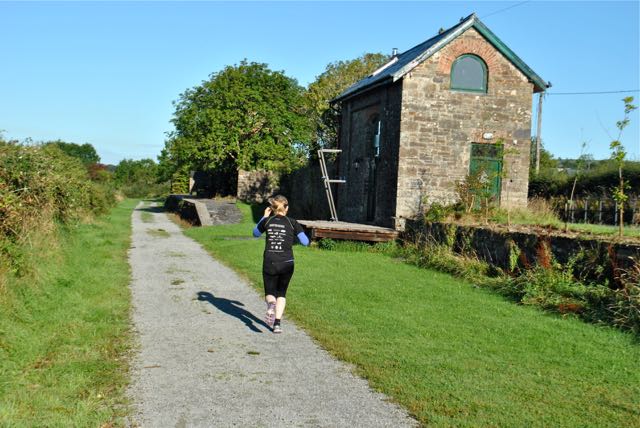
Overtaken by a lycra clad runner at the beautifully restored Devon Road Station we followed our shadows West down a foragers paradise with a larder of apples, blackberries, wild strawberries and hazelnuts on either side.DSC_0261

DSC_0266

The burbling river is very close at times here and the sandy banks are home to the county’s largest colony of sand martins.  The sunshine led me to entertain thoughts of a dip but with the trail end almost in sight we carried on, under another cut stone bridge and passing dog walkers and our first cyclists, arrived at the Abbeyfeale station now a private home.

From here to Kerry the track has recently been cleared with a new gravel surface and will benefit from some time worn bedding in, but the countryside is idyllic in the sunshine with extensive vistas and twinkling waterways, the Kingdom’s hills approaching.  Crossing the river Oolagh on another (dog paw unfriendly) metal grill bridge, traffic noise from the N21 abated as it turned South as we turned North West and, lulled into an hypnotic walking rhythm it was a rather sudden shock to come to the end of the line, at least the restored line, at the border.

.DSC_0286

Hopefully, in time, the trail will continue on to Tralee and Fenit on the coast, but for now we retraced our steps to Abbeyfeale and a dog friendly taxi to our starting point at Rathkeale.

MORE INFO:

There’s lots of information on the Action Groups website.( southern trail.net) and their Facebook page (facebook.com/listowelrailwalk) has 1500 followers.

Accommodation

Dunraven Arms Hotel in Adare (has bike hire packages)

Rathkeale House Hotel

Courtney Lodge Hotel in Newcastle West

Devon Inn Hotel in Templeglantine

Leens Hotel in Abbeyfeale

Bike Hire

Pedal Pursuits supplies bikes and will collect you wherever you finish

086 8134061

Taxi

The very accommodating Nicky’s Hackney in Abbeyfeale will take dogs.

087 6854257

Steve Barham. Hollymount. Peterswell. Co Galway.

stevesally55@gmail.com