Month: December 2018

Sierra de Aracena

The largest Natural Park in Andalucia, the Aracena y Los Picos de Aroche is 184,000 hectares of prime walking country.

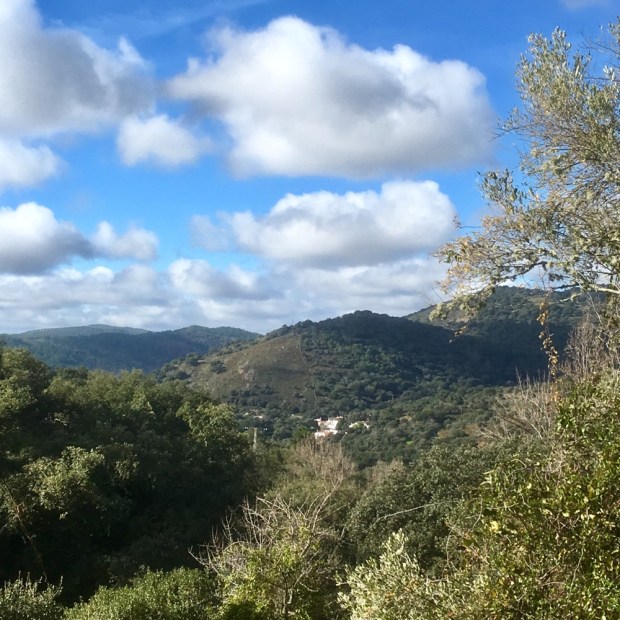
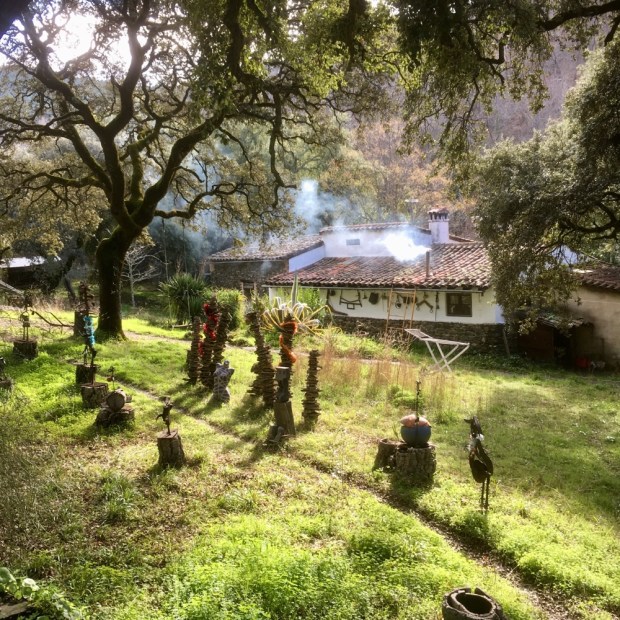
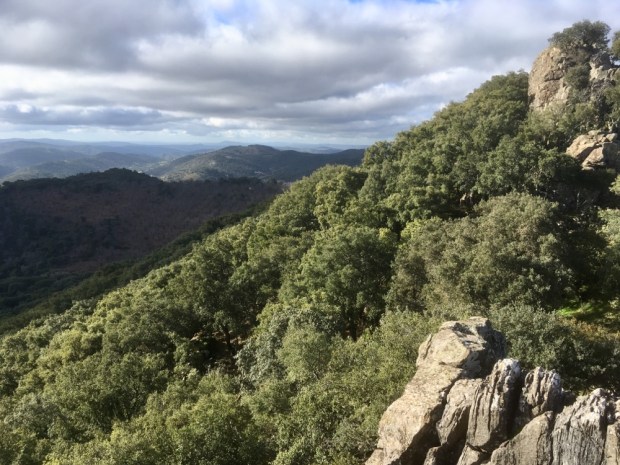
100km northwest of Seville, in the province of Huelva, this is where the cross Spain ridges of the Sierra Morena finally run out and the Atlantic weather systems drop their water bombs after crossing Portugal unchecked. Lush, green and 90% forested, the softly rounded hills, covered in their blanket of oaks and pines and chestnut are less rugged and wild than many higher, steeper and rockier Sierras but the Aracena is a hikers paradise with long or short walks on moderate gradients winding along the wealth of old drovers that string the pueblos and villages together.
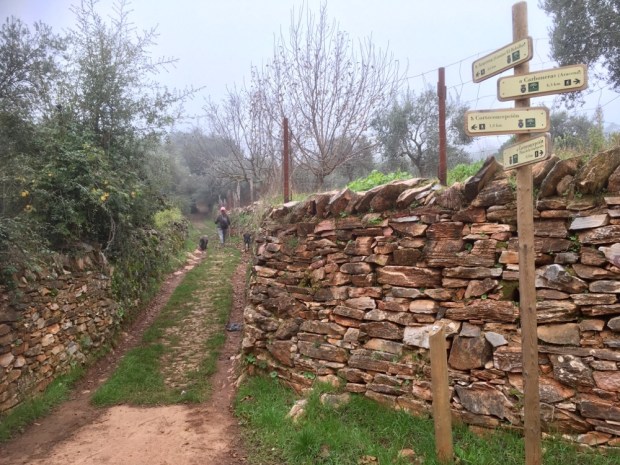
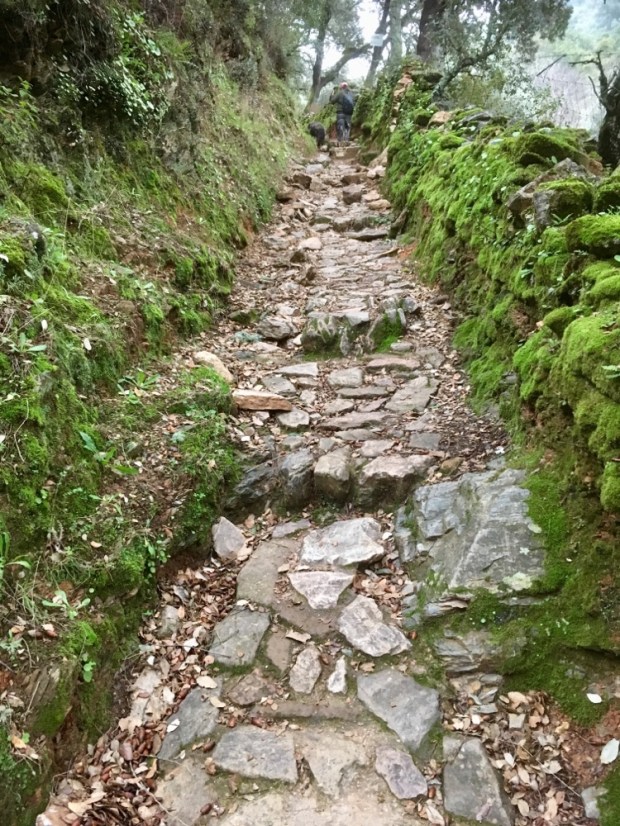
We did 5 long looped rambles over 5 days, and felt we could have lost ourselves in the shady valleys and over the high ridges for months tramping the cobbled mulo trails.
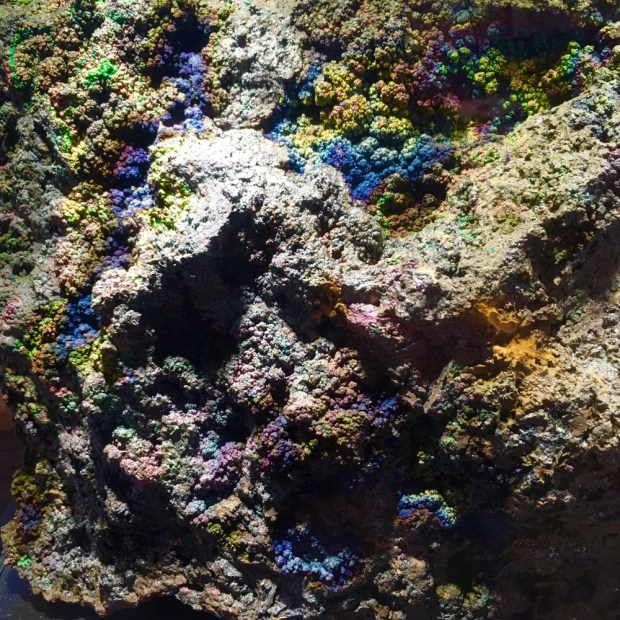
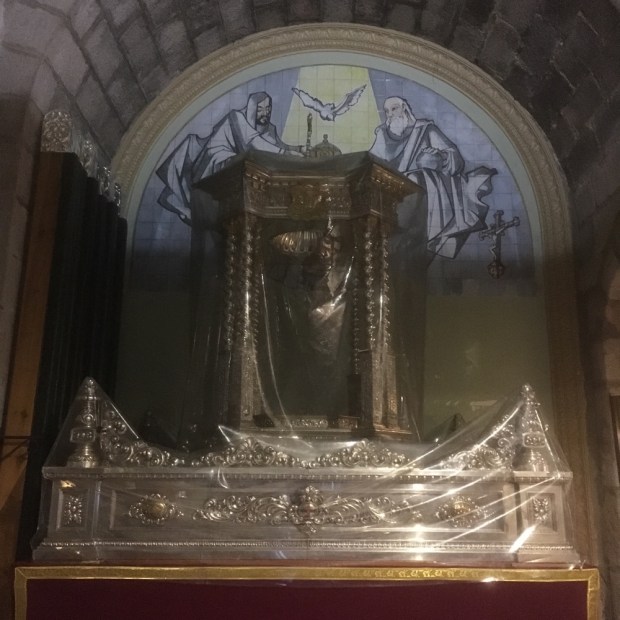
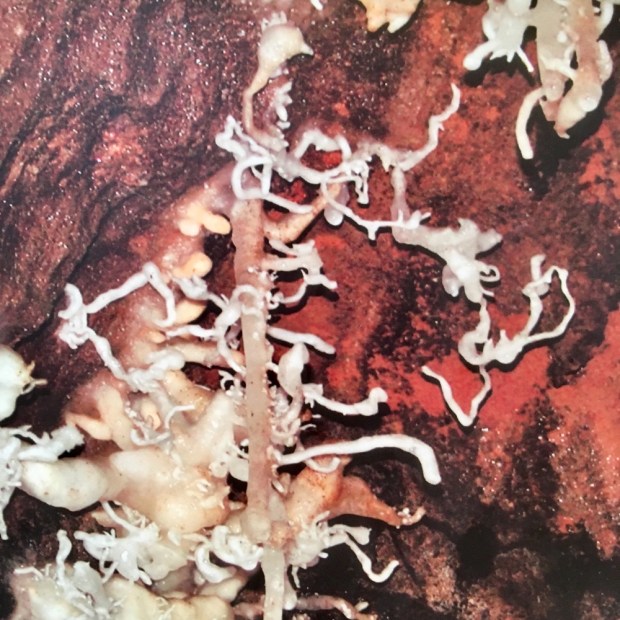
Our first couple of days were spent around Aracena town itself, a charming centre famous for its fantastic cave system right in the middle of town. Supposedly discovered by a shepherd and first opened to the public in 1914, the km or so of passageways and caverns visited on the tour feature a truly awesome ( not a word I use lightly) display of all forms of stalactite and stalagmite, the likes of which I have never seen before. Unfortunately no photography was allowed so I can only illustrate by showing a poster of just one interesting element.
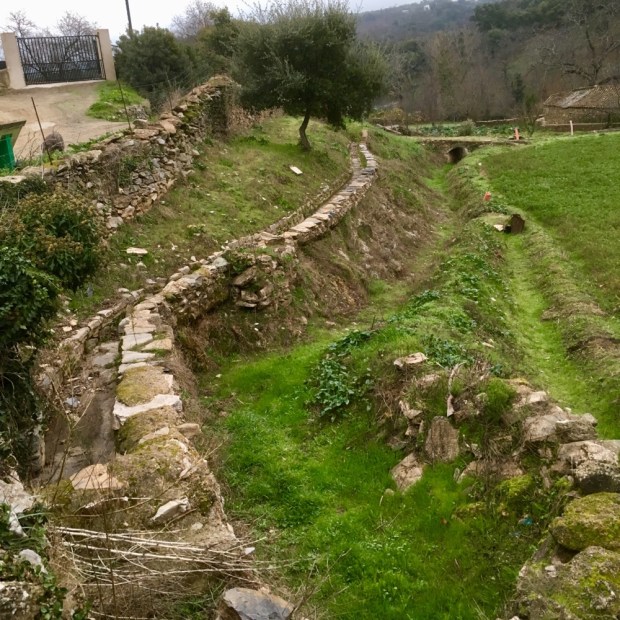
We started early on our first 11km walk on a misty and then drizzly day, a loop to Corteconcepción. The moisture was a good illustration of how the region is seemingly so fertile and lush. Most of the fincas had fine huertas, or garden areas, which even out of season had a wide variety of fruit and veg, irrigated by various systems of water control, including one way stream gates.

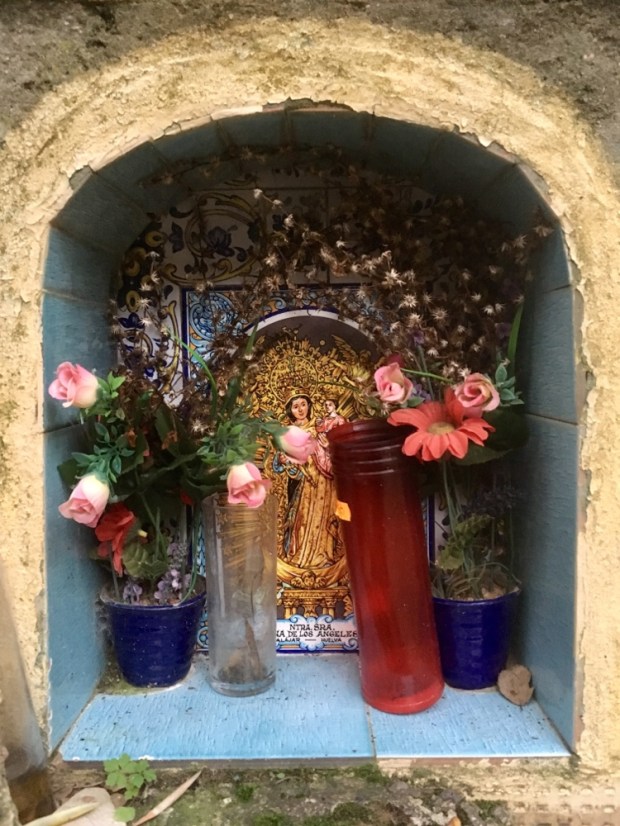
A very catholic rural people, there was an abundance of roadside shrines and gatepost tiles depicting the Virgin Mary, and the entire landscape was dotted with chapels, churches, convents, monasteries and hermitages.

Passed the gardens of brassicas, root crops and the last remains of peppers, tomato etc and the orchards of orange, lemon, chestnut, pomegranate and persimmon was rich Dehesa country. Tracks lined with Arbutus, the strawberry tree, their fruit littering the ground, their flowers decorating the branches in a fitting Christmas style, were surrounded by oaks of every kind, under which the Iberian pigs snuffled and snorted, hovering up the plump and plentiful acorns.
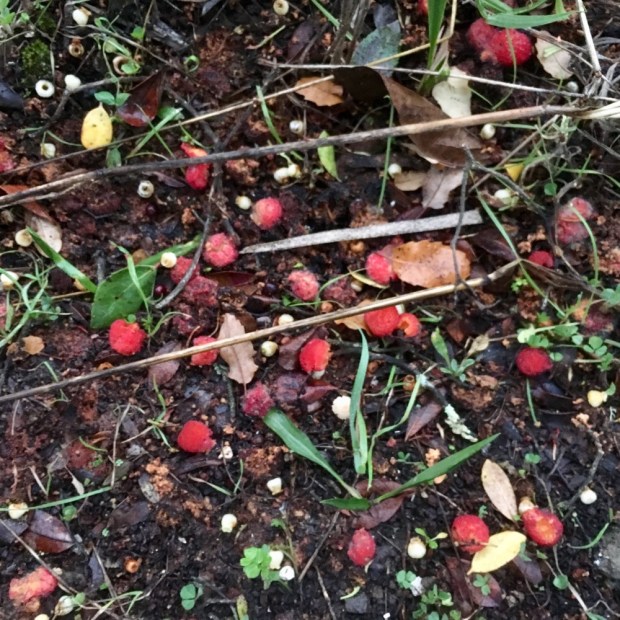
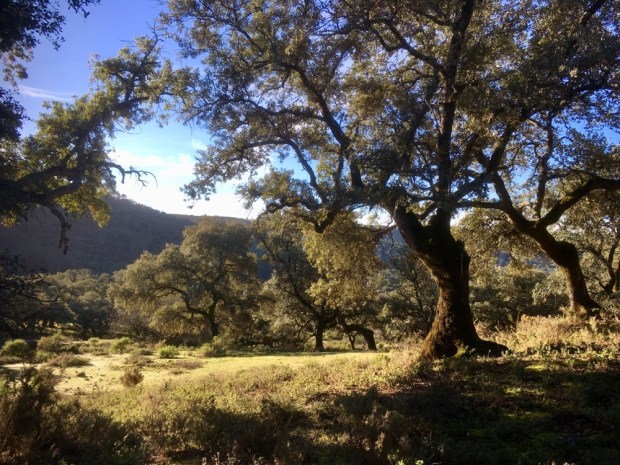
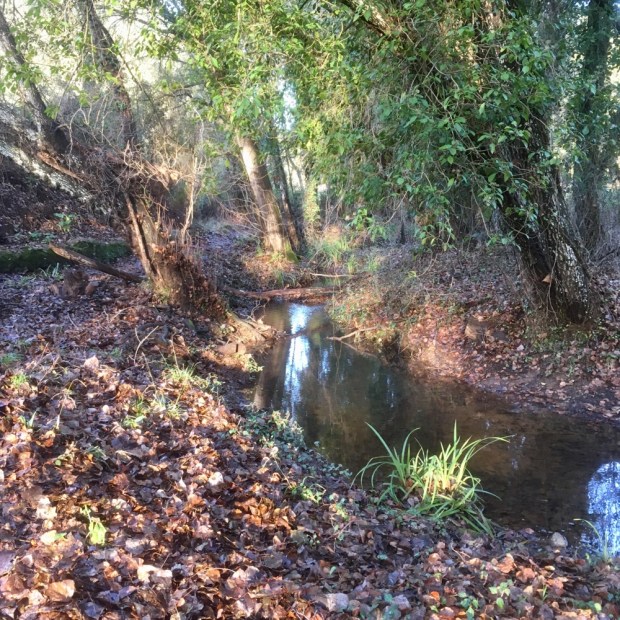
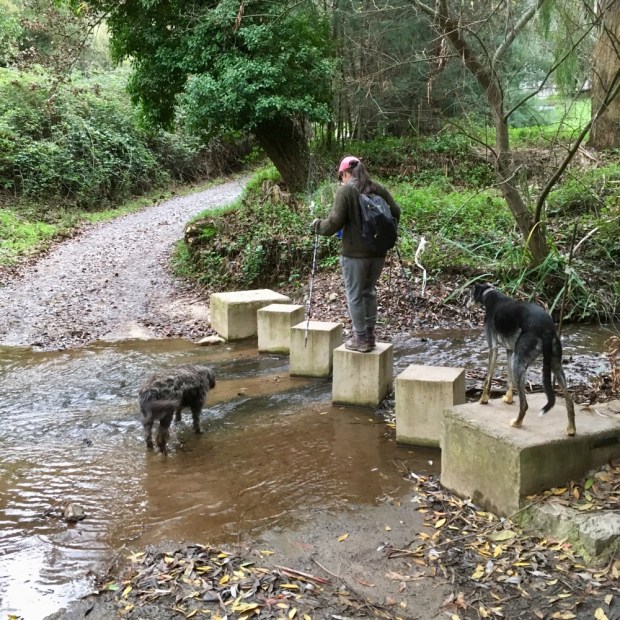
Unlike a lot of our Spanish treks we were often accompanied by the gurgling and burbling of running water and had to ford streams on a variety of stepping stones and bridges.
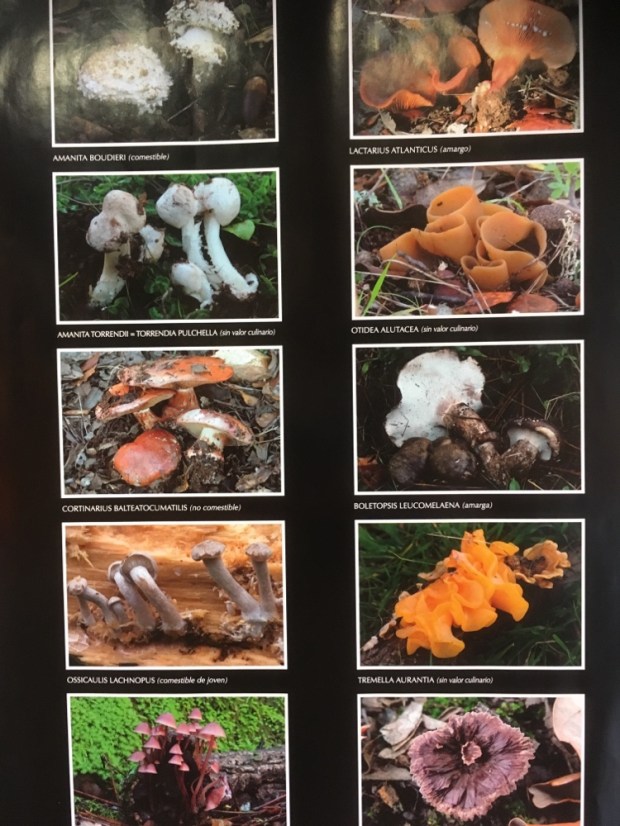
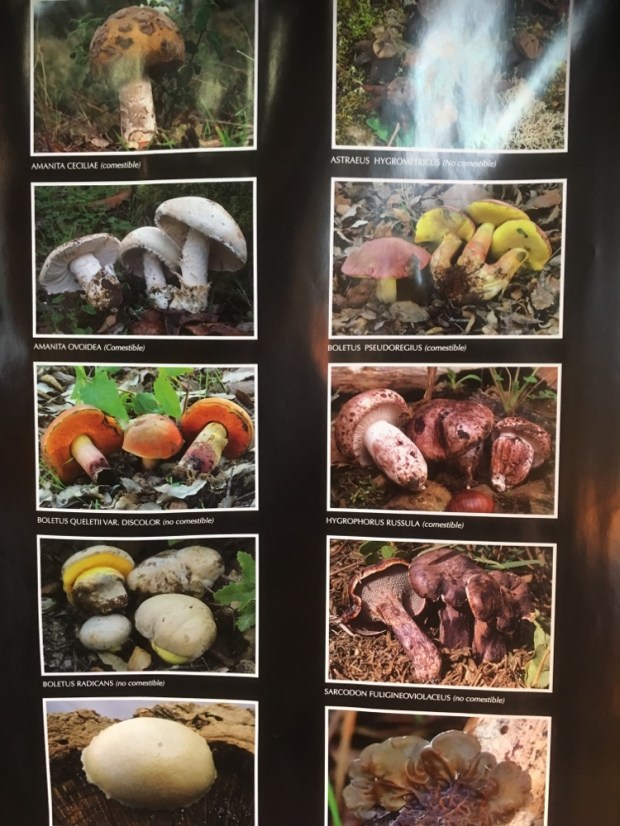
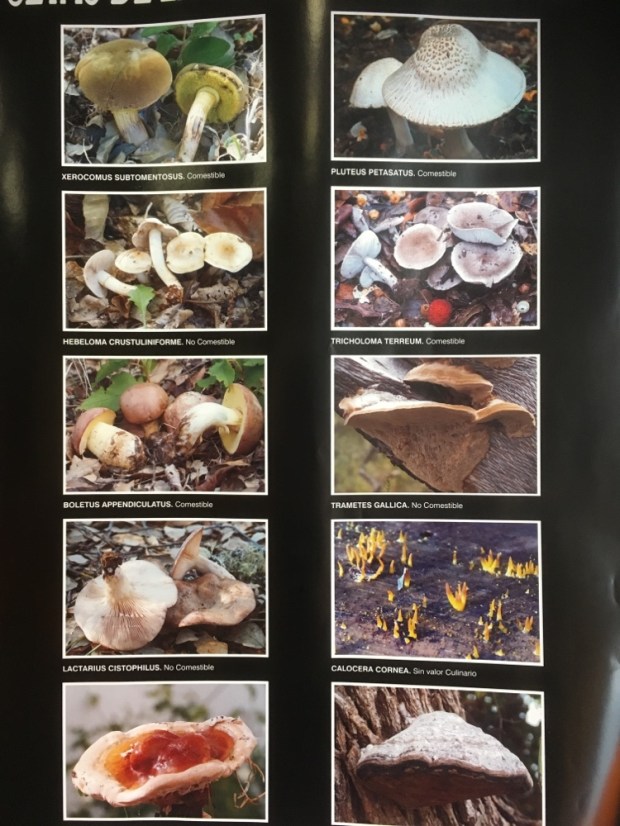
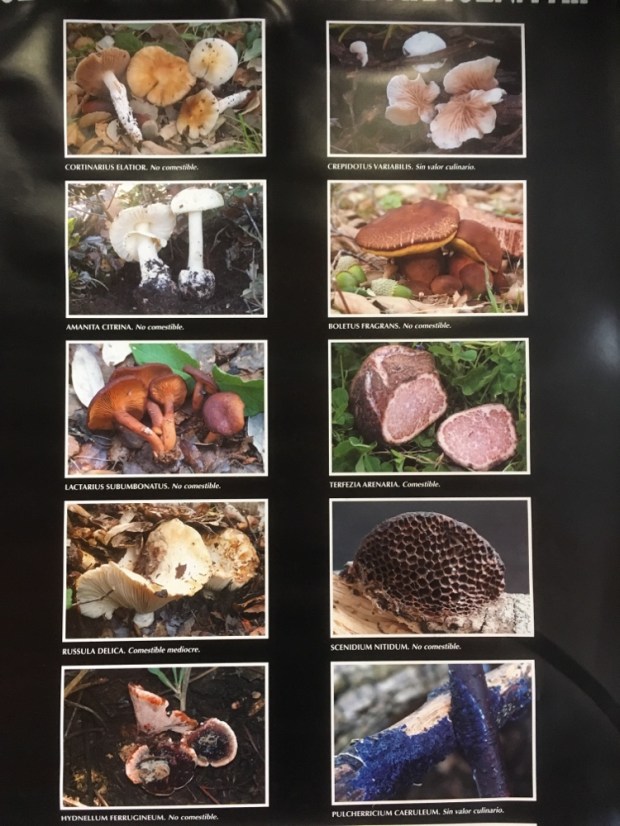
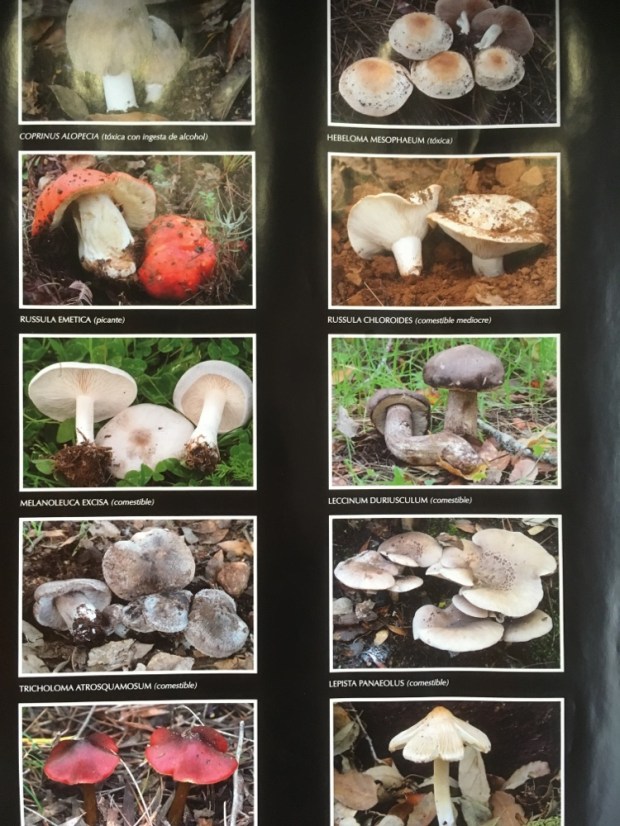
We spent the drizzly afternoon in the caves and in museums of jamon (ham) and setas (mushrooms), both of which, along with chestnuts, the region is rightly famous for. Autumn is the time to be here with a rich harvest going on and the chestnuts turning golden brown. The huge variety of mushrooms is amazing with many kinds gathered for the kitchens and tables.

And as for the jamon, as much as we relished seeing the pigs enjoying their free ranging freedom, ( indeed we came upon many living feral in the open hills) the sad truth displayed in the museum of jamon was that it all ended in butchery.
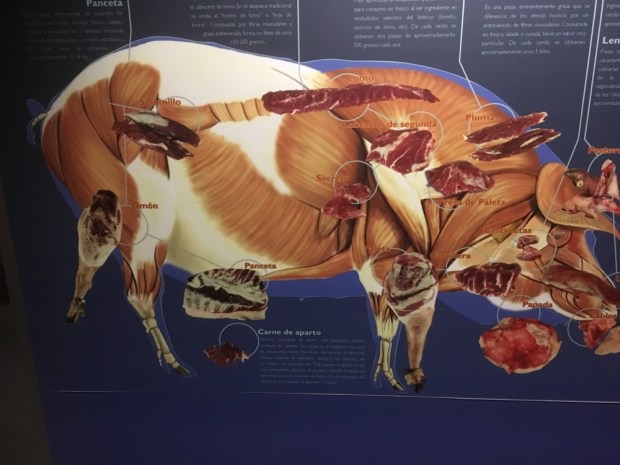
But at least the end product was treated with a reverence rarely seen bestowed upon food unfortunately. There are many outlets in the area and indeed across Spain that are akin to cathedrals of pork, with the Iberian acorn fed pigs from Jabugo and the Aracena area on the high alter, and the jamon costing many hundreds of euro.
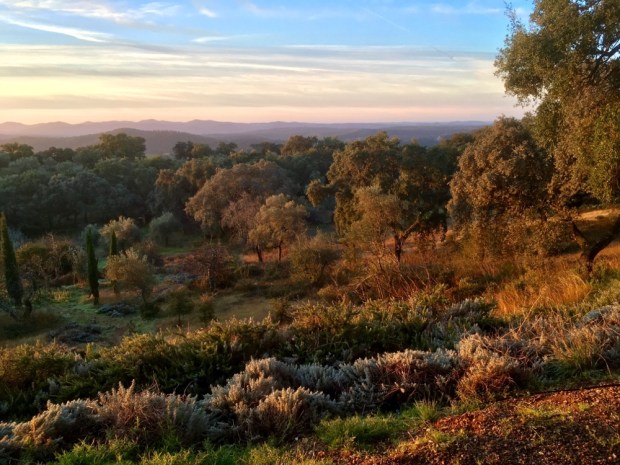
Next day was brighter and drier and we took off on another 16km circular route from Aracena west to the village of Linares de la Sierra.

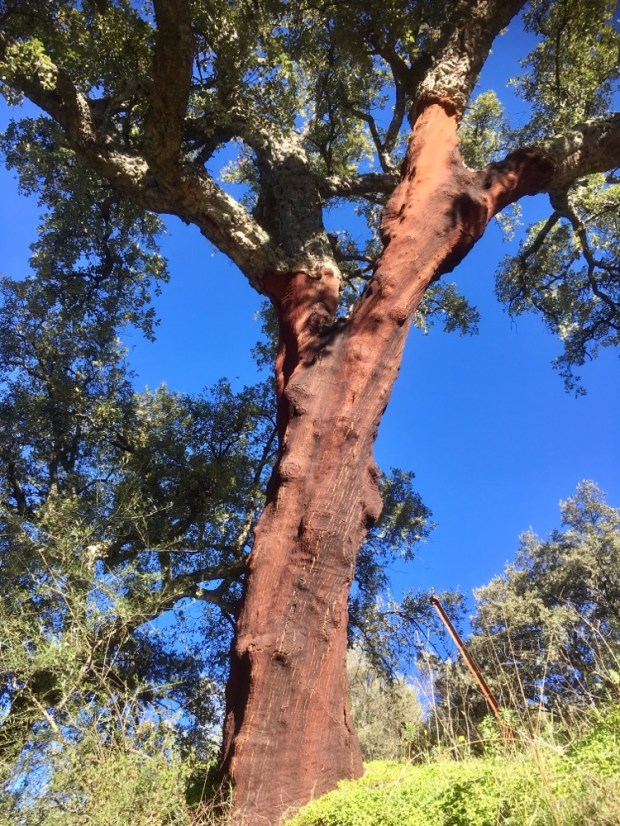
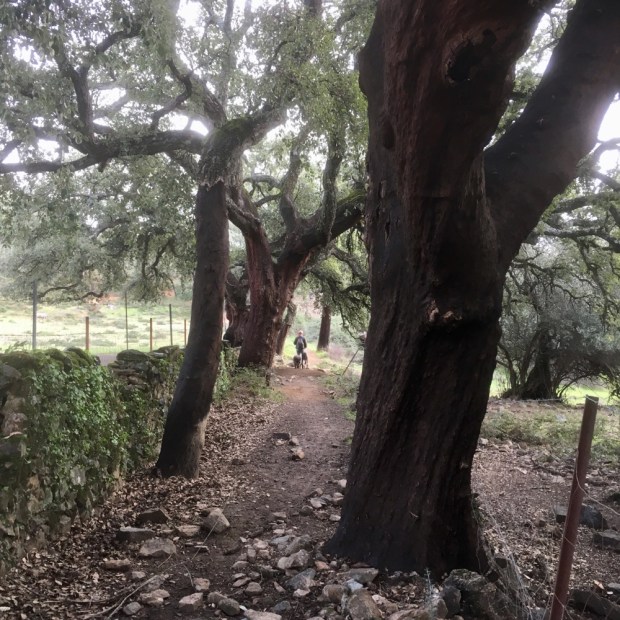
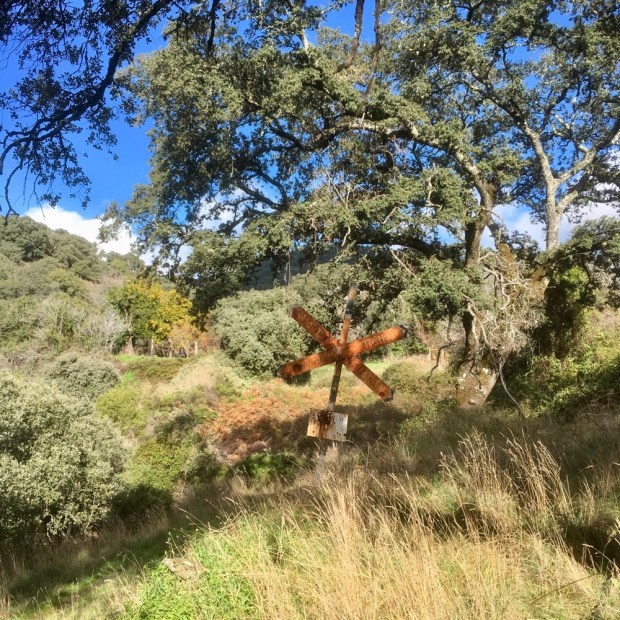
Finding or way out of town past the sports arena , swimming pool and football pitch we soon found ourselves among the freshly peeled alcornoques or cork oaks on a path shared with walkers and riders.

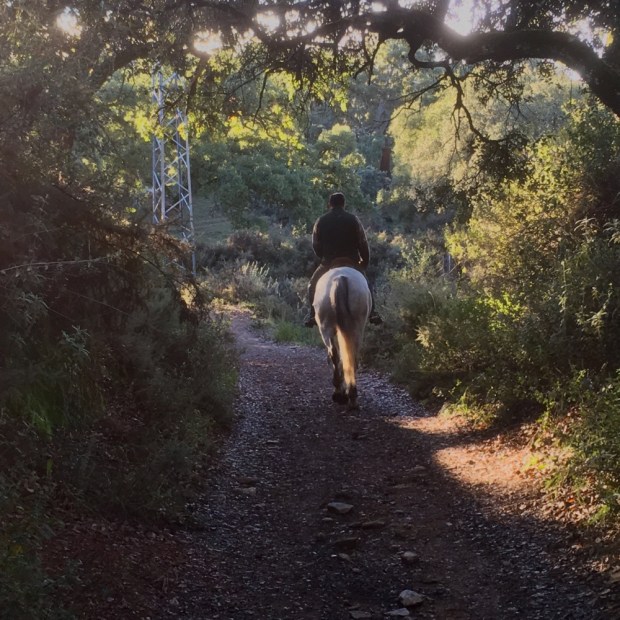
The amount of material gathered sustainably from the cork oaks is very impressive and must involve some hard graft with ladders and mules needed to harvest the trees across the hard to reach sierra. Although the wine industries adoption of plastic corks created worries for the indigenous industry there seems to be a big revival of other cork products and an impressive selection of goods are on sale in the area.

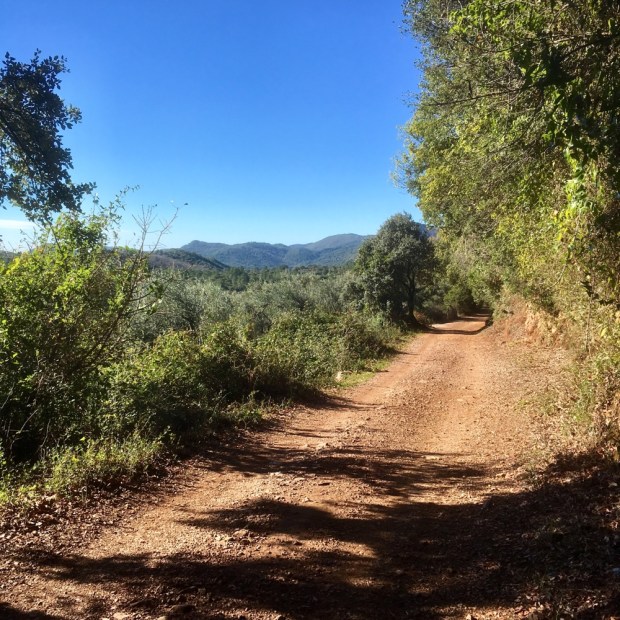
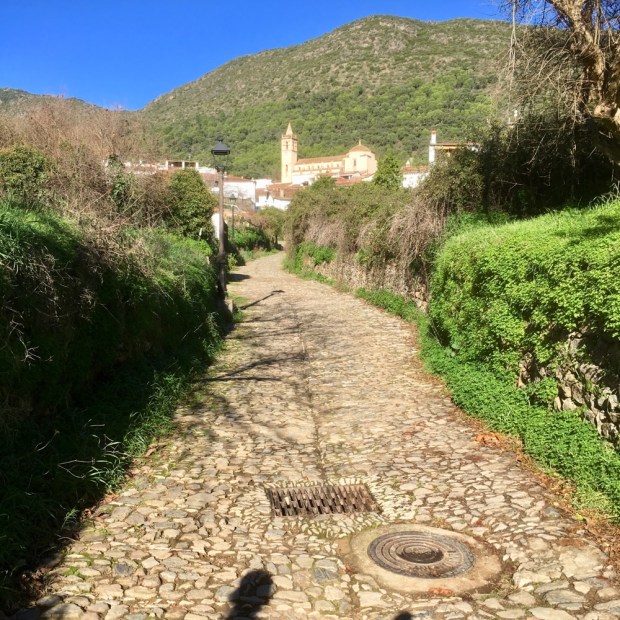
The trail climbed a ridge and then descended towards Linares, tucked deep into the folds of the green hills. We walked on sandy tracks, rocky trails and cobbled paths accompanied by birdsong, cowbells and snorting pigs.

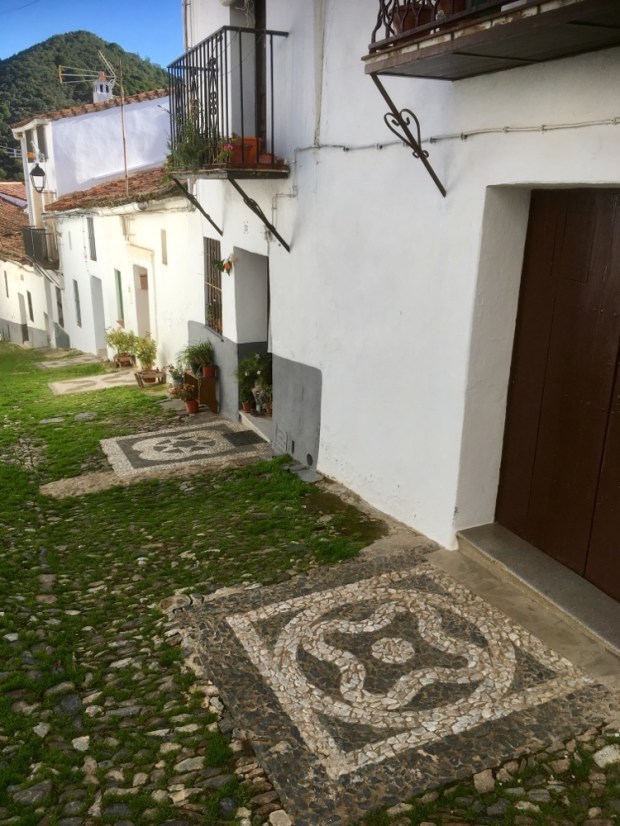
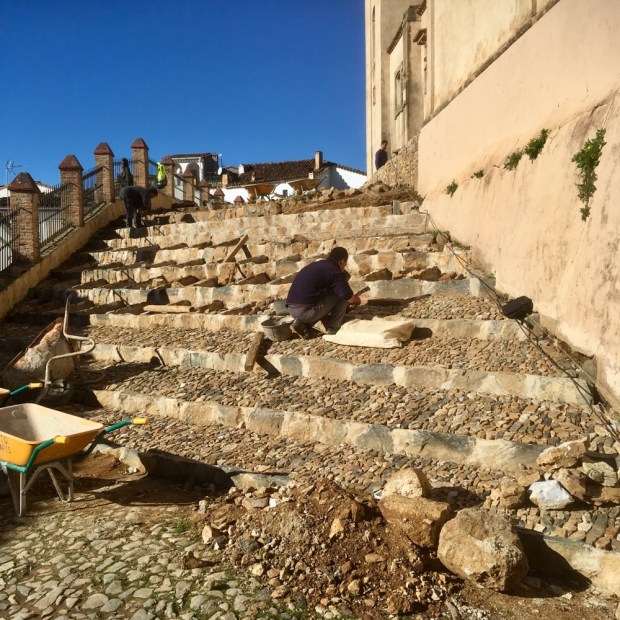
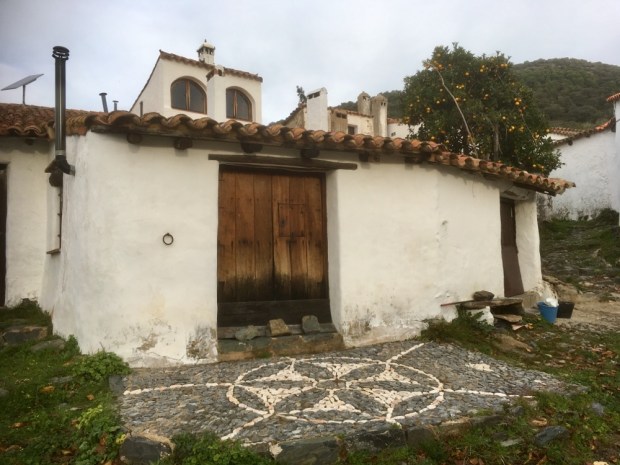
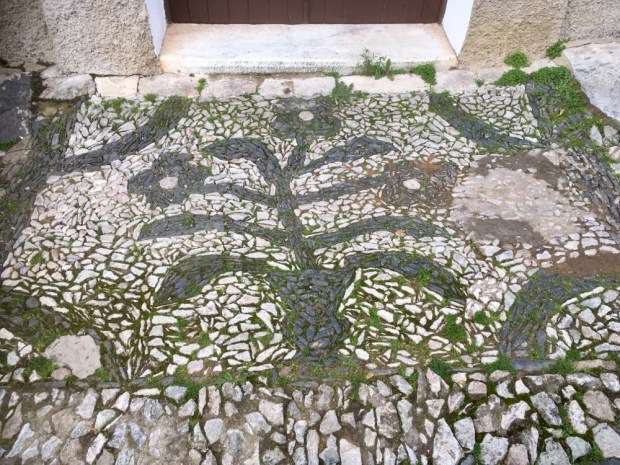
The village itself was an exhibition in the art of cobbling. The houses had individual designs in black and white marble cobbles at their front doors, the streets were intact and maintained and there was new and restored cobbling going on around the church.
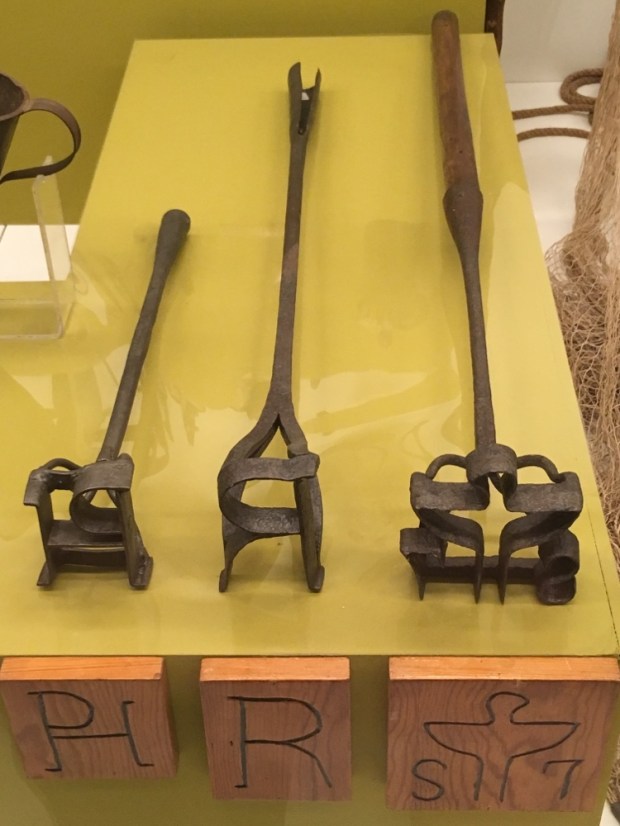
On our return to Aracena we passed through some more open country with big fincas, the gate posts displaying the hieroglyphic initials or signs with which their stock was branded. There was also one signed with the distance to Santiago de Compostela, presumably a returned pilgrim. And then on the approach to town some tasteful and expensive looking holiday rentals.

Finishing our circle we drove to our next days starting place outside Alájar, another attractive town in a beautiful setting with towering peak of Pena de Arias Montano rising sheer above it. We drove to the chapel of Our Lady of the Angels half way up and hiked up to the mirador for mighty views across the Sierra.
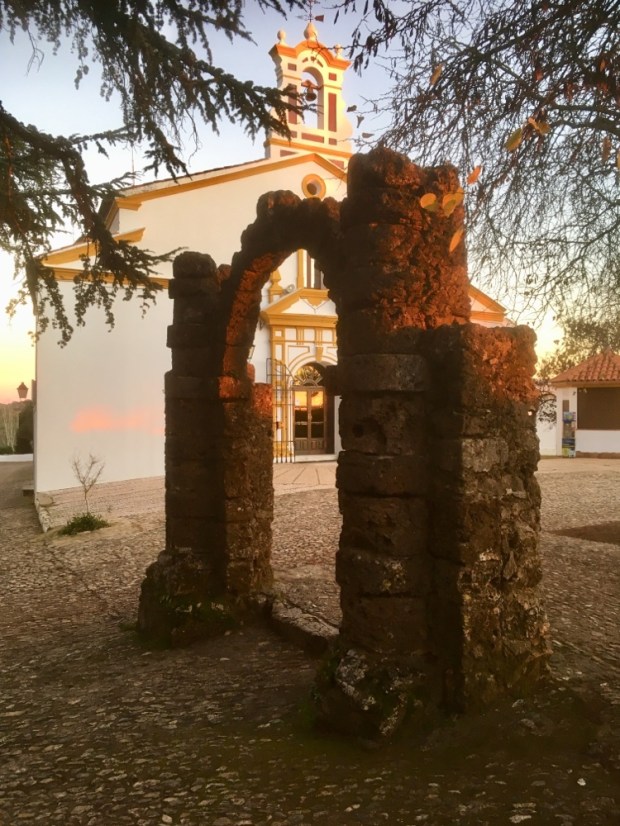
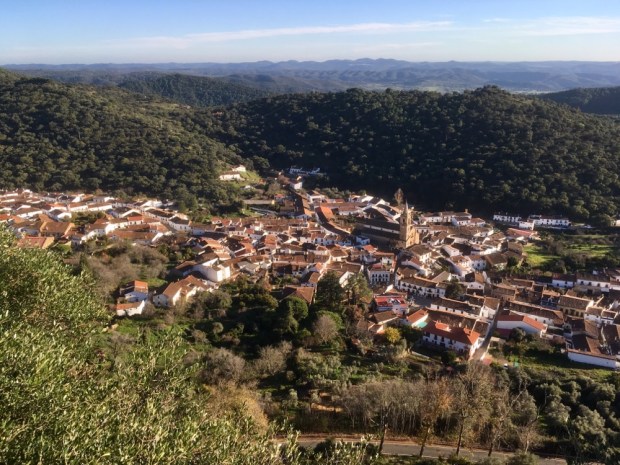
A shortish 12km loop with plenty of ups and downs circled from Alájar back to Linares by way of the once abandoned but now being resettled hamlet of Los Madroneros.

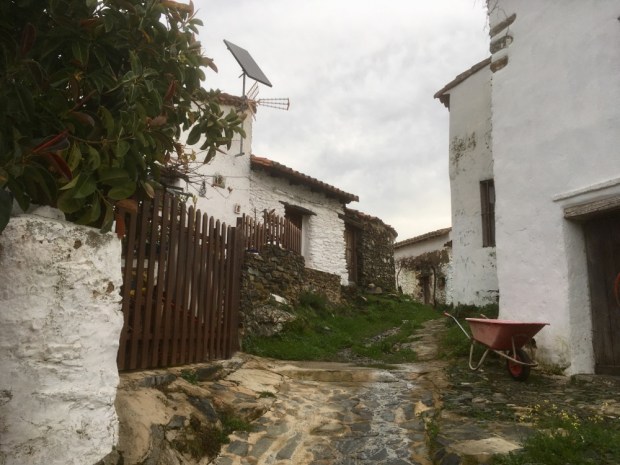
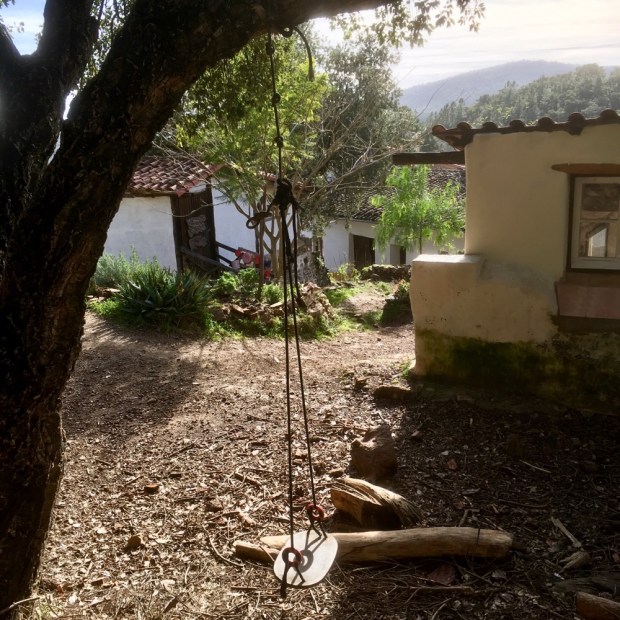
A new concrete track covers most of the distance to the isolated hamlet where solar panels and mobile phones have made living or staying out here a more viable option. There has been a fair bit of reconstruction going on and there are places to rent for anybody looking to avoid the rat race for awhile.

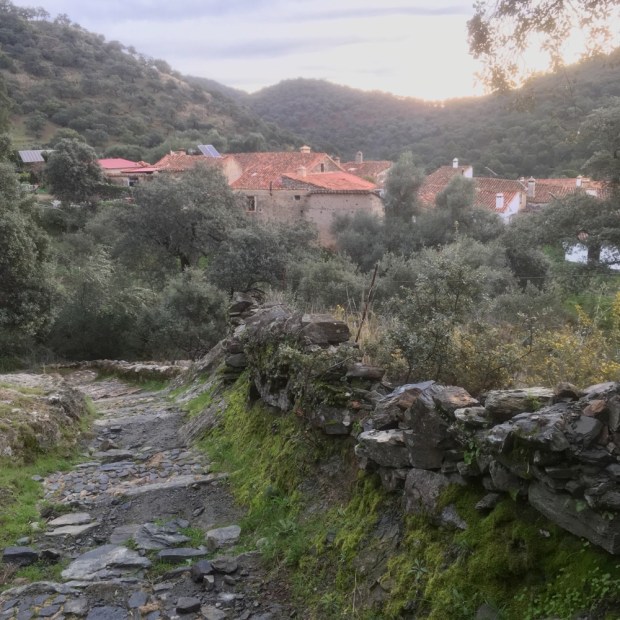
Our route now lead us through an area with broken down walls where the resident pigs had access to miles upon miles of open territory and even abandoned houses. Remarkably tame they joined us for a picnic.

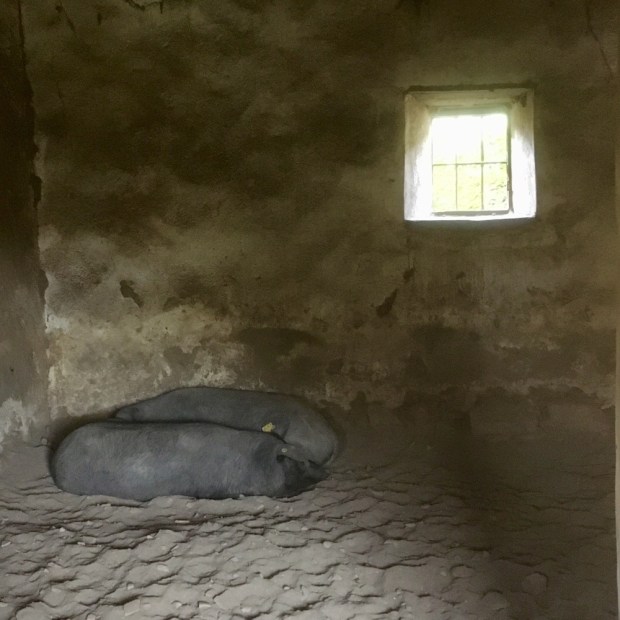
Our approach to Linares was marked by a lot of wilder, less managed Dehesa with horse and scrub replacing the grazing grasses.

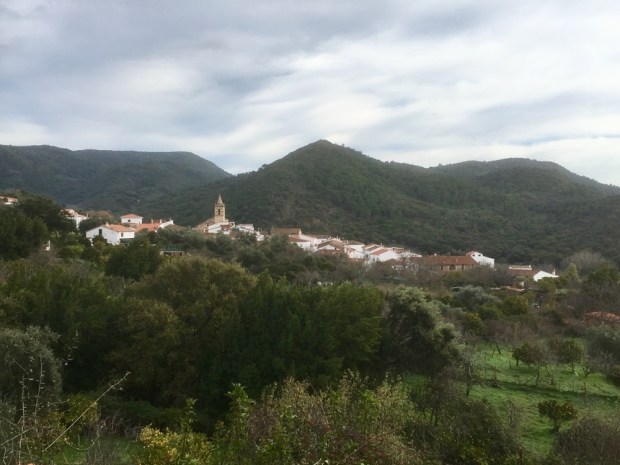
After a couple of cafe con leches in the bullring bar we climbed back up towards the camper on a steep track past the poolside Riberas recreation area where a dammed stream has become a popular picnic spot.
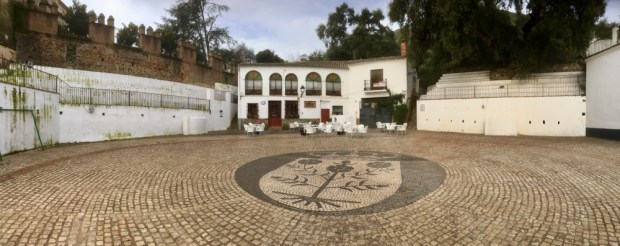
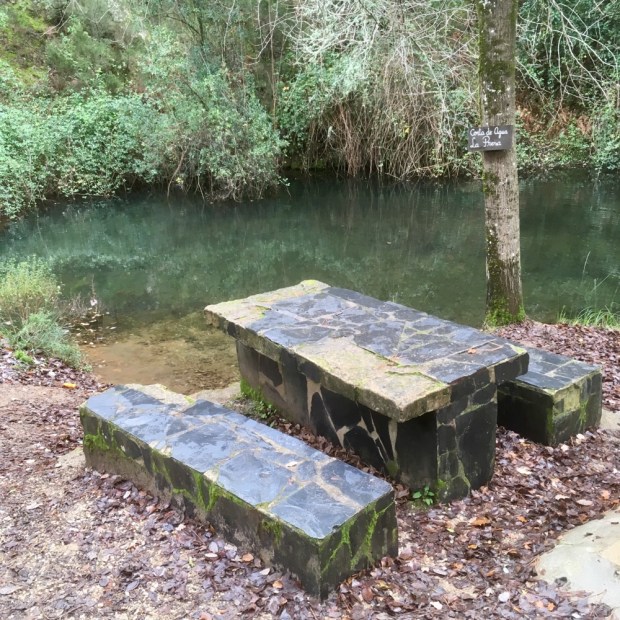
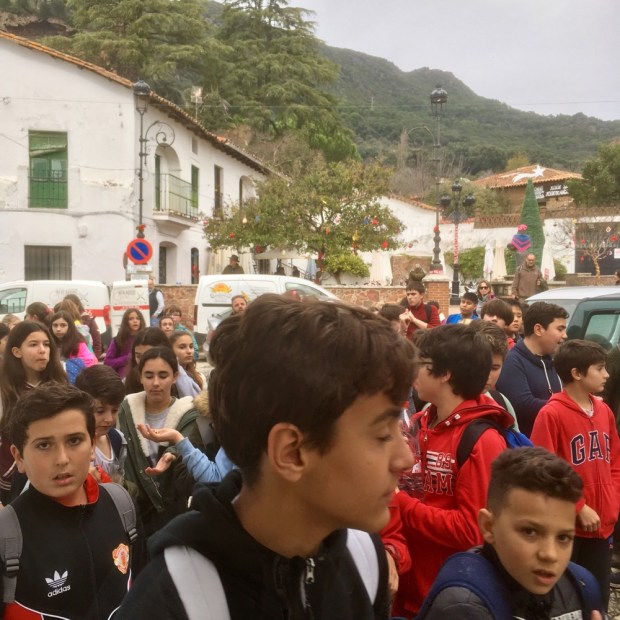
Alájar was busy with visiting school kids and people preparing the village for Christmas so we headed for the hills to stay in Castano del Robledo, ready for an 18 km circle from there to La Pressa, Alájar and back.
From our fine (and quiet) park up next to the cemetery we descended in the morning through a misty mixture of chestnut and pines with views out across the forested slopes.
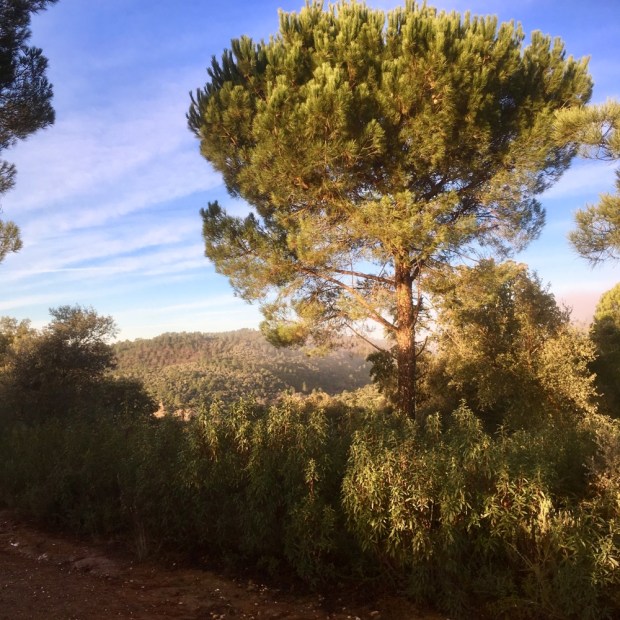
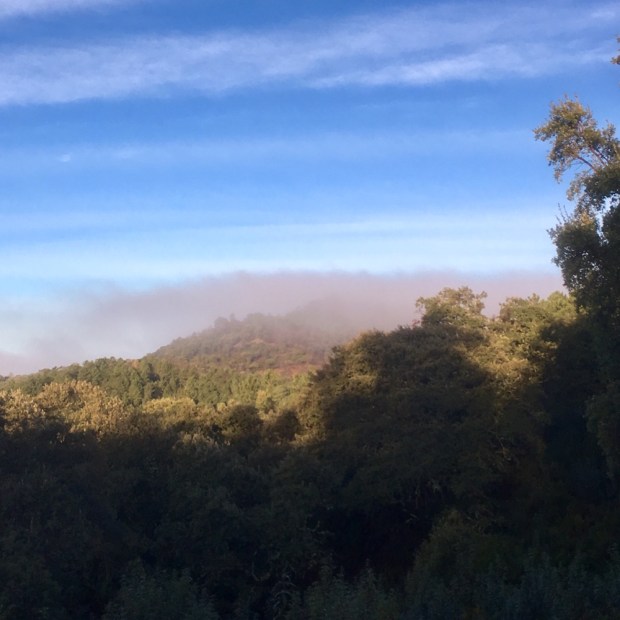
Coming to the valley floor we crossed various streams many times and on one I came a cropper and ended up on my back in the water.

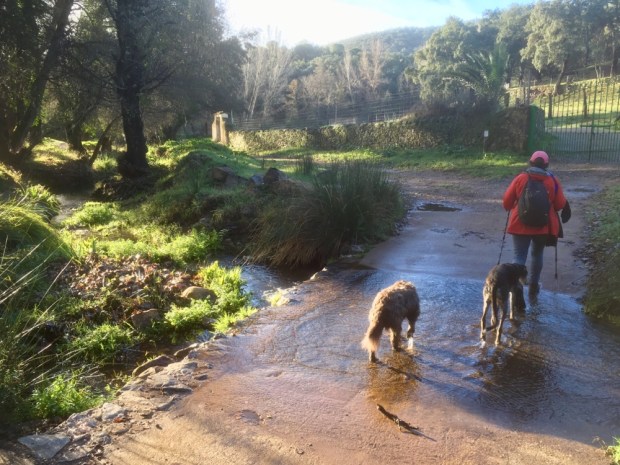
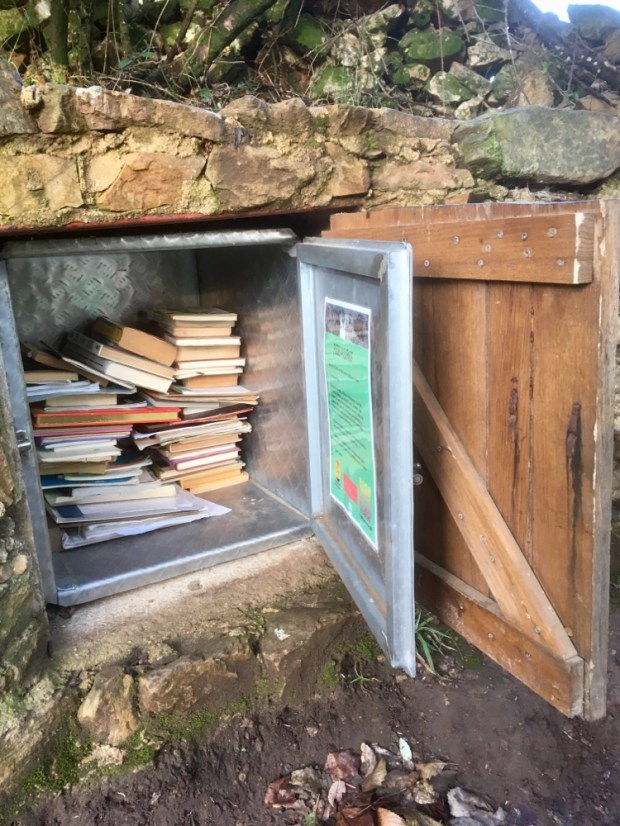
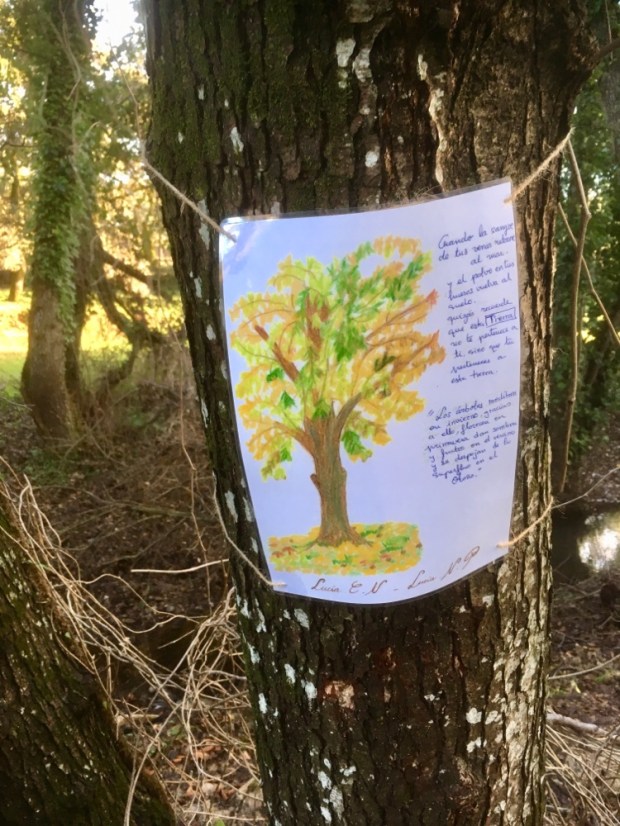
The riverside walk was obviously visited by school kids who had left pictures and poems celebrating nature along the route and even had a little library in a grove of trees.
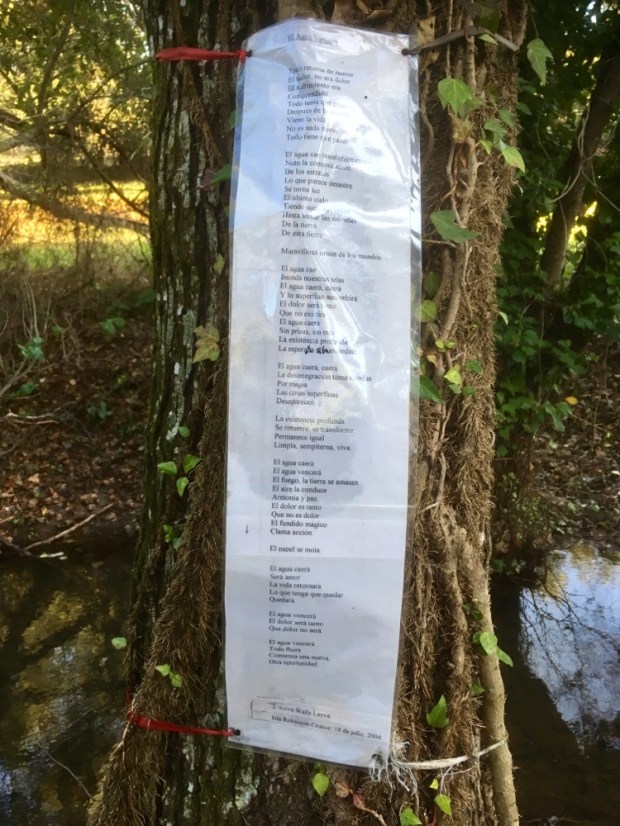
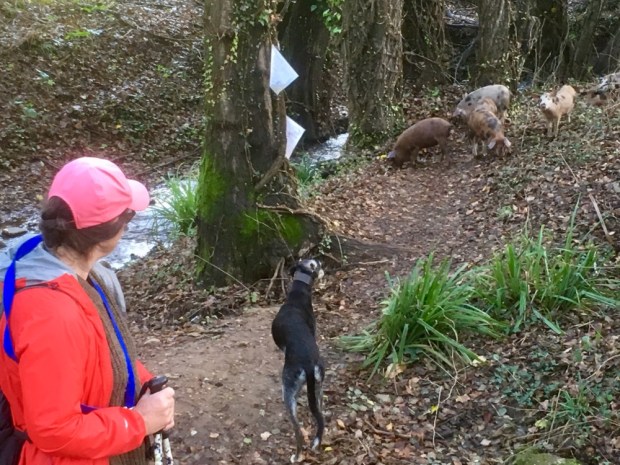
It was here we met a bunch of escapee piglets who showed no fear as they rootled past.
Past an enclave of holiday haciendas built by Dutch settlers, on a lovely track into Alájar and then up a cobbled way past the hippy hamlet of El Calabacino.
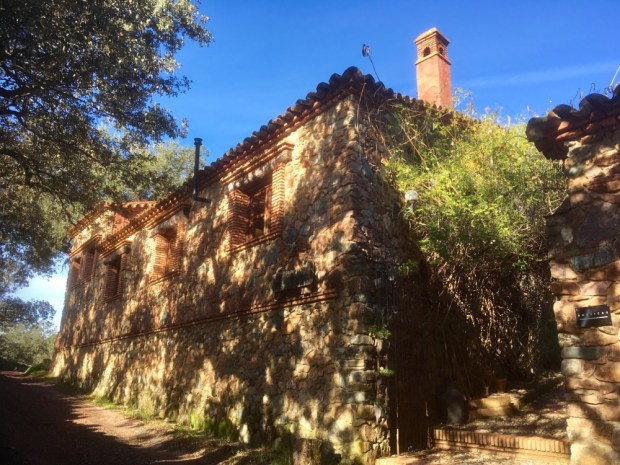
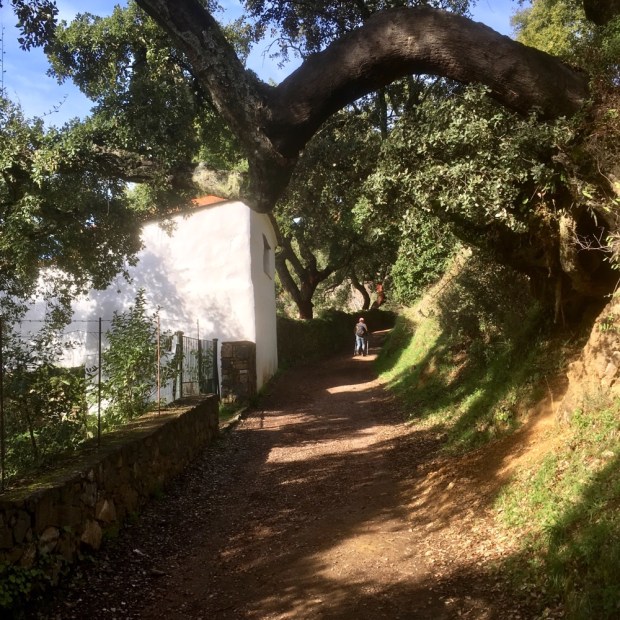
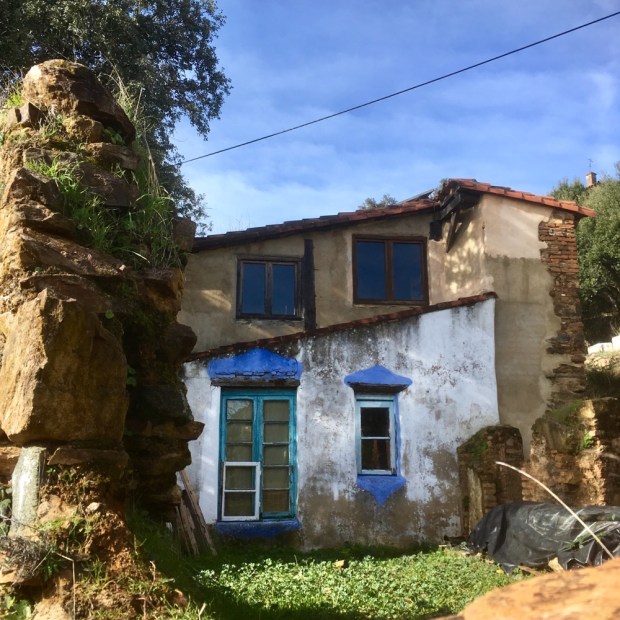
Abandoned and then squatted the community has now been regularized and some of the houses/ fincas look very settled and established.
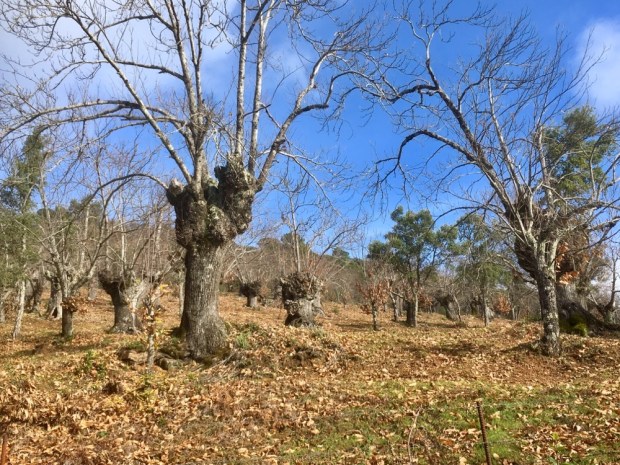
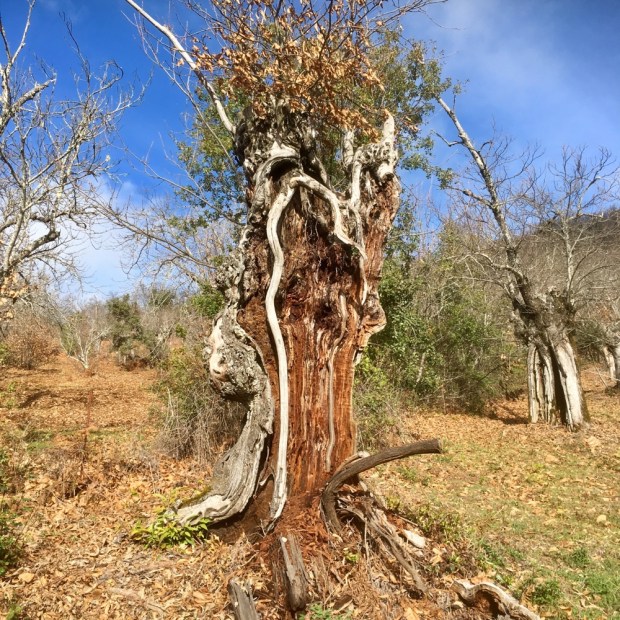
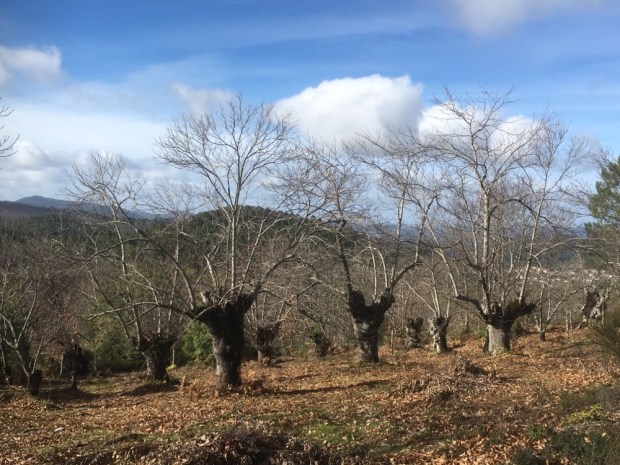
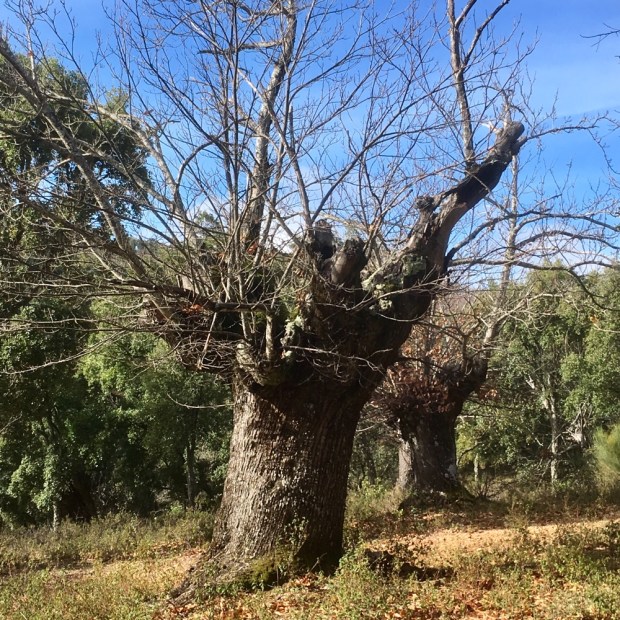
Above the hamlet the cobbled gave way to a concrete track that turned into a rutted sandy one that climbed up through our first large scale chestnut groves. Brought to this part of Spain by settlers from the north and Galicia after the reconquest the ancient and venerable trunks, pollarded for hundreds of years, have born witness to many changes to an area which on first impressions seems timeless.

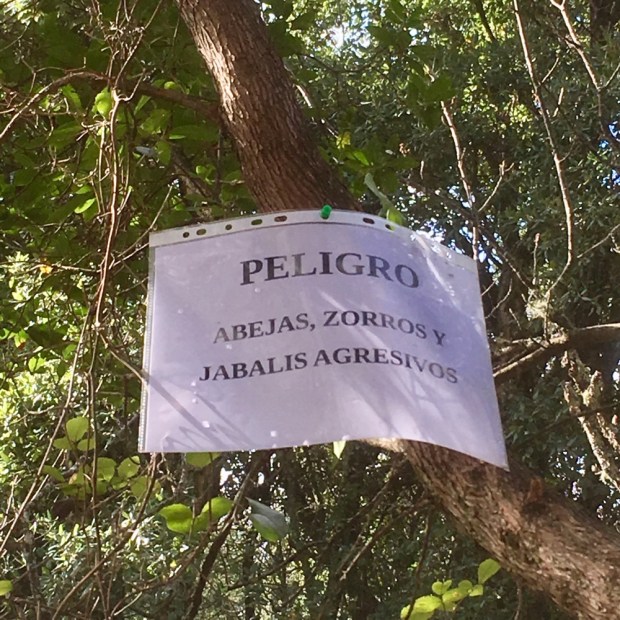
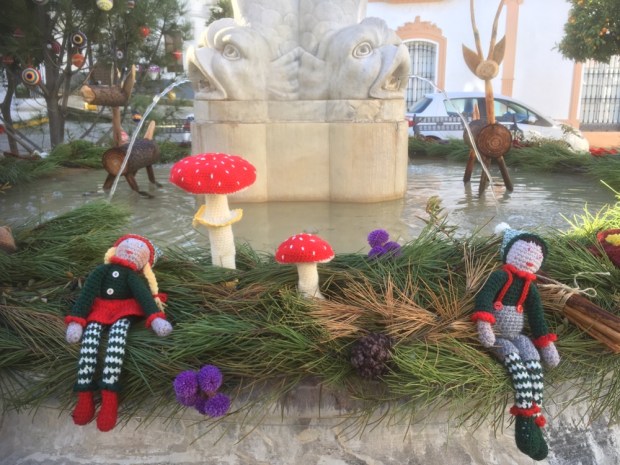
The final leg back to Robledo was down through deciduous oaks where the wildlife was dangerous, and into the town square woolbombed for Xmas.
More knitted decorations at the start of our last days loop, from Almonaster La Real, up the Cerro de San Cristobal mountain and around through Arroyo and Acebuche, a distance of around 14 km.
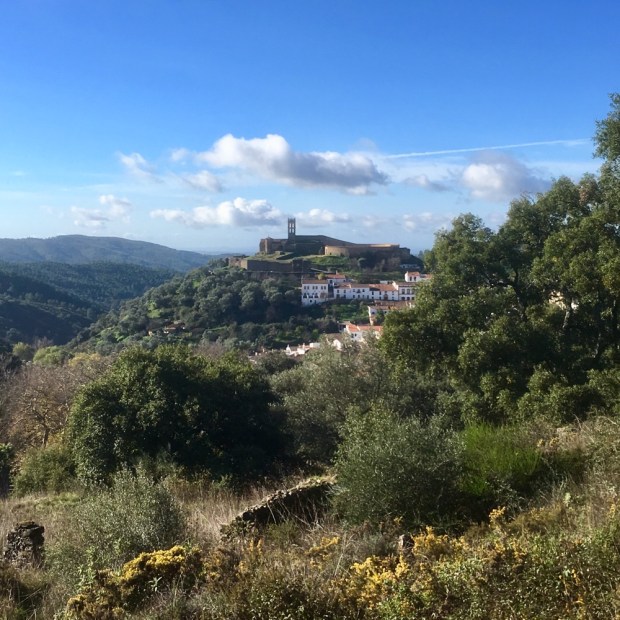
Looking back towards town on our steep onward bound trail the 10th century hilltop mosque was impressive with its adjoining bullring.
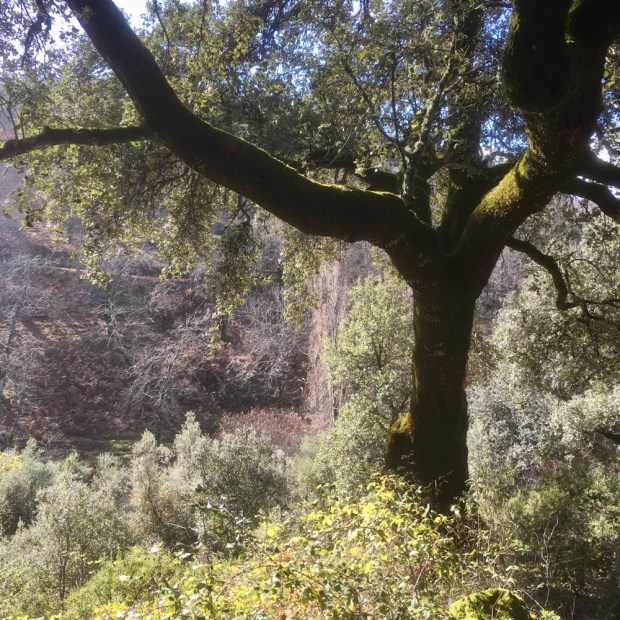
More glorious tracks, chestnut groves, clear streams, happy pigs, settlers idylls and forested slopes marked our last day in the Aracena.

Before setting off southwards to Seville at van speed we soaked up the view of the Sierra from its highest point on San Christobal. From a tad over 900m the whole landscape looked glorious.
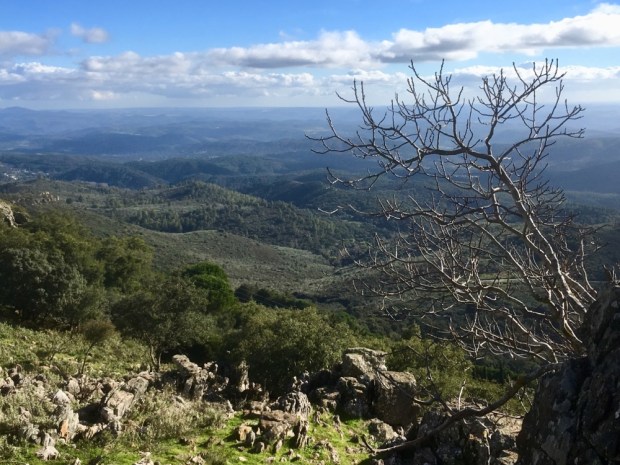
We had discovered it looked just as appealing when deep down within it and vowed to return.
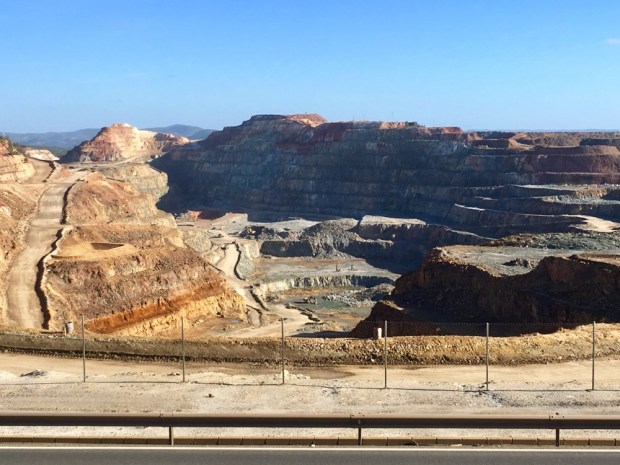
Parque Minero de Riotinto

A few days work done on the finca and time to head off in the camper on another hiking/ exploring trip. This time we were off Northwest, to Huelva province and only about 60 km from the Portuguese border.

The hiking around the Sierra de Aracena is renowned for its beauty so we were going there for a few days – but en route we wanted to stop at Riotinto the birthplace of the river and the global megacompany.

In a way the landscape was the exact opposite of Aracena’s carefully nurtured or natural and wild countryside. Riotinto’s has been torn asunder for millennia for quick material gain, literally clawing the earth apart to get to the wealth of minerals hidden in the Iberian Pyrite Belt.

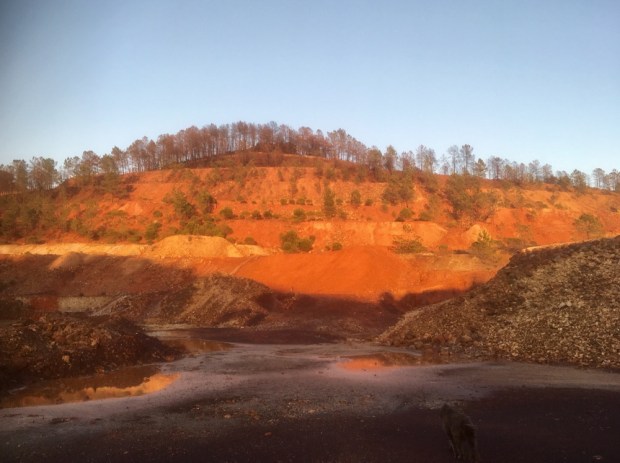
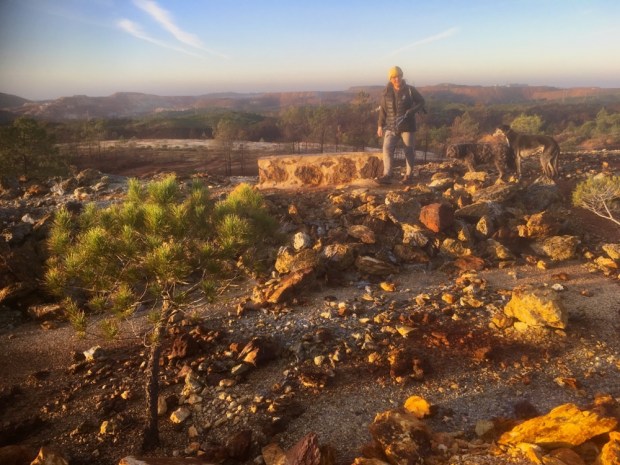
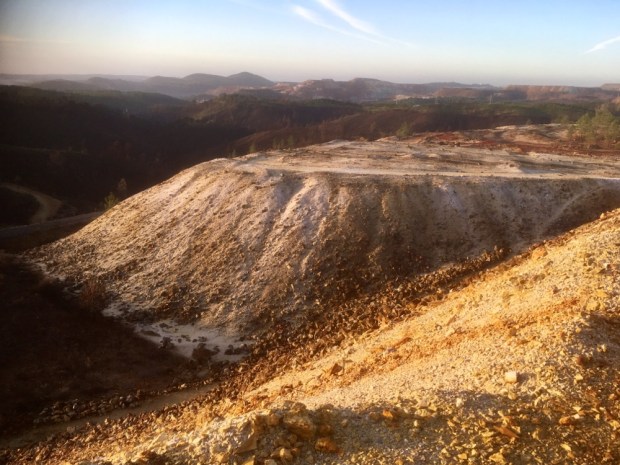
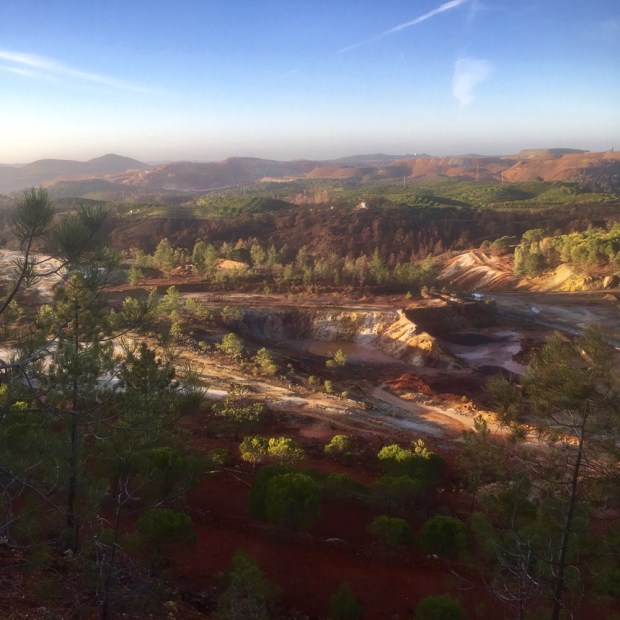
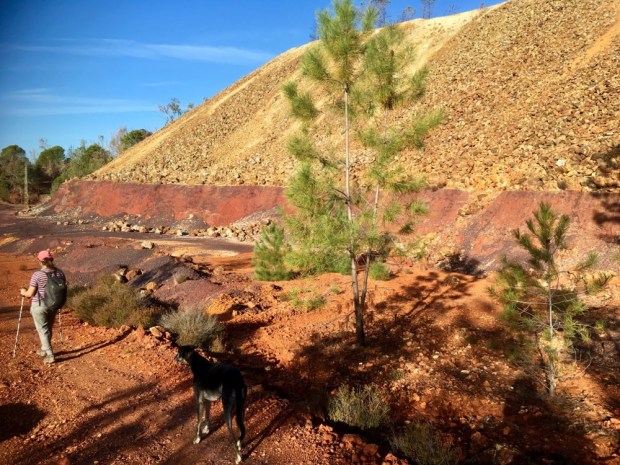
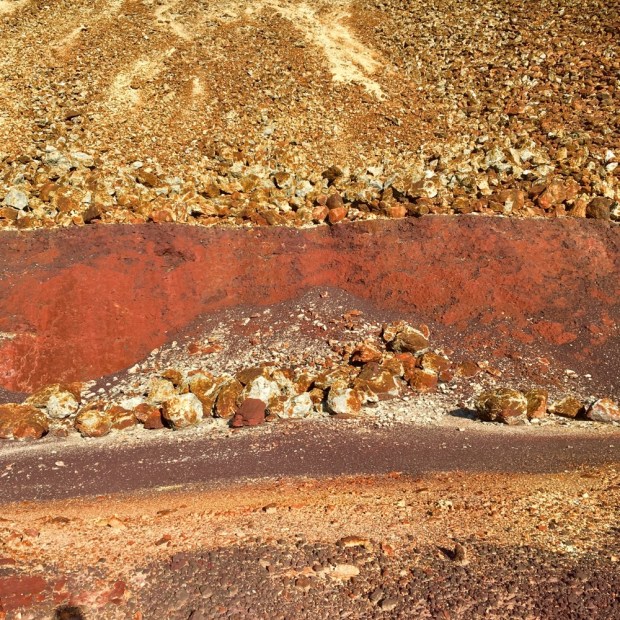
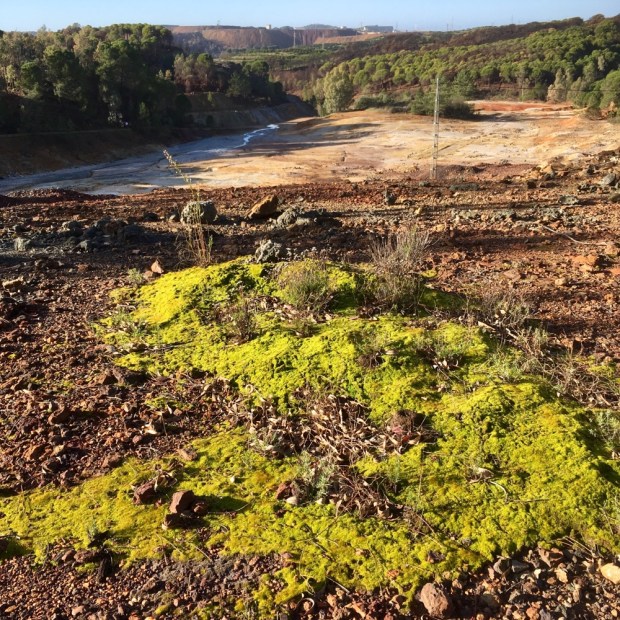
A massive area of open cast mines both current and exploited and abandoned coupled with vast spoilheaps of vivid and florid colors make for a man made,surreal, and toxic, environment. A (un)healthy balance to all the gloriously bucolic green and pleasant lands we’ve been wandering through.

The largest open cast mine in Europe is here, recently flooded and left. But it’s been going on for 5000 years with the Iberian miners leaving many Neolithic reminders of their presence around the area. Then Phoenicians mined copper and mixed it with tin from Cornwall to make bronze. The Romans followed after but preferred the gold and silver in the rocks, as well as copper, lead, iron and sulfur.

After admiring (?) the view from the mirador on the edge of town we headed to the abandoned wastelands of Pena de Hierro.

The setting sunlight emphasized the already red hills and heaps but there was a host of other colour too.

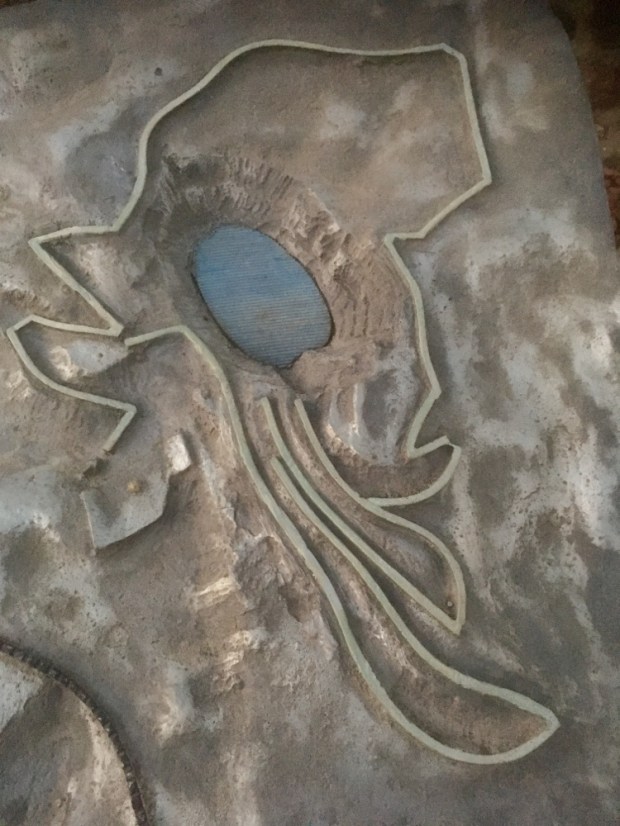
It was soon dark so we postponed our exploration till the morning after checking out our route on a suitably bizarre map.

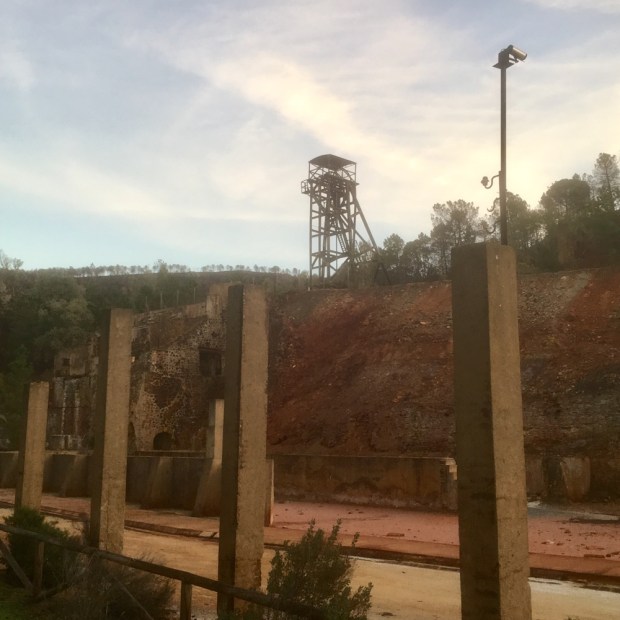
The rising sun made for an equally effective lighting of the land as we wound our way up the hill above the derelict buildings.

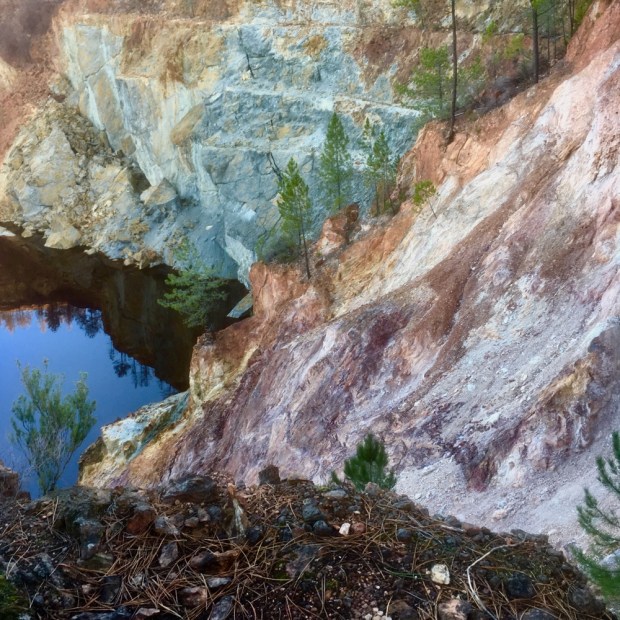
Within the hill lay the crater whose multicolored walls spoke of a riches of minerals.

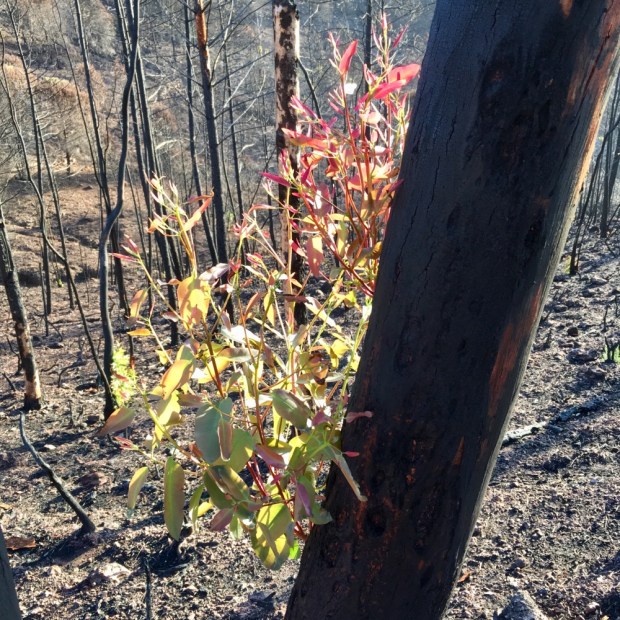
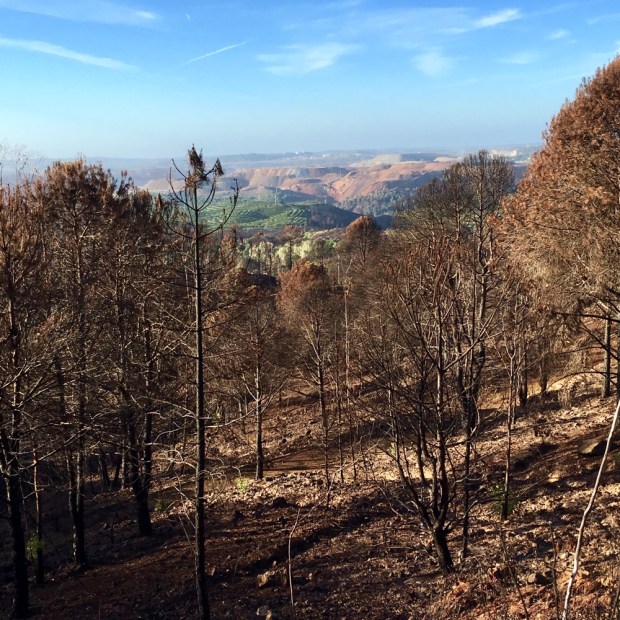
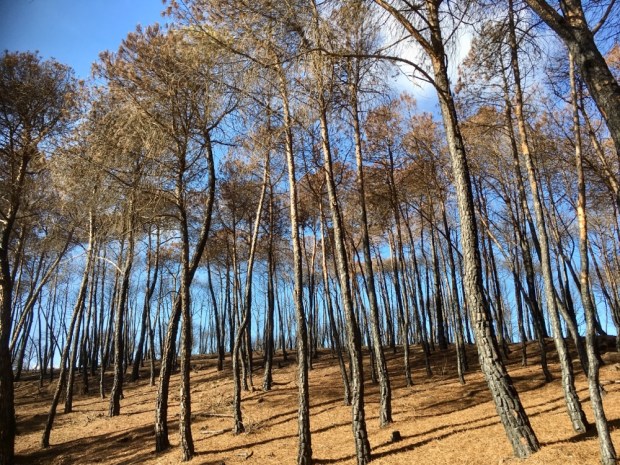
The entire mountain side around had suffered a devastating fire fairly recently, increasing the apocalyptical look and feel to the place, although we were glad so see signs of recovery in the eucalyptus if not the pine.

The Brits had planted these sierras originally, to use in the mines. They had arrived in 1873 in the shape of the Riotinto Company, taking over the unproductive state owned mines and transforming ( and soon enveloping) a town of 4000 into a behemoth of industry with 200,000 workers.

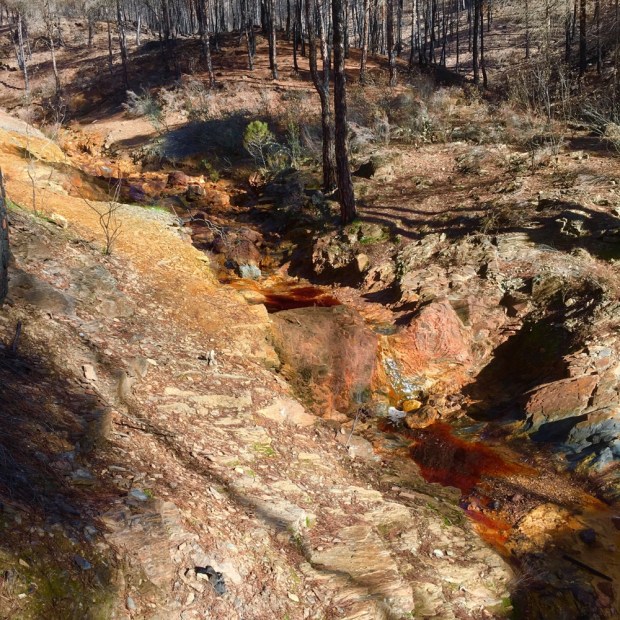
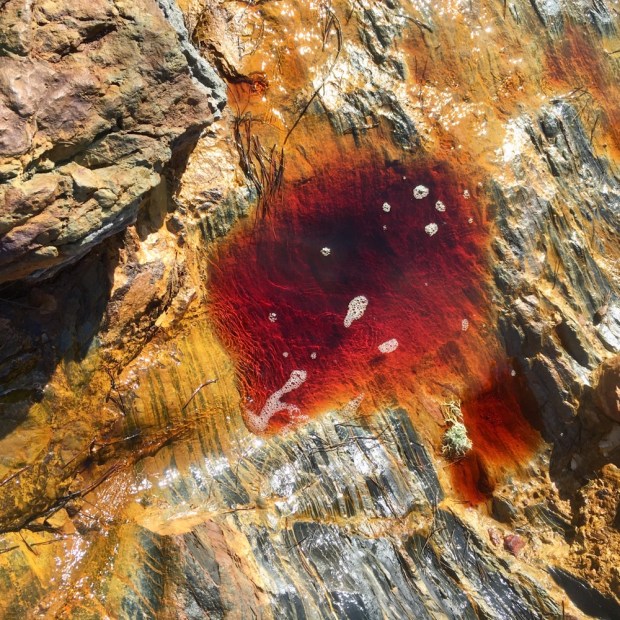
All very weird, and it got weirder when we drove down to Riotinto town and stopped at the source of its namesake. The river waters are full of copper and iron oxide and sulfuric acid and other lovely things, something I didn’t know when I tasted it!

I suppose the danger/ stop shade of vivid red should have warned me. The strongest taste I’ve ever had the displeasure to rapidly spit from my mouth. I found out later the stuff can dissolve iron and has a ph of around 2.

In fact it’s so inhospitable to life that NASA have been studying it, and the surrounding toxic landscape as a Mars substitute. And actually, even though no plant, amphibian, fish, insect or mammal can survive in it, micro organisms that can have been discovered there. So Mars could be full of similar. Maybe.

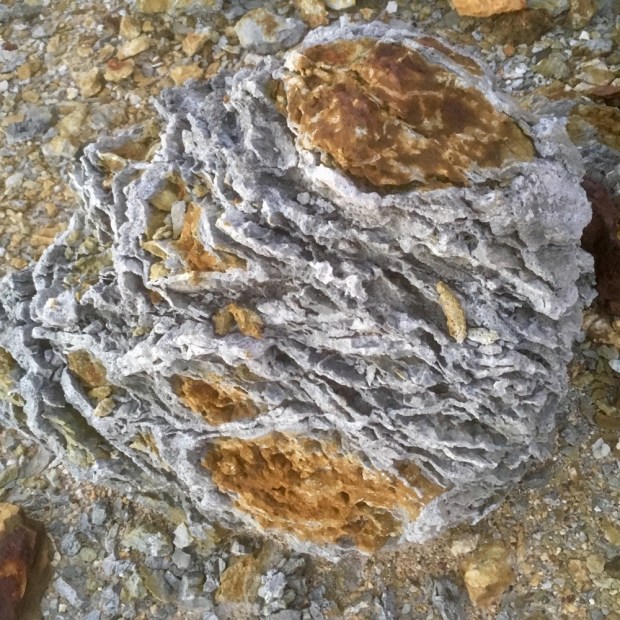
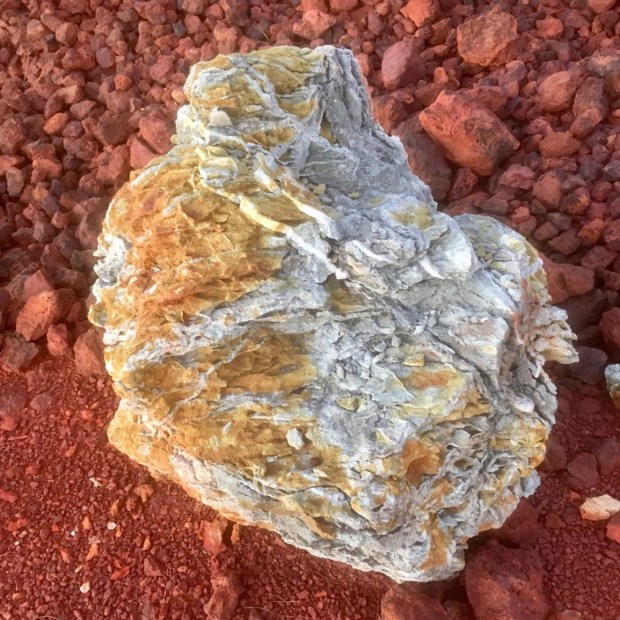
We visited the museum in town for an exhaustive exhibition of the history of the mines and the exploitation of the earth and local people wasn’t something to celebrate but there were some pretty rocks.

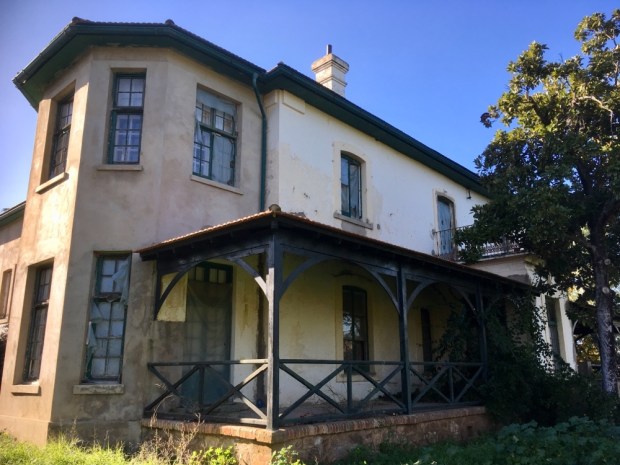
The British Bosses had built themselves a little separate enclave modeled after an Edwardian village and named Bella Vista. There, at the English Club, they could enjoy the lifestyle of the Home Counties and play croquet, cricket, polo and tennis. And Riotinto was not only home to Spain’s first golf course but also it’s first football pitch and is where the game was first introduced to the Spanish.

So the legacy of the mining activities is not just a hugely polluted landscape and watercourse all the way the the coast and beyond but also the “beautiful game” of Barcelona and Real Madrid.

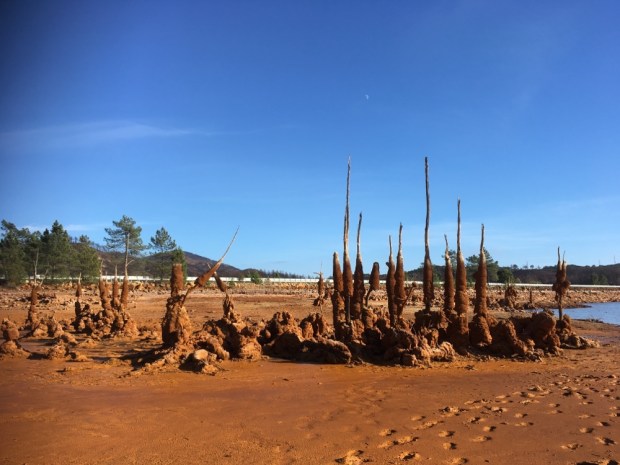
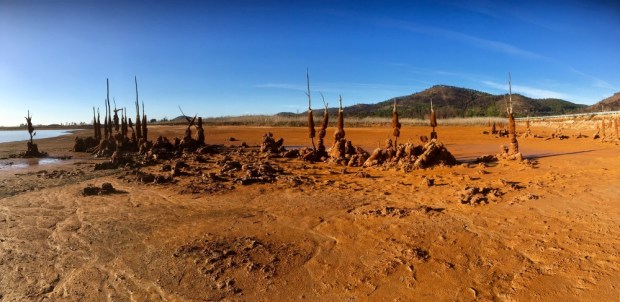
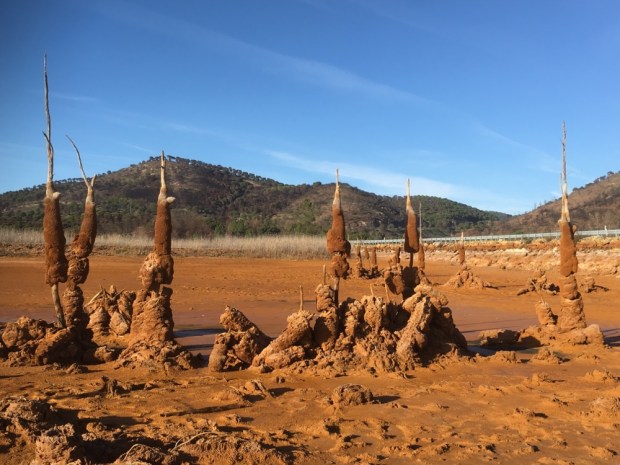
Anyone wanting to make an ” end of the earth” sci fi/ horror movie could do worse than come here and our next location was perfect. A few Km north of town on the way to Aracena lay the Embalse Gossan and here the out of this world cranked up a notch.

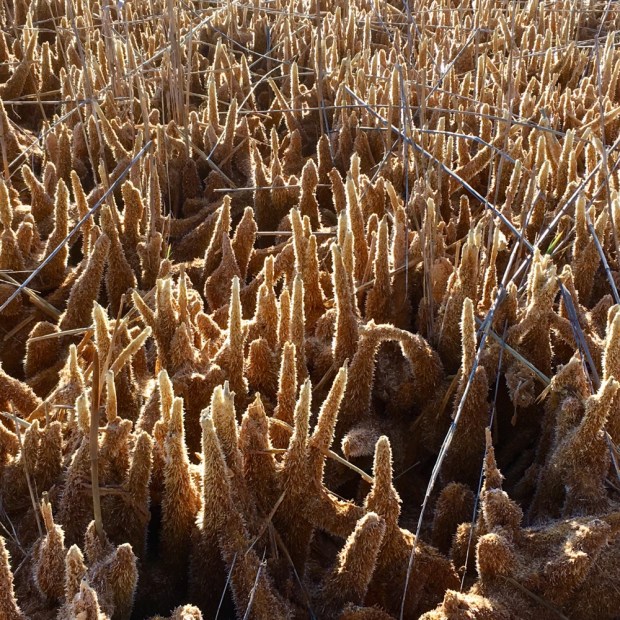
Water levels were low, revealing strange mineral encrusted life forms. Trunks and branches of long dead trees and stalks of amazingly surviving reeds were coated thickly in ? And the orange mud surrounding them was worryingly quicksand like. Not a way I’d wanna go.

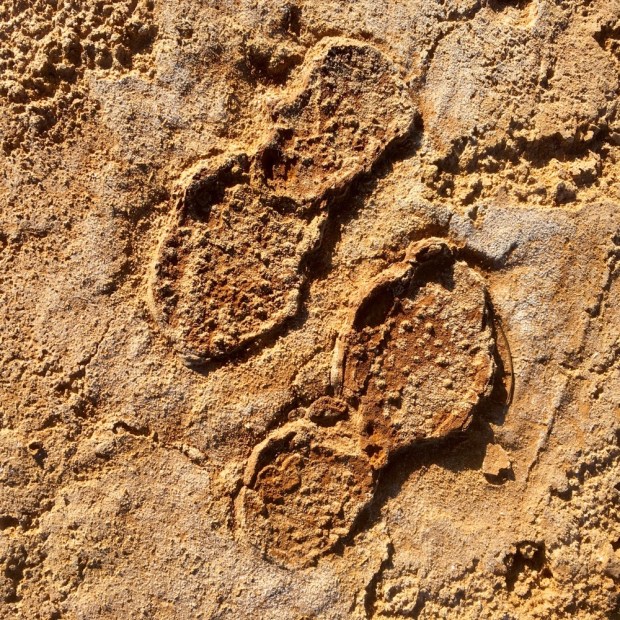
And another strange thing was that footprints left in the muck we’re not indented – but raised!

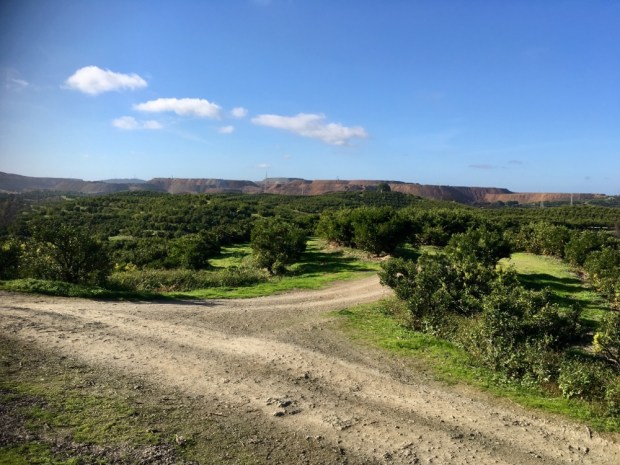
One other disquieting thing before I finish this post. While looking at Google maps satellite view of the area I spotted a funny landscape/ crop formation next to Pena de Hierro, so I went for a look when we were camped there. It’s miles and miles of orange grove on terraces around the mines.

We’d heard trucks up and down to it half the night. I found a car park full of pickers cars. It’s harvest time and there’s a big area to pick. Huge operation.
Turns out it’s all RioTinto fruit. Europe’s largest citrus farm at 3000 hectares. They are big into the use of Boron in agriculture. Boron is one of the common minerals in the spoilheap landscape. There’s also lots of unpleasant ones.
A lot of RioTinto Fruit is classified as organic. Tesco buy their organic oranges from there. Just saying.

Sierra de Andújar

The Natural Park of Andújar is larger than its neighbour Cardeña y Montoro,at nearly 75,000 hectares and its wilder. With more pine forest and scrub and rock and less Dehesa country with grazing livestock the drovers trails strung between the villages around Cardeña are not so much a feature. But there is still a wealth of tracks and routes all over the Sierra, varying in length and difficulty. Walking and wildlife spotting are big business these days and there is plenty to spot.

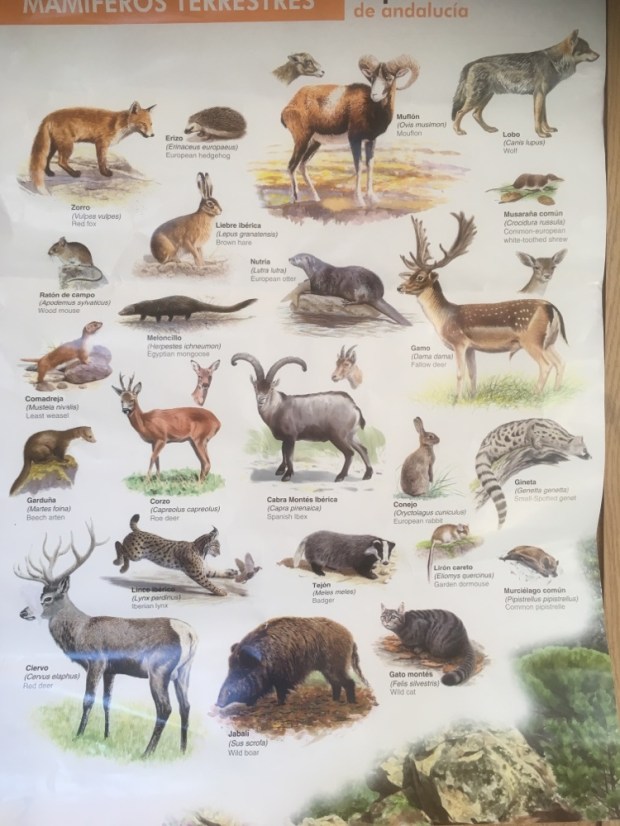
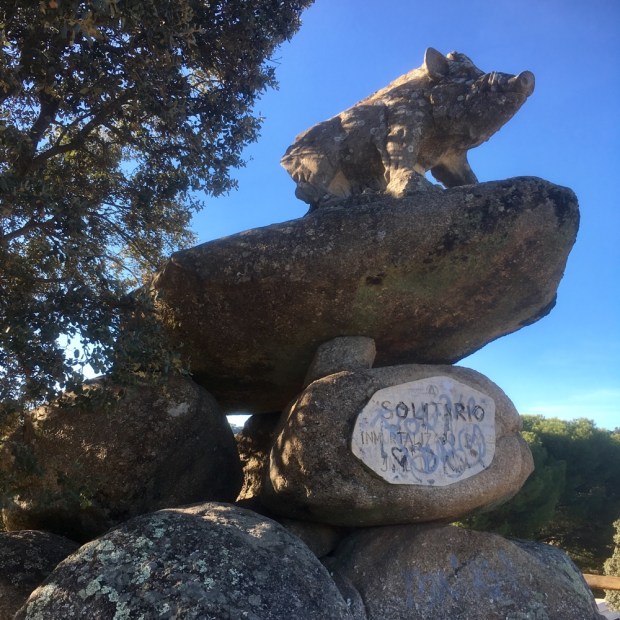
This is one of the last strongholds of the Iberian Lynx and there are a good few wolves too. Unfortunately we only saw deer in the flesh and a statue of a mighty Jabari (boar) in the area recreativa we stopped at for our first night.

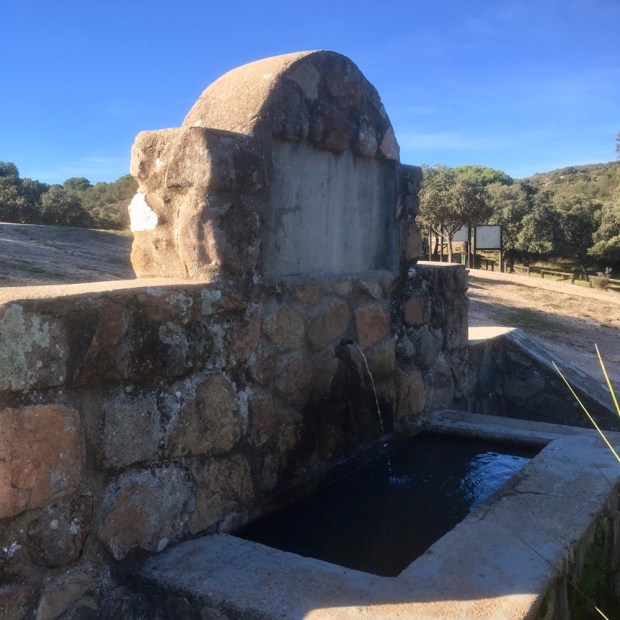
There was a fine fuente there allowing us to wash off the last few days on the trail and road before heading cross country to a high Mirador, or viewpoint, to catch the sun setting over miles of unbroken forest like green waves on the rolling and rising hills and valleys.

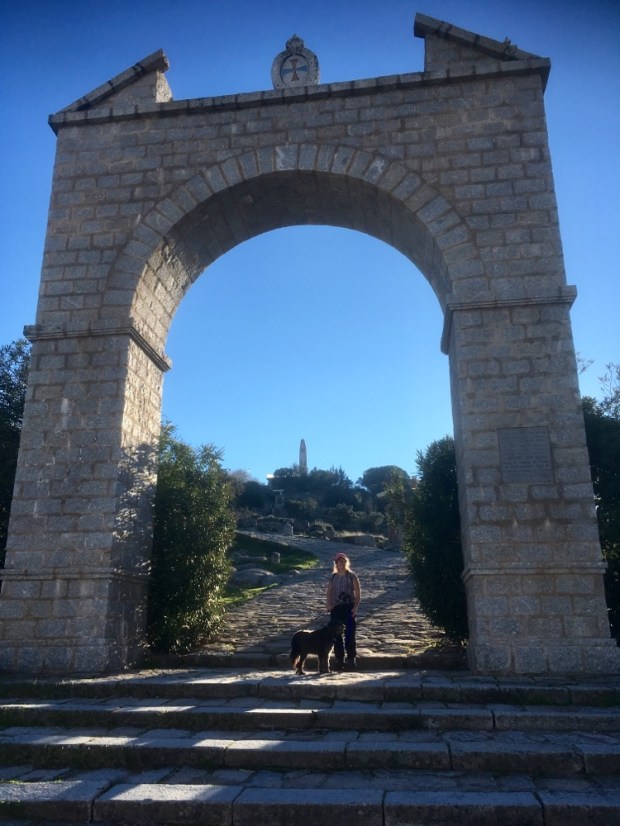
The road that wound further up the mountain past our camp passed by an imposing building we could make out firmly fixed atop a high crag of granite. Our target for the following morning, the Santuario Virgin de la Cabeza was the site of an apparition in the 13th century when a Shepard named Juan saw strange lights atop the Cabeza ridge and when he investigated came across the lost image of Mary who spoke to him, asking for a church to be built there. She also cured his paralyzed arm.

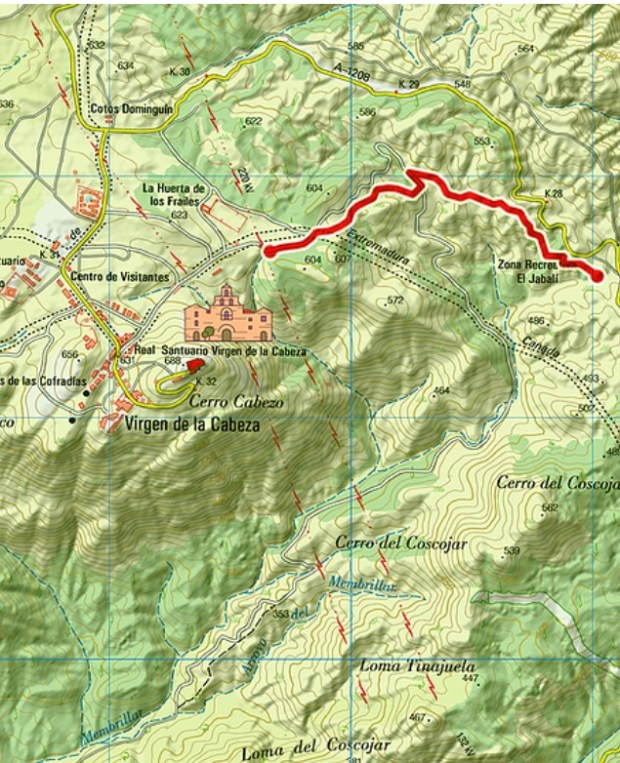
So we studied a map of part of the route and when to sleep under a sky ablaze with stars and filled with the call of owls and foxes.

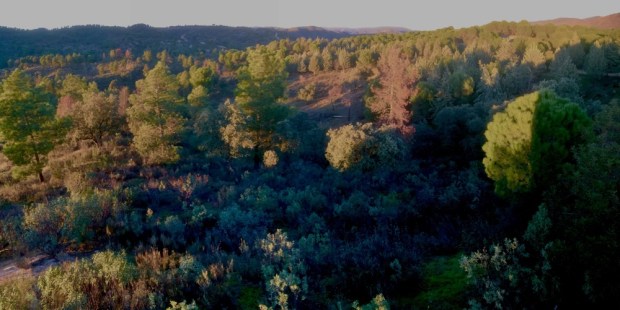
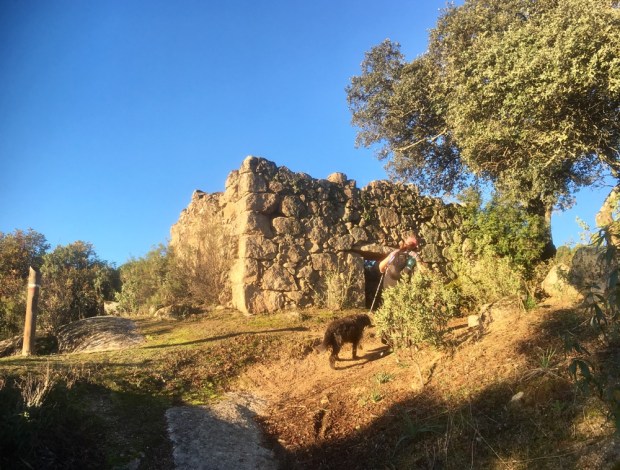
In the morning the way climbed between rounded granite boulders steeply up a rocky/sandy track at times through shaded forest at others across more open country of aromatic shrubs and herbs. We passed an ancient ruin- maybe the home of Juan?

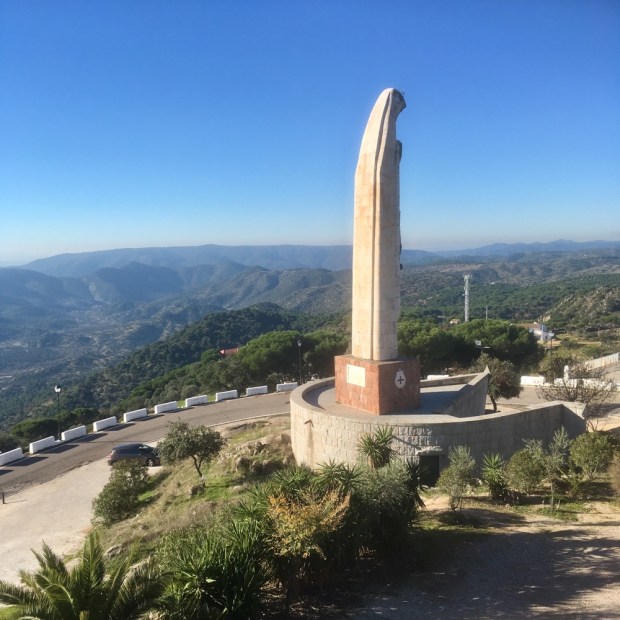
As we climbed the Santuario came closer into view and we able to make out its massive bulk. Apparently the 13th century building was very badly damaged by Republican forces during the Siege of Cabeza and subsequently rebuilt in ” a grotesque mishmash of Fascistic architecture, similar in style to Franco’s tomb outside Madrid”.

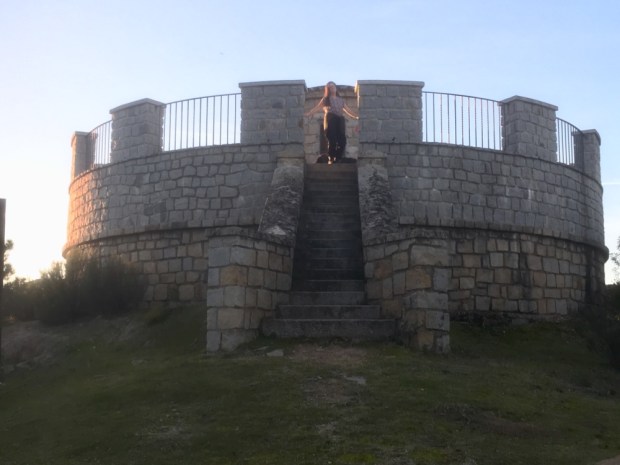
The strange slender shape we’d spotted and pondered over the evening before turned out to be a towering madonna sporting a crucifixion on her torso looking out over a gloriously sunlit panorama of hills and mist.

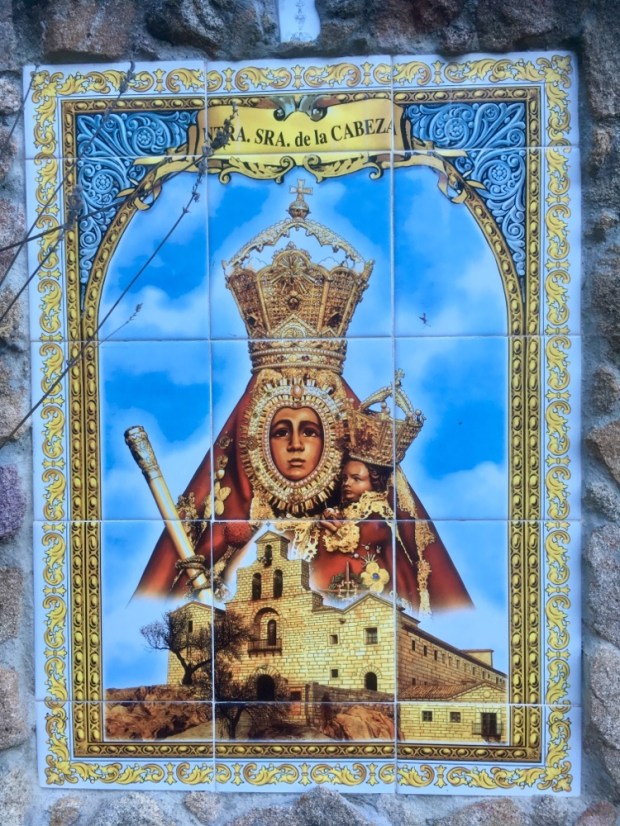
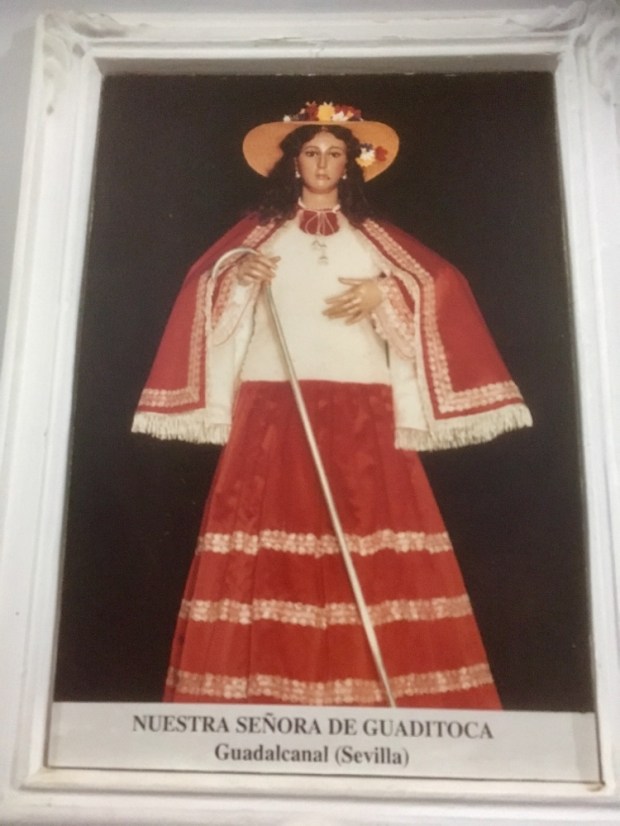
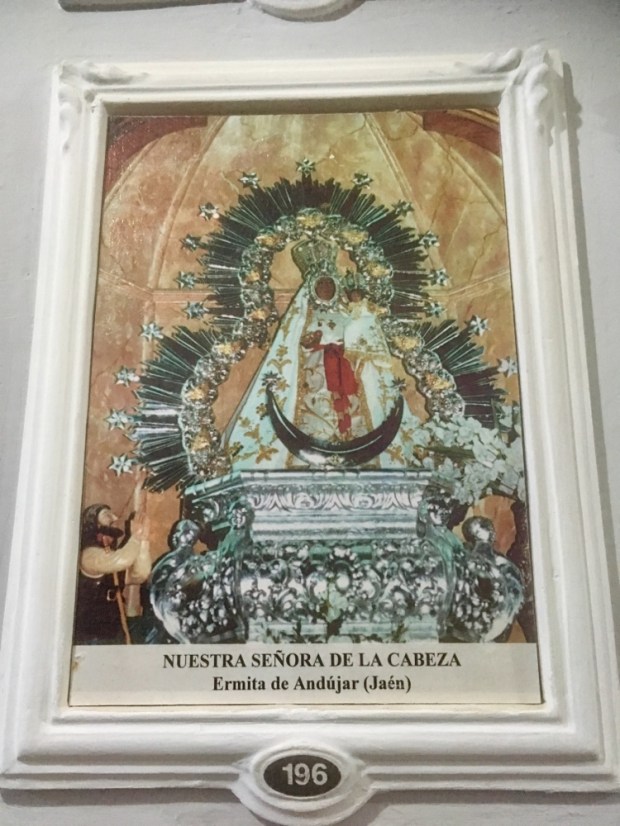
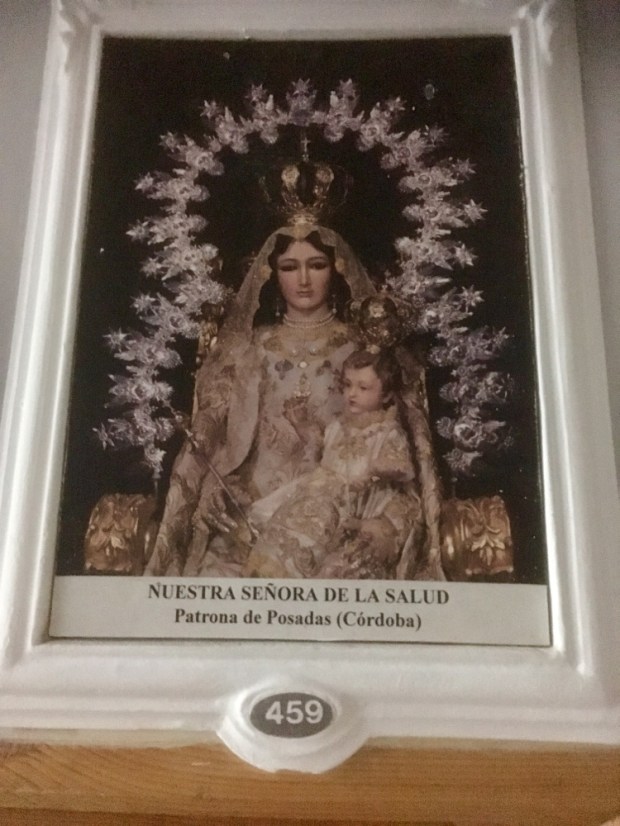
On exploring the cavernous interior I discovered a gallery of ” our ladies” from towns and cities in Spain , in fact the long corridor housed over 450 different Madonnas. Here’s but a tiny sample.

One of Andalucia’s biggest fiestas is the annual romeria , or pilgrimage, to the sanctuary on the last Sunday in April, when 500,000 pilgrims trek up on foot, horseback, carts and donkeys from Andújar, about 25km away. After days of celebrations in the town the pilgrimage proper starts early on the Saturday morning, arriving all evening and night, with hourly masses. Then on the Sunday morning the Virgin is paraded down the hill in her ornate carriage.

All of this has resulted in a massive fiesta/ party/ sales opportunity for centuries and there were some old photos of the huge tented village that springs up surrounding the Santuario.

It had started to get busy up there so we headed off, on the pilgrimage route, down to Lugar Nuevo, the half way point from Andújar, where half a million pilgrims have a picnic once a year.

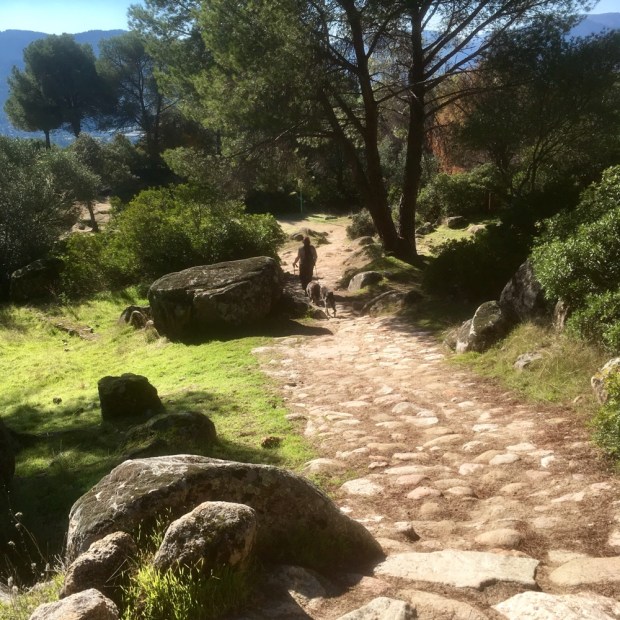
It was a beautiful route, with the church bells peeling as we strode down the cobbled track worn smooth by the hooves and feet of a multitude.

We stopped briefly at a pretty mirador but were saddened to see loads of rubbish by a rest area. God knows what it’s like the end of April.

Thanks to the wonders of GPS and google maps from Lugar Nuevo we were able to work out a route back up the El Jabari area recreativo, so after a rest by the river we headed back up.

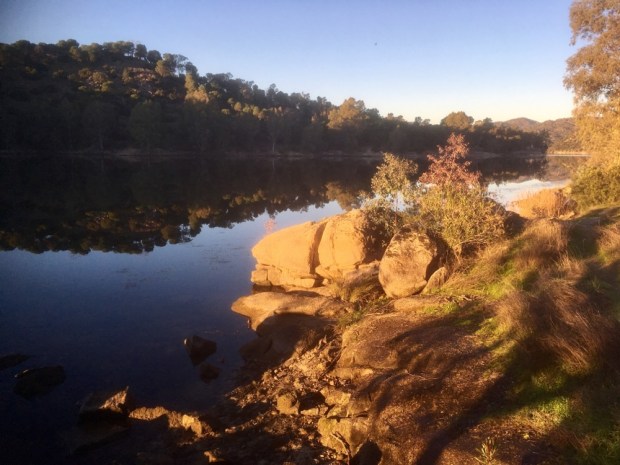
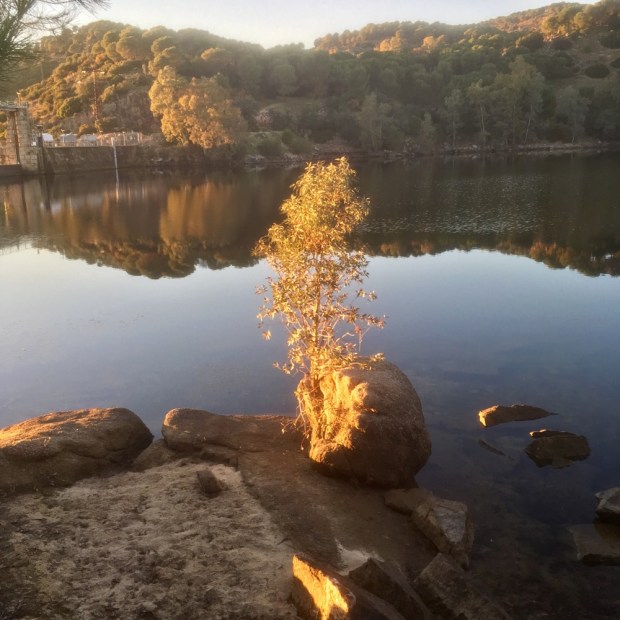
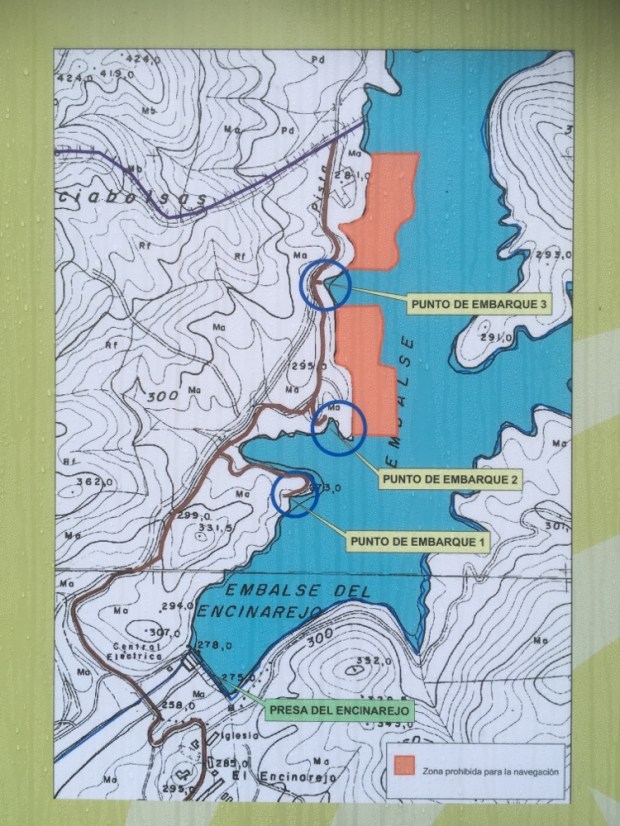
A long trek up a sandy track and a cross country scramble got us back to the van for a late lunch before driving south again to another area recreativa alongside the Rio Jandula and up to the dam at the Embalse del Encinarejo, looking good in the evening light.

The waters attracted the birds, the birds attracted the bird watchers, serious folk with big lenses on their cameras and camping chairs and binoculars, prepared to put the time in for a rare spotting. They were with us last thing at night and first thing in the morning when we set off for our own exploration.

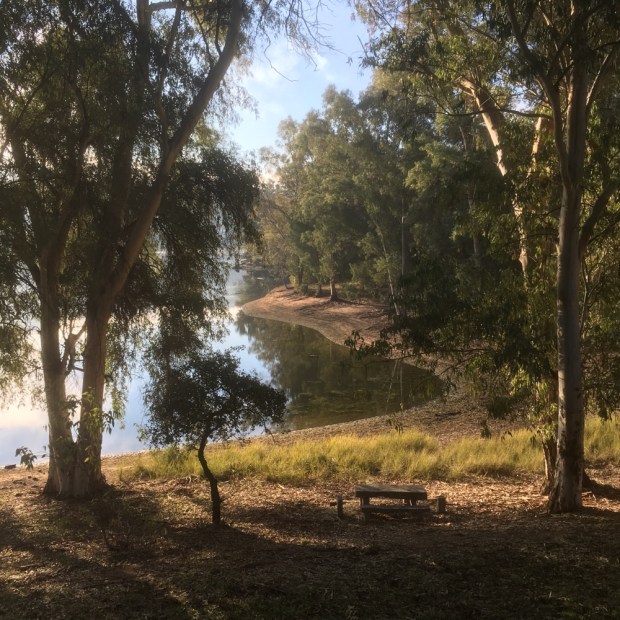
It reminded us very much of Australia with all the Eucalyptus trees and also the facilities of sport and picnic( or barbies). There was obviously a fishing competition coming up with pitches marked out. And there were picnic tables everywhere, even a wheelchair boardwalk (board wheel).

The “birders” were still at it on our return and we too admired the avian life, and the hides,down the river.,

From the Santuario we had gazed across mile after mile of this Parque and it would have been wonderful to loose ourselves in its depths, but there were things to do elsewhere so we returned to the van and the road , sad that the only Lynx we had seen in the Sierra de Andújar were on the signs.

Sierra de Cardeña y Montoro, Andalucia

We’ve managed to get away to Spain for a few weeks avoidance of the inclement weather of an Irish winter and to explore some hiking areas in the south we haven’t been to before.

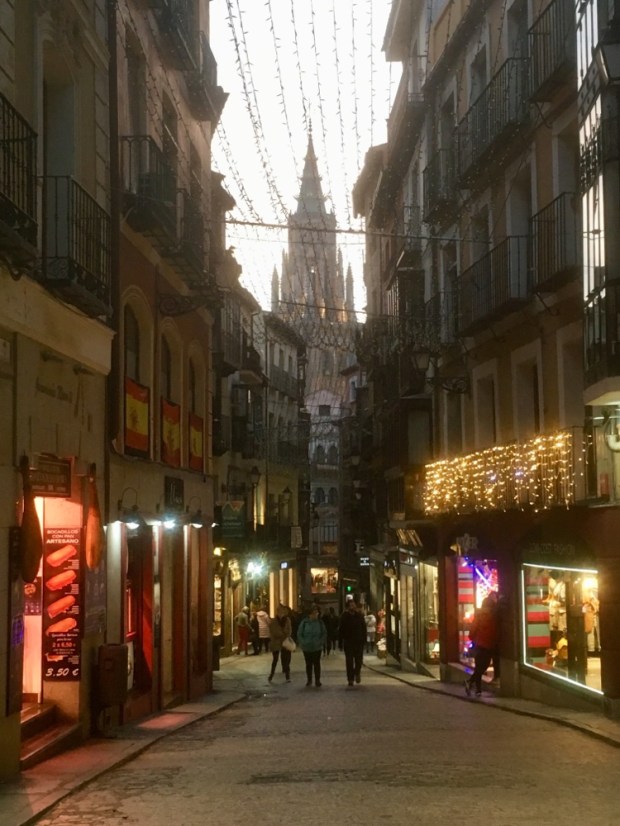
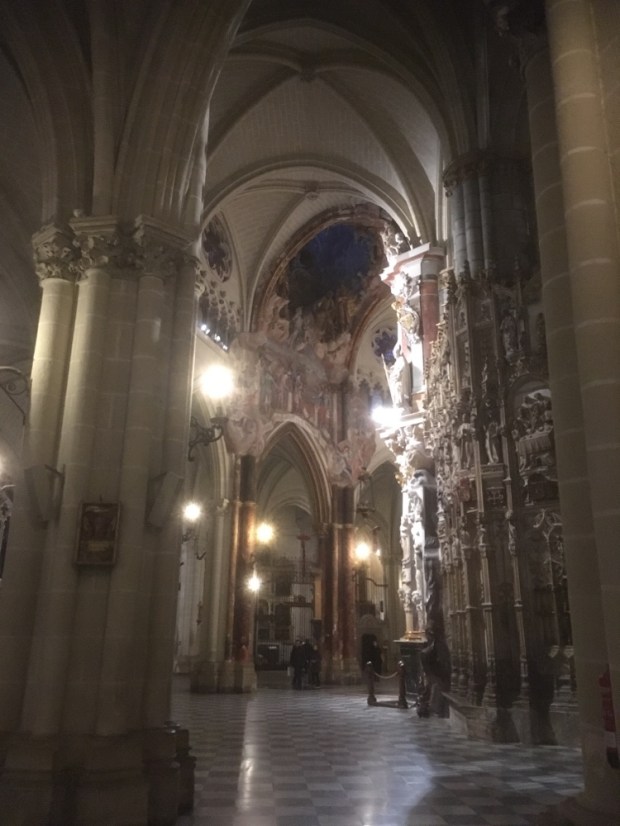
Driving hurriedly down through a rain lashed France through the Yellow Jacket’s blockades the sun emerged as we journeyed south of the border. Stopping for the night to visit Toledo we meandered around the narrow streets soaking up the ambience of this historic city.

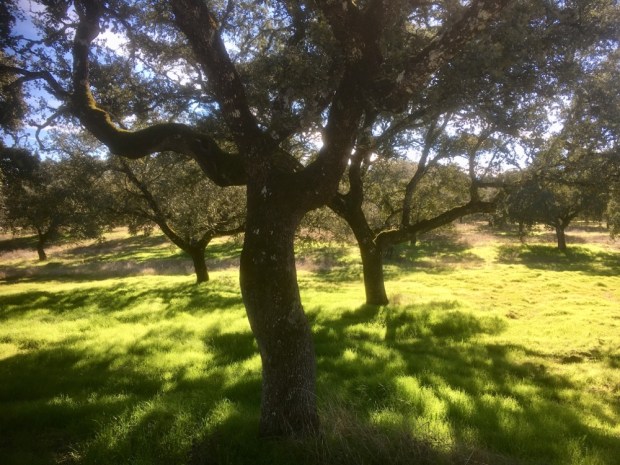
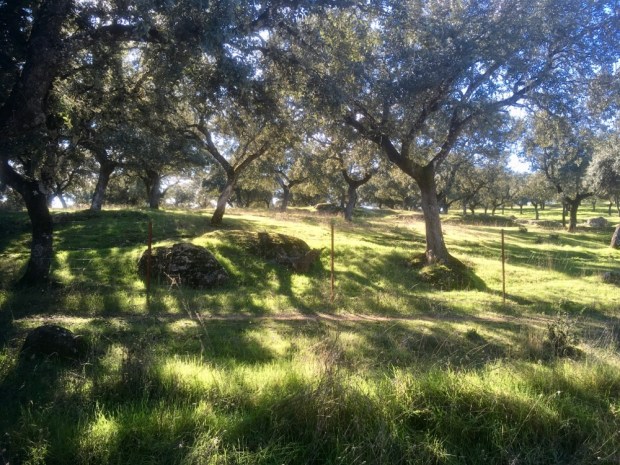
Pushing on south the next morning we arrrived in Cardeña, the main town of the Parque Natural, early afternoon and headed off on an 18 km circular hike through the Dehesa ,open Holm , Cork and Portuguese Oak pastureland, famous for its free ranging Iberian pigs which fatten on the copious quantities of acorns and become the highly prized Bellota jamon.

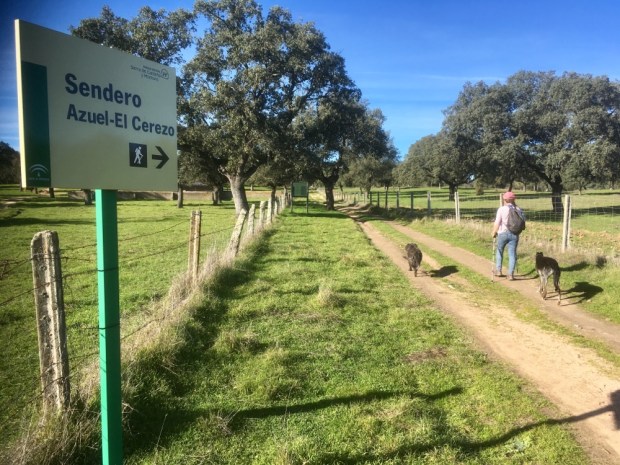
The first leg took us down an old drovers road to Aldea del Cerezo, an ancient hamlet which had been more or less deserted until renovated and turned into a study Centre a few years back. Cattle and sheep are also important livestock here and the sustainability of this centuries old farming system is being intently studied at the moment in the light of climate change and other transformations.

The 41,000 hectare park is home to a rich variety of wildlife and a wide range of habitats. Forests, scrubs, pasture and crags provide homes and food for a wealth of birds, mammals, amphibians, reptiles and fish. Perhaps the most exciting of animals to be found here,and in the neighbouring Sierra de Andújar, is the Lynx, a rare and solitary animal of which there are now reckoned to be only 250, most surviving in this area.

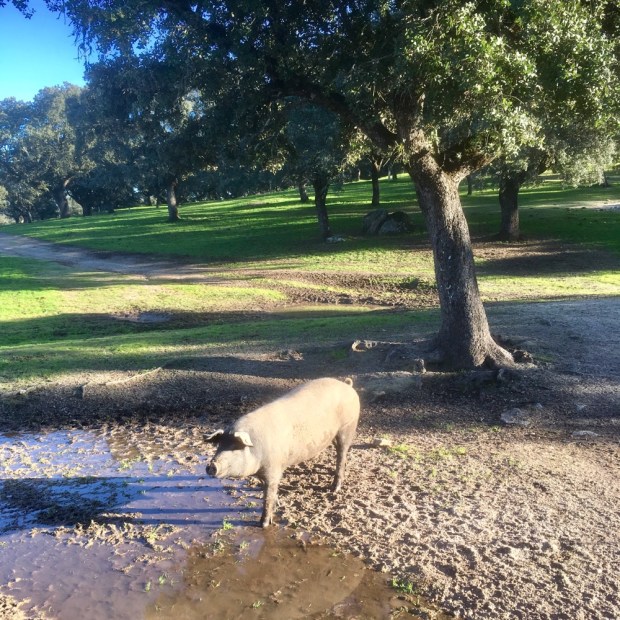
But pigs, there are plenty of. It was lovely to see them living a life of relative freedom, with vast areas to roam at will, or soak up the sun, or wallow in the mud. At first scattering on our approach, curiosity brought them back, snorting contentedly.

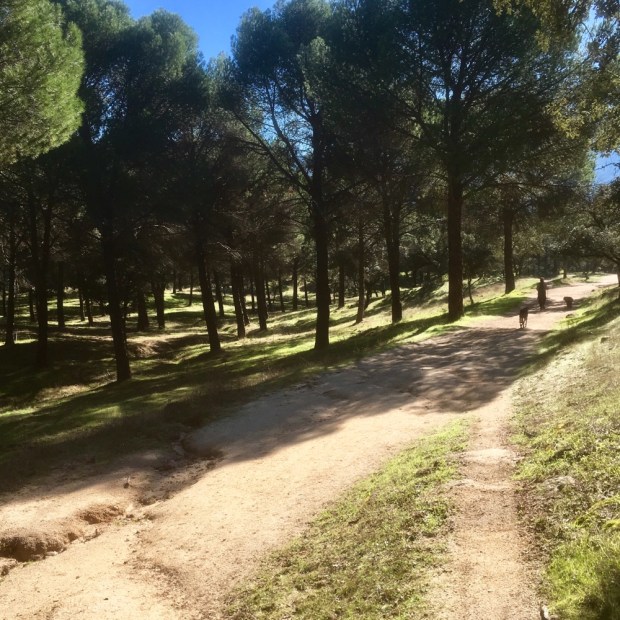
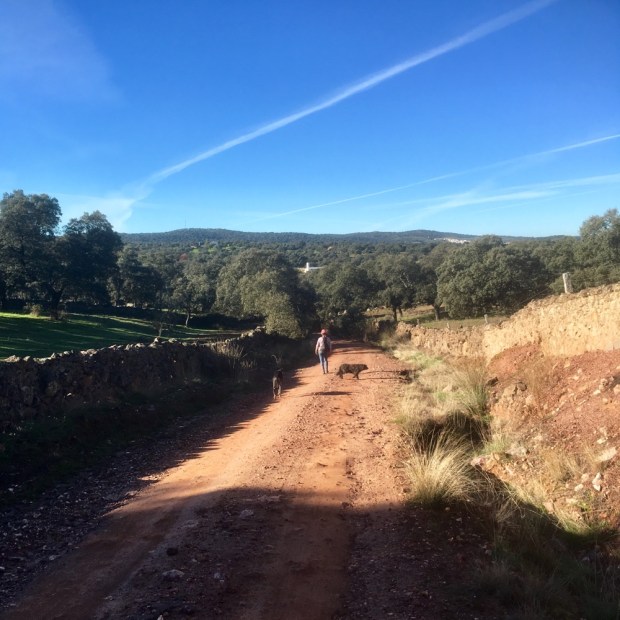
The walk was pleasantly easy going with gentle undulations and sweeping curves in the track and plenty of shade from the evergreen oaks.
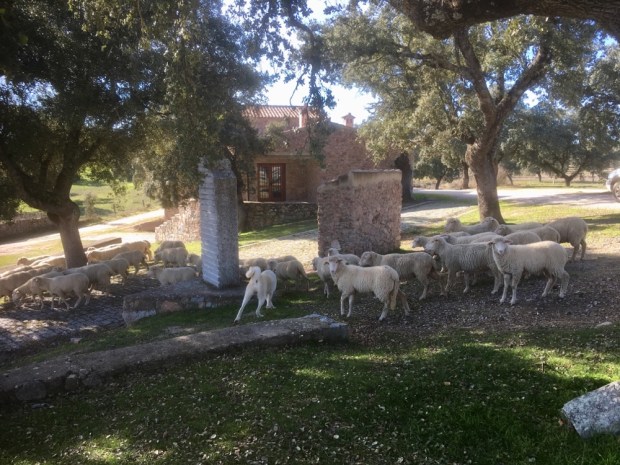
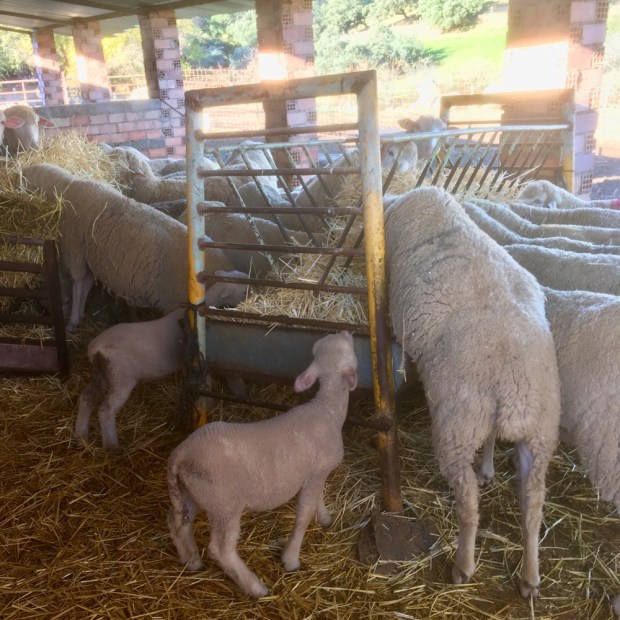
Arriving at Aldea del Cerezo after 7 or so km we had a little refreshment break and watched dogs, farmer in Jeep and wife on foot struggle in control a flock of errant sheep.

We were glad to see them restoration of the little hamlet and hope it gets plenty of use. It seemed a lovely spot with the advantage of water running through it. There were even rushes to match any at home in the soggy boglands.

From here we headed up a smaller, rougher, no vehicles track towards Azuel for about 4 Km before turning west again to reach after Cardeña 6 km.

There was another steam to ford with more birds flitting about and we had seen rabbits but otherwise all the animals had been domesticated.

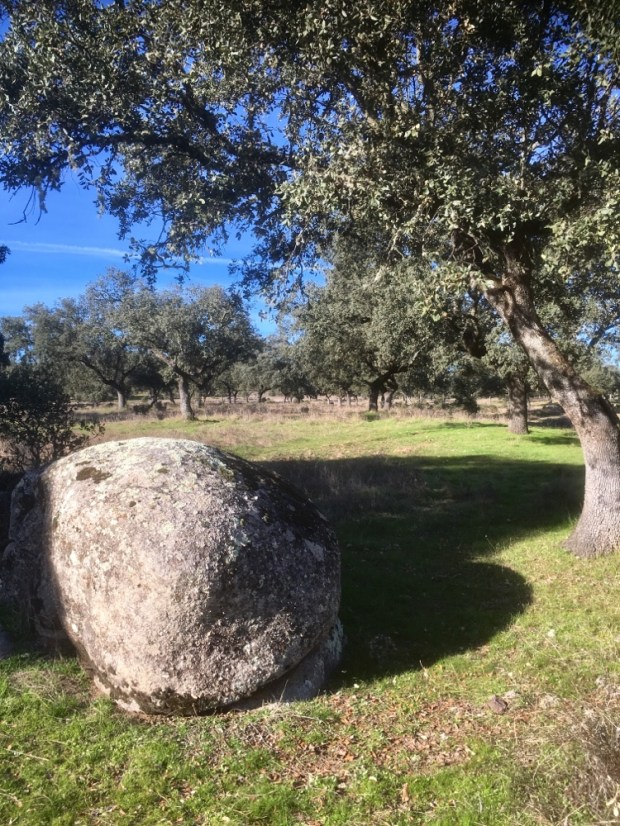
There had been plenty of raining over the last month or so and the landscape shone an iridescent green. There was another interesting landscape feature, huge granite boulders like Henry Moore’s or Barbara Hepworth’s artworks scattered around the green carpet of a gallery floor.

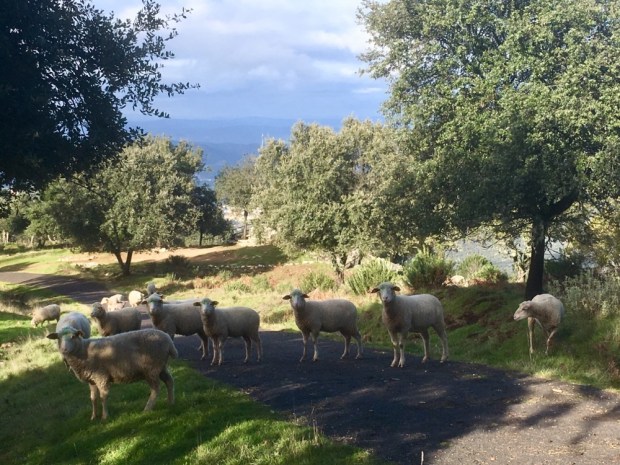
On our return to Cardeña we passed a few flocks of sheep with their dog minders. These remarkable canines not only spend all day guarding without human guidance but also escort them home at night and out again in the morning.

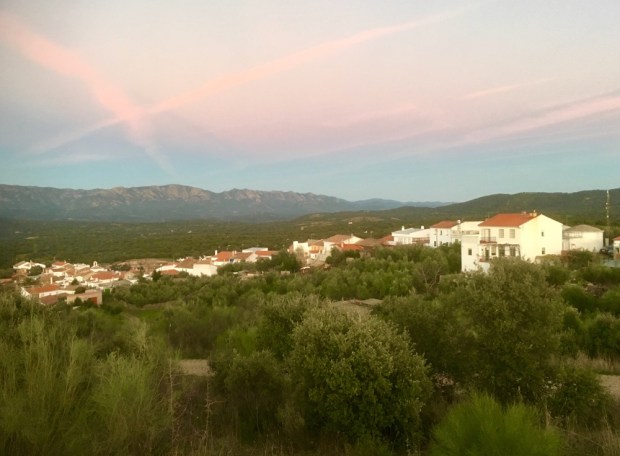
A little weary on arrival at the van, we drove to the Mirador above the village of Azuel a few km north where we slept soundly under a clear and star studded sky.

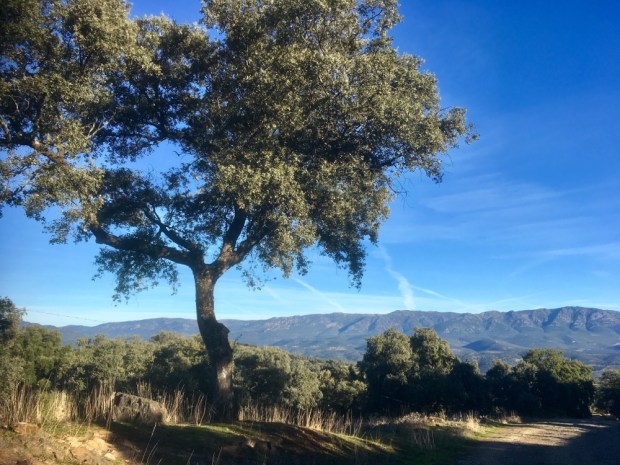
It’s slow to get light here around midwinter thanks to Franco setting his clock to Hitler time and we didn’t get going on the next days 11km loop around Azuel till after 8.30 but it was another glorious day and the temperature soon starting rising, especially as we spent the first hour rising up through the trees towards the southeast. A similar landscape but subtlety different, with sparser trees and more open views to the Sierra to the north.

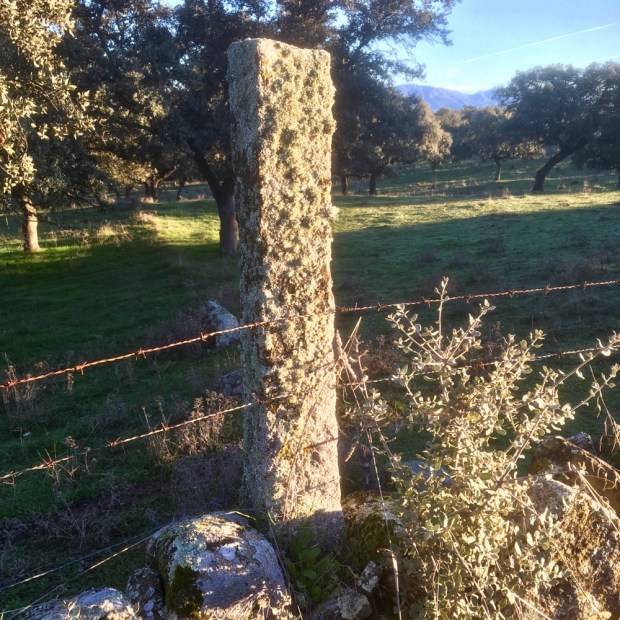
The granite base to the landscape had provided walls to match the Aran Islands and hundreds of lovely slender fence posts.

There must be a fair bit of rain in these parts and the air must be clear and clean judging by the copious lichens hanging from the trees and adorning the walls.

We walked right through a remote and deserted farmstead where the steadfast dogs minded the sheep mums and their newborn lambs and then off down a series of autumnal trails.

Nearing the end of our walk we passed a load of pigs leading a lifestyle a lot more restricted. I’m not sure if these were those grain fed farm reared pigs that obtain “Cebo” status or what but “Bellota” is a happy pig.

Next stop -the neighbouring, but wilder Parque Natural Sierra de Andújar and another chance to find the elusive Lynx.