GRAND TOUR 2015

THE GRAND TOUR:SLOVENIA 31st JULY 1st AUGUST 

I have a pile of walking guides in the Tranny to places I had wanted to visit on this trip but now ,as day after day in the Julian Alps only reveal more vistas to explore, and the first day of autumn is upon us and with it the realisation that time, for our journey at least, is finite- I might not get to open some of them. 

As someone who hates to turn down the possibility of checking out pastures new it’s a dilemma. “Should I stay or should I go?”

My dual personality is battling it out. One half is loving it here and never wants to leave, the other is reminding us of all the other glories that await further down the road. And that this is our chance. Could be the last. “Maybe the last time, I don’t know”


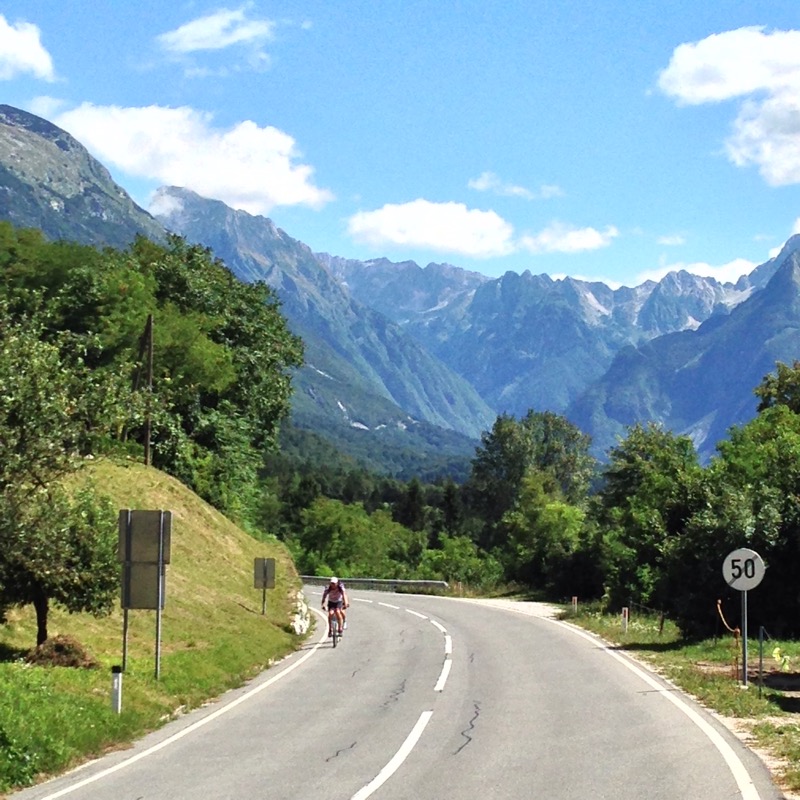
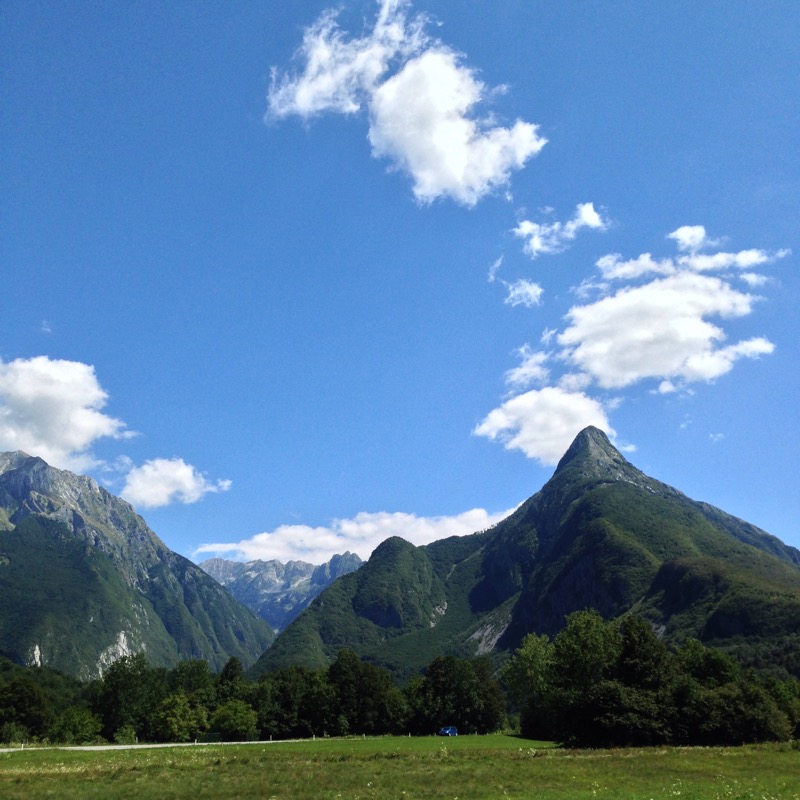
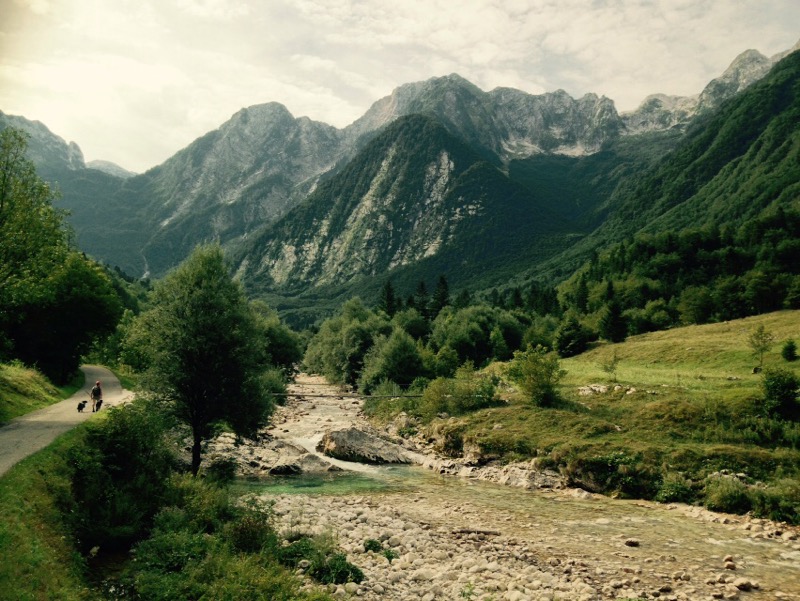
But for now the dominant mantra is”be here now”  and we are. And we really enjoyed getting here. As we curved around the peaks heading north , then turning East the views had us choked.  


  That’s a lovely piece of planet isn’t it?

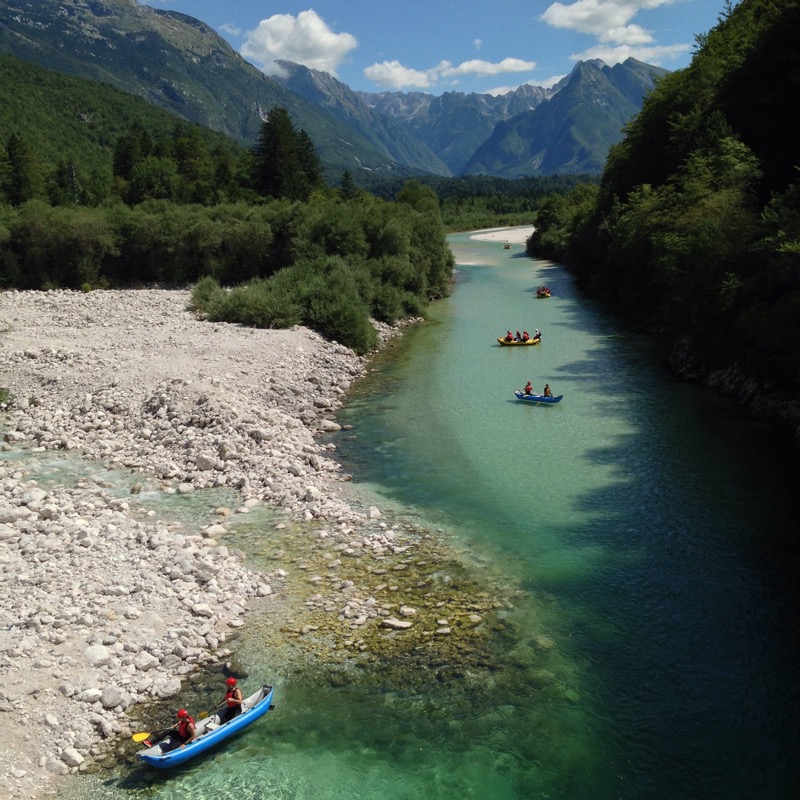
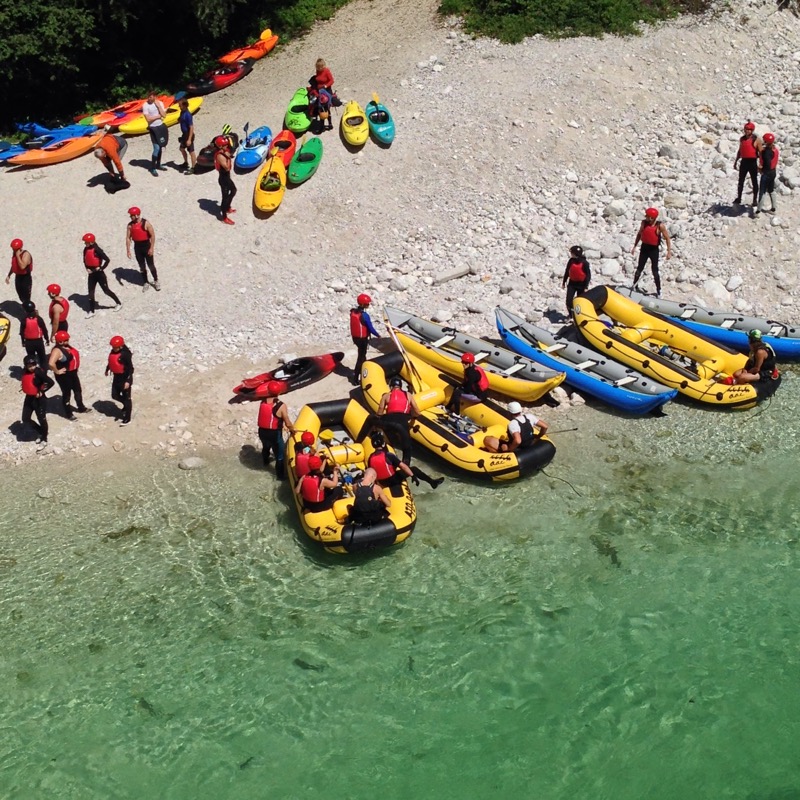
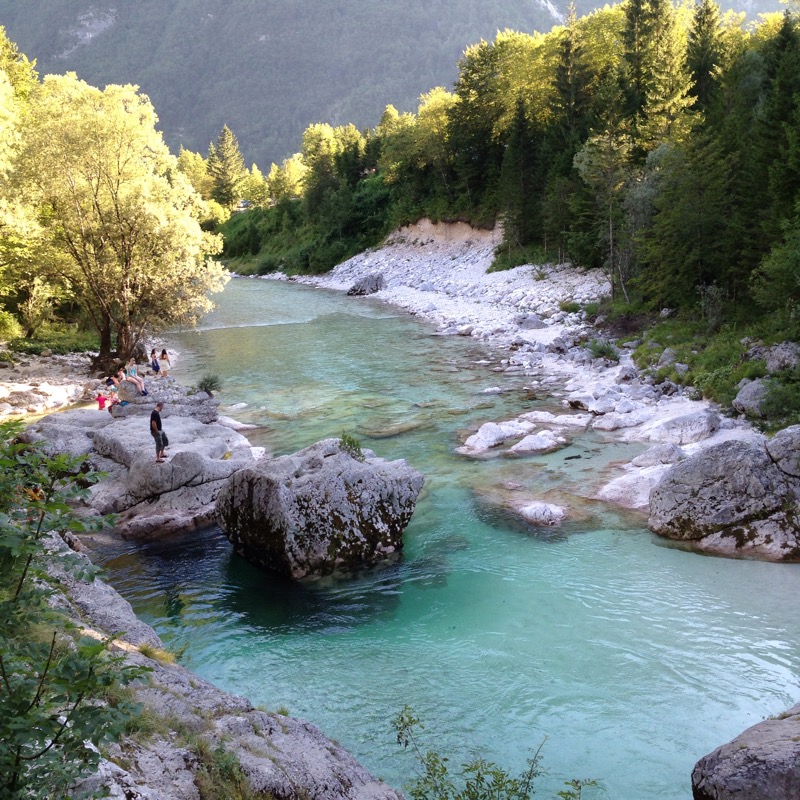
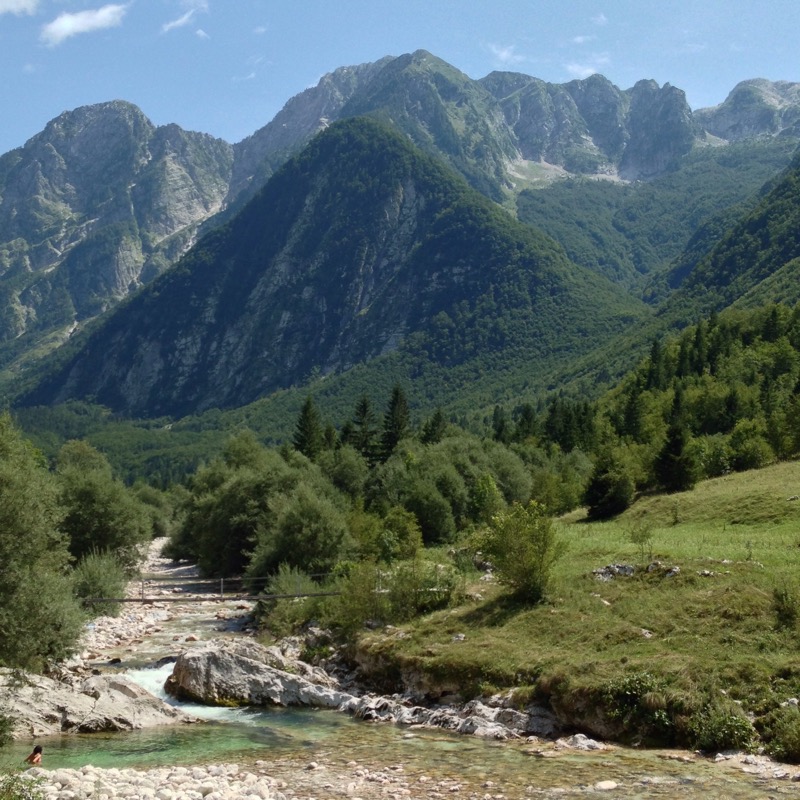
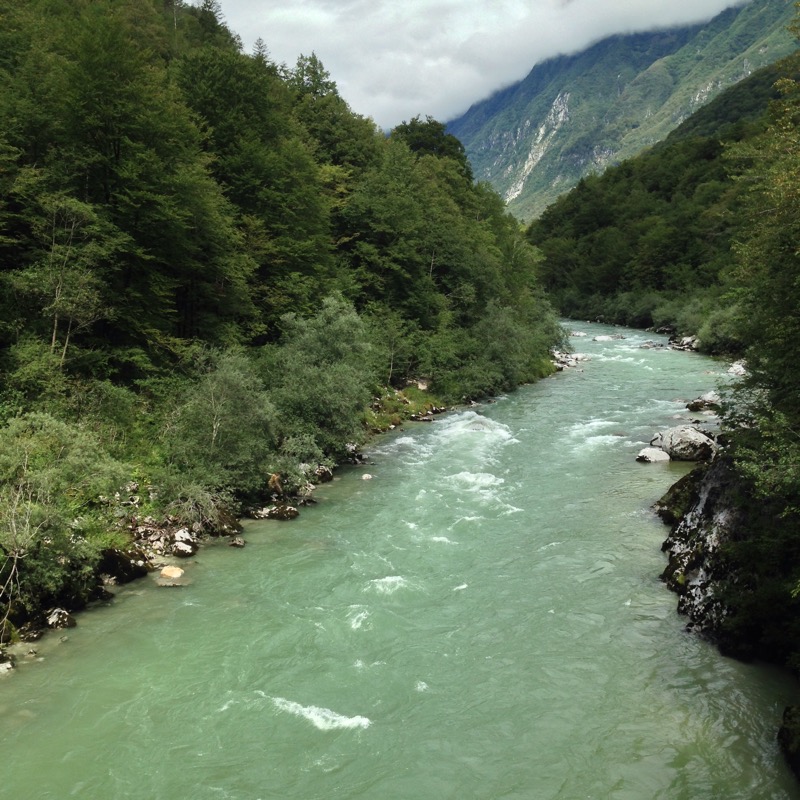
  We turned off to go up the Soca valley, home of EXTREME and ADRENALIN sports but all I saw was beautiful clear turquoise water and people messing about in boats.  


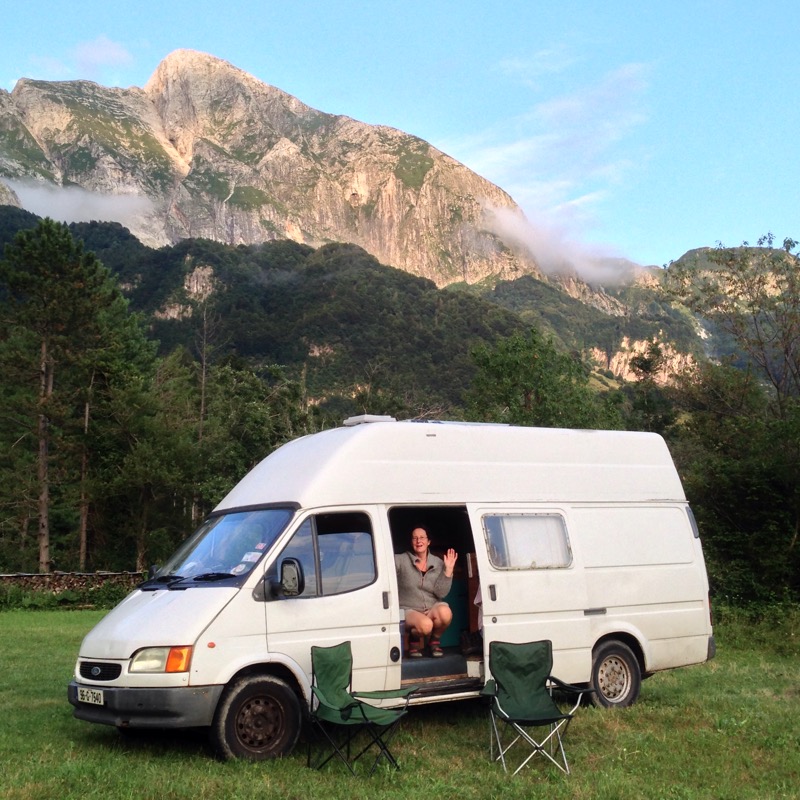
 By the time we got to the camp site we were engorged with nature and all we could do was supp slowly at the surroundings.  

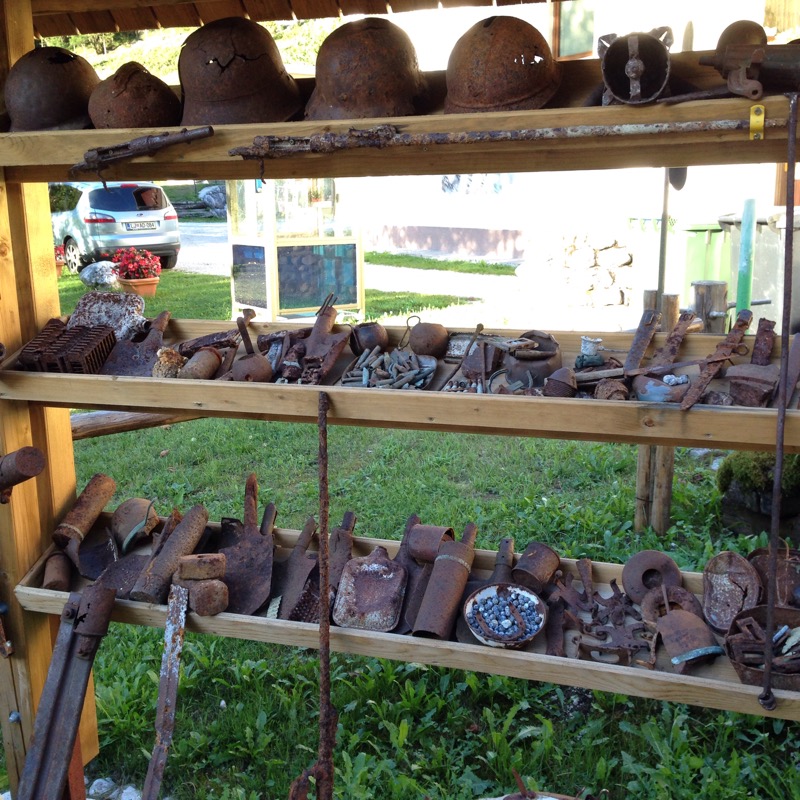
     Although we did manage to stroll down the road a little to check out a route for the next day. And call in at neighbouring camp site where their WW1 finds were on display.  


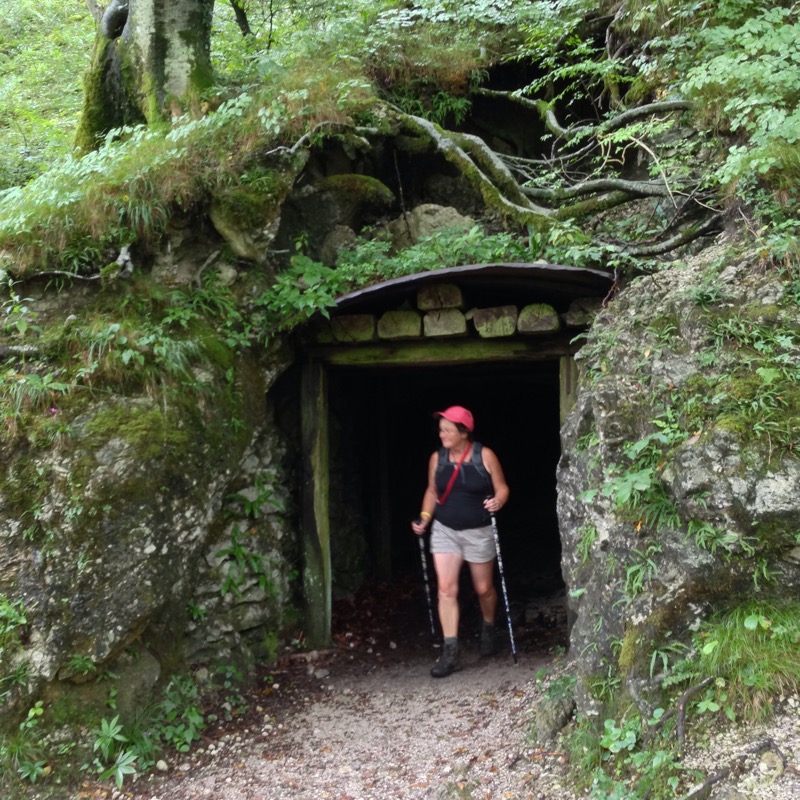
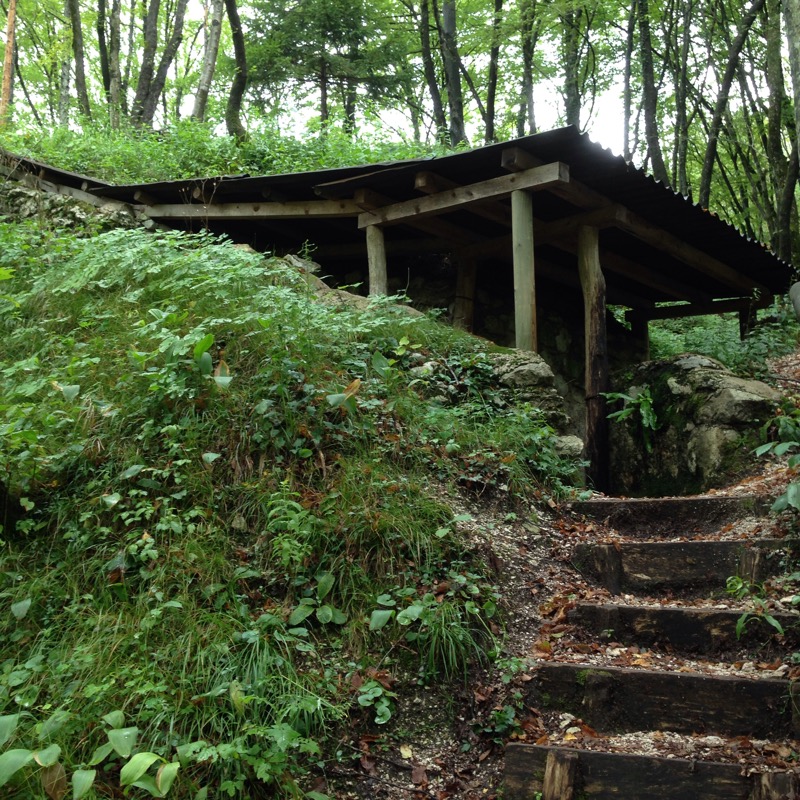
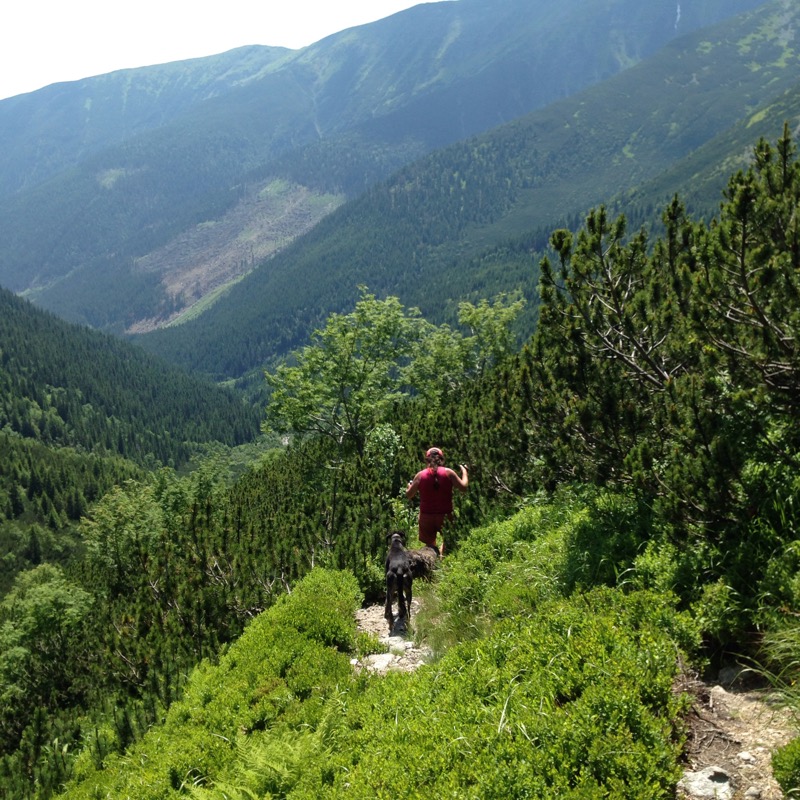
We were to find our own mementos of that desperate conflict the next day when we took off down the valley and then up and up into the mountains on trails made by soldiers 100 years ago. 

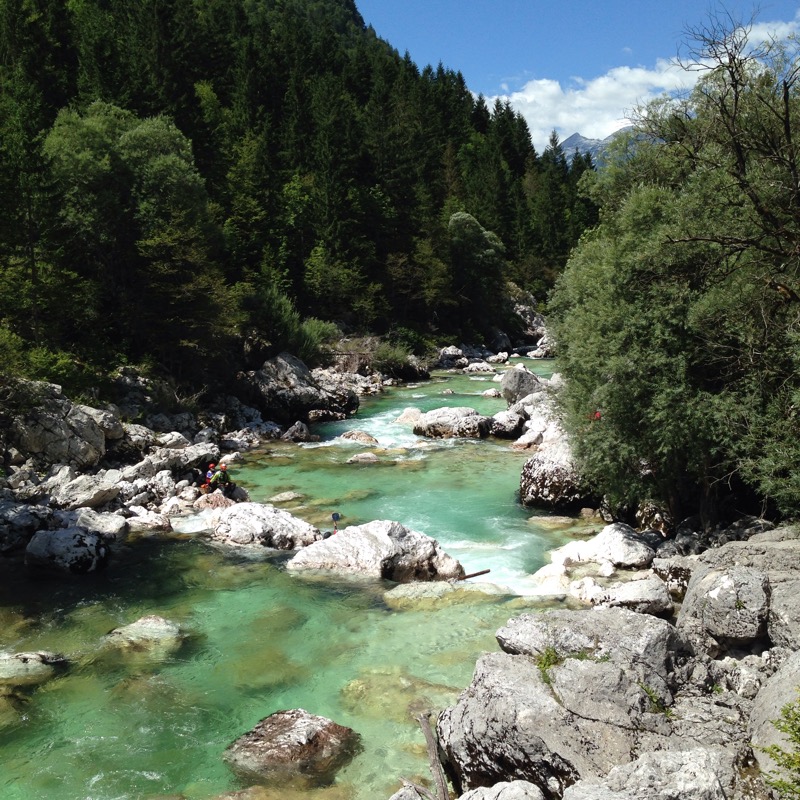
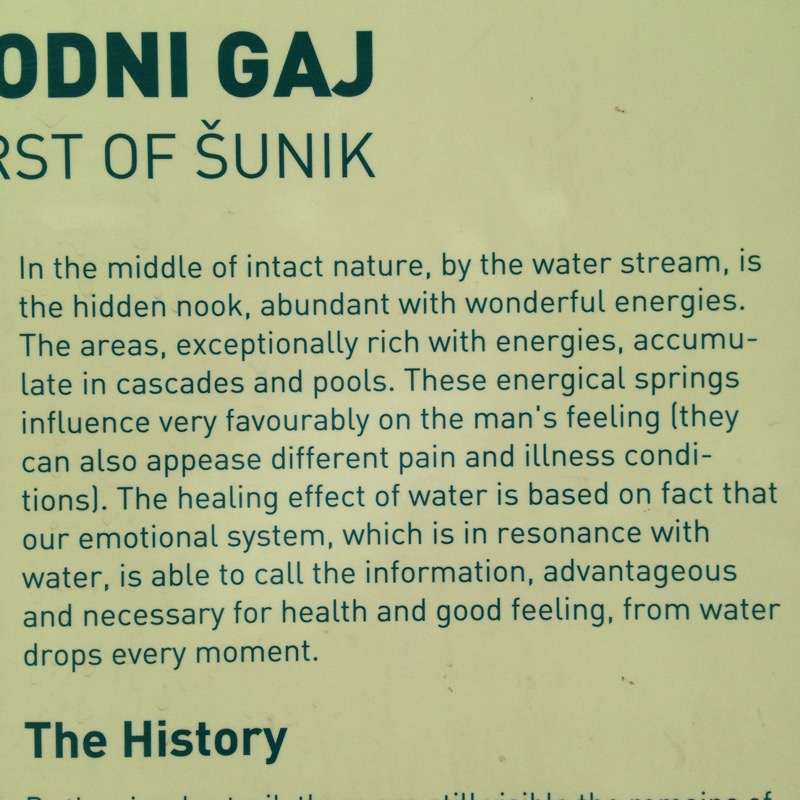
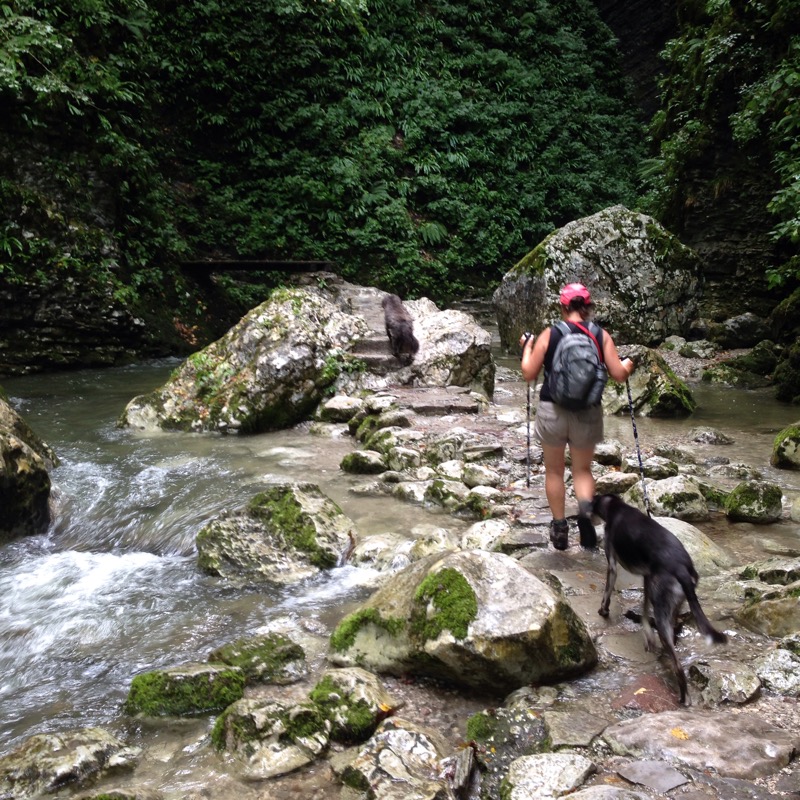
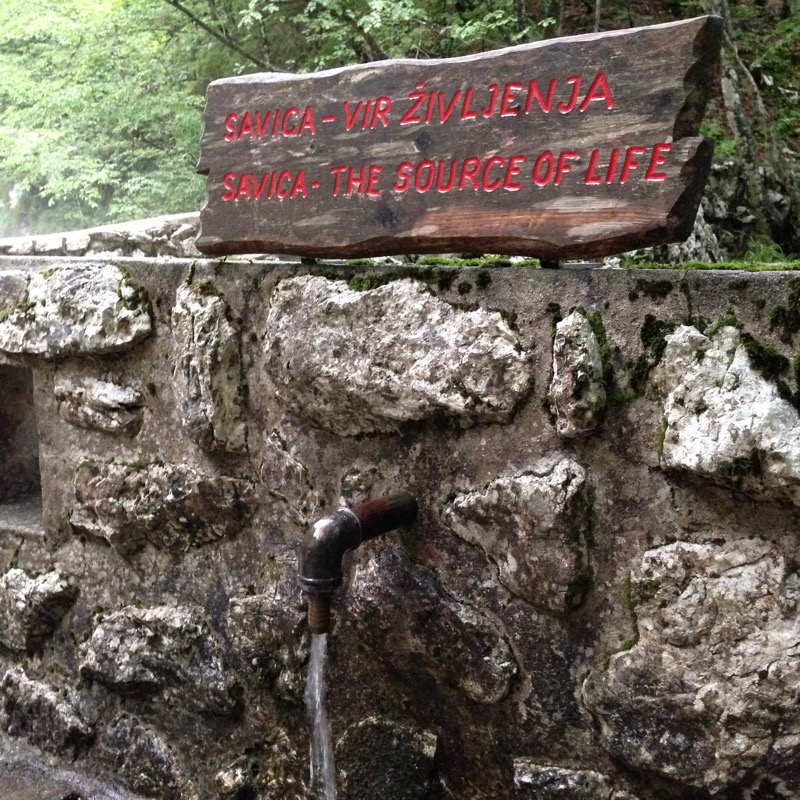
Ironically the beginning of the trail was marked  by a signboard, as we crossed the rushing river, describing the healing power of the waters.   


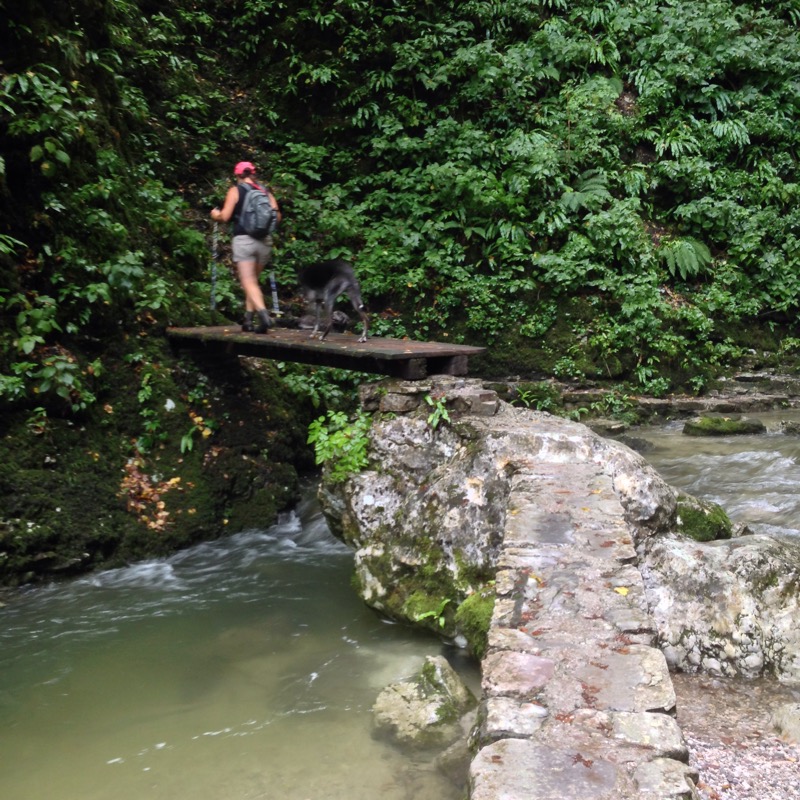
Scruff had done well leading us across the suspension bridge.  

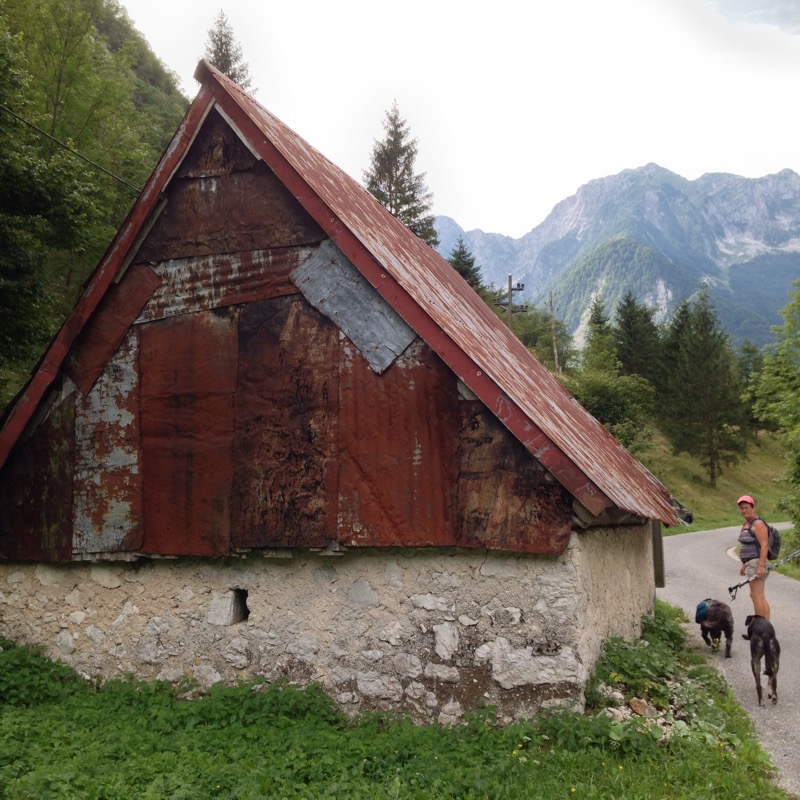
 And more old iron buildings in picturesque spots.  

   We climbed to a more or less deserted hamlet  

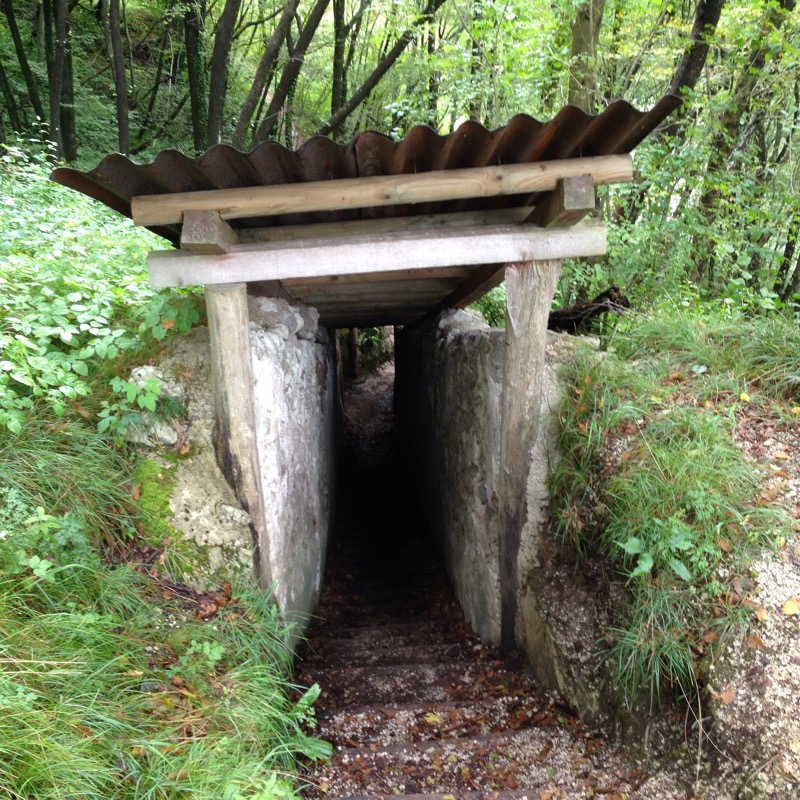
 and then zig zagged or way higher and higher on the old military route to the lines way above on the ridge. How the supplies and equipment were ever dragged up there was beyond us as we struggled to get up unencumbered. The slope was littered with defensive positions and remnants of the Great War.  


We reached a chapel of sorts and a monument to the troops who died in an avalanche on Christmas 1916.  

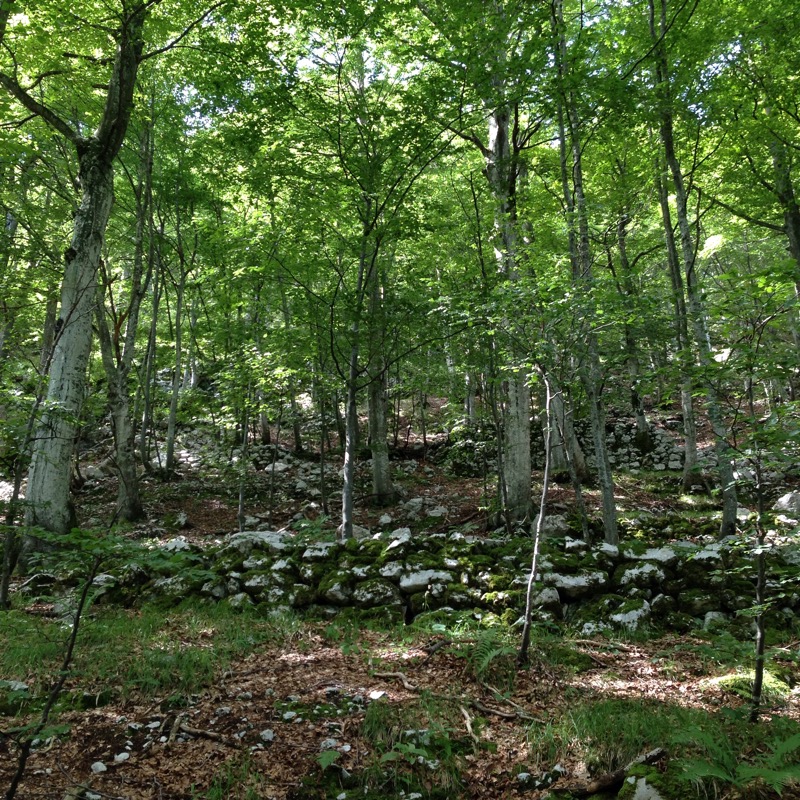
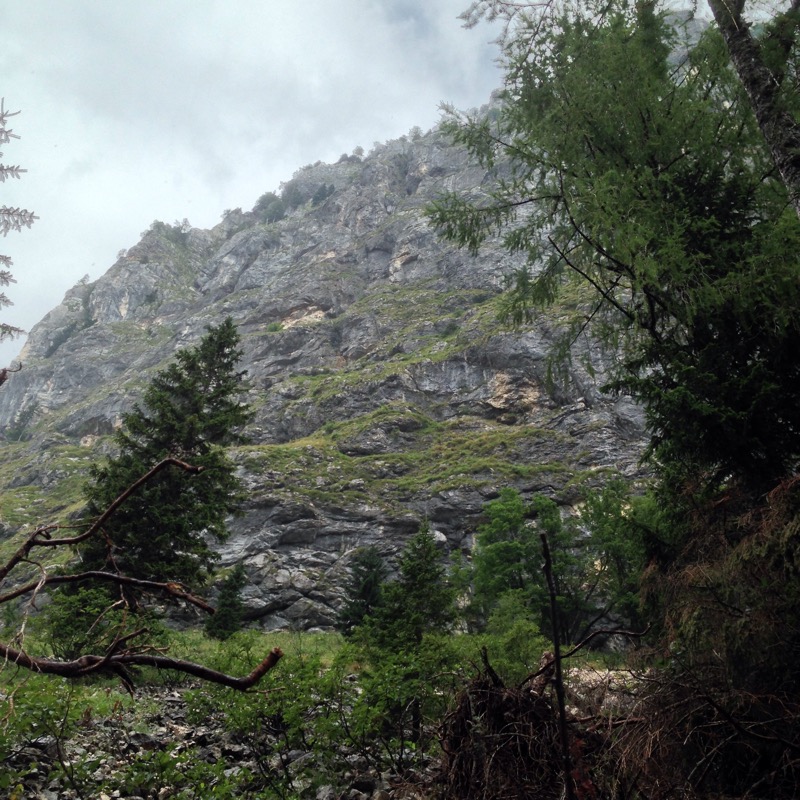
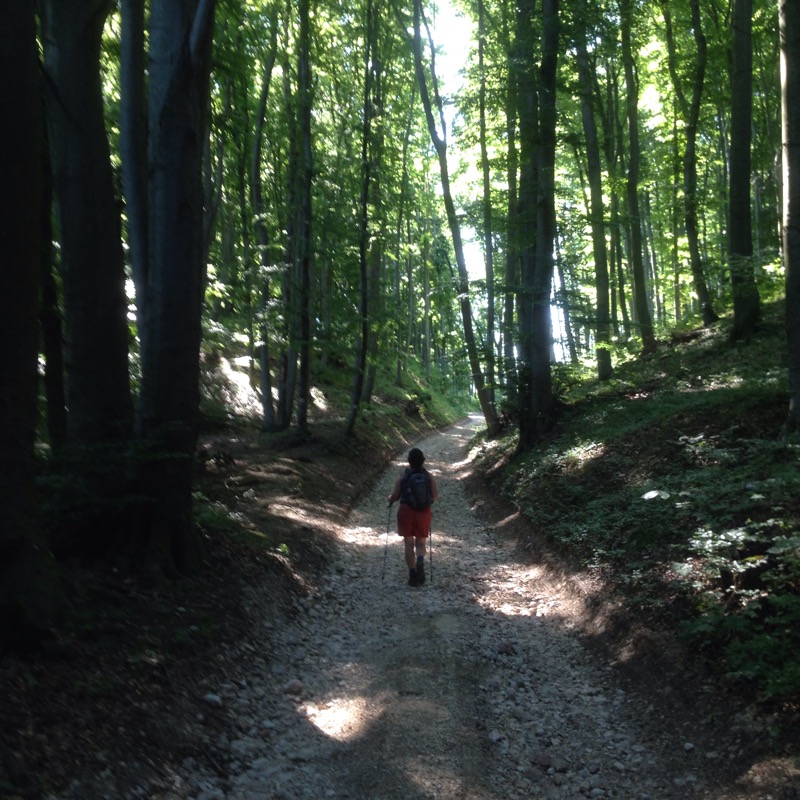
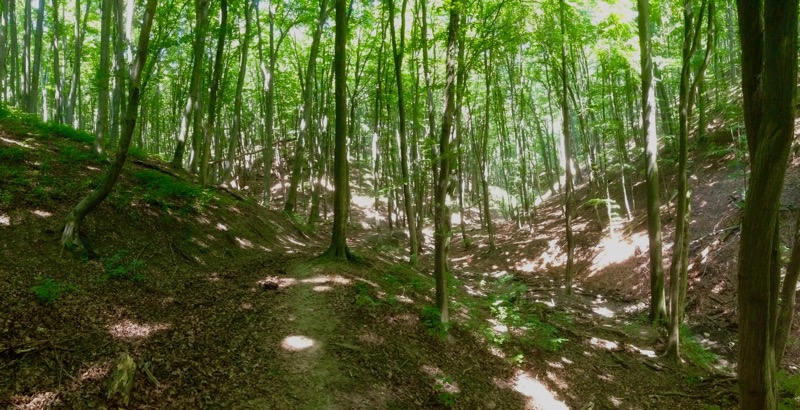
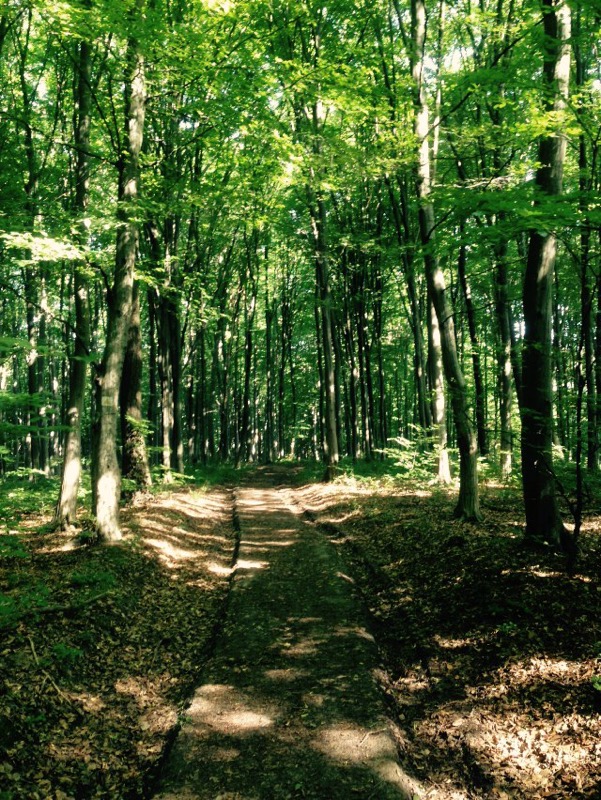
 The landscape was benevolent towards us as we hiked through the beech and hornbeam forest.  

 with the stone walls of the conflict all around. Hard to imagine the horrors of the past in the tranquility of the now.  


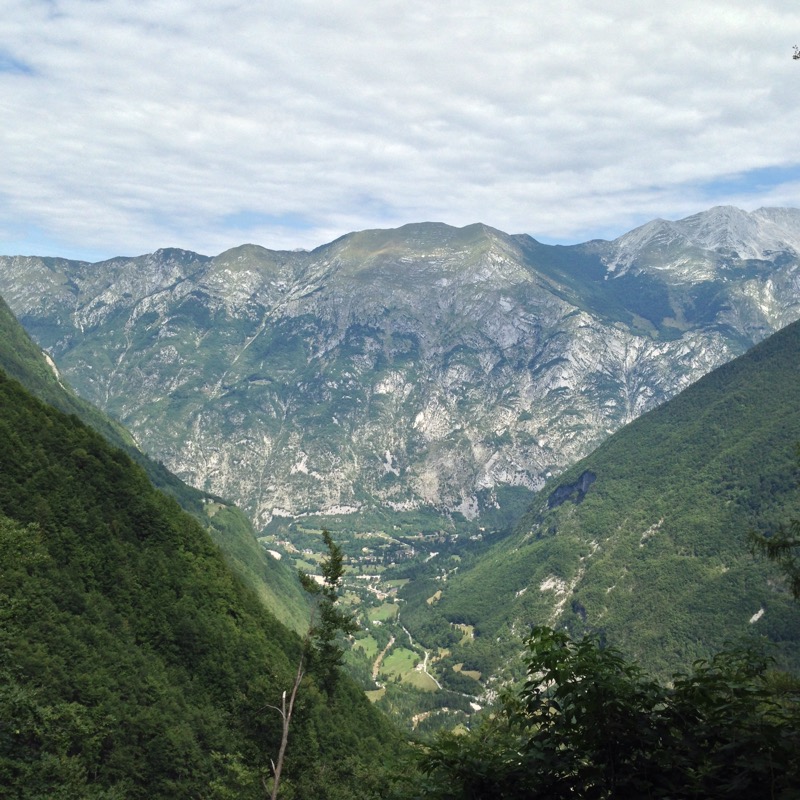
We had climbed over 1000m in the trees and it was good to come to an opening that rewarded us with a view of the valley below.  

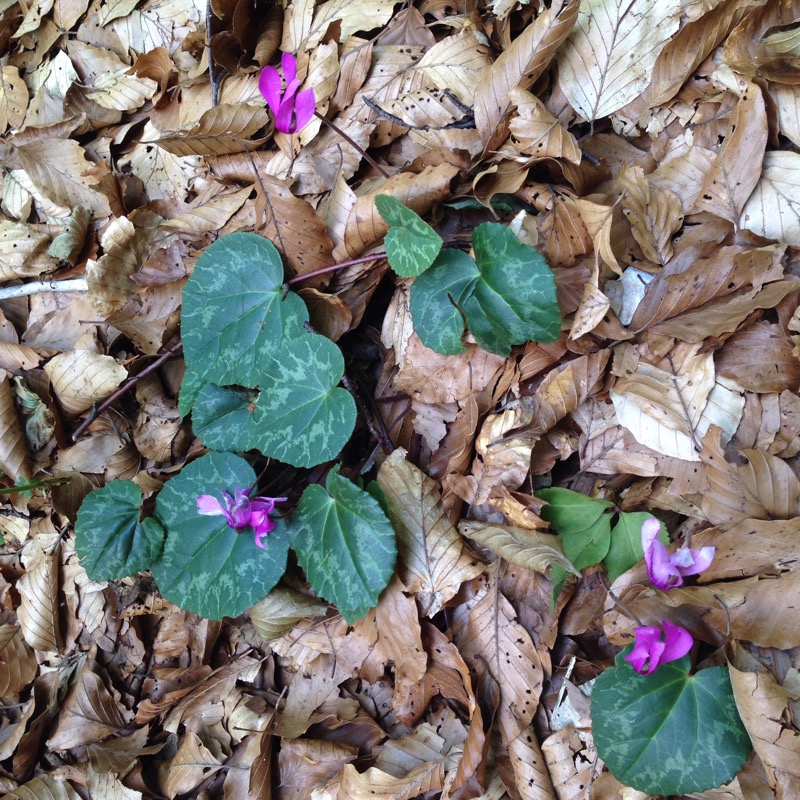
 And the picture at our feet of the countless cyclamen was equally as good.  

 After a traverse across the mountains we came to another memorial, this time to the troops from Bosnia Herzegovina who had lost their lives.  


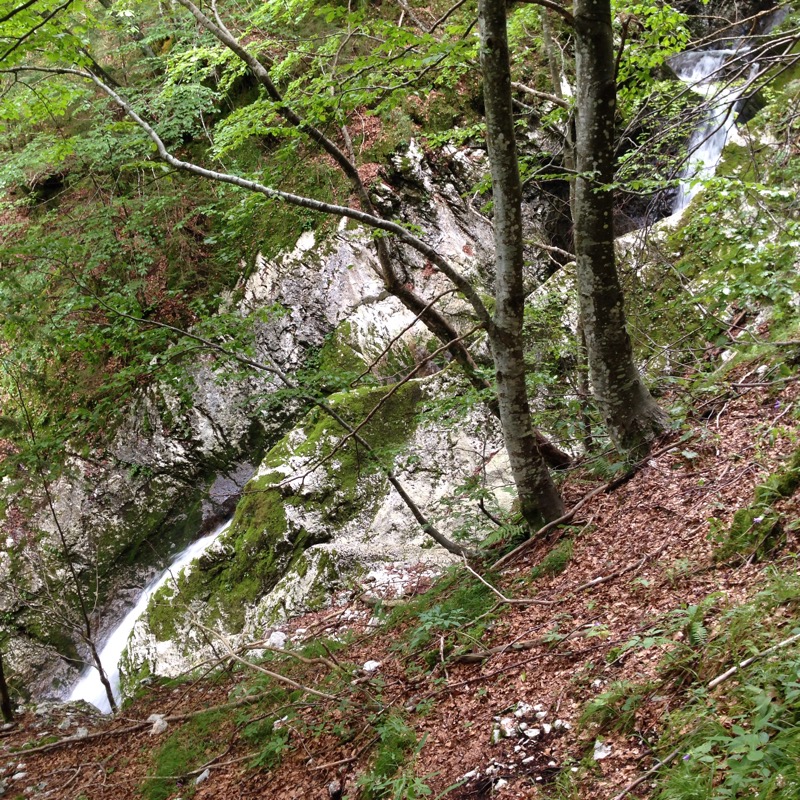
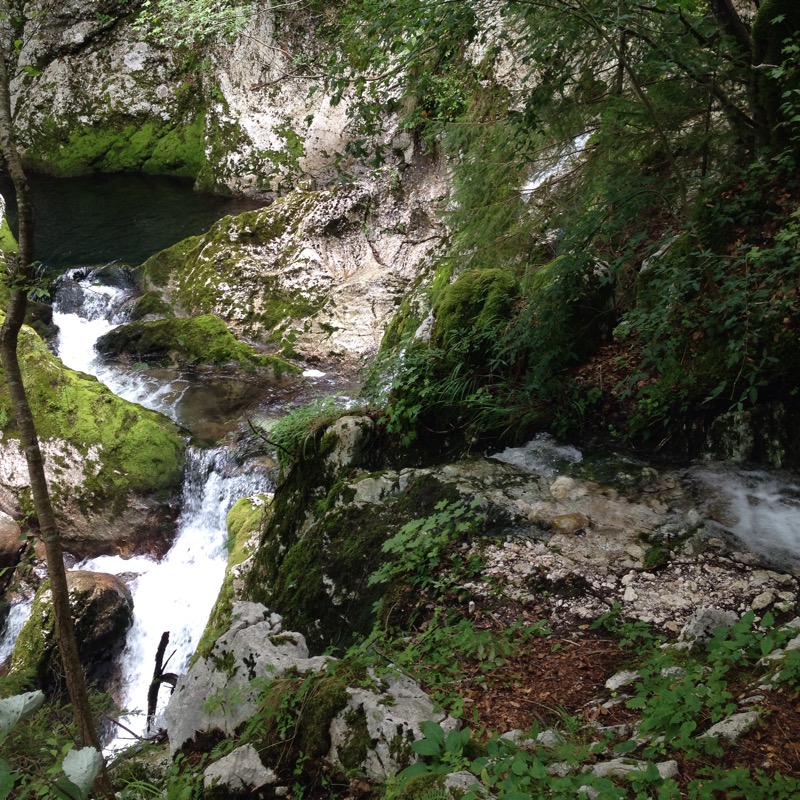
And then we were on the way down again, alongside the rushing waters.  

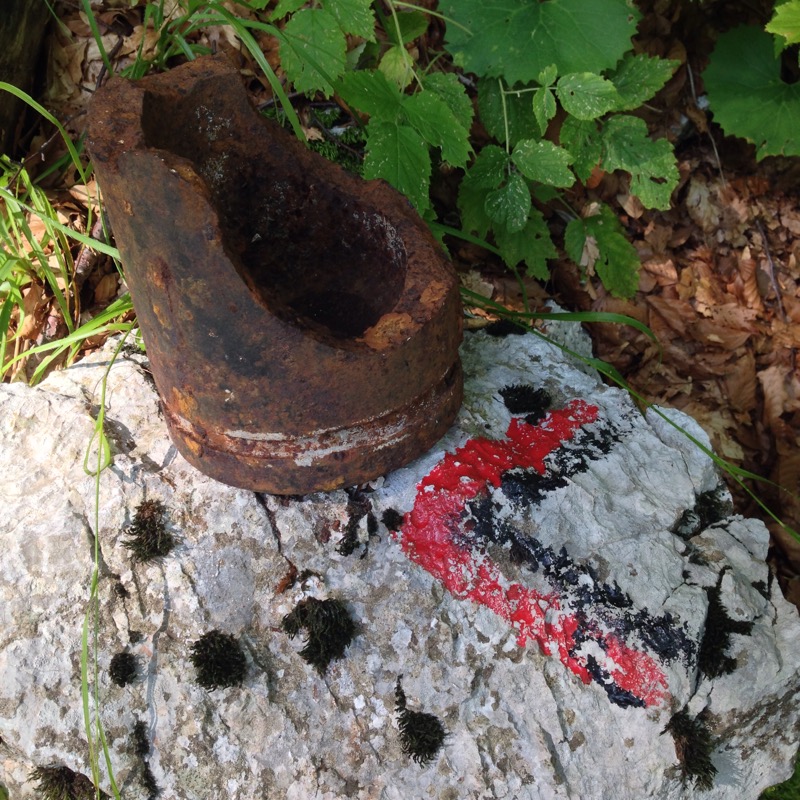
   Passed symbols of war 

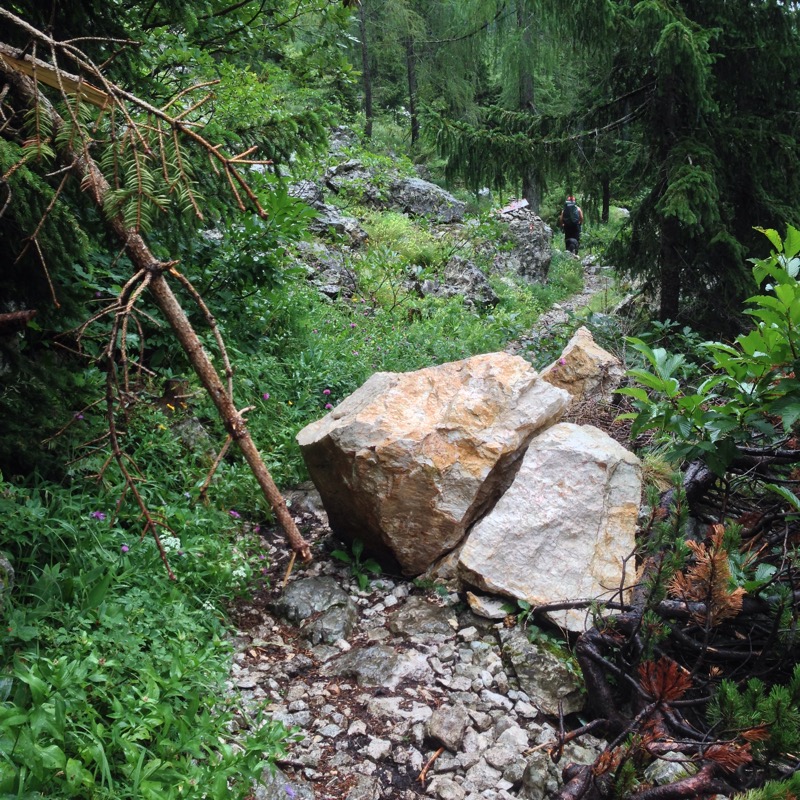
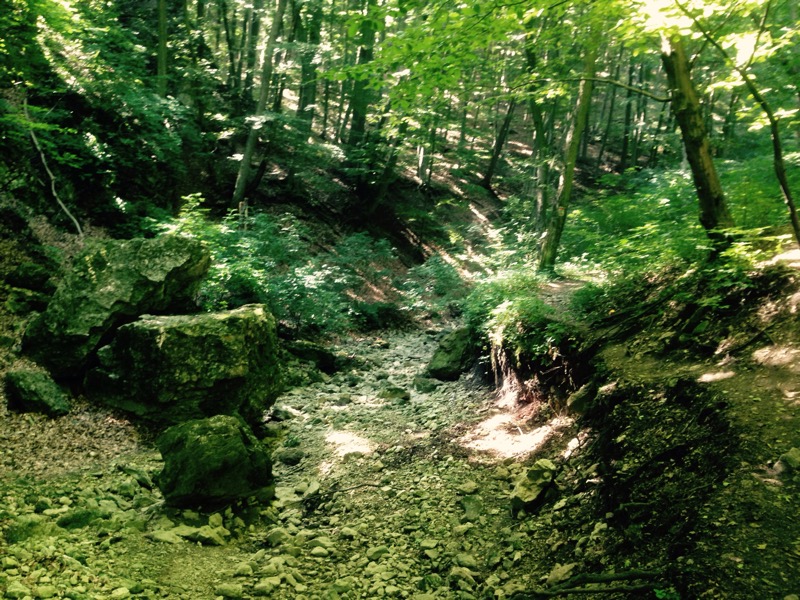
 and more natural threats of huge rock fall. The forests were left intact as a natural defence against these crashing into the houses and avalanche. 

  to the healing waters below  


The dogs were knackered so after leaving them at camp we returned to the river for a cooling dip.  

 There was a place just upstream of the suspension bridge where the Soca river surged through a gorge into deep pools and channels and folk gathered to hurl themselves from high cliffs into the bracing waters. Sally and I had a swim as the teens whooped and hollered with the joy of life  as they defied death in the healing waters. (Sorry, I didn’t take the phone for pictures). 

Tonight the rain is back. Tomorrow the weather will determine “Should I stay or should I go” 

THE GRAND TOUR:SLOVENIA 28/29/30th JULY 

The love affair with Slovenia has developed from its early infatuation through some disappointment and into a deep and passionate craving. The dissapointmen came when we had to sit in the van and listen to heavy rain hammering the roof and hid the beauties of the mountains from us.It was a reminder of what camping holidays at home could be.  The lustful passion returned last night when, parked up under the highest peak in the southwestern corner of the park, Krn,the cloud lifted from the summit and the setting sun bathed it in a mellow yellow light.   

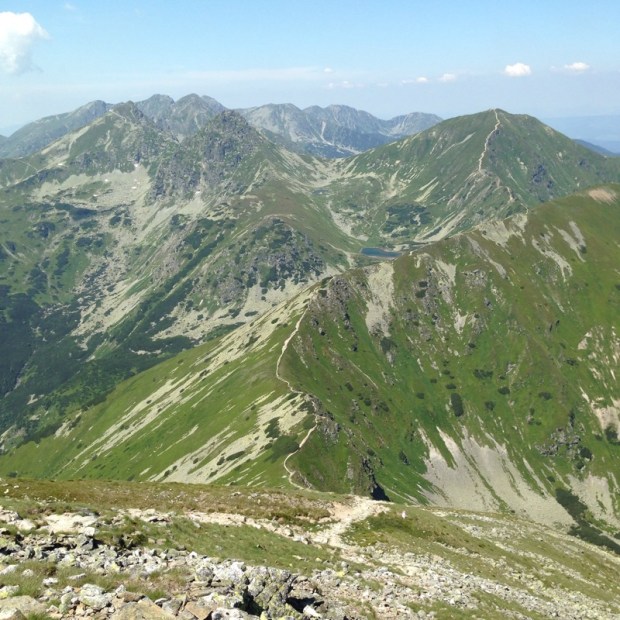
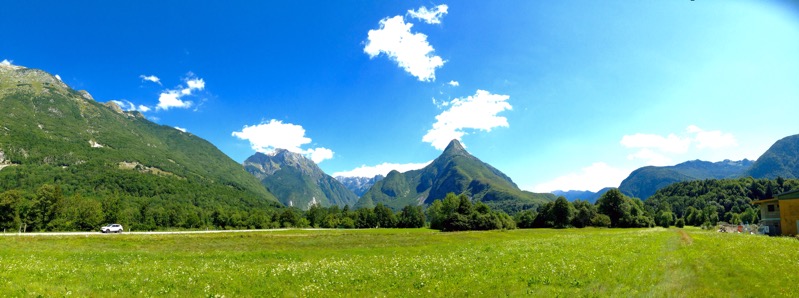
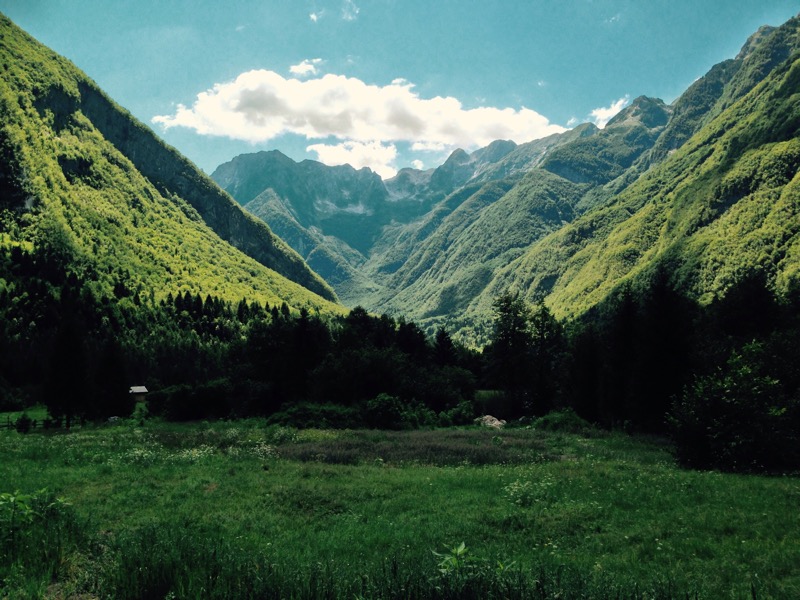
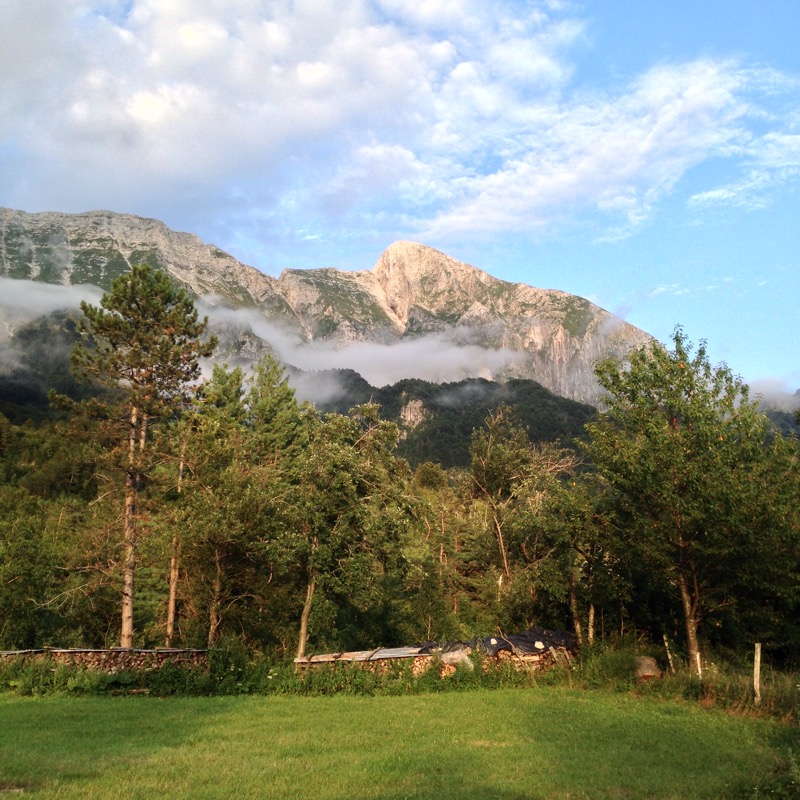
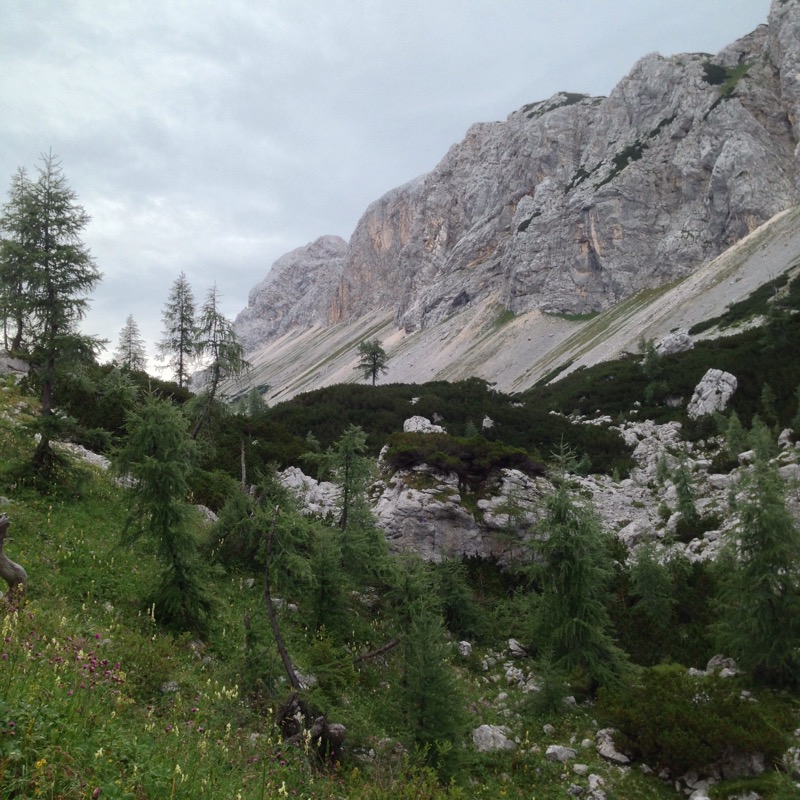
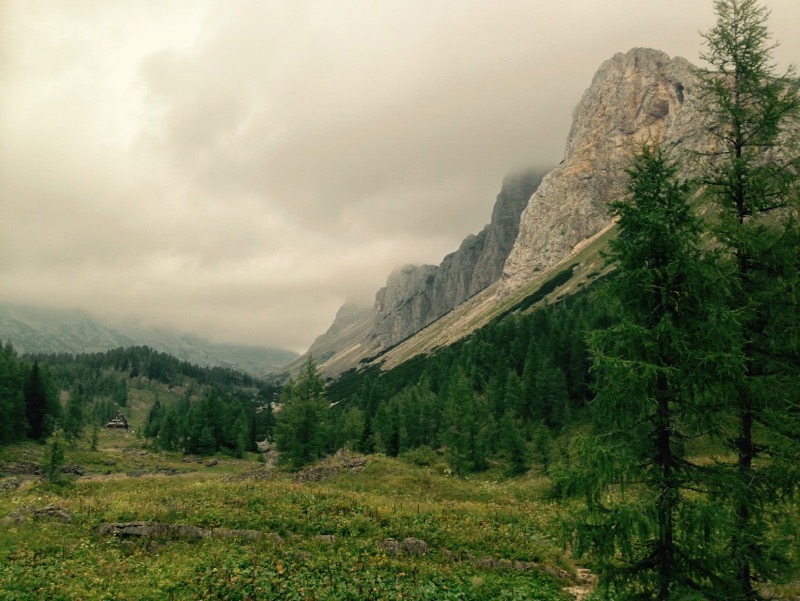
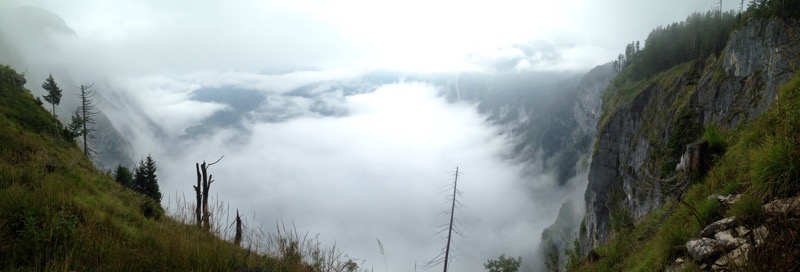
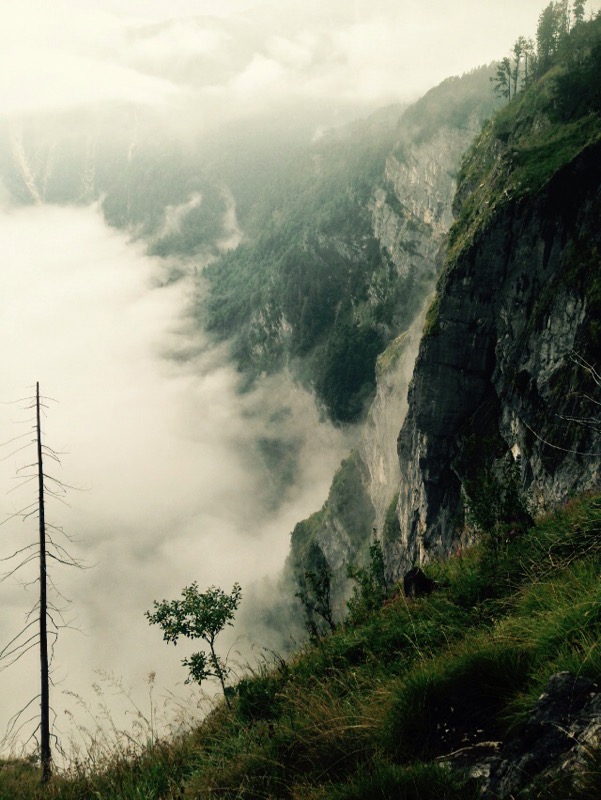
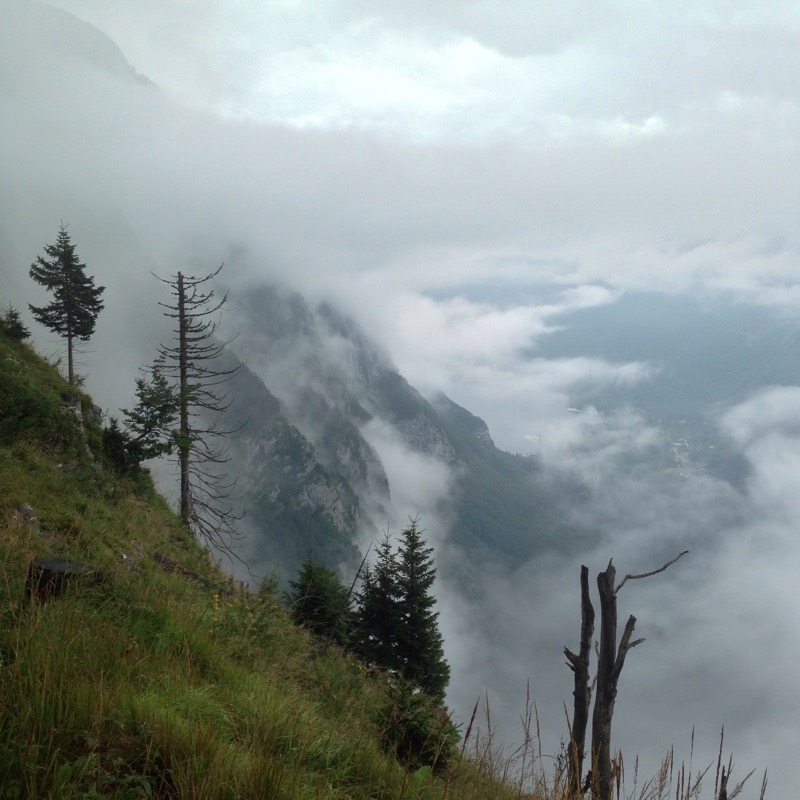
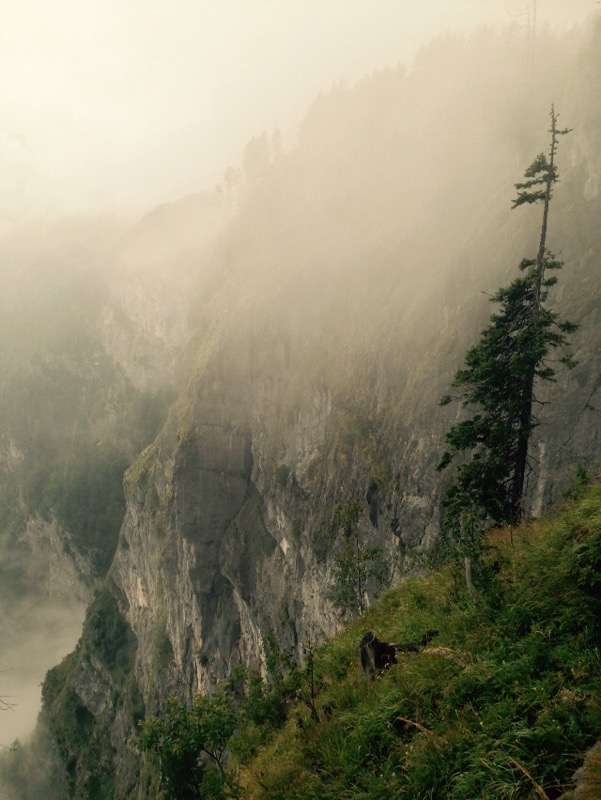
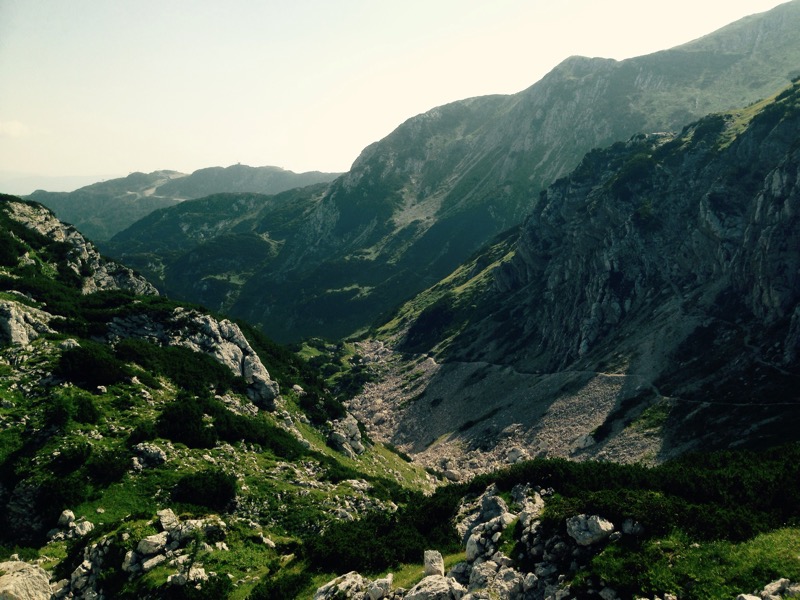
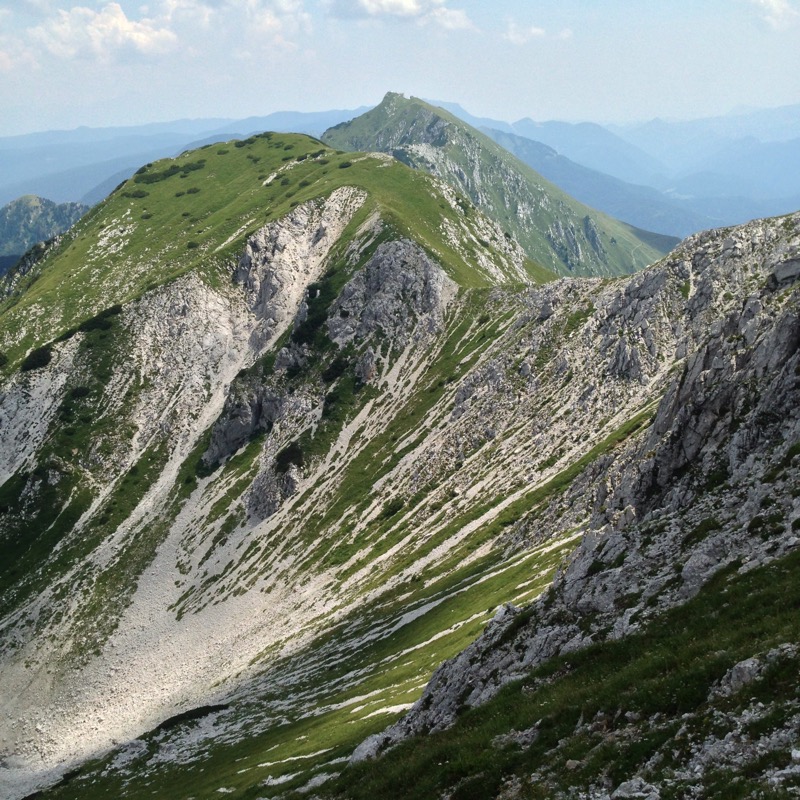
 And this morning we headed further north into scenery so dramatically exquisite that no camera, and certainly not a phone camera, was going to be able to capture it. The view from our pitch on the camp site recommended by the lovely people at camp Zlatorog is an example. 


But I’m getting ahead of myself and first I must report on our journey, which involves going back in time on our tour of man’s inhumanity to man. Back before the Cold War, before the paranoia of the ex-communist states, before the Second World War, before the bunkers on the Czech/Polish border and the grisly reminders of  the concentration camps. Back to the trench warfare of the First World War on a front you may never have heard of. 

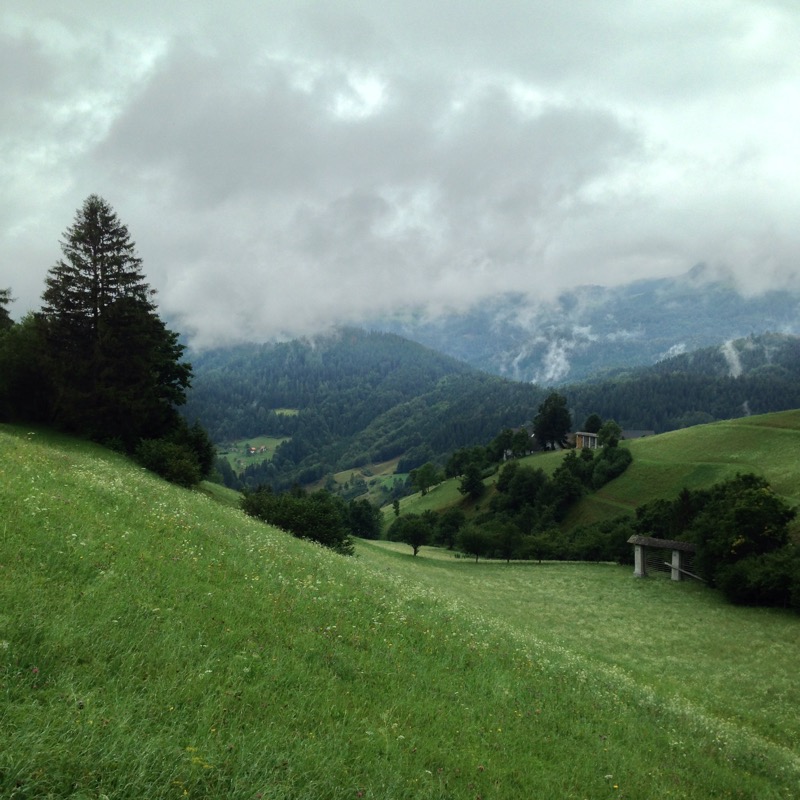
We had to get the Tranny up and over its first big climb since major boil over and it managed it fine, although at a sedate pace. The southern side of the Julian Alps revealed more miles of forest interspersed with steep sided hay meadows.  

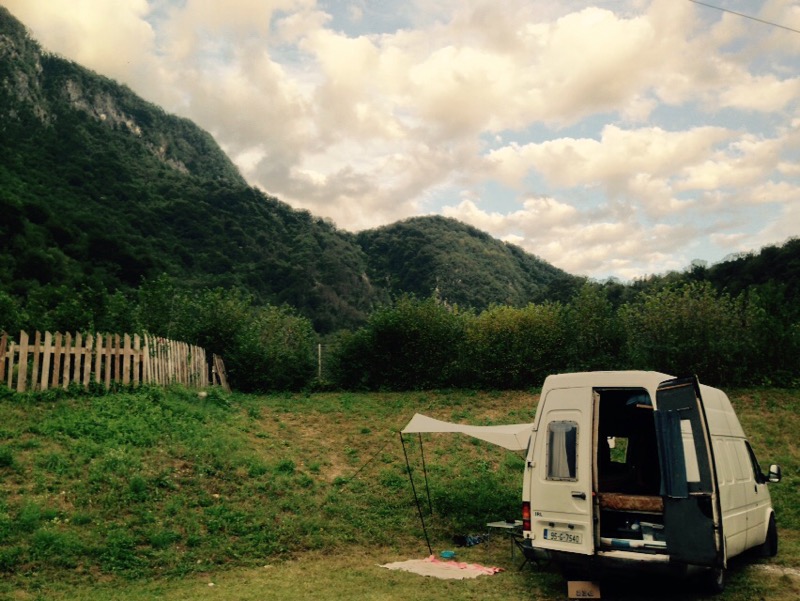
 On the valley floor we skirted the mountains round to Kobarid and pitched up on an Eco Camping site, Kamp Koren. Basically one that is inspected to come up to certain criteria of greenness or greenwash. This one had the solar this and that and energy saving how’s yer fathers and some goats rabbits and veg garden. And the views were good.    

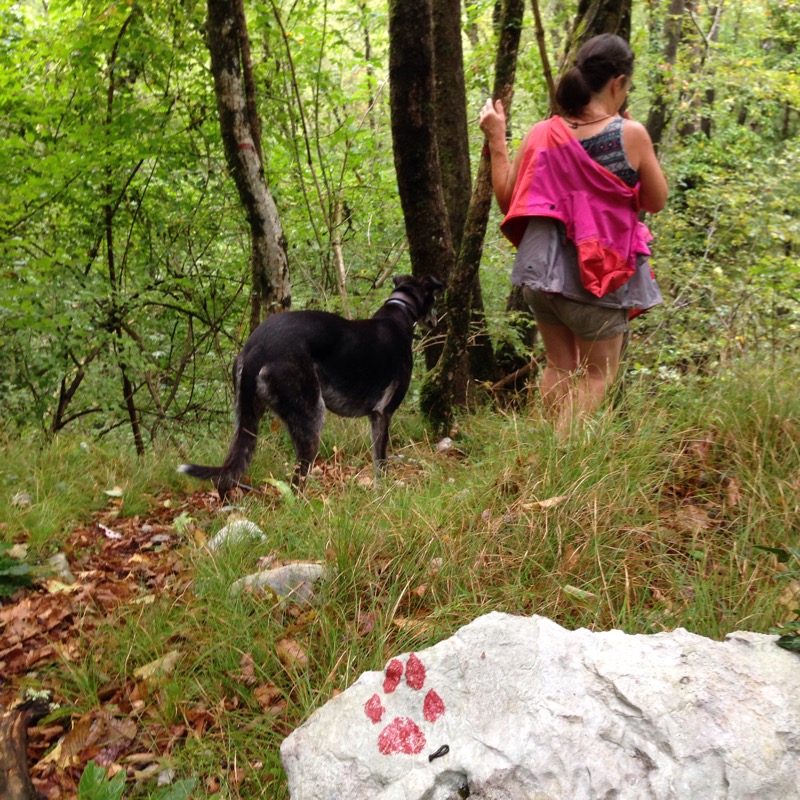
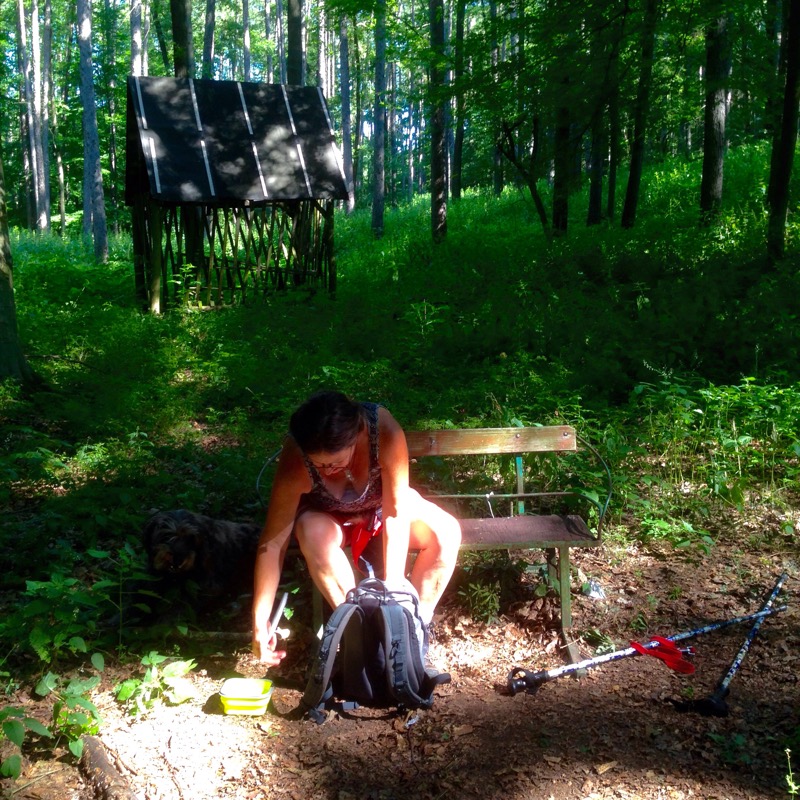
 Next day we took dogs for a walk on their very own doggy trail, marked with paw prints  

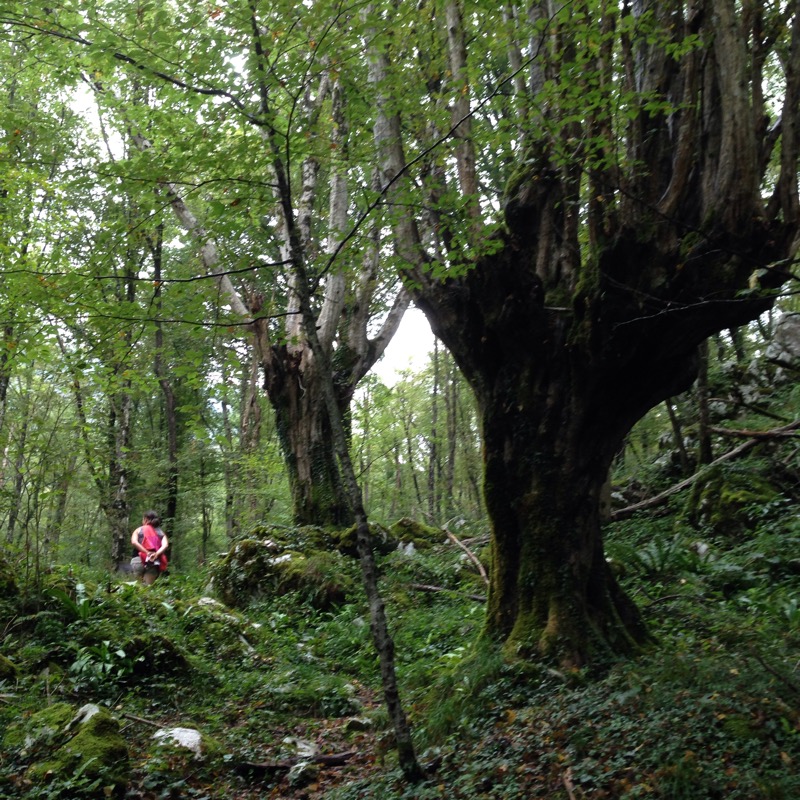
 up a wooded knoll behind the camp past some ancient pollards.  

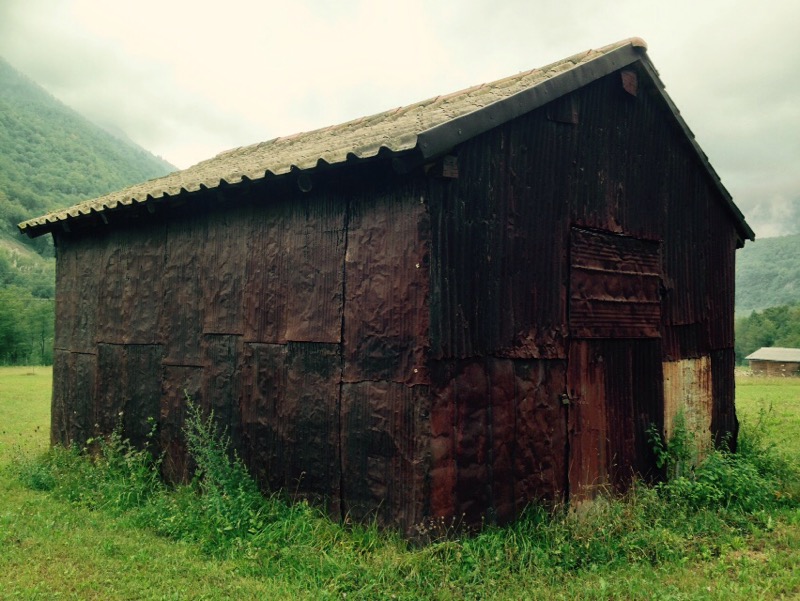
 And fine sheds of beaten oil drums.  


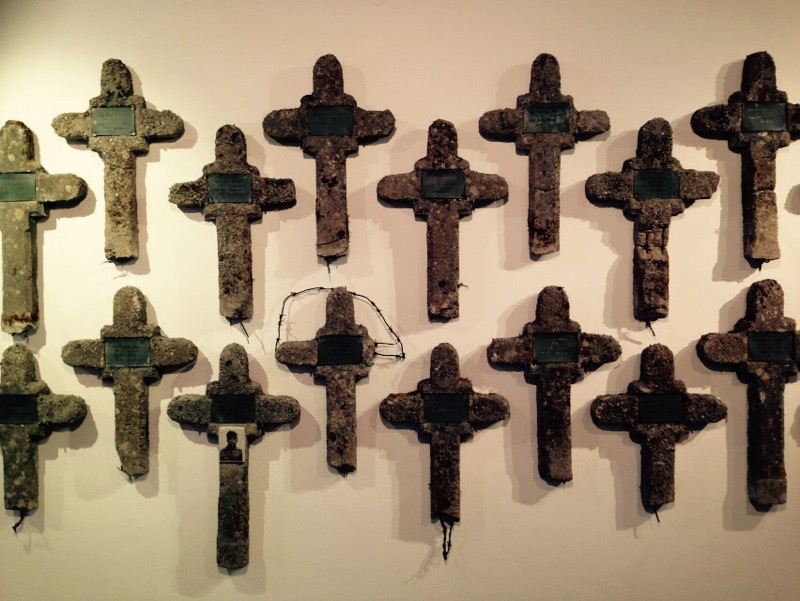
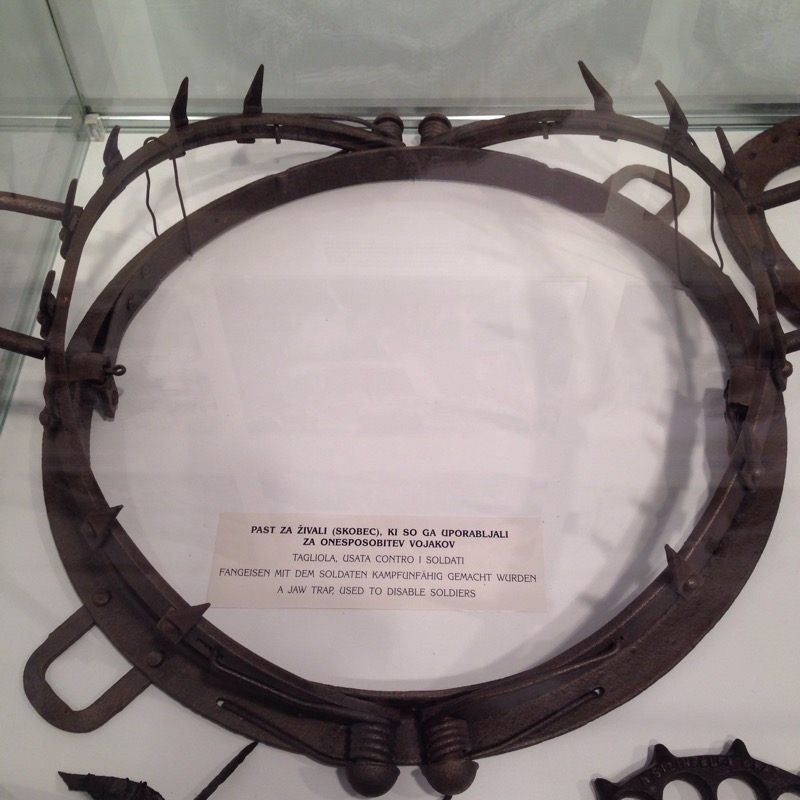
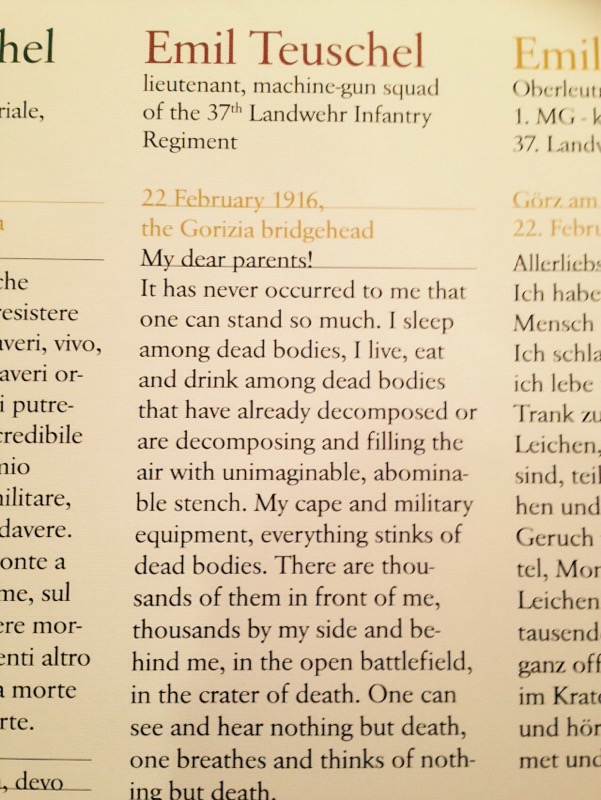
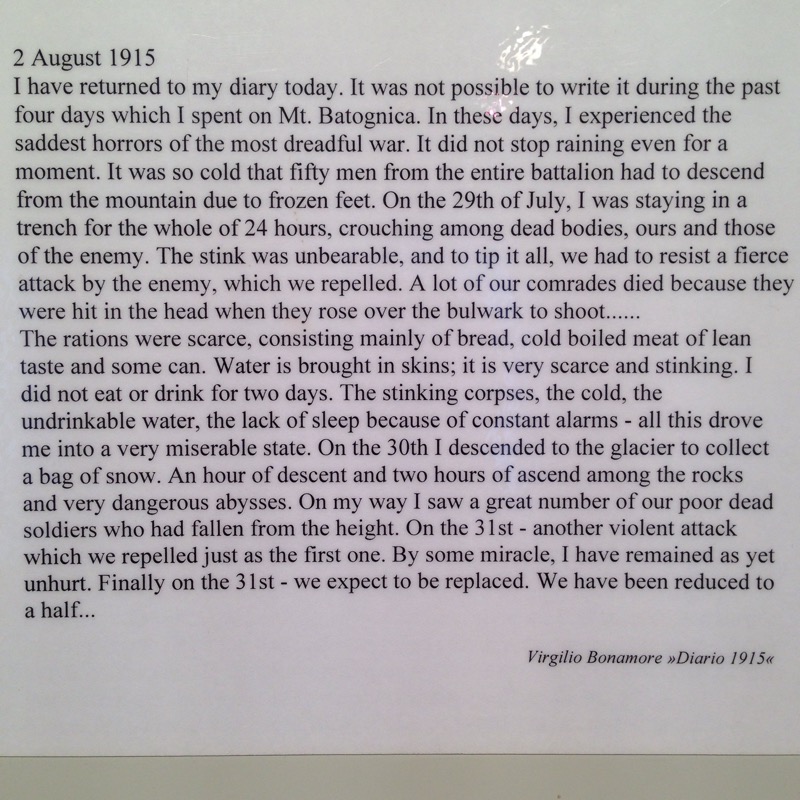
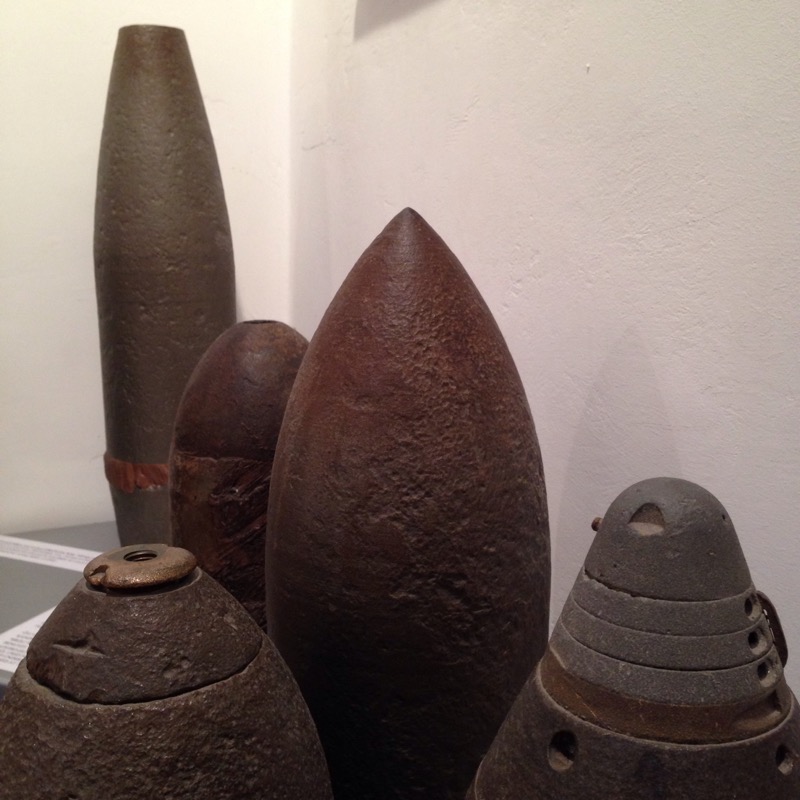
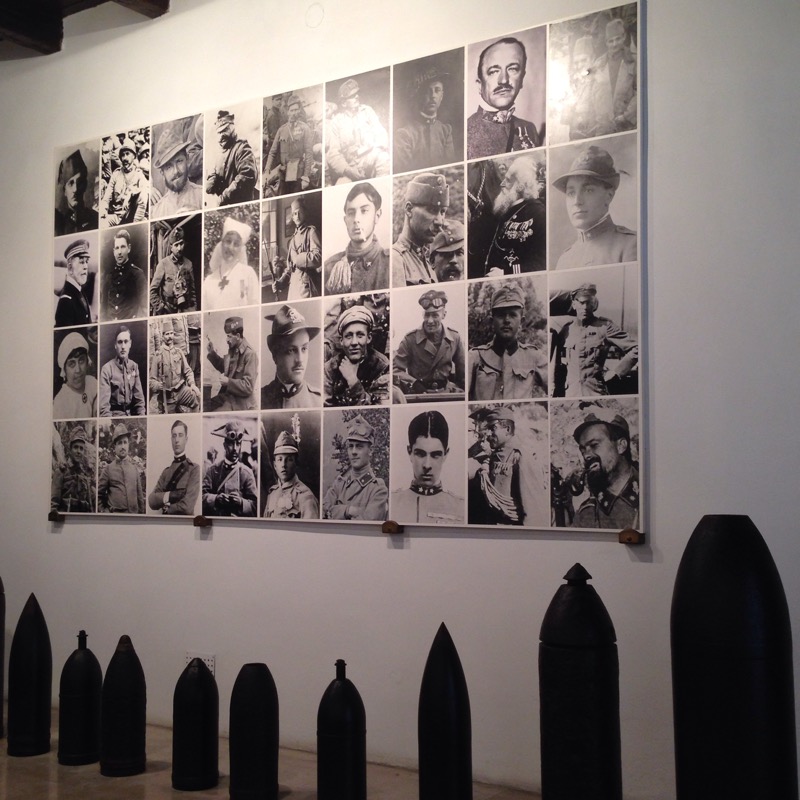
The threatened rain came and we hid in the van reading about the trails we could be hiking. The area is most well known for being at the centre of vicious and entrenched (literally) fighting between 1915 and 1917 along the Isonzo front and culminated in the Battle of Kobarid when hundreds of thousands of Austro-Hungarian, German fought Italian troops in countless miles of trenches and fortifications across, along and over the mighty mountains. The whole sorry saga is immortalised in Hemingway’s “A Farewell to Arms” and when the rain eased up we visited the award winning museum in town dedicated to telling the story. There were many moving exhibits.  

   And own word testimony from both sides of the conflict.  

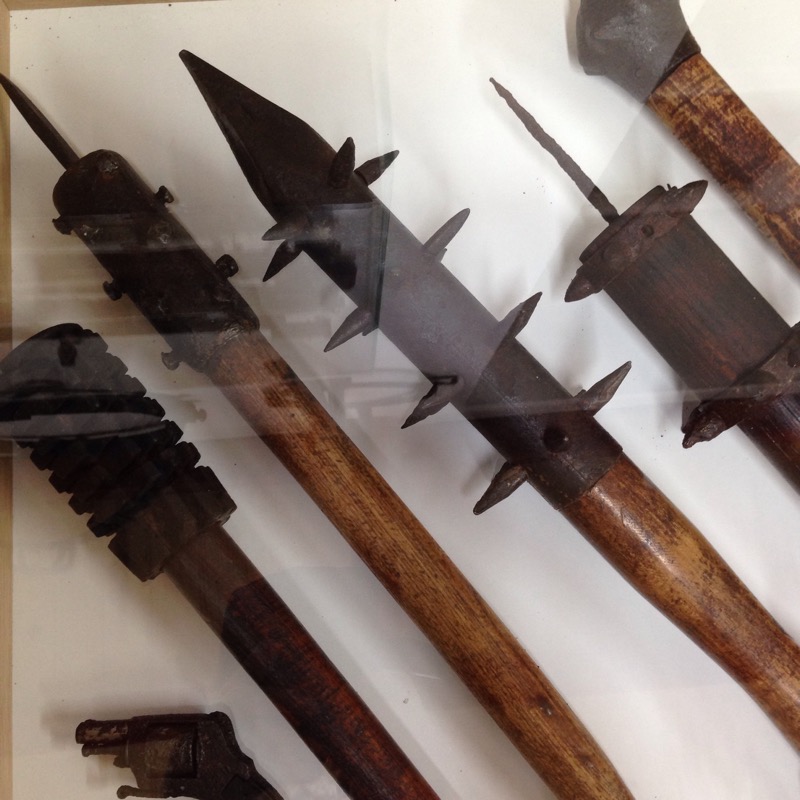
   The amount and size and variety of different weapons was an eye opener.  

   And after hiking a little in these mountains the knowledge that the poor feckers had spent two long winters at the tops in ice and snow raining hell on each other out of morters and guns they had dragged up there was a sobering reminder again of our good luck. The western front was grim but at least they didn’t have to contend with avalanche, rockfall and frostbite. 

The next day, after heavy rains all night, was brighter and we headed off on the Historical Trail, a 4 hour loop around the area passing natures beauty and mankinds folly. The turquoise Soca river ran below the camp and there were many lines of defence on both sides that we passed through.  


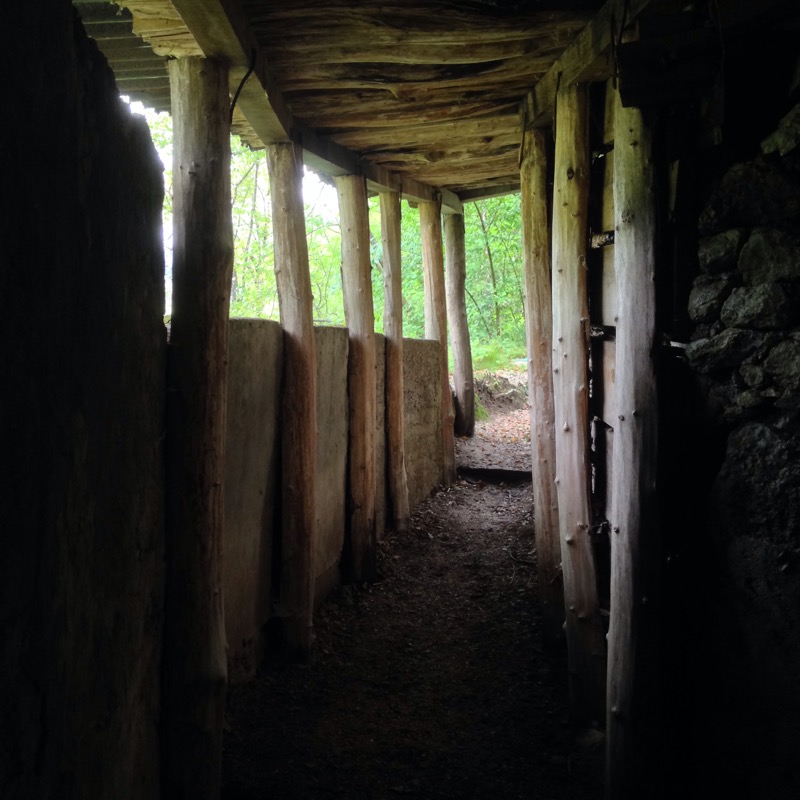
Gun emplacements, observation posts, dug outs, trenches and forts were buried into the skin of the mountains.  


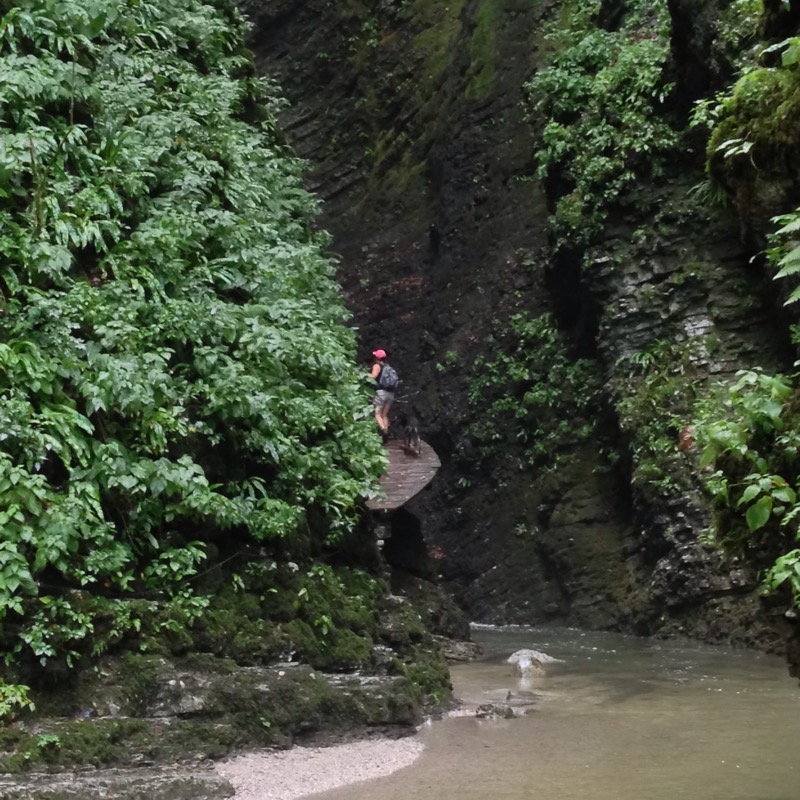
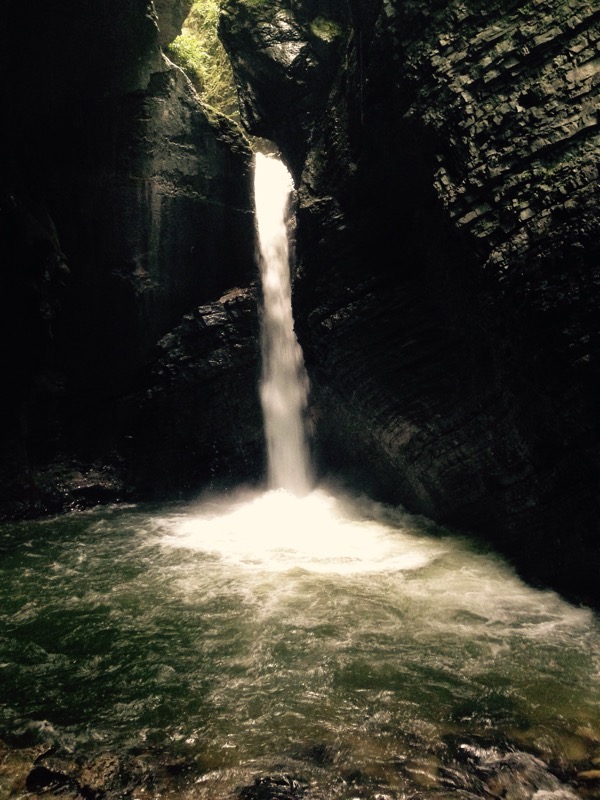
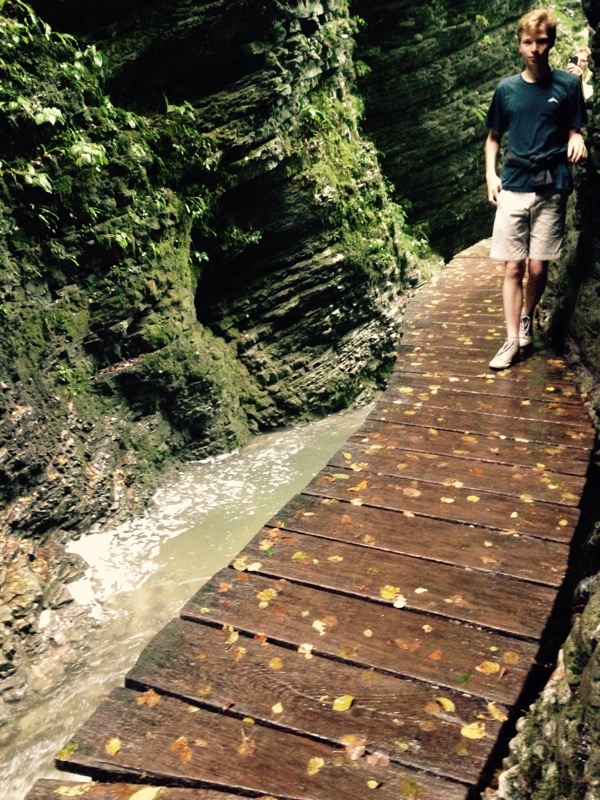
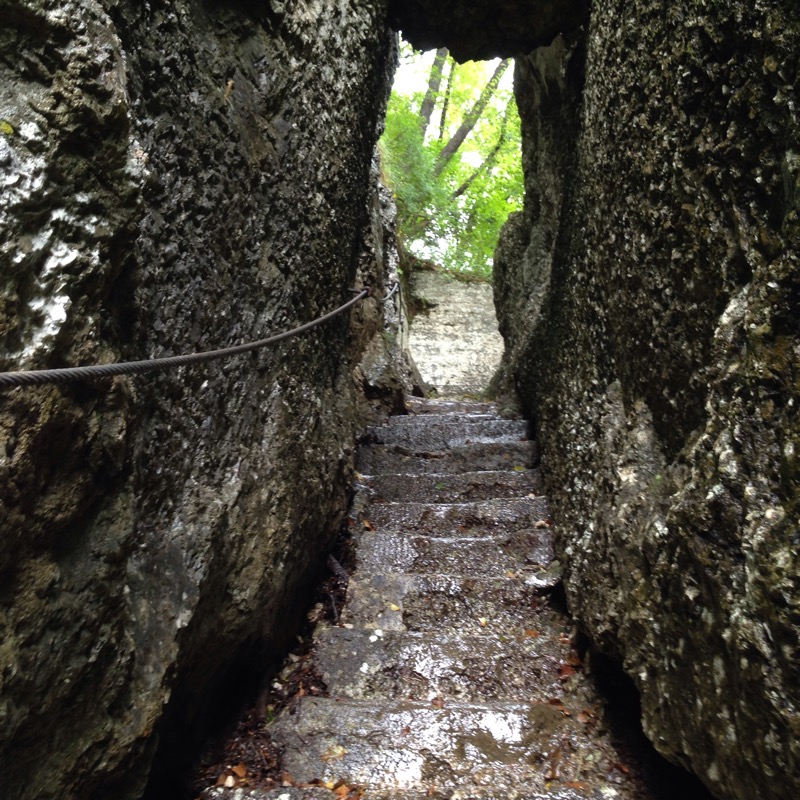
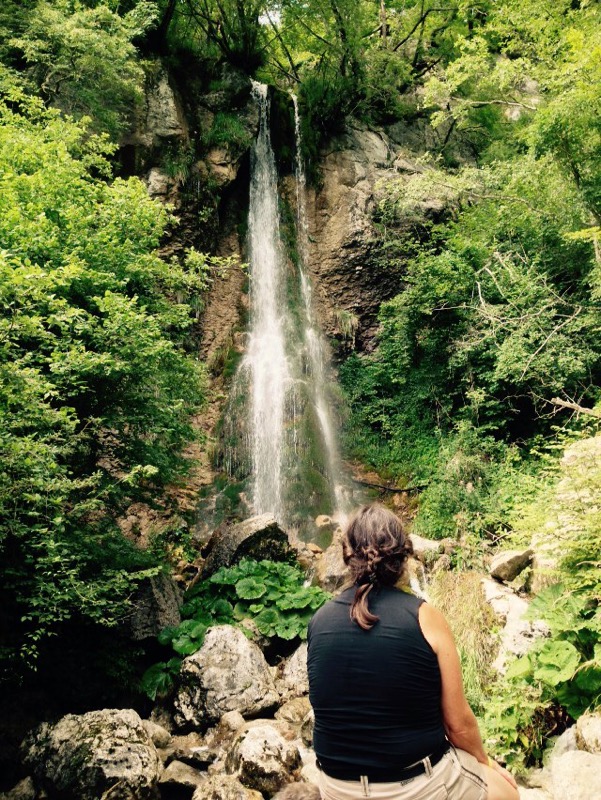
 A touch of the timelessness of the natural world was a relief. The river defended so desperately for a couple of years has been fed by a series of springs and mighty waterfalls for millennia and we enjoyed a Heath and Safety nightmare on slippery rocks and crazy boardwalks to visit one raging 15 m into the cave it has carved itself.  


Then over the Soca gorge on a suspension bridge built on the same spot as a wooden one in 1st WW.  

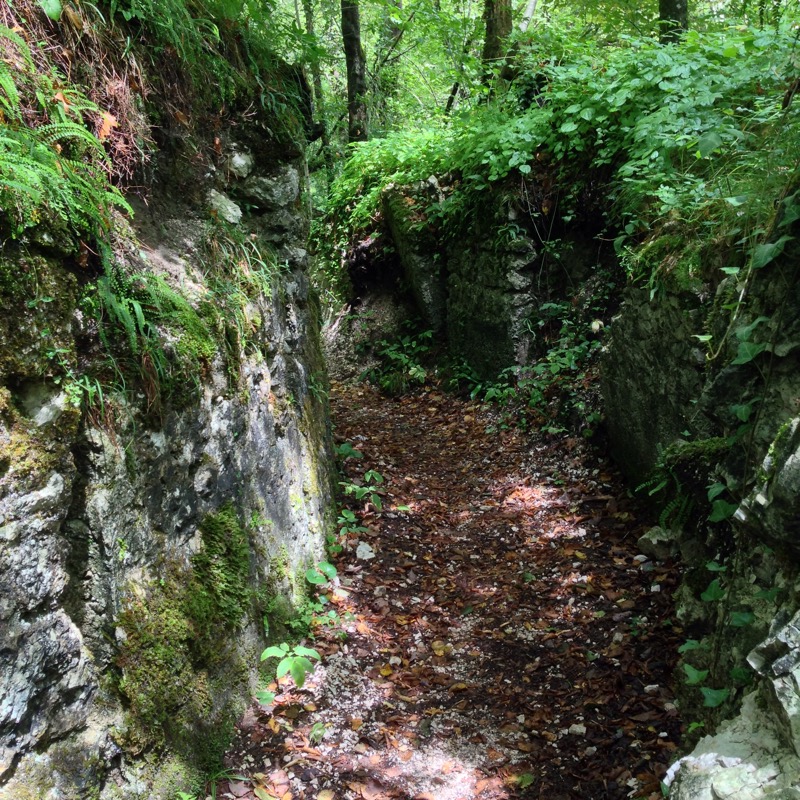
 Up another forested hill lined with 100yr old trenches.  


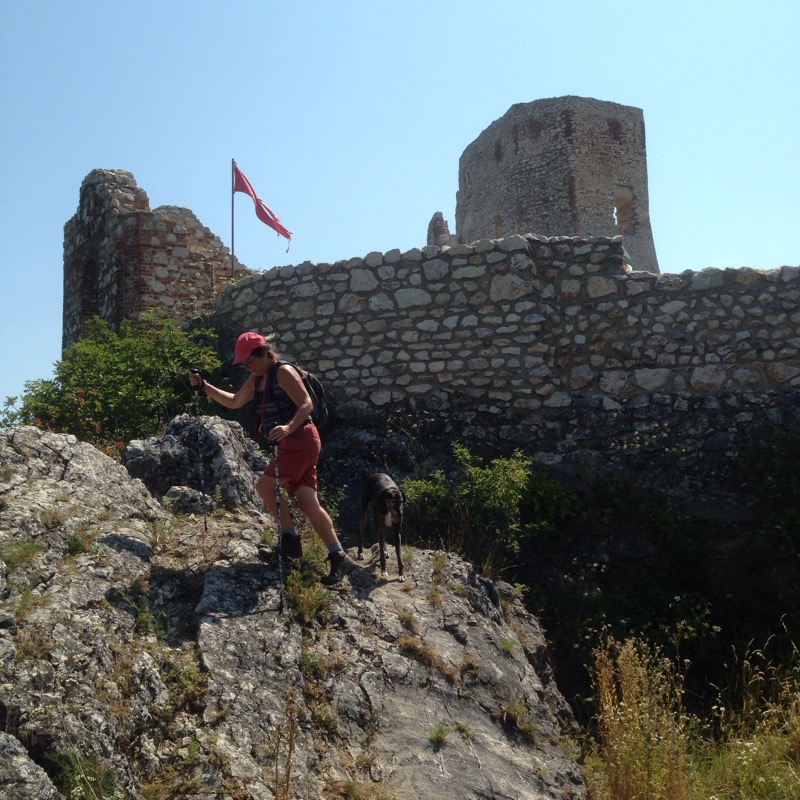
 Atop the rocky hill, Tonocov Grad has been a settlement for centuries. Copper age, Middle Ages and a heyday in late Roman times. Then came the Ostiogoths and Byzantiums  (no, me neither). There was also the remains of a very early Christian church.  


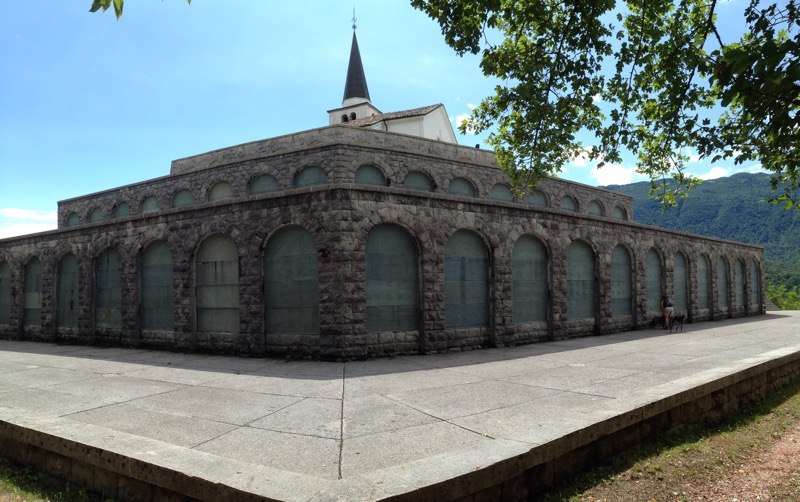
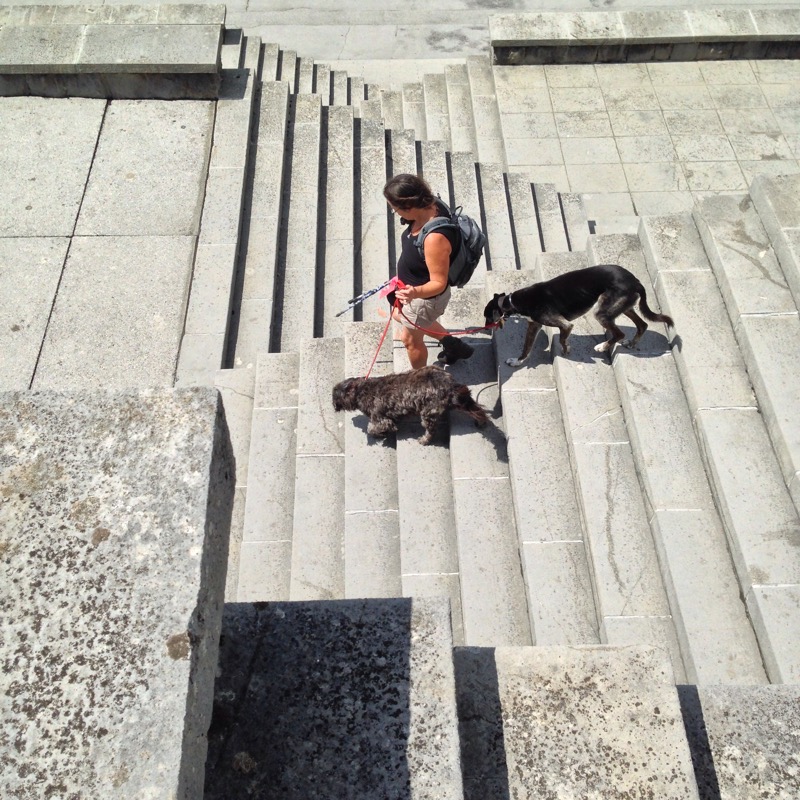
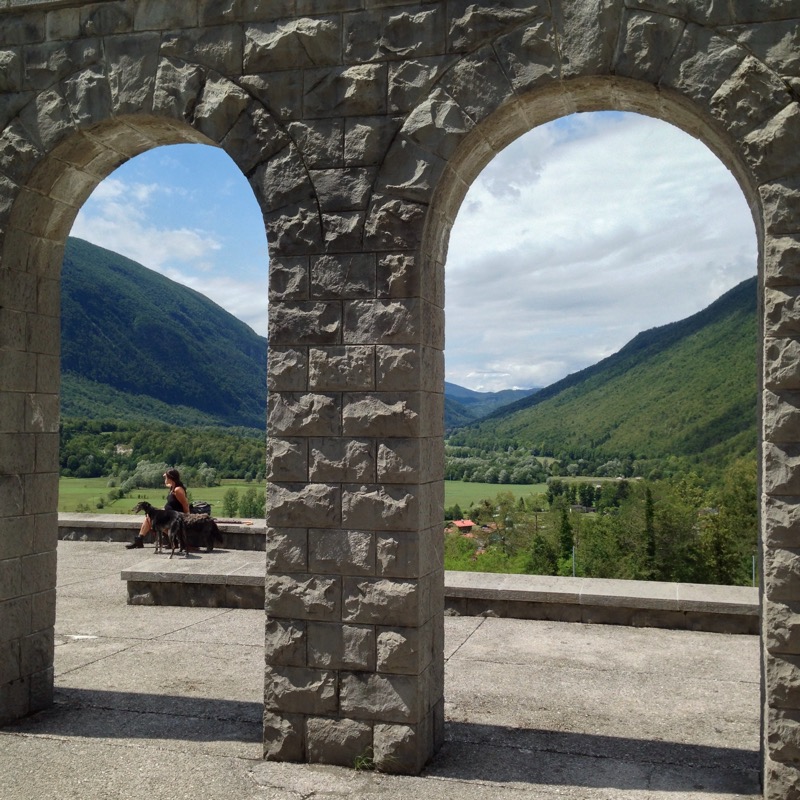
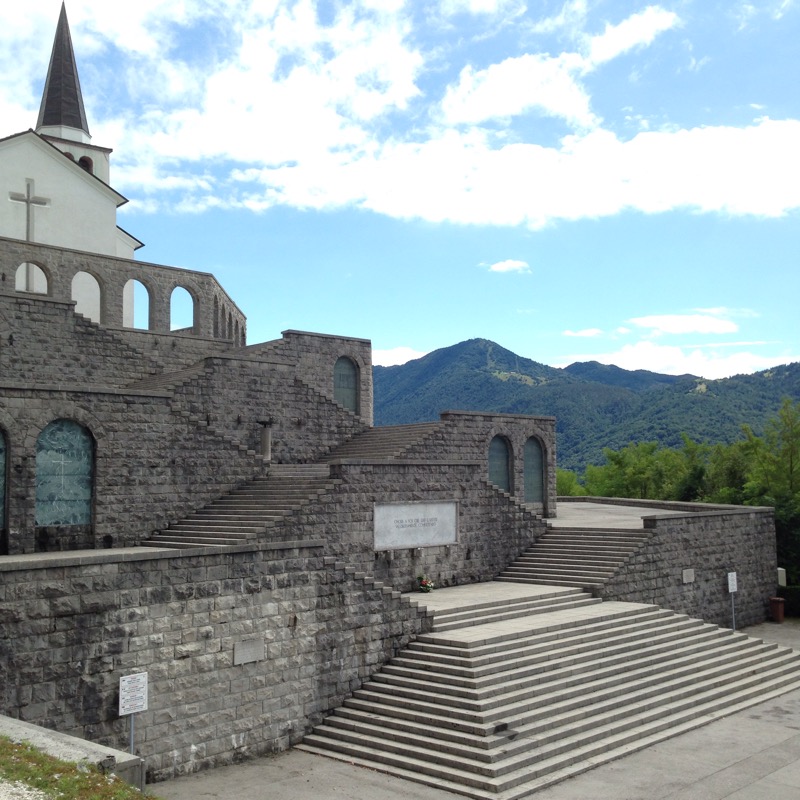
At the bottom of the hill was another church, this one from the 17th century, that had an Italian Charnel House built around it. Opened by Mussolini in 1938, as this was the victorious Italians territory between the wars, it contained the remains of over 7,000 Italian soldiers killed in the Isonzo Front.  

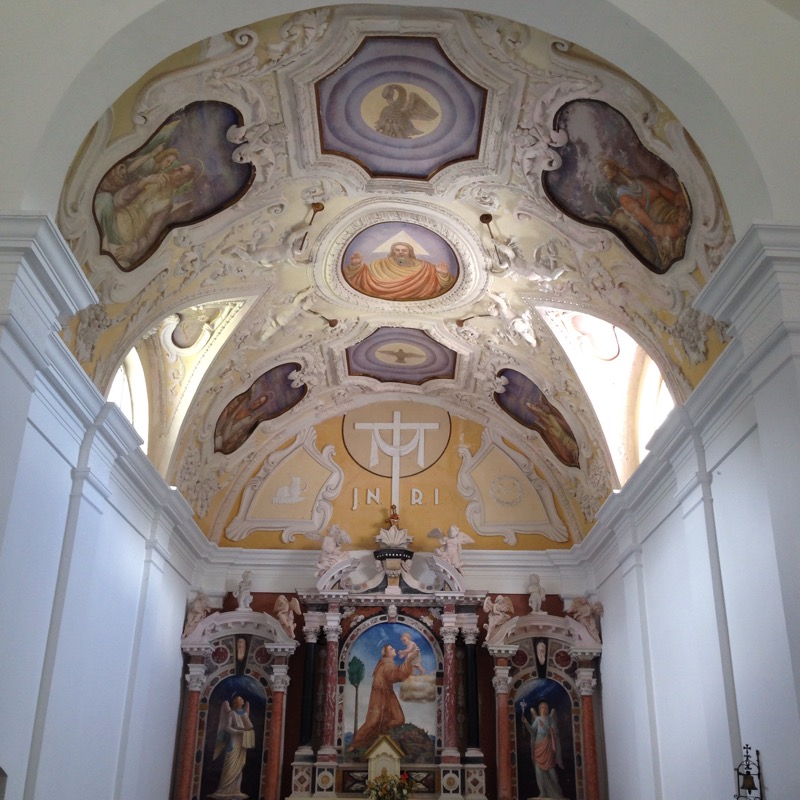
   The church had great frescoes and views across the Soca valley.  


 Nearby there was a little place housing a collection of artefacts a keen amateur had found all along the lines of Italian retreat. Ironic that the country ending up In control  after the German surrender had retreated a year previously. More igenious methods of barbarity.  


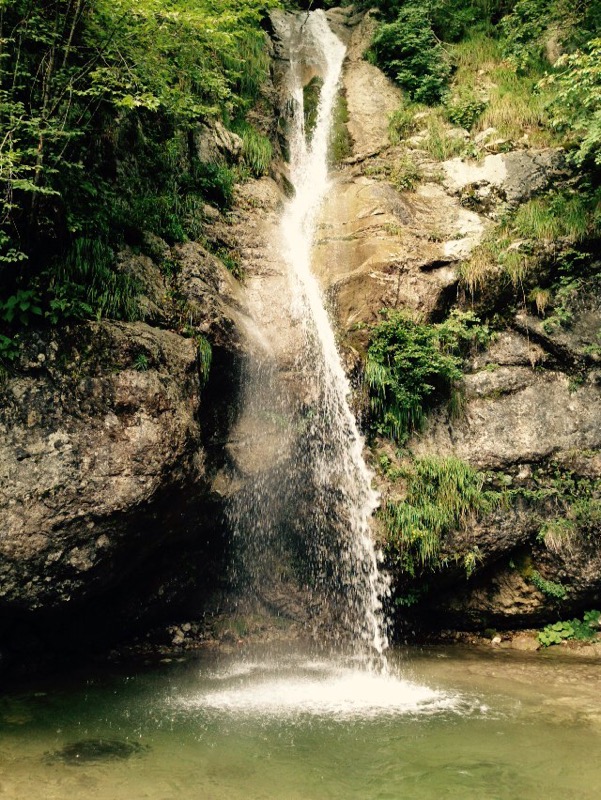
With the sun now shining strongly again it was time for more natural beauty so we drove up the switchback road into the mountains to the little village of Dreznica where we followed a trail still higher on foot to a couple of spectacular (after all the rain) waterfalls called Sopota and Krampez and I had the most powerful power showers of my life under both of them (Sally has the evidence).  


REFRESHING!!

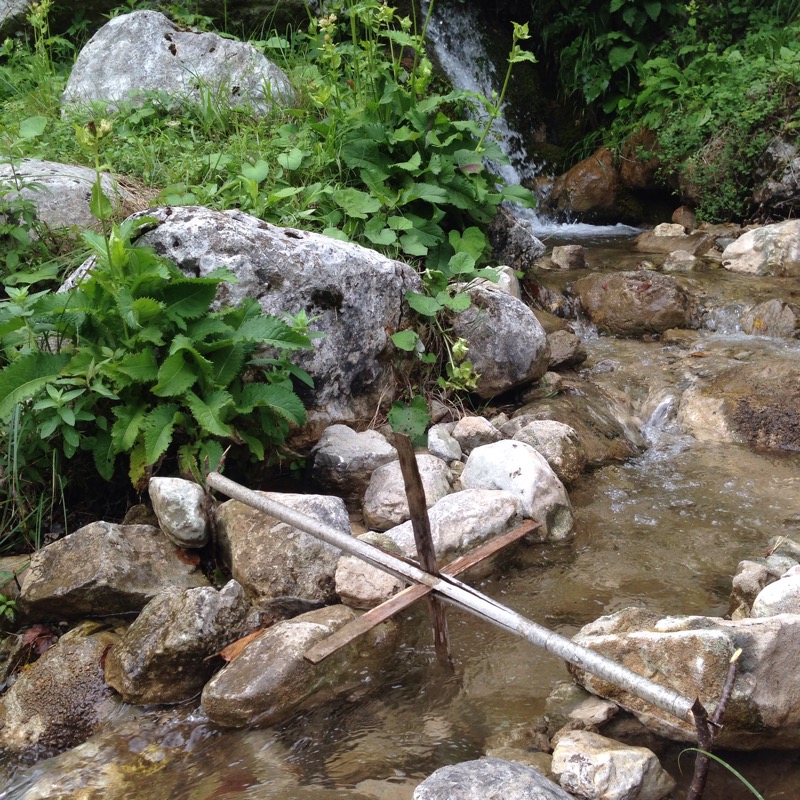
The walk continued passed more water features of delight. I’ve seen a few of these really simple little water wheels in streams and springs.  

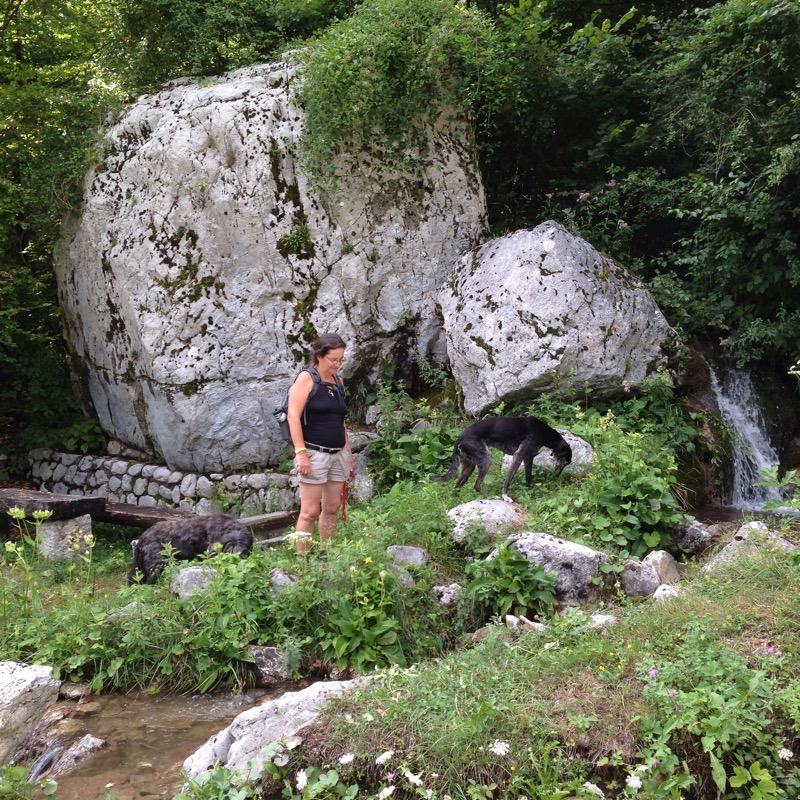
 This one was in what was probably a ” power spot” as there were plenty in the area and weeklong tours were available to visit some. And you got your energy levels checked before and after to prove it.  

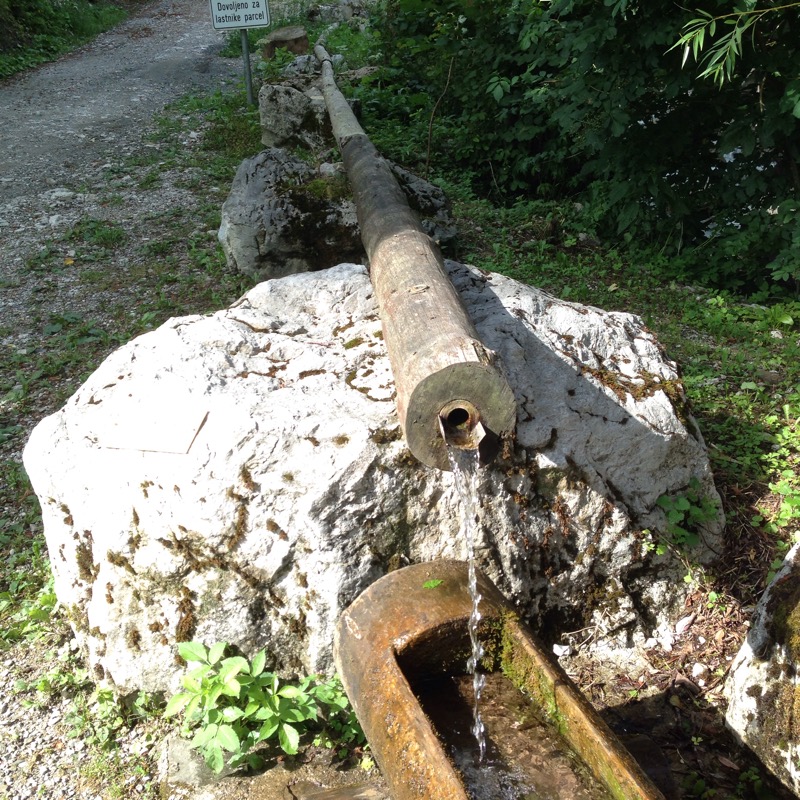
 A few yards further was a timber water pipe  

 and a string of artwork leading to the next village.  

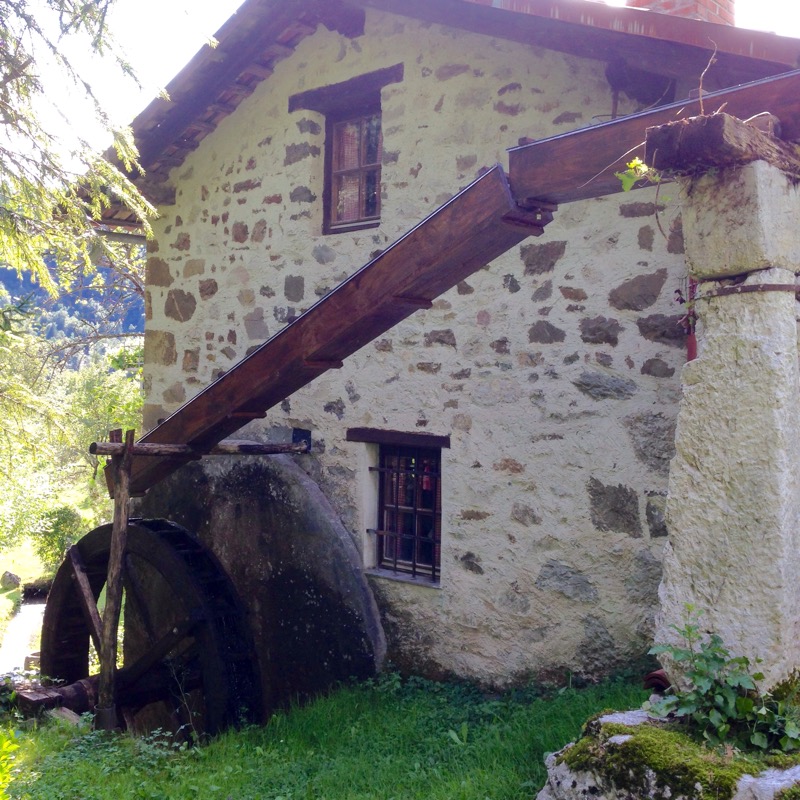
     Another, bigger waterwheel  

 and more sculpture in wood now.  


The views across the fields to thechurch in Dreznica were lovely  

 but not quite as lovely as those that greeted us when we drove another couple of hundred meters higher to the starting point of trails to climb Krn. 

Which is where we came in.  


THE GRAND TOUR:SLOVENIA 25/26/27th JULY

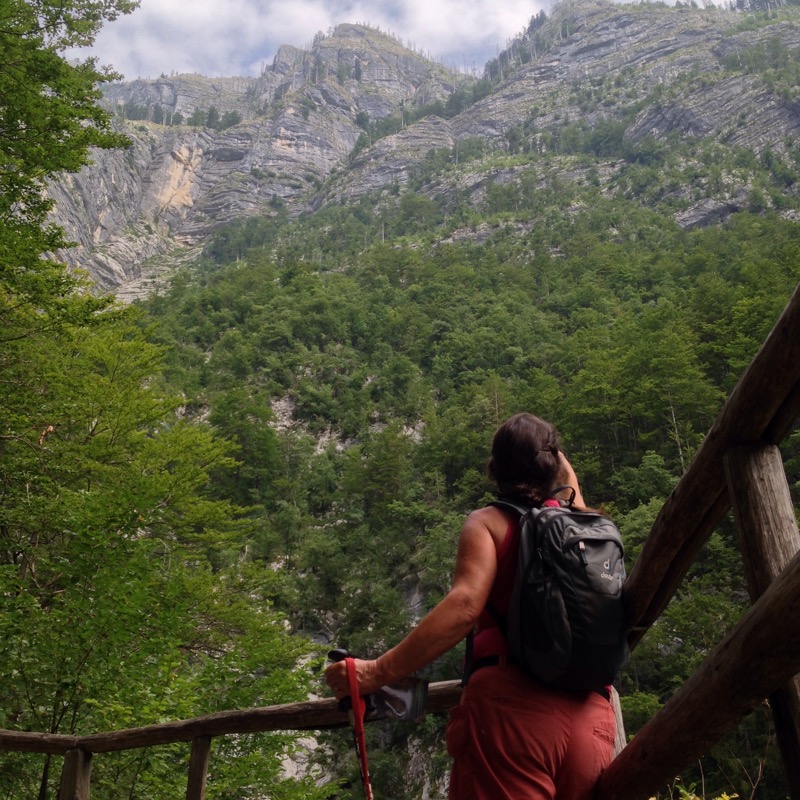
  At the end of the lake, high up on the 1300m wall of limestone that curves around us ,is the waterfall that feeds it. Called Savica, it has been a source of inspiration to poets and artists over centuries and is probably the most famous in the country. We headed up for a look. 

  On route we found out we were heading in the direction of home. Although the falls are at 900m, that still left a lot of cliff we were planning on climbing the next day so we eyed them up warily.  
 We heard the roar of the falls way before we had climbed the 550 steps that led us there and all that power has been harvested since 1947  

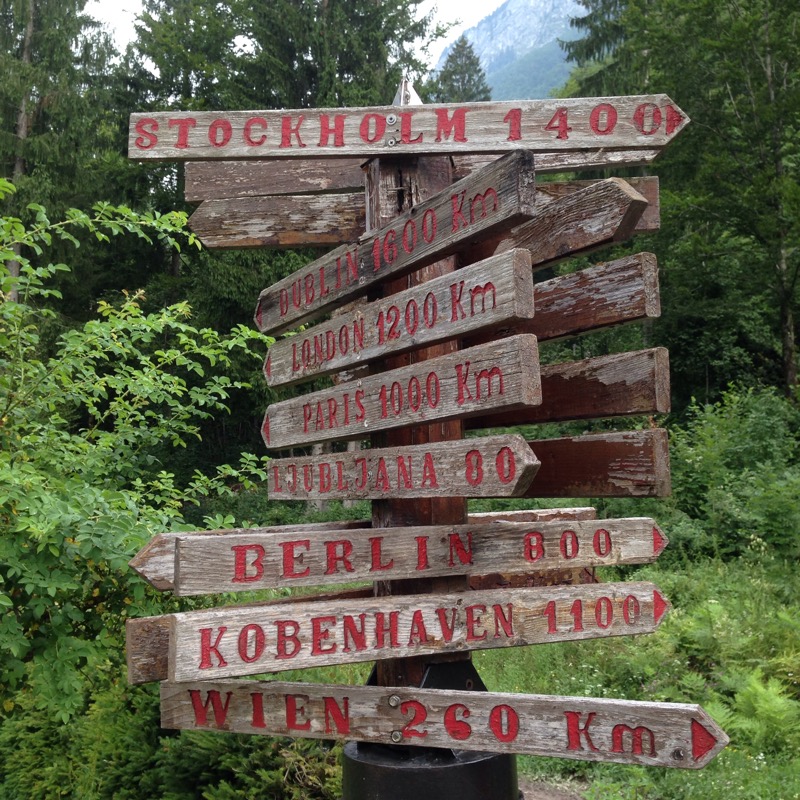
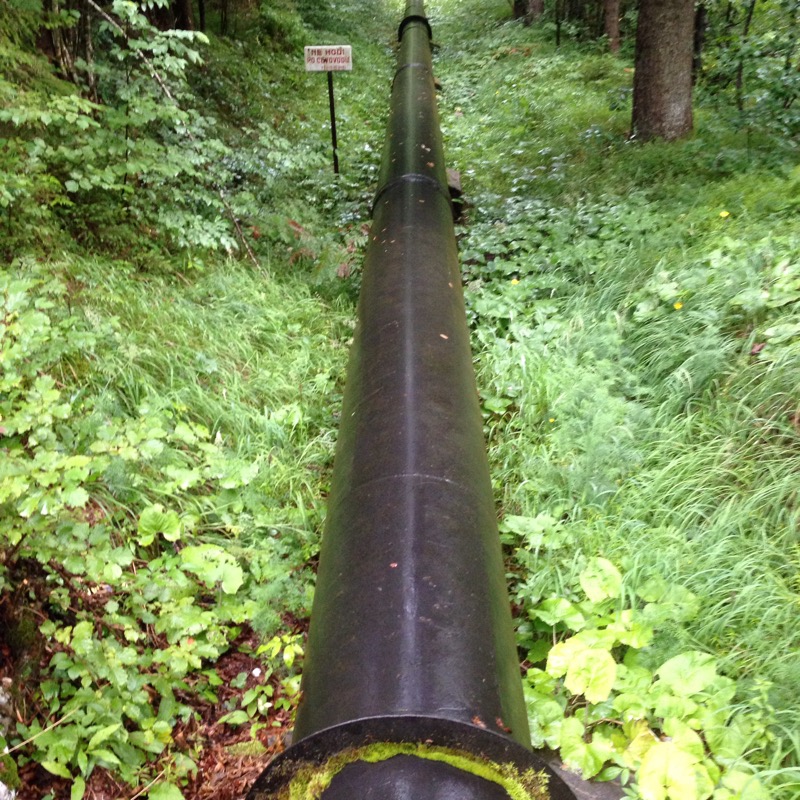
 when they built the countries first hydroelectric power plant. The clean green Slovens are pleased to report that todate it has saved the burning of 1.2 million tonnes of coal, enough to fill 600,000 wagons stretching from here to Stockholm. Bet you didn’t know that. 

The waters were far more impressive before they enter the pipe.  

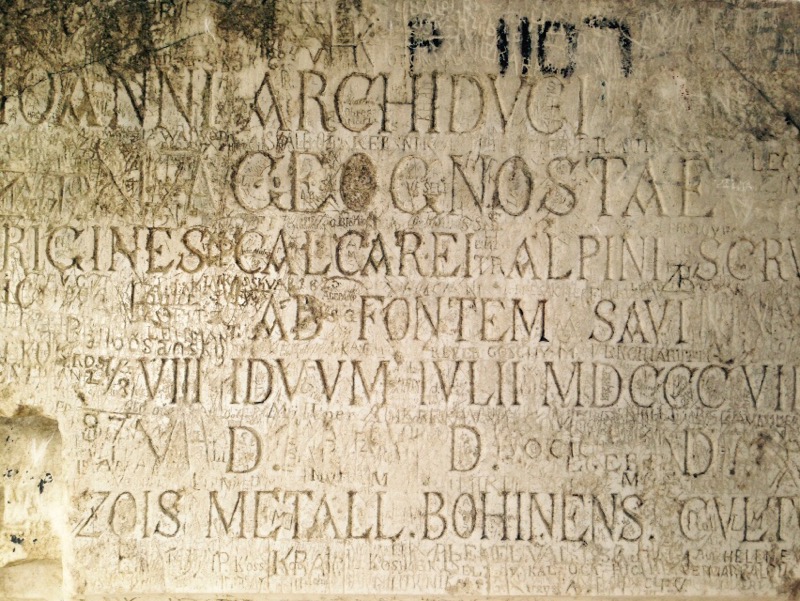
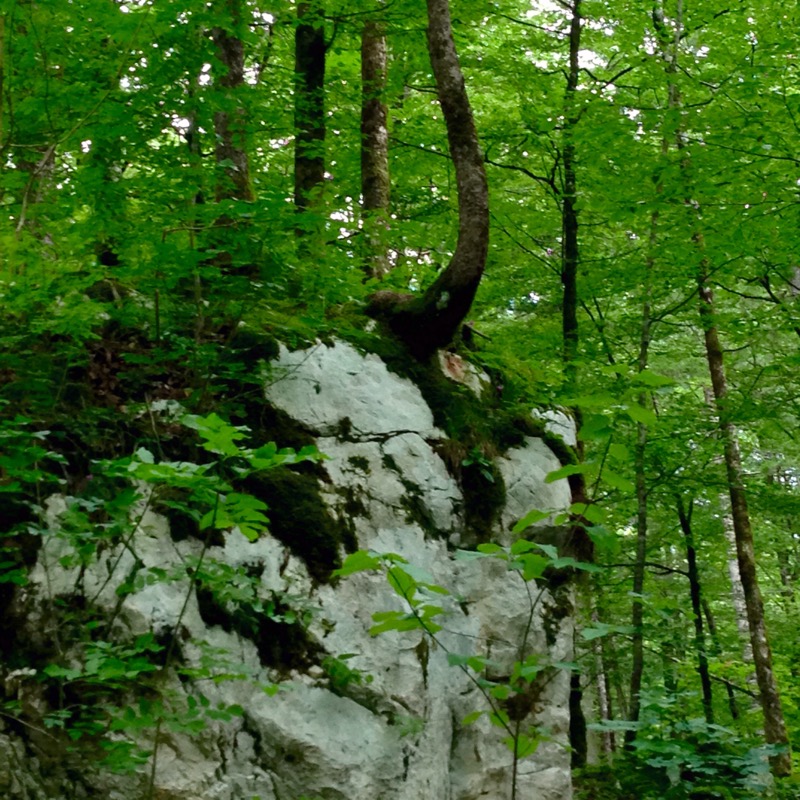
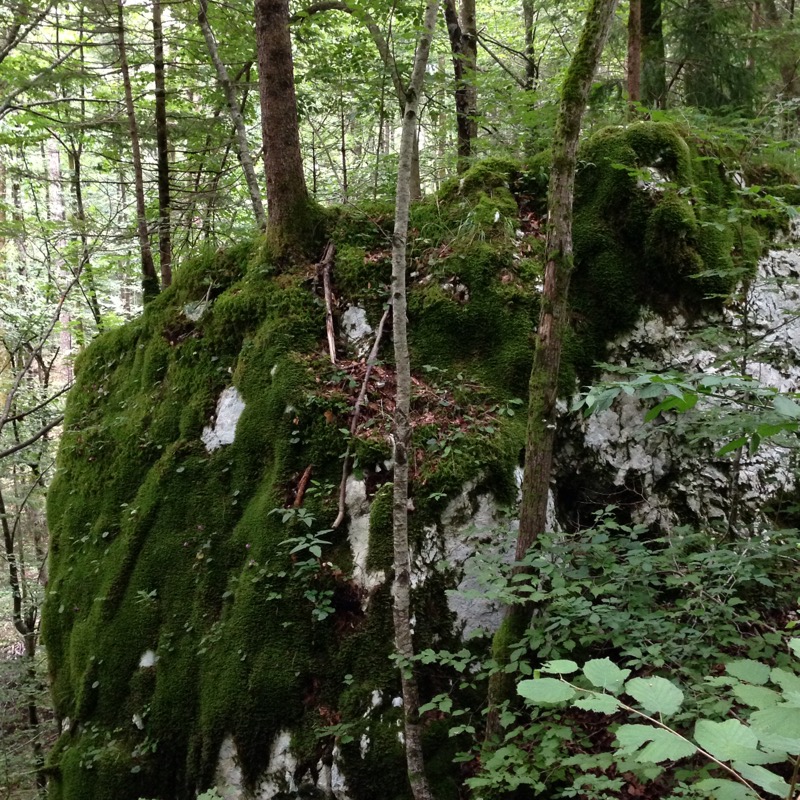
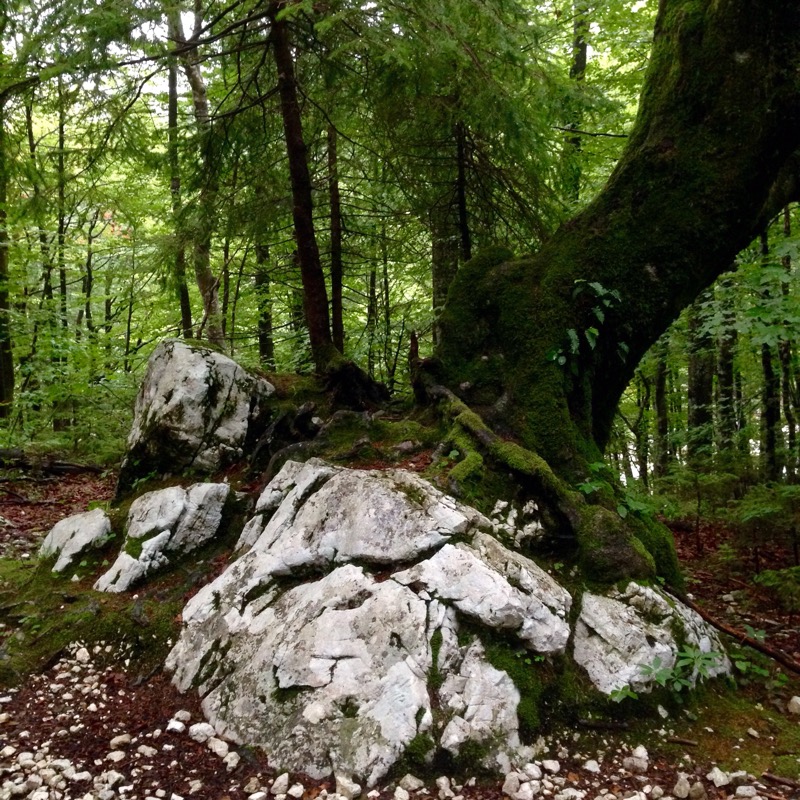
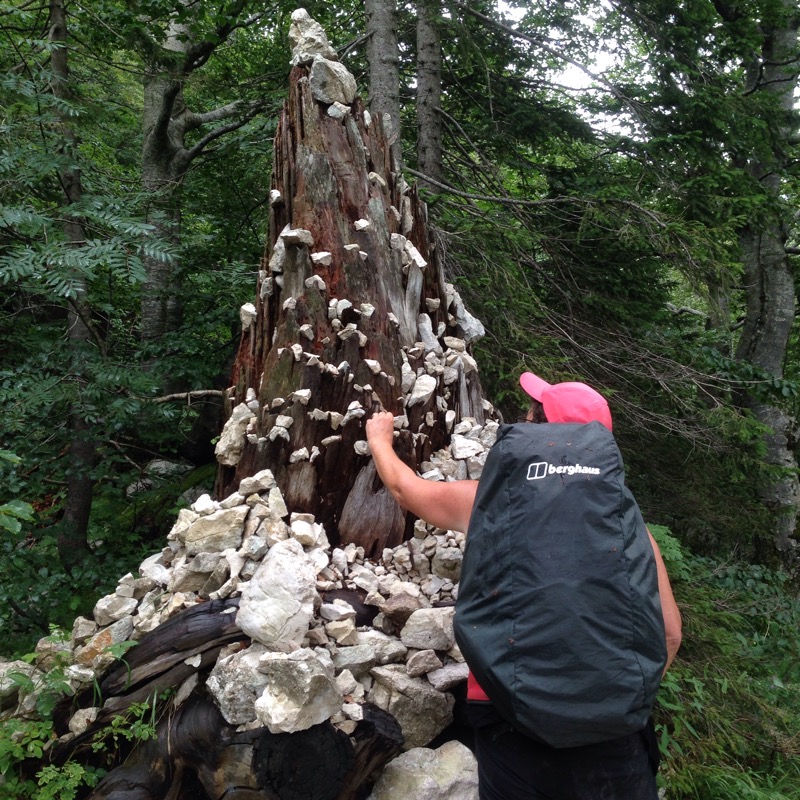
 There was a plaque in the observation tower commemorating a visit by Archduke John of Austria that had lots of the same carefully carved antique graffiti we had seen in Hungary.   On our way back down through the limestone boulders and beech trees I started to collect images of stone-trees or tree-stones.         

The mountains called again, and we must go. Up into the central range of the Julian Alps, towards the peak held almost sacred to Solvenians, Triglav. This towering lump of limestone is something that every citizen is supposed to scale in their life and they seem to take it as seriously as the Irish would Croagh Patrick. 

There is a network of huts across the high mountains that accommodate those wanting to climb and hike for days on end without coming down. Strategically placed 3 or so hours apart on prominent peaks or junctions of trails they offer bed, board and warmth. Across the Julian Alps there are about 50 of them, called mountain huts but often huge affairs with beds for up to 300 people, proving how popular trekking in the mountains is here. There are also about a dozen unmanned bivouacs with space for between 2 and 10 in case someone got caught out. 

Run by the Alpine Association of Slovenia, who also manage the trails, they have a policy of not turning anyone away and will find floor space somewhere for those in need. Which is just as well as camping is prohibited in the park and conditions can be inhospitable to say the least. 

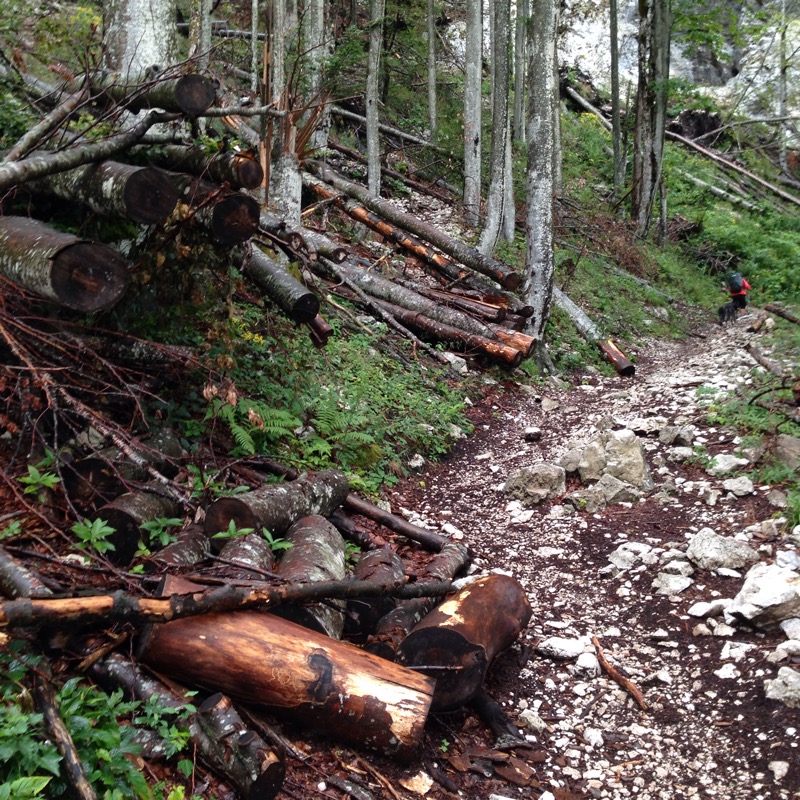
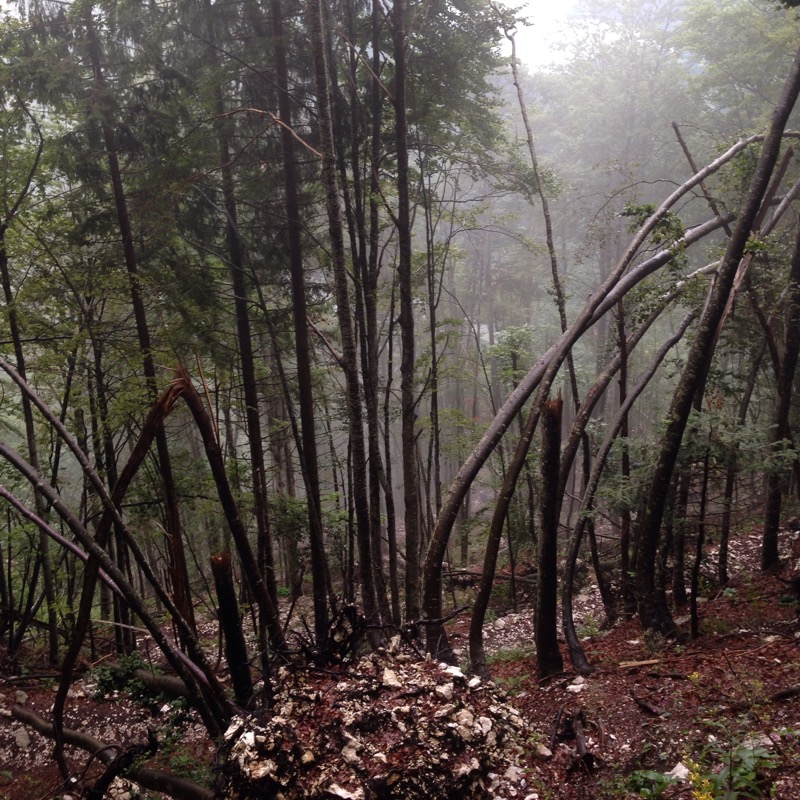
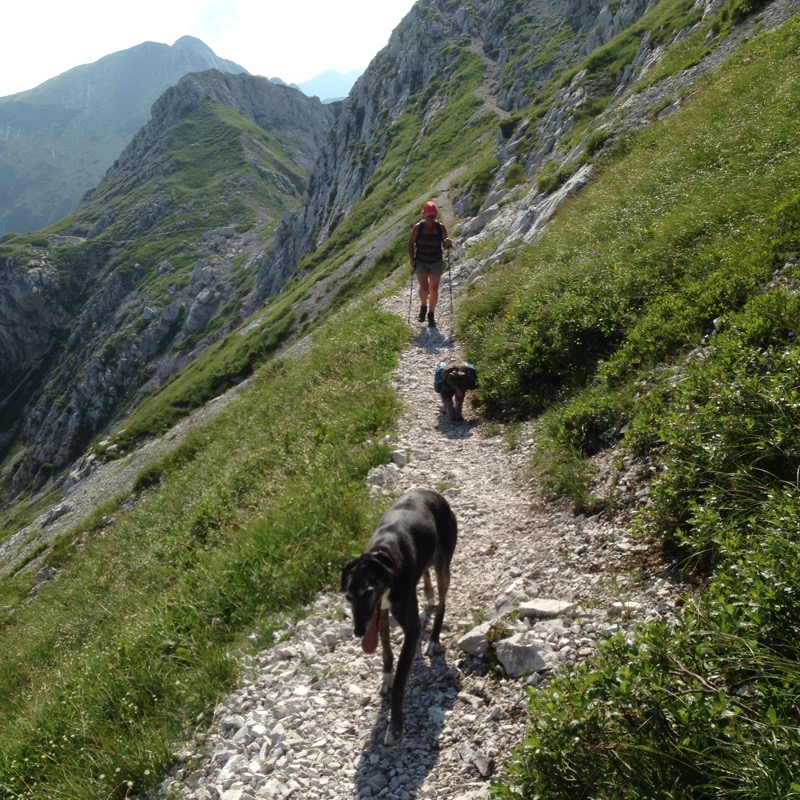
They weren’t that great when we headed up a long 2 1/2hr zig zag track to scale the wall of Komarca. There was a shorter, more direct route up, but it involved chains and ladders that the dogs couldn’t handle so we had a relatively easy hike up through the forest above the waterfall. In the last couple of decades the area has suffered fire, earthquake and devastating winds and we saw plenty of trees down.  

   Another clue to the Slovenian nature worship could be the number of little cairns everywhere along the trails 

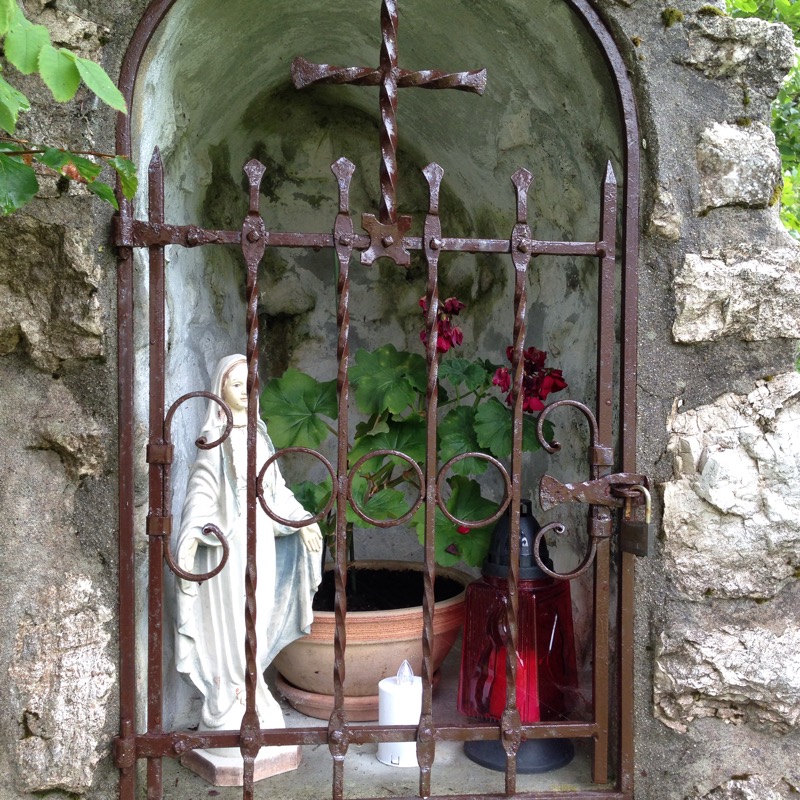
 although there are also lots of Christian shrines as well  

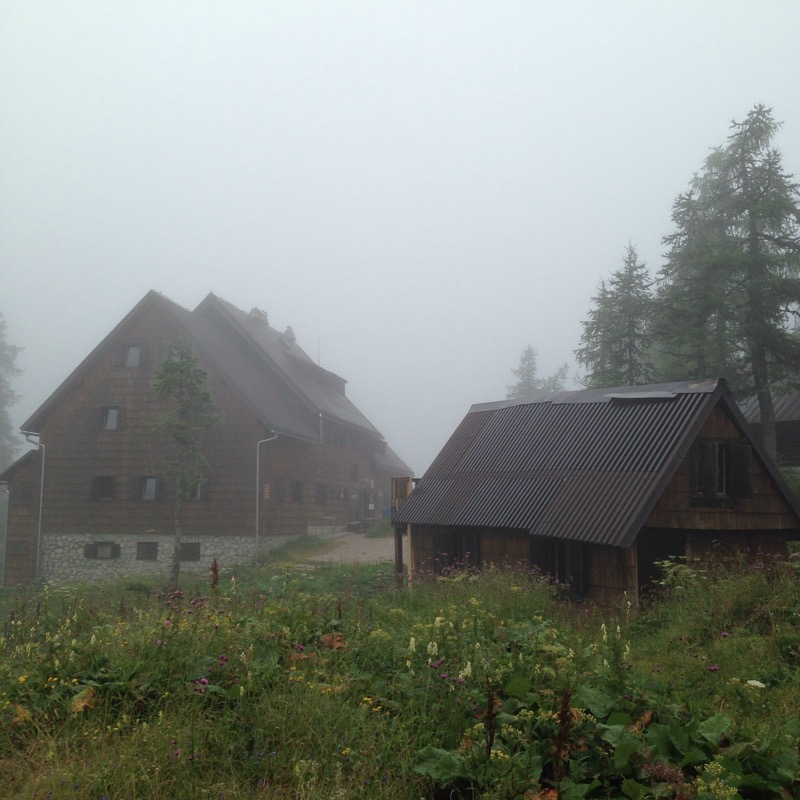
 This one was at Dom an Komni, the hut we came to eventually a little wet, hungry and cold. There had been a serious drop in temperature. From 36 degrees at the lake the day before to 6 degrees up there in the cloud. So we were glad to warm ourselves up with coffee and ham and eggs and didn’t object to the inflated prices they charge to cover the cost of getting the stuff up there to 1500m. Actually the prices are fine. A pint gets more expensive the higher you go but still ranges from 2.50€ to 4€. 

The cloud have lifted for awhile when we came out and we could see where we had come from for the first time.  


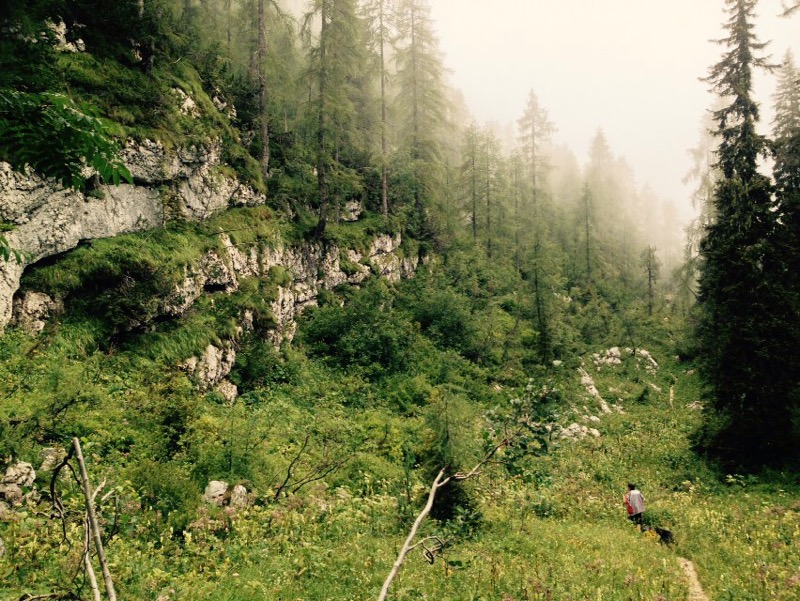
We carried on up another couple of hundred meters over the next 3 hours through a misty soft day that at times was very like a walk in the burren with more flowers.  

         We passed some lovely wooden water troughs which are a feature here.  

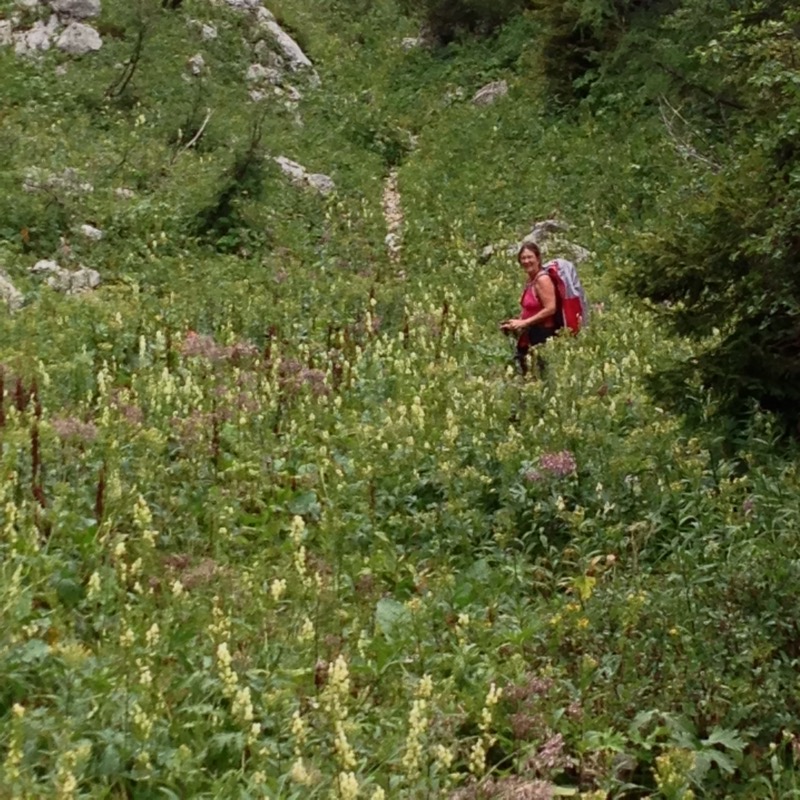
 And a lot more flower filled mini valleys and rocky escarpments.  


At last we glimpsed through the cloud a lake and knew we had made it to Dolina Triglavskih Jezer, the spectacular Triglav valley with 7 lakes. Not so spectacular for us though. We were staying with the dogs in the ” winter hut”, the one in the foreground.  

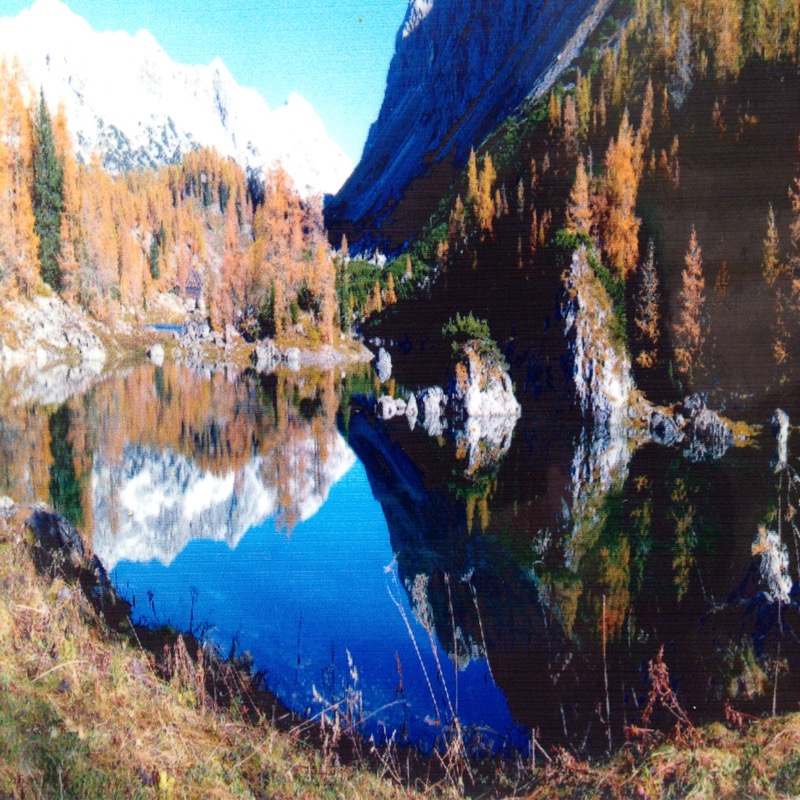
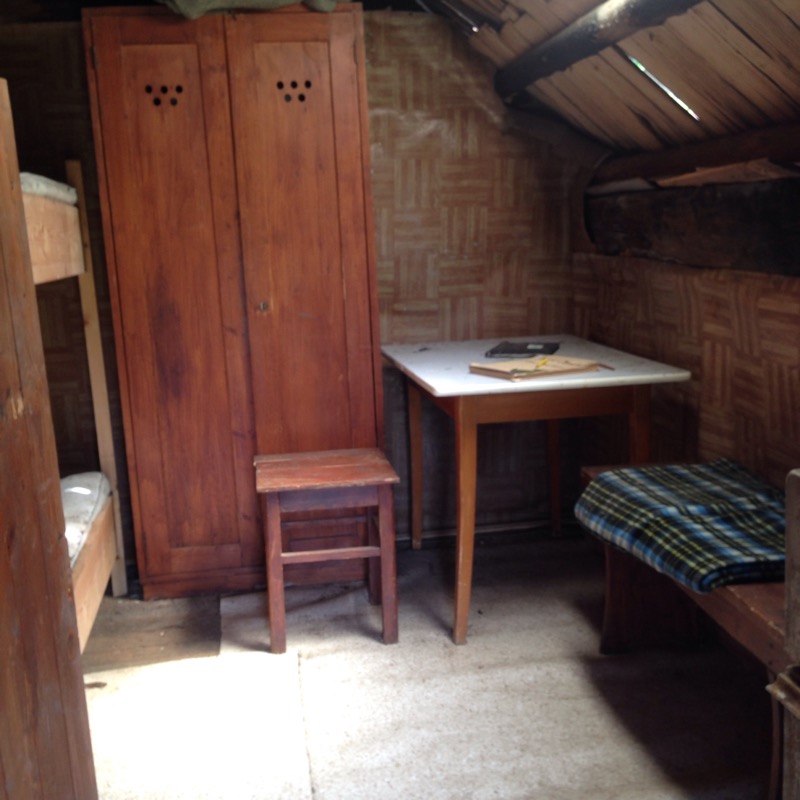
 The setting could have looked like the picture on the wall outside.  

 We had a lie down after our efforts to get there and discovered that above and next to us was a large party of raucous teenage French lads so no rest to be had. 

After dinner we were rewarded by an hour of rising cloud which revealed the world around us and saw us scurrying further into the valley before dark.  


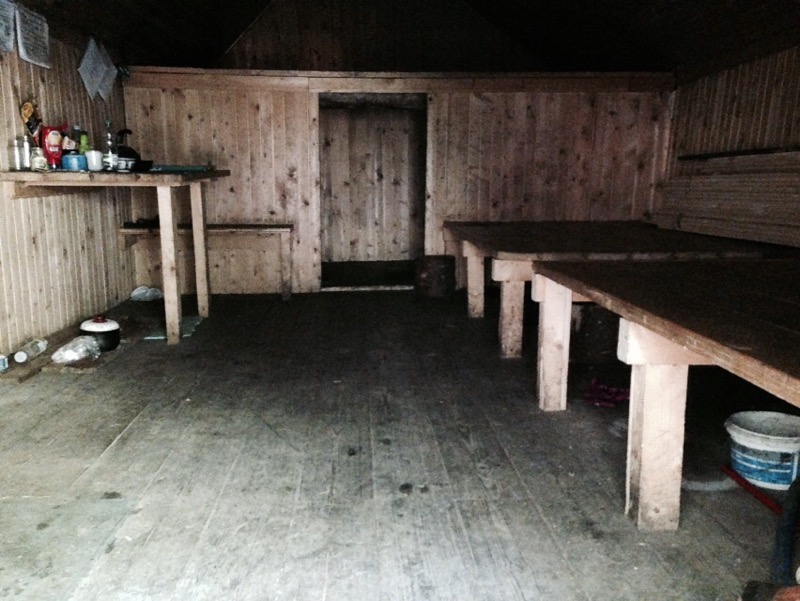
To be fair to the French lads silence reigned after 9ish and we slept well in our little bunkhouse in the mountains. 

At breakfast we marvelled again at the young children that walk and get carried into these amazing environments. It seems it’s normal to take your baby to sleep at the top of mountains 2 or 3 times the height of Carrantuohill for days on end. And there’s loads of teenagers who want to hike from dawn till dusk, not a mobile signal to be had. 

The promised thunderstorms had luckily not materialised so everyone was studying maps and eyeing up the weather conditions. We were taking a different, longer route back down so, with the misty drizzle clouds still about, we gave up on hiking further up the valley and headed for home.  

       This time we got to the little lake at the top of the direct route up Komarca and the path was studded with by rocks fallen from the cliffs above. Wouldn’t want to be unlucky.  


We hiked along the top edge for quite a distance and there were a couple of places that were open to the cloudy valley below.  


And then , ignoring the hut we had stopped at the day before in our desire to be back down at the happy camp, we hurried on down through the beech woods.  


With the sunshine gone the camp is much quieter but still has an interesting selection of campers. I’ve been wondering about these ones.  


But now, finally, it’s time to say farewell to camp Zlatarog. We’ve never stayed so long in one place and probably won’t again. The lovely people here have recommended another camp further west but warned us it won’t be as wild. The e boat heads off and if the van battery is ok so will we. 


THE GRAND TOUR: SLOVENIA 22/23/24th JULY

The Slovenian tourist board has a campaign running at the moment under the slogan ; I FEEL SLOVENIA.  It worked on us. We are head over heels in love. We are feeling it. 

So far on The Grand Tour we have been relentlessly moving forward, onwards, further ( like the bus of Ken Kesey’s Merry Pranksters but without the Cool Aid). We were keen to the xplore the next valley, mountain range, or country. Now we’re worried that nothing’s going to match up to where we are. And we’re in a campsite surrounded by loads of people. That’s odd. 

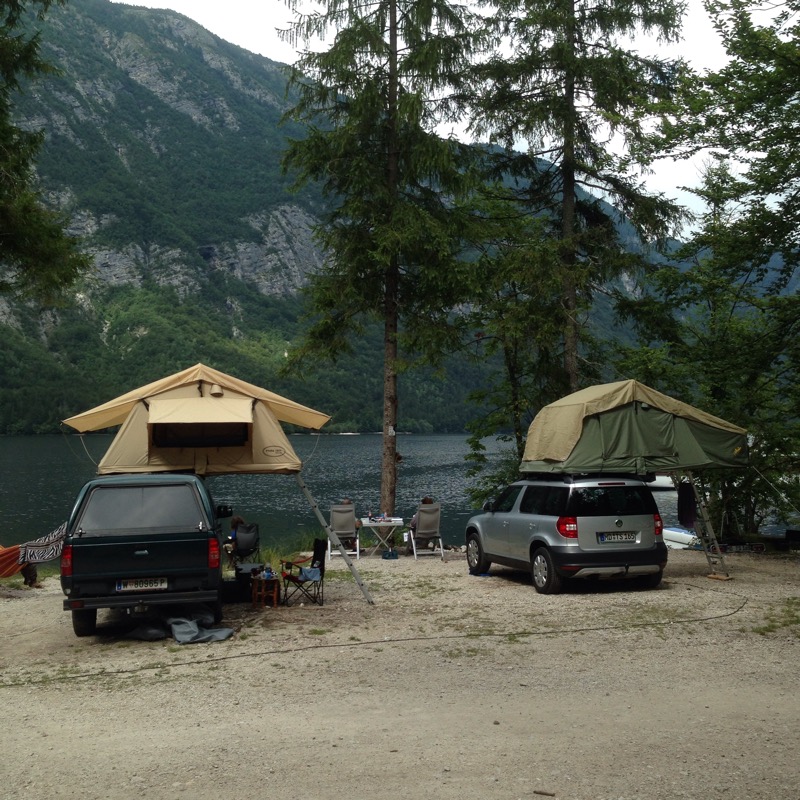
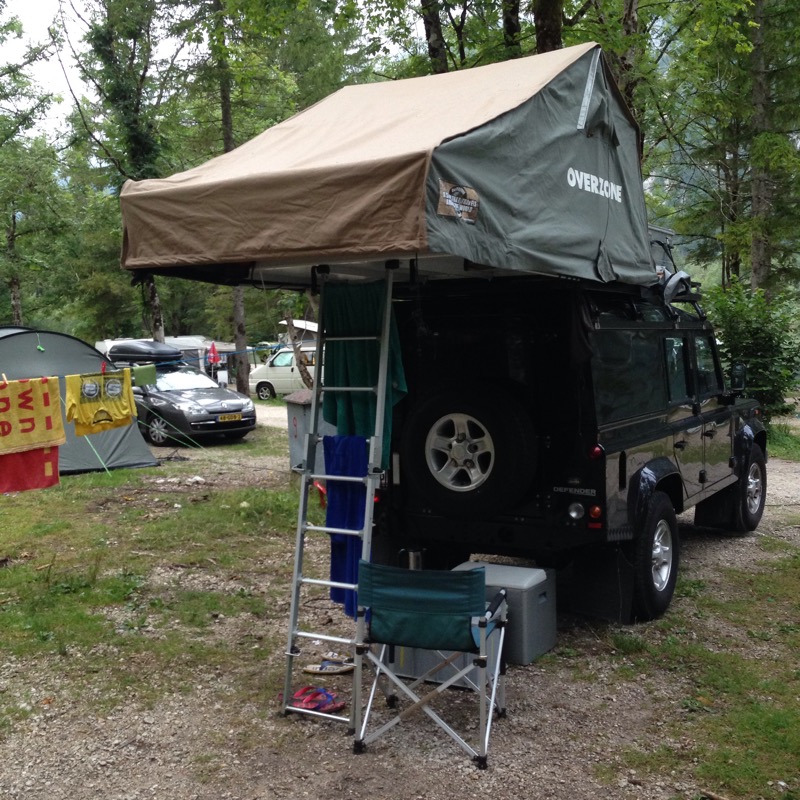
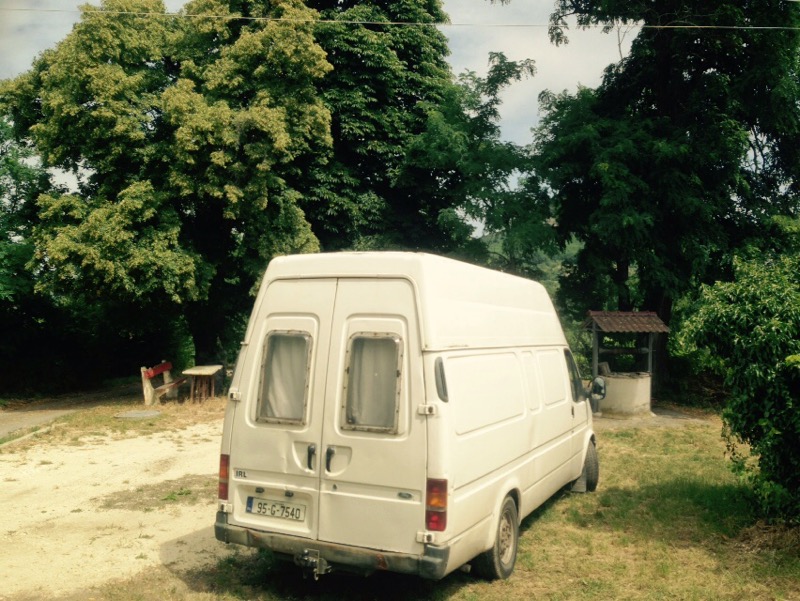
But it’s felt more like being at a festival or a green gathering than a campsite. There is a fine mix of people from ultra crusty to retirees in smart motorhomes. The majority around us in zone B, in the woods, tend towards the younger ,more earthy, type. Setting up an amazing variety of tent, tarp, trailer,and truck higgledy piggledy across the lumpy bumpy ground in the deep shade of big beech trees. Can you see the Tranny in its beach side spot? 

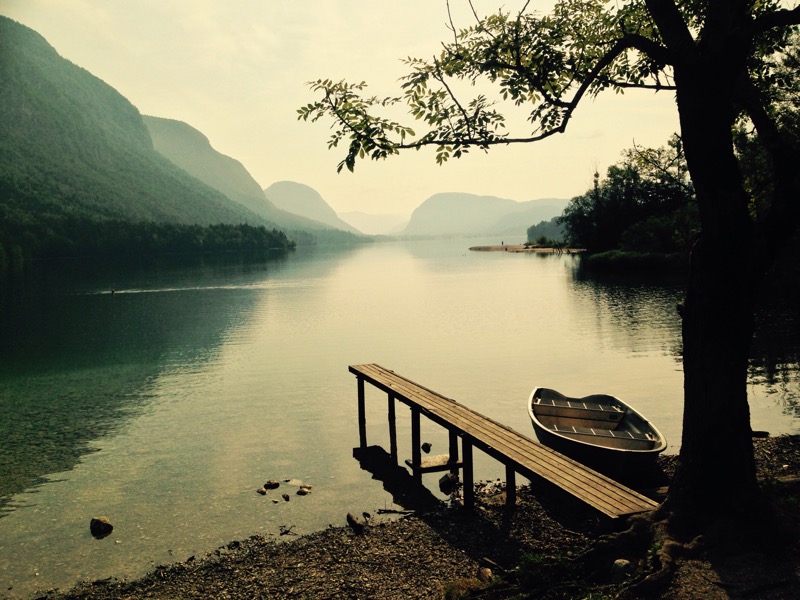
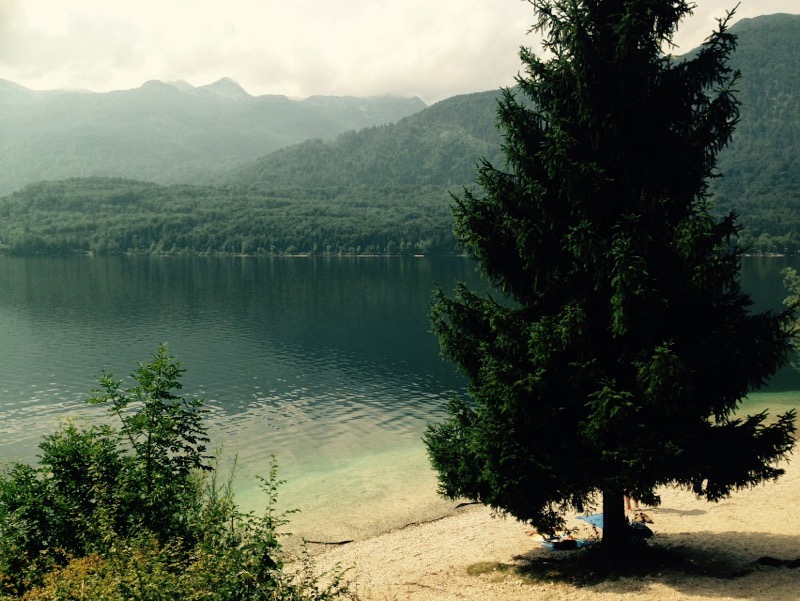
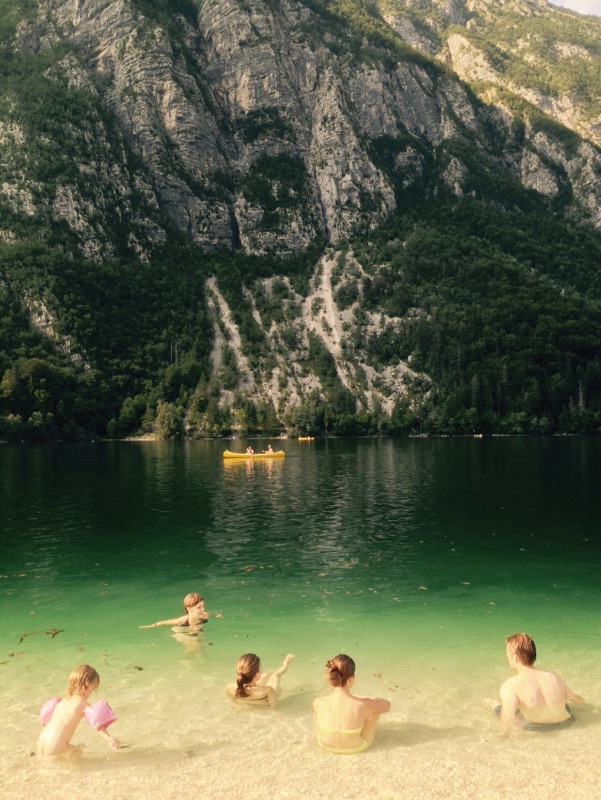
 The shade has been imperative. It’s been hot, and humid and the joy of flopping into the lake to cool off must partly account for our love affair with the place. This lovely lake, the Bohinjsko Jezero, is Slovenia’s largest. About 6 km long and 1/2km wide, it’s up to 45m deep. That’s a lot of water and it renews itself three times a year. And this year, in this heat, it has broken it’s temperature record. Yesterday the water was 25 degrees, a few months from now it will be frozen over and there’ll be people skating on it.  

 The waters really are pristine and they try to keep it that way by banning any boat that isn’t electric, sail or rowed. There’s no rubbish lying around anywhere and there seems to be a general sensitivity towards the environment and to be great believers in its beneficial effects. We’ve come across loads of references, in ordinary tourist brochures, of energy spots, earth energy lines and so on. There as even a Natural Energy Healing Resort in Kamnic apparently famous fo it’s ” energy spots with special healing effects. The resort is also known for living water with an amazing energy output”   You don’t get that kind of blurb from Bord Failte.  

 Whatever, this is certainly a powerful landscape and the mountains may  radiate energy but they also demand a lot if you want to scale them.  

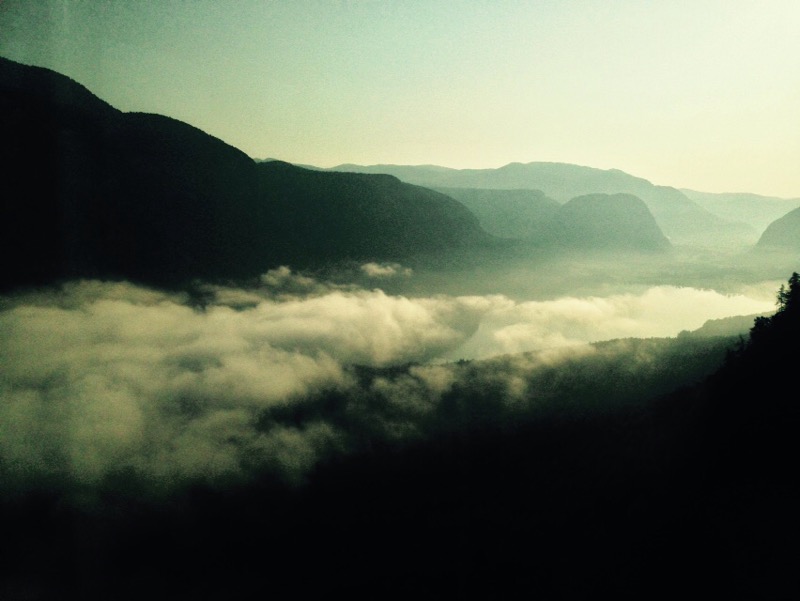
  To make it a little easier on ourselves we took a cable car, in fact we learnt today the fastest cable car in Europe, up 1000m  in about 5 mins, saving a slog of a couple of hours. We glided almost silently up above the misty lake 

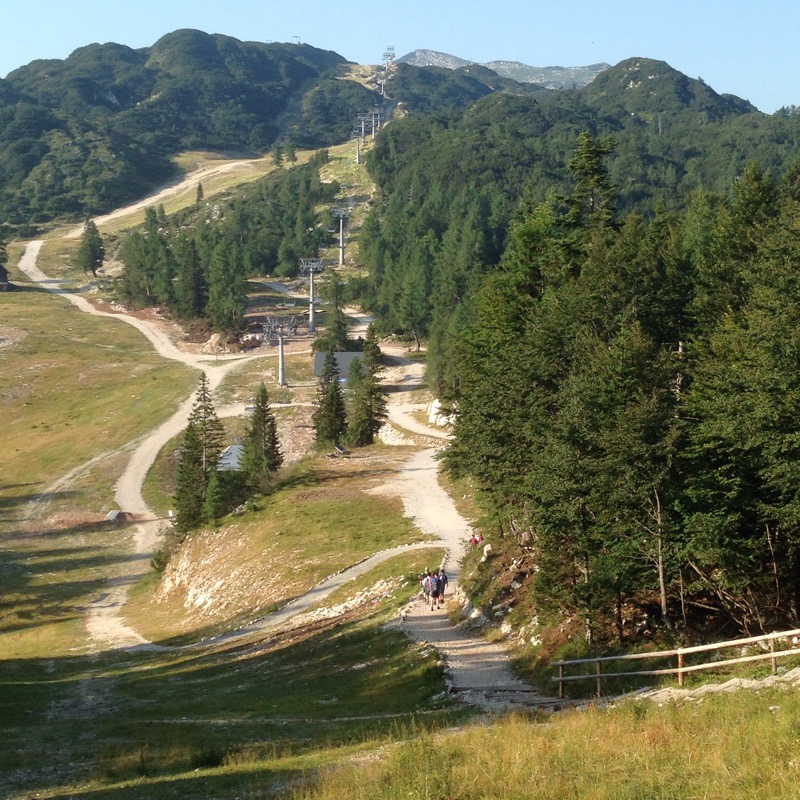
 to the hardly pristine ski slopes.  

 From there to the top of Vogel, the second highest peak in the southern Julian Alps was another 600m but unfortunately our trail went down for quite a way before rising up past a little alpine cheese makers 

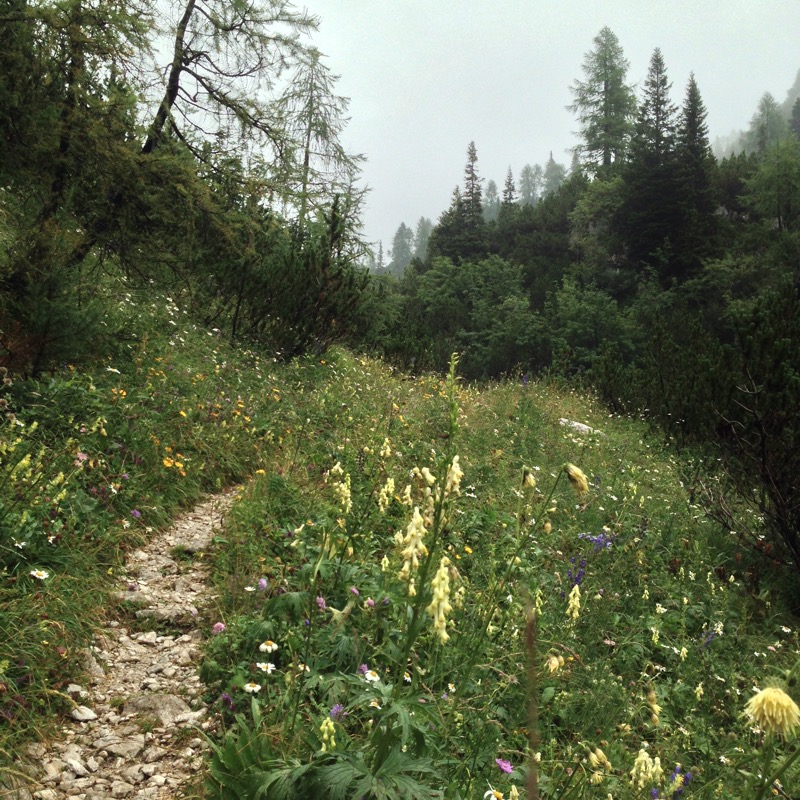
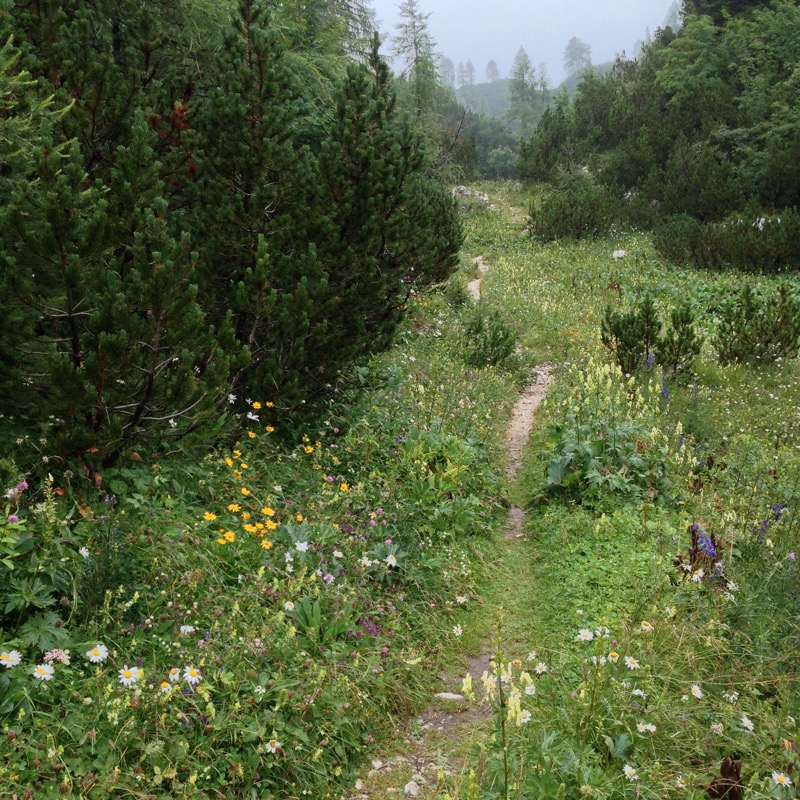
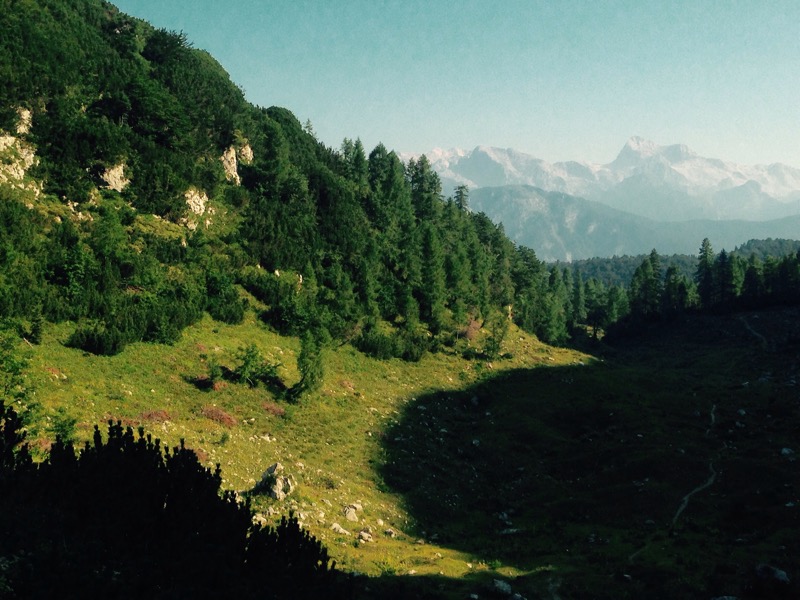
 and up a wild flower strewn valley to the bald limestone above.  

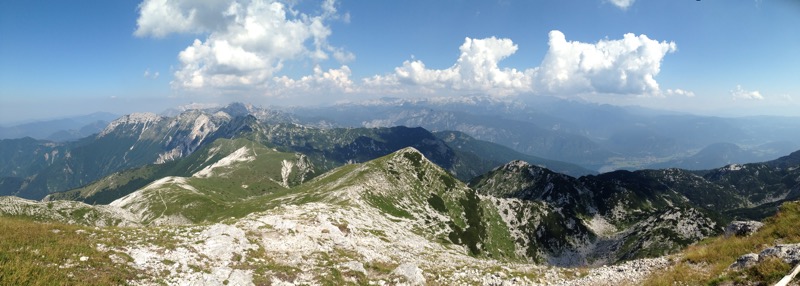
     At this point I must apologise if the blog resembles a holiday slide show of interminable boring landscapes. Maybe it’s a case of “if you weren’t there you won’t get it ” but I hope the pictures convey something of the scale of the grandeur.  


There’s more.  


We clambered up steel cables and the dogs just clambered 

 untill finally we climbed a narrow ridge and , like champions, emerged up onto the peak, pinnacle and summit of Vogel.   

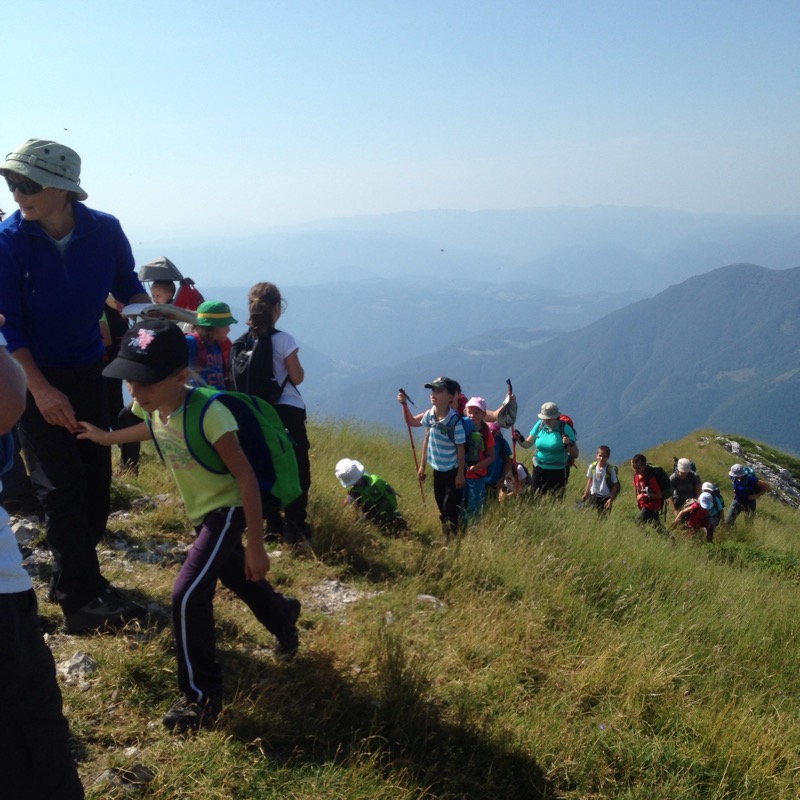
 Our great achievement was put into perspective somewhat by the large group of 5 to 10 yr olds climbing up from the other side.  

 Fair play to them. 

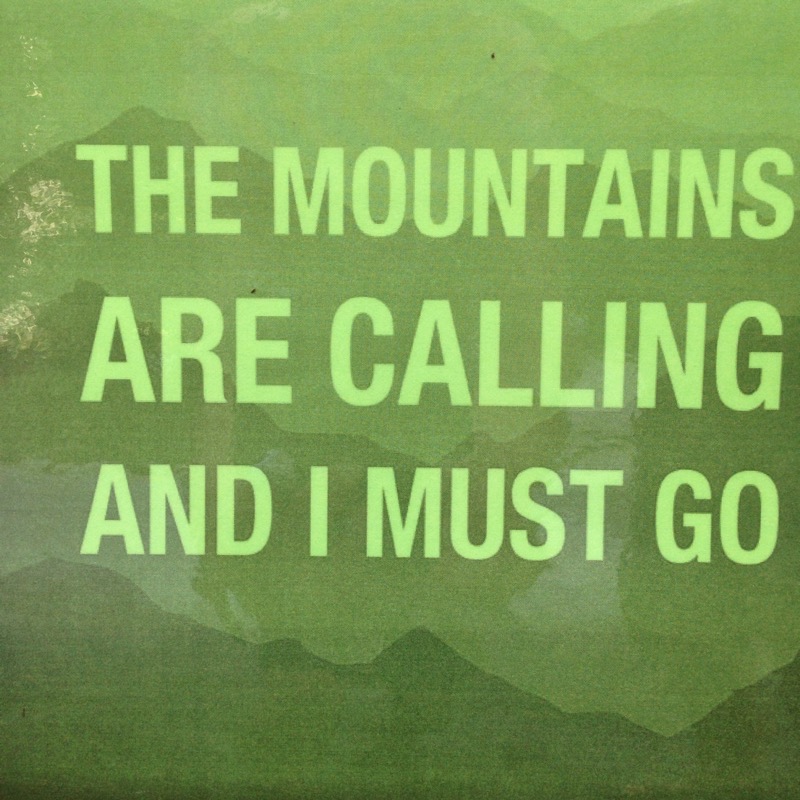
The next day I had to go further and higher, for longer. The Mountains were calling and I had to go. 

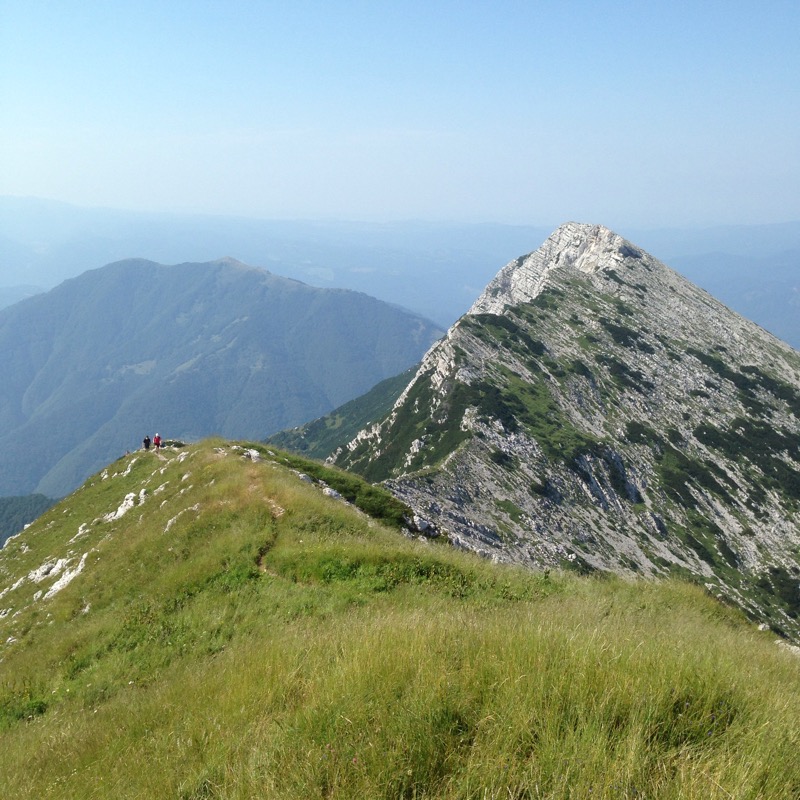
Up on the cable car again followed by a chair lift to get me another couple of hundred meters higher and then a 9 hour hike in the heat began with a climb to a pyramid shaped peak, Suja,where I turned East and followed a ridge over half a dozen other peaks to the highest of them all, Rodica, at 1956 m.  

 Passed giant karst sinkholes  

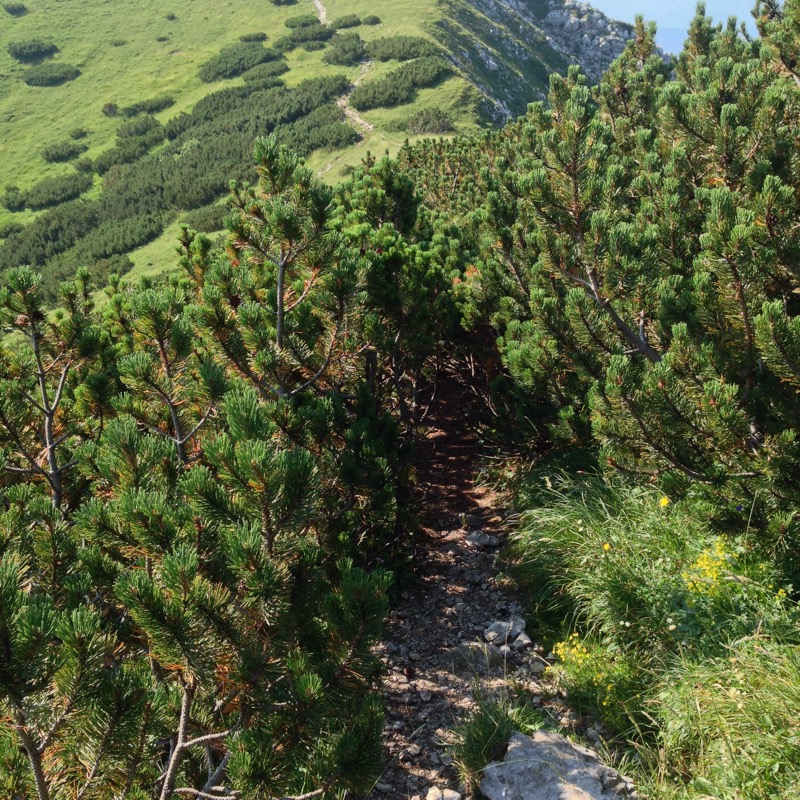
 and pushing through the dwarf pine 

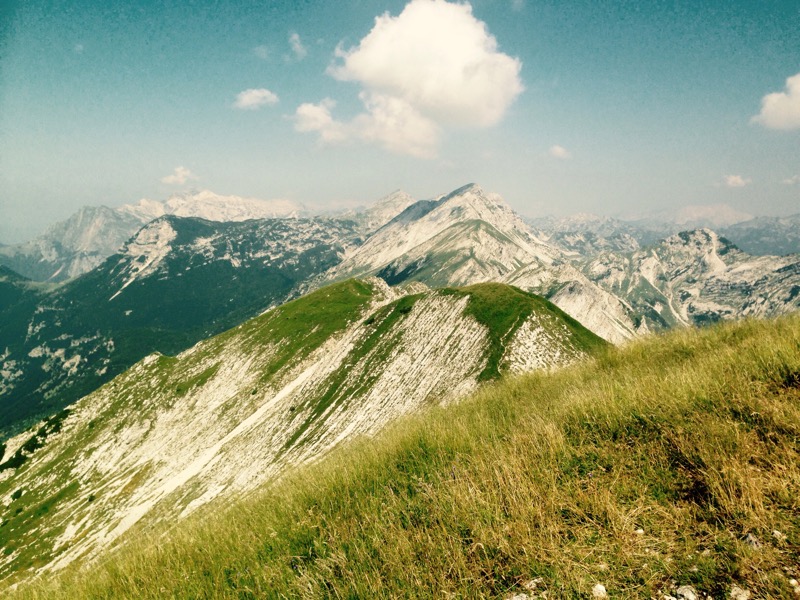
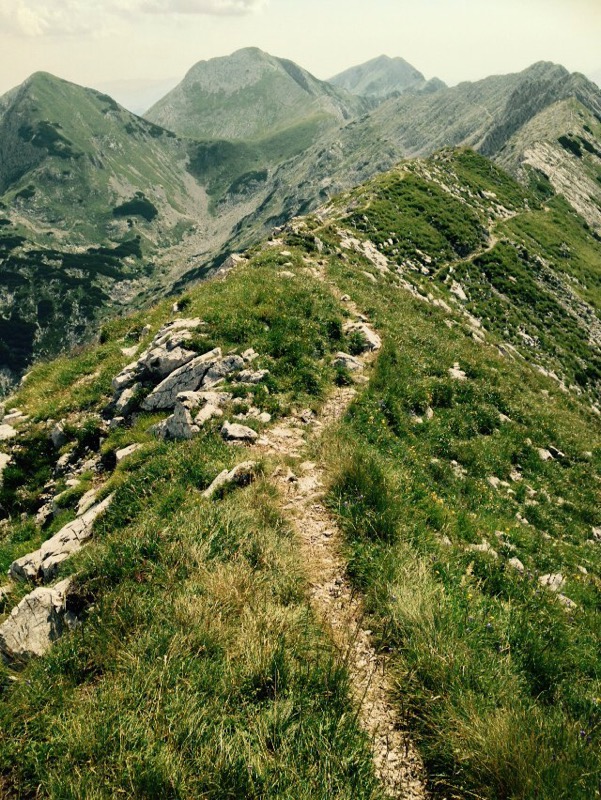
 with a long way to go and a danger of thunderstorms forecast I didn’t hang around and carried on along the ridge with amazing views on either side and the sun beating down.  

     There were a beautiful mass of flowers including Edelweiss  

 and limestone glories all around.  

   Eventually the path led me across a glorious flower filled broad Coll  

 and after a scramble and a climb involving cables and pegs and pins to the final summit. With thunder rumbling and clouds gathering I started the 3 hour descent and was never happier to reach shade  

 as I entered the beech trees and not long after a little mountain hut for hikers where I left a greeting from Ireland.  

   The thunder got louder and nearer and a couple of hours later as I passed the first houses 

 the rain started. A few minutes later I had hitchhiked a ride back to the campsite without getting soaked. 

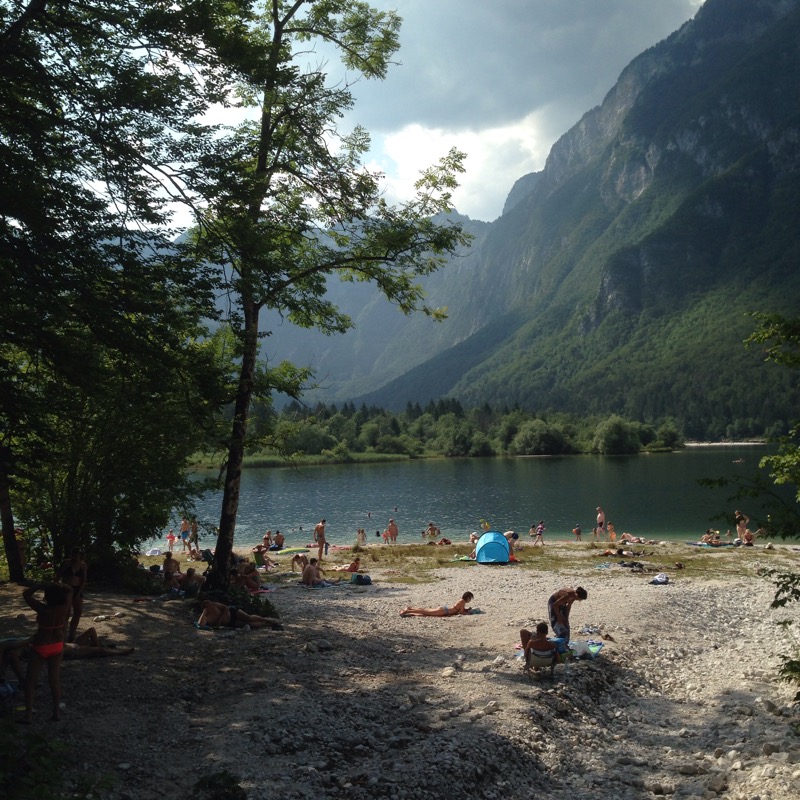
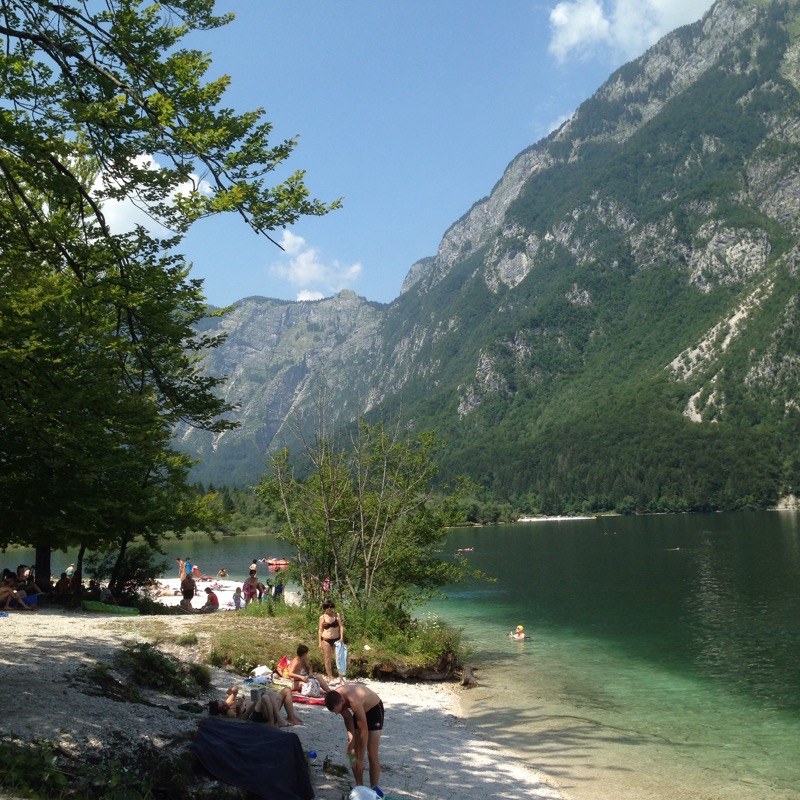
Another day on the lake. We walked around it on the north shore through the woods , stopping for a swim at one of many little beaches and marvelling at the tranquility of it all.  

 We hiked around to the shop in the pretty village of Stara Fuzina with its fine hay barns where the hay is draped over the wooden rails and timber or fodder is stored within.  

     And from there got a ride back to camp on a lovely wooden cruiser, electric of course.  


THE GRAND TOUR: SLOVENIA 16/17/18/19/20/21st JULY

5 days of family fun and a day of moving deep into the Julian Alps and the Blog is back. 

Most of what happens on family holiday stays on family holiday but I can reveal that we spent 5 days together in a ridiculously large house very high up in the Kamnik- Savinjske Alps a bit north of the capital Ljubljana. So high up in fact that after picking up one son from the airport  

 we seriously overheated the poor old Tranny trying to scale the heights in first and occasionally and fleetingly second gear. 

So we parked her up up for a few days to rest and explored the area in hire car provided by son junior. We went up the windy road above the house to the ski resort of Krvavec and marvelled at the mountains and wild flowers.  

   We ate at a mountain hut. Hard boiled corn mush. Sour milk. Goulash. Sausage and lard. We did the same the following day after s earching for giant boulders beyond the Kamniska Bistrica valley. We failed to find them but got very hot making the spring water ponds look even more inviting.  

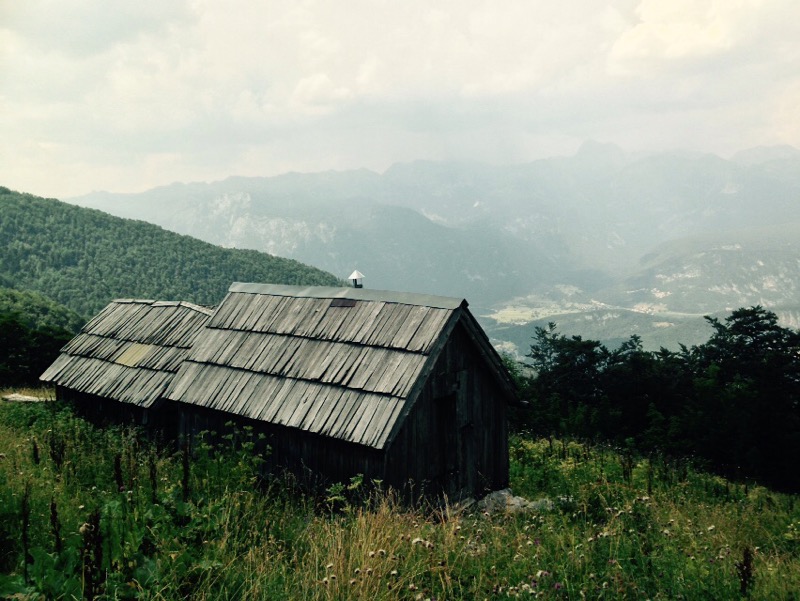
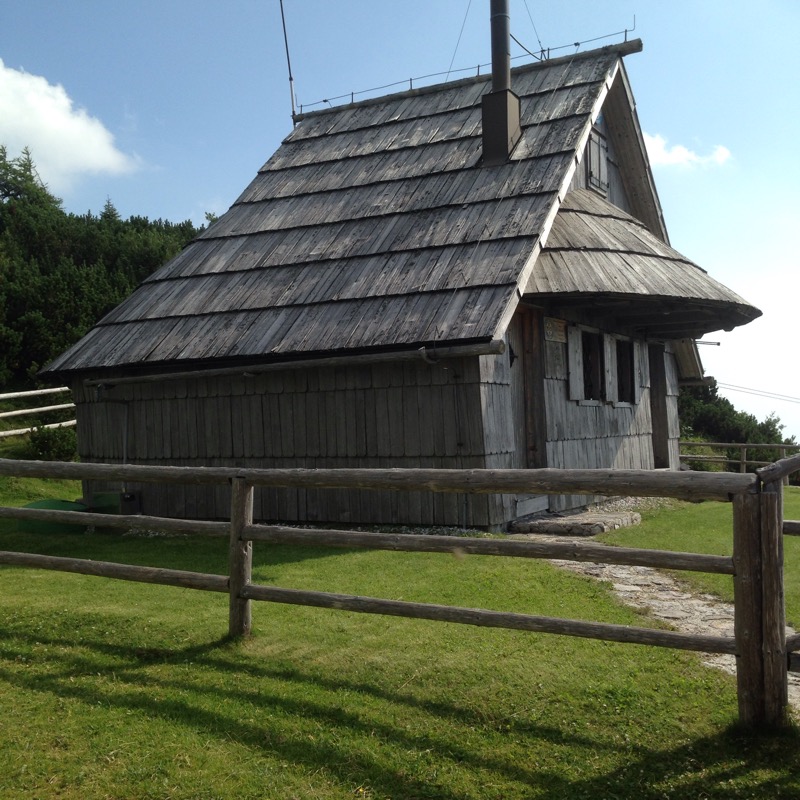
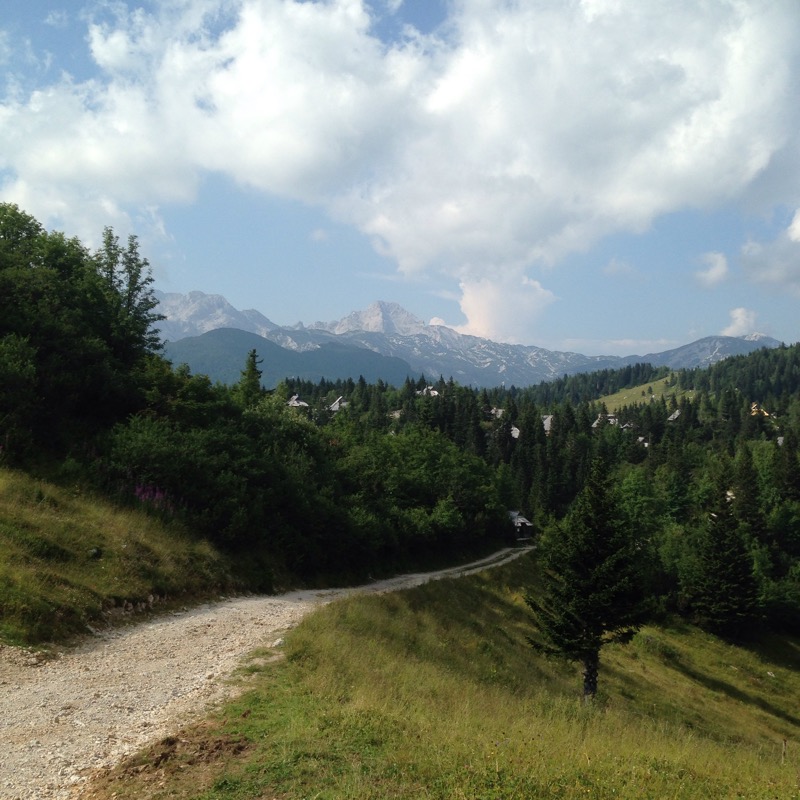
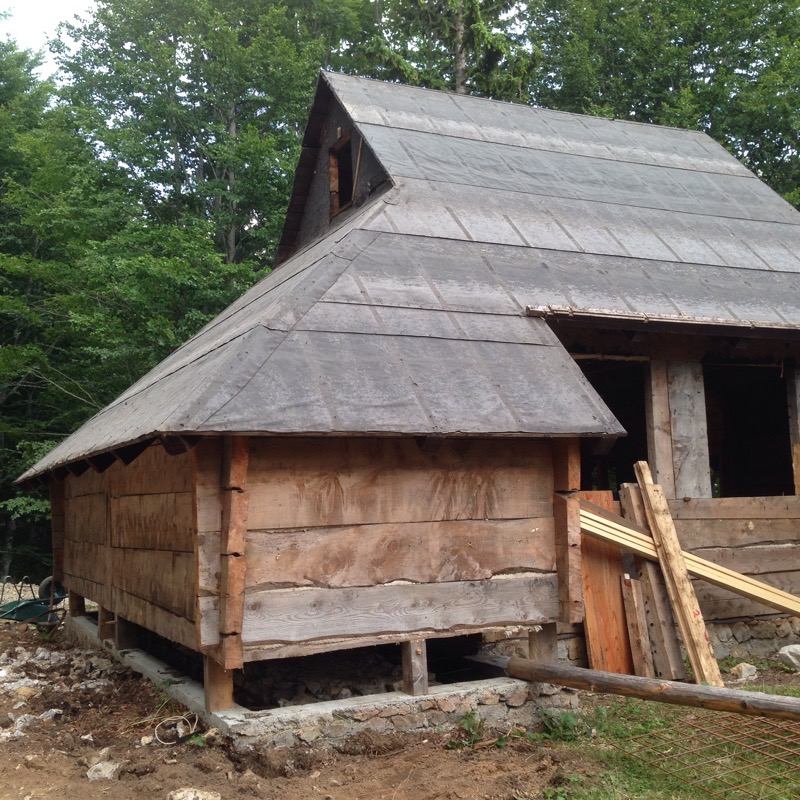
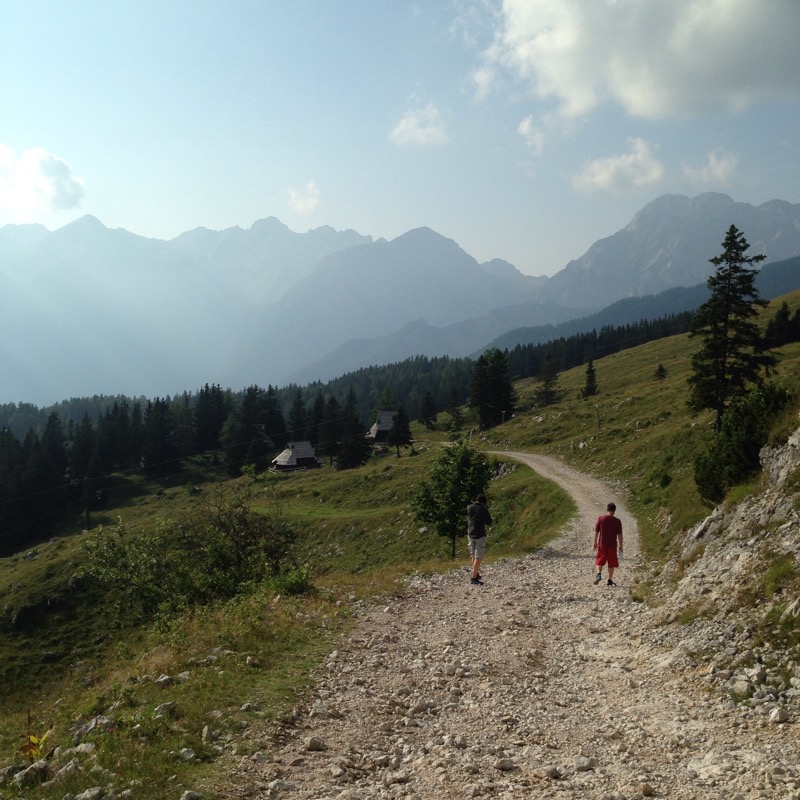
 Unfortunately or fortunately swimming was not allowed as the freezing waters had caused a few heart attacks, so instead we are took a cable car up to the high summer grazing plateau of Velika Planina and hiked up to admire the wooden architecture of the shepherds huts ( holiday homes)  

       and indulge in more traditional food before our return to the bottom

    Where we were briefly entertained by a couple banging out tunes in Slovenian and English.  


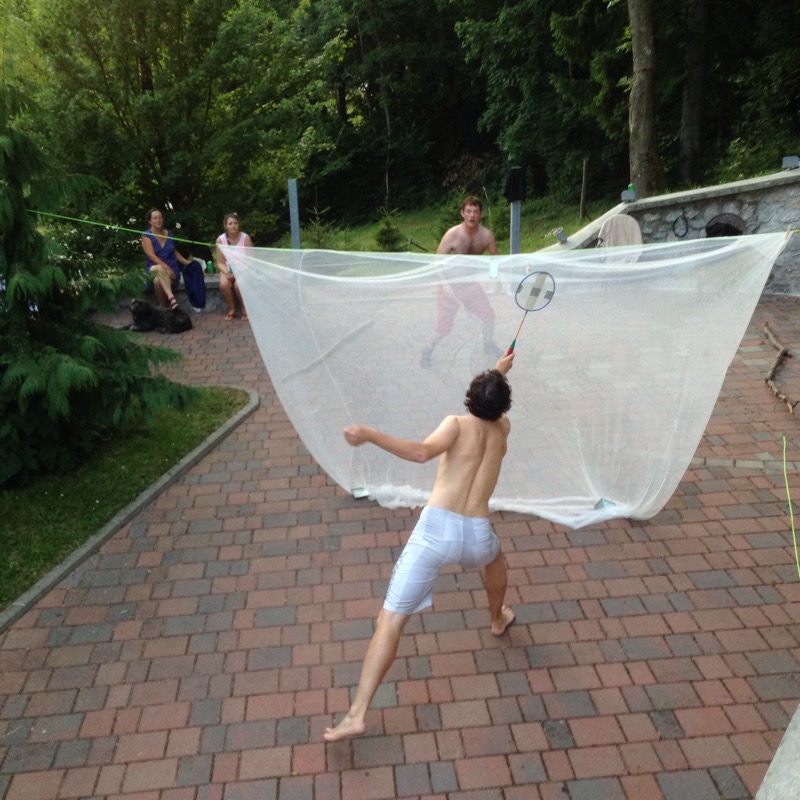
Every morning and night there were hard fought badminton competitions on the patio.  

 And much eating and drinking and drinking and eating interspersed with craic of various kinds. We did some sight seeing to local historic sites  

     and enjoyed strolling around the old town centre of Kamnik  


 before cooling off in the local pool with the rest of the overheated locals and returning to base for eating and drinking and craic. 

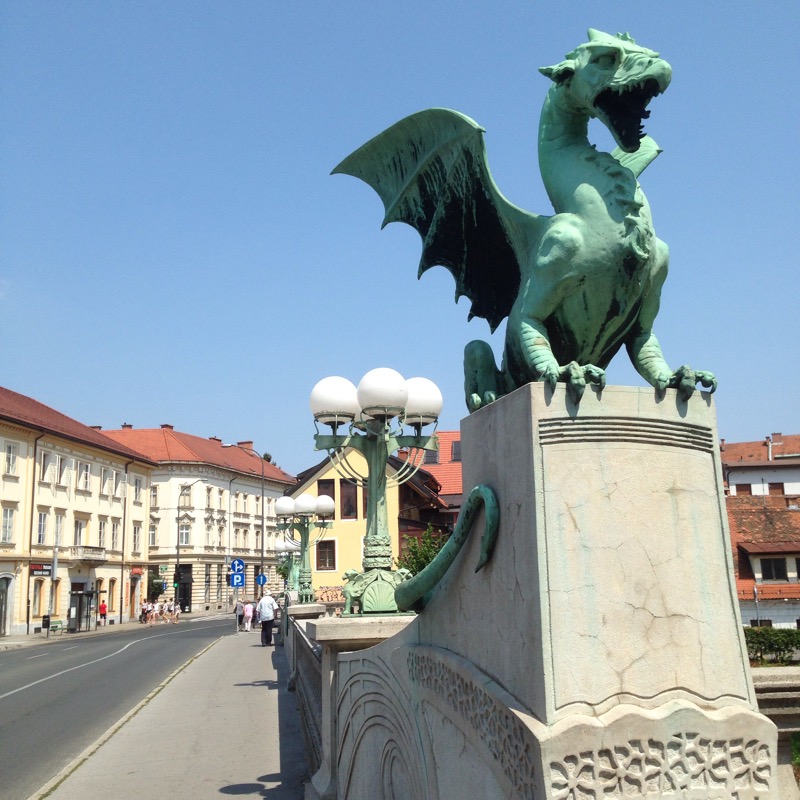
On our last day together we visited the lovely capital city Ljubljana. Small enough to walk around and only 70 cent an hour to park in the centre. My kind of town. 


After the fond farewells we headed north west to the Julian Alps to the scenic lake of Bled which unfortunately was overrun with people and so we headed out of town towards Bohinj. We found a lovely park up alongside the Sava river will the clearest water imaginable. 

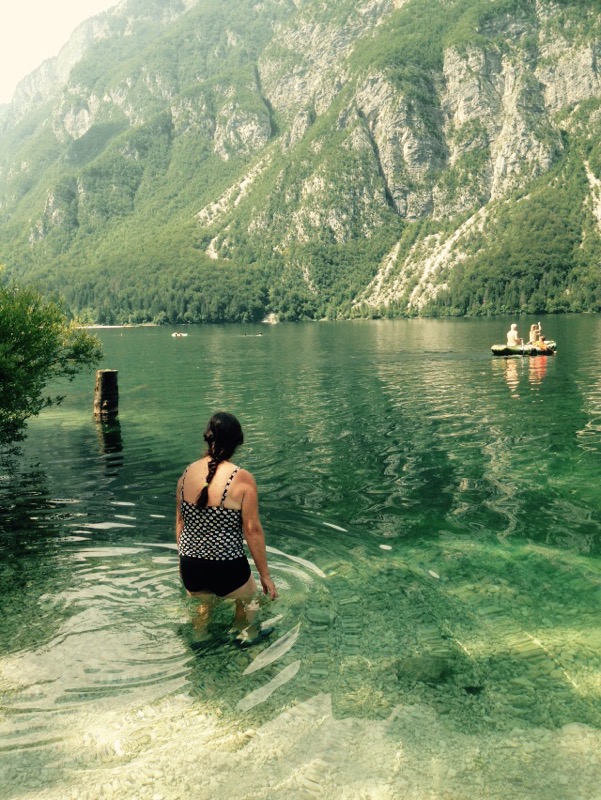
At least I thought so until we arrived this morning into the campsite at the far end of Bohinjsko lake. A dead end hard up against the ring of peaks at the end of the valley with sheer cliffs and wooded gorges dropping into the waters and white limestone beaches, this place is a wonder. I wouldn’t have imagined I could feel so chilled in a camp as busy as this but the sheltering and shading trees, vast empty lake, towering mountains and general vibe have made for a totally relaxed atmosphere here.  

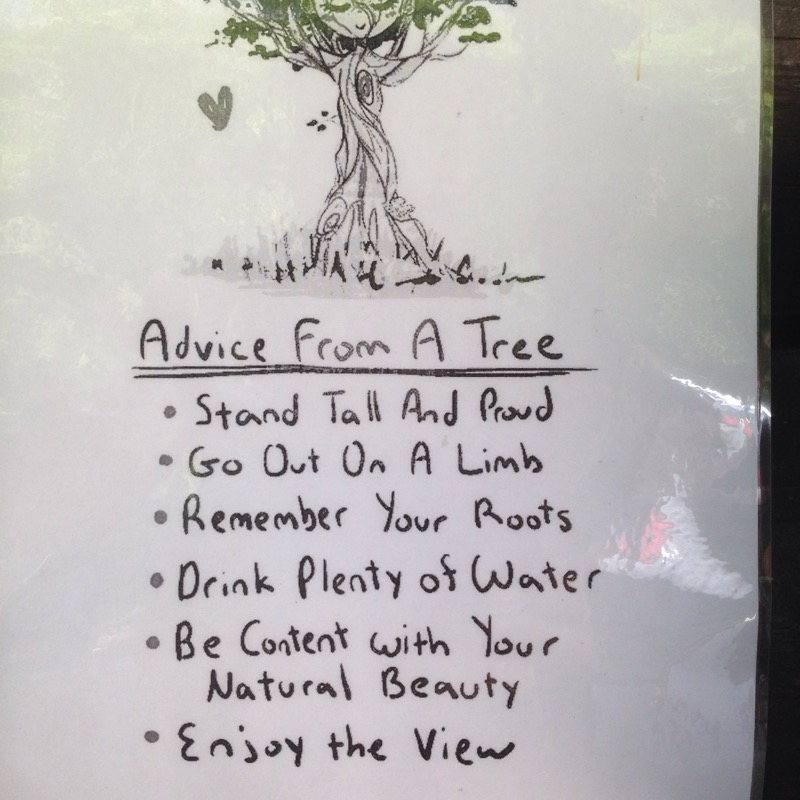
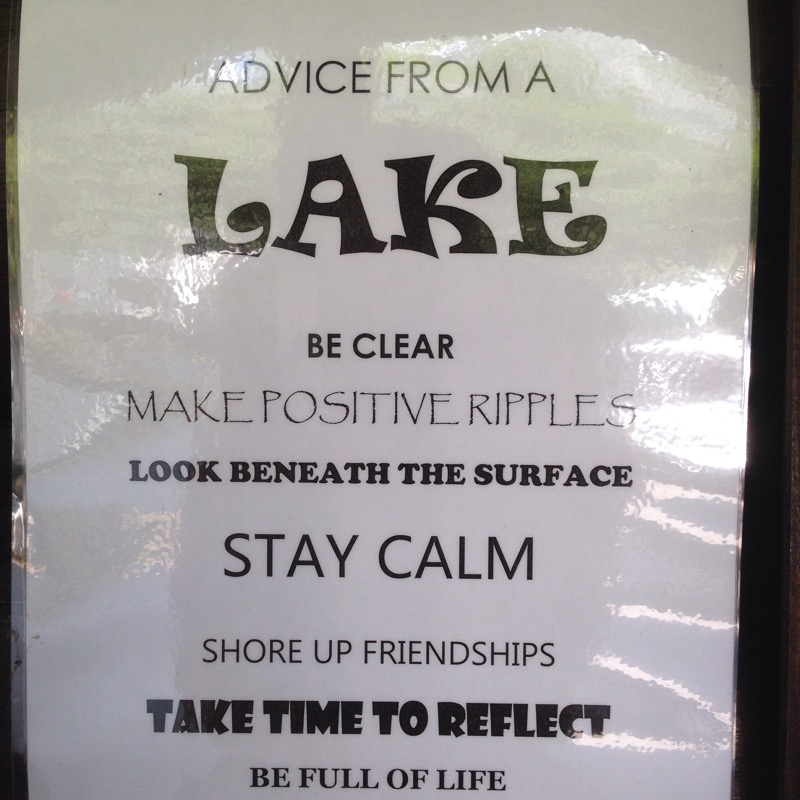
   The signs at reception gave away the vibe of the place.  

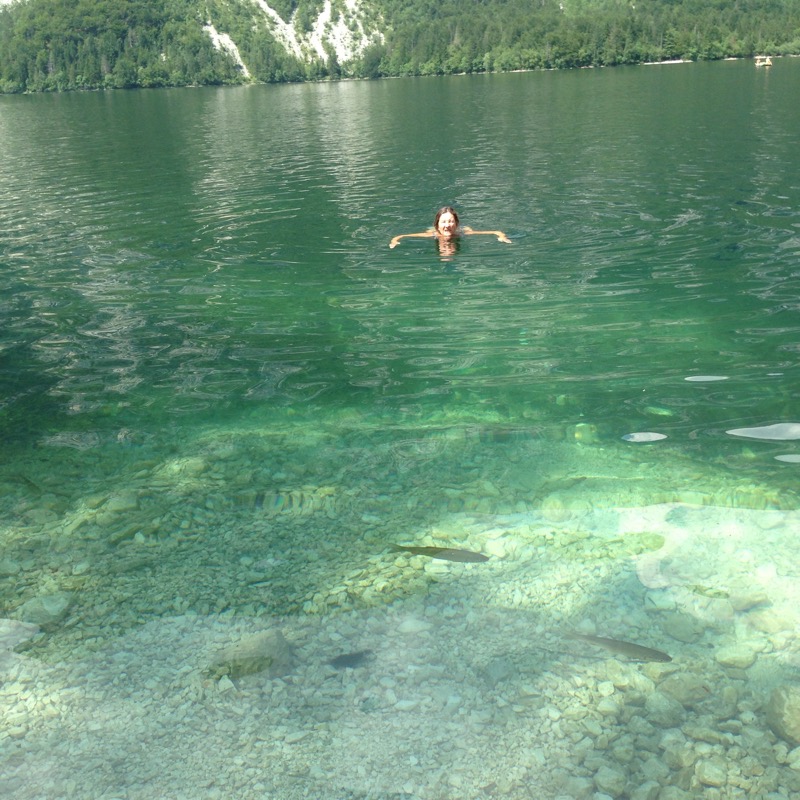
     Everything is so chilled that the fish in the crystal waters swim up to you.  


A walk around a bit of shoreline revealed more of Eden.  


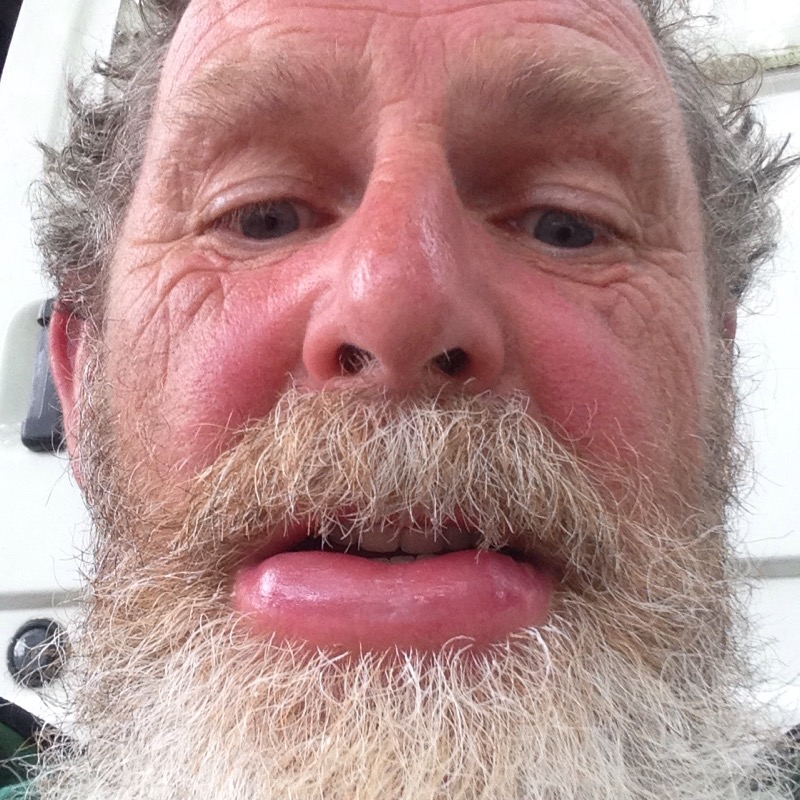
The only fly in the ointment was actually a wasp in the beer that stung me full on the lip causing much amusement for my caring partner.  


What with a lip that is threatening to suffocate me and a finger that I shut on the van door and has been stinking like its gone gangrenous the  edge has been taken off the glories of this heavenly place. 

I’m sure that a cable car ride and hike to the peaks at 7.30 in the morning will restore my sense of wonder. 

THE GRAND TOUR: HUNGARY 14/15th JULY

  We were visited in the morning by the inhabitant of the little cabin we were parked next to.  


Imran, who gave us a big bag of apricots and insisted on showing us how to get water from the well. It was a very impressive structure with the bucket splashing down at 50 m.  

 Hungarian is one of the hardest languages with nothing in common with English so our conversation with Imran was interesting. I think he extolled the virtues of the pure spring water and it did taste good. We told him that we were going to hike up around Badacsony and he made all the appropriate noises of admiration. 

We headed up the north side on the web of narrow steep tracks that weave their way all over these hills, past some of the vineyards for which the area is famous.  

 Even though the mountain is relatively small and separated from the other wild areas by villages and farmland we came upon a big deer and there was loads of wild boar rootleing and diggings.  

 The well worn paths at the end of the farm tracks took us up through lovely woods rich in species  

 to a well constructed lookout tower at the peak.  

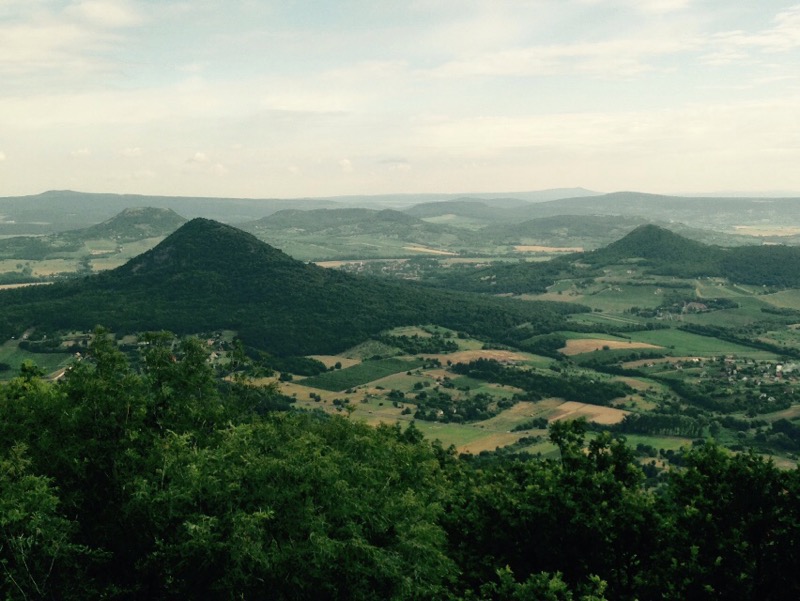
   With great 360′ degree views of the other 13 volcanic mountains of the area 

 and Lake Balaton itself stretching away into the distance big enough for the Hungarians to consider a sea.  


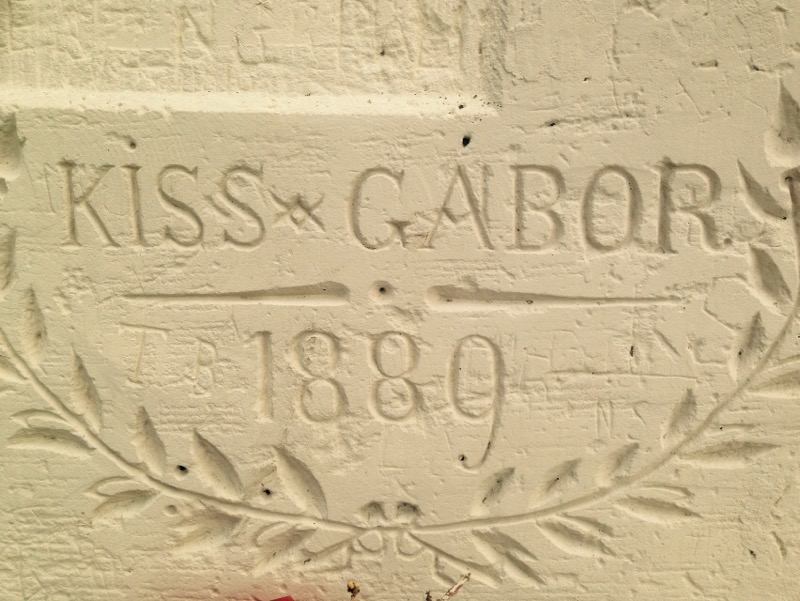
There were many monuments to various people and events at the many viewpoints along the trails and some sported fine graffiti from back in the day when tagging took a bit more time and effort than the spray can wielding folk of today put in.  


In a big loop around the top we discovered a couple of the old basalt quarries and read about how the monadnocks were formed and the different types of volcanic rock origins.  

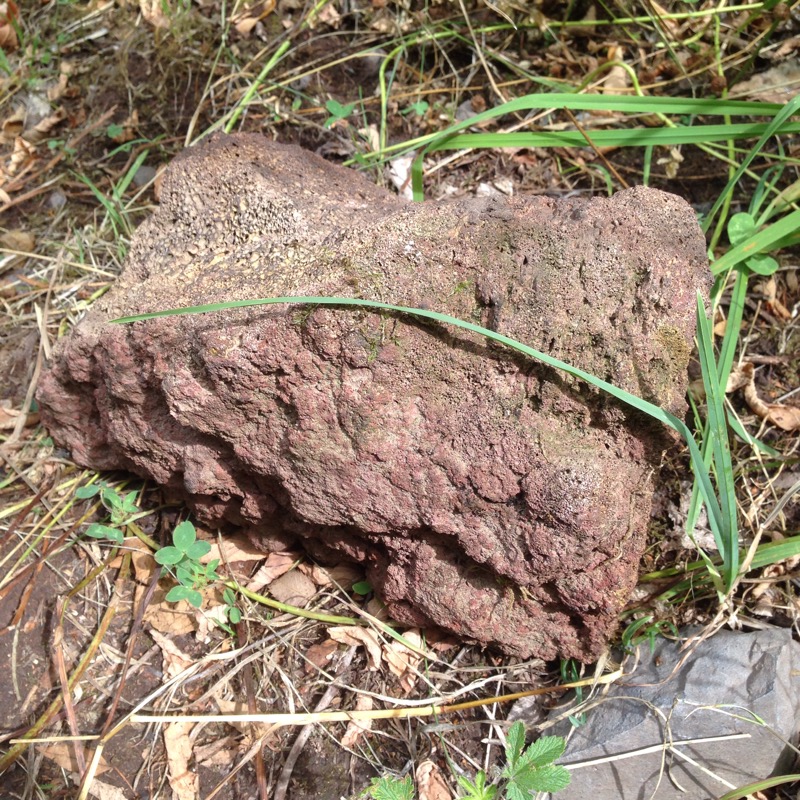
 Of course we had to go foraging for volcanic bombs and holey-bubbly basalt or bread stones to add to our collection at home.  


When we got back to the van Imran reappeared, this time with a bag of plums and damsons. We gave him a coffee with a good dollop of the “Missis” in it and he seemed genuinely sad when we told him we were going. We gave him all our Hungarian change and waved goodbye. 

We were very hot again and needing a swim we drove to a quieter more downmarket bit of the lakeside to the west and found a simple campsite near the shore where the washing machine was soon in action and we went to the pay-as-you-enter beach.  

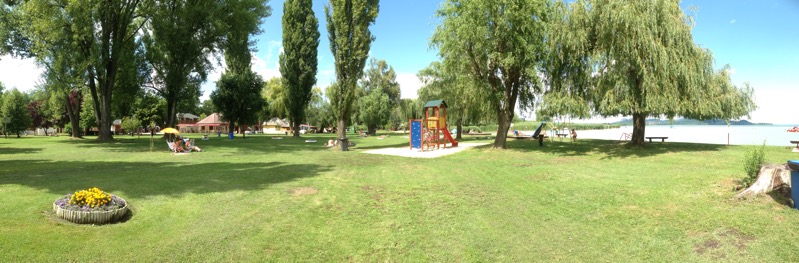
   Well, when I say beach I mean park really. But they are nice spaces with trees and flowers and grass is better than sand for lying around on. So after initially recoiling in horror from the tourist trap honeypot of Lake Balaton we learned to appreciate its peculiarities and wished it well. 

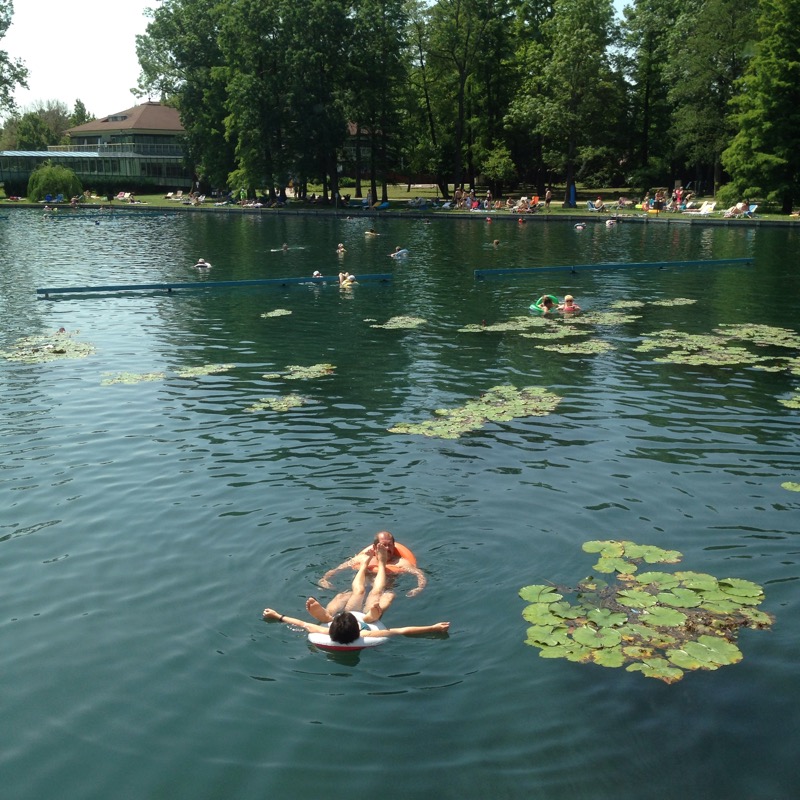
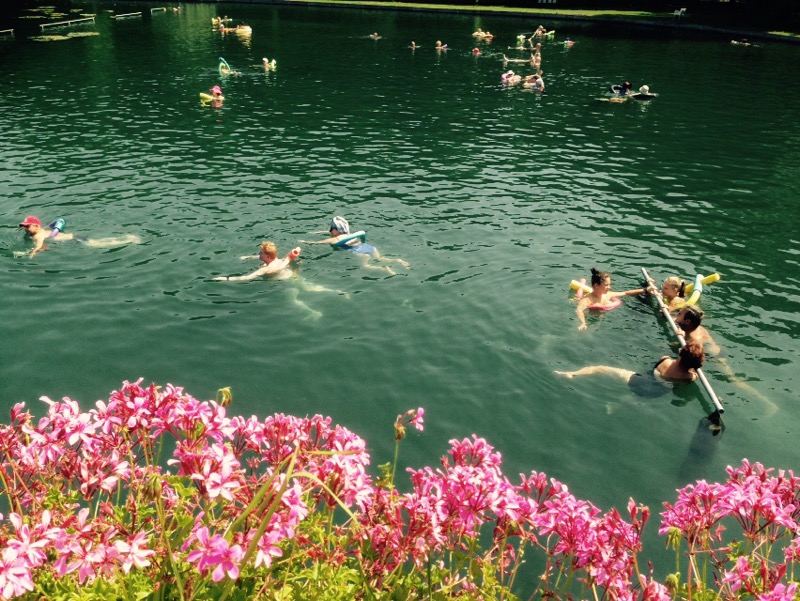
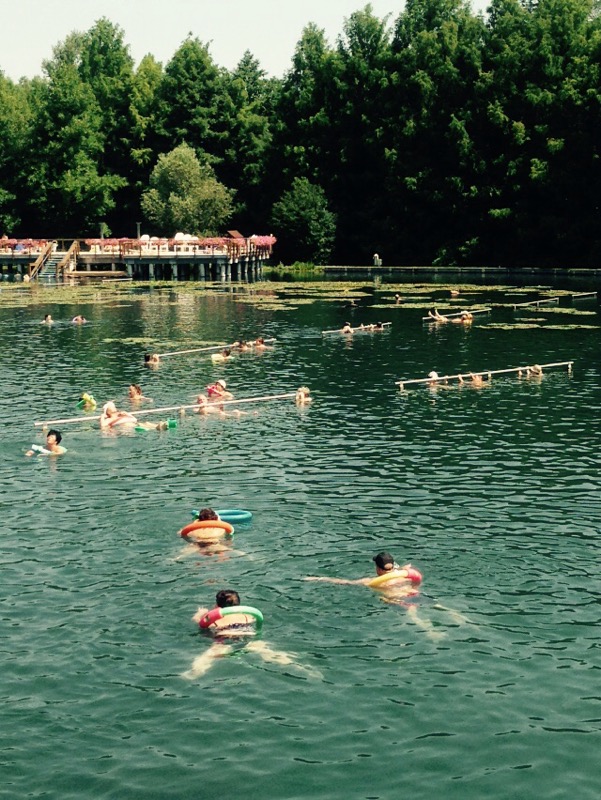
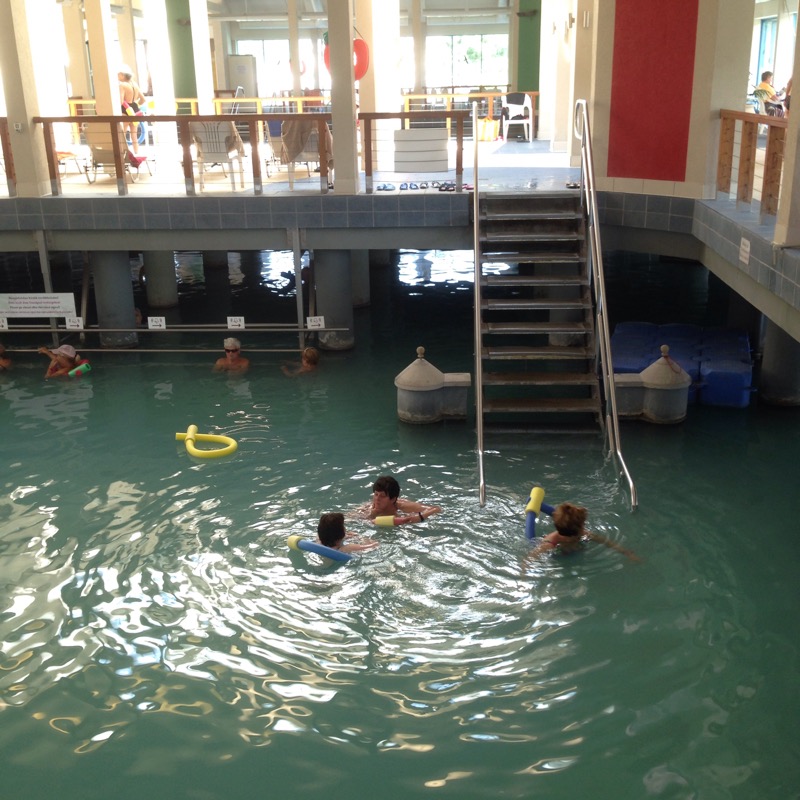
The next day was our last in Hungary and we spent the morning doing what we’ve done a lot. Bobbing about in healing waters. These waters were at 35 degrees and were in the largest thermal lake in Europe at Hervis. The lake is fed by two springs gushing and mixing in cave 40m down and supplying so much hot water that the entire 4.4 hectares lake is replaced every third day. Set in a forest and park of over 50 acres the whole” wellness and therapy” complex with dozens of different treatments and massage on offer is owned and run by St Andrew Hospital for Rheumatic Diseases and is full of people floating about amongst the pink and purple waterllies.  

     In the centre was an enclosed pool full of the “healing” mud which amazingly also had loads of little fish in- and a duckling.  

 Sally got out pretty quick when she was approached by one of these  

 but it seems they were friendly enough so we carried on bobbing about with everybody else.  

 There was a big indoor pool in the centre of the lake, directly over the springs and these were the hottest of all.  

 But it was more fun out amongst the lillys. For about 100€ we could have had a stop cellulite package but unfortunately our time was up and we had to saddle up and head for the border, Slovenia bound.

Our visit to Hungary felt a bit short but we had a family get together to get to. We will think of the country as being full of natures bounty. In fruit and nuts and veg and berries. In timber and wood and lumber. In waters , hot , cool and mineral and in friendly unintelligible people. 

After driving across miles of wheat prairies and forests we arrived in Slovenia to an afternoon thunderstorm. The cloudscraping mountains got nearer and nearer and finally we were amongst them at a tiny camp high up a valley in the eastern Slovenian Alps.  

 An eccentric place and owner who welcomed us with some wickedly strong liquor in exchange for the Irish flag we ve been carrying around.  

   We went down to the rushing river to cool off but it was freezing. Very different to the healing waters of Lake Heviz.  


 THE GRAND TOUR: HUNGARY 11/12/13th JULY

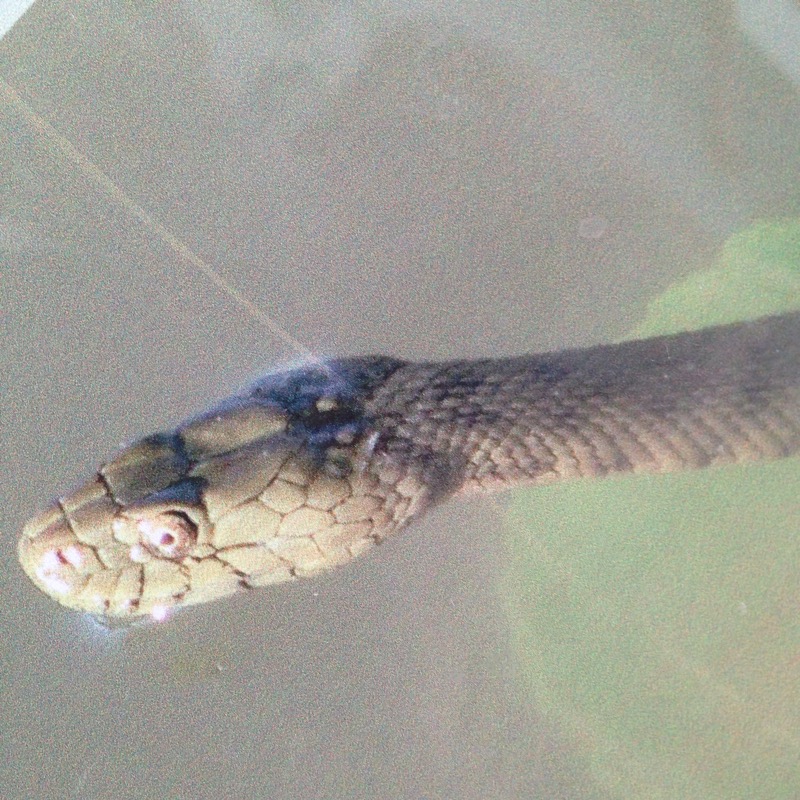
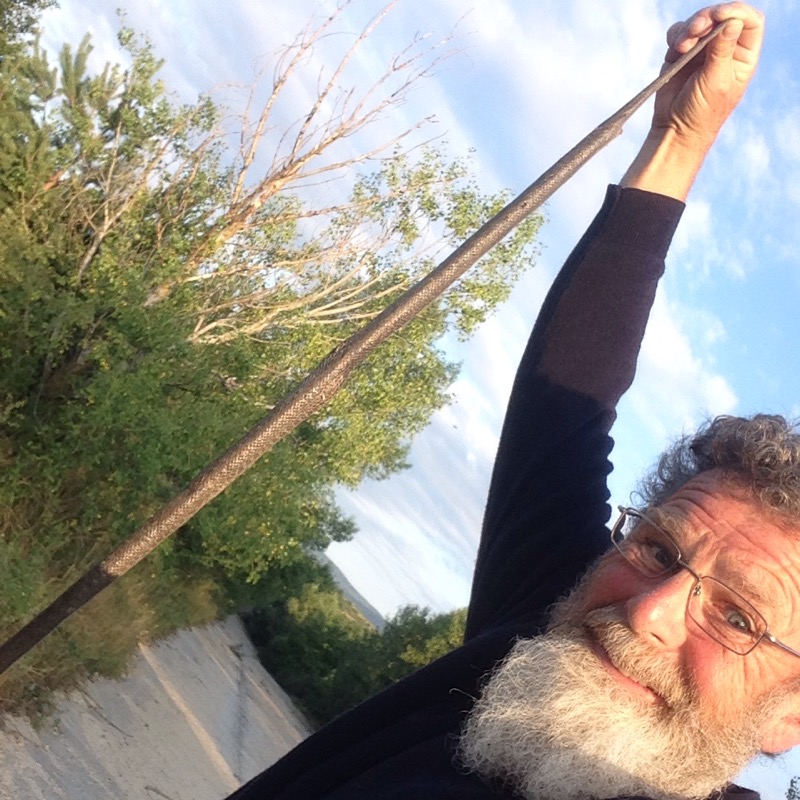
A peaceful night on the artillery ranges was followed by a successful early morning dog walk when I came across my third snake, luckily this one already dead.  

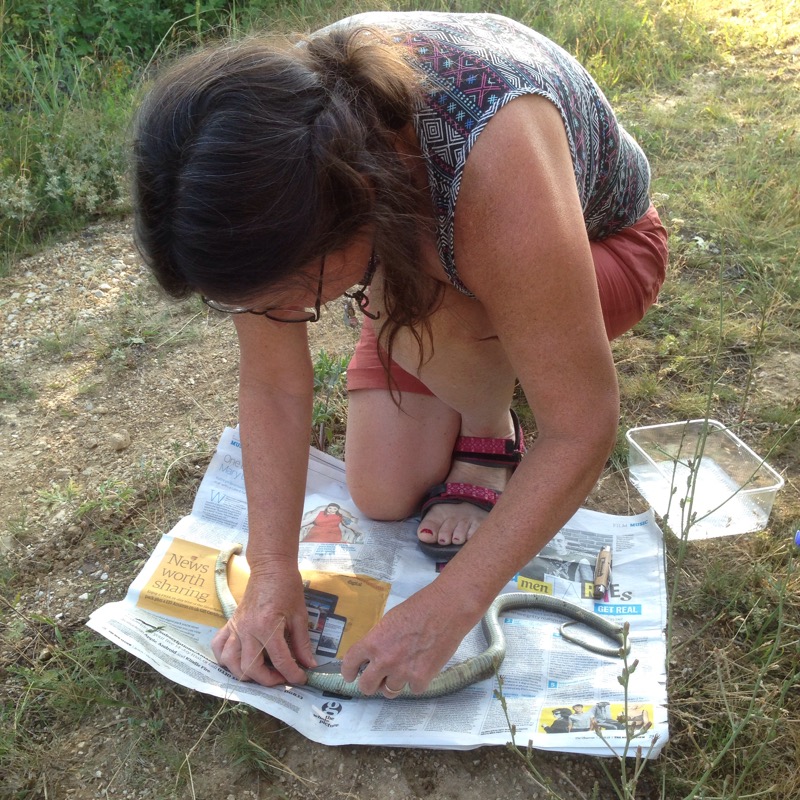
 The great hunter proudly returned to his women who gratefully received the bounty and set to work.  

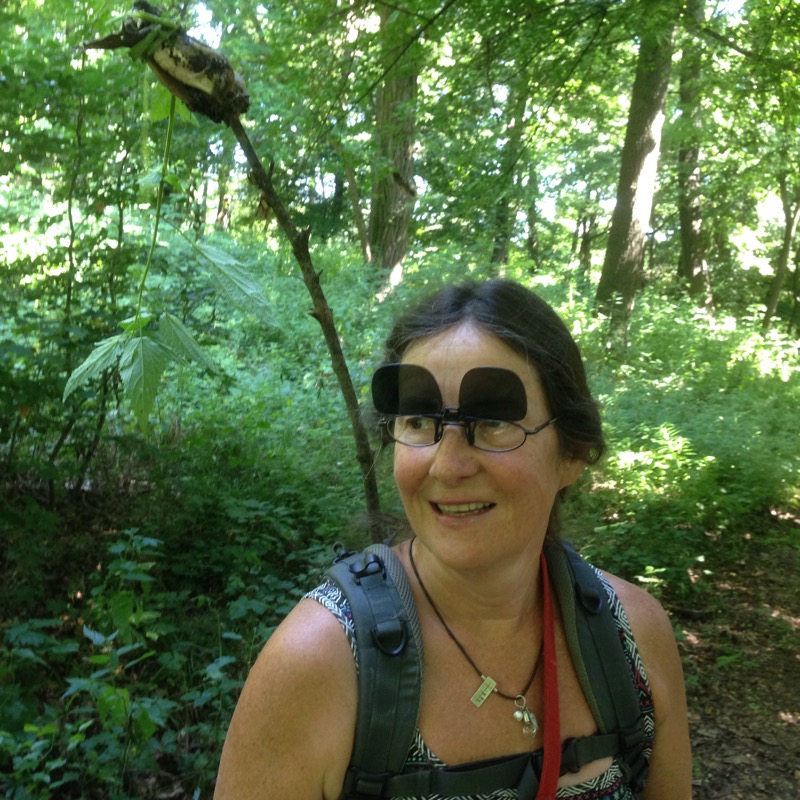
 Soon after we started hiking in the forested hills of the Bakony region another 30km north she was thrilled to discover her second treasure of the day, a dead fox from which the skull was soon to join the stinky things to deal with list.  

 It became a rather unattractive adornment to her knapsack which kept me upwind and did little to improve our communication with the family groups we met along the way.  


Up until the fox find our path had been rich in more appetising riches. Mulberry trees 

 wild raspberry, walnut, Apple, cherry, chestnut, hazel and what I thought was hops 

 for the beer and even wormwood to make absinthe.  

 And fields of glorious ripe grain.  


Most of the long looped walk was in deep hardwood forest, this time un harvested old coppice.  

    We went through stretches of sunken gullies in the limestone and past cliffs and caves. There was even a bit of scrambling with metal pegs and cable.  

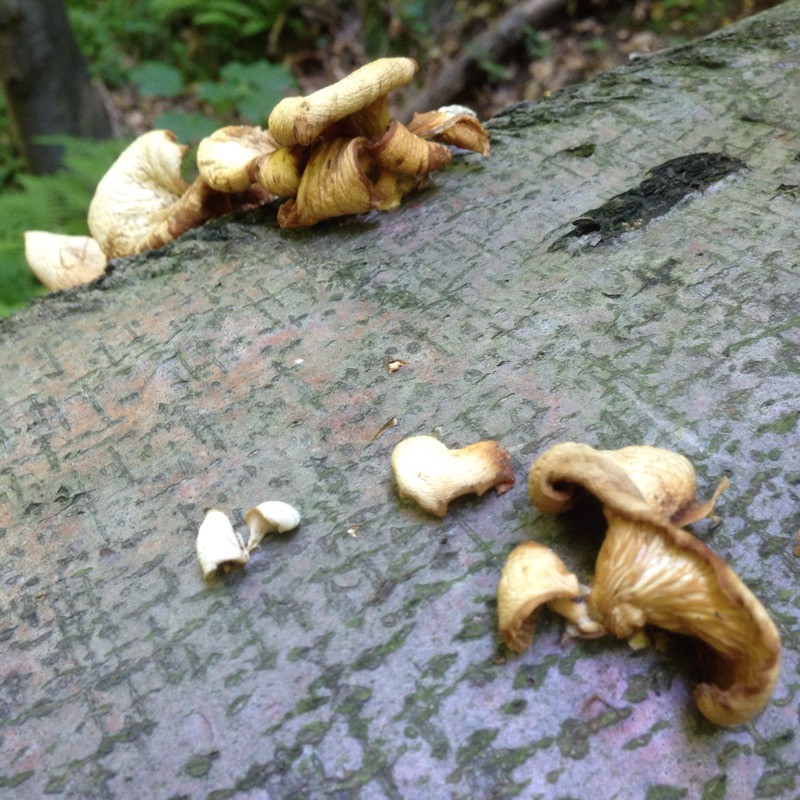
   The micro world was busy too with ants nests and fungi and little life.  

   We were very glad to be walking in the deeply shaded forest with the canopy far above our heads as the temperature shot up whenever we came to a clearing. The last couple of Kms were on the road into Csesznek past the castle ruined not in the multiple sieges it has suffered but by earthquake and fire caused by lightening strike. There’s a lesson there somewhere.  

 We were parked up in a nice little flat area with picnic tables and benches and plenty of shade. There was even a water pump in the neat cemetery opposite used mainly to water the flower planted graves.  

 Obviously a popular village with day trippers and walkers we arrived back to the van to find it surrounded by coaches but they were gone before too long and we shared the space with two camping trekkers on a long distance hike. We called to the village inn for a two course dinner and a couple of pints each which involved a lot of Google translate and cost us about 6€ each. Walking up to the castle gates we discovered it was closed for repair work four 4 days but it looked good in the sunset from the van at bedtime anyway.  


We did another long loop through the woods the following day. After winding up every dog in the village by parading ours past their fences we thankfully left the yapping and yelping behind and entered the cool and shade of a lovely sunken ” holloway”.  

 These tunnel like tracks and trails have been worn down into soft ground over centuries and often with a hedge on either sides whose root system resists the erosion and creates a canopy above. There are some still surviving in southern England than Robert McFarland explored with Roger Deakin and some of the old Irish borreens are the same kind of thing. Anyway, they make for contemplative walking thinking of the multitudes that have passed by on what is now a pedestrian irrelevance to mainstream transportation.  

 The karstic area is studded with hollows and sinkholes and cut with gorges and steep valleys and the forest trail had us yo-going up and down. Being limestone there was little surface water so we frequently had to stop and give the dogs a drink.  

 These woods of beech, oak and hornbeam had been coppiced for centuries and I was hoping to come across the charcoal makers I’d read about but no luck.  


Looping back towards the village from a different direction we passed a cliffy bit with climbers doing their thing  

  and we tried to get a better view of the castle.  


Time to head south to the Balaton uplands and give the lake another chance. It was hard work. Temperatures rising, tempers fraying, parking nightmare. How can the majority deal with these conditions?

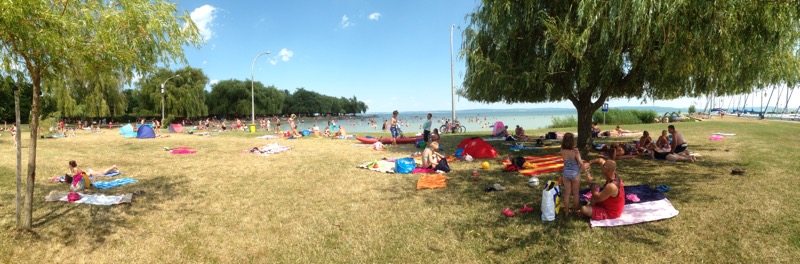
After too much toing and froing we at last succeeded in leaving the van in shade and accessing the water. We were not alone.  

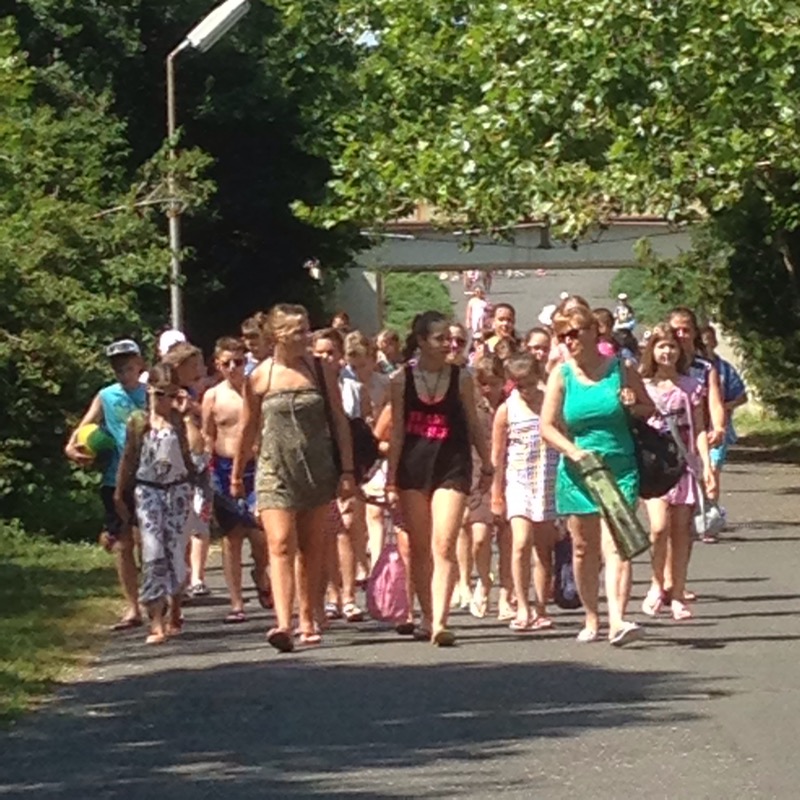
 Hoards of summer camps disgorge onto the beaches of Lake Balaton in the summer and the nearest thing the Hungarians have to a seaside is swamped.  

 I was too hot to care about honeypot overcrowding and just needed to swim but even that wasn’t easy as the water is very shallow and there are patrolling lifeguards to make sure you don’t go out of your depth.  

 But we managed it and coolness was achieved. We even frolicked in the ripples ( there aren’t any waves) and sat on the grass under a sun umbrella eating ice cream. 

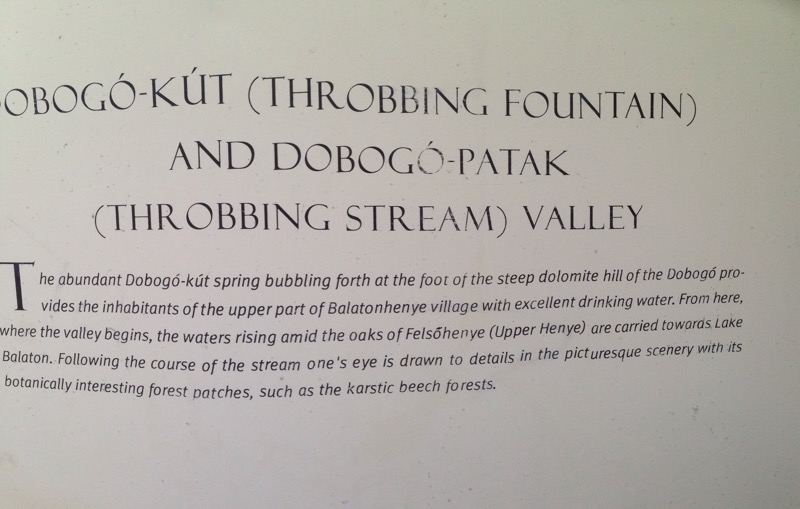
Worried about the dogs parboiling in the van we escaped the Hungarian Riviera and drove inland to the Balaton Uplands where, as luck would have it, we found a great park up at the end of a track into the hills. At the back of the little village of Balatonhenye we found  

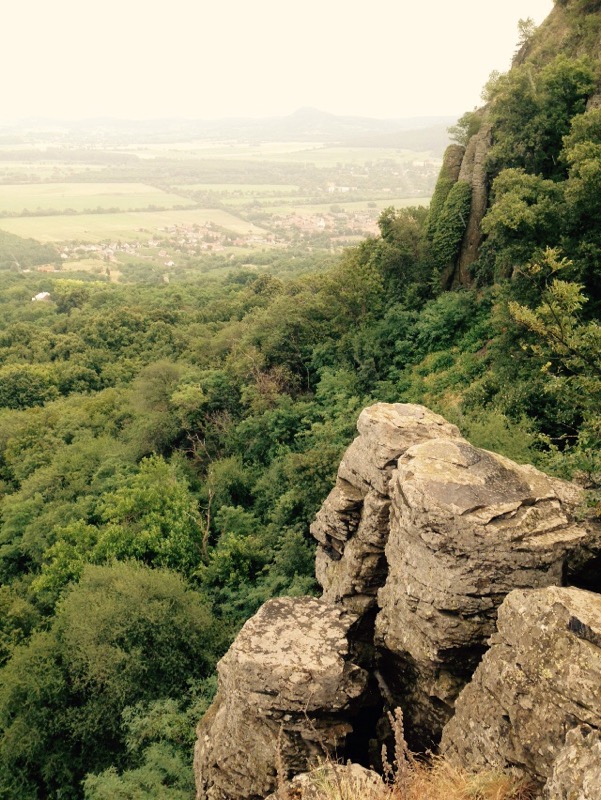
 and stayed next to the throbbing waters. I climbed the steep hill above us for a view of the village.  

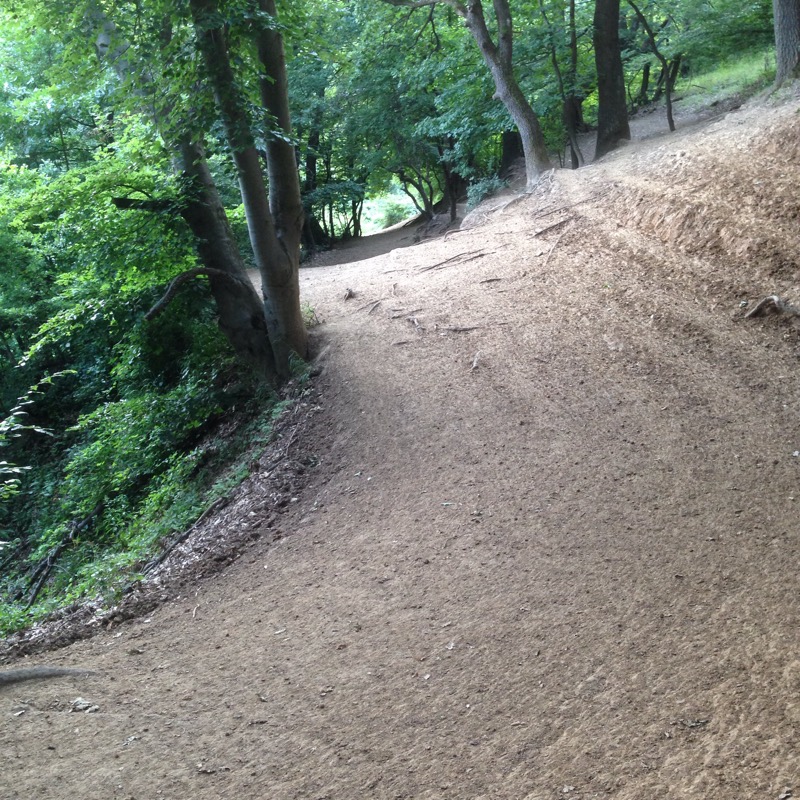
 And returned to base on a artfully formed sheep/ goat track.  


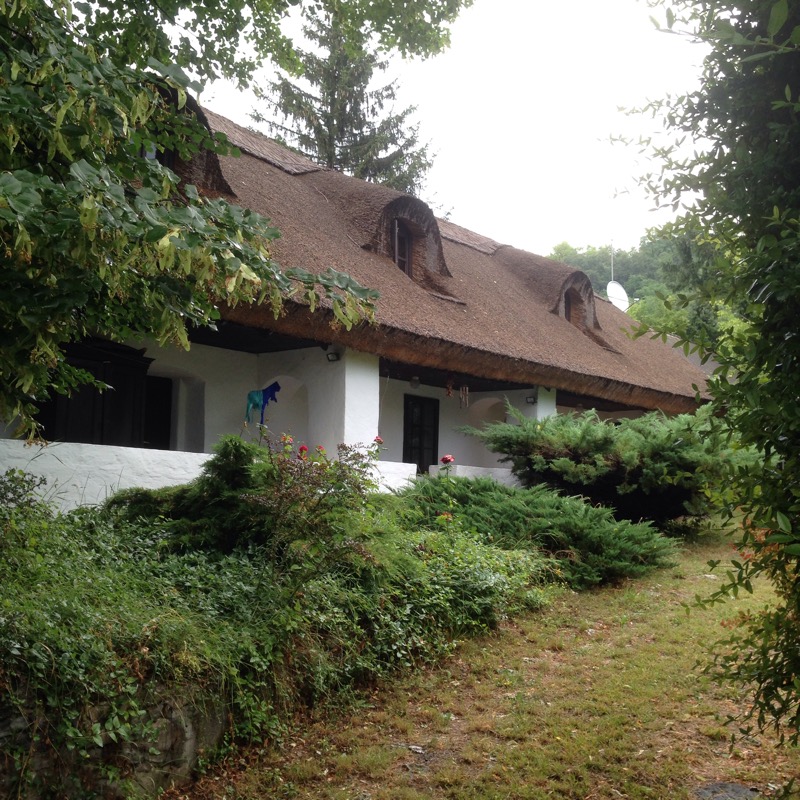
This area has some fine thatched houses, and we past some in the morning as we left.  


We were going to walk up the butte of Szt Gyorgy-Hegy, one of the basalt mounds that rise up above the broad flat farmland of the basin in a steep escarpment and provide good views of the lake. 

Our way there was festooned with fruit and nuts of all kinds. Added to the riches we’d had in the Bakony were grape and plum and peach and pear and hazel and chestnut and walnut. And what you couldn’t eat was a feast for the eyes and nose with heavenly scented flowers displayed promiscuously everywhere. Talk about fecund. 

Making our way past the vineyards and veg gardens of the homesteads and thinking what a fantastic country to be a food forager, we climbed up to the basalt columns.  

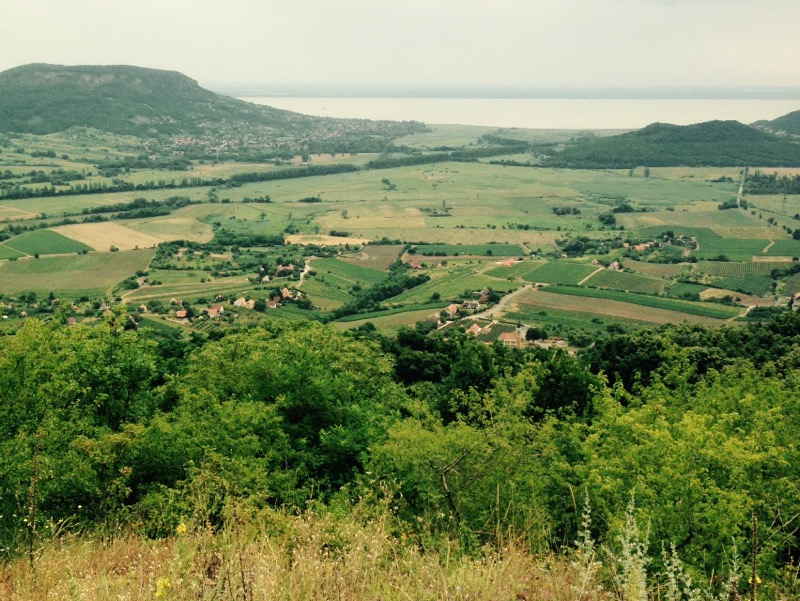
     And up to the summit for views across to other buttes rising from the plain and the pale blue of lake Balaton.  

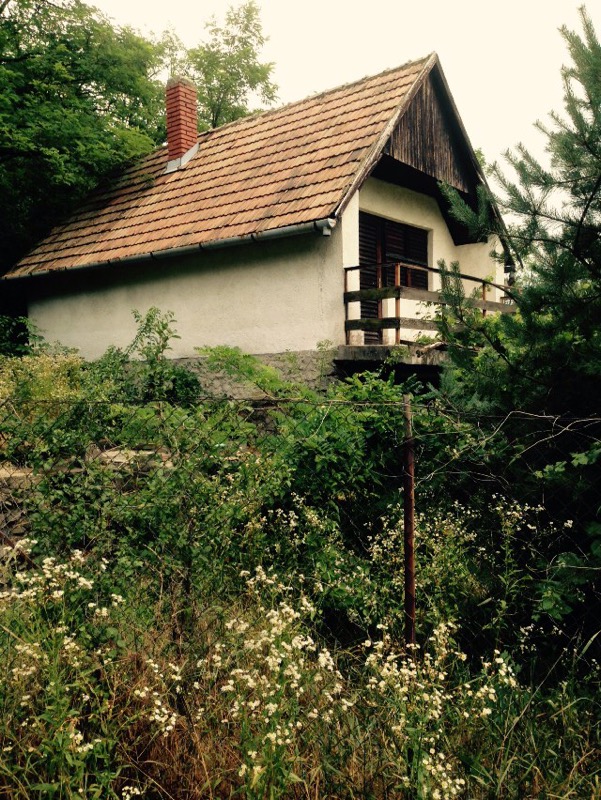
   Circulating the hill on the downward journey we past a few deserted properties  

   Which has been a bit of a feature of these parts. Because of the troubled recent history many places are unclaimed and we’ve heard of folk who have successfully squatted abandoned farmsteads. On the other hand we’ve also seen quite a few old places being done up, some obviously by new settlers. I seem to remember a bit of a vogue a few years ago for buying into ultra cheap eastern/central Europe. We past a place advertising some healing/ massage just after Sally slipped and fell but she toughed it out and we got back safely. 

We swung around the lakeshore again and I availed of a senior after4 pm ticket (60p) to have a quick swim before heading to our next park up on the route up our next volcanic objective, Badacsony. After some messing around up dead ends we arrived at a little village green to call home for the night and a nice man called in to wish us well.  I think. 


THE GRAND TOUR: HUNGARY 9/10th JULY

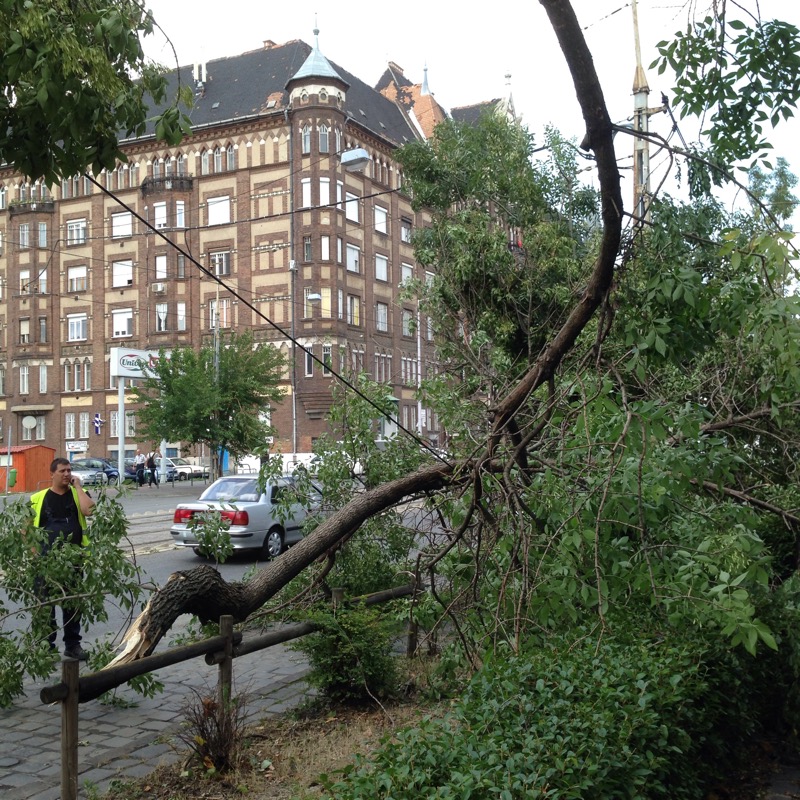
After our night cosied up in the van sheltered from the storm by a hill, a forest and a pile of timber we arrived into Budapest to scenes of severe damage. Branches down and trees uprooted everywhere.  

   We headed to a campsite in a little park pretty near the centre and it was chaos there with a big clean up operation going on. We heard from other campers that it had been wild, suddenly, with public transport shutting down and everyone having to walk through the rain and hail with debris and branches hurtling around. The poor people in tents got flooded out and a couple of campers had their windscreens smashed.  


This place included use of washing machine and electric for the 20€ and although we had no need for electricity (our solar panel doing well) Sally certainly had designs on the washing  machines. Everything got cleansed and strung out on a web of lines around our spreading pitch. 

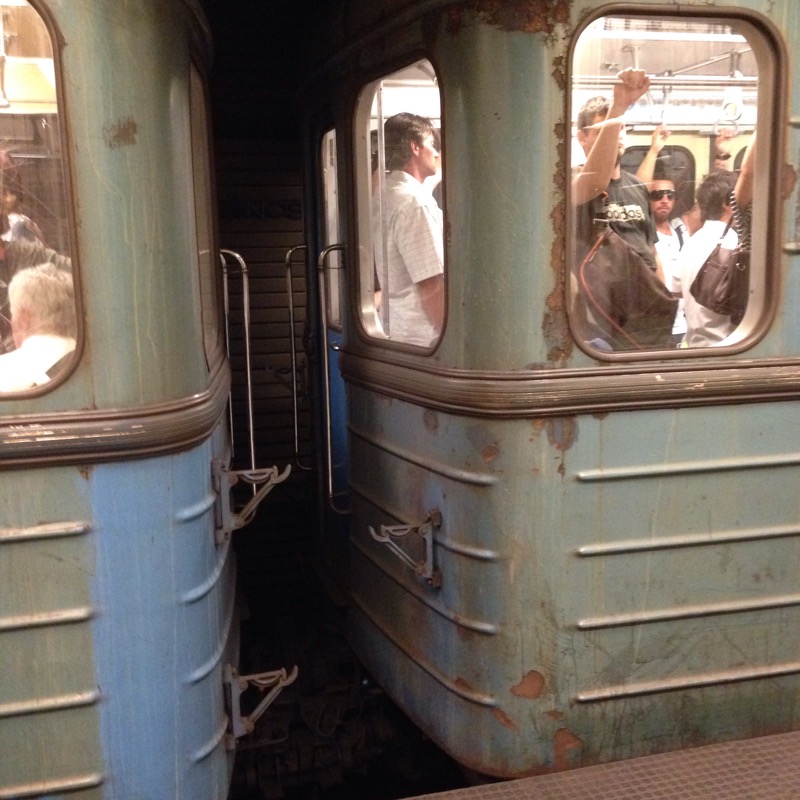
In our sweet smelling fashion wear we headed into the big city feeling , yet again, like rubber necking country bumpkins as we unfolded our flapping street map and craned our necks toward road signs. We struggled to make sense of the metro system but did eventually manage to by a load of tickets and get on a train. Budapest was the second city in the world to have an underground and some of the rolling stock seemed a bit antiquated.  

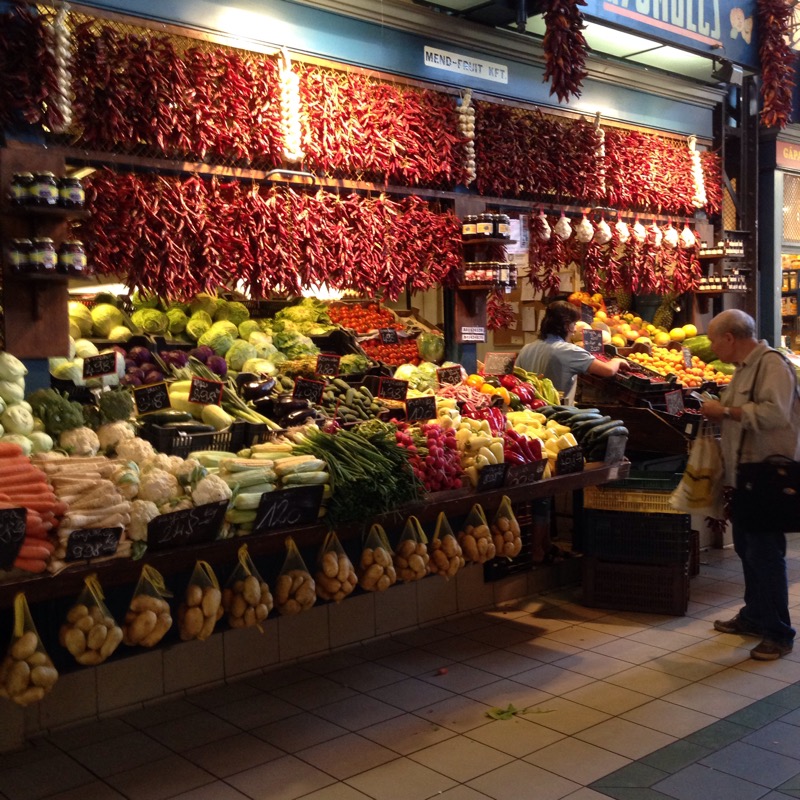
 Our first port of call on a limited tourist trail was the splendid indoor market, giving away our weakness for gazing at fruit, veg and meat.  

   Sorry about the macabre display but all body parts were on offer here. We found some special breed of hairy free range pig and wild venison. 

The building was designed by Eiffel of Paris tower fame and had an impressive iron structure.  

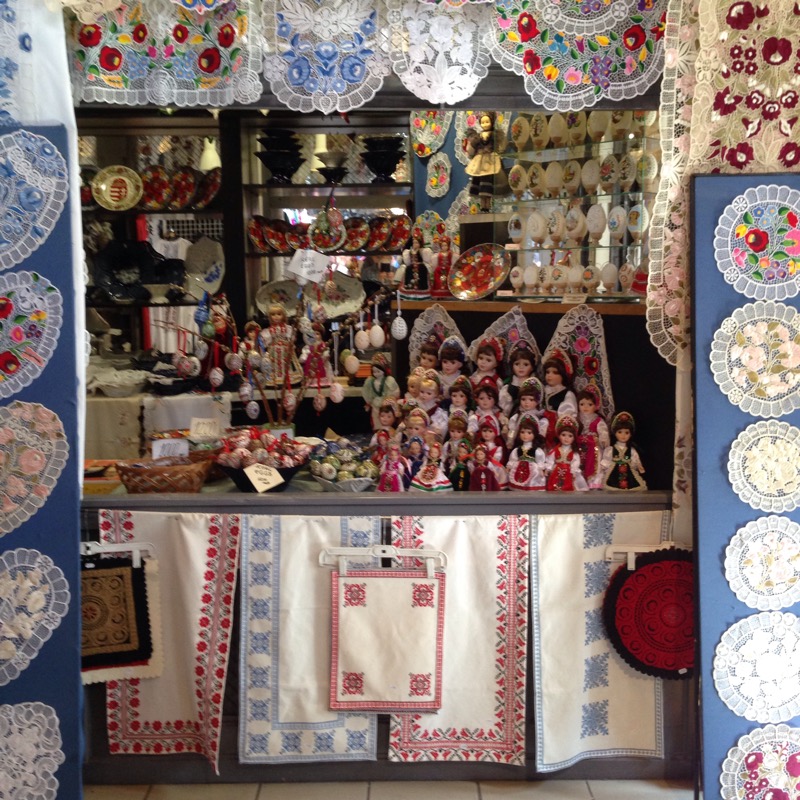
 Upstairs was crafts and souvenir tat.  

   Including some very inferior (to the master Andreas Edler) sand pictures 


In a city with more public transport options than most with the metro, buses, trams 

  and boats  

 we continued to walk, often against the flow of cyclists who seemed to be even more prolific than in Holland.  


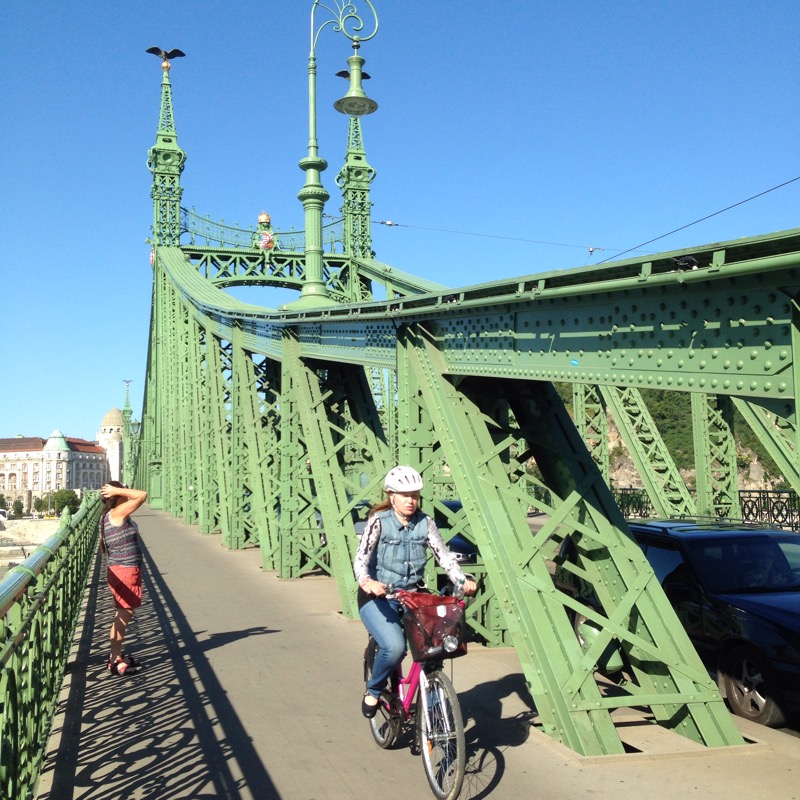
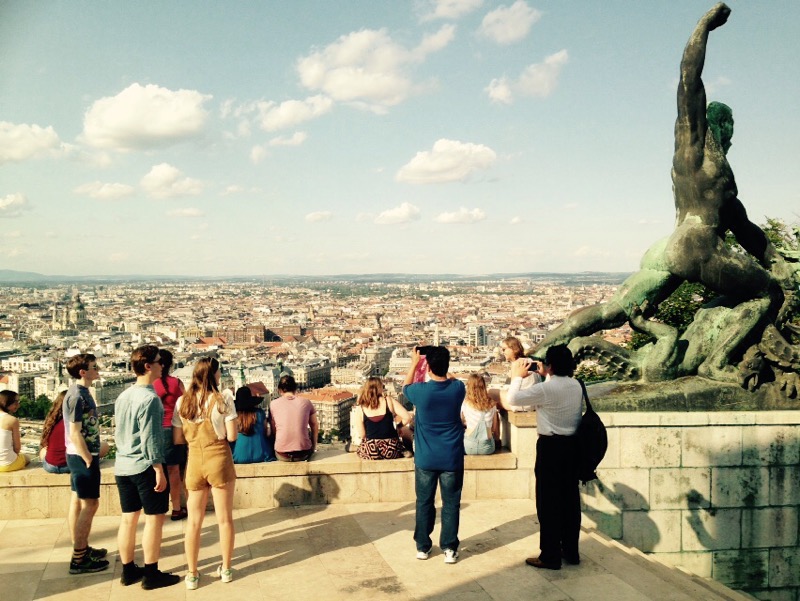
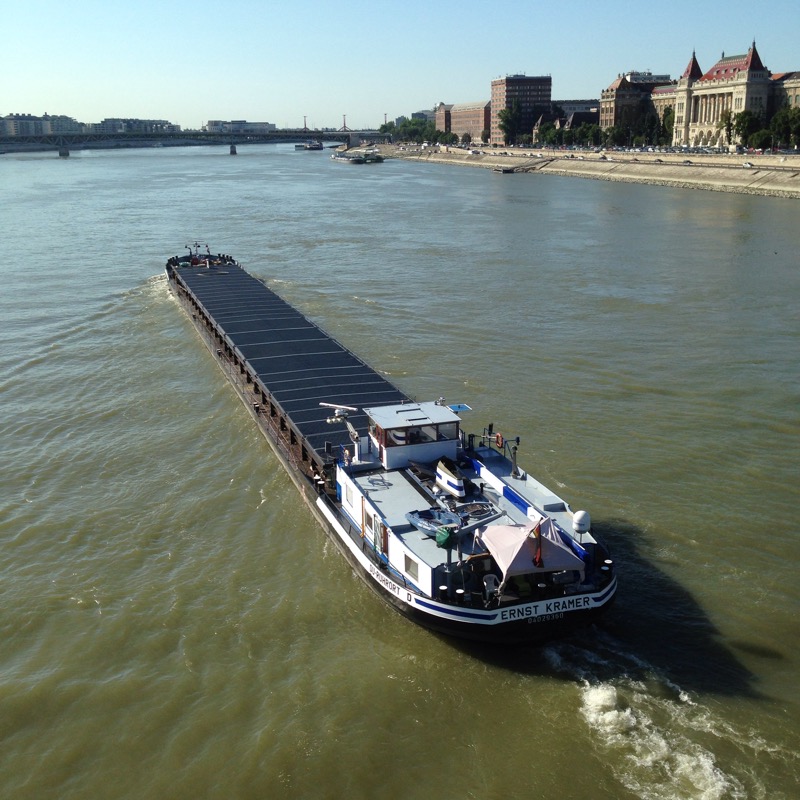
We crossed the mighty Danube from Pest to Buda and climbed Gellert Hill to the Citadel for a panoramic view of the city.  

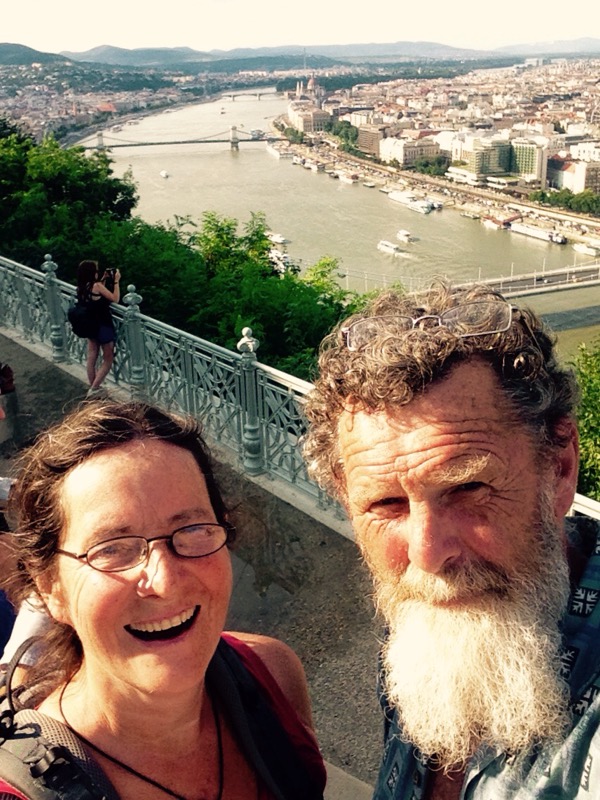
  It was rewarding to find ourselves overtaking the other sightseers on the way up as our well honed muscles barely noticed the effort. Selfie time !  

 Returning to river level we checked out the location of the thermal baths at the swanky St Gellert hotel for the morning and used the metro like old pros to get back to the washing machine. 

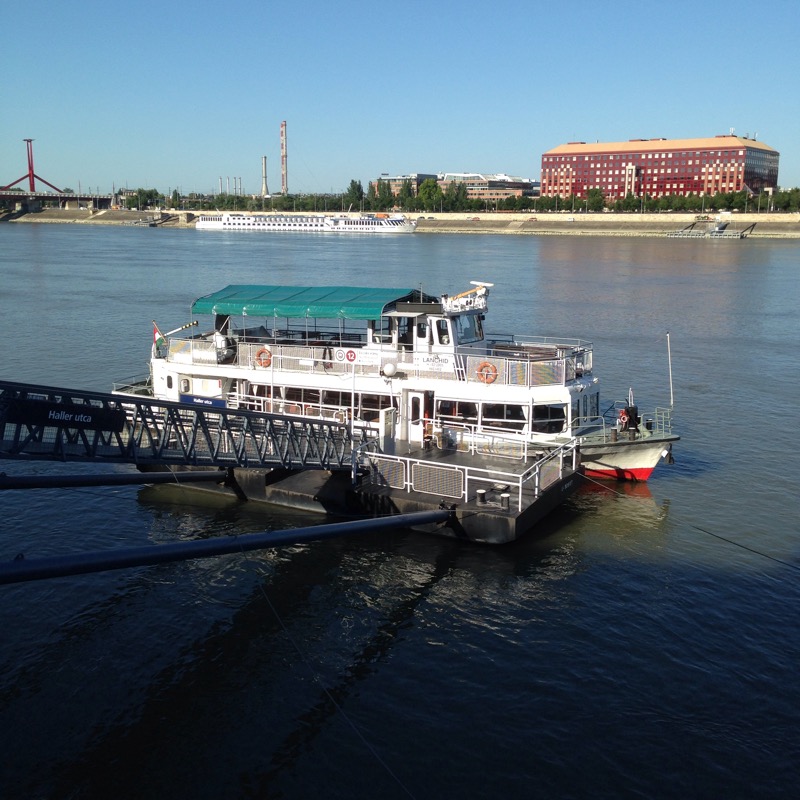
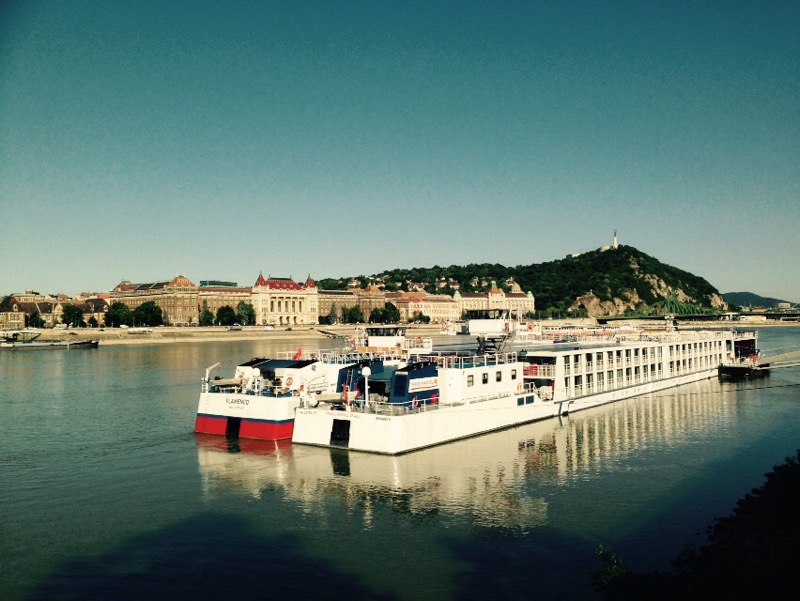
The baths opened at 6 but there was no persuasion that could convince my fellow traveller to rise that early. In fact after deciding to go by boat we arrived at the river at 8 to discover they don’t start till 8.30. So we walked,again, only to watch the boat go past us as we neared the hotel. Still it was a nice riverside promenade past the river cruise ships that come and go from Switzerland to ? Don’t know where the Danube ends.  


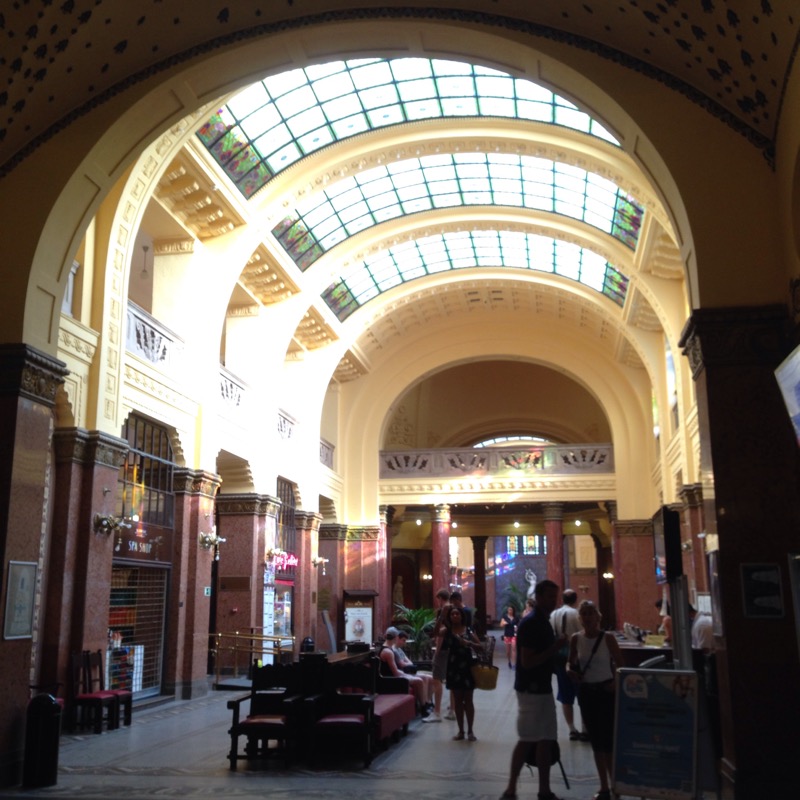
Anyway the baths were well worth any walk. The whole grand edifice was an architectural wonder full of light and colour. The lobby alone contained huge vaulted ceilings  

 and ornate stained glass 

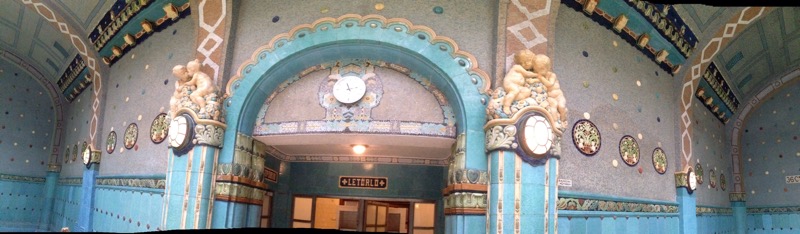
 And fantastic detailing on the plaster and tile work.  


A labyrinthine system of tickets, lockers, cabins and corridors took us finally to the Art Deco splendours of the multiple pools. Indoor  

 and outdoor  

 and a half dozen of various temperature from oooh to aarrh. Whatever minerals were in it felt very good and floating about gazing at the mosaic ceilings seemed like the best kind of sightseeing.  

     And then there were the steam rooms with different scents and the series of ever hotter saunas and the icy cold plunge pools for when you couldn’t take anymore. We were getting seriously clean, at last a match for our freshly laundered clothes, but to finish things off I couldn’t resist the bidet room with industrial style equipment to ensure total hygiene inside and out. Now I know why we need a new bathroom. 

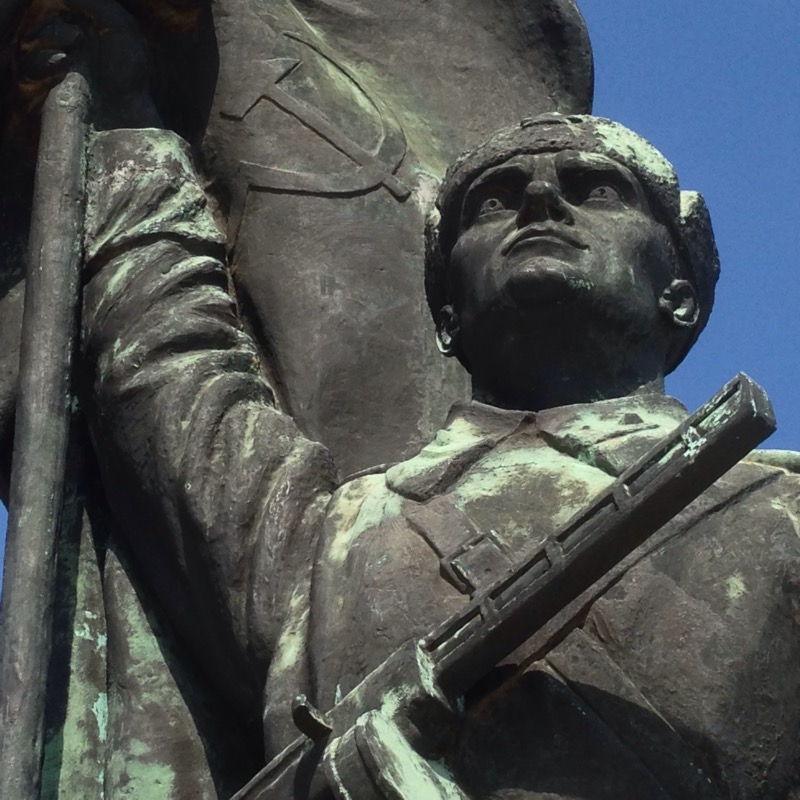
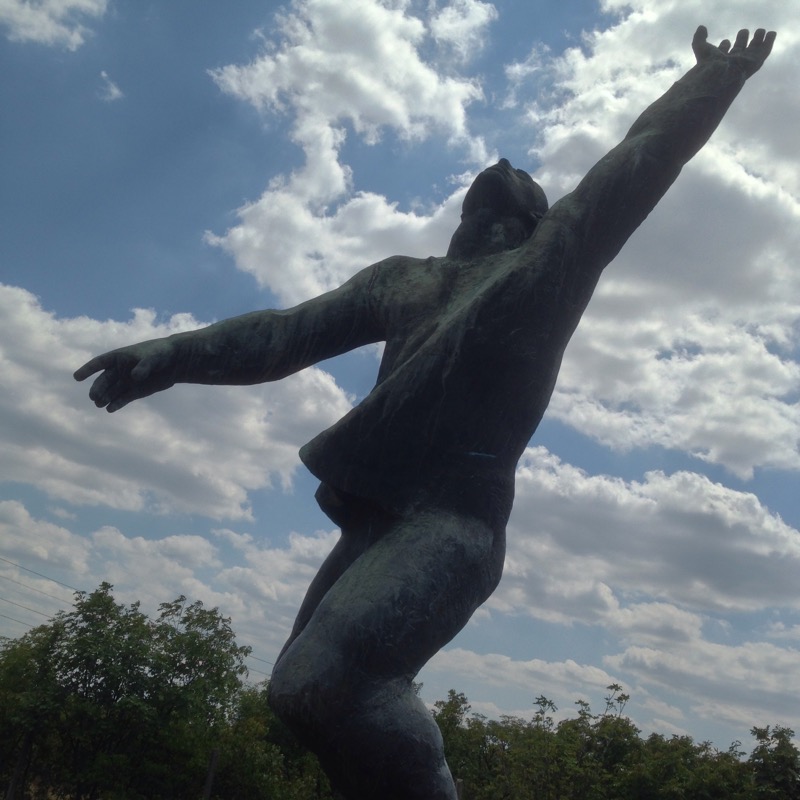
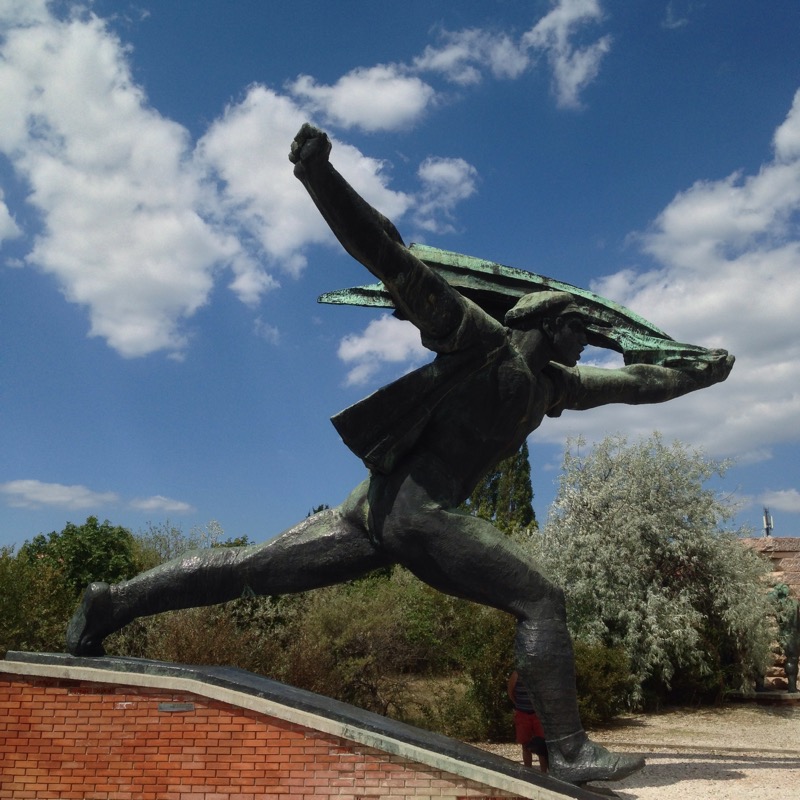
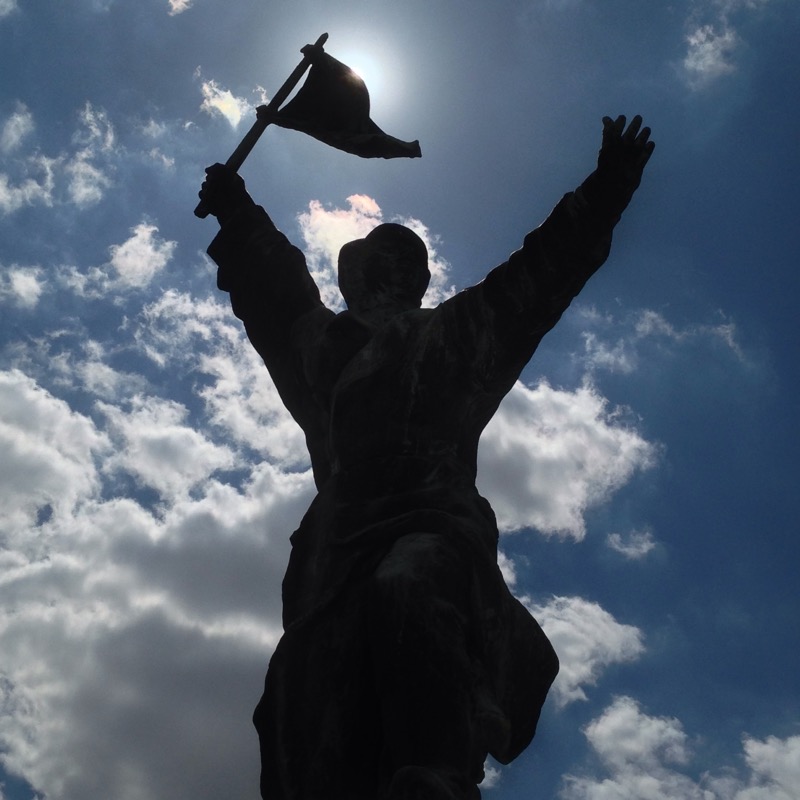
After a successful boat and tram ride back to camp we got the washing in and drove through and out of the city centre with Serena guiding us to Memento Park, a bizarre collection of gigantic statues from the communist dictatorship set up in a parkland in the suburbs. Displaying the might and worthiness of the Soviet worker and party member, the heroism of the Red Army fighter, these testaments to the collapse of the Iron Curtain now seemed rather pathetic.  

   Some were undeniably powerful pieces of art.  


 And some , like Stalins boots, are an ironic symbol of freedom from oppression.  

 The boots are all that’s left of Stalin after he was pulled off his pedestal during the Hungarian Revolution of 56, a sad affair that saw thousands dead, imprisoned and exiled in the Soviet retribution that followed. We learnt a bit about it in a gloomy barrack building next door that featured a plaster cast  

 and showed a movie put together from Cold War spy training films. The Hungarians are reputedly the gloomiest of nations and the more we find out about the history the more we have to sympathise. 

We’d heard there was an agricultural museum near by and being the thrill seekers we are we programmed Serena to take us there. It took a while to find the wrong place but we finally did it. Turned out to be a crumbling old Manor House/ castle that now housed a collection of furniture from the 17th to 19th century. Ok on a limited scale but this place  had room after room and we were outnumbered by attendants desperate for visitors by about 6 to 1. It was spooky the way they gathered and followed us and we felt it was impossible to escape until we had “enjoyed ” every room. 

A sigh of relief as we studied the final exhibit and fled to the van and 100km later Lake Balaton. 

Everybody in Hungary goes to Lake Balaton this  weekend apparently. Traffic jams, no dog signs, pay to enter beaches and hordes of people aren’t really our thing so after been turned away from two campsites we headed for the hills and forests again and found a nice little park up on what looked like a tank training area. Much more our style. 


THE GRAND TOUR: SLOVAKIA / HUNGARY 6/7/8th JULY

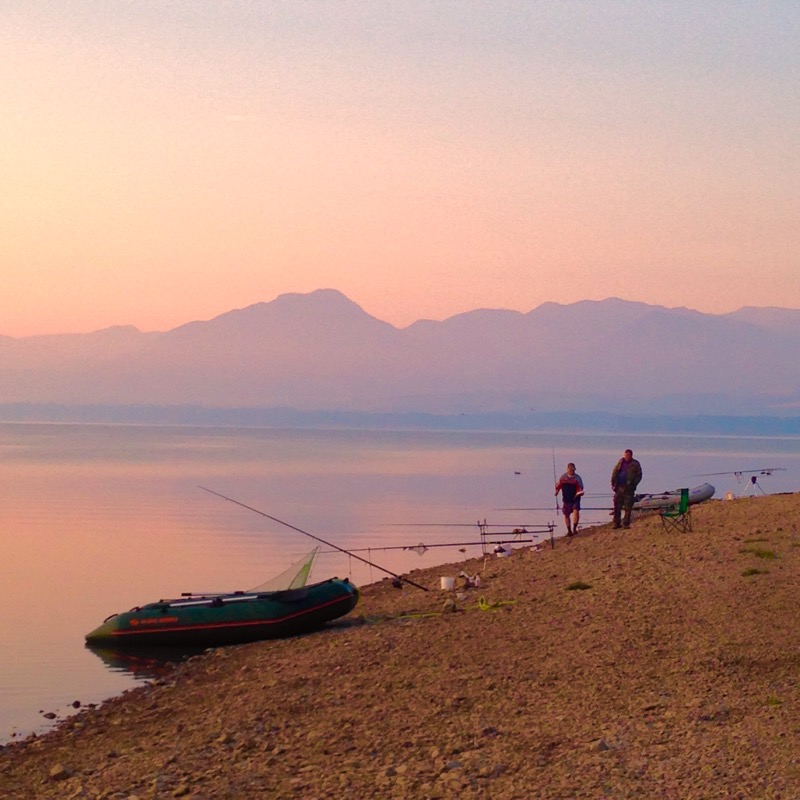
We shared the shores of Liptovsky Mara with a mixed bag of free campers. There was a gang of hard partying youth celebrating the saints  day holiday with drink and a mix of techno/folk chanting and cheering in a well behaved way till about 9.30 when they politely turned off the pumping sound system. There were some families with kids out for the (hot)day. There were a lot of serious fishermen with lots of gear and multiple rods and inflatable dinghies with electric motors who were constantly on the case, catapulting bait, checking lines, throwing nets, putting out floats, motoring and rowing around, and reeling in a lot of poor stressed fish that then got released again making the whole operation a bit pointless to me. And in the middle of it all a couple of young lovers oblivious to everything around them cavorting and pawing and giggling on the beach. 

It was a nice place to wake up and very tranquil in the early morning light.  

 The fishermen were already at it, working their books as they floated through the mist rising on the water.  


The whole day was spent in camp watching the goings on and providing some entertainment ourselves by putting up all our shades and windbreaks with a complex system of lines and pegs, fiddling around with them and taking them all down again. We did a lot of swimming to cool down although as the day went by the water seemed to heat up and the slight algae green hue began to deepen and by the evening the lake had begun to resemble a soup that I didn’t think was too good for all the nasty swollen bites I’d been nursing for a few days. 

We were heading to the Lesser or Lower Tatry mountains the following morning and a bit of googling came up with some healing water thermal and mineral spa pools on route. So our first port of call the next day, after a finely executed shopping raid on some superstores, was the lovely little town of Lipovsky Jan with its mosh mash of old style buildings  

     and it’s free amenity park and pool. 

  The water was only slightly warm but bubbled up through a pebbly bed with a sulferous odour and a bit of a sting but I convinced myself it was good for my legs quite successfully cos they’ve been much better since. 
Sally got to share the central bubble pipe with a bunch of friendly laughing locals who had no qualms about getting up close and personal but didn’t wholeheartedly recommend the experience so we headed for coffee in a quirky little cafe stuffed with stuff. 


Feeling suitably healed and refreshed we headed for the hills. And what hills they were. They may have been the Lower Tatras but the steep climb proved too much for poor old Tranny who was spitting boiling water and gasping and wheezing by the time we reached the restaurant at the pass over the top. Nothing for it but to have a bowl of hearty Farmers cabbage soup  

 and some Stray sheep, which turned out to beaming of cheese filled dumpling – sort of, while we let her cool down and hoped we hadn’t burst or overcooked anything. 

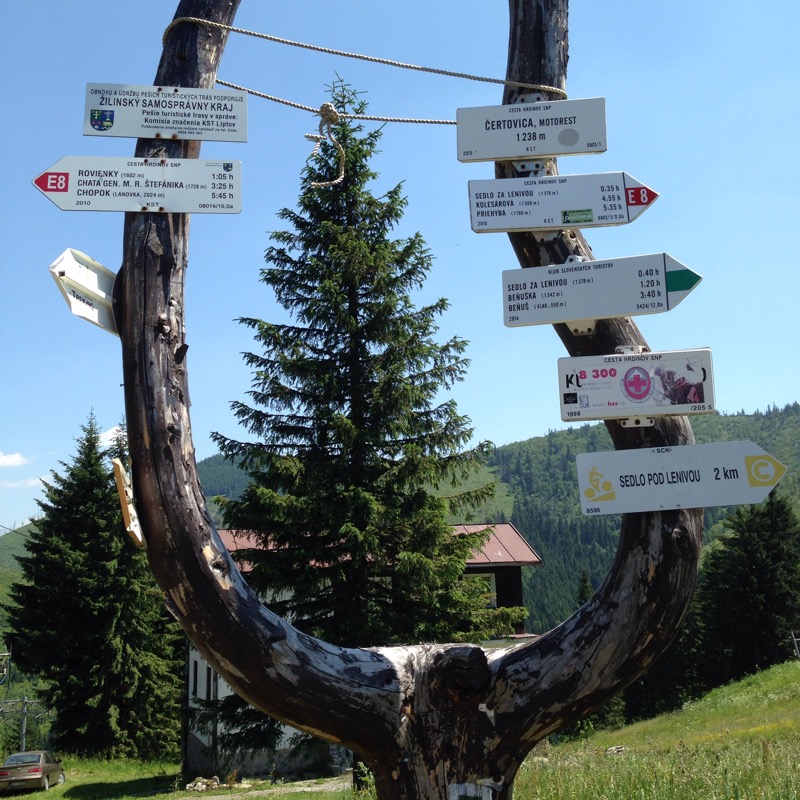
I’d read recently about a couple of Irish lads who had hiked the ridge of the Nizke Tatry where we were on a leg of the E8. The E8 is one of those long distance European trails that intrigues and tempts me 

 this one especially so because it starts on the Atlantic coast in Co.Kerry ( and ends in Istanbul a good while later). I felt compelled to walk a little on a path that led all the way home so we made a symbolic few steps on the ridiculously steep track.  


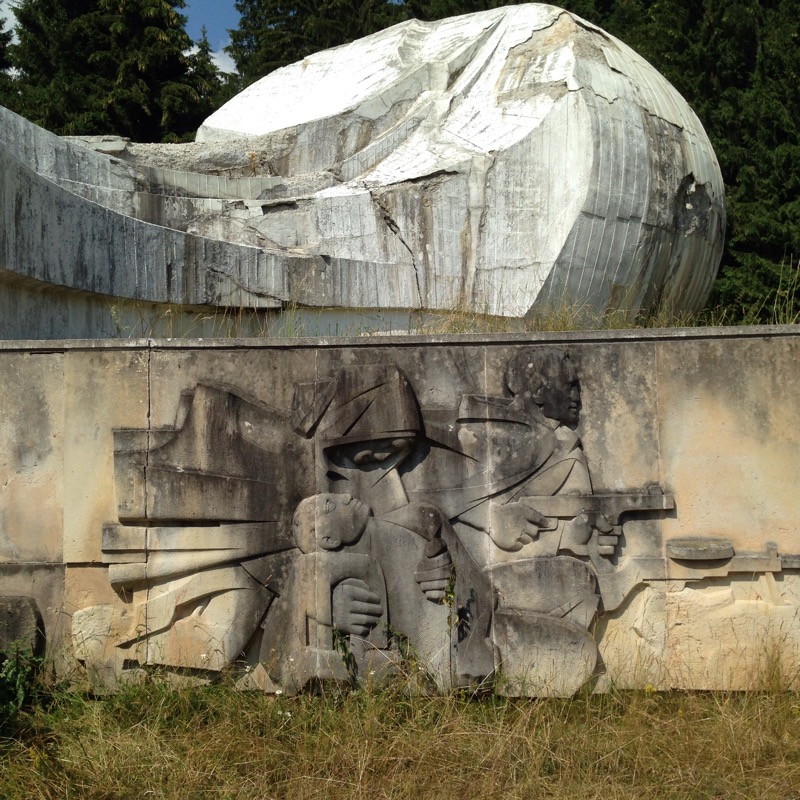
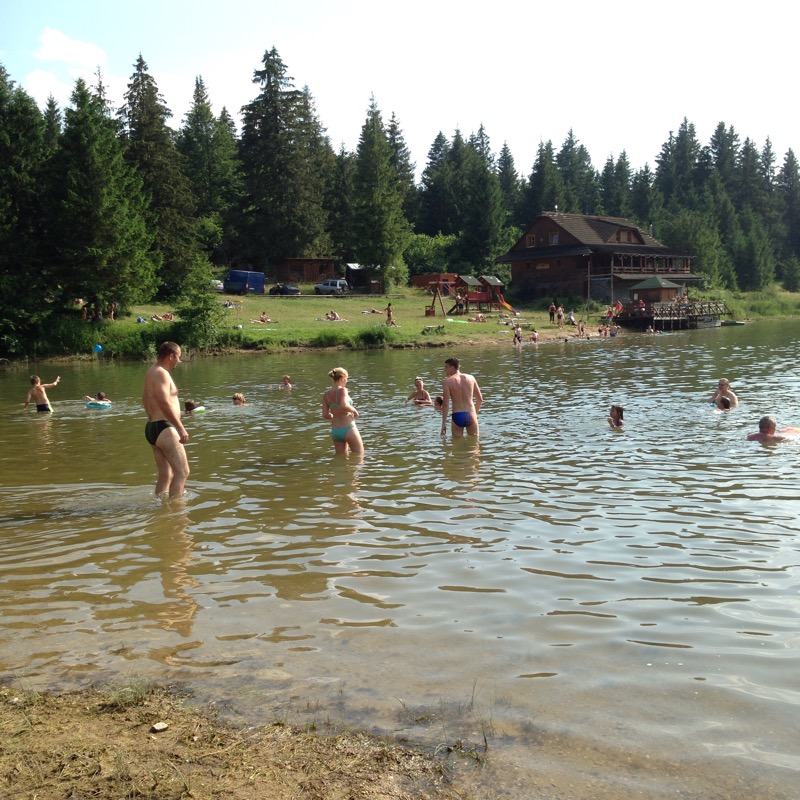
The midday sun was really beating down so we retreated from the E8 and set off again in search of cool water to immerse ourselves in. We had the name of a lake or resevoir on the south side of the mountains at Krpacovo and Serena got us there but we couldn’t see the lake. The next hour or more was spent wandering the tracks looking for it but all we found was a bizarre  Soviet monument that had been smashed up at some point.  


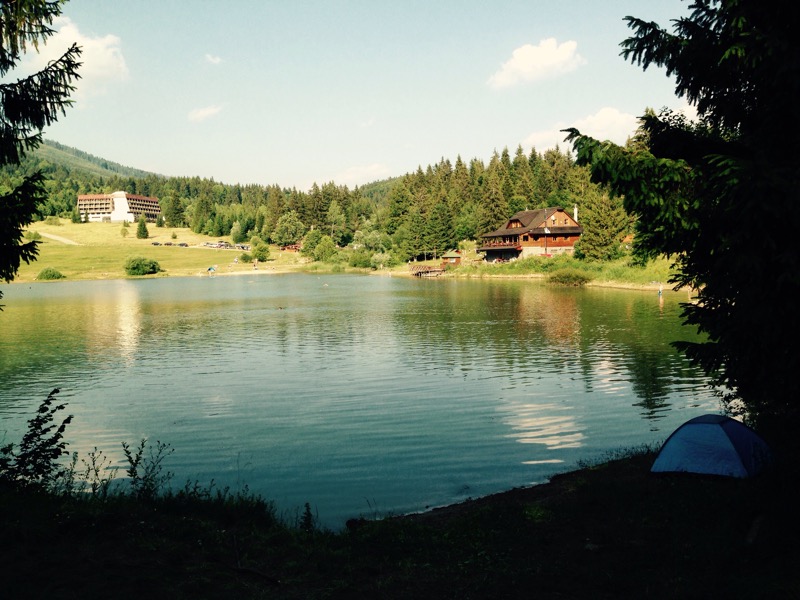
We had more or less given up and were driving away when I spotted the water through the trees below us. It didn’t take us long to get in with the rest of the cool seekers.  

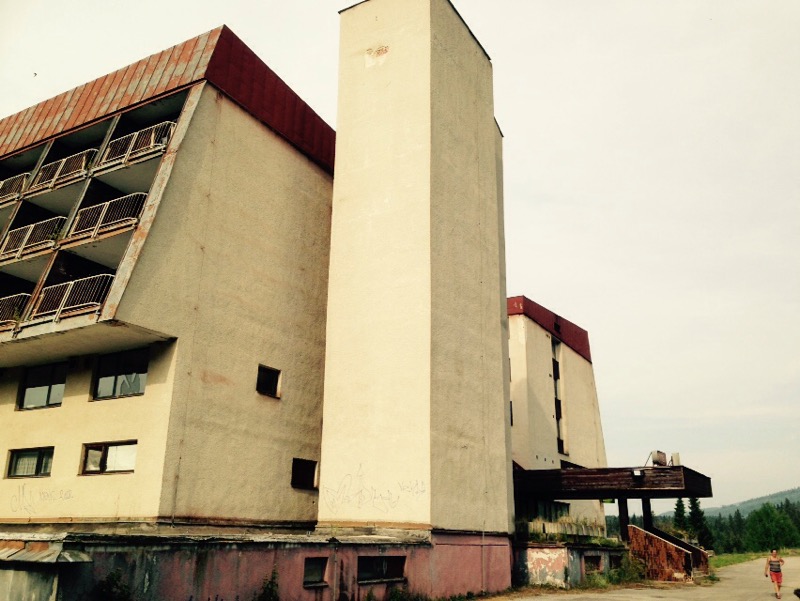
 There was another imposing ruin here too. Overlooking the lake was the huge bulk of a brutalist block of ,I guess, more Communist era leftovers.  The hotel from hell.  

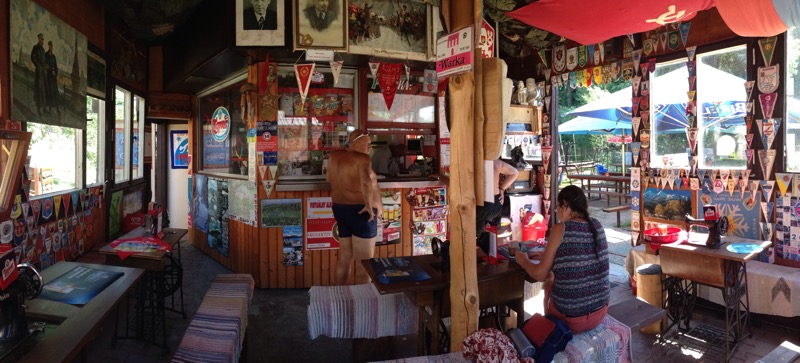
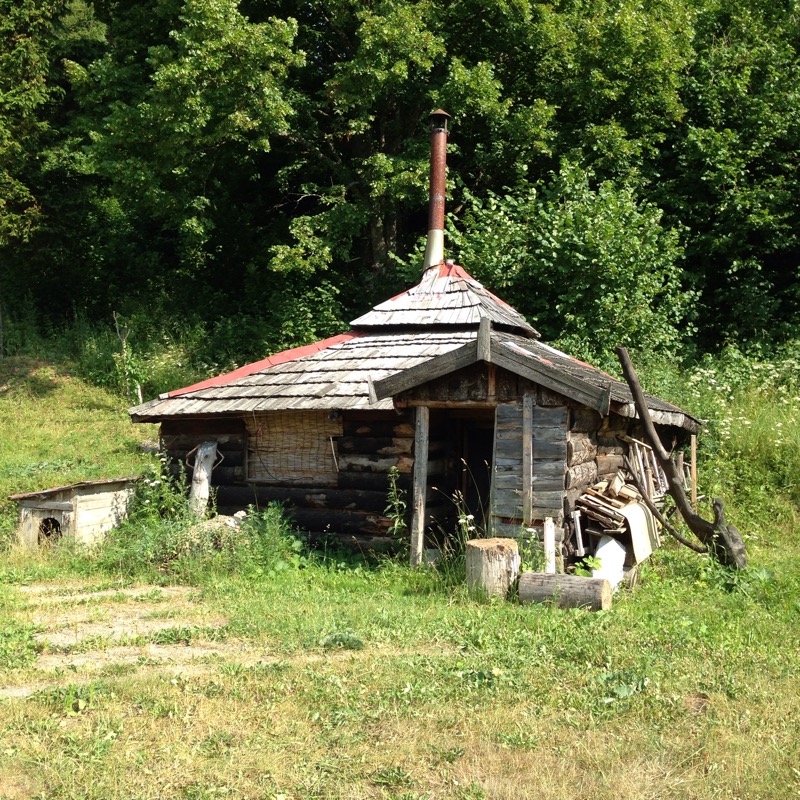
  but down around the shore it was a different story with a funky little bar and a collection of what looked like DIY dwellings.  

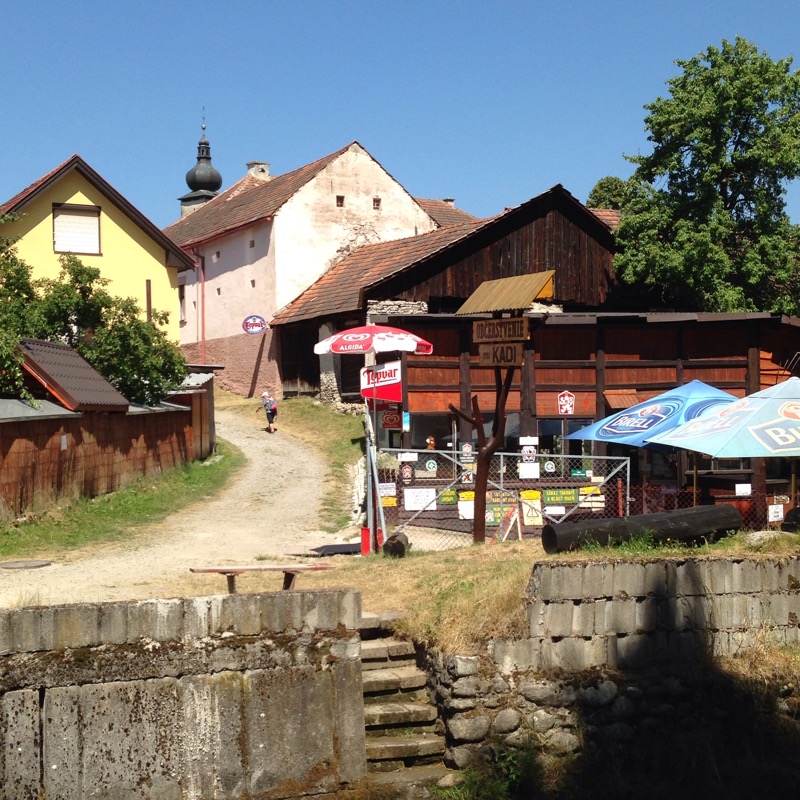
   Also on the lakeside was a wooden “kobila” or restaurant that said we could park up there for the night.  


An early morning swim in the now deserted lake and it was time to pack up and drive out of the mountains onto the main roads and down to the border. Goodbye and thank you Slovakia, hello Hungary. 

We’d heard that this crossing can take time with paperwork but it was fine, we just had to buy a vignette for motorway driving. 

It was less than 100km to Budapest but there was a national park we knew of some hikes in so we turned off onto minor bumpy and potholed roads and headed past the sunflowers and into the oak and beech.  

 There is still a little forest railway line no longer for transporting the lumber but now people who want to come out into the woods. There is as a stop at the bar we had coffee.  

 Concerned about the heat we were only delighted to discover an outdoor swimming pool and made the wise decision to hang out there till things cooled off.  


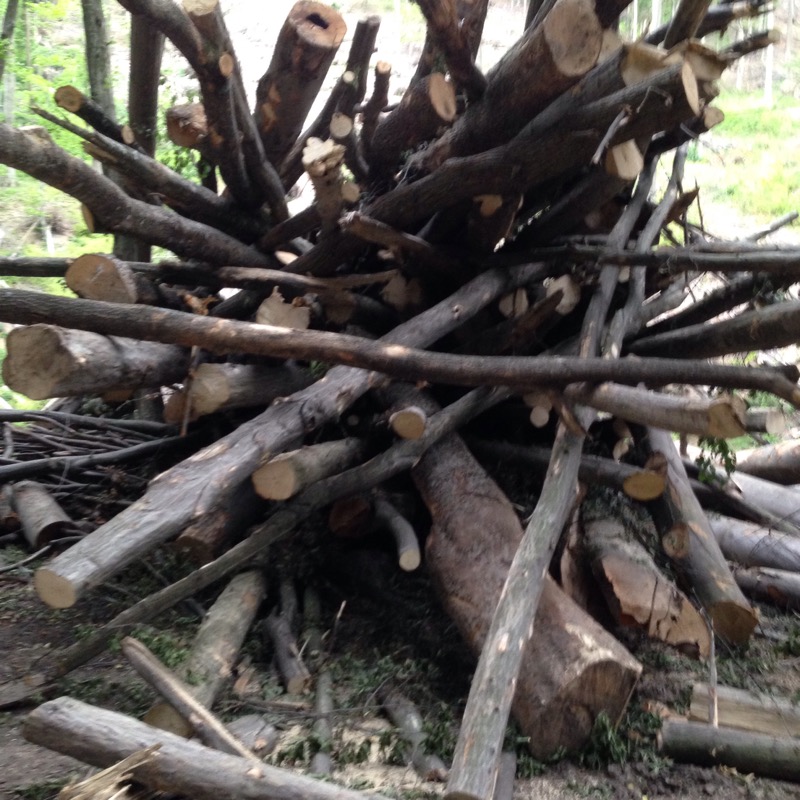
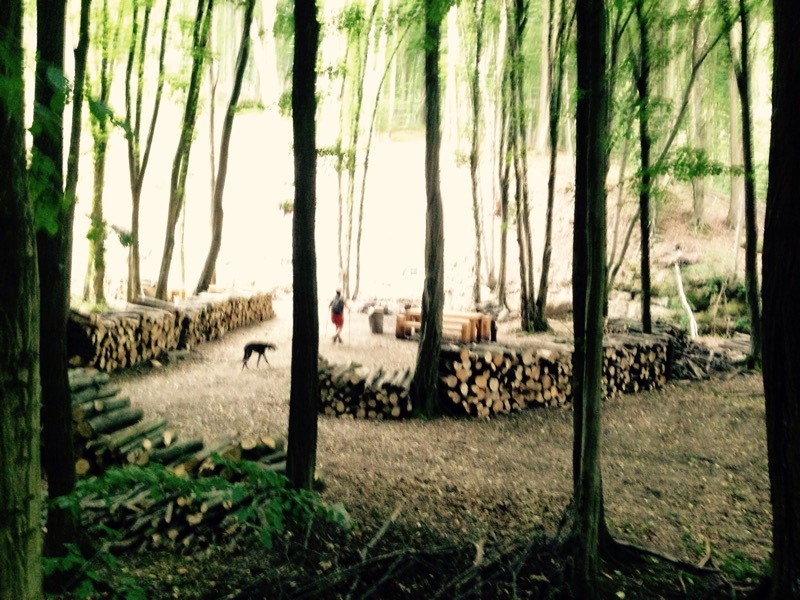
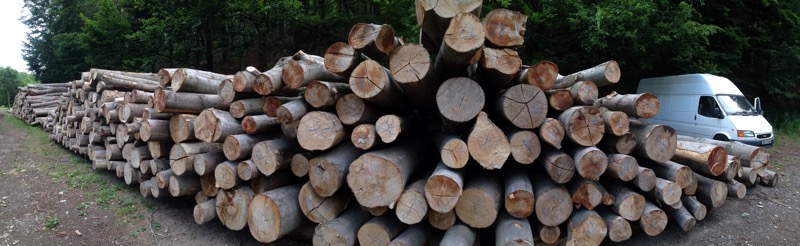
 Eventually it did cool off. Cloud was building and we knew a thunderstorm was forecast for later so we headed further into the forest for our walk. On the way we passed 1000s of tons of harvested timber in neat stacks beside the road. I know I’ve gone on about timber a  since Germany but this was unreal. The next couple of hours were like being in the dragons lair filled with gold for someone whose fuel is wood. It turned me giddy and lightheaded to see so much of it.  

 We passed a nice little spot with a well and picnic tables and benches and a fire pit. And , of course , some timber for the fire! 

 There were guys in there sawing and stacking and we past their camp.  

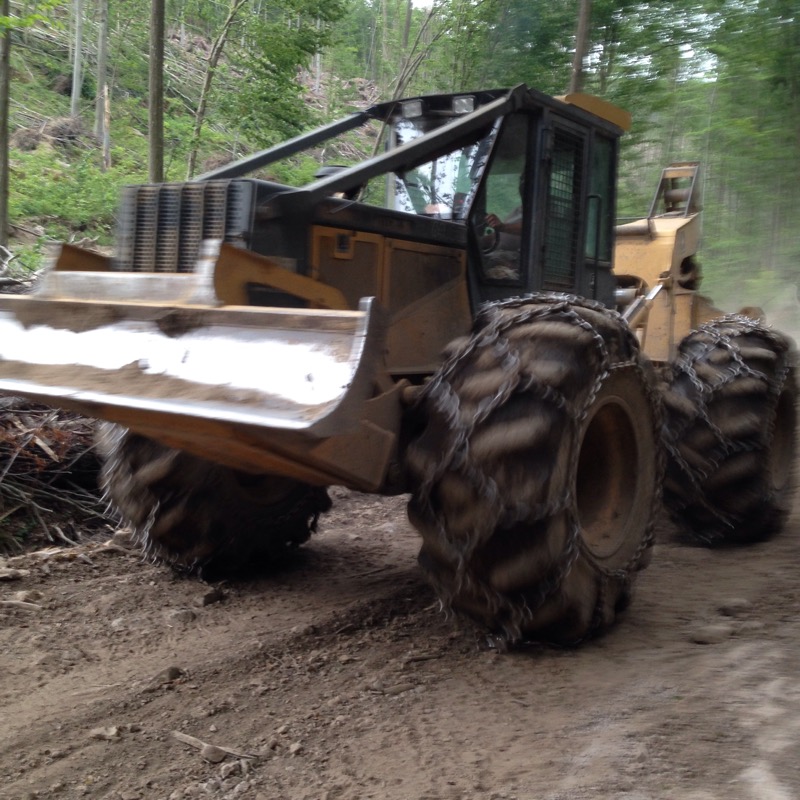
 The skies were darkening and it felt pregnant with rain. The track got rough with machine tracks and the. They were upon us.  

 Big stuff dragging big stuff.  

 We were in the way.  

 So with thunder and lightning starting to rumble and flash we returned to the van, arriving as the first fat drops dampened the dusty trail. Time to batten the hatches. We drove a bit further to find a park up and ended up in the shelter of trees beside a sea of timber.  


THE GRAND TOUR:SLOVAKIA 3rd/4th/5th JULY

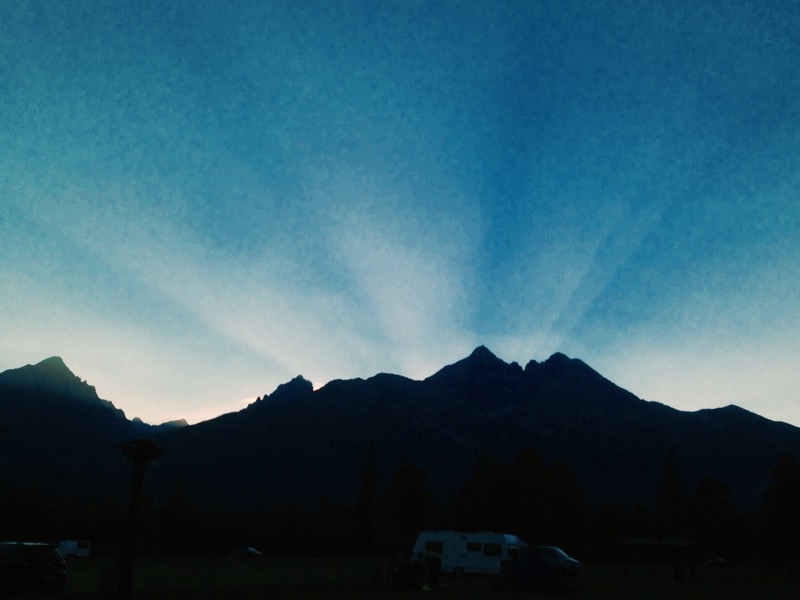
A beautiful clear sky led to an impressive sunset behind the mountains in the west while a fat full moon rose out of the forest to the east.  
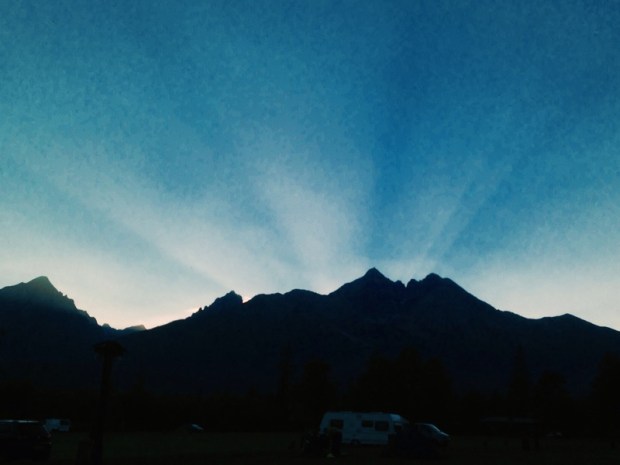
 

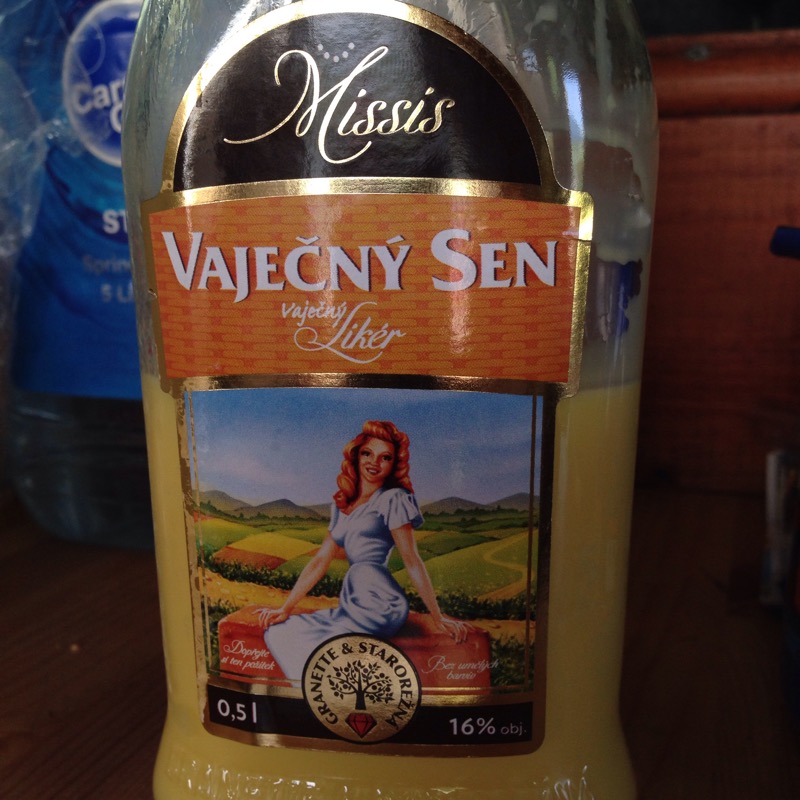
I sat outside the van, sipping on my bottle of Missis ,  
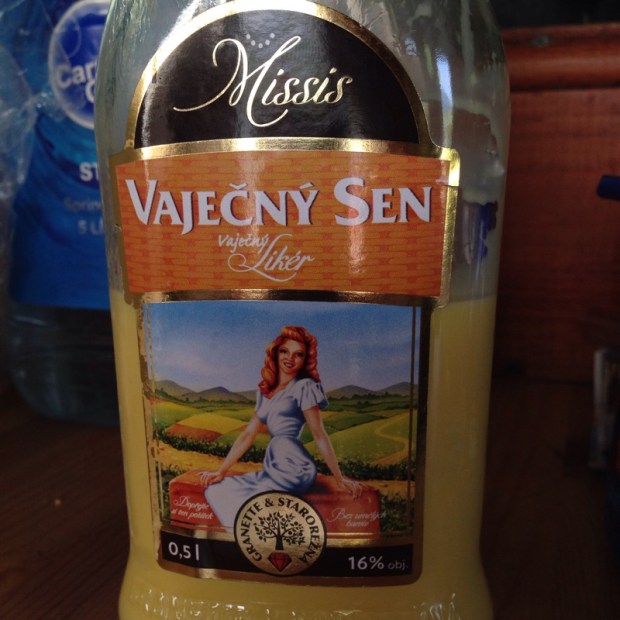
  a Slovakian version of Baileys and was suddenly surrounded by tiny twinkling fire flies. I didn’t know they lived in Europe but was entranced by their darting flights of light. 

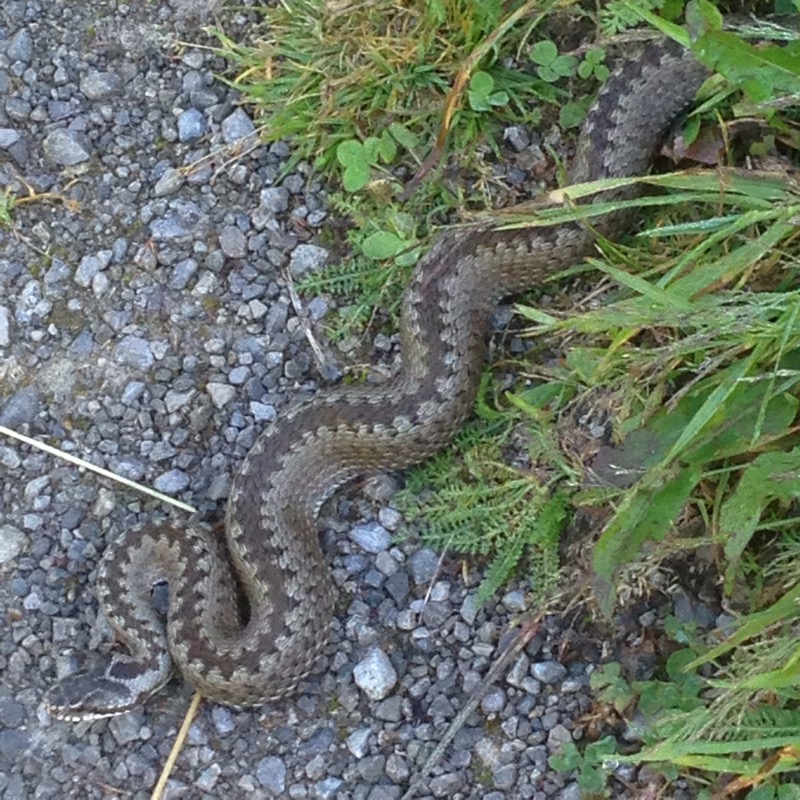
In the morning more surprises from the natural world when I took the dogs for their early morning constitutional. We headed off down the trail out of camp far enough for the job to be done and we’re heading back when I instinctively jumped over something on the track. Looking back I saw. …

  An adder I think. Luckily the dogs didn’t even notice it as they past. I’d say it was pretty inactive in the early morning chill but didn’t hang around to find out. In hindsight I should have caught it in a forked stick and brought it back for my women to skin and cook for breakfast. That would have got me in the good husband books. 
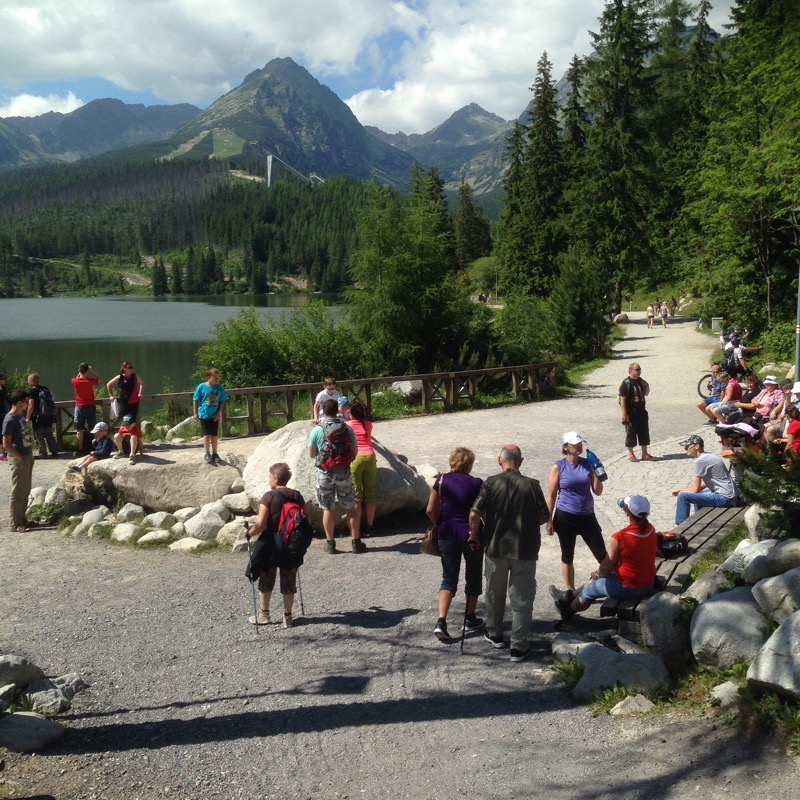
We’d promised ourselves a “day off” and Sally fancied a night in a bed after a month in the van so a bit of googling came up with a place next to the ski lift we wanted to take for our next hiking/scrambling adventure further west down the range at a place called Strbske Pleso. It a popular ski and hiking resort and with the national holiday weekend coming up to celebrate St Cyril and St Methudious the place was fairly heaving in the hot sun.  


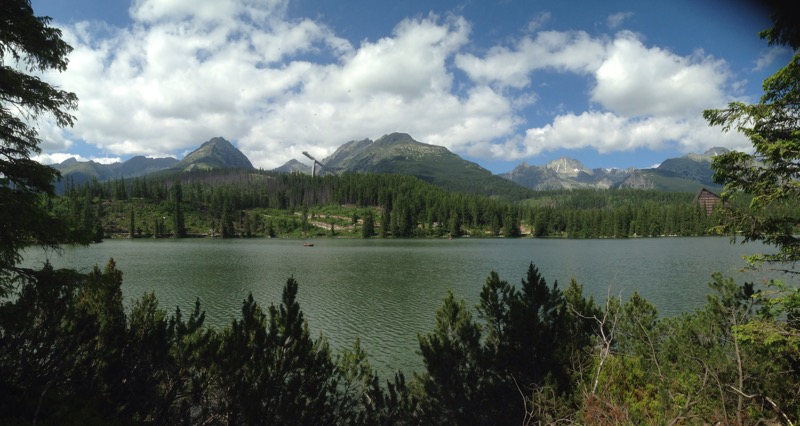
We did a stroll around the big lake, our hike for the day, and eyed up the mountains we were going to be tackling the next day.  
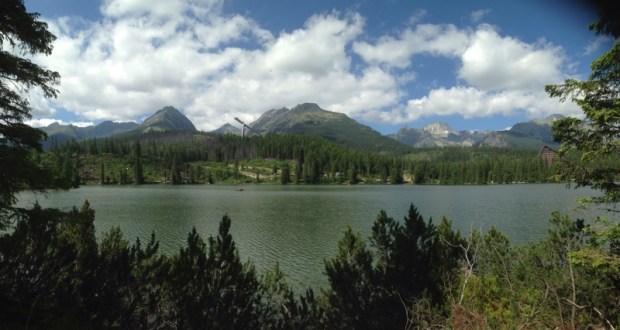
 

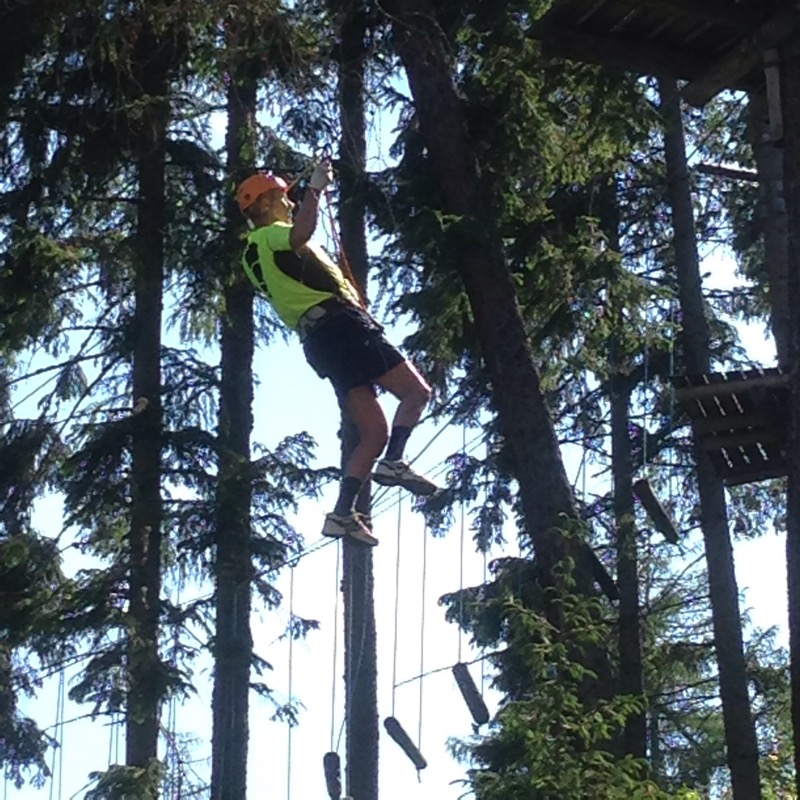
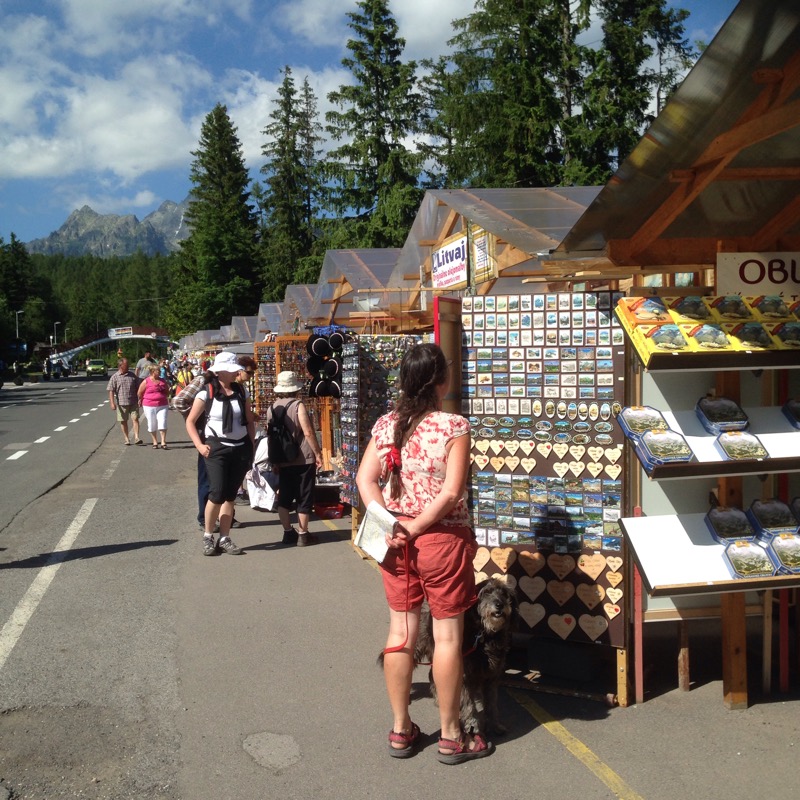
There was all sorts of tourist stuff going on to entertain the crowds like tree walking and souvenir buying.  


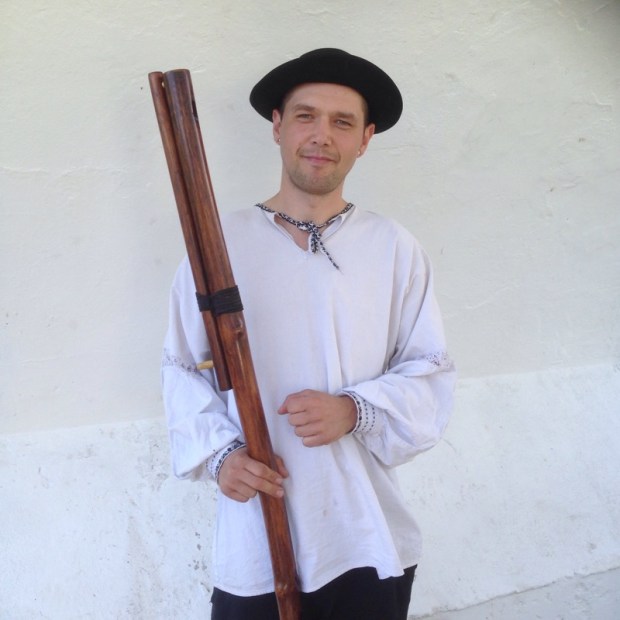
 We came across a charming young man in traditional dress playing a strange wooden instrument that was a bit like a tuneful didgeridoo.  
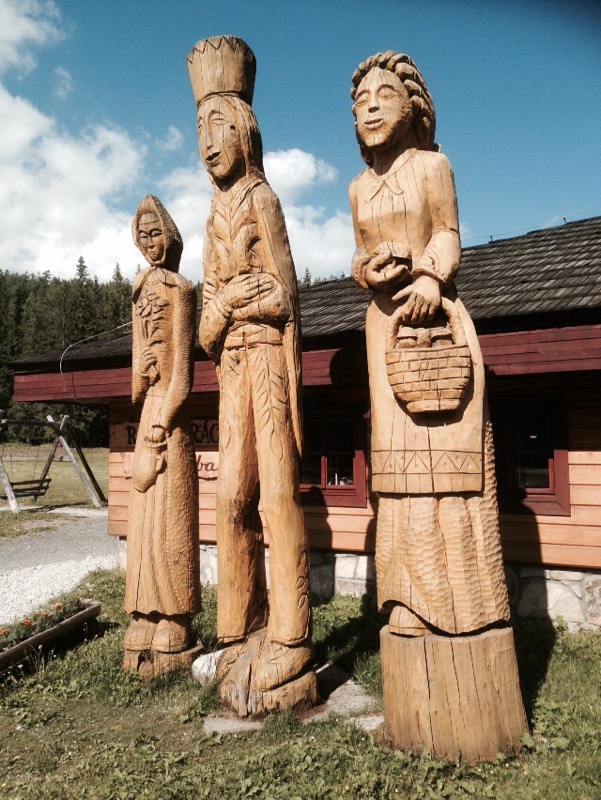
 Outside a restaurant some more ideas for my scots pine trunks at home.  


The hotels were a weird combination of grand old style lakeside 4 star  and concrete communist blocks. Ours was the latter.  
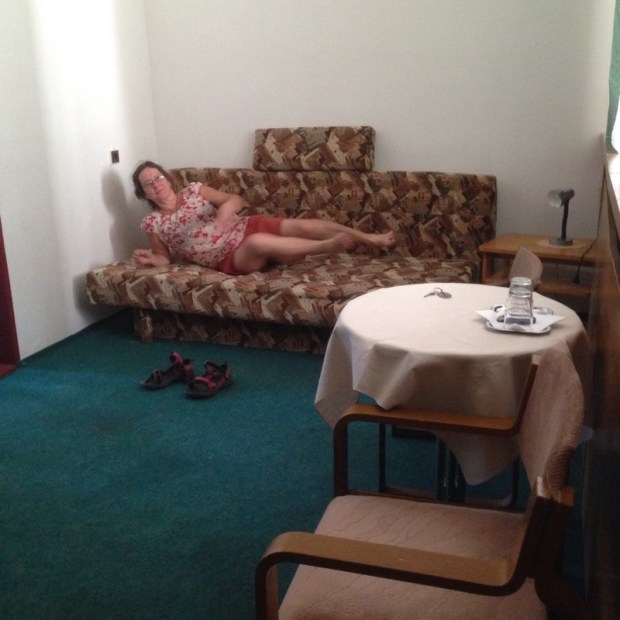
 We had a ” bungalow ” out the back that was pretty shabby but dog friendly and the hotel building had an amazing ” wellness centre” that we spent a good while in reviving muscles for the work ahead. Three different saunas, nice jacuzzi and a chill out room with beds, and the first place I’ve seen NO CLOTHES signs with a pair of crossed out shorts. 

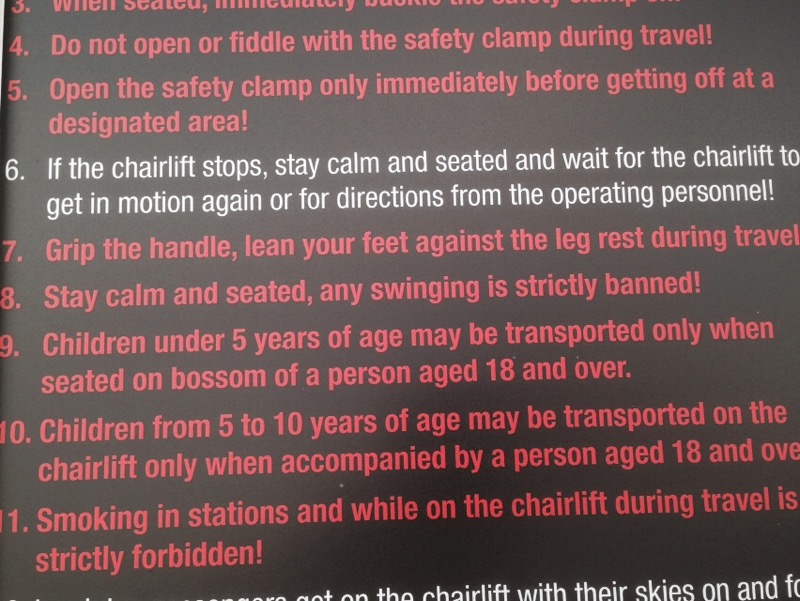
To finish the day we went to have a look at the chair lift we would be taking up to 1800m in the morning. The sign told us what to do if it stopped working.  
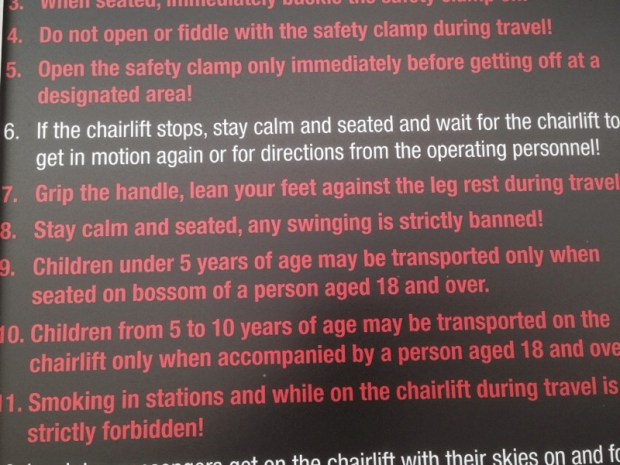
 It also told us we could take well behaved dogs if we held them tight but there was no way our boys could cope with that experience.  

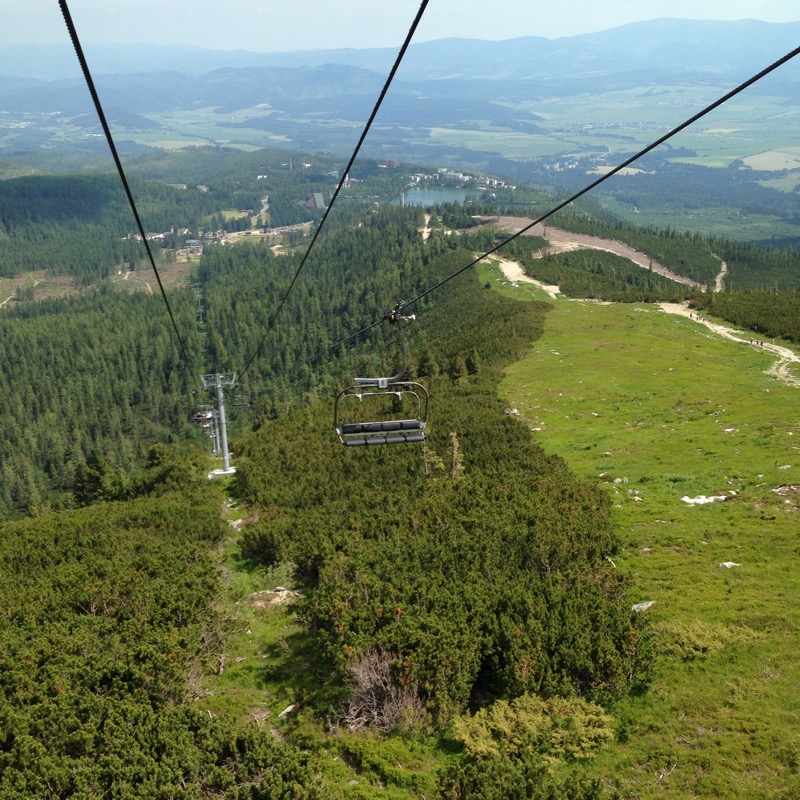
The morning saw us on the first lift up, a fairly thrilling and surreal trip as we glided nearly silently through the treetops and then high above them. 
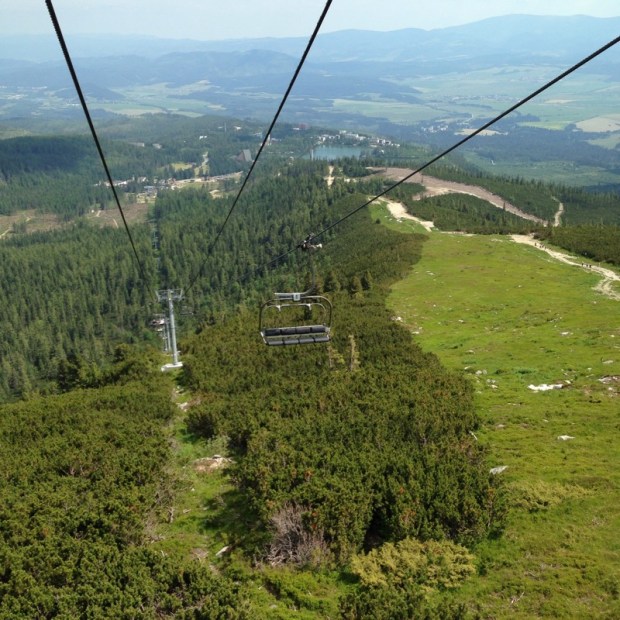
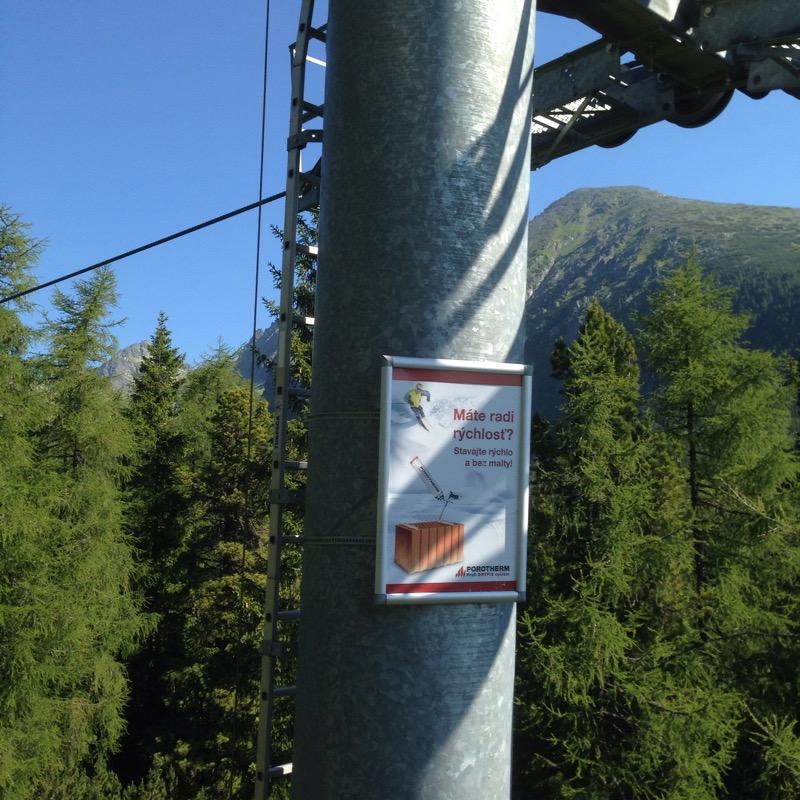
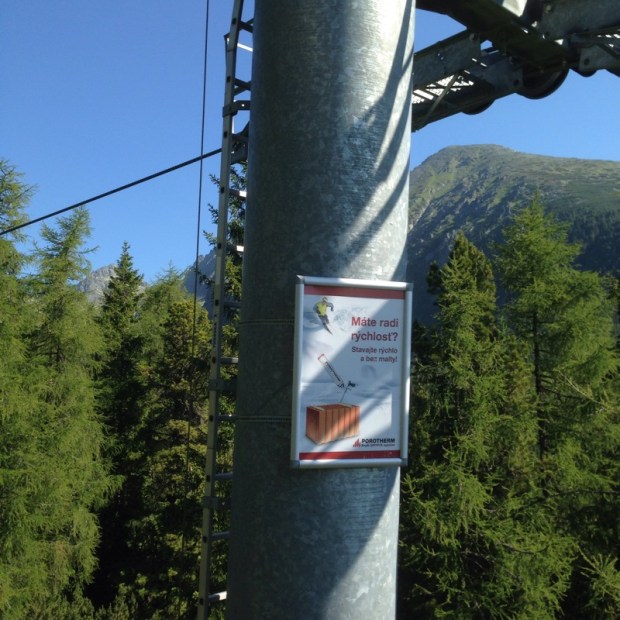
  The ex communist state has embraced capitalism to the extent that the chair lift pillars had adverts to peruse as you slide by.  
 We were soon on terra firma again looking back down to the resort below.  


We started off with a climb to the 2120m summit of Predne Solisko which was lined nearly all the way with well laid stone steps.  

 The work put in to track making has been stunning and has saved these well walked paths from a lot of erosion.  

The views from the top were 360 and we could see the valley we were heading up next threading its way deeper into middle of the range.  


So it was back down to the chair lift where another path lead us across the face of the mountain to meet yet another path  
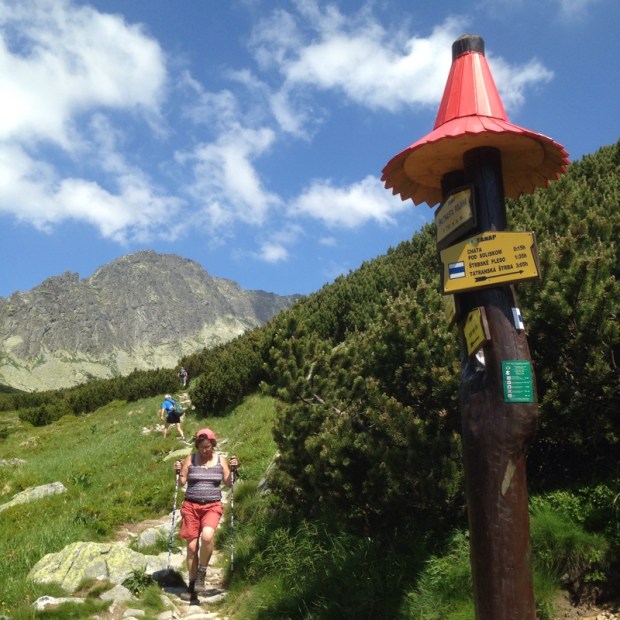
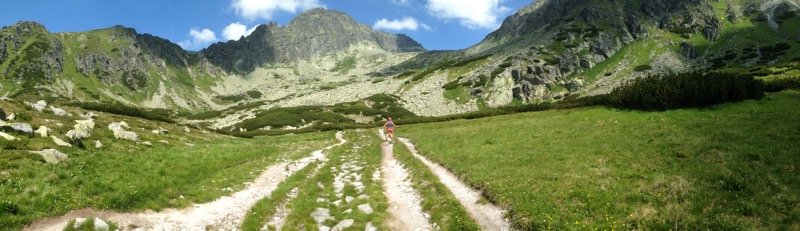
 leading up the Furkotska valley past wild flower meadows and streams,  

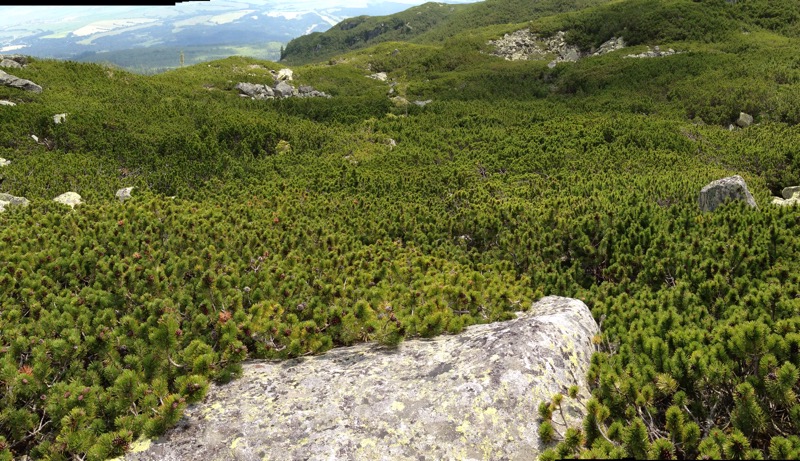
 through the dwarf pines,  

 across the tumbled mass of rockfall skilfully laid into track  
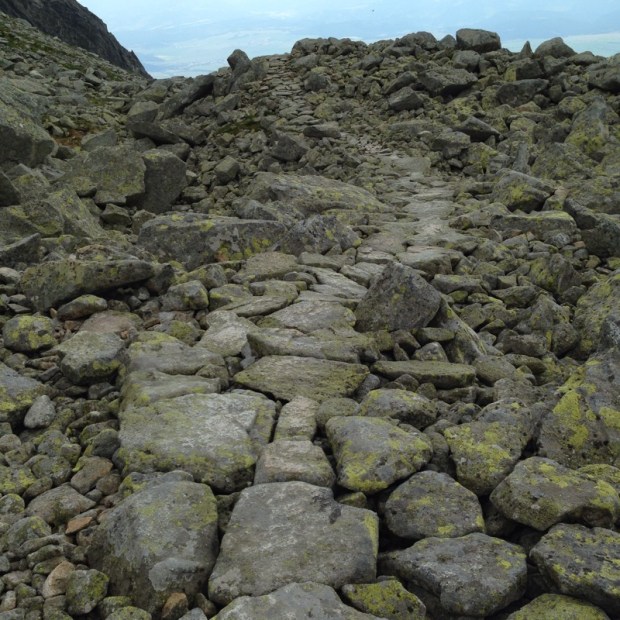
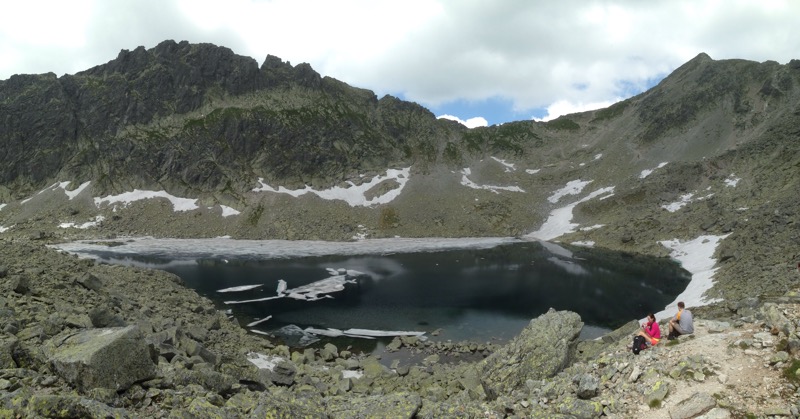
 and up to a pristine tarn where amazingly there were a team of park people diving for information.  
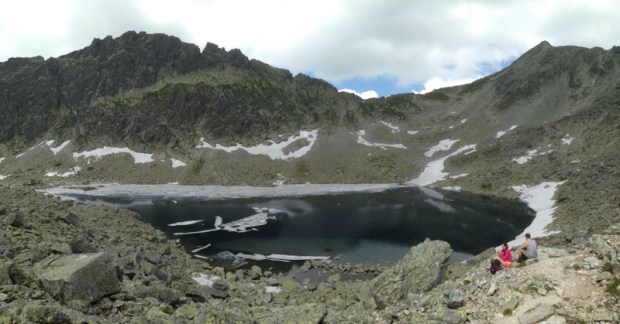
 

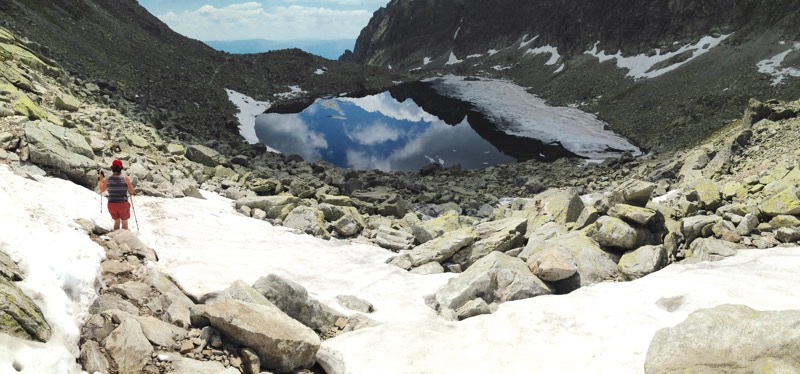
We continued to climb higher, surpassing the height we had been at on the previous summit to reach another tarn at 2200 with lots of ice still covering the surface.  
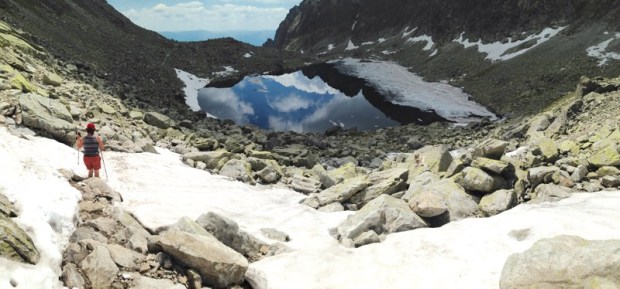
 Then it started to get really tricky with lots of loose scree climbing very steeply to a Coll about 100m above us. The route was also getting pretty busy by now ( great to be somewhere where this crazy human endeavour is normal, even for teenage girls and oldies like us) and a lot were coming down against us, so we decided the view was just grand where we were and settled in for the Sarnies. 

By the time we had made it back down the valley we were grateful for a chair lift ride back down to the van. It might seem like a lightweight approach to mountain hiking  but these lifts allowed us the time to go deeper into the peaks than we could otherwise. 

The resort was noisy and crowded when we got back, the dogs were cooking in the van and we got out as soon as we could, heading to the far less visited western Tatras. 

We had sussed out a route from a simple campsite in the forest taking us up into the mountains and up and down along a narrow ridge to the summit of Jacubina ,the second highest peak in the Western Tatras at 2194m. From there we would go to another meeting of trails a little further down the ridge on the border with Poland and begin a long steep descent to the end of the valley above us. 

The camp was getting busy with holiday weekenders but we found a spot in the shade and went for a meal in the little restaurant with some great menu translations.  

 

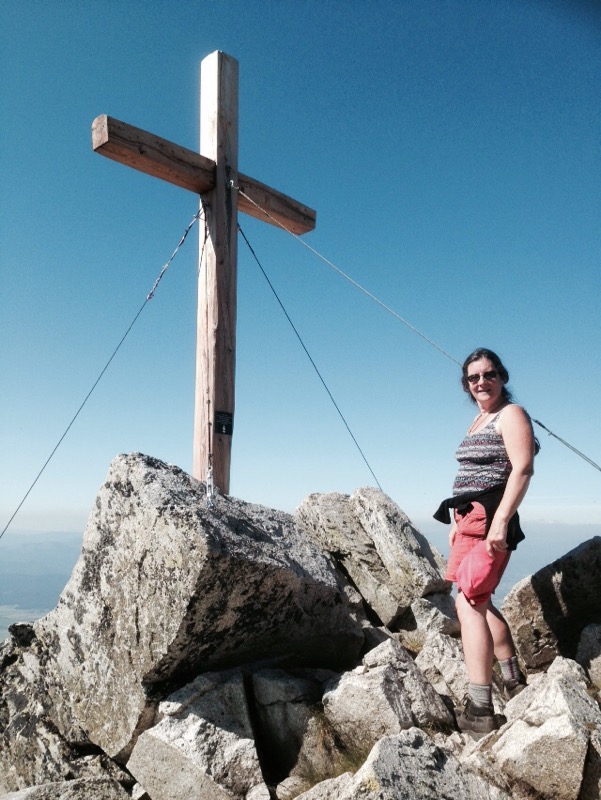
The next day’s walk, our last in the Tatras, was the most spectacular and probably the toughest. It only came to 21.5km but it took us 10 1/2 hrs and even though we started at 6 in the morning we still had a lot of climbing in the heat.  
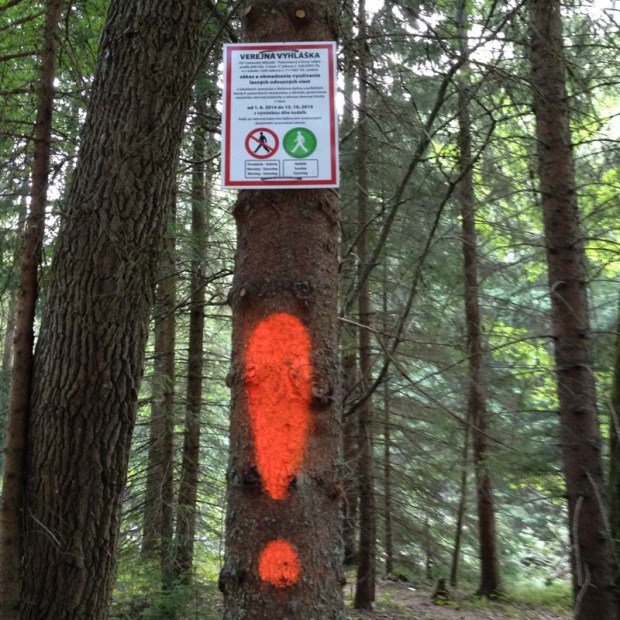
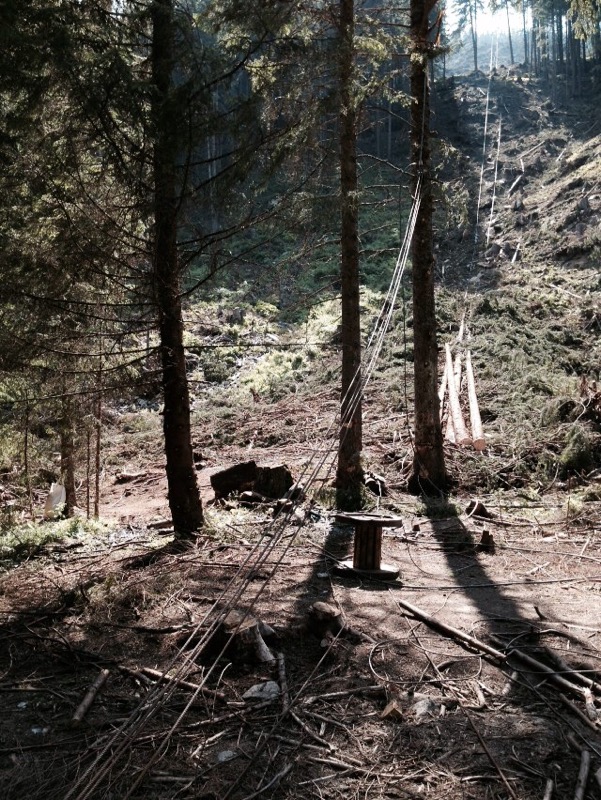
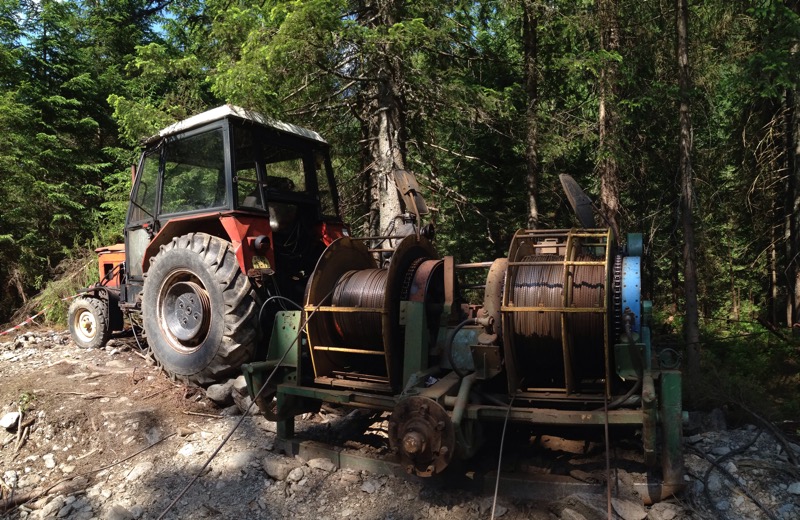
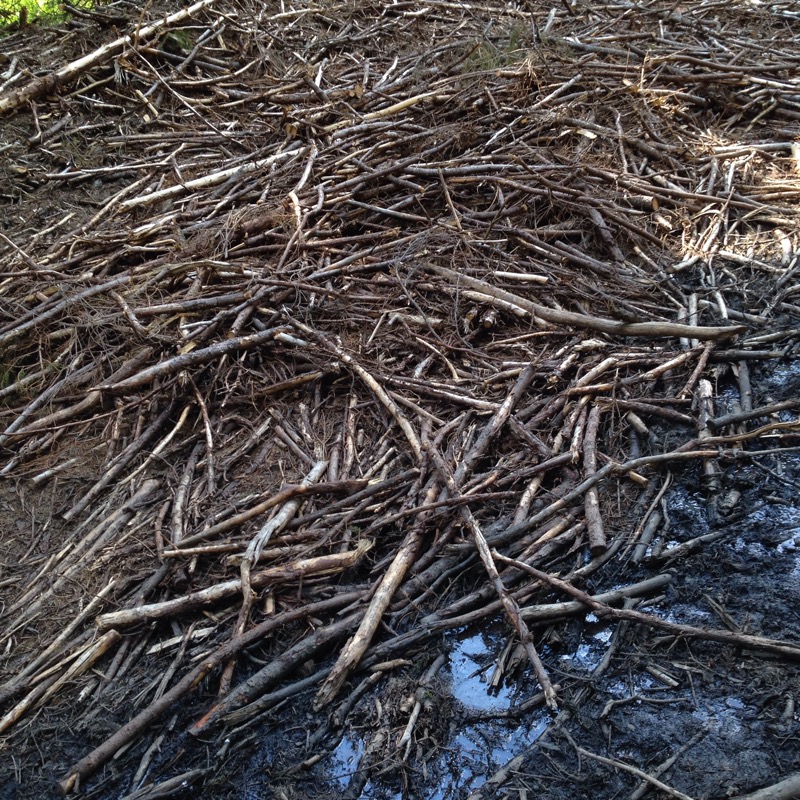
 We realised how lucky we were when we came to a sign warning that the track was closed to the public mon to sat and we were there sun. This was a serious foresting area and I guess they didn’t want joe public wandering through the danger zone. Tractors were cableing massive logs down the mountain, dragging them along the track and leaving a mass of brash behind.  
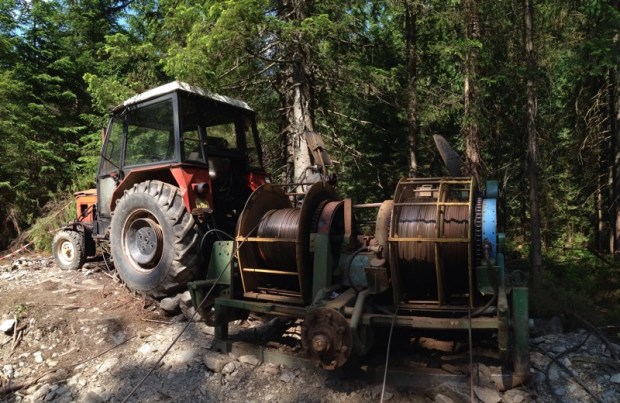
     

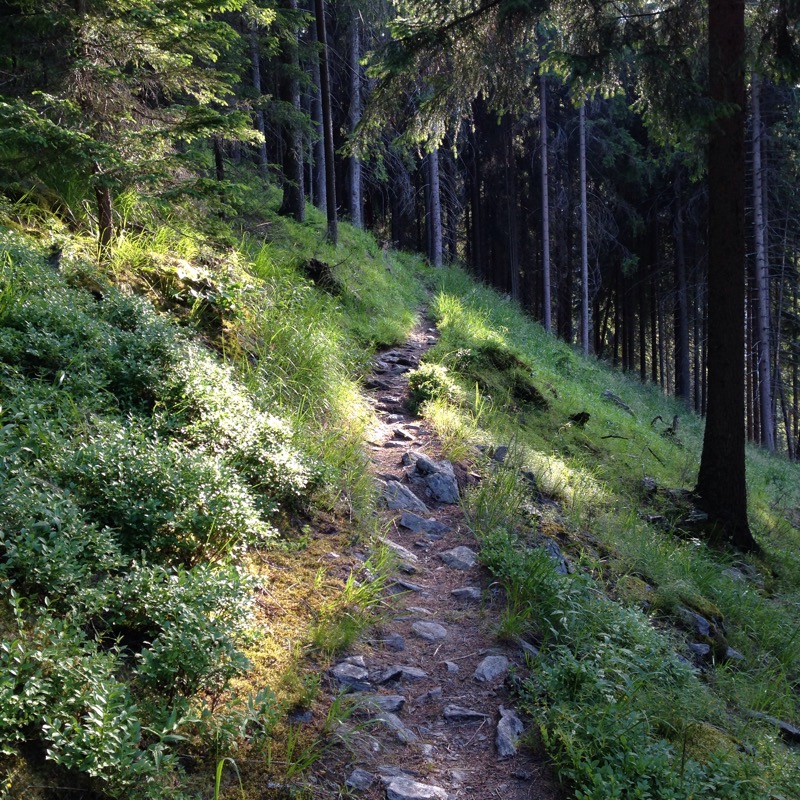
The effort started luckily in the shady forest  
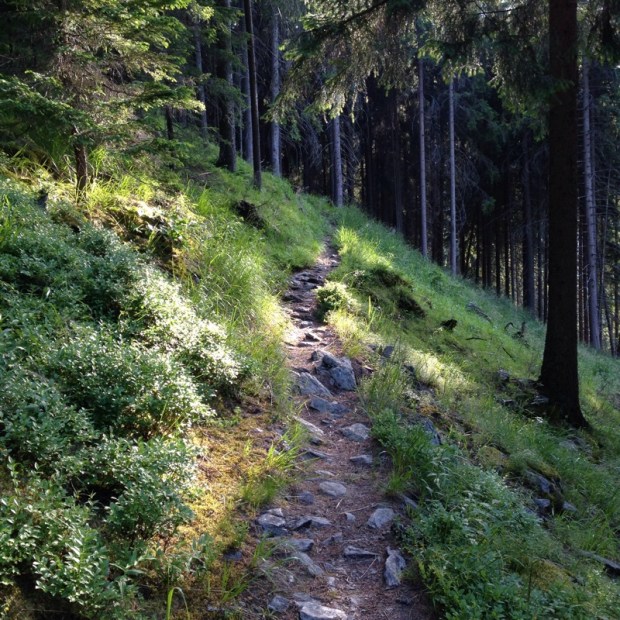
 as we climbed up to the ridge and emerged above the tree line at about 1600m.  

 The hot hard work began but was rewarded with more and more spectacular views as we rose to the peaks.  
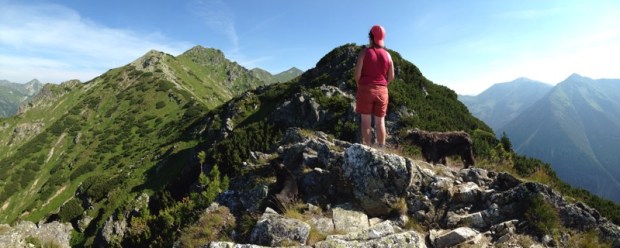
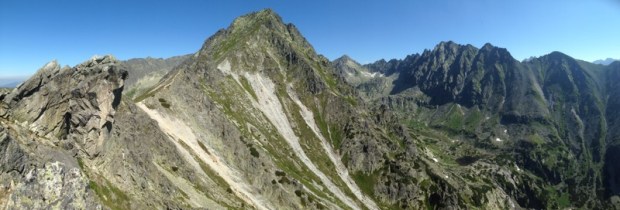
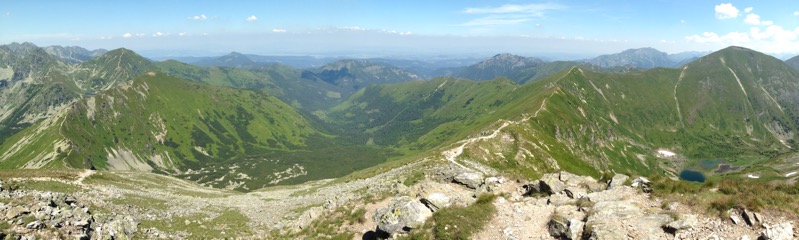
   We could see our ridge laid out ahead as a white line across the green.  
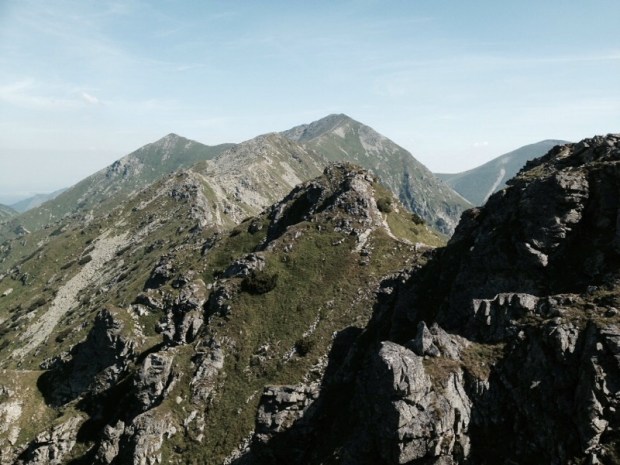
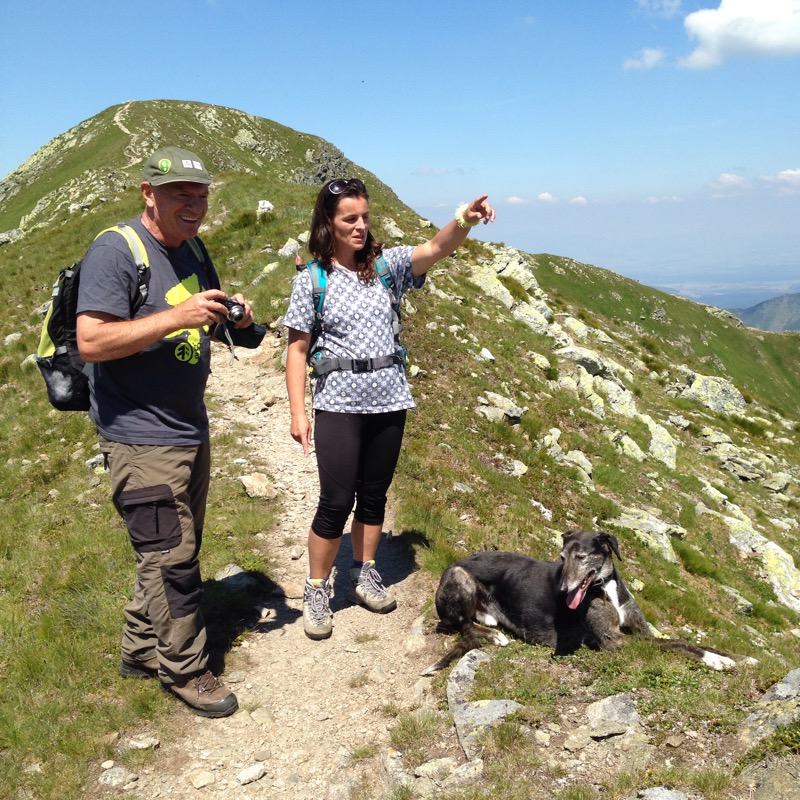
 We surprisingly caught up with a group of Slovak hikers, one of whom had been in Cork for a couple of years, and we chatted as we climbed to the next peak.  
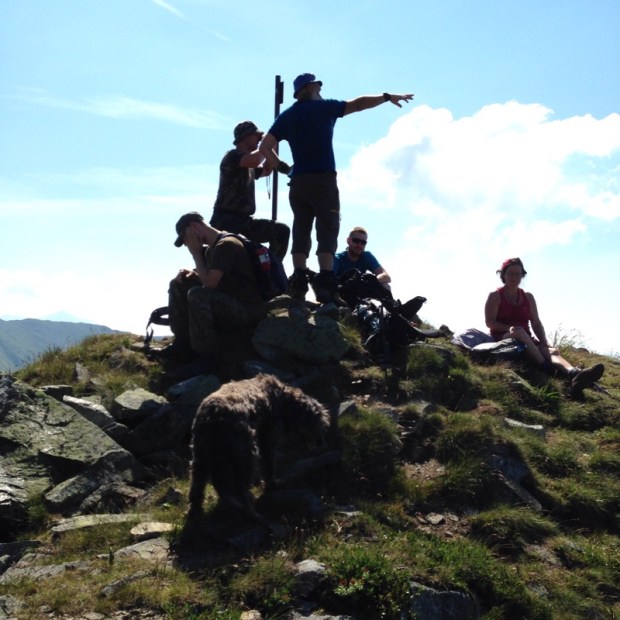
 We had made the cardinal error of not bringing enough water so had to hurry on as they stopped for food/ drink and reached the high point of the day with some other lads.  
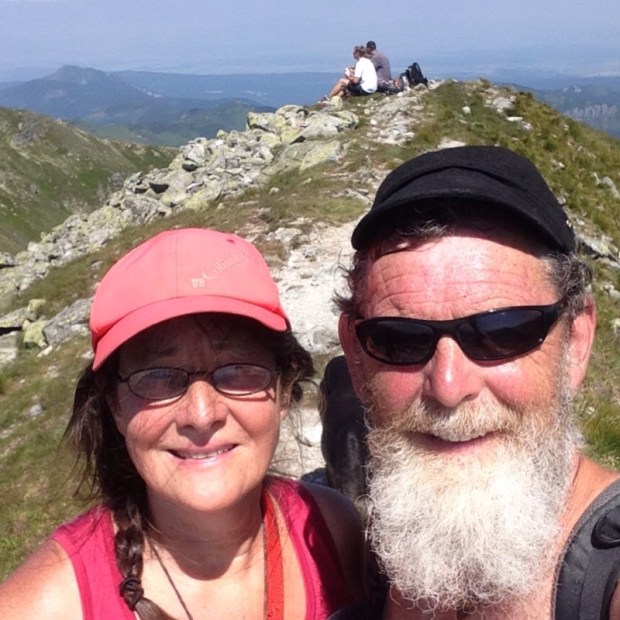
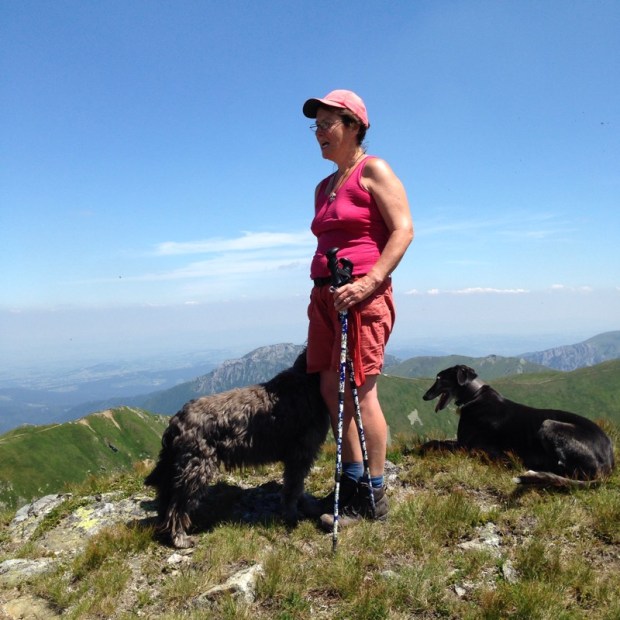
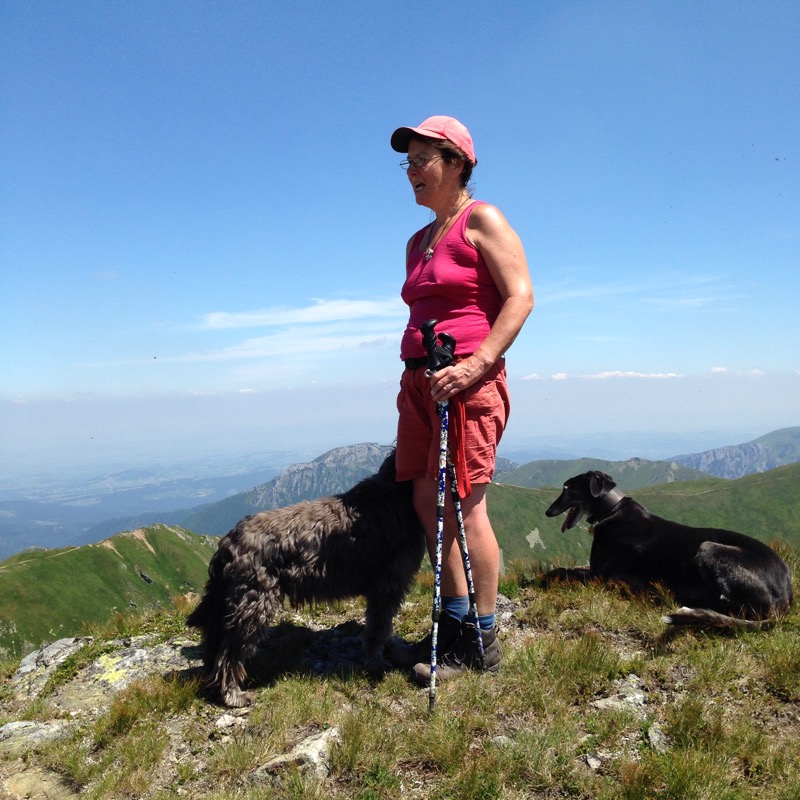
One more peak to the borderline and on the way we met two park rangers who told us our dogs should be on leads (we knew and we’re glad they didn’t mention the muzzles that are also required. They were very nice and after talking for awhile said that as ours were so well behaved it was ok but asked to take photos to show school kids what not to do! 


 They explained that a dogs bark made the chamois think it was a wolf and freaked them out. 

Then we were looking down into Poland and the zigzag tracks going across the mountains in all directions. 
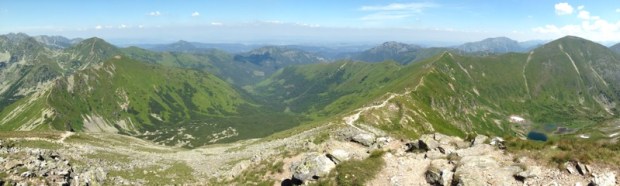
   

By now we were all really gasping and were very grateful when after a long and difficult descent we came to cool clear water pumping out of the mountainside.  

 Another close encounter with a snake sent me hurrying down the valley where another 3 hours hiking took us passed our first unmanned hut  

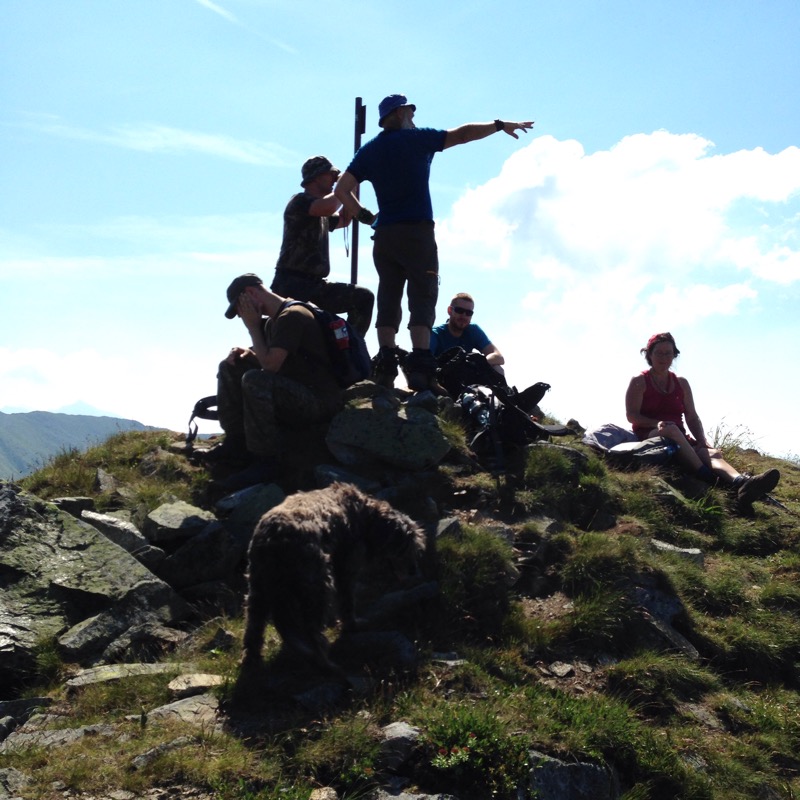
     and finally,wearily into the camp. 

Feeling very hot and craving cool water to swim in we quickly packed up and headed to a large lake / reservoir about 20 miles west where we found some excellent R+R parking. 

  
And in for a swim.