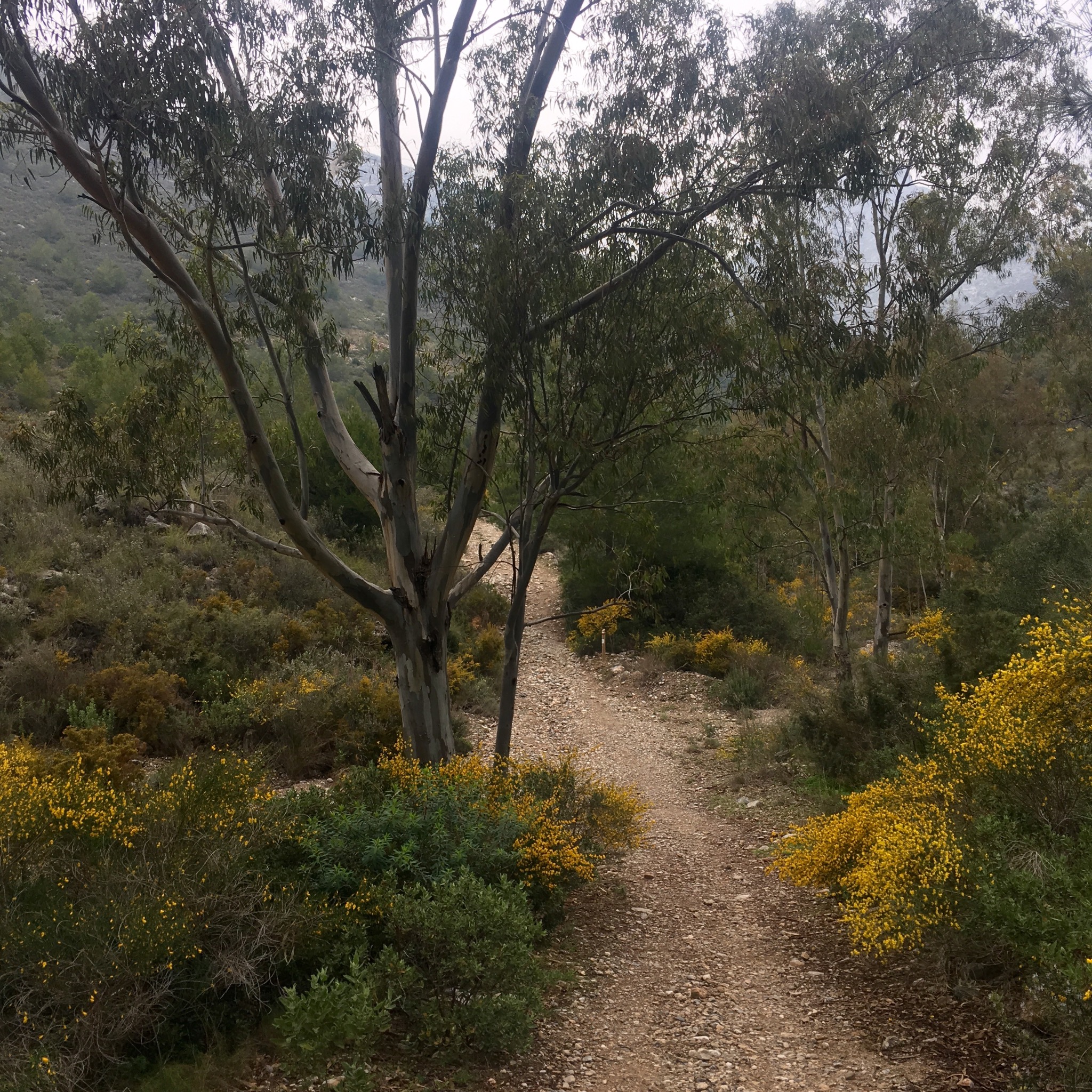
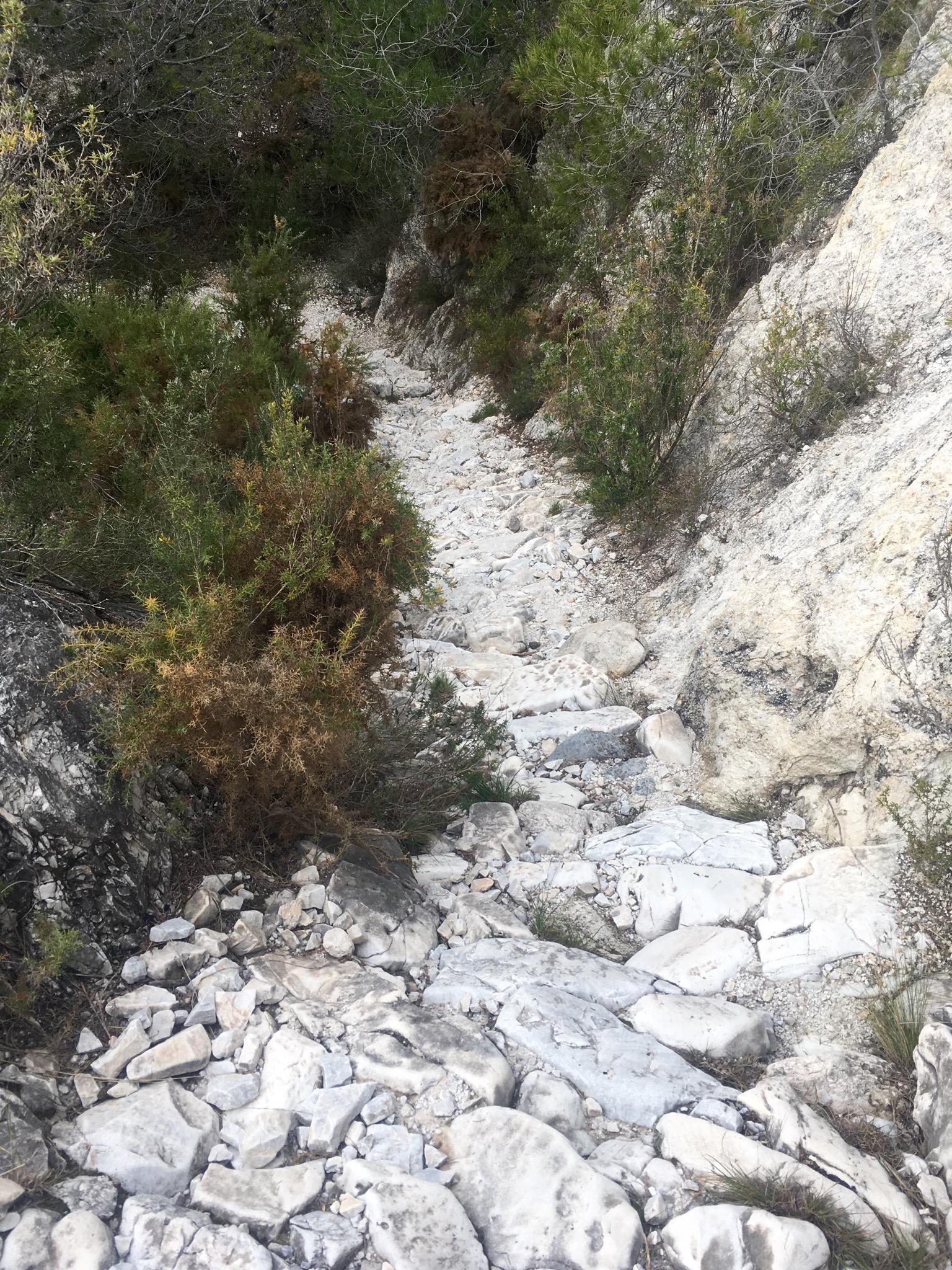
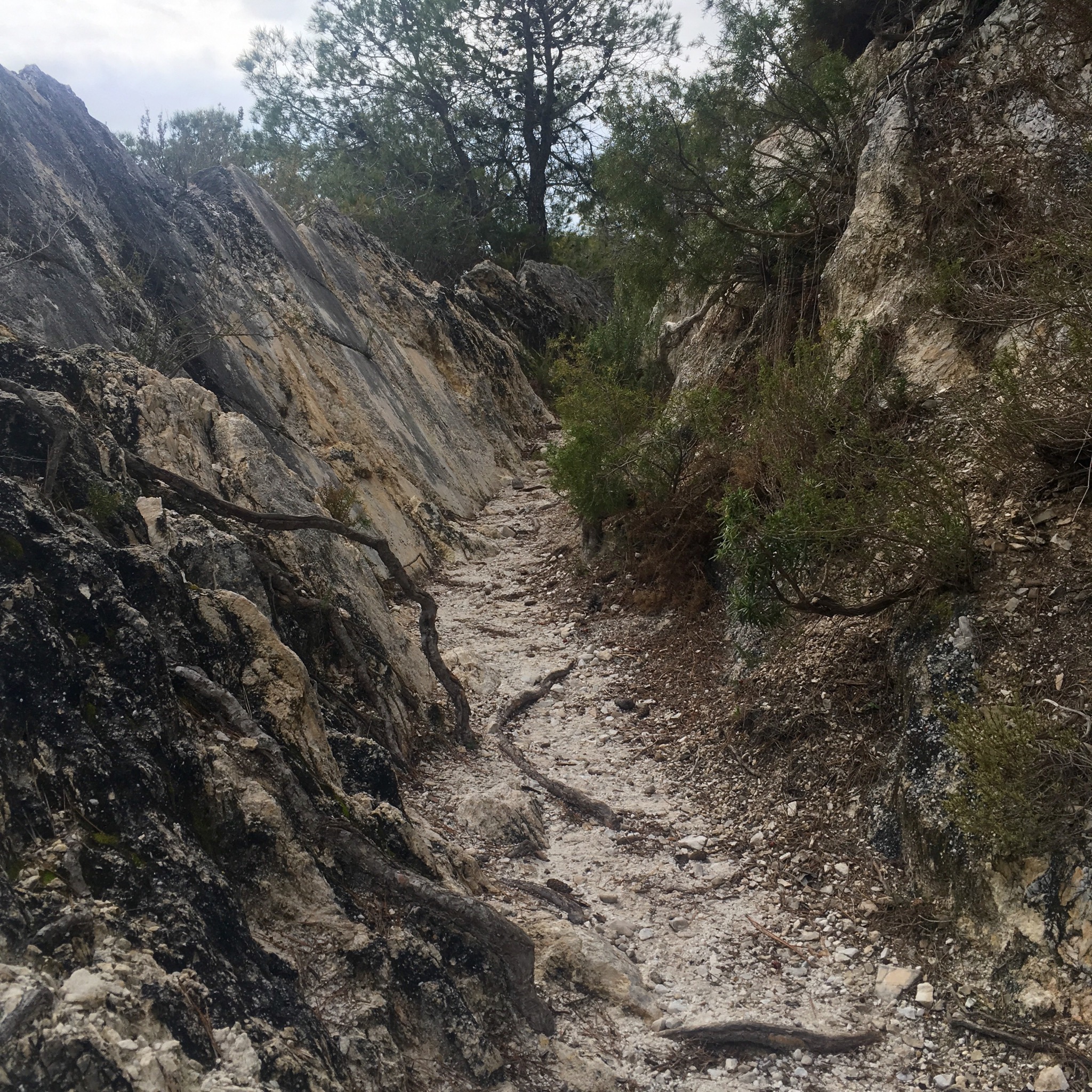
Walking Hiking Rambling

Stepping Stones – the Burren Way

DSCN0492

In the northwest corner of County Clare, halfway up the Wild Atlantic Way coastline of Ireland lies a unique environment.

250sq km of a glaciated karst landscape, with swirling terraced hills of limestone rising up from the ocean to the west and standing guard over the plains to the east. Scoured clear of earth and vegetation by ice age, erosion and man, the pale grey rock appears otherworldly and from a distance, denude of life.

But the naked stone stores and radiates the suns heat, the grikes or narrow channels between the slabs or clints provide shelter and the calcium rich soils undisturbed by the plough all make for a botanical wonderland and botanists and plant lovers from across the globe come to marvel at species from arctic-alpine and Mediterranean habitats living happily together in the west of Ireland.

The rock has discouraged intensive farming and this has helped to preserve ” a vast memorial to bygone cultures”, with the stone itself used over the last 6000yrs or so to create the tombs, cairns, homesteads, forts, castles and churches and holy wells that litter the maps like freckles on the face of the land.

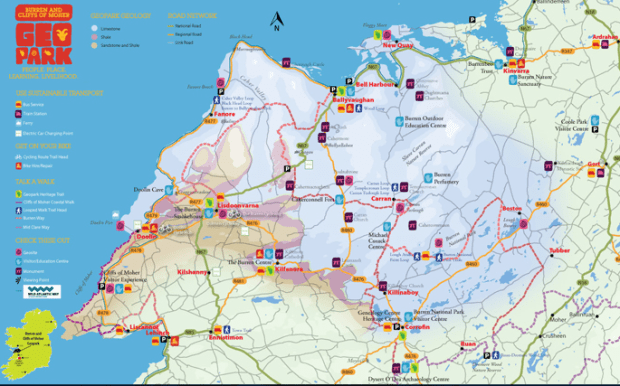
The Burren Way meanders for 100km, with additional spurs to towns and villages, with Irelands most famous natural attraction- the Cliffs of Moher forming a southern gateway.
Screen Shot 2017-04-18 at 06.46.39

Setting off from Liscannor I planned to take 4 days to cover the route, ending my ramble in Tubber to take in the splendours of Mullaghmore in the Burren National Park. The first leg was 20km to Doolin and the long straight road headed west past field walls made of the flag stones the area is renown for. The movements of sea creatures millions of years ago are etched into the surface of these slices of time as a record of the oldest journeys on earth and the flags are used as hardwearing floors and heavy roofing.

300 million years ago the Burren was the floor of a tropical ocean, and the Cliffs of Moher were formed by layers of shale and sandstone building up and up in a vast river delta. As I climbed up from the coast past the last farm with its brimming car park supplying a modern cash crop I was joined by others on the way towards the tower at Hags head.

IMG_3603

There is a cliff face here that supposedly resembles a womans head where, the story goes, the hag Mal crashed into the cliff while pursuing her love interest, Cu Chulainn, who stepped across the sea stacks to escape her advances.

As we reached the tower the dramatic views opened up and the number of people drawn in to the area by the successful marketing of the Wild Atlantic Way since my last visit became apparent.

Moving on along the cliff path I past a Liscannor flag quarry producing the stone for the nearby walls and a public gallery of miniature sea stacks in a dramatic setting.

IMG_3629

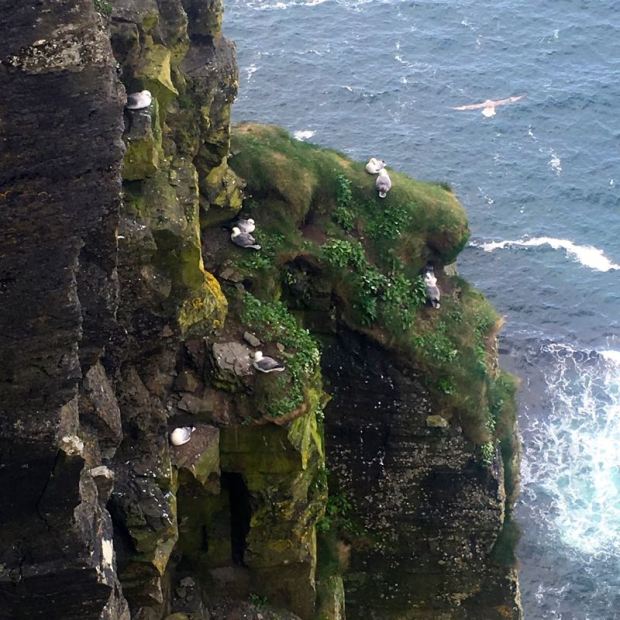
The nesting seabirds were a constant distraction as they wheeled around the cliff face with perfect timing and grace and I stopped to watch their acrobatics and spy on their domestic activities.
IMG_3645

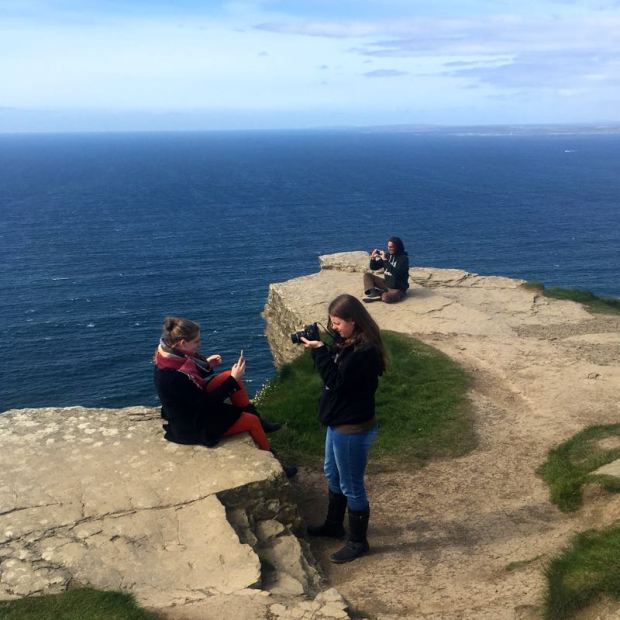
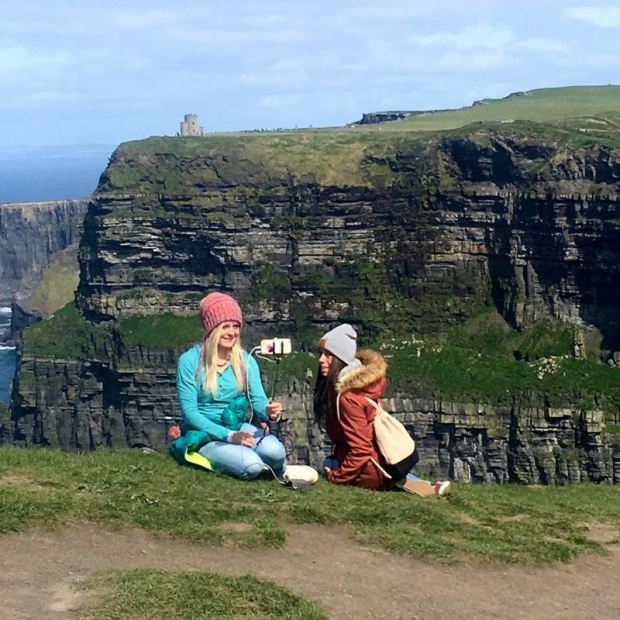
Living as I do in a very quiet rural pocket and not getting out among mass humanity much, I found the antics of my species nearly as fascinating and spent a while photographing them photographing themselves. The ‘selfie’ phenomena .
IMG_3654IMG_3704IMG_3685IMG_3674IMG_3720IMG_3711

My favourite selfie photos were many years ago and accidental. A friend working in a photo lab had developed a roll of film taken on a tour of Europe’s top tourist destinations and was puzzled to see pictures of only bits of head and ear and crowds of people before realising that the hapless photographer had held the camera the wrong way round.

At the highest point in the cliffs, near the car and coach park and the “visitor experience”, is a tower built as a viewing platform in 1835 by local landowner, M.P., and descendant of Brien Boru, Sir Cornelius O’Brien. He once fell very ill in London and asked for some water to be sent over from St Bridgits well near the Way at Liscannor which he attributed to his recovery and payed for the construction of a well house, still much used today.

DSC_0053

700ft below me the atlantic rollers crashed onto the base of the cliffs and it would certainly be the spot from which to watch the worlds top big wave surfers try their luck riding Aileen, the 50+ft wave that can form here.

IMG_3723

It was a beautiful sunny day and I certainly didn’t begrudge sharing the natural splendours with so many people but by the time I had had my lunch around O’Briens tower I was ready to escape the hordes and carry on towards Doolin another 8km away.

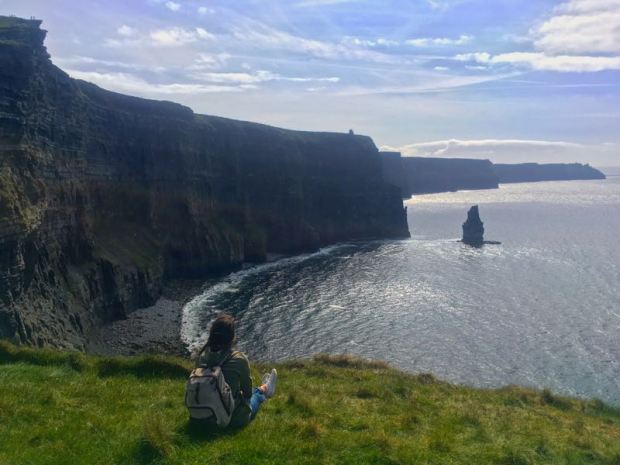
Although Doolin is another of Ireland’s tourist hot spots and the coastal path goes all the way there this was definitely a quieter section, allowing more space for contemplation of the surroundings and take notice of the birdsong and wildflowers.
IMG_3717

IMG_3740

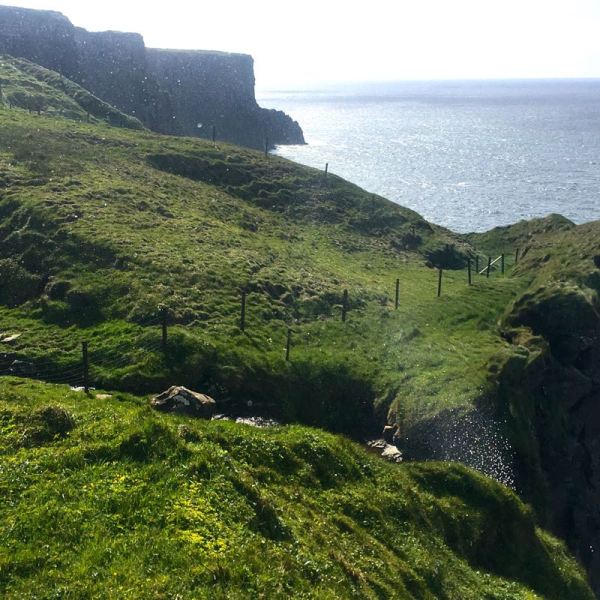
In a couple of places streams tumbling over the cliff edge were being blown back up on to the top creating a kind of natural perpetual motion of water as it tried to reach the sea.
IMG_3738

The Aran islands were visible to the north west, strung out in a line towards the mountains of Connemara and as I approached Doolin the first sight of the rounded grey hills of limestone made me keen to get amongst them.

IMG_3742

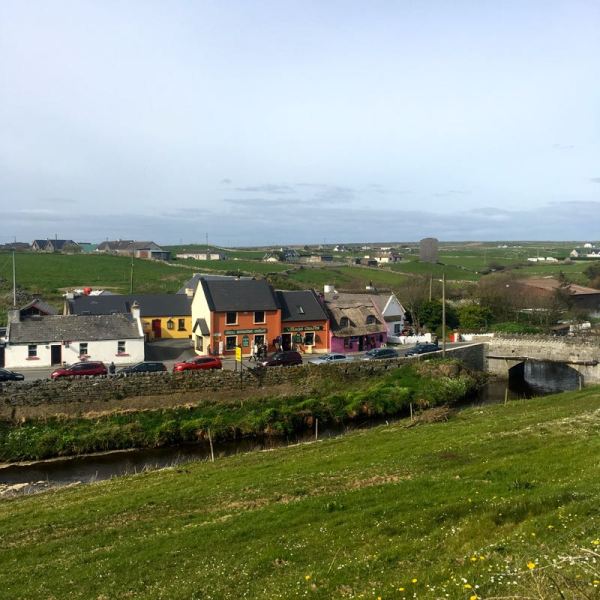
The path descended to near sea level and continued along the shore past strange diamond shaped rock formations and blowholes to the colourful shops and pubs at Fisherstreet where a ferry goes to the nearest Aran island, Inisheer, and people come to swim with Dusty, a dolphin that likes to hang out with humans.

IMG_3749

IMG_3752

Back on tarmac I made my way past the 16th century Doonagore tower house on the outskirts of Doolin to my bed for the night at a friends house.

IMG_3750

The next days stage was a 30+km hike, mostly on ancient green roads, into the Burren uplands where I planned to meet Sally and the Trusty Tranny camper van at the top of Corkscrew Hill above Ballyvaughan.

But first I had to make my way along about 10km of country roads through a sometimes gorsey and rushy landscape under a leaden sky, which coupled with a number of neglected and abandoned homesteads made for a slightly melancholic atmosphere.

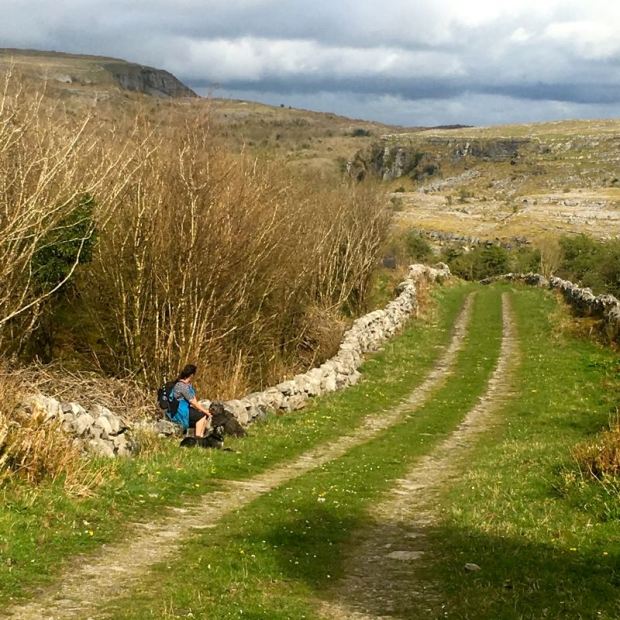
Climbing up the backroad from Ballylacken castle at about 200m the tarmac gave way to track and the green road leading over the shoulder of the Burren’s highest hill, Slieve Elva, began.

IMG_3778

There was a stiff wind and from the look of the contorted vegetation there usually is. The lack of shelter on this exposed hillside must have made it a tough place to live and the remnants of stone cottages told their own tales of hardship.

Finally moving beyond the sandstone and shale and onto the limestone the track became stripped for awhile as it revealed the underlying formation of clints and grykes in the adjoining fields(?).

After roughly 8km of the high plateau I was led down into the Caher valley where the only surface river in the Burren to make it to the sea runs down to the beach at Fanore. The porosity of the limestone means that water easily eats it’s way through to create a network of underground caves and tunnels, another feature of this area that makes it special and contributed to the famous saying by one of Cromwell’s generals that ” it is a country where there is not enough water to drown a man, wood enough to hang one, nor earth enough to bury them”.

IMG_3809

Up and over the long southern plateau of Gleninagh Mountain on another green road and I landed back on the tarmac of a cul de sac backroad running down the Feenagh valley.
IMG_3813

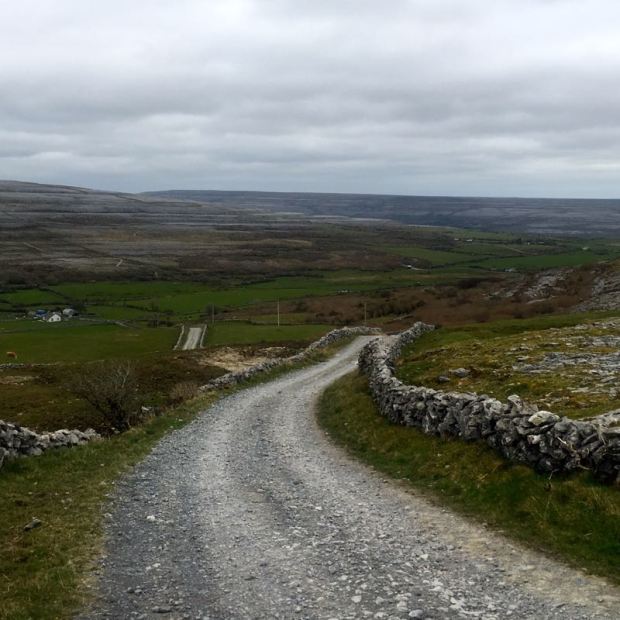
A couple of kms later I was off up another ancient green road, lined at first by another section of river, then hazel scrubland,and winding past megalithic tombs, ring forts and enclosures with fantastical views of the surreal landscape surrounding me, to eventually, and suddenly, leave the limestone and find myself atop an upland of turf bog and forestry.

The wind was still blowing and now as evening approached it was cold so, getting to our meeting point early after 30km, I was happy enough to do an extra couple of km down Corkscrew hill to the warm embrace of the Gregan House hotel bar and a pint of Murphys while I awaited the arrival of Sally in our mobile kitchen and bedroom.

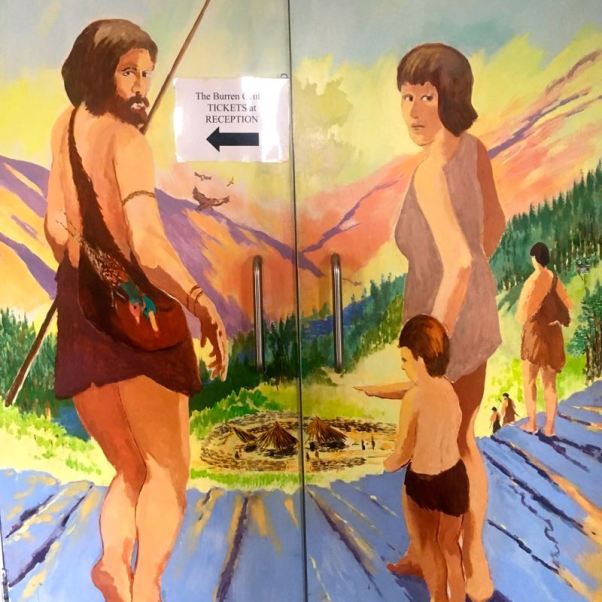
We woke the next morning to a nasty drizzle blowing in on a horizontal wind and with only about 20km to do that day we decided to trust the forecast that the rain would clear in a couple of hours and take a quick spin to Kilfenora, location of The Burren Centre and   cathedral ruin.
IMG_3848

The Catholic cathedral, part of which is used by the church of Ireland has a glass roofed transept, built to protect some ancient high crosses and there are other fine carvings.

Back on track we had a fair bit of road walking to do but it was pleasurable hiking along tiny backroads through a varied landscape dotted with megalithic and early christian sites, including an impressive baptismal font in the ruins of Kilcorney church.

Crossing the high ground above Carron it started to drizzle again and we ducked into Cassidy’s bar for a drink in the dry before carrying on along the eastern shore of the turlough, or seasonal lake. These loughs are another unique feature of the area, with the groundwater beneath the limestone rising and falling with the water table and creating what can be huge areas of flooding in the winter and rich grazing land in the summer.

IMG_3890

The hazel woods were thick alongside the road and rich with wood anemone, ferns, sorrel and mosses and lichens. All of which make good feeding for the herds of feral goats that keep the vegetation in a bonsai condition and sometimes end up as burgers in Cassidy’s when the population is deemed in need of a cull.

IMG_3893DSCN1447

To end the days hike we had another green road stretch, leading us eastwards into the National Park. The sun was out and it was a truly beautiful path, a match for anywhere in the world in weather like that. A little over halfway along is a charming cottage in what has to be one of the finest locations in the country. (Teas available in the summer).

IMG_3904

Another good dinner and comfy bed courtesy of friends just off route and we were ready and able for our last day on the trail. I had walked nearly all of the Burren Way previously but not continuously and I had never walked one section of the days route so it felt like the highpoint of the Way to be climbing the iconic terraces of Mullaghmore and gazing at the virgin territory ahead.

We were a little early for the glories of the wildflowers for which the area is famous but we were lucky enough to have early purple orchids, wild garlic and gentians strewn around our feet that day.

IMG_3920

As we climbed above Lough Gealain to the summit at 200m the full effect of this special place became tangible. Feeling deeply connected to the surroundings and yet looking out onto a strange and foreign land, it’s no wonder the area has attracted “outsiders” for many years with the magnetic appeal the landscape holds.

IMG_3930

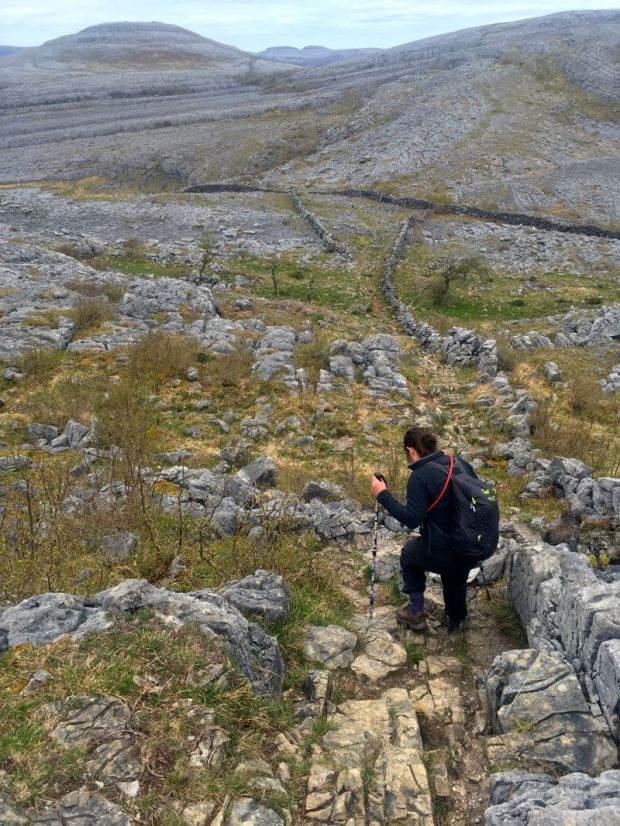
Clambering down the rough stony track on the north of Mullaghmore we turned to follow a wall below Slieve Roe down to a crossroads at Cooloorta where some of the pre mentioned “outsiders” have created homes for themselves.
IMG_3932IMG_3933

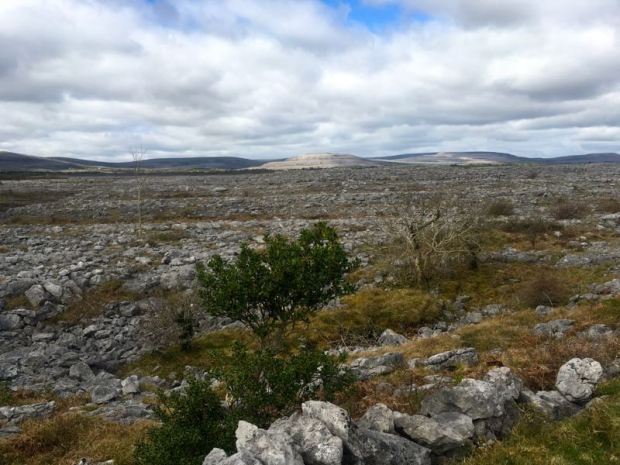
3km up the road we turned to come 3km back down on another green road through an area of limestone canyons studded with ash woods until, passing through a swing gate, we walked towards Lough Bunny on a long straight and flat track to the grassy farmland.
IMG_3958

Surrounded by green fields and grazing cows again, with the bare grey stone of the Burren behind us, it wasn’t long to the end of our journey where friends conveniently living right on the Way supplied tea and biscuits and a lift back to the Tranny.

LA GRAN SENDA DE MALAGA: GR 249. 19/20th Feb Nerja to Frigiliana to Competa

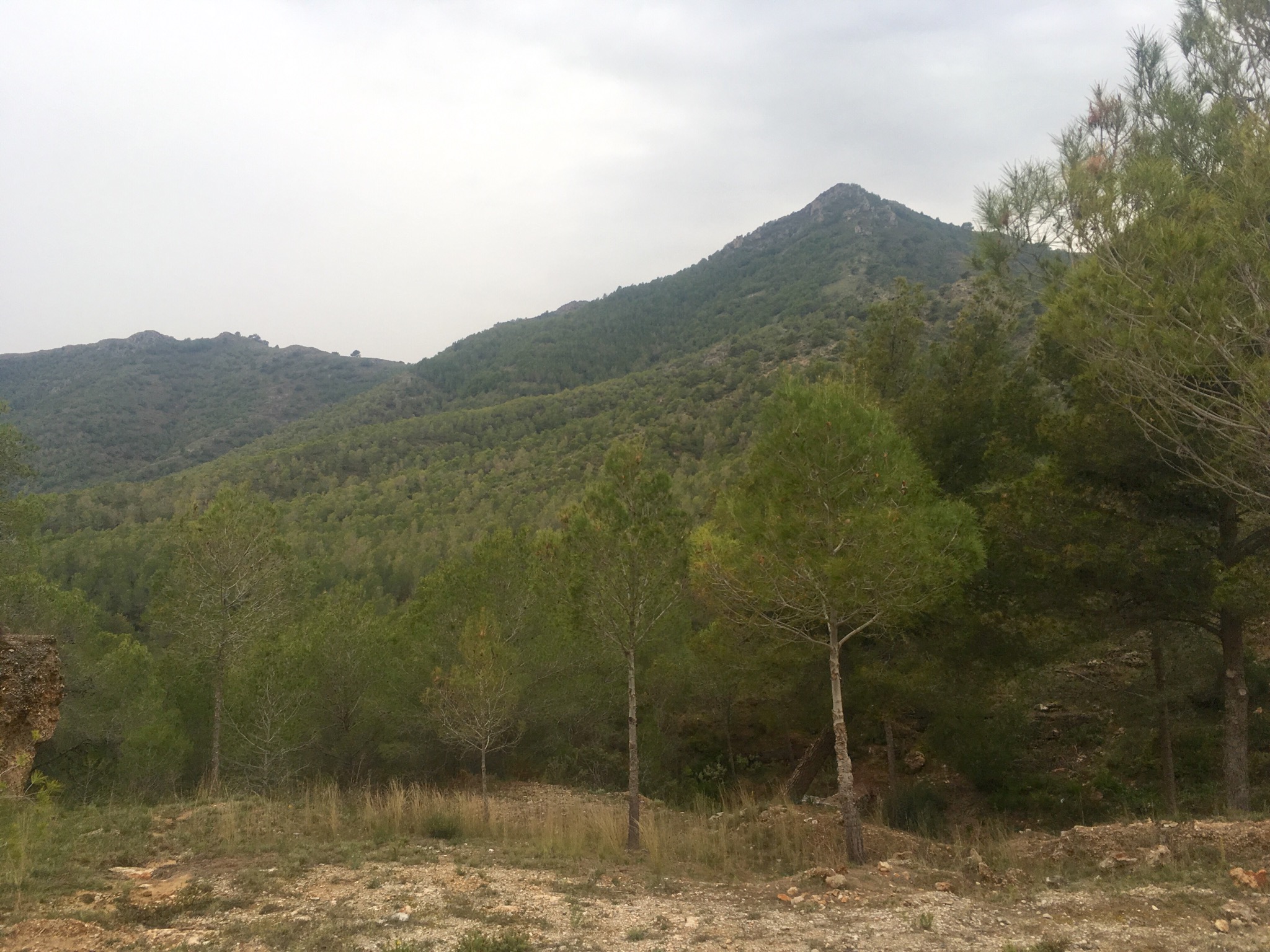
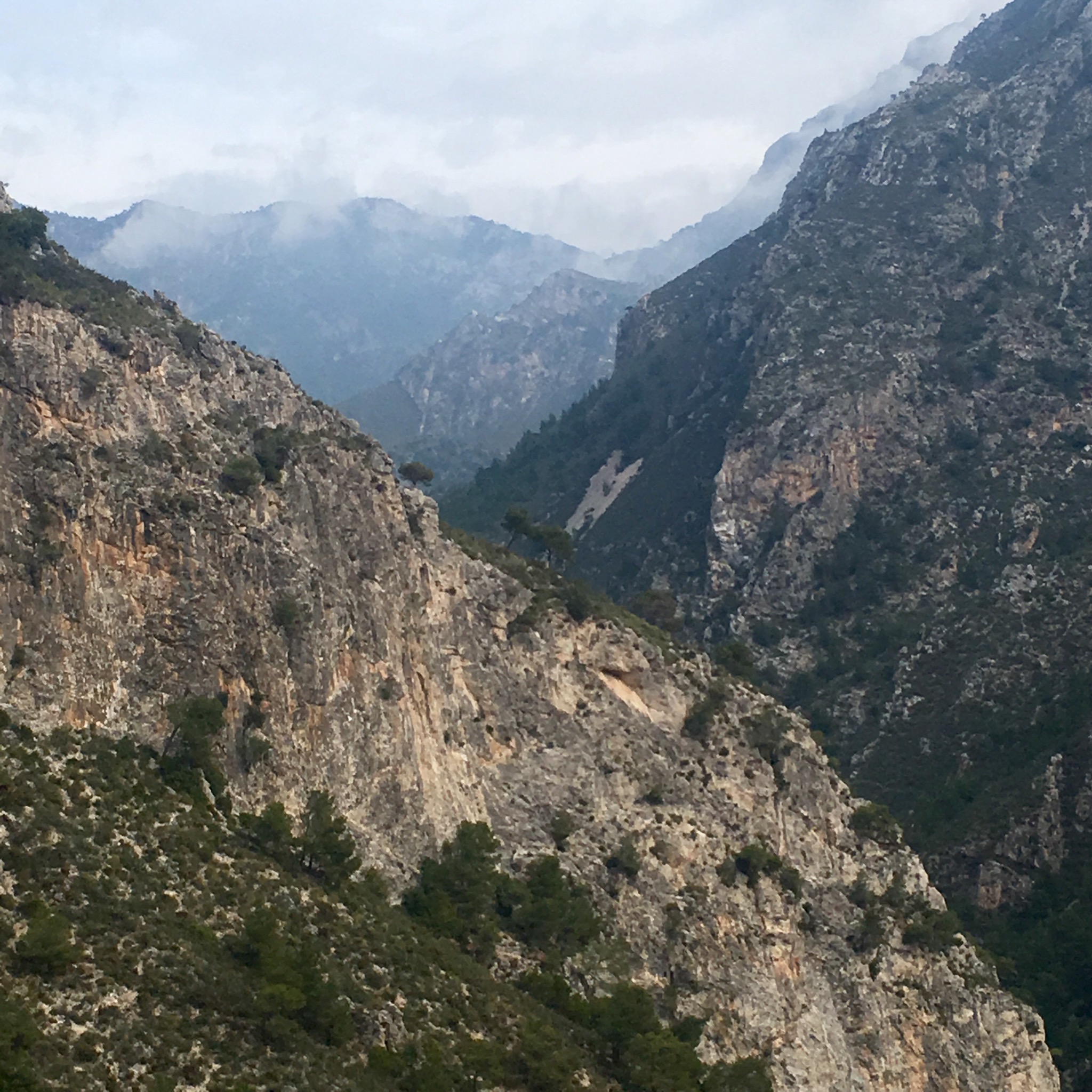
The next 2 stages took me away from the hustle and bustle of the Costa and the busy A7 motorway and deep into the Natural Parque around the Sierra Enmedio.
The first, from the Nerja caves near sea level involved an ascent 765m over 15km and back down to 300m at Frigiliana. The second day was the toughest and last of the trip, climbing to nearly 1200m before dropping to 685m at Competa 27km later.
19th Feb
Leaving our park up in the grey blue steely light of the early morning there was still some moisture in the cloud covered sky. We had been forecast a lot of rain for the morning but it seemed to have run out overnight and I set out with my fingers crossed and waterproofs packed.

IMG_3095.JPG
It felt good to be finally heading for the hills but I was also aware that these mountains, though popular with walkers, are not to be underestimated and remembered a story of a German woman a few years ago who headed up this track for a stroll and got lost in the wilds for days before reemerging shaken and stirred.
The route started with a 5km gravel track to the picnic Area de Recreativo del Pinarillo and from there was mostly narrow paths over the wild and rocky terrain.
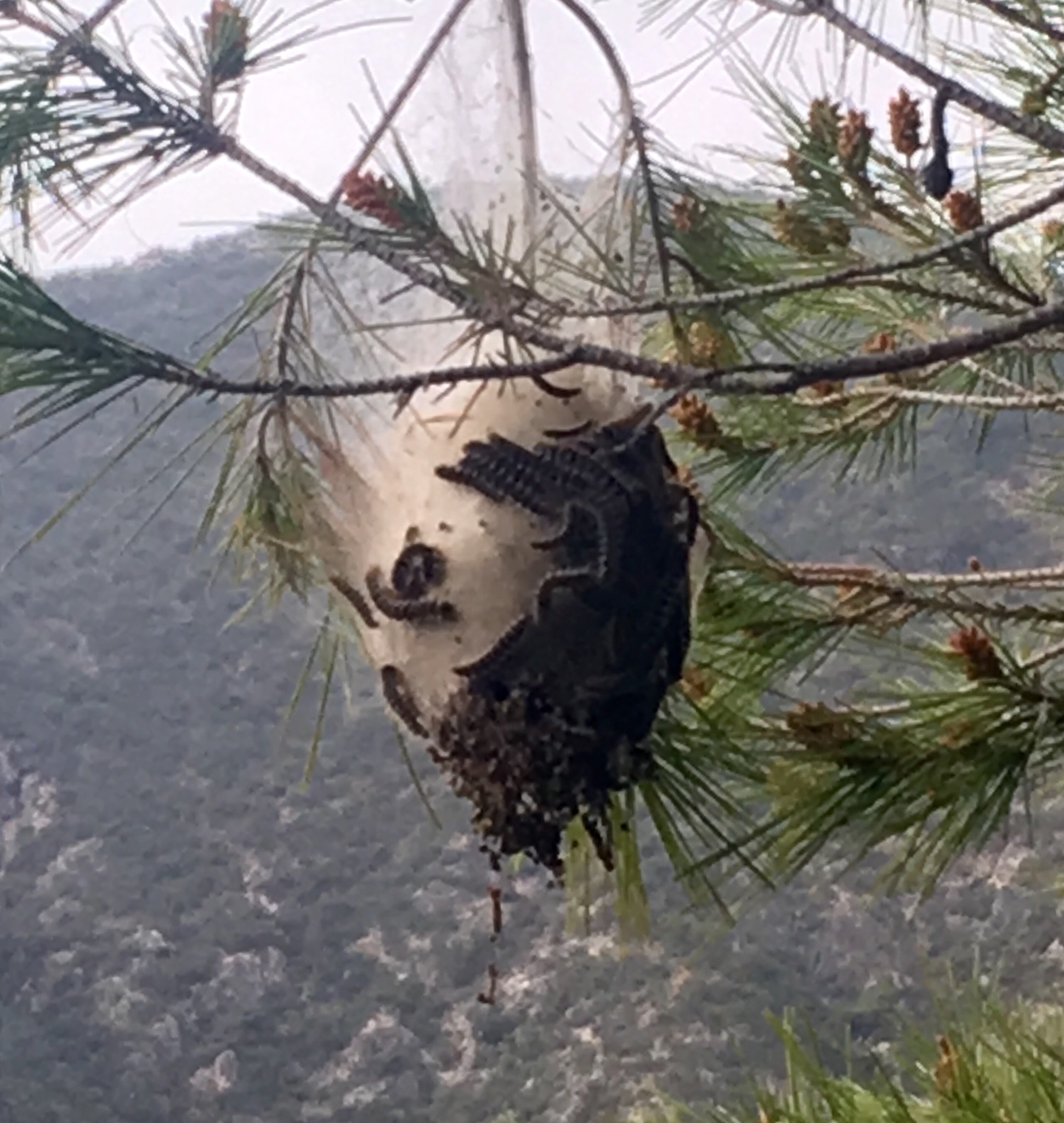
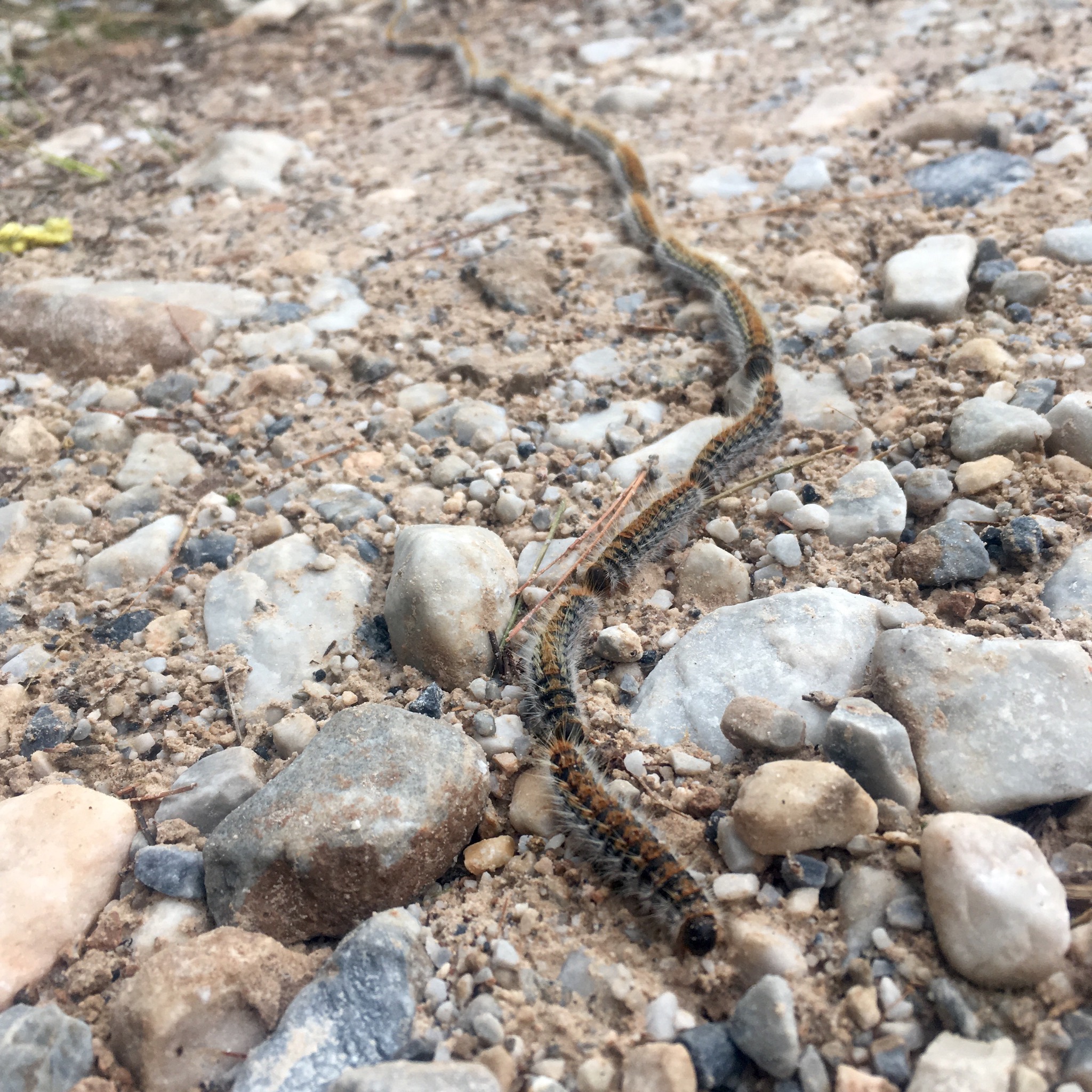
I joined a line of pine processinary caterpillars following their leader to a new lifecycle.

IMG_3097.JPG
The female of the moth lays hundreds of eggs in the pine trees which develop into caterpillars that build themselves cotton wool like nests and feed on the leaves- seriously defoliating them.

IMG_3103.JPG
The little critters have hairs with a very toxic irritant which are easily airborne and they can, if stressed, fire out like harpoons. Dogs getting them on their paws and then licking them have had to have their swollen tongues amputated to prevent choking to death.

IMG_3149.JPG
I passed by some of the caves in the riverbed below me, occasionally occupied by nature loving hippy types of which I saw no sign. The mountain slopes were filled with Alleppo pine, box, broom, juniper,fan palms and assorted and unknown to me, flowers.

IMG_3099.JPG

IMG_3168.JPG

IMG_3167.JPG

IMG_3101.JPG
At the slightly dilapidated picnic area I moved on to a path that wound its way down into a barranco before starting the climb to the Collado Apretaderas, my high point of the day.

IMG_3137.JPG
The clouds that dropped some light spittle on me roved around the peaks as I passed the first of only 2 people I saw all day.
IMG_3139.JPG

IMG_3138.JPG
A little later I disturbed a mother ibex and her young kid who quickly scrambled away into the bushes.

IMG_3142.JPG
Fine views opened up

IMG_3145.JPG before I descended steeply through the thick vegetation

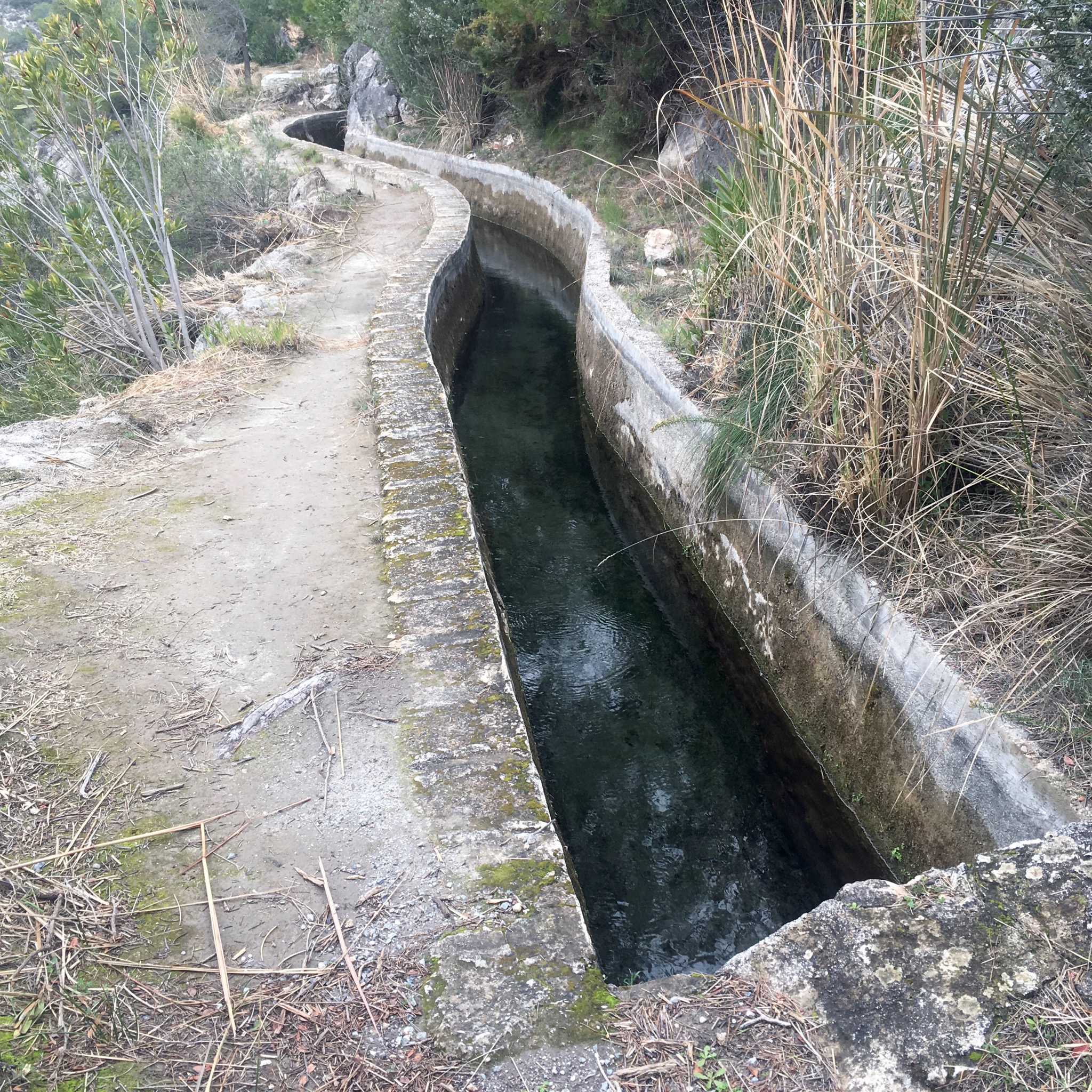
IMG_3147.JPG passing the impressive canal del chillar which cuts a gash for 6km across the mountain carrying the lifeblood of the crops on the Costa and energy for electricity production.

IMG_3151.JPG
A 200m drop took me down to the river Chillar itself which, after the nights rain, I was glad to see easily ford able.

IMG_3156.JPG
All the calcium in the Limey water left Tuffa deposits and strange colouring to the riverbed. The next 4km were a series of ups and downs, passing rocky outcrops,

IMG_3158.JPG dramatic ridges,

IMG_3162.JPG stony tracks,

IMG_3163.JPG

IMG_3164.JPG and wide open vistas.

IMG_3160.JPG
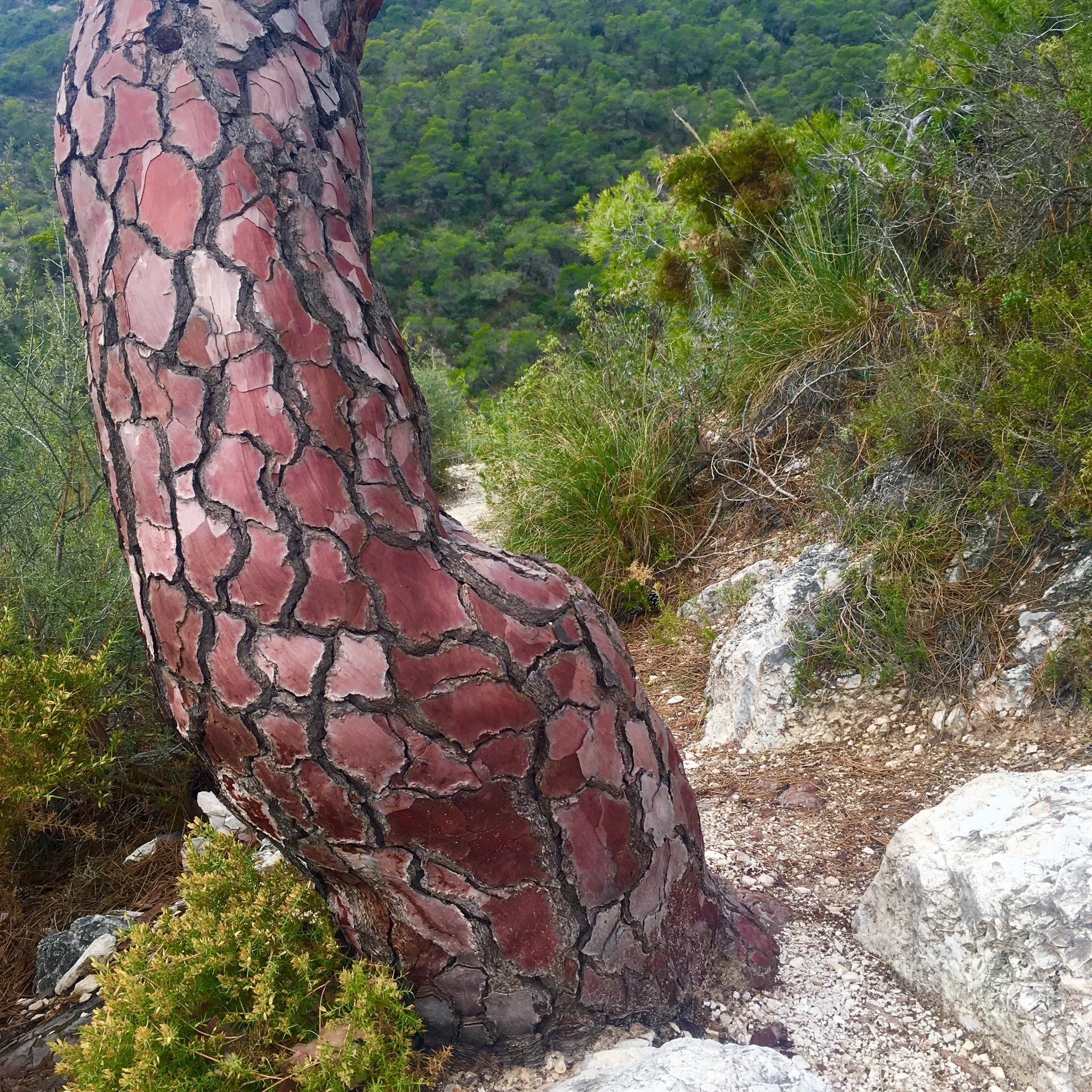
There was now more Maritime pine with beautiful coloured bark.

IMG_3166.JPG and I passed the first of many lime kilns in the area.

IMG_3171.JPG
Eventually I saw the gorge of the Rio Higueron below me

IMG_3175.JPG
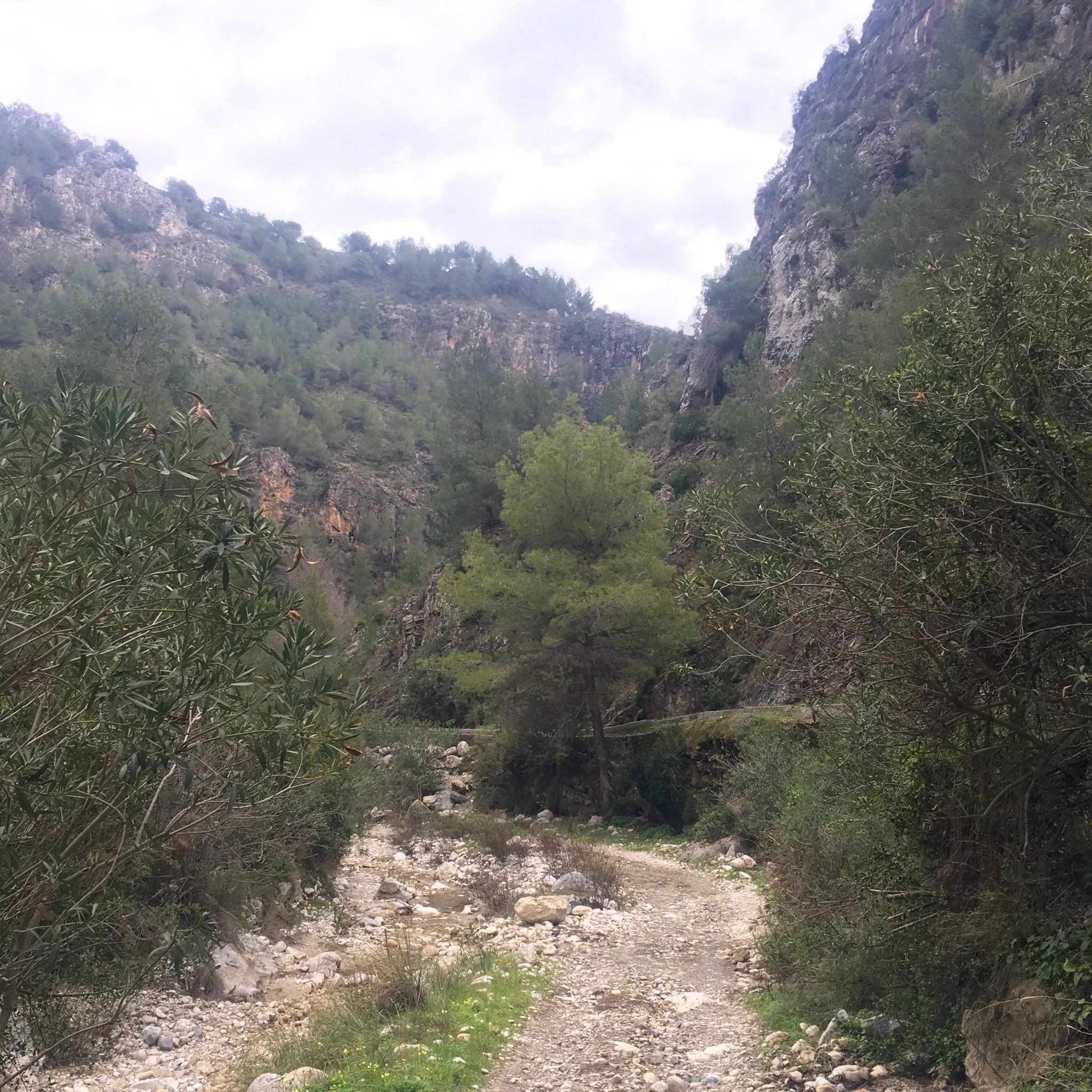
And clambered down to walk along the river bed

IMG_3180.JPG and into Frigiliana where I carried on for a couple of km to find Trevor and a camper park up for the night overlooking the hills now dotted with a multitude of villas and farmsteads.

IMG_3186.JPG
20th Feb
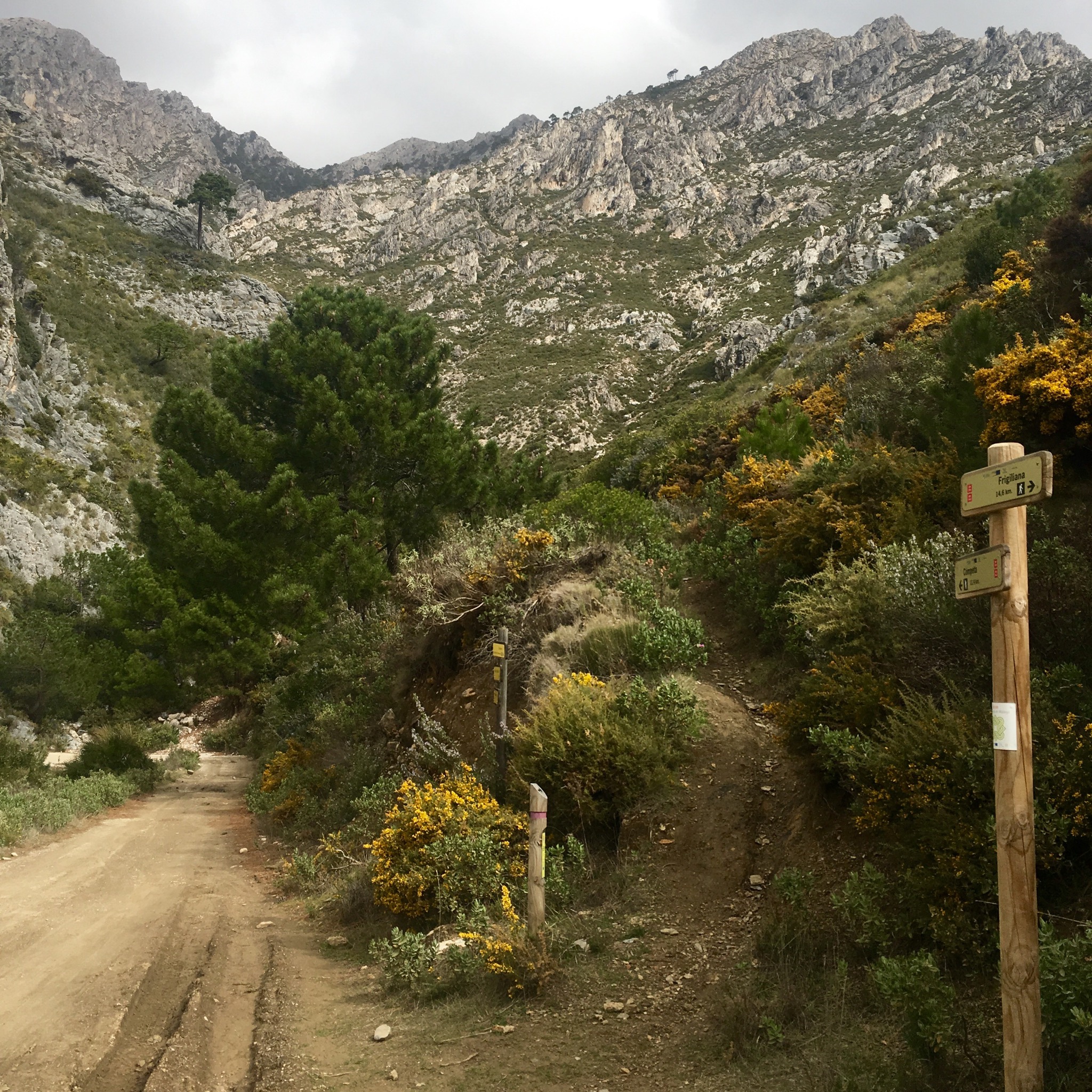
Up early to tackle the long stage to Competa I started on the 18km slog uphill to Collado de Los Hornillos. From there it would be kinda levelish for 6km and then a steep descent for the final 4km or so.

IMG_3184.JPG
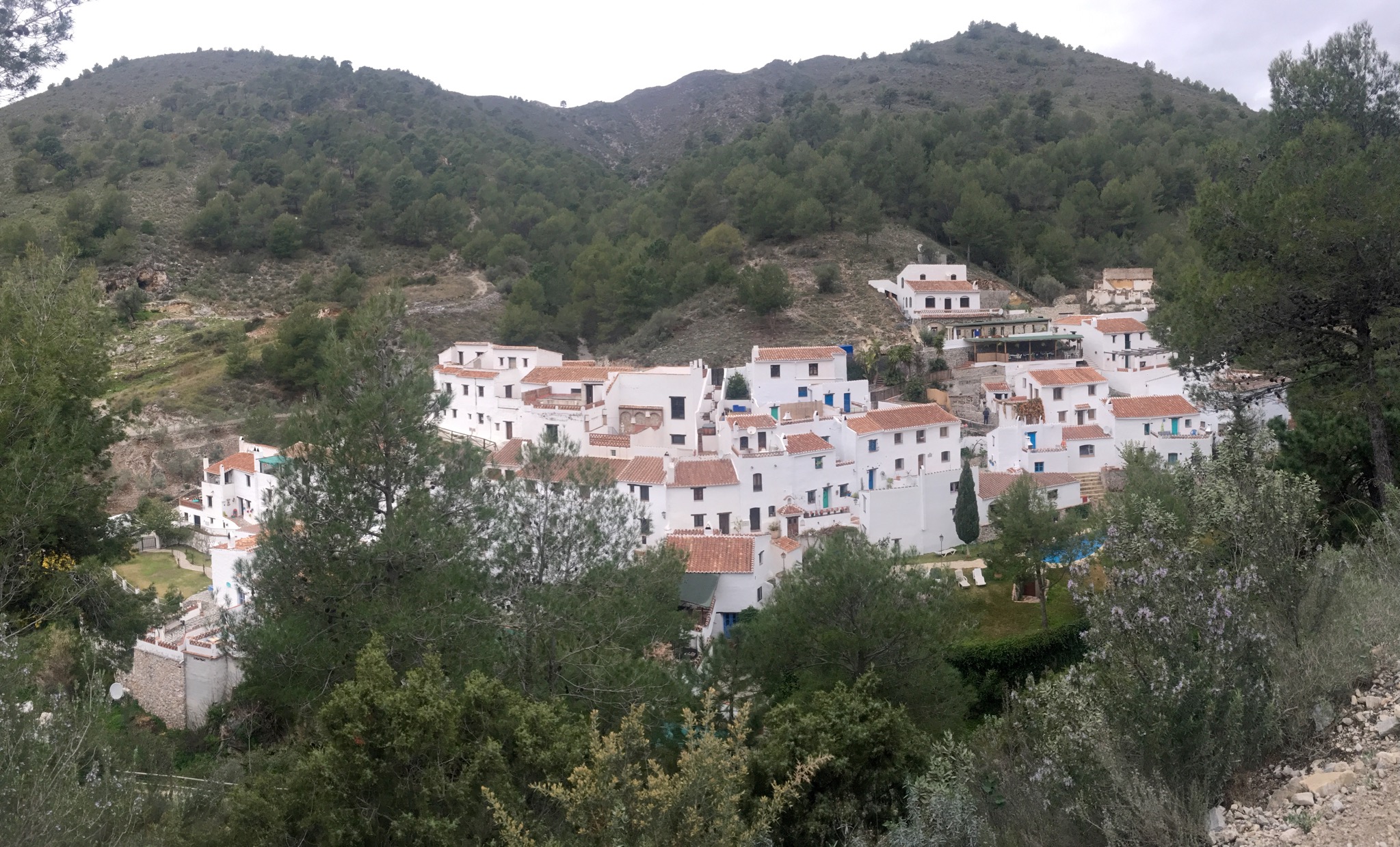
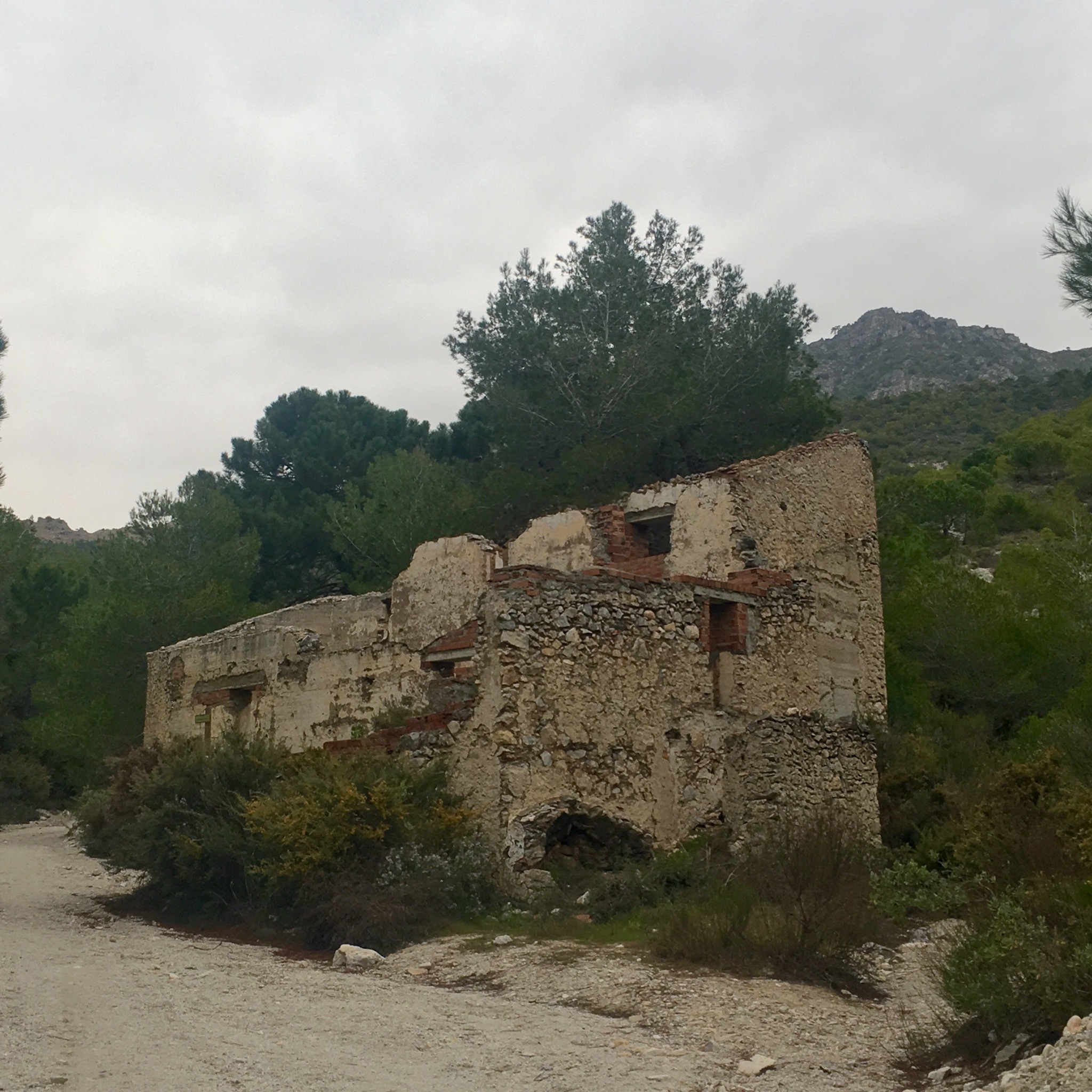
Having left the houses behind I was now on a track leading to the “lost village” of El Acebuchal where the inhabitants many of whom were guerilla fighters in the civil war were driven out by Franco’s men. It lay abandoned for decades until about 20 yrs ago when settlers and some of the original families started to return. It is now a beautifully restored village in an awesome setting with what is reputed to be the best bar/ restaurant in the area.

IMG_3205.JPG

IMG_3200.JPG
From there I followed a stony riverbed

IMG_3207.JPG through thick undergrowth

IMG_3210.JPG to reach the first ancient ventas or rest houses that lined these old transport routes

IMG_3211.JPG
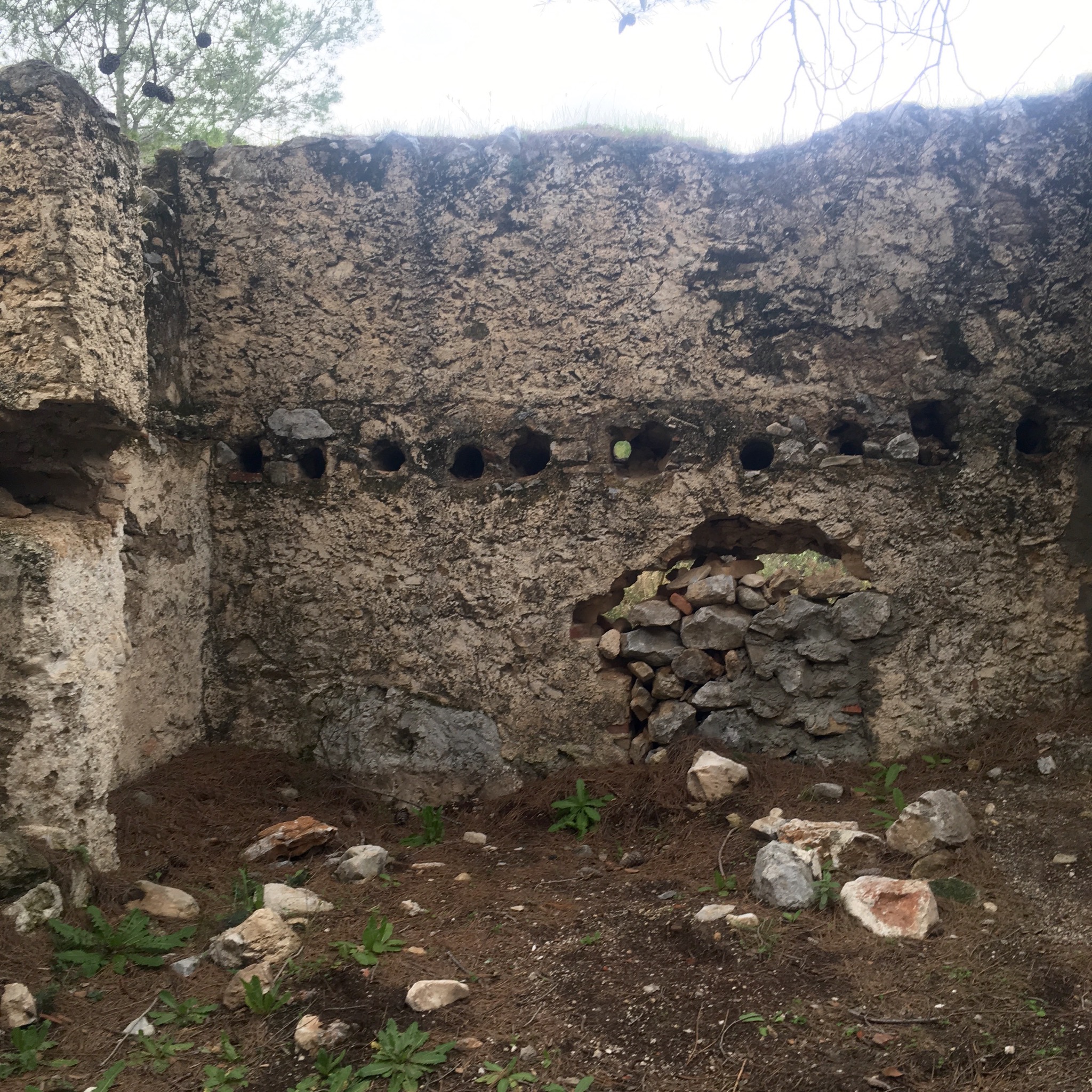
The walls of rammed earth still showed the put holes for timber beams.

IMG_3212.JPG
The whole area was thick with flowering rosemary and the buzzing of bees and I passed many hives.

IMG_3216.JPG
The ridges of the hills were often laboriously cleared of befits toon to create firebreaks in this highly flammable environment.

IMG_3221.JPG

IMG_3219.JPG
Deep into the hills were the remains of remote fincas perfect for the off grid survivalist.

IMG_3224.JPG

IMG_3227.JPG
The cortijo del daire’s terraces still had old cherries, walnuts, figs, olives and pomegranates.

IMG_3236.JPG
After passing the farm I was signed up a steep and narrow path

IMG_3238.JPG through prickly gorse

IMG_3240.JPG leading to evermore impressive vistas

IMG_3241.JPG as it led up to the highest point of my trek.

IMG_3245.JPG
The beautiful path took me on a meandering course through maritime pine

IMG_3249.JPG past more ventas

IMG_3250.JPG complete with lime kilns

IMG_3251.JPG and threshing circles

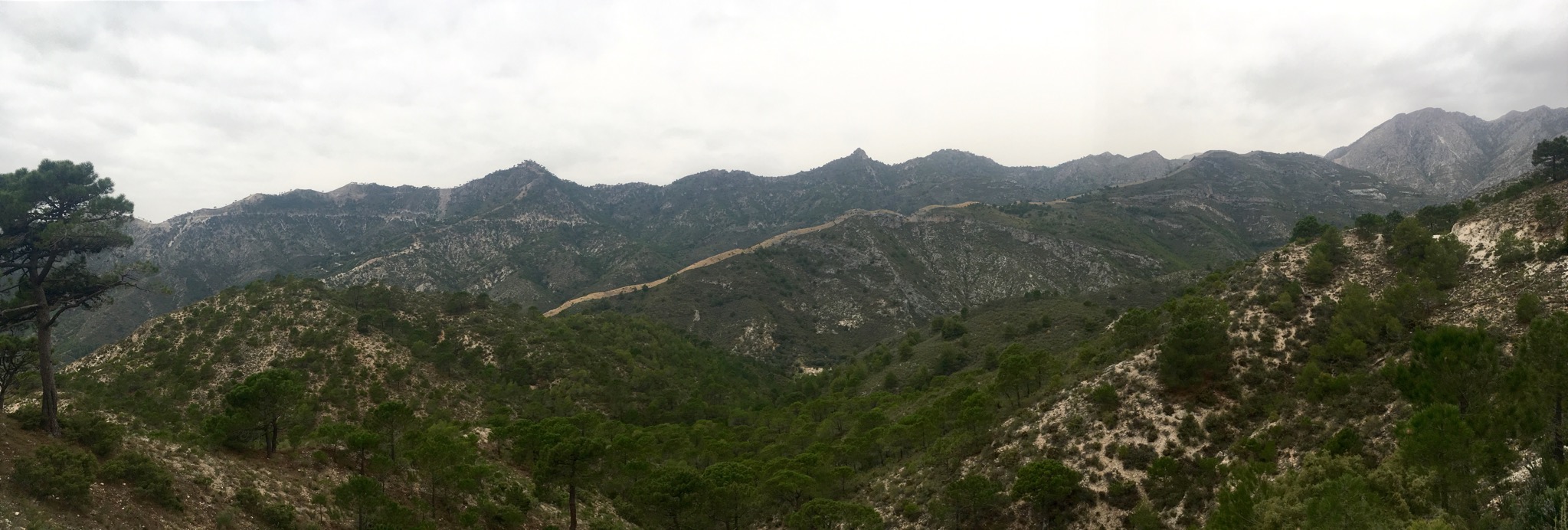
IMG_3252.JPG and along a ridge with views back over my day’s journey.

IMG_3260.JPG
The walls of the Cortijo Maria Dolores told the tale of years of occupation in layers of lime wash built up on the stone walls.

IMG_3261.JPG
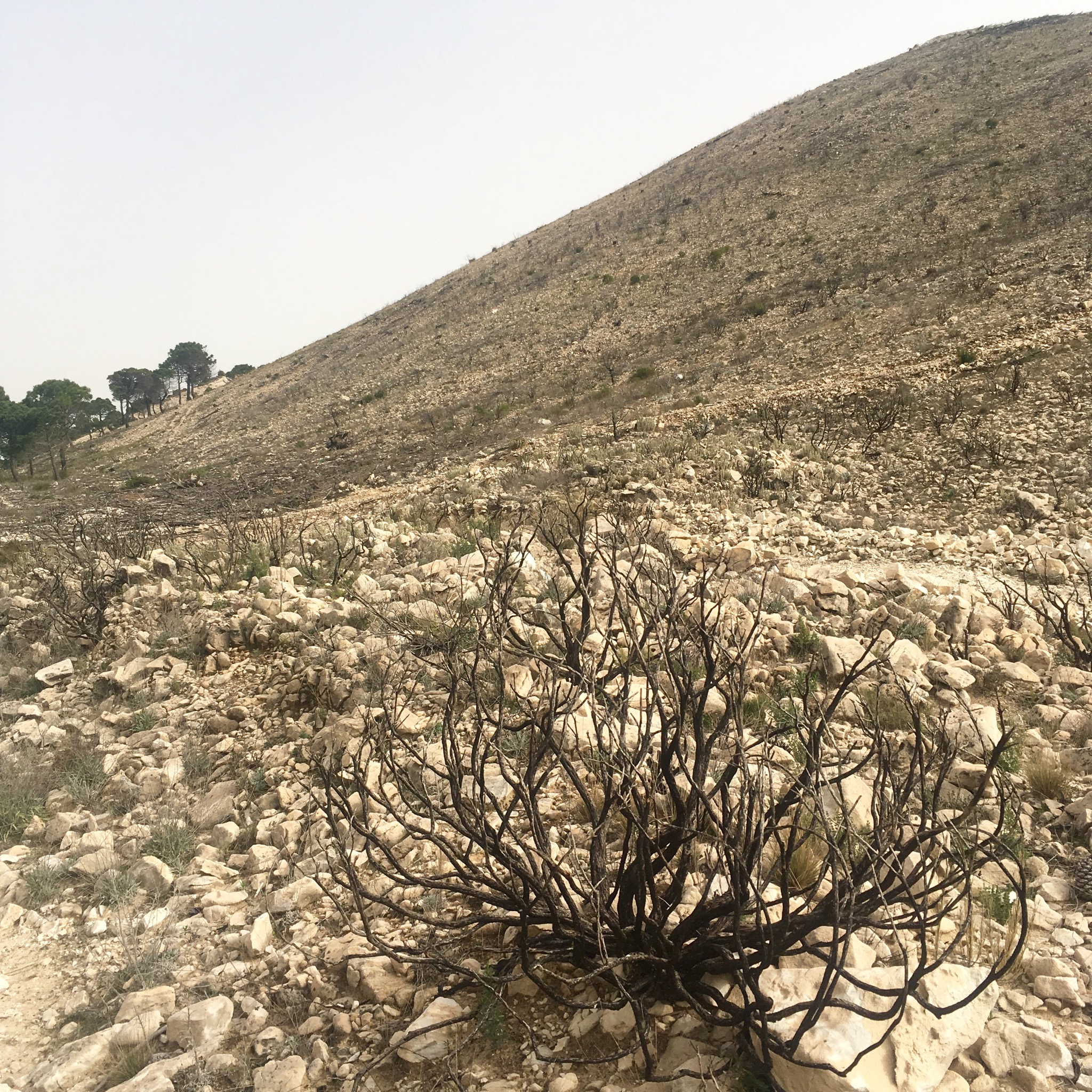
Passing beneath a fire lookout station I was soon confronted with the importance of their work. A huge area of burnt and denuded hillside

IMG_3266.JPG on the outskirts of Competa

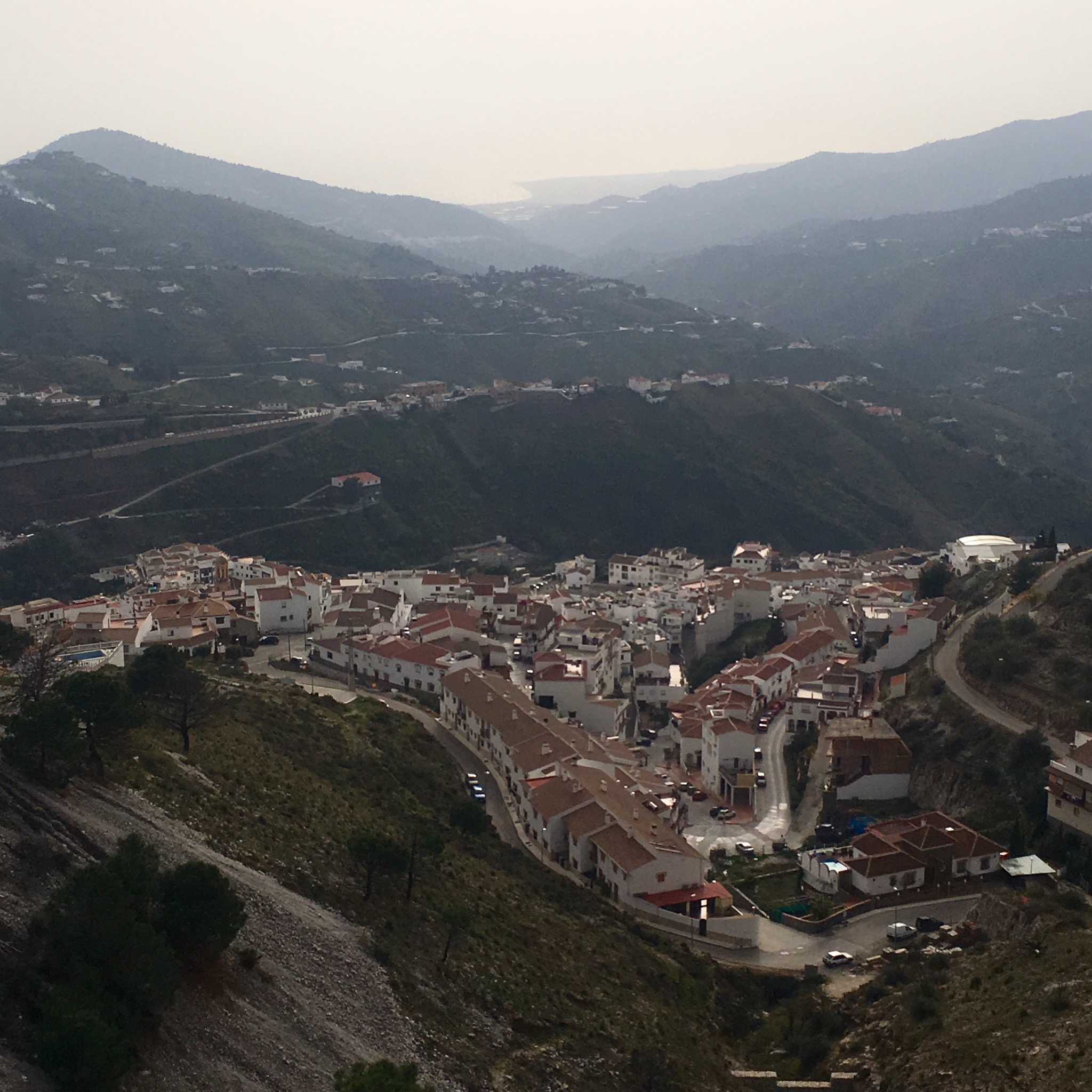
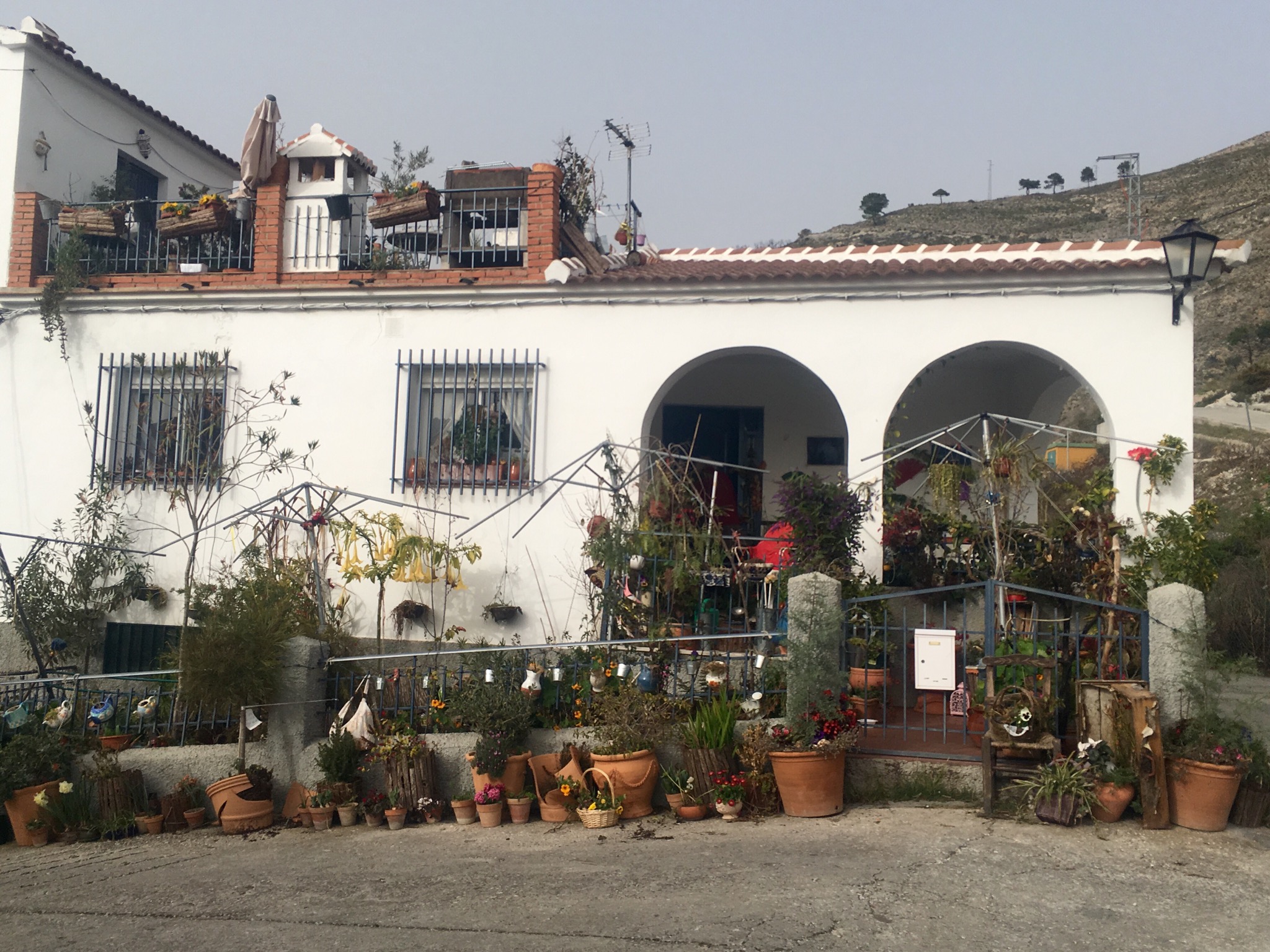
IMG_3269.JPG where the warren of steep narrow streets brought me down passed many pretty properties much sought after by foreign buyers.

IMG_3271.JPG

IMG_3273.JPG

IMG_3272.JPG
At the edge of town I reach the end of my trip on the GR 249 and a cold beer in the camper.
A very varied few days hiking that only wetted my appetite for more, although it’ll be tougher without the support of Trusty Trev.

LA GRAN SENDA DE MALAGA : GR249. 18th Feb La Capeta de Velez to Nerja

I managed to get 2 stages completed today, a total of 28 km altogether which according to my computations was the same as yesterday, the difference being that today involved my first real climbs and first contact with the wilder side of the Costa.
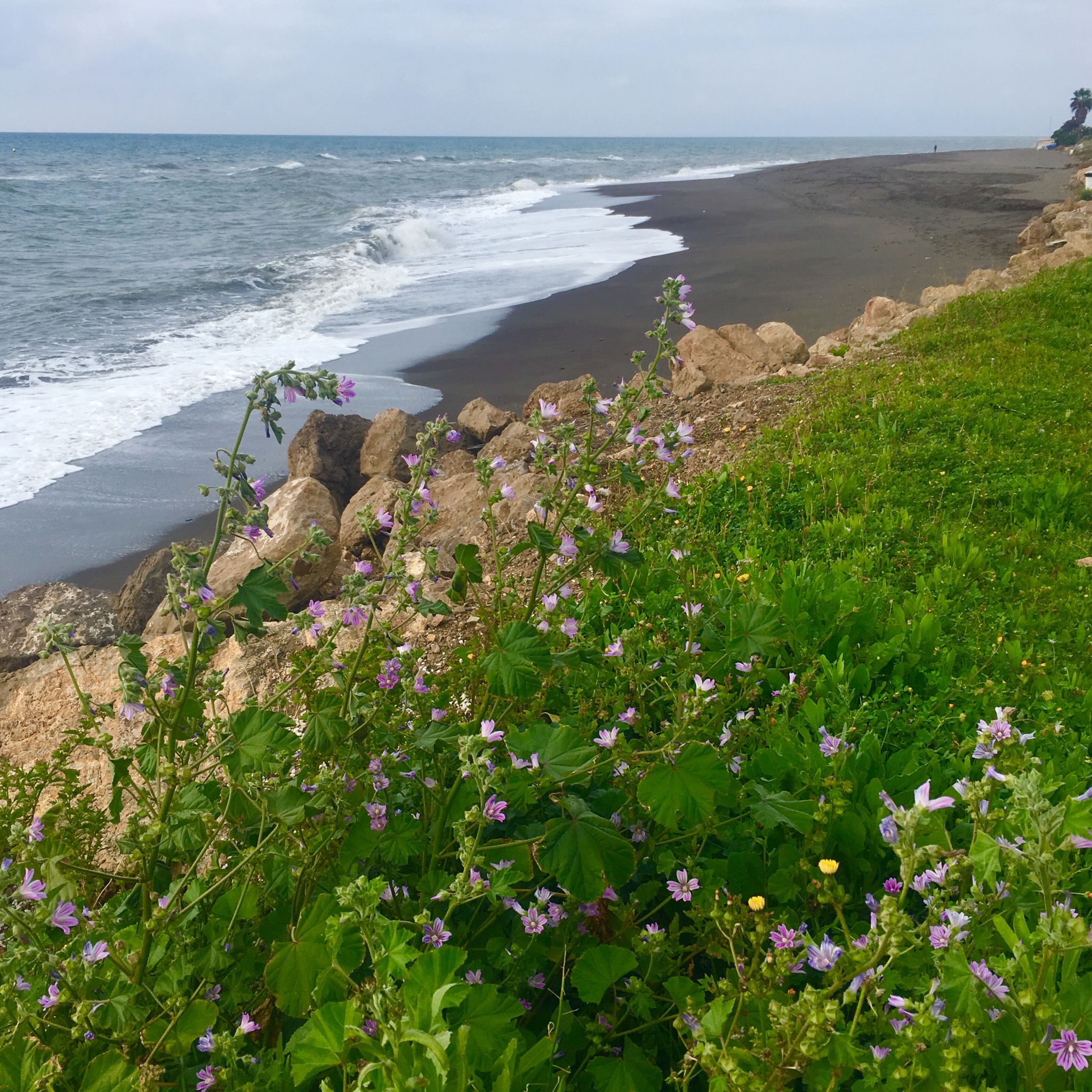
I started from our quiet seaside street and continued along a paved beachside promenade.
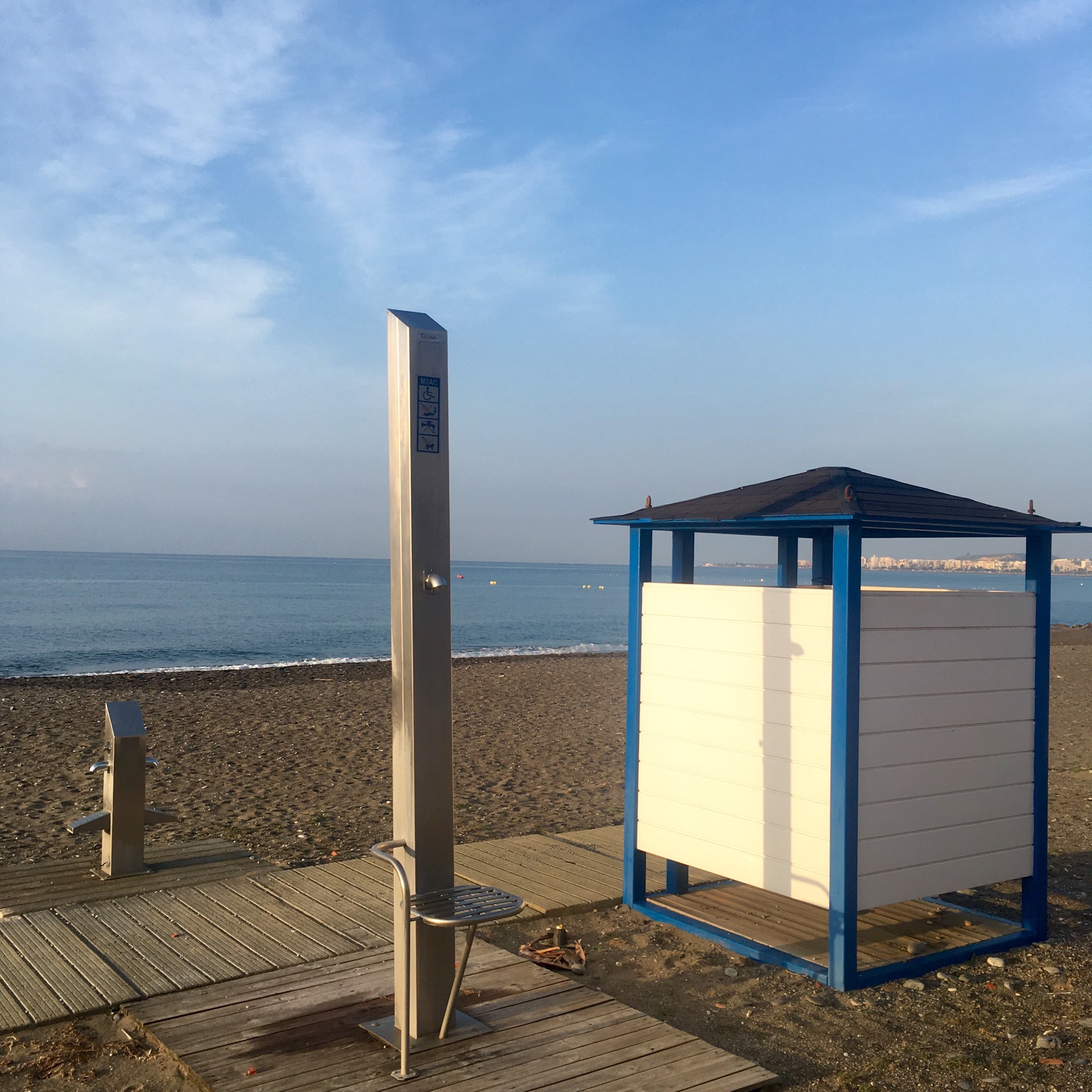
I’m always impressed by the facilities provided on the Spanish beaches with changing rooms and showers every 100m or so.

IMG_3011.JPG
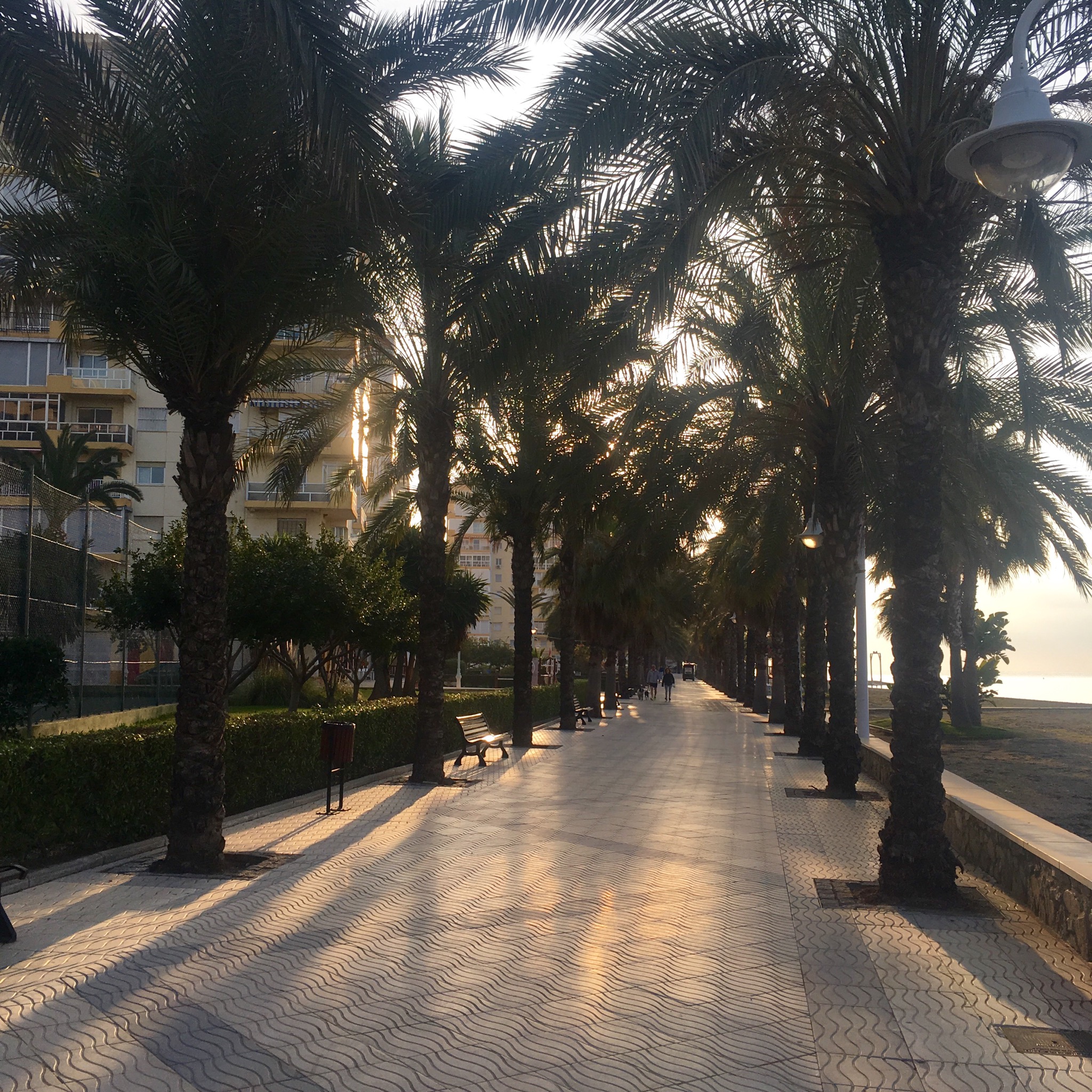
The early morning sun shone through the palms as dog walkers and joggers fulfilled their daily routine.

IMG_3014.JPG
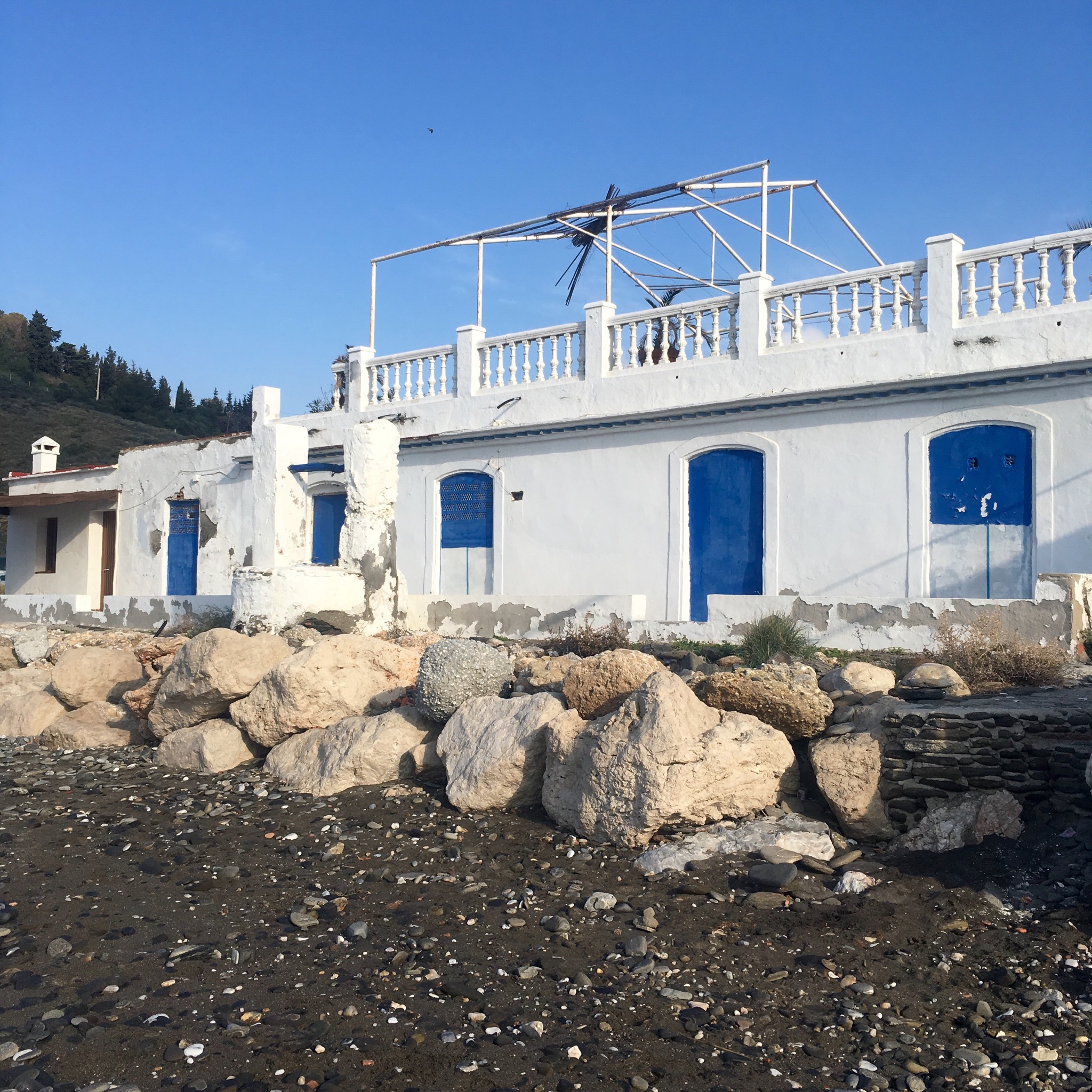
The high rise apartment buildings and tourist bars and restaurants ran out as I came into Lagos, a small scale traditional settlement without the sandy beaches that fuelled the development elsewhere. The simple seaside dwellings around there continued through the busier town of El Morche, sometimes with large tower blocks behind them.

IMG_3019.JPG

IMG_3033.JPG

IMG_3022.JPG

IMG_3031.JPG

IMG_3025.JPG

IMG_3034.JPG

IMG_3035.JPG
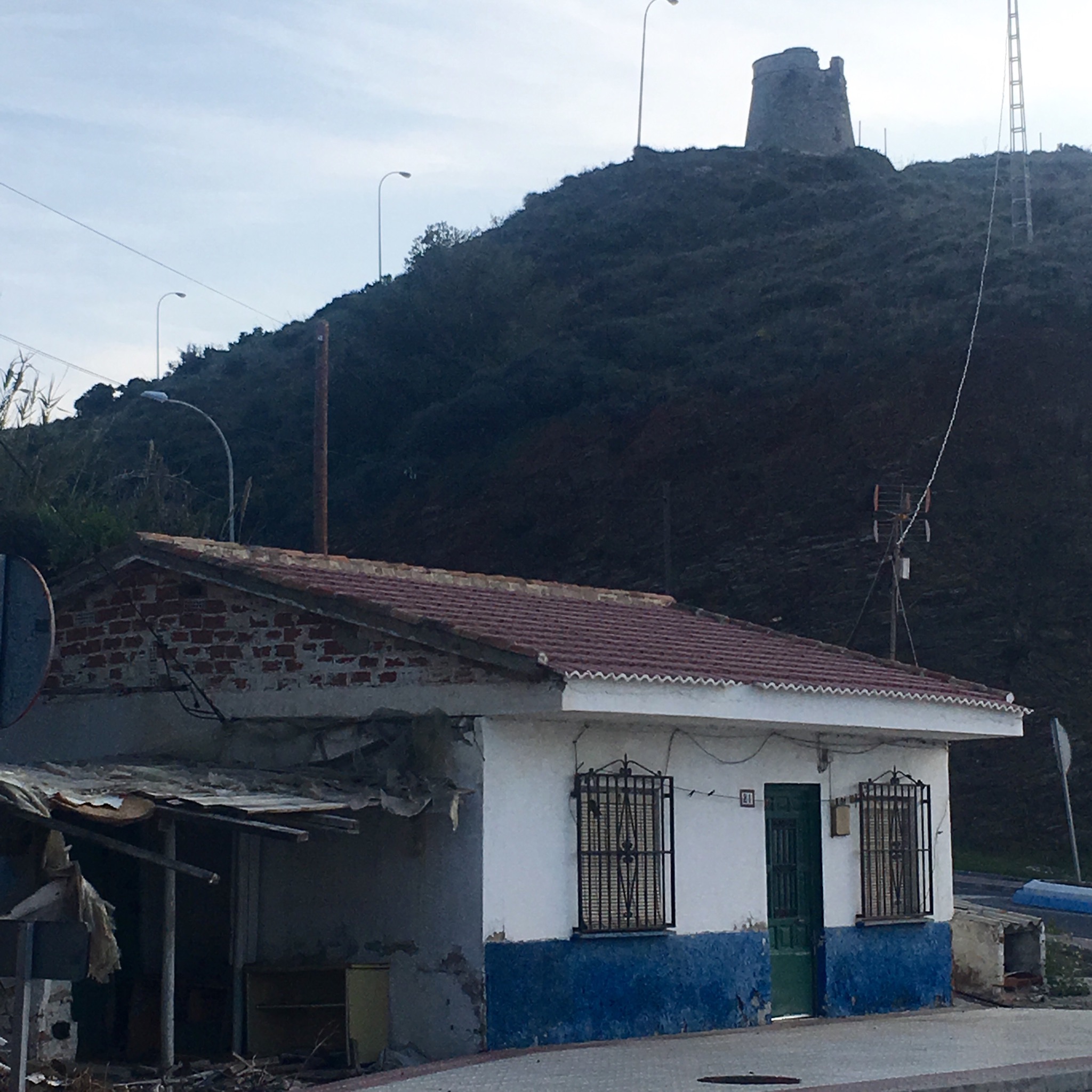
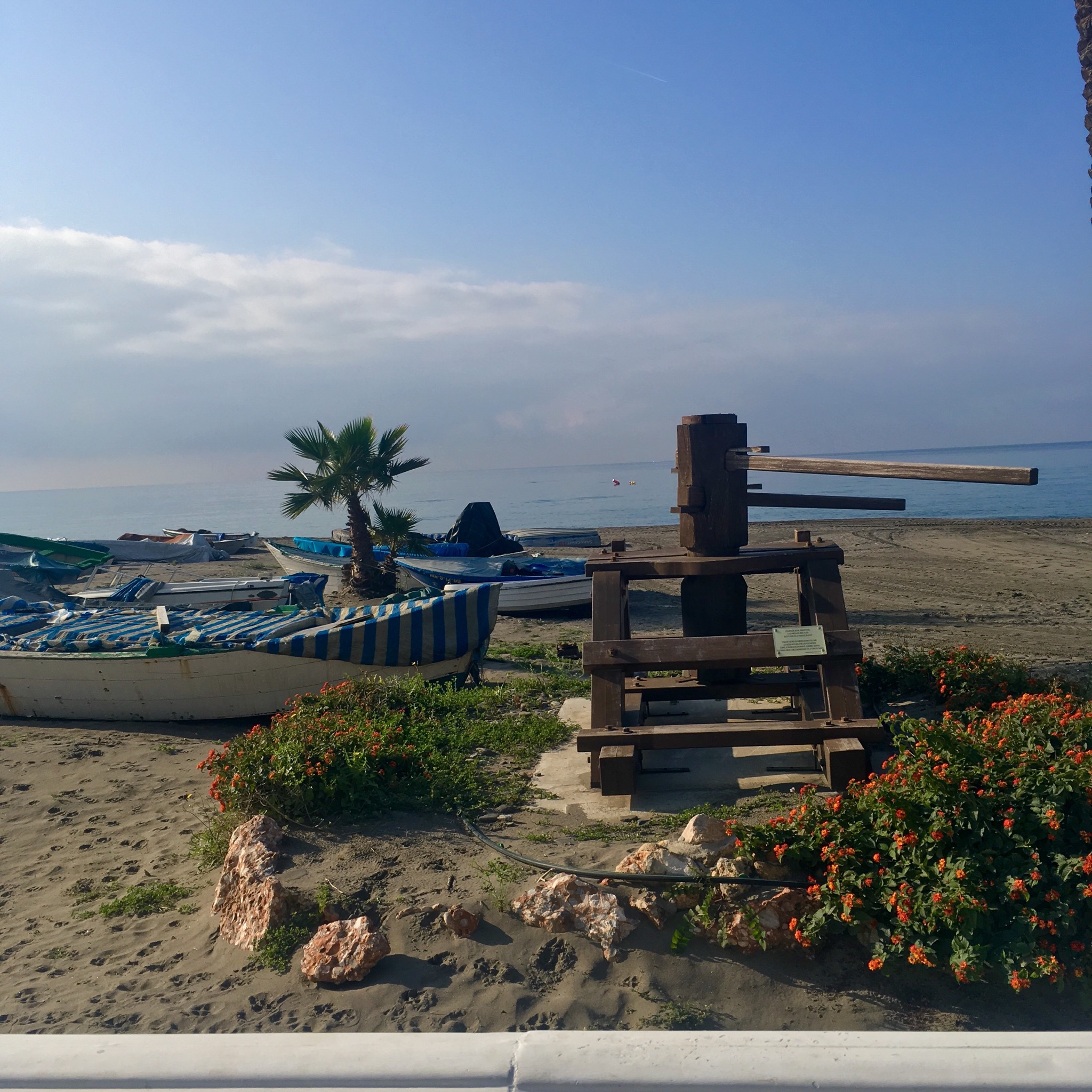
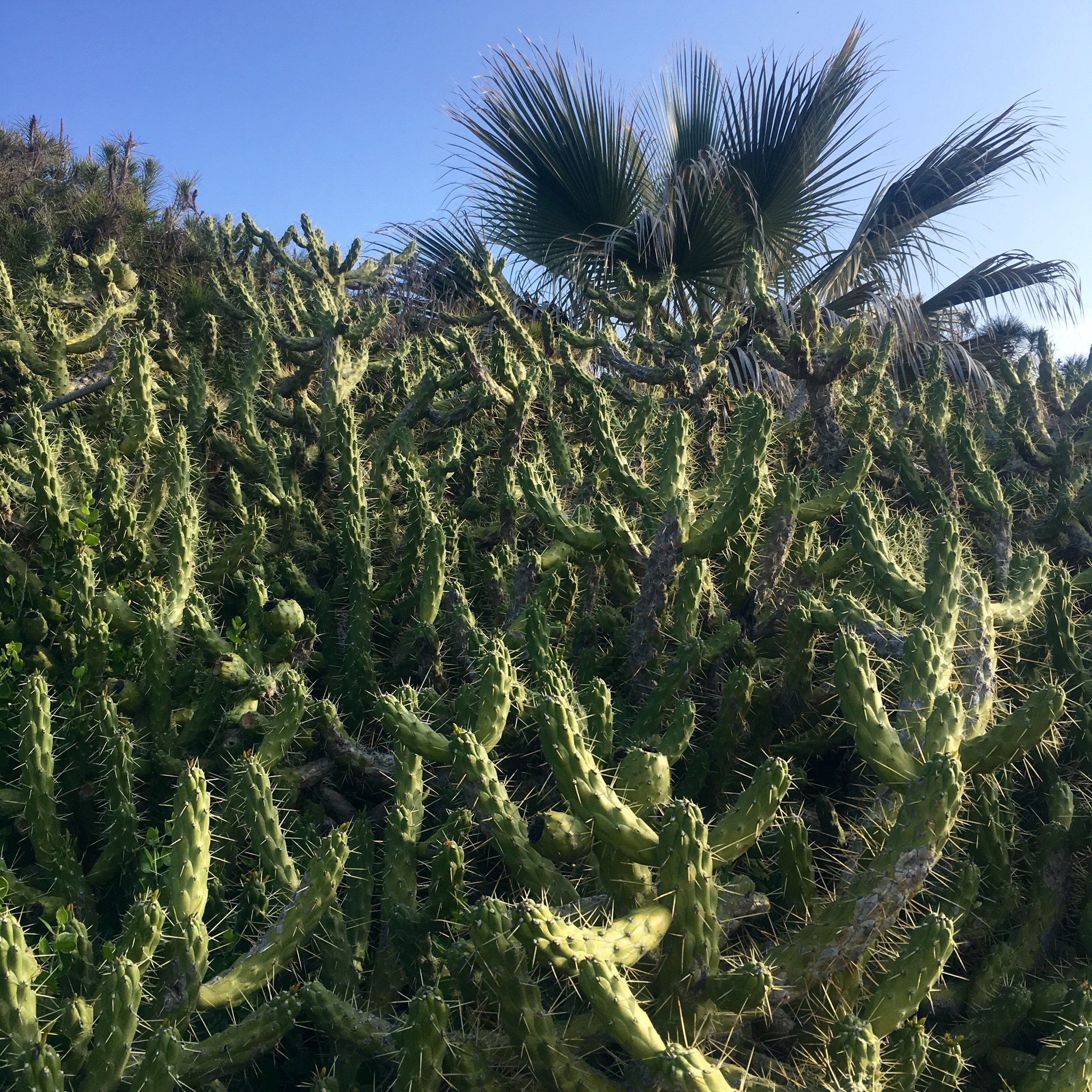
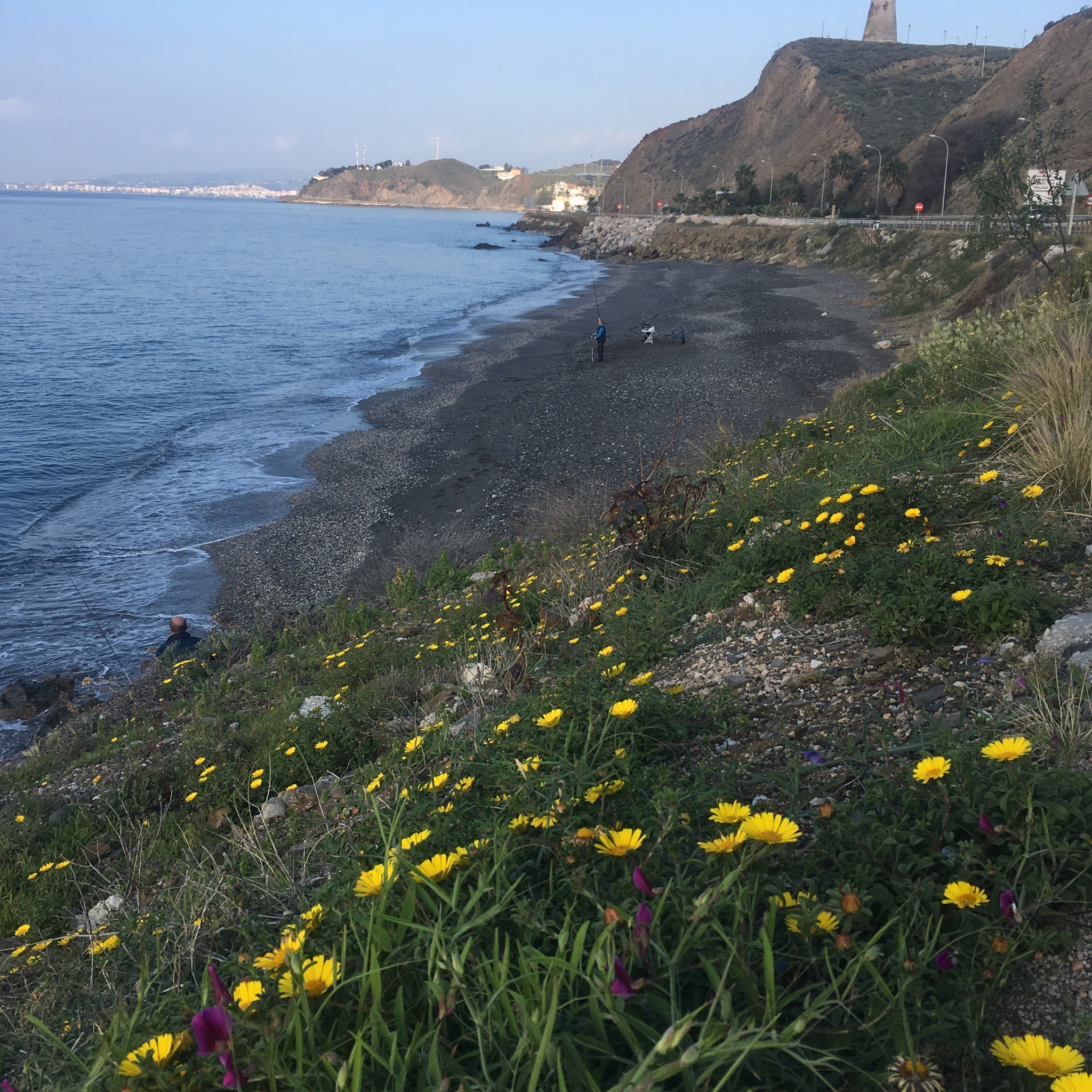
There were a series of fortified watch towers keeping an eye out for pirates and privateers along the coast and the route led me through patches of flowers and cactus past the winches used for hauling the boats out of the sea.

IMG_3038.JPG

IMG_3032.JPG

IMG_3026.JPG
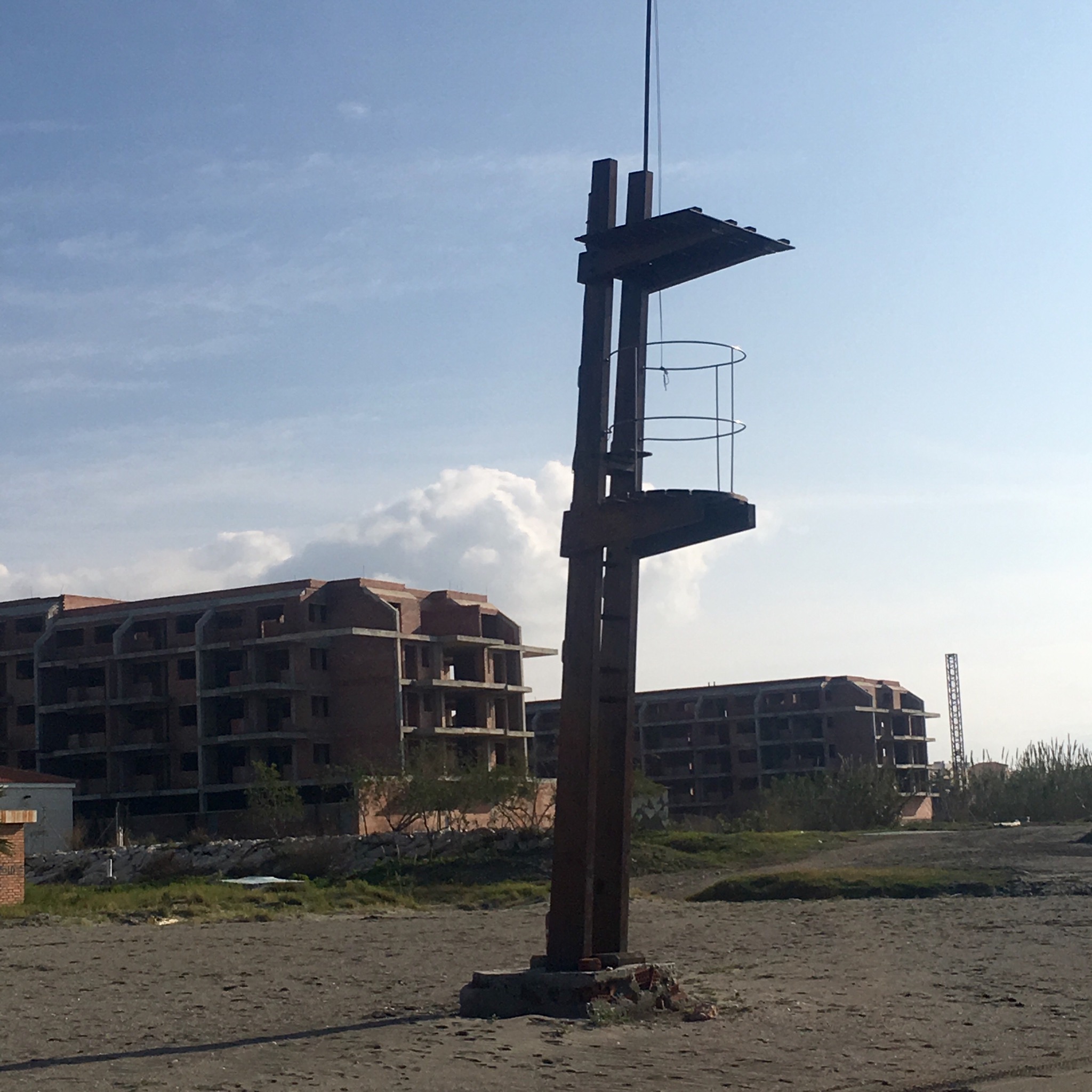
As I approached Torrox Costa the hulks of unfinished developments again reared their ugly heads above the beach.

IMG_3040.JPG
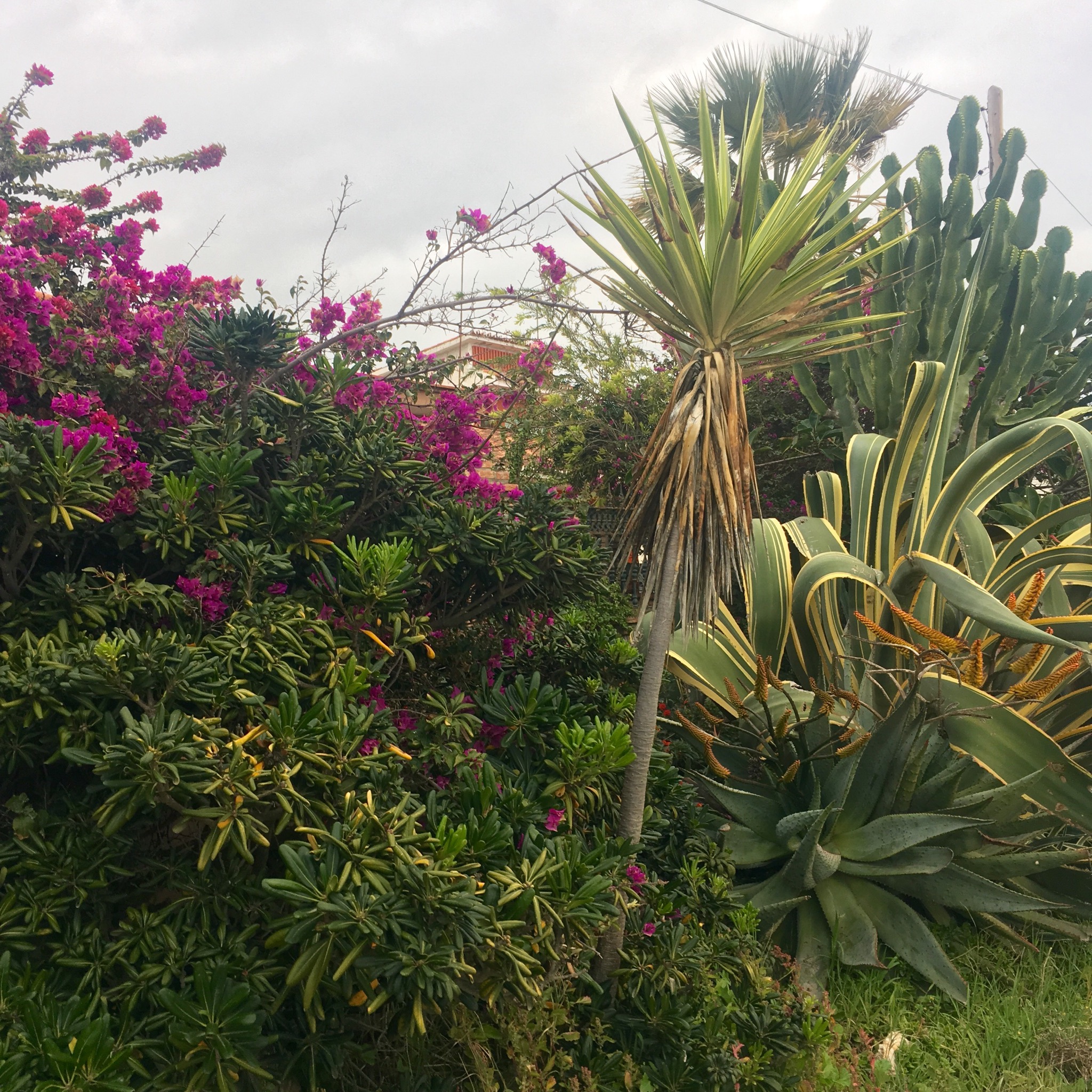
But back on the prom of the town proper I admired the exotic plantings and the creative pruning.

IMG_3045.JPG
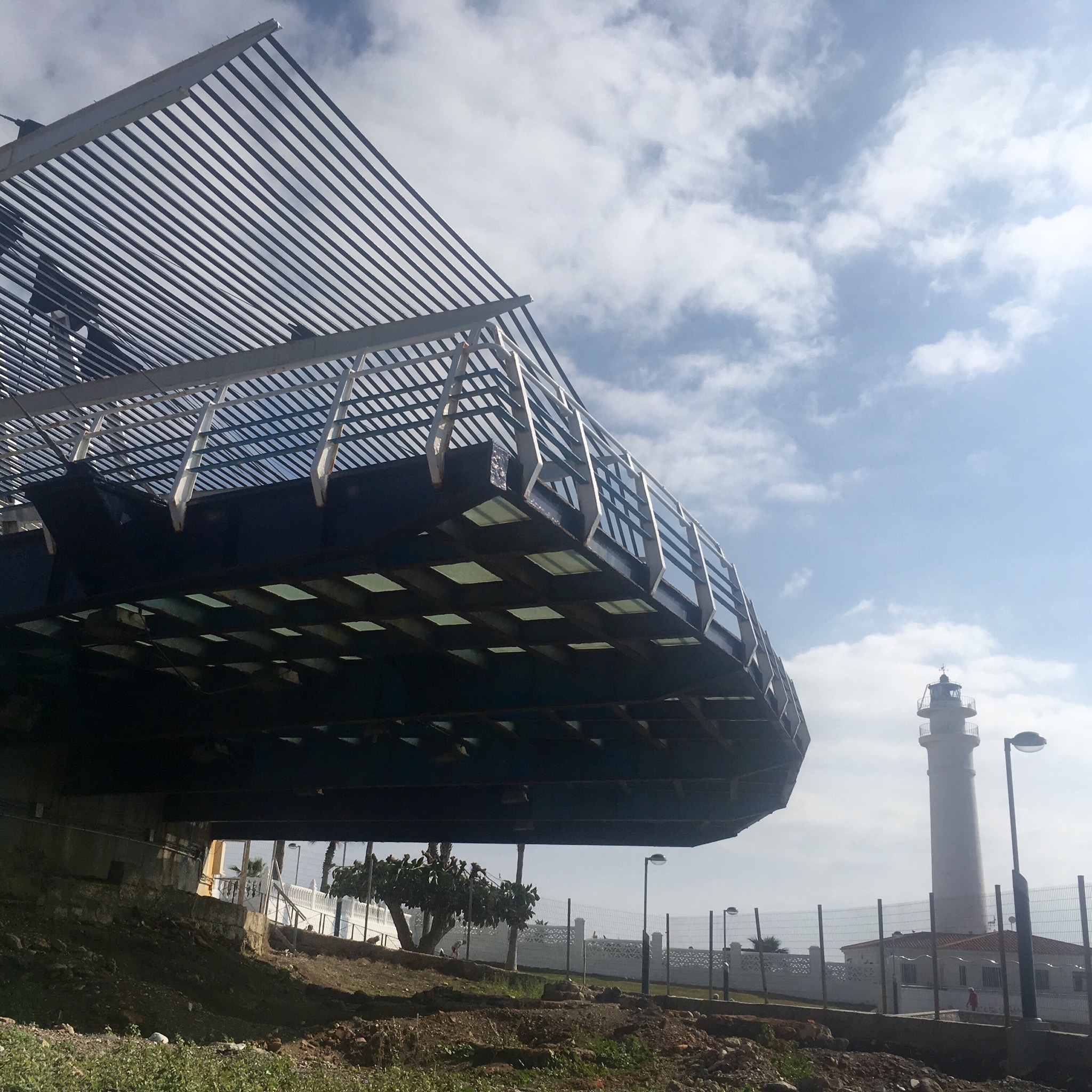
Just before the lighthouse was a strange construction with a glass floor built out over the ancient ruins of a necropolis and fish salting factory where they also made the unappetising sounding ” Garum sauce” whose chief ingredient was “guts”.

IMG_3046.JPG
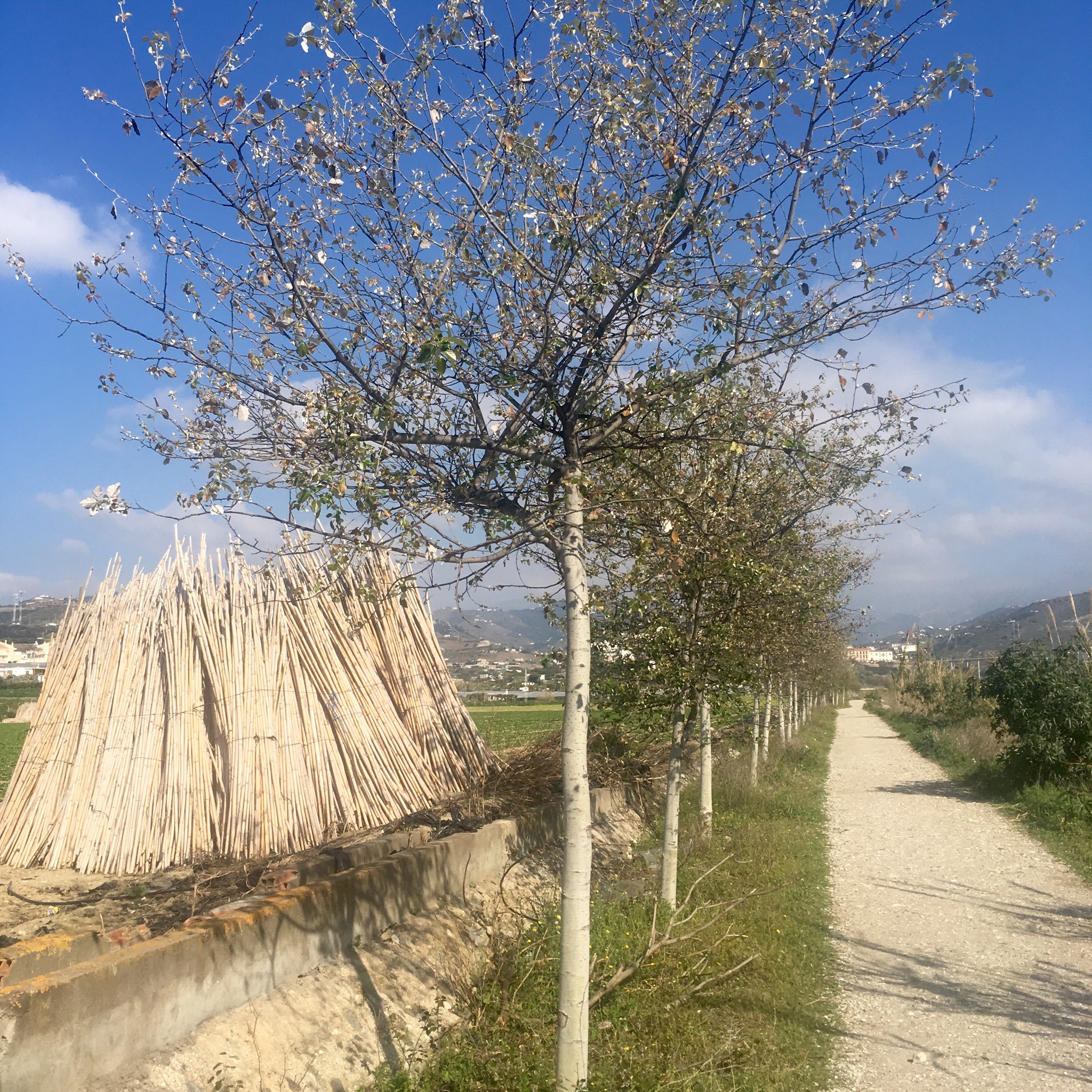
This was the point where I finally left the Costa behind and headed for the hills. I started up a track beside the dryish river bed with irrigated fields to one side.

IMG_3051.JPG
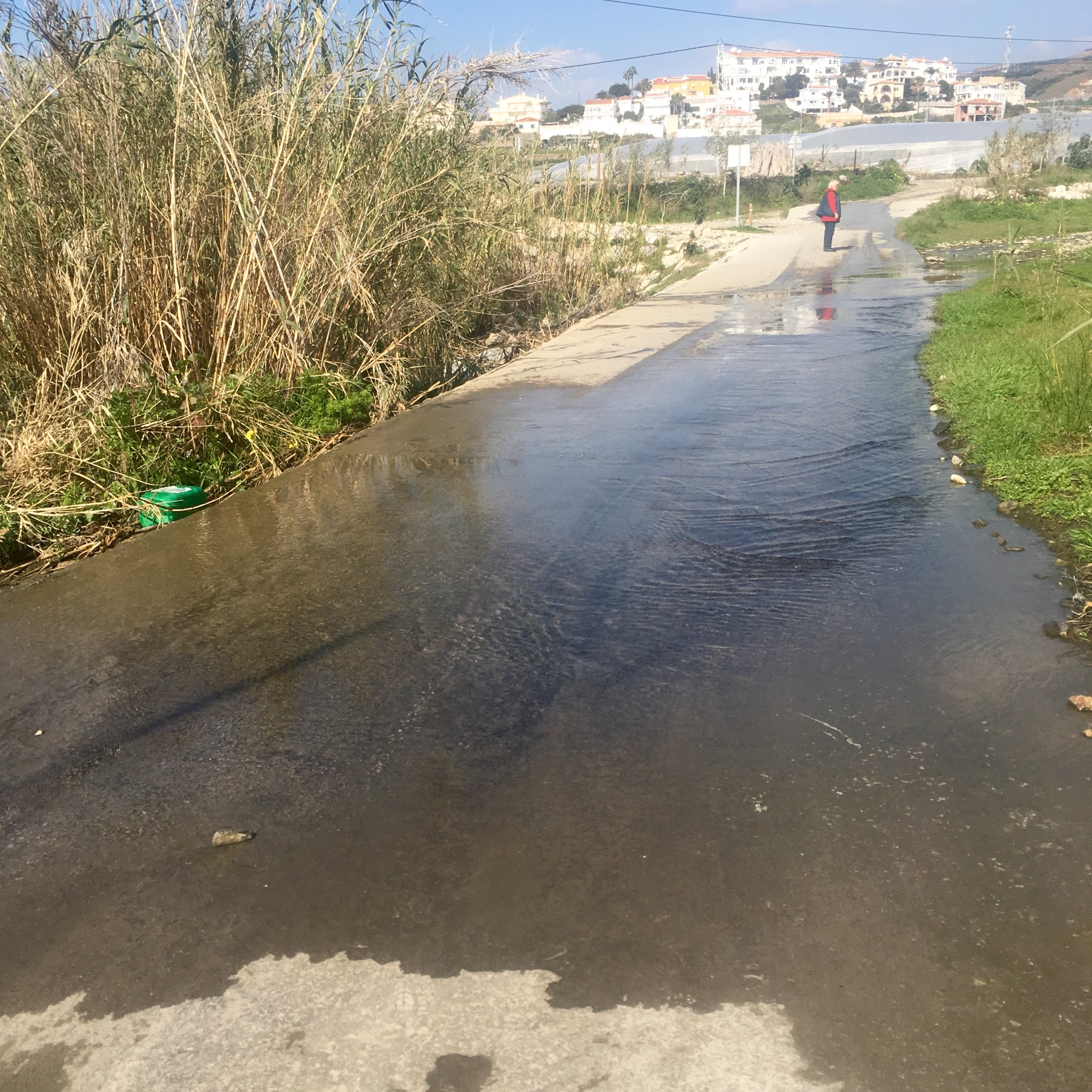
Before long I had to make my first river crossing, described in my translated guide as wading.

IMG_3052.JPG

IMG_3056.JPG
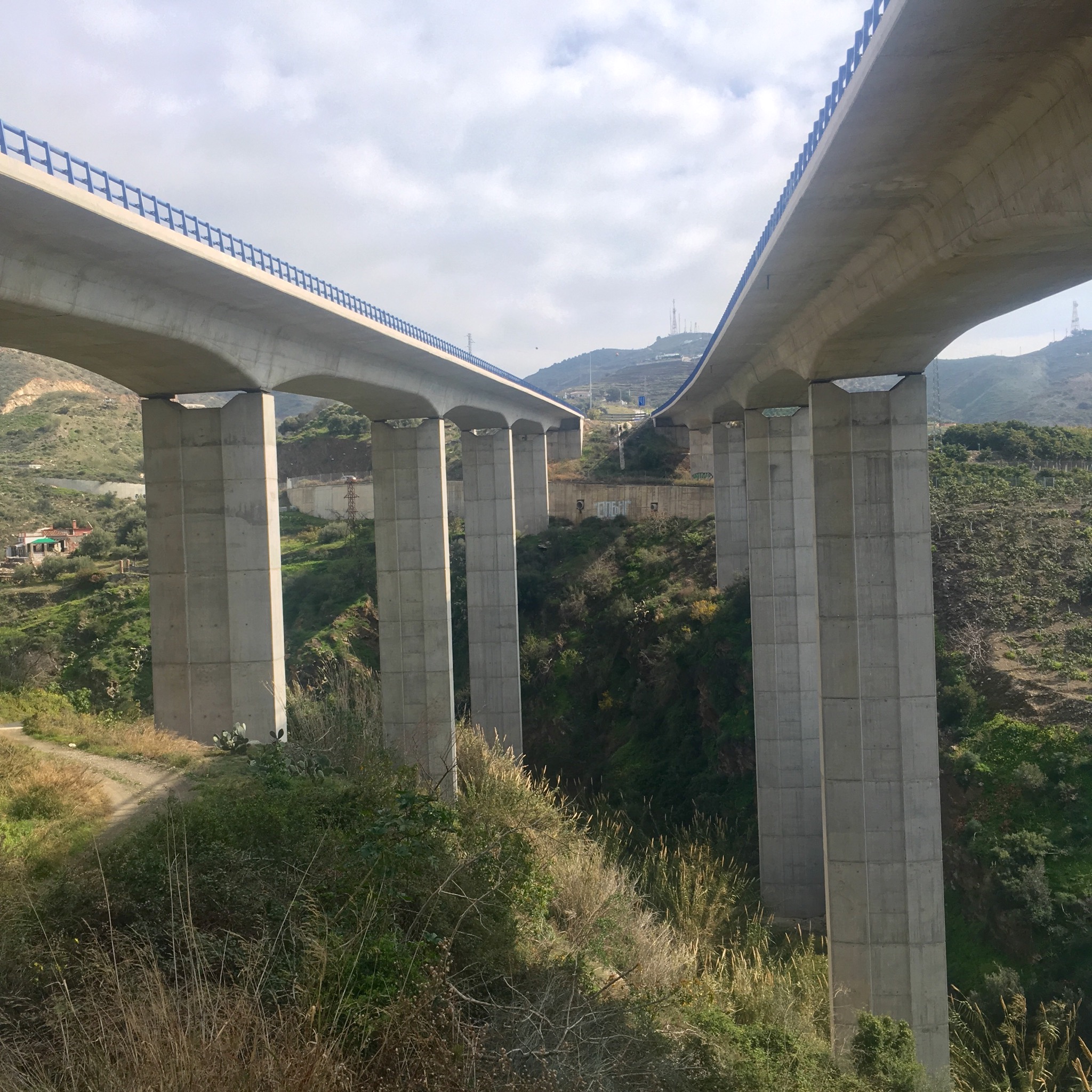
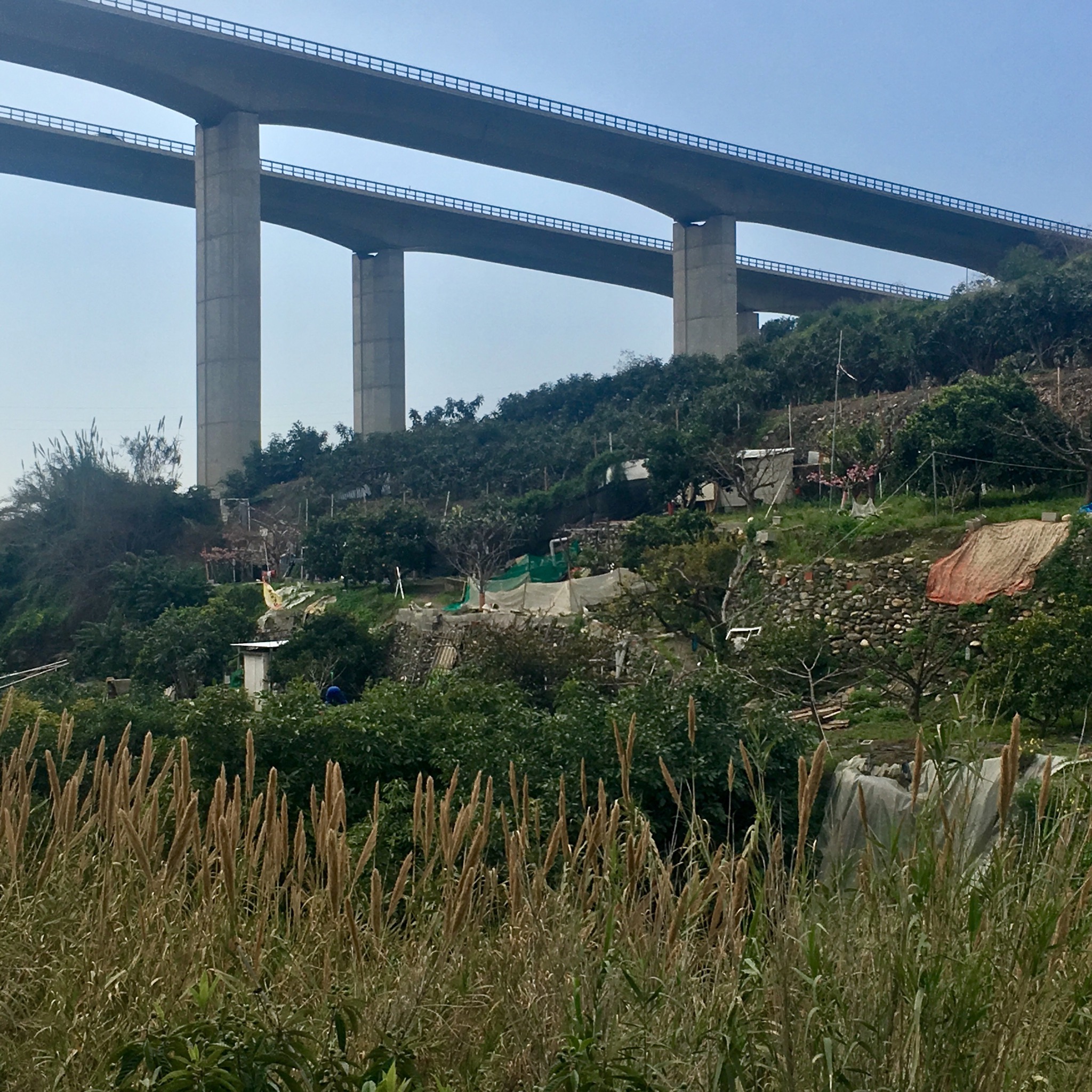
I climbed up and up, the track getting smaller and smaller towards the humming edifice of the A7 motorway that strode across the valley on giant concrete legs.

IMG_3060.JPG
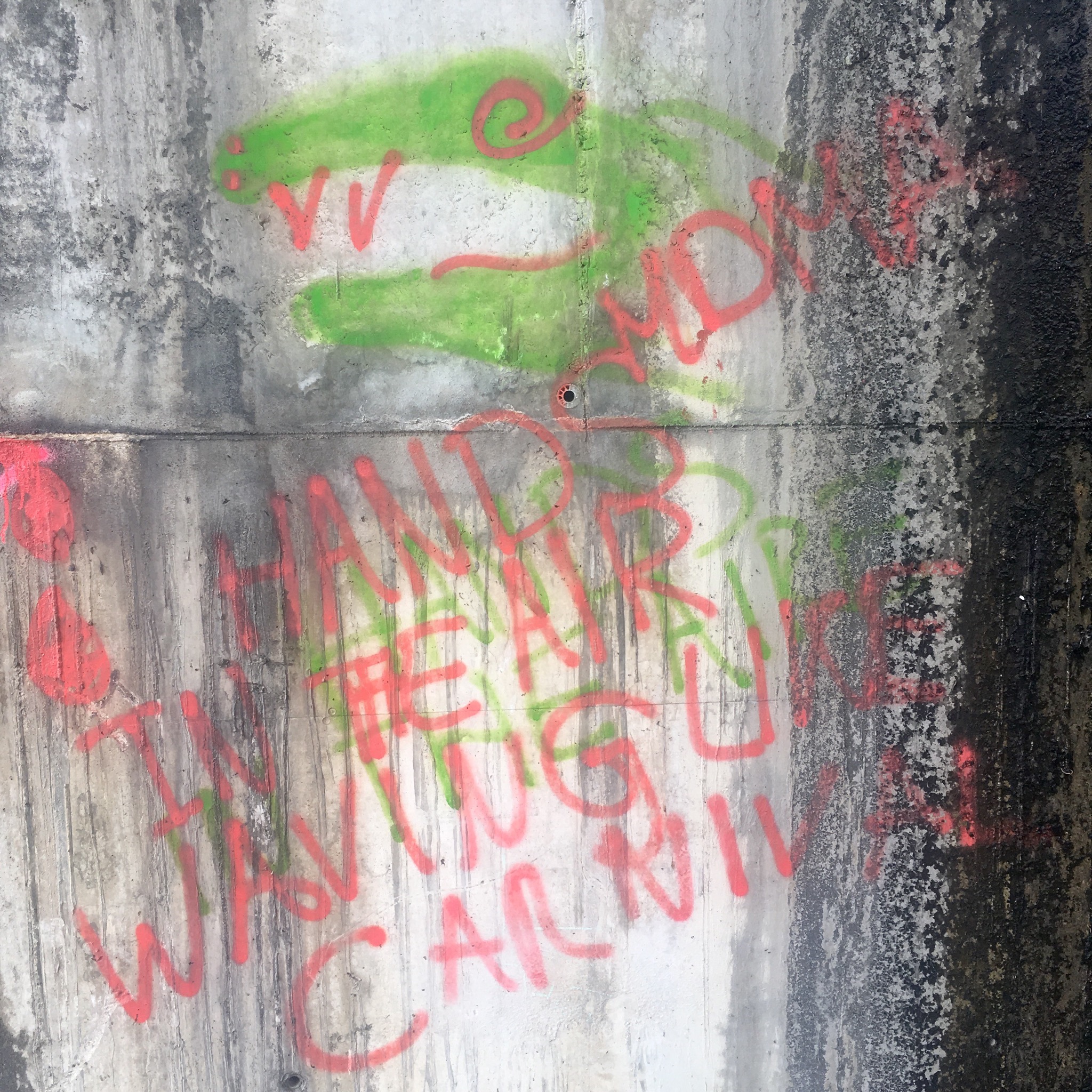
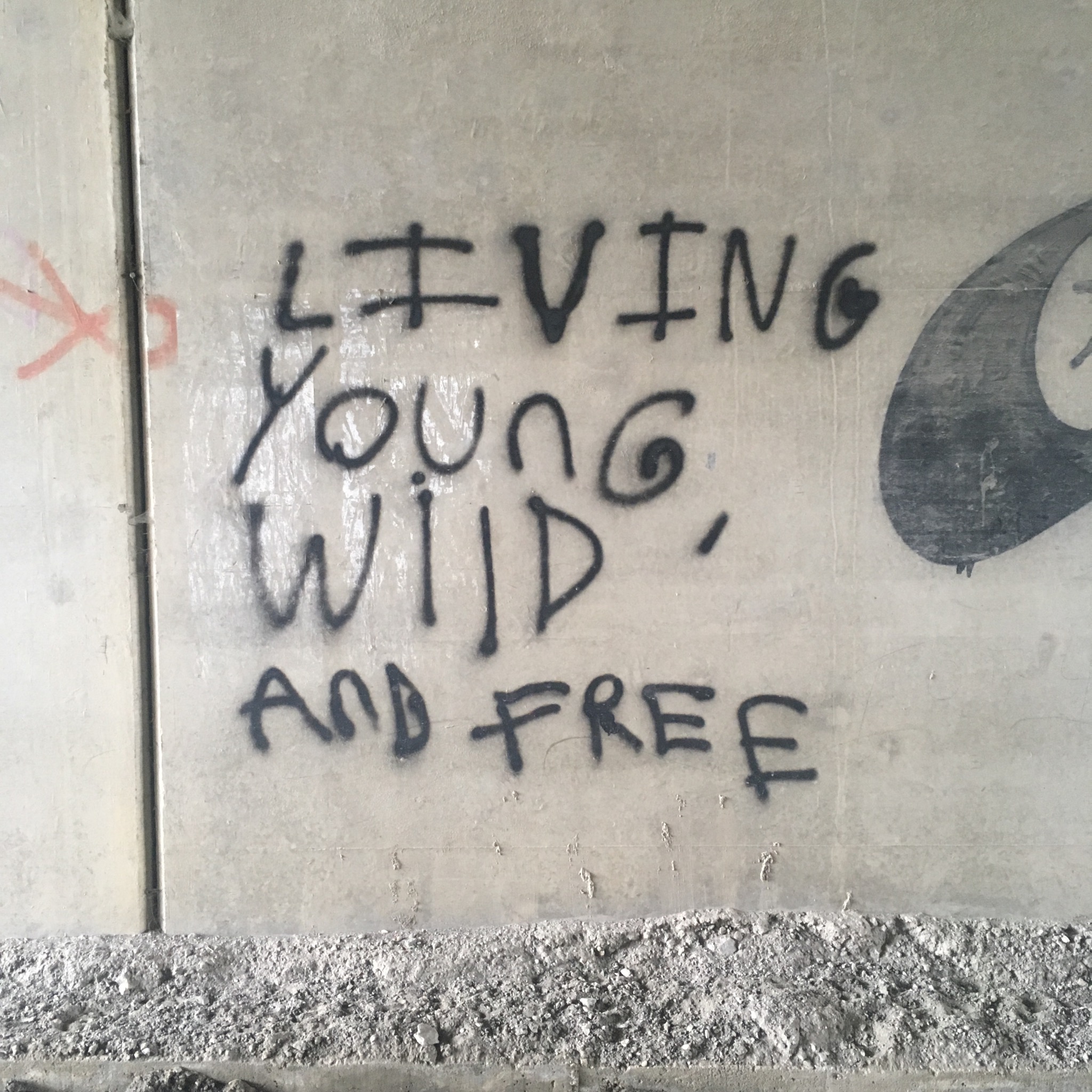
Strangely some youth had decided that the undercarriage of this alien environment was a good place to have a good time and declare so in graffiti.

IMG_3059.JPG
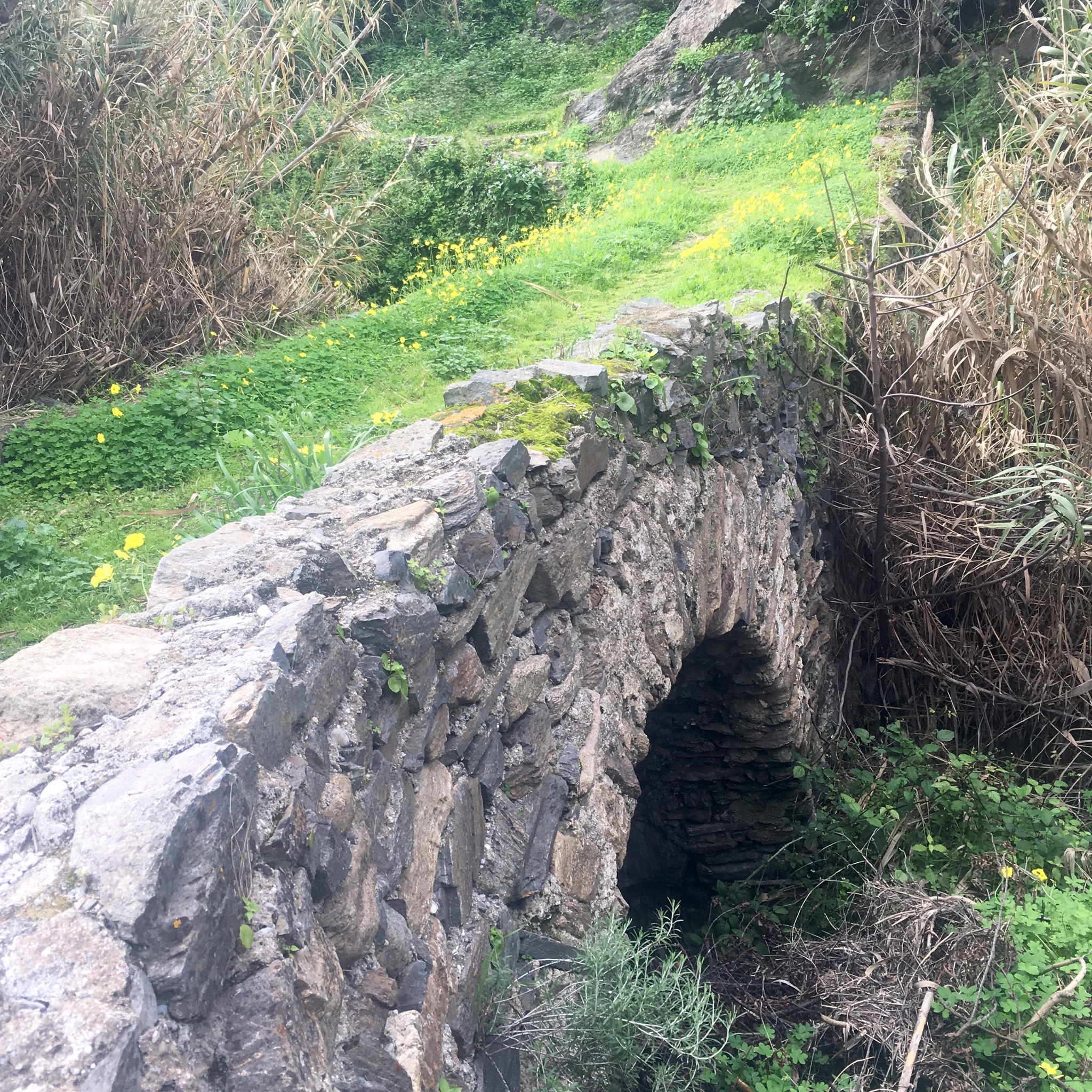
Incongruously, as I passed under the most modern transport route I started down the days oldest, a mule and walkers track that wound down to the valley bottom and over a tiny old stone bridge.

IMG_3063.JPG

IMG_3064.JPG
The vegetation was lush and small little subsistence farms plots were still tended in the shadow of the gigantic motorway structure, the slow movements of the gardener in contrast to the rushing traffic above.

IMG_3066.JPG
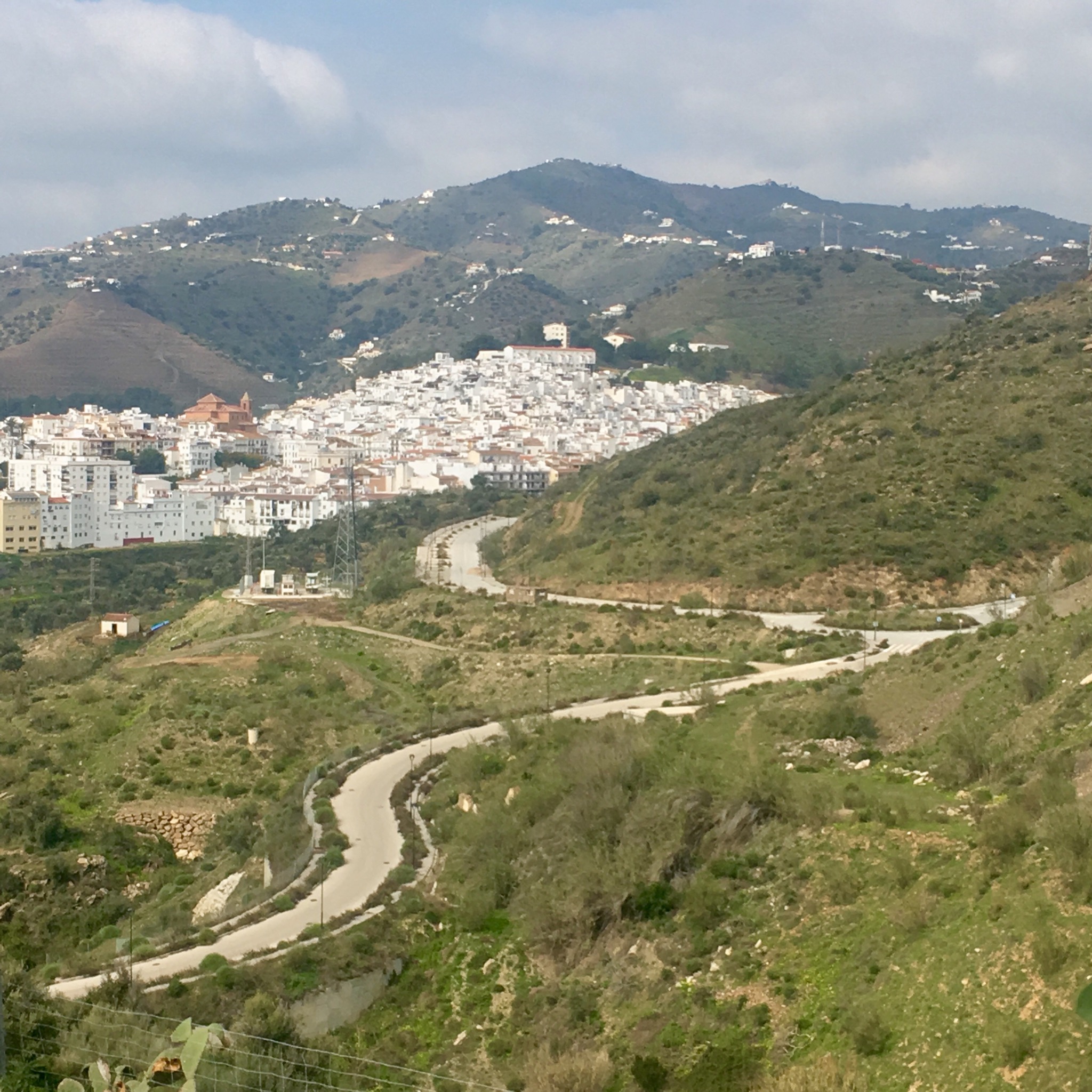
Climbing back under the A7 on the other side of the valley I rose up on higher ground until I was looking down across it, to another huge area of unfulfilled property speculation. We’d seen the signs for years as we sped down the motorway, advertising houses that never got built, but now I could see the extent of infrastructure that had been put in. Roads to nowhere.

IMG_3070.JPG
I’d been hearing the noise of the motorway for too long and was relived when the traffic was swallowed up by the gaping mouths of tunnels that I climbed high above.

IMG_3071.JPG
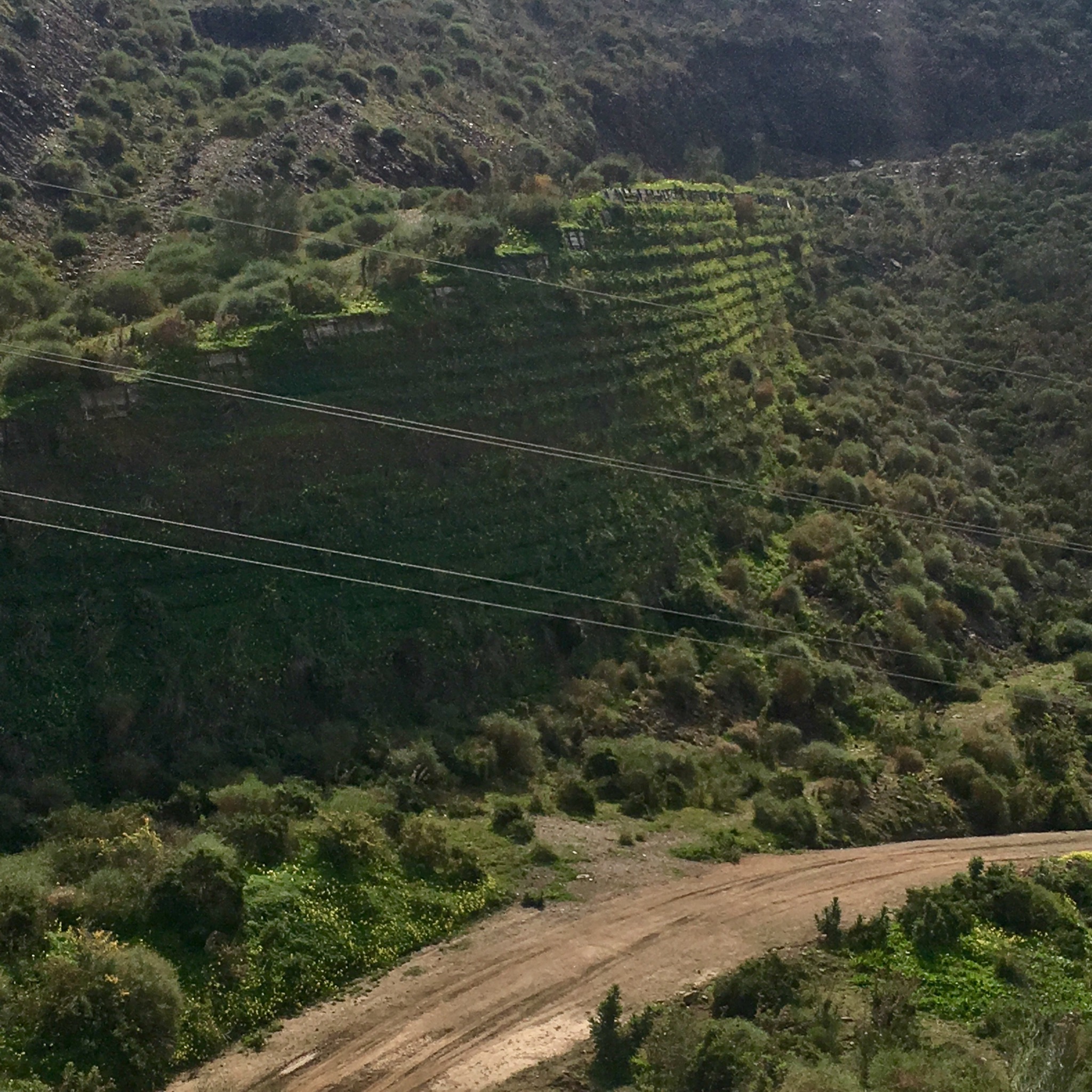
Passing by a hill seemingly held together by lines of plastic webbing

IMG_3075.JPG

IMG_3074.JPG I finally came to the peak of El Puerto at 265m where I sat by an ants nest and had my lunch gazing at my destination , Nerja , a long way below me.

IMG_3076.JPG
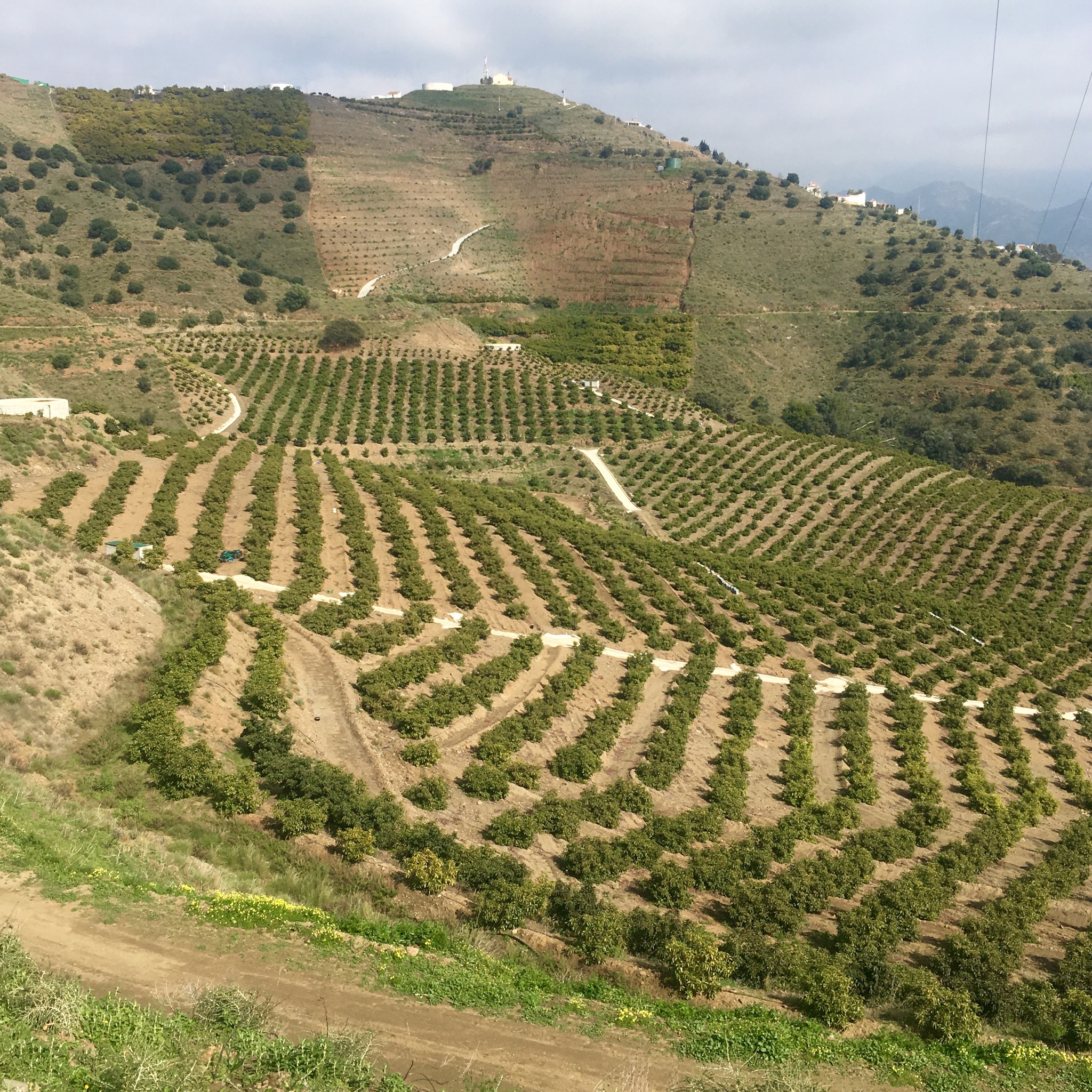
The landscape changed again as I started down the long descent with a vista of avocados before me.

IMG_3078.JPG
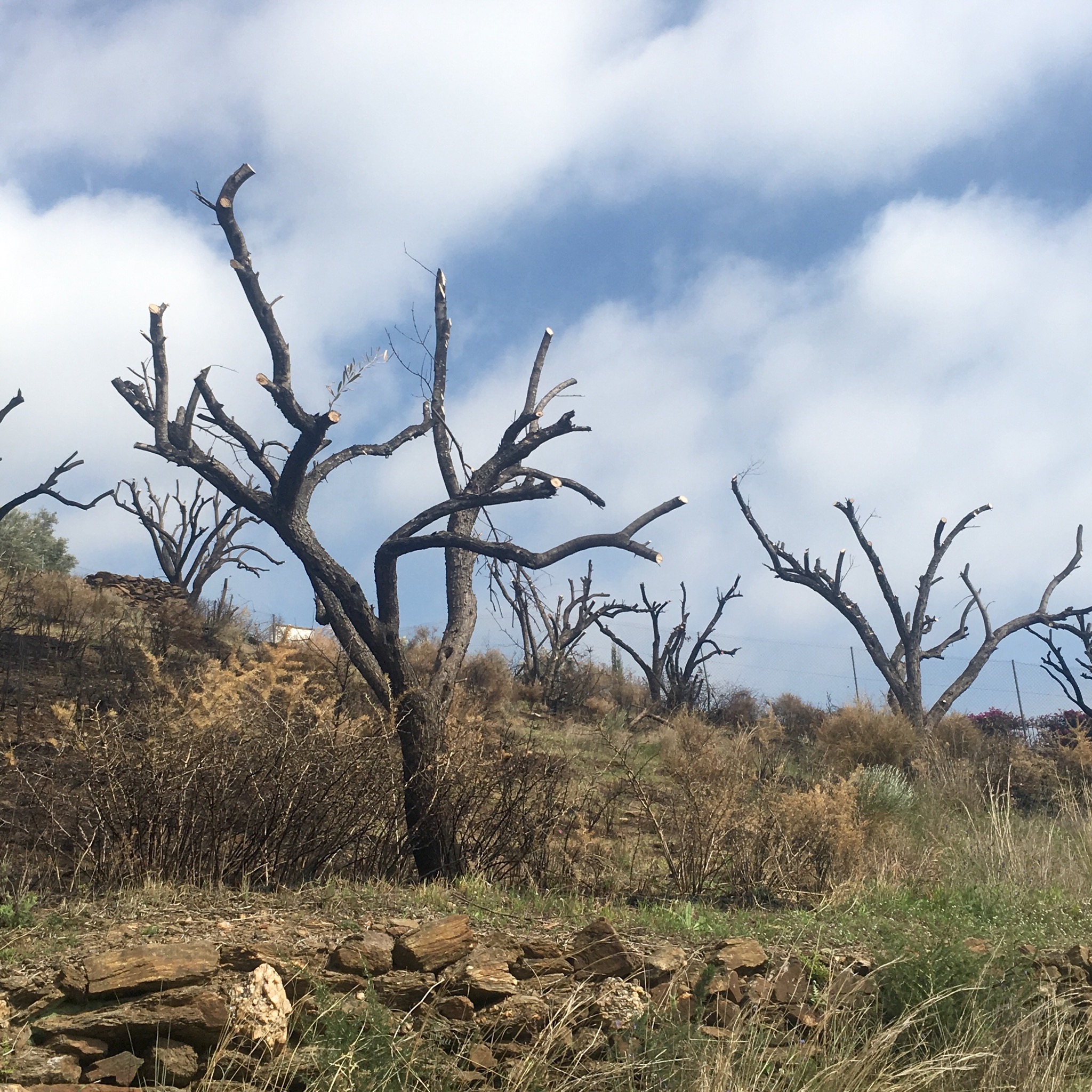
A little later I came across a grove of the most radically pruned olive trees I’ve ever seen.

IMG_3080.JPG
There were some spectacular villas on the hills here with sea views and very wealthy inhabitants but alongside that , a simpler lifestyle continued.

IMG_3086.JPG
As I walked through a tunnel under the motorway for the last time I found more graffiti evidence of youth seeking freedom in unlikely places

IMG_3087.JPG before approaching Nerja on a labyrinth of tiny lush tracks through the crops.

IMG_3089.JPG

IMG_3090.JPG
Just before I emerged into the town proper with its roundabouts, shops , bars, and general busy 21st century life I passed another reminder of simpler times, one that is still managing to co exist with the present.

IMG_3093.JPG

LA GRAN SENDA DE MALAGA: GR 249 16/17th Febuary Malaga to La Caleta de Velez

A little while ago when we were hiking a bit of the GR 7 in southern Spain, we discovered we were also on the GR 249. A bit of research showed that this was a new route that circles the entire Malaga Province, a distance of around 660km. Very tempting.
Although I’d have loved to set out to do the whole thing over a month responsibilities did not allow such wanton walking but I have managed to slip away for a week to tackle the first 120 km or so.
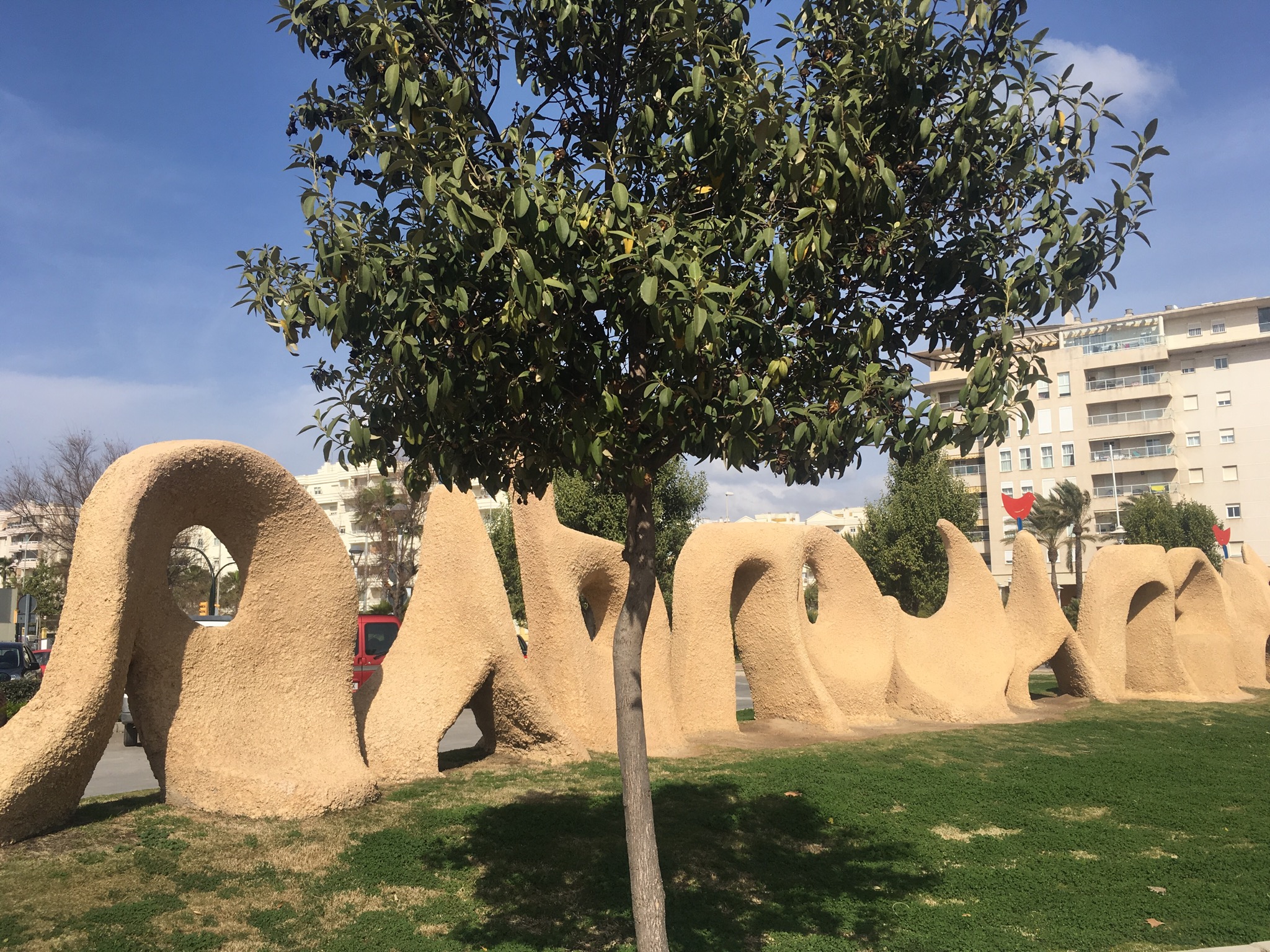
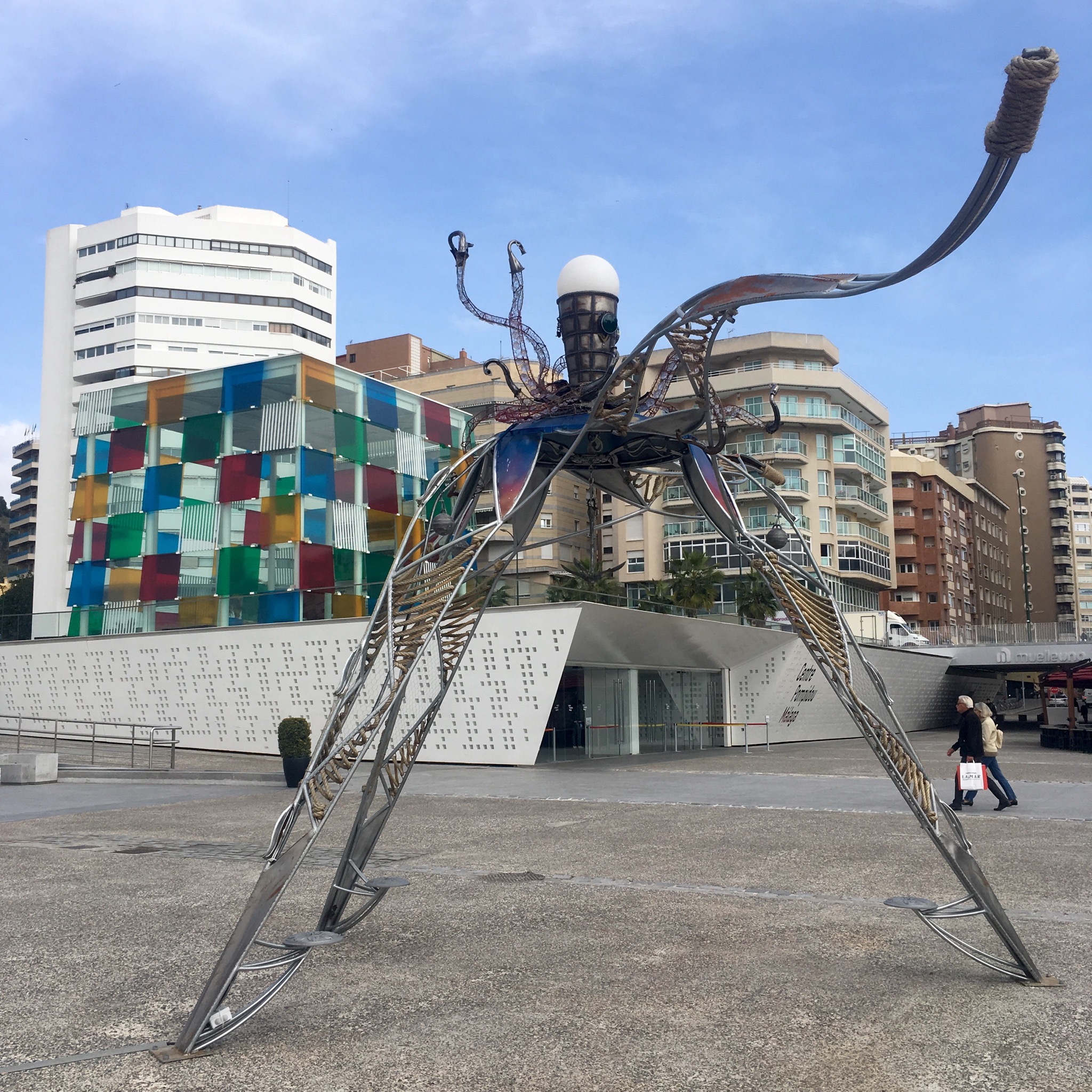
After a night trying to sleep on a bench at Dublin airport McDonalds and an early morning flight I arrived into a barmy 17′ degree and made my way to the seafront where I had to walk about 5km west to get to the start of the grand circle at a bizarre sculpture.

IMG_2926.JPG

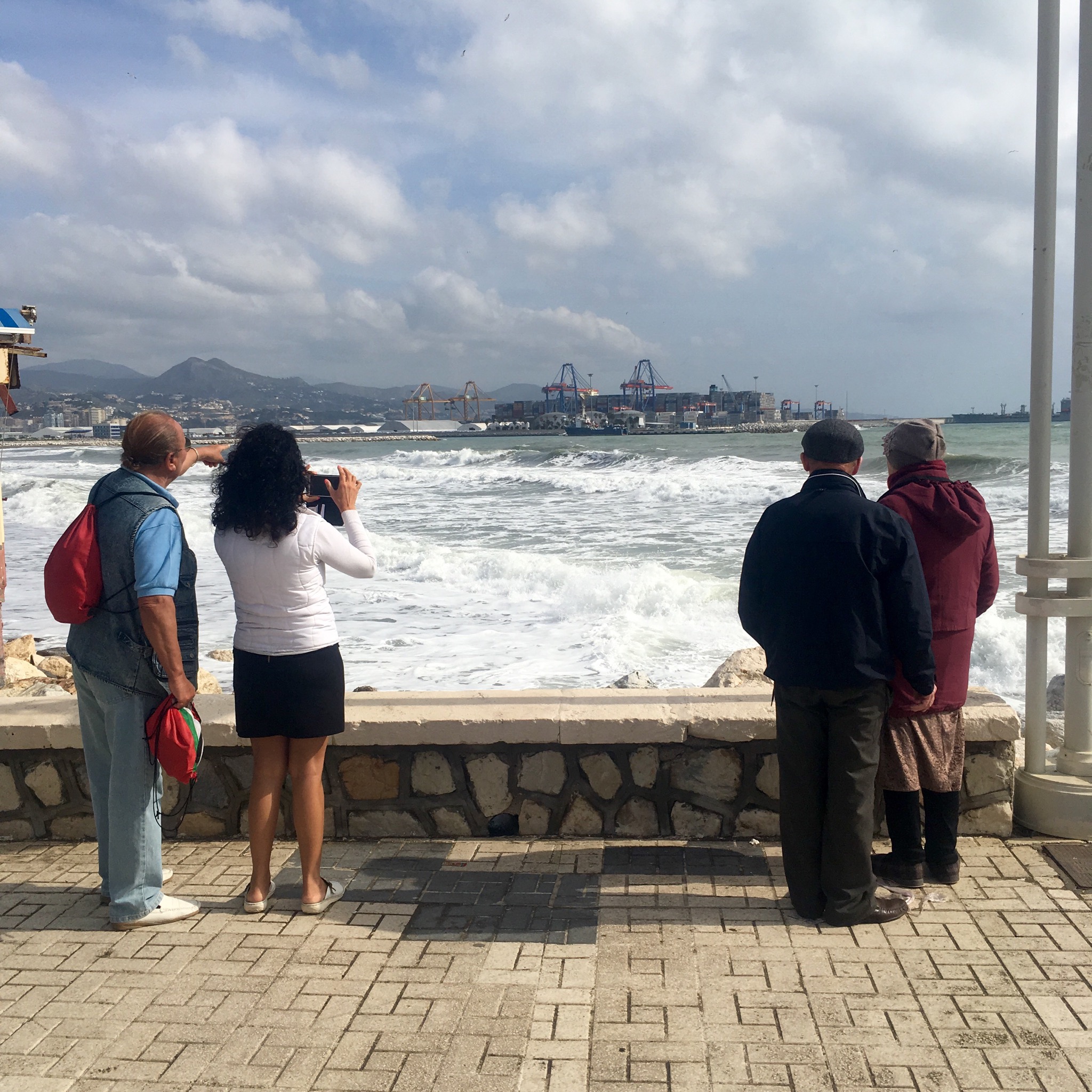
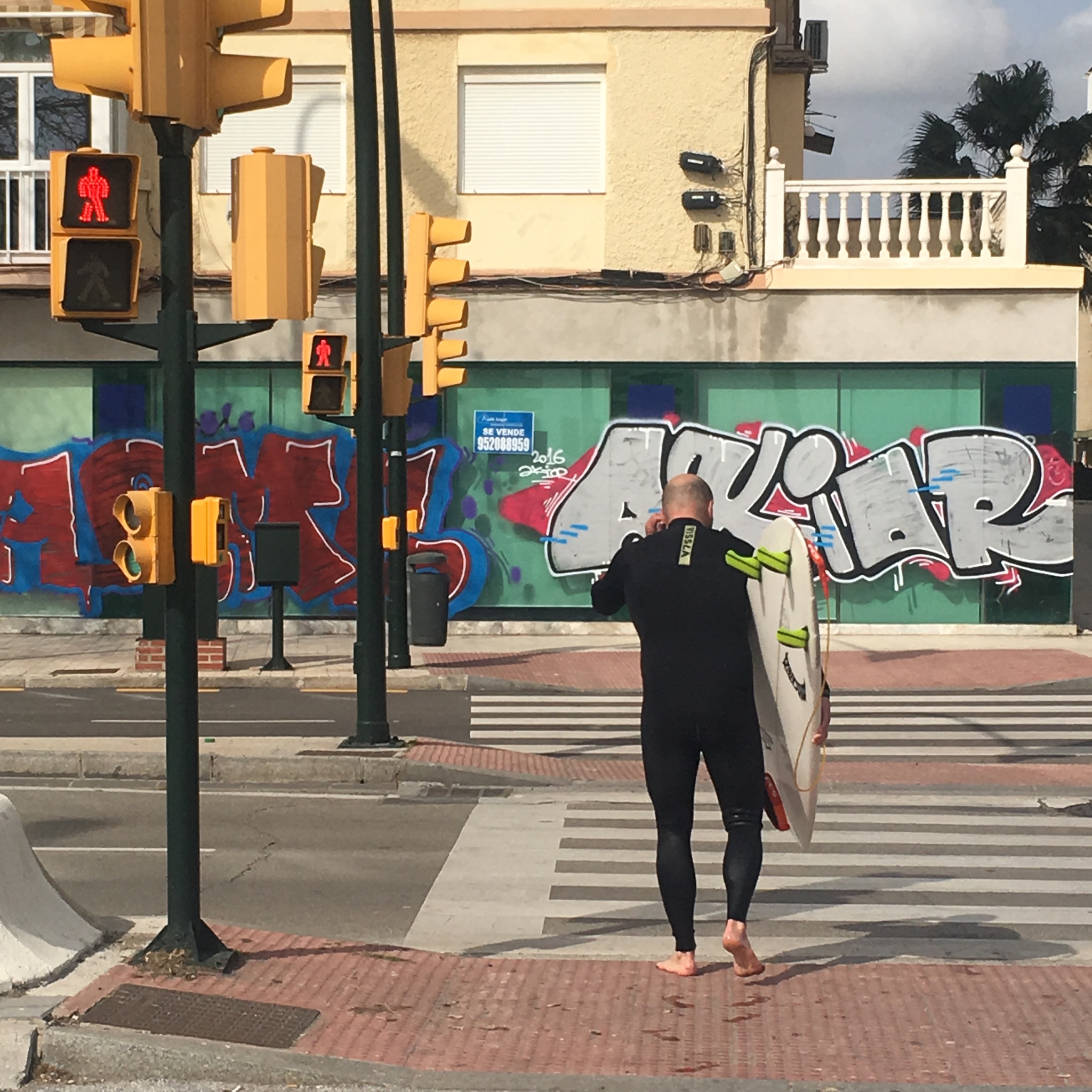
Immediately turning on my heels I returned eastwards along the prom, my anal instincts for starting at the beginning satisfied. It was a fairly blowy day and the waves were crashing on the seashore while people watched and surfers retreated.

IMG_2918.JPG

IMG_2916-0.JPG
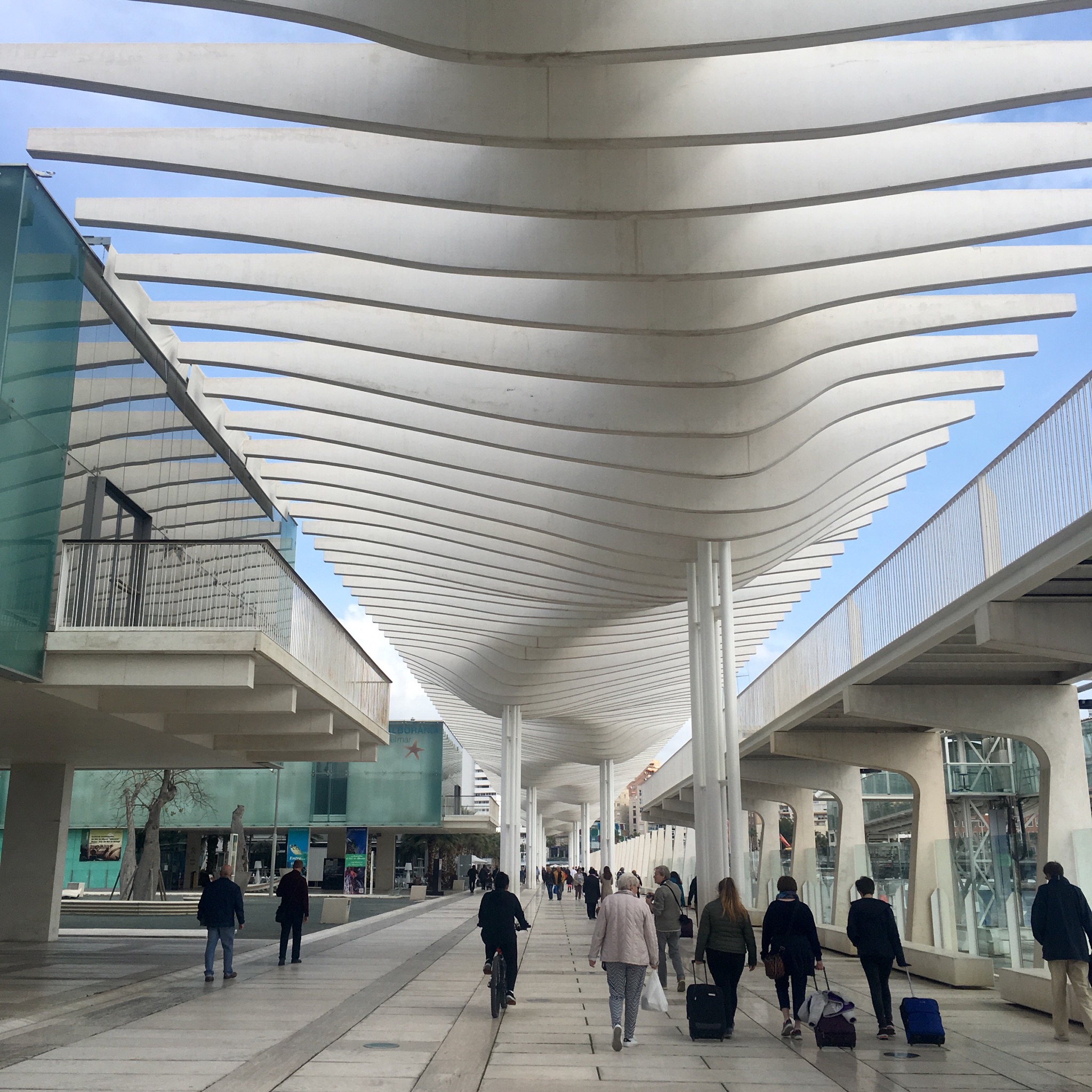
The first days hike took me about 20km eastwards, all of it along the coastline, past the marina,
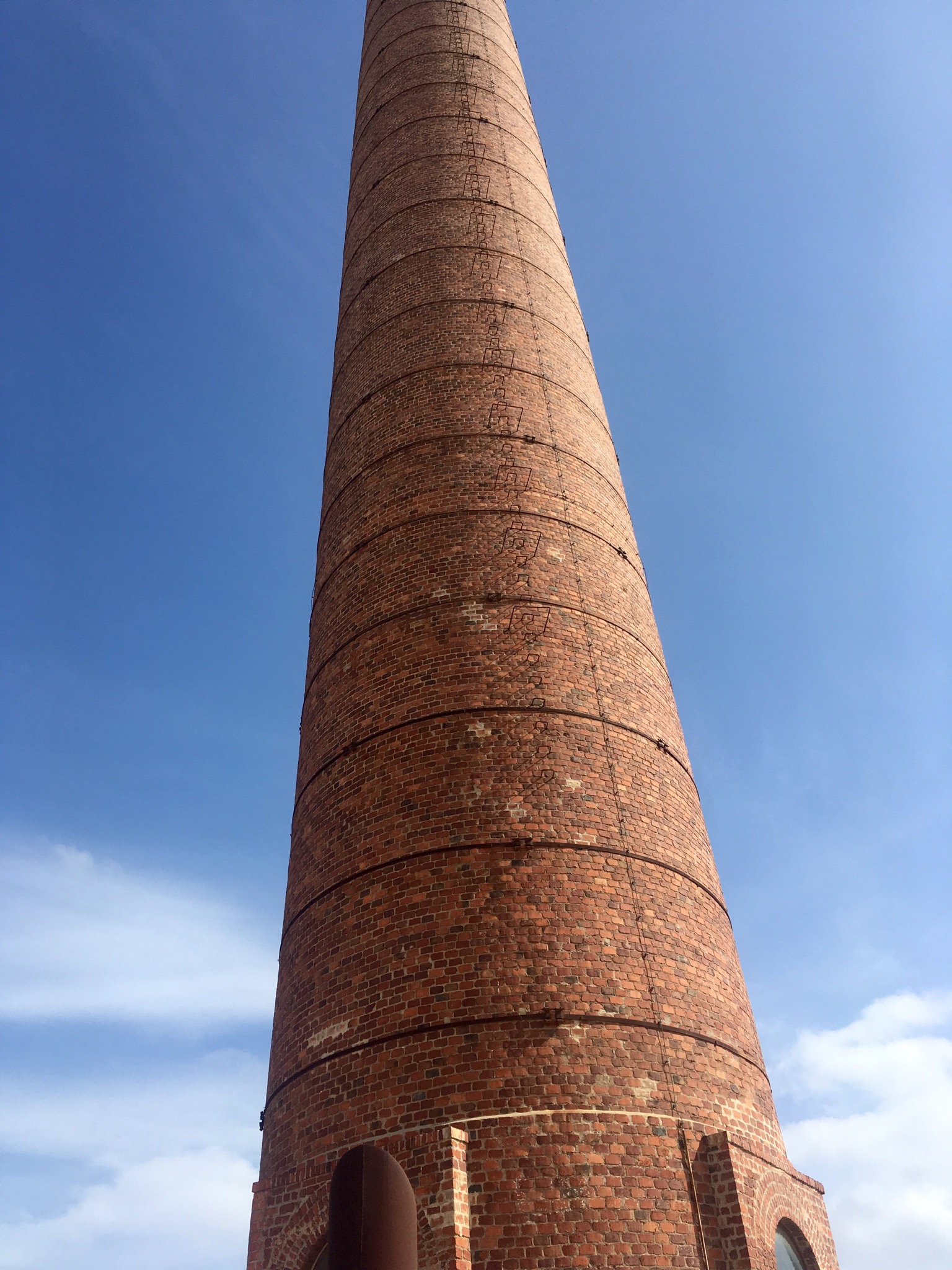
the old brick chimneys and the Pomidou centre.

IMG_2929-0.JPG

IMG_2928.JPG

IMG_2931.JPG
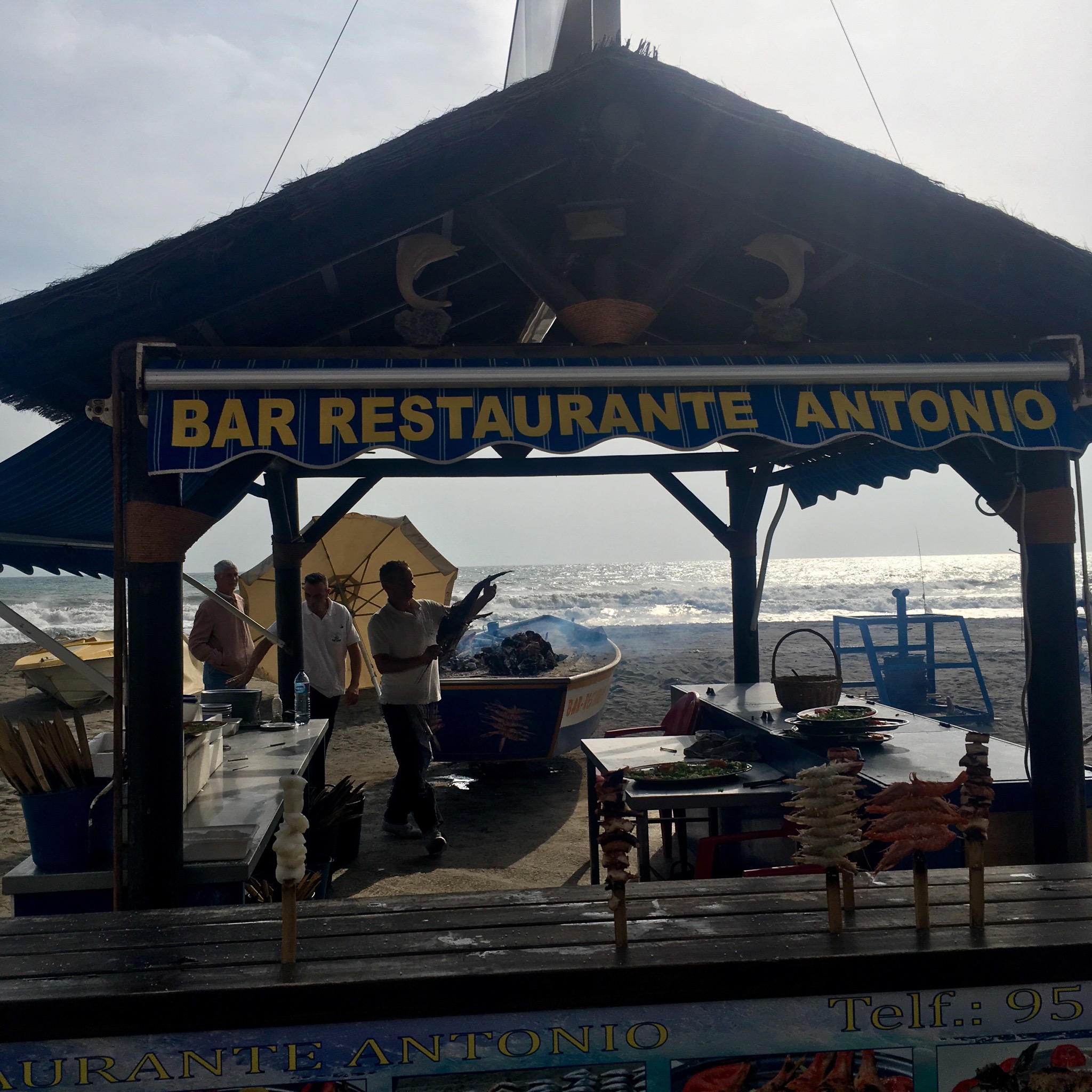
All along the prom for miles I past the enticing smell of woodsmoke and grilled fish from the string of beachfront chiringuitos but the urge to keep going towards my rendezvous kept me from indulging.

IMG_2933.JPG

IMG_2935.JPG
Moving out beyond the city limits the surroundings became a little wilder.

IMG_2938.JPG
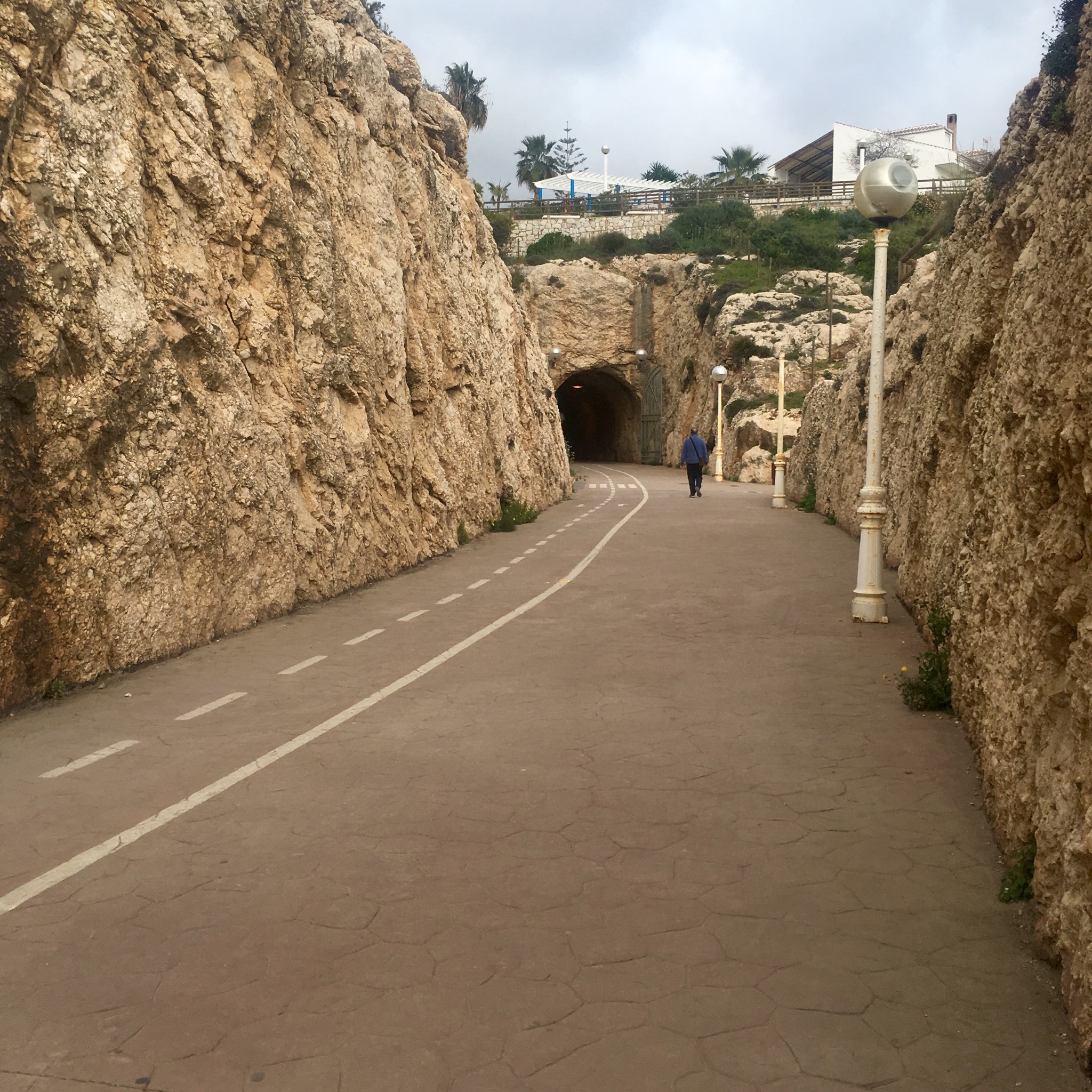
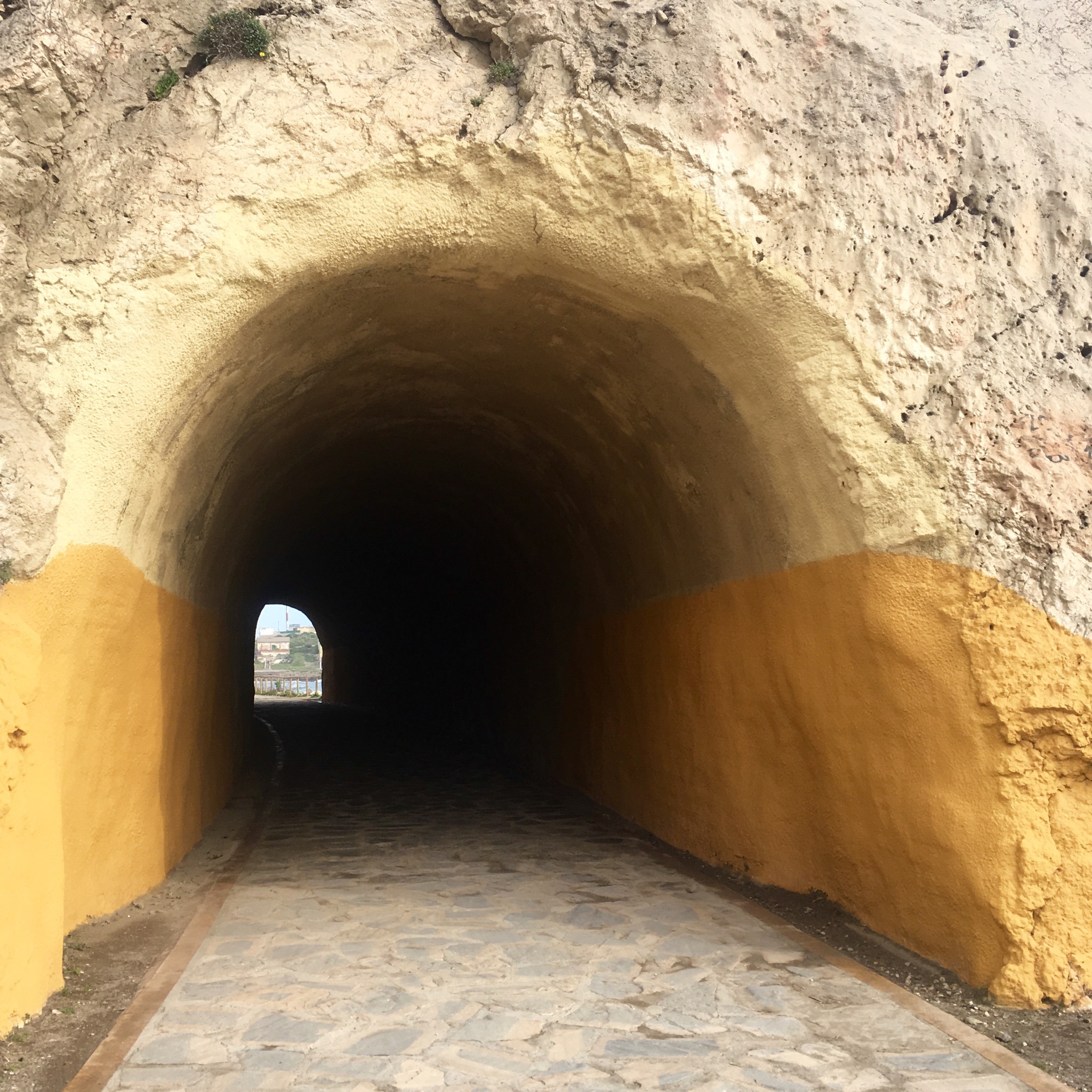
I found myself on the old Malaga to Almeria train track and past through a number of tunnels on the now pedestrianised greenway.

IMG_2940.JPG

IMG_2950.JPG

IMG_2941.JPG
Eventually I came to the outskirts of Rincon de la Victoria where another few Kms of prom brought me to where my friend Trevor had his support vehicle camper wedged in between a bunch of others on a patch of waste ground.
After a long day and night the food and drink and general hospitality were most welcome and set me up handsomely for a continuation of my seaside ramblings the following morning.
After a couple of hours along the coast, sometimes on the beach , sometimes on little paths and sometimes on the side of the busy N340, the route turned inland along rutted tracks through the vegetable fields.

IMG_2954.JPG

IMG_2964.JPG

IMG_2959.JPG

IMG_2977.JPG
I went from an area resplendent with exotic plantings to one far more prosaic.

IMG_2969.JPG

IMG_2970.JPG

IMG_2956.JPG

IMG_2967.JPG
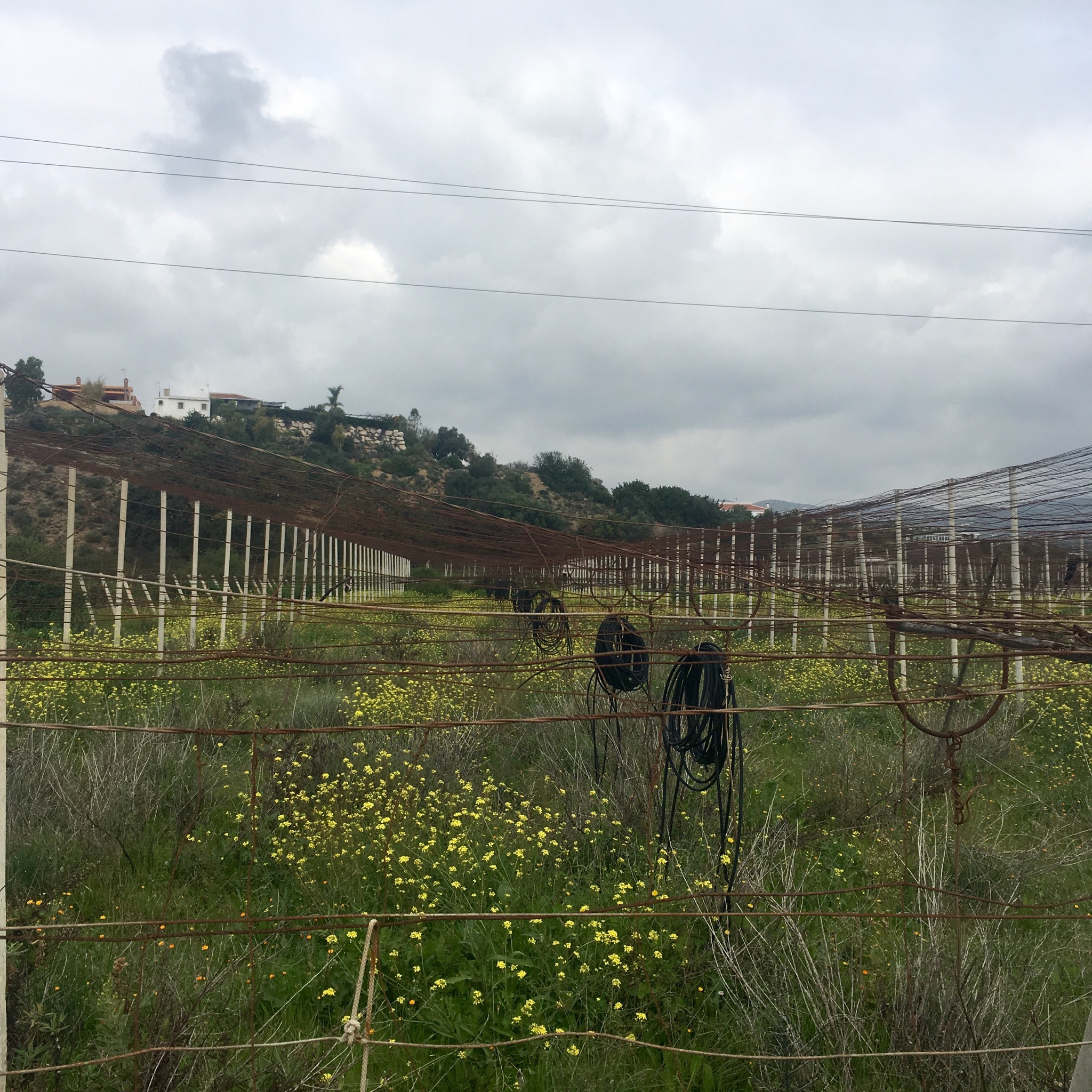
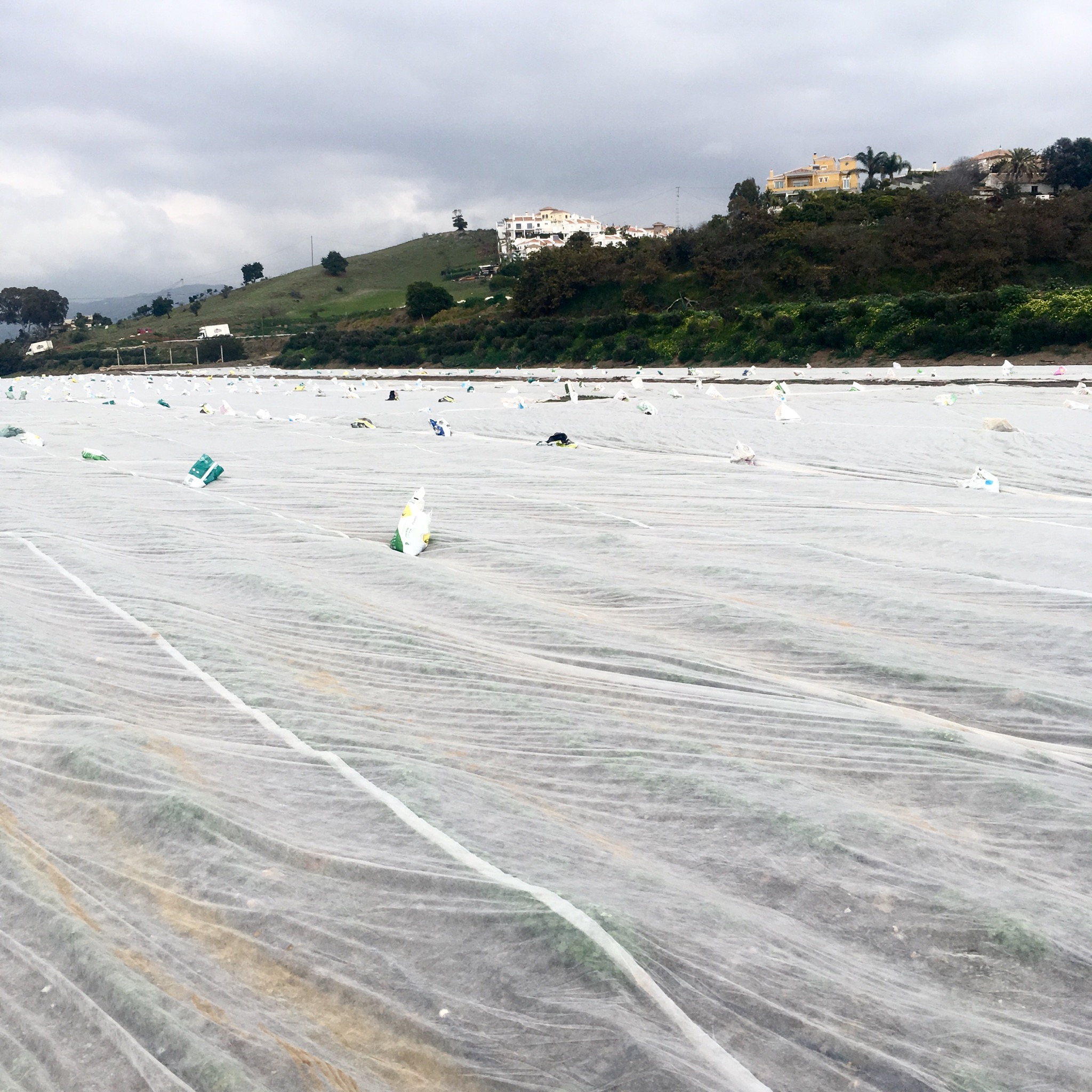
This was part of the intensive cultivation zone that feeds the habit of Northern Europe for summer veg in their depths of winter and that was supposed to have failed recently leading to shortages and panic buying.
There was no signs of it here although the methods and suspected chemical additives were a little unnerving to this organic smallholder.

IMG_2981.JPG

IMG_2978.JPG

IMG_2996.JPG

IMG_2995.JPG
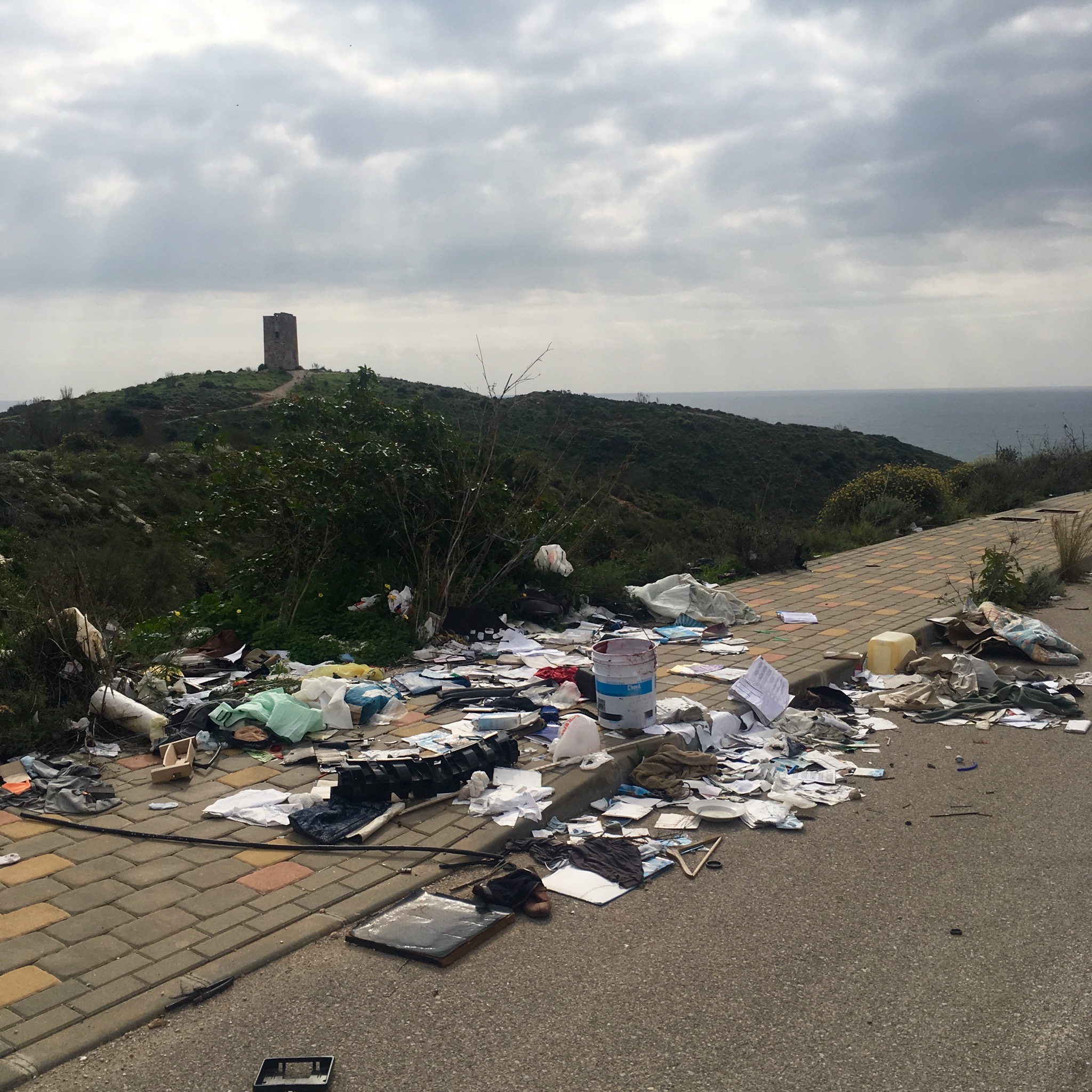
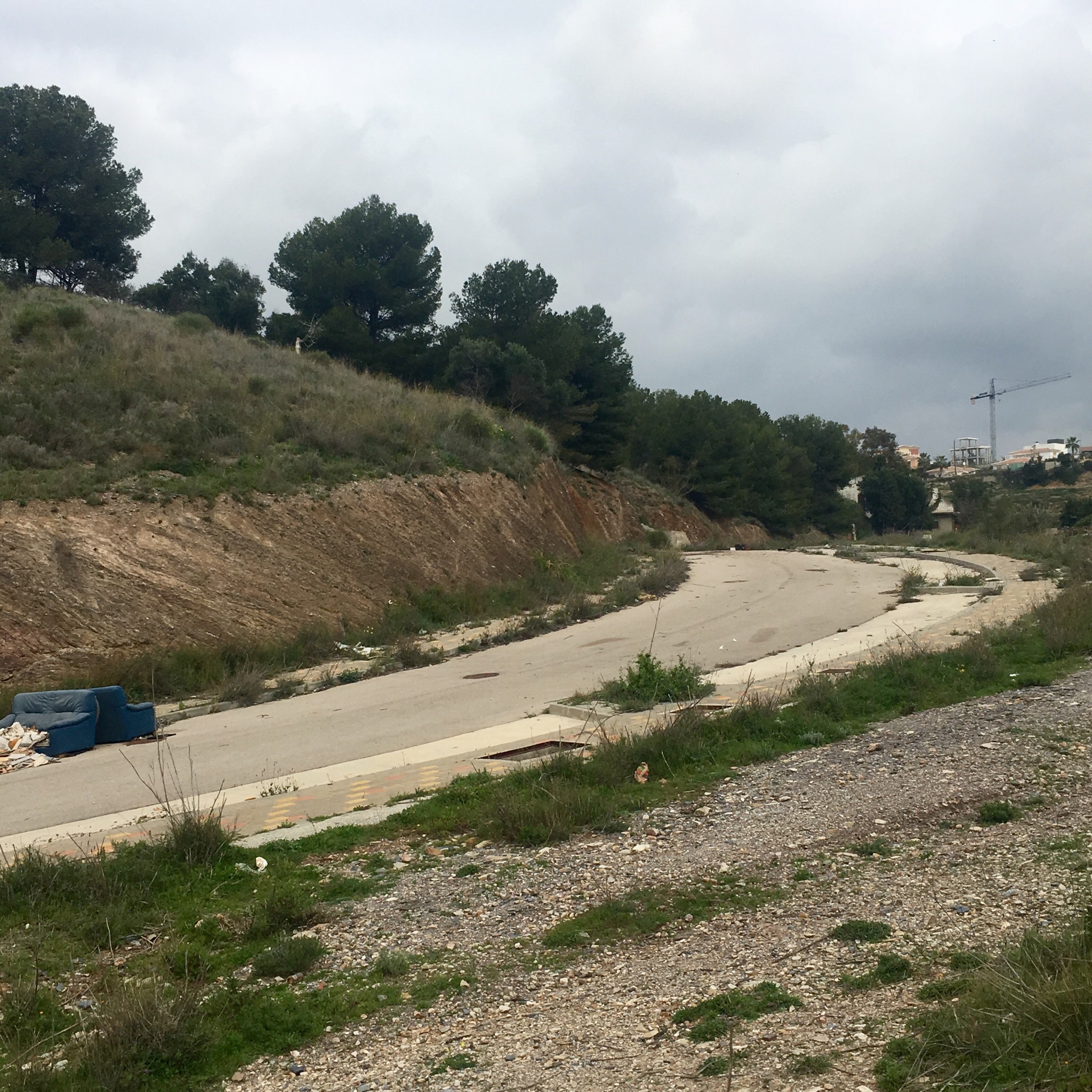
Arriving back at the coast I found myself surrounded by a failed development at Niza Beach where abandoned plots and dumped rubbish were all that was left of property dreams.

IMG_2983-0.JPG

IMG_2987-0.JPG

IMG_2986-0.JPG

IMG_2988-0.JPG
After a while I was back on the old railway line passing a station and bridge across the arroya before passing under the motorway, skirting an obscenely green golf course and more colourful chemical avocado plantations.

IMG_2994-0.JPG

IMG_3004-0.JPG

IMG_3005-0.JPG

IMG_2992-0.JPG
I’d arrived at La Caleta de Velez after moving on beyond the days stage end at Velez Malaga ,hoping to shorten some long climbs ahead.
I met trusty trev and we parked up on the seafront, wined and dined with old friends before retiring with the sounds of the waves soothing us to a state of unconscious.

Walking the border:Cavan and Fermanagh

img_2711

Watching an episode of Canal Journeys with Prunella Scales and Timothy West last night, when they travelled by barge on the Shannon Erne Waterways, reminded me that I hadn’t posted a blog on our trip there a couple of weekends ago.

After all the years living in Ireland we hadn’t really spent anytime in the North, only passing through on our way back from Donegal once and catching a ferry to Scotland from Belfast. We’d had plans to hike the Causeway Coast Way and the adjoining Moyle Way as we’d heard that they were both dramatic and dog friendly but when we had a weekend free we realised that it would take us too long and so struck out for the nearest bit of the UK to us, the lakeland area of Fermanagh.

Being the depths of winter still, we decided against Trusty Tranny camper van, and found an Air B+B place on the shores of Upper Loch Erne. The OS map revealed a complex maze of rivers, canals,lakes big and small, islands and peninsulas-and near our destination, Crom Castle, as appeared on TV last night.

img_2648

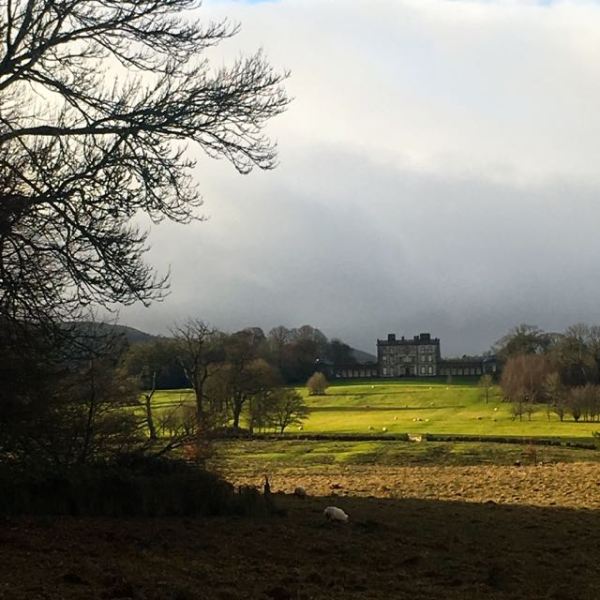
Not too much remains of the original plantation castle, scene of bloody battles in the Jacobite rebellion when the water of the lake are said to have turned red with the blood of the slaughtered. The nearly 2000acre estate, seat of the Earls of Erne, is now run by the National Trust, although the “new” 1860 castle is still in private ownership.

Although supposedly closed for the winter we’d been told it was fine to walk the grounds and it was a pleasant contrast to the hassles of “no dogs”rules in the south to be directed through sheep fields with a polite request to keep our hounds on leads. Fair enough.

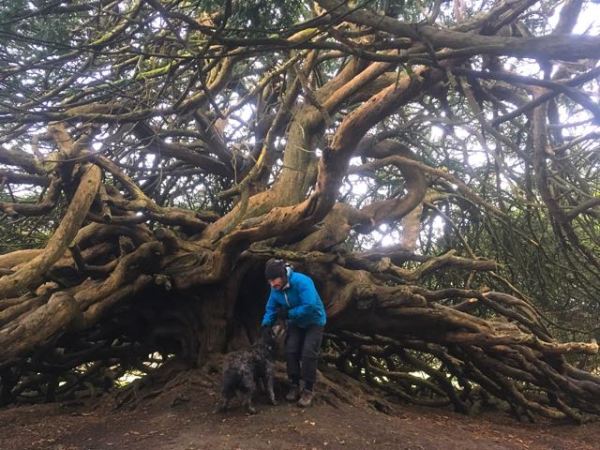
On an ancient formal lawn next to the old castle were a pair of conjoined yews, a male from the 19th century and a much older and bigger female, reputedly the oldest in Ireland at 800yrs. They have a combined circumference of over 100m and ouse history.

img_2652

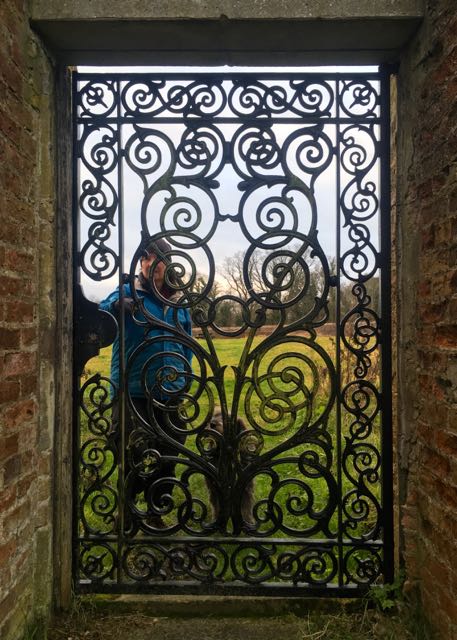
The paths took us along a stately avenue of lime trees, across the deer park and alongside the castle gardens. It was a watery world, with islands strewn across the loch, some lived on, some farmland and one tiny one hosting a little folly of a round tower where estate workers would spend their wedding nights. A fine Victorian wrought iron bridge led us passed some fiery red willows onto Inisherk Island where the grand walled garden was sadly unused.

img_2657

img_2655

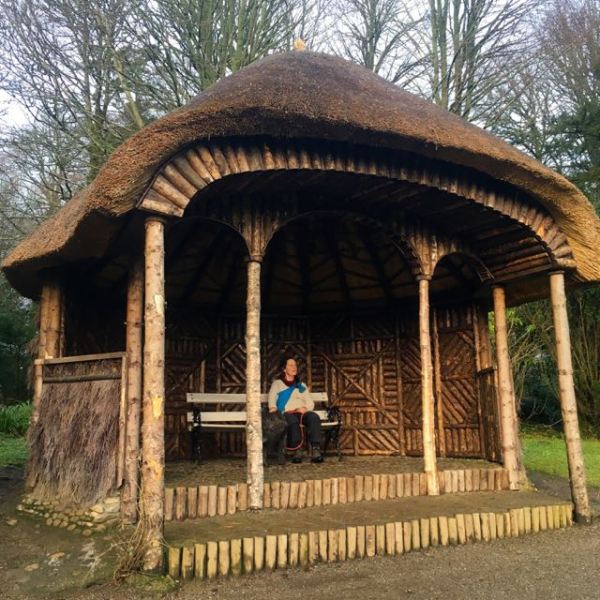
There was a rustic summerhouse, lovely ornate lodges and the old church and schoolhouse. A lot to keep together but the National Trust are a huge and wealthy organisation and seem on top of it. They rent out holiday cottages, run boat trips and a campsite, put on all sorts of activities and I’m sure the visitor centre gift shop and tea rooms pull in a few bob over the season. It would be nice to visit the place by boat and tie up at the Irish Waterways Jetty. That cross Border agency took advantage of a lot of post “Troubles” grant aid to restore the canal system leading into the loch and I hope that the Brexit decision does not adversely effect it in any way.

Another National Trust property was on the schedule the next day, but first we wanted tackle a section of the 65km Sliabh Beagh Way that runs over the high ground to the south and east of Lisnaskea, the biggest settlement in Fermanagh next to Enniskillen. The Way is itself a part of the 1000km Ulsterway that encircles the entire province and includes the Causeway Coast and the Moyle and will have to be added to the “must do one day/month”list.

We didn’t get very far or see very much of it when we ventured out into the Jenkins Lakes and Woods looped route along the Way and could only imagine the described views from the bogland boardwalk and lakesides.

We cut the 12km walk a little short and descended to lower ground, clearer skies and the landed gentry civilisation of Florence Court, another grand 18th Century house and estate in the care of the N.T. This one also had miles of dog friendly woodland, parkland and garden paths and again, although the house was closed for the winter, the extensive grounds were welcoming.

img_2675

The walled garden here was very productive, supplying plants for the grounds and food for the cafe and a nice working environment for the gardeners.

img_2669

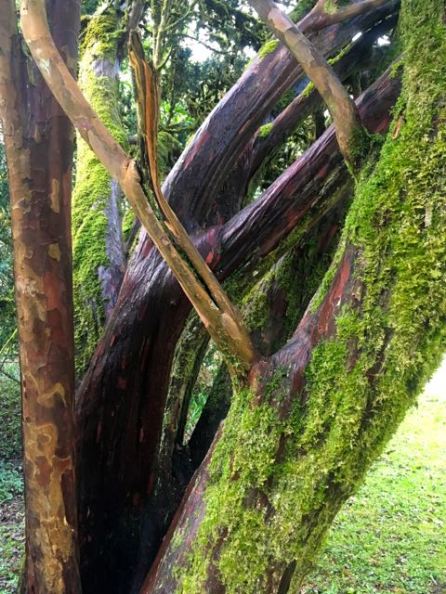
On a long loop across the estate we stopped and paid homage to another famous yew tree.This was literally the mother of all Irish yews.

img_2677

In 1740 a local farmer discovered a pair of strangely upright yew saplings growing on the slope of nearby Cuilcagh mountain and presented one to the Florence Court landlord, the Earl of Enniskillen and planted one at his own place. Unfortunately his died about 80 years later while the other lives on and has provided the cuttings to grow all the Irish Yews since. Wherever in the world a Taxus Baccata “Fastigiata” exists it is a clone of this venerable great great great etc..grandmother tree. Not so upright herself now ,due to hundreds of years of gardeners taking cuttings, a crime I am now guilty of myself, she stands modestly in a woodland clearing with some progeny around her roots.

img_2680

At the end of the forest park we turned away from the rugged and wild Cuilcagh Mountains looming above us to the south and returned to the  tamed nature of the gardens, where we admired the ice house, the waterpowered sawmill and the hydraulic ram pump that supplied water to the “big house”before sitting in the ornamental summerhouse to view the mountains from a safe and civilised distance.

img_2682

We discovered the next day that even the inhospitable and desolate vastness of the 2500 hectare Cuilcagh Mountain Park, with a” county high top” for both Cavan and Fermanagh at 666m, could be domesticated.

We were up early to drive the 25km to the Park, gladly watching the misty cloud rise from the lakes and exposing the mountains as we approached. The sheer amount of waterways and lakes in the area must produce a lot of mists, fog and general overall damp even by western Ireland standards. But it makes for an moody and placid atmosphere at sunrise.

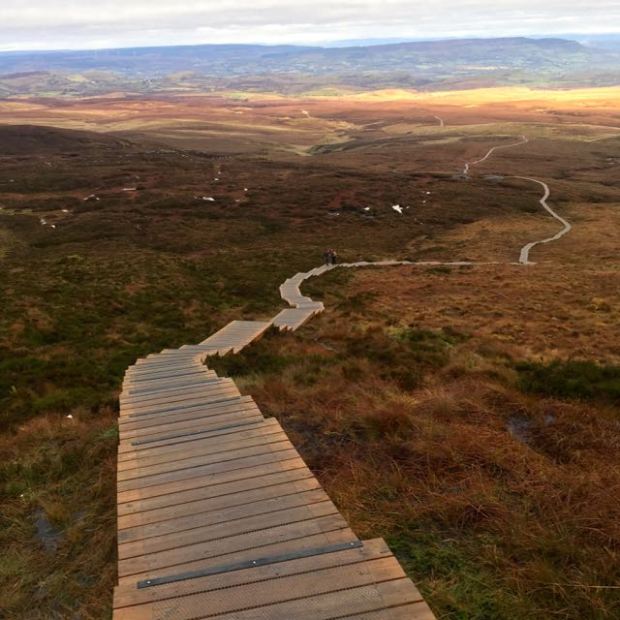
We’d been assured by our landlady that it was fine to take our dogs on leads so we tried to ignore the “No Dogs” signs as we left the empty car park and headed up the gravel track towards the now cloud free table top mountain.Empty and long abandoned cottages with their potato ridges slowly being swallowed by the returning bog dotted the lower ground.The protected landscape has meant that turf cutting has been stopped and the rangers spent years in the construction of 1000’s of little dams to block the drainage ditches dug by previous generations of fuel gatherers, in an effort to raise the water table and speed the restoration of the Blanket Bog. It is a fragile environment and so to protect in from the erosion caused by the many walkers on this popular route, a long stretch of boardwalk has been built at the end of the track.

img_2705

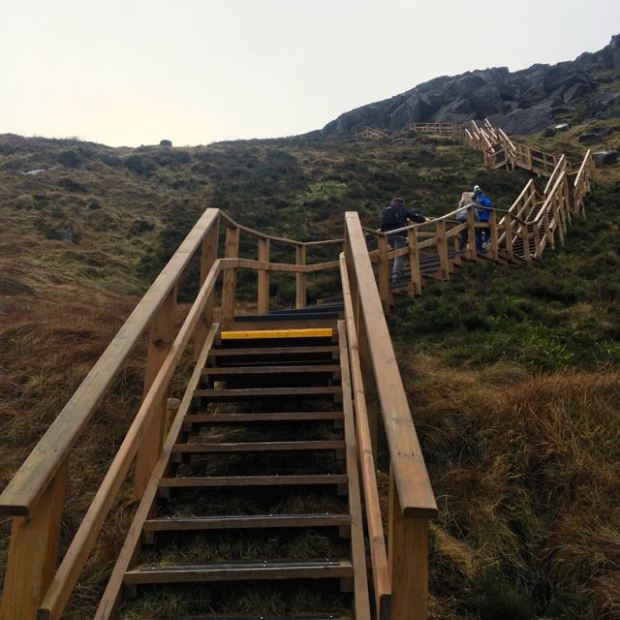
This took us all the way to the base of the cliffs where a series of 36 flights of steps, complete with banister railings began. A fellow walker told us there were 450 of them and after climbing over 100m of height gain up the to the summit plateau my calf muscles led me to believe him. There’s been some criticism of this construction by hill walking purists who refer to it as a scar on a pristine landscape that allows the unprepared to reach a potentially dangerous environment but it’s costly build (£250,000) was purely to protect the environment and the walkers on what was a delicate and steep and slippery path.

img_2706

It has certainly improved access to the mountain top and over the course of the day we witnessed dozens of folk young and old heaving themselves up the steps to the tabletop where many could go no further across the wet and rugged terrain in their inadequate trainers. But i wouldn’t begrudge them the opportunity or the reward of the view from the top and the stairs and boardwalk meant you couldn’t get lost if the cloud came down.

We headed along the ridge with one foot in Cavan and one in Fermanagh, a walk in both Northern Ireland and the Republic simultaneously, to the Bronze age cairn on the summit.Supposedly, on a clear day you can see both the  Atlantic and the Irish sea, as well as counties Tyrone,Donegal, Cavan, Leitrim, Sligo and Roscommon. As we had our sarnies I wondered what the view was like 4000 years ago when the cairn was built.

img_2714

The whole area around us was part of the Marble Arch Geopark, made up of 34 sites of geological interest, and since 2008 when it was extended into Co Cavan, the worlds first cross border Geopark. After returning to the now full carpark we continued on past the closed Marble Arch Caves centre to explore the Cladagh Glen below and more flights of steps leading us down past limestone sculpted by water over millenia and the Marble Arch itself, to a lovely waterfall cascading into the deeply cut valley ravine.

We’d been lucky with the weather as it started to rain on our return to the car, the mountain now completely lost to the low lying cloud, and it wasn’t much better on the following day when we finished our exploration of the Geopark before driving home.

We couldn’t resist a visit to the Shannon Pot, where the waters of Ireland mightiest river rise from the ground into a small pool before starting their journey to the Atlantic ocean 360km away.

The pool has been explored by divers to a depth of 14m and it is now thought that some subterranean streams from the slopes of Cuilcagh 10km away flow into it. I wondered how hard it would be to follow all the way to Limerick.

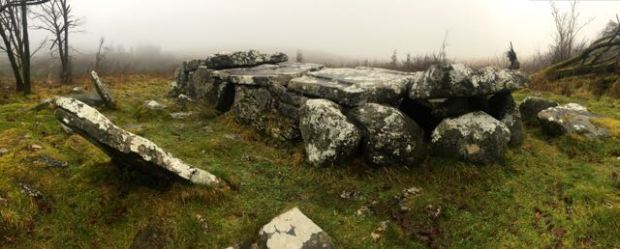
A few km away was our last port of call, the Cavan Burren Park, another area of interest in the Geopark. This “relict” landscape is not as impressive or large as the Co Clare burren (meaning “rocky place”) but features an unusual number of different types of megalithic tombs as well as habitation sites and prehistoric field systems and a promontory fort. Geologically it boasts sinkholes, karstic limestone pavement, dozens of large erratics left lying about after the retreat of the glaciers in the last ice age and a pre-glacial dry river valley.img_2752

We followed a looped walk around the park, abruptly coming across its exhibits through the misty vista.

But the weather wasn’t in it for a protracted visit or picnic amongst the tombs so we turned our backs on the past and started the long drive home with ideas of returning while we’re still all Europeans and we can be Walkers without Borders.

img_2747

MADEIRA: Quinta do Lorde to Machico 16th December

All that remained of our hiking holiday circuit was to return to Canical and then to continue onto the next seaside settlement 10km south, Machico, nestled between soaring headlands at the foot of a valley running high up into the verdant hills and right next to the airport.
Checking out with the bemused looking hotel staff unused to guests shouldering packs to head off on foot we climbed up out of the Marie Celeste of a resort past the exotic plantings along the road.

IMG_2427-0.JPG

IMG_2443.JPG
Soon back above Canical we could see the sheer looking hills we had to negotiate but couldn’t see how.

IMG_2444.JPG
We decided to stop at the modern whale museum, another development that, although worthy, seemed to be as much white elephant as whale.

IMG_2446.JPG
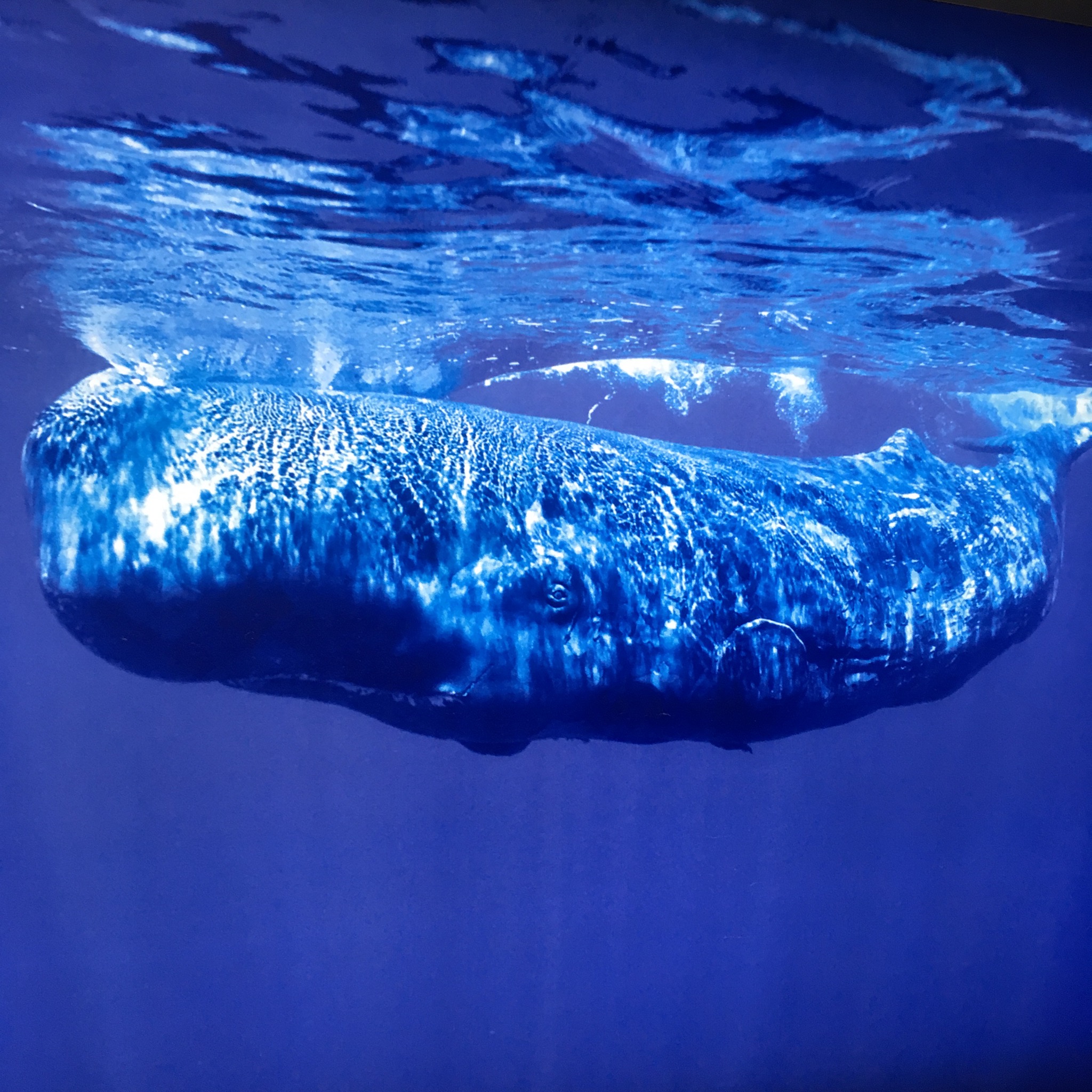
The vast space was devoid of visitors when we were there which was a pity as they told an interesting, if unappealing, story of the whaling industry that existed here from the mid 40’s right up until 1981. Sperm whales were the prey and there had been plenty of them butchered in these waters turned from turquoise to red.

IMG_2451.JPG
It turned out that the little buildings we had seen on prominent headlands were not the coastguard stations we had imagined saving lives but whale lookout posts devoted to taking lives.
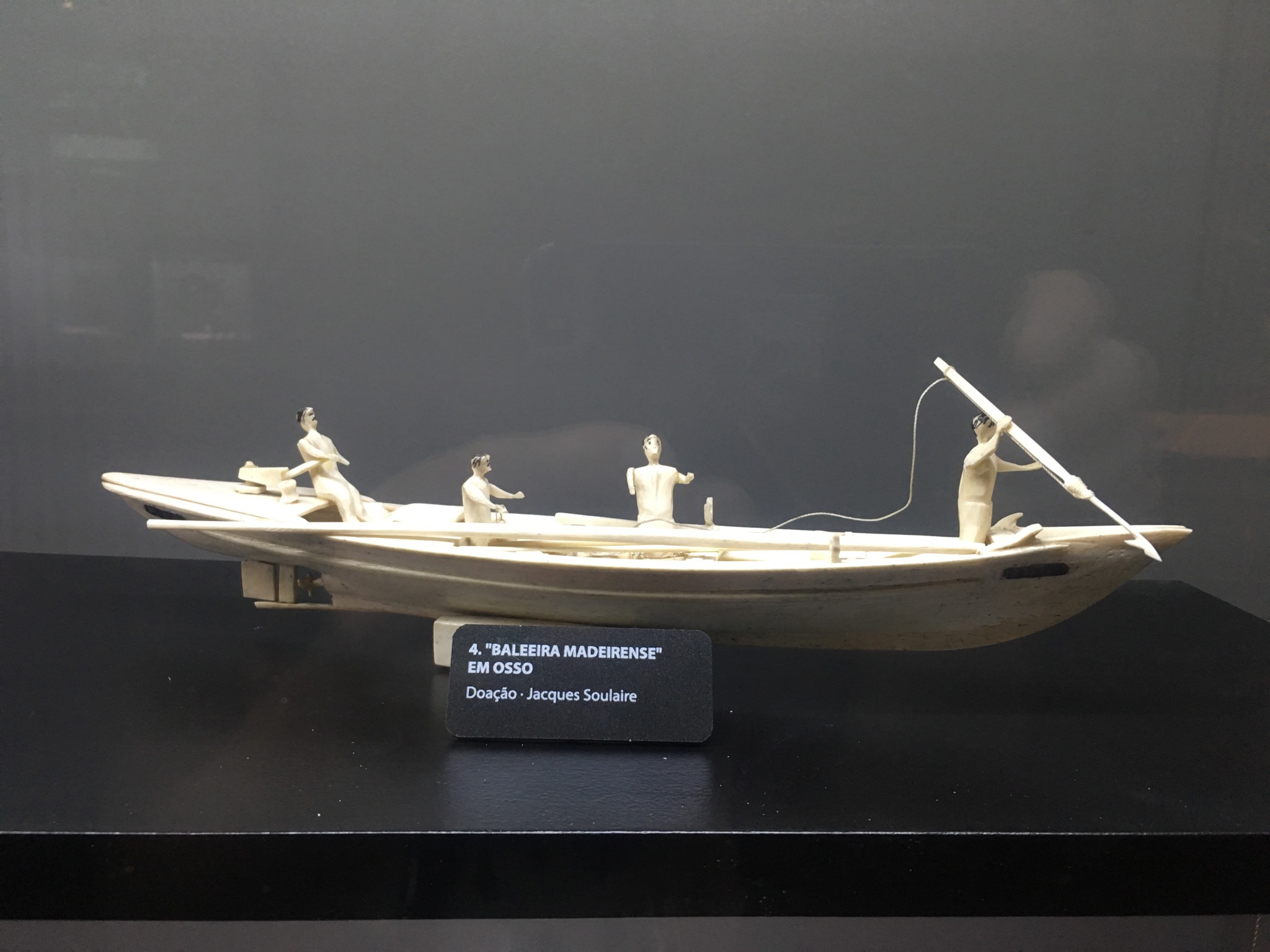
Still, nothing of the animal was wasted and a little earner on the side for the whalers was the carving of their bones into implements and souvenirs. One example on display was an ironic carving of a whaling boat complete with harpoonist.

IMG_2452.JPG
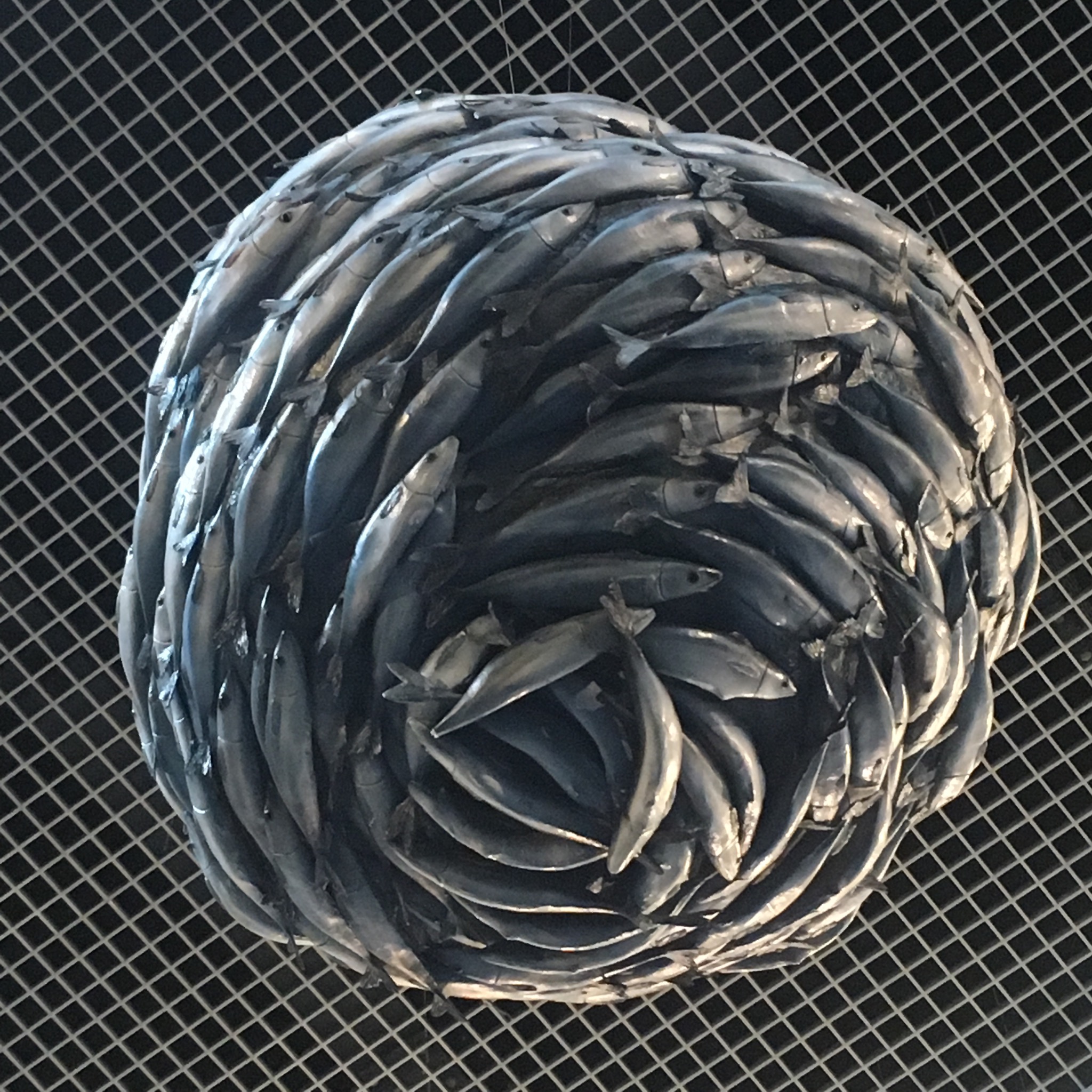
Thankfully after the bloody whaling exhibits there was another large space devoted to general conservation of whales and their natural world. I liked the balls of sardines.

IMG_2454.JPG
The museum sat at the end of the seafront promenade that led along the Ribeira do Natal beach to the start of the old path that would take us over the hills to Machico.

IMG_2455.JPG
We watched as a couple descended to the little stone humpbacked bridge over the Natal stream and , encouraged by their reports of a “good path”, started up the trail.

IMG_2457.JPG

IMG_2458.JPG
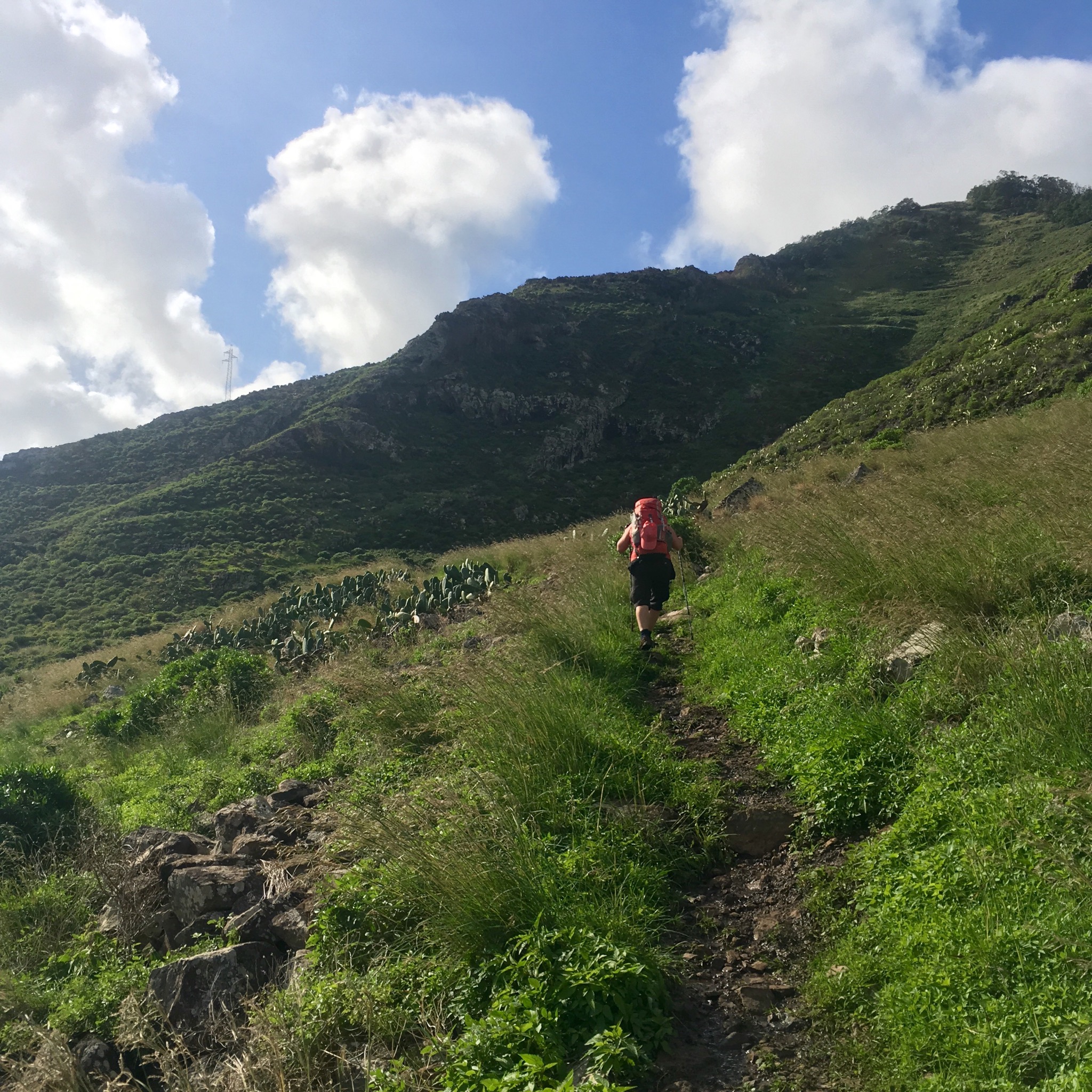
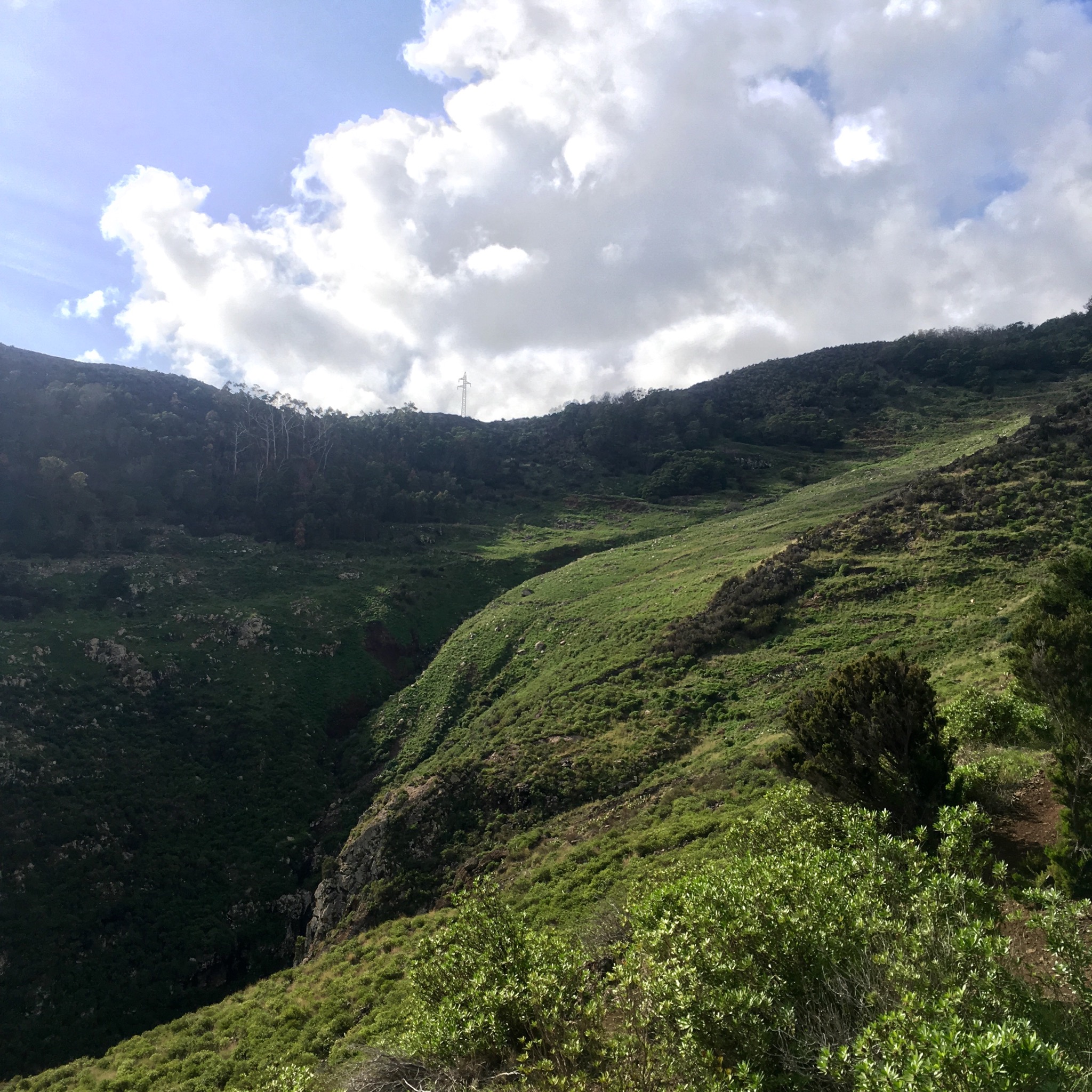
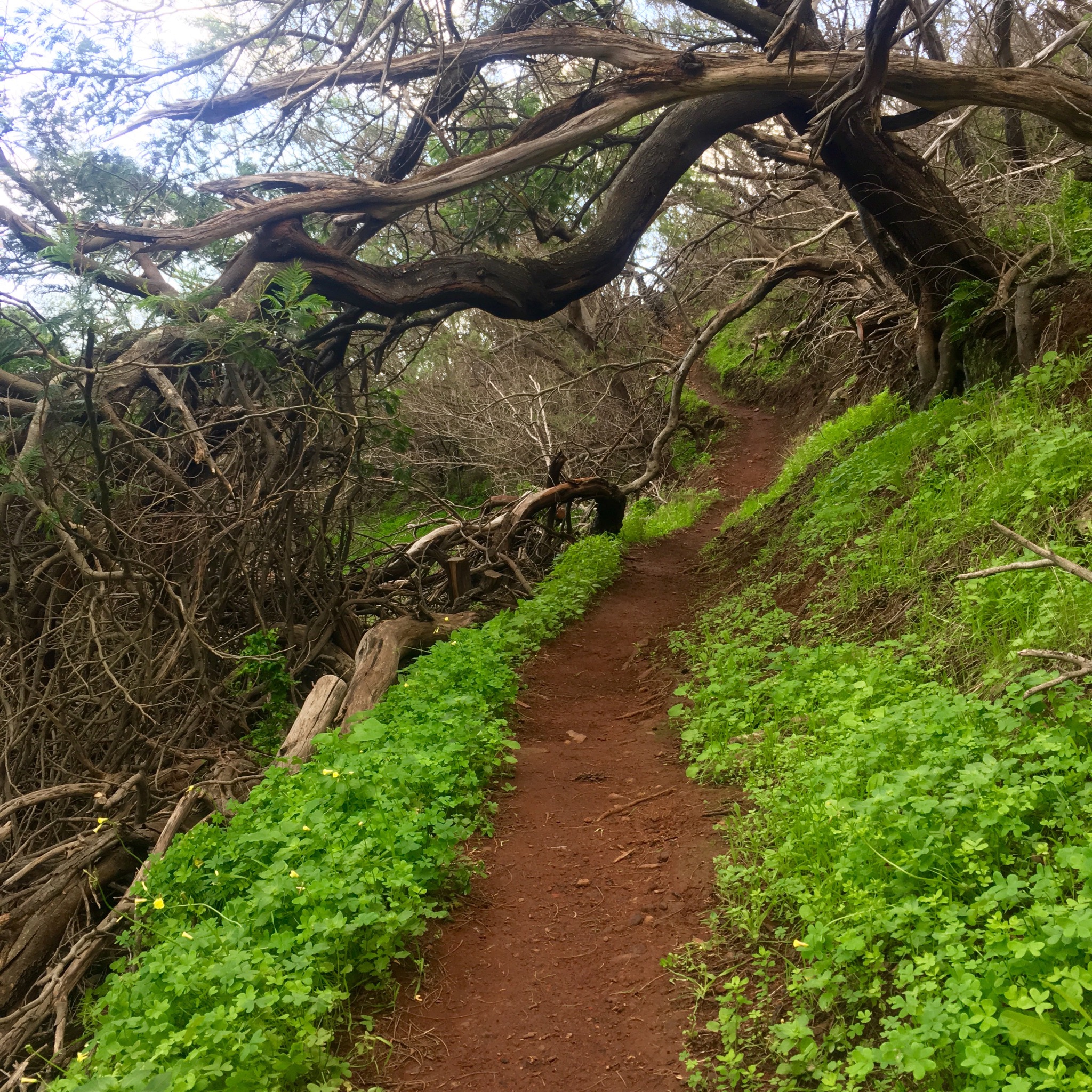
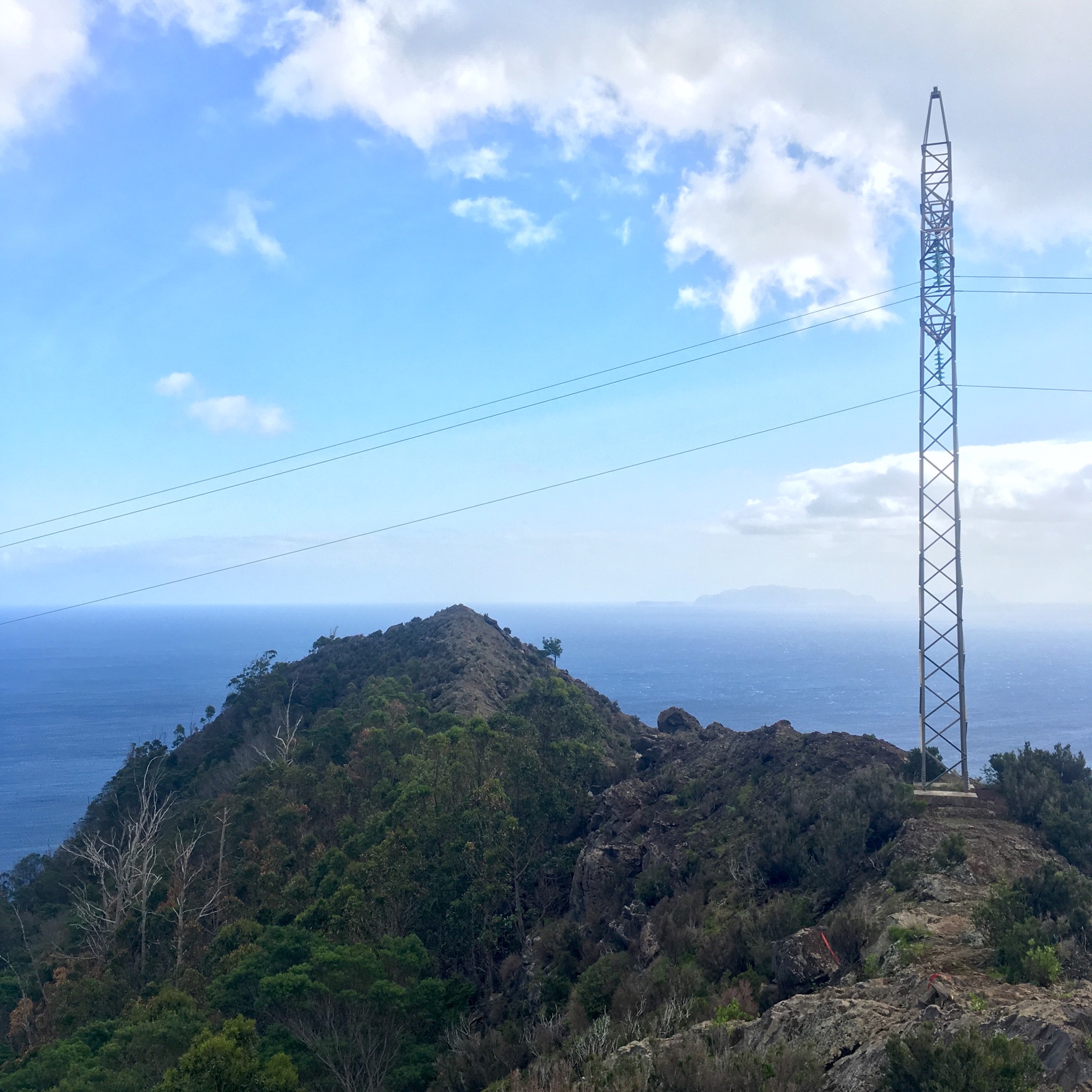
The description we had read advised us to follow the electricity pylons up the steep slope but in fact the path was clear anyway.

IMG_2460.JPG

IMG_2462.JPG

IMG_2469.JPG

IMG_2465.JPG
It was good to see the prickly pear here was healthy after seeing so much devastation and disease in Spain.

IMG_2463.JPG
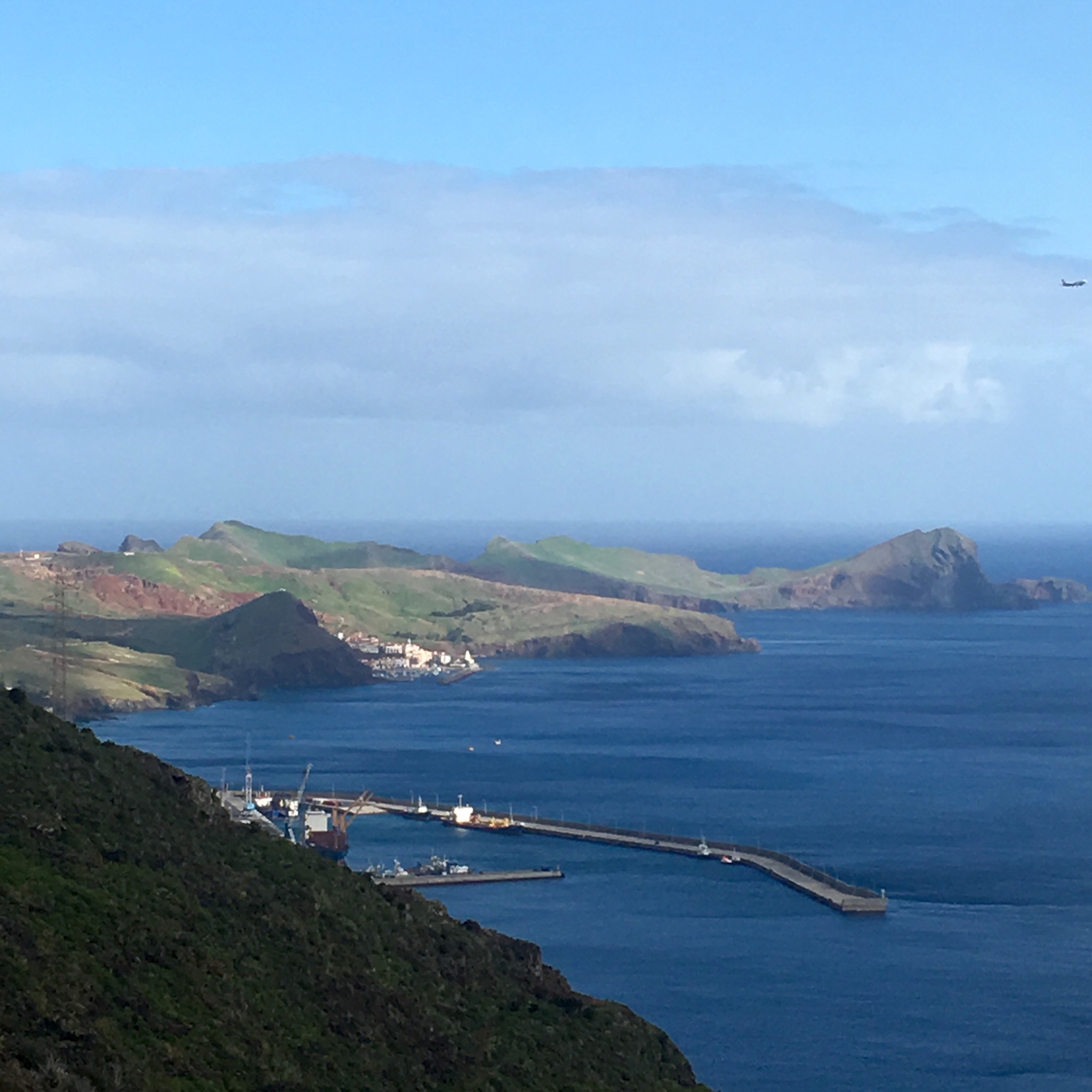
Reaching the peak of a headland we had a fine view back over the Ponta de Sao Lourenco before plunging down and across a wide hidden valley complete with cultivated terraces still being worked.

IMG_2468.JPG

IMG_2470.JPG

IMG_2475.JPG
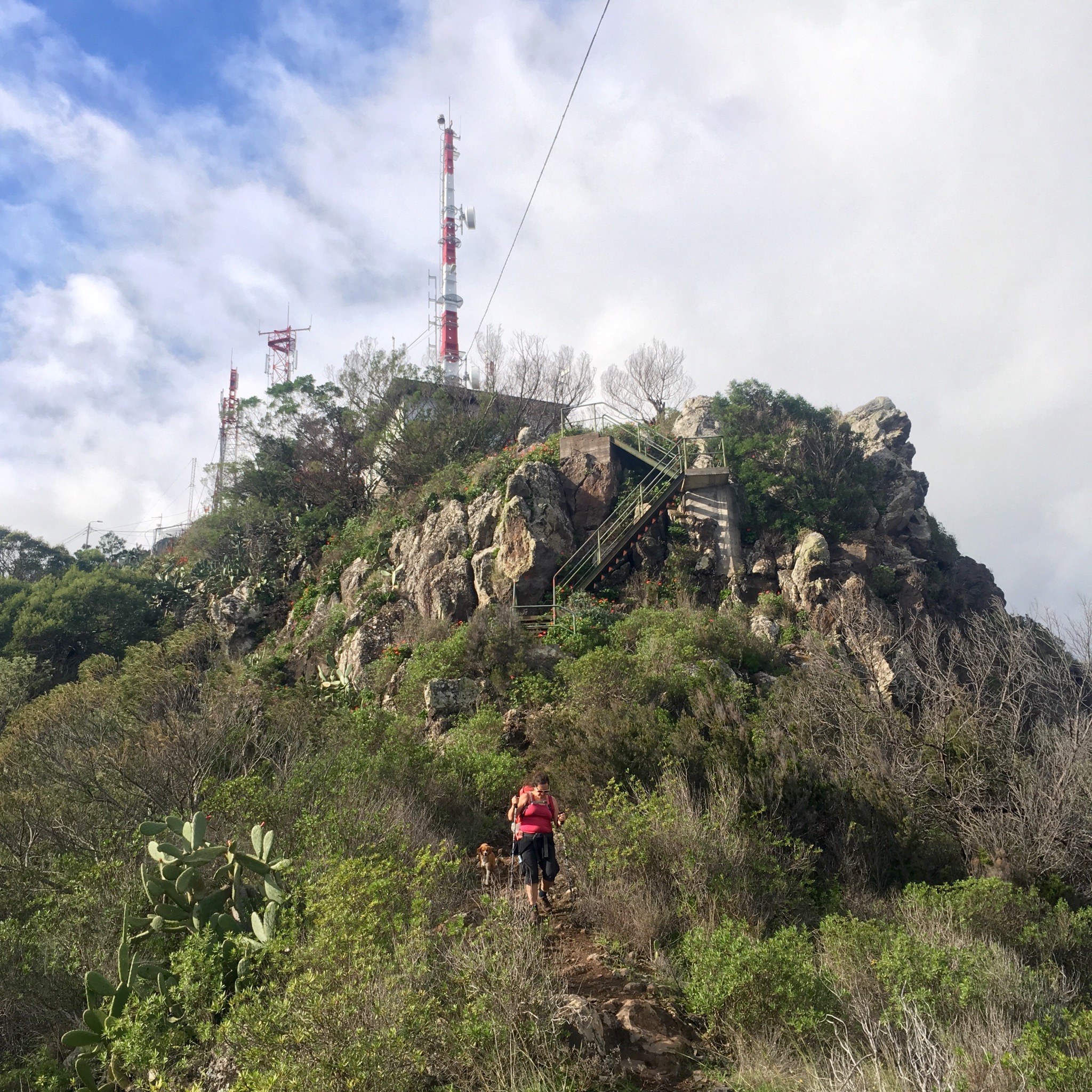
Another climb and we were passing the final pylon and up to the Pico do Facho at 323m and our first view of Machico.

IMG_2476.JPG

IMG_2480.JPG
There was a road up to here to service the masts and offer a view and a snack van satisfied my tourist needs. I’m not sure what you do in Rome but when in Madeira you eat cake and drink wine.

IMG_2482.JPG
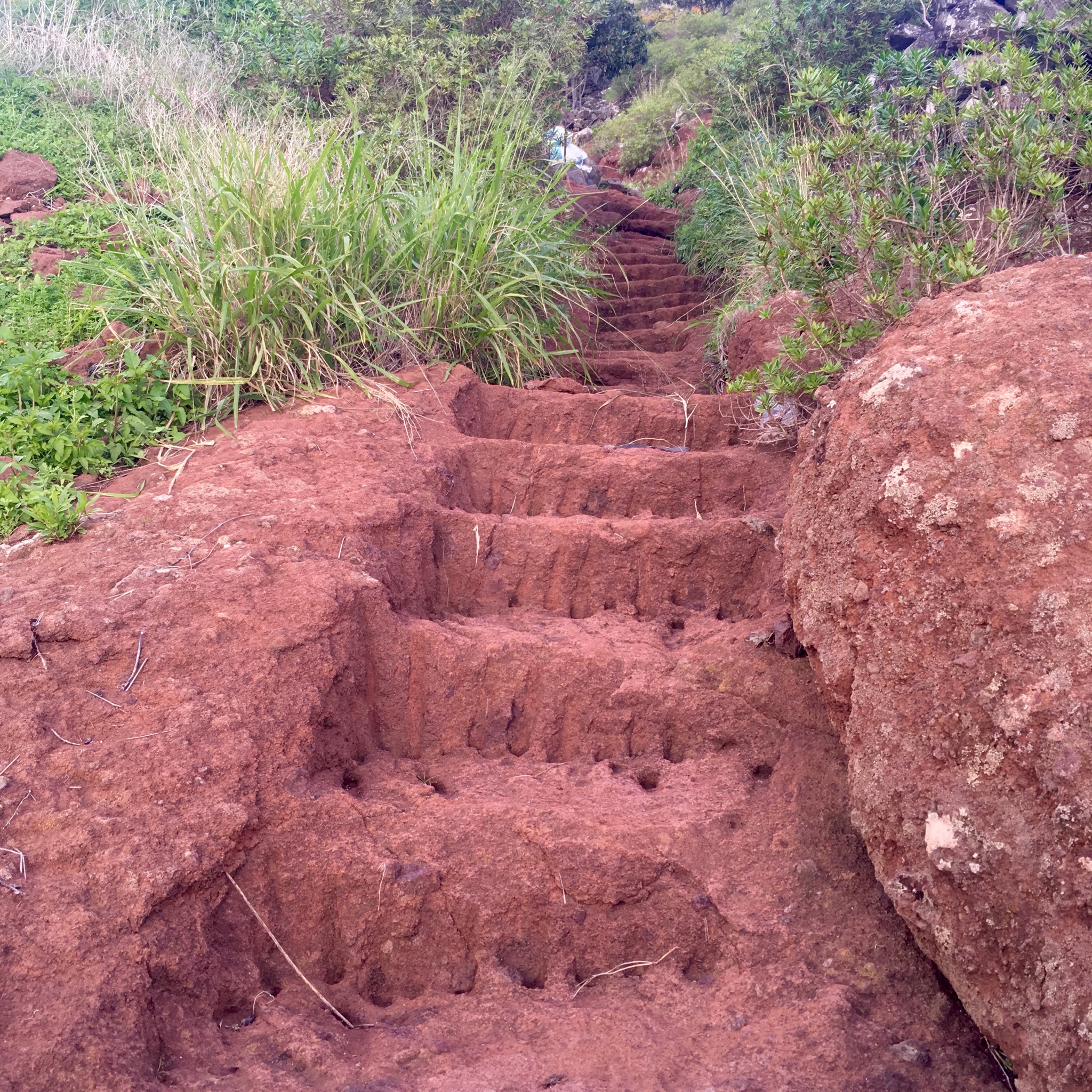
We discovered the small path we wanted to follow down and a little dog followed us past a mass of geraniums to flights of metal steps that made our life a lot easier.

IMG_2483.JPG

IMG_2484.JPG
We climbed down the narrow ridge past the lights we had seen for days flashing a warning to the aircraft taking off and landing on the stilted runway that lay before us in the sun.

IMG_2488.JPG

IMG_2487.JPG
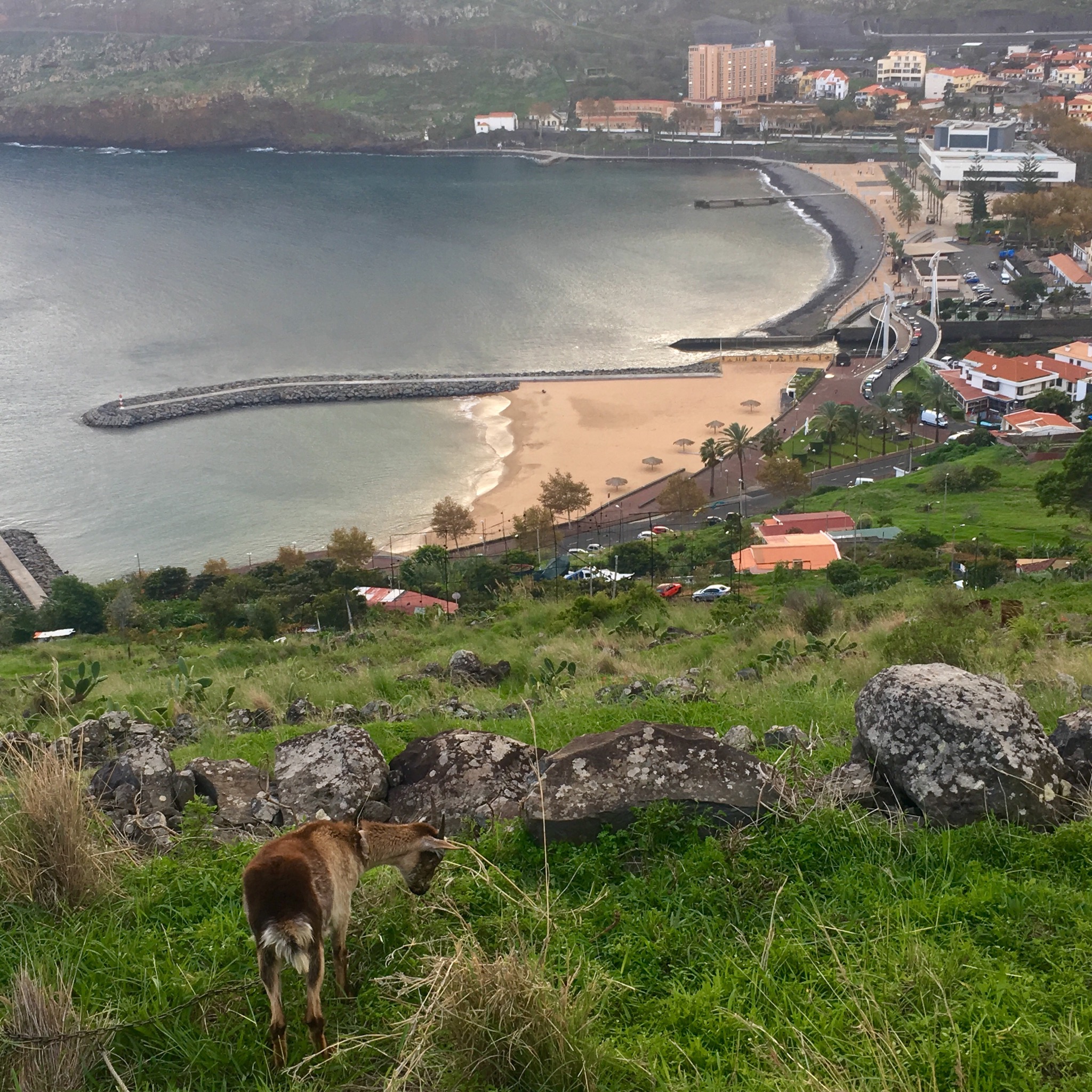
At a cliff edge we thankfully turned sharply off down a switchback path leading across a slope occasionally cultivated or grazed by goats.

IMG_2492.JPG

IMG_2494.JPG

IMG_2499.JPG
As we descended into the town with its man made beach of yellow sand from Morocco we found a labyrinth of steps leading down towards the seafront.

IMG_2501.JPG

IMG_2506.JPG

IMG_2507.JPG
After a celebration drink of a good hike well done we unfolded the map of Madeira to retrace our route and look at all the others.
There’s still a lot to do.

IMG_2513.JPG
Happy Christmas.

MADEIRA: Canical to Quinta do Lorde 15th December

IMG_2400.JPG
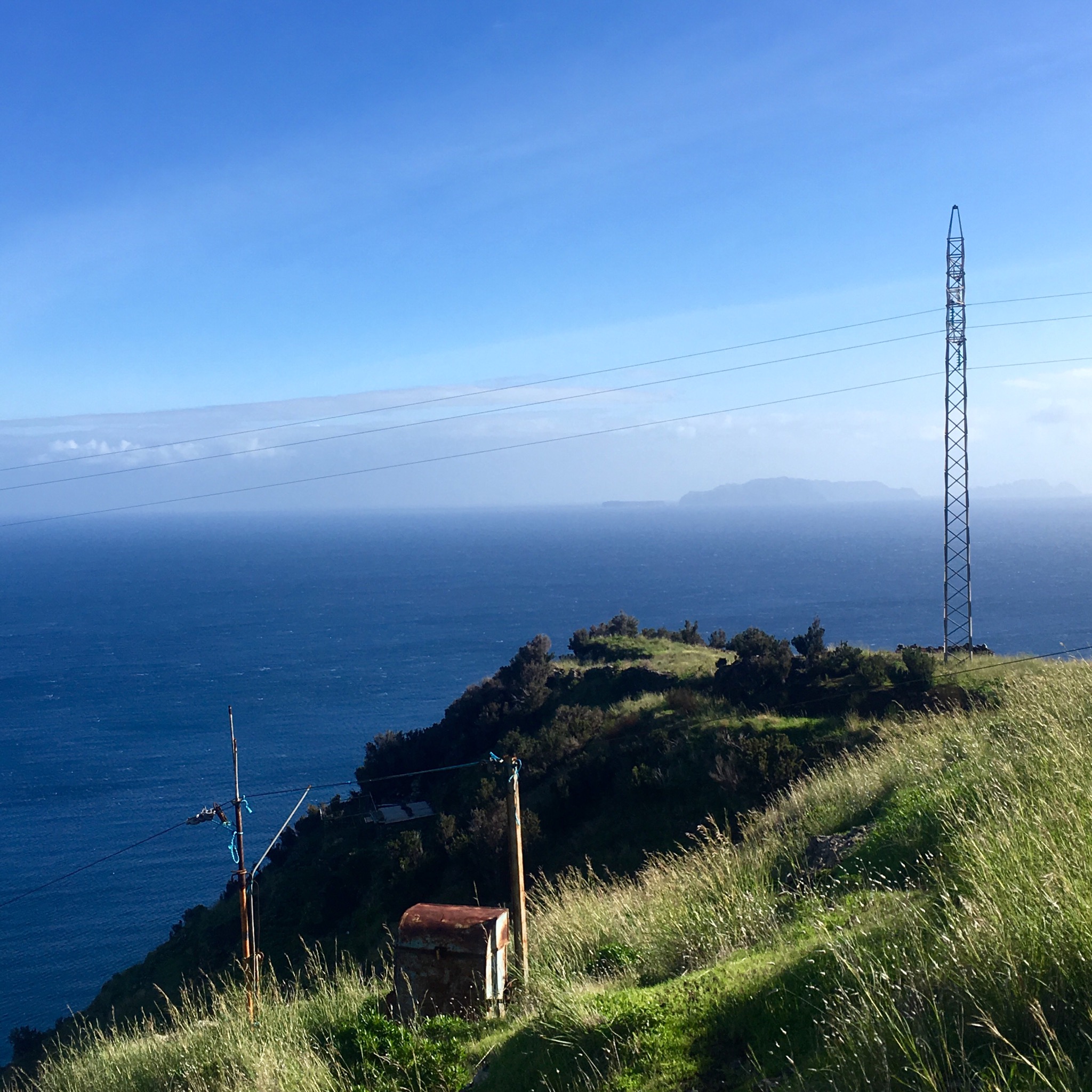
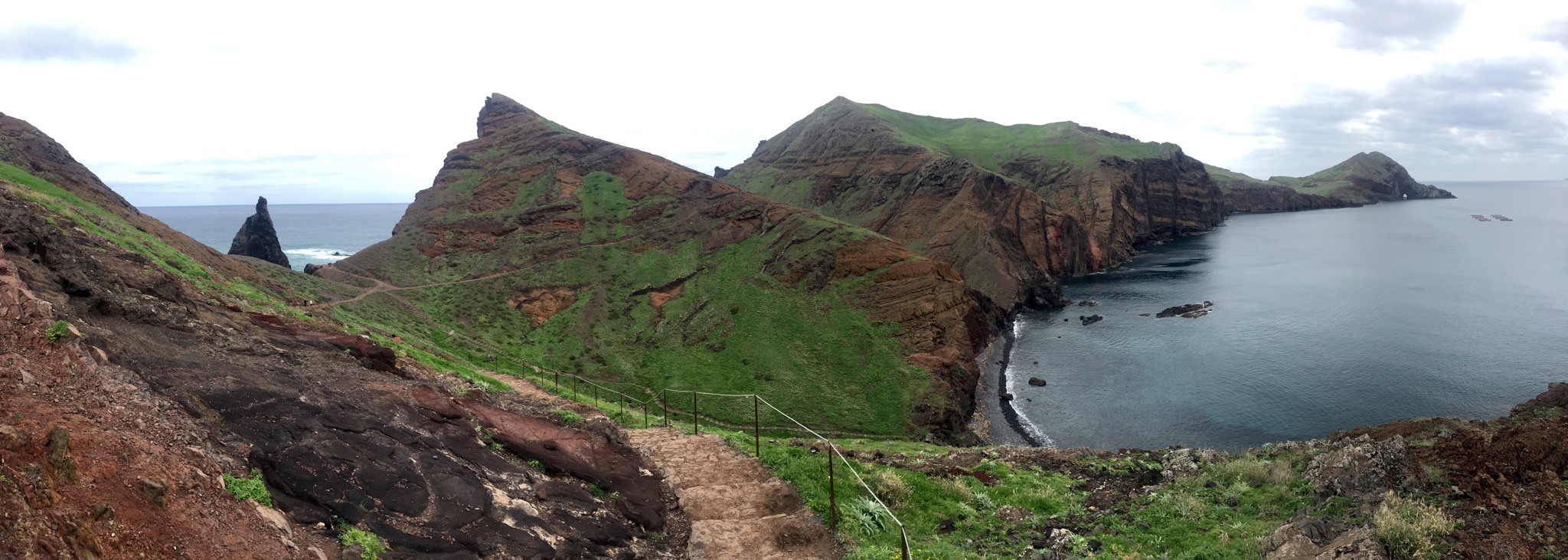
Our hiking circle around eastern Madeira continued with a 15km loop around the finger of shattered land that sticks out into the Atlantic pointing towards the Moroccan coast 600km away.
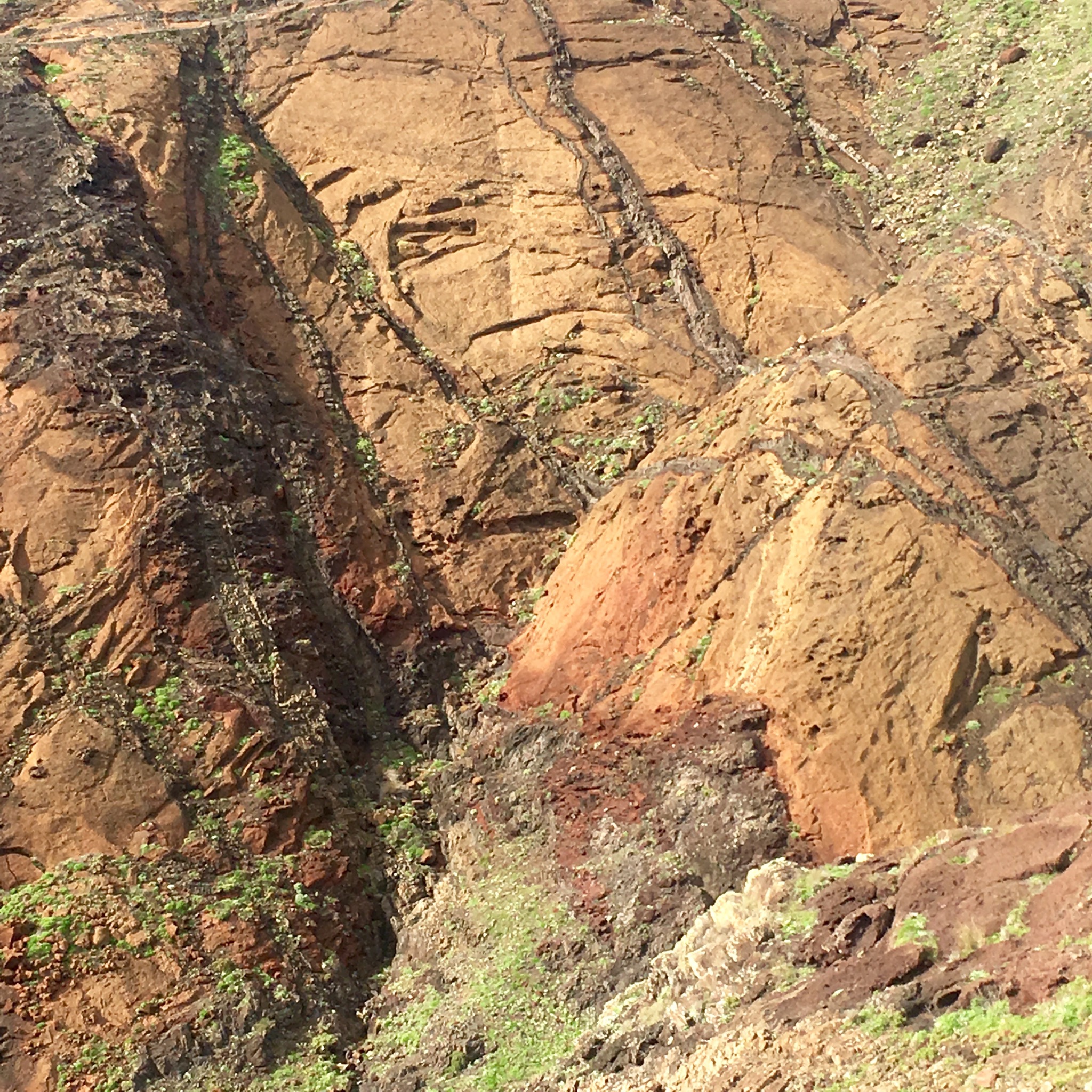
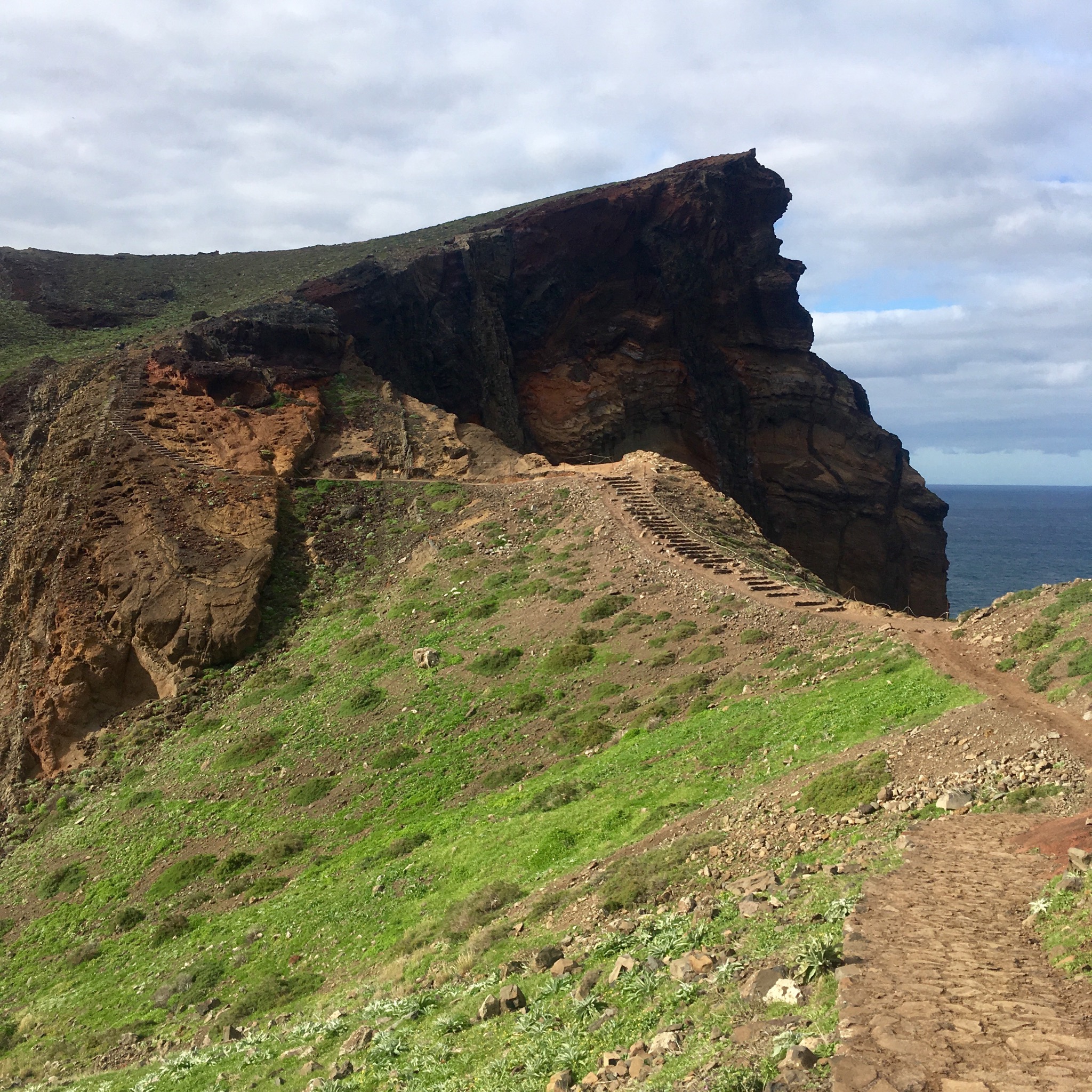
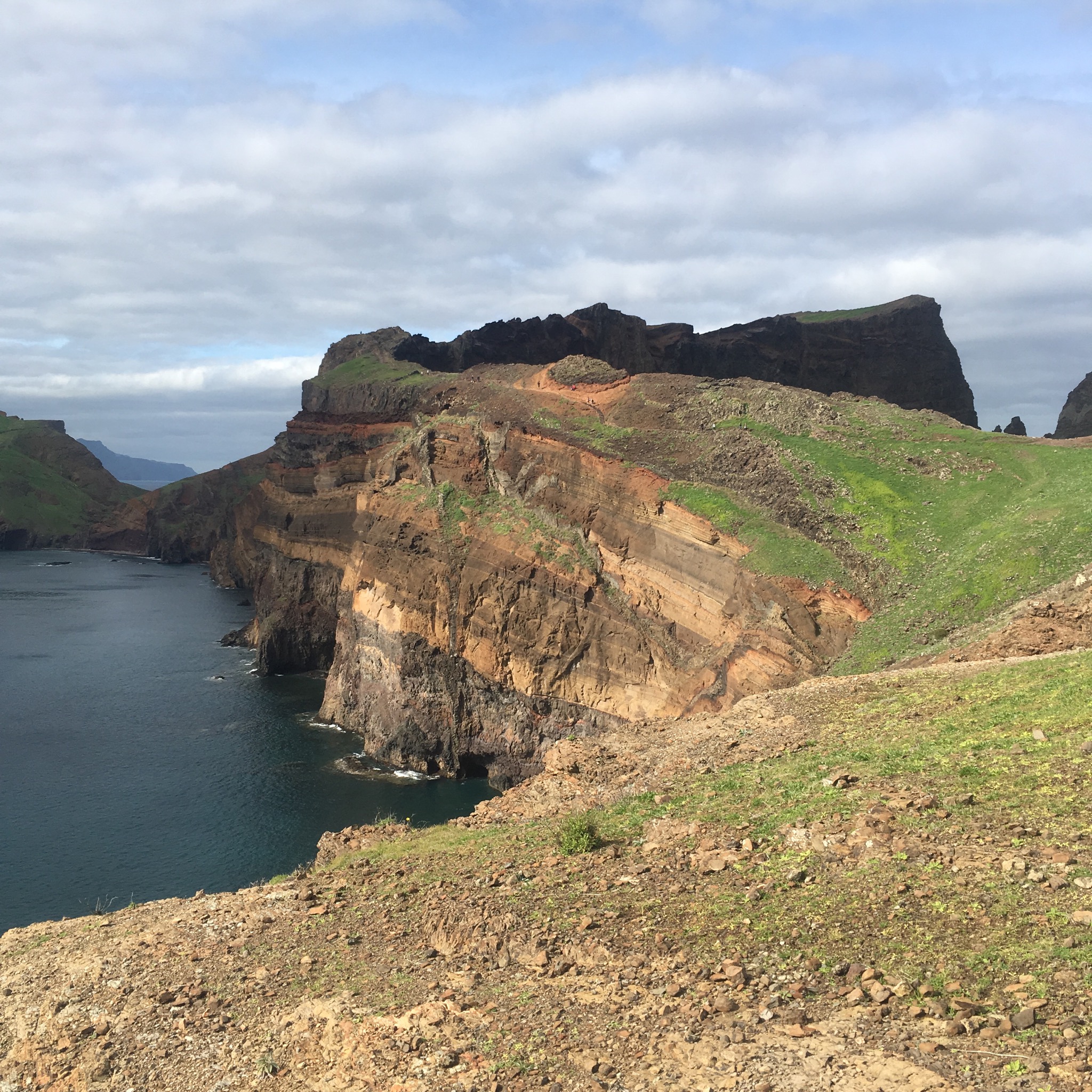
Madeira is essentially a volcanic island, and enough basalt from deep within the earth had spewed onto the ocean floor to eventually create an island rising above the ocean. activity is thought to have finished approximately 25,000 years ago, and we were going to see some fine examples of the weathered remains of all that upheaval.
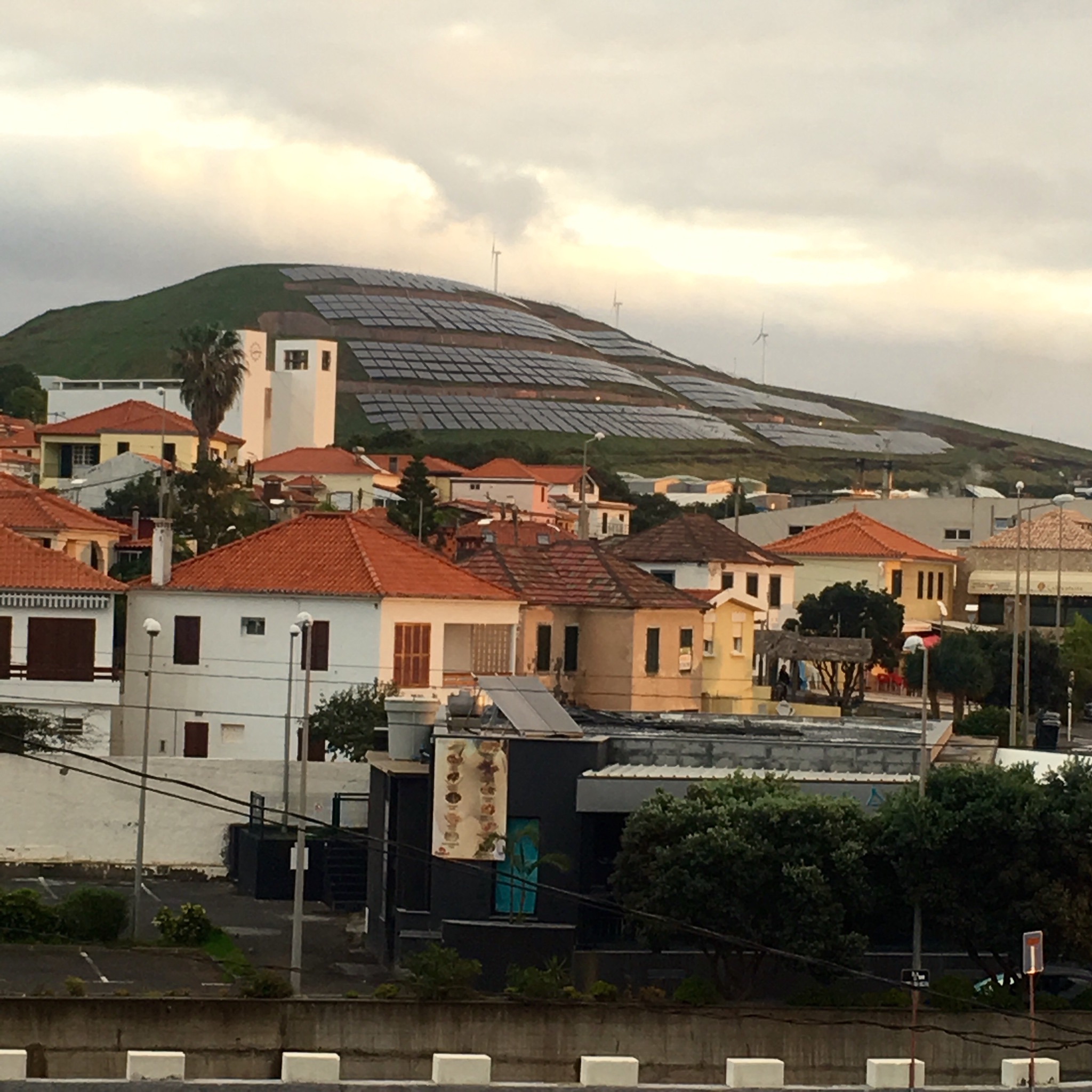
We had to climb up out of town past the docks and industrial zone and an area that must have contained or produced most of the islands energy needs, with masses of oil storage tanks, windmills and a vast solar farm where the panels seem to have been laid on the ready made slopes of a conveniently angled hill.

IMG_2330.JPG

IMG_2445.JPG
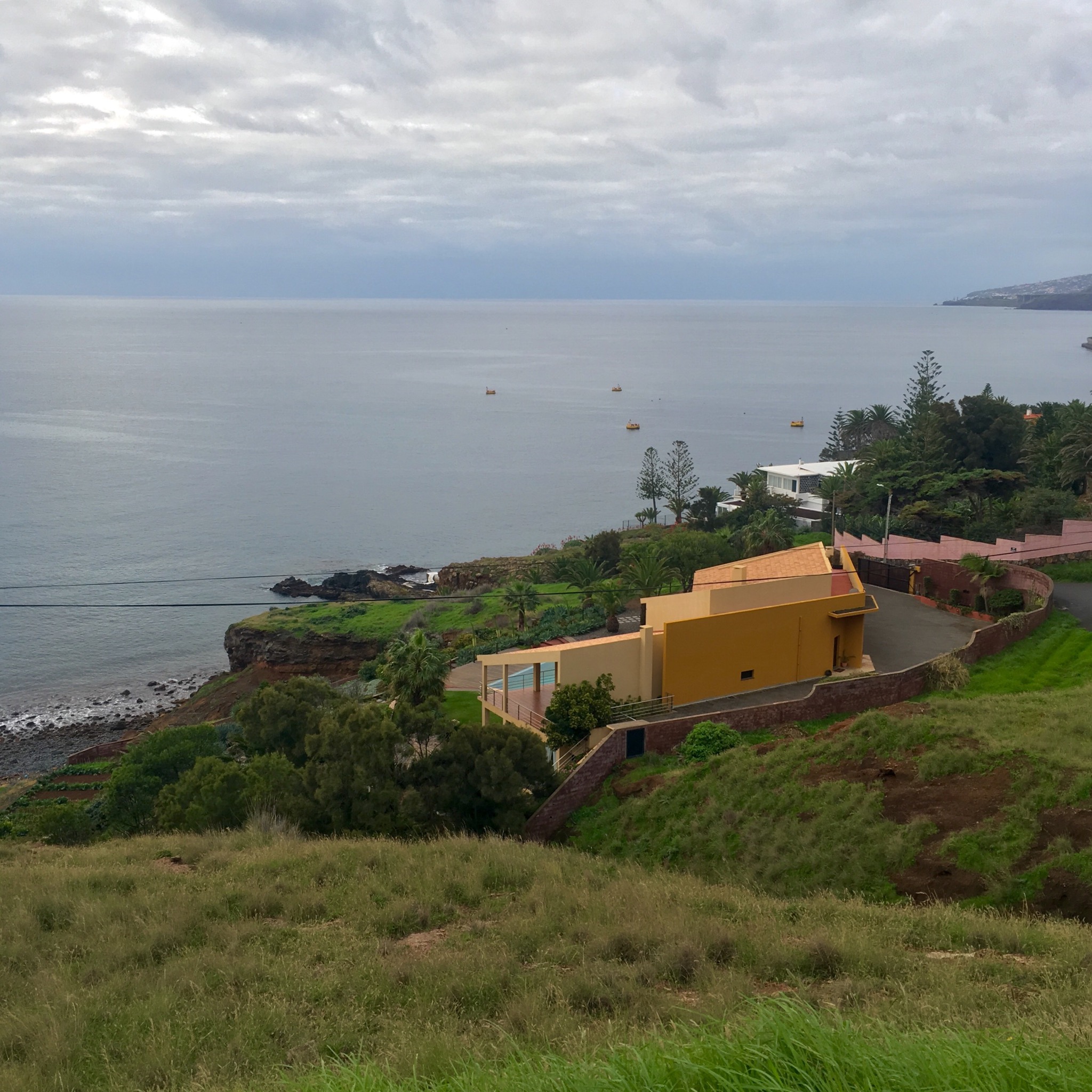
Once clear of the industry the road narrowed and climbed past some fine seaview properties with exotic plantings back up to the north coast, affording us a reminder of the wild grandeur we had walked the day before.

IMG_2338.JPG

IMG_2335.JPG

IMG_2337.JPG

IMG_2340.JPG
We followed a side track up to a mirador at Pedras Brancas for a spectacular view to the east.

IMG_2342.JPG
We headed off road, skirting around the perimeter fencing of some installation bristling with masts and antenna and followed a rugged path past strange lava formations.

IMG_2347.JPG

IMG_2348.JPG

IMG_2526.JPG
We climbed down to a flat area atop the cliff edge for a view towards the pinnacles of rock in the sea at Pedra Furada before crossing back to the south and joining the main route around what is now a Natural Park, shown by the red line on the map above.
We joined a good few other folk there as there was a car park and this was a walk “to do”. Coaches released crocodiles of people to get as far as they could in the allotted time along the, at times, rugged track.
The landscape was big and thrilling enough and the season late enough for us not to worry about sharing the paths and we headed happily up the broad wooden boardwalks. There were sections of steps cut into the rock and other places where the path was supplied with cable fencing.

IMG_2377.JPG

IMG_2351.JPG
We had fine views along the coasts both north and south and back inland towards the high mountains to the west, still wreathed in cloud. We had done very well with the weather. According to an ex pat we had met there had been a lot of rain since October and there was more promised after we left. Apart from the slight drizzle at Porto da Cruz we’d had fine walking conditions, not too hot or cold and mercifully, not too windy on the narrow coastal cliff paths.
It was nice to be walking across the open country after the equally nice , but enclosed, wooded levadas.
a>

IMG_2379.JPG
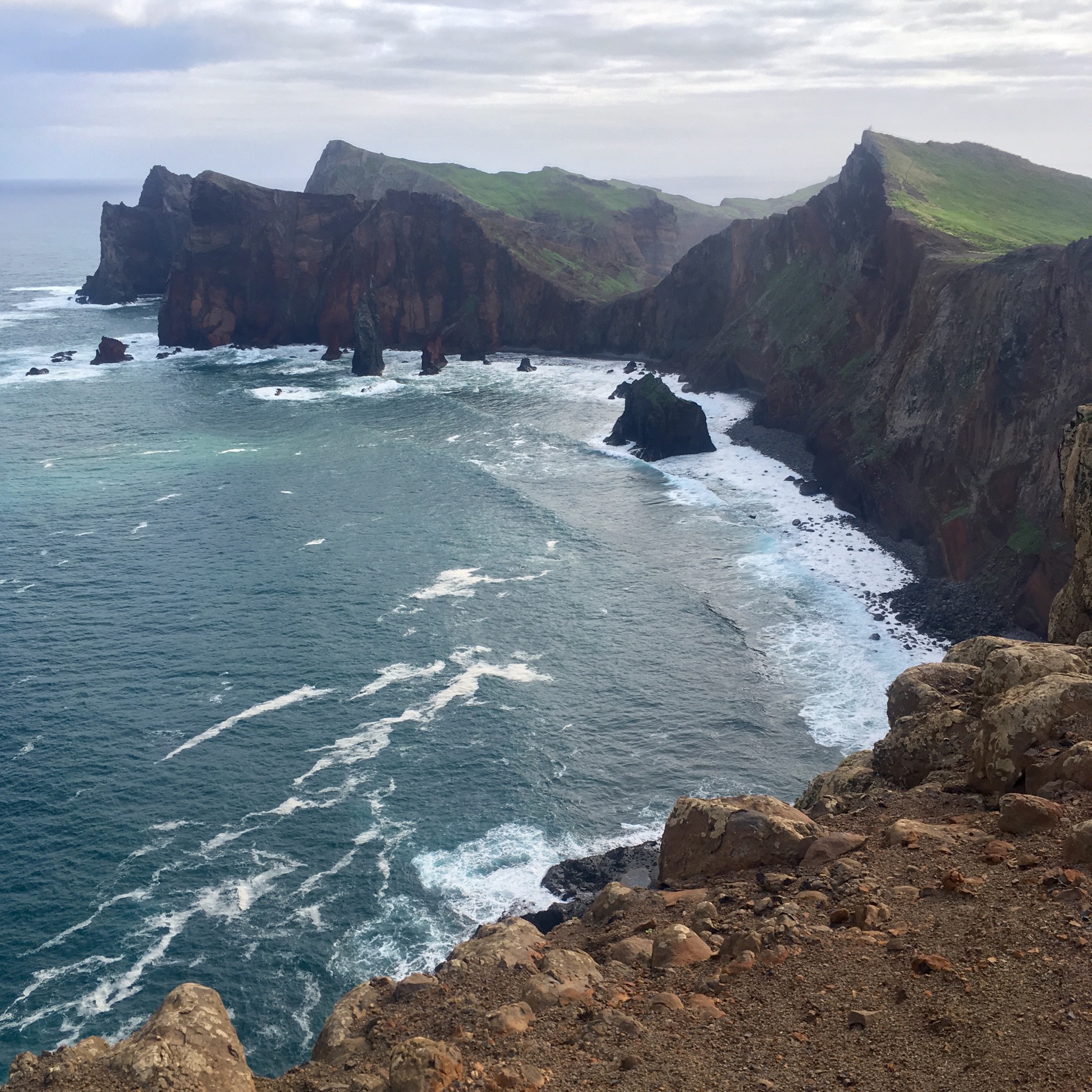
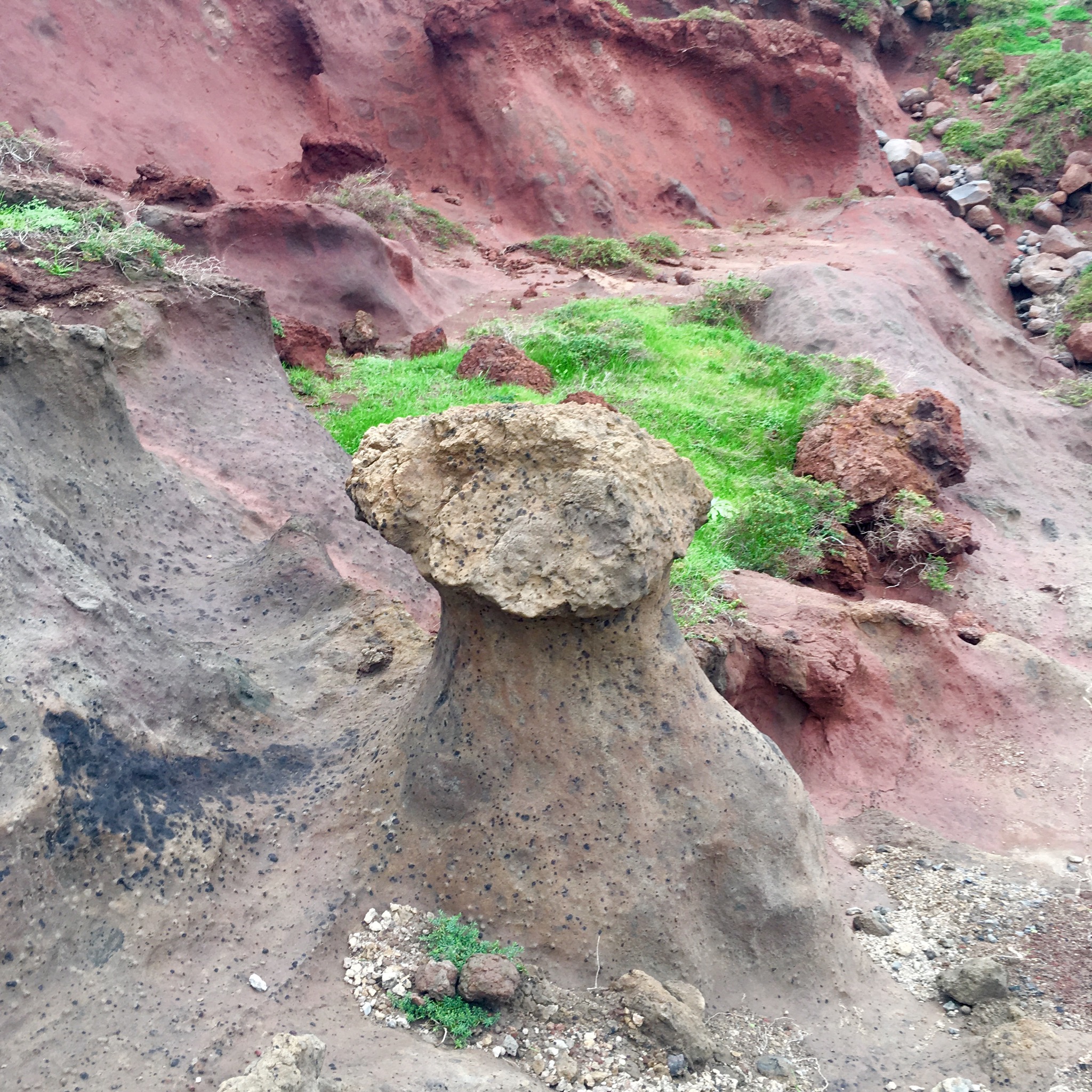
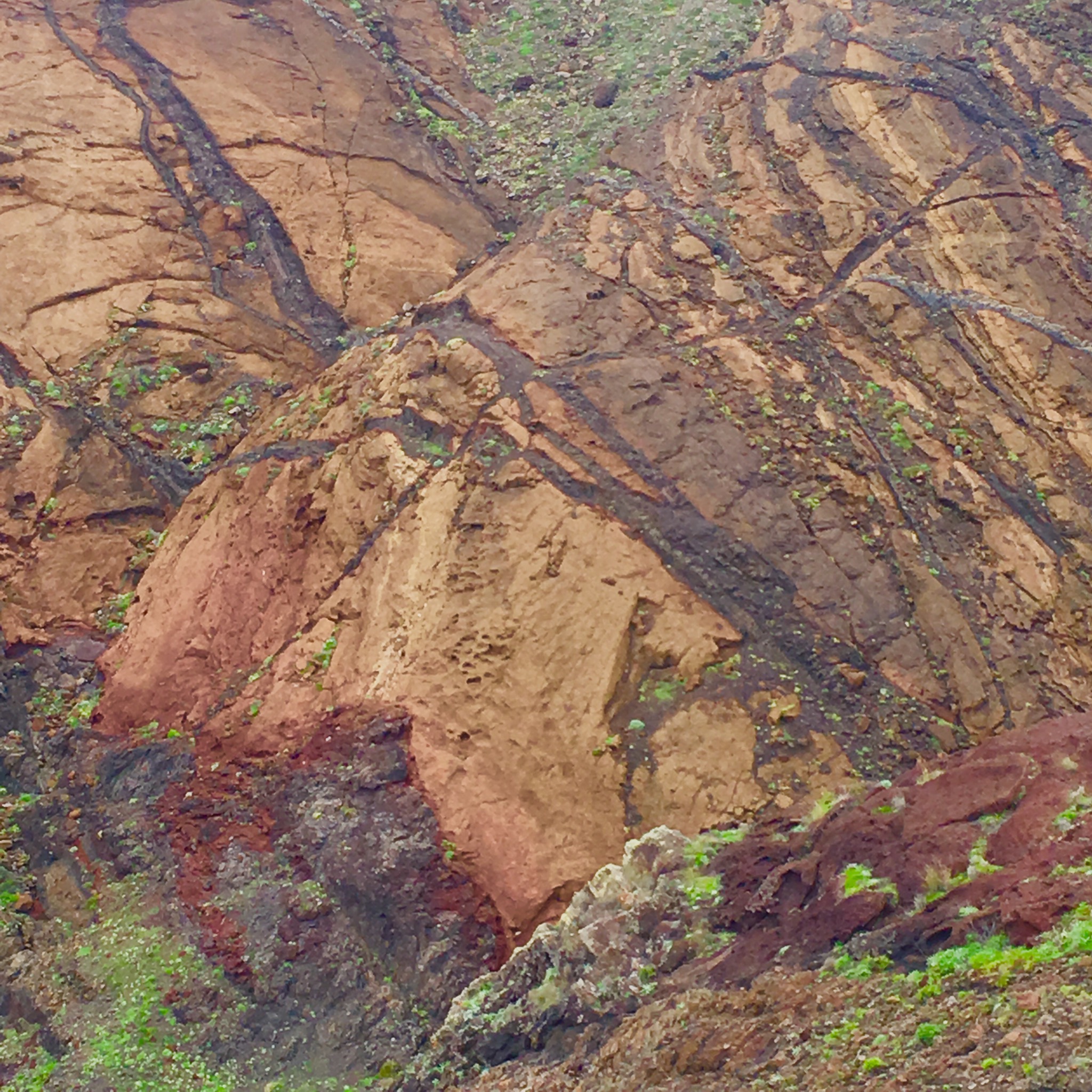
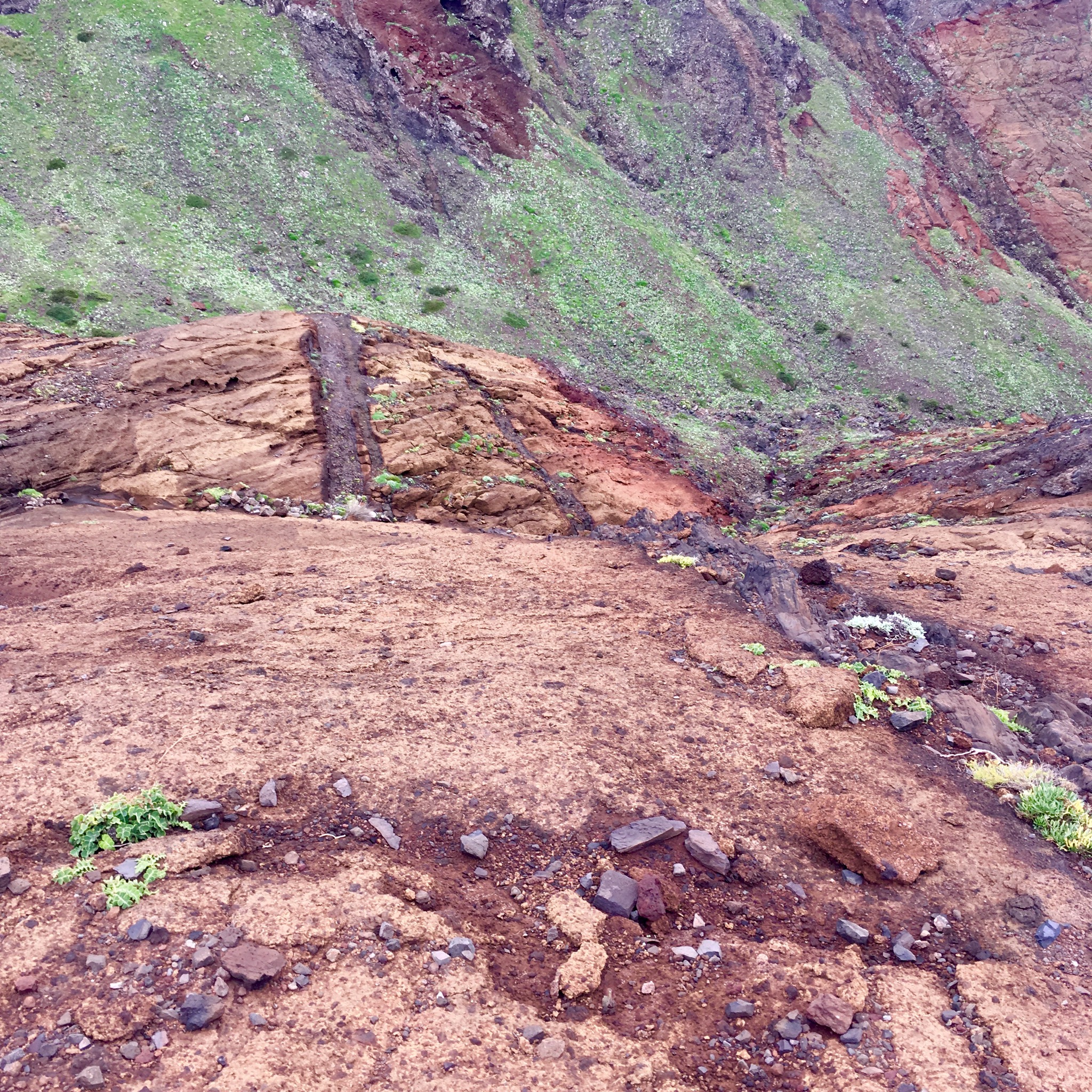
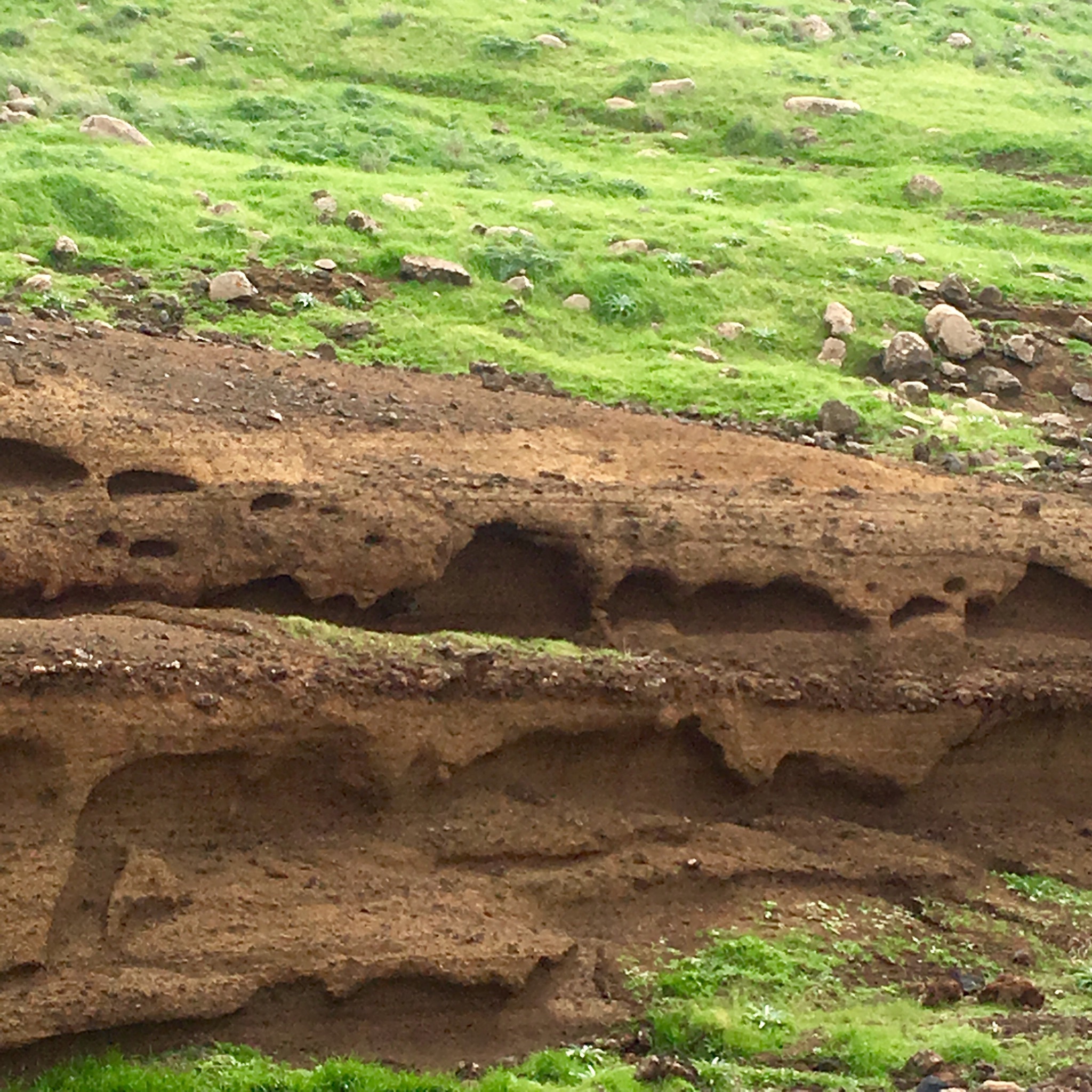
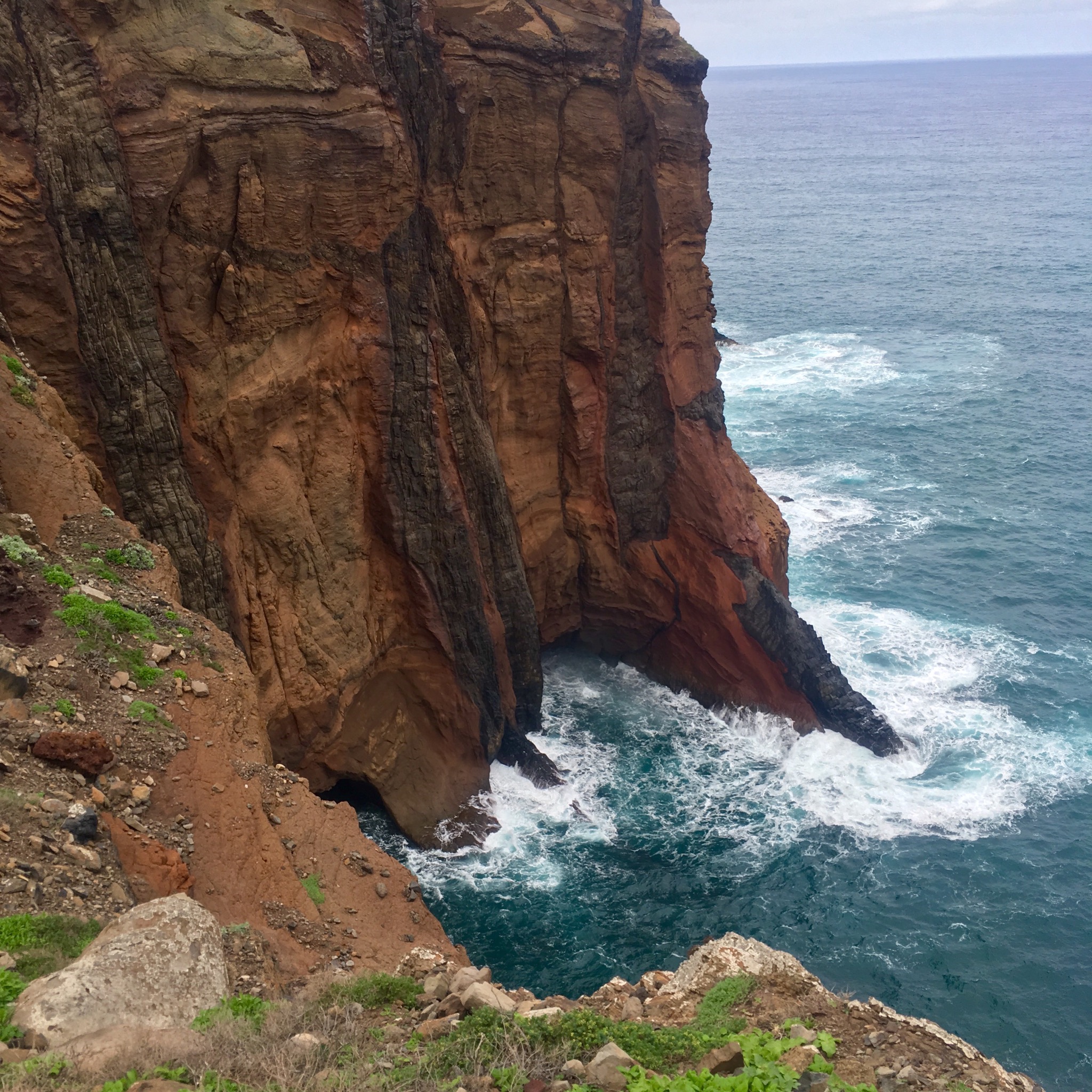
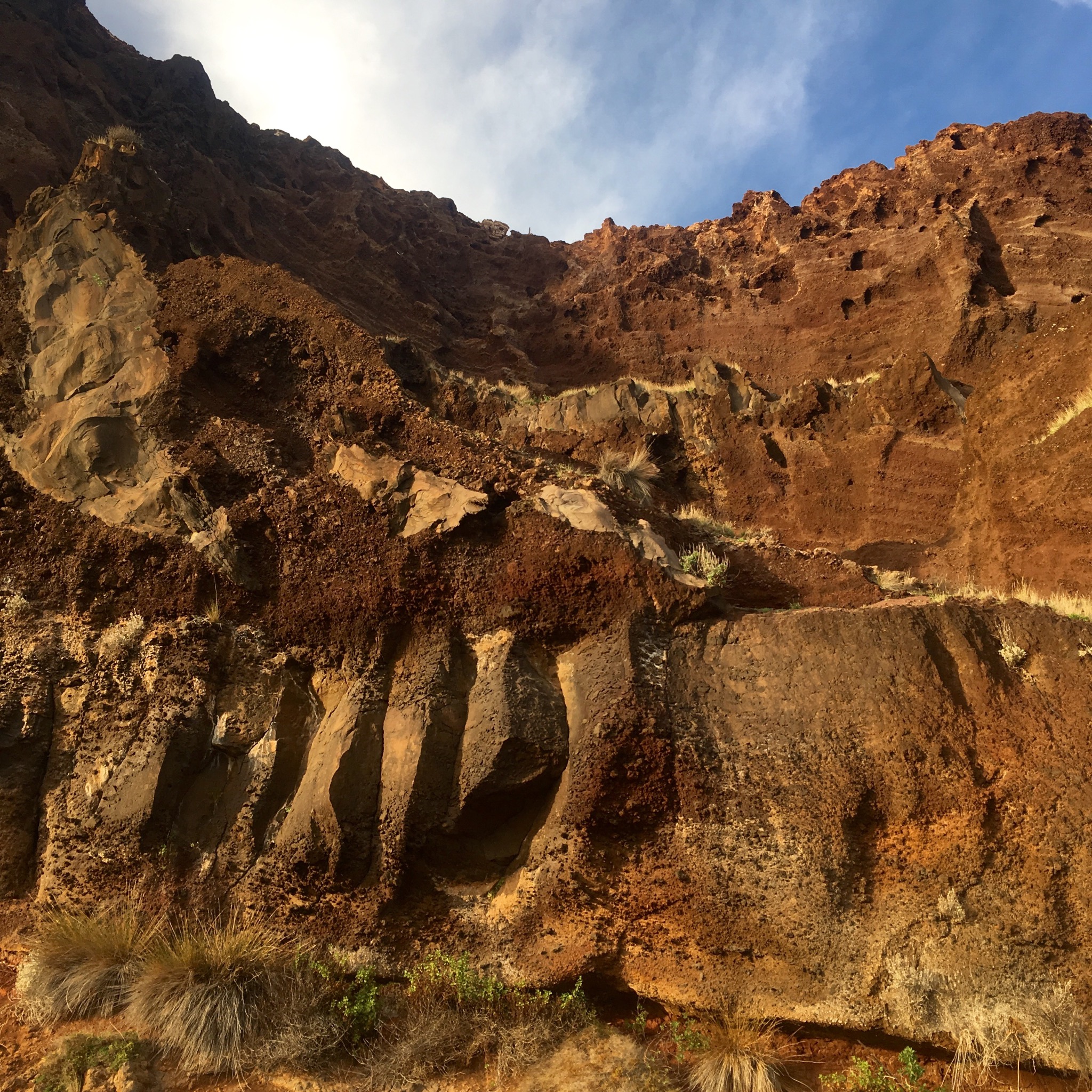
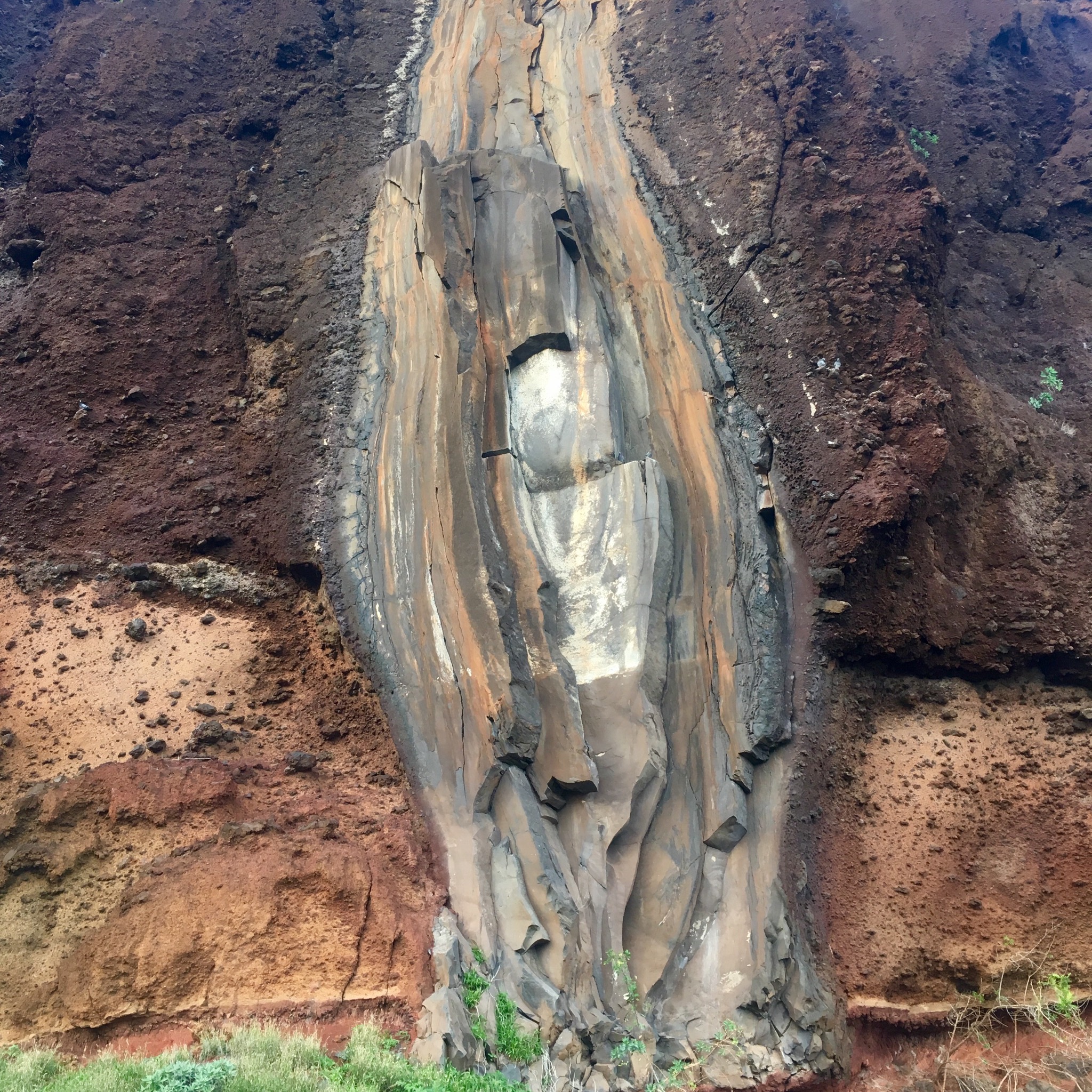
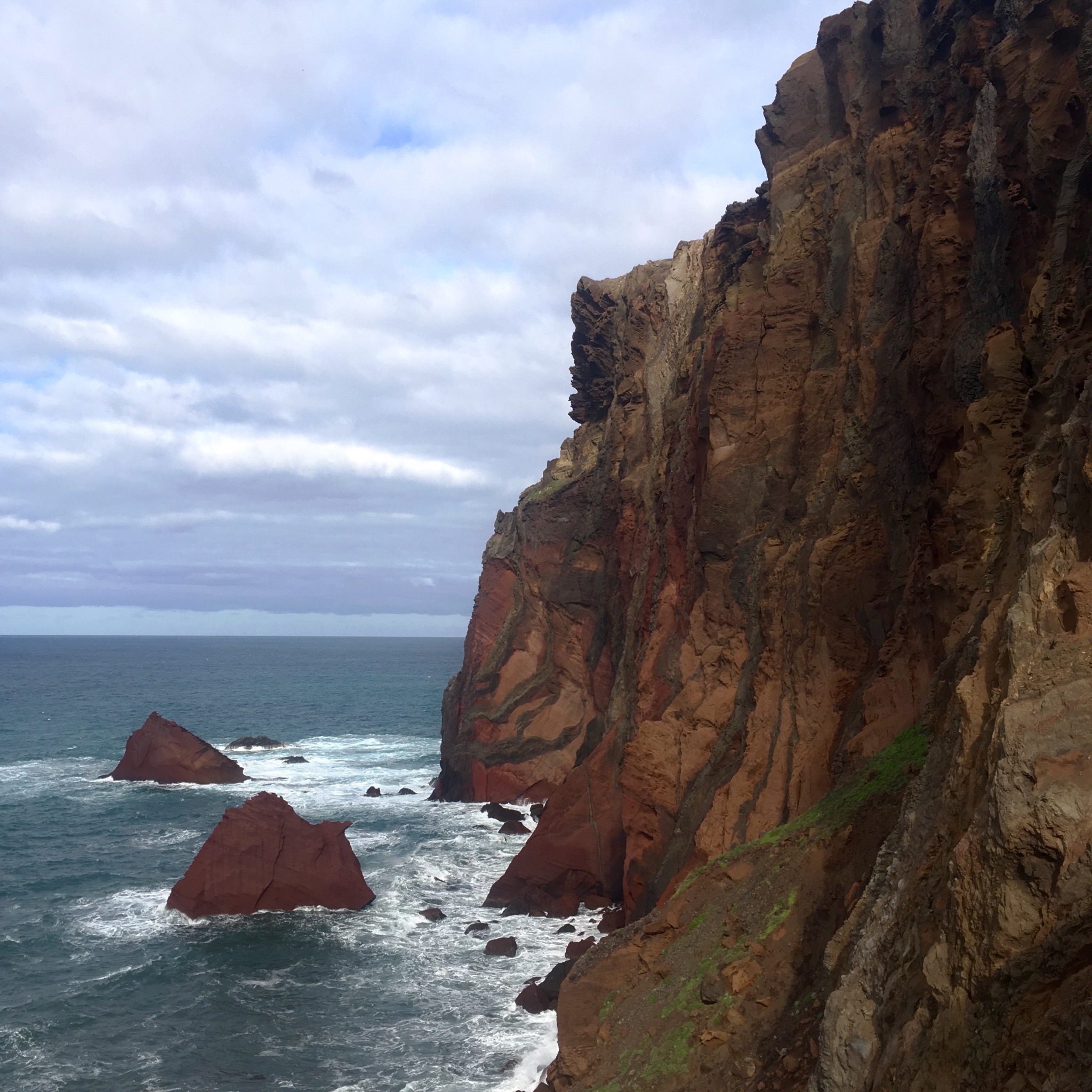
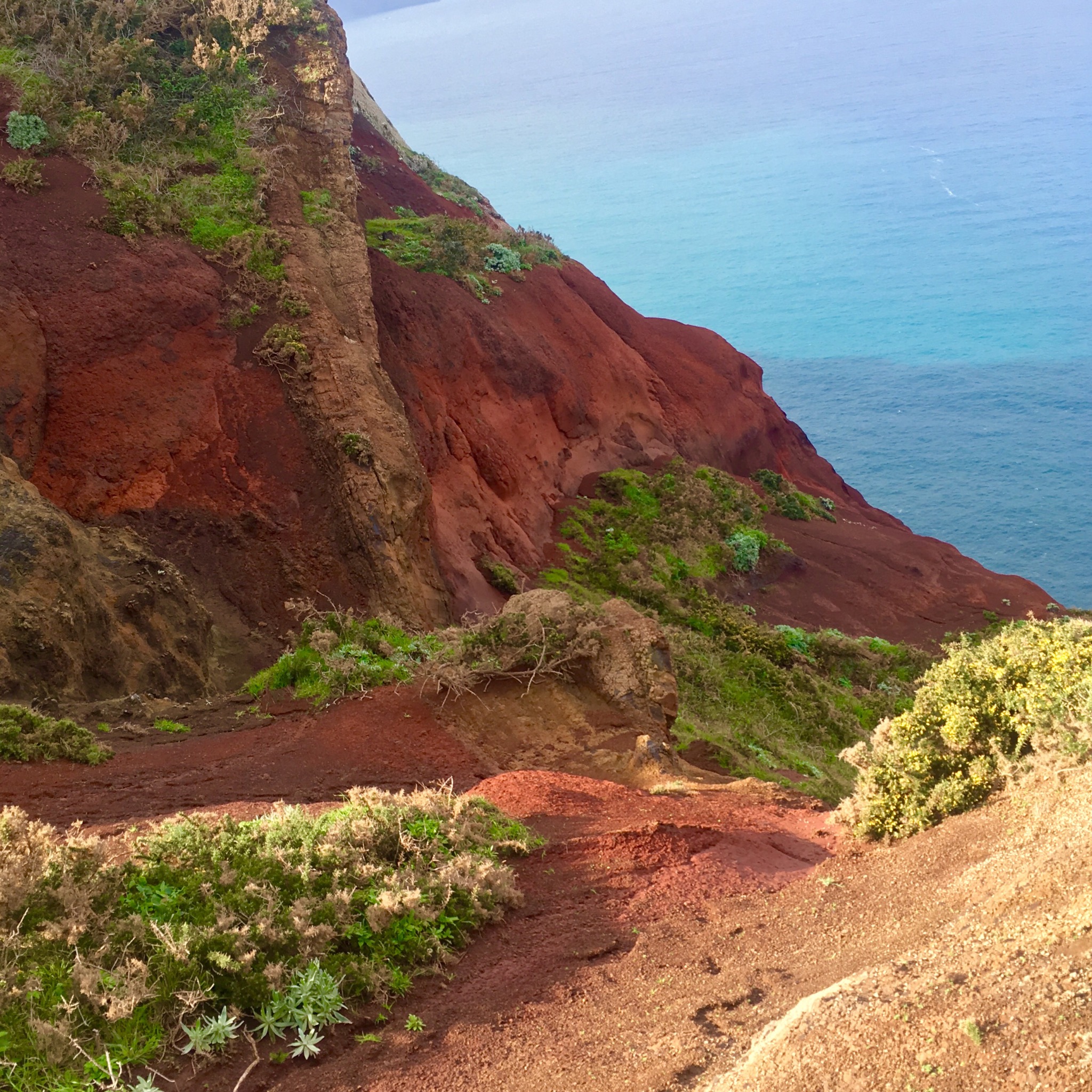
Dramatic examples of classic volcanic/ geologic structures were open to view in textbook fashion. Banded colours of rock made abstract patterns of the landscape and weirdly hued and shaped lava were like natures sculpture.

IMG_2381.JPG

IMG_2388.JPG

IMG_2378.JPG

IMG_2403.JPG
The weathering by wave and wind over eons had left a place both attractive and hellish, at times a strangely alien ,but familiar,world.

IMG_2389.JPG

IMG_2380-0.JPG

IMG_2422.JPG

IMG_2426.JPG
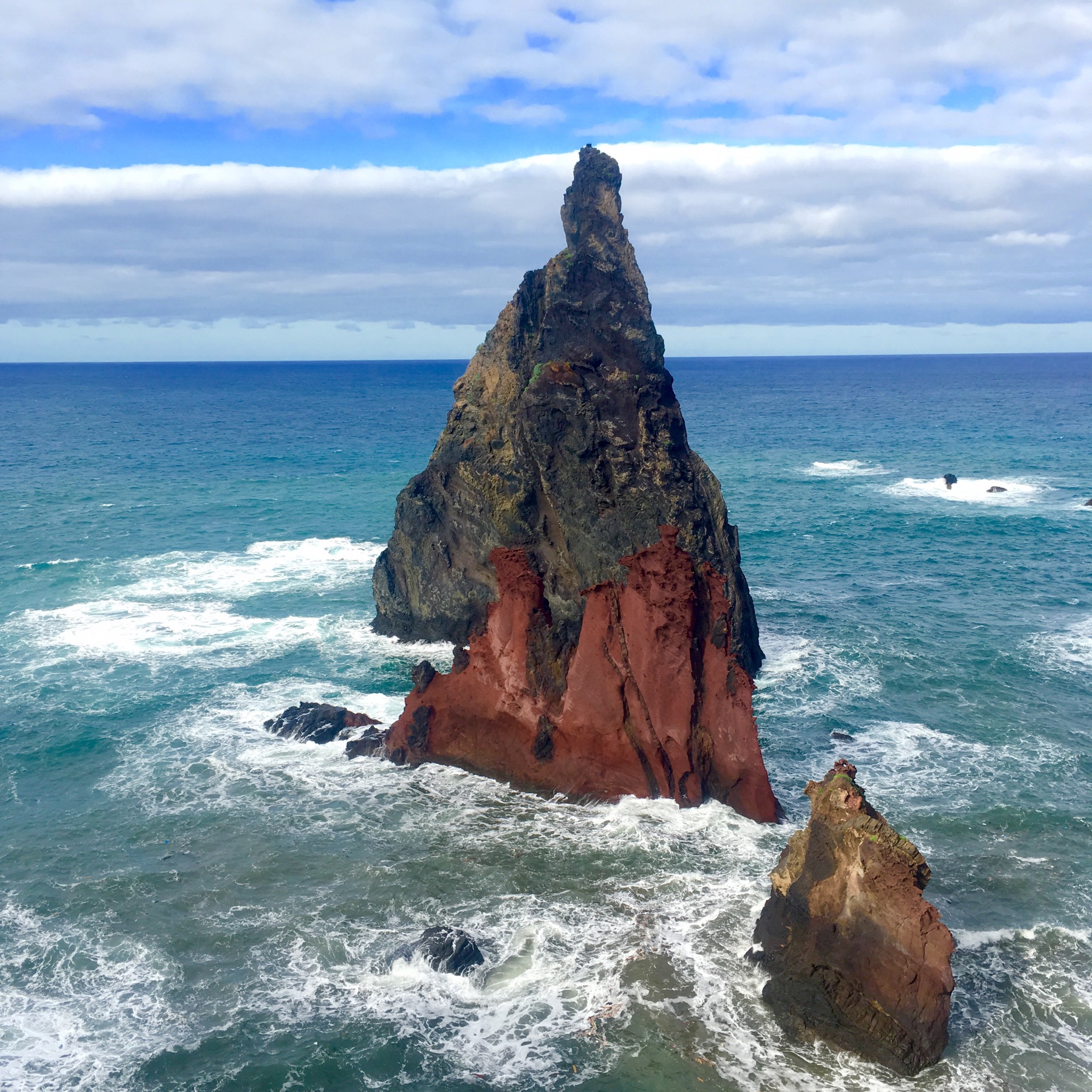
The “Seahorses” rocks soaring like spears from the waves at Pedra Furada were different shades of grey and ochre as were the cliffs behind.
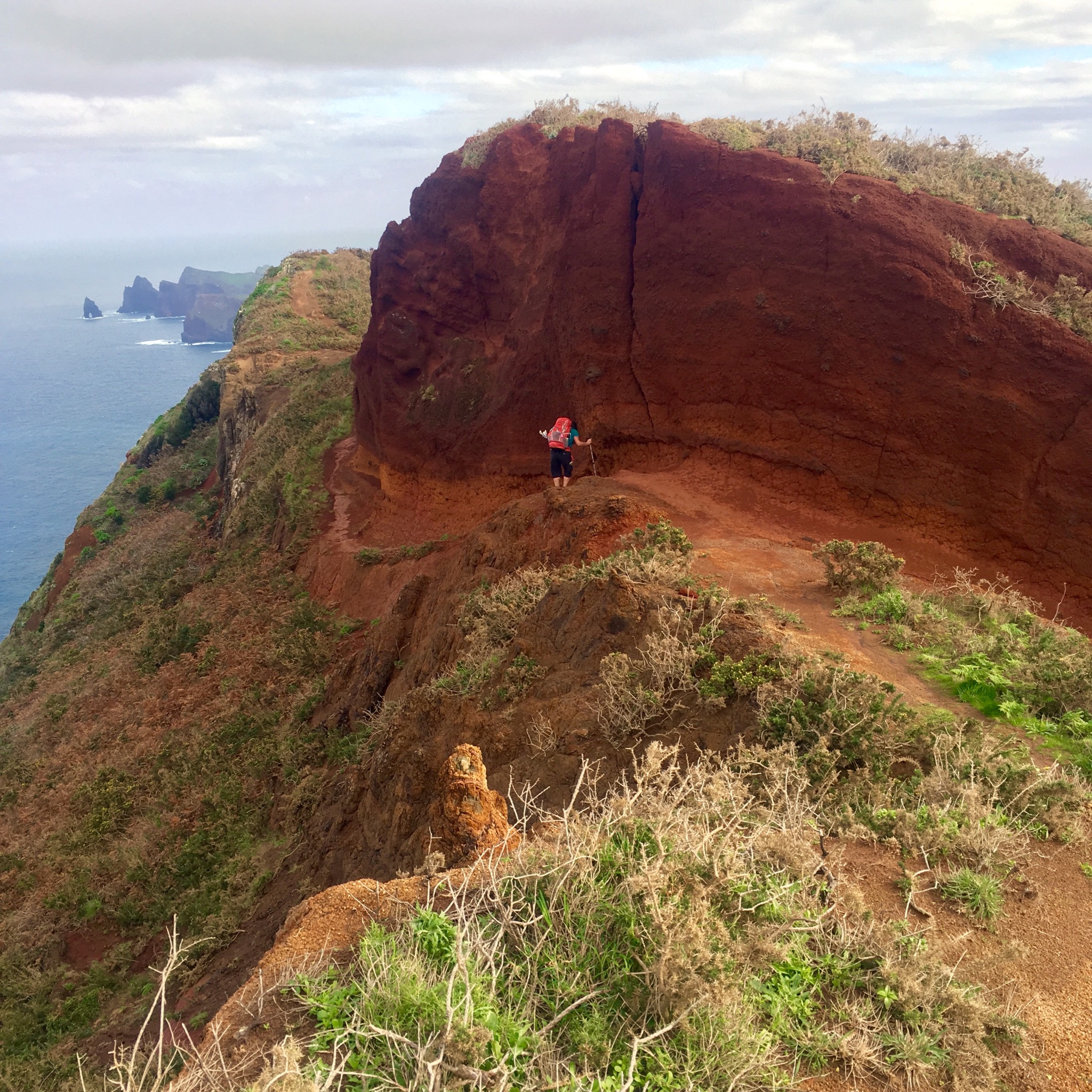
We clambered through the lava on a narrow path atop a jagged ridge at Estreito

IMG_2411.JPG

IMG_2412.JPG

IMG_2353.JPG

where we were astride the north and south of the island simultaneously in some kind of metaphor of our journey through the week.
We picnicked at Pico do Furado, the eastern end of our trip before turning back and retracing our steps against a rising tide of walkers.

IMG_2386.JPG

IMG_2406.JPG

IMG_2393.JPG
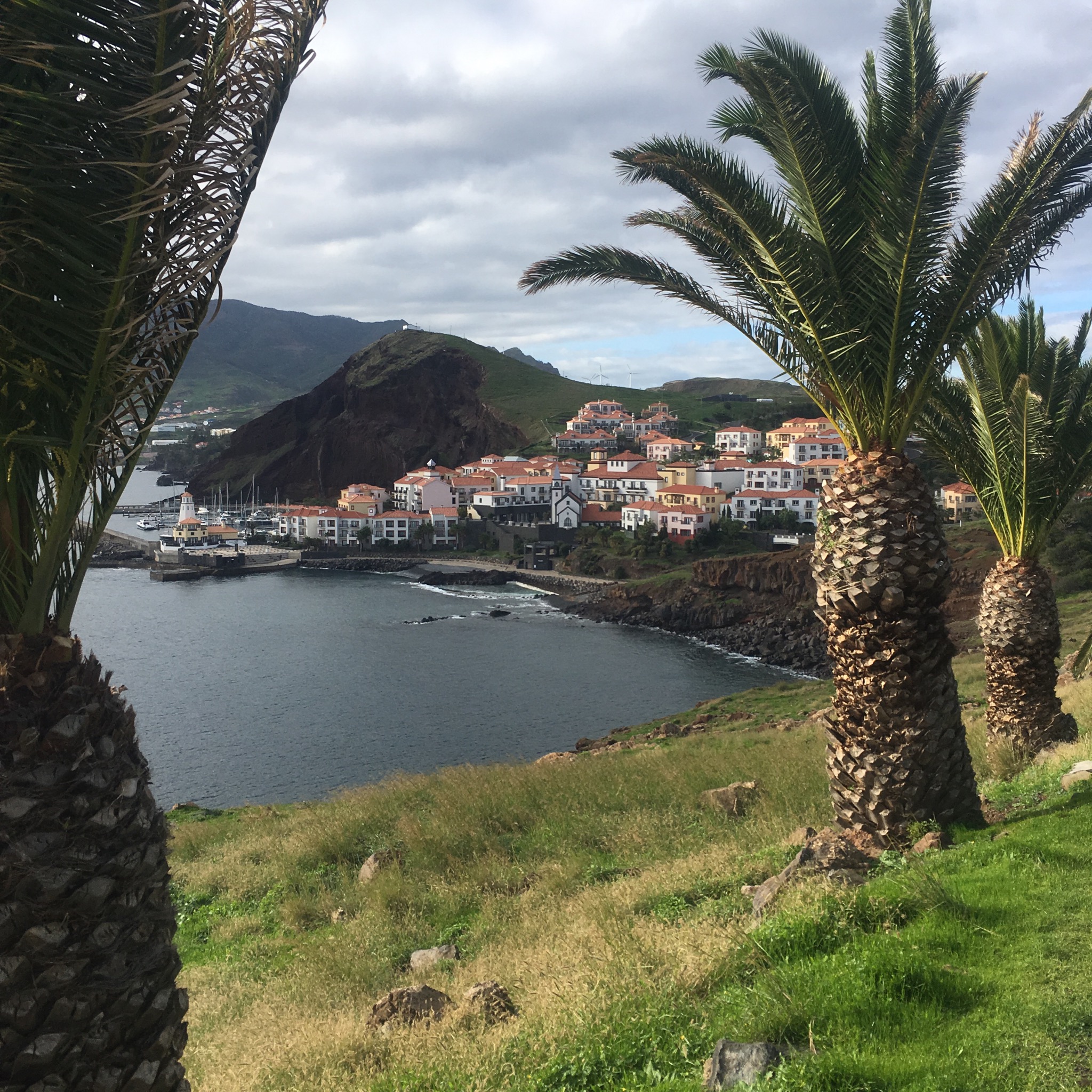
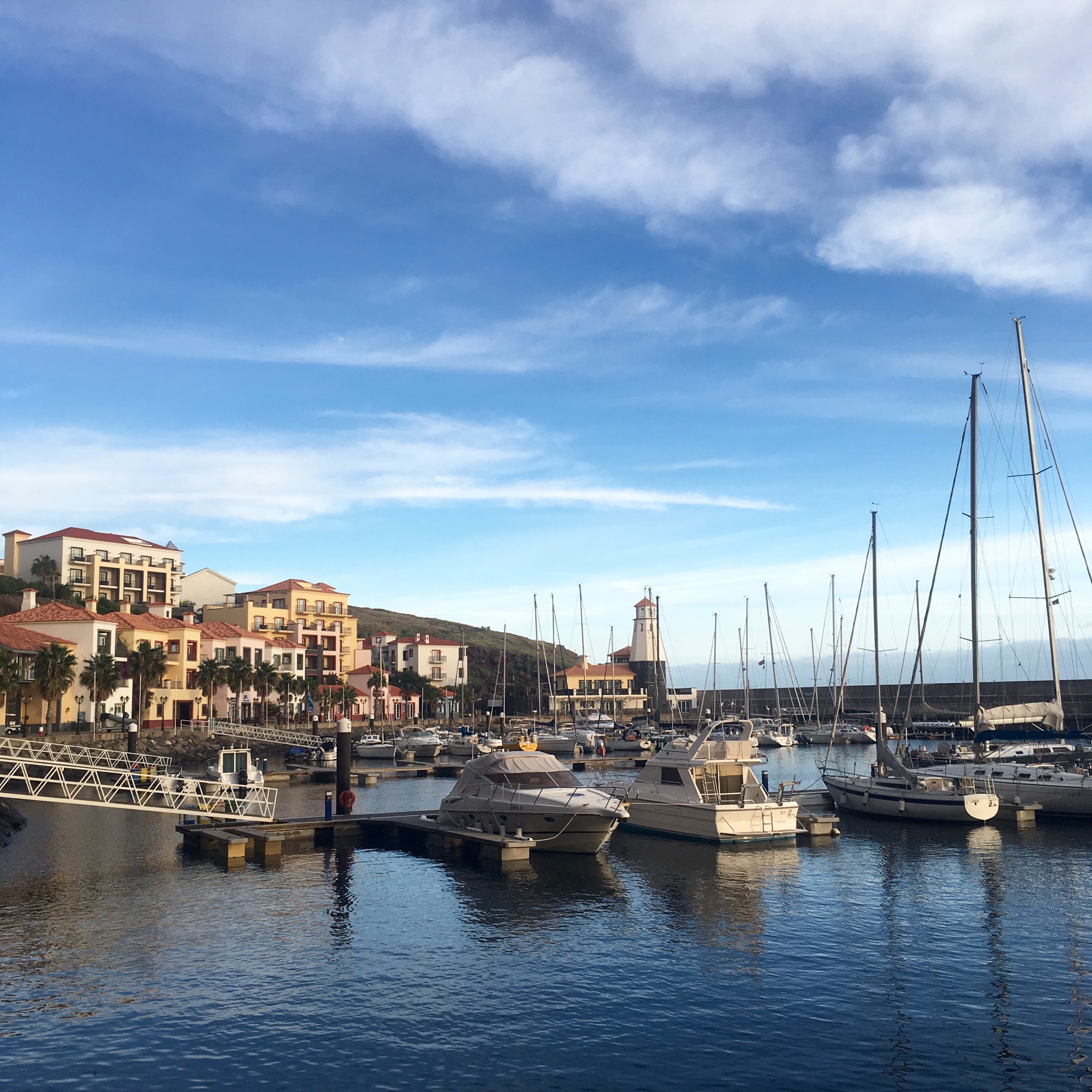
After a welcome drink at a stall in the car park we followed the Tarmac road back and shorty arrived at our plushest accommodation. A bargain on Booking.com the 5* Quinta do Lorde Hotel/Resort/ Marina had obviously been some big developers wet dream during the boom but sadly had not fulfilled the fantasy. Laid out to resemble some ideal village it in fact was like something out of The Prisoner, the surreal tv show shot in Port Merrion’s strange surroundings.

IMG_2428.JPG

IMG_2416.JPG
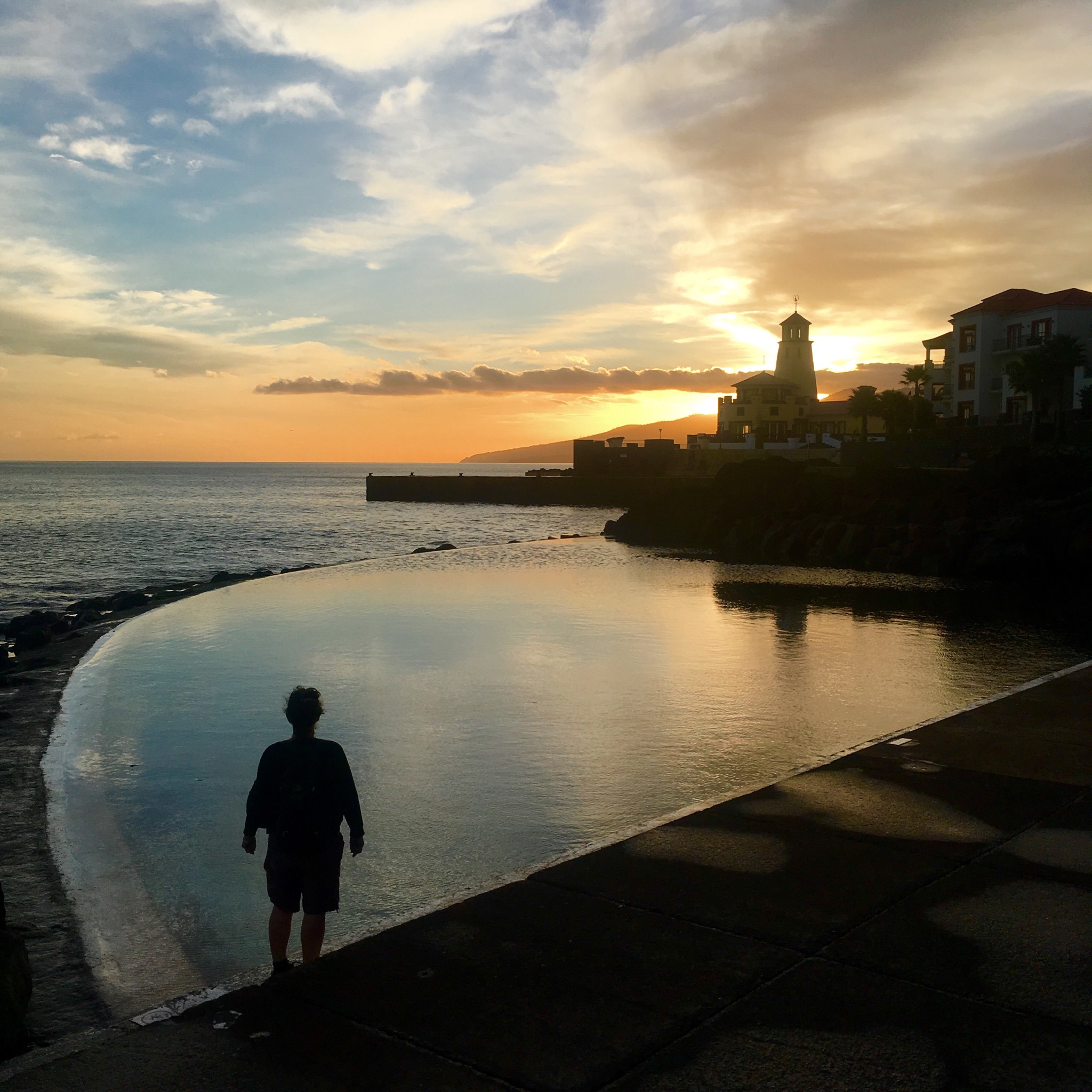
The layers of villas and apartments arranged up the slopes were seemingly empty and forlorn whilst the hotel in the centre did its best to appear a going concern. We did what we could to behave like the attractive middle aged couple in the advertising video showing in the reception lobby, and had a dip in the pool adjoining our room, ambled around the many plazas, admired the infinity seawater pool and drunk a gin and tonic in the marina bar.

IMG_2431.JPG

IMG_2423.JPG

IMG_2418.JPG
There were electric golf cars for driving the few guests about and we kept a wary eye out for giant white balls bouncing menacingly towards us.
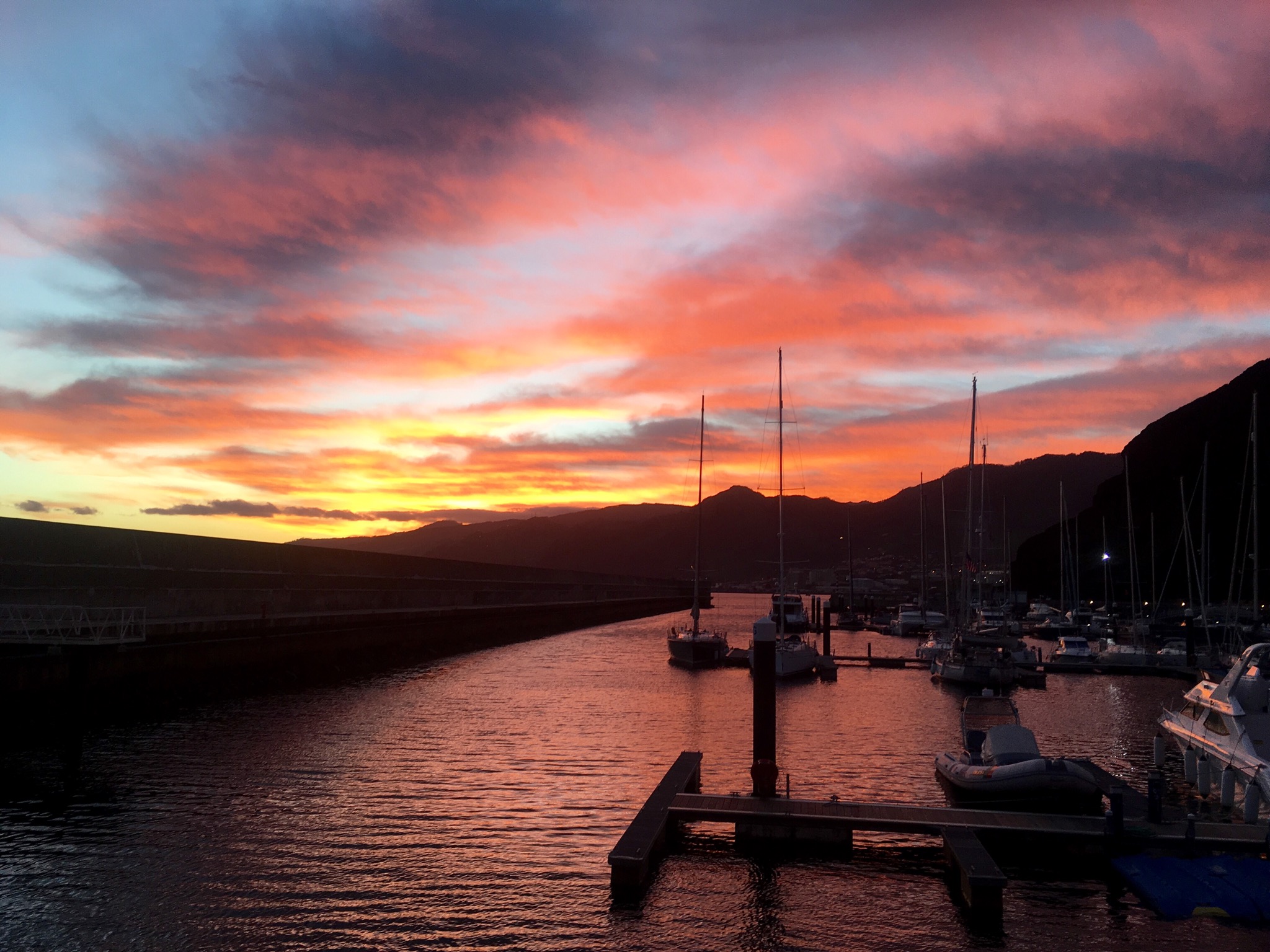
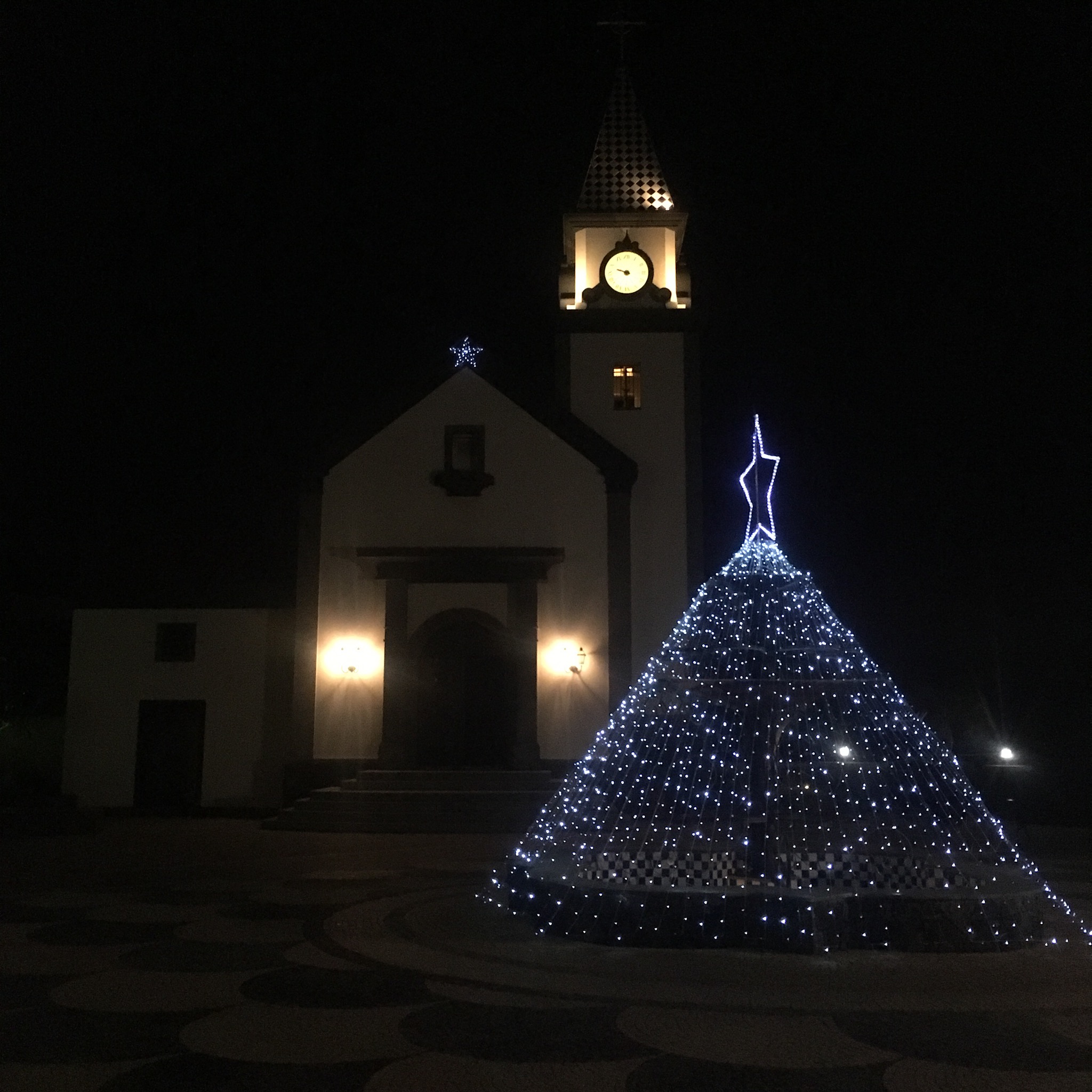
As the sun set and the Christmas tree lit up outside the church (Presumably built for the wedding market) we retired to our second luxury bed of the trip with the wonderful peninsular of Ponta de Sao Lourenco stretching out its finger into the darkness.

IMG_2437.JPG

IMG_2442.JPG

MADEIRA: Porto da Cruz to Canical 14th December

IMG_2241.JPG
The plan was to carry on down towards Porto da Cruz but to peel off on a minor road above the coast towards the east and follow trails as far as we could along the cliffs on this wild north coast before dropping down south again to Canical. A distance of about 20km again but involving a lot more ups and downs.
We’d been listening to the rain during the night and it was still coming down whilst we had our breakfast ” below stairs” but by the time we’d donned our packs and set out it had decreased to a light drizzle and before long had turned into what we at home would call” a fine soft day”.
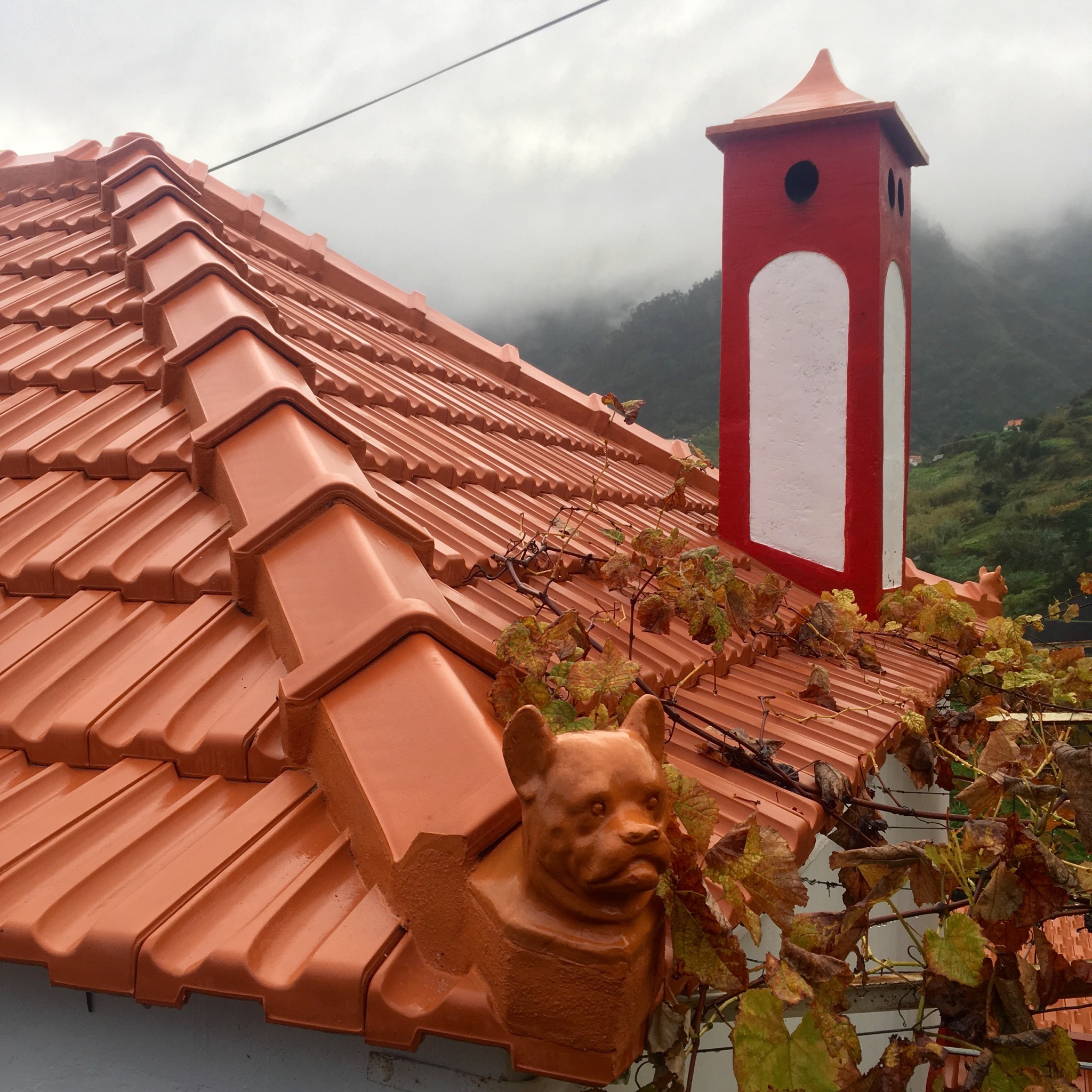
The road down towards the sea was very steep so we took it handy past the houses with their fancy corner roof tiles and drying pumpkins.

IMG_2262.JPG

IMG_2247.JPG

IMG_2243.JPG

IMG_2246.JPG
There were quite a few heaps of crushed sugar cane that we thought must be animal feed and little stands or crops of sugar cane and after getting down to the sea and starting up another steep slope we were hailed by a friendly local who insisted on having us in to sample her sugar cane hooch.

IMG_2255.JPG

IMG_2250.JPG

IMG_2249.JPG
It was very pokey and she crushed some cane into juice to wash it down with. A fine start to a demanding hike.
We clambered on up the hill with the woman’s cheers of encouragement fading behind as we past through the little hamlet of Larano and a bar we had no further need of.
The moisture in the air helps a variety of plants to thrive including the mandala like succulents that were our favourite, clinging flat to the rock faces

IMG_2259.JPG

IMG_2285.JPG
To our right we could look across the wooded valley of Ribeira do Seixo with some remote little homesteads and a fine waterfall in the woods.

IMG_2264.JPG

IMG_2265.JPG
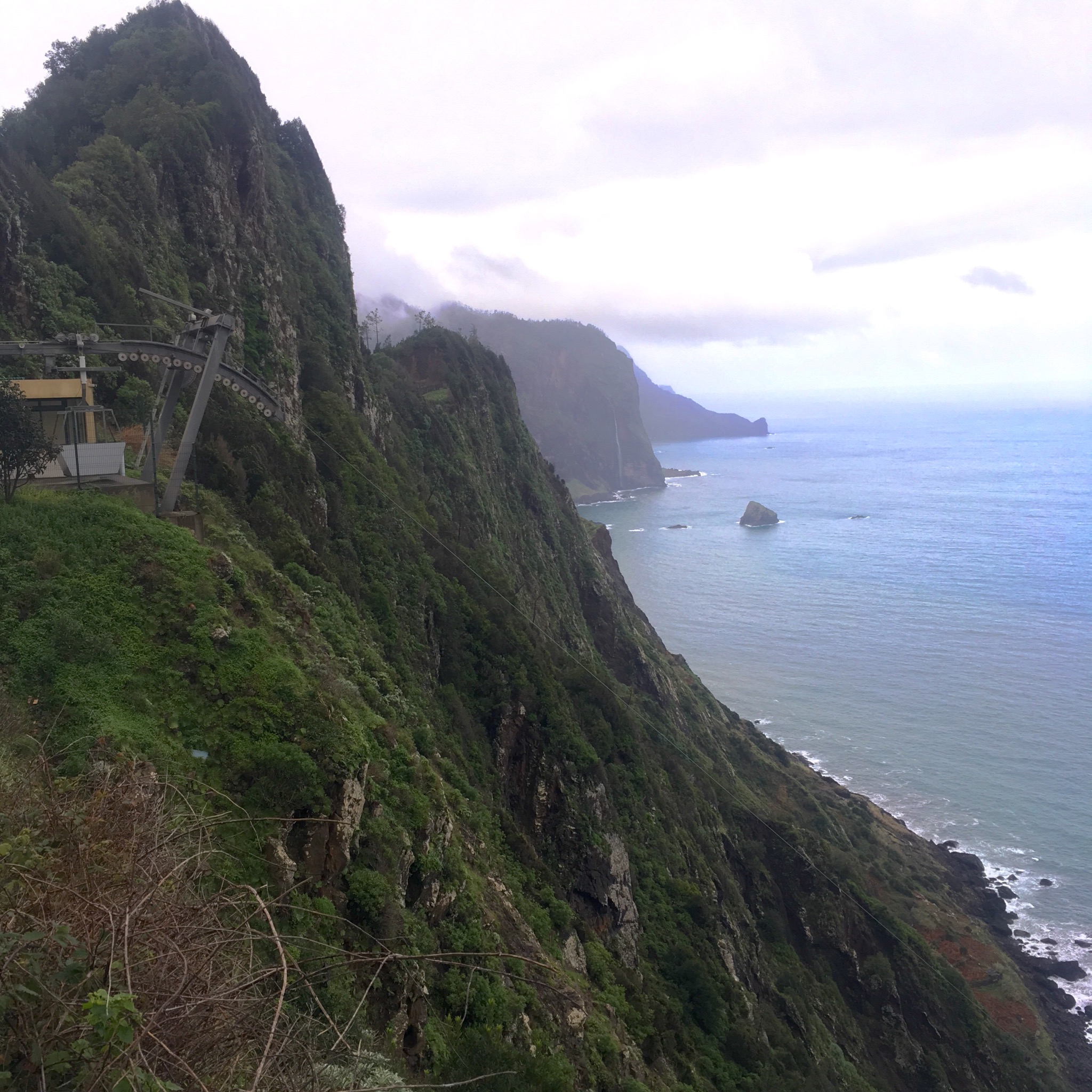
The Tarmac road became a concrete one as we climbed past the last houses, then a gravel track as we reached the top 350m above Cova das Pedras where a cable car still stands, allowing access to some very inaccessible terraces way way below.

IMG_2270.JPG

IMG_2268.JPG
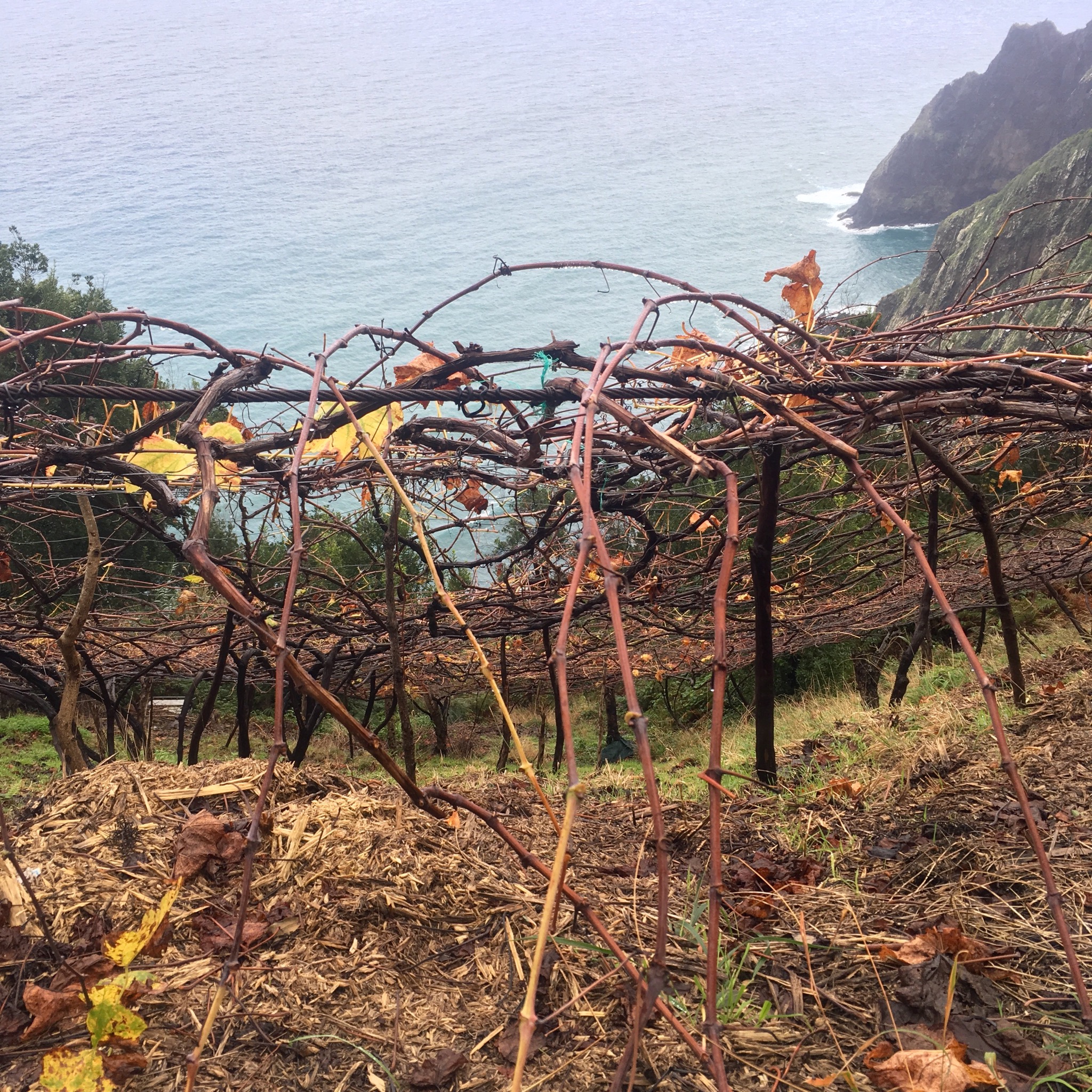
There were lines of grapes for Madeiran wine being cultivated up top too as as we moved along what had now become a narrow path we saw that any ground possible for use was put to the mattock.

IMG_2271.JPG
After the nights rain there was plenty of water about to feed the streams and waterfalls that ran and fell across the twisting path and slippery rocks meant that attention needed to be paid to where we put our feet rather that gaze slack jawed at the awesome views of the coastline.

IMG_2284.JPG

IMG_2279.JPG

IMG_2276.JPG

IMG_2275.JPG
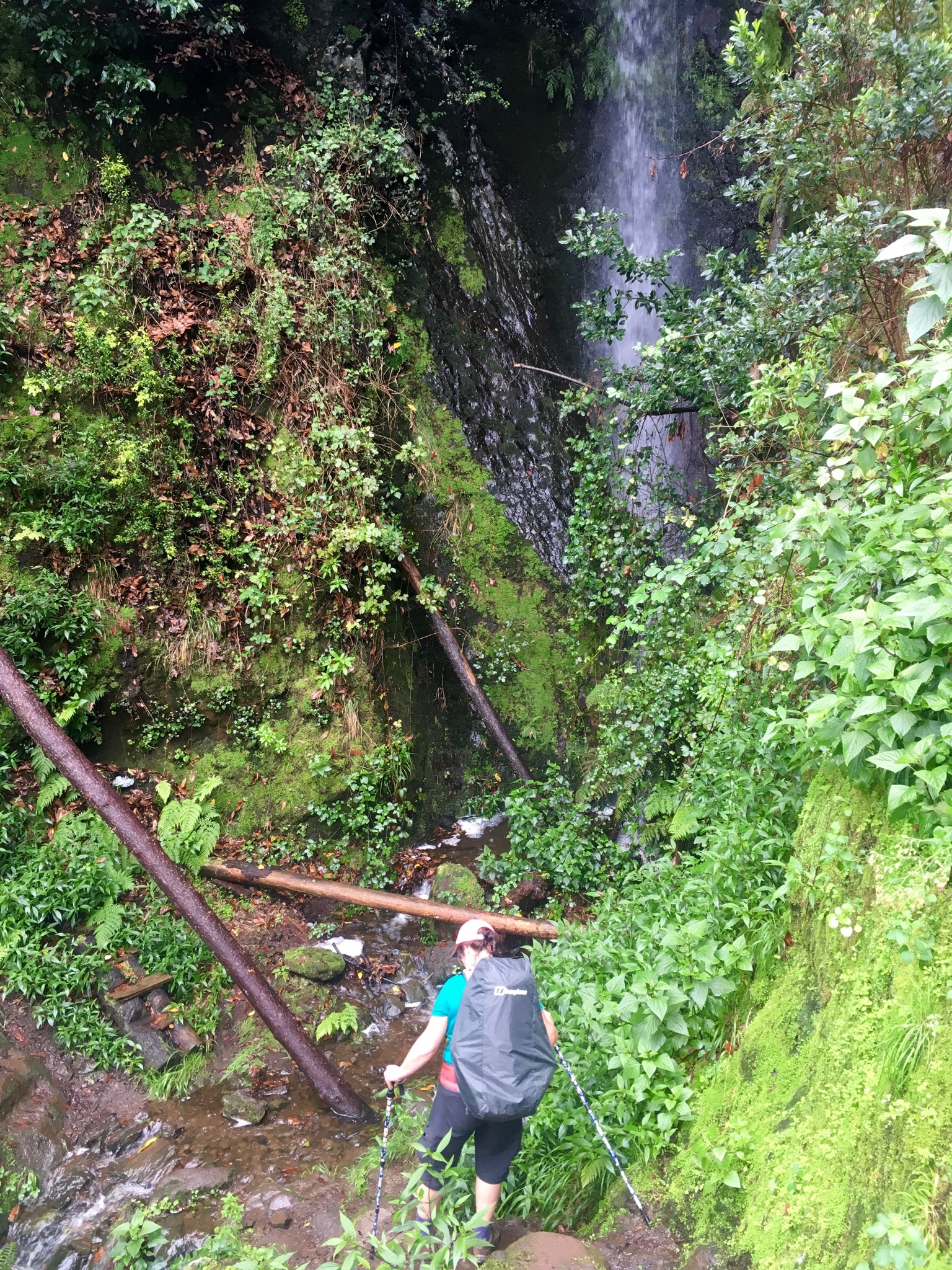
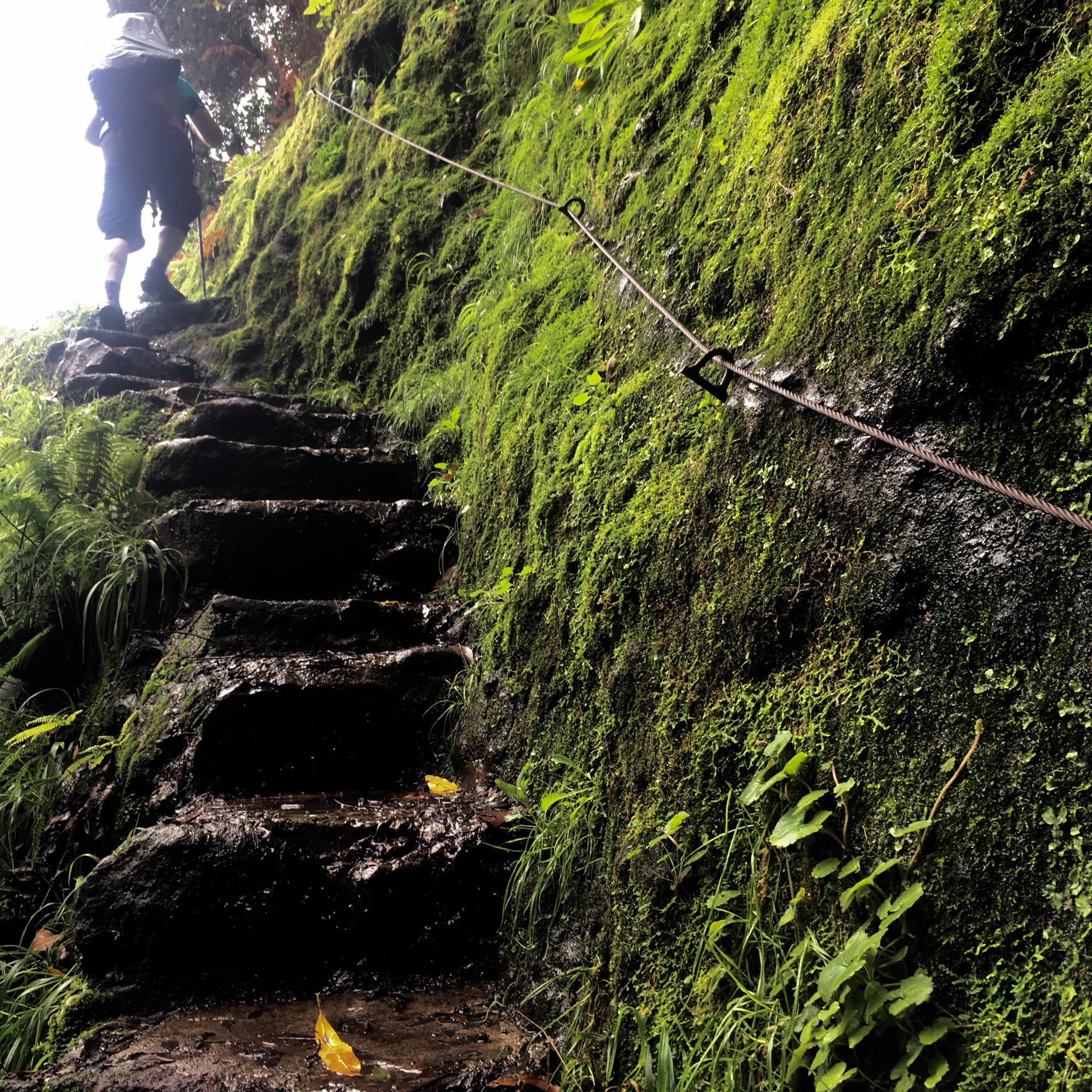
The tiny path snaked around the gullies on the sheer mountainside flanked by thick woods of mimosa, eucalyptus , pine, giant heather, gorse and laurel. At one point steps had been cut into the Rock and a hand cable helped the steep climb.

IMG_2280.JPG
As we emerged from the enclosing tree cover into clearer grassy slopes we rounded a prominent headland that opened up new even more exciting vistas that the icamera cannot capture. Far below, on a 60 degree slope were some more bizarrely situated vegetable plots.

IMG_2284-0.JPG

IMG_2294.JPG
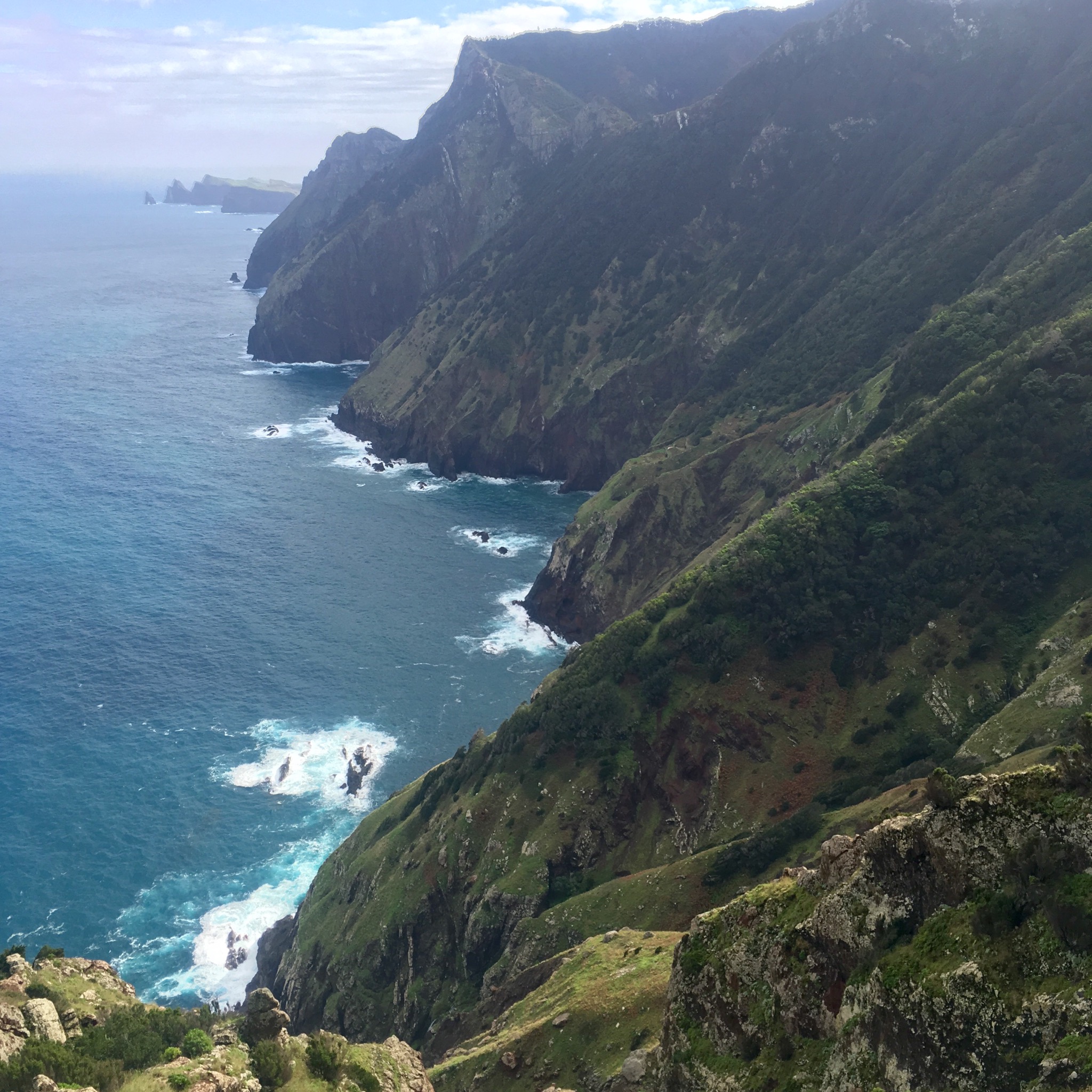
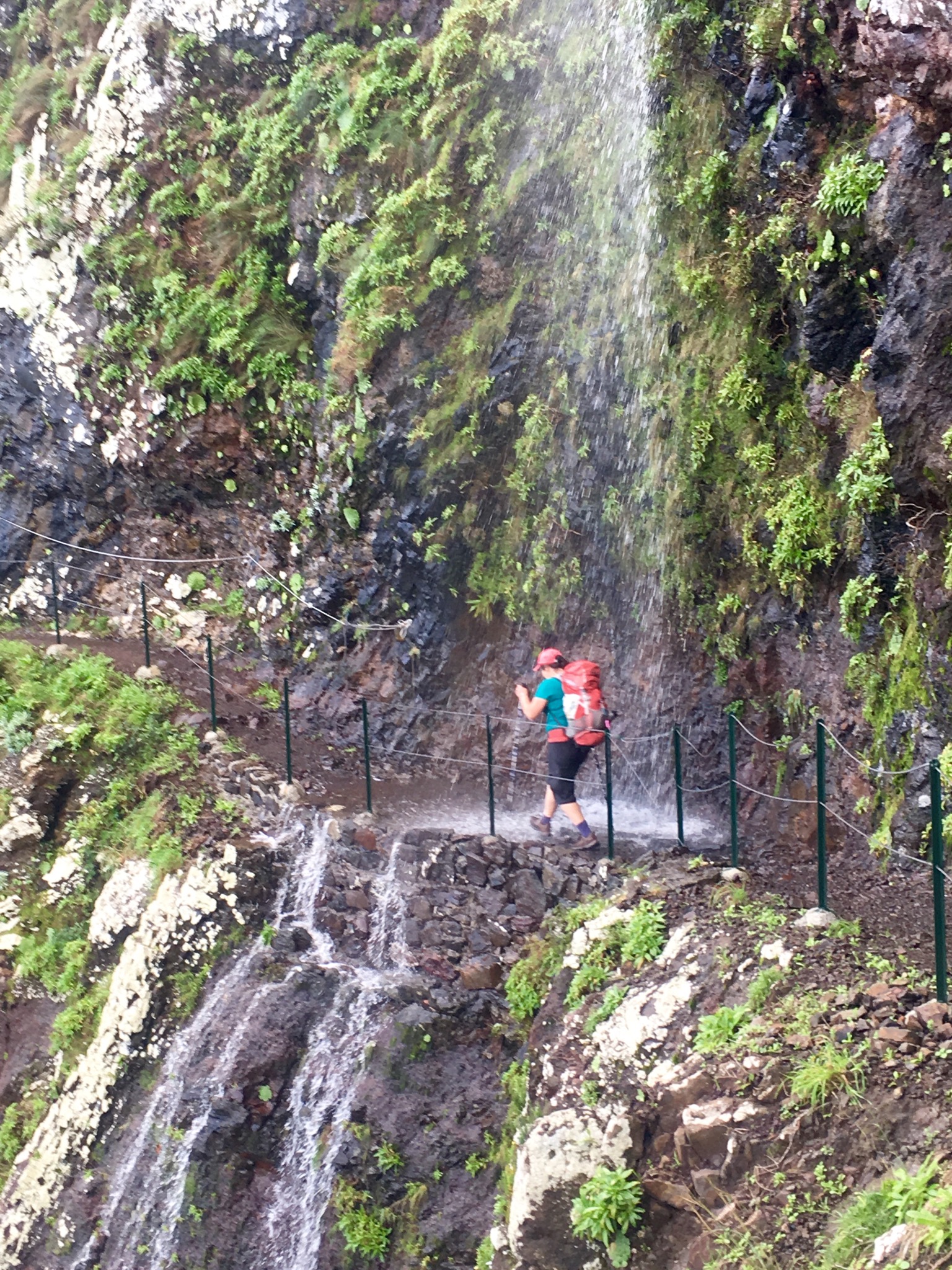
We hugged the towering cliffs of fantastical hues, born in the cauldron of volcanos, to avoid the pull of the immense drop into the thrashing azure seas. The path was narrow and there was no avoiding the showers from waterfalls cascading from high above.

IMG_2288.JPG

IMG_2286.JPG
Heading back into a thickly wooded area of laurel, mimosa, giant heather, and gorse we were without views for awhile before emerging again and looking back at the thin line of our path etched faintly into the landscape.

IMG_2290.JPG
We reached another open headland at Boco do Risco where the main path turned south. We were heading up and on along a lesser known and used trail that continued following the crest of the north coast. We past another isolated small holding as we headed higher to spectacular views east and west.

IMG_2297.JPG

IMG_2301.JPG

IMG_2296.JPG
The colours of the rocks and soil was dramatic as we picked our way across the bizarre landscape.

IMG_2304.JPG

IMG_2310.JPG

IMG_2309.JPG
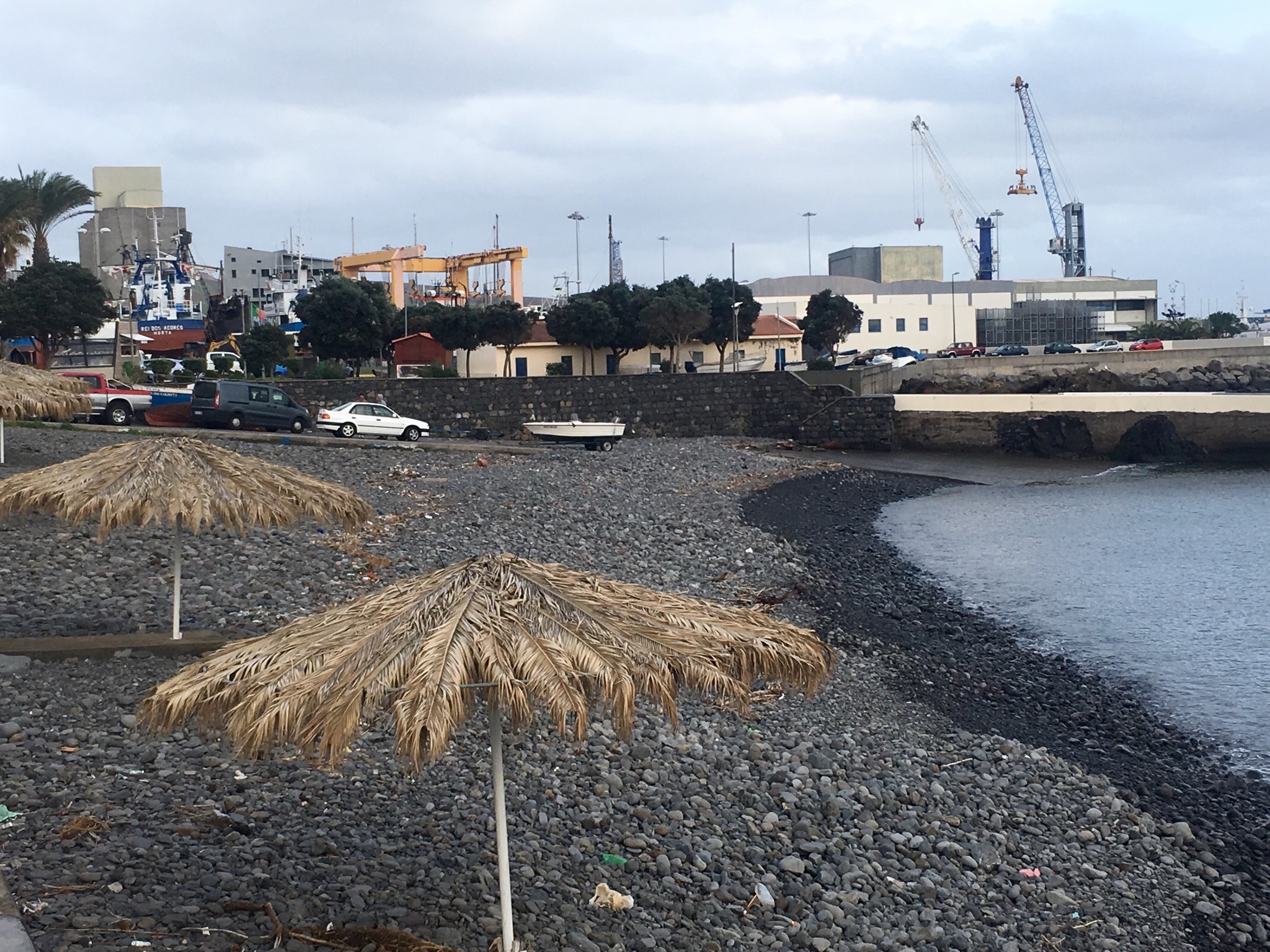
Eventually our trail had to turn away from the colourful cliffs and we made our way down through cleared eucalyptus woods and into the suburbs of Canical, a busy industrial seaport with an incongruous beach scene.

IMG_2320.JPG

IMG_2316.JPG
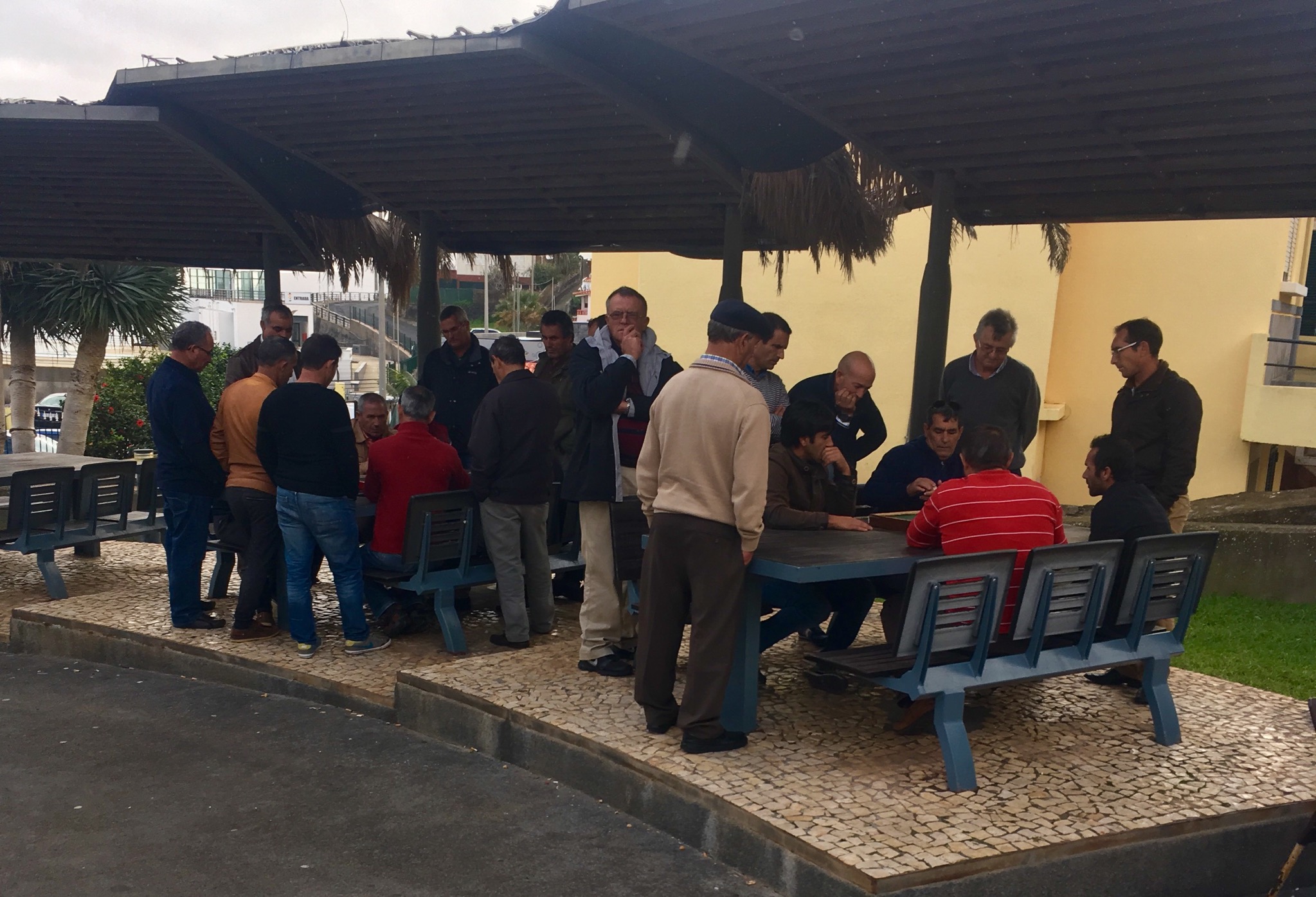
It had been a fine days hike but demanding on the legs and they were grateful to be carrying us the last few steps past the local domino players to our Airb+b.

IMG_2319.JPG

IMG_2321.JPG
With a cheap but excellent seafood restaurant downstairs it was time to think about food and then with the birds home to roost and the last flights coming in, time to think of bed.

IMG_2331.JPG

MADEIRA: Santo da Serra to Porto da Cruz 13th December

With a short hike of only 12km to do we took it handy in the morning and didn’t get on the road till 9.30. We had to retrace up steps up to the levada at Lombo das Faias so we headed out past the roundabout with a tribute statue to the cider making industry of the area.

IMG_2147.JPG
The track up beyond the bull and the trout ponds was strangely coloured as it climbed through the big cedars. >
IMG_2152.JPG
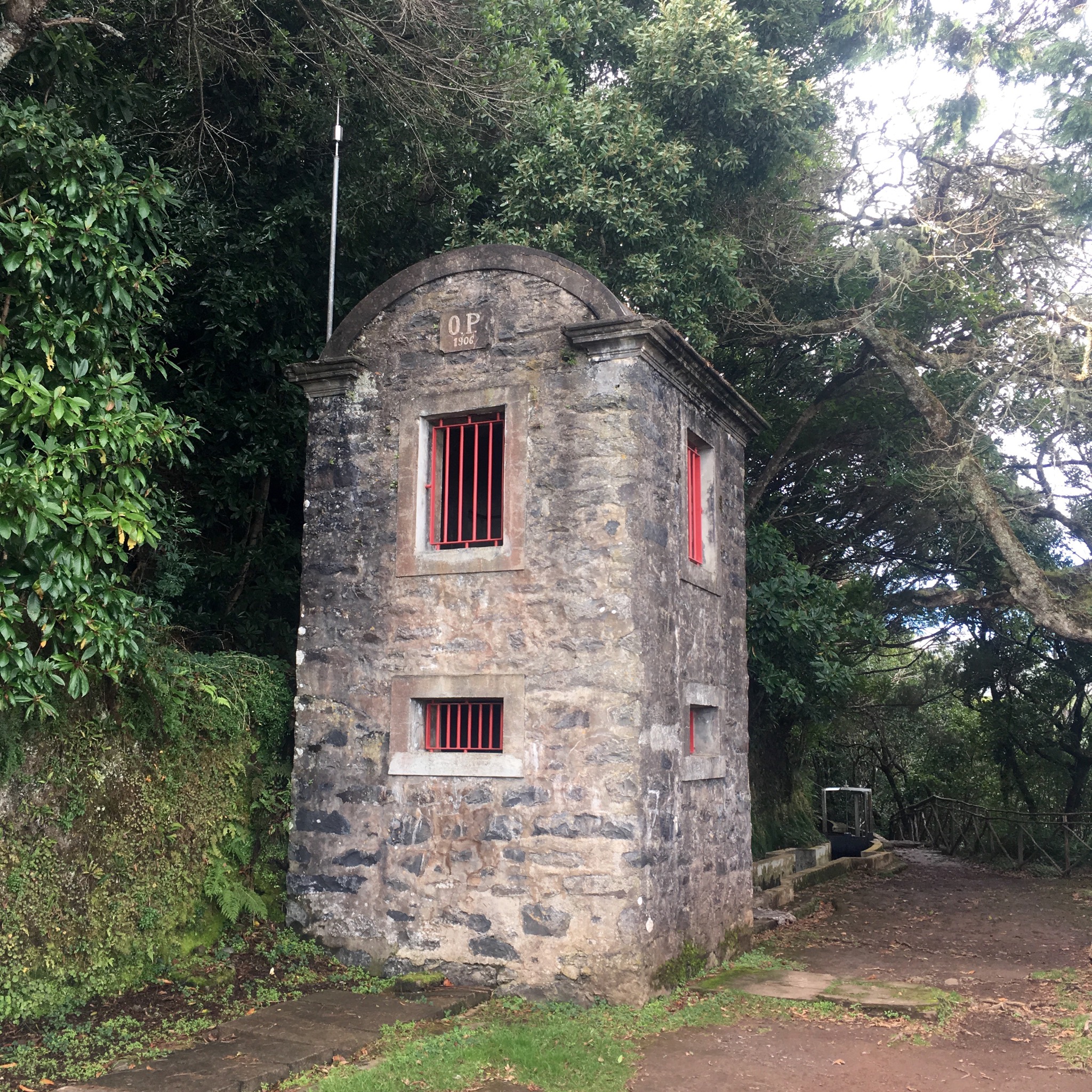
Where we rejoined the waterway there was a water tower and system of sluices sending the clear cold life giving liquid a variety of ways. Dated 1906 the tower was a favourite rest stop for hikers who sat under the fantastically contorted cedars.
IMG_2157.JPG

IMG_2155.JPG
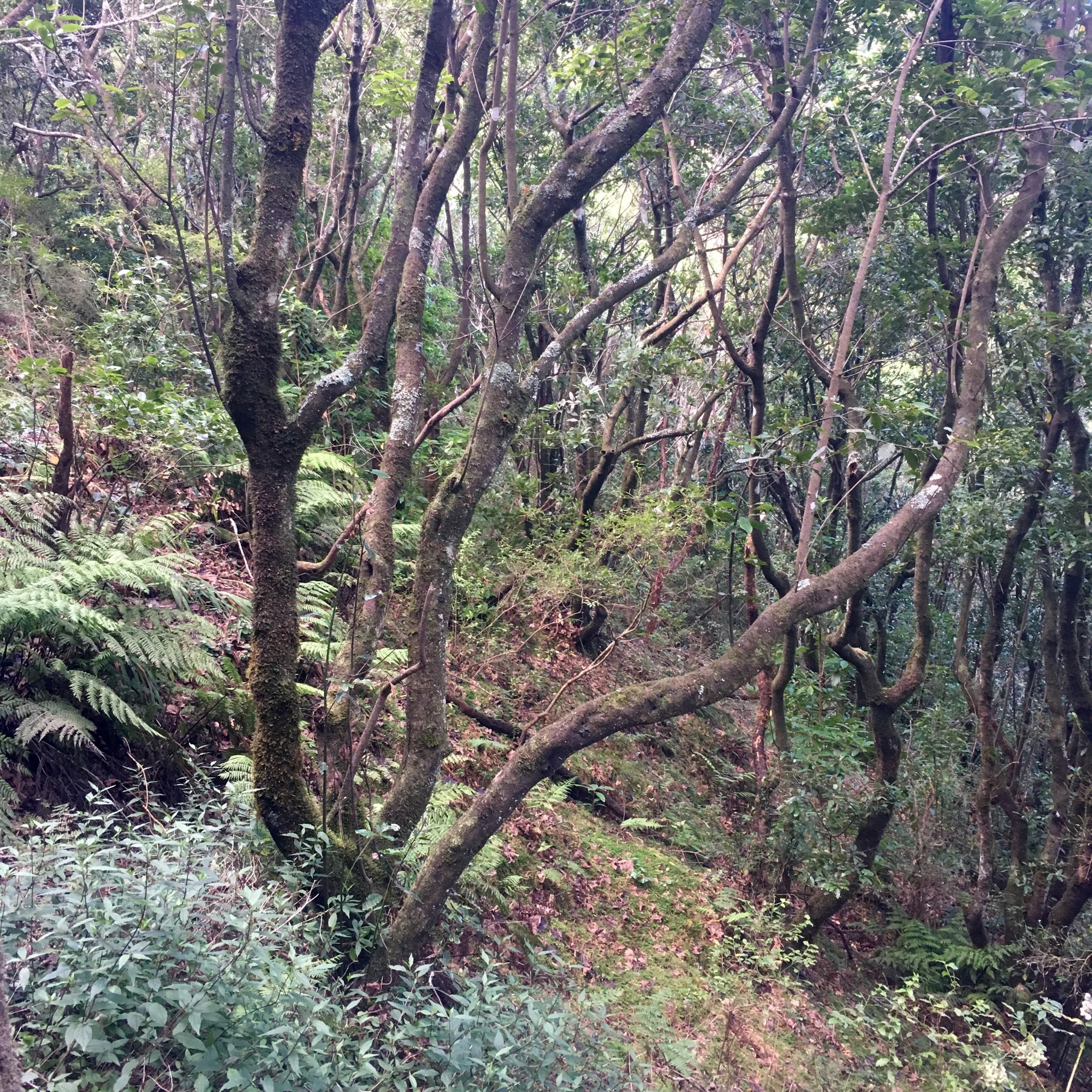
On the way there had been the usual mass of flowers coveted at home including nasturtium , hydrangea and agapanthus which are both used to hold the soil together on the steep slopes ,and for the first time, dahlia. As we entered the dark laurisilva forest we came upon species of bay and tree heathers, Madeira mahogany and what looked like Arbutus. Somewhere lurking in there were other trees we could not identify like the til, lily of the valley tree and wax myrtle. There were also some impressive tree ferns and on a smaller scale, lots of little mosses and liverworts beside the water.

IMG_2150.JPG

IMG_2164.JPG

IMG_2159.JPG

IMG_2178.JPG

IMG_2181.JPG
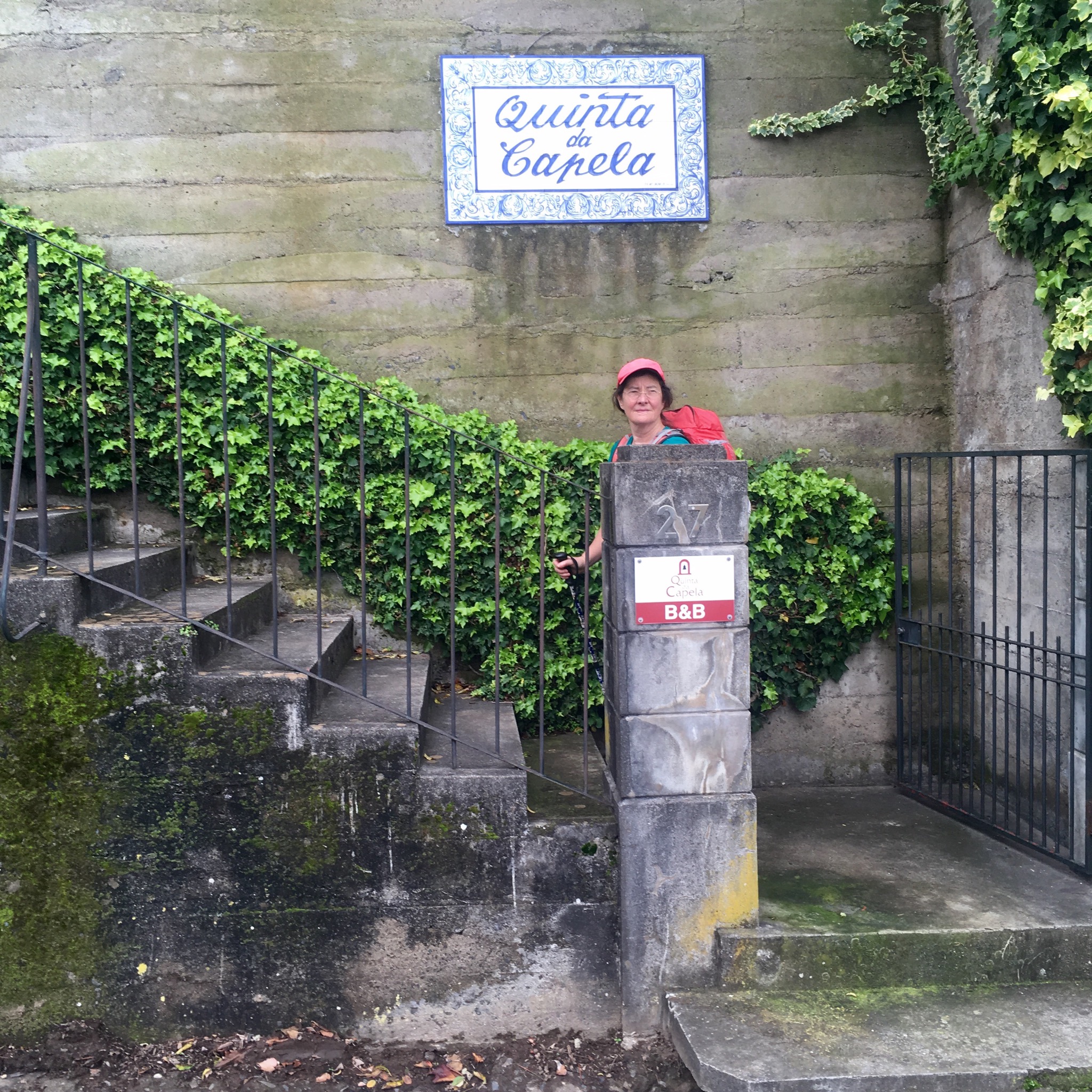
Passing a small tunnel and crossing a stream bed we reached another water tower at our journeys highest point, 862m where other paths led off into the mountains. We however were now going to follow the Levada da Portela down and down to Portela at 600m and then down paths to Quinta da Capela at about 300m.

IMG_2163.JPG

IMG_2165.JPG
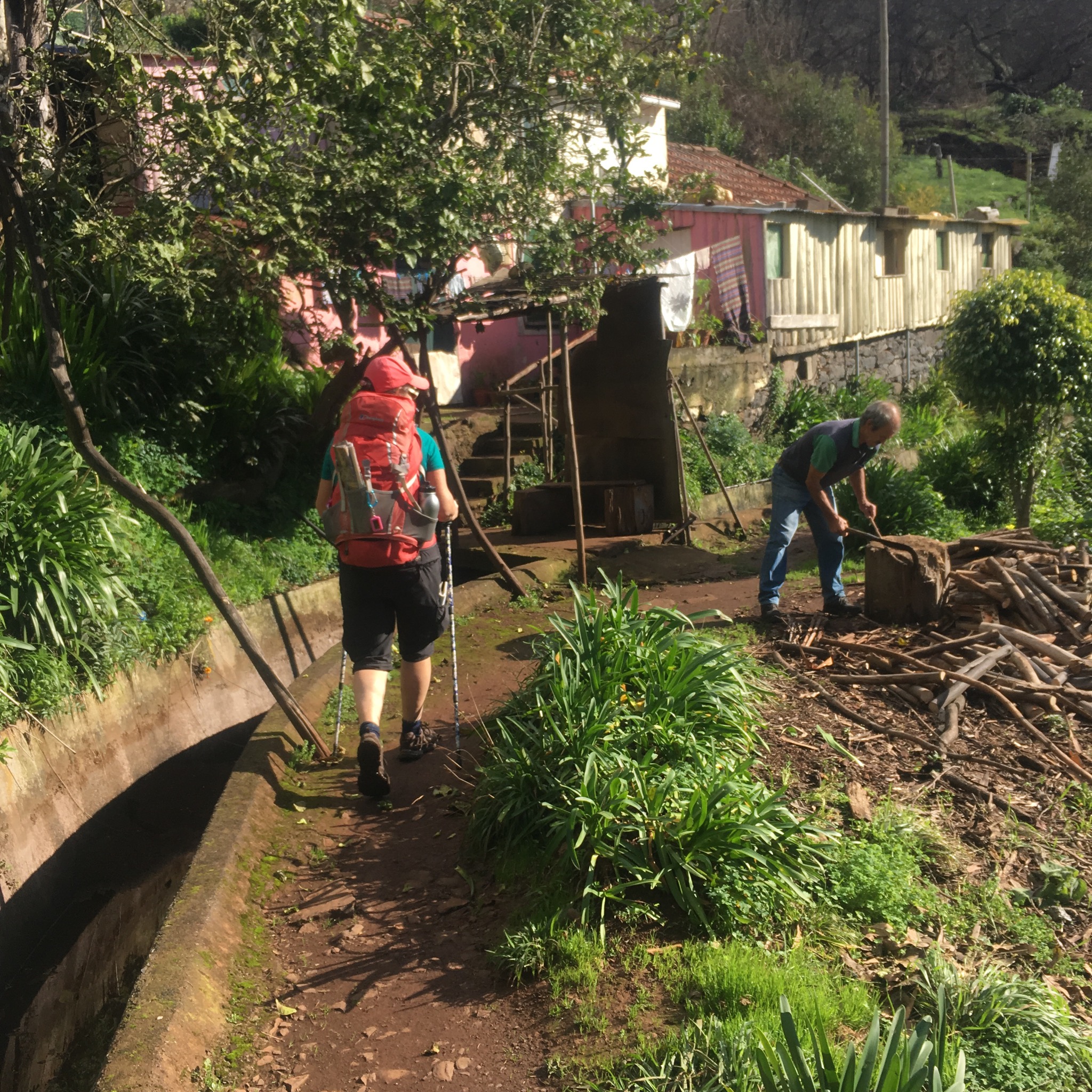
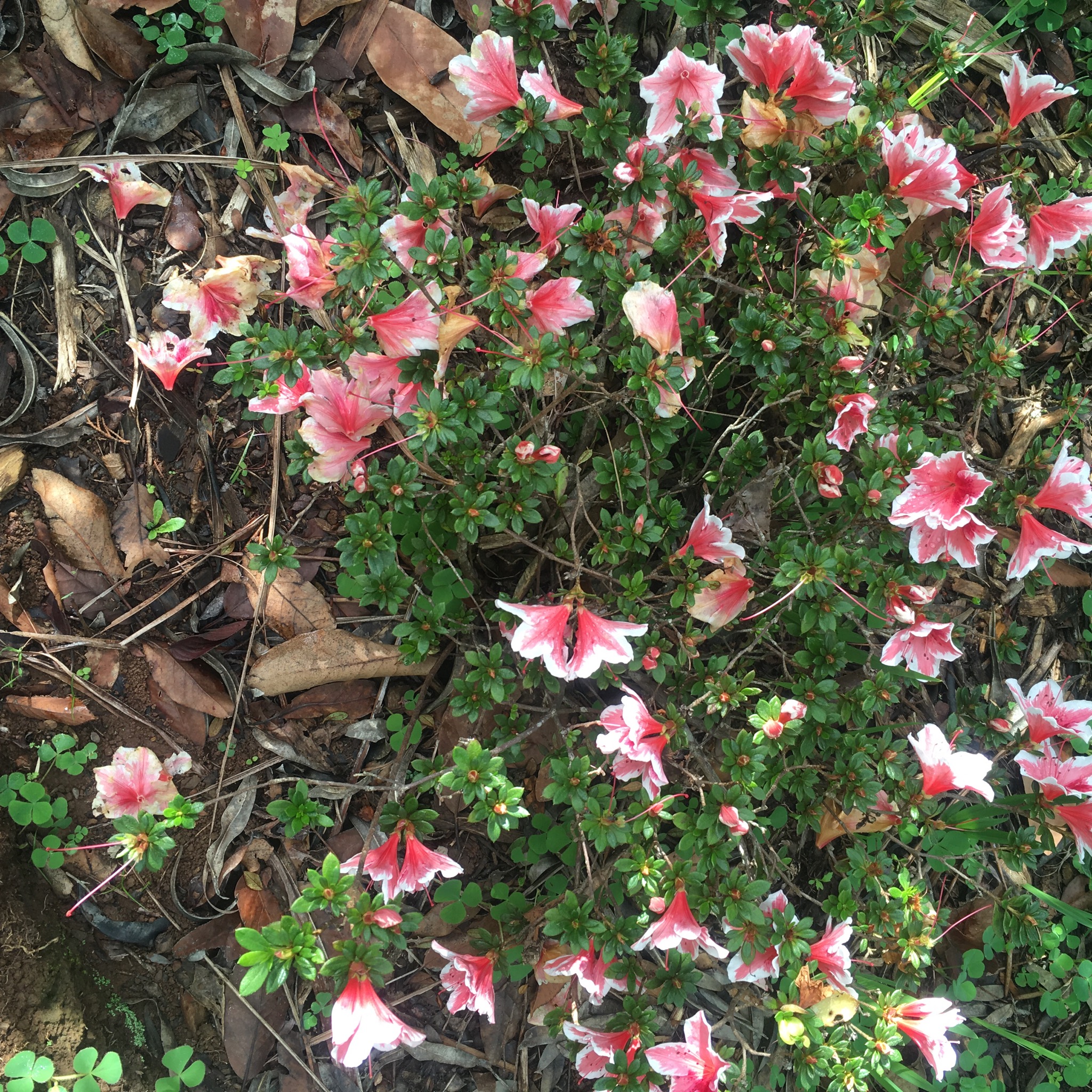
After a steep descent we emerged at the foresters post and picnic site at Lamaceiros where a hardy type axed logs and azaleas and other glories surrounded his home.

IMG_2169.JPG

IMG_2166.JPG

IMG_2168.JPG

IMG_2171.JPG
As we moved down there were more gaps in the canopy to view the distant mountains through and the sights were impressive.

IMG_2175.JPG

IMG_2173.JPG
Down a series of timber pole steps

IMG_2179.JPG
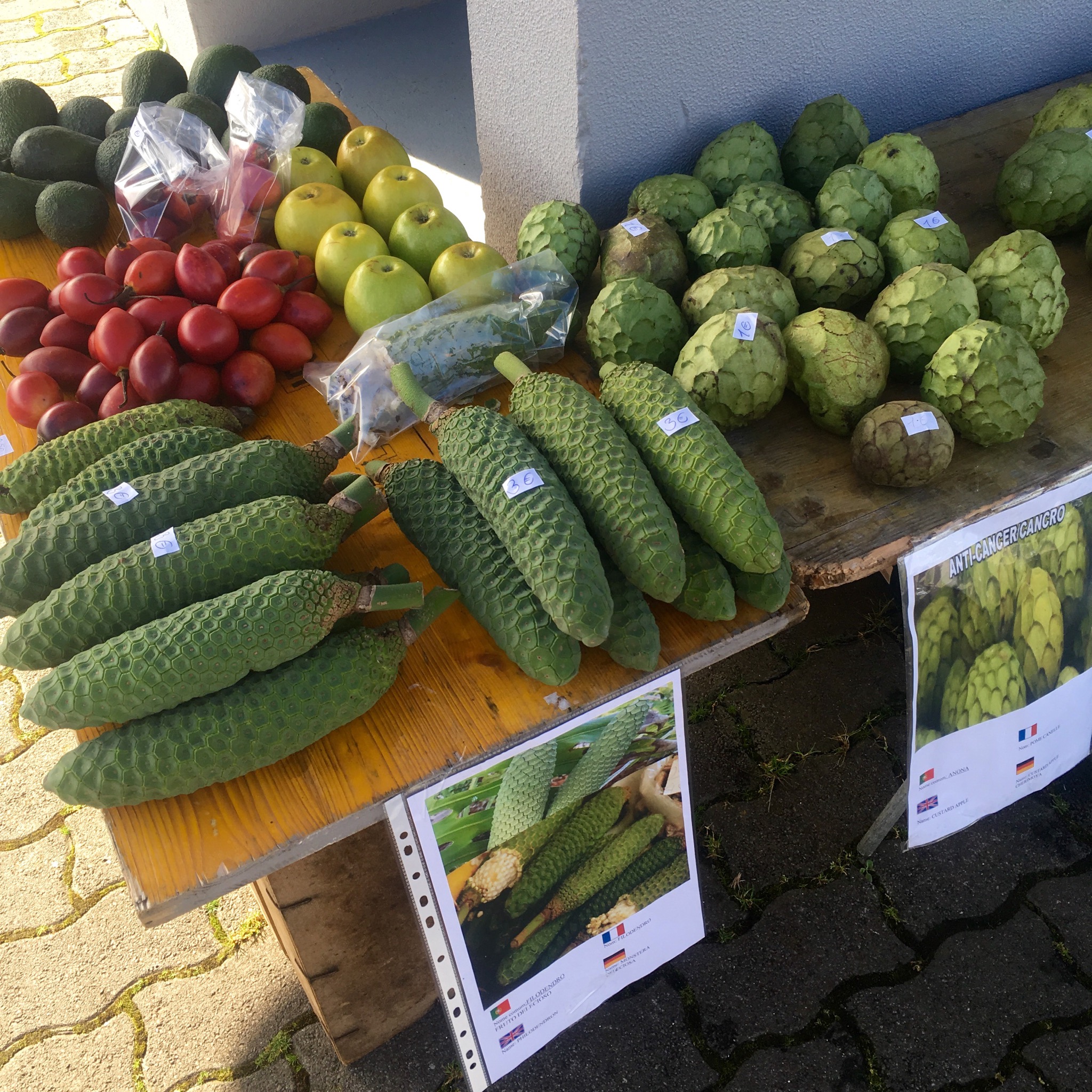
we reached the viewpoint and bars at Portela where we soaked up the view of the northern coast and Porto da Cruz before having a coffee and buying more flower bulbs and some unknown fruit and veg like apple custard.

IMG_2185.JPG

IMG_2190.JPG

IMG_2187.JPG
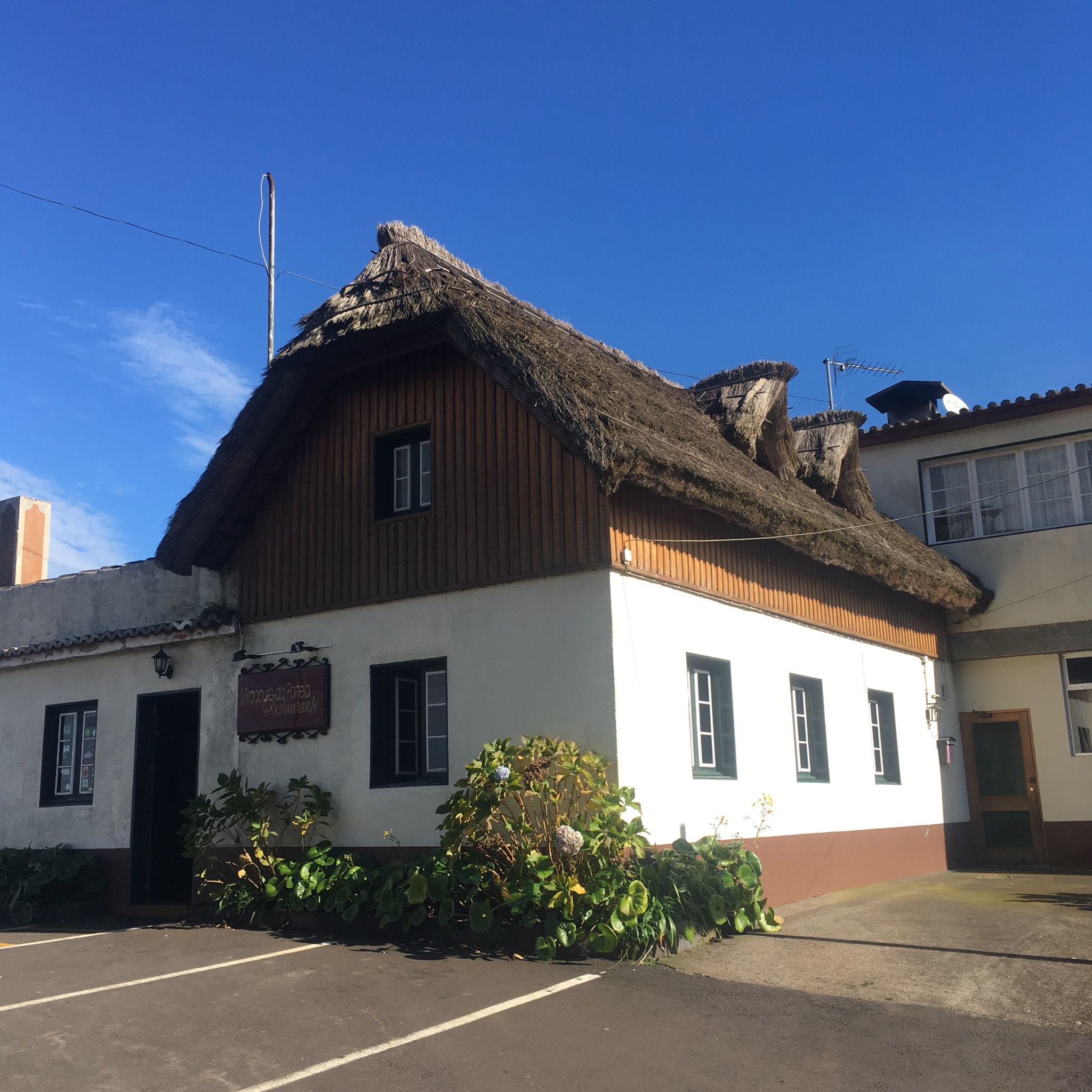
One of the bars sported the first thatched roof we had seen although they are traditional and feature heavily on tourist souvenirs.

IMG_2191.JPG

IMG_2192.JPG
(I’m afraid the last section of this blog, the tale of the journey from Portelo to Santo da Cruz, got sucked into some data limbo land and was never seen again so I’m attempting to write it again)
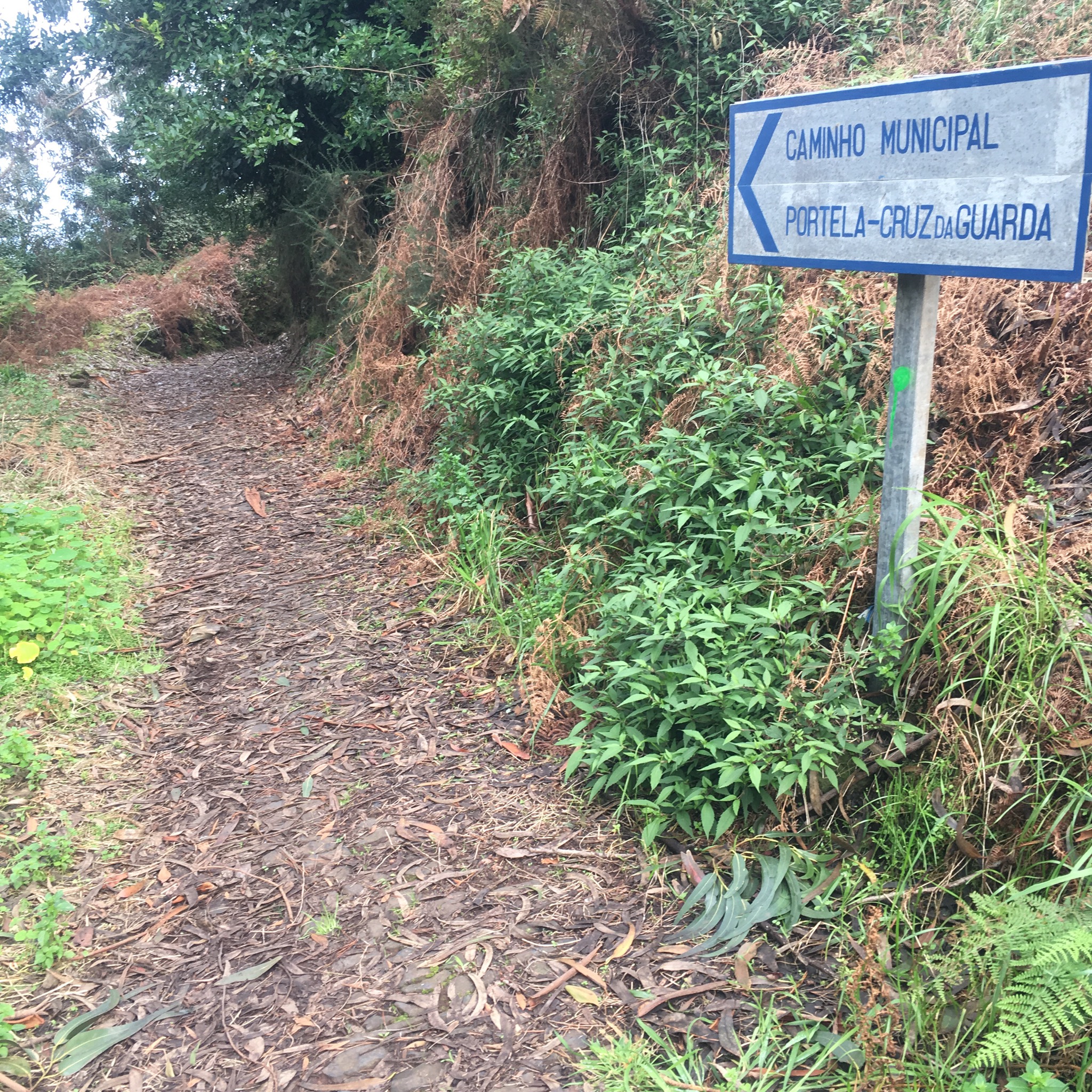
We also sampled some of the local cider which turned out to be dry, flat and a bit sour like scrumpy. It was also strong and so probably not the best thing to be drinking before we started the long long descent of the Camino Municipal. It was an exquisitely crafted cobbled stairway but it was very steep and very long.

IMG_2195.JPG

IMG_2197.JPG
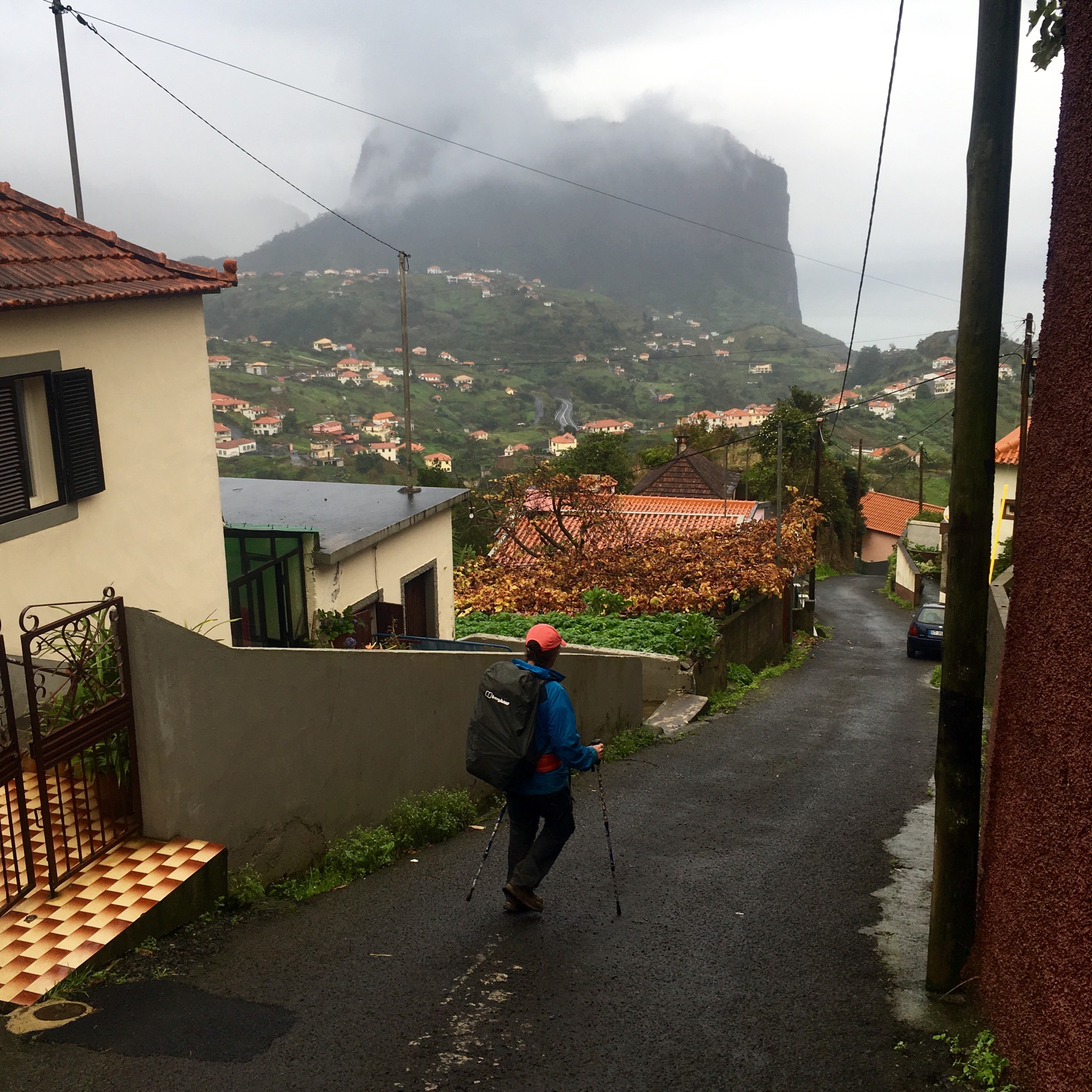
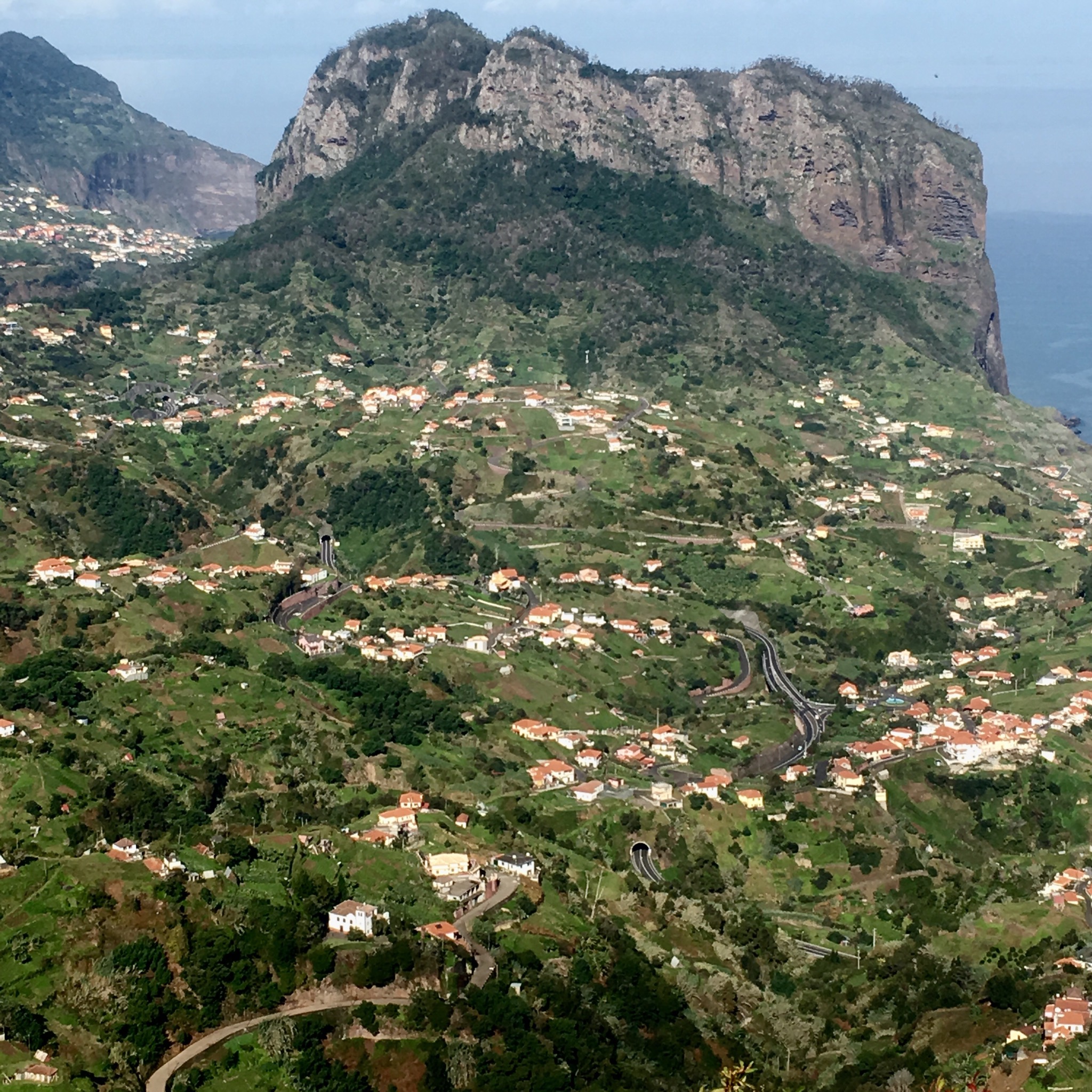
As it careered around a bend we got a fine view of Eagles rock, a big brutish lump of rock rising sheer out of the sea above Santo da Cruz.

IMG_2201.JPG
The north side of the island was even lusher than what we had been in so far. The trade winds mostly come in from the northeast and drop their load on the mountains sticking their fingers up to them. There was water running and dripping everywhere and it all looks lush. A wider variety of plants than in the eucalyptus forests and the bird life seemed to appreciate it. We heard more birdsong than we had.
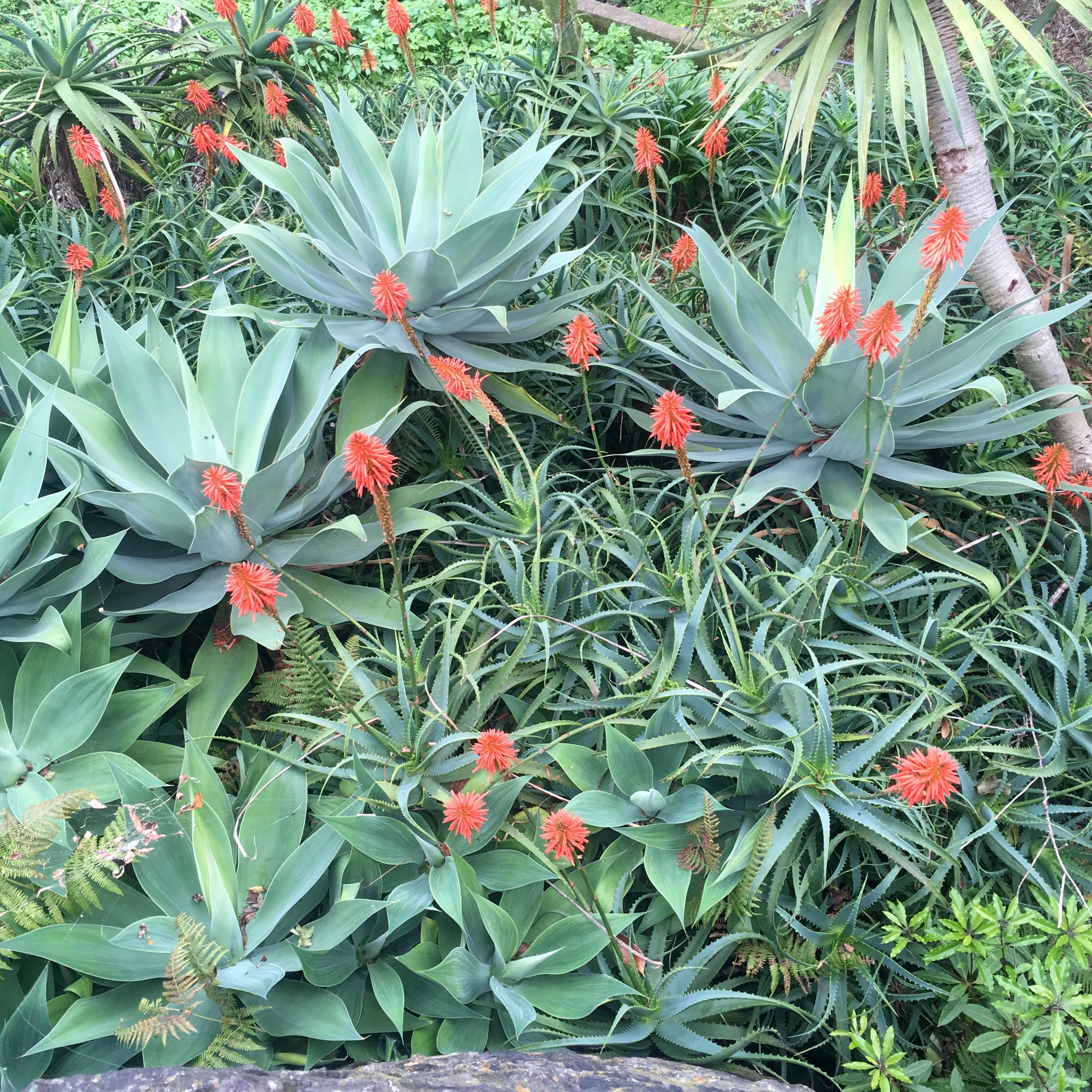
The little homesteads clinging to the hillsides cultivated every inch they could, and with a huge array of crops, a lot of which we couldn’t recognise. And there were flowers everywhere.

IMG_2207.JPG

IMG_2208.JPG

IMG_2218.JPG
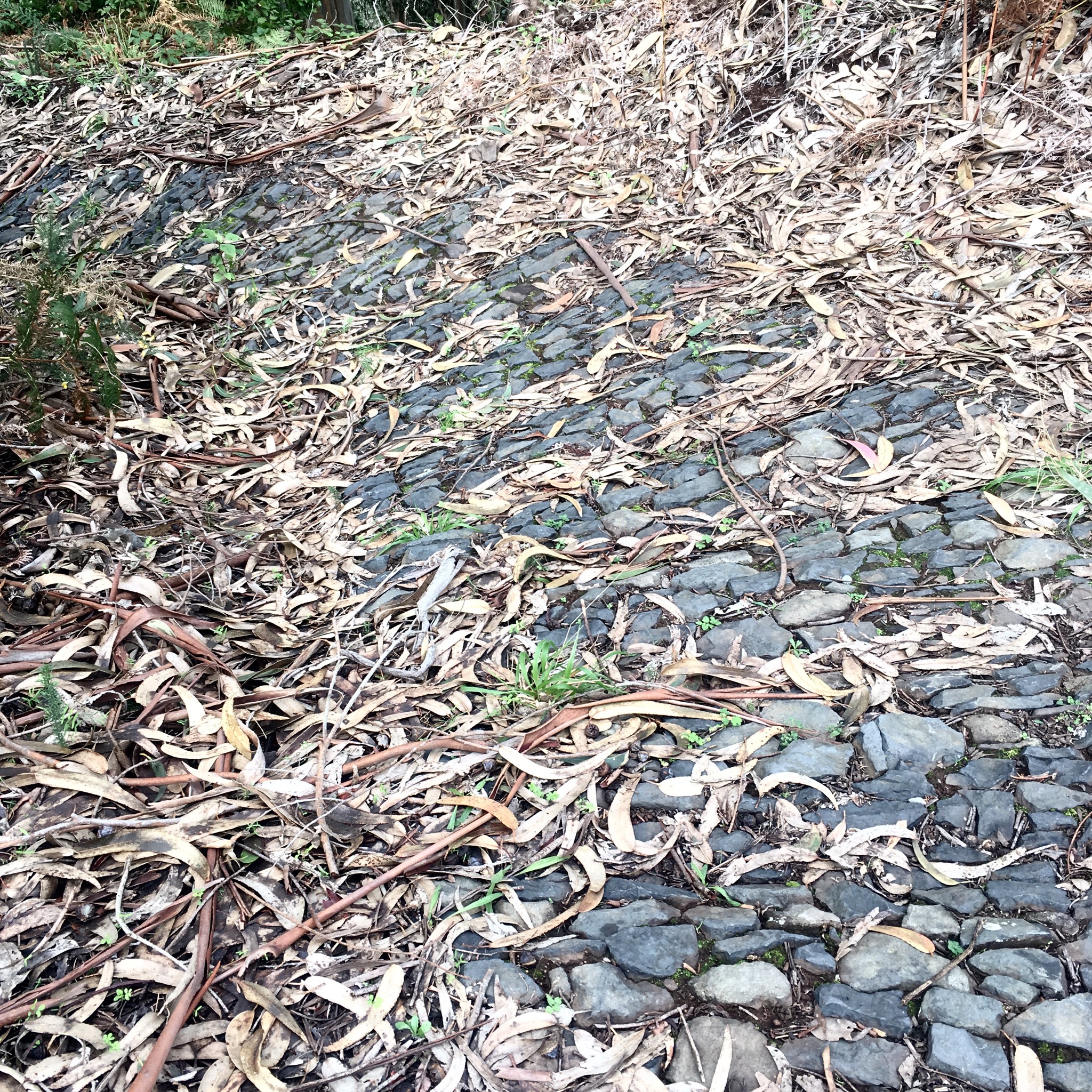
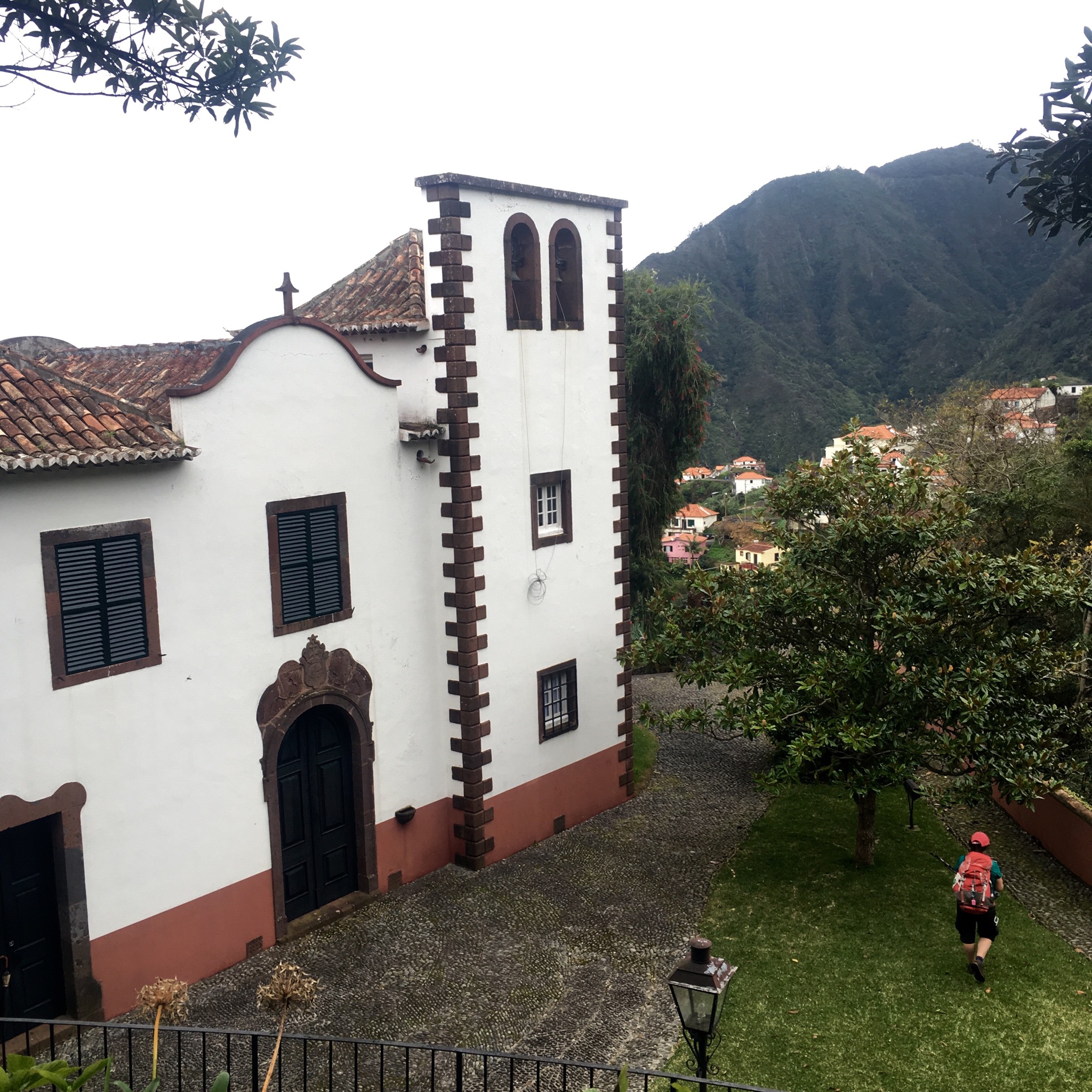
Eventually, after a couple of Km of slippy steps we made it down onto a flat road where we turned toward our sanctuary for the night, a 17th century house with adjoining chapel perched on a knoll high above the road with views down the valleys to Santo and the sea and back up into the tree clad peaks.

IMG_2222.JPG

IMG_2212.JPG

IMG_2216.JPG
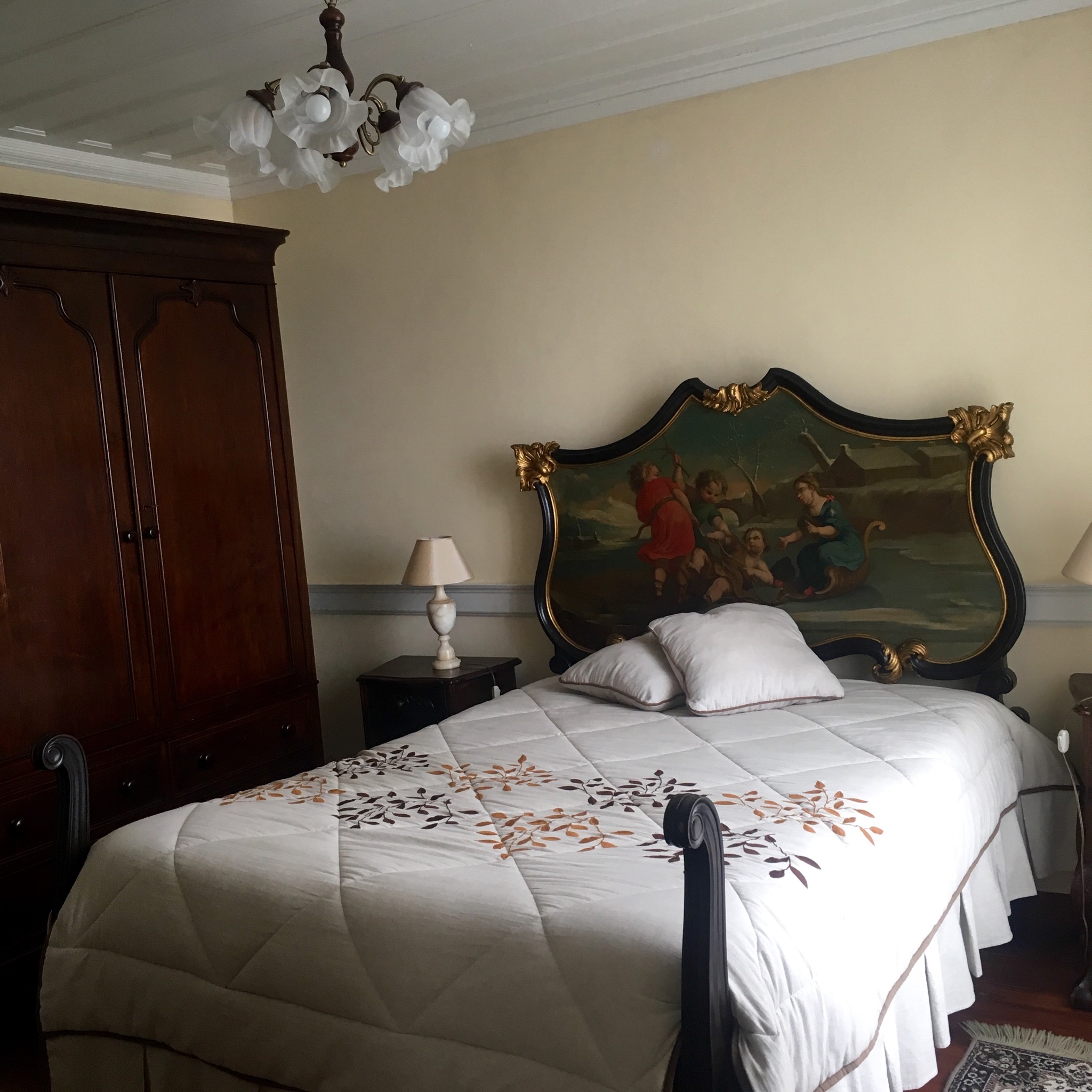
The wonderful old house was looked after by a wonderful old lady who after showing us our room and the “below stairs” kitchen, left us to it.
So we had tea in the gardens

IMG_2217.JPG
And later cooked dinner in the 300yr old kitchen.

IMG_2226.JPG
The food and fine wine and days walk meant that when we later climbed up into our bed made for nobility, we slept as only nobility can.

IMG_2224.JPG

MADEIRA: Monte to Camacha 11th December

IMG_1998.JPG
We’ve been wanting a Madeira hiking experience for awhile. We’d heard good things about the walking on the island. We knew there was a network of levada’s, irrigation canals, that snaked around the steep volcanic mountainsides, bringing sweet water to the rich soils across the island and that they were nowadays very popular routes for the rambling type.
Sally’s birthday was more than enough of an excuse to pack our packs and drive across the width of the country to get on a plane to Bristol where we waited a couple of hours in the newish, eerily empty terminal extension.

IMG_1977.JPG
It didn’t look we , or anybody else,were going anywhere.

IMG_1978-0.JPG
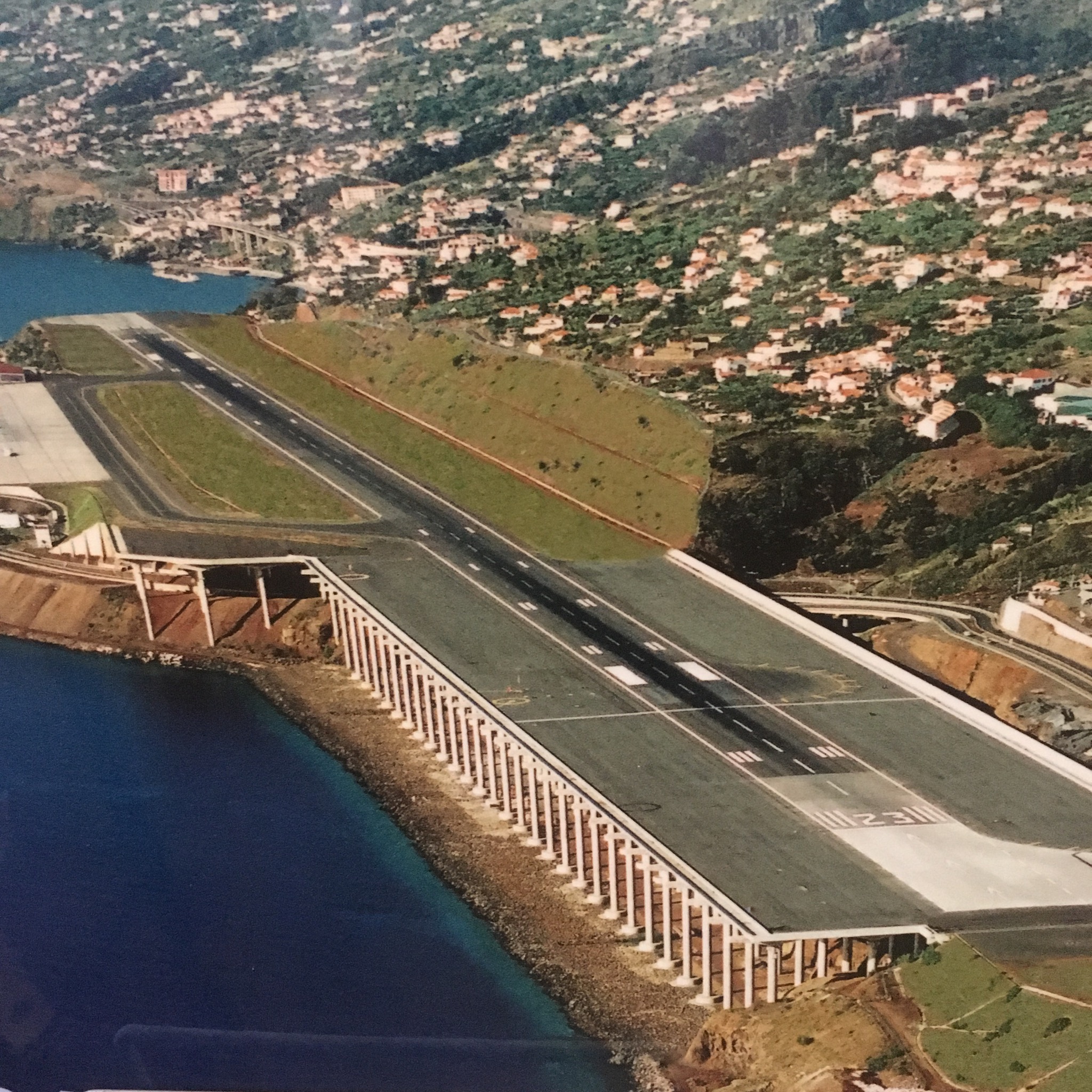
But eventually we did escape this strange airport limbo land and flew for 3 1/2 hrs due south and into the night, thankfully saving us the sight of our arrival runway.

IMG_2070.JPG
It’s built on stilts !!
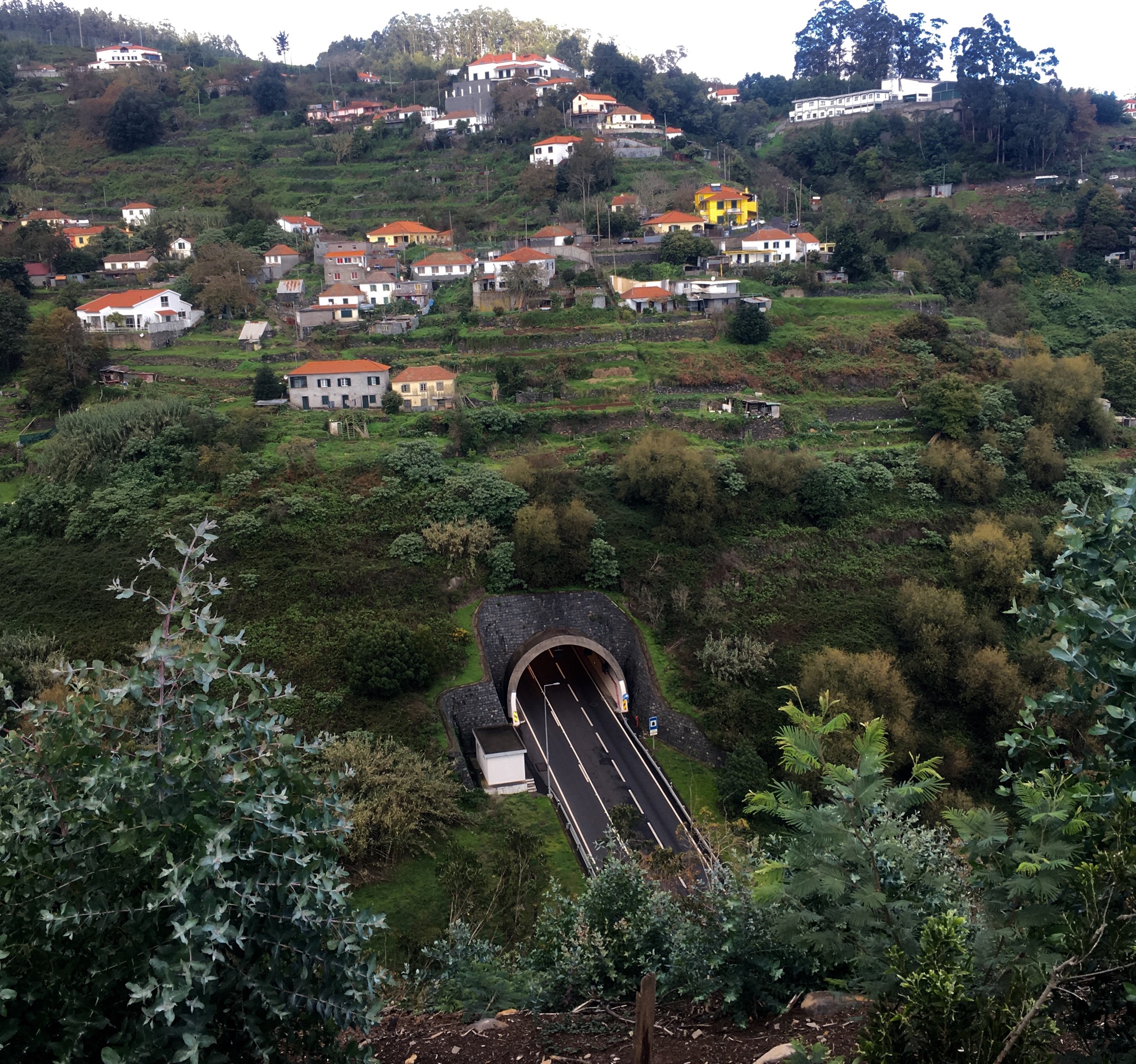
We had organised a night in a hostel in the capital, Funchal,20km west and they had sent a lovely man to meet us who regaled us with tales of how safe it is and how friendly the people are as we sped through the tunnels and along the newly built highway system.

IMG_1981.JPG
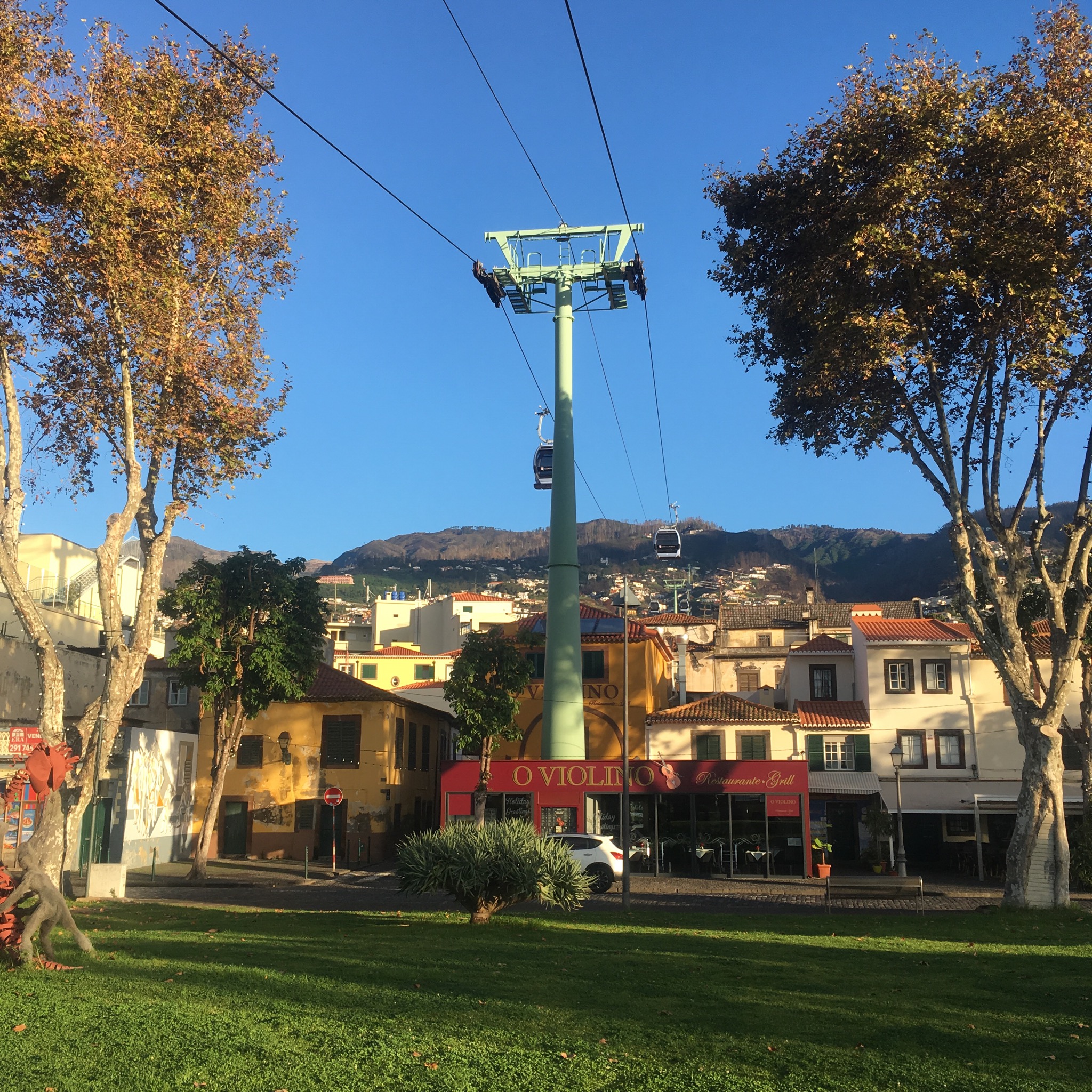
Funchal was our stepping out point for a 6 day circular route of about 100km. Sally isn’t too keen on travelling on switchback mountain roads so to avoid any motion sickness we were going to walk the whole way after a quick cable car ride.
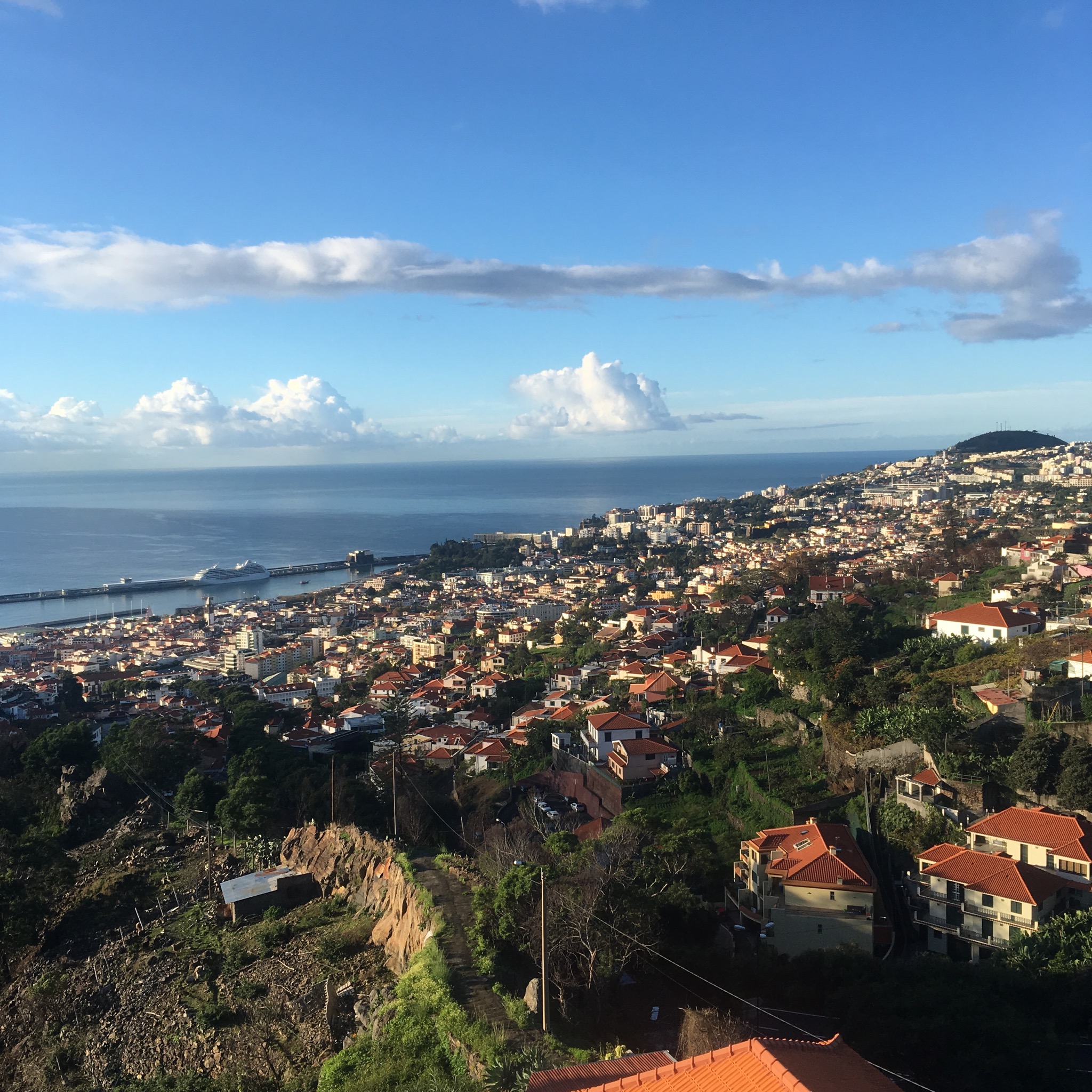
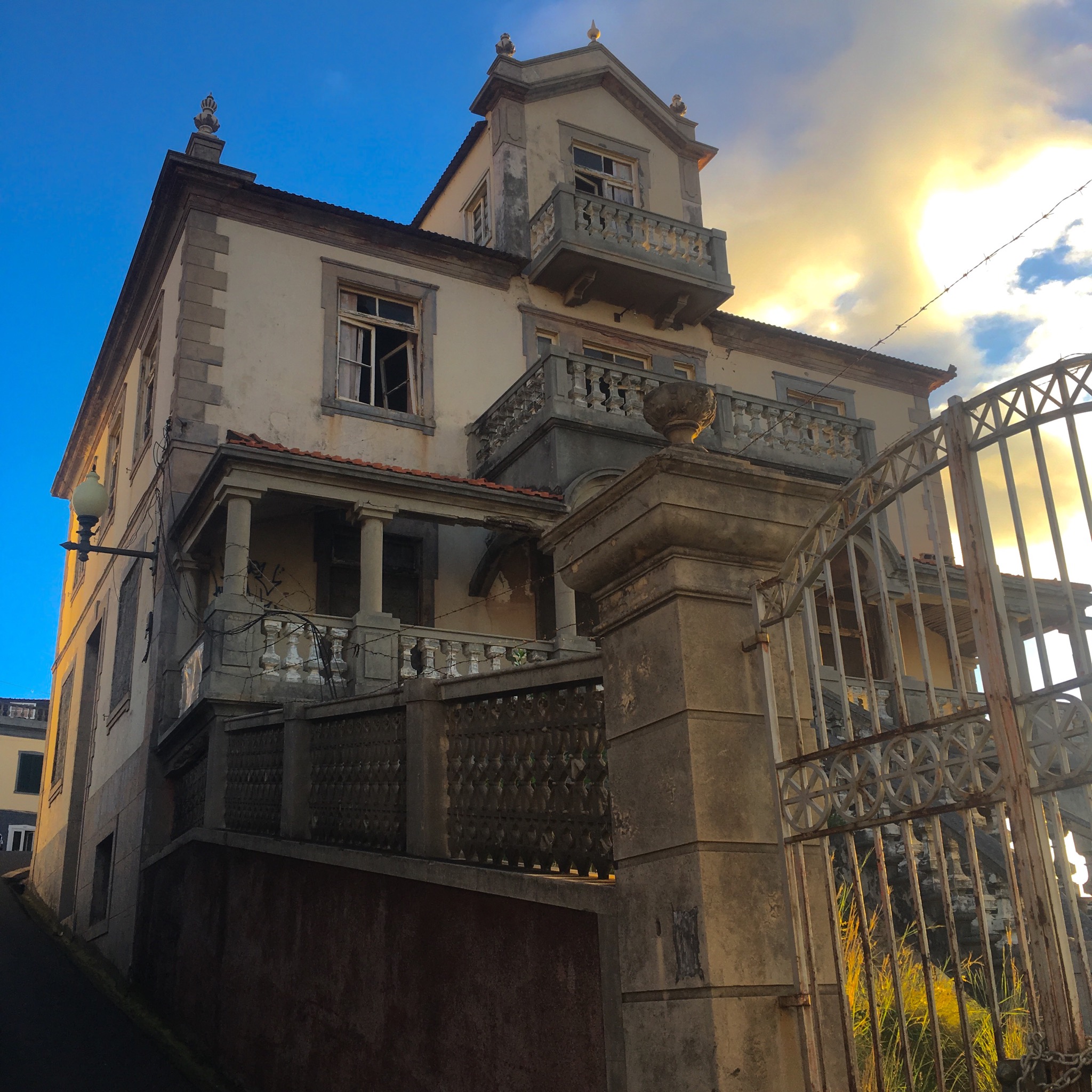
Our first views of the island on our way downtown were of old narrow, very steep back roads with little houses clinging to the vertical hillsides and the flat looking blue Atlantic stretching out to the south. It was all a bit higgledy piggledy with wires filling the sky above the streets and many abandoned houses left to rot in the sub tropical humidity.

IMG_1987.JPG
The first leg of our trip began in Monte, 600m up from the Funchal seafront where our cable car was just lurching into life.

IMG_1989.JPG
We knew that Madeira had suffered a terrible tragedy in 2010 when heavy rains had caused floods and landslides but as we rose up from the harbour for a birds eye view of the charming capital we could see more evidence of destruction by fire.

IMG_1995.JPG

IMG_1997.JPG
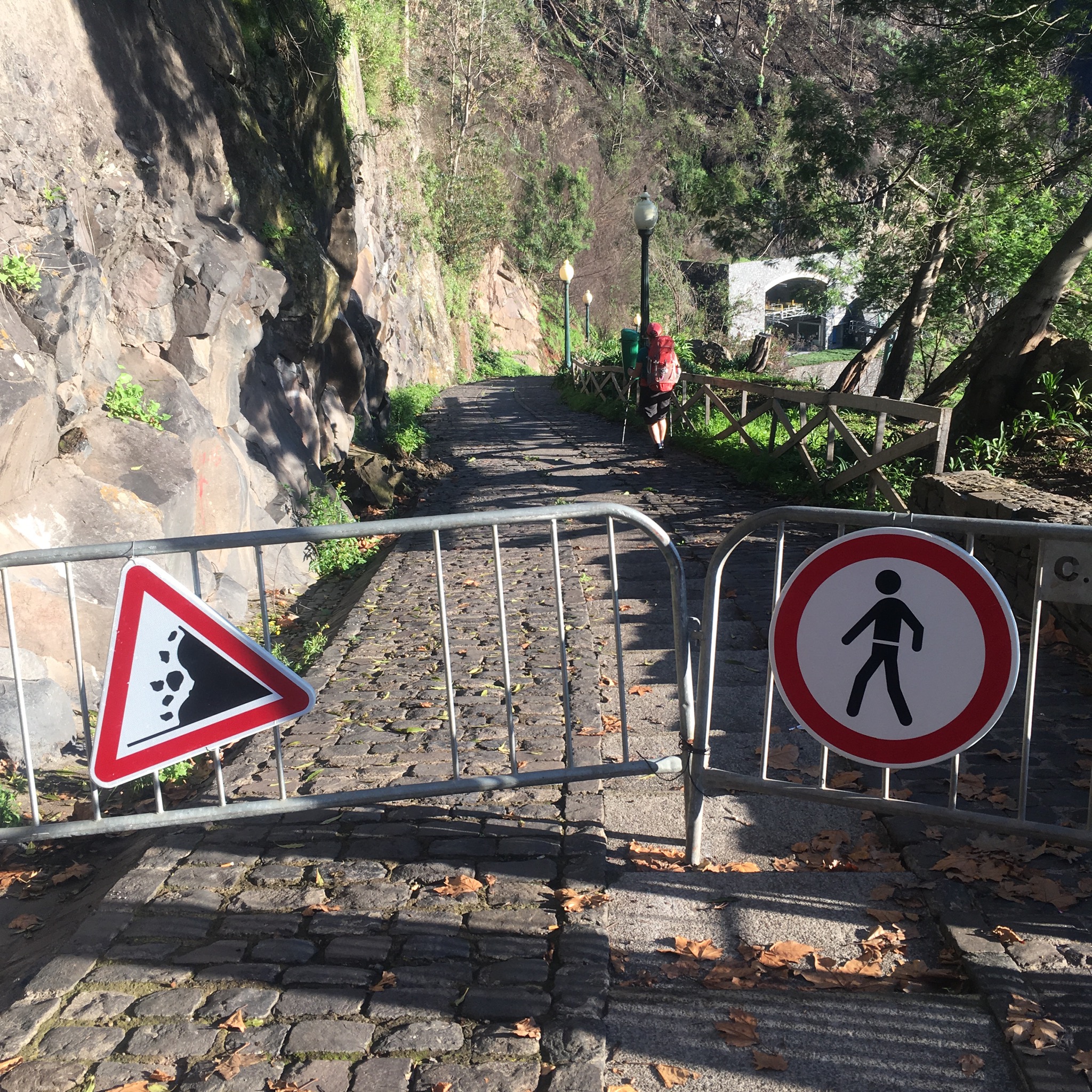
When we got to the end of the ride at Monte we had saved ourselves a 600m ascent and were keen to set off. Unfortunately the fires ,which we learnt from Google had claimed 3 lives around Funchal and caused the evacuation of thousands, meant that the lack of vegetation which holds the soil to the steep slopes had resulted in more landslides and the very beginning of our weeks walk was barred. There could be no turning back for us. We had a string of beds to make it to so rather warily headed on.

IMG_2001.JPG
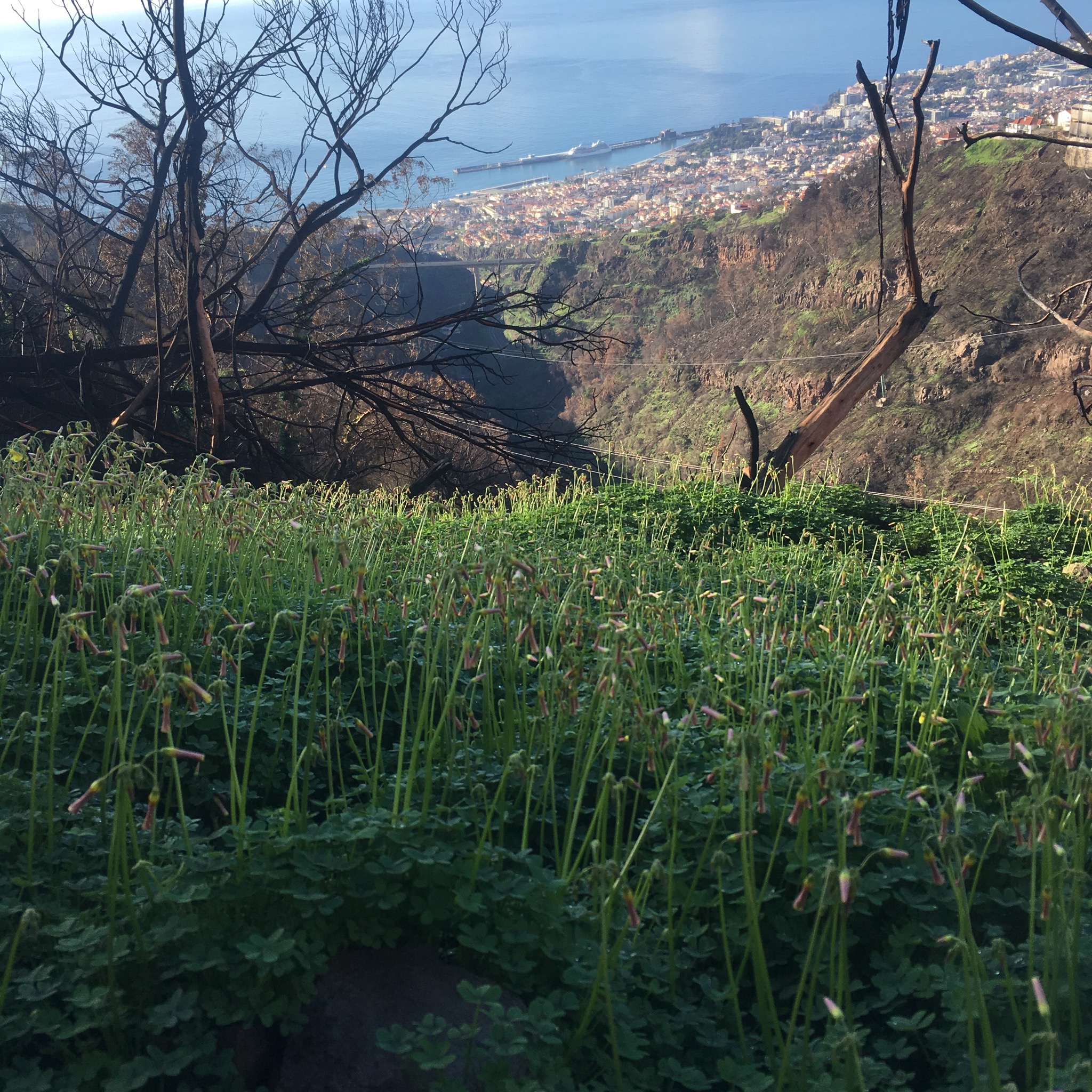
Fresh green growth sprung from the blackened soil and piles of debris littered the route. I hope it can be cleared again to reveal the well made cobble track we made our way down.

IMG_2004.JPG
Winding our way around the scorched earth valley we could look back towards Babosas and take in the extent of the damage.

IMG_2006.JPG
It was heartening to see how quickly the recovery was happening. There was already a luxurious growth of flowers that need to be carefully
nurtured at home like the blue flowered agapanthus of which there were banks all along the path side.

IMG_2007.JPG
The way was partially blocked by fallen trees and debris from landslides but they were easy enough to negotiate.

IMG_2008.JPG
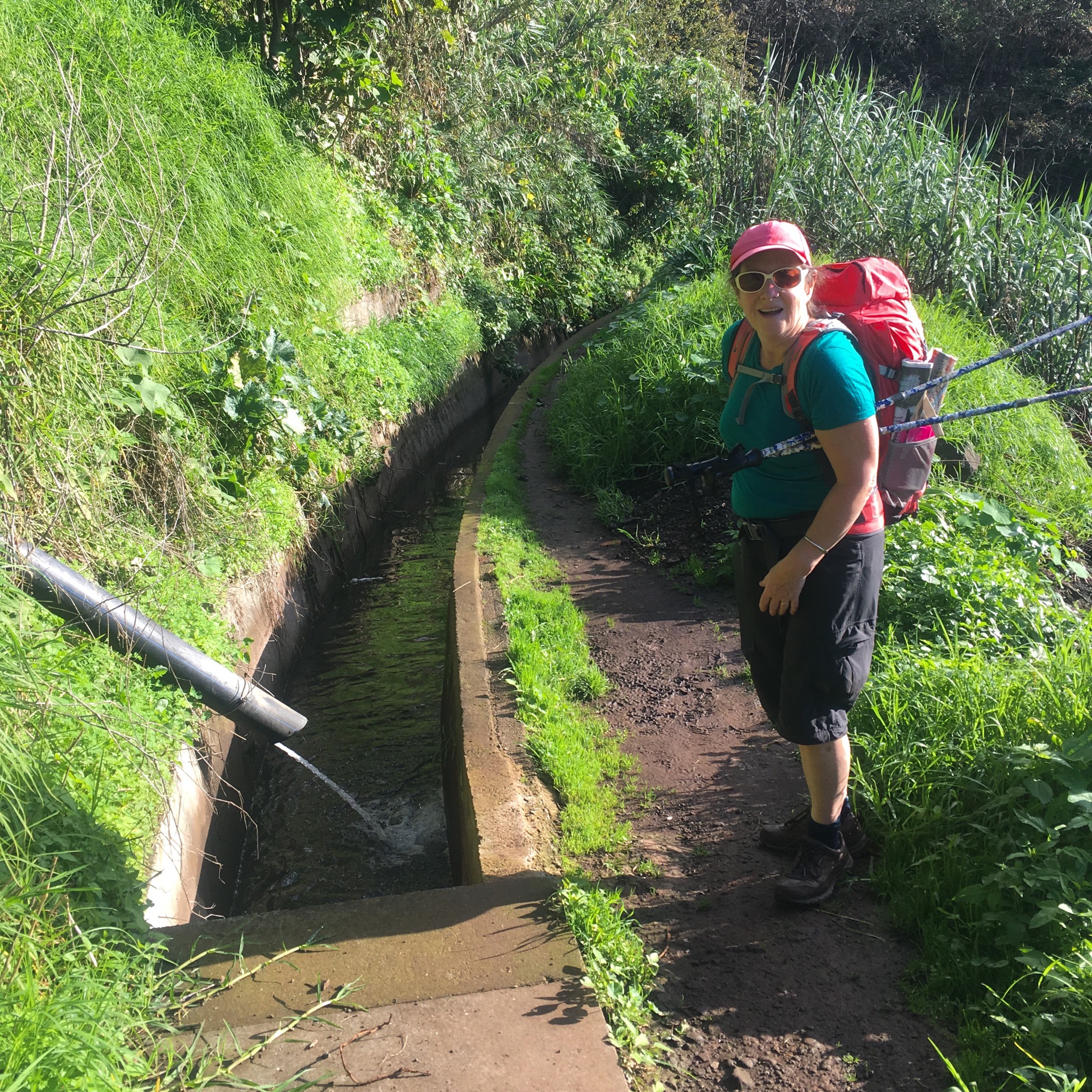
The way reached a small settlement, Curral dos Romeiros, where we finally met our REAL start.the Levada’s dos Tornos.

IMG_2011.JPG
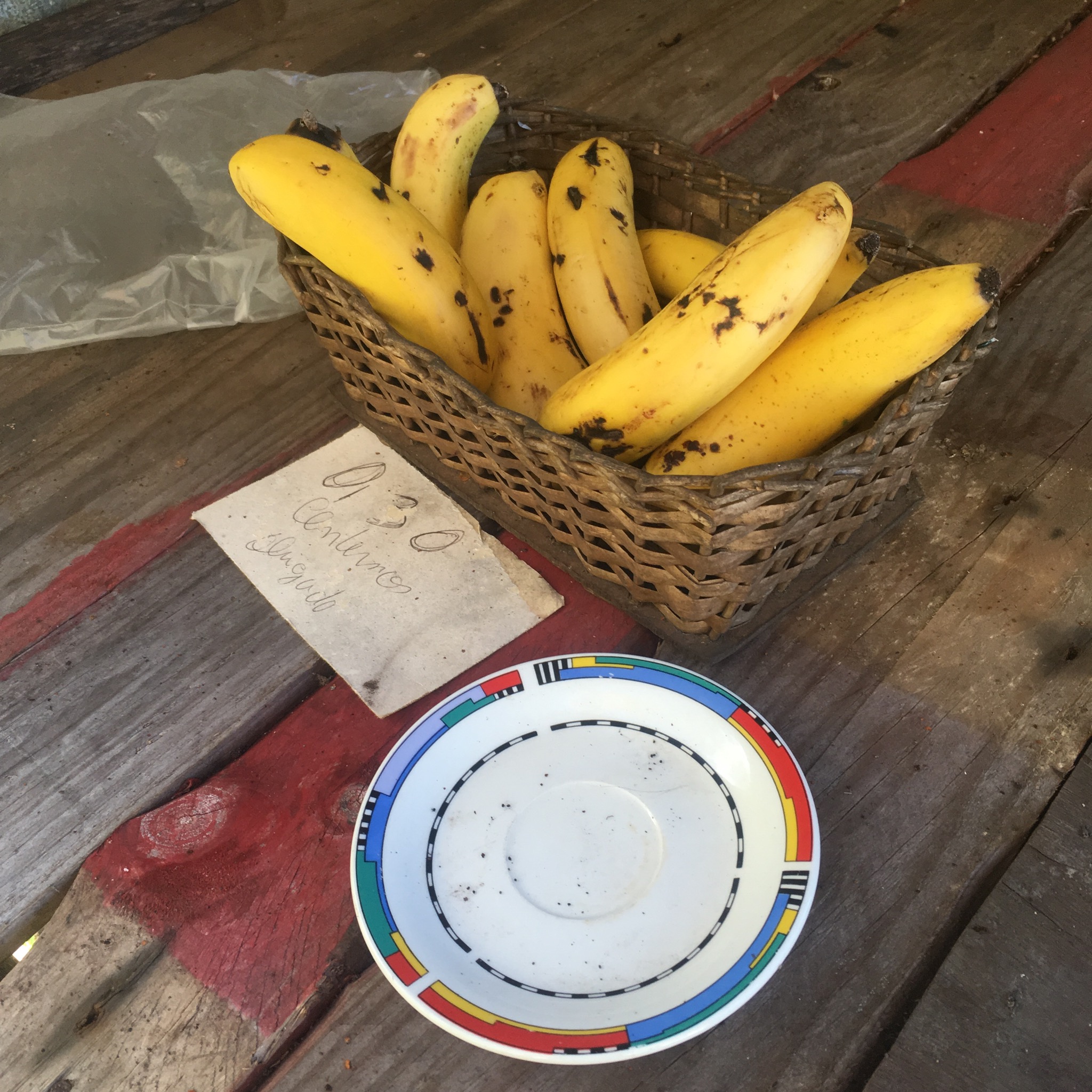
This is a fairly recent water moving system from the 60’s that goes from the north to the south of the island and we going to be beside it all the way to Camacha. Soon after we came across a tiny stall selling home grown bananas- the perfect slow release energy bar.

IMG_2010.JPG
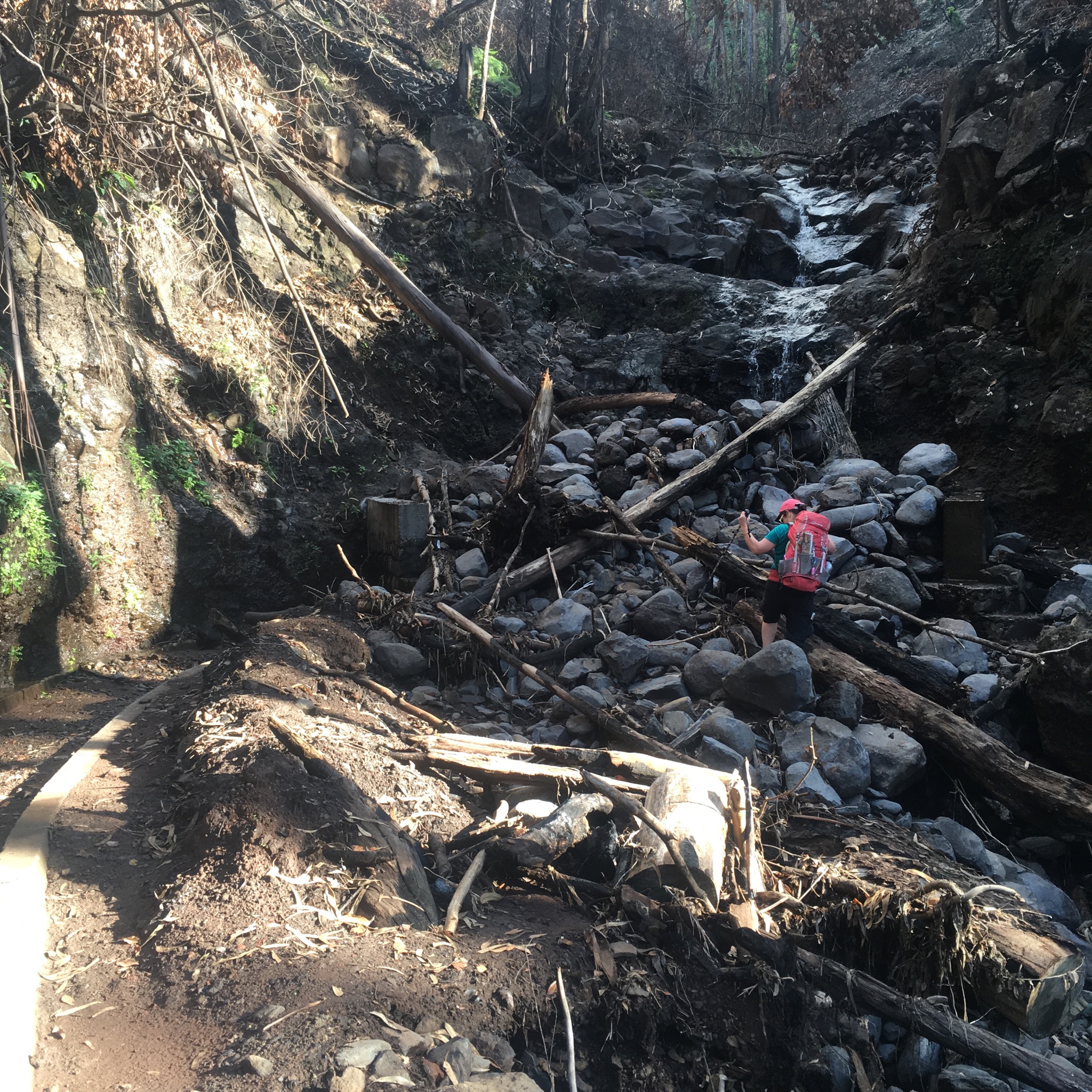
We followed the sinuous line of the levada through more charred landscape splashed with the vivid green of new growth. There were waterfalls and landslides and a beautiful old mansion now ruined and deserted.

IMG_2012.JPG

IMG_2019.JPG

IMG_2015.JPG

IMG_2014.JPG
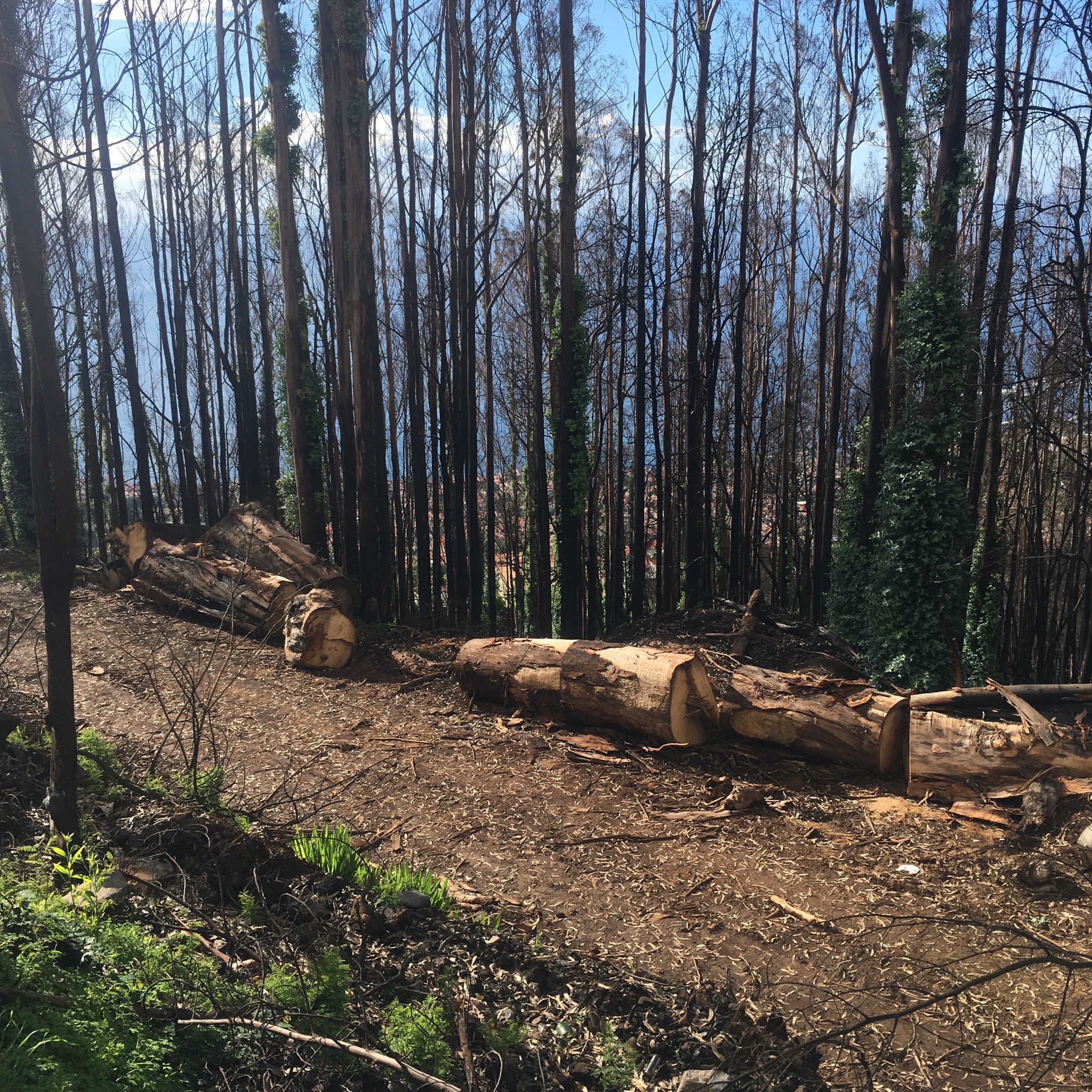
The levada had been completely buried by rocks and boulders in places and the stout steel fencing poles at the 4* Choupana Hills resort crushed. There were huge eucalyptus trunks cleared from the burnt forest that was already sprouting anew.

IMG_2017.JPG

IMG_2023.JPG

IMG_2024.JPG
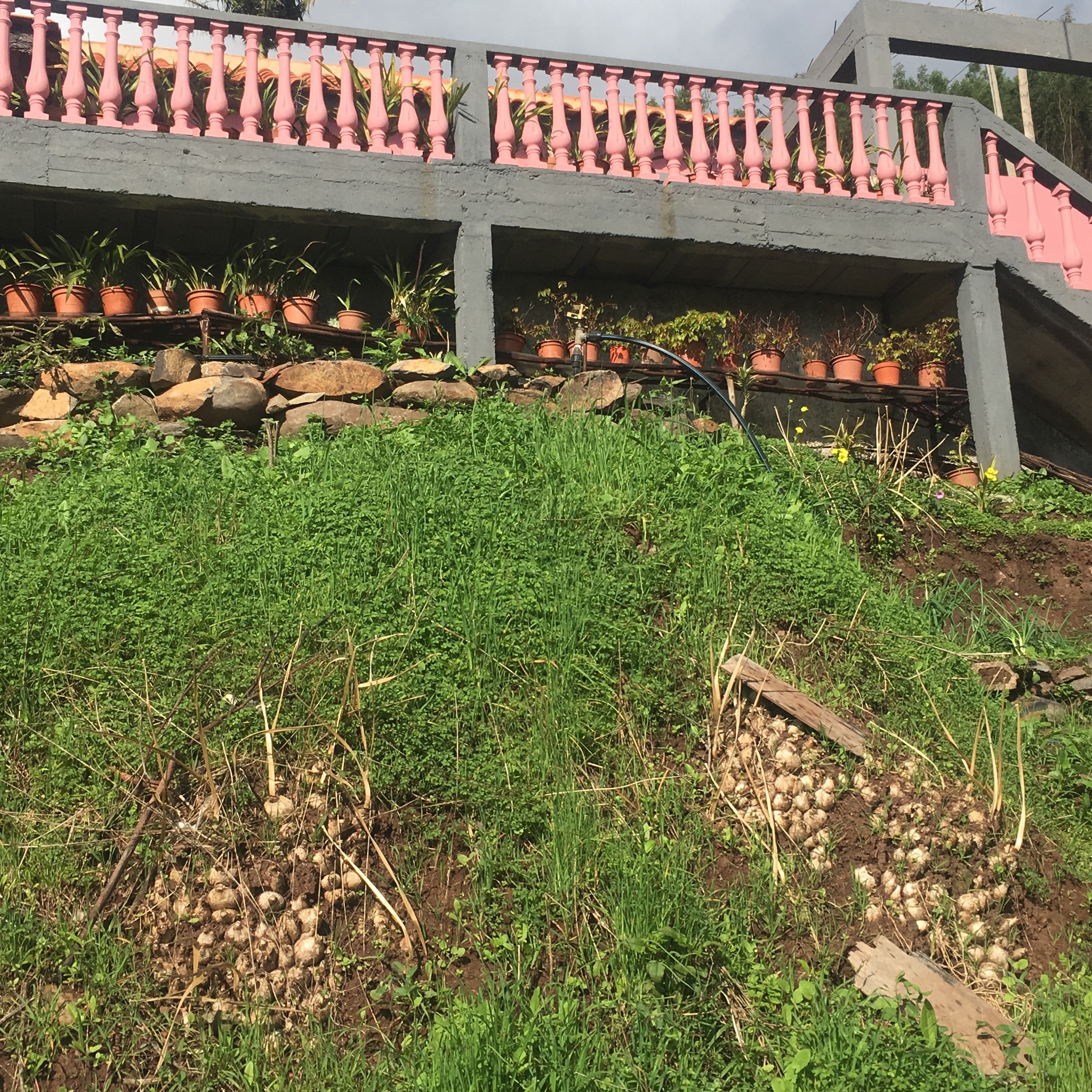
In a small farm clearing in the woods, mercifully spared the fire, an old farmer chopped sticks and his wife sold us some flower bulbs dug from the plentiful surrounding supply.

IMG_2026.JPG

IMG_2027.JPG

IMG_2028.JPG
Now we finally passed into the area untouched by the fire and the glories of sub tropical Madeira appeared around us. There was oxalis, exotic vines and flowering climbers like clematis and Chilean glory vine and datura, there were beautiful splashes of red poinsettia and the bottle brush plant and a variety of trees. Oak and chestnut and laural were the main competition to the blanket of eucalyptus that has been planted and which probably hasn’t helped the wild fires with the carpet of bone dry oily and highly flammable leaves covering the forest floor.

IMG_2029.JPG

IMG_2032.JPG

IMG_2033.JPG
We stopped for coffee and their traditional apple pie at the Hortensia Tea House. This well known Refreshment stop for walkers on the levada was just on the cusp of the fires and so luckily it’s lovely gardens had survived unscathed.

IMG_2035.JPG

IMG_2036.JPG

IMG_2034.JPG
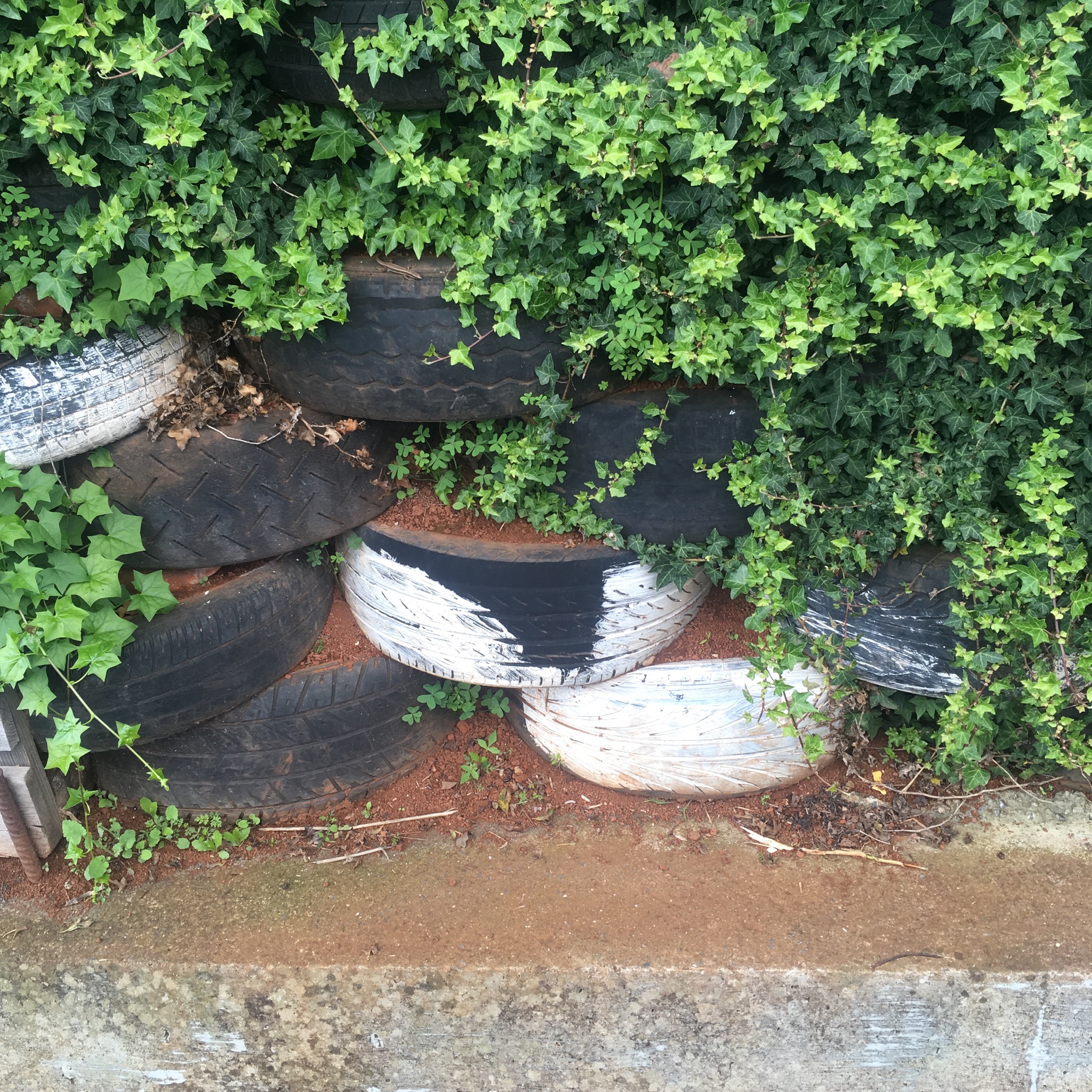
Back to the mini canal. We were at about 700m and the carefully graduated slope made for easy walking with the day’s end only about 100m higher. There were more carefully tended gardens and our first sight of what was to become a common one. The use of old tyres to build walls and steps. Some of the banks of earth revealed the amount of flowering bulbs packed beneath the fertile soil.

IMG_2043.JPG

IMG_2044.JPG

IMG_2039.JPG

IMG_2038.JPG
The Levada’s are dotted with tunnels cut through high ground sometimes for very long distances. We came to our first, thankfully only about 200m long. Starting out with a fairly wide and high path halfway through the ceiling started to drip water and drop lower towards us but by the “light at the end of the tunnel” was guiding us through.

IMG_2046.JPG
We shortly passed another tunnel entrance, this one bigger and part of the fairly recent expansion of roads across the island.

IMG_2048.JPG
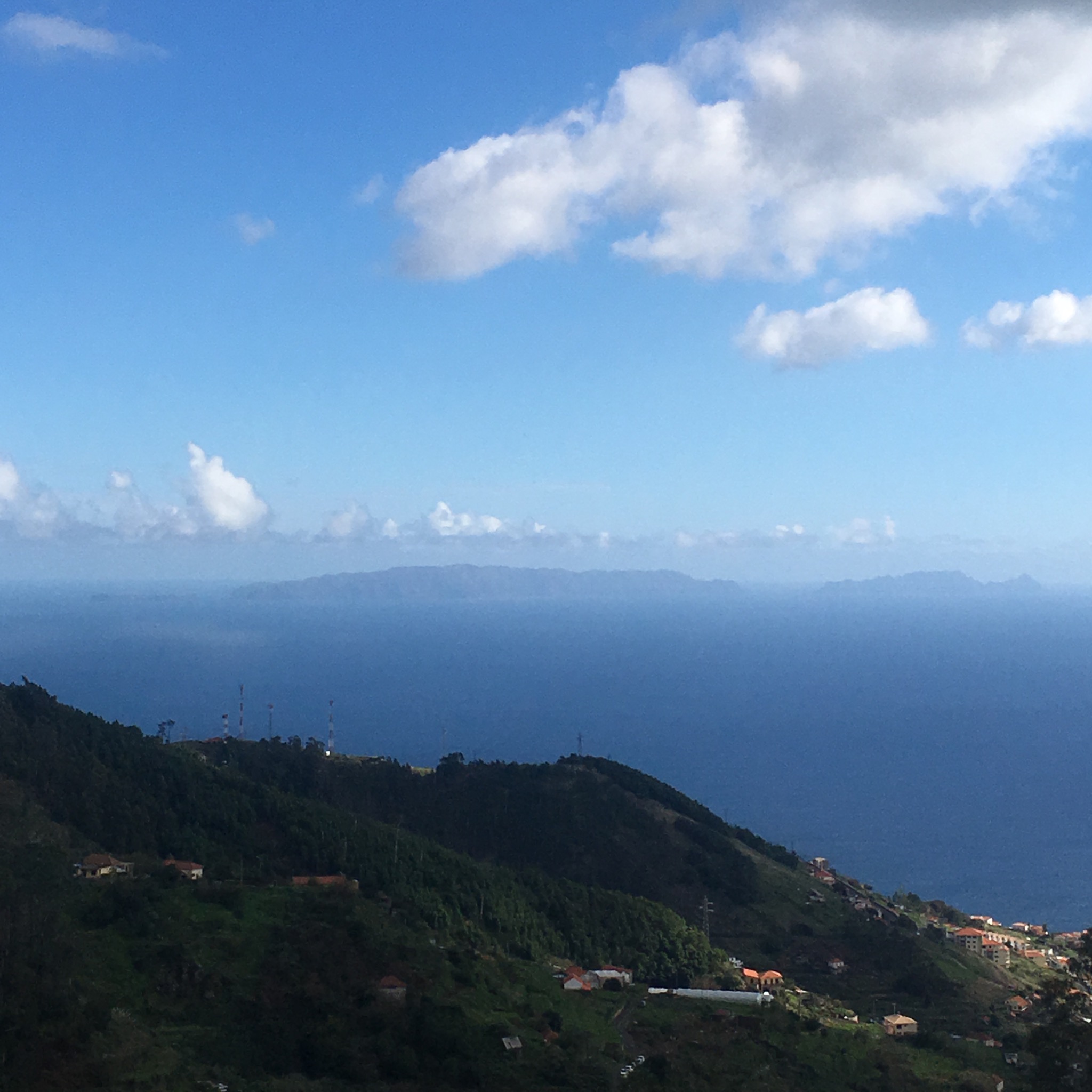
At the head of a cleared valley we caught sight for the first time of the Desertas Islands, a string of steep cliffs rocks jutting from the ocean and now a nature preserve.

IMG_2049.JPG
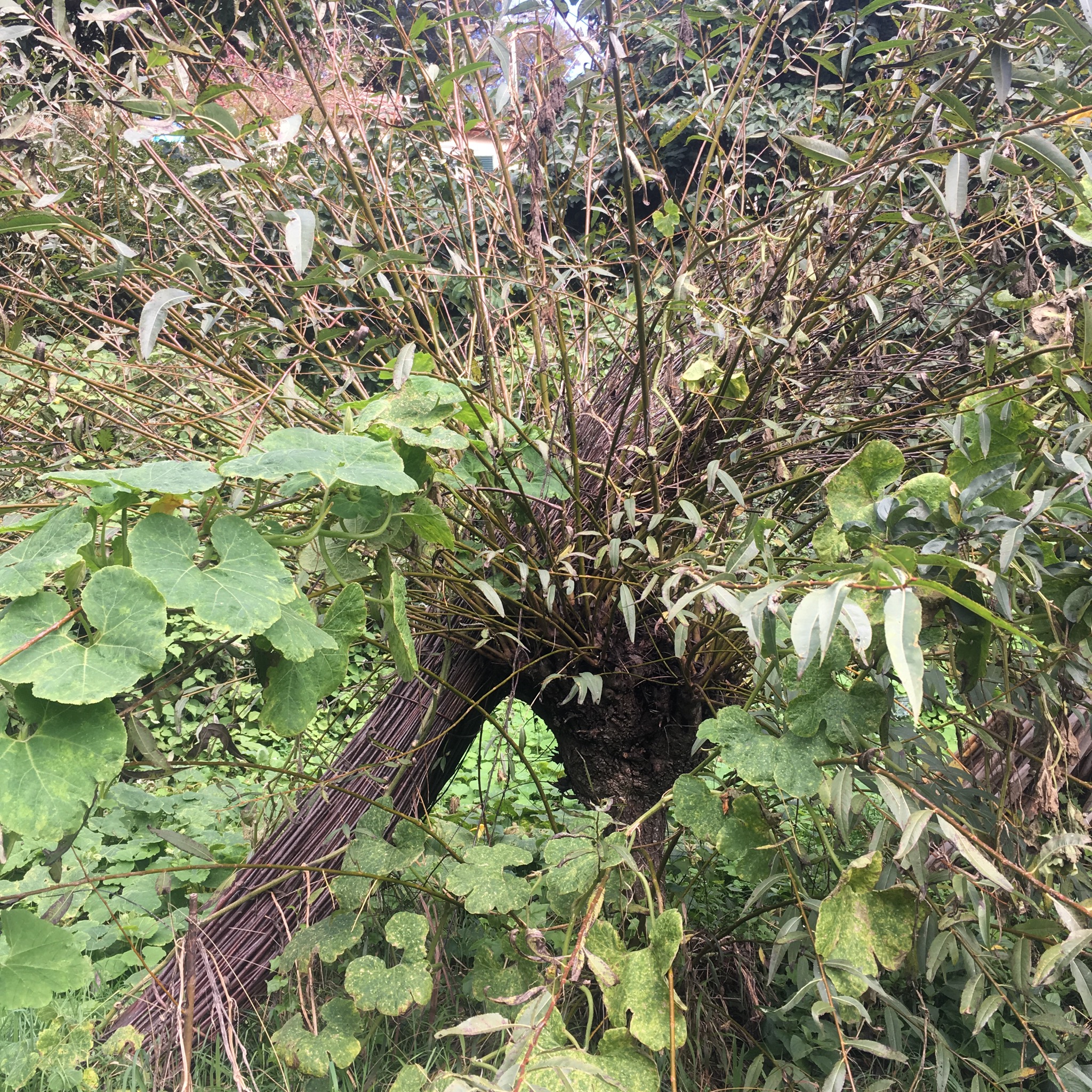
Winding alongside the water, slowly slowly uphill past steps of tyres and over a pallet bridge we made our way past some willow trees to Camacha, the wickerwork capital of Madeira.

IMG_2051.JPG

IMG_2050.JPG

IMG_2053.JPG

IMG_2052.JPG
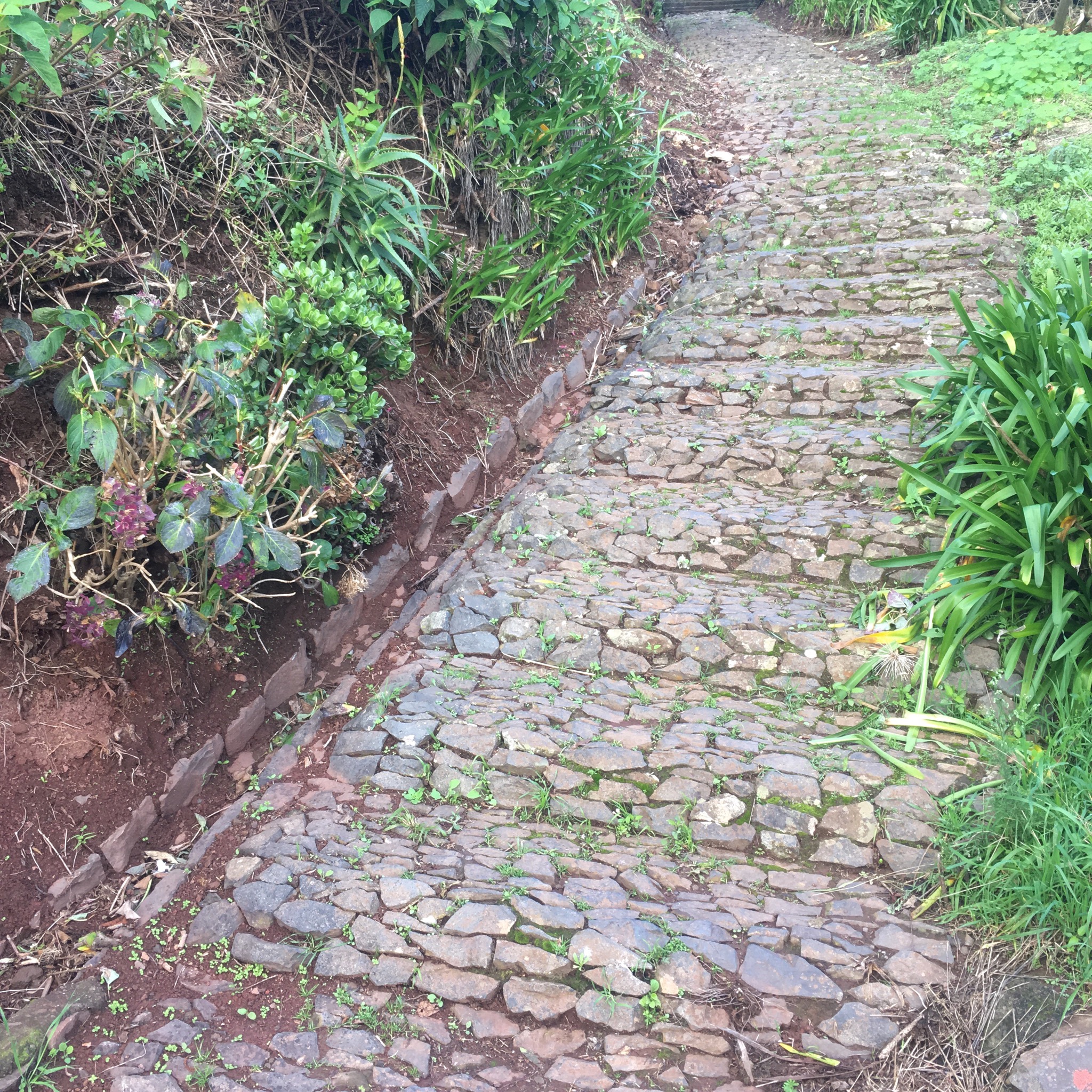
On the way in there were more lovely plantings along the levada and gardens andbeautifully crafted cobbled steps.

IMG_2056.JPG

IMG_2057.JPG

IMG_2058.JPG
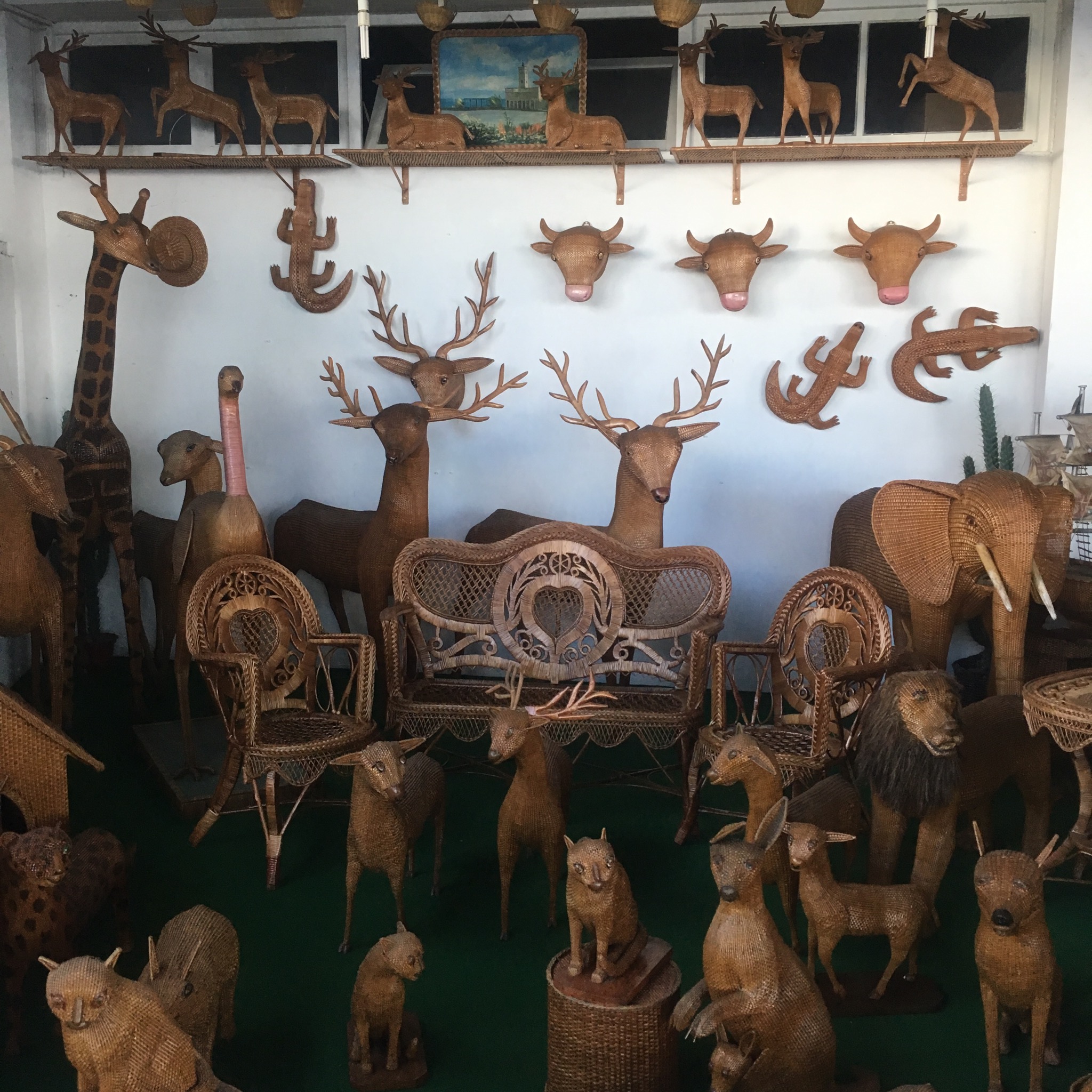
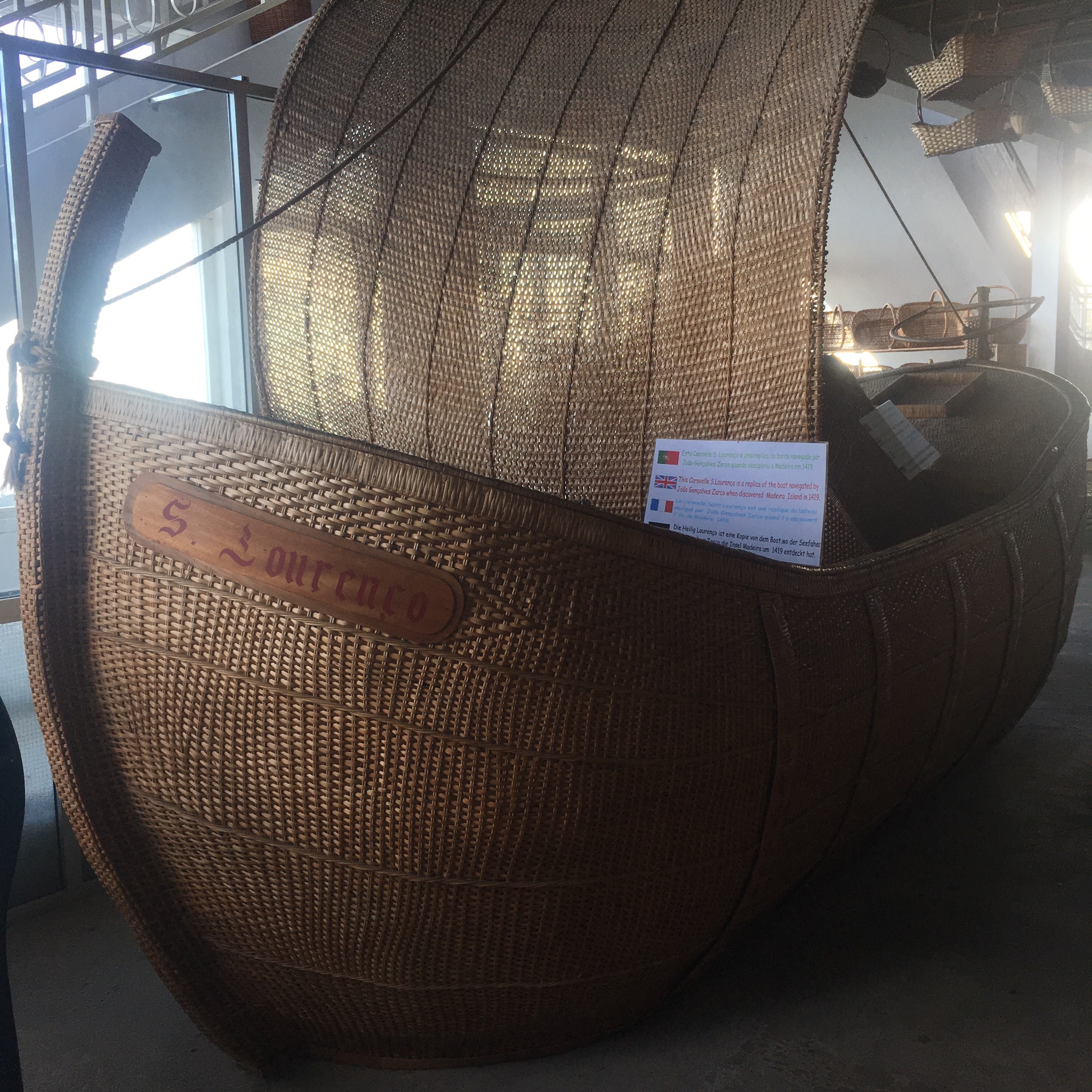
Our room for the night was above the wickerwork factory and shop so we had a good look at the amazing work before a welcome meal.

IMG_2065.JPG

IMG_2064.JPG

IMG_2063.JPG

IMG_2066.JPG
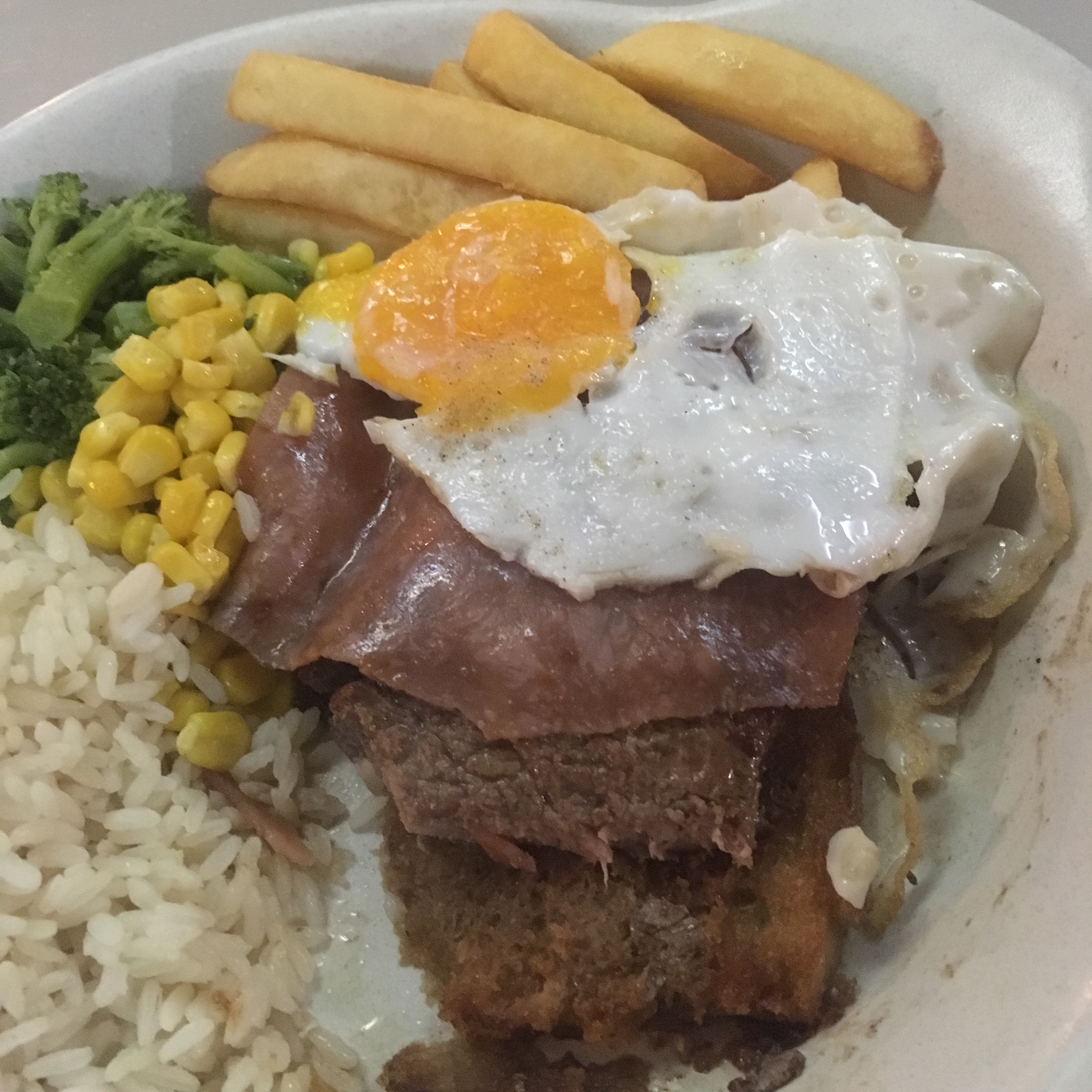
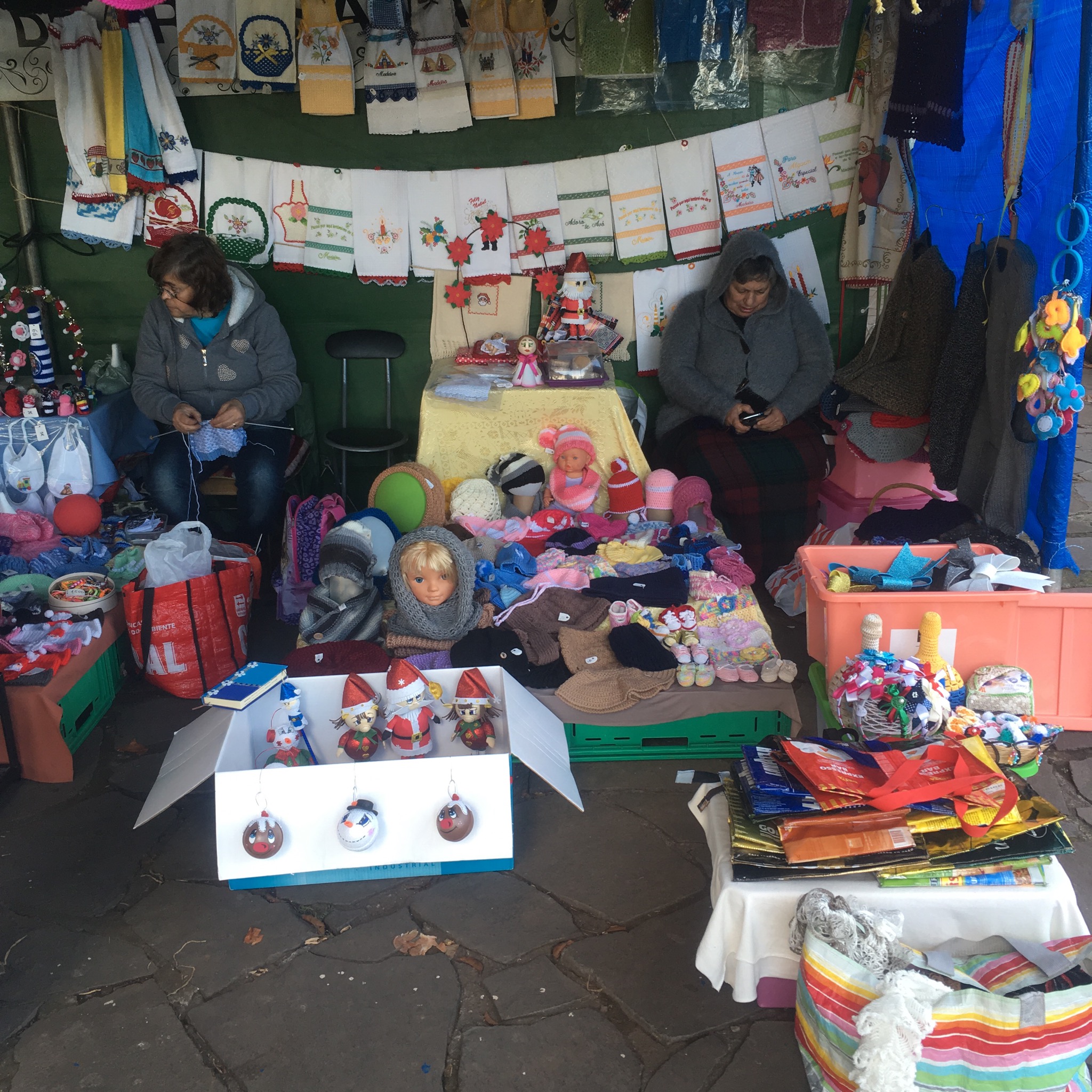
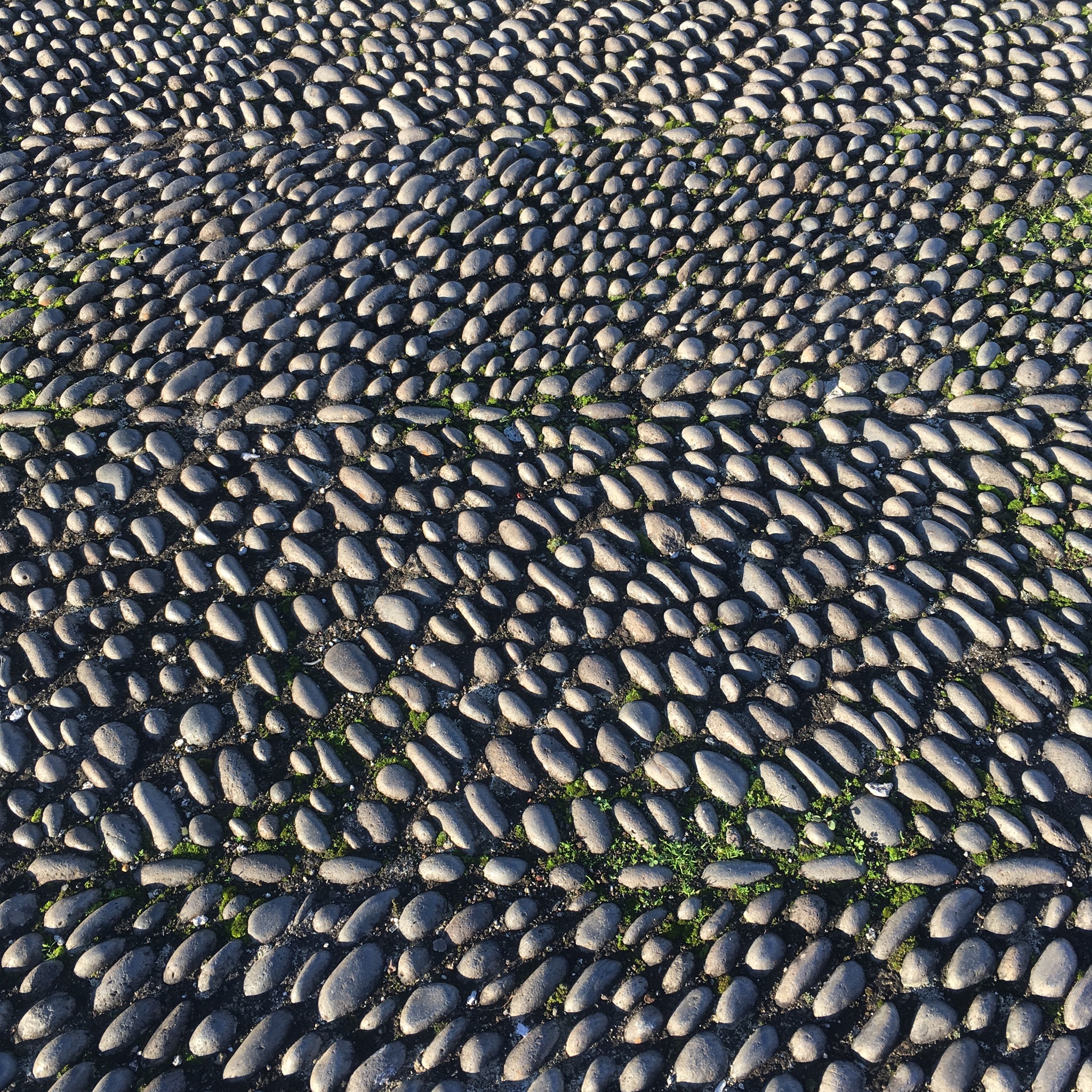
The wicker sledges are used to toboggan tourists down through the steep streets of Monte, an activity we had avoided. we wondered over the exquisite cobbles of the town square to admire the Christmas tree and the knitting ladies, had a strange 4 layer steak some fine wine and then collapsed into bed.

IMG_2075.JPG

IMG_2072.JPG

IMG_2073.JPG

IMG_2071.JPG