SPAIN

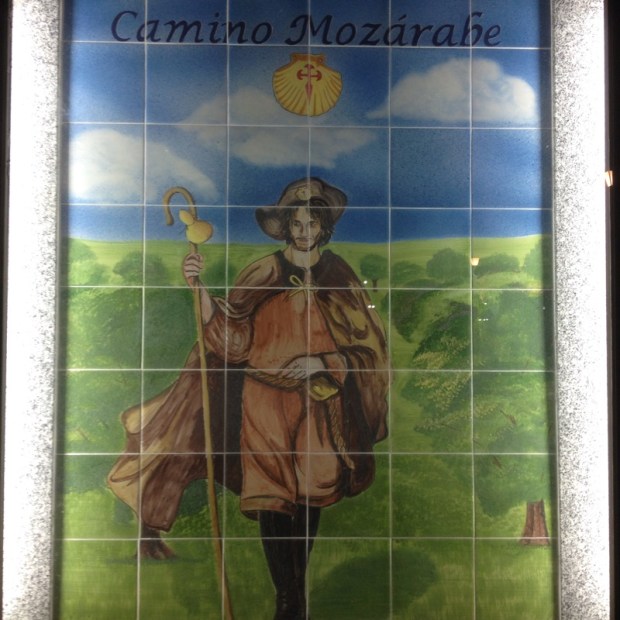
CAMINO MOZARABE: Hinojosa to Monterrubio 15th March

32km


Enjoying my first Spanish “real ale” made in the local area from some of the barley I’ve been walking past all day I guess. It has the Bellota certification of origin as does the celebrated olive oil of the region around Monterrubio. 

Another town no tourist ever ventured into id say. So faroff the beaten track you’d probably be hard pushed to find it on the map. 

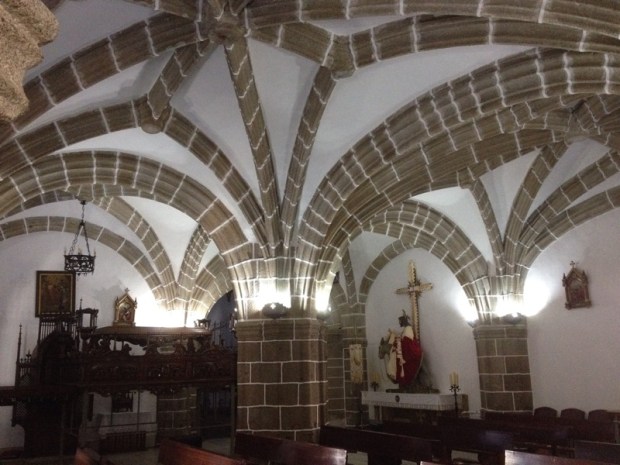
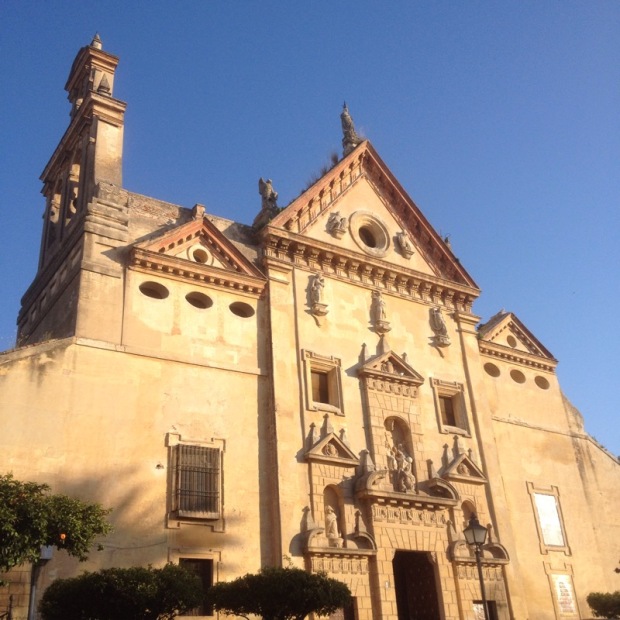
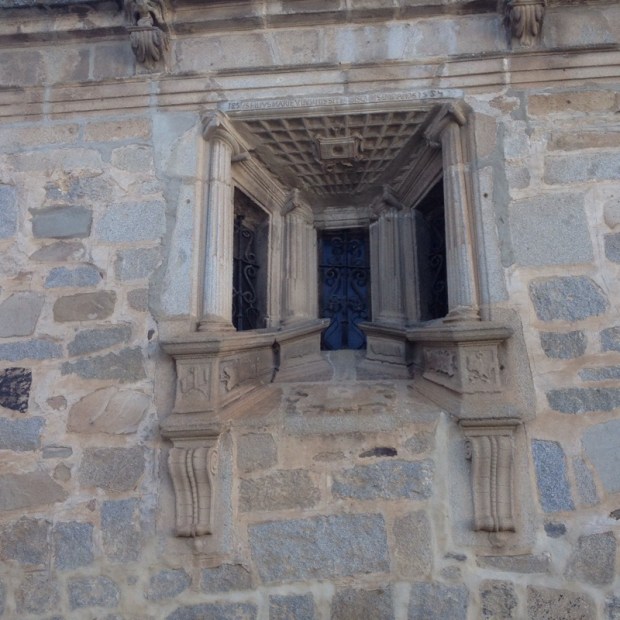
Last night I had a look at the cathedral which featured an amazing 3d window 

and vaulted naive 


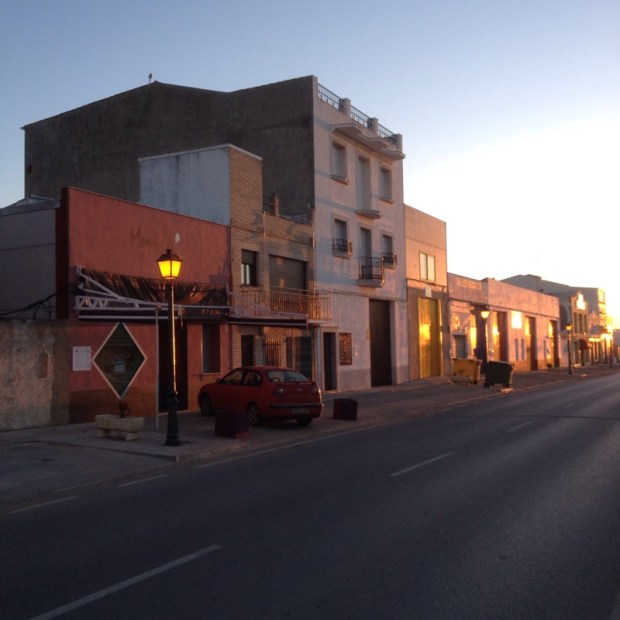
In the morning,as the police man came in ,I dressed appropriately and headed out. 

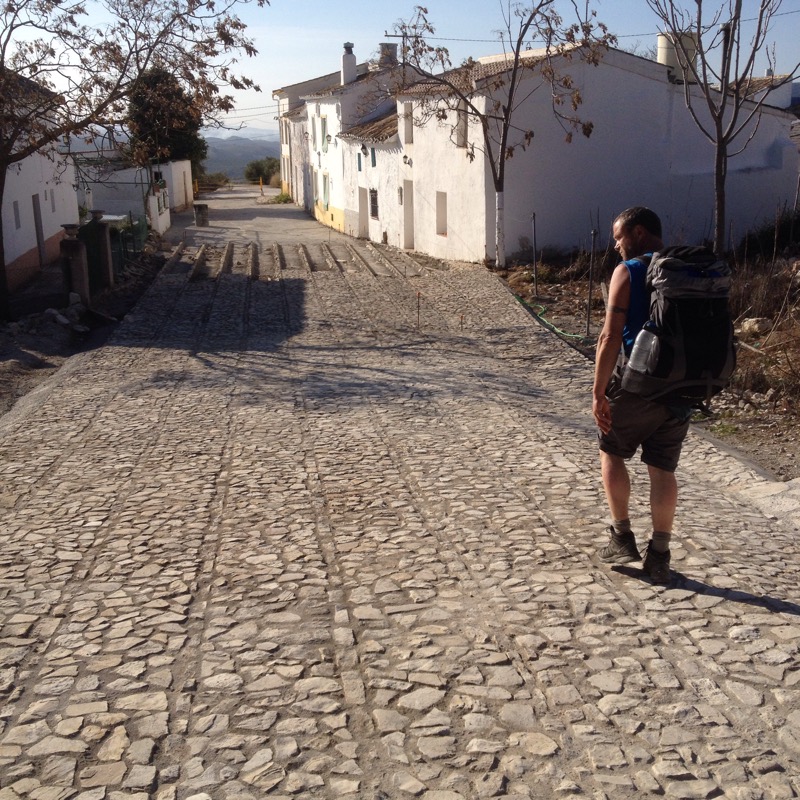
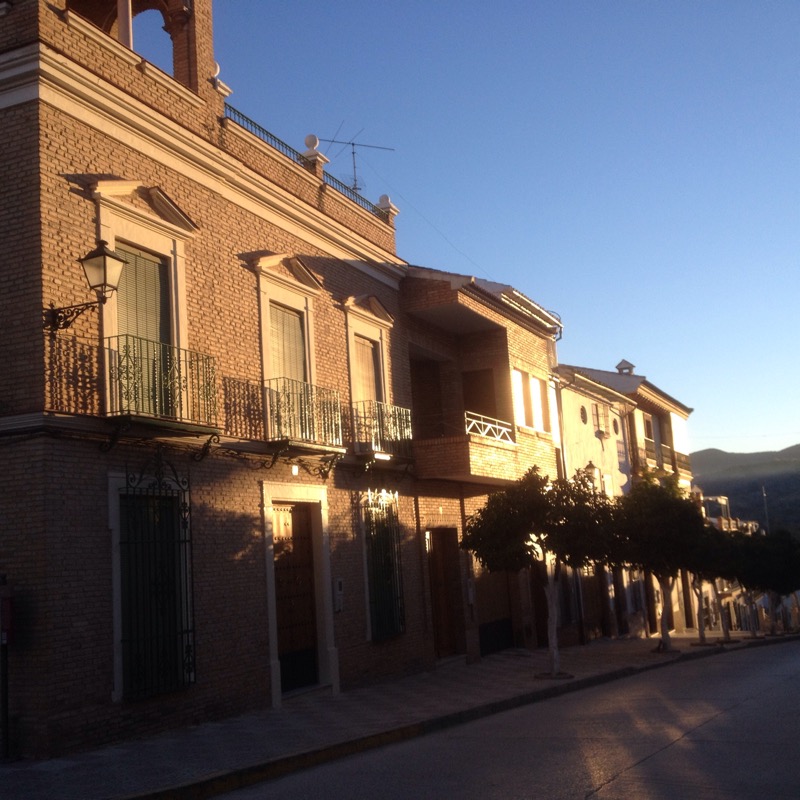
Into a western set. 


Out into the campo in the freezing temperature after begging some water from the last house in the town. I still can’t get a fix on shop and bar opening hours especially at the weekend. 

I’ve noticed that they plough around the outside of fenced land- is it to discourage grazing near the fence ?

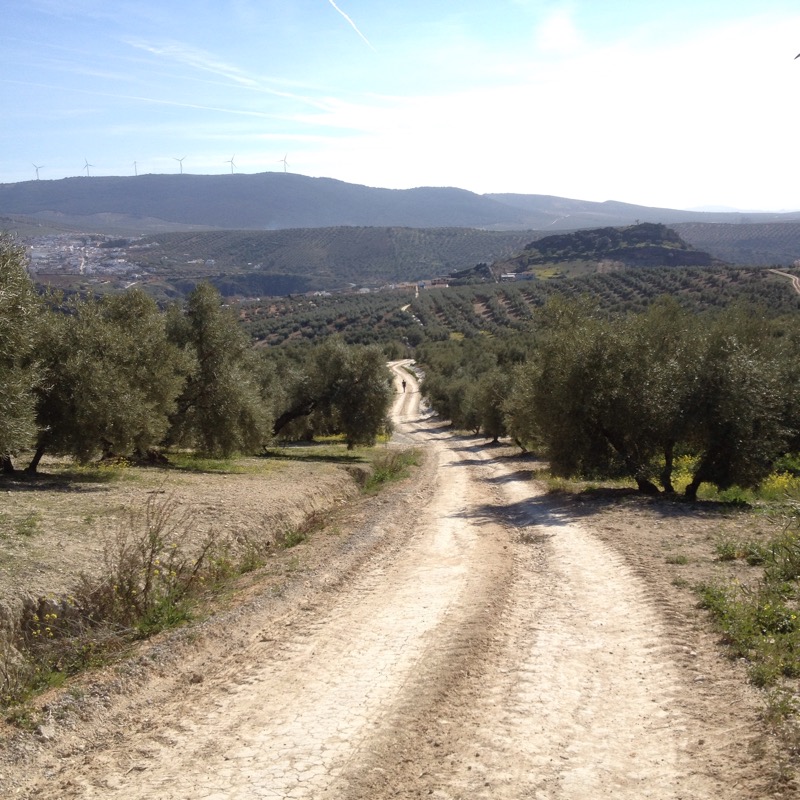
And so began a long day of walking. It’s a peculiar thing, the long distance walking. When you keep going the distances covered seem huge and yet it seems to take forever to get to the top of the rise. Distance and space contracts and expands at the same time as does time itself. A minute becomes eternity and the hours fly by. There are times when I’m truly in “the zone”, chewing up the kms, the whole body a well oiled walking machine and then without warning its a struggle and I’m tripping over my poles. In general though I’m getting more able to cover ground without too much thought involved. My mind is shutting down, especially when I’m listening to music. Is that a good thing? I don’t know but when my mind is still, my soul is filled with tunes and my legs are pumping it feels good to be passing through the sunny expanses. 


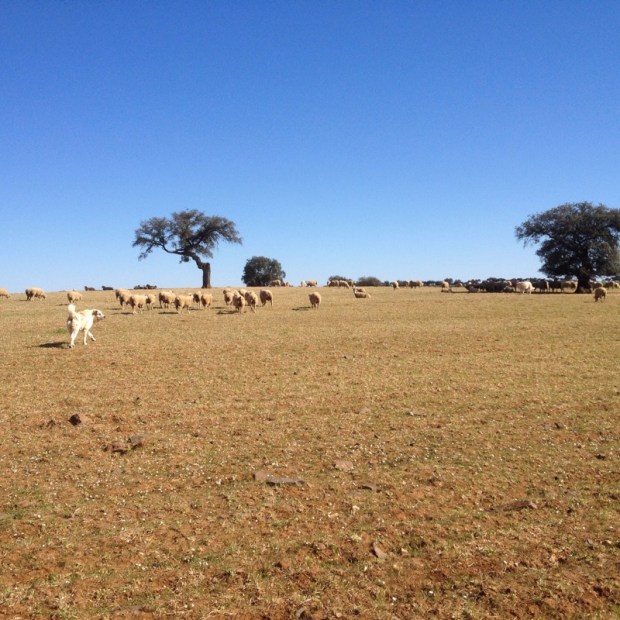
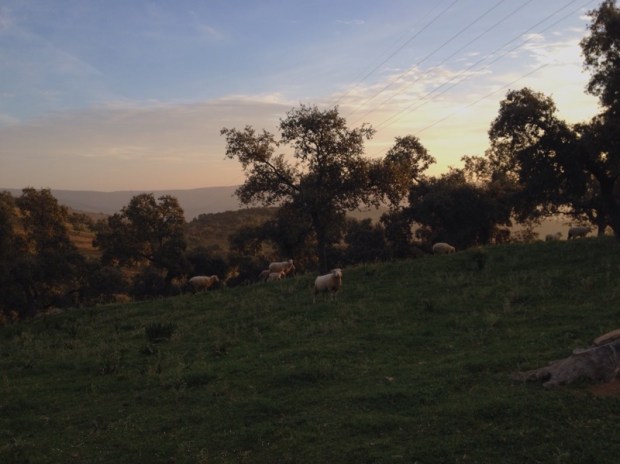
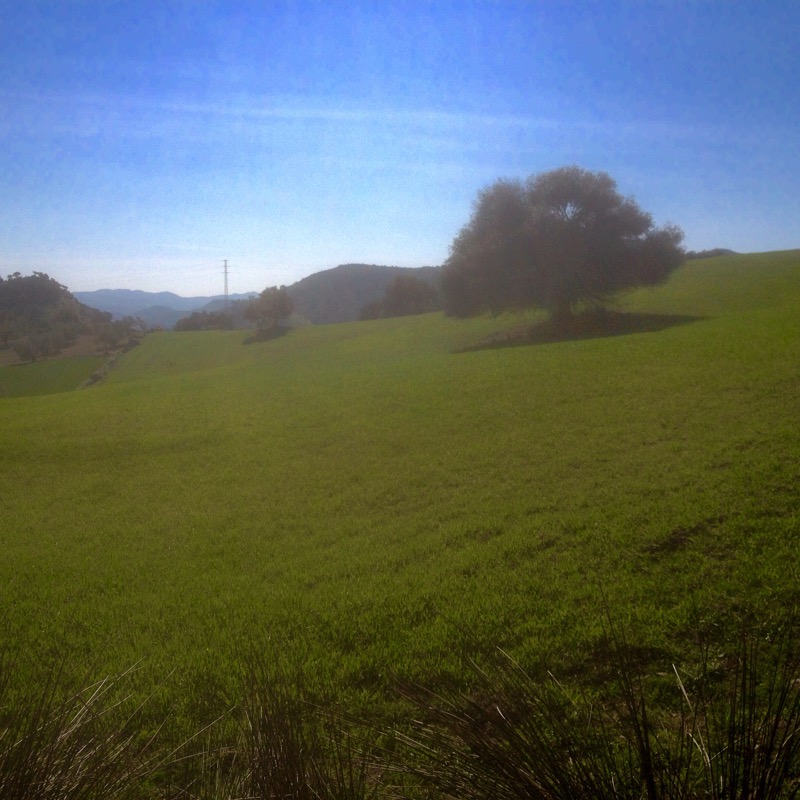
It was so quiet out there today. The track passed very few houses or farms and there was no one around. No chainsaws no tractors no cars, nada. There was sheep. And there was sheepdogs, who are left out with the flock to guard them against …..what?


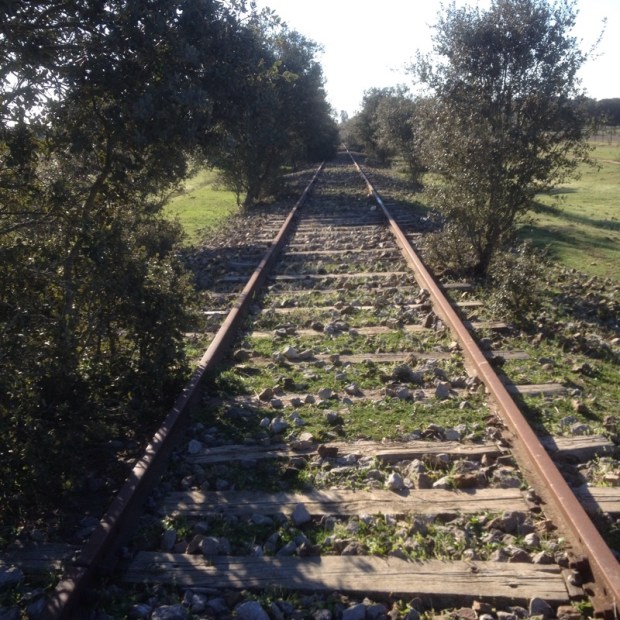
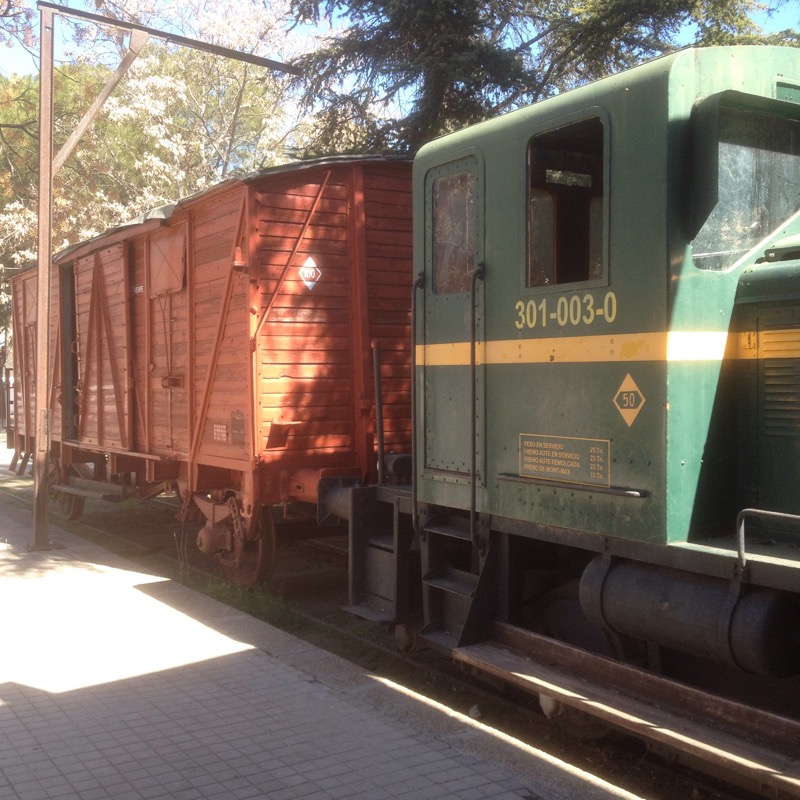
I came to an abandoned railway station on a line that looked still used and it added to my thoughts that I might be the last man alive..no one else seemed to be. 


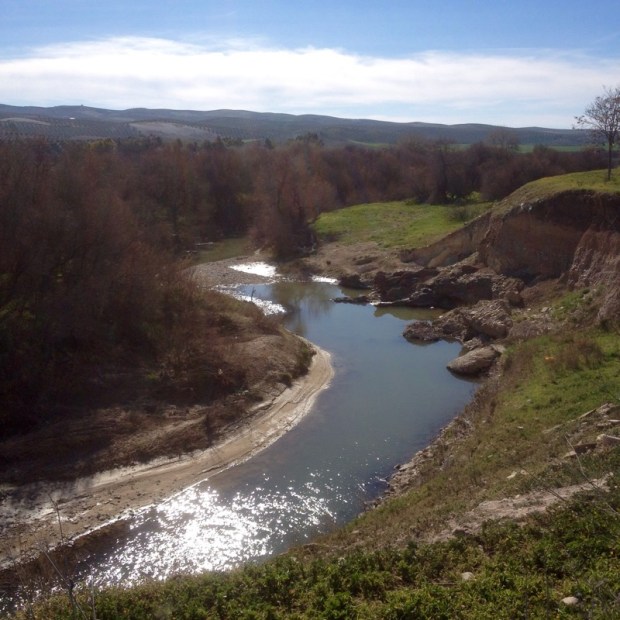
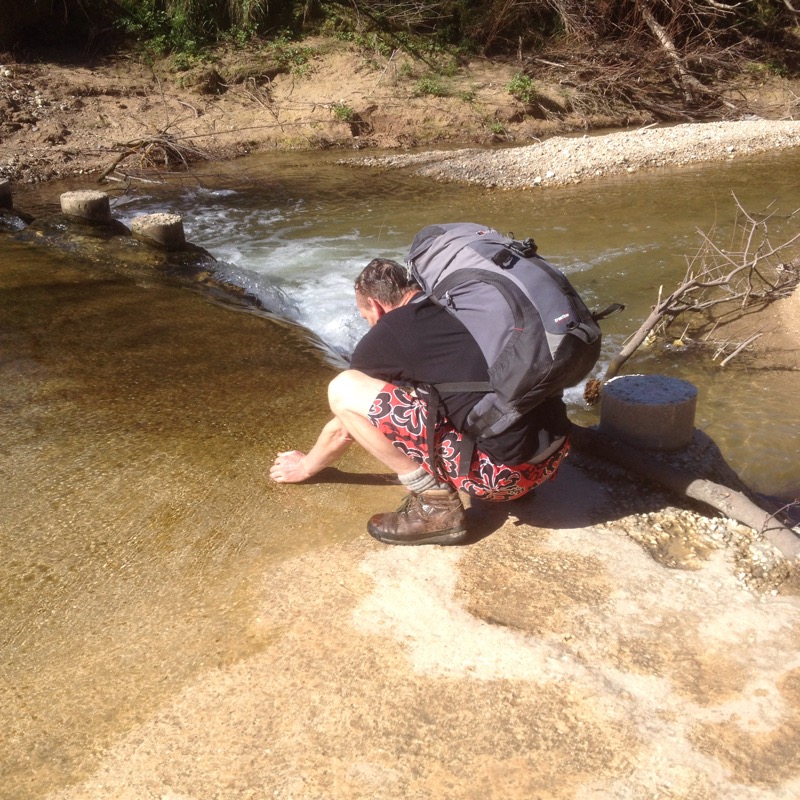
After a couple of small stream crossings I had a bit of trouble fording this one without getting my feet wet. 


I started to climb again up through the holm oaks to a little cross in the plumb centre of nowhere. 


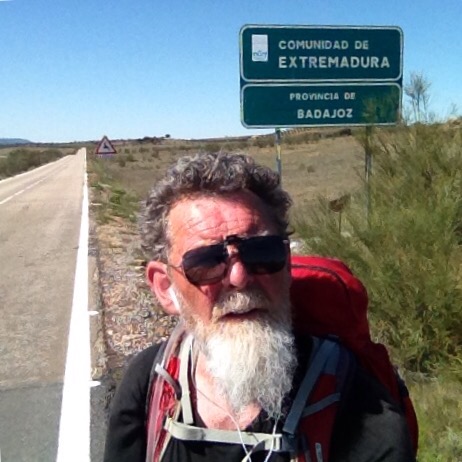
Eventually I hit a road. Quite a big road but nothing stirred. I crossed into Extremadura. 

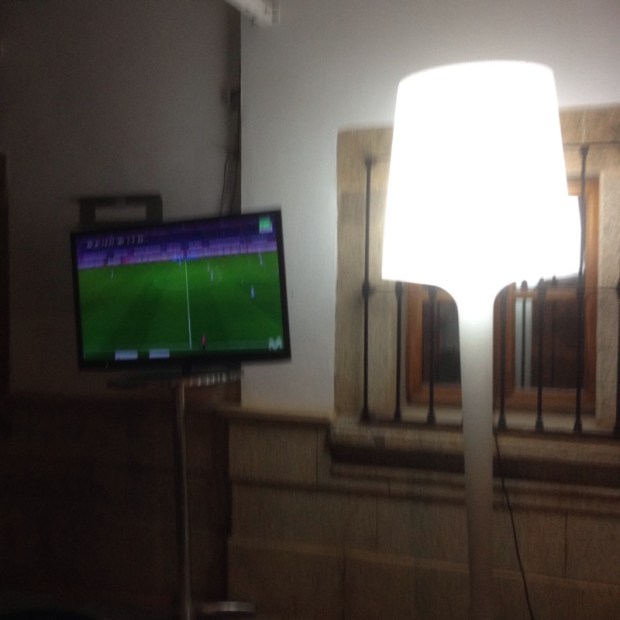
And 6km of tarmac later I arrived here. I went up and down the street where the Casa parroquial was supposed to supply a bed for a weary pilgrim but I couldn’t find it. I went passed a hotel with Camino signs many times with a signs advertising special prices for rooms and menu for the peregrino and eventually gave in. So here I am writing this on the outside terrace where the patron has kindly erected a massive football full TV screen and even more massive light for my comfort


CAMINO MOZARABE : Alcaracejos to Hinojosa del Duque. 14th March

25km

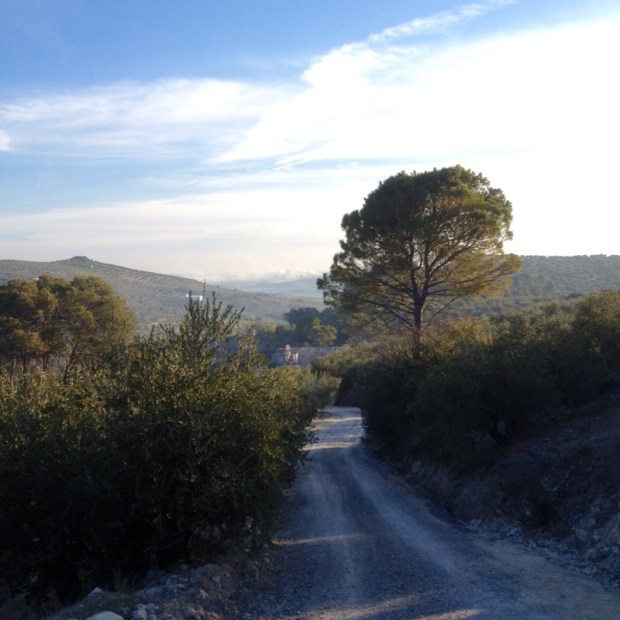
It was a bit cloudy for the first time as I set off down the farm track out of town. 


Lots of storks nesting in the church bell towers


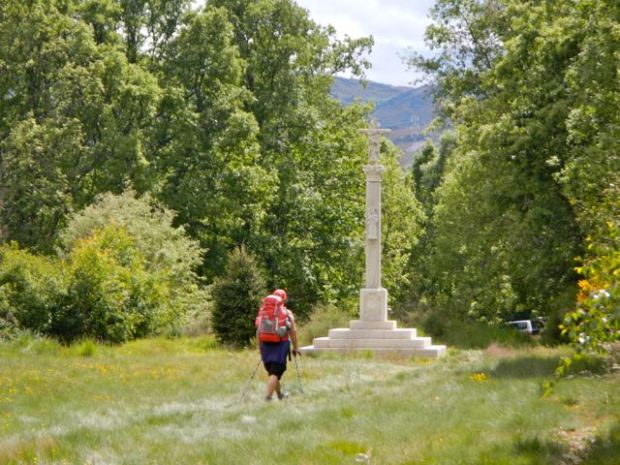
Past crosses new and old

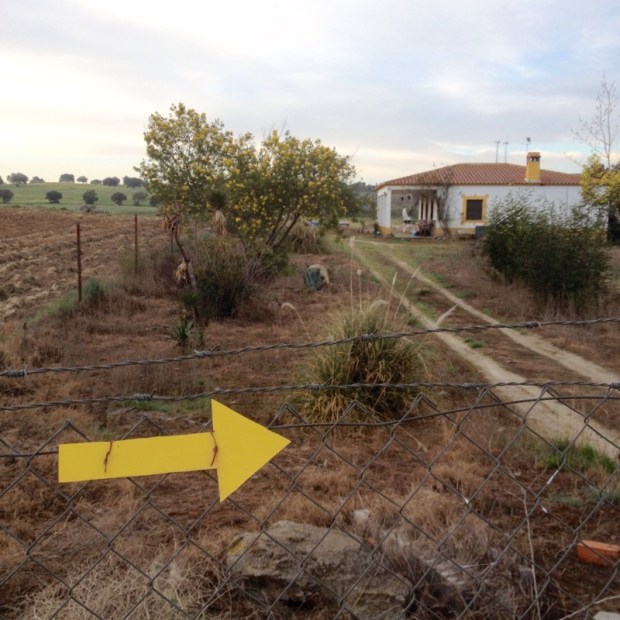
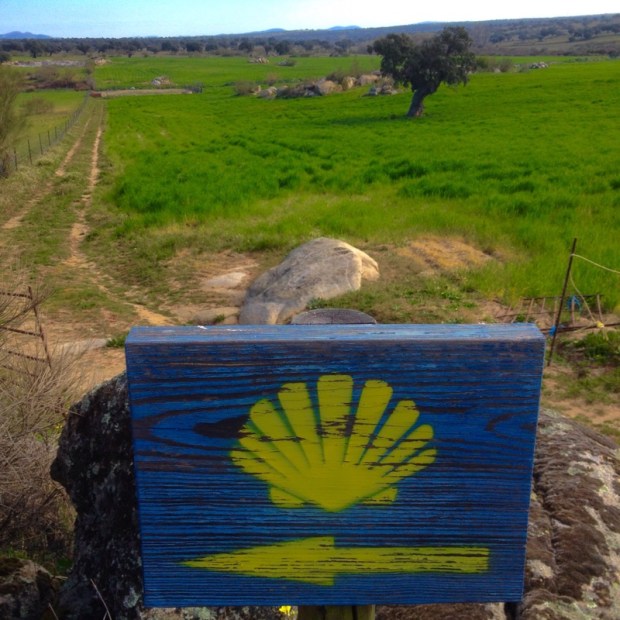
arrows leading me to Villanueva Del Duque

where 19th century mining had left it’s mark ( and a white rabbit) 


Lots of granite was also quarried in the area 

and used in door surrounds and lintels

and fencing

and the landscape was dotted with rounded boulders


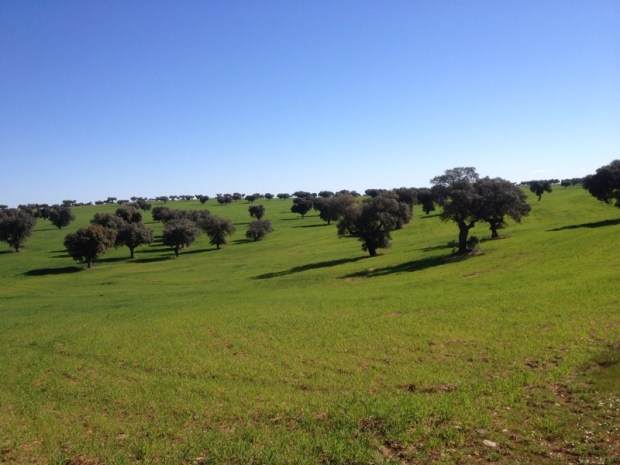
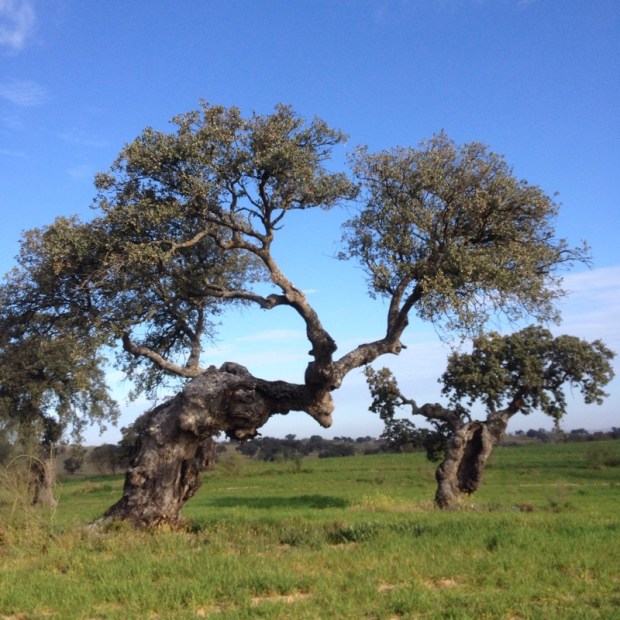
The open landscape was again given shade and shelter by the holm oaks many of which were obviously centuries old


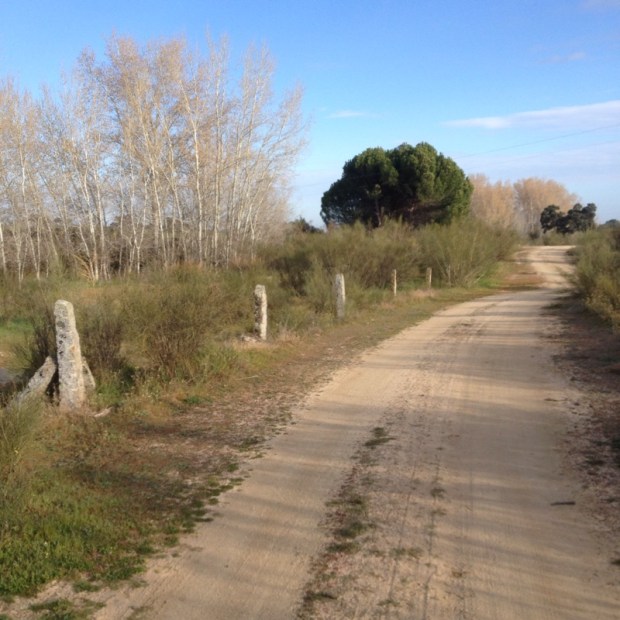
The sandy track led me through farmland

and I followed the arrows past a stinking goat farm


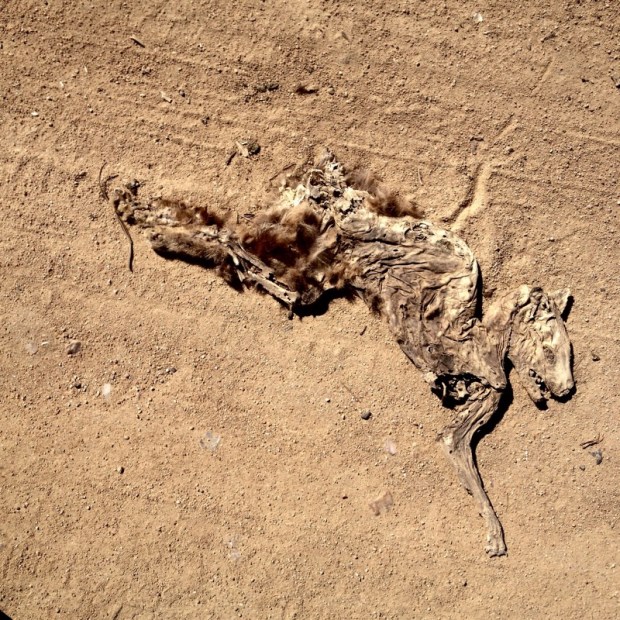
It’s so dry nothing really rots just dehydrates


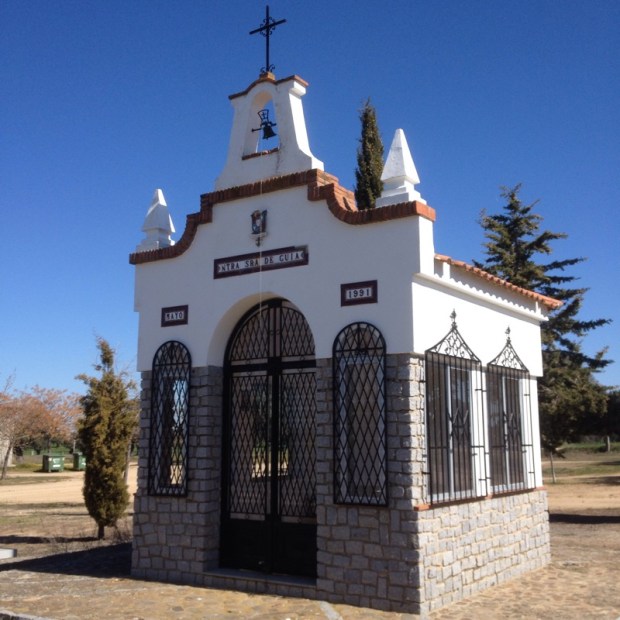
A big thing in the area is the devotion to the Virgin de la Guia (?) who has a pilgrimage in her honour and a shrine on the outskirts of Hinojosa 


My last town in Andalusia, tomorrow I’ll be in Extremadura. 


In the Plaza de la Cathedral 

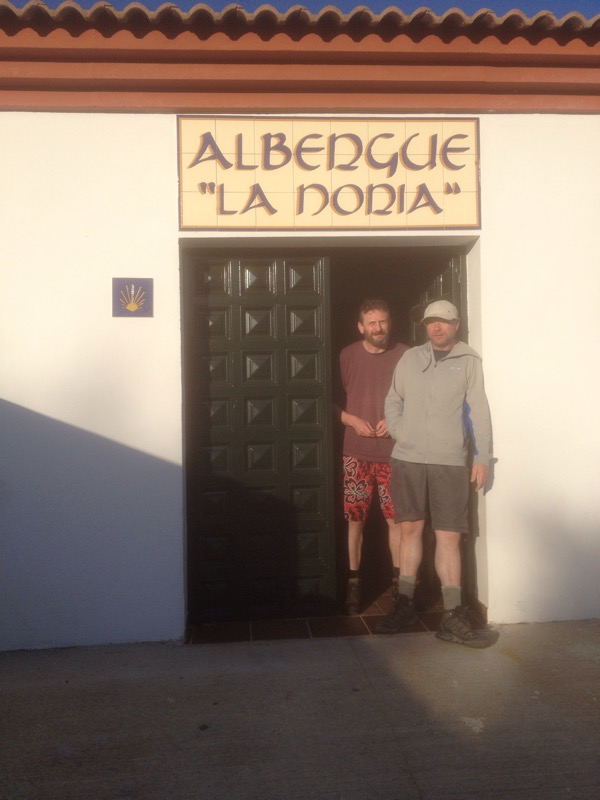
I rang the local police who kindly came and gave me the key to the adjoining albergue which I’m sharing with a policeman stationed here who lives in Córdoba. Well he’s on the night shift so I won’t see much of him. It’s a newly renovated building with all a pilgrim could ask for 

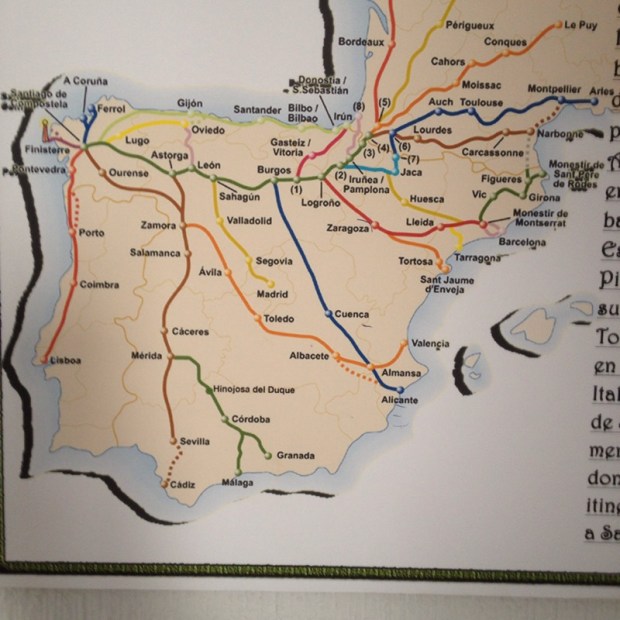
and after showering and doing my washing I studied the poster of all the Caminos still to do 

before retiring to the plaza for lunch. I was here by 1,30 and would have carried on but the next town is 32km away and the bed here is very comfy. I’ve been put off camping by the frosts that greet me every morning and so, with an Albergue to myself for a fiver, why suffer more than need be?

CAMINO MOZARABE : Villaharta to Alcaracejos 13th March

39km

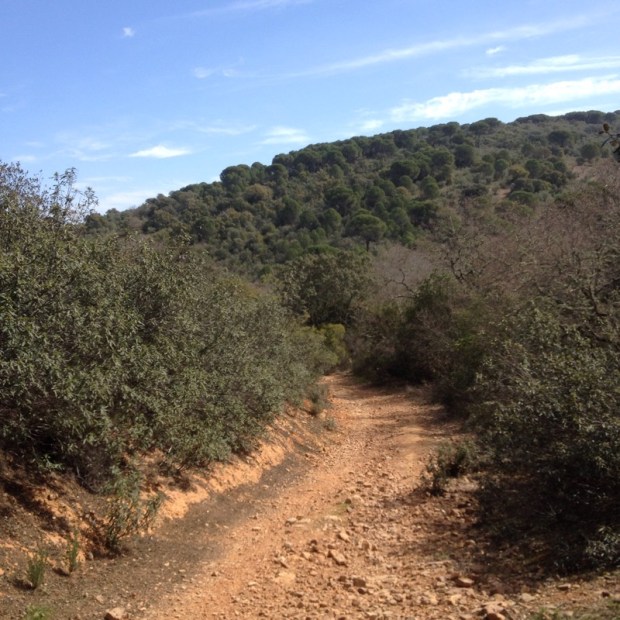
I didn’t stop to camp halfway. The walking was too good. Up in the dawn light and into the empty hills on a good path

With just sheep for company

The path took me over the tree clad hills all day and only crossed one road, only passed about a dozen remote houses and I only heard one chain saw and a couple of cars.

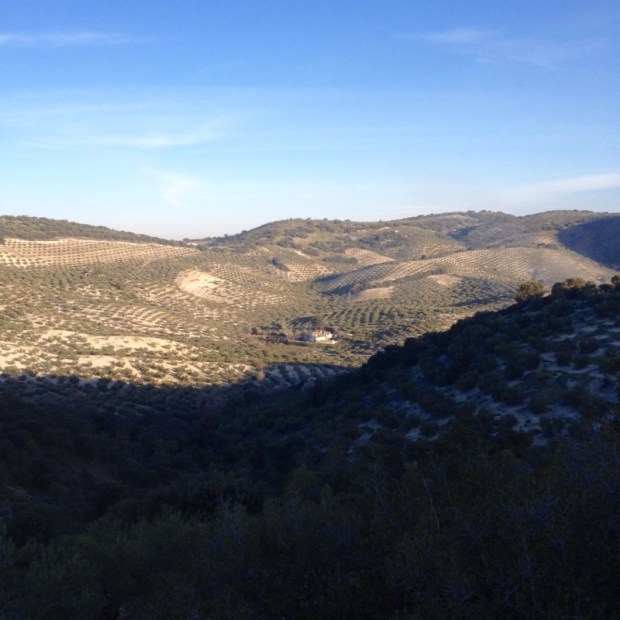
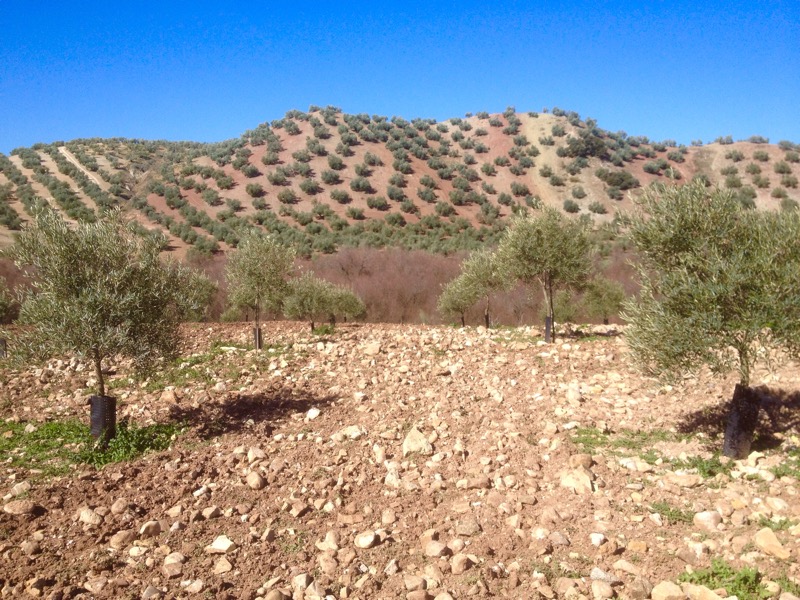
It was the kind of Spanish countryside I love. Rounded hills smothered with trees and scrub and wild flowers. Mixed farmland of holm oak and olive grown in grassland grazed by sheep and cows. The fincas were few and far between and mostly abandoned.

I crossed a few real rivers flowing with clean, clear mountain water and full of loudly mating frogs.

I nearly stepped on a basking snake that jumped as quickly as I did and I saw many many signs of snuffling boars. The markers and signs were plentyful

The vistas changed frequently and the scent of the flowers was heavy on the hot still air.

I’m normally a man who is constantly refering to maps and likes to know where he is in the small, medium and large scale but today I didn’t have a clue. I was in a tiny linear slice of Spain devoid of any relation to the “outside” world.

I could have been anywhere. I could have been in Ireland.

CAMINO MOZARABE : Córdoba to Villaharta 10th/11th/12thMarch

10km/18km/21km

It was midday before I had finished writing in Córdoba and I may be English but I wasn’t about to join the mad dogs out in the sun. It has been getting increasingly hot and I have learnt not to try and exert myself too much or I loose all my body fluids in sweat very quickly. Instead I went for a wander around the city, meandering through the twisting narrow cobbled back streets and peering into the little internal courtyards through any open door. The Cordobans have raised these little spaces to an art form and have associations to support the creation and restoration of “vestibules”. Awards, plaques and prizes are contested. With exquisite tiled floors and walls, lemon or orange trees in huge earthernware pots and a profusion of flowers in every available space they put our hallways to shame. A sideboard, gilt frame mirror and deep pile carpet just doesn’t cut it.

These Spanish towns and cities are so rich in ancient buildings and especially churches I wonder what the Irish urban landscape would have been like given more money and less oppression.

I set off in the early morning as the kids found their way to school down the warren of narrow lanes alongside old men with tiny transistor radios in their top pockets and macho looking men walking little lap dogs. Bars were busy with clusters of talkative smokers outside.

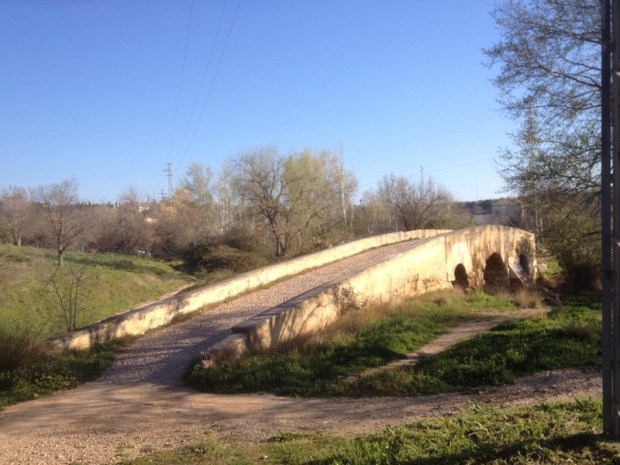
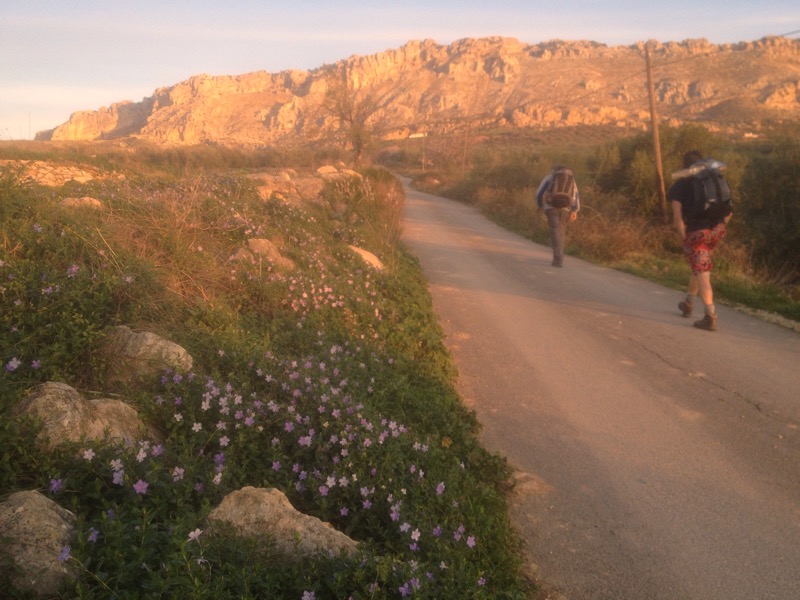
Out of the old city into the suburbs with big blocks of flats, washing hanging from the lines outside their windows, and very soon after passing the old roman bridge, out into the wild.

Here there were men pursuing another popular Spanish pastime, flying remote control planes whilst sheperds herded their flock through the fly tipping zone.

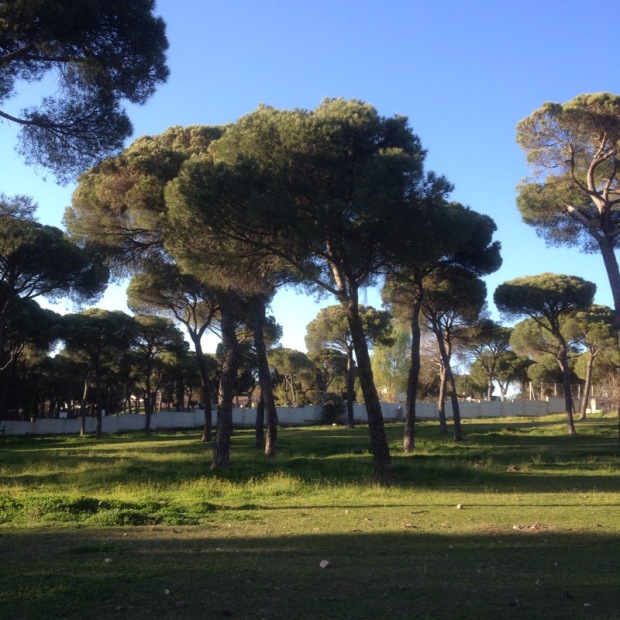
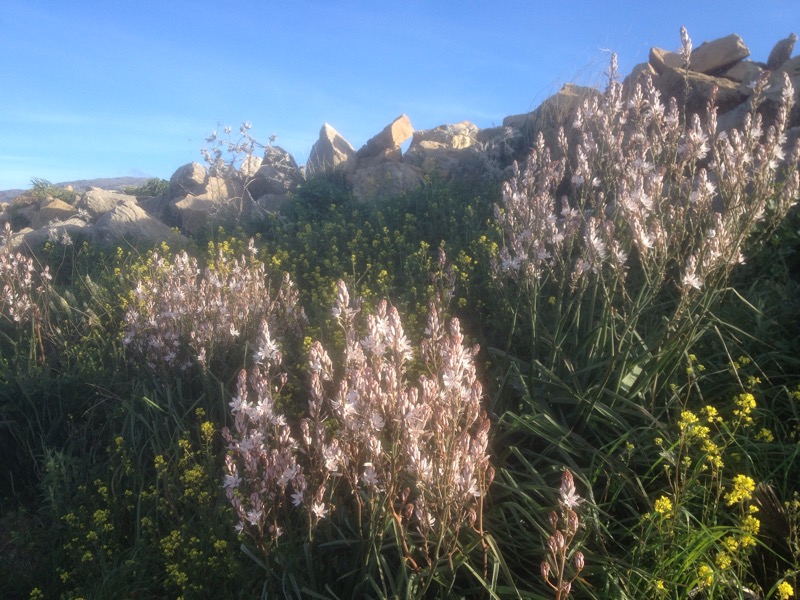
The hills beyond were of uncultivated scrub, holm oak, wild olive, rock rose and cistus, broom and mimosa. And then a familiar smell not enjoyed since the Canaries of pine. The nice rounded tops of the Mediterranean pine. Exposed rock in layers of horizontal strata and yellow arrows everywhere.

I came to an old abandoned railway that was to accompany me ,on and off, for the next few days.

At a little trackside shrine I found some offerings in a tree stump and had a pleasant lunch with the bleating of lambs and the clink clonk of their mothers bells as background music.

The information I’d been given in Malaga included the phone number of a “welcome ” house for pilgrims in the next town Cerro Muriano. This was an unofficial albergue run by a Dutch couple who had been volunteer hospitals row in numerous albergues for a few years and decided to set up on their own. I was given a warm welcome at their rented suburban villa and sat and chatted with them in the outside kitchen. They told me that even North of Córdoba when all three branches of the MOZARABE had joined together there are only about 200 pilgrims a year as opposed to the 2000 a day they were dealing with in the Compostella office in Santiago last summer.

The house, set amongst the pines, is a very relaxing space and after a good sleep I set out armed with Yan’s info on the way ahead. There is a large army camp and firing range to be crossed and then it’s back to the rolling scrubland before coming down to the oak studded grazing land of Guadiato valley.

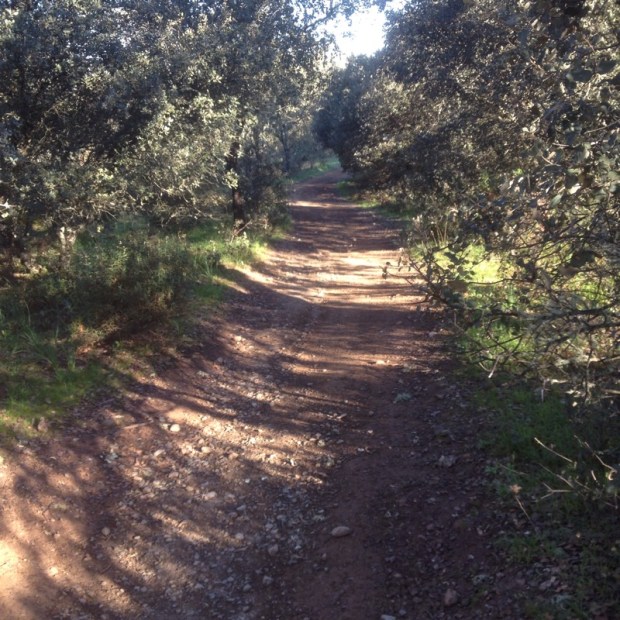
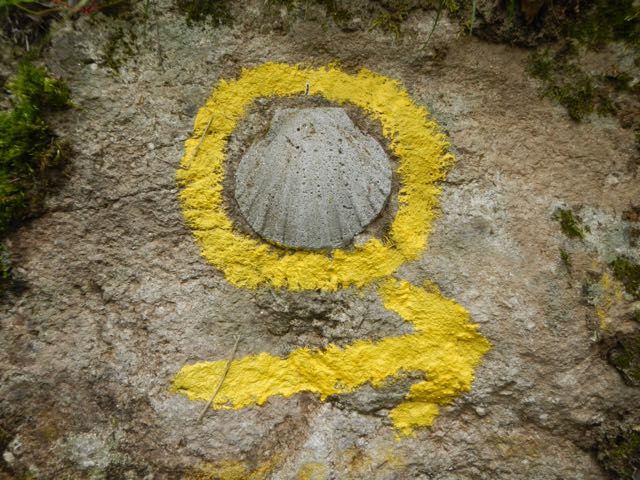
I was following the old drovers way the Canada Real Soriana and it made for beautiful and easy walking with occasional signs to remind me who I was and where I was going.

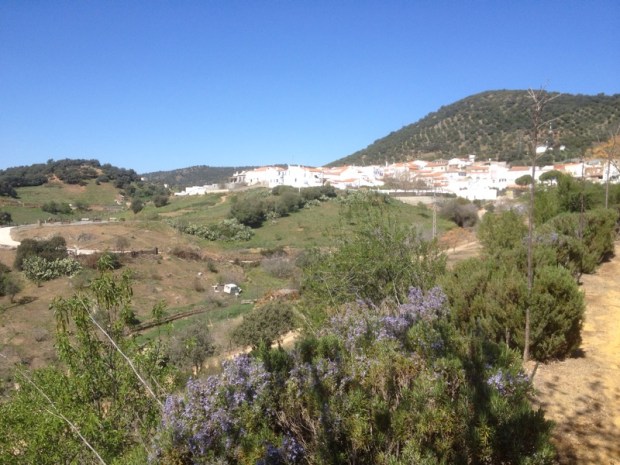
The scenery continued wild and pretty all the way into Villaharta where I went to the town hall and organised to stay in the changing room of the sports hall. It’s a 39km stage tomorrow that I may split into two and camp out if I come across somewhere nice.

In the meantime I shall make myself at home on my exercise mat. I just hope there are no late basketball games planned to night.

CAMINO MOZARABE  Dona Mencia to Córdoba 8th/9th March

29km/ 36km

Needless to say the fiesta in Dona Mencia didn’t get going till after pilgrim bedtime. I vaguely heard some music and cheering in the night but not nothing to disturb the sleep of the weary.

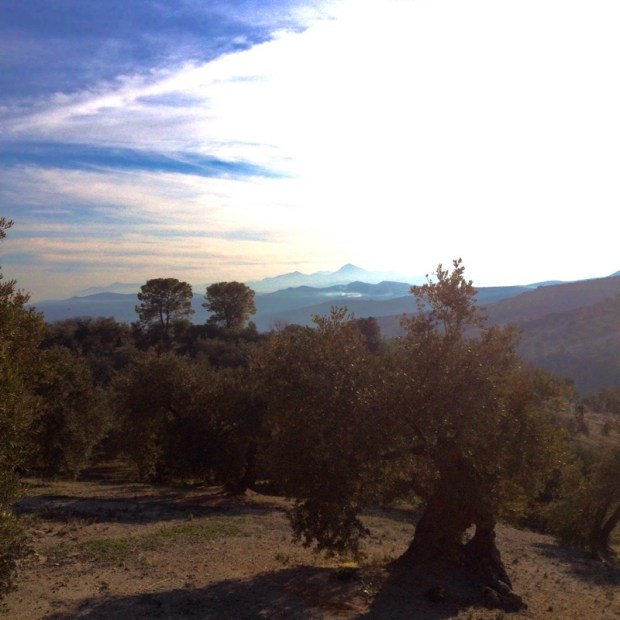
The route out in the morning led me up into the olive cloaked hills again with far ranging vistas across the uninhabited landscape dotted with the remains of grand old fincas.

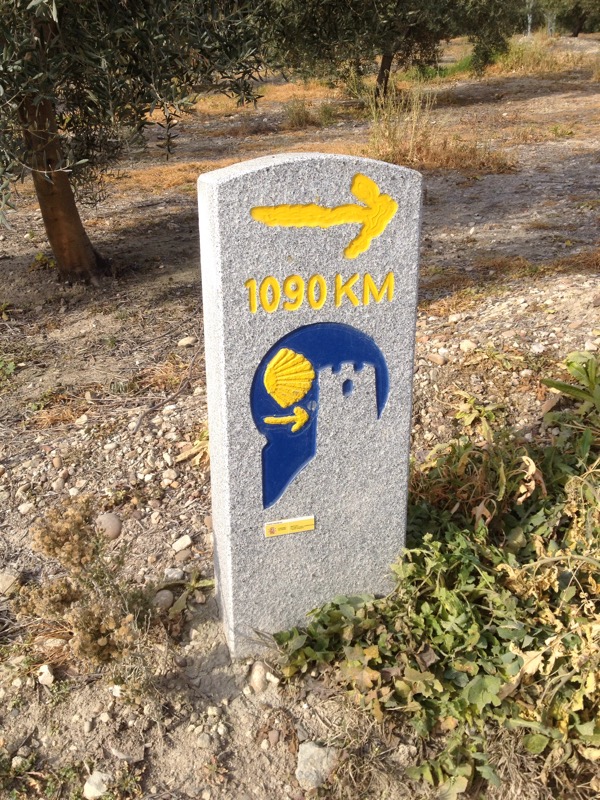
On the outskirts of Baena I came upon this rather dispiriting marker post,

before entering the seemingly quiet town,

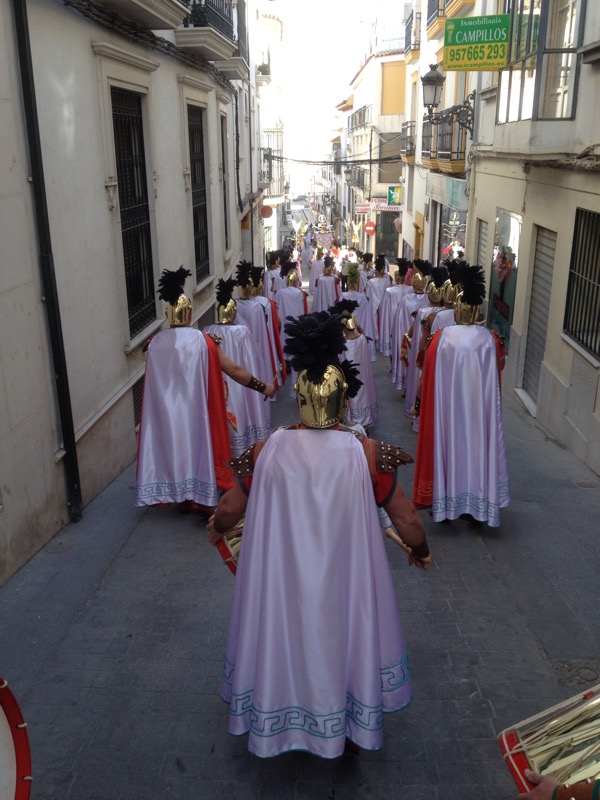
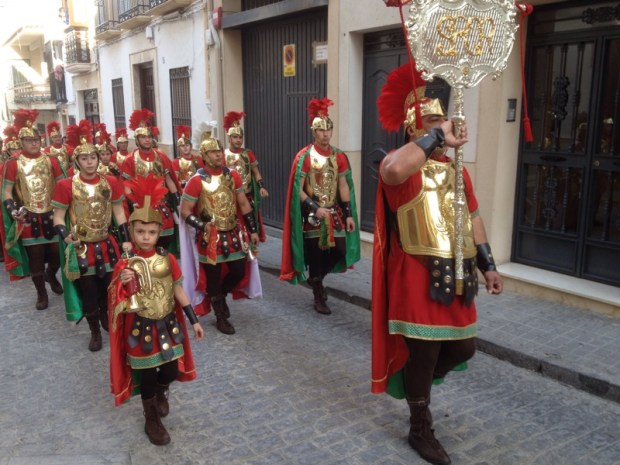
that suddenly came alive with drumming and centurions.

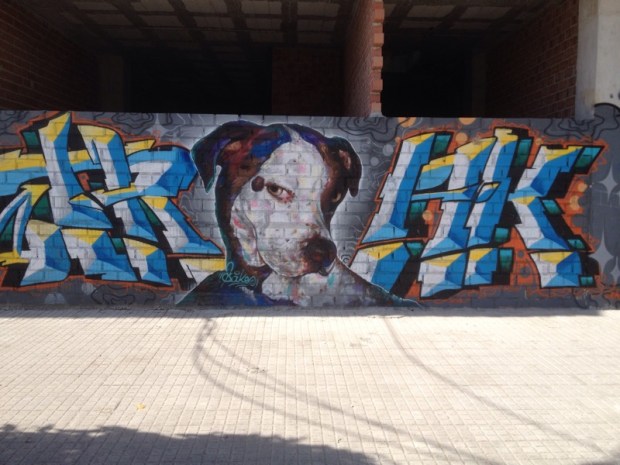
Legions of them, in different squads, marching around the narrow spectator lined streets. I moved on before the finale, past a nice graffiti dog

and millions of caterpillars of the processionary moth that have been a feature of the trail the last few days.

Trying to avoid them as they marched back and forth across the track mad it look as though I was hop scotching to Santiago.

The increasing heat made the 20km remaining to Castr del Rio seem a long way through the olives and alongside the convolutions of the Guadajoz river.

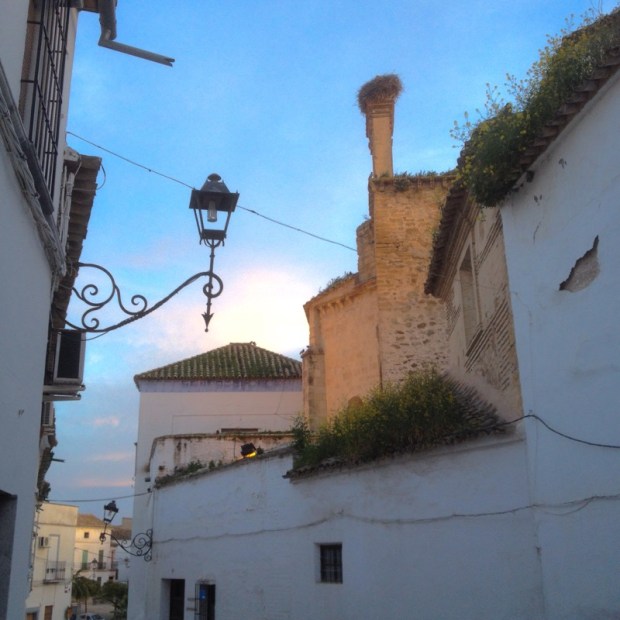
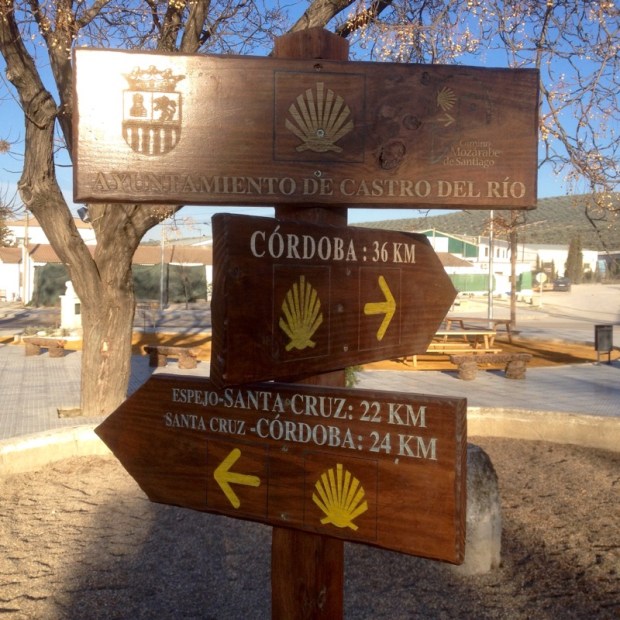
I found my way to the local police station for the key to the albergue I had to myself situated in a fine big old town house on the church plaza, where the storks nest on the bell tower.

Yet another beautiful ancient city with layers of Roman, Moorish and Spanish influence and infrastucture.

I decided to make the jump and go for Córdoba in one stage rather than two. Sign says 36km, more accurate guide says 39km.

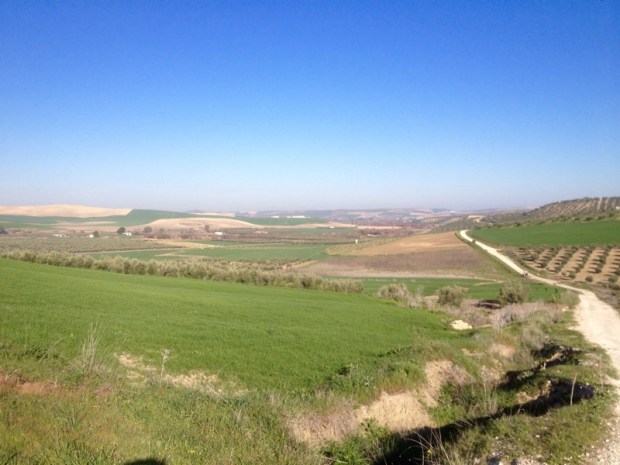
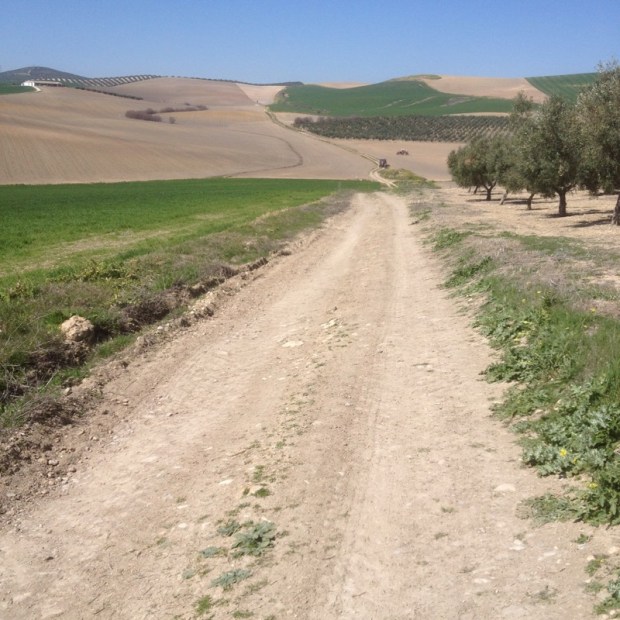
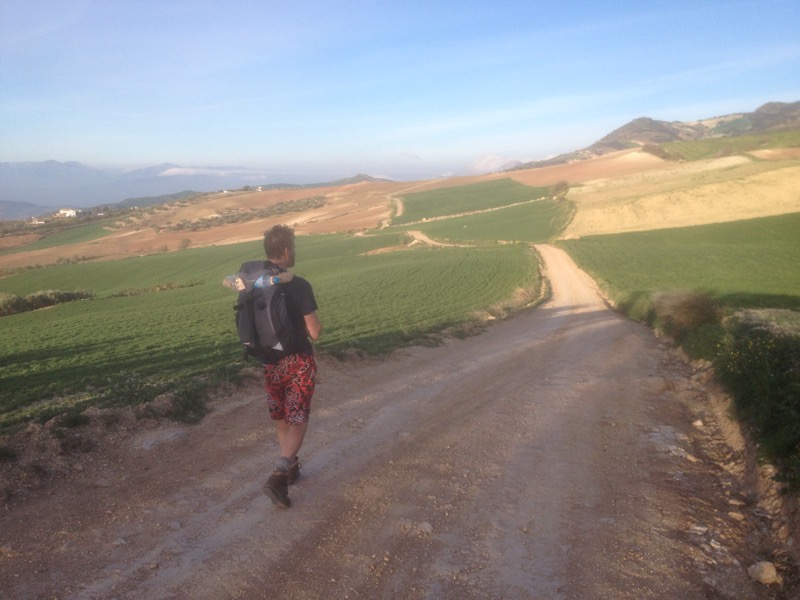
The landscape shifted, less rugged, more rounded then rolling. Olives giving way to grain.

Soon I was reminded of walking the Meseta on the Camino Frances , miles and miles of open skies and limitless horizons of shelter less , hedgeless grain fields.

No one lives out there and the silence was broken only by the heavy buzz of insects rather than chainsaws and the engine of distant tractors fulfilling their endless tasks across the vast prairies.

Again the heat got too much and I had to rest up for an hour. I had thought of camping on route and leaving 10 or so I’m for theorning but the high empty country was not inviting so I carried onandon and with 35km done and twilight approaching, when a jeep pulled up alongside and offered a lift, I didn’t refuse.

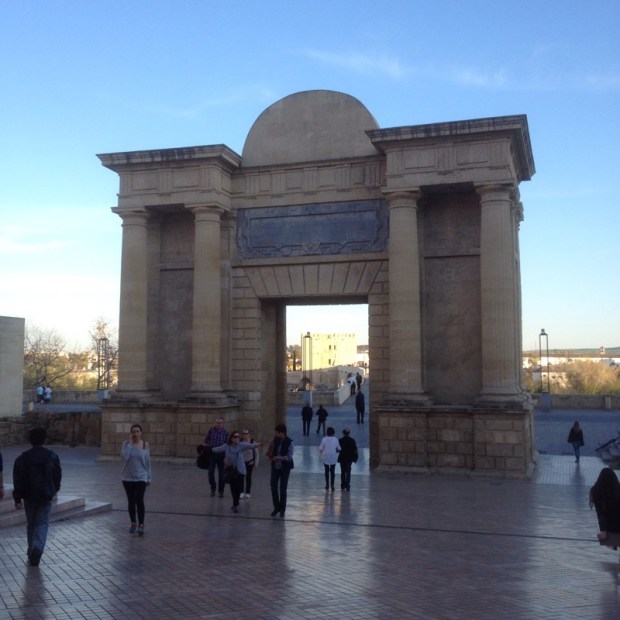
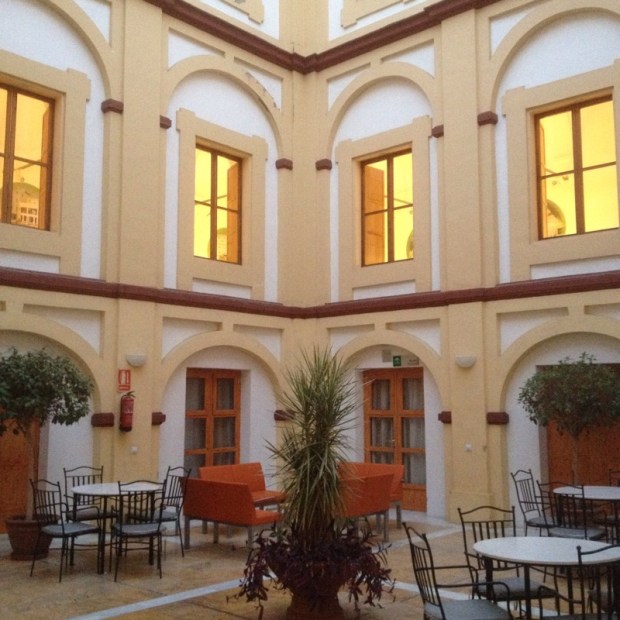
The albergue is an amazing facility right in the heart of the old city next to the cathedral, with courtyards,lounges, study areas and dining hall. 20€ for bed and breakfast in a twin bed room.

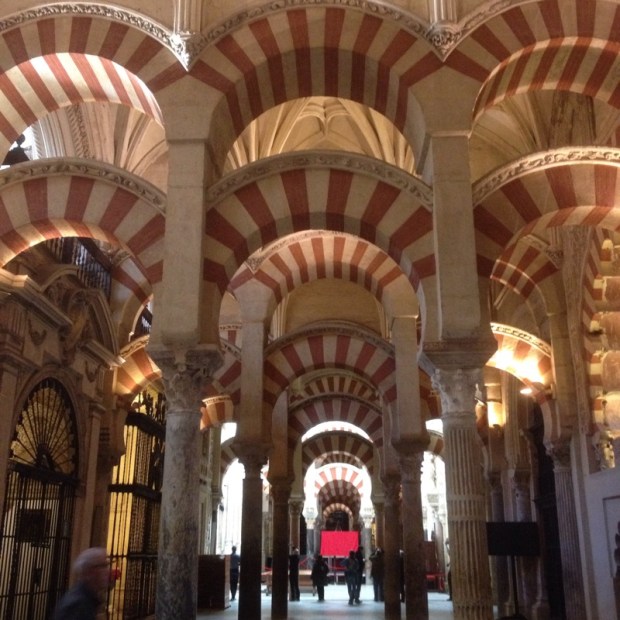
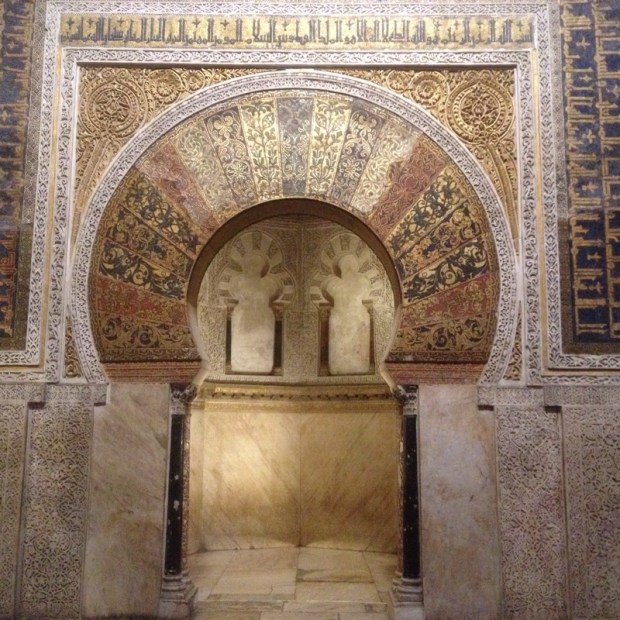
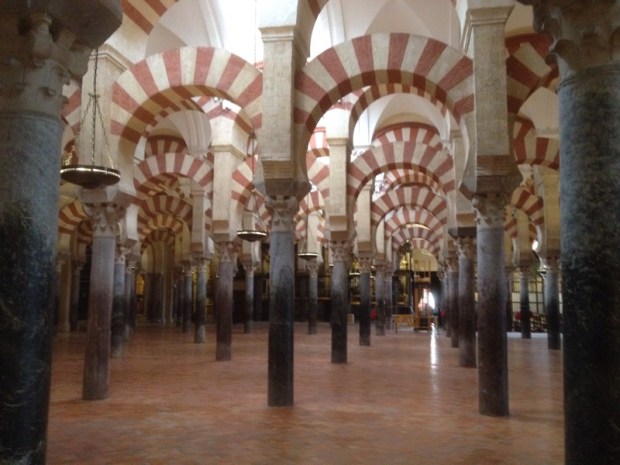
I was going to have a day off here but I feel like I’m in a hurry to get home at the moment ( probably not a good thing) so after a look around the awe inspiring Mezquita and  a blog posting I may head into the blistering heat again.

CAMINO MOZARABE. ANTEQUERA TO DONA MENCIA. 5/6/7th March

34km/26km/26km
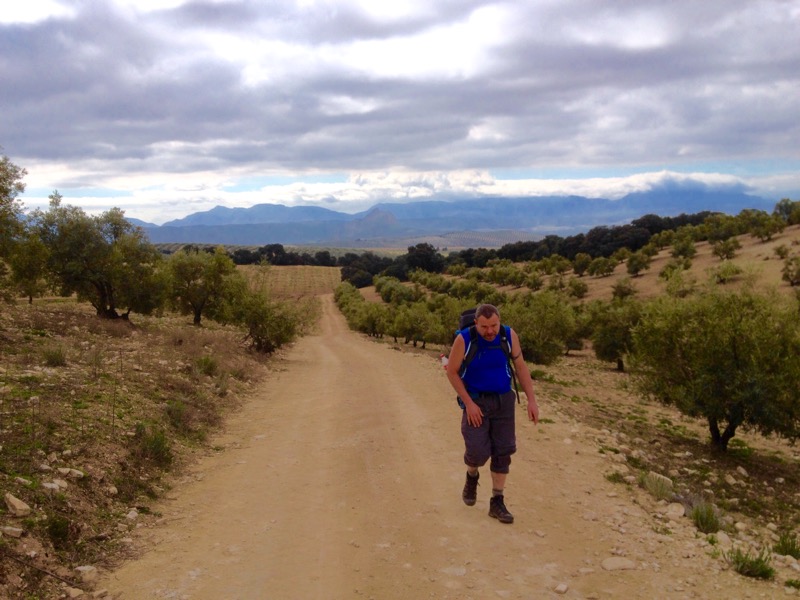
It’s a time of readjustment. To walking. To walking on my own. To being on my own. After a month of being with family and friends and a few days of hiking with a couple of buddies it’s back to just me and the trail and whatever random encounters are thrown my way.
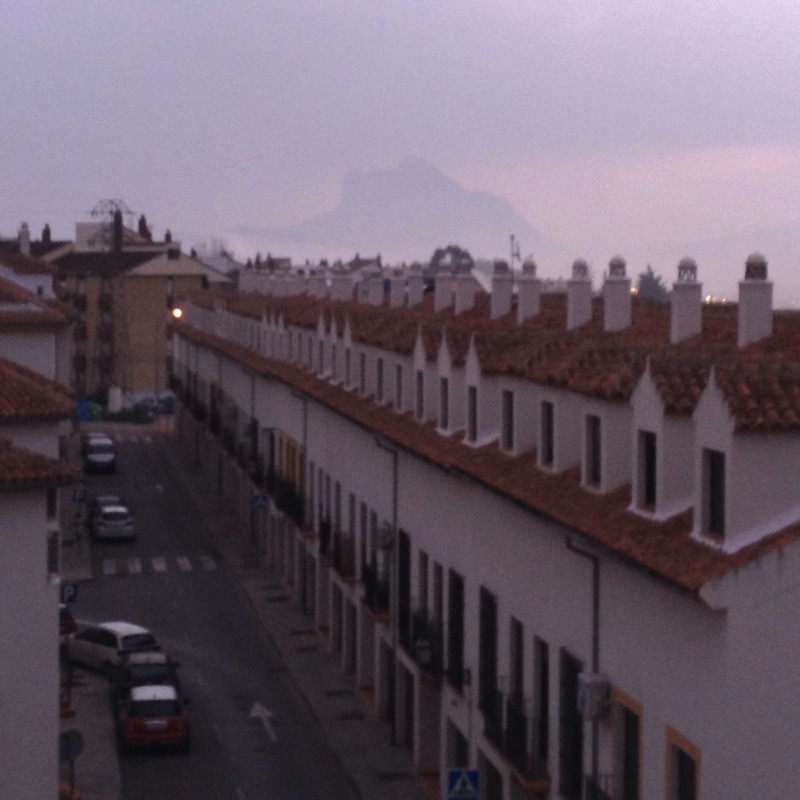
We left Antequera under a cloudy sky with a view back to the castle and forward to the face of Pena de Los Enamorados ( lovers rock).

2015/03/img_1324.jpg

2015/03/img_1323.jpg
The illicit coupling of Moor and Christrian ended tragically atop the rock when pursued lovers chose to leap to their death together rather than be separated. My friends chose to take the bus the next day.
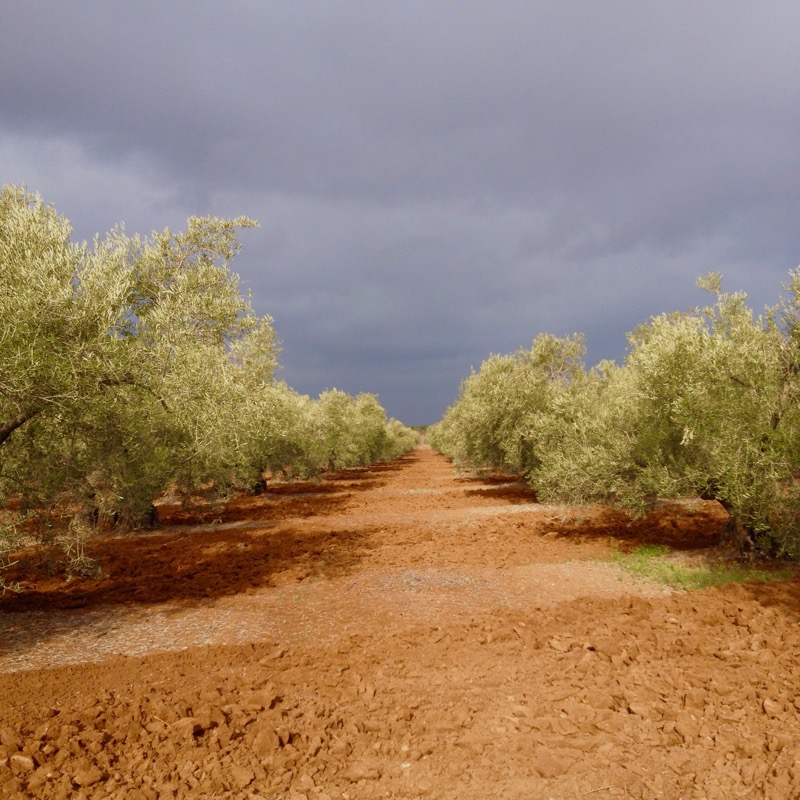
We were soon across the low lying vega on the outskirts of the city and after crossing under and over motorways were entering the olive growing area that still, a million trees later, dominates the landscape.

2015/03/img_1331.jpg

2015/03/img_1332.jpg
We did a fair bit of climbing, looking back to the Sierra we had crossed getting smaller and smaller. Through the single street of Cartaojal and on through miles of olives with the buzz of the pruning chainsaws drowning the birdsong which seems very rich considering the monoculture of the entire area. I guess the olive tree is a better biodiversity habitat than grassland. But the waste ponds by the olive oil factories don’t look good.

2015/03/img_1339.jpg

2015/03/img_1334.jpg
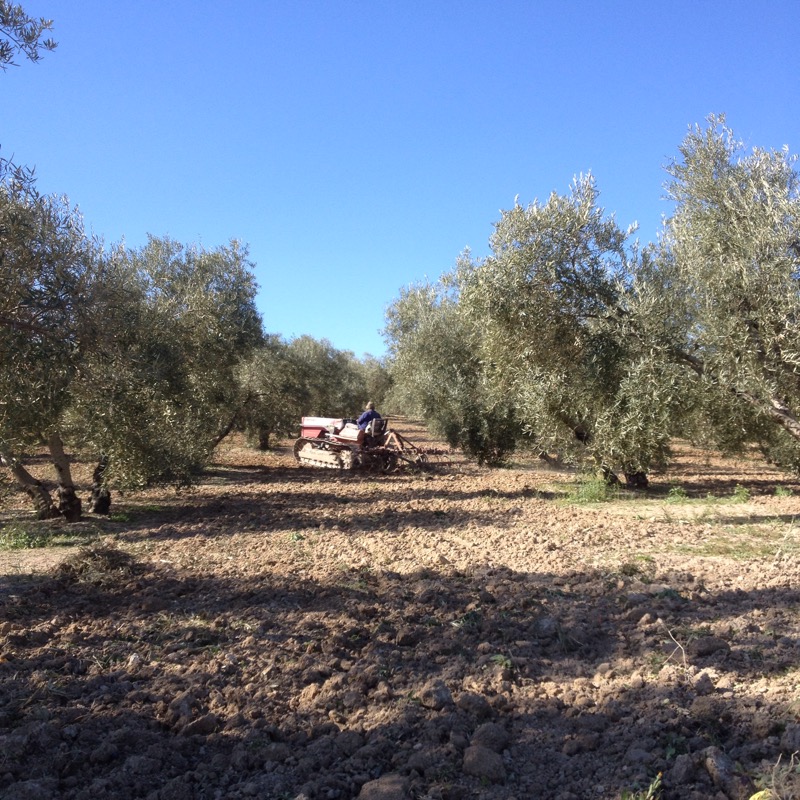
After 25km we passed through Villanueva de Algaidas and , with time and energy still available, decided to carry on past the nice looking Albergue another 10km to Cuevas Bajas. Down to the river and then up and up some more past the pruning, hoovering, fertilising and plowing farmers.

2015/03/img_1340.jpg

2015/03/img_1342.jpg

2015/03/img_1345.jpg
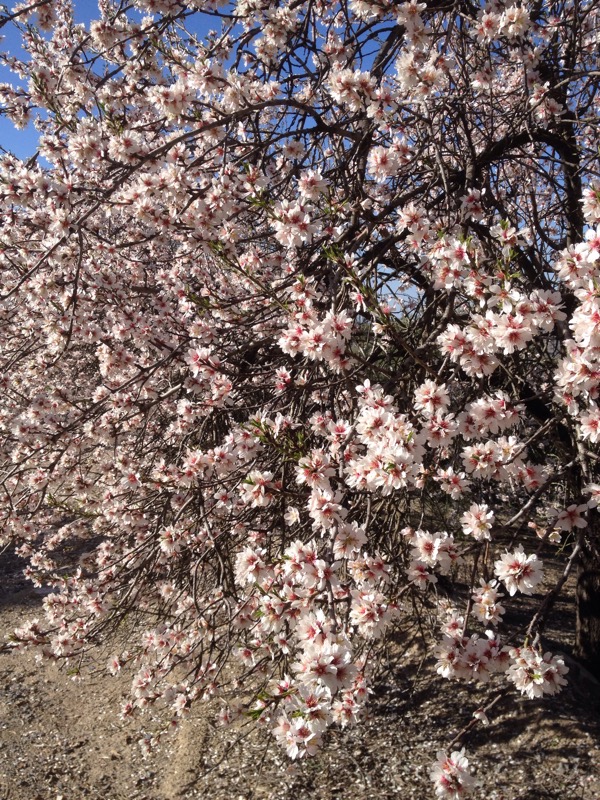
Eventually we crested the ridge at an ancient ruined finca with a beautiful old era from the days when grain was grown here and at last started to descend past almonds in full glory to the old bandit hang out of Cedron, where it looked like they were hoping a bit of restoration would bring in some tourists.

2015/03/img_1347.jpg

2015/03/img_1348.jpg

2015/03/img_1350.jpg
On down into Cuevas Bajas where we found a couple from Belgium already settled in the smart new 6 bed Albergue.

2015/03/img_1352.jpg
We were later joined by a Spanish man who was clocking 50 or 60 km a day and later still by another couple of Spanish men who had to try and sleep on the small sofas.
Blue sky had returned and the next couple of days were scorchio. The route went along the vega of the river Gentil to start before climbing up through more olives to Encinas Reales where Ivor Bundle left us and Ali Blabla decided to go the extra mile , or 20 km, to Lucena.
This route led us even deeper into olive country through the valley of the Anzur river, our first real flowing water for days.

2015/03/img_1353.jpg

2015/03/img_1356.jpg

2015/03/img_1357.jpg
Vast areas seemed to belong to single vast fincas and others areas were obviously abandoned. The soils changed colour from white to brown to red but the crop remained the same

2015/03/img_1361-0.jpg

2015/03/img_1358-0.jpg
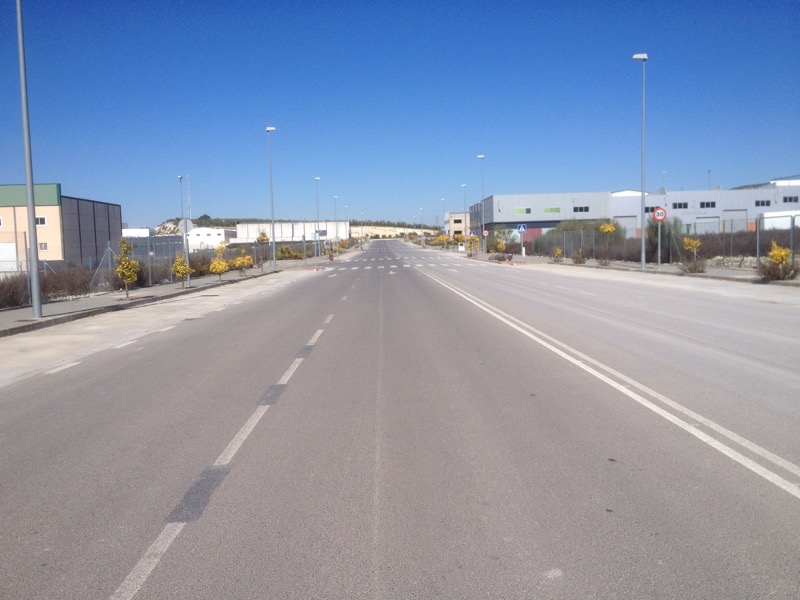
Lucena is quite a big city and we were led into it through a large and empty industrial estate but eventually got to the centre where Ali got the bus and I found a room in time to witness some fiesta drumming.

2015/03/img_1363-0.jpg

2015/03/img_1362-0.jpg
Past the church of Santiago in the morning

2015/03/img_1368.jpg
And onto the Via Verde La Subbetica, the old olive train track closed in 1985 and now a cycle and walking route which makes for an easy Camino trail for 26 km to Dona Mencia.

2015/03/img_1373.jpg

2015/03/img_1372.jpg

2015/03/img_1369.jpg

2015/03/img_1375.jpg
The route, although still through olive country was relived by the fact that it adjoined the Subbetica Natural Park, another of Spain’s many wild areas virtually unknown to tourists.

2015/03/img_1374.jpg
And so I found my way to a double room in a restaurant/hostel for 10€ in a town cranking up for a big do tonight. The plaza next to my hostel is lined with seating the stage is being built the bars are all ready for business. I guess it would be rude not to join them.

CAMINO MOZARABE Malaga to Antequera 2/3/4 March

On the trail again and the going has been hard.
Not the route itself ,taking a couple of days to get from the coast up through the hills to an altitude of 590mt at Villanueva de la Concepcion followed by an ascent to a pass at 900mt through El Torcal and down to Antequera at 570mt.
Not much to complain about in that but although the mind has been willing the flesh has been weak.
A very extended 60th birthday party resulted in a weakened immune system, allowing a nasty dose of man flu to hit on the first day out.
I’m walking with two friends from Ireland and two of us were struck with the hot and cold fever, coughs and sweats.
We didn’t get going from the church of Santiago in Malaga till about 12.30

2015/03/img_1280.jpg
So pushed up through the suburbs in the noonday heat, stopping at Junta de Los Caminos after 11km to light some candles for the three peregrino amigos at the wayside shrine and have a late lunch.
It was another 12.5km to our beds so we push d on with h an ETA of 6.30. Half an hour later we finally got off Tarmac and ran into problems with bad signage leading us astray and a detour of a few kms as the moon rose and the sun set. With our destination finally insight we hurried/staggered on to the final hurdle- a steep descent followed by an ever steeper ascent up through the winding narrow passageways of a the towns, stopping every now and again to ask directions to the albergue (always further always up).
We were very lucky when, at about 8pm, we came upon it there was a member of the civil protection outside.
They look after the albergue for pilgrims there and he was able to give us keys and show us the set up.
A shower food and bed quickly followed, after a 26km first day.

2015/03/img_1283.jpg
Next morning we were out by nine and lost by ten. Somehow we missed a turn on the track, but we realised quite quickly and could see on the map how to get back on track a little while later.
Beautiful weather again-blue Sky and sun (hot- should have started earlier) and lovely scenery with innumerable ranges of hills fading into the distance and the trail winding gently through the surprisingly empty countryside of grain fields and almond and olive groves, dotted with vast abandoned fincas.

2015/03/img_1296.jpg

2015/03/img_1284.jpg
We could see our destination, Villanueva de la Concepcion long before we got there, descending to cross the river Campanillas on stepping stones and taking dirt roads that had recently been very muddy up and around the low hills

2015/03/img_1286.jpg

2015/03/img_1288.jpg
before the final exhausting climb up to the village where the my manflu wasted body collapsed into the albergue bed on arrival, temporarily revived for a dinner out, and shivered , coughed and sweated through another long night.
We had been sharing the albergues with a Swiss women who had done a few Caminos with her adapted shopping bag trolley, loading it to the handlebars with bags of kit and dragging it behind her on a network of straps. She’s had to tackle some rough ground with it but overall it seems to work for her.
Arriving in Antequera she announced she wouldn’t stay at the same albergue as us if there was only one dormitory as she didn’t want to put up with our coughing, wheezing and snoring anymore.
She’s heading for Merida, 3 weeks into my trail so I guess she’ll be avoiding me for a while yet.
I had woken with a clearer head and was able to properly enjoy the days walk for the first time, feeling a bit of energy return.

2015/03/img_1290.jpgr
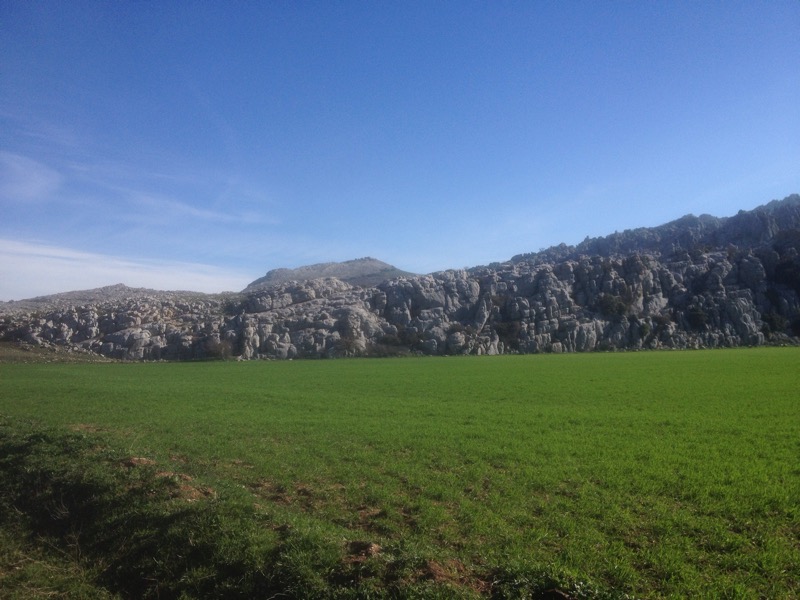
We’d set off in a fine pink sunrise, heading towards the cliffs of El Torcal, the limestone peaks and pinnacles glowing in the light.

2015/03/img_1293.jpg
Blankets of cloud were spread over the mountains here and there and the air was cool and clear, still scented by almond blossom. The big hedge less fields reached far up into the Sierra del Torcal

2015/03/img_1298.jpg

2015/03/img_1305.jpg
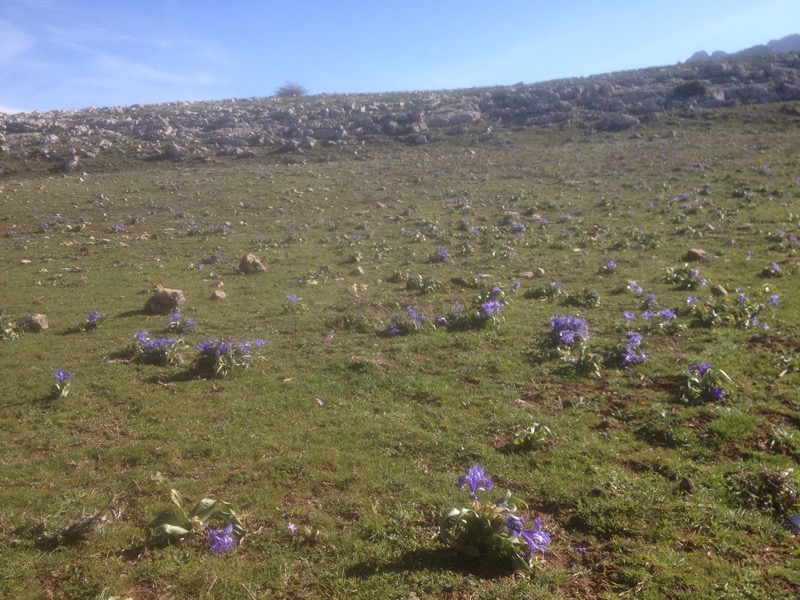
And at the top, in a karst landscape of jumbled rocks, cleared ultragreen fields and a sea of wild flowers, like a MegaBurren, we had our breakfast break and marvelled.

2015/03/img_1301.jpg

2015/03/img_1309.jpg

2015/03/img_1306.jpg
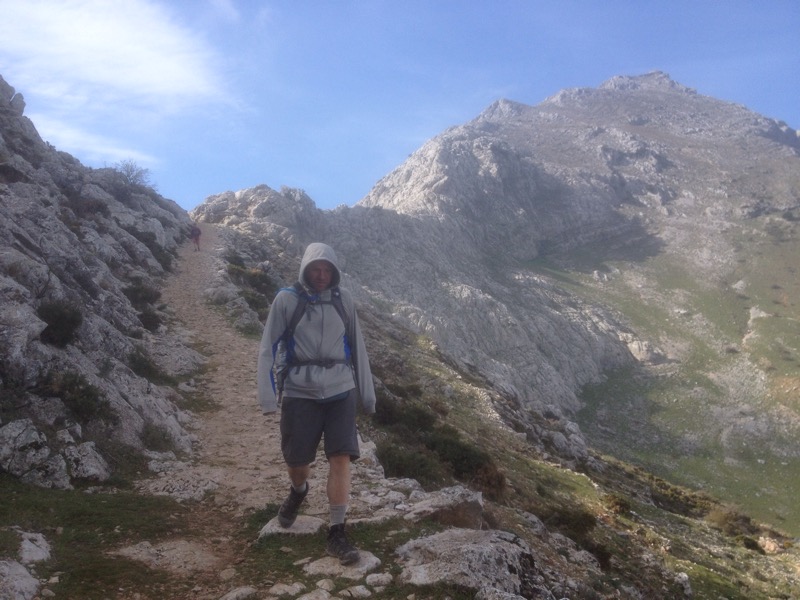
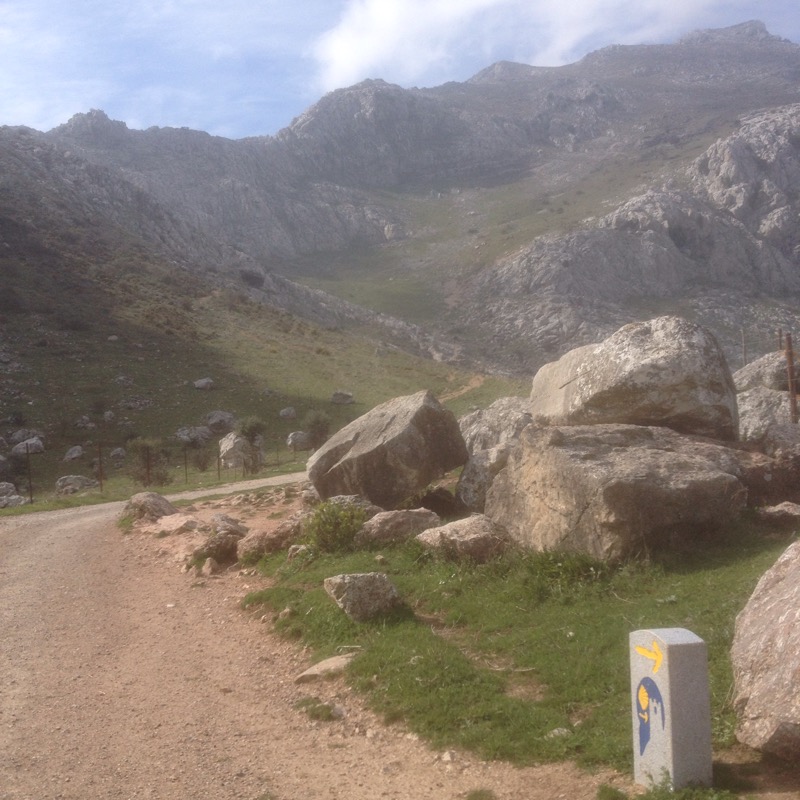
A few meters further and we were through the Puerto de la Escaleruela and on a switchback stone path down to the dusty cattle roads leading into Antequera.

2015/03/img_1313.jpg

2015/03/img_1315.jpg
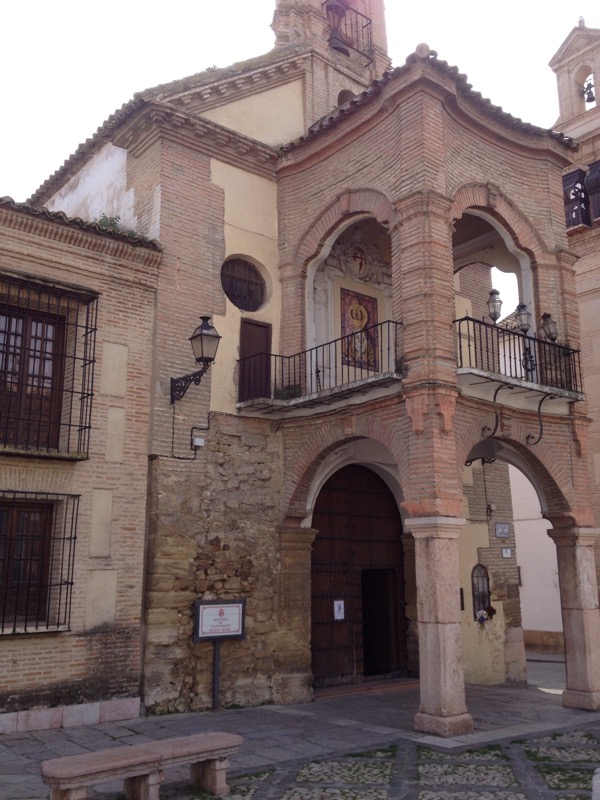
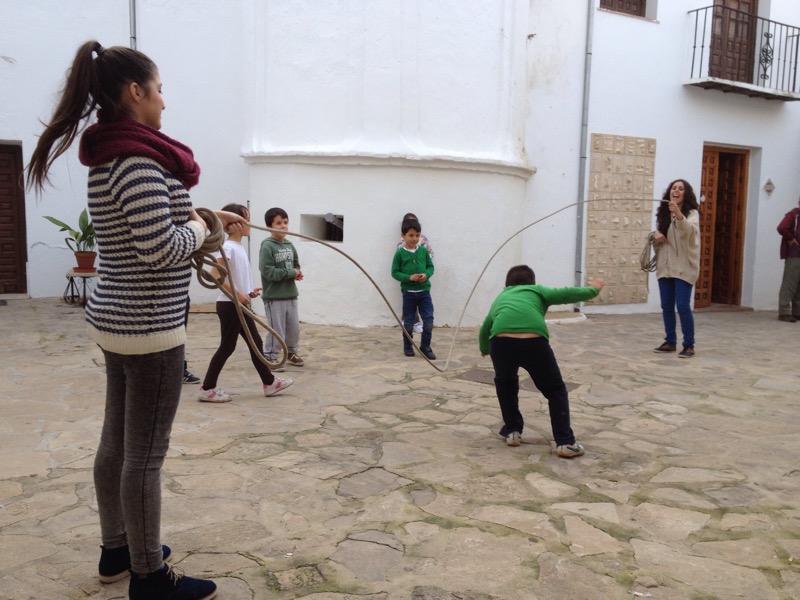
Down into the historic centre of this city in the very heart of Andalusia, to our albergue in the church of Santiago where our last fluless man had to go to a clinic to get his infected swollen finger sorted and the church youth group did some serious skipping in our little plaza.

2015/03/img_1319.jpg

2015/03/img_1322.jpg

CAMINO SANABRES: A quieter pilgrim way

With all the media attention on the Camino Frances, the main pilgrim route to Santiago across Northern Spain, in the last 5 years or so,it has become a victim of it’s own success .

In the summer months especially it has become a bit of a too well worn path with thousands of pilgrims competing for beds in the alburgues and remote landscapes decorated with a string of  rucksacks trudging towards the horizon.

Having walked the Frances 10 years ago and wanting to return via a less crowded route we chose a branch of the Via de la Plata, the silver way, that comes up from Seville . 40kms north of Zamora, you have a choice to either carry on to Astorga to join the main trail or veer west along what becomes the South-Eastern Way.

DSCN2233

Also known as the Camino Sanabres it is the longest Galician leg and from where we joined it at Puebla de Sanabria it’s 250 kms to Santiago.

It’s a handy route for those with a couple of weeks to explore the Way and reach Santiago with more than enough kms under your feet to qualify for a  Compostela at journeys end. In fact, for those in a hurry, the required 100kms are achievable from Ourense, a 30 min high speed train journey after flying into Santiago, followed by a 5 day walk back.

For those with more time or energy on their hands (and legs and feet) there are buses and trains travelling east from Ourense to different stops along the route.

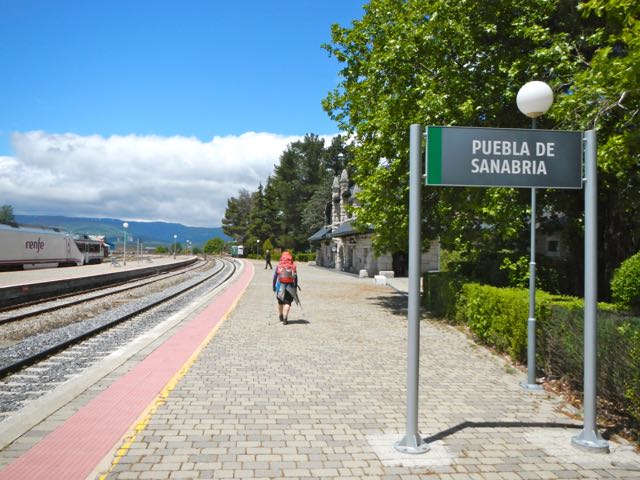
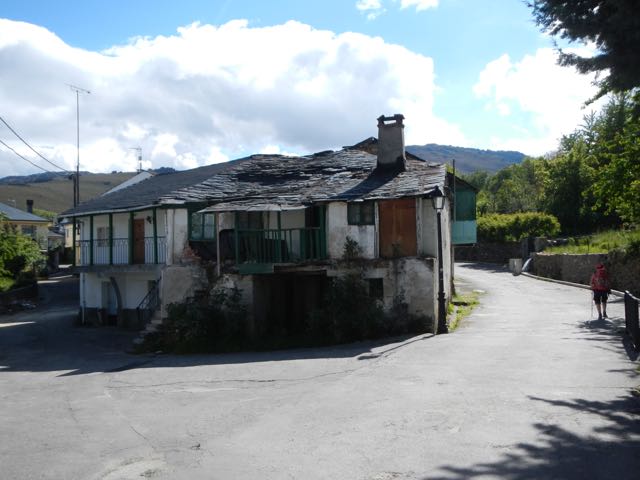
DSCN2045Arriving at Puebla de Sanabria we discovered pretty quickly that the high speed train track being built between Galicia and Madrid was going to be crisscrossing our Camino for awhile , causing a few diversions here and there, but soon we were passing through the first of many beautiful and ancient Galician villages, Terrosa DSCN2056 where an old fella, spying us, rushed into his house to retrieve many ledgers for us to sign and stamps for him to print into our Credential or pilgrim passport.

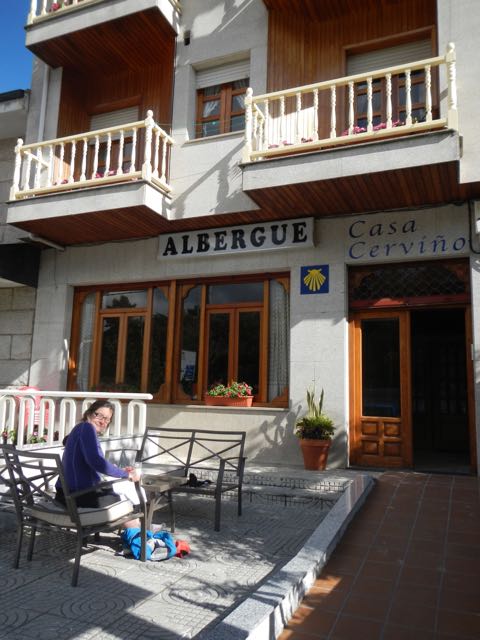
A few kms later we were booking into a privately run albergue in Requejo  DSCN2058 where we met a couple  we were to spend much of the next 10 days with when we had dinner at the resturante up the road offering 3 course pilgrim menu and lashings of red wine for €7.

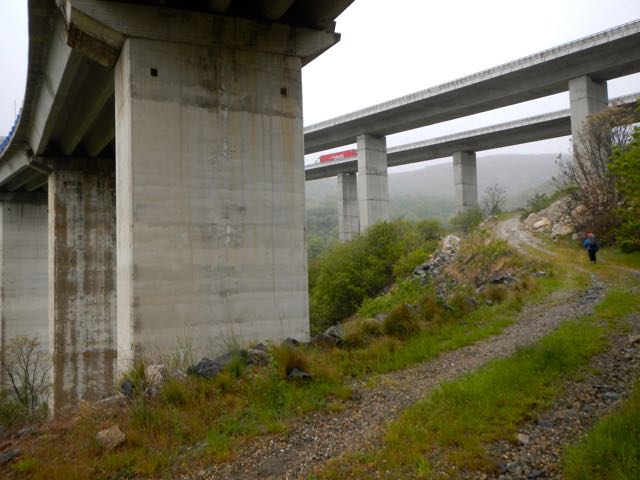
Next day we climbed and climbed into the mist on ageless tracks passing under vast new roadways DSCN2060to reach the highest point on the Camino at 1320mts. We continued through the soft rain over the uplands and another pass into Galicia without much of a view. As we descended the weather improved, the construction and traffic noises faded and we felt we were on the Way.

DSCN2074

An overnight in Vilavella on the softest most formless mattress we’ve ever been trapped DSCN2066 in was followed by a short but beautiful 12.5km stretch on ancient original stone paved camino.

DSCN2076

We crossed sparse moors with gritstone outcrops looking a little like Cornwall or Hampi in India.

DSCN2077

A lovely old trail with beautiful wild flowers, blue sky and sunshine led us to a very well appointed municipal albergue in A.Gudina.

Arriving early we had the place to ourselves but as the day went on it filled with fellow pilgrims which resulted in a night of snoring and wheezing, encouraging us out pre sunrise next morning DSCN2097

for a 35km stretch over the high ground with views far and wide of rounded green hills and a many fingered lake.

DSCN2103

In the afternoon we were revived by coffee and cake in the old ramshackle village of As Eiras where the local Camino Assoc had a little volunteer run cafe in one of the ancient stone buildings.

DSCN2121

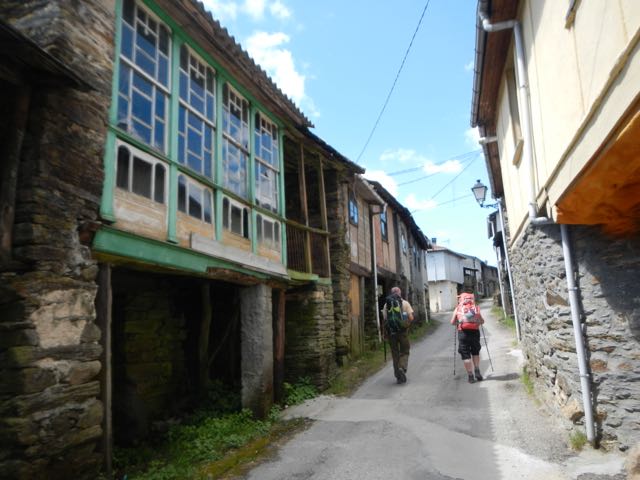
The architecture in these deeply rural Galician villages is one of the most attractive features of the Camino and has survived almost unchanged for hundreds of years.

DSCN2113  DSCN2118

DSCN2165

Surrounded by well managed coppiced and pollarded forests of chestnut, walnut and oak, rich agricultural land and colourful and productive flower and vegetable gardens, the people may have been poor and isolated but were obviously rich in the fruits of the earth.

DSCN2245    DSCN2139 DSCN2220

After our weary bodies had rested overnight in a stylish new municipal albergue in Laza it was another long haul uphill through forest

DSCN2144

to reach Albergueria, an ancient hamlet with a bar and hostel adorned with thousands of scallop shells signed by pilgrims.

DSCN2149  DSCN2128  DSCN2147

Being a sunday we were joined on the Way by more walkers with day packs enjoying the tranquil woodland paths and highland trails.

DSCN2155  DSCN2137  DSCN2160

An overnight in another new hostal in Vilar do Barrio ( all municipal albergues in Galicia cost just €6) and another bargain and wine soaked dinner at the plain and simple restaurant opposite gave us the energy the next day for a 36km hike down more medieval pathways to Ourense.

DSCN2192    DSCN2229

With only a little over 100kms to go we decided to have a day off in this large town and enjoy the free public hot spring pools with which it is blessed. One of the largest supplies of geothermal water in Europe have been used to create half a dozen sets of stone lined pools, complete with parks and gardens along the banks of the river Mino which winds through the town. Open all and everyday they are a great social magnet with many old folk bathing and chatting each morning for hours on end.

DSCN2043

A day of rejuvenating soaks in different pools of ranging temperatures had us ready for a long, steep uphill stretch for 4kms followed by a section on old cobbled and sandy trails through ancient oak and chestnut woodland, over gorsey moorland and past well tended gardens of vegetables.

DSCN2195                                       DSCN2239

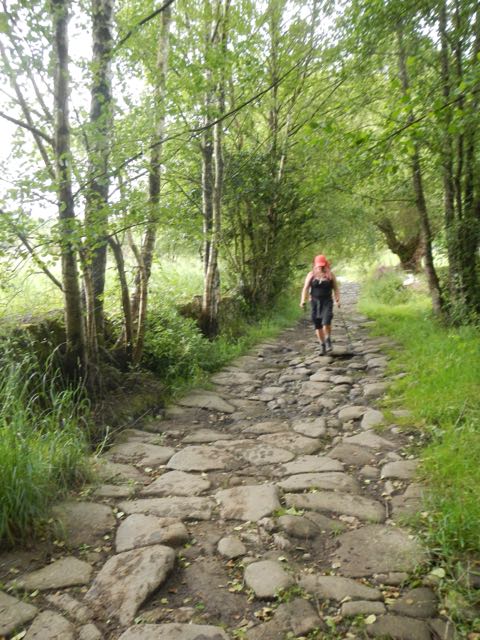
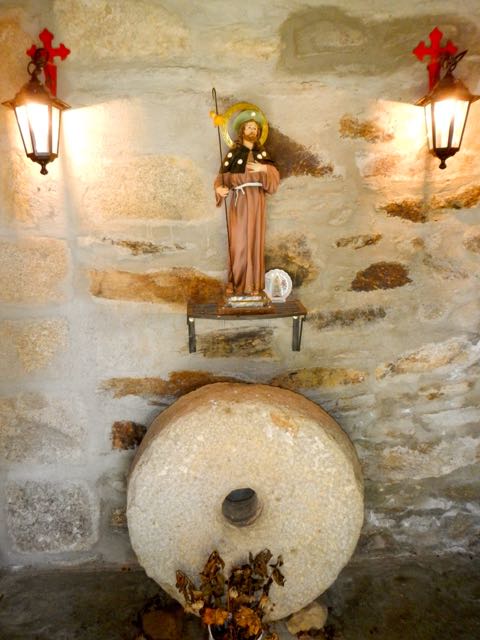
The stones beneath our feet resinated with the lingering energy of countless  previous pilgrims over the thousand years before we passed by and the religious purpose  of the Way was often brought home by the shrines and statues that lined our path.

DSCN2051DSCN2198

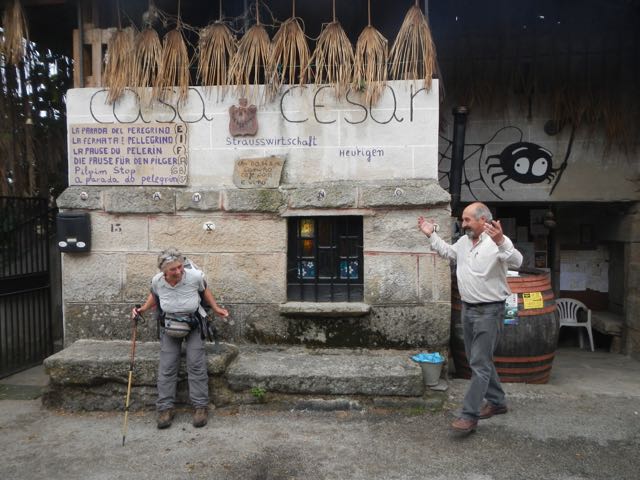
We came upon Casa Caesar where a friendly and generous pilgrim guardian welcomed us into his home and plied us with all manner of homemade food and drink, showed us a vast collection of momentos and photos and regaled us with stories and anecdotes we couldn’t understand. You don’t get those experiences on most hiking routes.

DSCN2182

Fortified, we carried on to Cea, famous for it’s wood fired bread ovens, another beautiful and ancient stone village.The albuergue was a skilful blending of antique and modern looked after by a hospitalero sporting a fine moustache and Galician beret.

DSCN2199

DSCN2206                           DSCN2200

The next couple of days flew by as our bodies, by now “track fit”, walked on automatic. Perfect walking weather. Hot and sunny when we were in the woods and cloudy with a cooling breeze when crossing the open high ground.

DSCN2216

The trail was the by now familiar mix of little fields, forest, hamlets, gardens, paths, road, tracks, a little more built up now we were approaching Santiago. In Toboada we came upon a medieval church which was full of interesting symbolic art.

DSCN2235     DSCN2237

The weather changed on the afternoon of the second day and we got caught in a downpour on the approach to Banderos. Luckily the strangely designed modern albergue there had heaters blasting hot air into the dormitory and we were soon dry again.

DSCN2242     DSCN2243

Another day over farmland and through forest followed by a final climb of 200mts got us to our last albergue of the trip. We speculated on weather the Galician government gave the design of these to keen young trainees as this one at Outeiro was another modernist block.

DSCN2261


Our final leg into Santiago was only 16kms but we were on the trail early. The hills were wreathed in mist and the trees all dripped with recent rain as we made our way down to the roads leading towards the suburbs. The rural feel and mixed farmland lasted right up to the city gates which we entered from the south east and avoided the crowds of pilgrims coming from the Camino Frances until, suddenly we were in the cathedral square and it was time to celebrate our achievement and part company with our fellow pilgrims.

Santiago de Compostella at last!

Santiago de Compostella at last!


A WALK TO THE PICOS

SAM_0406

A WALK TO THE PICOS

Whilst kissing a piece of the cross of Jesus in the Chapel of the 5th century monasterio of Santo Toribio de Liebana it struck me that it was a satisfying if unusual ending to our week long trek over the Cordillera Cantabrica.

The Monastery was tucked into the folds of the wooded foothills of the Picos de Europa in Northern Spain and this sacred relic, encased in a silver crucifix has drawn pilgrims for hundreds of years and made the site, with its promise of absolving a life time of sin, as much as must see destination for the devout as Rome, Jerusalem and Santiago de Compostela.

We had spent 5 days hiking roughly 100kms of the waymarked gr 71 across the Parque Natural Saja-Besaya and Spain’s largest National hunting reserve, along ancient stone paved lanes between delightful villages, foresters tracks through the oak and beech forests and drovers roads high on the grassy mountain slopes accompanied by the symphony of cow and horse bells.
SAM_0479


Headed East to West the goal of the Picos grew larger and more majestic, drawing us onwards through a landscape still inhabited by wolves, mountain cats, brown bears and wild boar, though the only ones we saw were in the old photos hanging in most bars of hunters proudly displaying their trophies.

SAM_0507

The gr 71 is neatly split into day sections of 20 kms usually involving an ascent and descent between valley bottom hamlets where accommodation and food is available, but don’t expect shops, night clubs or english speaking.

SAM_0485

This is deeply rural Spain and doesn’t see too many tourists – we didn’t come across any other walkers on the trail, having the tranquil forests and vast open vistas of the high Sierras to ourselves.

After flying into Santander we took the train for an hours journey winding up the Besaya river valley to Barcena de Pie de ConchaSAM_0412and the start of the gr 71. As luck would have it not long after we checked in to Casa Ferrero (+34 942 841303), the loud blasts of firecrackers and bangers signaled the beginning of a night’s fiesta and we followed the locals down to the riverside showgrounds where an articulated lorry had been converted into a stage upon which a troupe of Cantabrian singers in traditional dress were shaking their tambourines and giving lusty voice to folk songs whilst the tarpaulin covered bar dished out wine, beer and sidra, the local cider poured from a height to fizz it up and orujo, the very pokey liquor made from grape skins and flavoured with a variety of fruit.
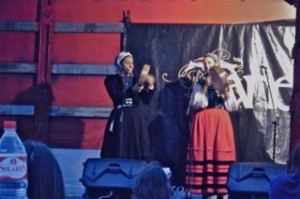
SAM_0404

Returning to the small hotel our hostess served us dinner. Struggling with her English dictionary she offered us pumpkin landing which turned out to be stuffed courgette.

Not withstanding occasional linguistic stabs in the dark, the meals we ate every evening after an appetite raising days trek were always delicious. The epitome of hearty mountain food, cocido or fabada was one of the favourite dishes. A thick steaming stew with cabbage, white beans or chickpeas and a vegetarians nightmare of porkmeat, ham, chorizo, black pudding, beef, sometimes boar or deer and the occasional ear, snout or trotter – it certainly filled the gap. Also on the menu sometimes was Carne de Caballo, or horse meat, which explained the numbers of stout and stocky hispano/Breton horses grazing the high commonage alongside the Tudanca cow SAM_0421– a breed famous for producing a rare and succulent steak. With delicious soups and seafood on offer for starters and local cheesses fruits and cakes for pudding, all washed down with a bottle of fine house red, it would be curmudgeonly to haggle over the 12 euro bill.

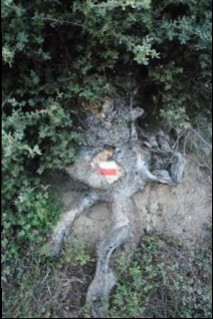
Setting off on our first morning, after tostado e café, we came across an information board mapping out the stage from Barcena di Pie de Concha to Barcena Major, a distance of just over 20 kms.  At the start of each days hike we could check the boards for the route, the ascents and descents and rough timescale for completion, although the distances given didn’t always seem accurate. The red and white stripes of the gr walkways daubed on walls, trees and rocks were fairly frequent over most of the walk, which is covered by 1:50,000 map nos: 81, 82, 83 published by the Centro Nacional di Informacion geografica ( HYPERLINK “http://www.cnig.es” http://www.cnig.es)
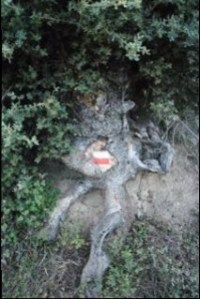
The long narrow street leading out of the village was lined by thick steel rails and posts sunk into purpose built holes in the roadside, which were being dismantled by a team of workmen. We had evidently missed a bull run the day before.

One of Cantabrias’s most well preserved Roman built roads led off towards Somaconcha 5 km to the South but we followed the Red and white stripe markers, leading us under the new A67 linking Santander with Palencia and Madrid. The modern Spanish highways are as awe inspiring as the 2,000 year old stone ones of the Romans, perched on towering concrete pillars to soar high above the woods and valleys, though unlikely to last as long.
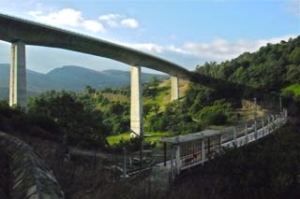
SAM_0414

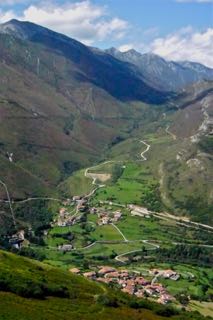
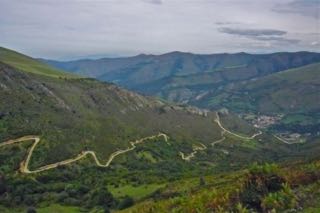
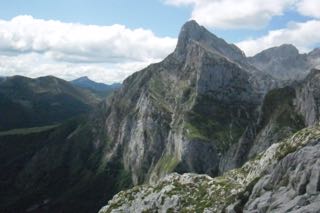
Through Pujayo, where San Lorenzo’s feast day on the 10th August is marked by men trying to climb a greased wooden pole, and up and up the zigzag dirt track for 5 km to the ridge, below Pico do Obios (1,222m). This is where you get a good view of the landscape the gr71 takes you through. All around, receding into the distance are the rounded folds of thickly forested mountains with their grassy tops circled by golden eagles and griffon vultures. In the valley bottoms far below clearings in the woods shelter stone and wooden barns and farmhouses surrounded by small fields and gardens .SAM_0479

After crossing the Sierra de Barcena spotted with purple heather and yellow gorse, we needed to keep our wits about us to follow a badly waymarked section across the flank of Pico do Guarda and then down a wet and muddy track through a beech and oak forest to Barcena Major, reputedly the oldest village in Cantabria.SAM_0423
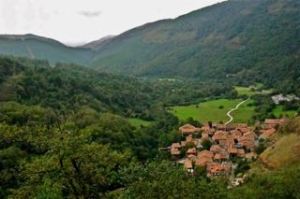
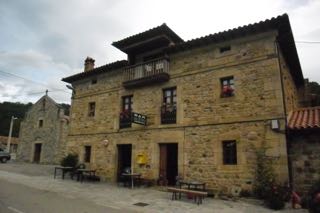
Cobbled alleyways and Plaza’s are line with well preserved and renovated buildings. Their cut stone and timber framed balconies festooned with a kaleidoscope of blooms. Unchanged for centuries it was declared an historic artistic site in 1979 and grants helped to transform the isolated village by improving the access road – although the residents may drive into it. We stayed at the charming Posada Reserva Verde (+34 942 741013)SAM_0425 and because of the visiting tourists there are a number of places to eat and shops selling produce typical of the area.
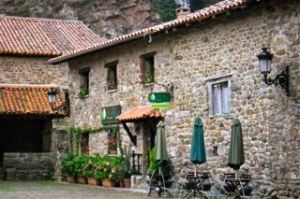
The next day’s stage meandered through the undulating countryside and sun dappled forests surrounding tiny hamlets of Colsa and Los TojosSAM_0434 reaching Saja after about 13 kms, allowing time to cool off in the pools of Rio Argozo before checking into our farmhouse accommodation (Casa de Labranza Sajos +34 942 741223). The crowing of the cockerels, barking of the dogs and mooing of the cows in the farmyard below got us up and out early the next day for a pleasant slog up the foresters track through the towering beech woods of the Parque Natural. These trees grew well on the slopes here to an altitude of about 1,000m before giving way to birch, mountain ash and holly and finally opening up on to high grazing land with views west to the Sierra de Pena Sagra at over 2,000m the highest we will pass on the gr71.
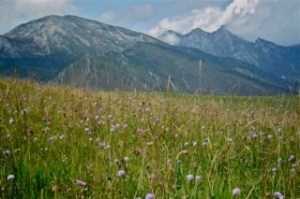
SAM_0465

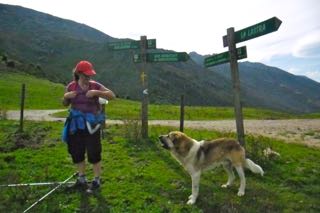
Following the track past hay meadows full of wild flowers we could see below us the red tiled roofs of the barns and farmhouses scattered around the Sobayo valley and soon the cliffs above the dammed gorge of the Rio Nansa. SAM_0467 A knee jarringly steep descent brought us to Tudanca 17 km from Saja another historic/artistic village, with a flurry of grant aided building actively restoring the ancient houses. Not having booked a place to stay we decided to head on to Pejanda, another 16 km, which involved another 660m ascent to Collado do Joza la Abellou, (where we shared our lunch with a large mountain dogSAM_0470 left on duty to guard (from Wolves?) and corral the horses and cows before doubling back on ourselves to follow an ancient stone paved path along the contours of El Potro, high above the Embalse, or reservoir, de la Colilla SAM_0471. As we walked down through the heather, broom and bracken and back into boulder strewn oak woods the path was blocked by a landslide and we had to retrace our steps a little way before finding another waymarked path over a gully to meet up with our original route.

Another 5 km of gentle descent on a forest track through the oaks surrounded by the diggings of wild boar, brought us down to a tarmac road and 1 km later the very welcome sign of Pejanda and Casa Molleda (+34 942 729008) SAM_0475 our stop for the night. A couple of well earned cerveza in the bar hung with all manner of handmade wooden implements and instruments SAM_0478 and a fortifying meal in the restaurant ensured a good nights sleep.

The information board outside the Casa indicated a 20 km section the next day with an ascent from 850m to 1,450m at Collade de las Invernillas followed by about 5 km of roughly level ground along the southern flank of Pena Sagra before dropping back down to 850m at Cahecho. We had been joined by one of the routes of the pilgrimage to Santa Toribio as well as the PR (shorter then the multi day gr’s) and consequently our way was marked by a plethora of red and white stripes, yellow crosses and yellow and white stripes and a mysterious blue and white chevron.

Care needed to be taken to follow our route after about 3 km when the gr peeled off and up to the right quickly gaining altitude and views of the Sierra ridge above us and the many abandoned farmsteads below. This must have been tough country to farm in with isolation, wild animals and wild weather to contend with. We, on the other hand, had enjoyed benign September weather with no rain all week and as we headed through the pass or Collado and along a beautiful section of pathway, freshly cleared of Spanish broom by some industrious rangers, the sun shone brightly giving us an excuse to rest up a while beside a tiny stone building on a knoll looking Westwards towards the massive limestone bulk of the rugged Picos. SAM_0487

The gr71 route marked on the map we had seemed to have been effected by some new road building and we ended the days hike by approaching Cahecho along about 3 km of hard tarmac. The improved vehicle access has resulted in more renovated accommodation becoming available in the picturesque village with its viewpoint or mirador offering 360˚ views of the area. We stayed in Posada La Torcaz (+34 942 730501) where our friendly hostess, after pouring us a complimentary after dinner shot of oruja, proudly displayed a tourist poster featuring her home.

SAM_0507

A short 8 km stroll down through the ancient chestnut and oaks in the morning sunshine brought us, after 4 days of quiet solitude in the empty vastness of the Reserva Nacional, into the bustling honey pot town of Potes with its medieval quarter full of tourists and everything they might spend money on.

The gr71 continued 30km from here up into the Picos for two more day stages to Bejes and finally to Sotres, but as we had to catch the bus back to Santander from Potes we didn’t have enough time. We did, however, have time for a scenic bus ride 24km to Fuente Dé and the cable care 750m up the sheer face of El Butron. Taking only 3.5 minutes it was certainly the easiest and also the most spectacular ascent of the week with white knuckle, vertigo inducing views of the natural amphitheatre directly below.SAM_0516         SAM_0517        SAM_0546
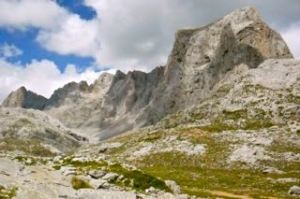
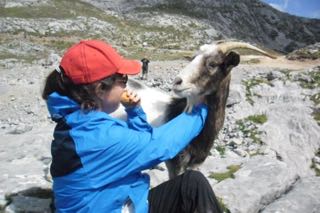
The cable care is operated by Cantur, a regional tourist body that also runs Aliva hotel, (where we were heading for the night, set in spectacular surroundings 1,666m up in the National Park. Stepping gratefully off the gently swaying cable car we avoided the souvenir shops and café and emerged into a stunning mountain scape of jagged white limestone peaks to the north and range after range of the Cordillera Cantrabica disappearing into haze to the South. Soaking up the magnificent view we had to fight off some very inquisitive mountain goats determined to eat our picnic. SAM_0520

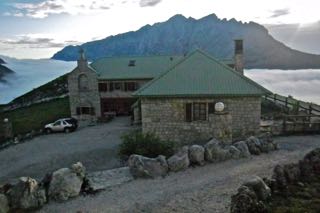
4 km of track following the pr24 led us through the pass of Horcadina de Covarrobres and past the Chalet Real (originally a Royal hunting lodge) to the green metal roofed buildings of Aliva where you can stay in hostel type rooms above the restaurant and bar or in private en suite rooms sleeping 2 or more in a separate building.

The lady who booked us in couldn’t have been more helpful, offering us guidebooks and maps from their library and telling us that as guests of the hotel we could get discount on the cable car and a free jeep ride back to it.

The Picos de Europa are very popular for adventure sports and the hotel caters for many groups from far and wide all Summer and is open at weekends and holidays in the Winter for those who like to play in the snow. The restaurant was certainly buzzing that evening and people looking for a table with a view can drive up from Espinama in a 4WD.

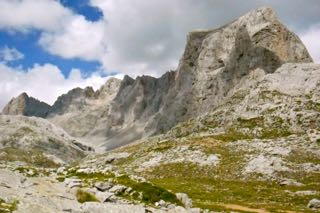
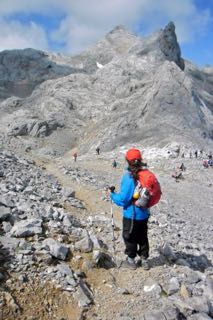
In the morning we were floating above a sea of cloud SAM_0531 and after availing of the Jeep ride back to the pass we walked for a couple of hours north west on the pr23, a hauntingly desolate but awe inspiring route SAM_0550 across the rugged limestone beneath towering cliffsSAM_0536 to the Collado Horcados Rojos at 2,345m. An easy to remember altitude with a memorable view of the fabled Naranjo de Bulnes, the Picos signature peak.SAM_0549
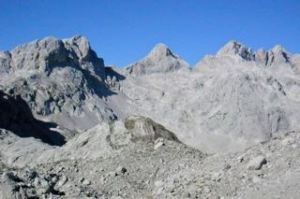
Returning to our hotel in Potes and a beer before dinner we realised we wouldn’t really complete our journey until we had walked the remaining 5 km of the pilgrimage route to the monasterio de Santo Toribio de Liebana.

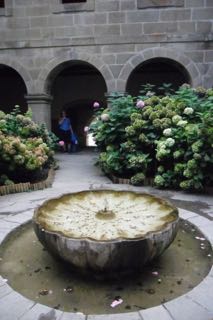
Arriving shortly before it closed for the night we were throwing some lucky irish coins in the cloister fountainSAM_0554when we heard sounds from the adjoining church. Following them, we barely had time to join the dozen people sitting in the pews before the priest called us up to kiss the cross. The timing,and the weeks walk, had been perfect.

A WALK IN THE PARQUE

DSC_0073

Treking in the Parque Nacional De Sierra Nevada, Spain’s highest mountain range, has many rewards and in the heat of summer one of the best is a swim in the Med an hour after hiking down from the 3500 mt peaks.
Floating in the cooling waters off a busy beach packed with holiday makers it seemed a parallel universe to the empty and wild landscape in which we had spent the last 3 days.
If you want to clamber around the top of Spain without crampons or skis you need to wait till June/ July for the snow to recede- in the Spring or Autumn a snowboarding trip followed by a swim in the sea is an even more surreal experience.
The highest peaks can be accessed either from the northern Granada side in Prado Llano, Euope’s most southerly ski resort or from the southern, Alpujarran side, walking up the old mule tracks that weave their way into the mountains from the white cubist style villages of Capileira and Trevelez. Such is the number of these tracks linking the cortijos, or farmsteads, which reach over 2000mts that there are a wealth of routes short or long to explore. In the higher ranges there are many guided hikes and horse treks or you can avail of a service where you can walk unencumbered while somebody brings up all your gear by horse, sets up camp, cooks your dinner and opens the champagne.

DSC_0014
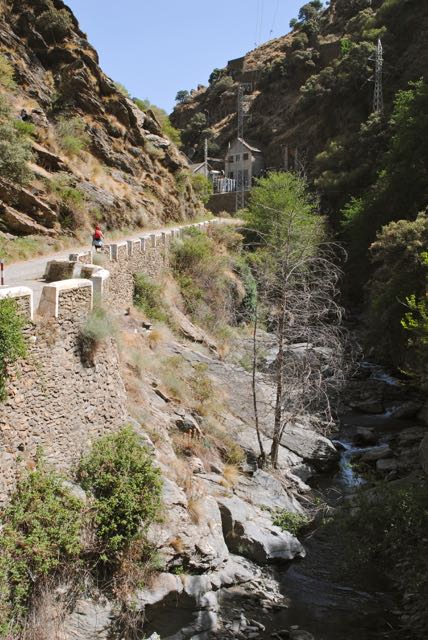
We had a less decadent itinerary when we set off from the hydropower station at La Cebadilla (1500mts) in the gorge of the Poqueira River a few kms north of Capileira. We had devised a roughly circular route from the Refugio Poqueira (2500mts) to take in the peaks of Mulhacen, ( 3479mts) the Iberian peninsula’s highest, and it’s near neighbor La Alcazaba (3364mts) the fortress, named for it’s formidable cliffs on three sides.
Due to the National Park status of 83000 hectares of the Sierra Nevada range, the area is highly protected and although camping is allowed with certain provisions you are required to notify the park authorities of your intentions. In practice however, if you behave sensibly and sensitively and camp or bivvy no more than one night in the same place, a blind eye is likely to be turned. These are serious mountains and as the D.O.E. leaflets on safety states-” Passing through the Sierra Nevada involves a high risk of accidents” and all the usual precautions should be followed.
DSC_0018

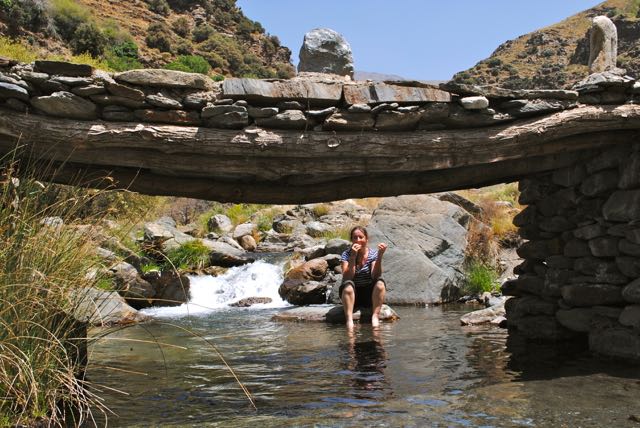
Everything was benign as we climbed the rugged track up the sides of the snow melt river gorge. We were grateful for the shade offered by the steep hillsides and groves of holm oak, chestnut, walnut and willow. At this relatively low altitude there was an abundance of wild roses, foxgloves and even bracken to remind us of home but here the warm air was full of a multitude of butterflies and the heady scent of thyme as we crushed it underfoot. The refugio came into view far above as we crisscrossed the river on simple bridges of wooden poles and flat stones, and above that the lower peak of Mulhacen looking deceptively close.
Although signed at only 5.7 kms from La Cebadilla the 1000mt ascent took us over 4 hours with time spent cooling our feet in the pools DSC_0027

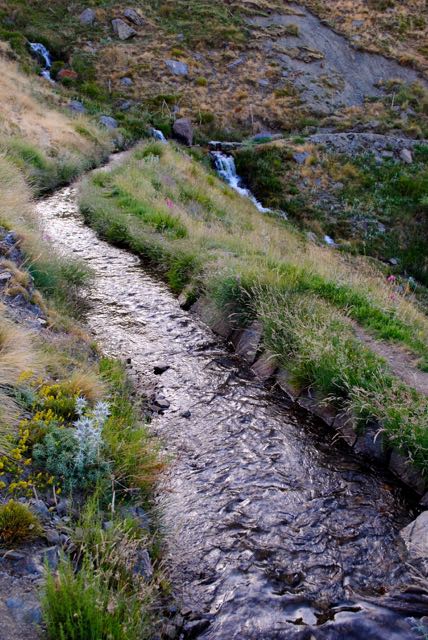
and imagining life in the abandoned farmhouses scattered around us with their simple flat roofed construction and perfectly circular threshing floors projecting from the steeply sloping hillsides.A tough gradient took us up to the still used Cortijo de Las Tomas at 2150mts and over two of the areas acequias, the awe inspiring irrigation canals originally built by the Moors that contour the mountains delivering life giving water to hundreds of farmsteads .

DSC_0167
DSC_0051

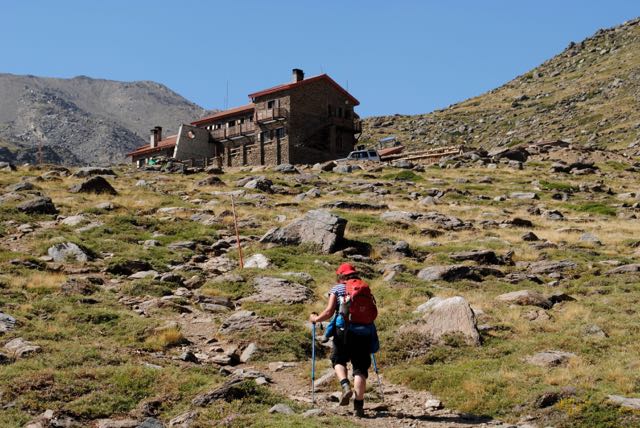
Cresting a ridge, the sturdy stone built Refugio Poqueira was a welcome sight and the cold beers on arrival a welcome taste. The refugio is open all year and can cater for over eighty people although after a busy weekend there were only three others sharing the facilities with us that night. The hardworking young couple who run the place offer four course dinner, breakfast, and supplied us with packed lunches for the following two days. You can also stock up on an assortment of requisites from compeed to chocolate and get advice on routes and conditions.
The next morning we headed off up the Rio Mulhacen valley following the tall orange posts that guide climbers and skiers during the snowy seasons. Leaving the last of the running water behind, at 3000mts we came to the trans sierra road that until closed to public use in 1994 was the highest in Europe.Crossing the sierra at 3229mts just below Mt Veleta it’s an impressive piece of engineering but looking at it’s rough and narrow surface and precipitous drops we found it hard to imagine day trippers out for a Sunday drive.
DSC_0064 - Version 2

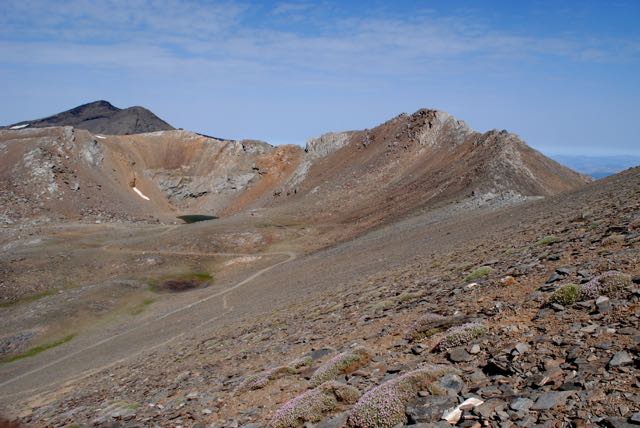
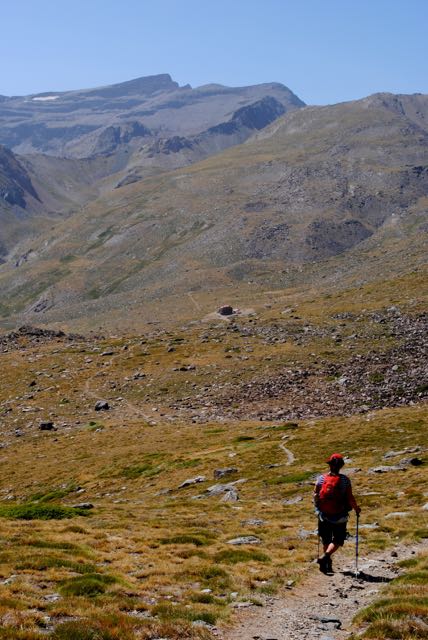
The altitude was making itself felt as we trudged up the steep and shaley western flank of Mulhacen. To the northwest was the peak of the Puntal de la Caldera and the squat stone dome of the basic mountain refuge near a lake at its feet with tiny figures resting outside. As we climbed, views to the north beyond Granada opened up above the Caldera and we often stopped not only to take them in but also a little more oxygen.DSC_0070The once tiny figures below us at the Refugio Caldera passed us by, cheerily greeting us as they hiked on up. We saw them again as we reached the top- running off down a trail to bag another summit. We were happy to bask in the sun at the highest point on mainland Spain, to inspect the offerings at the little summit shrineDSC_0079

and enjoy our packed lunch under the watchful gaze of a cabra montes or mountain goat. The vista all around was sublime, rendered softer by a heat haze produced by a windless 20c -hard to imagine at 3500mts.
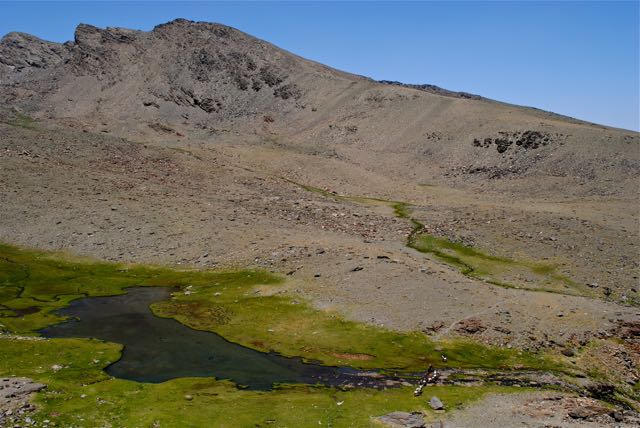
We studied the approach to the jagged heights of Alcazaba then set off down the ridge towards Canada de Siete Lagunas where we were going to bivvy. Siete Lagunas,at 3000mts, is a hanging glacial valley of seven beautiful lakes fed by many springs and rivulets that drops off to the southeast where the lowest lagoon, Hondera, shaped like a dog, empties it’s waters into Rio Culo de Perro (Dog’s Arse River!)
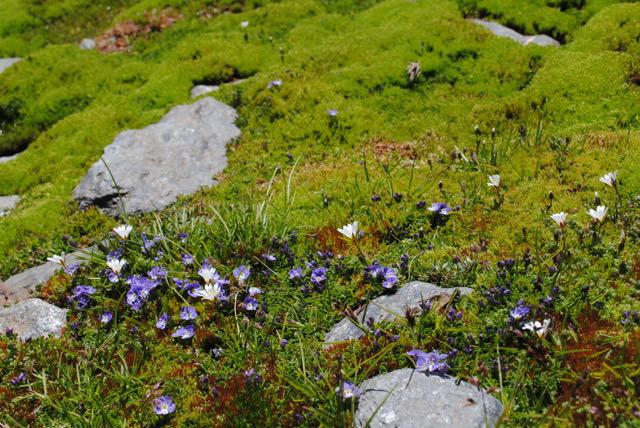
The area contains a number of low circular or horseshoe shaped stone wall enclosures built by campers to protect them from the worse of the wind that can rip around the valley floor, one of which was to be our home for the night. As with much of the high sierras, from a distance the valley had looked pretty austere but up close a wonderfully varied microcosm revealed itself. Alpine flowers in exquisite colors emerged from pin cushion mounds of 40 shades of greenDSC_0138and a small group of cows munched contentedly on the lush grasses before being called by the matriarch of the herd up the steep zig zag path out of the valley and into the vastness beyond, leaving us alone- with the foxes.
I had read about the increase in foxes scavenging food from campers at Siete Lagunas and posters at the refugio had warned of them. The advice was not to leave food in a zipped up tent as they would tear their way into it and the only real deterrent was a dog. So after we had finished our dinner, before settling into our sleeping bags for the night, I carefully stove all our remaining food into the bottom of my pack which I covered with rocks. Then we lay back and, as the sky darkened, watched the milky way appear above the sierras. Just as we fell Isleep we were startled by a sudden noise. Opening my eyes I looked straight into those of a fox at our feet, it’s snout in our other pack. My involuntary yelp drove it back over the wall and investigations revealed a forgotten chorizo sausage,which we promptly eat, sticking out of a side pocket. Falling back into a wary slumber we listened to a duet of the fox and a dog of some other campers barking at each other across the lake.
As the moon rose the temperature dropped and the wind picked up. A loud whooshing noise up the head of the valley was followed after a few tense seconds by a short but sharp buffeting. It was wild and elemental but the sky remained clear and we were cosy enough in our bags.
In the morning we stowed our packs against the bivvy wall and made our way up the shoulder of Alcazaba in a strong and gusty wind, climbing across a sea of shattered rock and shale to the final ridge to the summit.

DSC_0124 The cliffs fell away vertigiously to the north and the buffeting wind kept us well away from the precipice on the last couple of hundred metres. Our efforts were well rewarded by the views of the dramatic north face of Mulhacen and the spine of 3000mt peaks snaking away eastwards below us.
Although the sun shone brightly the wind chill got us off the top fairly fast and back down to the top of the shoulder. From there we returned to Siete Laguna by a more direct but much steeper route- scrambling down the north end wall of the valley allowing us to explore the higher lakes as we followed the streams back to Laguna Hondera.
Rested after a leisurely lunch we headed off, up out of the valley, looking back down to see a line of horse trekkers crossing the Culo de Perro.DSC_0149

Going south we worked our way across the long shoulder of Mulhacen past the last compacted snowfields following cairns that led us down to the trans sierra road at 3000mts. From here we could see the Mirador de Trevelez (2680mt) a couple of kms to the south, to where hikers and daytrippers can get minibuses from Capileira, saving them the long climb from the village. We quickly lost height to cross paths with a couple of fresh looking bus passengers at Hoya de la Iglesia. From here a pole marked trail led us down to the refugio

.DSC_0159

Much busier than on our previous nights stay we mixed with about 40 cyclists, climbers and hikers on the sunny terrace, relaxing weary muscles over a beer whilst gazing down across the ranges to the sea.

Setting off under another clear blue sky in the morning, we retraced our original route alongside the tumbling river through clouds of butterflies stopping only to gorge ourselves on plump juicy cherries picked from the orchard of a long deserted cortijo.
Our descent to the car was much quicker than the ascent, so before long we were having lunch at a chiringuitos, a beachside seafood restaurant followed by a refreshing swim that restored us to a state where we were once again looking forward to our next hiking trip.