Connemara

END OF THE ROAD: One Step Beyond

It’s been 10 years since I first wrote anything on the Ramblingman blog and this is the first post published this year.

Strangely,in the last year, without a post, the website has been visited far more than in any other- I wonder what that says!

Perhaps that the writing and stories are timeless or non topical, non linear. The posts can be treated as individual reports on rambles throughout a decade- and as such I have decided to keep the site going after I have taken that One Step Beyond.

Which I will be soon enough. Over 2 years into a 1-2 year prognosis for terminal lung cancer my step counter is well and truly defunct. A stalled statistic on a once soaring scale.

Still, I thought I would post about some tiny traces my feet have made throughout my final rambling year, for old times sake.

I hope some people still get value from reading the decade of posts I’ve made. I’ve loved every walk and they instilled a deep love and connection with the natural world I journeyed through. I cannot encourage people enough to put on their boots and explore- while they can.

Back in February we went to the Donana Natural Park south of Huelva on the Costa de la Luz. This is southern Europe’s greatest marshland wildlife reserve, a vitally important habitat for a host of migratory birds in particular. It has suffered tremendous environmental problems over decades from a massive chemical spill in 1998 which saw the park closed to visitors to years of over abstraction of water to feed the mushrooming soft fruit farms crowding in around the Rio Guadalquivir causing widespread drought. For centuries the whole area , and the multitude of fauna and flora adapted to it, had been protected as a royal hunting preserve with a rich tapestry of livelihoods wrung from the land by those living there. Charcoal and wood products from the pine , as well as nuts. Baskets from reed and thatch. Fish farming, honey production, cork from oak, resin and turps, mushroom gathering, rabbit and deer shooting, salt production- a long list.
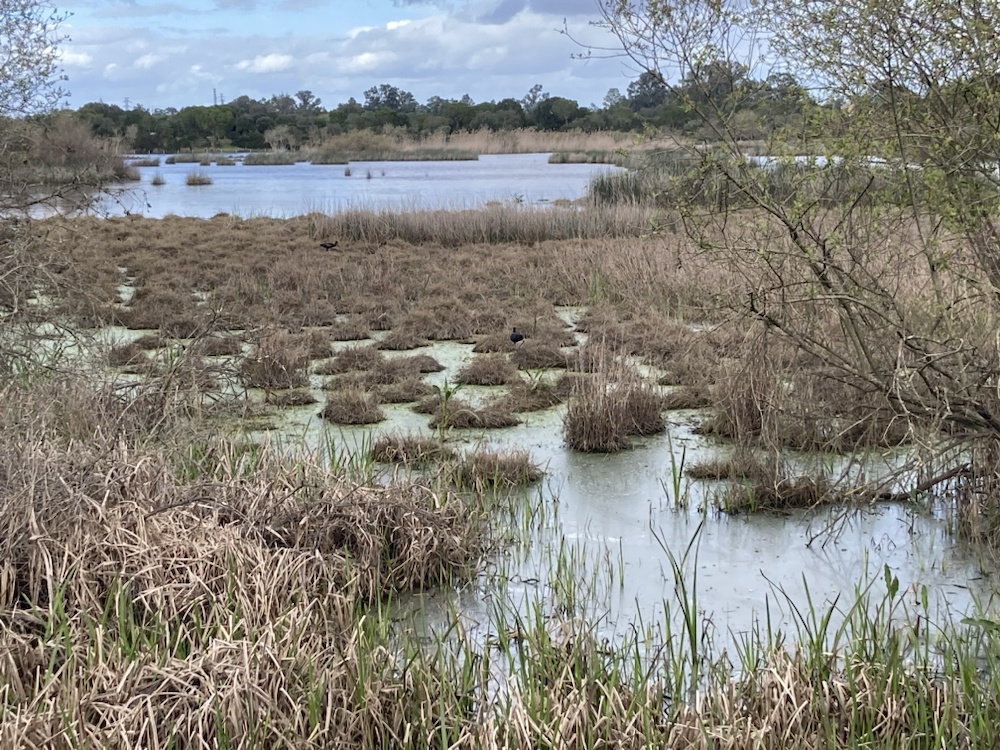
Ironically the water levels have been revived by the terrible flooding that struck areas of Andalusia in October and a number of tighter environmental laws have restricted the encroachment of the strawberry farms.
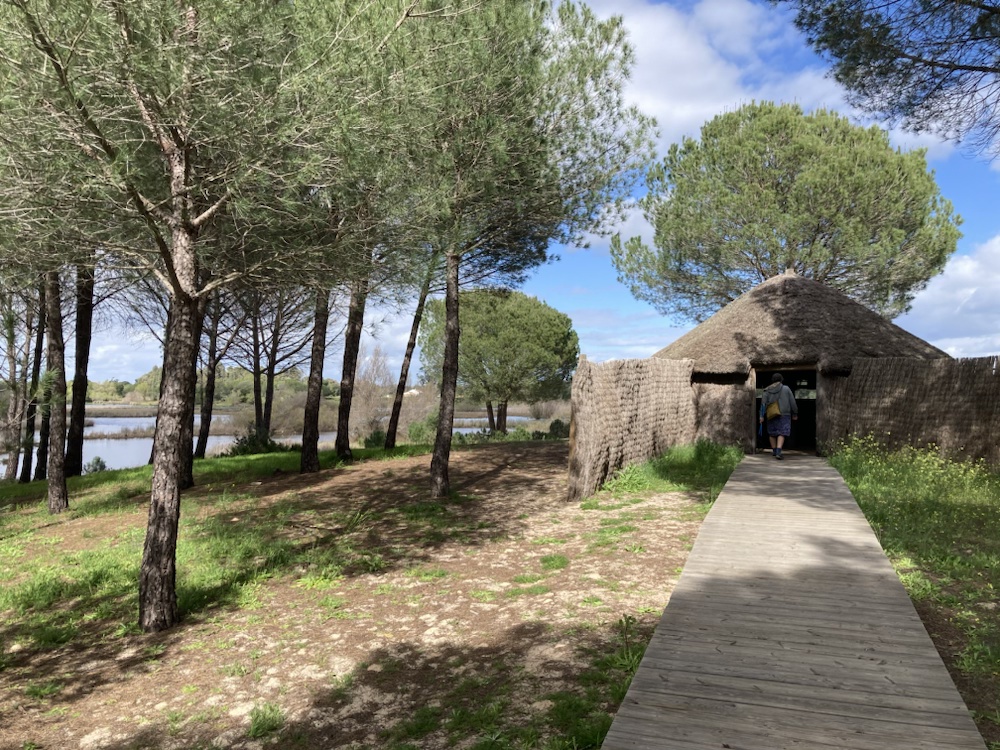
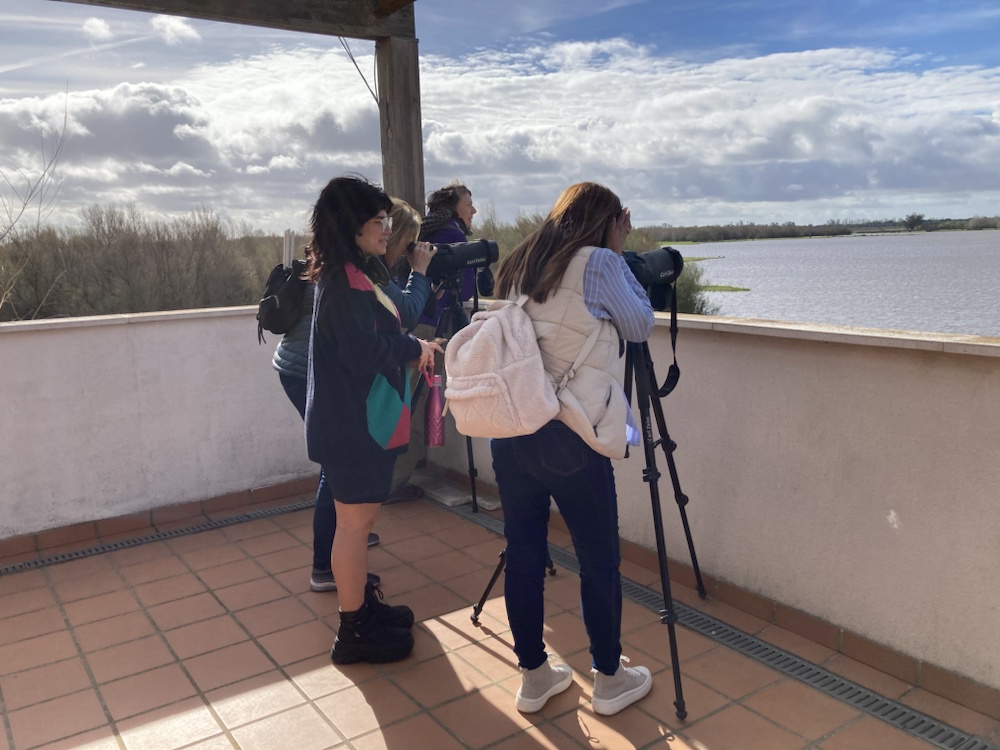
There are three main visitor centres around the park with trails leading off to hides from which to watch the bird life and sandy tracks down to the wild coast.
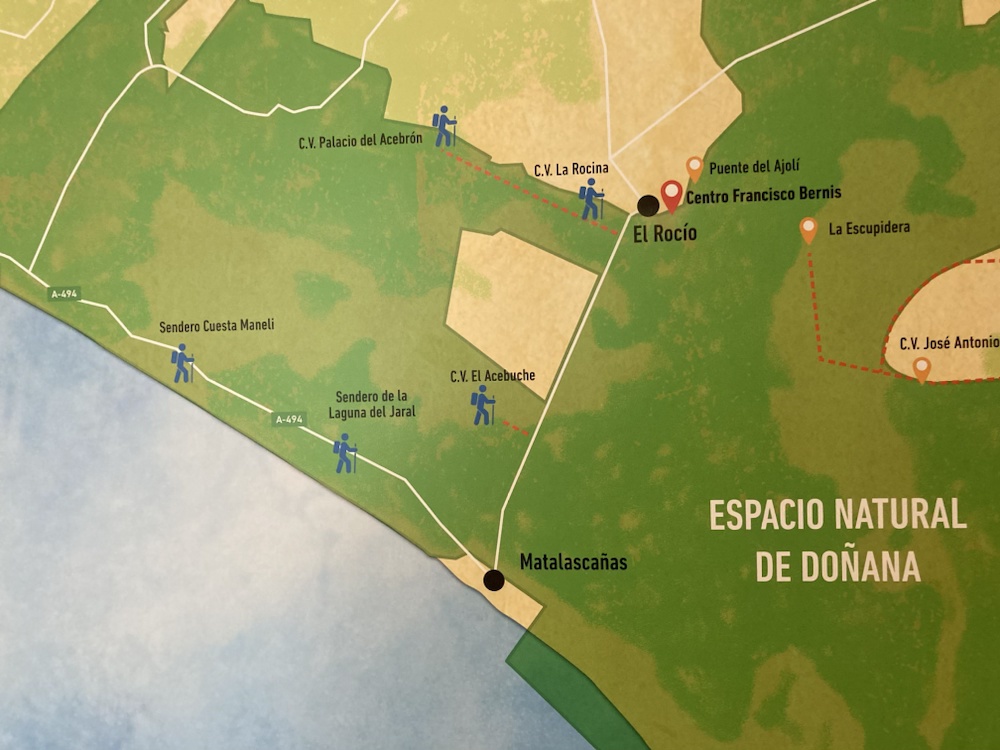
Another interesting town in the area is El Rocio, a tiny wildwest style village whose population swells to hundreds of thousands during the pilgrimages in Pentecost, the biggest in Spain. From the 1400’s hoards have been arriving here in ox or horse drawn covered wagons for days and nights of celebrations.
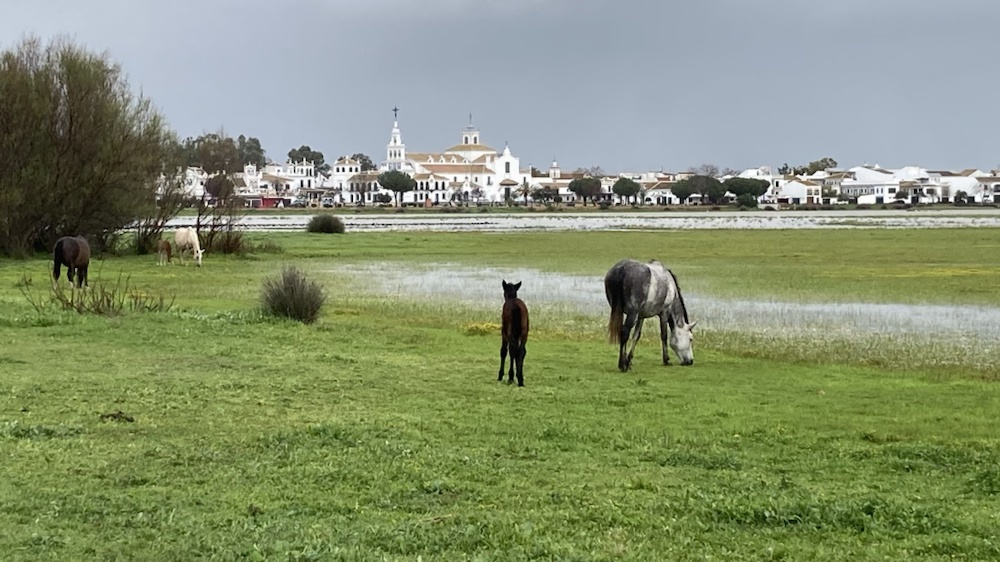
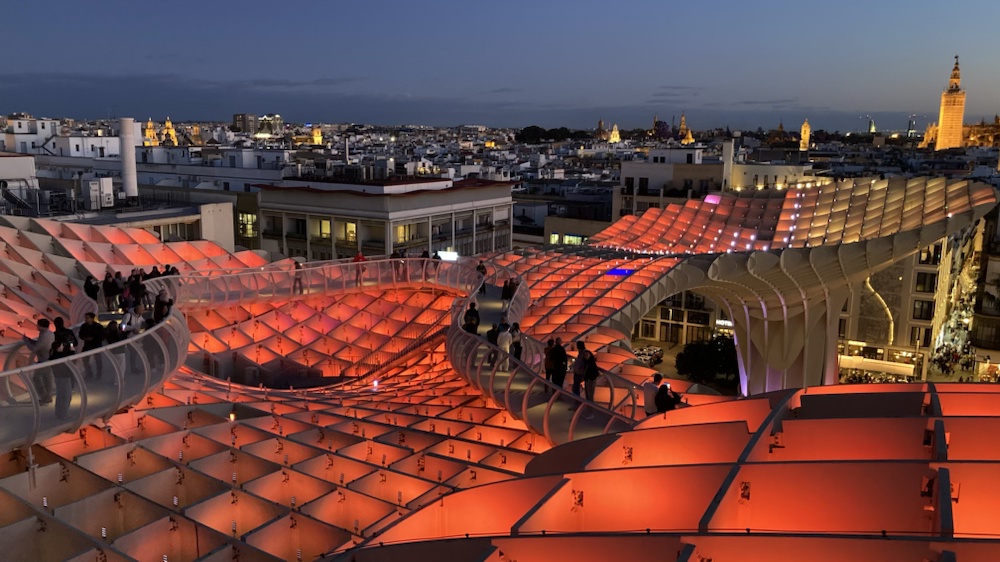
The following day, my birthday, we moved from a hippy campsite bell tent in the marshes to cultured Seville city centre.

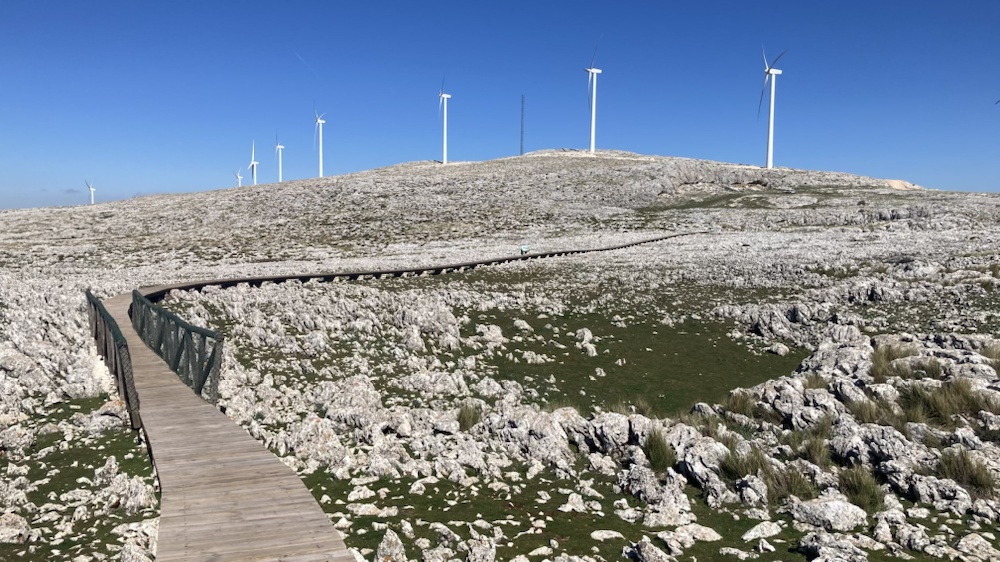
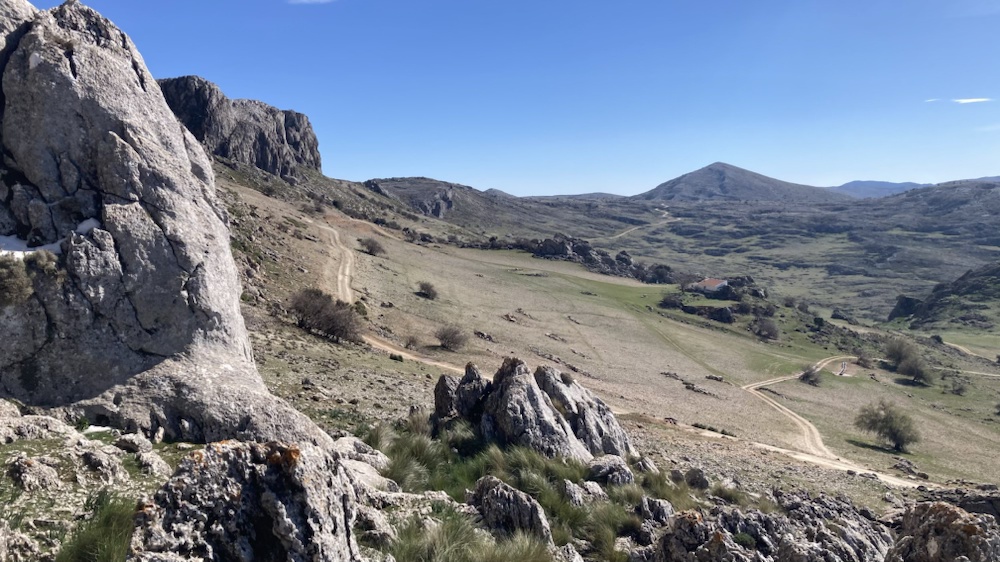
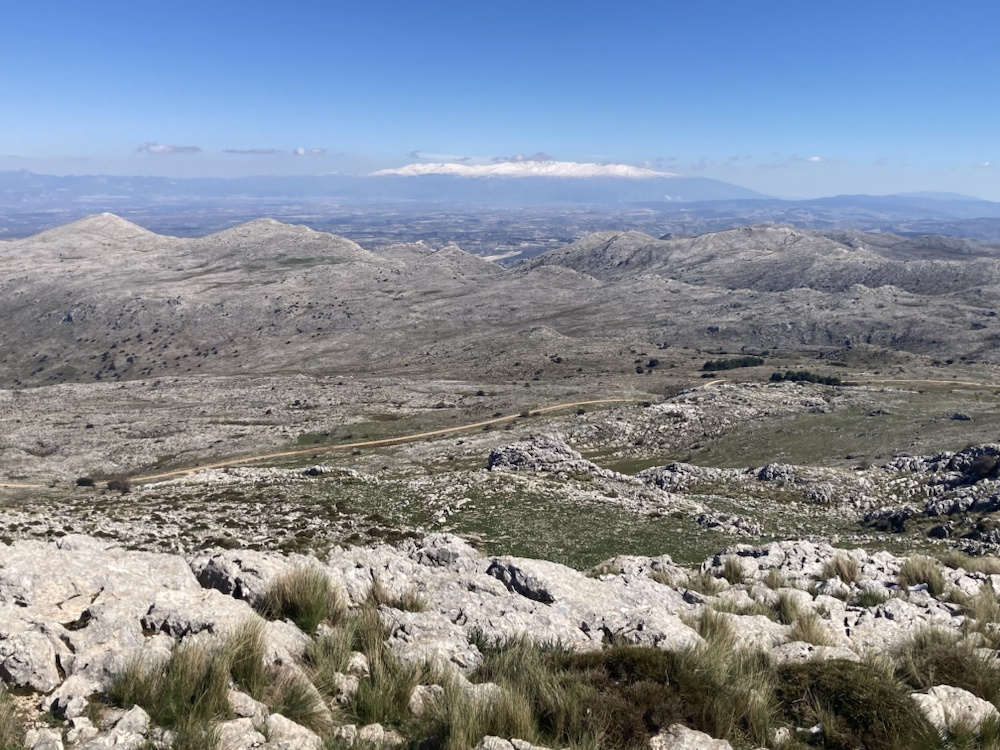
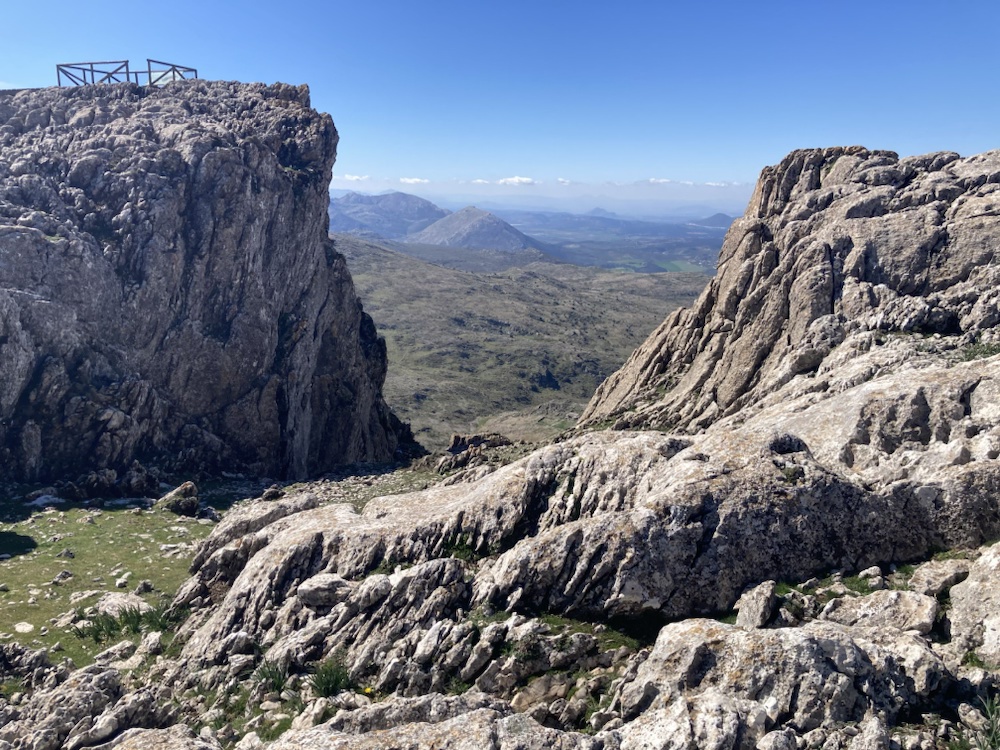
A couple of days later we were exploring the high limestone area in the mountains south of Loja in the Sierra de Tejada. Spectacular track to reach spectacular views with a Via Ferrata climbing route thrown in.
Back in the Irish summer we took advantage of an August hot spell to explore a couple of walks in the bogs of the”Hidden Heartlands” around the Horse and Jockey in Tipperary. First up was the Littleton Labyrinth area of cycle and walkways,a project designed to create employment and public amenity on what was peat producing Bord na Mona land and is now in transition to green industry.
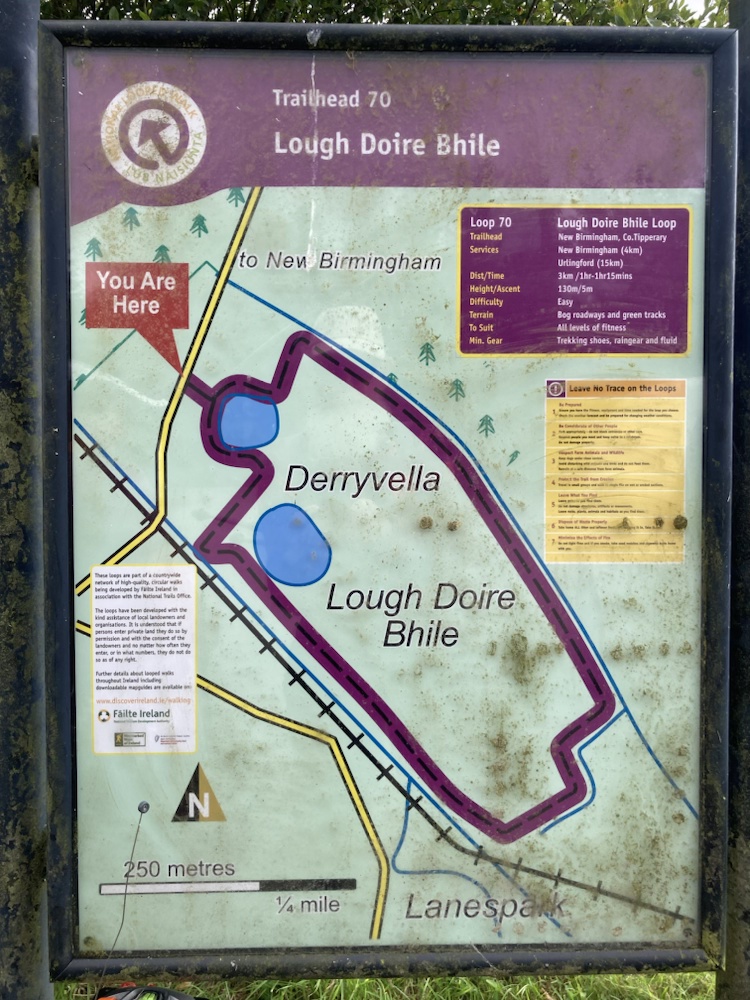
The Derryvella site offered a fine walk through restored bog rich with wild flowers and alive with the buzzing of pollinators.

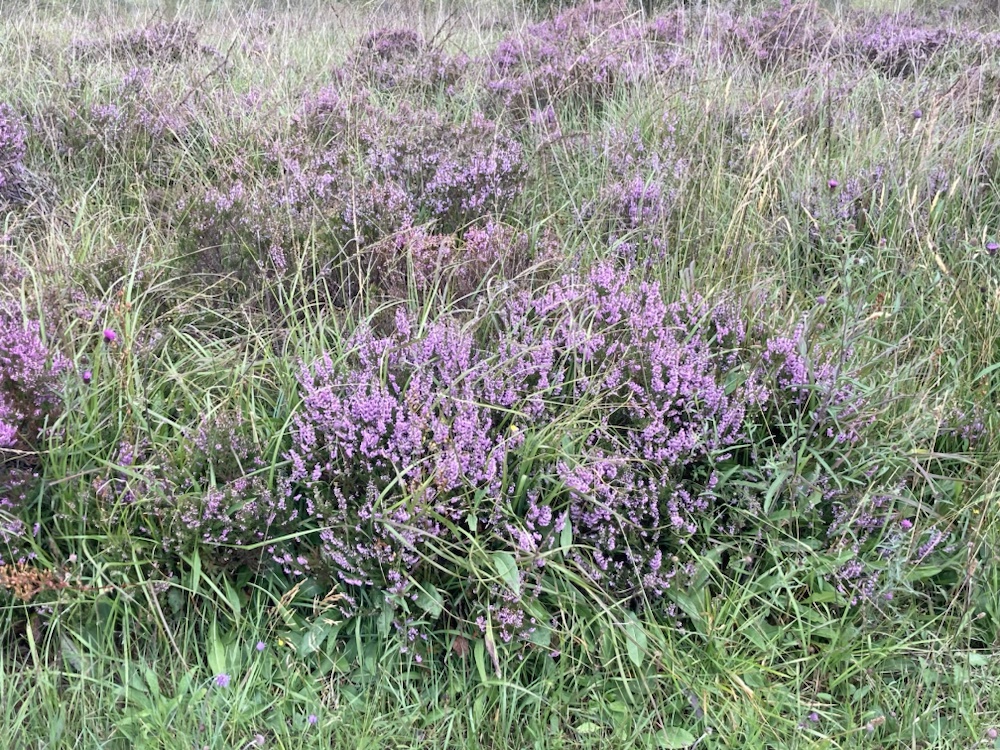
A little distance away was another network of old bog railway line , known as the Loony Line, for years a park up of the horse drawn wagons of New Age travellers and now returned to a tranquil route to the ancient site of Derrynaflan church.

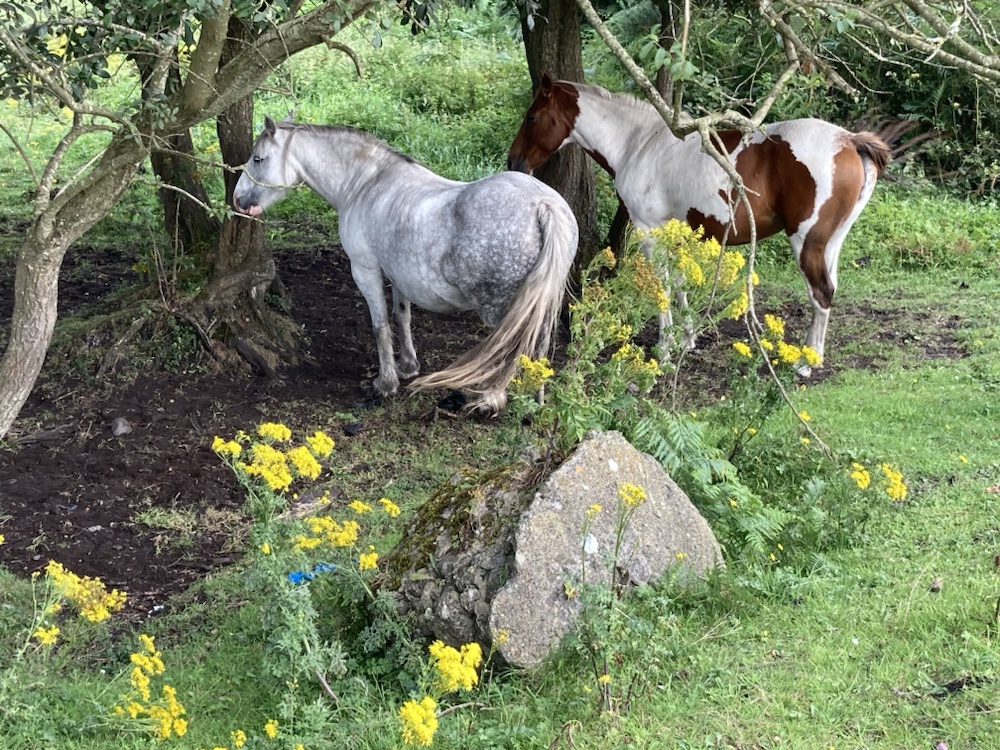
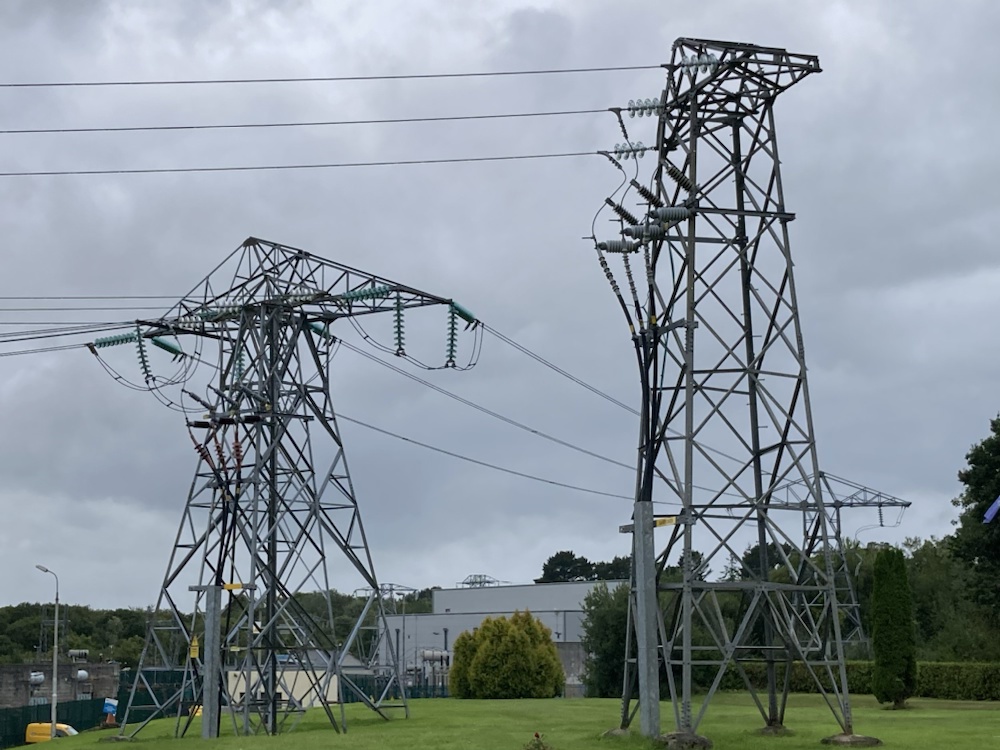
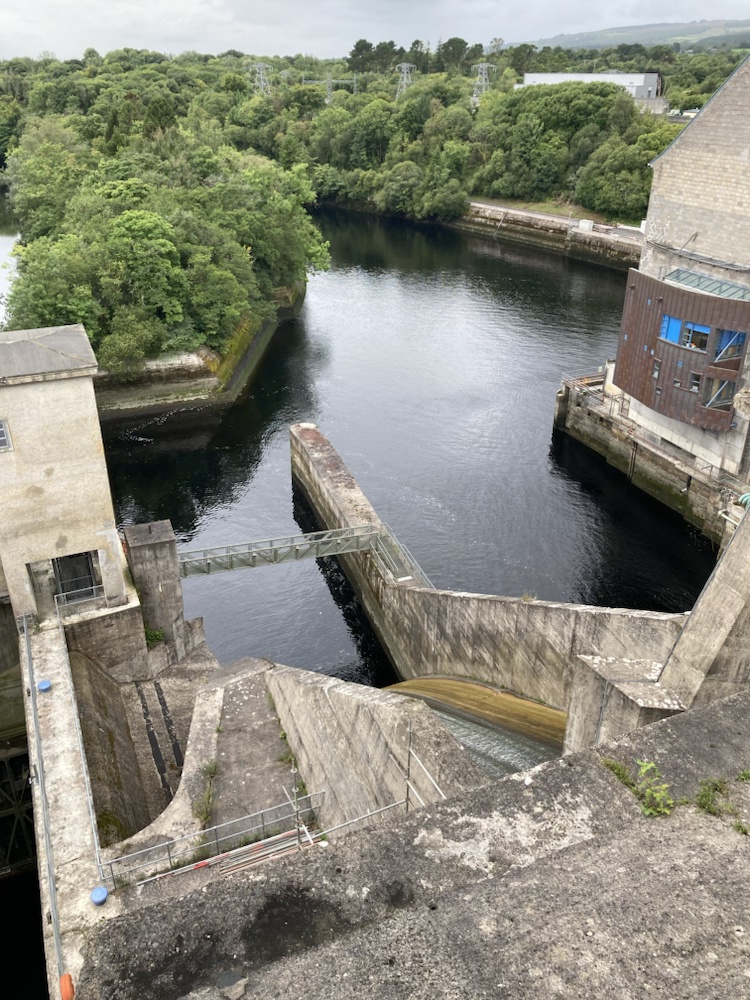
Next up was a little tour of Ardnacrusha hydroelectric power station during Heritage Week , on the Shannon just north of Limerick, a construction that when built in 1925 supplied more than the entire power needs of the whole country and cost 20% of the budget.
It was followed by a huge drive towards the electrification of Ireland that saw first time instillations continuing right up to the 70’s. One million poles were erected over 20 years to connect 300,000 homes.
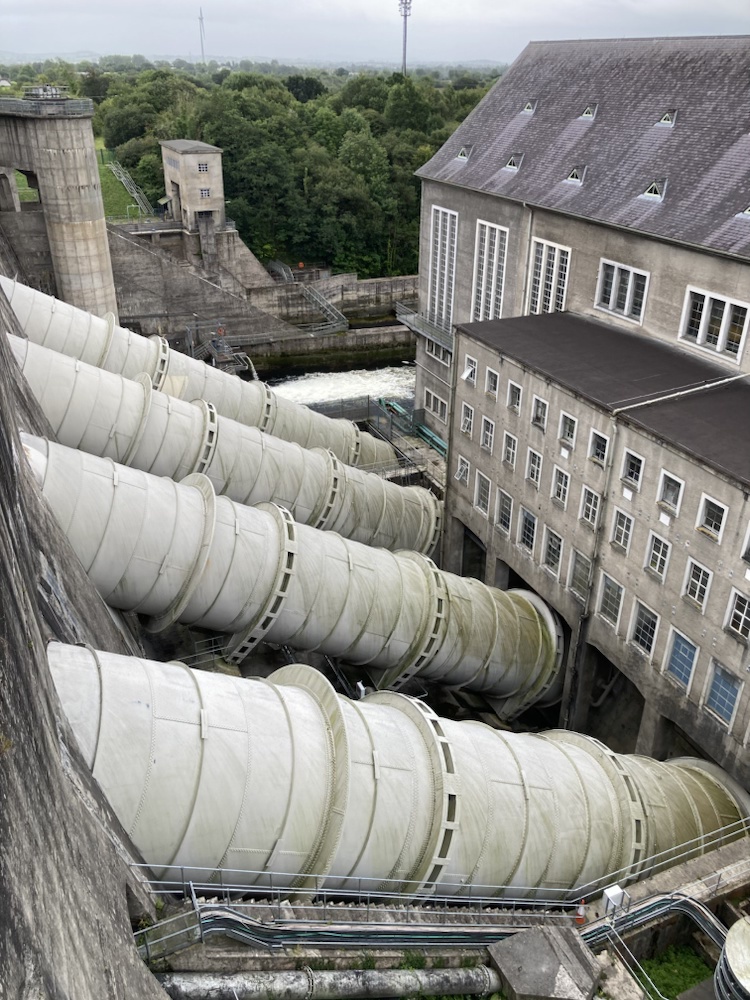
The river was raised 7.3 m along a 12km man made canal leading to the turbines where a drop of 30 m took 100 tones of water per second to produce 85 megawatts of power.
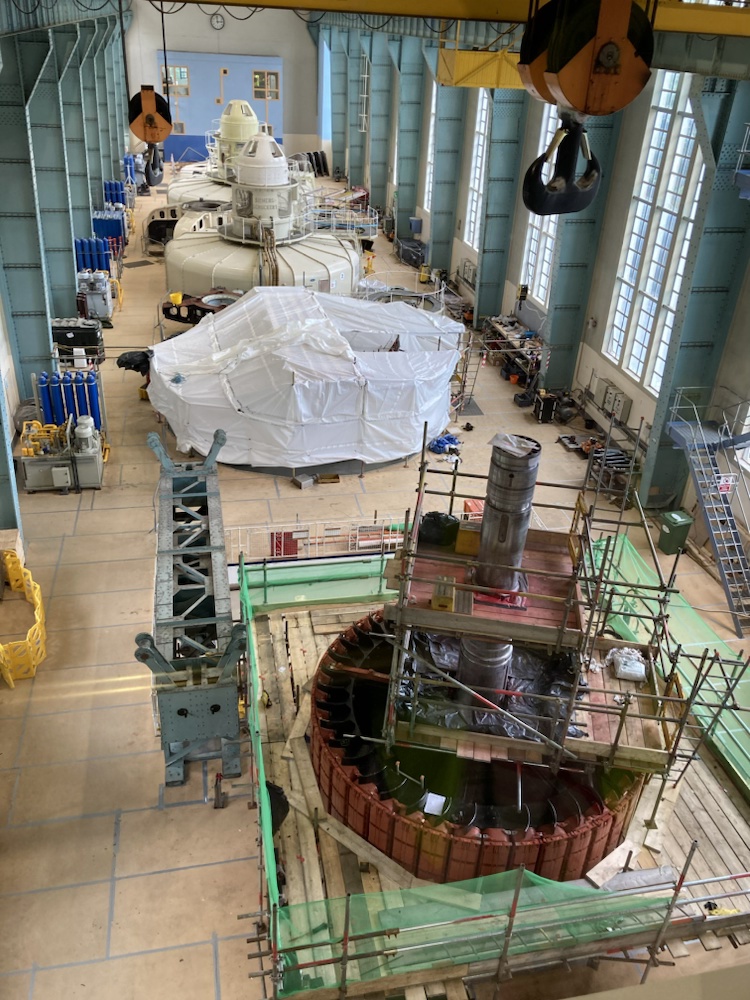
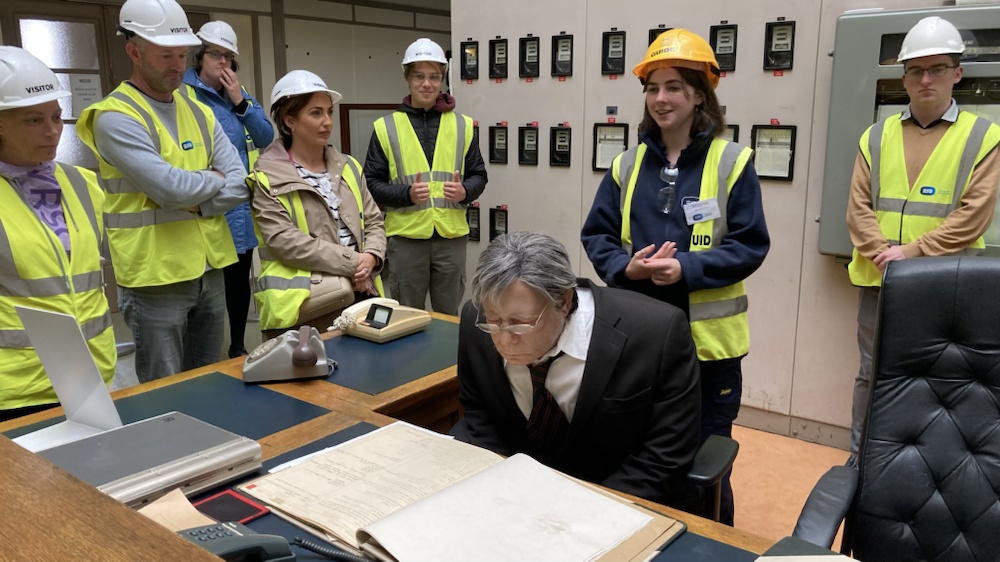
Not exactly a Ramble but an interesting exploration of a historical landscape feature. The vast engineering feat was a huge undertaking costing a overwhelming proportion of GDP. The Irish chief designer/ engineer on the project was a socialist who was told the plant would produce free energy for the people who resigned when the inevitable u turn occurred but rejoined later.

A fortunate but unforeseen consequence of the construction was the introduction of bank voles, a species not known in Ireland until it stuck aboard a shipment of plant from Siemens in Germany who supplied the turbines. The barn owls food supply had been under pressure and the owls population plummeting when the rapid spread of the bank vole revived their fortunes and now consist of something like 75% of their diet.
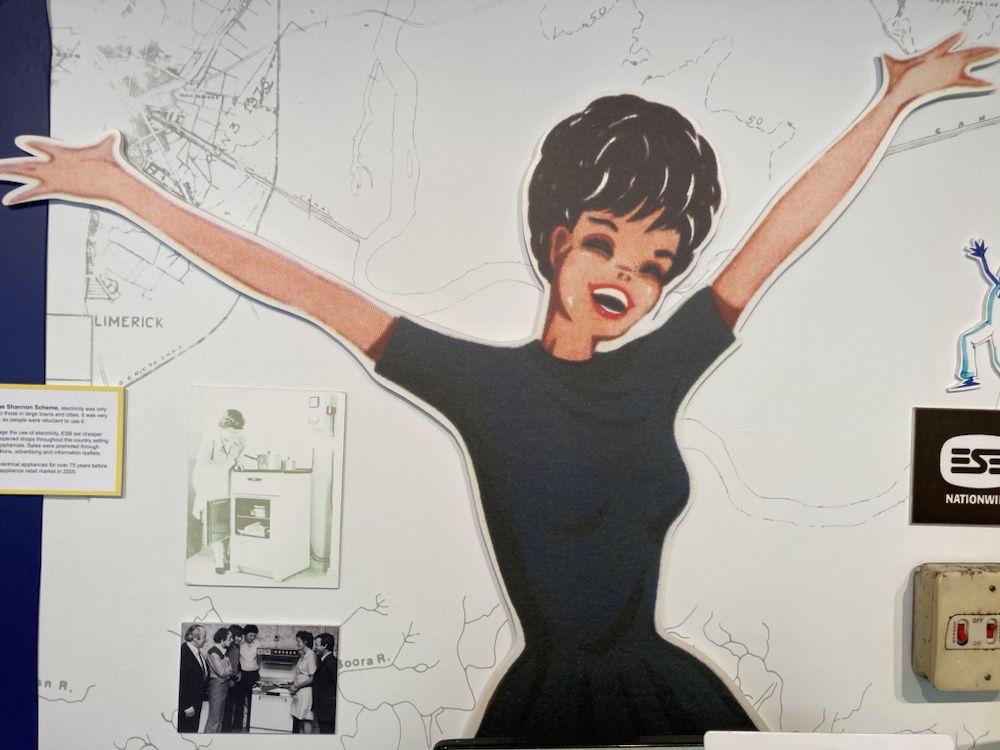
An amusing little museum featured a wealth of promotional advertising of the time on the joys of labour saving electricity.
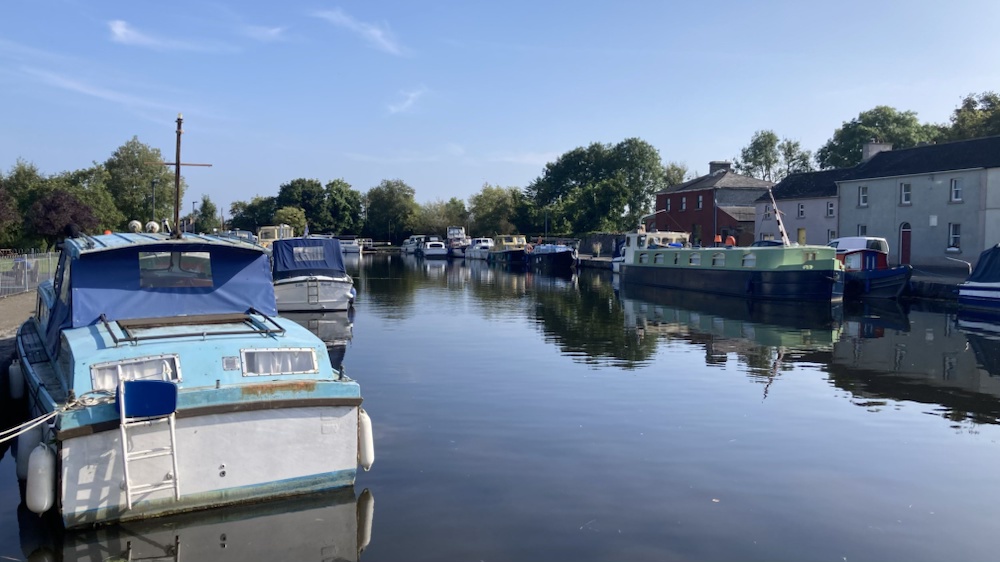
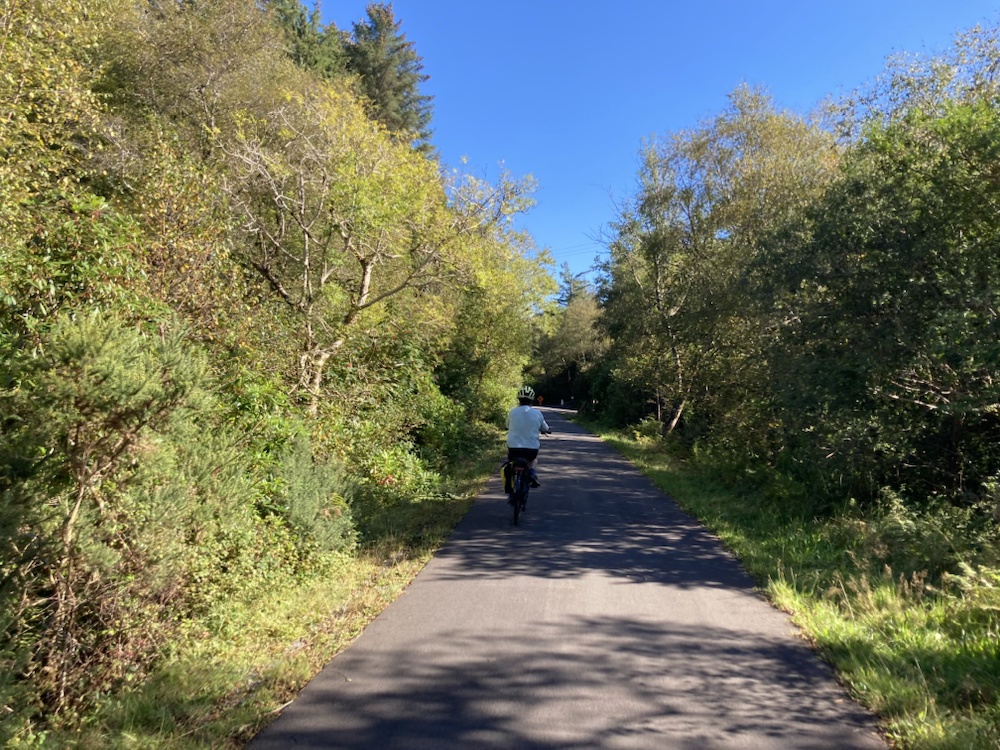
A return visit to the Royal Canal in Longford was an enjoyable trip on e-bikes south from Richmond harbour,where the canal meets the Shannon, to the Iron Age Corlea Trackway.
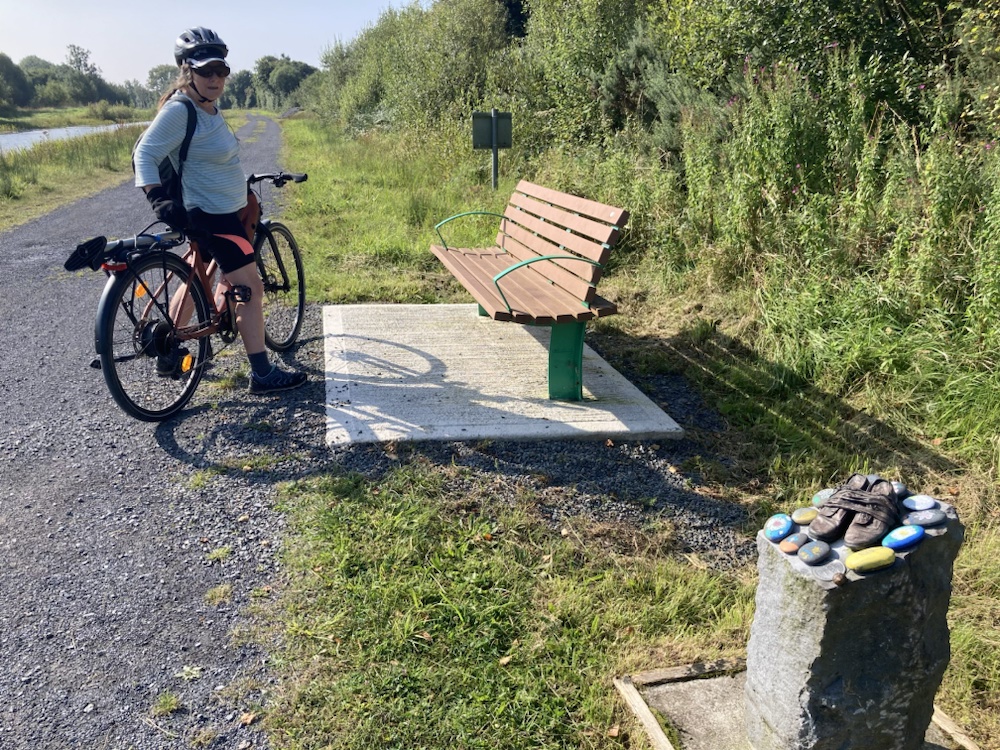
The little shoe sculptures that followed some of the route marked the Famine Way ,a trail that retraced the walk to the famine ships leaving Dublin for America.

But in the summer sunshine the glories of the landscape over shone the heartbreak of the past as we easily glided down the level towpath through the locks.
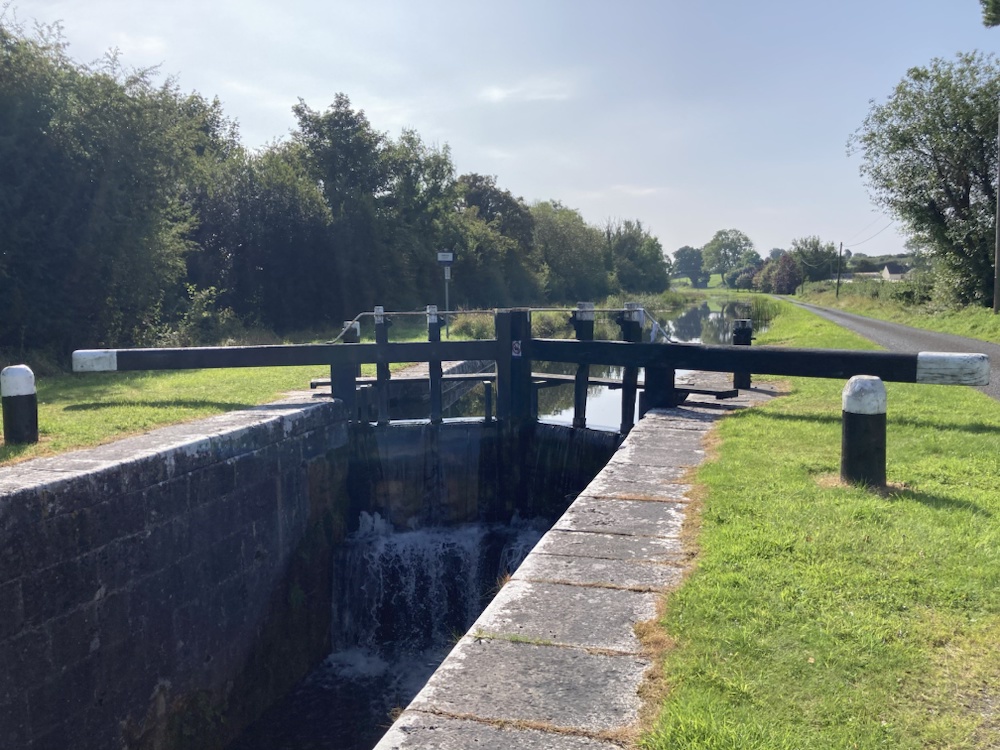
Leaving the canal on a track through the recovering bogland we visited the extraordinary Corlea Trackway. Constructed in 150bc from 1000 wagon loads of oak sleepers laid over a similar amount of birch rails the 1 km roadway connected dry land to an island in the bog where another 1 km of track reached dry land again. An enormous undertaking considering that it was subsumed by the rising bog within a decade.

A pleasant trip on the underused waterways of Ireland and back home via the wonderful native St John’s Wood in Co Roscommon.

More e-bike cycling later in the summer saw us back on the Westport Greenway- this time on the leg from Mulranny to Achill.
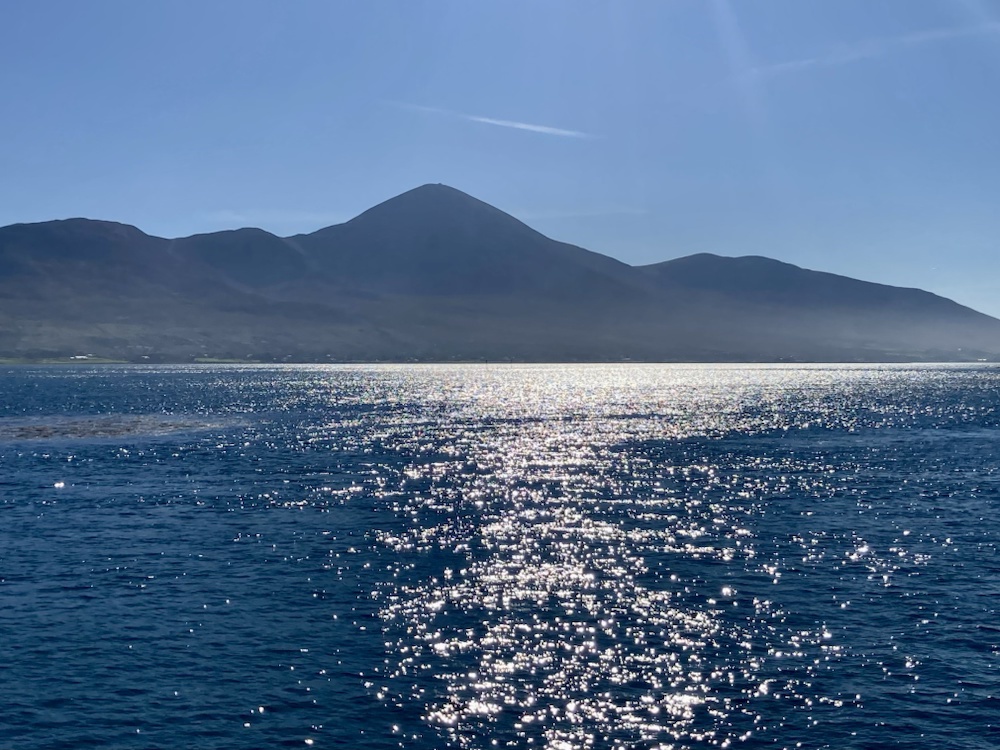
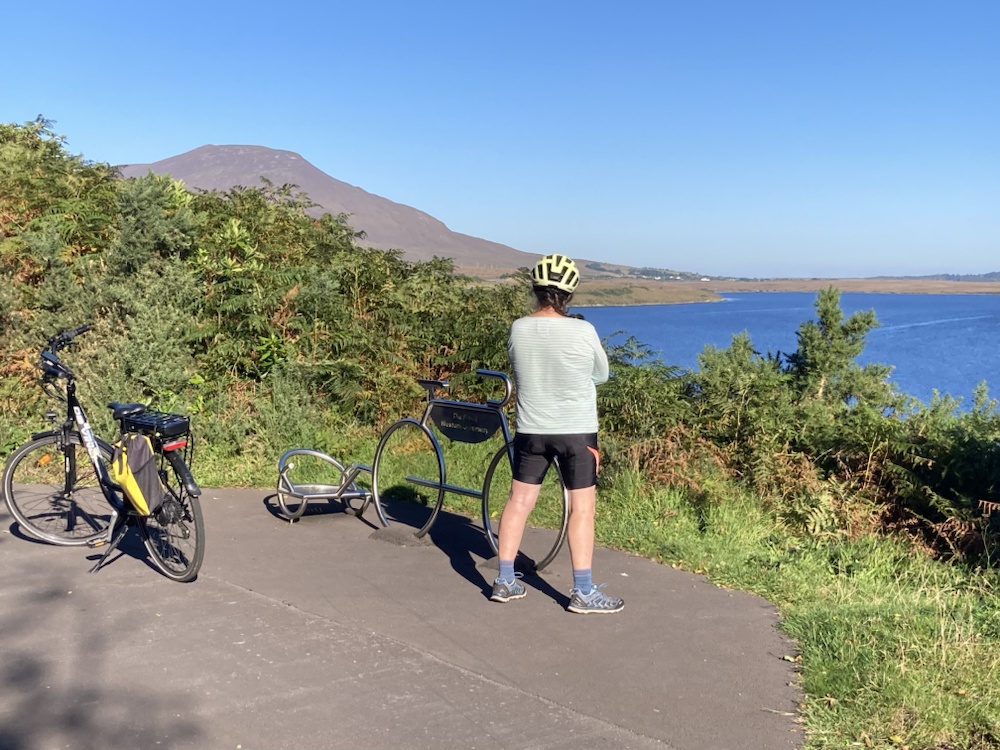
Starting with a boat cruise around Clew Bay under the peak of The Reek we got our bikes at the hotel in Mulranny and headed west through glorious views of sea and mountain.

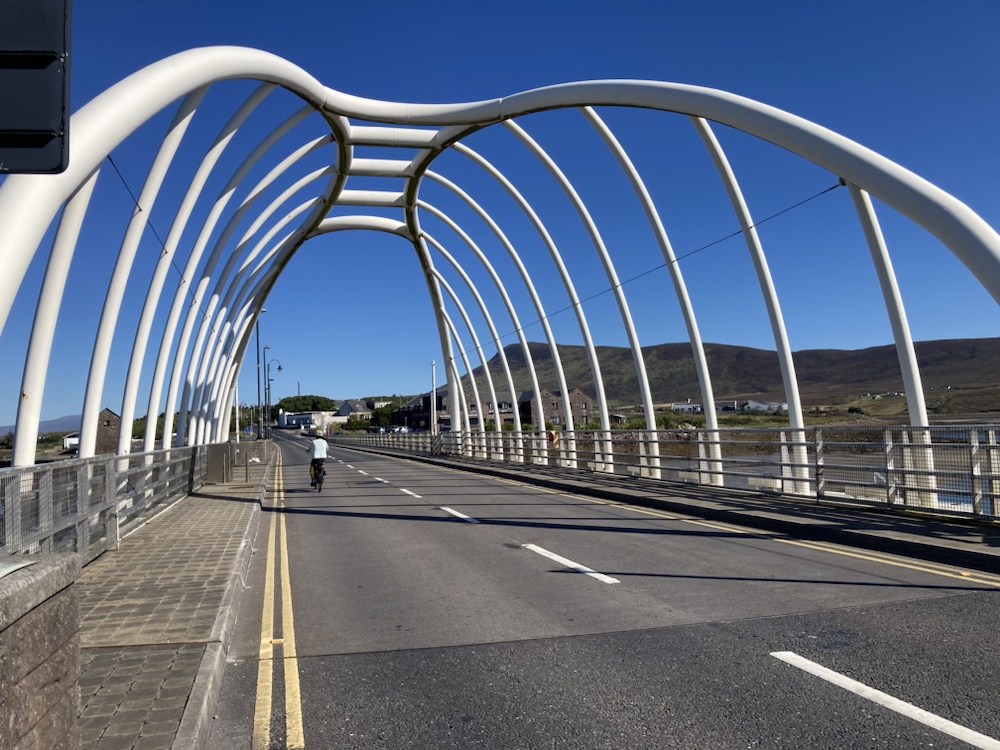
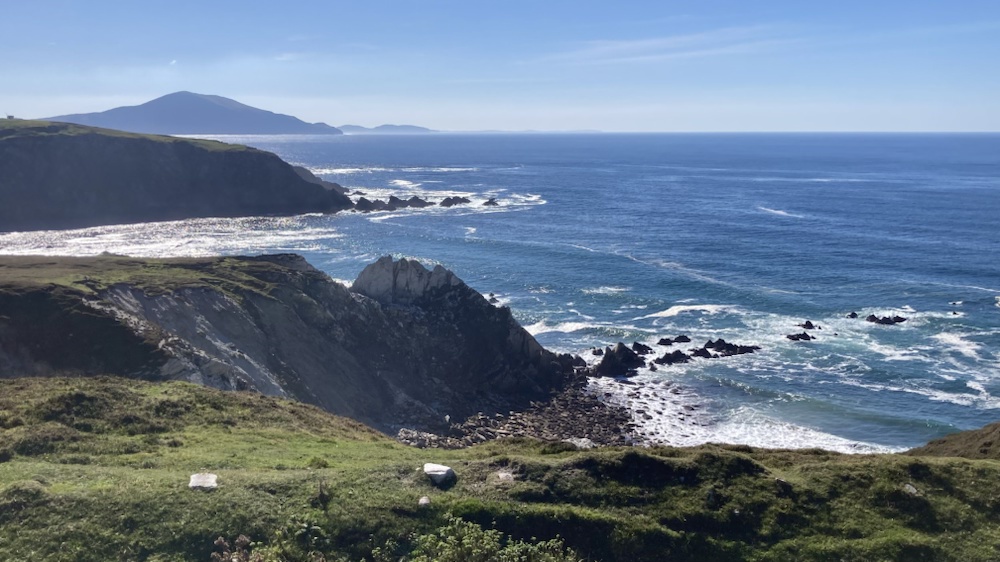
Over the impressive bridge to Achill we continued on the last leg of the greenway and then a left handed loop around the dramatic coastline.
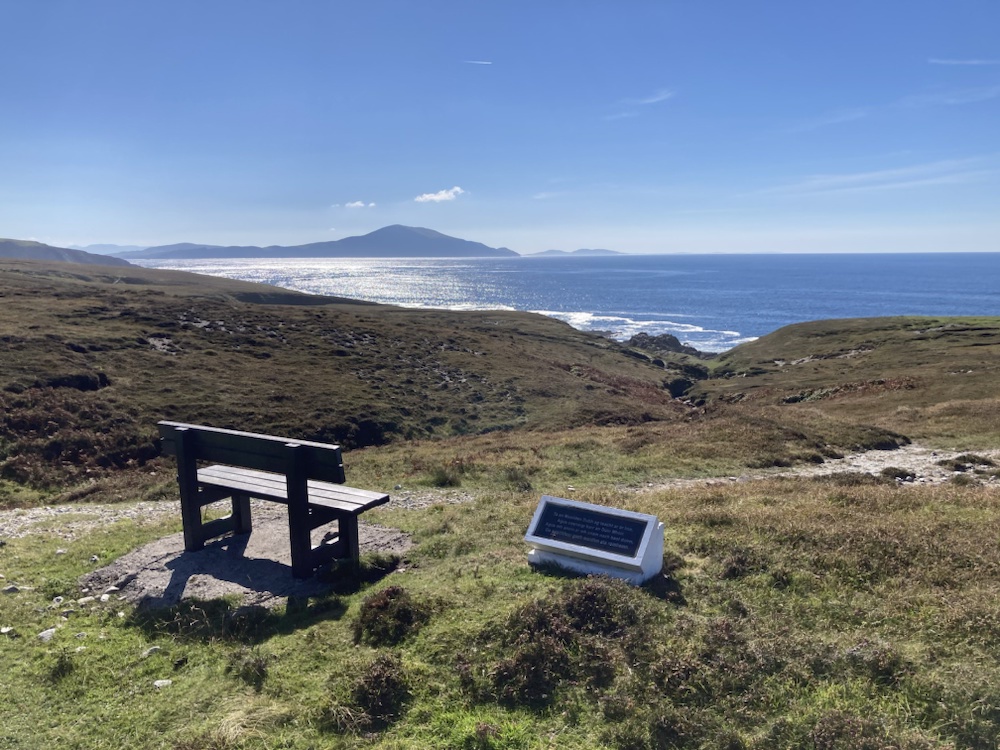
And back to the 4 star spa overlooking the mulchair dune system and beach.
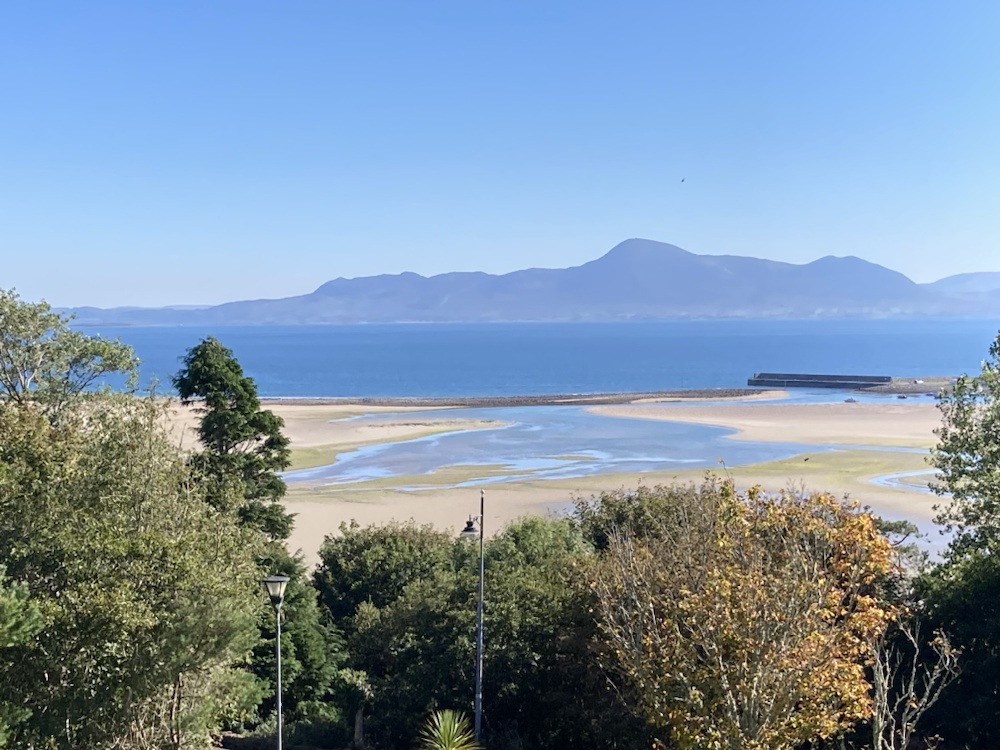
A couple of other luxury hotel stays have raised spirits and spoilt us this year, after a decade of roughing it on the trail. And I’m still hoping to squeeze in another couple.
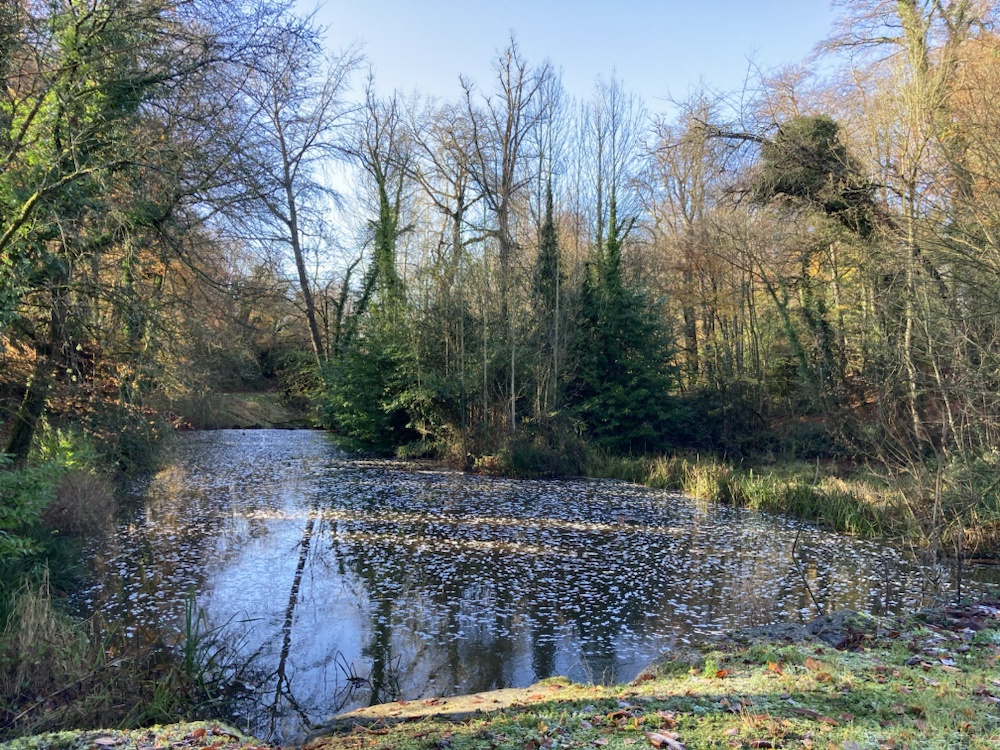
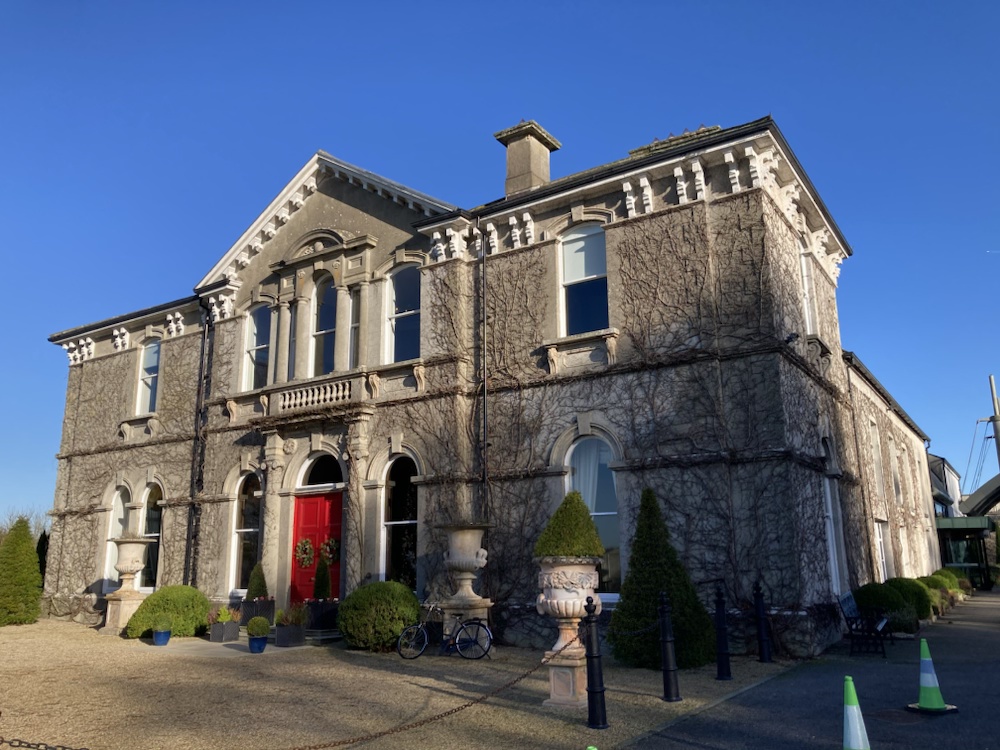
Why not. You only live once.

DELPHI and SCREEB: Sporting Lodges of the Wild West

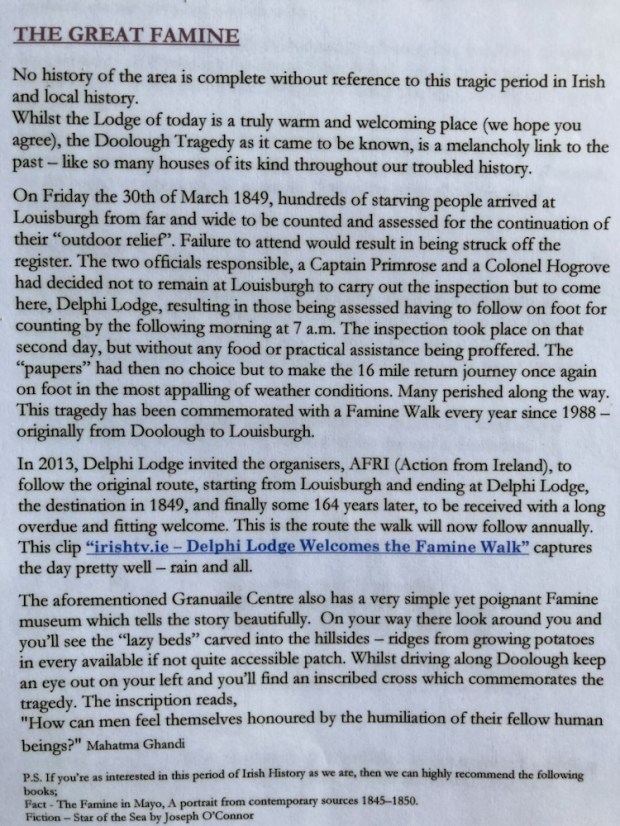
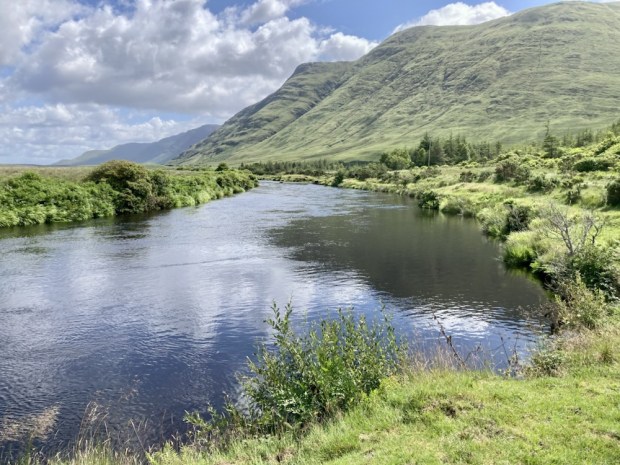
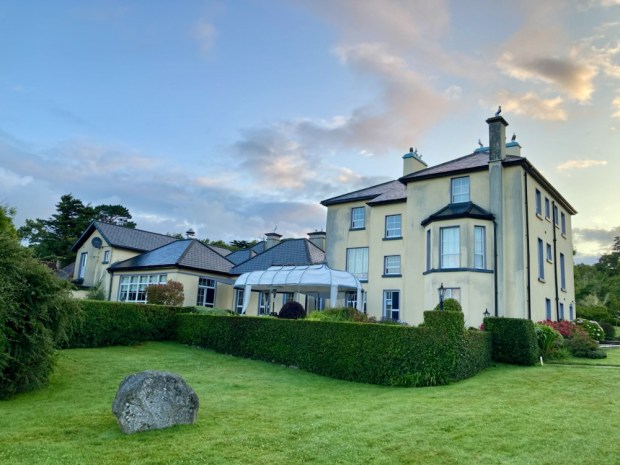
A micro adventure into luxury in the midst of savage beauty took us north around Killary Fiord and into Mayo and the lonely Delphi valley. Following the Bundorragh river up from the little harbour on the fiord we passed Fin Lough and swept up the tree lined drive to the serenely cosseted environs of Delphi lodge.
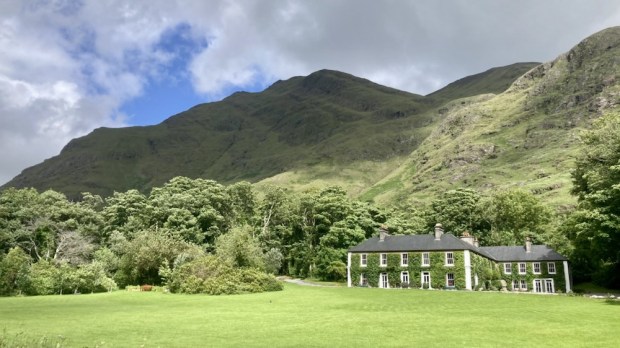
The 1000 acre estate and Georgian country house , built for the Marquis of Sligo in the 1830’s, is a renowned salmon and sea trout fishery surrounded by the tallest mountains in Connaught. At great pains to point out it is not run as an hotel ( no room service, no tv, no porter, no menu choices etc) it is still very popular with paying guests, many of whom return time and again to fly fish and relax. The dining is communal around a massive oak table and the bar is self service/ honesty book. There’s a billiards room, a library well stocked with shooting and fishing tales and a sofa stuffed lounge where canapés are served pre dinner.

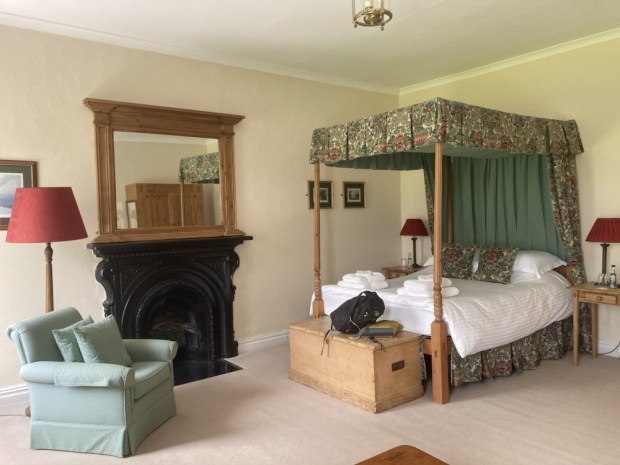
King Charles, or Prince Charles at the time, had stayed in our room for a couple of nights on a solo painting and fishing trip back in 1995, the very first trip by a British royal to the republic since the foundation of the state. I fancied I could smell the privilege around the four poster bed.

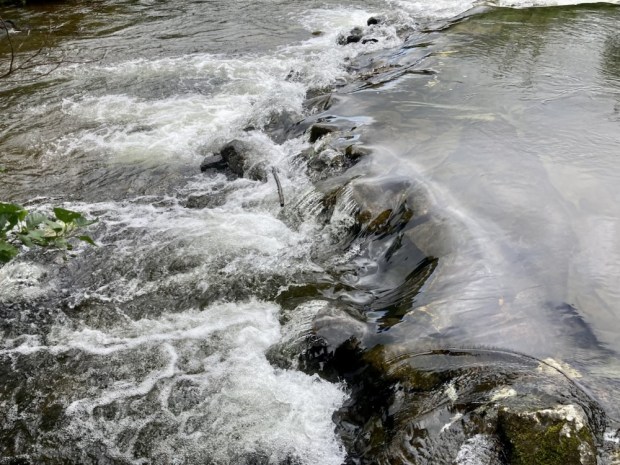
With the scudding tumulus creating a light show of sun and shade across the lake and mountains we were drawn out to explore. Following the Owengarr river upstream from Fin Lough towards Doo Lough we marvelled at the clarity of the water. Before too long we reached the hatchery where 50,000 salmon smolts are raised and released a year, dramatically increasing the salmon population. To protect the genetic integrity of the wild fish all those from the hatchery, marked by clipped fins, are killed if caught whereas any wild fish must be released. All sea trout are released. The big circular tanks were writhing with life.

Walking back through the woodland we noticed the invasive rhododendron had been effectively dealt with by cutting slots and presumably poisoning. The Atlantic Rainforest climate made for a mossy green environment in one of Irelands wettest places.

After our night in the room resonating with the memory of a royal we travelled up the road a little to the scene of a famine era tragedy caused by a heartless colonial British Empire.

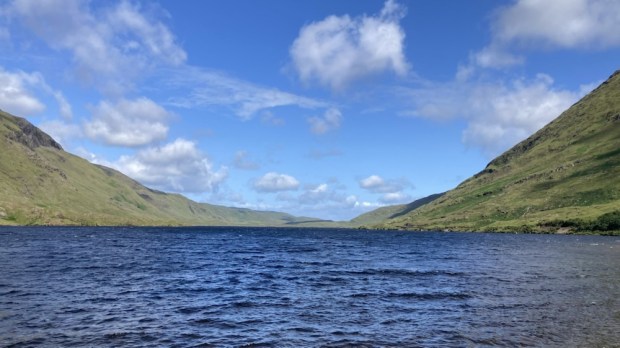
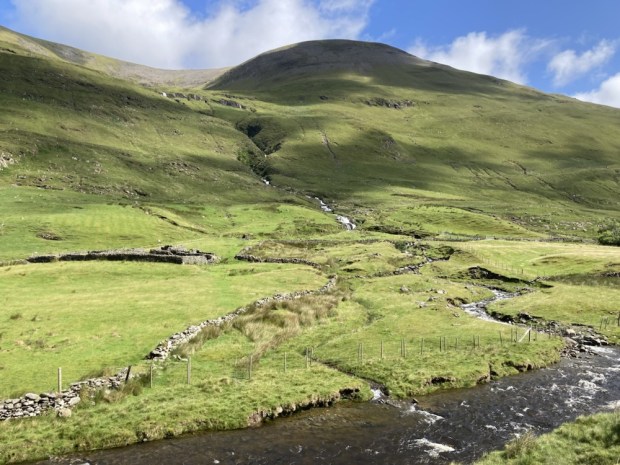
I’d been on a couple of the Famine Walks from Delphi Lodge to Louisburgh mentioned above and found them a powerful collective experience that focuses on the many injustices that continue around the world. The fine weather removed the gloom that can linger here under a dark and oppressive sky and we took a trip a little way up the Glenummera river that runs into Doo Lough from the Sherry Hills to the east.

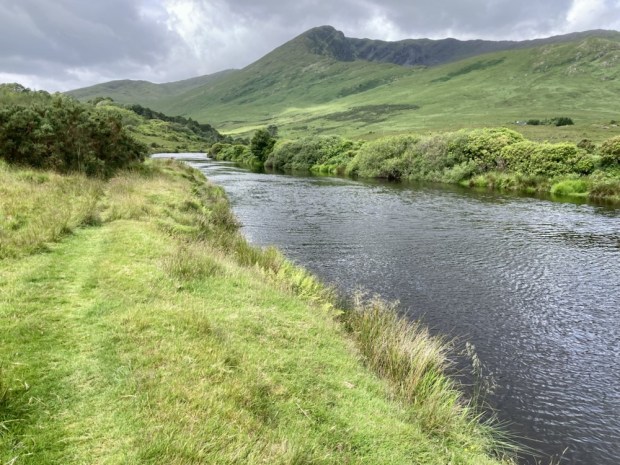
Returning to Delphi and saying our goodbyes as the fisherman cast their flys into the lake we moved back south to the head of the fiord to walk the Western Way along the Erriff river.

Starting out from the famous Assleagh Falls, where Sir David Attenborough was filmed explaining the life history of the eel and a fight sequence appeared in the movie of John B Keane’s The Field, we followed the waters upstream.

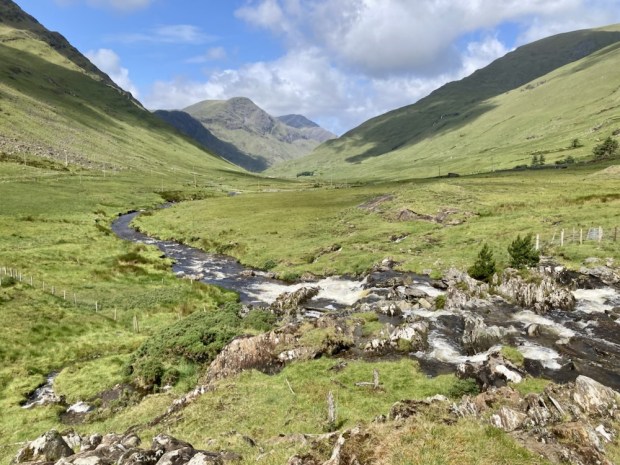
The country opened up before us, the wide Erriff valley faced with the Devils Mother to the south and Ben Gorm rearing up to the north. The river is one of Ireland’s premier salmon fishing rivers and has been designated as the National Salmonid Index Catchment, used as a prime example of a salmonid river system of high quality with a research station and trapping facilities. Managed by Inland Fisheries Ireland who carry out a wide range of research and monitoring on salmon, sea trout and brown trout, the work involves cooperation with lots of national and international research partners.

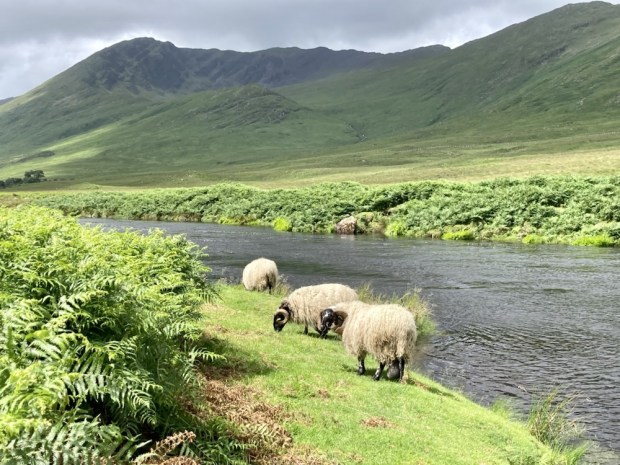
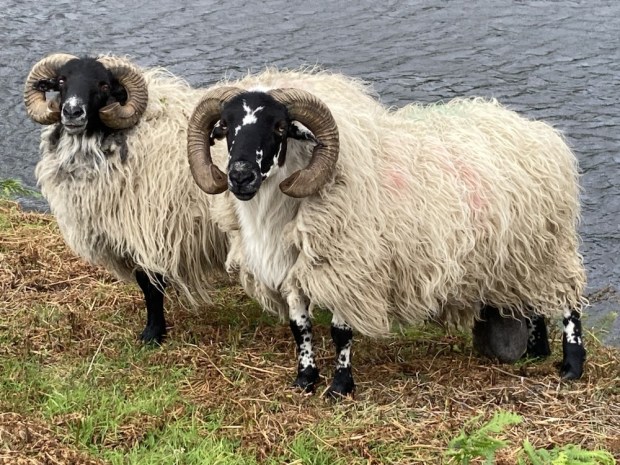
We came upon a few fly fisherman trying their luck, testing their skills, but mostly the valley was empty apart from a few sheep, one of whom had an unfortunate problem with a hugely enlarged scrotum.

The Western Way continues across Mayo for another 130 km, up past Croagh Patrick and Westport, northwards up Clew Bay, across the wilds of the Nephin Begs and the wilderness of Bellacorick bog and Sheskin forest to Ballycastle. But for us it was time to turn around and return to the Falls. We were going to Rosmuc, in South Connemara and another fishing lodge.

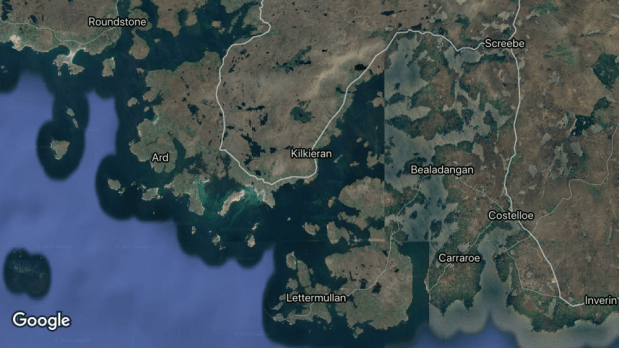
Screeb House on the shores of Camus bay is a vast fishing and hunting lodge. At 45,000 acres it is one of the largest hunting estates in the country and 16 red deer were introduced in 1996 after an absence of 150 years. They grew into a herd of about 150, managed skilfully by Paul Wood whose methods produced the largest stags in Britain and Ireland. Never confined and free to roam the mountains, bog, moor and forests browsing on bramble and ling heather they were selectively culled when old or frail. One stag known as The Sailor was so massive a team of 7 men with a quad bike couldn’t shift his carcass. They had to quarter him where he fell and weighed in at 50 stone, whereas the heaviest Highland beasts seldom exceed 20 stone.

The fishery includes 16 interconnected loughs and the number of rods allowed on the river beats and lakes is strictly controlled for conservation of stocks. The hatchery produces 50,000 smolts a year, like Delphi, released into the pristine waters over the estate.

The house was built in 1860 for Thomas Fuge and was bought by the Berridge family, owners of Ballynahinch Castle, brewers from London who managed to accrue 160,000 acres of co Galway. Lord and Lady Dudley also spent a lot of time there when he was the Lord Lieutenant of Ireland. Lady Dudley, shocked by the poverty of the locals and lack of healthcare set up the Dudley Nurses.

Although not medically qualified she went on to do the same in Australia,and start a flying doctor service when her husband was appointed Governor General there in 1908, and later setup field hospitals on the 1st WW battlegrounds of northern France. Tragically while back at Screeb in 1920 she went for a swim from the harbour there and was found drowned later.

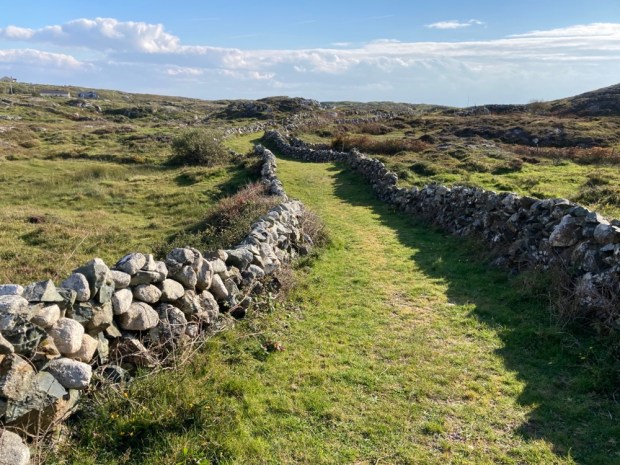
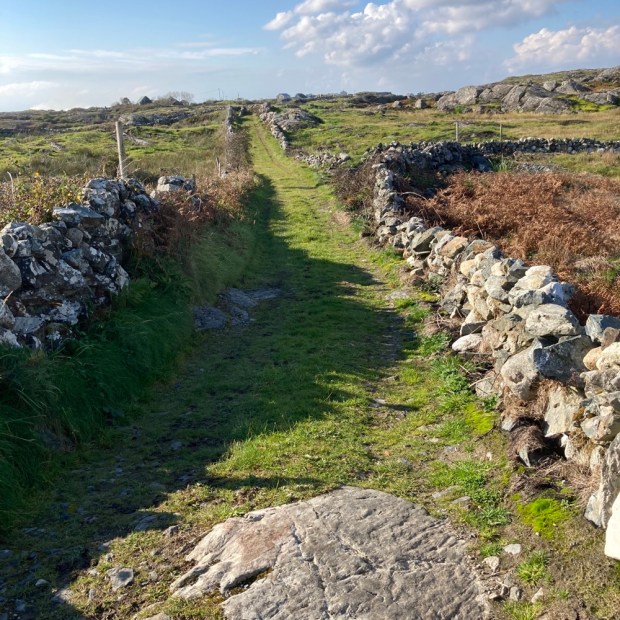
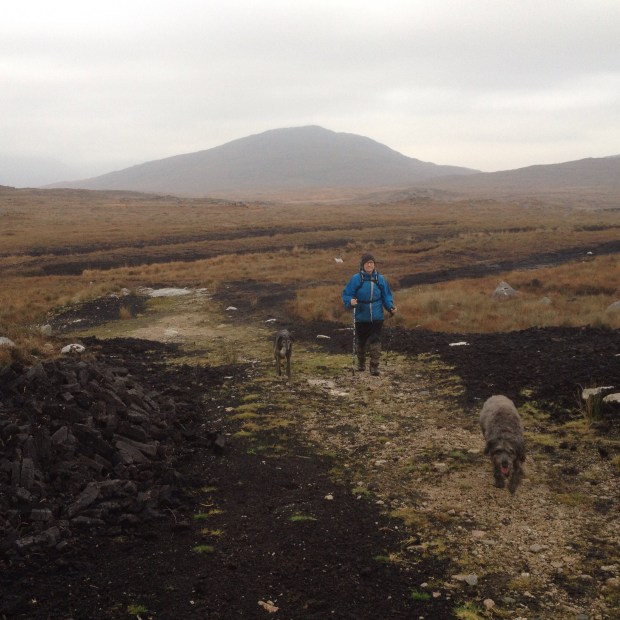
I’d spotted a dotted line on the Ordnance survey map of the area, a track, that crossed the lake studded empty wastes of the bog from Rosmuc to Maam Cross, a distance of more than 10km. Before the coast road was built in the 1850’s this was the only route there was and we followed it into the past.

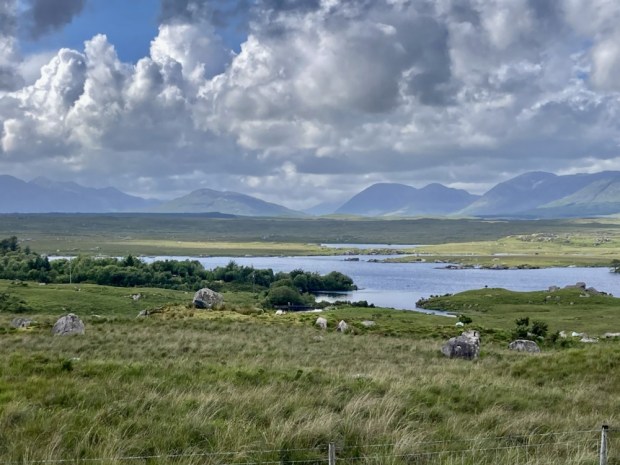
The big sky and wide horizon opened up, with long sighted views across the vastness to the Bens and Maumturks beyond. The rough and rocky path took us down to the shores of Lough an Oileain, where in Penal days the mass would be celebrated secretly.

We followed the traces of the past, drawn towards a place that resonated with the ghosts of lives lived long ago. Tim Robinson, map maker and Connemara geographer, described it better than I could in his book A Little Gaelic Kingdom.

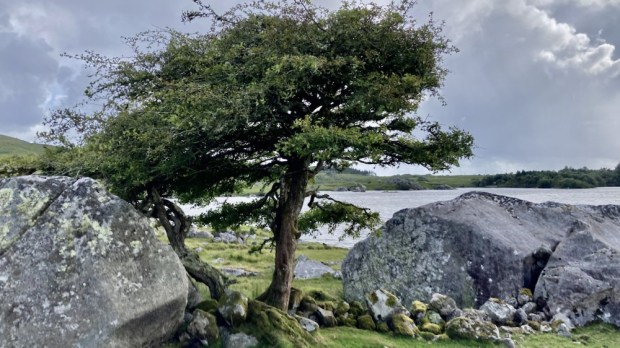
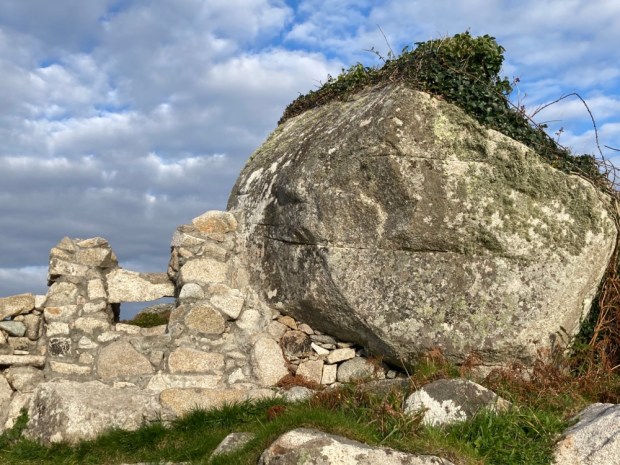
It was truly a place of melancholy spirit but with a strength and perseverance to survive in the hardest of times. The hawthorns were remarkable in their endurance but were at the end of their lives as witness to relentless hardship.

The wilderness here is to me an irresistible force and I like to think that I will be back to continue to follow the dotted line to Ma’am Cross but for now it was time for us to return to the pampered life of a house guest in a Connemara sporting lodge.

Connemara: The Southside

December 2020: Emerging from another Covid lockdown I finally get around to a post on a short exploration we enjoyed just prior to shutting ourselves away again within our 5km cocoon.

Heading west into Connemara we usually favour the mountainous areas to the north, the mighty lumps of quartzite and marble that make up the Twelves Bens and the Maumturk ranges. From the peaks of some we have gazed south, across the low lying bogland scattered with shining pearls of light reflected from a myriad of lakes and pools, to the sea beyond. The coastline there is so wildly indented, so convoluted, with peninsulas bulging out in all directions, surrounded by a flotilla of islands and islets, that it takes effort and time to explore some of the further flung pieces of this mesmerising landscape.

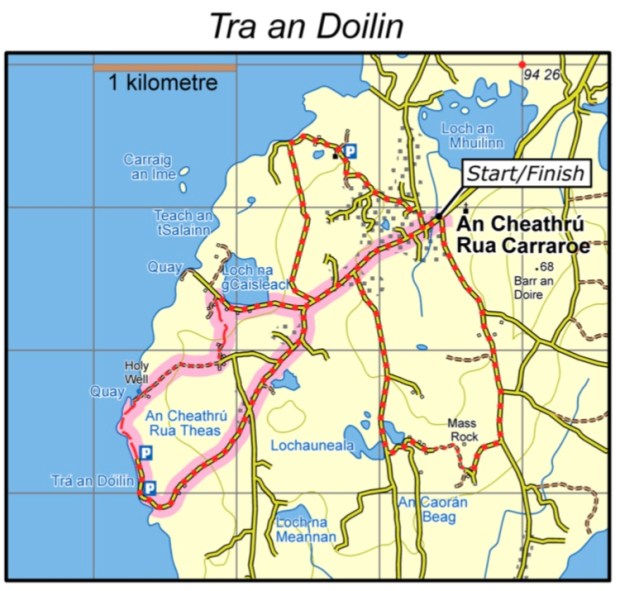
So although we have, over the years, been many times to the (relatively) more accessible beauty spots, we wanted to delve deeper and started with a walk on An Cheathru Rua, anglicised as Carraroe, a low lying peninsular of about 4×1 miles jutting south from Casla.

Home to nearly 2500 people, over 80% of whom are native Irish speakers, this is the heartland of the Connemara gaeltacht and the Irish language media ,being the base of the Foinse newspaper, with RTE Raidio National Gaeltachta and TG4 television station both nearby.

We started our walk on the beach that featured in the first Irish language film “Poitin” directed by Bob Quinn whose home and production company are/ were based in Carraroe.

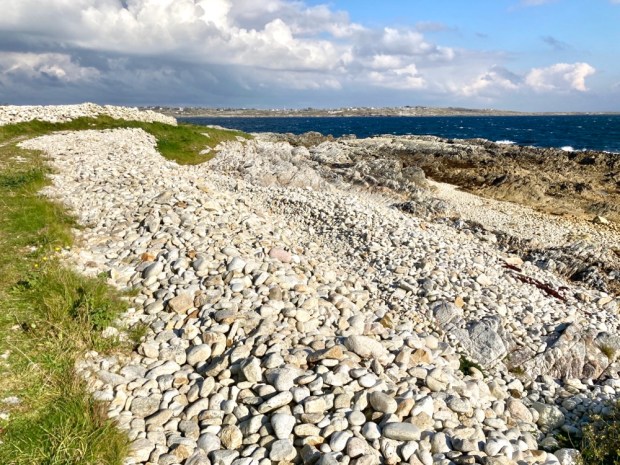
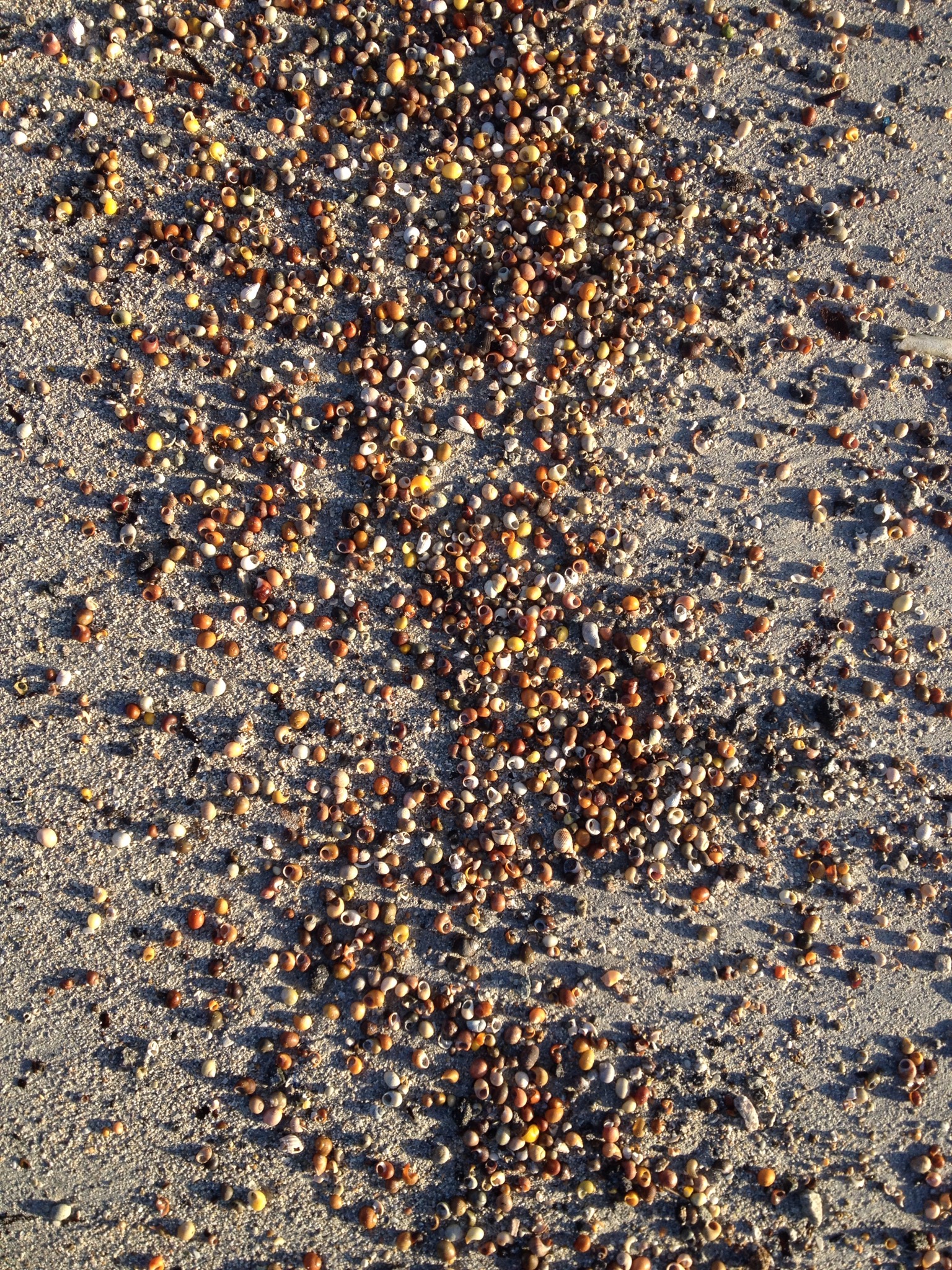
Tra an Doilin, Strand of the Creek, is nowadays better known as Coral Strand and is made up of a rare biogenic gravel, a coralline algae known as Maerl. An Cheathru Rua translates as the Red or Ruddy Quarter in reference to the poor land of rock, heath, grass and rush possibly through the browning or bronzing of dead vegetation. In the past the Maerl would have been used as a soil conditioner to sweeten the acidic soil.

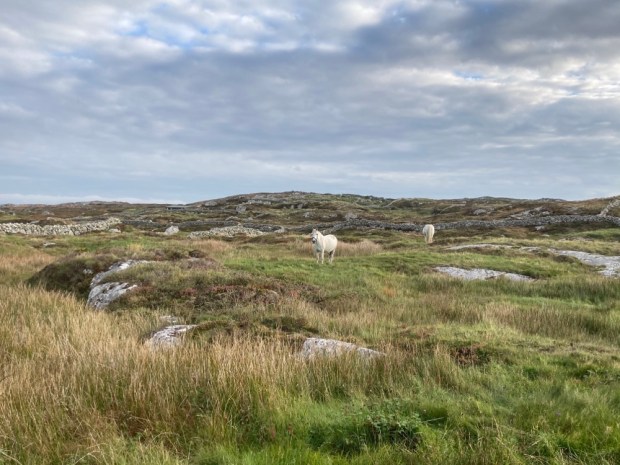
Heading north along the coastline past grazing horses in rocky fields we soon reached Doilin Quay.

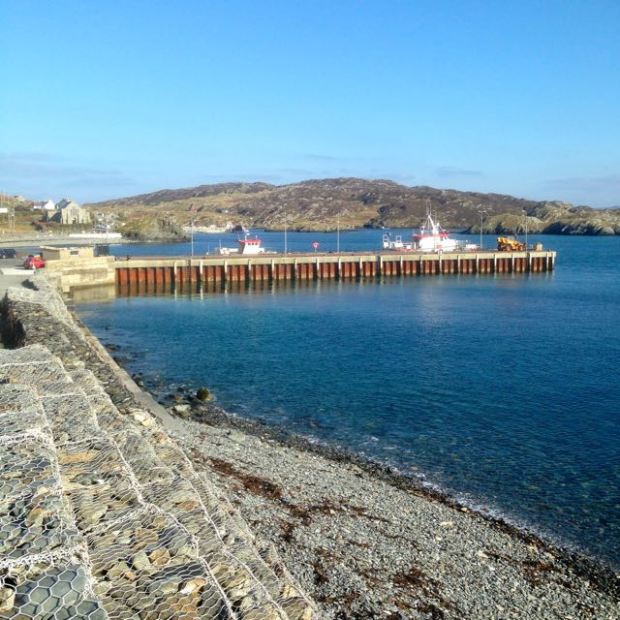
There are very many piers, quays and landing/ mooring places all over the South Connemara area, a reflection of the vital importance the sea had for the generations of people gaining sustenance from these waters for over 4000 years. Roads have only come relatively recently and the sea was the main route from place to place until modern times. Another name for this place is Ceibh na Mine, Meal Quay, because cornmeal used to be landed here.

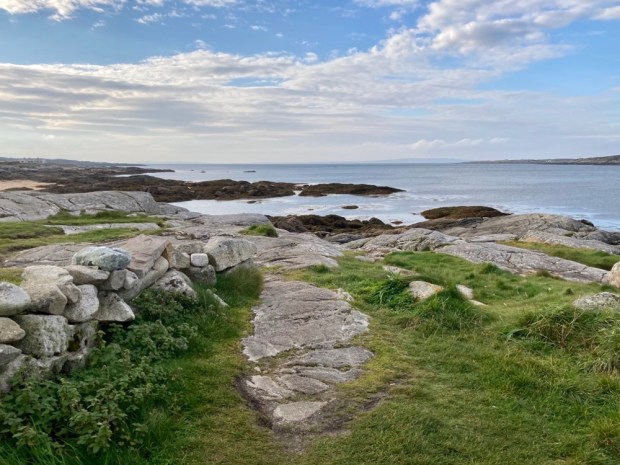
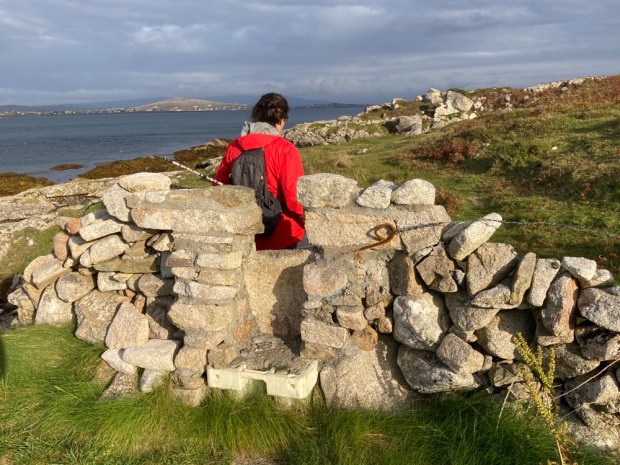
From here we left the “official” loop and continued on a narrow path along the coast, climbing over and through a wonderful variety of stiles fashioned from the granite to hand.

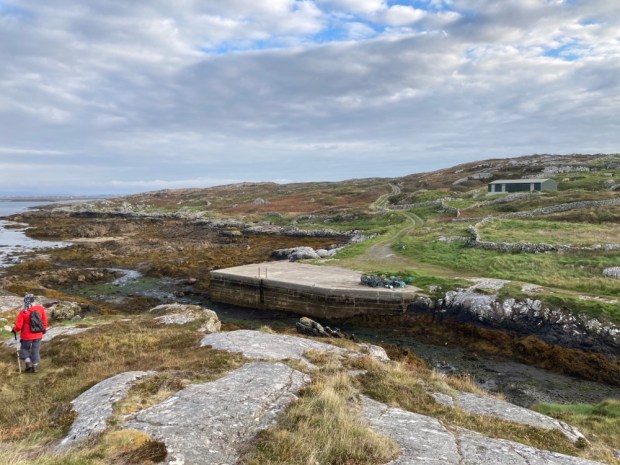
Soon enough we reached ‘Tadhg’s landing place’, Caladh Thaidhg a once busy port built in 1840 by Tadhg O’Cathain, a prominent local busnessman running a fleet of boats from here to the Aran islands and Galway city.

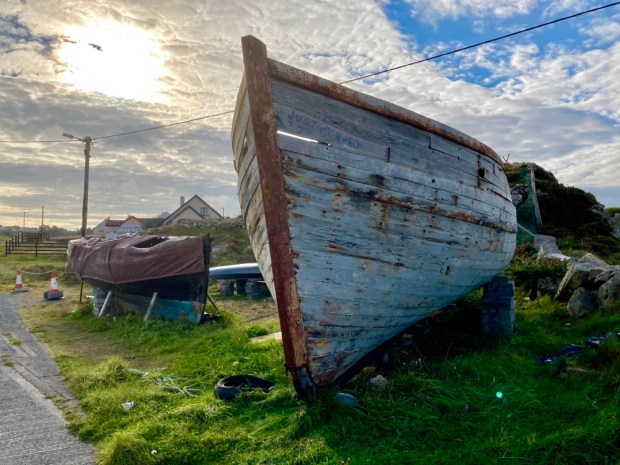
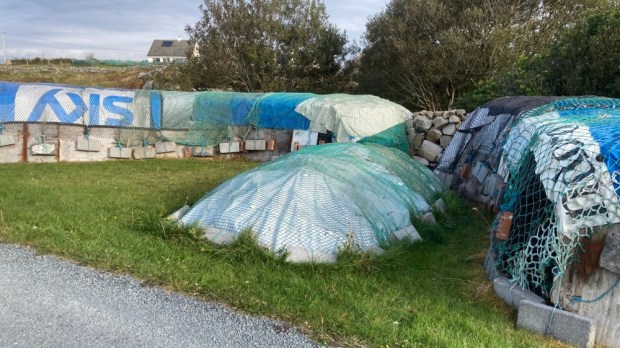
The hookers and other boats of old were busy transporting primarily turf to the Aran islands, a trade that continued into the 60’s when “cosey gas” as Kosangas was known had started to arrive on the islands. Connemara turf is still important fuel in these parts though and we passed many neatly piled stacks on our ramblings. None of these sods originated in the local area though as the profitable turf trade to Galway city and the Aran islands had ensured that the granite hereabouts had been stripped bare to earn money, at one time leaving only the unsellable top layer of heather roots or “scraw” to be burnt at home.

From the pier we turned up the road toward Loch na Tamhnai Moire , lake of the big field, anglicised as Natawnymore and turned off into a charming little grass covered boreen that led us up, down, around and back to the road from the village to Coral Strand, from where we looked across Greatman’s Bay, Cuan an Fhir Mhoir , to our next walk on Garumna island.

Although only a km away by water we had to drive about 20 km by tarmac ,up to Casla and then on a lovely road that spanned 3 bridges between the islands of Eanach Mheain , Leitrim Moir and Garmna. A beautiful landscape but as in WB Yeats’s words, ” a terrible beauty”, as this area suffered terribly in the famine and post famine years.

Carraroe in particular became famous for the evictions of the cottagers and especially for a rebellious battle against them. In 1880 the western half of the peninsular was owned by the Kirwan estate whose men with 60 police were serving eviction notices and closing houses when a melee broke out that warranted an extra 200 police to be sent down to Galway and on to Carraroe where they charged and bayoneted a group of women defending the homes, wounding several severely and one mortally.

The New York Herald reported that when attempts were made to serve eviction notice at another home the women ripped it to shreds and a did of blazing turf was snatched up from the fire and smashed into the inspectors neck. With 2000 or more protesters now gathered to defend the cottages the situation was deemed too dangerous and the notice server, a Mr Fenton, refused to carry on and all the police were withdrawn.

However evictions did eventually continue over the coming years and the Land Leaguers Davitt and Parnell visited and used its example in America to raise funds for famine relief and political change.

Hardships unimaginable to us as we embarked upon the 8km loop in the sunshine with full belly’s and a cosy camper van to return to.

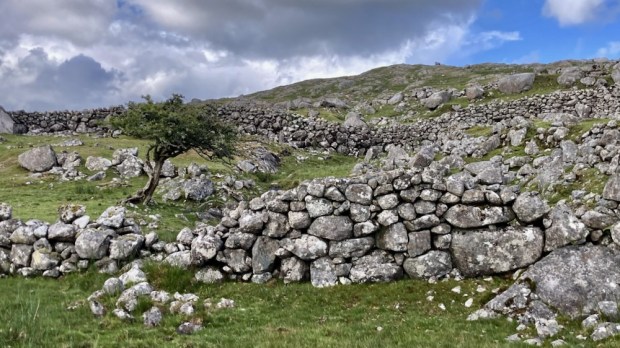
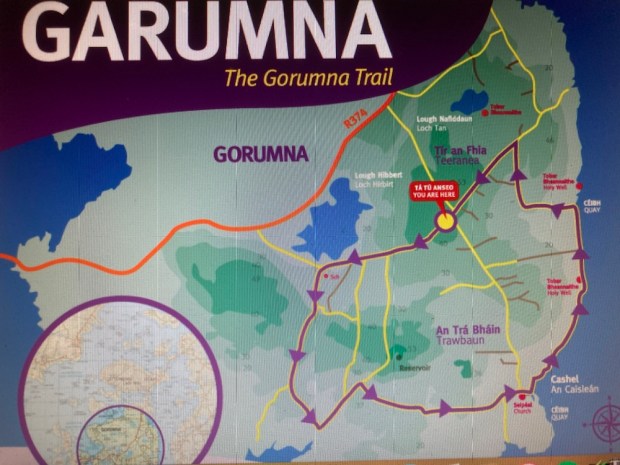
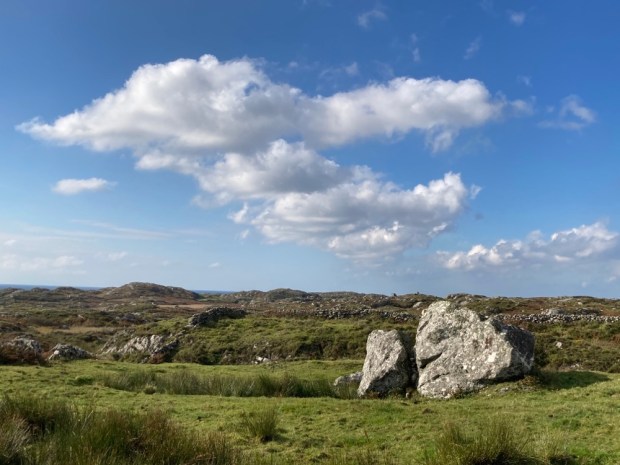
Garumna is the largest of dozens of islands in the archipelago of Ceantar na hOilean, the mosaic of water, rock, bog and land that are the heart of the south Connemara Gaeltacht. Small lumpy fields of dips and hollows bordered by a writhing mass of stone walls are made up of a variety of habitats and flora. Pools and marsh, granite slab and boulder, rush and grasses, bracken, gorse and heather. The low lying acidic land rises bare metres above the Atlantic whose westerly winds beat down any trees attempting a life here.

As we set off westwards towards loch Hoirbeaird we had to disagree with the anthropologist Dr Charles Browne who came here in 1898 to study ” probably the poorest and most primitive population in Ireland” when he said of the area that ” a more utterly barren, dreary looking region could hardly be imagined”, although I had to admit that some of the holiday accommodation had seen better days.

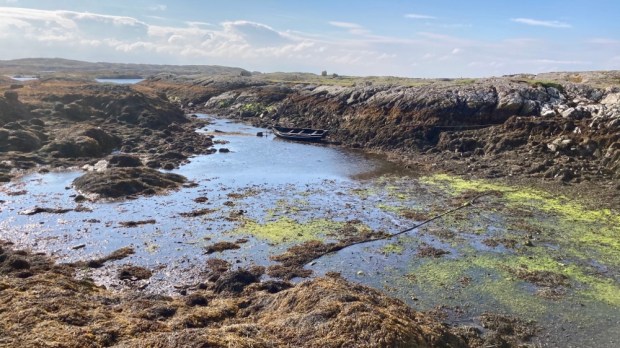
We turned off down a small winding backroad that became a track which took us , after losing our way, down to a tiny quay lost among the seaweed covered rocks.

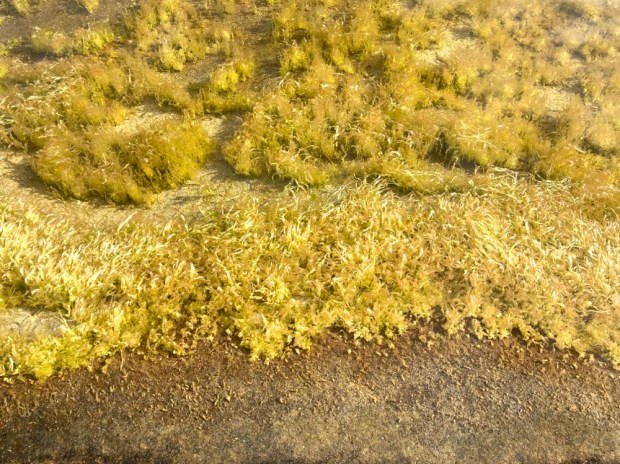
Gathering seaweed has a long history in the area as a food source and fertiliser and the days of burning kelp for soapmaking, dyeing, paper and glassmaking and producing iodine were succeeded by collecting vast amounts of ascophyllum nodosum or egg wrack for the extraction of alginic acid, used in so many foods, cosmetics, biotechnology as well as animal food and fertiliser. Some 20,000 t are now harvested annually by hand in the region and transported by road to factories across the water in Cill Chiarain where the Canadian owned company Arramara Teo are about to upgrade their factories to food grade and take in bladderwrack seaweed as well, a move which they say will have ” far reaching economic benefits within the local community and west coast of Ireland”

We had our lunch gazing at all the riches clinging to the rocks and reminiscing about the times, 40 years ago, when we earned our living gathering seaweed in West Cork.

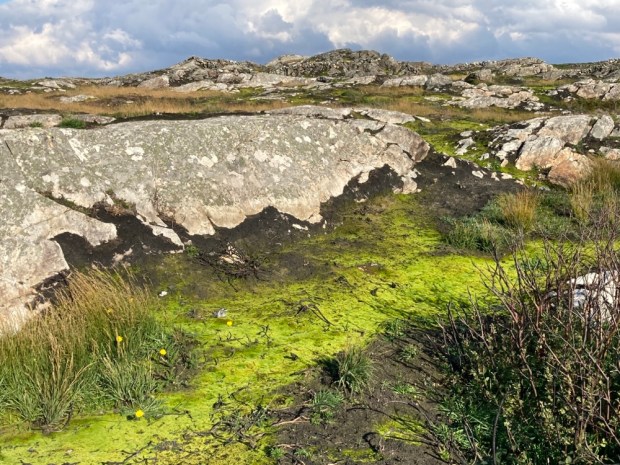
Turning back up the track aways we found our turnoff, a grassy track leading us deeply into the island towards a line of smoke in the sky. Someone was clearing heather or gorse in the hope of fresh grass but we passed some areas where this method of burning had resulted in mosses alone.

We reached the coast again at the medieval church and graveyard at An Tra Bhain, the white beach, from where pilgrims would gather for the journey out to the monasteries of the Aran islands.

An enchanting path now led us northwards along the shoreline of Greatman’s Bay, looking back over towards the Coral beach, and on reaching yet another little jetty we turned west again to return to the camper along a quiet backroad.

Looking for a quiet park up for the night we drove back over the causeways to Leitir Moir and Eanach Mheain and followed our noses to a graveyard on the north coast overlooking the Bens and Maumturks way in the distance.

The very tranquil spot was shared by the buried with golfers who got to play in what surely must be the most dramatic setting on the Wild Atlantic Way, although a risky spot for amateurs, being surrounded by water.

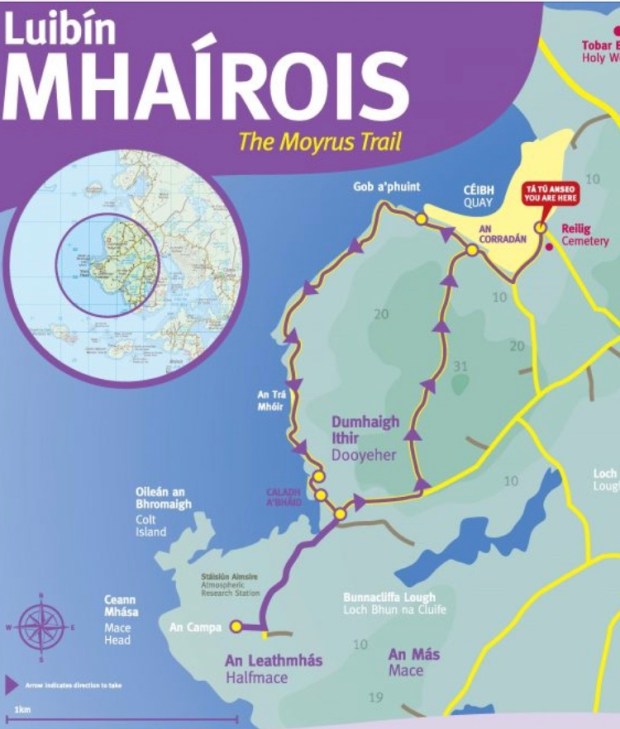
The following day we headed further into the depths of the Connemara Gaeltacht by driving around the large peninsular of Iorras Aithneach to Mhairois where another loop awaited.

Another beautiful 5km walk on beach and boreen started at the ancient seaside church ruins and headed southwest along the immense strand where the ghost of a friars massive hound was said to be seen running races from end to end.

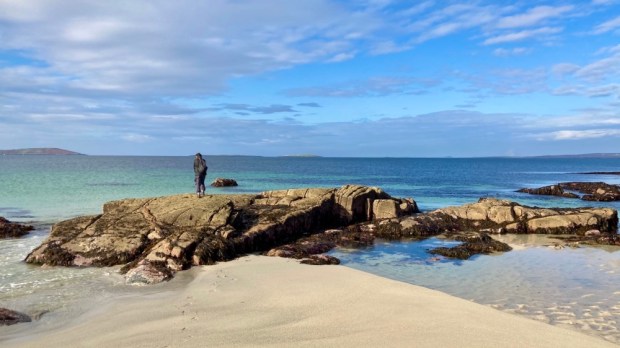
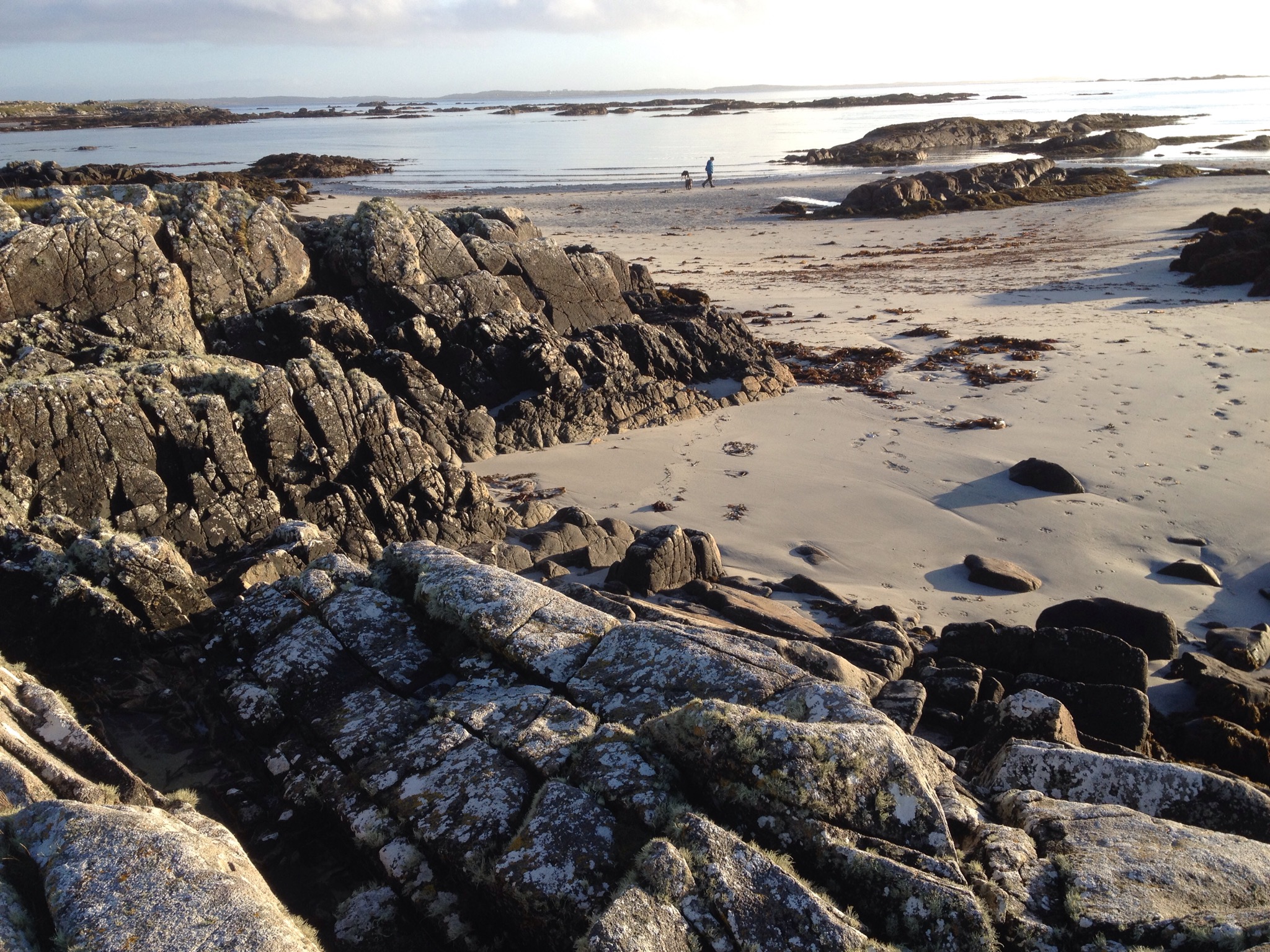
At the far end at a headland we turned south along a rock shoreline of wonderfully hued slabs and boulders of granite and tropical looking crystal clear waters, as calm and flat as a mill pond.

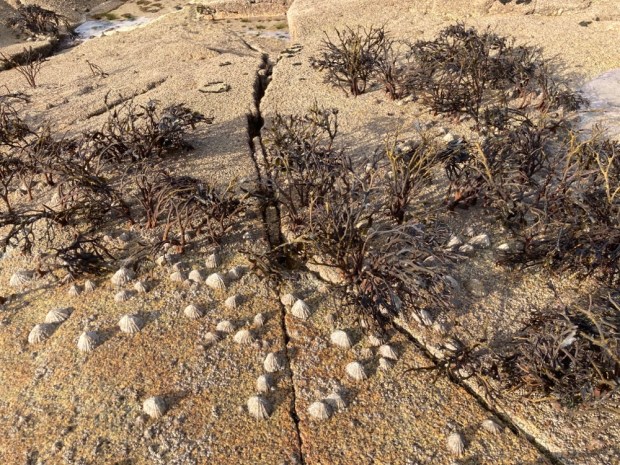
The views across Cuan na Beirtri Bui, Bertraghboy Bay were stunning, a palette of blues and greens and pale turquoise from which swellings of land emerged, rocks, islets, islands and mountains. The microcosm was as appealing as the wider picture with miniature seas held in rock pools and the abstract artworks of gigantic stone sculpture under our feet.

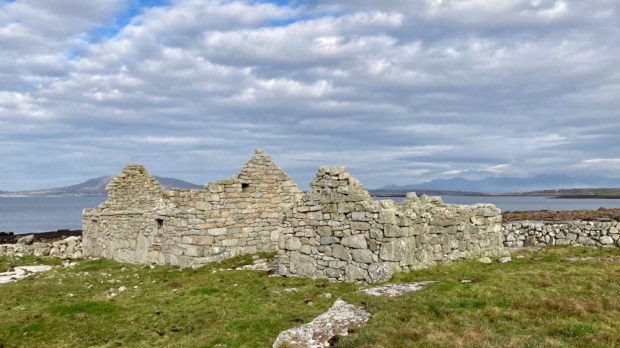
There was the work of man here too. Ruins of stone cottages that must have caught the spray of storms sat squatly atop the rock, a testament to the resilience of man and his work. Calm and tranquil in the weather we were enjoying, the usual conditions must have made for a harsh life on the Atlantic’s edge.

I fruitlessly searched around for a Holywell marked on the map below the high tide line, the third of these seashore relics we’d passed on our rambles unspotted. Further along, on the grassland above the beach of An Tra Mhoir, we discovered another of the Eire navigation and neutrality markers from the days of “the emergency”we had spotted in many places around the coast. This was number 52 of 83 and had been recently restored by locals.

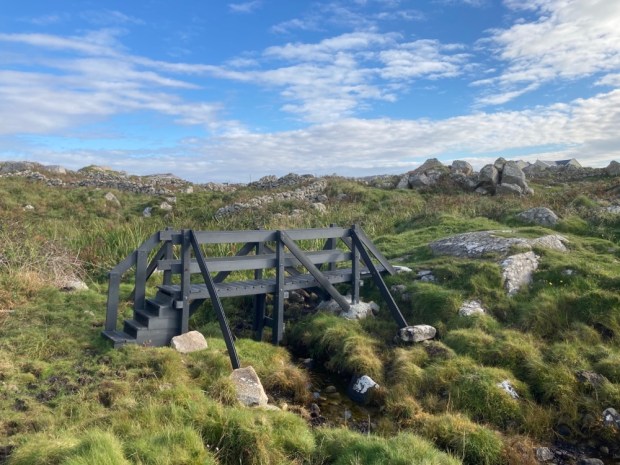
Next up was an inlet that was fed by a stream we crossed on a new looking recycled plastic bridge. A good use for the silage wrap that so often gets left to decorate the hedgerows, block drainage and ends up in the bellys or around the necks of wildlife.
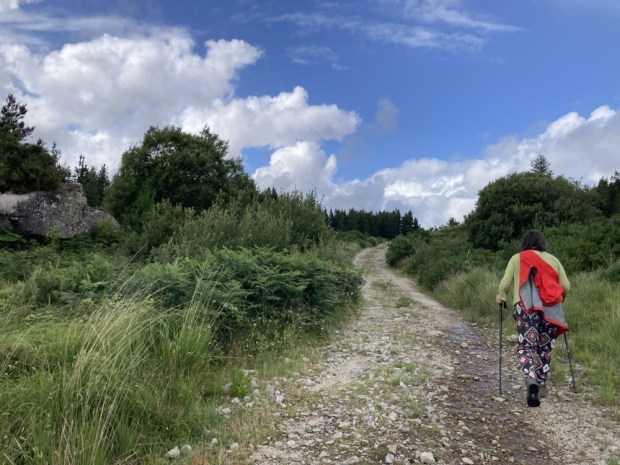
On reaching the road we took the detour to the right to check out the Atmospheric Research Station in Mace Head. It is uniquely situated, far from shipping lanes, cities and other pollutant sources to look for aerosol and trace gas elements within the clean air mass coming from the North Atlantic. Part of a large number of international research networks into global warming it also produces data for the weather forecast. In 1994 it was recognised by the World Meteorological Organisation as one of the most important stations in the northern hemisphere.
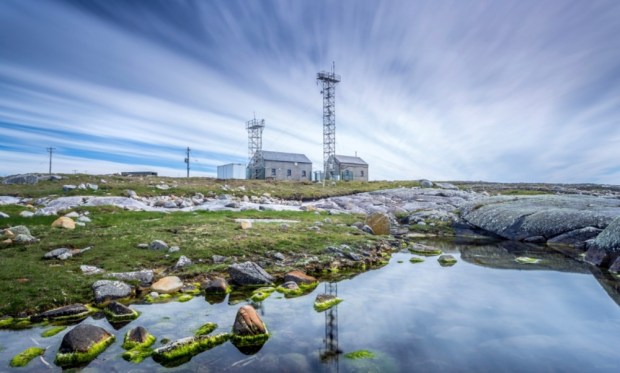
*Not my photo

Then up to the top of the broad summit of An Mas , translation buttock, where the Coastal Watch Look-Out Post number 82 still kept a watch out for friendly and foreign goings on.
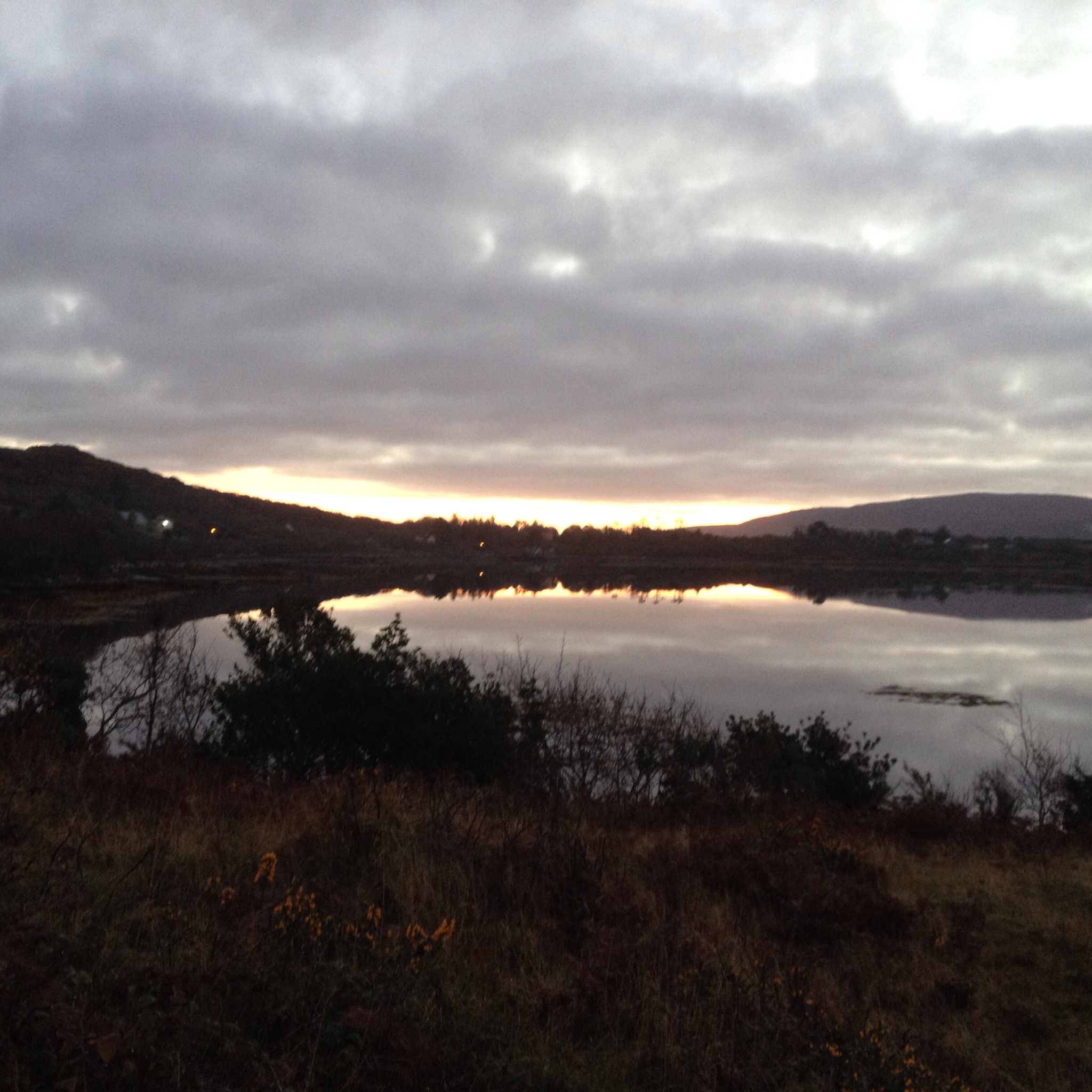
Having our sarnies we had a magnificent view northward to the mountains and southwards over the rough and rocky fields littered with long abandoned cottages and beyond to the sea and islands, the nearest being St Macdara’s, home to an early Christian monastery.

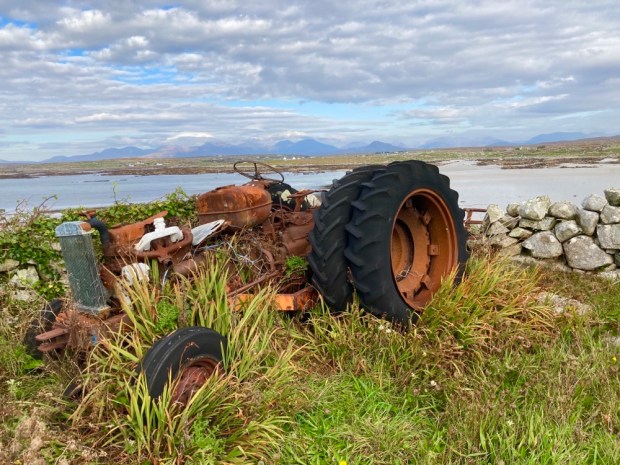
Then back down the winding boreen, passed signs of the low intensity of the agricultural practises in the area. A couple spending a long long time driving some cattle into a ruined cottage and a tractor in retirement.

Finally we did get drawn towards the distant peaks , to the ancient woodland of the Nature Reserve on the shores of Derryclare lake in the Inagh valley north of Recess. This 19 hectare old oak woodland is a remnant of what used to be and an indication of what could be again if the ravages of a “sheep wrecked” environment could be resisted.

Access is down a forestry track off the R344. Parking the camper we crossed the river between locks Inagh and Derryclare above a salmon hatchery, and followed the track around the end of the lake and on until we eventually found an unmarked and slight trail that seemed to be going in the right direction and were soon enveloped in a mysterious green stillness of another world.

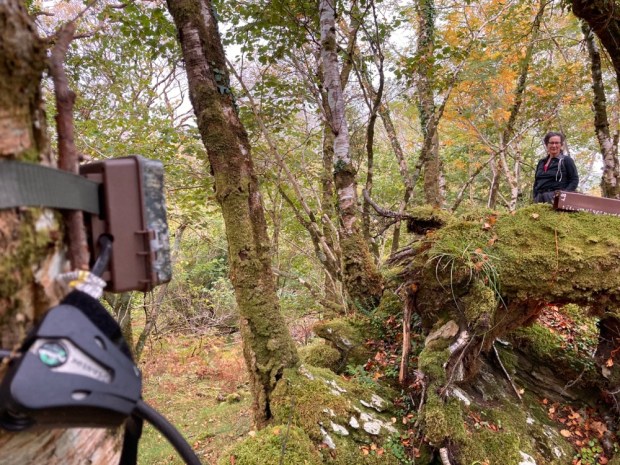
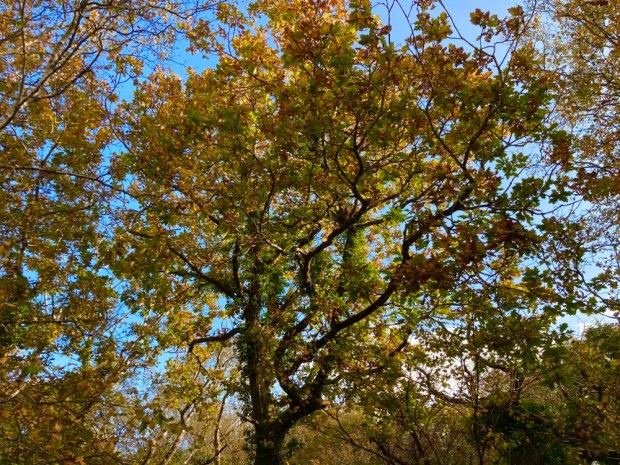
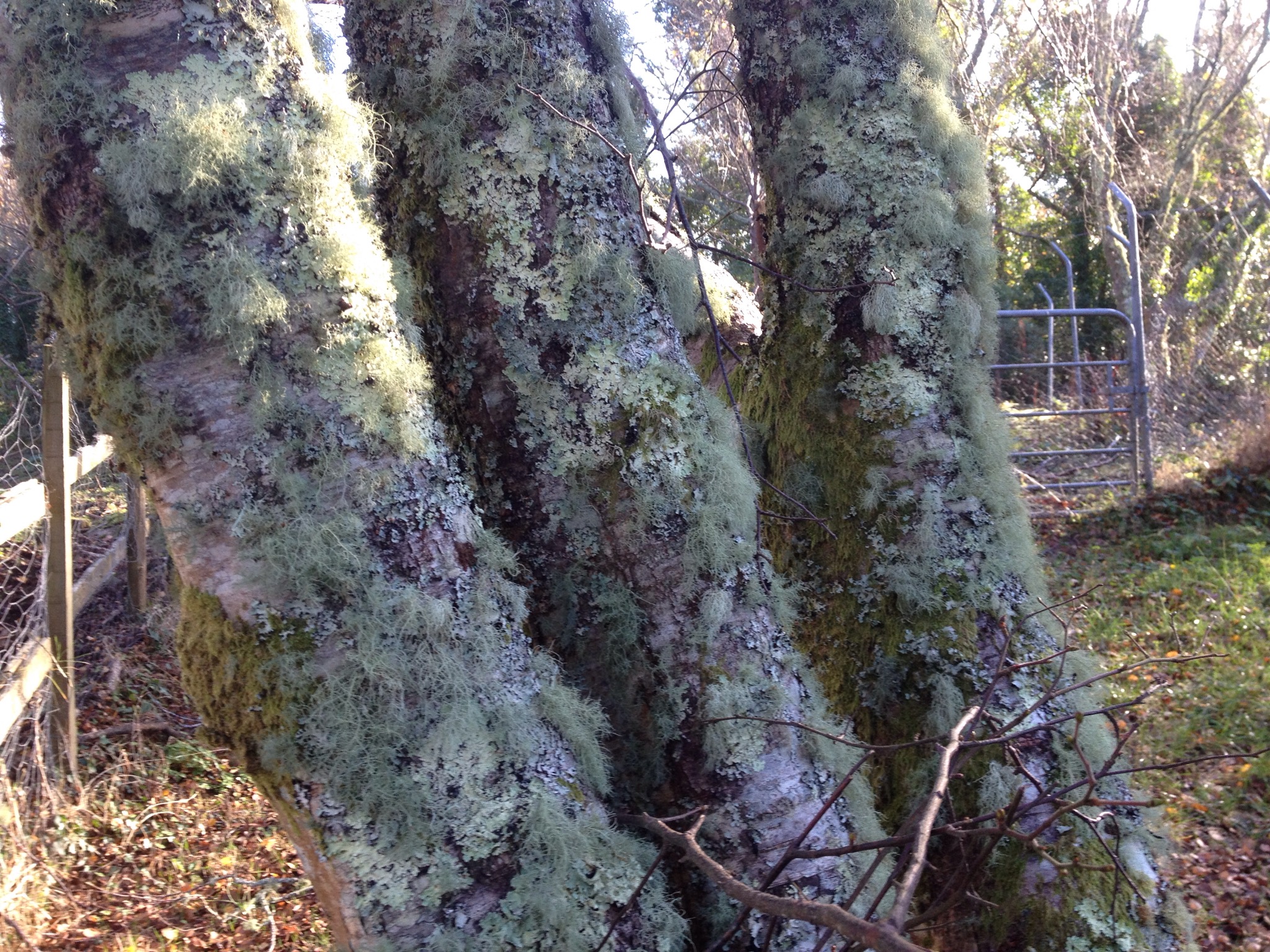
The aboriginal oaks, hangovers whose ancestors arrived here after the last ice age, are smothered with thick coats of mosses and host colonies of polypody ferns. Although in theory protected, the sheep continue to find their way in and these elderly trees do not have a lot of youngsters to take their place having been nibbled at birth. The National Parks and Wildlife service have been ringing the non native conifers and have translocated 19 red squirrels from Portumna Forest Park to Derryclare. They have been doing well according to study’s and hair tubes and traps and wildlife cameras keep a close eye on their movements.

The edges of the Oakwood are home to a range of other species, alder and willow on the marshy boggy bits and birch and ash on the dryer sedge covered ground.

Here and there are yew, chestnut and sycamore but the species that the visiting botanist really get excited about are the lichens. The clean air and humid climate have allowed over 100 species to flourish here, some unknown elsewhere in Europe or the northern hemisphere. or extremely rare.

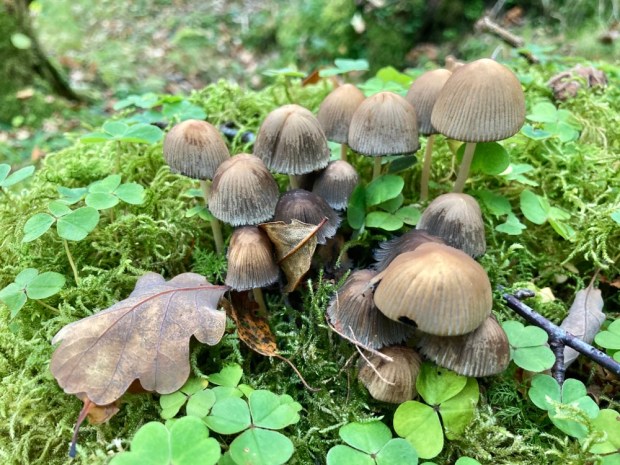
The macrocosm of the mountain ranges, the lakes, the bogs and the vast fractal coastline complimented again here by the microcosm of forests of mosses and lichens and fungi. A beautiful interconnected web reaching out from within the earth up to the highest peaks and passing through the hearts of some who journey here.

INISHBOFIN:19th March 2016

3 months since a Ramblingman posting i thought i would report on a couple of recent excursions or micro adventures as i believe they are called in the on-trend world.

IMG_4971

The first was a trip we’d been meaning to take for a long time. To take the ferry from Cleggan on the northwestern tip of Co Galway the 7 miles out to Inishbofin or to give it’s proper name, Inis Bo Finne, the Island of the White Cow. The inspiration to finally get it together was supplied by the presence of our WWOOFer (Willing Worker On Organic Farms, or nowadays for some reason changed to WorldWide Opportunities on Organic Farms). We wanted to show off Connemara to Hanna on her first trip to Ireland from Germany.

It was a fairly gloomy day driving through the bogs and mountains and the clouds hung low over the sea as we boarded the boat along with a surprisingly large amount of other folk and the two dogs.IMG_4956

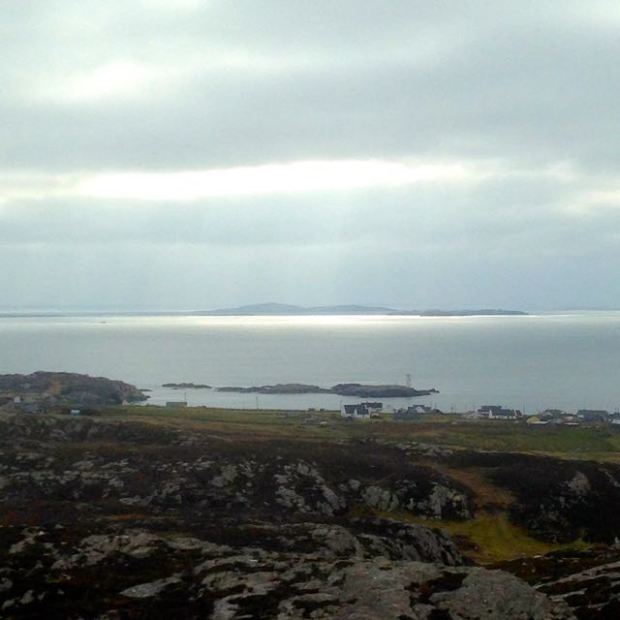
We had been having beautiful spring weather recently so it was a bit disappointing to gaze out towards the grey 6 by 4 km smudge on the horizon and back towards the twelve Bens and the Maumturk peaks lost in cloud.

IMG_4959

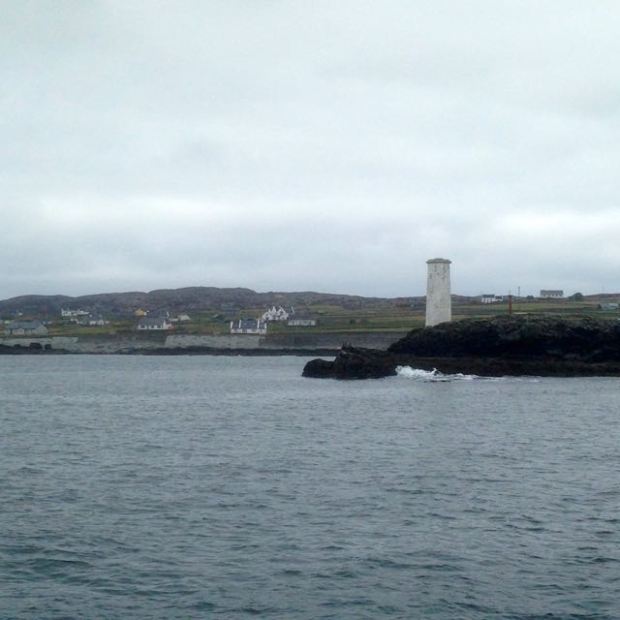
It took about half an hour to cross to the island and pass the beacons that led ships into the fine sheltered harbour below the smattering of buildings that comprised the main settlement.

IMG_4960

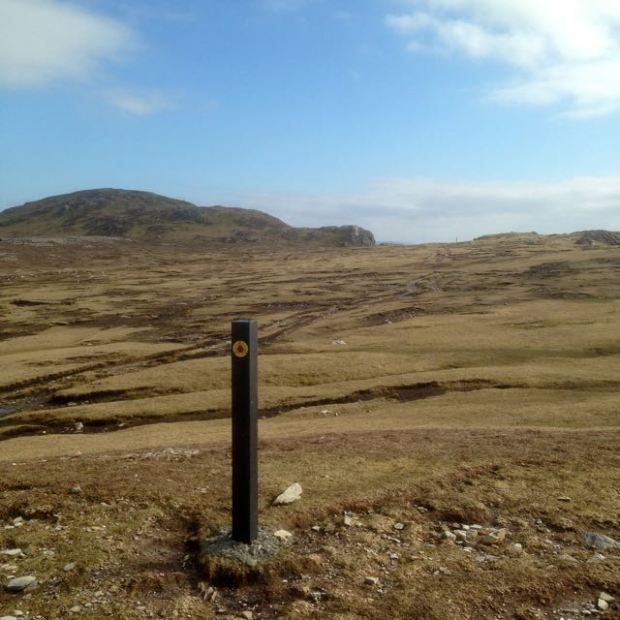
The island has three looped walks and with 4 hours available to us we had combined two of them, the Middle and Western Quarters. Climbing up from the harbour along the network of boreens we started out on the Middle Quarter loop first, albeit in the opposite direction to the way marks, which possibly explains how we got lost fairly soon after passing the cottages,new and old, and heading out north towards the islands high ground.IMG_4966

Passing an airstrip carved into the rocky and boggy ground we took the wrong turn but only had to climb to the highest point to get back on track and admire the views east towards the mainland and south across the ocean.

IMG_4973

IMG_4972

Rejoining the way marked route we descended from the 90 mt highpoint towards the bog track leading to Loch Bofin and the pebble embankment separating it from the Atlantic at North beach.

IMG_4976            IMG_4977

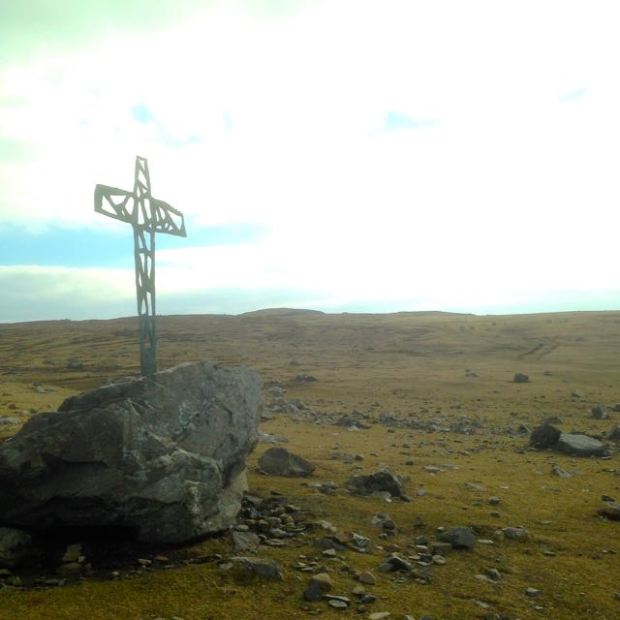
Following a flock of sheep being herded along a boreen we moved on to the open expanse of the Westquarter and now in bright sunshine passed by the sad monument to the memory of some American students that had drowned off the coast here in the 7o’s. IMG_4982

IMG_4979

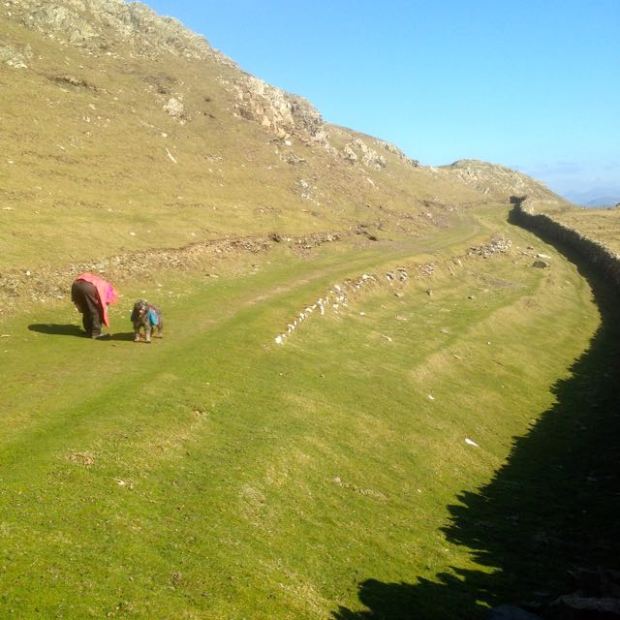
Somewhere around here there had been a quarry of valuable soapstone which, along with the abundance of fish, fresh water, fertile ground and a sheltered harbour had made Inish Bofin an attractive place to live for the 6-8000 yrs of human settlement. Strangely there are none of the megalithic remains of standing stones, circles or burial tombs that feature on the mainland from that period, leading some people to surmise that a different people with a different culture may have inhabited these islands. There is a promontory fort, Dun Mor, that we under below once we reached the old green road that travels along the southern shore with a warren of rabbit holes peppering the slope below it.

IMG_4986

There is a fine view from this section of the walk over towards Inishark and the now roofless houses finally abandoned in October 1960.We couldn’t resist clambering down to the beautiful pristine beach hemmed in by headlands on either side and after fruitless beach combing to the eastern end, availed of the handy rope to climb back up to the green road.

IMG_4997

IMG_5001

IMG_5002

The sparkling sea and sunshine and soft, sheep cropped grass persuaded us that this was a good picnic spot before we rejoined the tarmac road that serves the simple homesteads and its remnants of rusting transport.

It’s a shame that Inishark could not sustain itself long enough to enjoy the better economic conditions that Inis Bofin seems to enjoy, with new sea defences, a fine and active community centre and a hotel popular with stag and hen nights by all accounts , but it’s lonely and empty stillness could be a draw of itself and can be enjoyed during the Inis Bofin Walking Festival in a couple of weeks (22nd to 24th April) when a guided hike over the island will take place, weather permitting.

IMG_5007

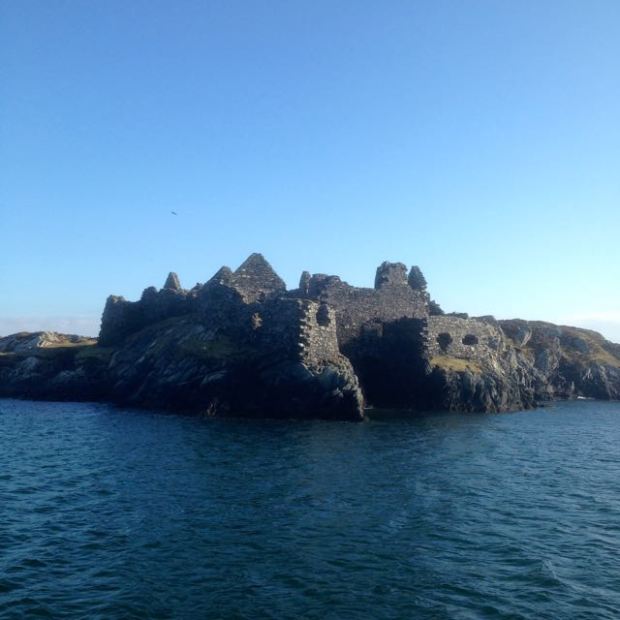
Our ferry awaited and soon we were cruising out past Port Island separated by a narrow gulley and once the castle site of Don Bosco, not the puppet once popular on Irish TV, but a famed and feared Spanish pirate who, along with his mate Granuaile, the pirate Queen, in another castle opposite, controlled these waters and plundered any foolish enough to venture in. Since the 16th century another warlord, Cromwell, has had a presence here in the star shaped shape of the barracks used as a prison for catholic priests from all over the country declared guilty of high treason for being– catholic priests.IMG_5009

It would have been their last view of their homeland as they eventually got shipped out to the West Indies and an unknown fate. We, on the other hand, had the pleasure of anticipating a fair weather drive back through the mountains of Connemara now revealed in all their glory for the benefit of our German visitor.

IMG_5016


Connemara

With a month to go before I head off on the GR131 across the Canaries I needed to get out into the wilds with a pack on my back for some training not only in hiking with a load but in blogging about it afterwards on the mobile.
So we headed off west past Galway and Oughterard to Maams cross where we turned south across the russet  autumnal  bog.
At the top of Camus Bay we turned right towards Roundstone and when we met the water again we pulled over at the start of an old turf cutters track which led deep into the soggy wilds.

 The cloud was low the air still and moist. We were in a world of water, above us around us and below our feet.

IMG_0045

IMG_0045

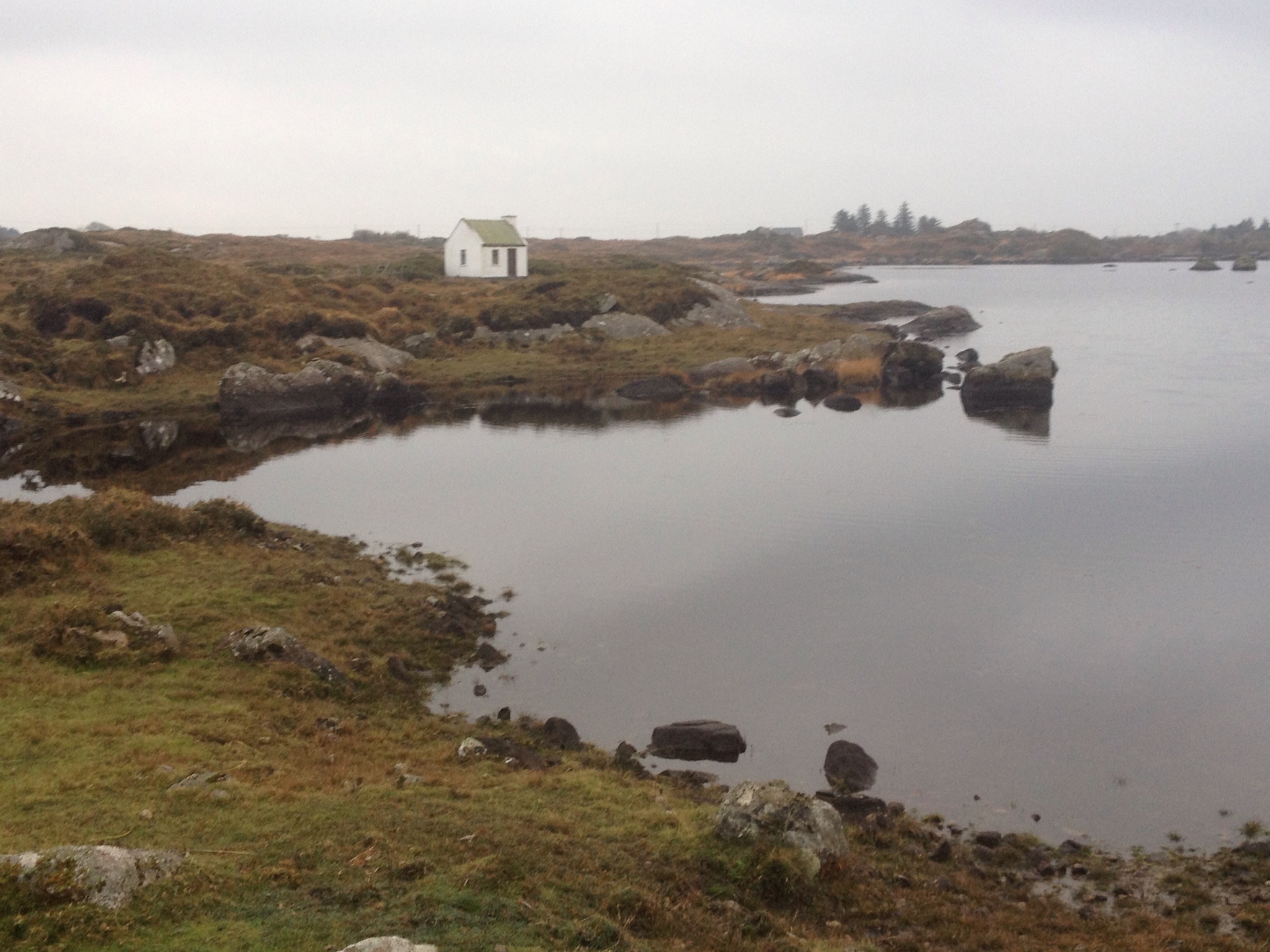
The numerous lakes had miniature cottages beside them which we assumed were for sheltering fishermen trying to hook a salmon.

IMG_0052

When the stone paved track ran out we followed the trail marked on the map, now long gone into the bog.

IMG_0051-1

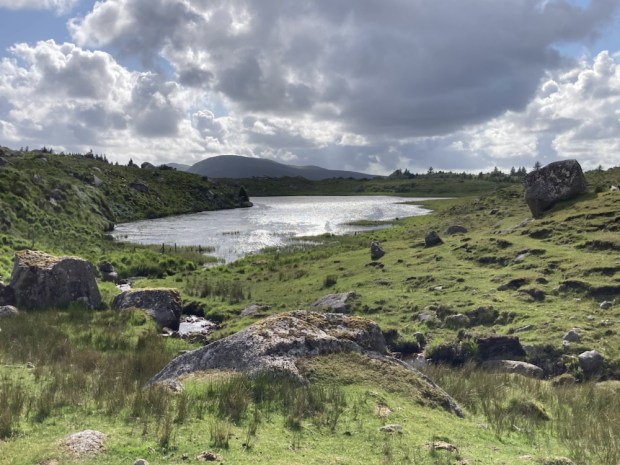
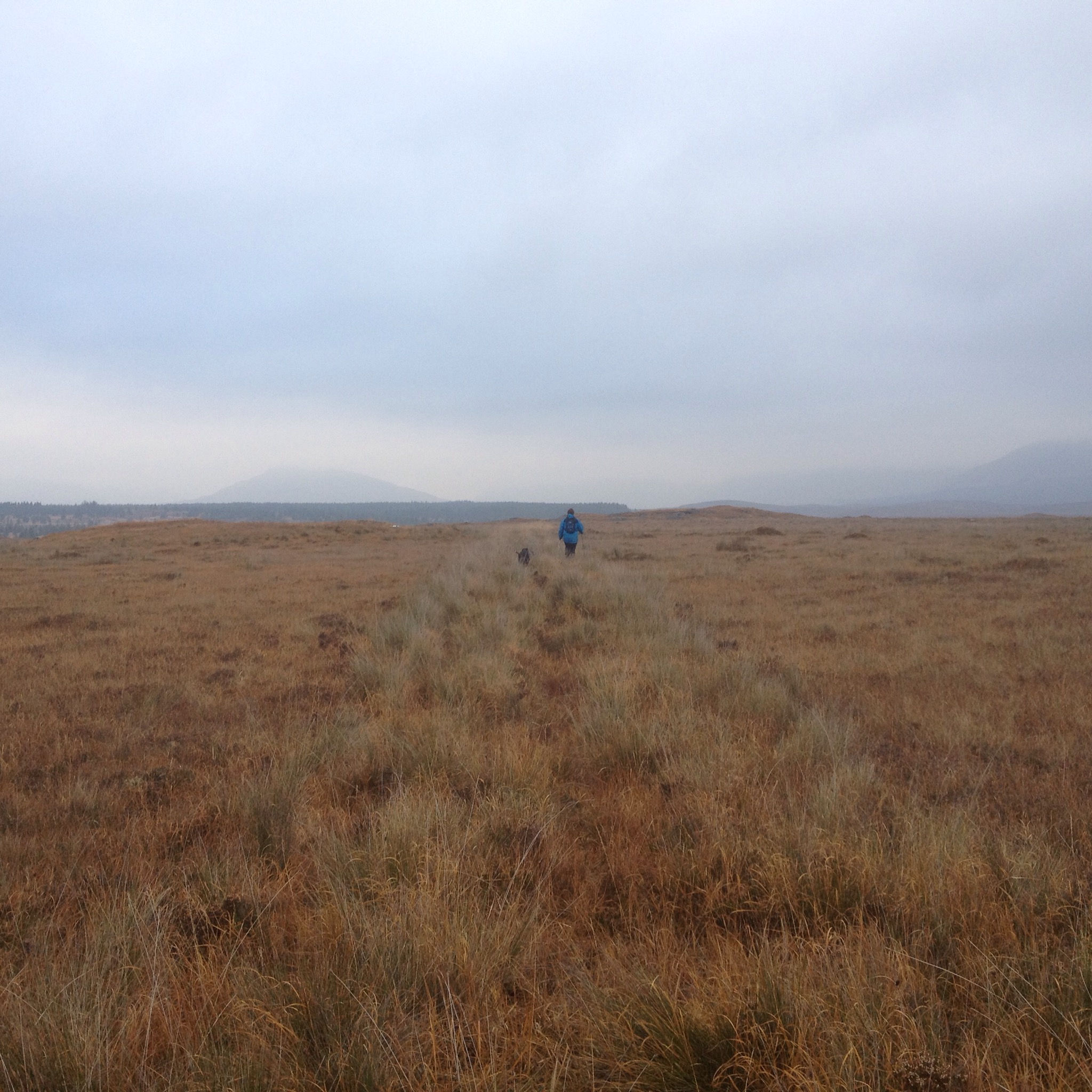
The waterlogged ground quaked and wobbled like a waterbed beneath our feet as we made our way north towards the Maamturk mountains rising out of the horizon.
It was easy to see how nasty it would be in a disorienting mist with little or no features to guide you through the quagmire.
After a stop for a silent sandwich gazing over the vast emptiness we returned to the car and carried on to Cashel House hotel, a lovely dog friendly old school country house with acres of well established gardens we spent the afternoon wandering around.
Up early with the hounds I took a stroll along the shore

IMG_0057

before a hearty breakfast to get us up Cashel Hill standing 311mts above us in a beautiful clear blue sky.
Passing the church we followed the track up the hill above the top of Cashel bay

IMG_0061

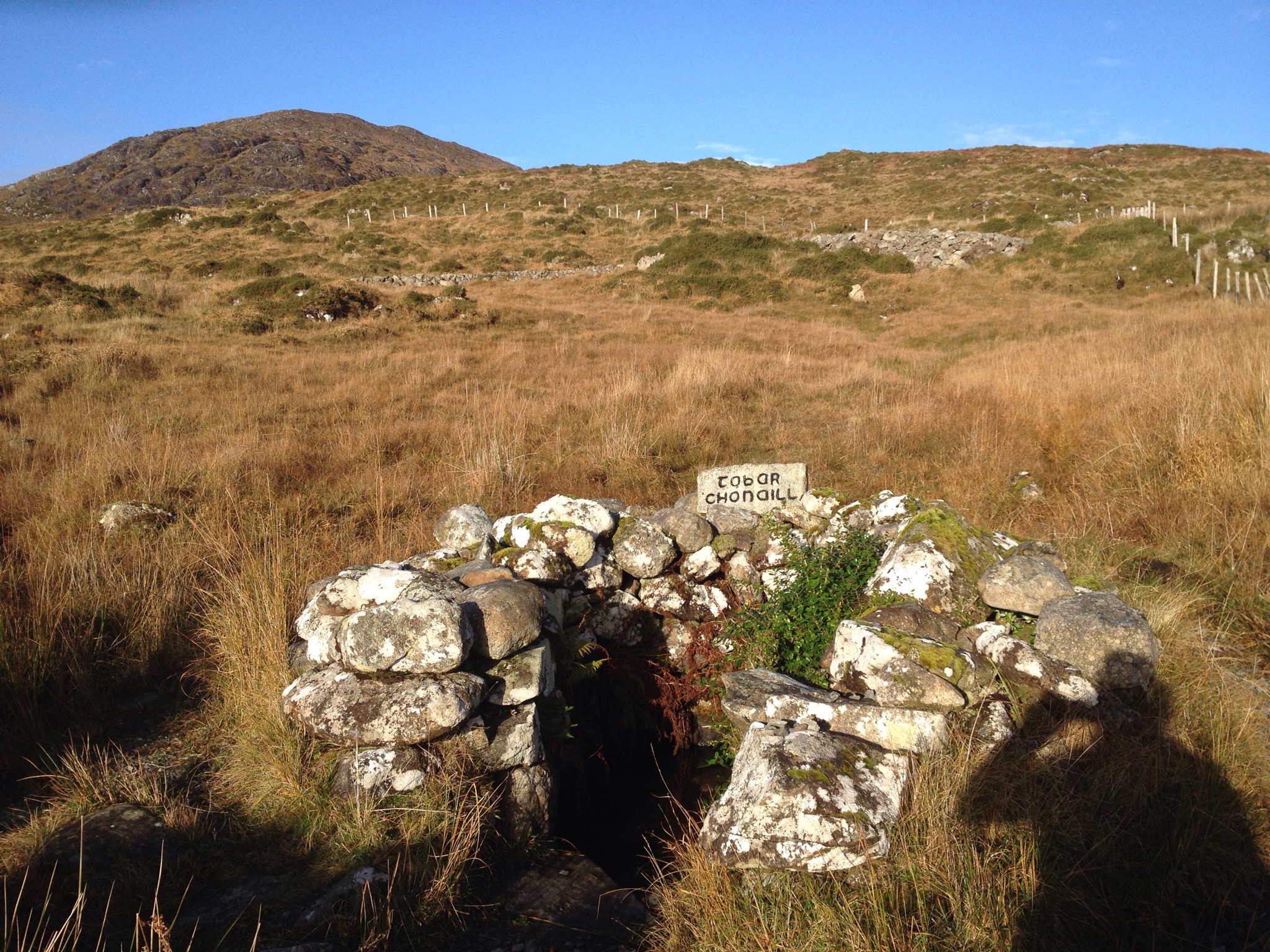
and shortly arrived at an ancient graveyard complete with a ring fort and holy well of St Conaill.

IMG_0062
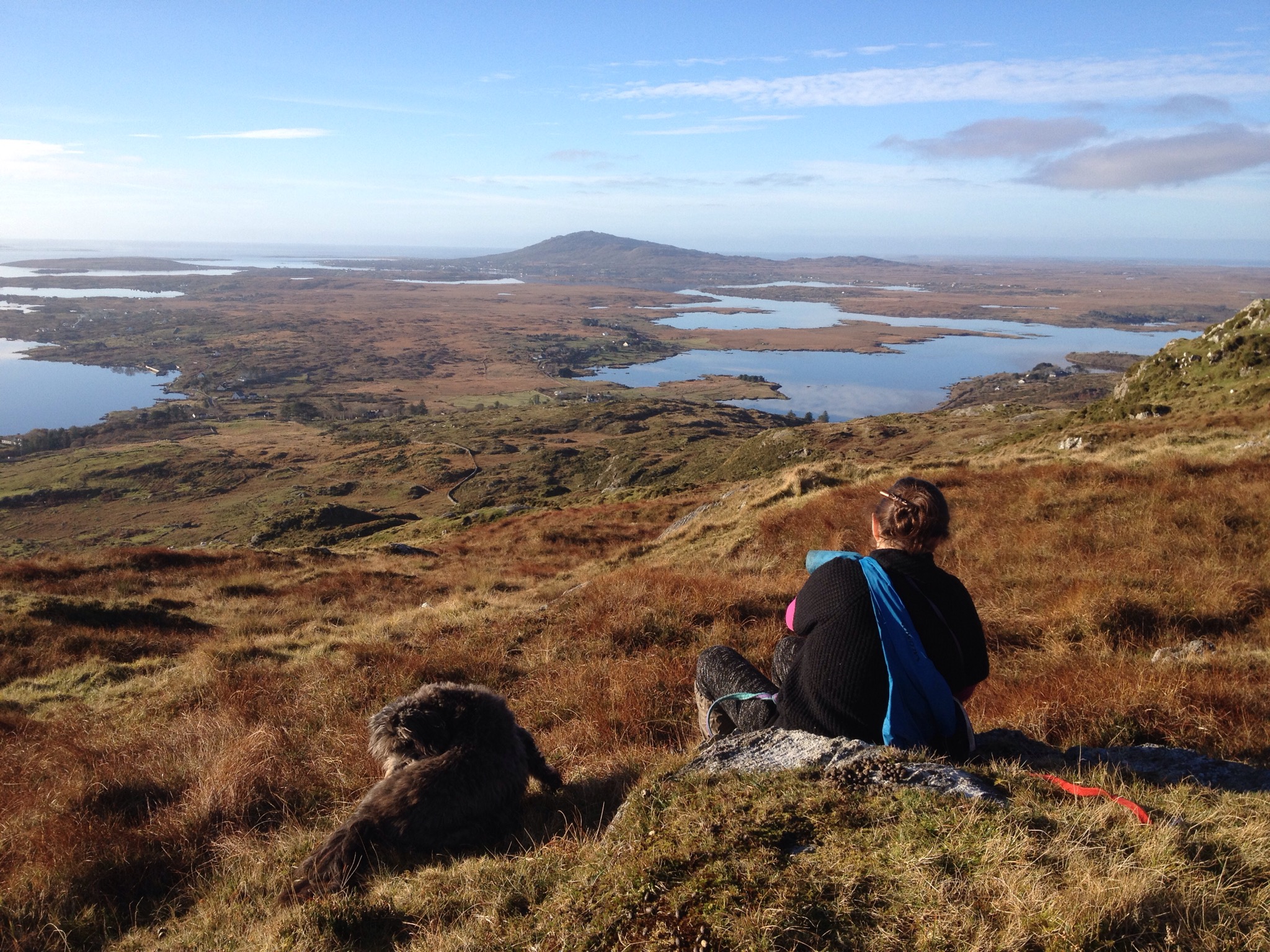
A steep climb with a few rest stops to admire the unfolding vistas brought us the summit trig point and perhaps the best view of the Twelve Bens and Maumturks in the whole of Connemara.

IMG_0067

IMG_0065

IMG_0075

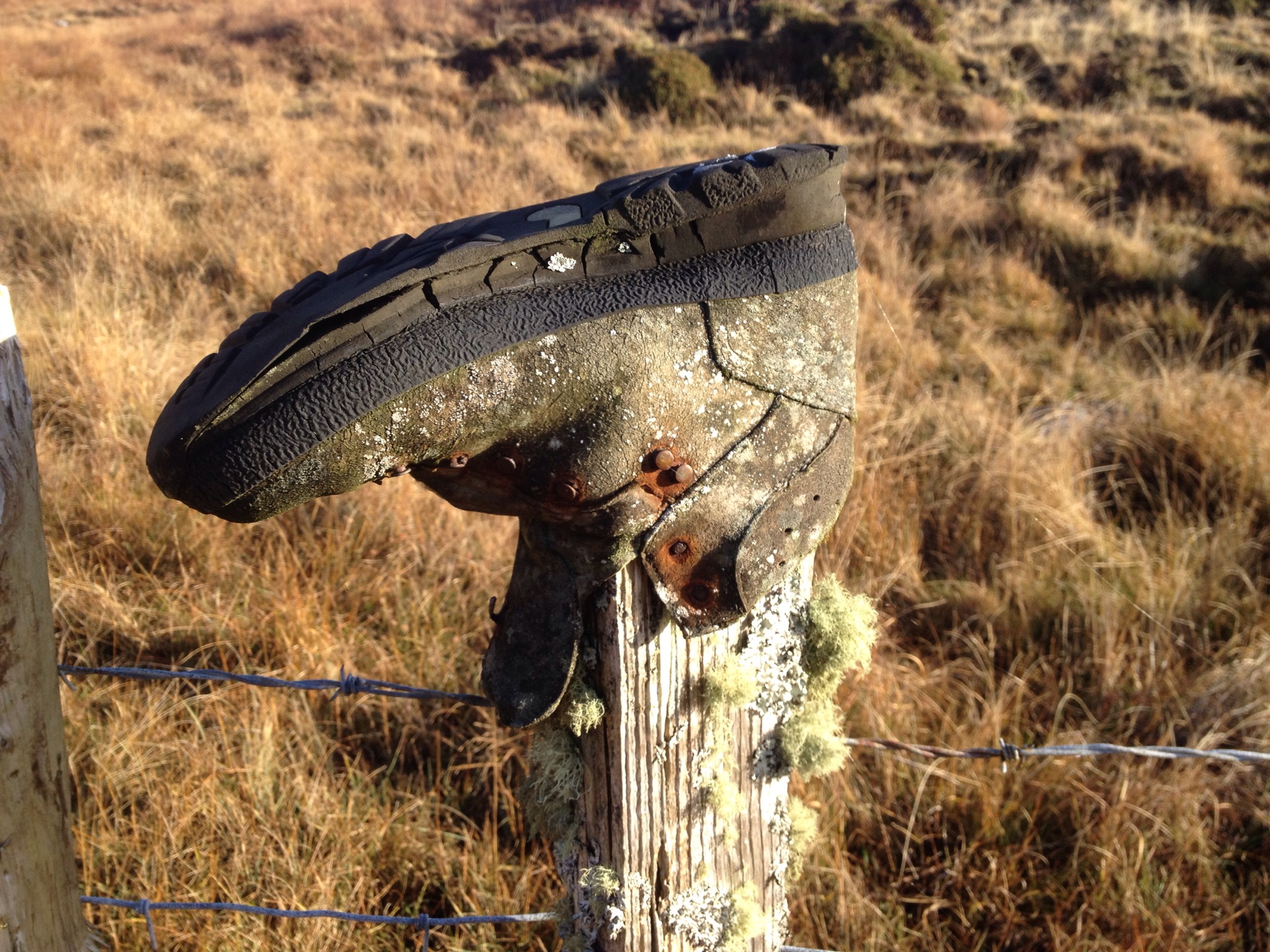
As always the steep descent was tough on the knees, especially with a heavy pack on, but we wanted to explore the coast a little more in the glorious sunshine so after clambering down past forlorn footwear and lichen covered trees

IMG_0064    IMG_0077


we motored on South to a big beach near Carna.

IMG_0081

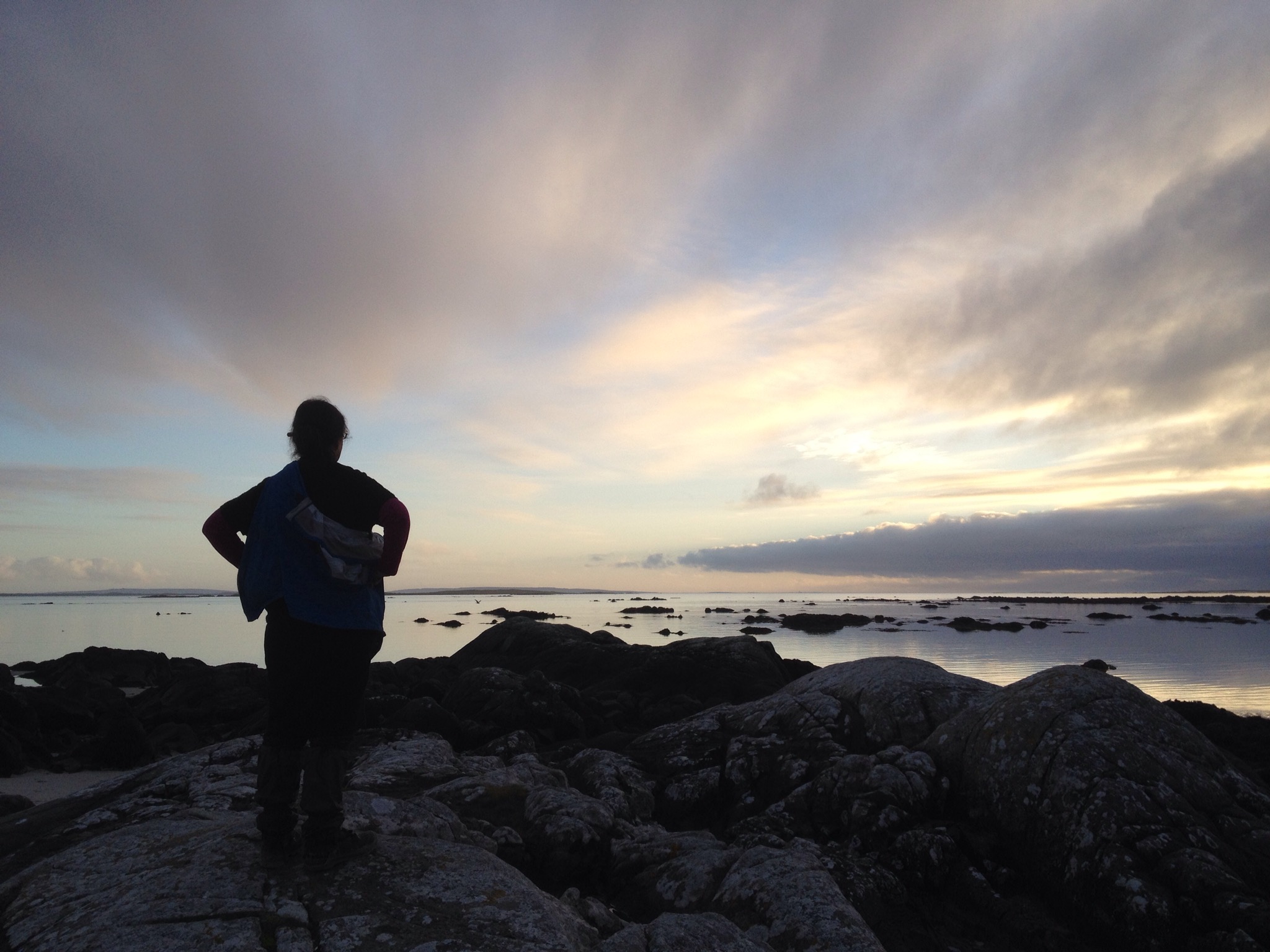
A low tide football pitch and shell covered sands led us towards Finish Island but the waters were not low enough to cross over so we stood gazing into the fading light.

IMG_0079

IMG_0078  IMG_0082