hiking in Portugal

SINTRA HILLS: Close to Heaven

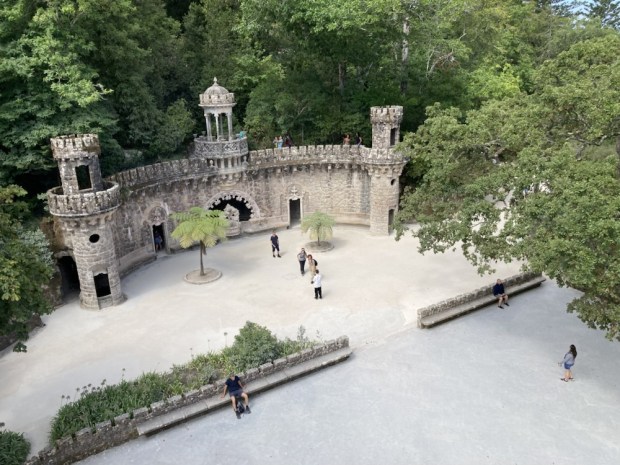
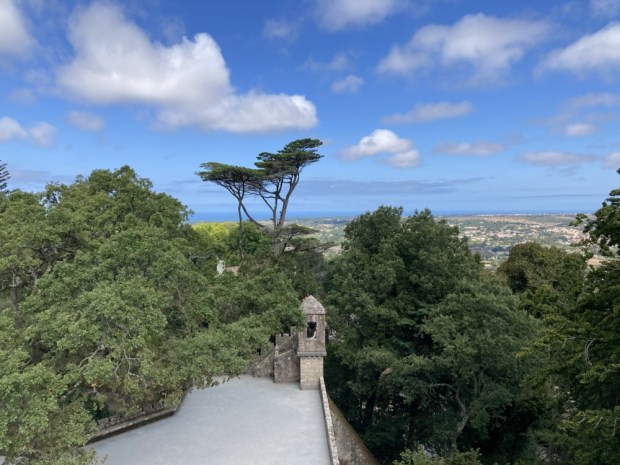
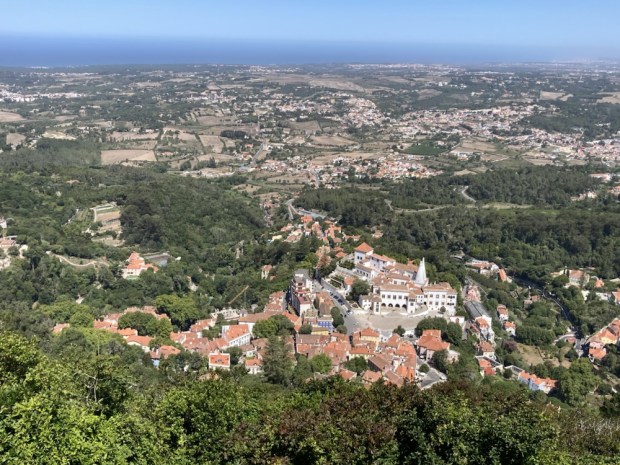
The Sintra-Cascais Natural Park, a 145km2 area about 25 km north and west of Lisbon contains within it a mini Sierra of lush forested peaks favoured by cooling winds and beautiful views. The Sintra Hills, adopted as summer residence by kings, noblemen and bourgeoisie were given World Heritage status as a Cultural Landscape recognising its harmonious blend with nature.

Studded with constructions of peace, war and opulence that nestle into the folds of flora we spent a week exploring on the steep paths meandering through the sites.

Visible from Lisbon on a clear day and one of the Seven Wonders of Portugal, Peña Palace started as a simple chapel in the Middle Ages after an apparition of the Virgin Mary appeared on the hilltop above Sintra. The monastery built on the site was later reduced to ruins in the 1755 earthquake. King Ferdinand acquired the monastery and all surrounding land and commissioned the Romantic style palace built between 1842 and 1854.

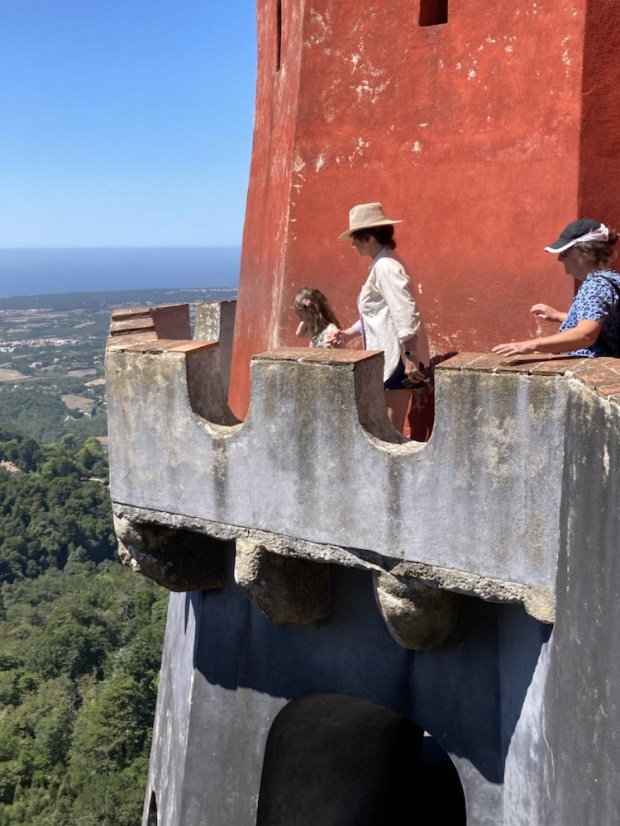
Used as a Royal Palace until the Republican Revolution of 1910 it was turned into a museum by the State and has become a hugely popular attraction. A bit too much of a honeypot for my liking drawing long lines of queuing punters to shuffle through the palace interior. I preferred the dramatic views from the impressive external walkways.

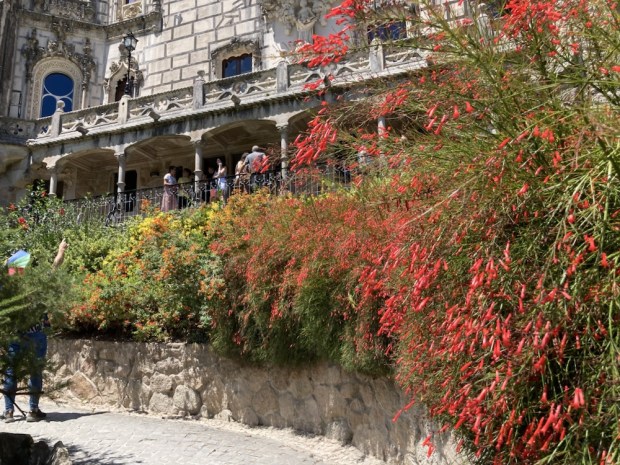
The Quinta ( villa/ estate/farm) da Regaleira is another massive Romantic style pile surrounded by exquisite landscaped grounds but right on the edge of the historic area of Sintra town.

Once again put off by long queues to view the palace interior we headed off to explore the 4 hectares of gardens featuring grottoes, ornate benches, wells, lakes, tunnels,fountains and towers all added when Carvalho Monteiro employed Italian architect Luigi Manini to build enigmatic constructions holding symbols of his esoteric interest in alchemy , Masonry, Knights Templar, Rosicrucians and Primitivism in the early years of the 20th c. It was all finally opened to the public in 1998.

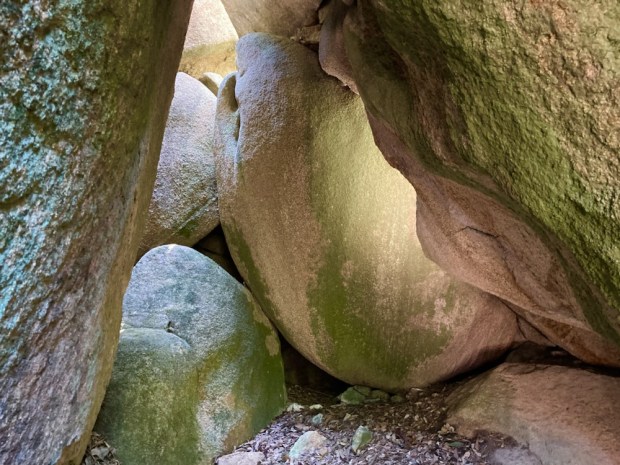
One queue we were prepared to join for half an hour was to enter between two huge granite boulders and descend the Initiation Well- never served as a water source but used for ceremonial purpose.

An incredibly constructed and engineered whimsy it consists of a beautiful 27m spiral staircase lined with small niches leading down to a stone compass with Templar cross.

Blindfolded candidates holding swords close to their hearts descended the 9 flights of steps and walked the labyrinth of underground tunnels towards ” the light” and then a chapel to be welcomed into the brotherhood. Another simpler ” well” construction also connects via tunnels but was closed when we visited.

We followed in the footsteps of the initiates down a warren of laboriously built tunnels to emerge at the fountain and lake we were towering above earlier.

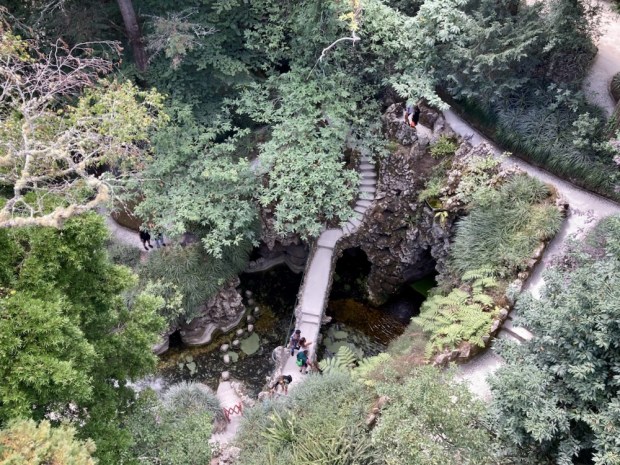
After wandering many paths and admiring the work in more grottoes and soaking up the vistas of the surrounding green coated hills it was time to explore the other side of them.

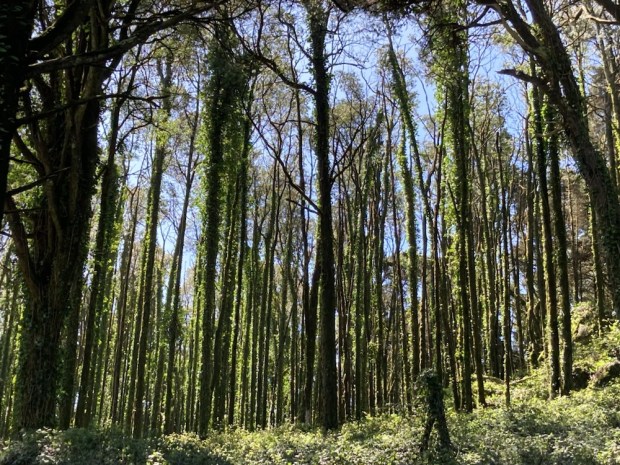
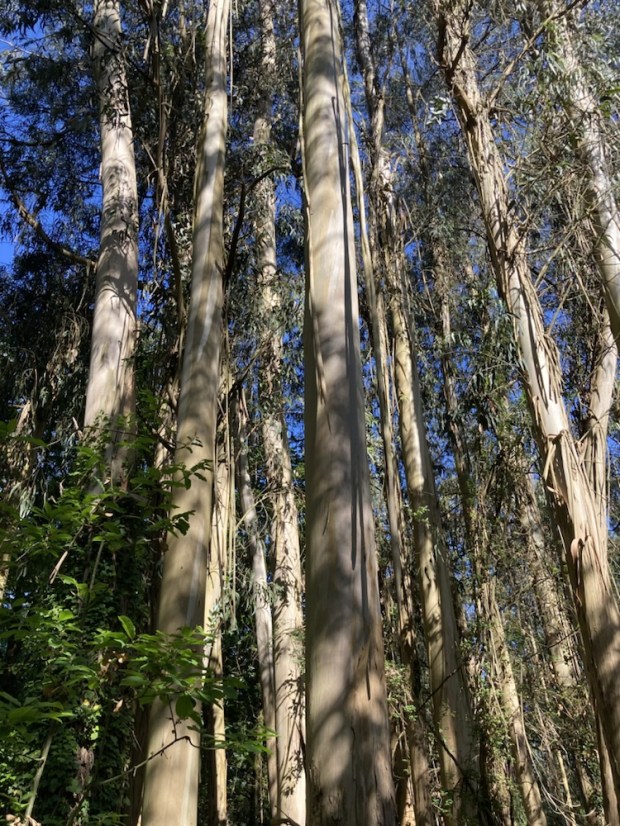
The thickly forested road we drove up to reach the Sanctuary of Peninha was suddenly closed off, so we hiked up the last 2.5km of luckily shady tarmac, admiring the towering trees and the views between them.
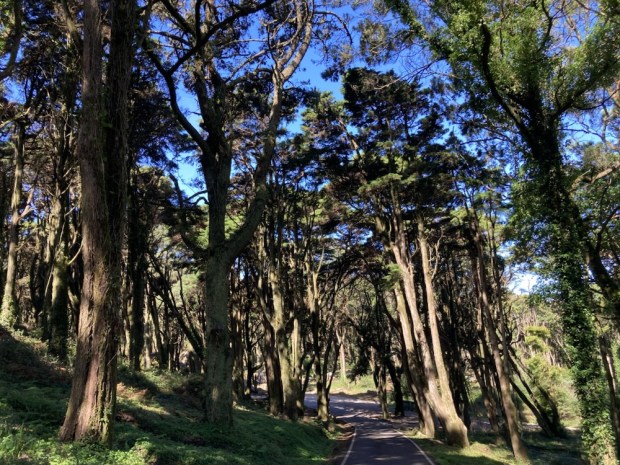
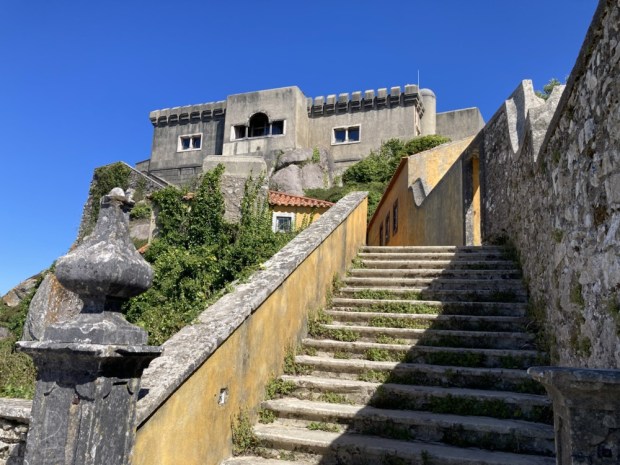
The Peninha hills have been home to a small hermitage since Christianity arrived in Portugal, added to over the centuries and used by monks until the dissolution of the monasteries in 1834. It was still occupied by farmers until the 1960’s. As well as the Baroque Chapel from 1710 there is also at the very peak the unfinished Palace of Peninha, dating from 1918 and built by August Monteiro, the owner of our last stop, the Regaleira.
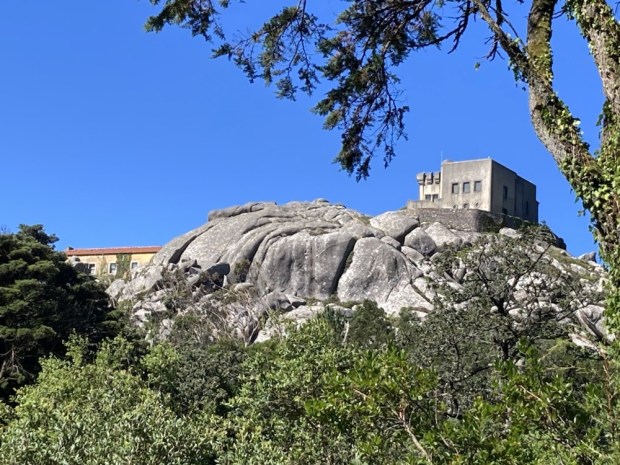
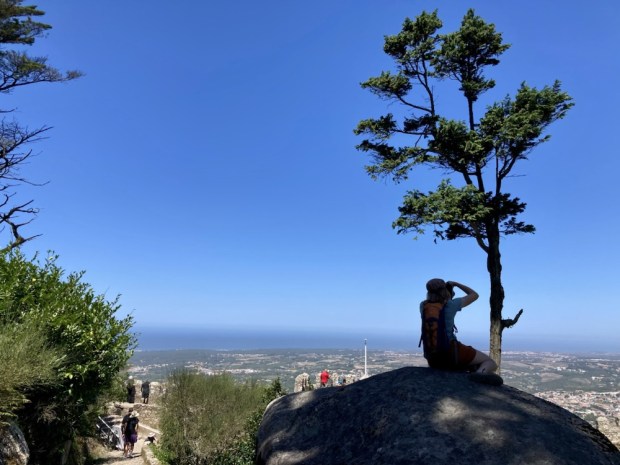
At 450m on top of a rocky outcrop the 360* views are outstanding from Cabo do Roca, Europe’s most westerly point all the way up the coast and over the inland Sierras to Lisbon and beyond.

It was another visitation of the Virgin Mary to a young shepherdess that prompted Kings John 111 and Dom Pedro 11 to fund the chapel- unfortunately not open to the public- considered an excellent example of Baroque architecture with an interior entirely covered by ornate tiles depicting the life of Virgin Mary.

Purchased by the government in 1991 there is now a management plan to promote nature conservation and education on site an hopefully increase access.
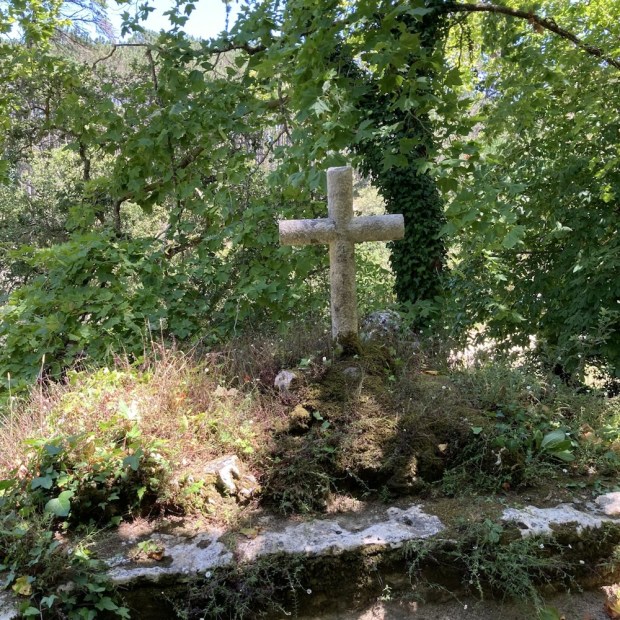
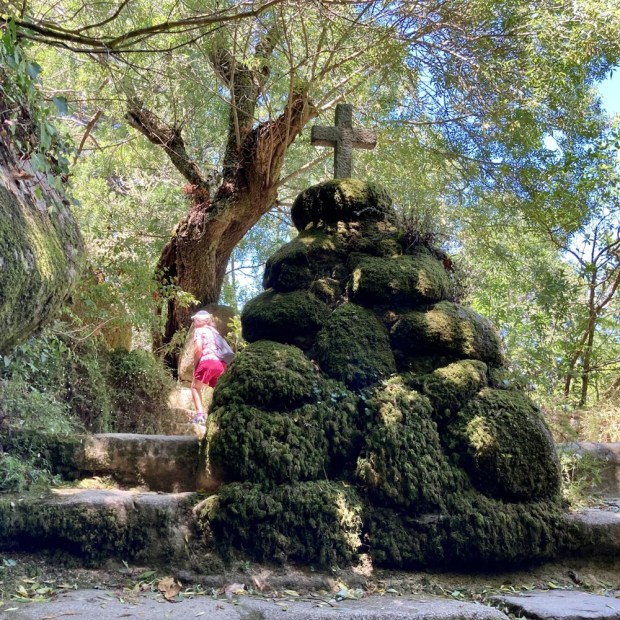
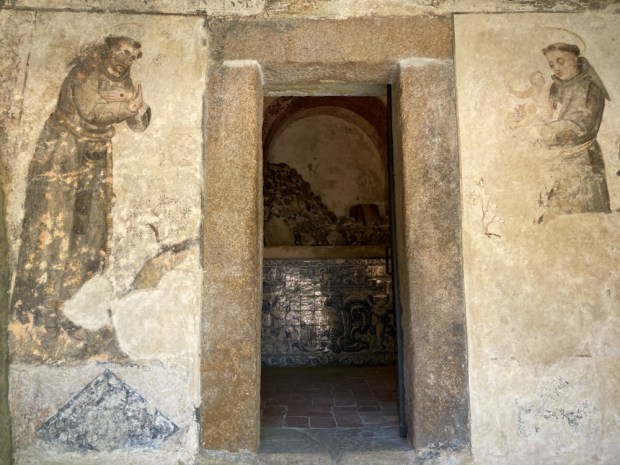
The Convent of the Capuchos, another remote and tranquil place of contemplation high in the Sintra Hills, was founded in 1560 by the Viceroy of India for a pious community of reclusive monks who occupied the cramped and humble spaces of the complex until the dissolution in 1834. We followed the well trodden cobbled path past crosses and bell ropes to gain access to a remarkable space.

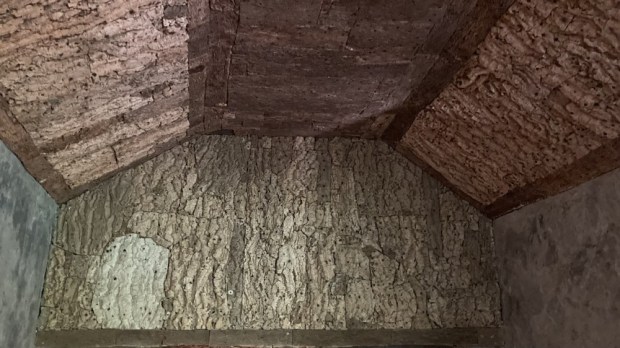
The most distinguishing feature of the convent is its symbiotic and harmonious setting, built into and surrounded by the granite boulders of the mountain – and the unique use of simple cork sheeting to cover doors, walls and ceiling, the only offering of comfort among the basic austerity.

The various spaces and buildings are constructed on steeply sloping ground – each level signifying ascendency and purification of the spirit. Poverty was the main driver behind the monastery construction – small , cramped, simple with low doors and minimal decoration.
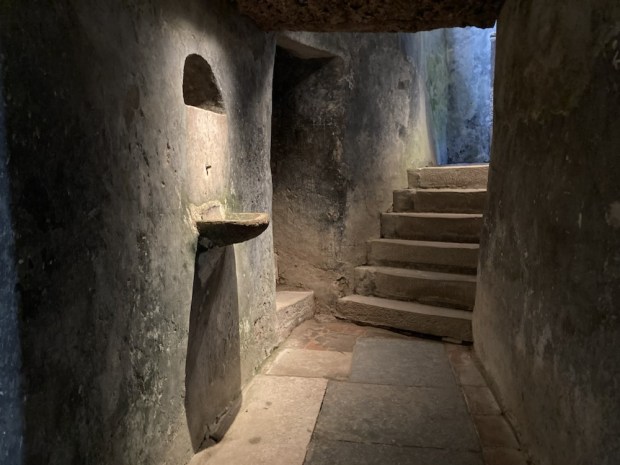
In 1581 king Philip 1 said ” Of all my kingdoms there are two places I estimate especially, El Escorial for being so rich, and the Convent of Capuchos for being so poor”

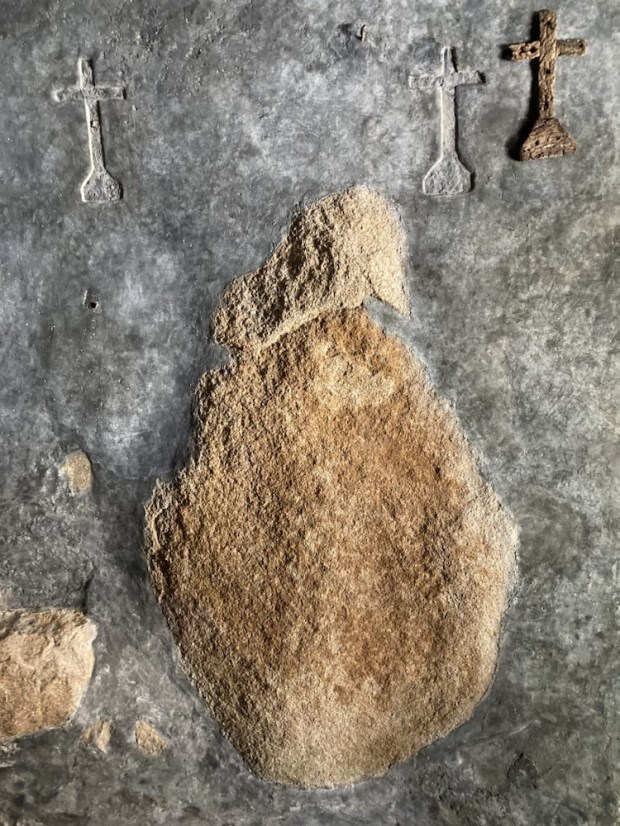
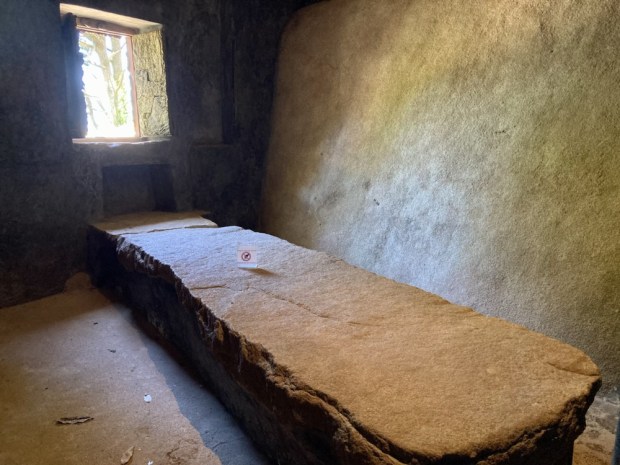
A life of contemplation that’s hard to contemplate- especially that of Friar Honario who lived to be 100years old despite spending his last three decades in penance, living inside a small hole in the convent. With a sense of claustrophobia building it was good to get out and explore some spaces through a remarkable door of hinged granite.

The community would have been supported by its surrounding farmland and irrigated gardens and it was heartening to see that areas were still used by some local people for growing organic veg.

The next day we took a tuk tuk up from Sintra to the entrance of the Castle of the Moors, whose dipping and diving castellated walls encircle the summit of the hilltop above the town.

Built by Moors in 8th and 9th centuries it served for hundreds of years as a strategic defensive lookout point during the Reconquista before being taken by Christian forces after the Fall of Lisbon in 1147. Its another romantic site with mossy walls and paths through tumbles of giant granite boulders. A double line of military walls 450 m long can be patrolled with views over luxurious forests to the town below.

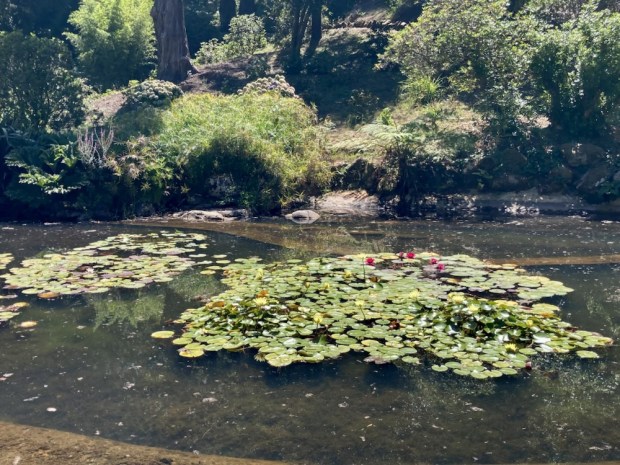
Saving the best till last we arrived early at the Monserrate Palace with a picnic to enjoy in the glorious Park. Opposite the entrance was a lake that served as a water source and in leisured times a boating and swimming pool, set amongst a woodland of giant cork oak.

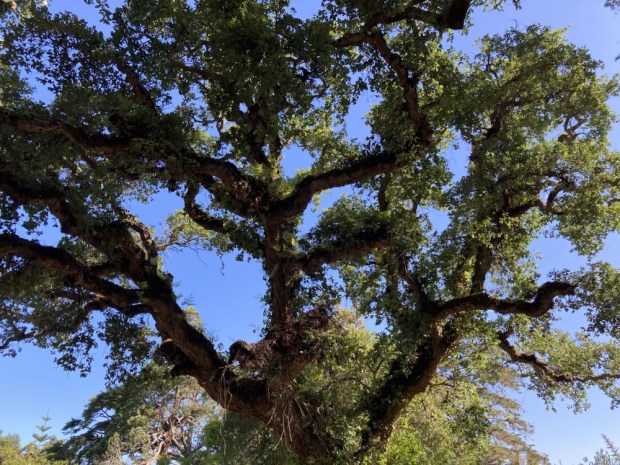
The palatial villa was started by Gerard de Visme in 1790’s but completed by Francis Cook after 1863 with the Architect James Knowles designing a mix of Romanticism and Moorish Revival. Pretty spectacular.

But first the acres of gardens. A multitude of paths led down through a range of plantings from around the world and the various fountains, waterfalls, pools and canals would, after the winter rains be very spectacular.

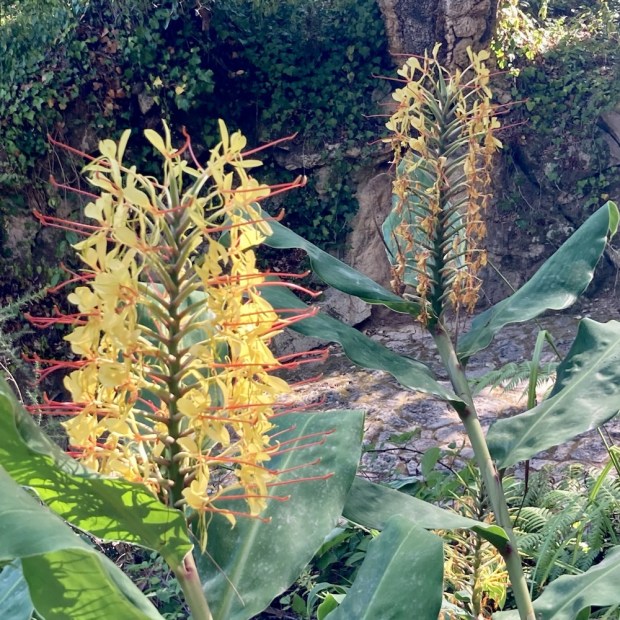
With large groves of exotic tree fern from Australia , camellia, azalea, rhododendron etc from the Himalayan zone, palm and agave from the desert region and a whole Mexican area it was indeed an electric collection but put together beautifully.

There was a ruin, built as such, being smothered by an Australian rubber tree with long roots draped across the stonework.

A hillside of rose planting, all spent under the hot dry summer sun, led to lush lawns , studded with exotic trees, below the palace.

The interior was as exotic as the planting with detailed Islamic inspired stucco plaster work ,ornate ceilings and long marble corridors leading to all the open and doorless reception rooms.

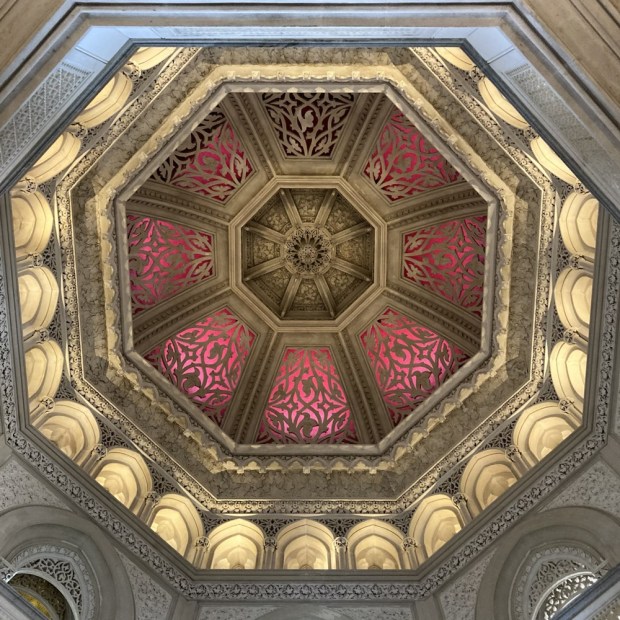
We could see why the park had been honoured with a European Garden Award for ” Best Development of an Historic Park or Garden”

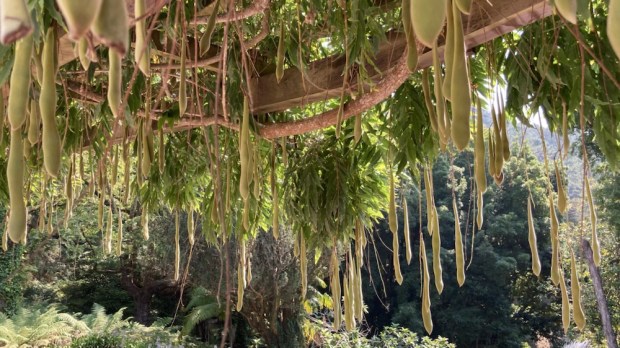
And see why Sintra was on the UNESCO World Heritage list as a Cultural Landscape. Go see for yourself.
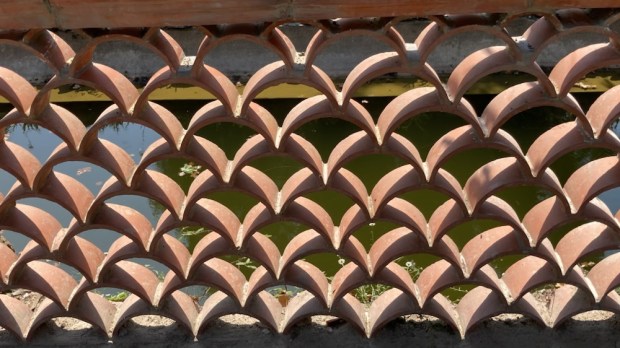
THE FISHERMANS TRAIL2: Barranco da Fonte to Aljezur 2 days

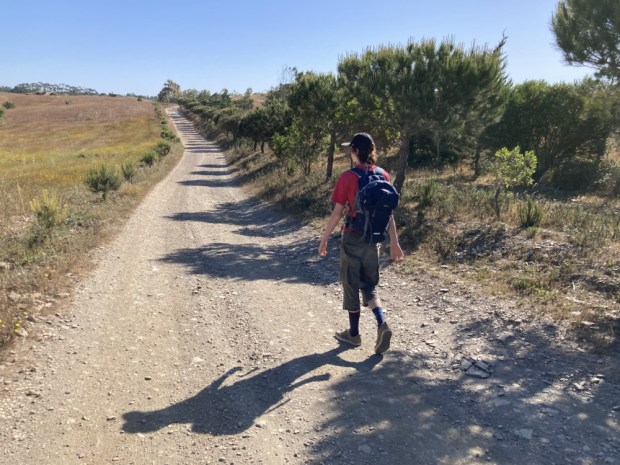
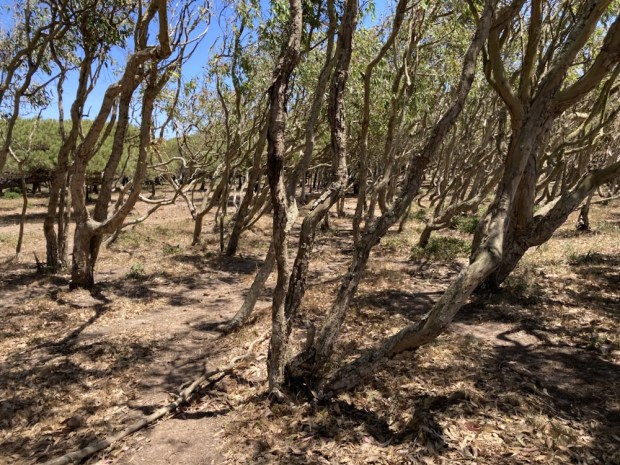
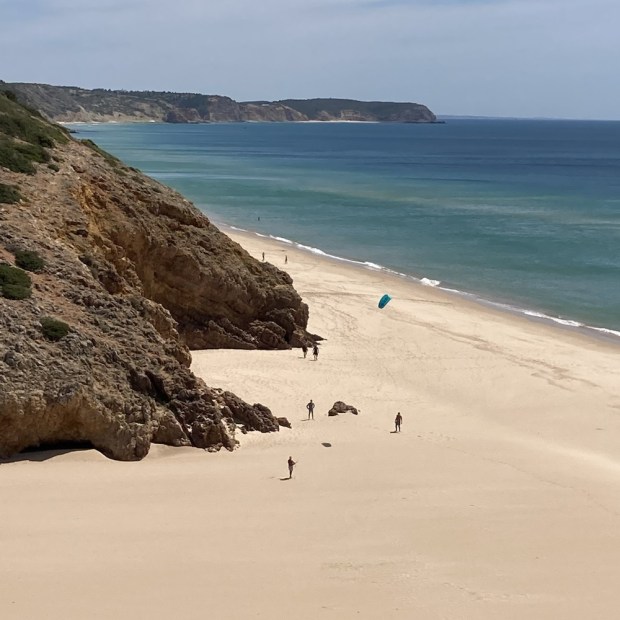
Leaving the luxury of our stay in the middle of the long 22 km stage between Carrapateira and Arrifana we only had about 10 km to go with one serious up and down. It was our last day with our friends and the penultimate one of the trip for us. We took off down the wide solid track which soon led us into eucalyptus plantations which afforded us welcome shade. The weather had been perfect the whole trip, with our rain jackets remaining at the bottom of our packs.

The trail was soon quite busy with hikers coming the other way, from Arrifana, so it could only be a few hours away. Some people I spoke to said there were no soft sand sections to come and I warned them of the slog they had coming. They needed an early start and plenty of energy to complete the whole section in one.

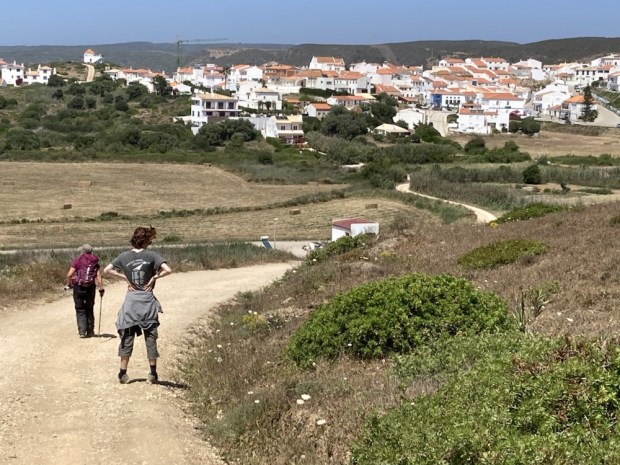
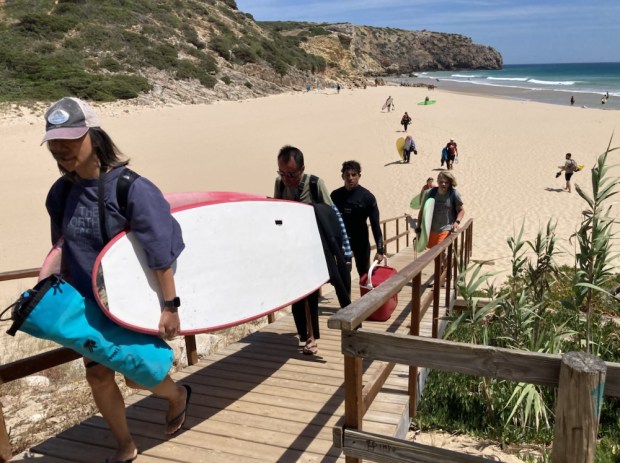
Emerging from the plantation we crossed a long high shoulder of rocky ground covered with low lying cistus and lentiscus with lusher valleys below. We shared the track with determined surfers in 4×4’s who risked the steep rutted track down to the boulder beach of Praia do Canal where we stopped for snacks and a breather before tackling the equally steep and rutted track up and out of the beach. The long climb was rewarded, as usual, with fantastic views back along the coast.

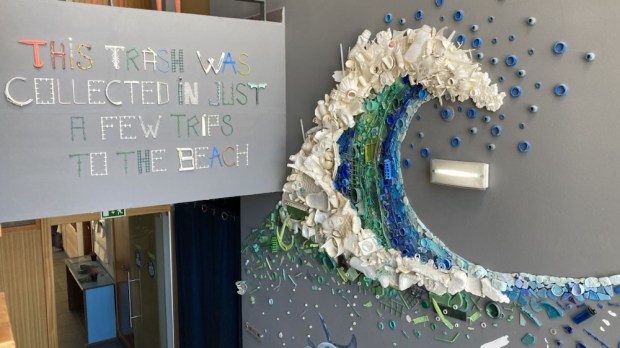
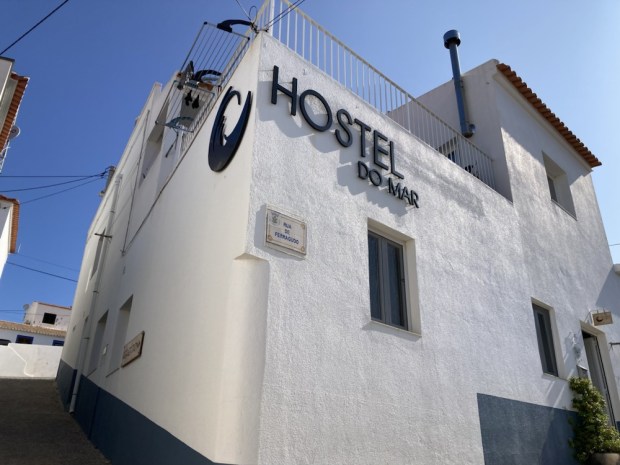
The rising ground eventually levelled off in more eucalyptus forest where we rested again and watched easier methods of transport go by. But we didn’t have far to go, the last few kms had Arrifana in view and before too long the final sting in the tail of a steep roadside climb into town was done and we were drinking refreshments poolside at our hostel high above the surfers beach from which plastic trash had been collected and made into art.

I don’t know if was the sun or one of my ailments but that night I retired early with a fever and high temperature which had gone down by the morning but still leaving me feeling weak. So after much soul searching we decided to be prudent and rather than tackling the 17.5km coastal route we would take the Historical Trail to Aljezur. And as our departing friends were driving off that way we’d take a lift a few kms too leaving us only 6km, which I figured I could crawl in the time available if need be.

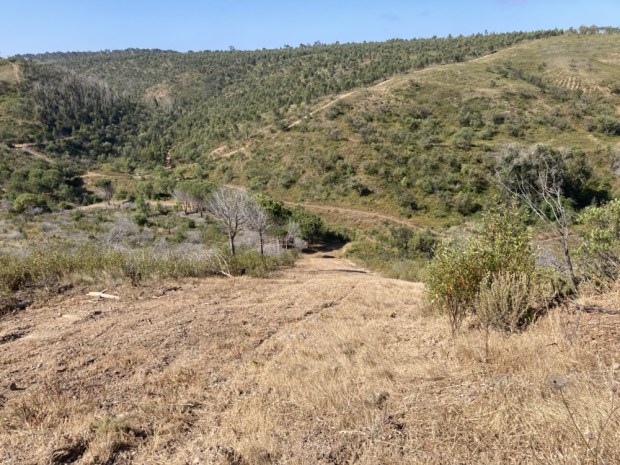
It was luckily a gentle route, with only one real descent/ ascent, on solid tracks through woods and farmland.

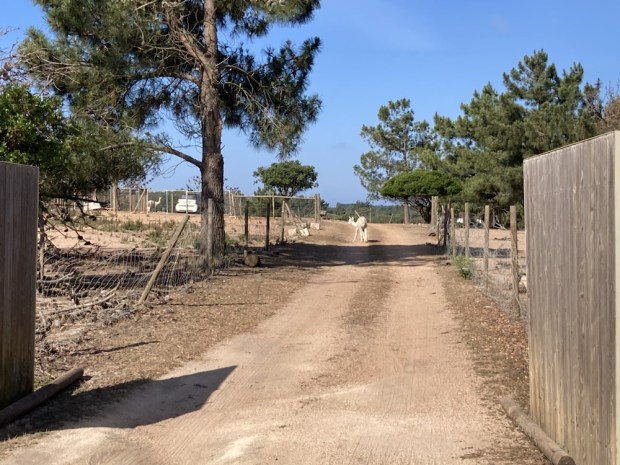
We passed some pretty sickly looking cork oaks and an alpaca farm where one of the beasts seemed to have escaped the fencing. The way crossed and followed a road a little way before again turning off on a dirt track that afforded fine views of the river valley from the coast towards Aljezur.

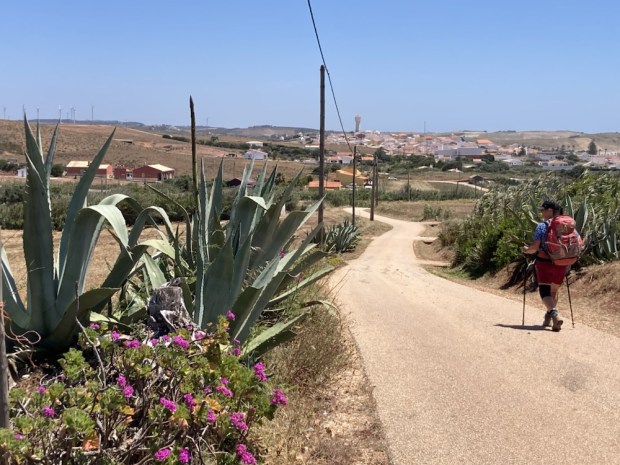
The final downhill inflicted on Sally’s knees took us past a strange hamlet of restored or built holiday houses which although fairly new looking were worse for west and unused. The path took us through the complex along a little lush valley complete with ancient moorish well and up the final uphill to be inflicted on my lungs. And then we were there, at the church, with not enough puff or desire to climb the extra distance to the hilltop castle.

The river had, in the 15 th century been navigable all the way from the sea to Aljezur, giving the only spacious safe harbourage for miles of west coast. The town lies on the fertile plain and is famous for its sweet potatoes. With a couple of hours before we could check in the our hostel we visited the market where our first adventure on the Fisherman’s Trail started 4 years ago and then strolled to the riverside to relax and watch the crayfish.

We’d made it to the finish. Another beautiful route completed. The trail network has obviously been a huge success judging by the number of hikers we’ve seen and goes to show what can be achieved when tourist bodies, marketers, commercial interests and the public work together to create a heathly and sustainable hiking and holiday option.

One final selfie, one final Portuguese sunrise and the journey home begins. Bom dia.

THE FISHERMANS TRAIL 2: Vila do Bispo to Barranco da Fonte 2 days.

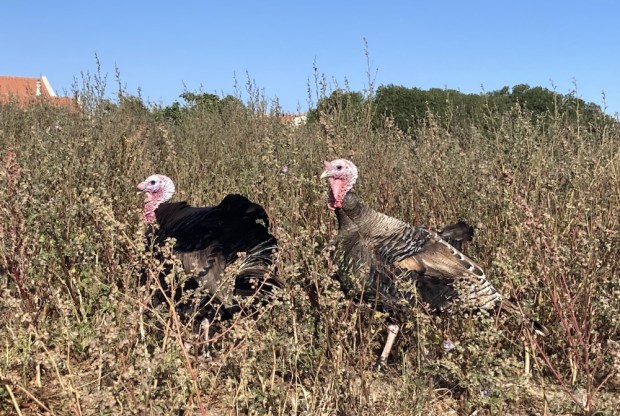
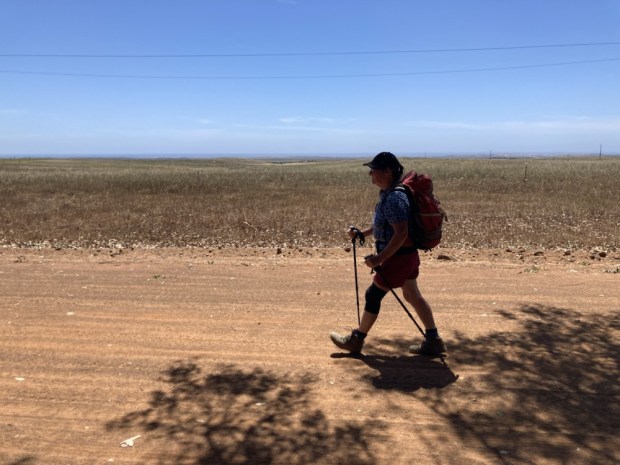
Three of us headed off from Vila do Bispo, a climbed out of the town and then a stretch alongside the road, accompanied by some turkeys and windswept trees, before turning off on sandy tracks towards the coast.

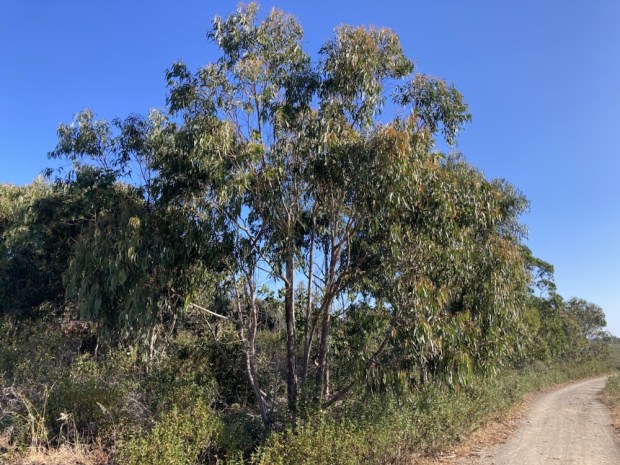
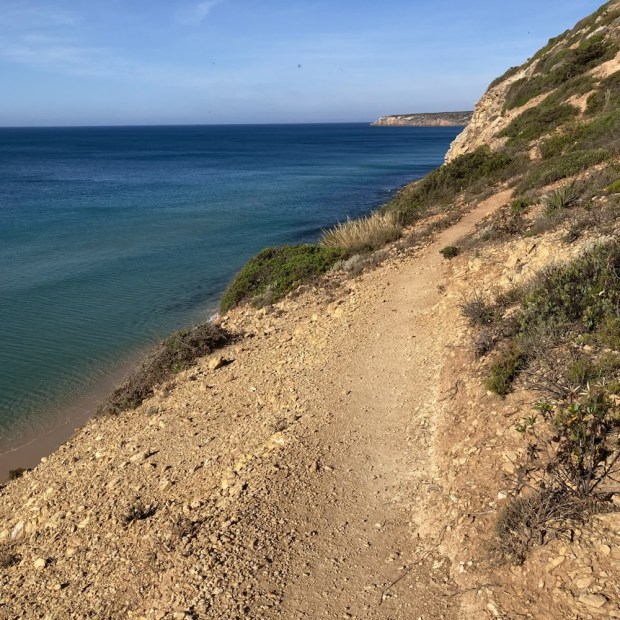
Patches of eucalyptus sheltered us from the strong wind now and again as we crossed wild and high shrubland on wide gravel tracks with the sea on one side and thickly vegetated hills and valleys on the other.

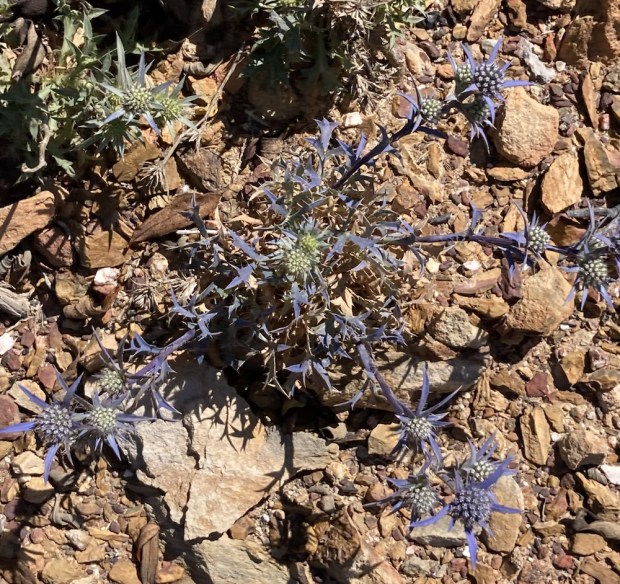
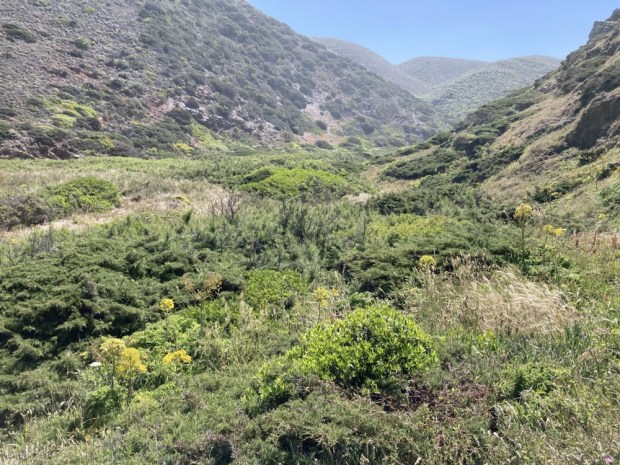
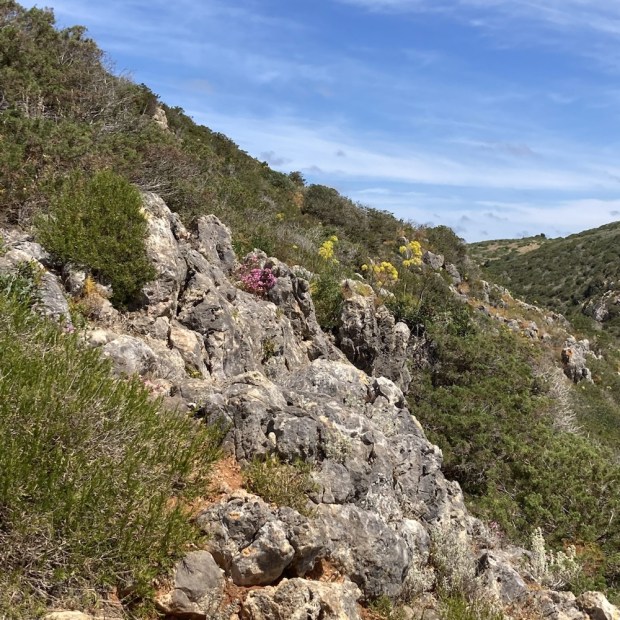
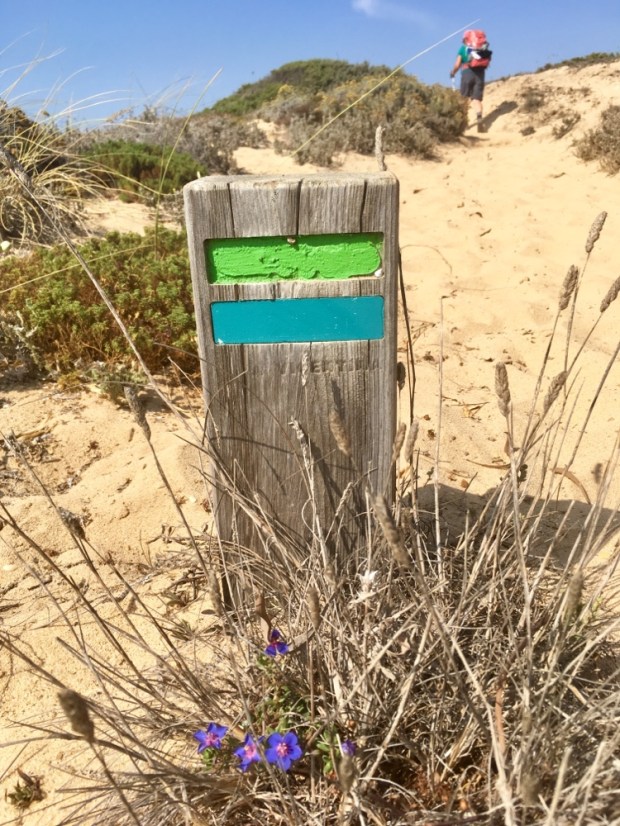
The plant life was again varied and beautiful, sometimes growing in a pure gravel bed.

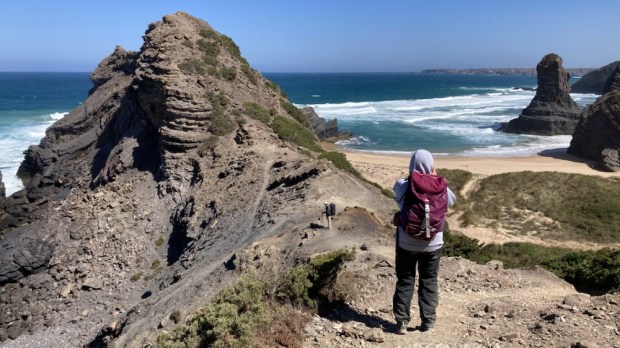
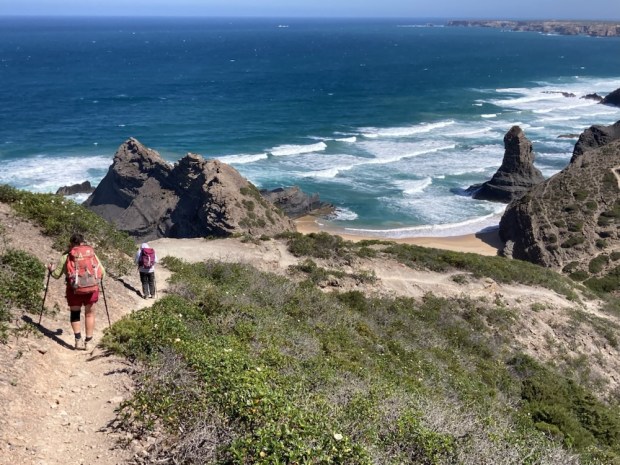
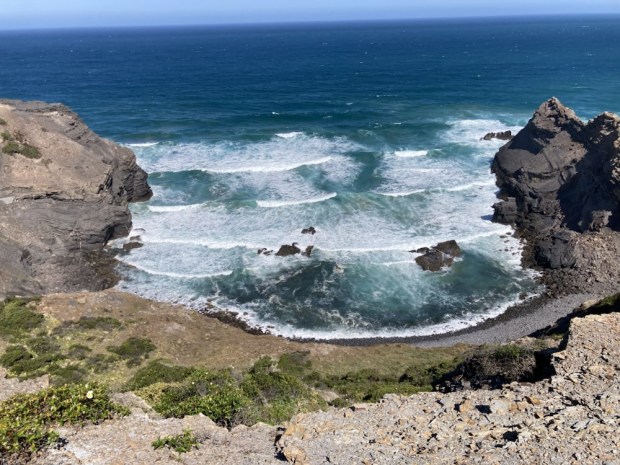
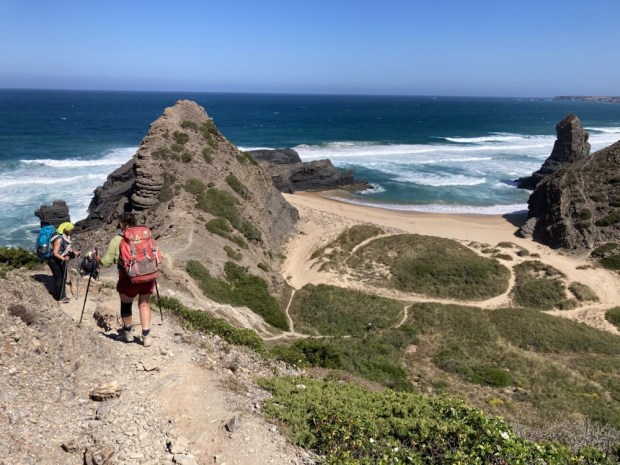
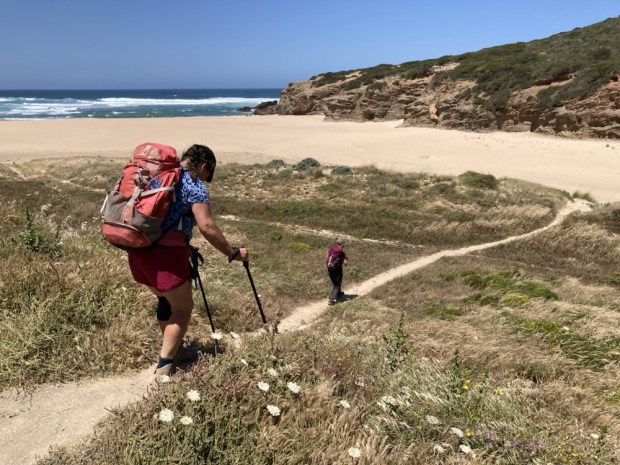
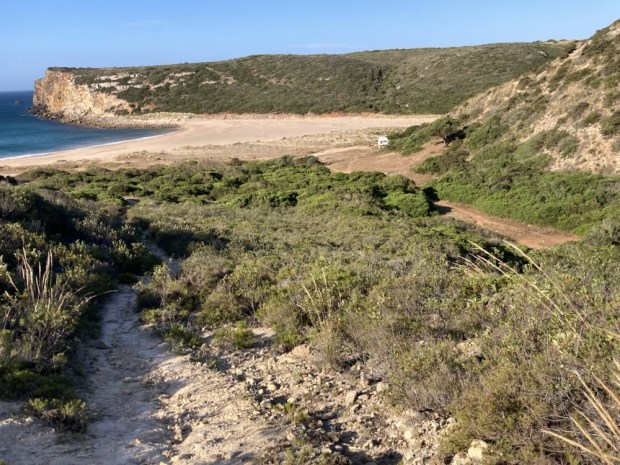
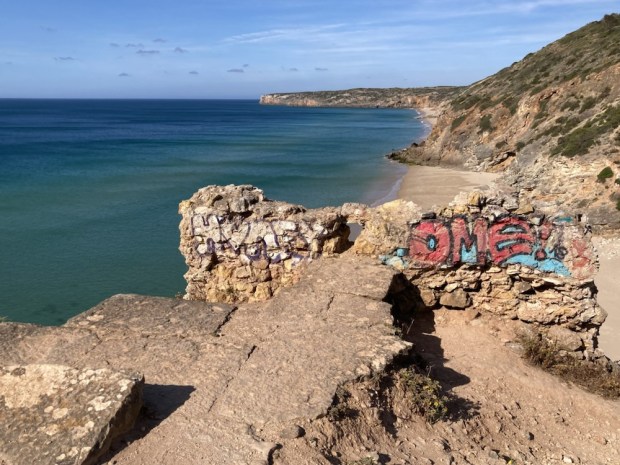
We reached the sea cliffs and climbed down into a glorious remote valley with a spectacular beach. Steeply down and steeply up again. Hard going but awe inspiring scenery all around.

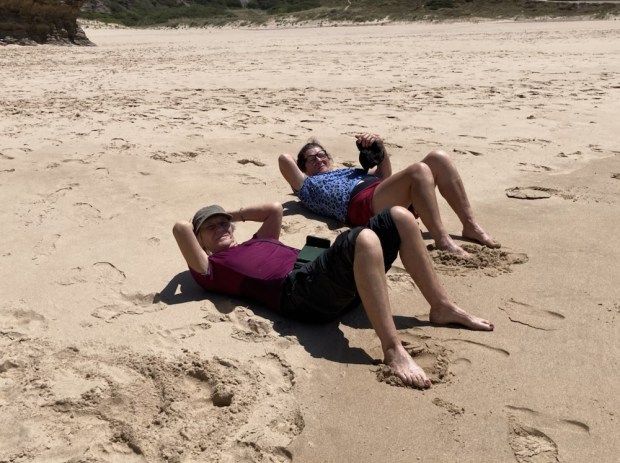
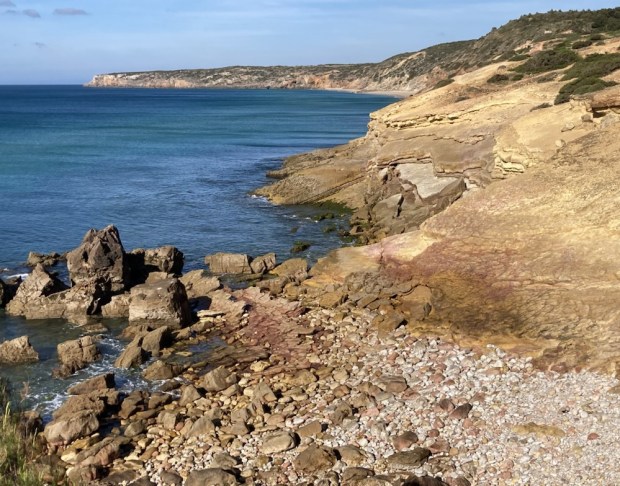
Then after a stretch along the cliff top it was another climb down to sea level to Praia da Murracao where we had a rest and admired the rock formations and I had a cooling dip in a pool sheltered by rocks from the crashing waves.

What goes down must go up again so another brutal climb up away from the beach was followed too soon with another descent to yet another huge expanse of sand, Praia do Amado, where we met our other two friends and we all carried on to the stages end at Carrapateira and our hostel, glad to arrive after 15.5km.

A great spot, a well designed modern hostel and a friendly and delicious restaurant next door made for a good night before we headed of again at the leisurely hour of 9.30 with only about 10 km to do that day. An easy day we thought, having broken the 20 km stage to Arrifana in half. It was uphill all the way mind you but 150 m over that distance should be easy peasy. But very soon after starting we were slogging along tracks of deep soft sand, always a energy sapping surface.

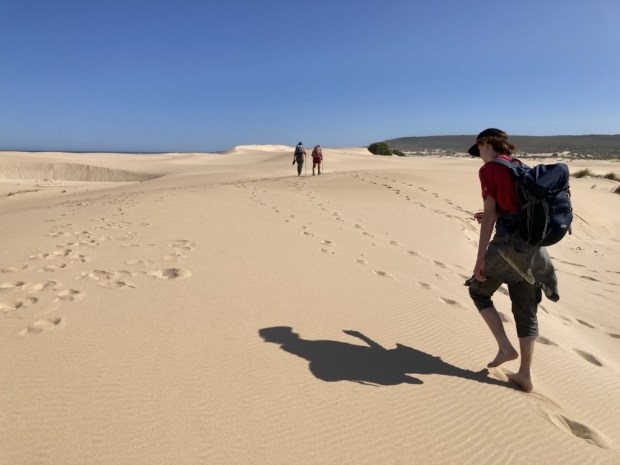
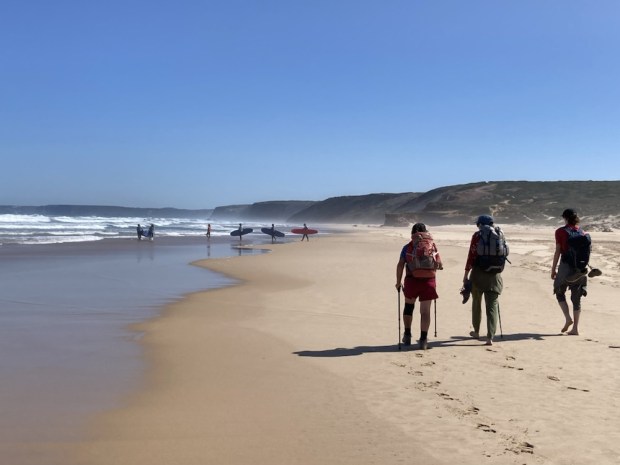
Across the Sahara like dunes to the hard wet sand of the beach at Praia da Bordeira where a class of surf schoolers were trying their luck in the mushy waves.

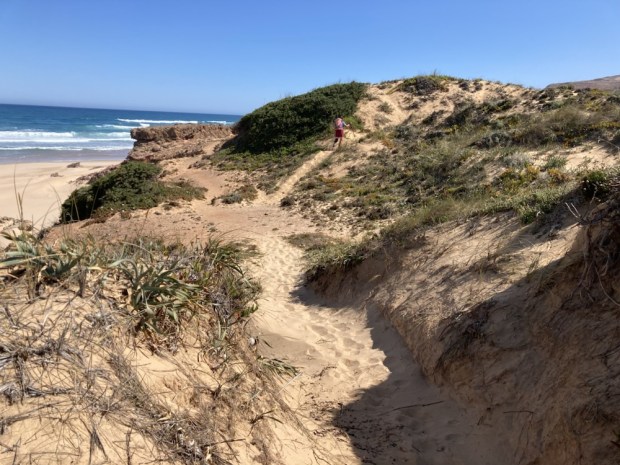
At the end of the beach the climbing began, first up to the cliff top and then turning away from the sea on a succession of soft soft sandy tracks up and up to a trig point at 158 m. The treasure trove of plant life in my eyes , the heady scent in my nose and Eddie Kendricks ” Keep on Trucking” in my ears kept me going along with my desire to get the top.

The narrow soft track became a wide hard one and with the climbing done and some resting in the shade of eucalyptus coppice before too long we were walking through fields of grain and enjoying our just rewards in more lovely designer accommodation at Barranco da Fonte.

Another fine day on the Fisherman’s over.

THE FISHERMANS TRAIL 2: Zavial to Vila do Bispo 2 days

We enjoyed our night at the funky Hostel on the Hill and a drink and meal around the corner at Favo’s where a band played to their hippie blow in mates and in the early morning we headed off to rejoin the trail at Praia do Barranco, another hippie surfer hang out. So rather than go back down the tarmac road from Hortas do Tabual to Zavial we struck southwest on some dirt tracks that wound through mostly abandoned farmland ( but we saw some signs of caravan homesteads. Maybe someone from the night before).

Even quite far out in the campo there were some smart houses with smarter gardens but mostly the way was wild and getting wilder as we approached the coast.

There were maybe half a dozen live in vans of surfers parked up at the beach and one very smart, very big German campervan that headed off soon after we got there. Maybe they went in search of more amenable neighbours. We stopped to chat to a young fella ,( they’re all young to us), who was going from Sagres to Burgau that day god help him. That’s 8 tough km more than the already toughest day of the entire trail.

He pointed out our route, a long sloping rocky path leading to a flat prairie land high above the beach. A very different zone

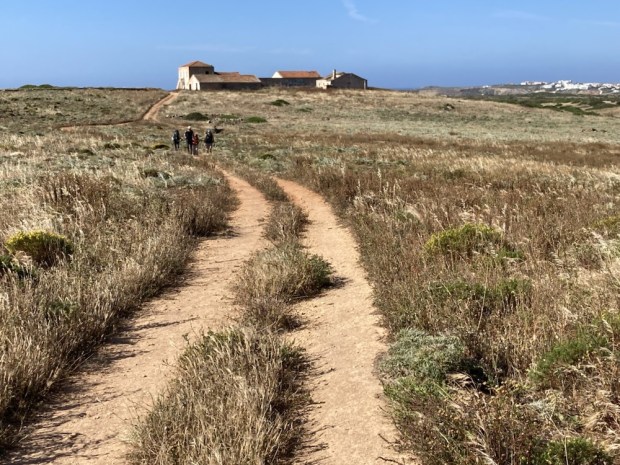
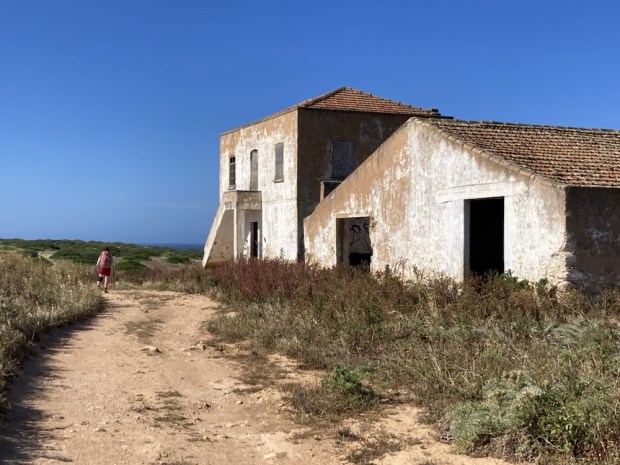
It was more abandonment. I don’t know if this was grazing, grain or grassland but the imposing farmhouse was long empty and the dirt roads led hither and thither to no obvious purpose. The nasty looking thistles were taking over. Maybe the butterflies liked them.

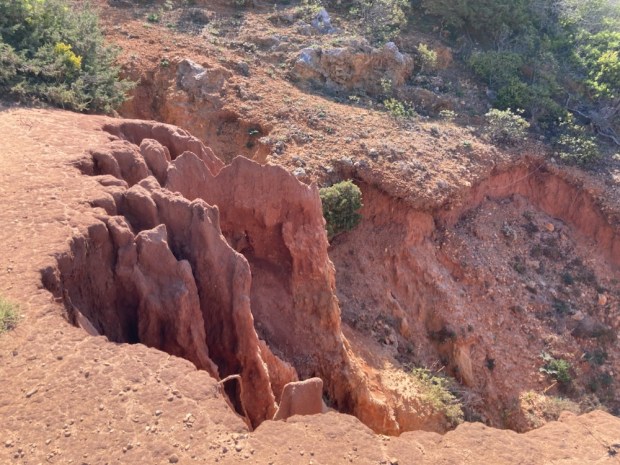
Crossing the headland we came slowly back down to the coast where fierce erosion had left fluted sculpture in the clay. The clay here had supported a big Roman industry of amphora potteries for packing fish in for export around the empire.

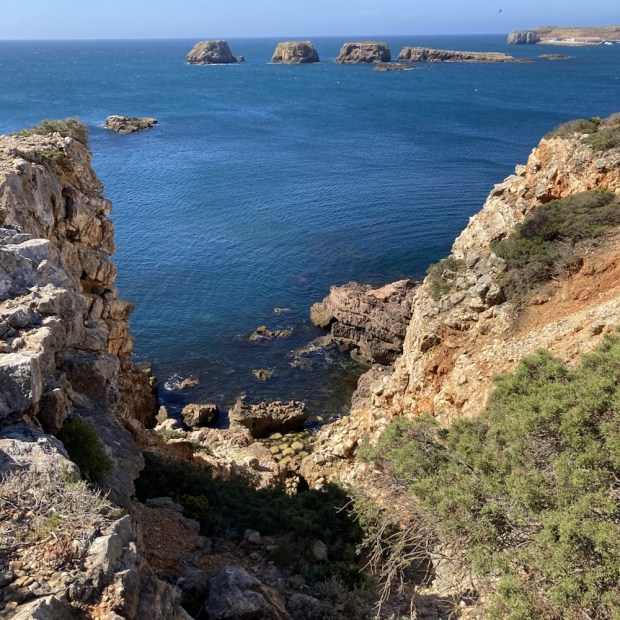
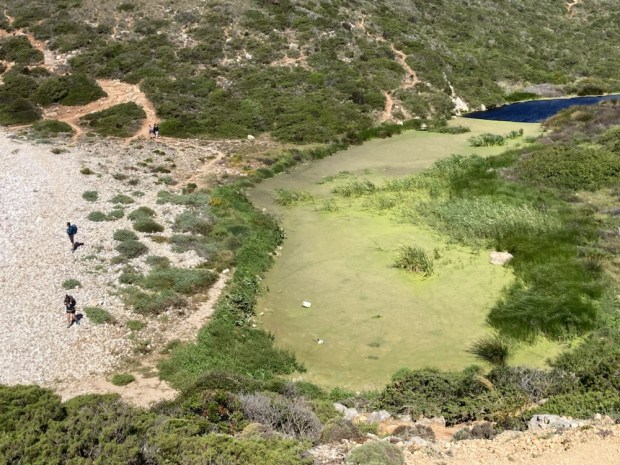
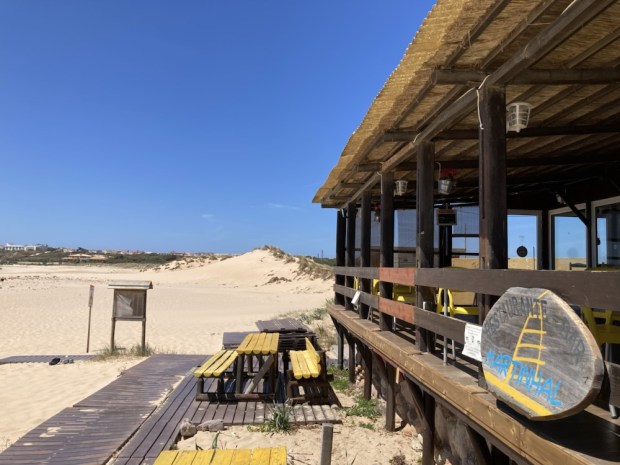
The coast under us was more rugged here with rocky coves and the Martinhal islands just off the shore. There was lagoon resounding to the call of the frogs hiding under a skin of algae, a smart resort with trackside loungers and then, blessed relief, a beach bar on the outskirts of Sagres.

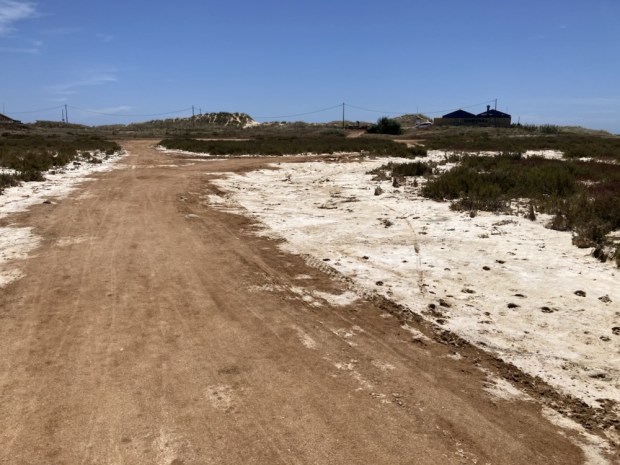
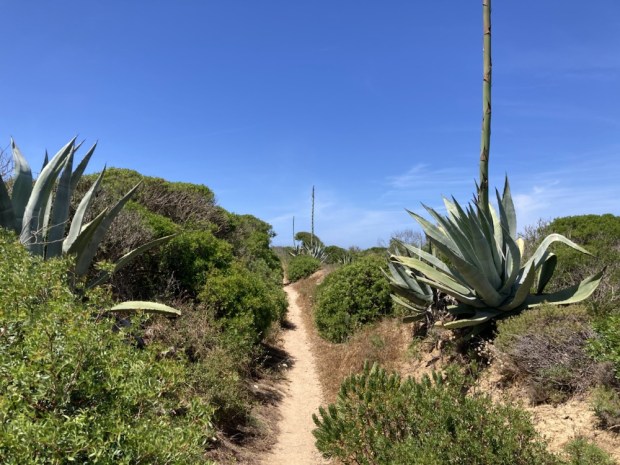
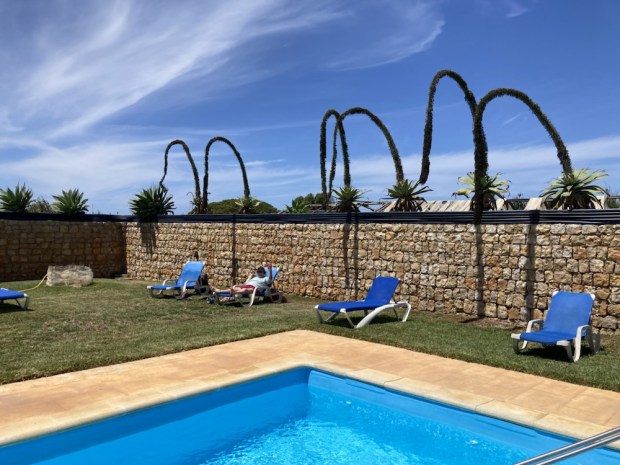
Google maps devised an interesting route to our bed. On salted tracks past rivers of dried algae, up narrow paths between the flowering storks of agave and through development zones. All worth while when we got there and cooled off in the pool.

A cab ride out to the lighthouse on the Cabo in the morning bypassed 5 km of roadside trail and shortened our days hike from 20km to a more manageable 14km. Too early to be open it was nice to be there without the tourist crowds. This place has been special and sacred to many peoples over millennia. There is a rich concentration of Neolithic menhirs in the area and both the Greek and the Romans had temples here. In fact Sagres is derived from Sacrum meaning ” sacred place”and the body of the martyr, St Vicente , whom the cape is named after were supposedly washed up here. A shrine guarded by ravens was built over the grave till the body was moved to Lisbon in 1173 still accompanied by the ravens.

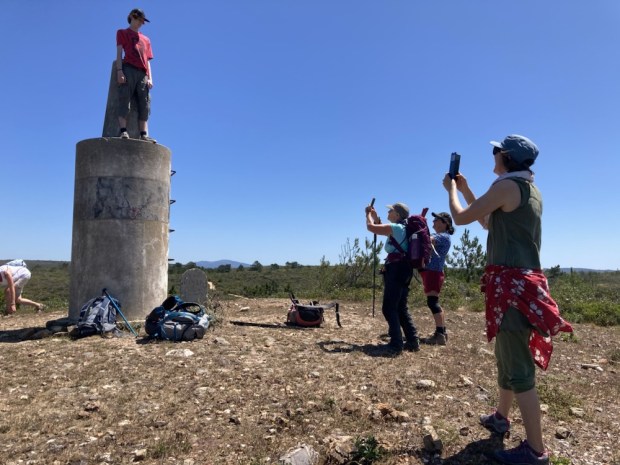
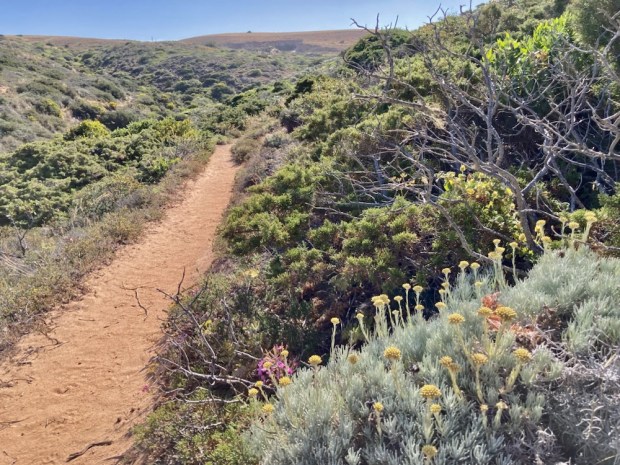
We had to turn back up the road for a little ways before turning onto the track heading north up the Wild West coast from the most westerly point of Europe. The thick rich vegetation was as we remembered from our previous trip and the stony track too.

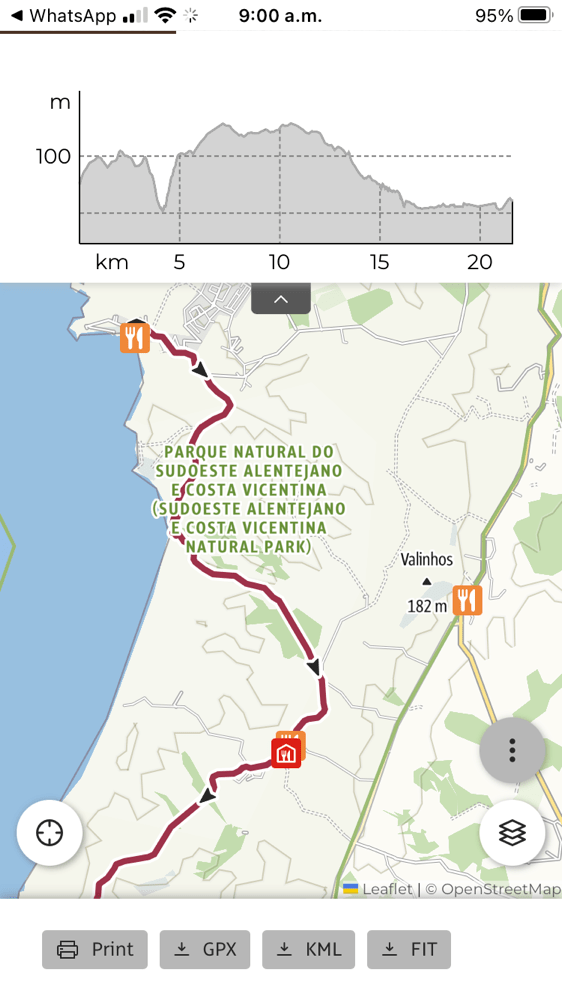
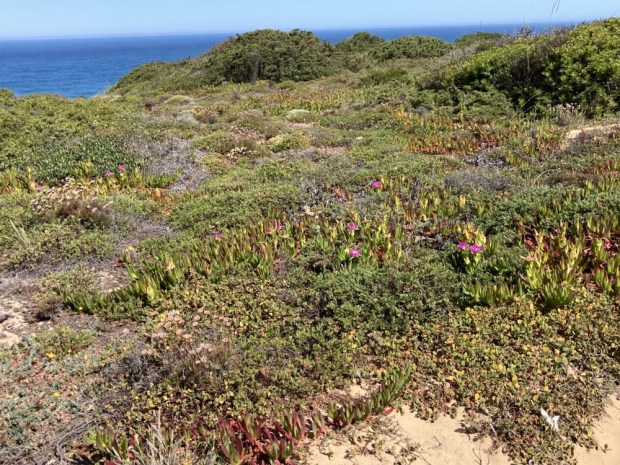
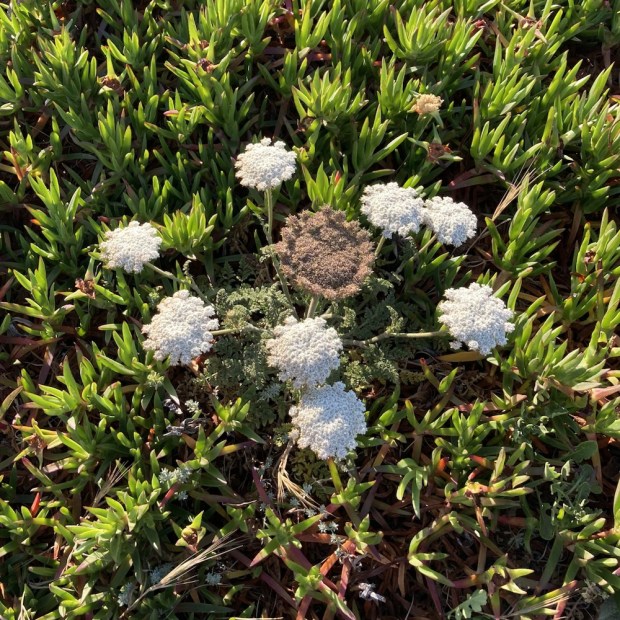
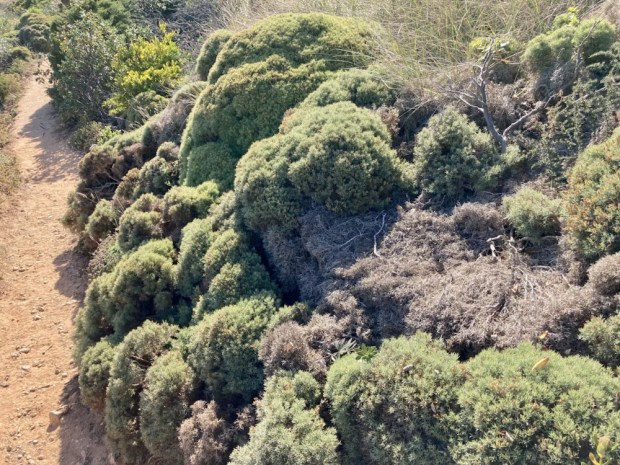
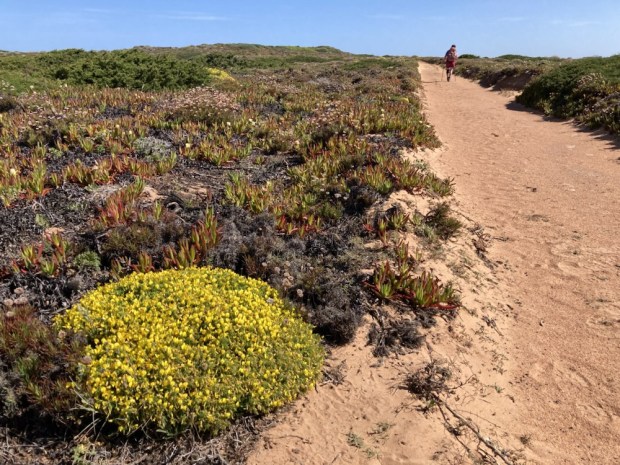
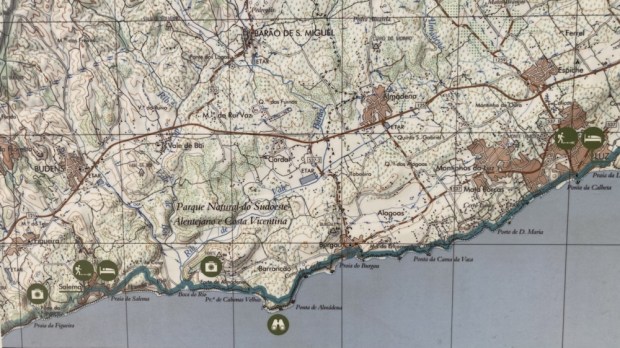
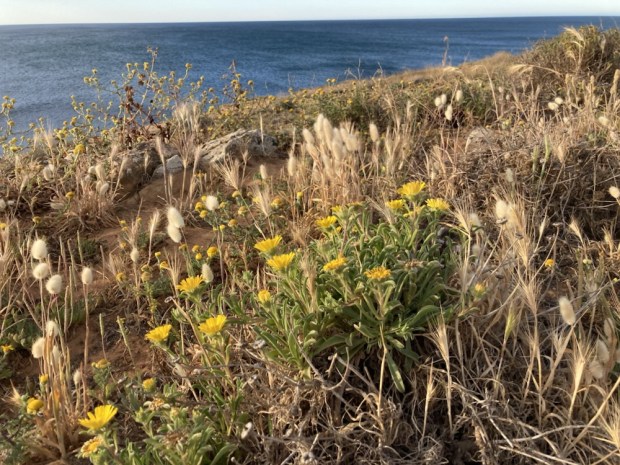
This whole area , the Parque Natural do Sudoeste Alentejano e Costa Vicentina, is famous for its bird life and there is a birding festival in Sagres every October. The flora is also particularly spectacular with hordes of species endemic to the area. Im afraid I can’t tell you the names of them but I recognise many from home and also our last trip here. There were so many beautiful little natural rockery gardens all around us it was stunning. Some of the miniature gorse had grown as if a gardener had lavished hours of topiary upon them.

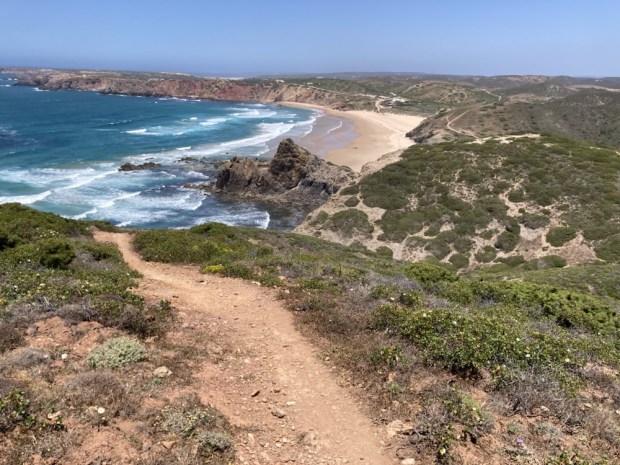
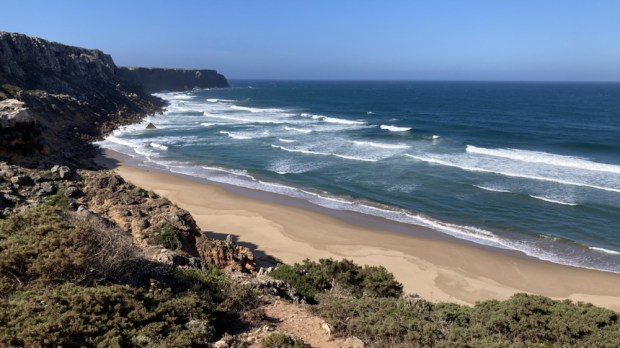
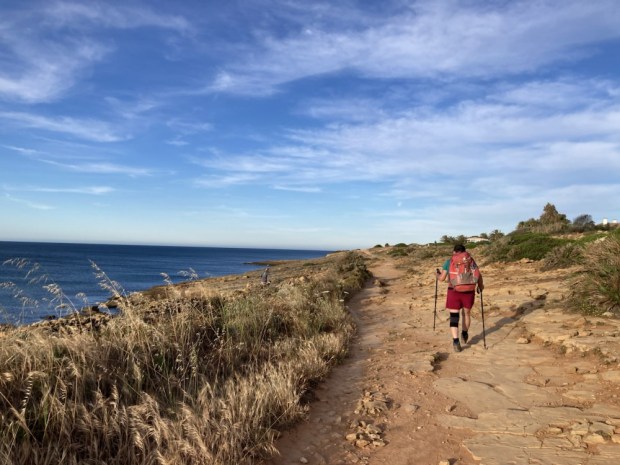
The roar of the ocean was a constant companion and we had many opportunities to marvel and the multi hued rocks, geological splendours , fine sand beaches and crashing waves.

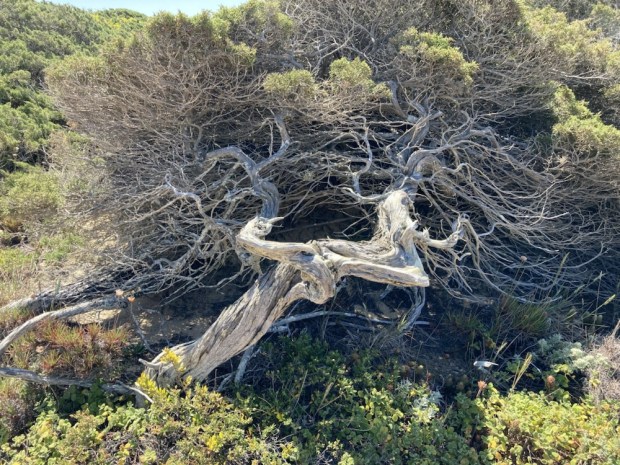
The wind however was blowing hard enough for official weather warnings. With the strong wind from the north we remembered why the official advice is to walk north to south. The low growth and sprawling habit of the plant life attested to the prevailing conditions.

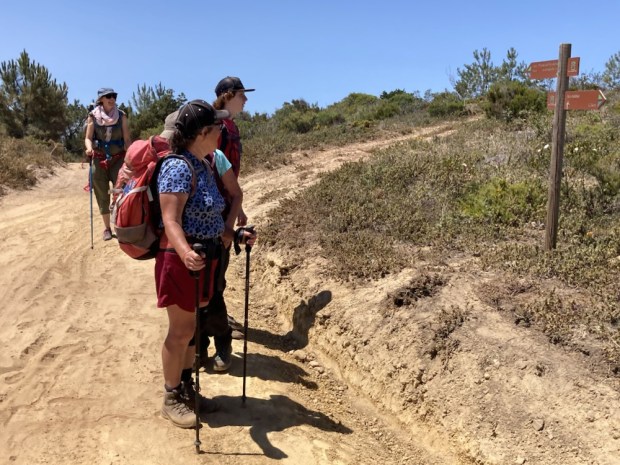
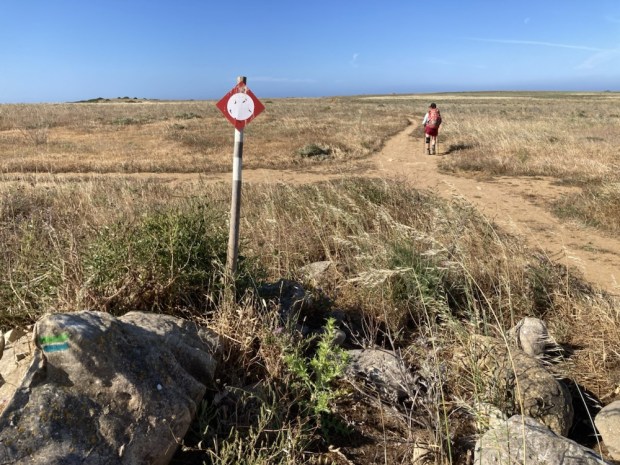
Eventually we came to where we joined up with the Historical Way, another network of trails that works its way up and down the west coast of Alentejo province. This coincided with major track ” improvement” and a newly laid thick gravel surface.

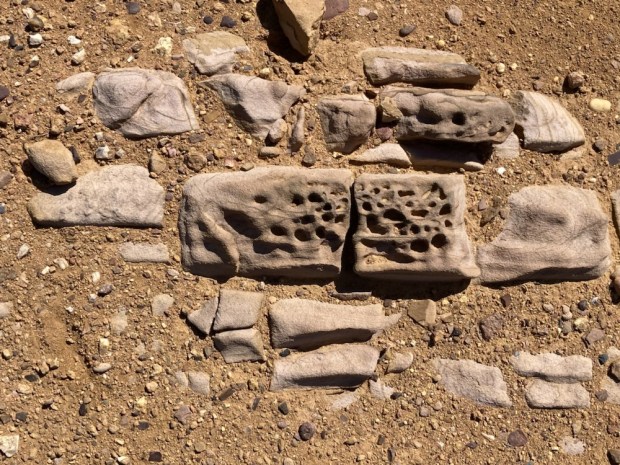
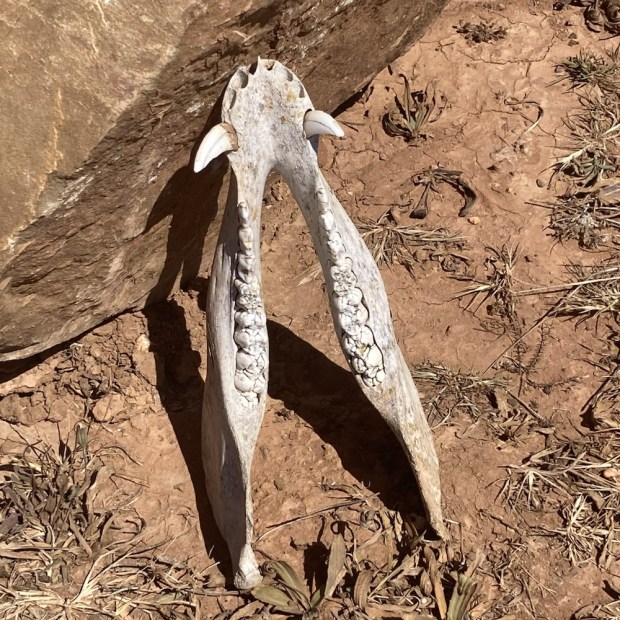
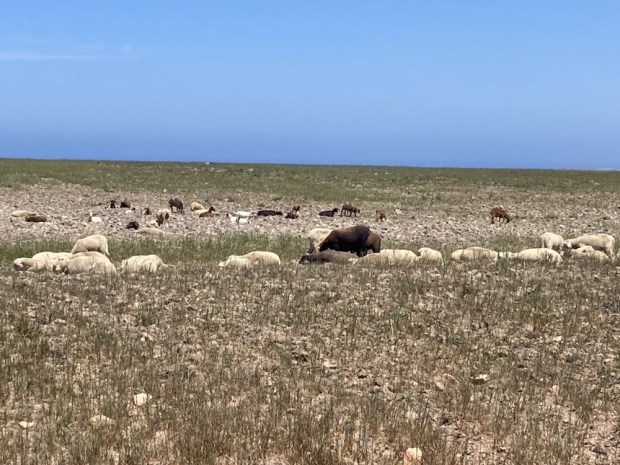
A few strange things came and went. Boars jaw, hi tech structure, dust clouds and a field of goats and sheep with no fence to restrain them. A wind formed wood and poor crops led us into Vila do Bispo.

Here we meet up with 3 friends from Spain who join us for a few days walking.

THE FISHERMANS TRAIL 2: Lagos to Zavial 3 days

Back in Portugal after last years Camino and back on the Fisherman’s Trail after 4 years. Since then the trail has been extended along the south coast to Lagos so this time we’re starting there and going around the Cape of Sao Vicente and north up the west coast to Aljezur where we started last time. This trip is only about 120 km over 9 days but with the condition our bodies are in and the rugged up and downs of the trail it’ll be enough of a challenge.

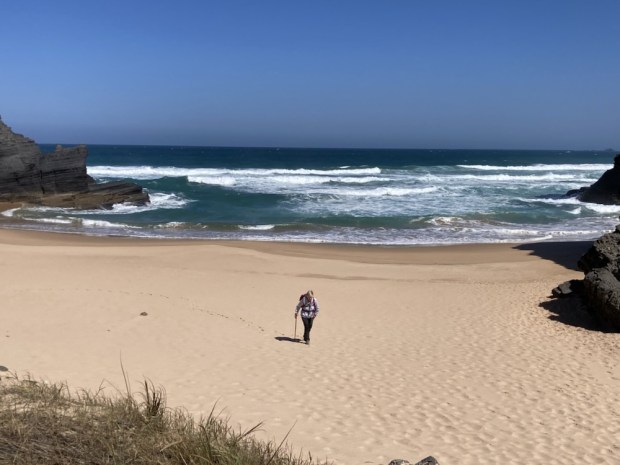
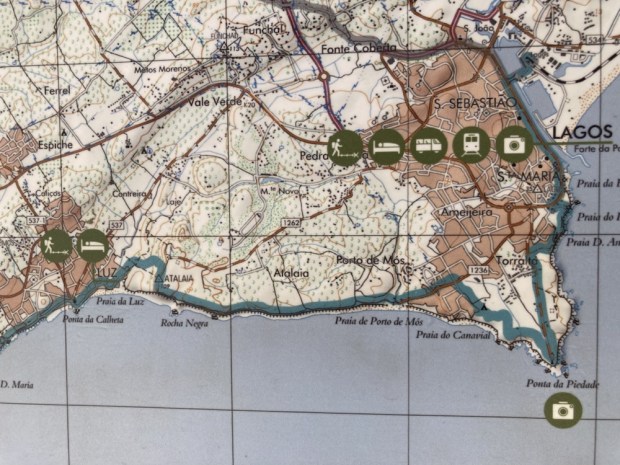
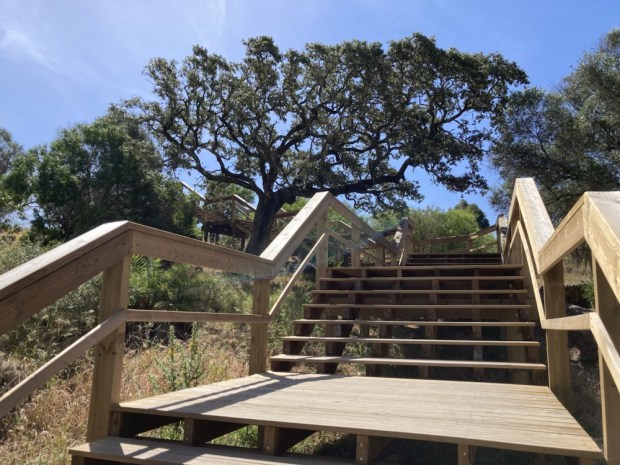
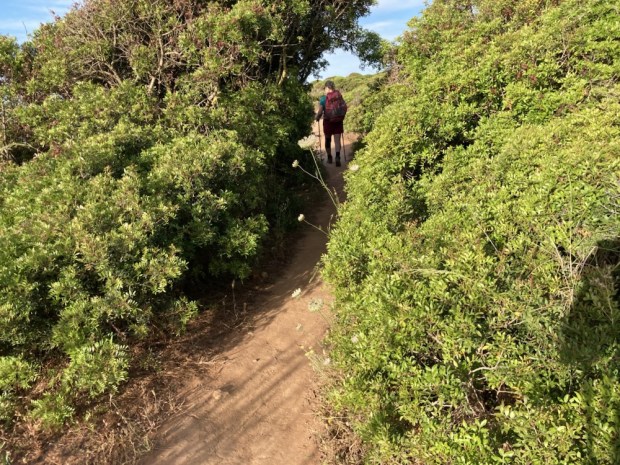
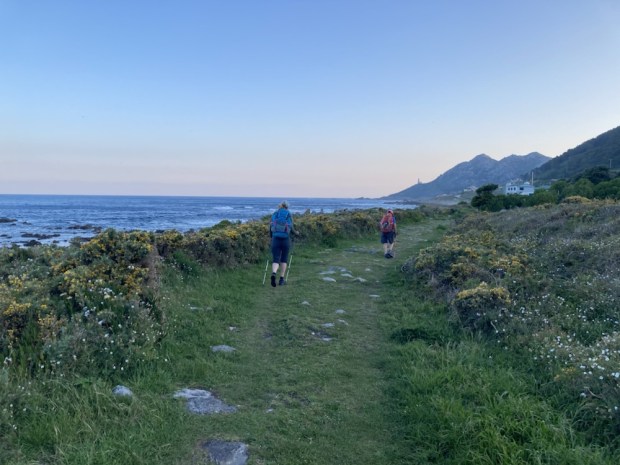
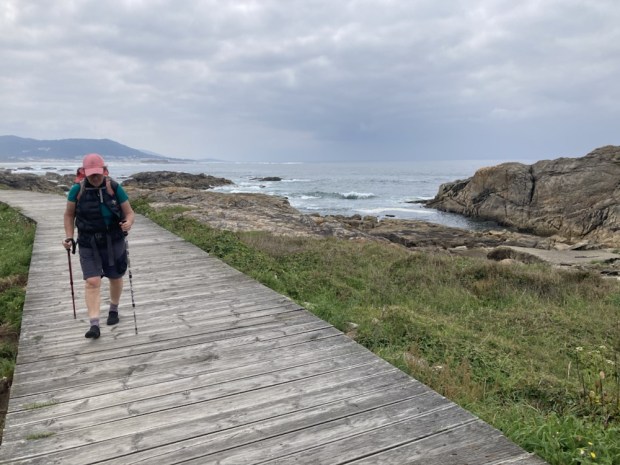
And back to the Portuguese cobbles. By plane to Faro, train to Lagos, and cab out of town to the trail at Praia de Dona Ana where after the starting line selfie we clambered onto the boardwalk steps to begin a long stretch of timbered trail past a dazzling selection of rocky coves lapped by crystal clear emerald waters.

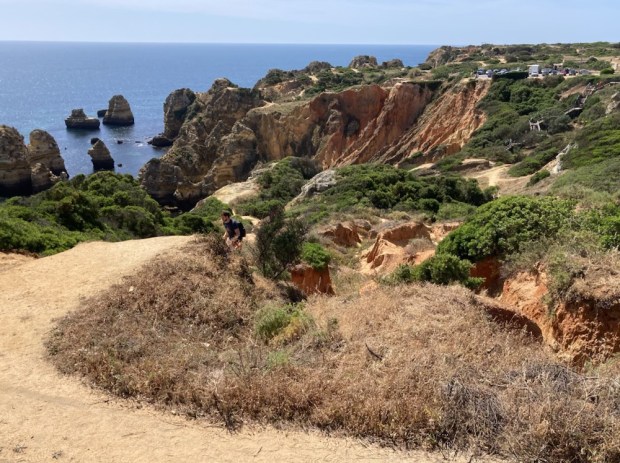
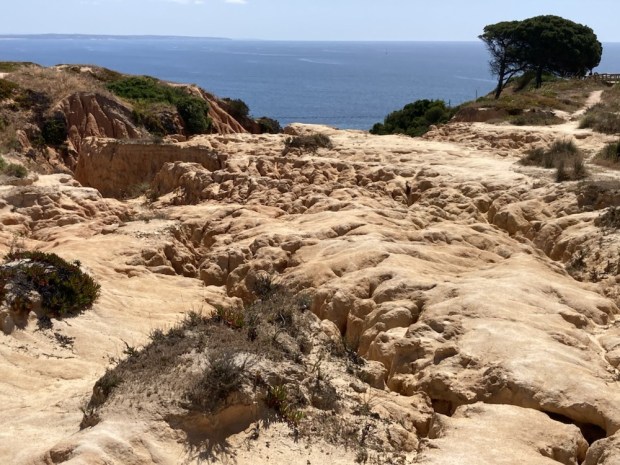
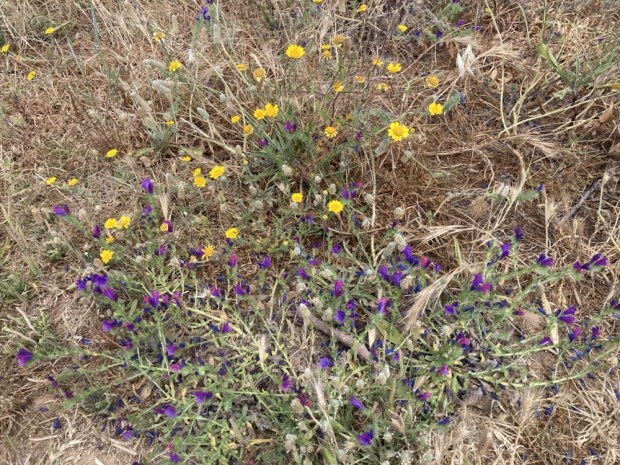
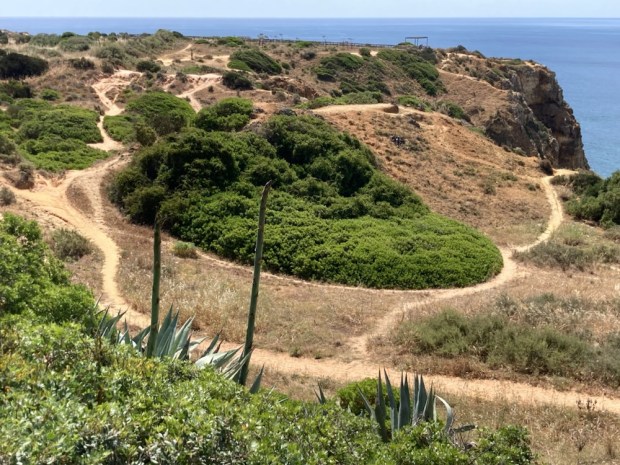
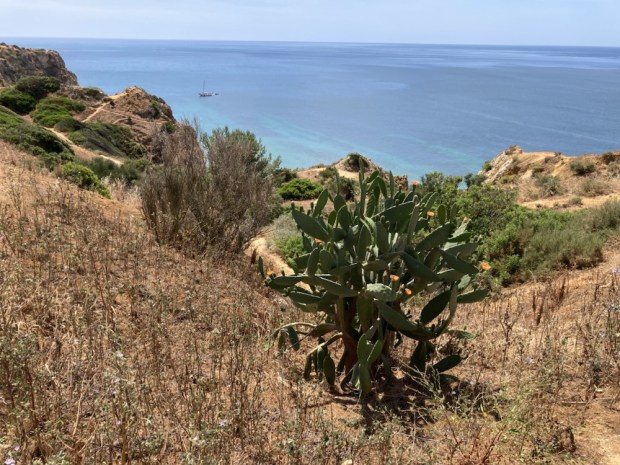
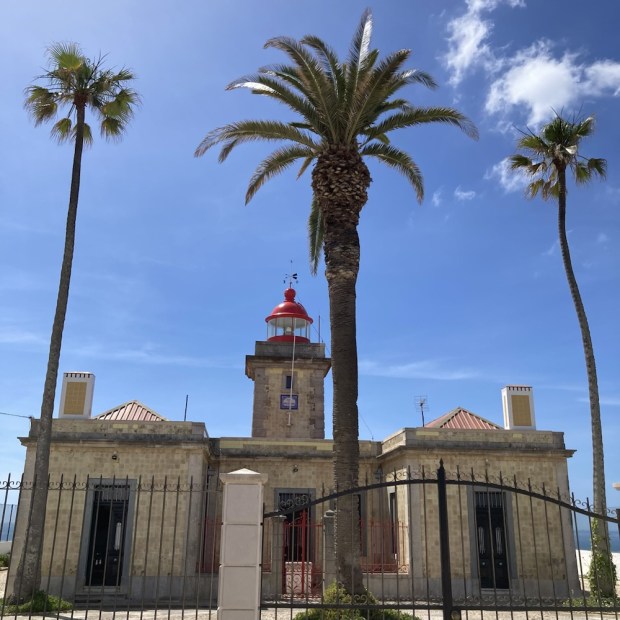
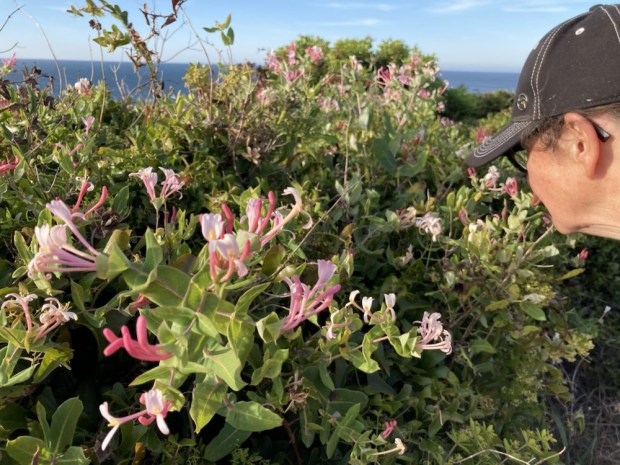
The geology was impressive sandstone , limestone, and otherstone in layers and whorles, caves and arches in a colour palette of earthy hues as we crossed the headland to the old lighthouse at Ponta de Piedale ( Point of Mercy) admiring the flowers huddled dry and hot in the forceful winds.

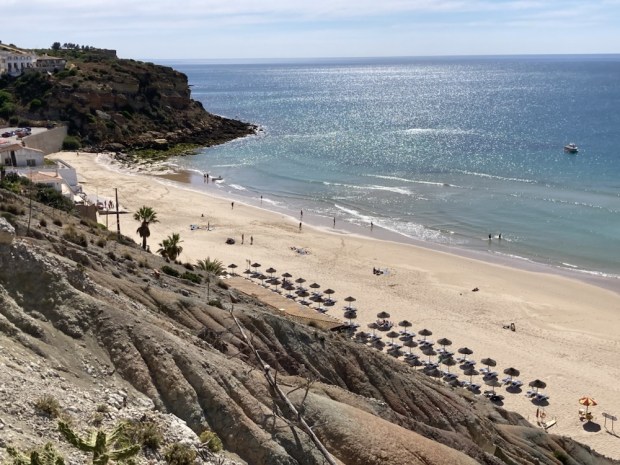
Passing through an enclave of posh villas we came down to a busy Sunday lunch time at Praia de Porto de Mos where we joined the diners at Antonio’s before scaling the path to the cliff top and continuing high above the beautiful beaches to the dramatic black and white monument above the beach of Luz.

A long clamber down into the popular town with its beach and cafe restaurants both of which we enjoyed at leisure before continuing up the cliff top path at the western end of town, passing ever more grand building dreams to our more modest space for the night, although we did have the cool pool I needed.

Next morning we retraced our steps to the cliff top path to carry on west, warned by a local ,(German), to keep away from the crumbling cliff top as every year some folk are lost, in fact just 2 weeks ago- and still no body found. The sky was blue and clear again and we were glad to have made an early start as the temperature rose. A lovely path past many old lime kilns and across high ground full of flowers before a descent to Burgau where we stopped for breakfast at a very good bakery, cafe and supermarket. A popular place we were surrounded by ex pats of many varieties.

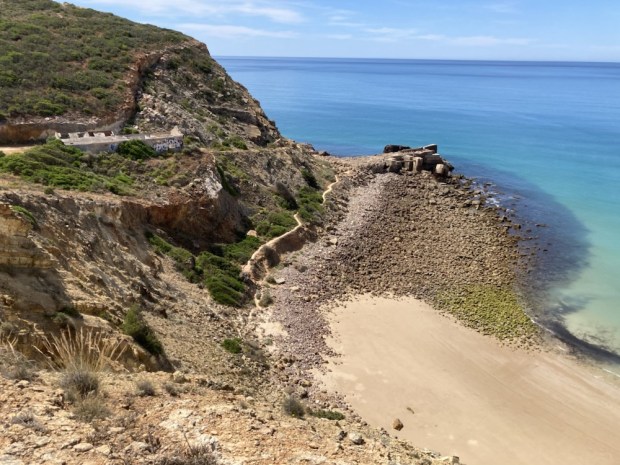
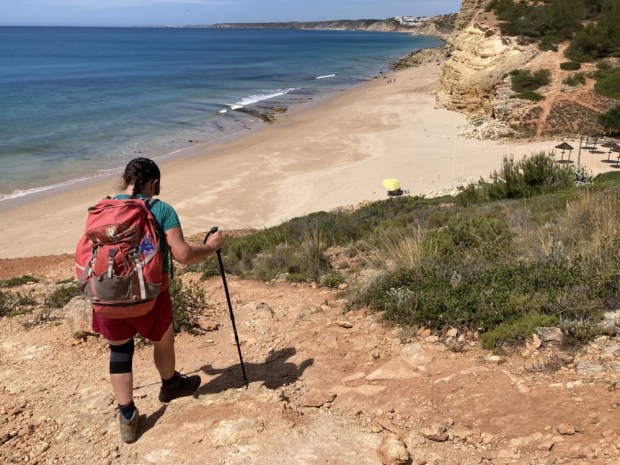
Exiting the town through a rather surreal mix of controlled and wild landscape of multicoloured rock, we again climbed up to the high cliff top plateau and continued past what I guessed to be some old mine workings before dropping to another pristine beach where I could no longer resist the cooling ( seriously cooling!) waters.

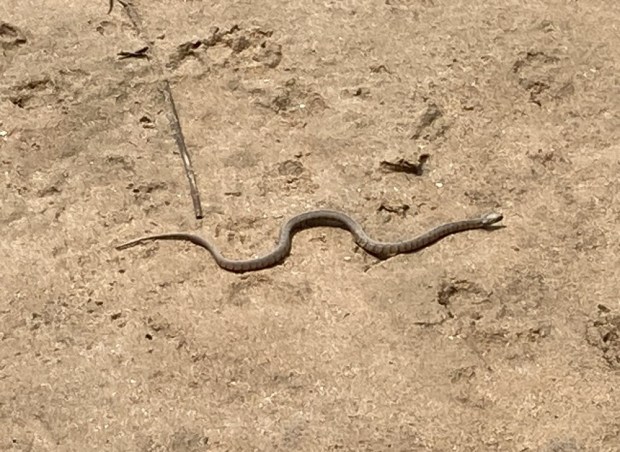
Another steep climb up away from the beach and along to the 17c fort built by Luis de Sousa in an attempt to protect the coast from pirates and privateers before we again dropped down on a steep and slippy path to Boca do Rio where a snake slithered back to the river as we passed. Once more we ascended on weary legs with panting breath to gain the heights for the final time that day, grateful for the level cliff top but wary of the inevitable descent. Happy when Salema came into view, happier still to discover a fine old “era” or threshing circle nearly lost to the plants.

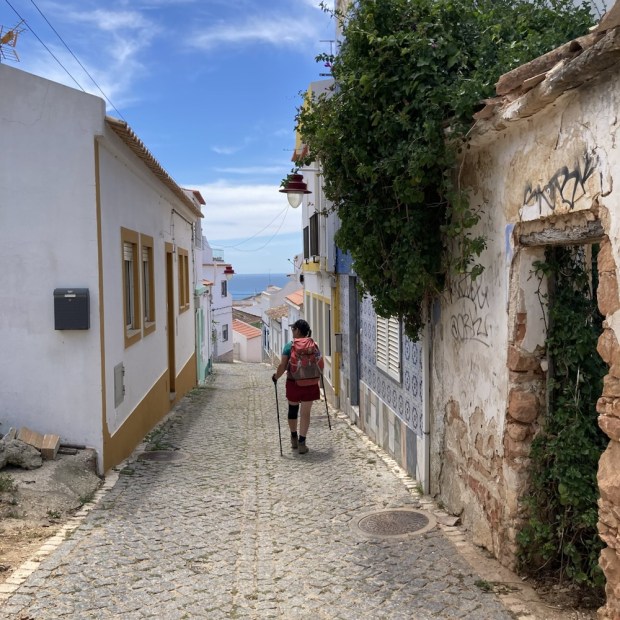
Before long we were down among its charming streets and making ourselves at home on our top floor balcony (second from left!) before an invigorating dip in the still flat calm sea.

Our third day on the trail was the toughest so far even though we only managed about 9 km. We had split the 20km stage from Salema to Sagres into two, booking a room at the Hostel on the Hill, a couple of km in land from Zavial beach. An easy day we thought. An easy trail altogether we thought. We had studied the altitude profiles of all the days from the comfort of our sitting room and it had all looked benign. Looks can be deceiving.

We were warned by a lady at breakfast in the hotel “It’s horrible”.

“So steep and slippy”

“It’s dangerous, be very careful”

Mind you perhaps we didn’t make it as easy as we could for ourselves by following some shortcut Wikiloc trails and not the official Fishermans but after climbing out of town in the road we veered off on a narrow cliffside rather than cliff top path. It had some challenging sections we’ll say.

There were a few stretches that reminded me of the clambering on the rocky Lycian Way trail but after we rejoined the “official Fisherman’s” things calmed down and we romped along for awhile till we had to tackle another near vertical ascent on rock and tree roots. But the views of the untouched looking beaches and the wild flowers were enough to keep us going.

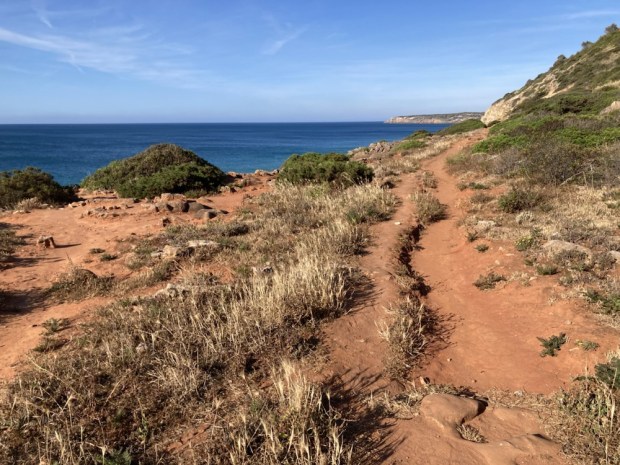
Another descent another ascent and another unofficial shortcut, that luckily ended well, and we were on the final leg, on a lovely high rocky plateau full of flowers. This led to the Ponta de Torre where suddenly we heard the sound of crashing waves and the wind, as we gained the high point, was a different beast. Things had changed. The calm had gone. The surfers were out.

A much needed drink and food at the beachside restaurant and we started up the hill towards the Hostel on the Hill. Sticking our thumbs out was rewarded by a smart white Range Rover picking us up.

So now we are done for the day. 6 more days to go. It’s going to get easier.

CAMINO PORTUGUESE: Coastal and Spiritual Routes: Part 5

O Arial to Santiago de Compostela: 1 day : 16.5 km

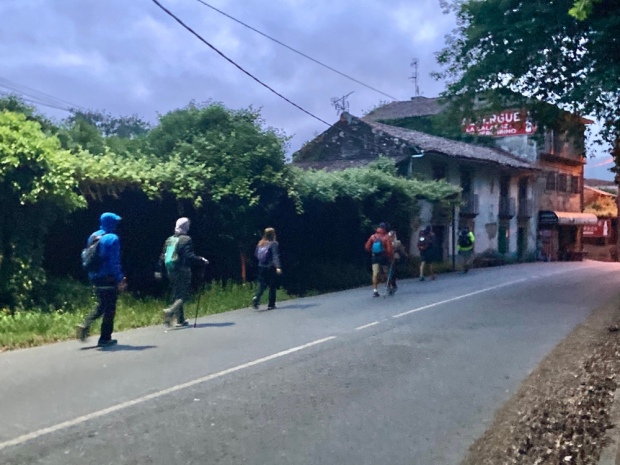
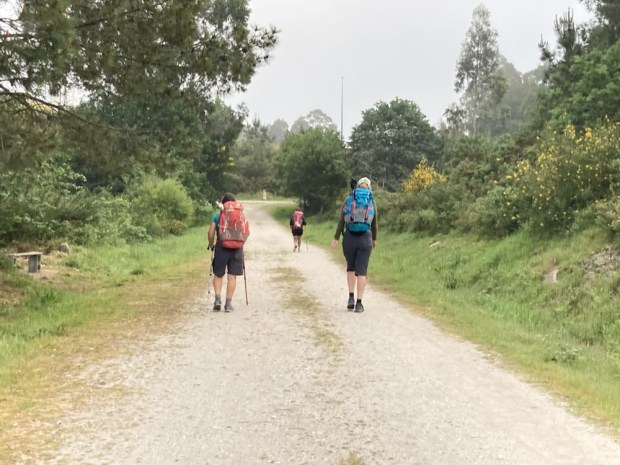
Our last day on the Way started, as usual, in the dark. We only had 16.5 km to do but wanted to get to the Cathedral square with Isobel and Catarina and I was going to go full monty and go to the 12 o clock mass with them. We returned to the main road where we had eaten the day before with Tomas O Maítín from Connemara, an interesting multi Caminoist (17!) who claimed to be a descendant of Ricard Martin AKA Humanity Dick, who had basically owed Connemara. We were initially shocked by the number of pilgrims on the move, but turning off onto the tracks we all spread out and peace returned.

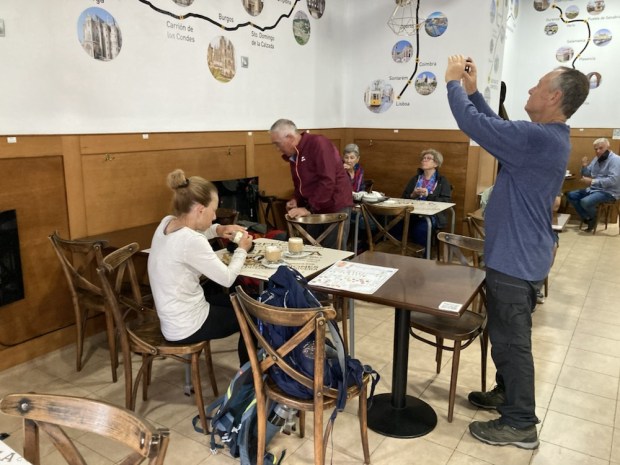
We had breakfast halfway after a couple of hours in a cafe that called itself ” The last Stop” and met up with Rami and his wife who later strode past us at high speed never to be seen again.

Alternating between urban and rural as we moved ever closer to the end the anticipation in the groups, couples and singles with packs on their backs was almost palpable.

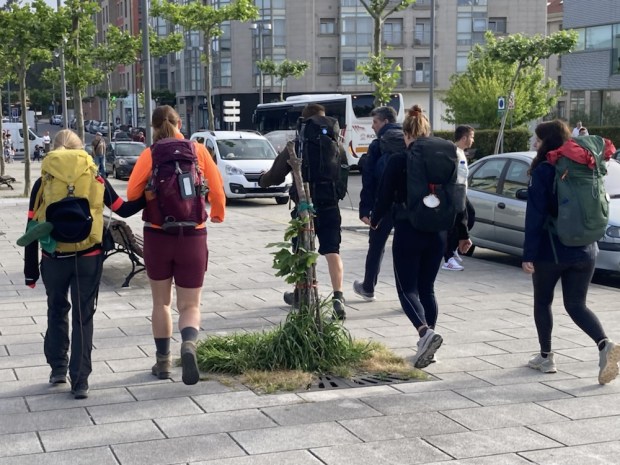
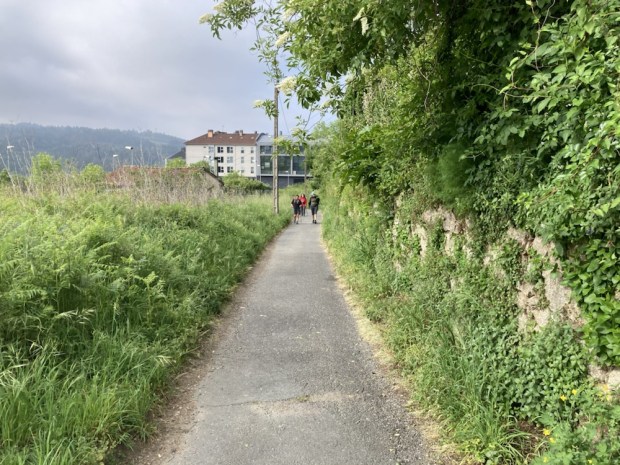
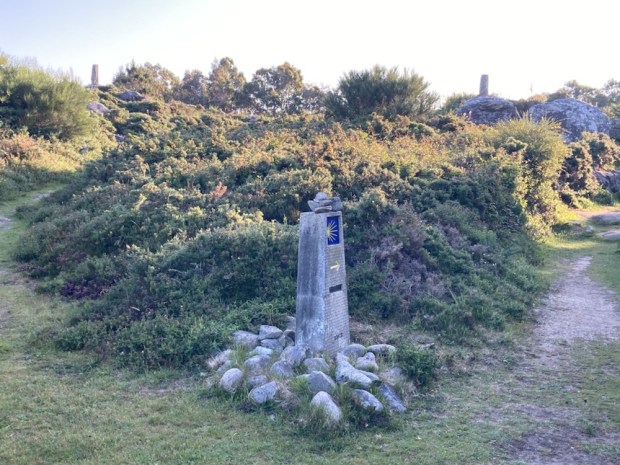
The symbols of our journey were all around us as we moved through the suburbs, now with Catarina, and still by times on leafy lanes.

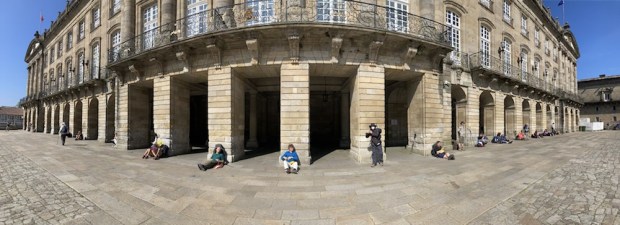
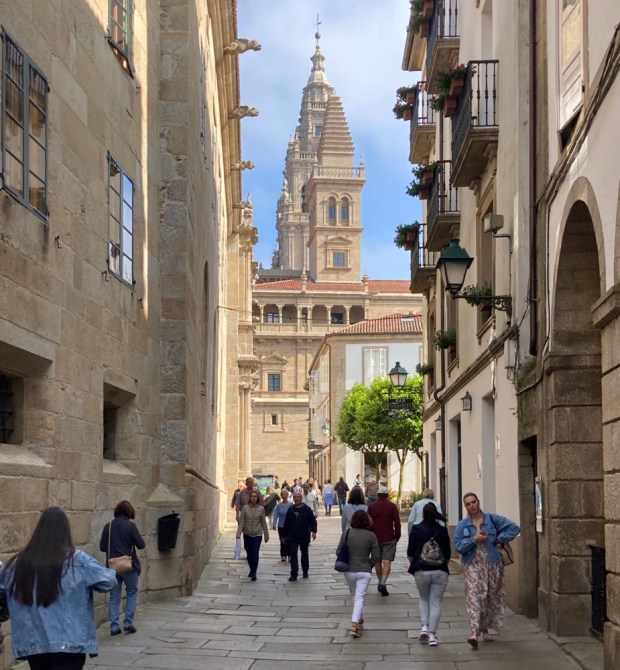
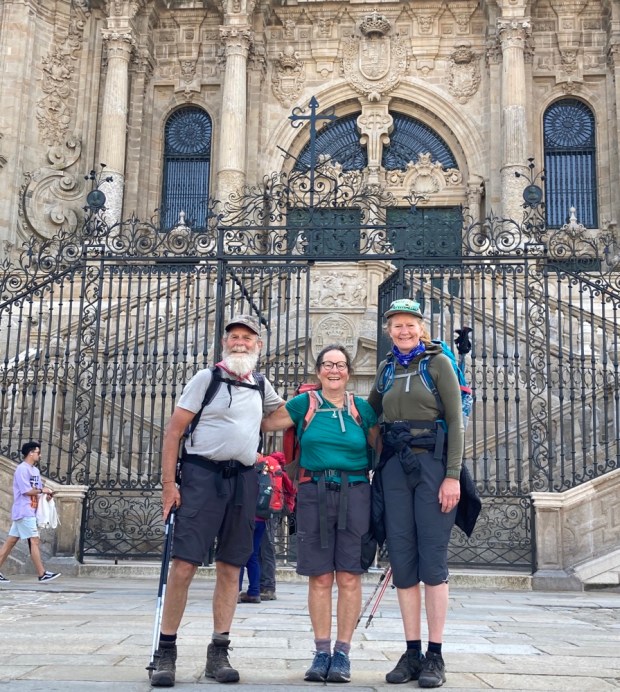
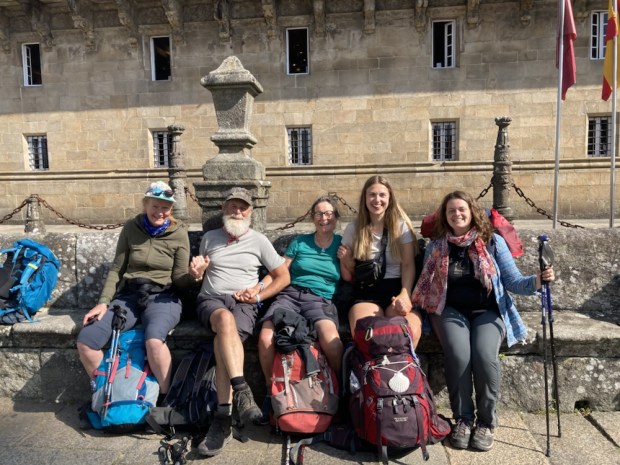
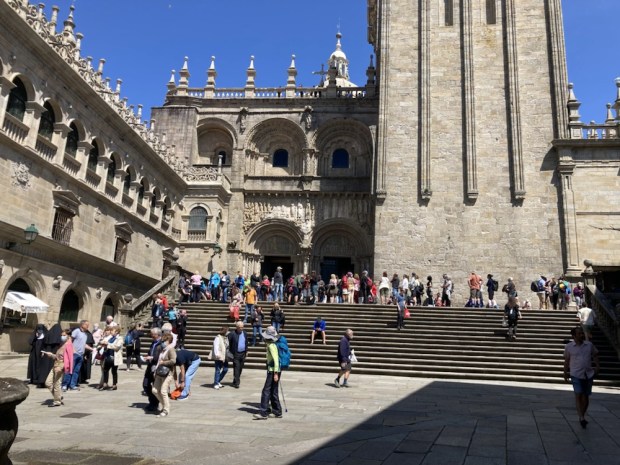
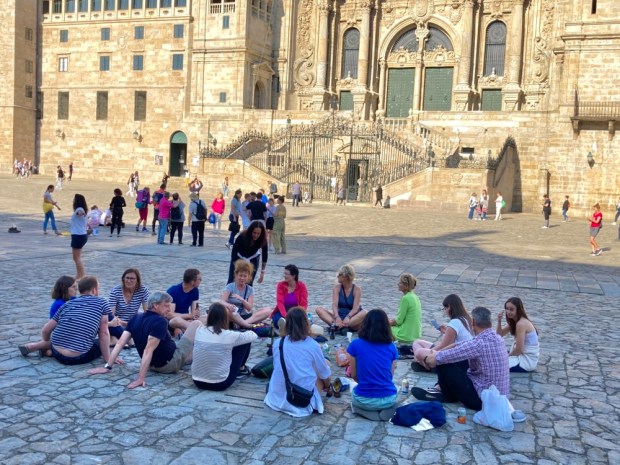
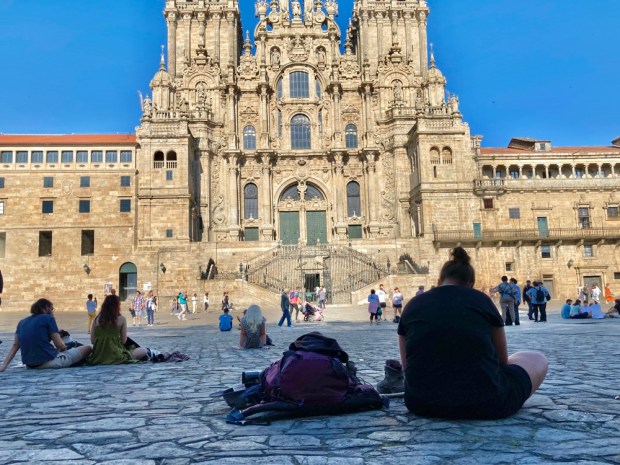
Without warning the cathedral towers were suddenly right ahead and in a moment, but after a fortnight, we entered the plaza, where many many people were experiencing the same emotions. Elation, gratitude, joy, bewilderment and love- to name a few.

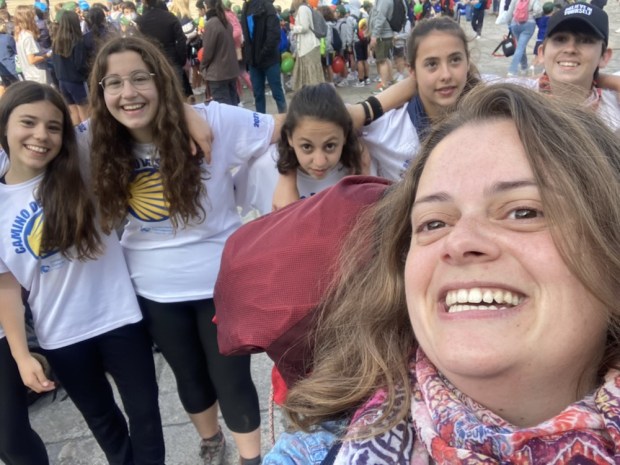
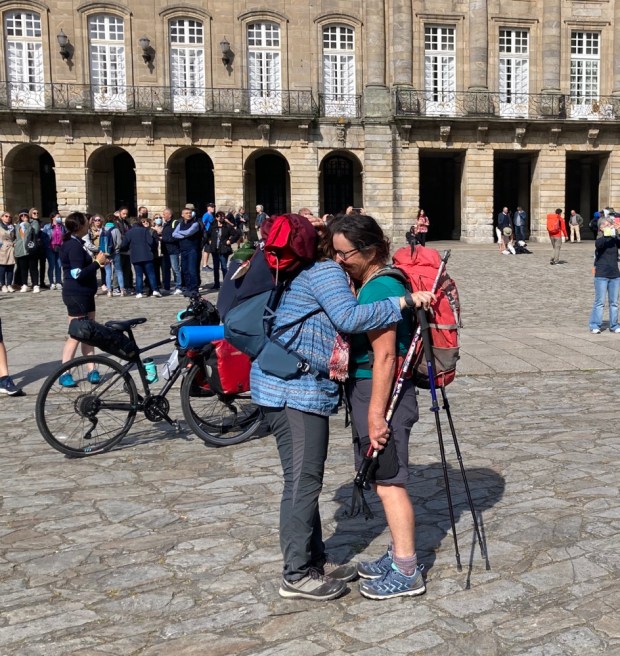
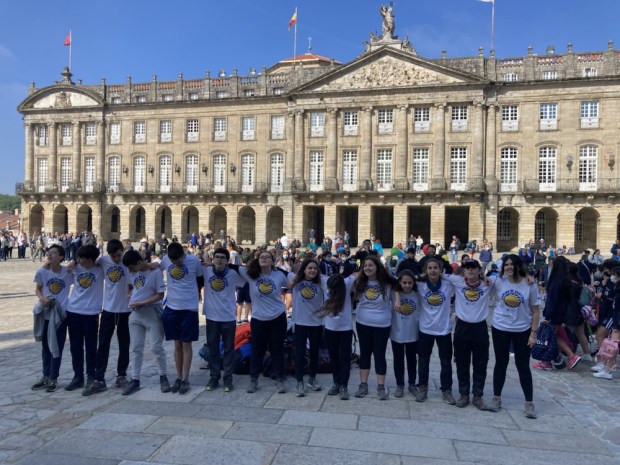
We met others, Isobel and Yolanda and saw the Dutch walking group leader dancing madly round with a bunch of kids. People hugging, people sobbing, people laughing with relief. It’s over.
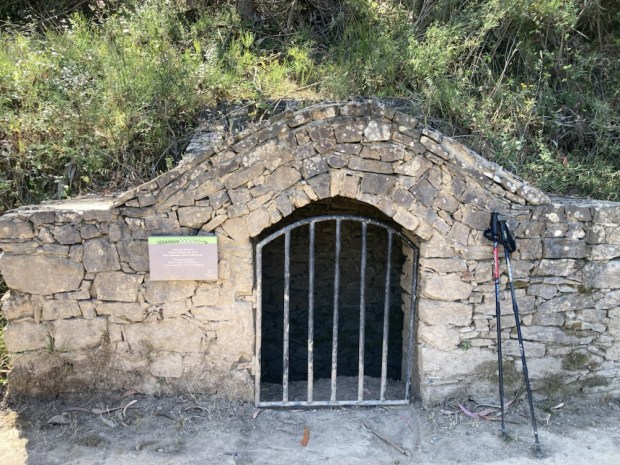
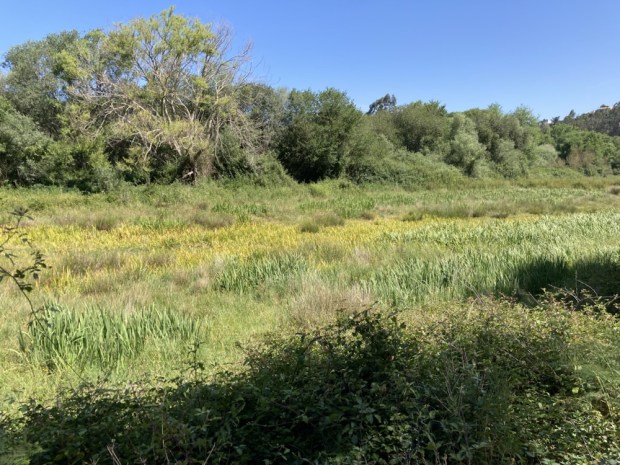
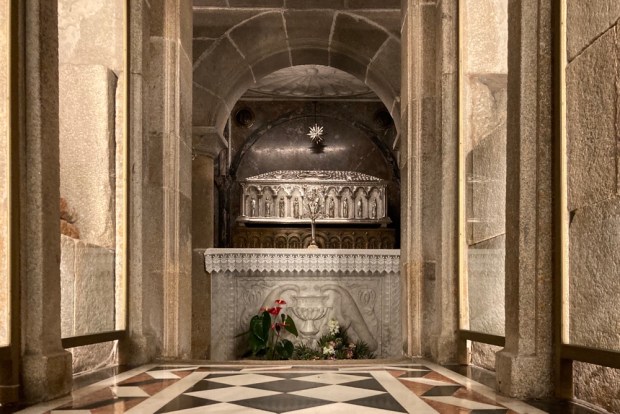
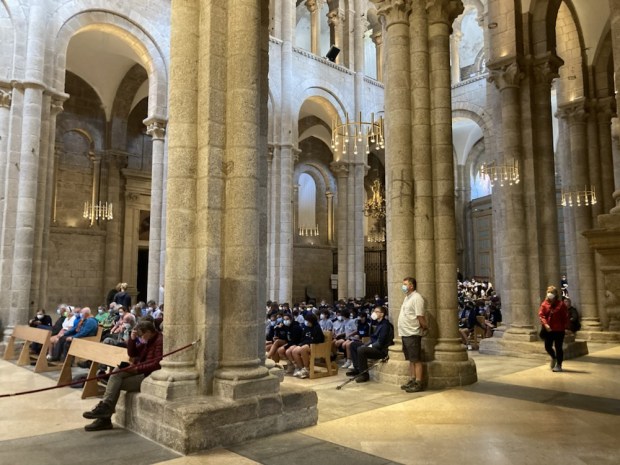
Time to get into the cathedral- the original focus of the whole cult of St James, a show with a cast of millions that’s been running for two thousand years. Leaving our packs outside in a display of faith and trust we followed the young Spanish couple known from many encounters into the sacred space where we visited the saints underfloor crypt before searching for a seat in the already full house.

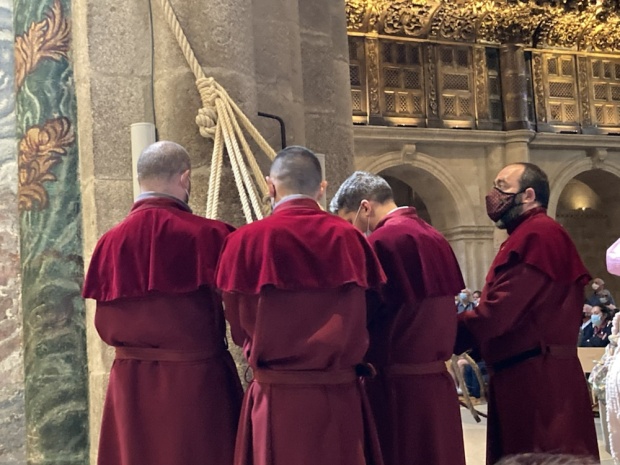
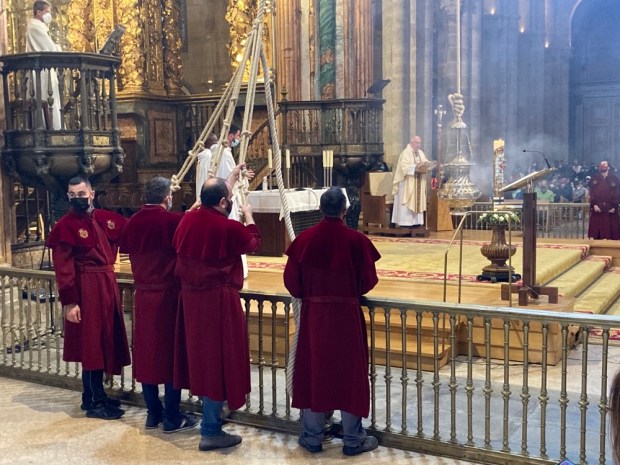
As great luck, or divine intervention, would have it we had placed ourselves in the very best place to witness an event that happens on various holy days or can, in some circumstances, be paid to take place. The lighting and swinging of the Botafumeiro. A medieval air freshener, designed 800 years ago to purify the air of 100’s of sweaty pilgrims, its 1.5m high, weighs 50 kg and is loaded with another 50 kg of incense and charcoal. A crack squad of “tiraboleiros” do the rope work and get it swinging at 70 kph after a minute and a half of ” pumping” sailing high high up into the naves.

Quite a treat to witness. A last supper with Caterina, check in and shower at old quarter hostel, a wander through the multitude of Camino souvenir shops and I went off to the Pilgrims office and got my Compostela , the certificate that should ensure my sins are wiped and my name is down at the pearly gates. It will join the one I gained 17 years ago and the ” dual pilgrim” cert bestowed after the Kumamo Kodo pilgrimages in Japan. All good insurance cover. The Cathedral plaza was by then a place of relaxation and celebration.

Many foot sore people finally able to rest. We had all done well to get here. Sally’s feet were in very poor shape, I still had painful gout in my right foot, Emma, the Camino newbie, had finished un blistered. To celebrate we had dinner in Paradise, or Cafe Paradiso. Emma was leaving on an early flight in the morning while we had time to visit the Pilgrimage museum with interesting displays on the history and culture of this timeless worldwide phenomena.

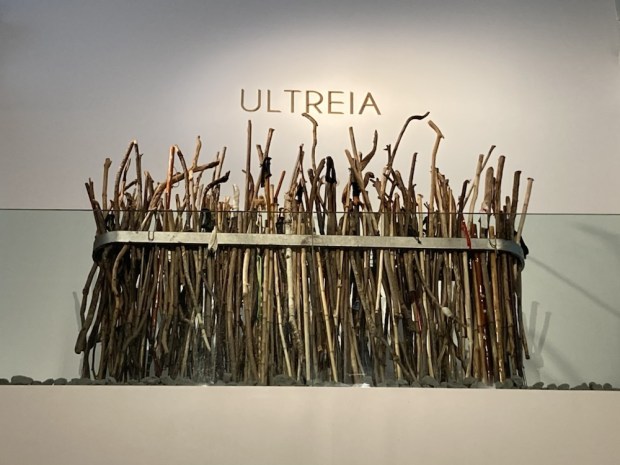
So many Ways. So little time. Ultreia !

CAMINO PORTUGUESE: Coastal and Spiritual Routes : Part 4

Pontevedra to O Areal: 3 days : 55.5km

A good evening in Pontevedra enjoying a meal courtesy of Emma’s prize bond win but a bad night for me thanks to a sudden and acute flare up of an old affliction ” gouty toe”. Awake from 3.30 and fearful of the long climb ahead I was made more understanding of those suffering from blisters and other foot afflictions. “The Camino Provides” they say- seemingly this can include sufficient pain to bring humility and understanding. Or that was my lesson for the day anyway. We’ve taken to adopting a thought or meditation to work through each day in an effort of self improvement. But being us we keep returning to base level after expressing uncharitable opinions, or facts as I like to call them.

Anyhow we set off pre dawn across a smart city with a beautiful old quarter we shared with groups of fun loving youth on the way from party’s and clubs. We also explored a pilgrim vending arcade which catered for all our needs from drinks, snacks and plasters, creams and badges and pilgrim scallop shells to condoms, lubes and a wide range of vibrators and masturbators. And some “Naughty Hedgehogs”.

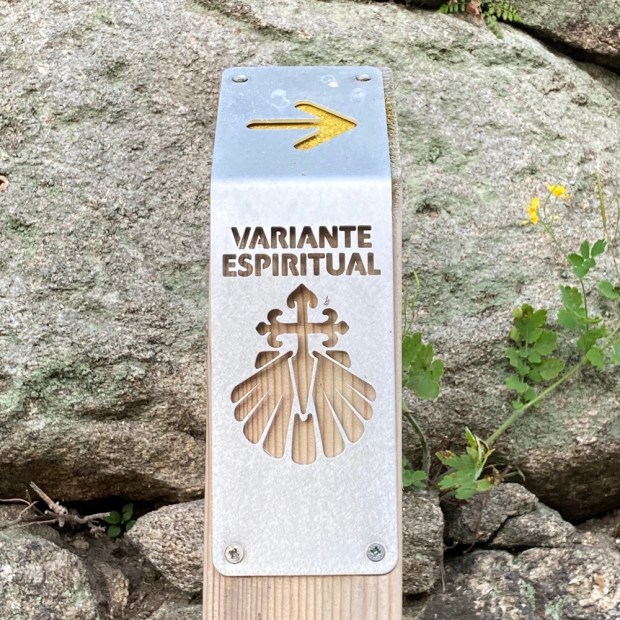
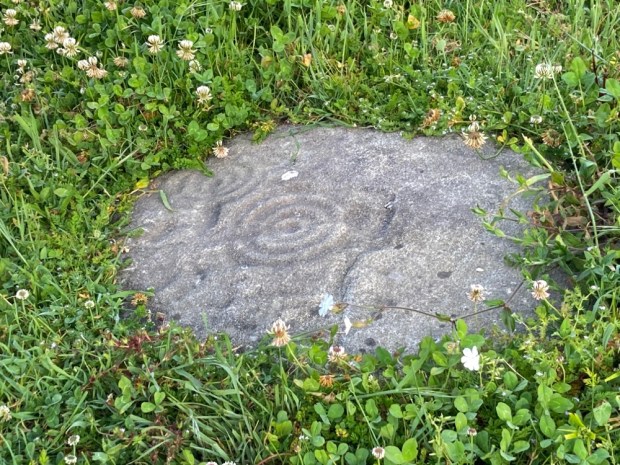
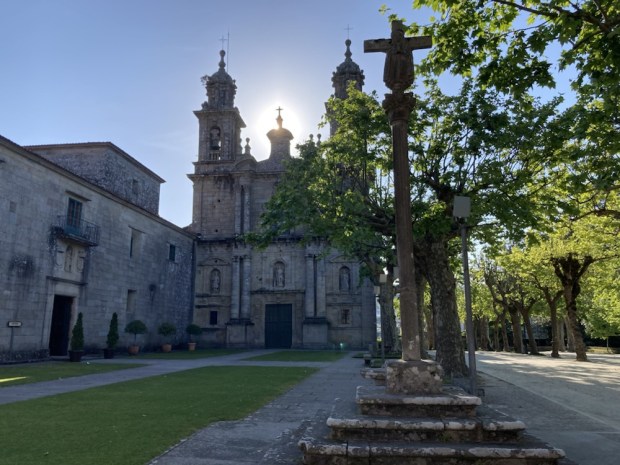
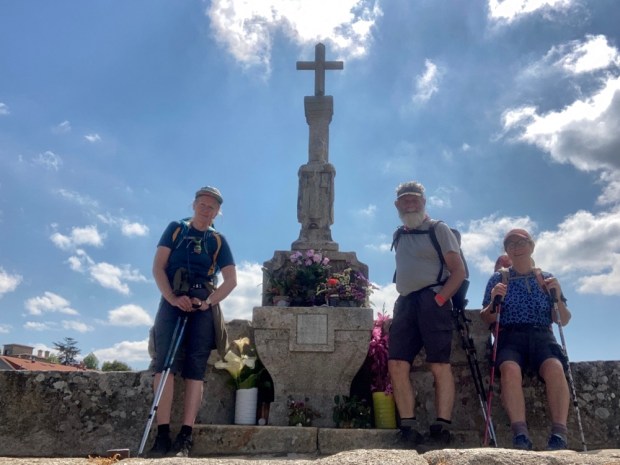
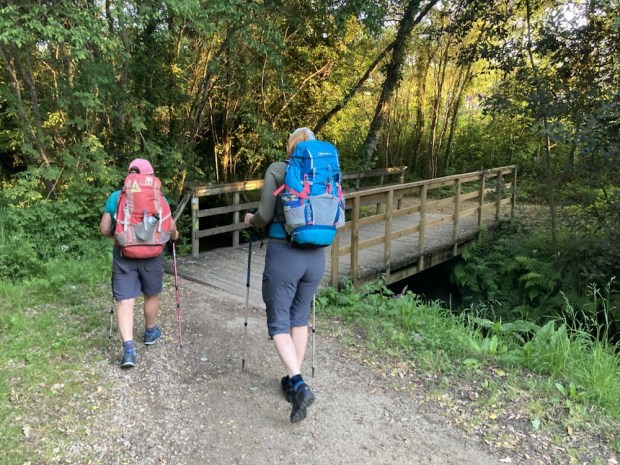
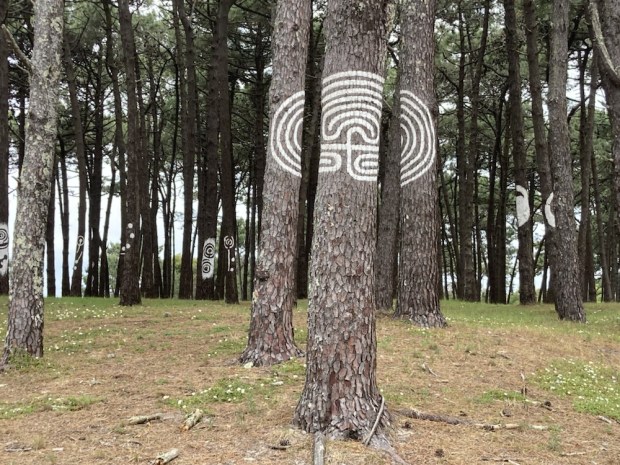
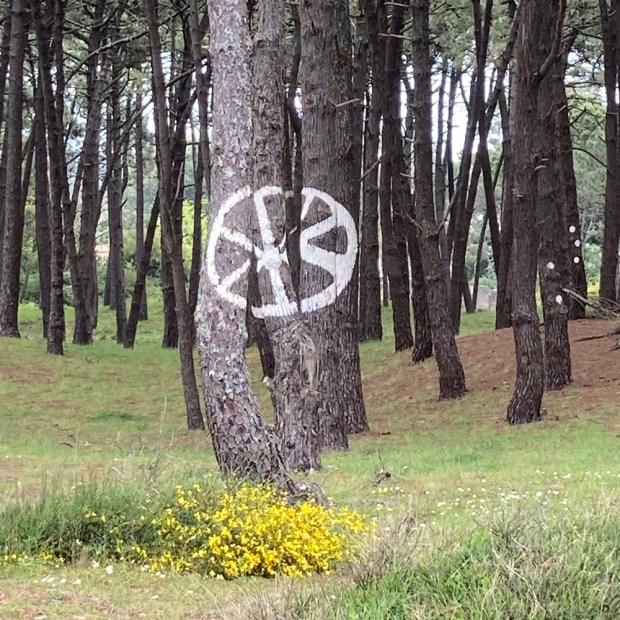
Luckily not far out of town we turned onto the Variante Espiritual and left all lustful thoughts behind as we climbed up past crosses through forest and farmland to the church of San Pedro, where Emma gave an impromptu service from the outside pulpit and we stopped for petroglyphs and coffee.

Moving on through more farmland and forest and grateful for the shade as the sun gained power my toe slowed me to a state where a snail crossing my path before the monastery of San Xoan seemed prophetic.

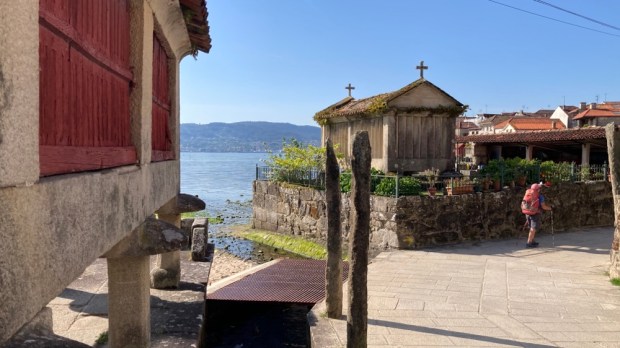
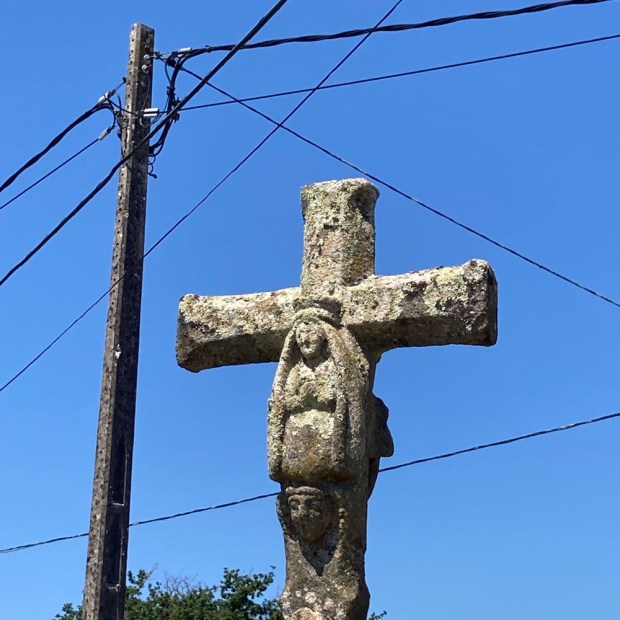
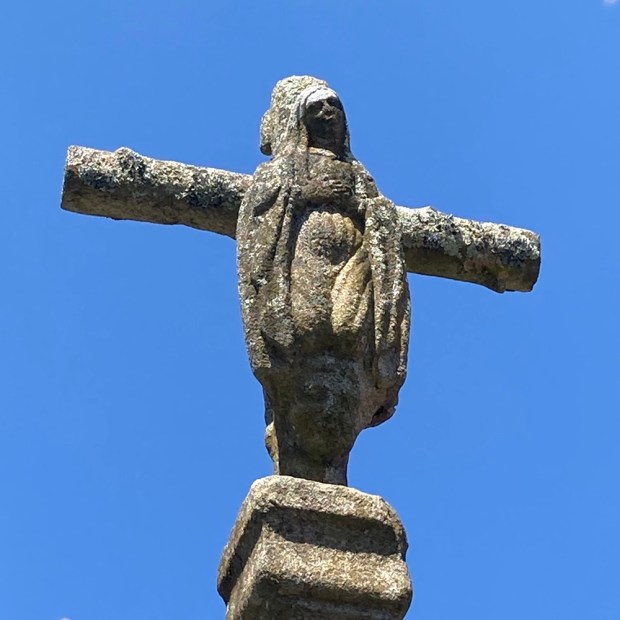
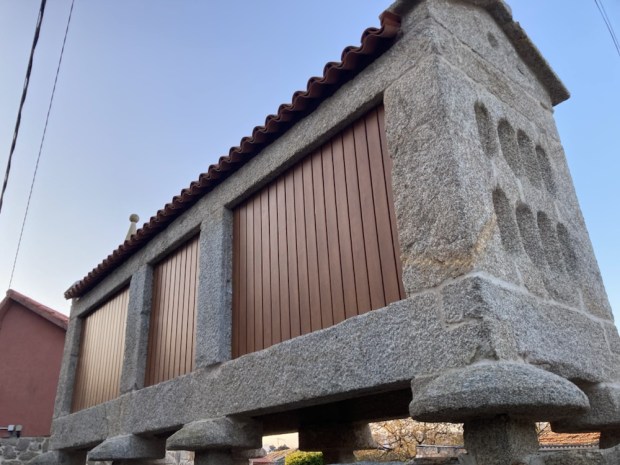
Soon we were down at the sea/ estuary following a grassy path round to the lovely historic town of Combarro with a wealth of horreos lined up along the shoreline, 8 stone crosses and lots of funky old houses.

And yapping dogs.

A steep steep climb up from sea level to a spring and resting place was the first stop in a 437 m climb in the sun, slowly making it to a viewpoint and then off the road and onto forest tracks again for the final long and painful ascent past more petroglyphs that were too far off route to bother with.

Finally the descent. The last few kms, down through shady forest on rocky track to be rewarded suddenly with a yearned vision. The bar at Armenteira. And the monastery next door. (But later after food and drink).

Another, final, hobble and we were settling in to the Albergue where we again met old camino buddys. Manfred the Austrian snorer, Catarina , the young Portuguese woman we’ve been with for days, Rami and his wife,the Israeli couple with the kettle, the silent Korean man, the mother and daughter from Slovenia and Isobel from Holland who manages just fine with half an arm missing. We’ve left many others behind or they went the Central when we went Espiritual.

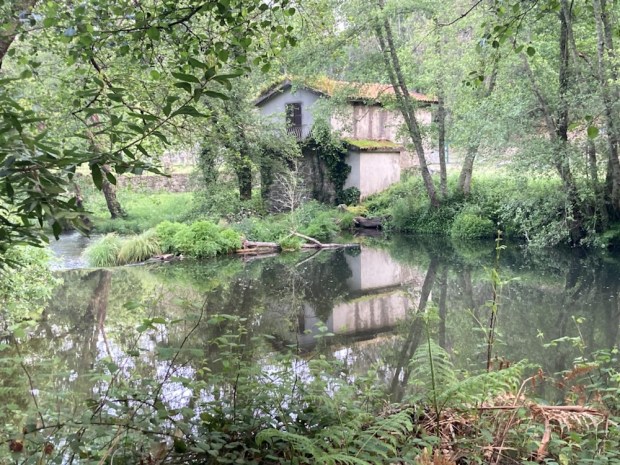
In the morning we set out anticipating the highlight section of the route, the ” stones and water” path, a stunning section following the river past 51 ancient mills and cascading falls for the first 7 km.

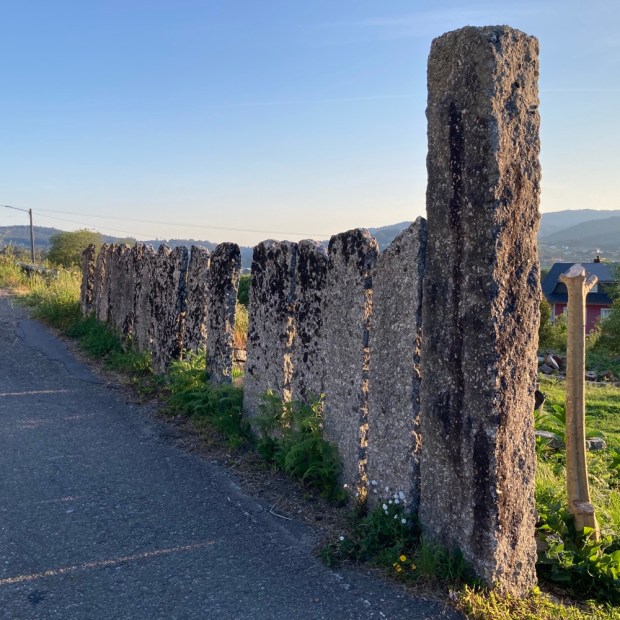
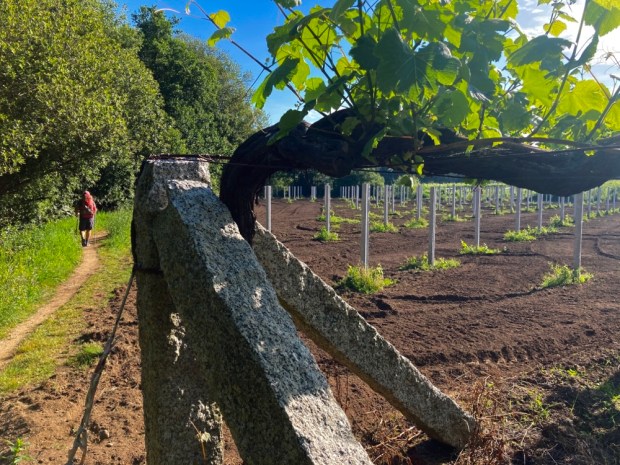
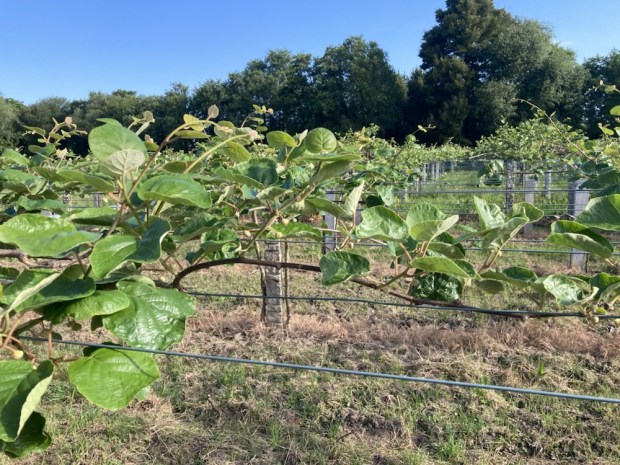
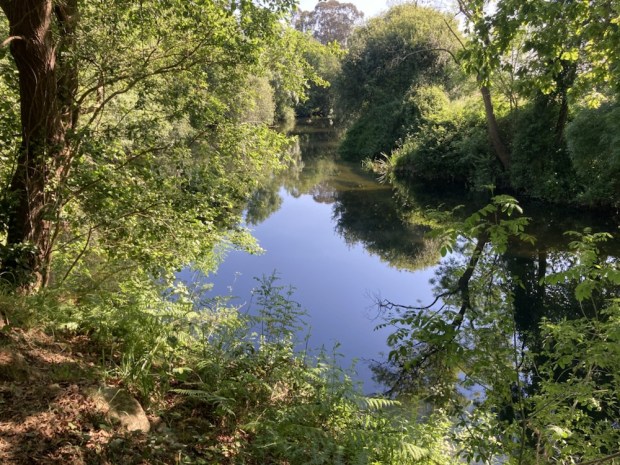
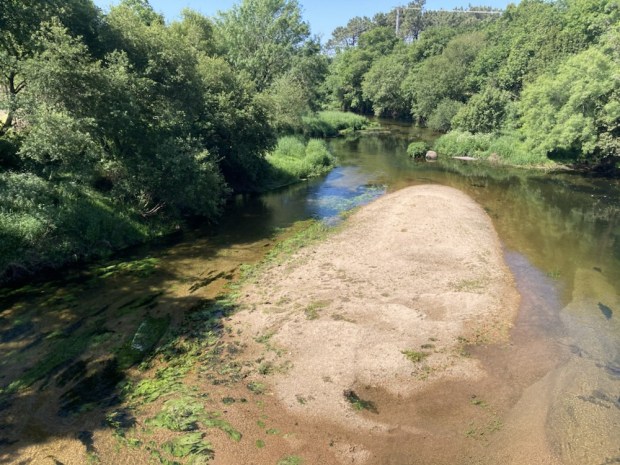
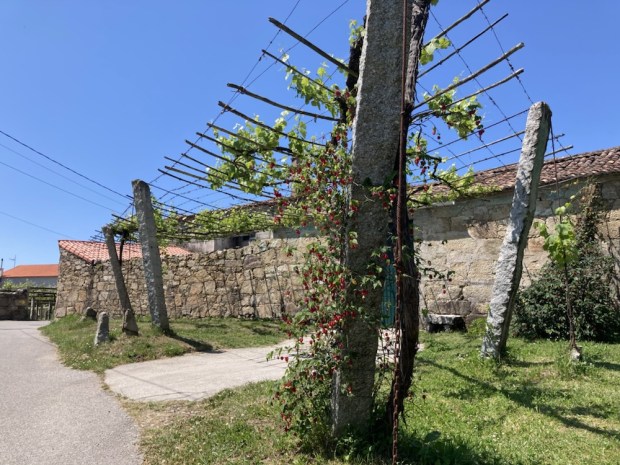
Truly wondrous- but you kinda had to be there. After a coffee break in Barrantes we followed the croaking frogs and shoals of little fish up the crystal clear waters of the river Umia, busy with walkers and cyclists and surrounded by lush grape and kiwi crops supported by a network of wire and stone pillars.

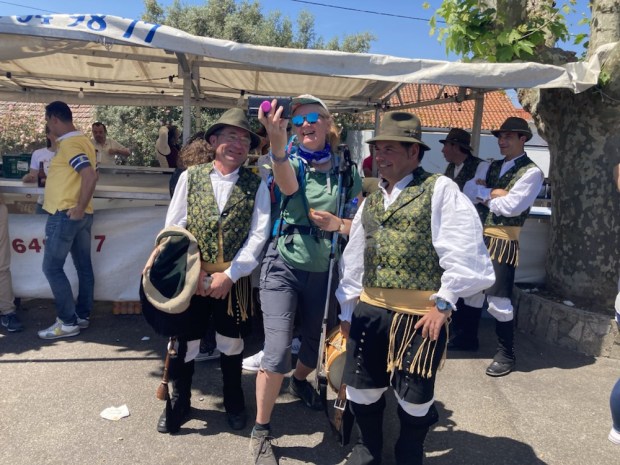
Finally away from the waters we once again followed small roads and some forest tracks stopping in Mouzos to join in the celebrations for San Michael and have a salsa dance in the plaza.

Arriving hot and bothered at the Ria de Arousa estuary we stopped briefly for paddles and bathing in the warm shallow waters and then limped on for the final furlong into Vilanova de Arousa past lots of people enjoying a more sedentary lifestyle. A good small private albergue with a kettle and milk in the fridge, big sofa and packets of biscuits and a fine waterfront restaurant meal with Isobel put an end to another fine day on the Way with a boat trip in the early morning to look forward to.

Not a good night unfortunately. The lodgings were fine but not the clientele. 3 Portuguese men arrived later and one was an extreme snorer. Emma and then Sally fled to the lounge/ kitchen where a sofa had to do while I was left to employ various short term measures in desperate attempts at restoring peace. In the end exhaustion helped and I slept again till 6 when we broke fast and returned to the harbour to join the group of pilgrims embarking for the Translatio. This is the name given to the boat journey made up river to Pontecesures by the remains of St James after he was martyred in the Holy Lands and is the worlds only maritime pilgrimage route.

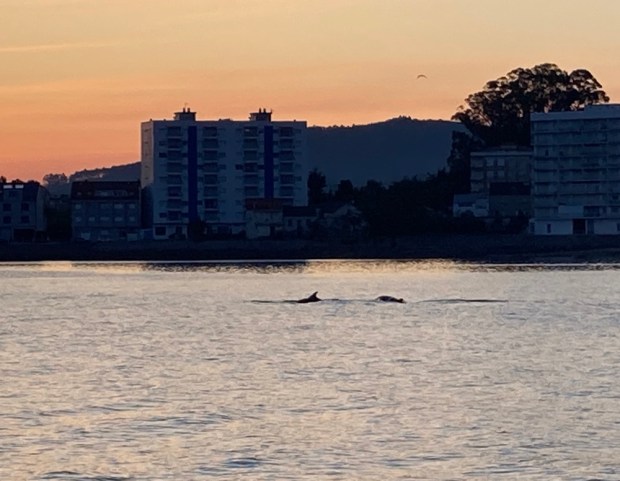
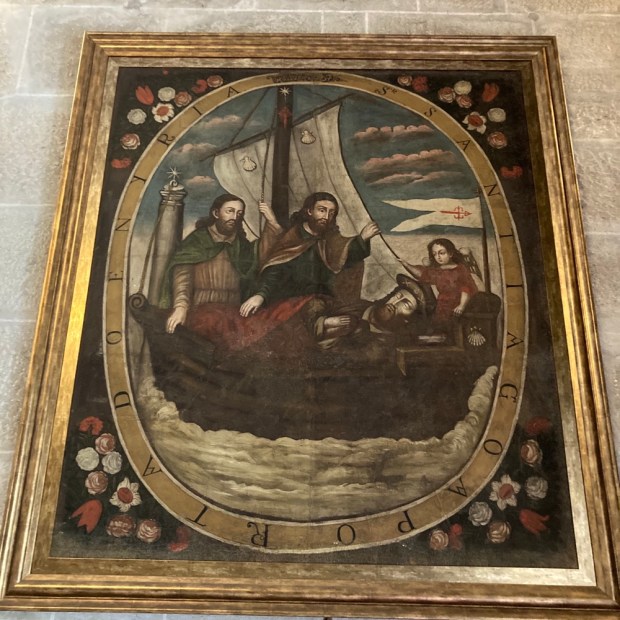
” Led by an angel and guided by a star” St James faithful followers brought him back in AD44 to the lands he had converted and landing up river at present day Padrón carried his body by ox and cart and buried him on Mt Libredon where it lay forgotten for nearly 800 years ( allegedly). The Translatio route is lined with 17 stone crosses and a lot more mussel rafts. Dolphins played in the waters around us as we headed out into the estuary and up the River Ulla on the ” origin of all paths”.

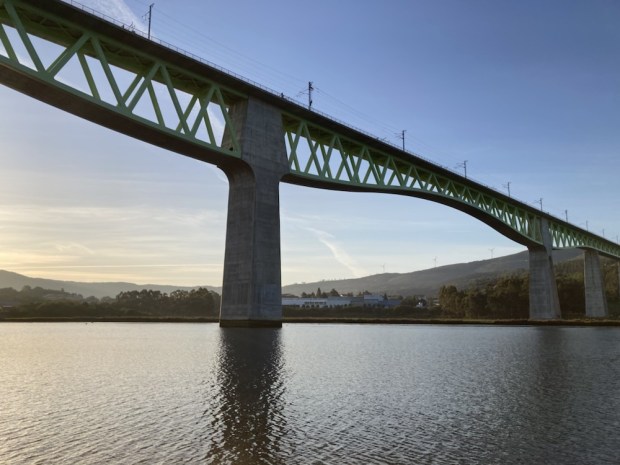
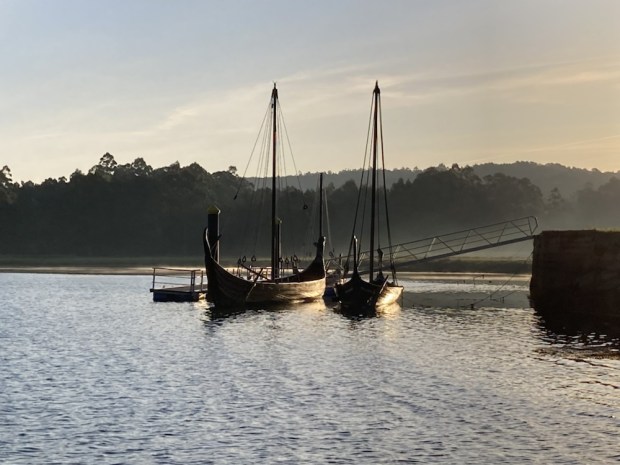
We went by the remains of the Torres de Oeste, once a large 7 towered castle now overshadowed by a road bridge and strangely a pair of viking longships.

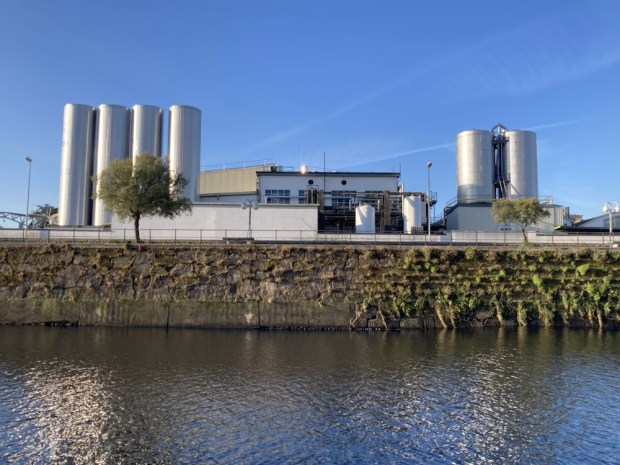
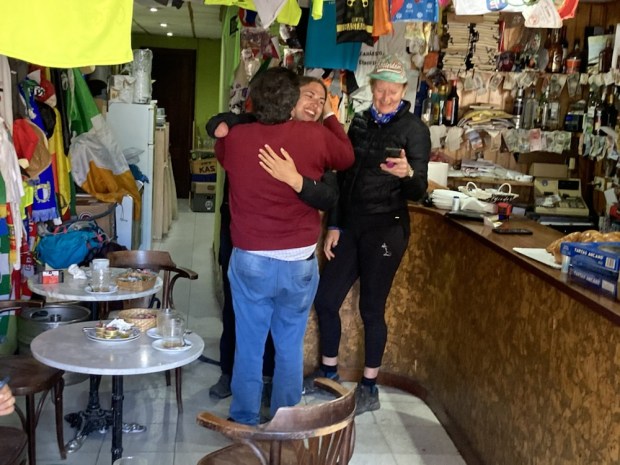
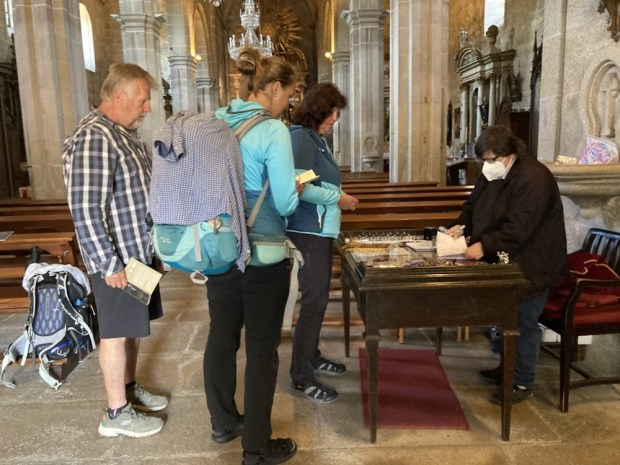
Soon after passing the Nasty Nestle factory we left the river and walked the couple of kms to Padrón where we got an extremely warm welcome from Pepe in his bar stuffed with pilgrim memorabilia and an even warmer goodbye. Opposite was the Igrexa de Santiago church where we got another stamp in our credentials and admired the painting of the boat journey of James.

We had rejoined the main route again so the place was thick with peregrinos resting, eating and passing through on their last leg to salvation. A lovely old lady called Marina gave us the heads up on the proper original way, thankfully a little shorter, before proudly showing me her garden.

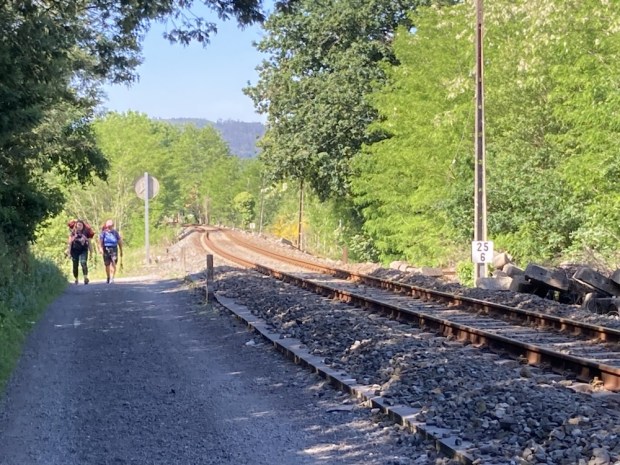
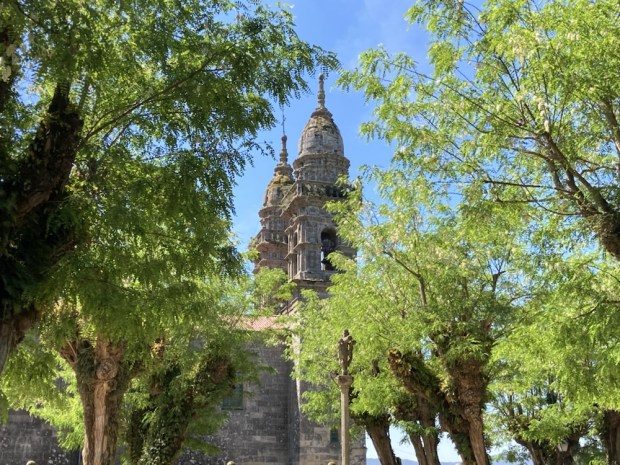
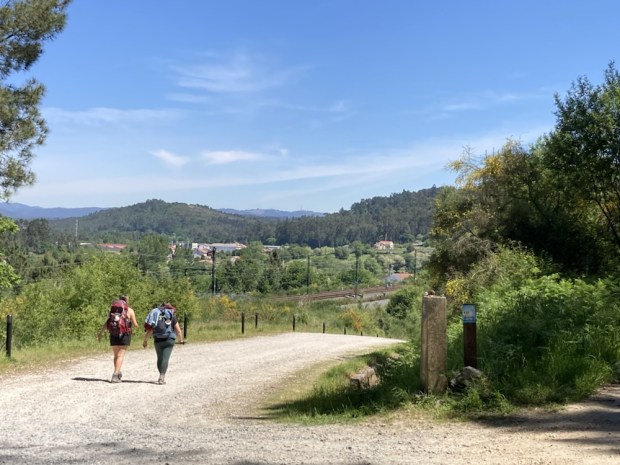
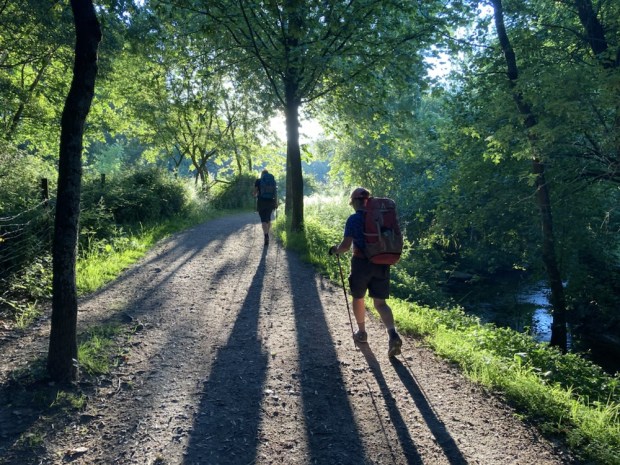
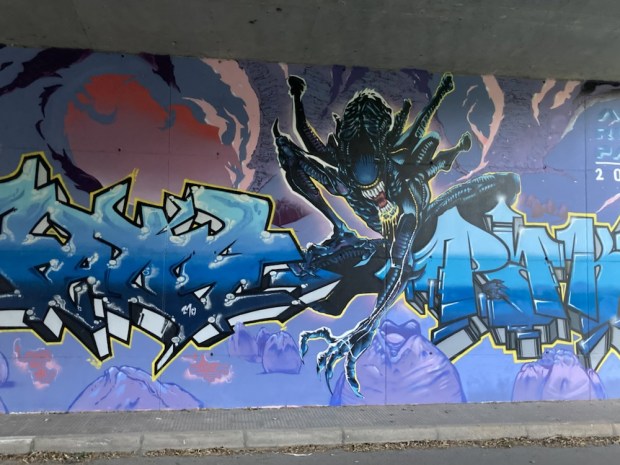
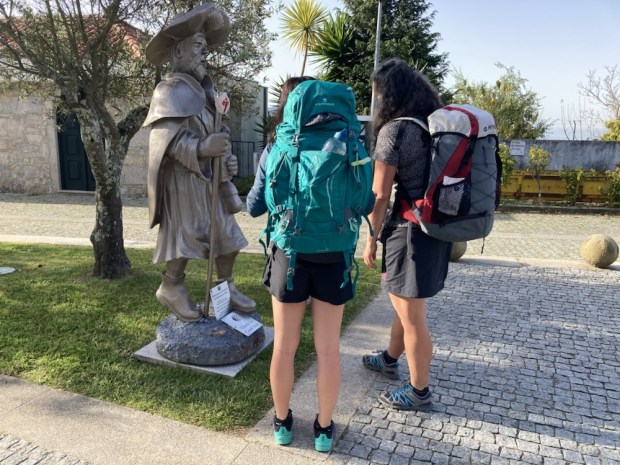
Onwards, down tiny passageways and over the railway, passed churches with Asian looking steeples, pilgrim statuary, intense flowers, tumbledown hamlets and odd graffiti surrounded always by forested hills beneath blue blue skies.

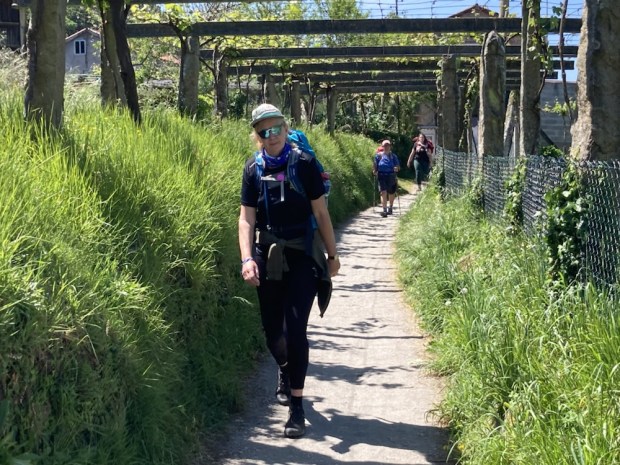
Tonight we have a three bed private room so far on our own in a hostel 16 km from Santiago. The bonds with other pilgrims has grown and tomorrow is our last together. We will be surrounded by hundreds of people who have walked for weeks and months with great effort and have finally reached their goal.

Could be emotional.

CAMINO PORTUGUESE: Coastal and Spiritual Routes: Part 3

Mougás to Pontevedra: 4 days : 87 km

A short 16 km day ahead planned luckily which will go easy on Sally’s feet and Emma’s first day, although we still started early enough, rising with the pilgrim tide from their beds at the albuergue. With no kitchen and milk that had turned to yoghurt our fresh supplies of Irish tea bags were of no use to us and without a bar or cafe for miles we walked off under the lightening sky to venture once again into Galician Connemara.

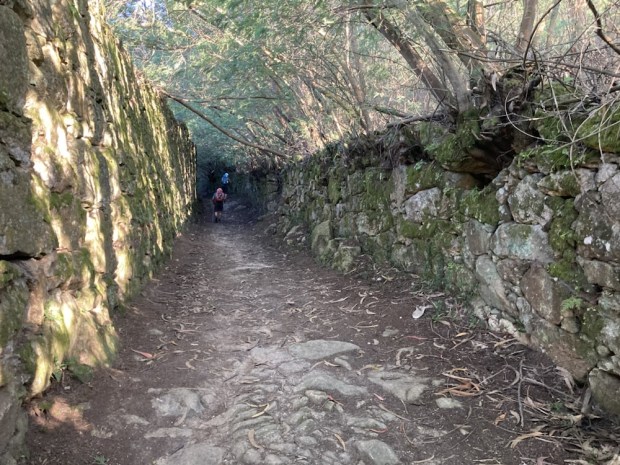
Again alternating yellow cycleway with sandy coast path for about 5 km we then turned up a forest track that became a wonderful and ancient stone paved track with the grooves of millennia of wheels carved into the granite. Stopping at the top after a short but sharp climb for restorative chocolate we admired the views over to the Cape Silleiro lighthouse.

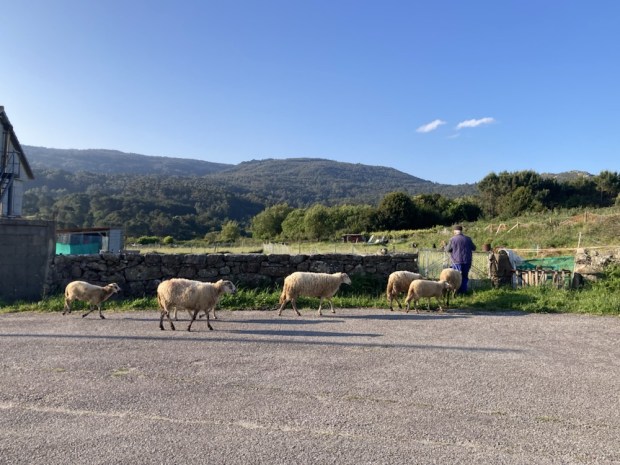
Coming down towards the coast on the other side of the headland through the pine and eucalyptus I passed a farmer calmly leading some sheep to graze. The rugged mass of the Cíes islands came into view. Supposedly a fine example of eco tourism, the limited number of permit holding visitors can only stay at the one campsite although there are 3 restaurants and a well stocked shop to enjoy after exploring the sea and trails on this National Park.

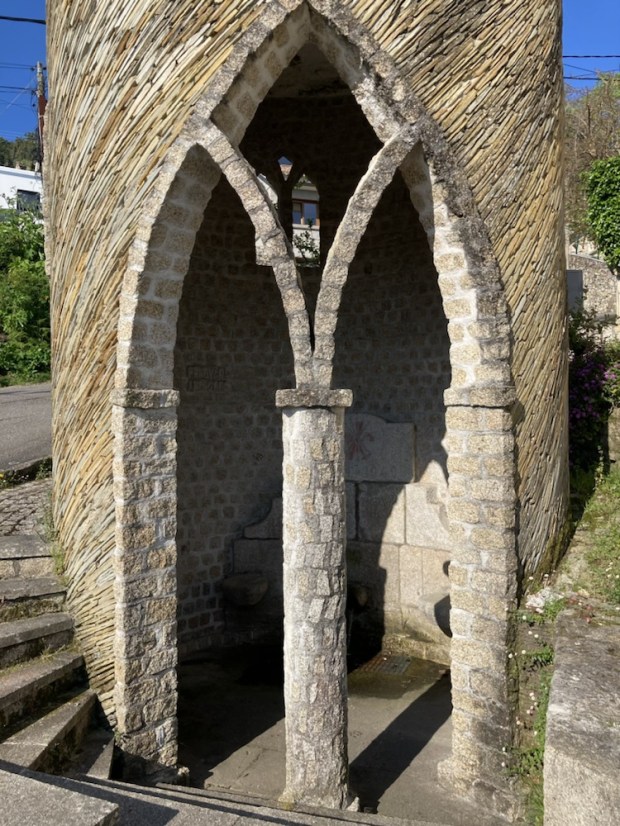
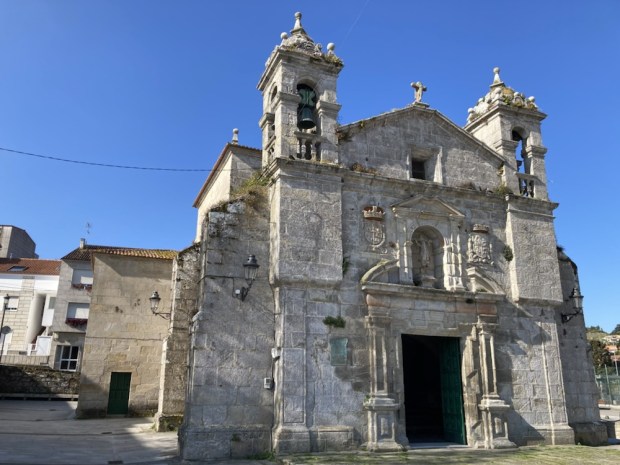
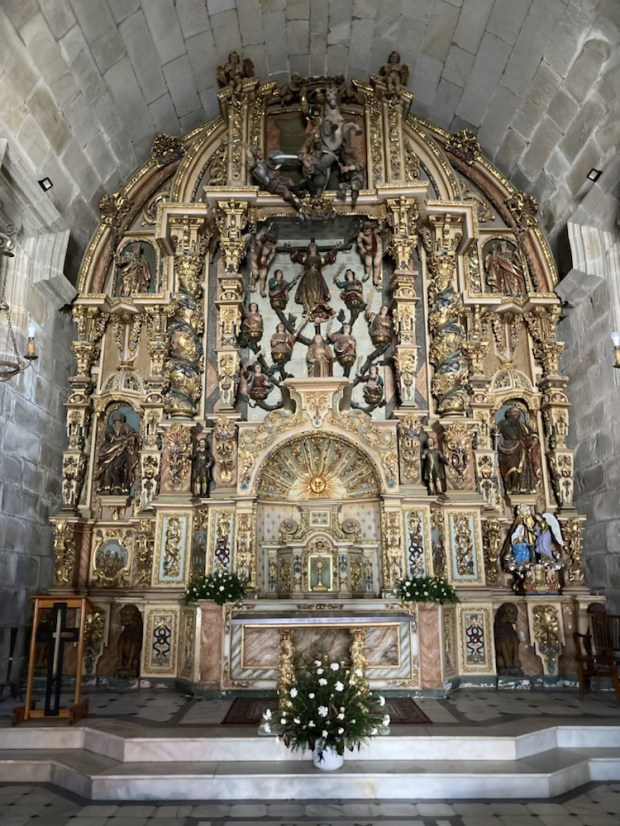
Continuing on towards Baiona we passed a lovingly crafted 1940 faux castle tower with a fuente inside and in the plaza where we finally got a coffee, the Baroque Capela de Santa Liberata and the older 12 c church of Santa Maria.

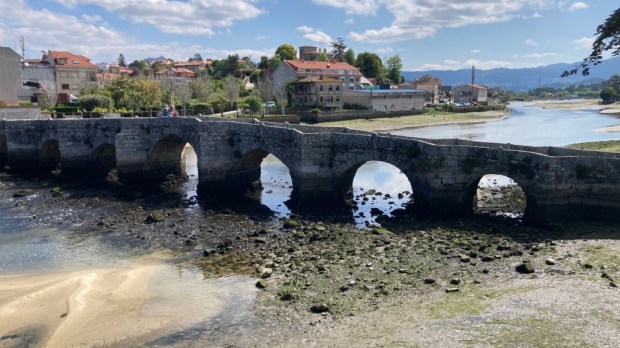
Then through the historical quarter to the shore and ,following a cycle and walkway around it, soon reached the river Minor and crossed it on the beautiful Ponte da Ramallosa guarded by San Telmo, the patron saint of sailers.

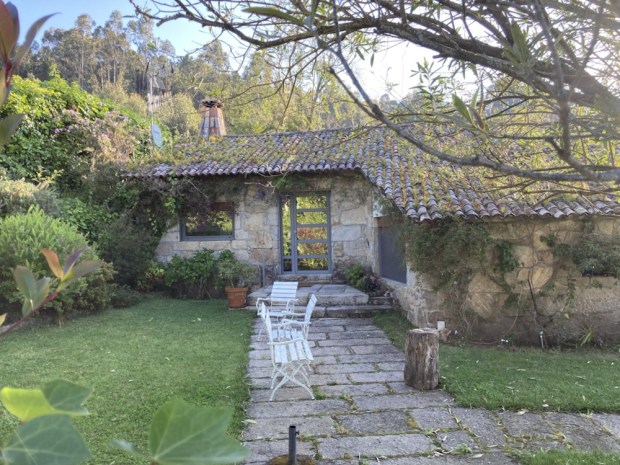
A short climb past bars and restaurants to explore later lay our goal, the Hospederia Pazo Pias, where €15 secured a bed in a 17th century palace set in lovely grounds.

Gotta look after the pilgrims.

Pilgrims familiar from the night before joined us but we lost them again the next day when we decided to take another variant. This one avoided a lot of the suburban sprawl of Vigo, instead adding 2.5 km overall, but with an earlier finish for the day after 16 km or so. The start was a mix of urban and rural lanes and streets and woodland paths and tumbling streams.

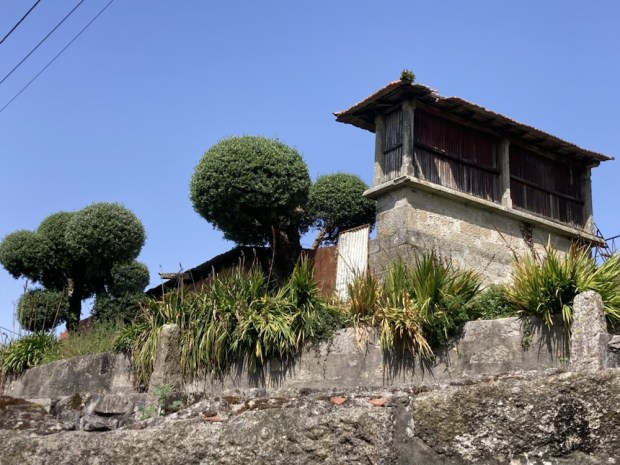
There were lots of grand old houses indicating great wealth in the area and a fine selection of horreo, the traditional grain stores, wash houses and veg gardens.

A lovely stretch of stone paved woodland took us up to views over the Baiona and Vigo coast and the Cies islands. By coffee time we’d reached Priegue, stopping for refreshment before heading up into the forest again.

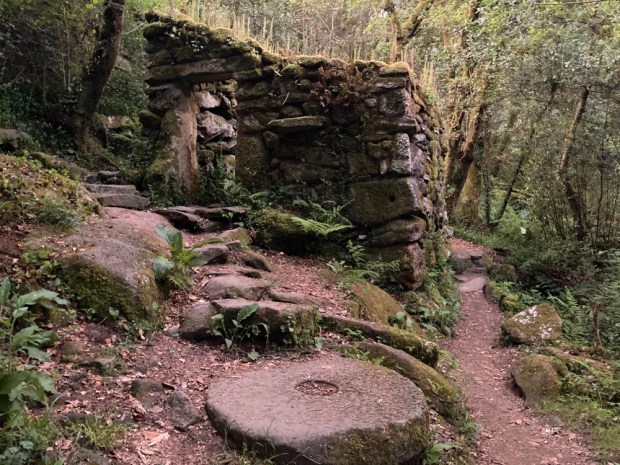
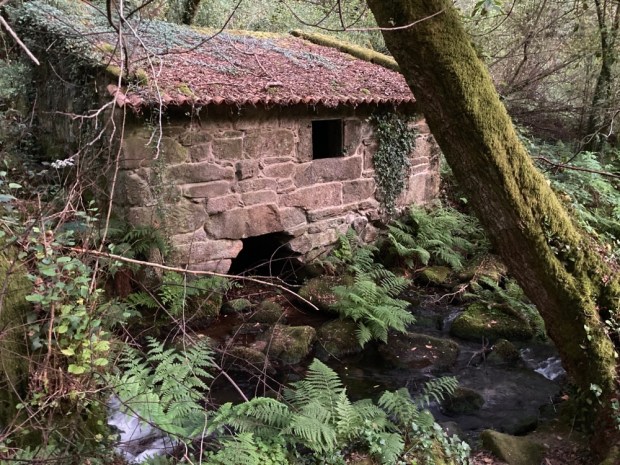
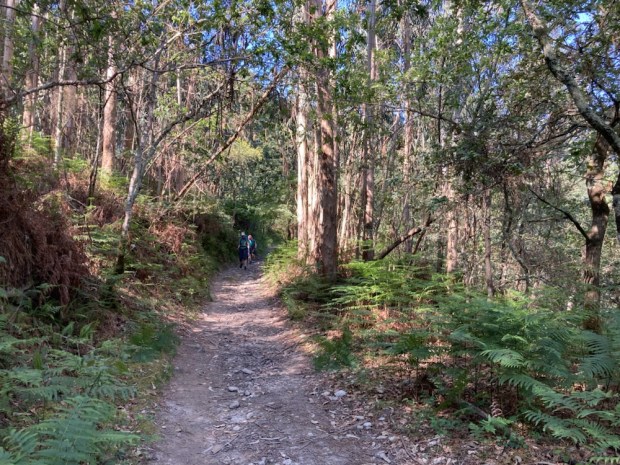
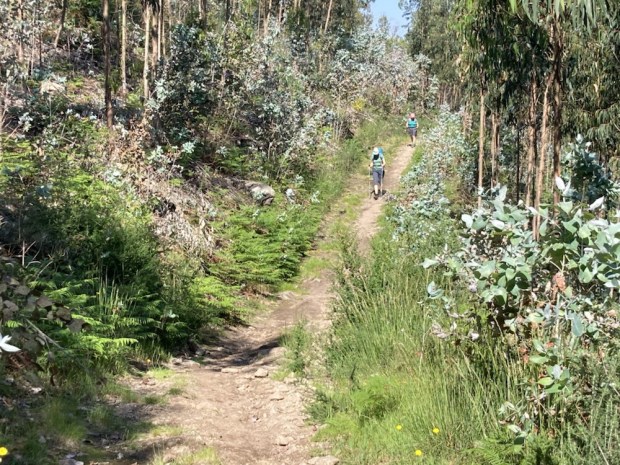
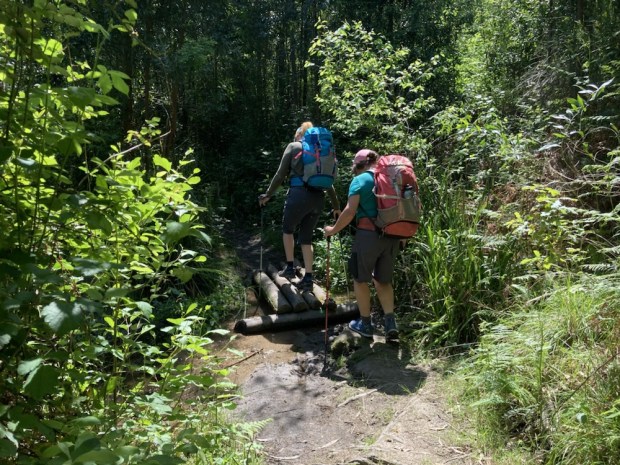
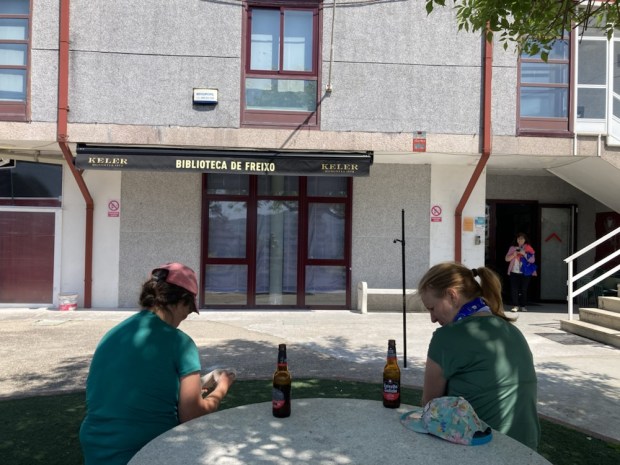
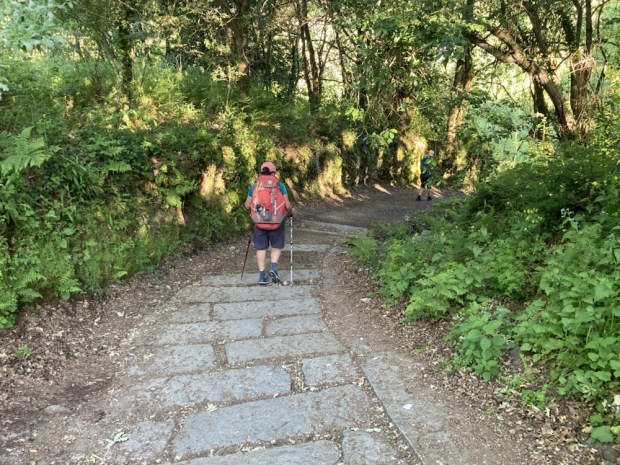
We had decided to stay at the Albergue O Freixo which meant leaving the main path and hiking another 5 km through the forest mostly on a trail that led past numerous old water mills and a couple of speeding bikers. Very beautiful and peaceful we stopped for a long rest amongst the towering eucalyptus.

Emerging from the greenery an open landscape of rocky ground and forest lay ahead. Hoping for the Albergue to come into view we were arrowed up and up and finally, gratefully, we arrived- at the same time as Angie, who, with the help of google translate, looked after us well.

The Albergue was also a thriving community centre with function room and fully equipped kitchen we could use to cook our dinner. There was also a community run bar which came in very handy and evening classes in Pilates and ,weirdly, bagpipe and drumming combo which didn’t come in quite so handy as the pipes and drums started just before bed time. They also prevented Austrian pilgrim Manfred from using a mattress in the classroom so as to spare us his monstrous snoring. So late that night the three of us in turn abandoned the dorm and transferred to the classroom- now only disturbed by the carousing of the community drinkers till the early hours.

With a biggish hike of 23/24km ahead in the morning we set off early and a bit bleary after a disturbed night. Down and down into the big city of Vigo as the lights went out and the sun came up.

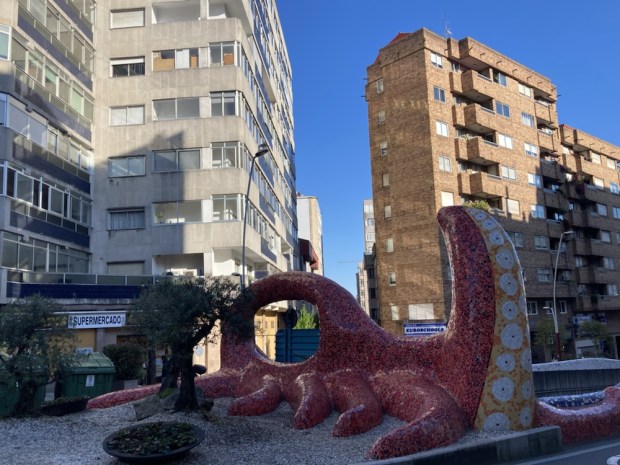
The walk through the city was much more pleasant than we had feared, going through wooded parks and along riverside trails. Even close to the city centre there seemed room for gardens. And art.

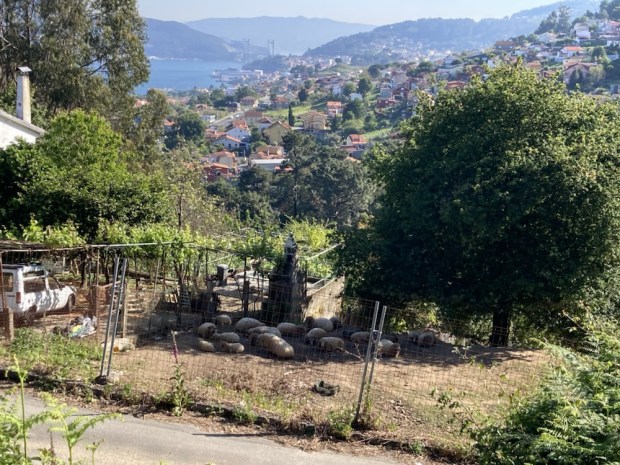
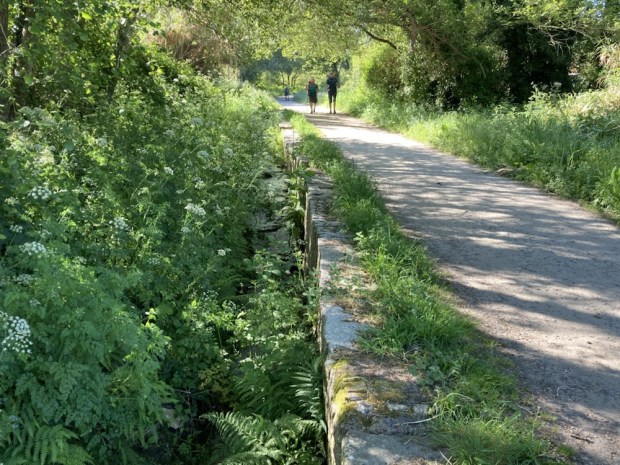
On the north side we joined a route called the Senda da Auga that runs for 10 km beside a covered pipe taking water from the mountains to Vigo. Tarmac road to begin, with gorgeous views down the estuary to the sea, and then lovely shady woodland path with waterfalls and fountains. We passed and we’re passed by plenty peregrinos- so different to the empty Mozarabe route.

Emma listening for water, unsuccessfully.

At the end of the Senda it was a short 2.8 km to our bed in Redondela, housed in a beautiful old stone building nicely renovated into a municipal Albergue where the usual registration, shower, bed making, rest ritual was followed by the usual eating and drinking and more resting ritual.

A quieter night, an early rise, a chilly start- through the mix of old and new on the way out of town. Memorials, sculpture, gardeners, a stretch of busy main road, a climb through woods, and when needed, a funky cafe/ albergue for cafe and tostada.

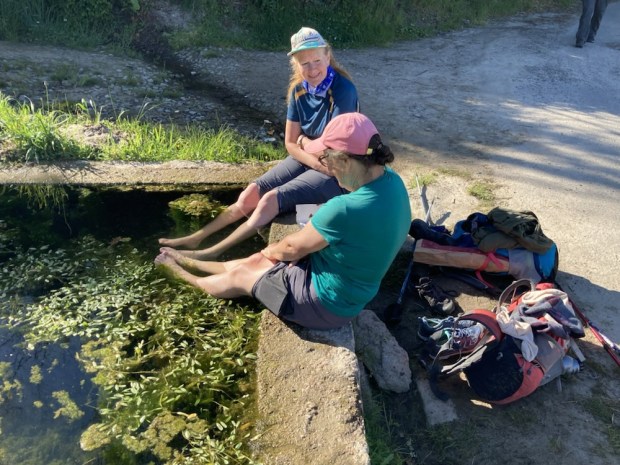
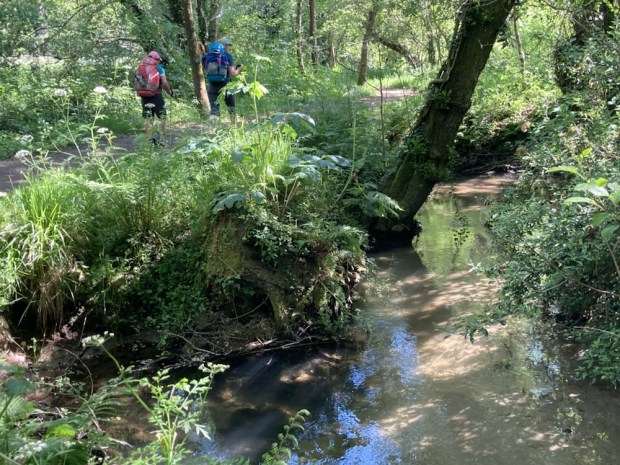
From the cafe in Arcade we crossed the river Verdugo on the Ponte Sampaio and climbed again on ancient wheel rutted stone tracks through the forest and down through fields and vineyards, stopping for rest and chocolate by a feet soothing frog pool.

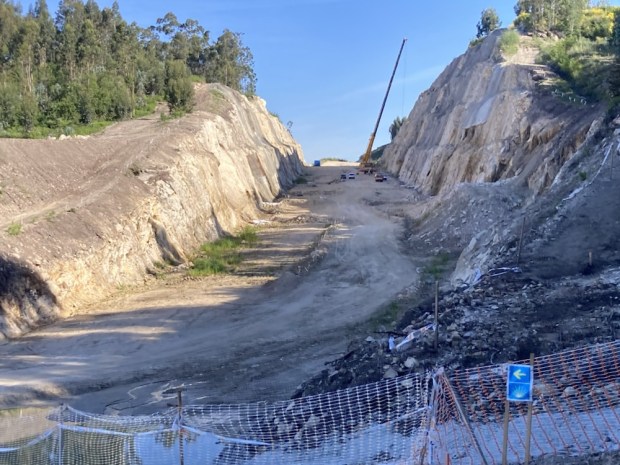
We were briefly diverted when crossing a new road construction, and then brought down through another section of towering eucalyptus forest to the Capela de Santa Marta where we gathered another stamp in our pilgrim passports.

A short distance further on was a split in the trail- the shorter by a km and with a cafe was beside a busy road, the longer was a peaceful 4 km stretch beside a tranquil stream. Although we had already decided on the river walk a postman stopped at the junction and proclaimed the virtues of the ” tranquilo” route to us. We had come together with the more popular Central route of the Portuguese Camino back in Rodondela and the Way was busy with peregrinos but many were chilling beside the shady stream.

Leaving the woods and water we went under the highway passing more graffiti and under the railway to arrive, after 19 km, at the Pontevedra albergue just as it opened, where a very stern and officious man had us all filling the dorm in order- top and bottom bunks- no anarchic freeform. Ah well, you’d put up with it for an €8 bed for the night.

And Emma’s won the prize bonds so big dinner tonight!

CAMINO PORTUGUESE: Coastal and Spiritual Routes : Part 1

PORTO to SPAIN : 4 days: 90 km

Emerging from the airport at midnight we only had a few minutes walk to a modern little boutique hostal where free beers awaited in our room. No sooner drunk than a knock at the door bought glasses of pink sparkling wine and cake, and at 6.30 in the morning a breakfast hamper of all we could wish for.

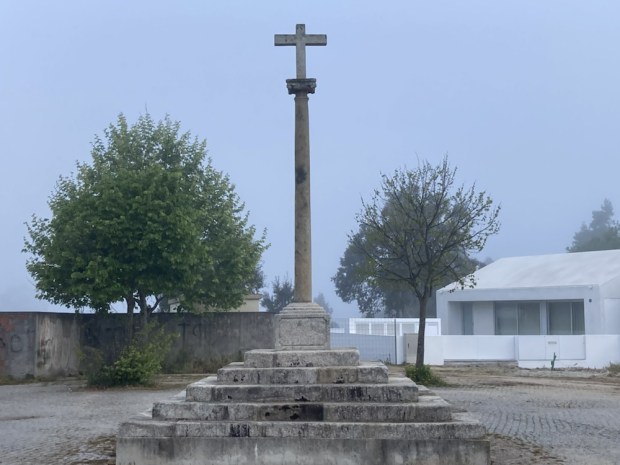
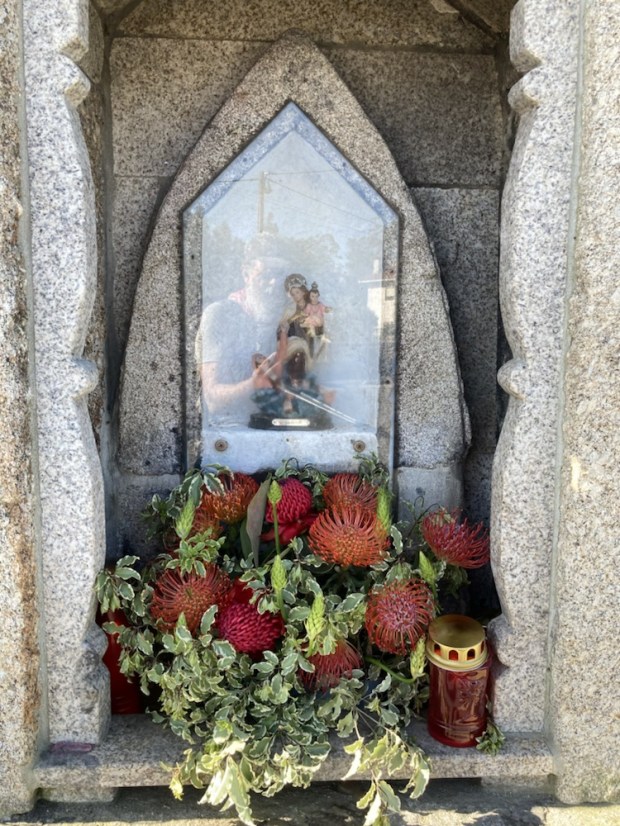
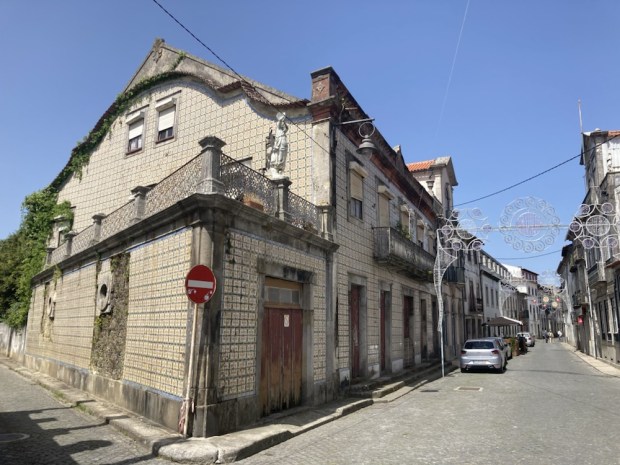
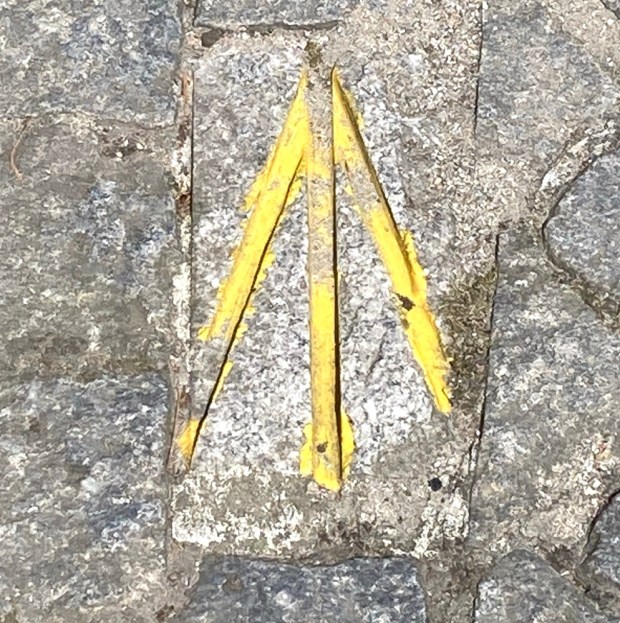
A few meters around the corner we came upon our first yellow arrow of our journey in prosaic form. A painless start from plane to path- we were off down the still misty cobbled streets, past crosses and shrines and gardens and verges rich with the colours and scents of flowers wild and cultivated.

We kept crossing paths with Michael, a German Pilgrim of our vintage who we bonded with over the next few days before our schedule pulled us ahead. After nearly an hour we cleared the end of the runway and the sun burnt off the mist as we followed miles of cobbled road through eucalyptus forest and freshly cut fields of grass. Running alongside the busy motorway and shopping centre for awhile we were glad to return to the ancient streets of Mindelo. Stopping briefly for a tiny super strong cafe and local treat pastel de nata, it wasn’t long before we were crossing the river Ave into Vila do Conde beside the massive monastery of Santa Clara.

Another hour of urban walking brought us finally to our destination for the day after 20 km, the albuergue in Povoa de Varzim where the cafe opposite fed us well while we waited for the albuergue opening hour of 2 o’clock. The obliging host gave us a private room as a married couple- a first for us. We rested, showered, laundered and eat and drank in a sunny beach side restaurant pleased to have succeeded the first day at least.
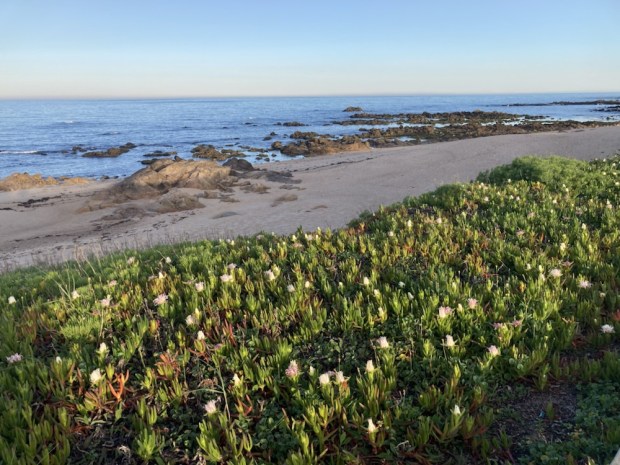
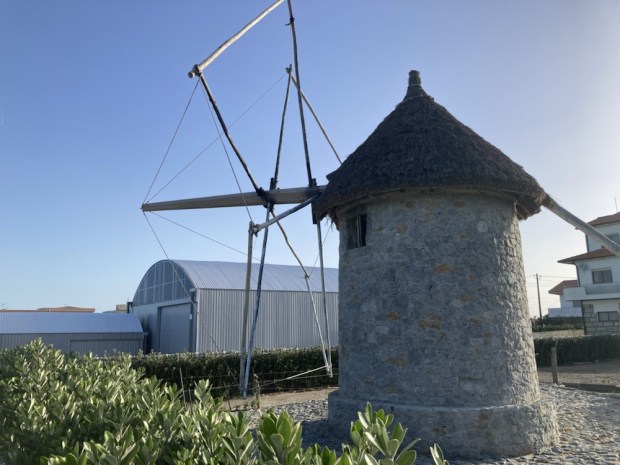
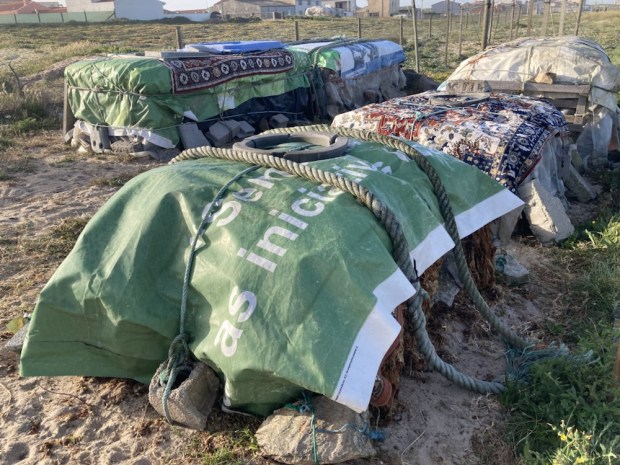
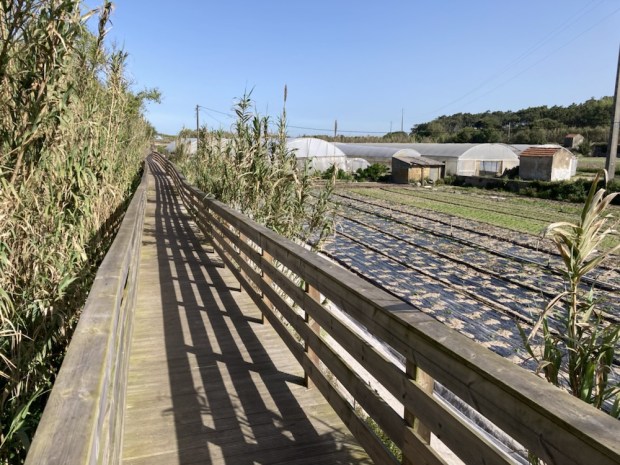
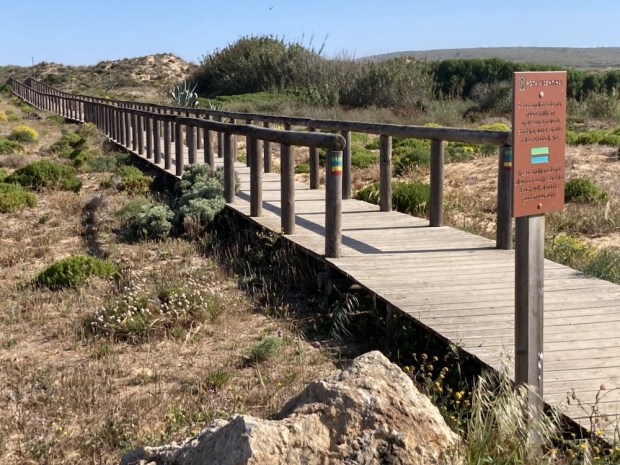
In the early morning light we headed off along the seafront and onto a boardwalk that took us through the dunes for 8 km. The seaside resorts had not really awoken after winter yet so pilgrims, locals and fisherman were all that were about. Many men were fishing for something on the rocks and in the shallows with gaffhooks , something I had never seen before. It didn’t look like they were having much luck. We passed the remnants of windmills and many neatly stacked and covered piles of seaweed.

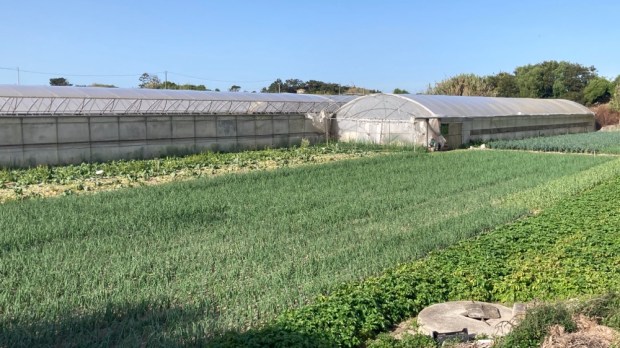
Eventually the thousands of decking boards ran out and we were led inland through an area of intensive poly tunnels and fields of crops, all of interest to us gardeners. They were harvesting spuds already!

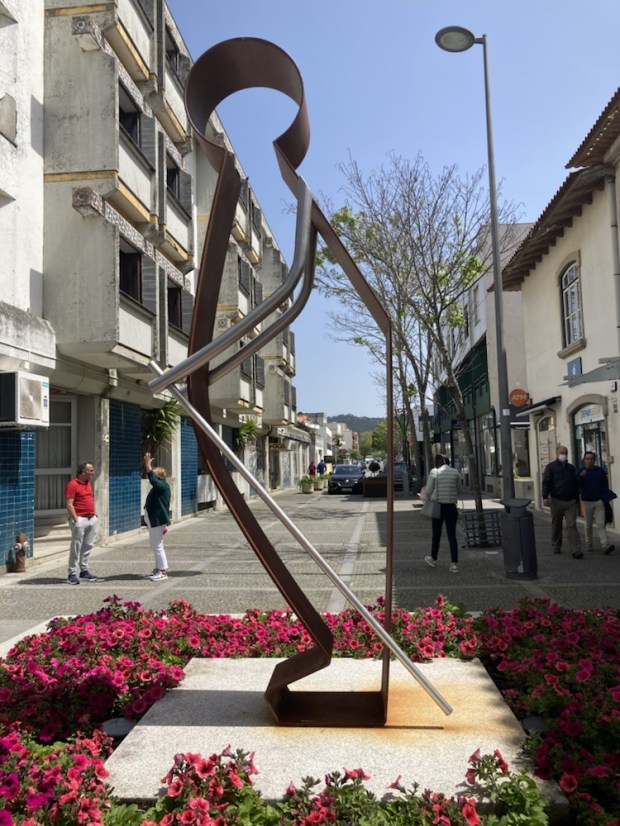
Through a nice quiet stretch of woodland where we rested for breakfast and on into Fao where pilgrims gathered. We followed the arrows cut into the road over the river Cavado and along the prom in Esposende, a busy town rich in pilgrim sculptures.

Nearly 25 km done, under a hot sun on a lot of hard cobbles, we were getting weary and stopped at a mini market for beers and the makings of breakfast and lunch. A thankfully short distance later we arrived at our Albergue for the night in Marinhas, housed in a beautiful old building, where the shower, rest, drink, eat , sleep regime was a welcome end to the day.

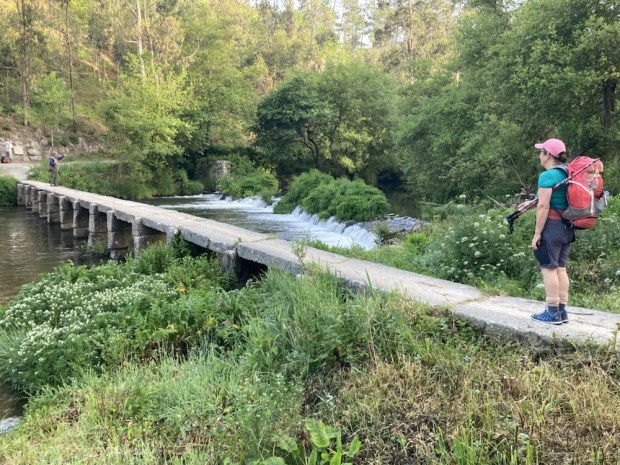
A lot of movement early as some pilgrims were up before 5 making bedtime redundant, so we were out the door before 6.30 heading up more cobbled back streets past the now common mix of traditional and ultramodern homes and well kept veggie gardens. Out of town we began our first real track, a lovely stretch through woodland alongside the river Nieva complete with watermills and an ancient clapper bridge. Many feet had passed over it through the ages.

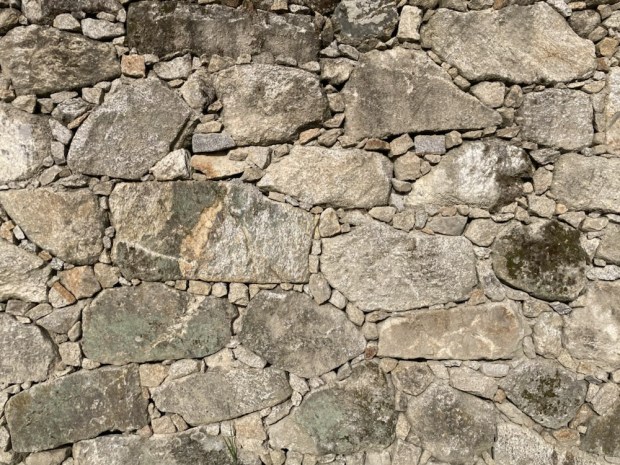
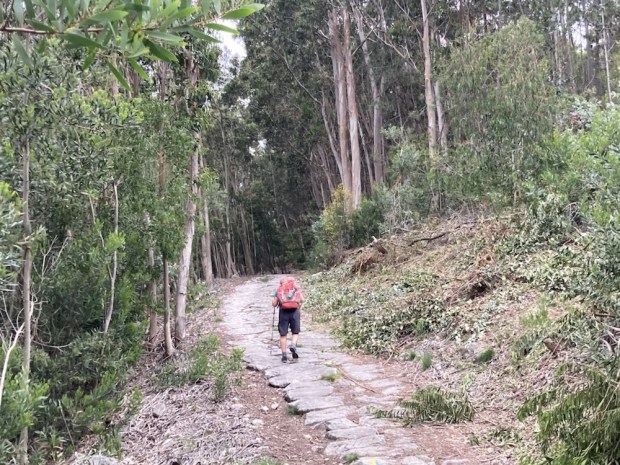
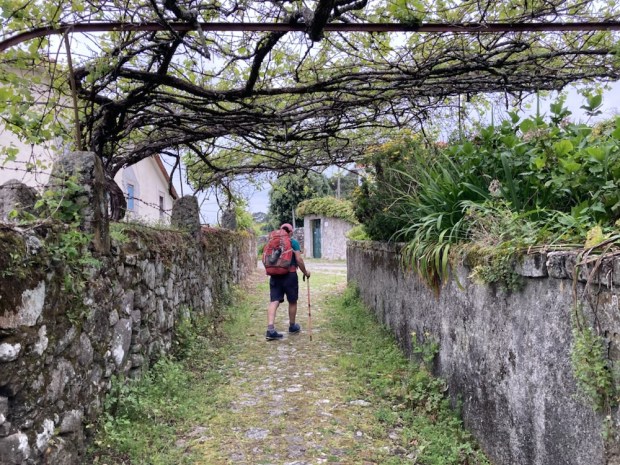
Our first climb, of about 100m, took us up out of the woodland on wisteria lined narrow cobbled tracks between fine granite walls to the church of Santiago de Castelo do Nieiva, the oldest church outside of Spain dedicated to the Man, with a carved dedication from 862ad. Stopping awhile for a rest and chocolate/ banana breakfast we were soon back on a lovely sandy track through the young oak and unstoppable eucalyptus.

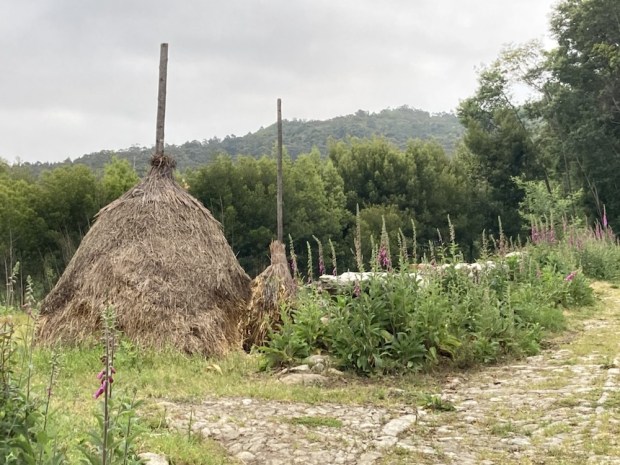
Down into Chafe for coffee and Coke and on over more granite cobbles along more narrow lanes past large ancient houses then steeply up past stone and timber corn houses and decorated washhouse to hilltop shrine and cross.

With Viana do Castelo in view on the other side of the wide river Lima we descended steeply on road and track festooned with wild flowers and crossed the bridge built by Eifflel in 1878 to reach the city where, with over 20 km done and another 10 km to do before our beds, and Sallys feet ailing bad, we did the right thing and caught a bus.

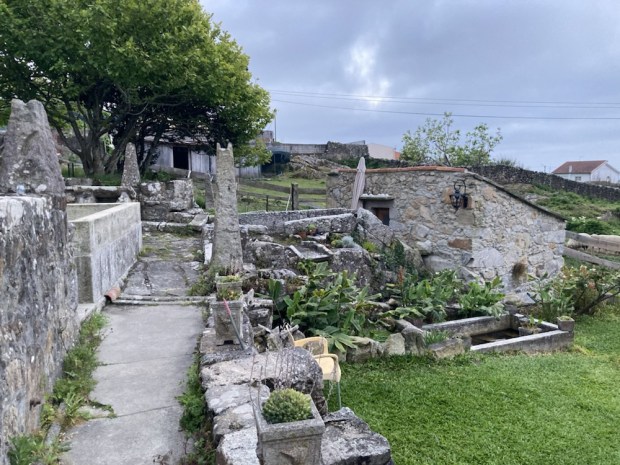
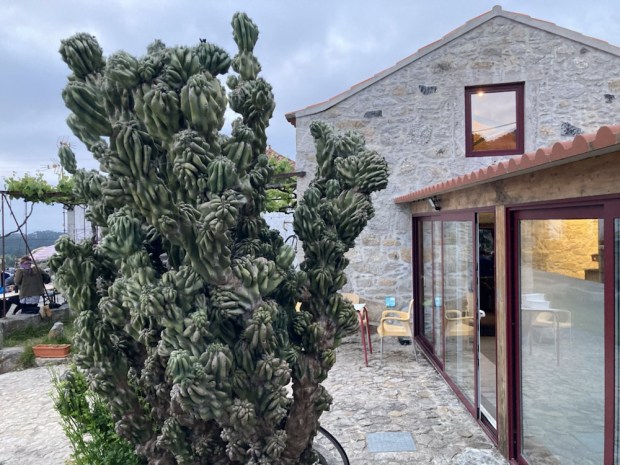
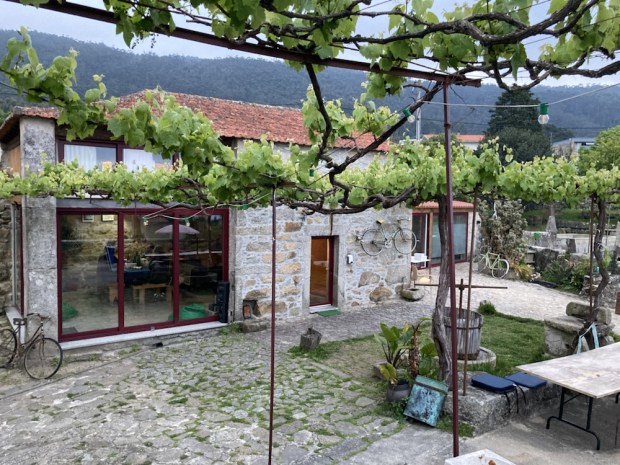
20 minutes bus ride saved us 2 or 3 hours of walk and Sally a lot of pain. Alighting in Carreco we had a beer whilst waiting for the mini market to open then continued to the joyously beautiful Casa do Sardao Albergue, a funky and lovingly restored and converted family farmhouse. The place hummed with good vibes and architectural integrity. The friendly owner showed us proudly around with stories of generations past. I wish I’d taken more pictures. A gem.
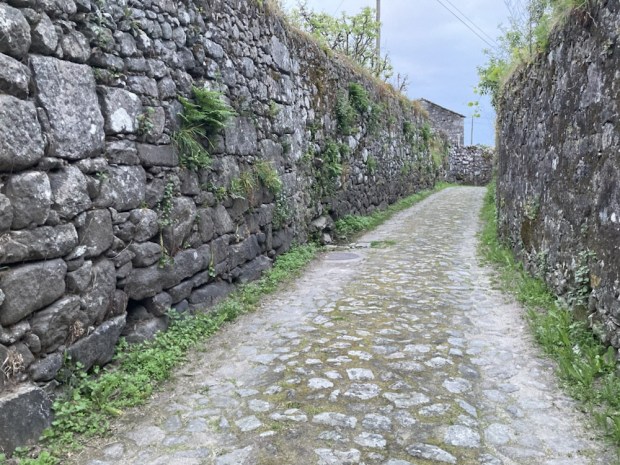
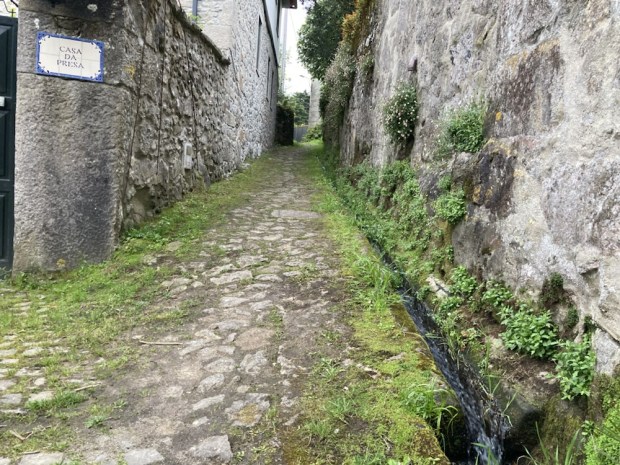
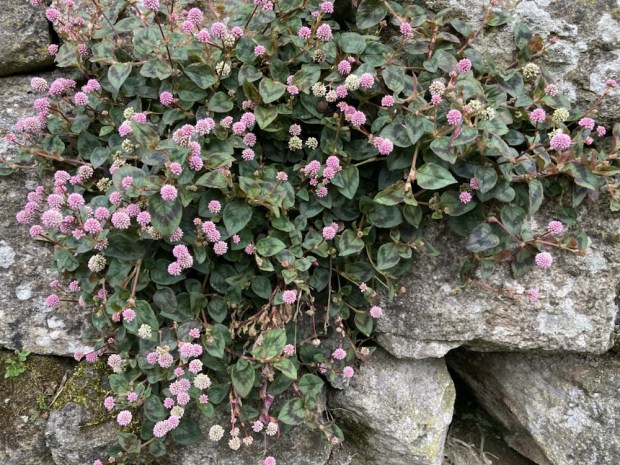
A good nights sleep but we were up early under the flashing of the lighthouse on the coast to take the tea before once again setting off on granite cobbled lanes between granite cobbled walls. I don’t know if the plant life is particularly rich here or if the granite is a very hospitable environment but it was a joy to have so much at head height.

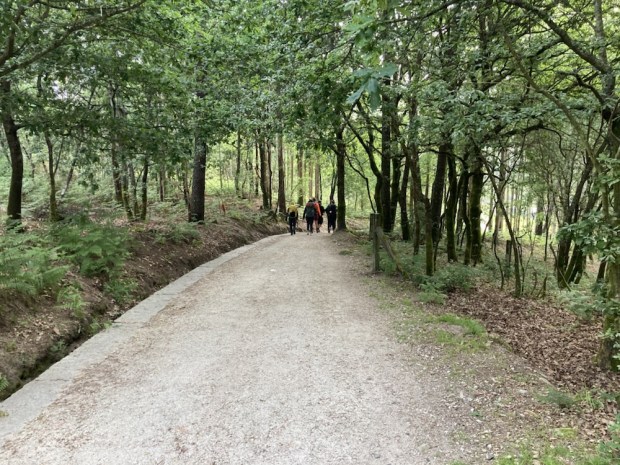
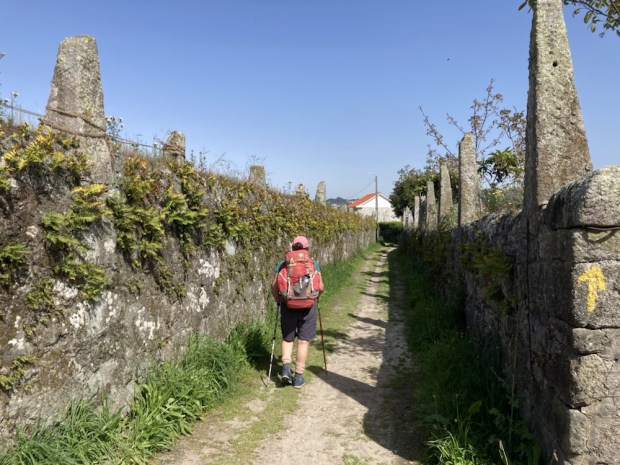
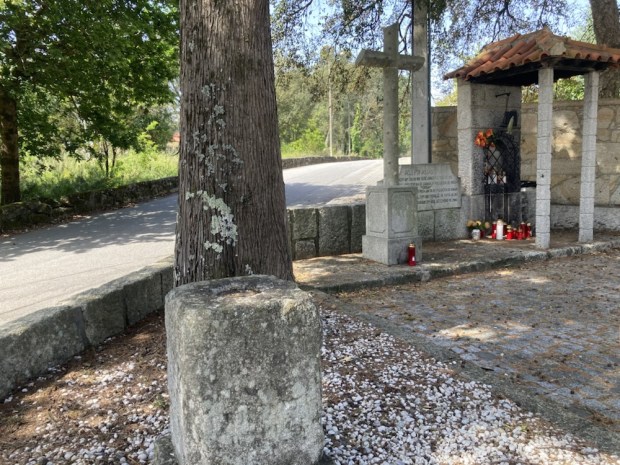
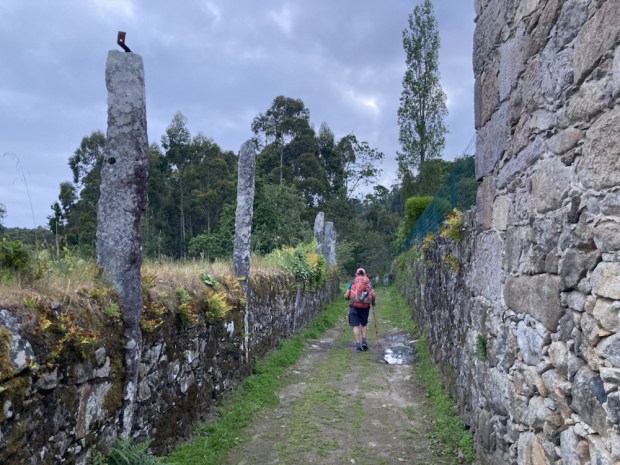
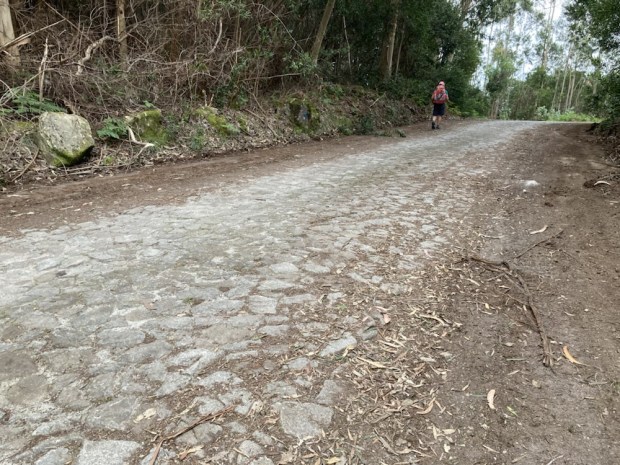
We were soon led into the forest on massive granite slab paving where countless thousands of pilgrim feet have trod, passing the very many pillars and crosses where pilgrim hands have placed offerings.

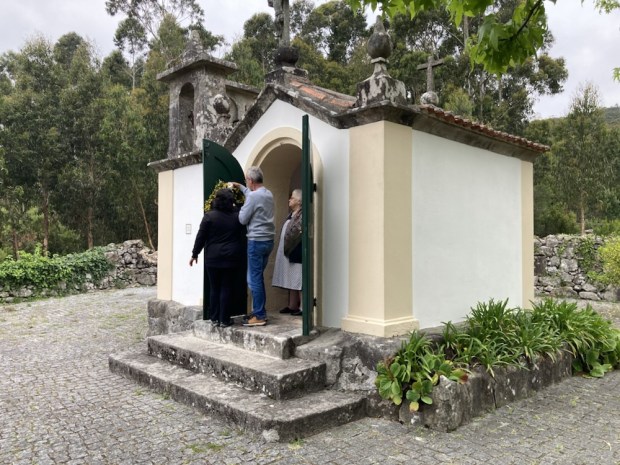
We passed the beautiful but forlorn Quinta de Cabanas, home to the poet Pedro Homem do Melo as well as a huge 280 yr old magnolia tree and site of a monastery since 564AD. Restoration and landscaping is in progress around the huge riverside complex and it will be rewarded. The path took us away up through the wool bombed forest to reach the little chapel of Our Lady of Amparo where the guardian family were deliberating the best placement of the May Day wreath of yellow broom.

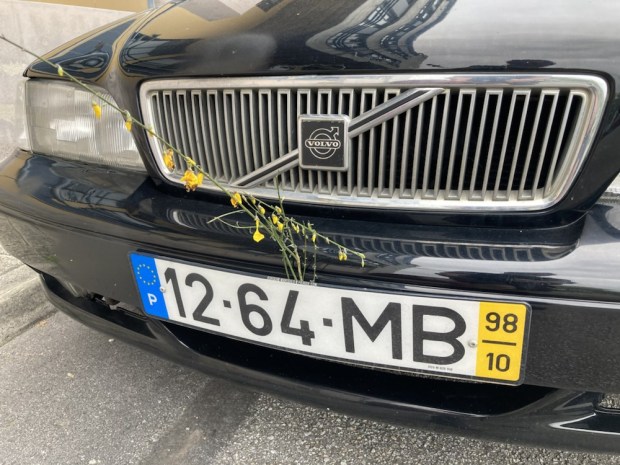
The ancient ritual of Maias in Portugal sees people gathering broom flowers on April 30th to adorn their gates and doors before midnight, to protect from evil for the coming year. Nowadays even machinery and vehicles are likely to be fortified in this way, although I was surprised that super safe Volvo needed it.

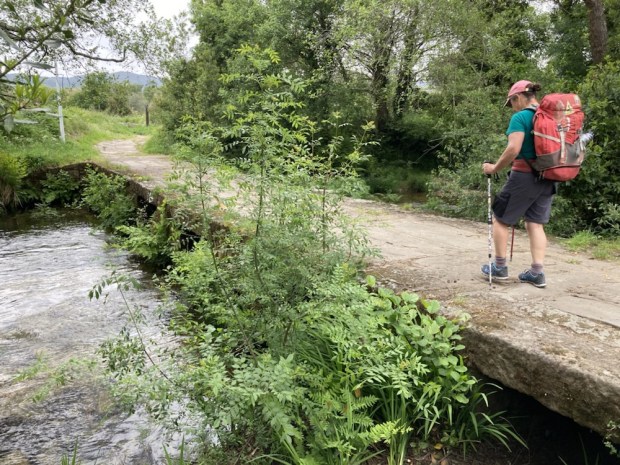
After another peaceful stretch of forest on a wide cobble road we descended quite steeply towards the coast, crossing the river Ancora on the medieval stone slab Ponte da Torre and passing another old water mill.

The seaside resort itself was buzzing with Mayday celebrations and markets. After coffee in the square I headed on out of town on a dirt track beside the railway, waving as the train past expecting to see sore feet Sally on board. (But she hadn’t found the station and had hitched- getting dropped off far further than wanted and had to hike back to meet me.)

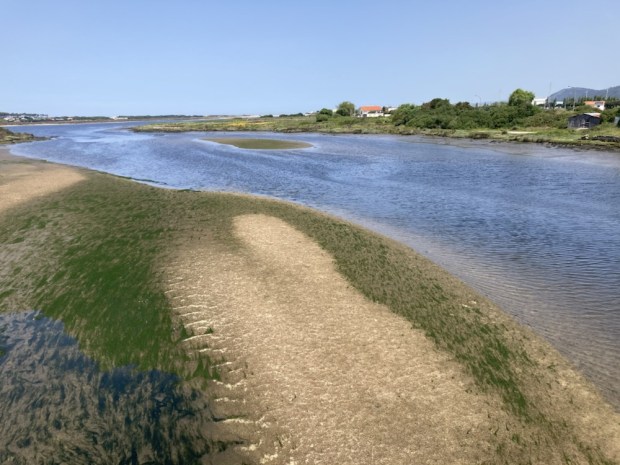
On reaching the crescent beach in Moledo I followed the esplanade till the end and continued on soft sandy tracks through the forest to the Boat Taxi across the broad river Minho where Sally joined me for the ride to Spain.

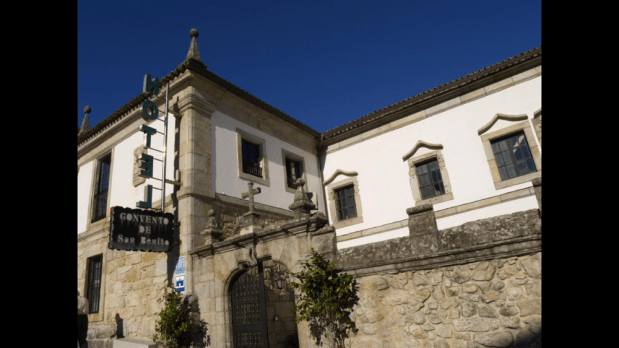
Jumping from the speed boat onto the sands of Spain we lost an hour so had a quick lunch and carried on to A Guarda on the boardwalk, through the gallery forest and beside the rocky shore, to finally reach the harbour town bathed in sunshine rising up steeply from the sea. The sight of a long steep flight of steps was enough to convince us that a stay in the converted 16th century convent at the bottom was a well deserved treat after 3 nights in dorms.

We’d made it to Spain.

THE FISHERMANS TRAIL: Vila Nova de Milfontes to Porto Covo (20km)

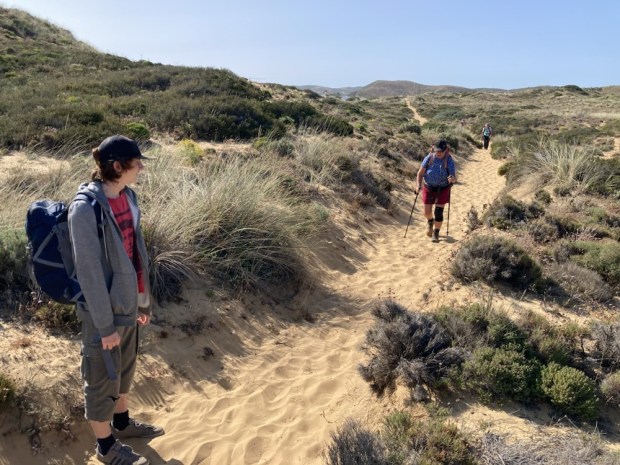
Our last day on the trail was the toughest with long stretches of deep soft sand traversing the most extensive consolidated sand dunes in the whole of Portugal. It was another reason we had started in the south with a short and easy acclimatization to track life.

Our day had started early to claim as much cool as we could. With all the advice against hiking here in August we had been careful, and lucky, with unseasonable temperatures in the high 20’s rather than 30’s.

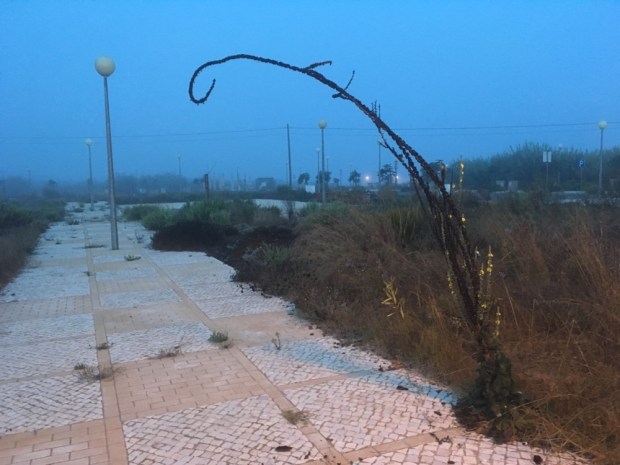
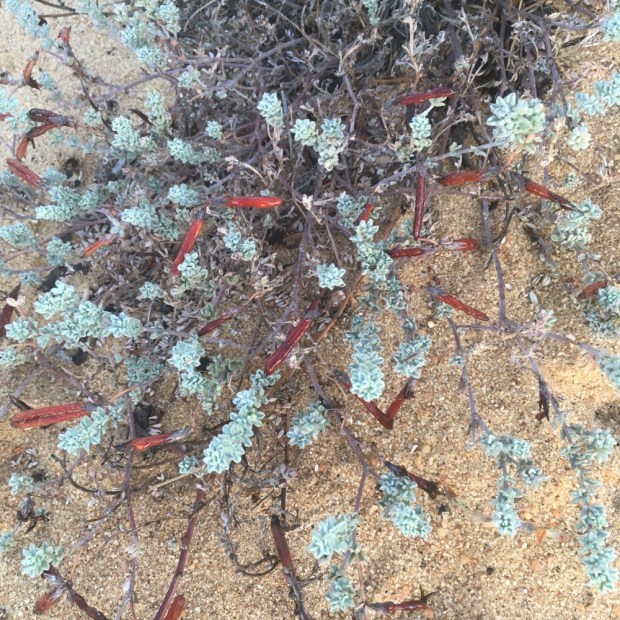
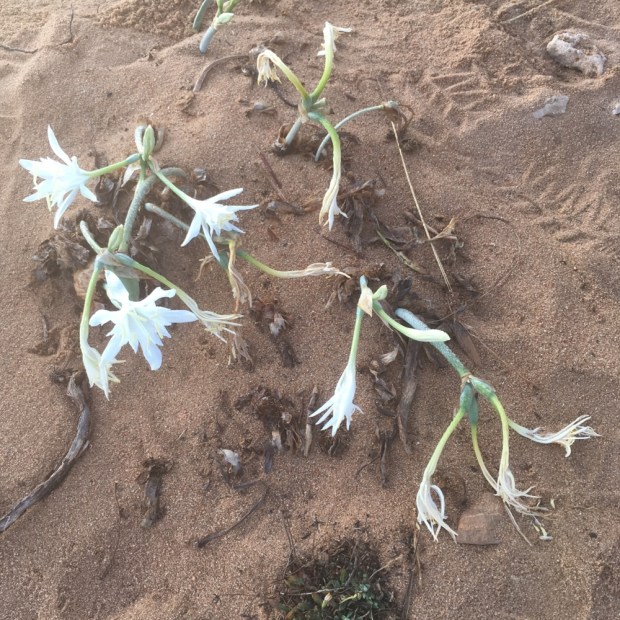
Passing through the unfinished developments at the edge of town, strange plants emerged from the gloom.

The overnight sea mist had left its deposit of moisture and the snails were out in force, covering the bushes and making abstract art of their trails in the sand.

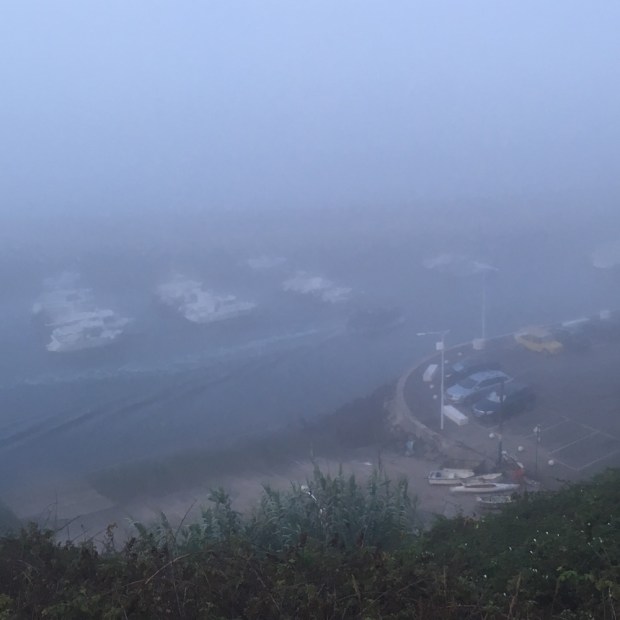
After a couple of km we heard boat engines and watched a fishing boat make its way out of the harbor at Porto das Barca’s through the mist.

As the sun started to rise the warming temperature burned off the mist and the coastline appeared again.

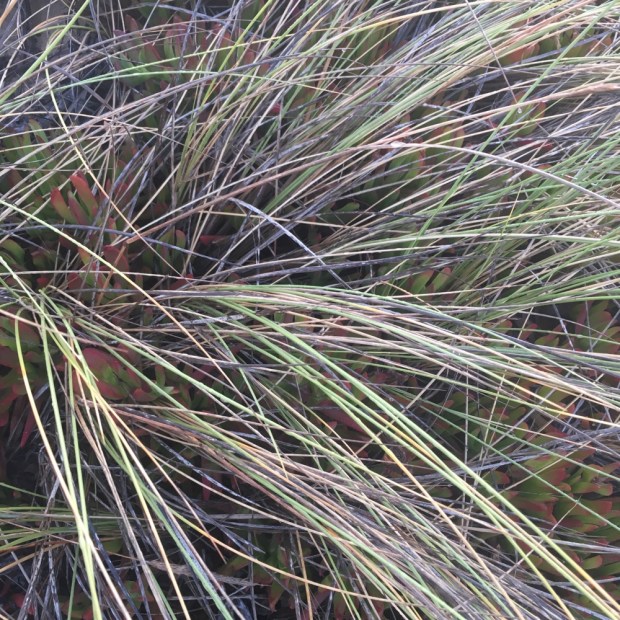
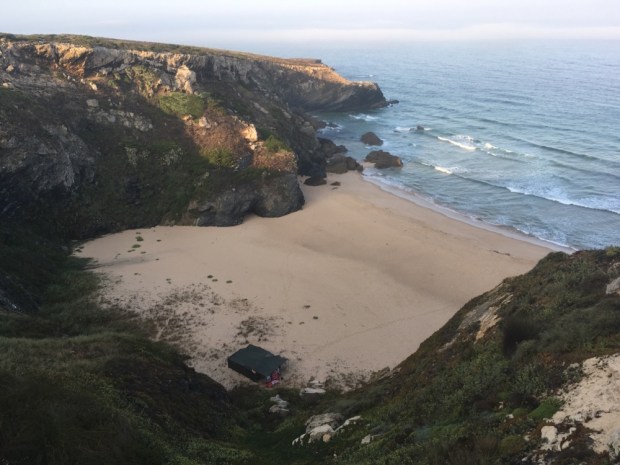
After the last few days of luxuriating in the macrocosm of the wide open spaces and dramatic headlands of this beautiful and undeveloped Alentejo Coast I started to appreciate the microcosm of the plant and rock formations.

I think I’d would be fabulous to be here in April or May when there is a carpet of flowers although with so many evergreen species there is always color when a lot of Southern Europe is a uniform burnt brown.

The scent of the various herbs has also been a delight as well as the familiar heady aroma of hot pine needles and the invigorating briny sea smell carried of the spray.

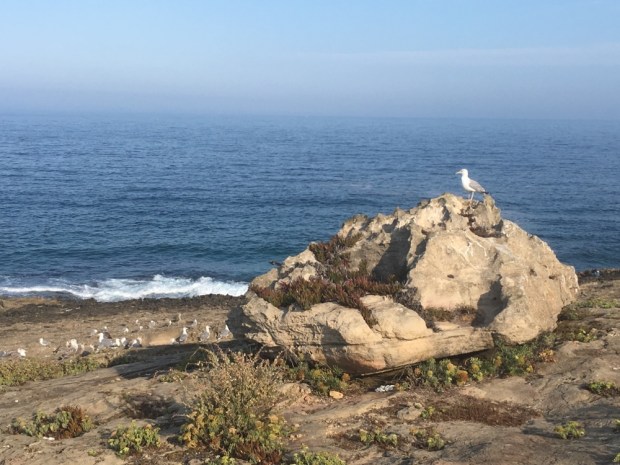
Our aural senses had been satisfied with the constant rhythmic thud and crash of the breakers, the calls of the seabirds and the only vehicle noise was the low hum of boat engines carrying far across the waves.

The rocks told tales of rising and lowering seas and coastline with massive contortions of strata witness to upheavals over millions of years. At times the beaches were 60 miles out into the current waters and yet sometimes we were walking on a bed of coral and shells on the cliff tops high above the sea.

Everywhere were little paths threading down to the fishing rocks on impossibly steep routes. We saw ladders and ropes to aid the fishermans descent and large encampments on very remote beaches. How they got all their kit down and back up was beyond us.

There is a guy fishing from the very end of that far spit of needle like rock in the last photo.

The white stocks also had precarious perches although with very good defenses building their stick nests atop towering sea stacks.

At Angra da Barrela the birds and fishermen came together on a rocky limestone headland lined with men and rods in a landscape very similar to Blackhead, at home in the Burren, another- different – fishing spot.

But it was the cliff top paths across the rugged headlands though the endemic plant life sculpted by the sun, salt and wind that was truly a joy, although the sections of deep sinking sand were slow and hard.

And of course the fabulous beaches with the promise of cold water immersion in the heat of the afternoon were a treat keenly anticipated as the sweat dripped.

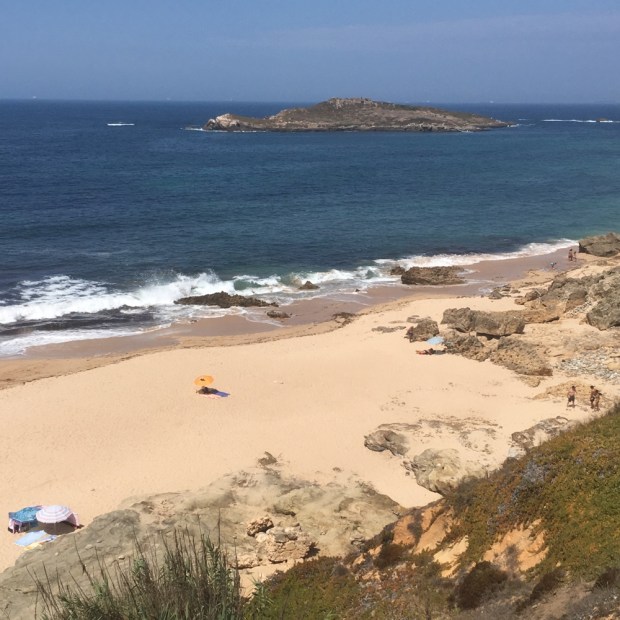
We stopped for lunch in the bar restaurant next to the fort above the island protected beach of Ilha do Pessegueiro- hanging on to our last couple of hours on the trail.

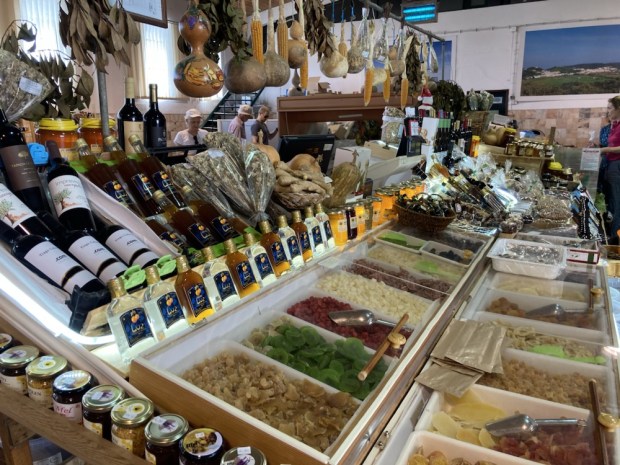
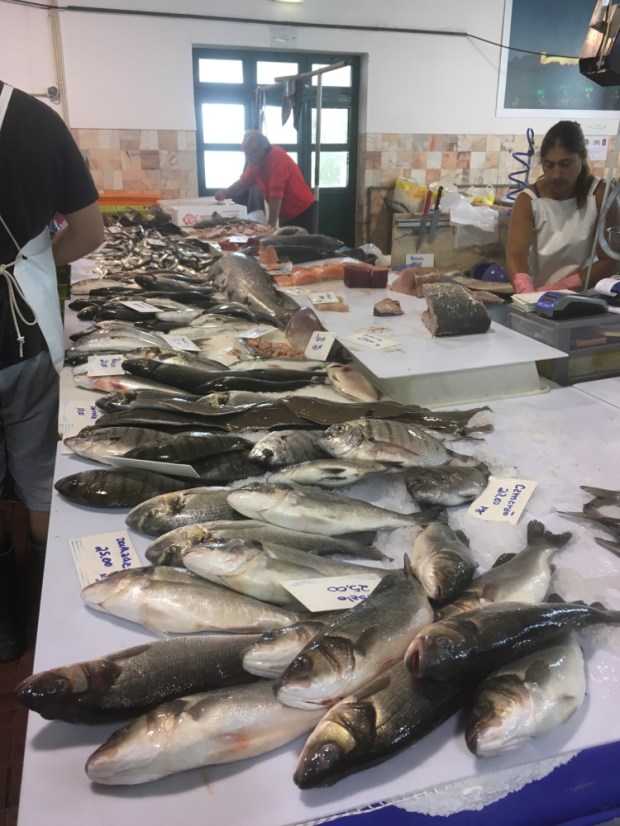
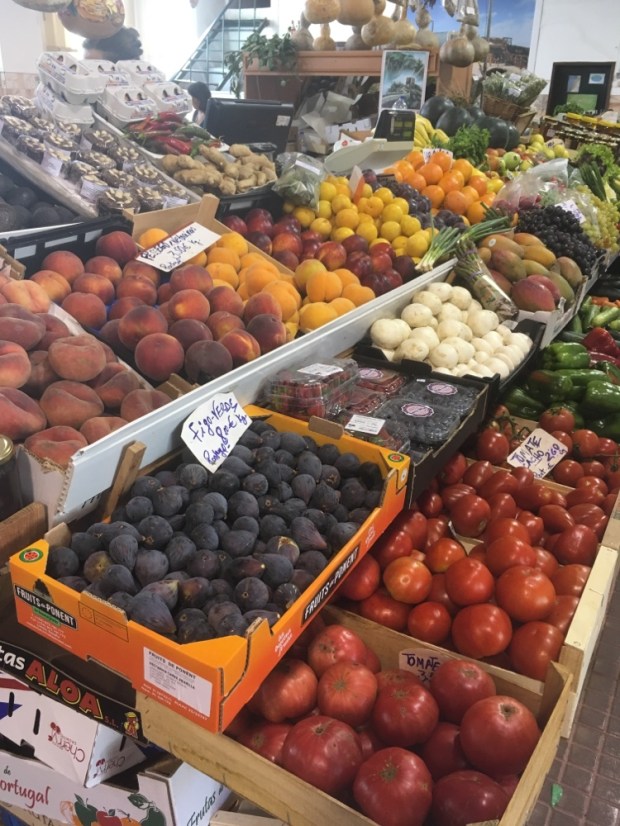
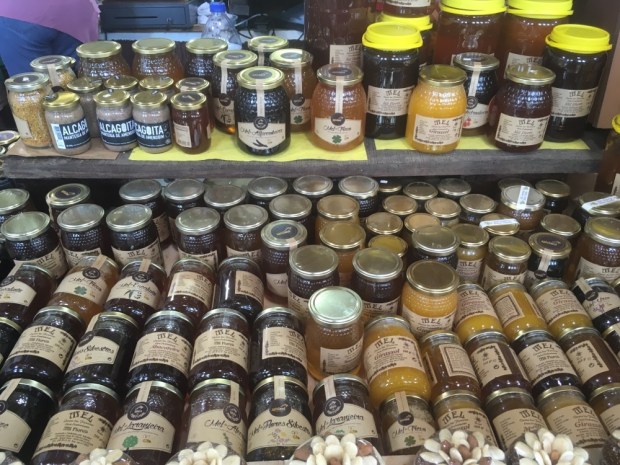
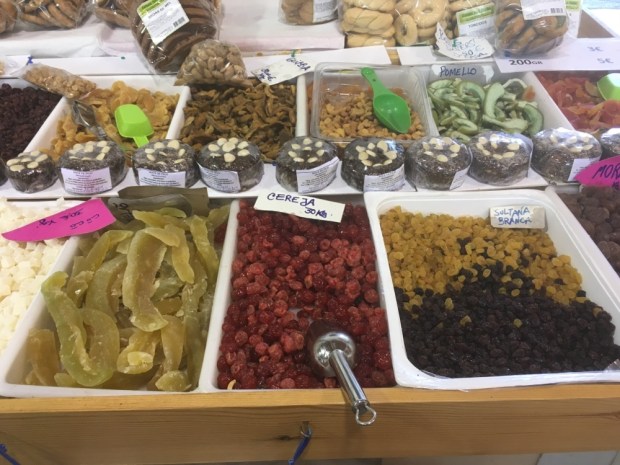
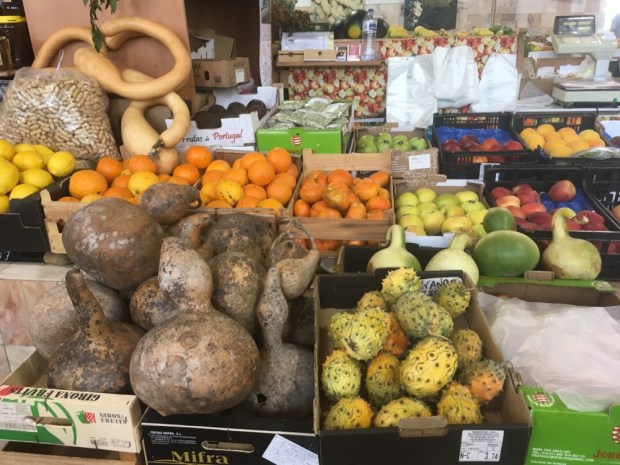
The fresh fish available on this route is another plus. In fact the eating alone could justify a visit to the area. There appeared to be a culture that recognized the value of good, fresh, local healthy food- and the wine was also very quaffable! The variety of cheap fruit, veg, fish and shellfish in the markets of small towns and villages was remarkable.

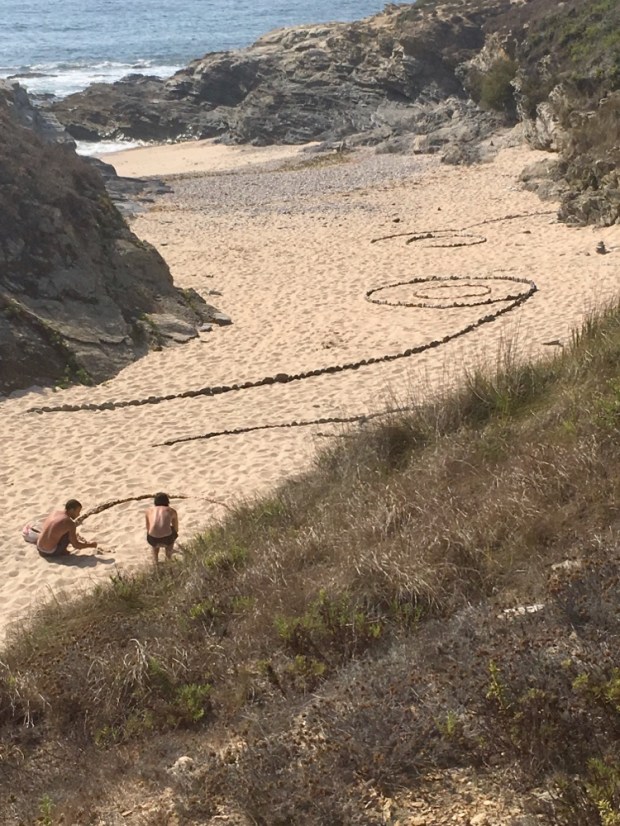
A last swim and we continued the final couple of km to Porto Covo passed a tiny beach where a couple of lads were working on a piece of land art. Probably the creators of the pebble spiral maze from the day before.

And so for us the Rota Vicentina , ” The last coastal wilderness of Southern Europe”, was a great discovery, and after buying the official map of all its varied routes, one I’m sure we will be returning to.

Our host that night said the hostel had one rule.

Leave your stress at the door.

We had left ours a long way back down The Fishermans Trail.