GRAND TOUR 2015

THE GRAND TOUR: SLOVAKIA 1st/2nd JULY

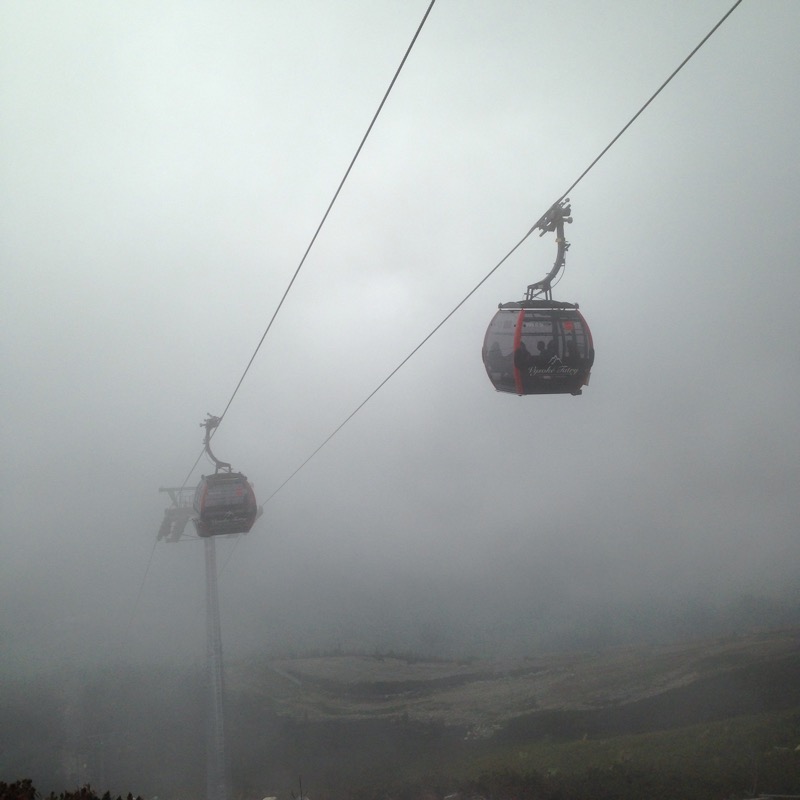
After the exhausting efforts of the 17km trek up into the mountains the day before we thought we would give the dogs a rest in the van while we took a cable car up to the top of Lomnicky Stit the second highest peak in the Tatras at 2634m. There was cloud hanging around the summit but we thought we could do some walking at the half way stage until it cleared. Unfortunately, when we got the tickets we were told we had to go now and that we only had an hour up there. It looked like a fairly hairy ride almost vertically up 900m of cliff face.  


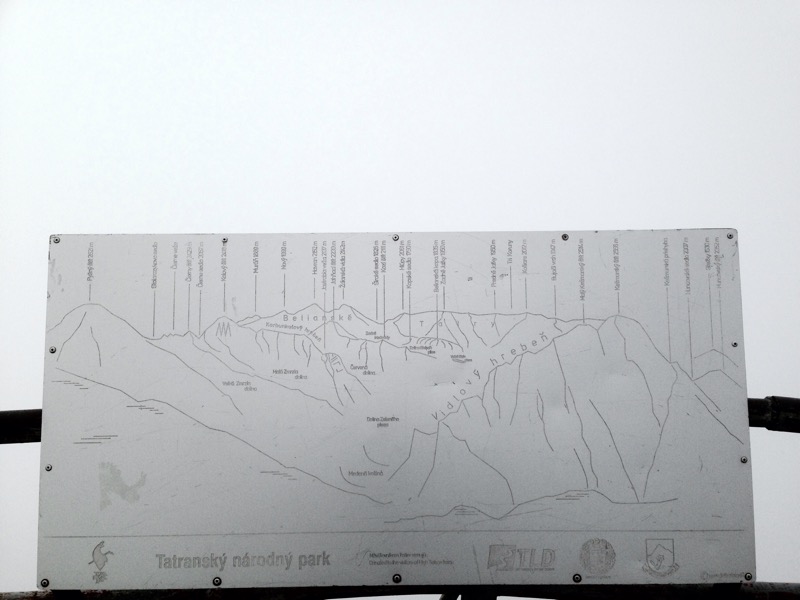
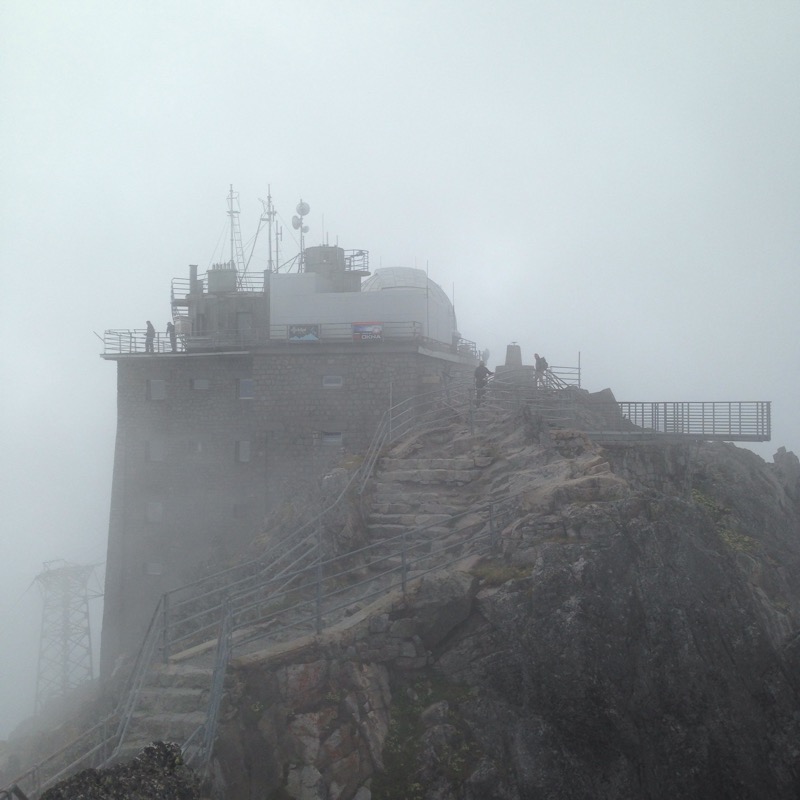
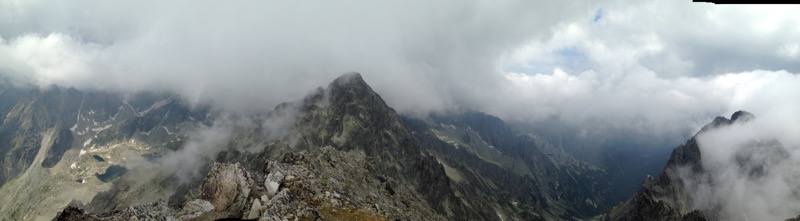
We slowly disappeared into the cloud and emerged into a strangely smart little bar like an upmarket hotel lobby with doors leading out to a savage wildness. Although today it was all a bit muted in a total grey out. There was a board pointing out all the peaks visible.  

 And a man trying to get the TV aerial to work- left a bit !! 


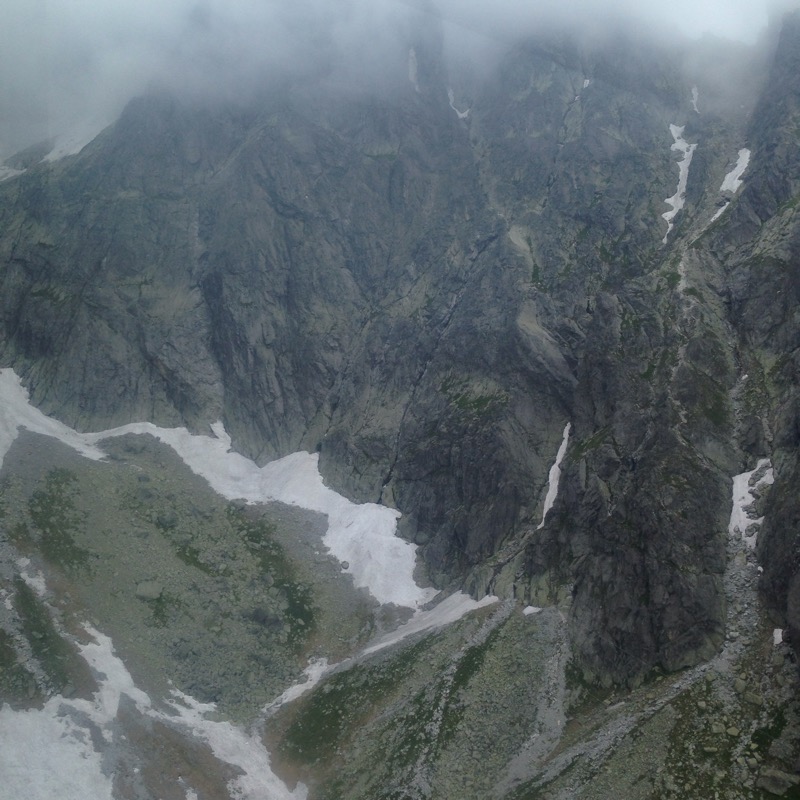
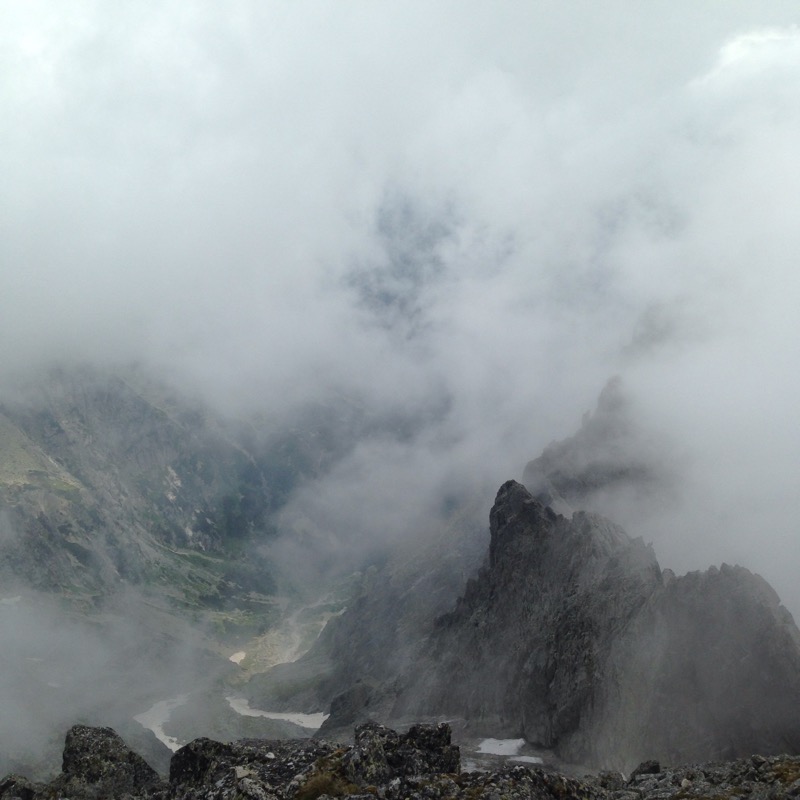
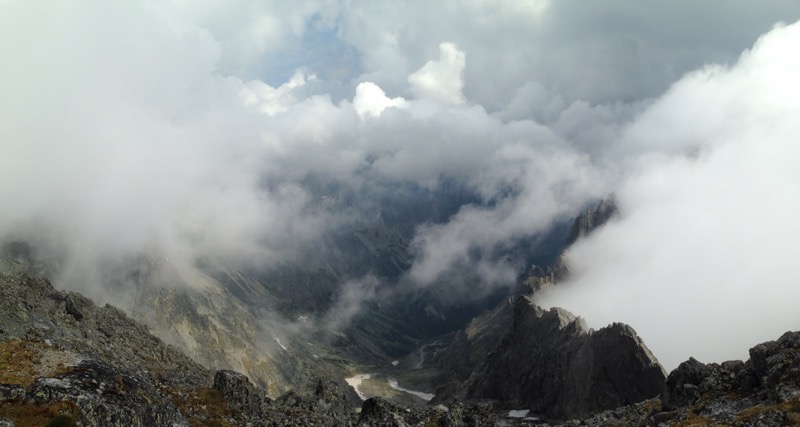
Eventually the clouds started to part tantalisingly to reveal patches of mountain around us fleetingly.  

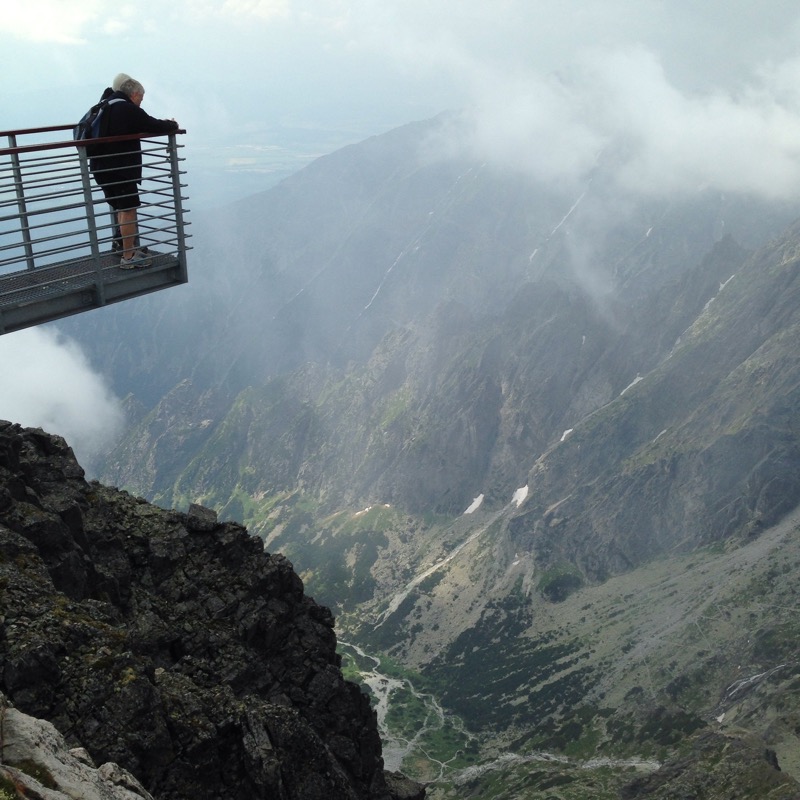
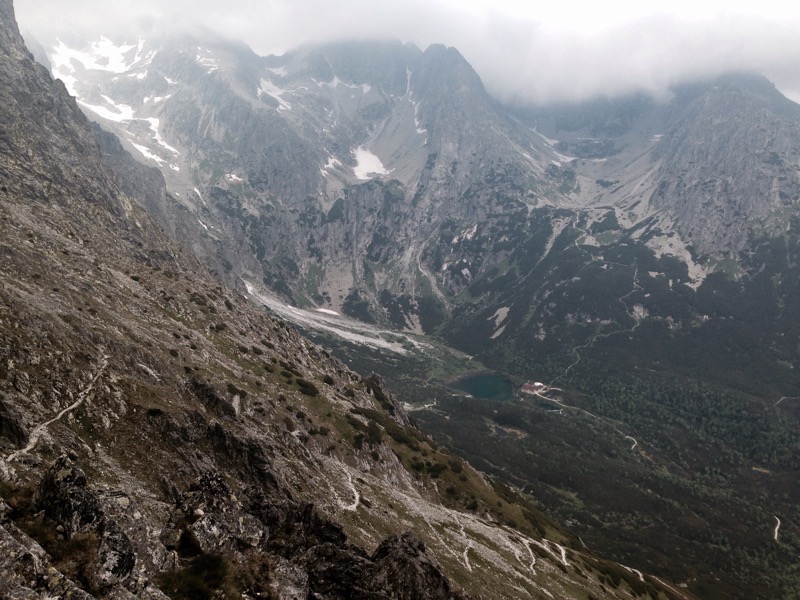
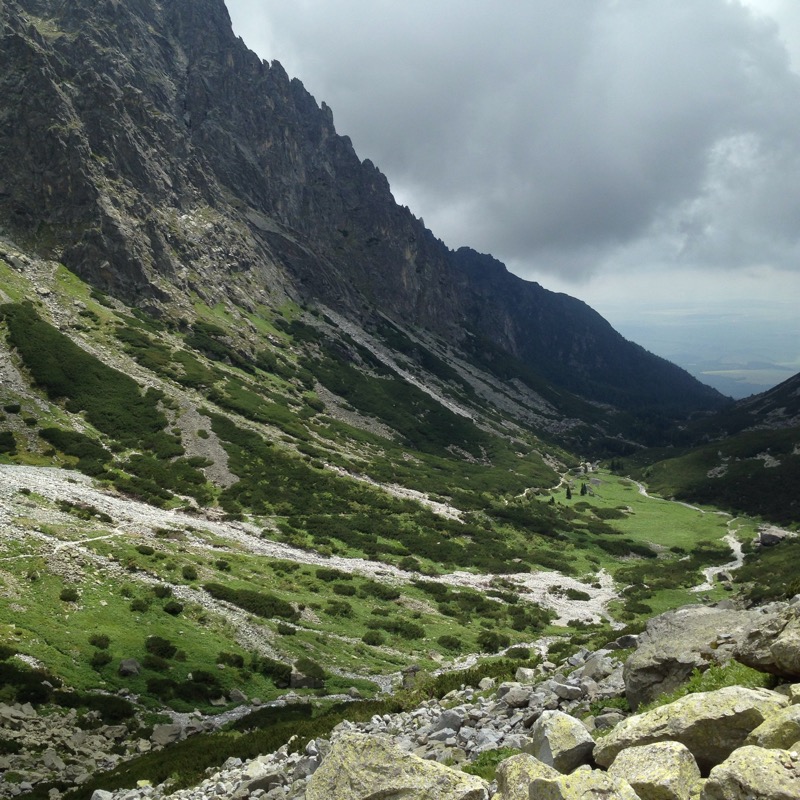
     We could see the track snaking up the valley we had hiked the day before way down below the viewing platform projecting out over the abyss.  

 The cloud played peek-a-boo for the rest of our stay up there and all too soon in was time to squeeze back into the cable car with the guard whose job it was was to sit with his face jammed up against people’s arses all day and lock and unlock the car door. Nice work if you can get it. 

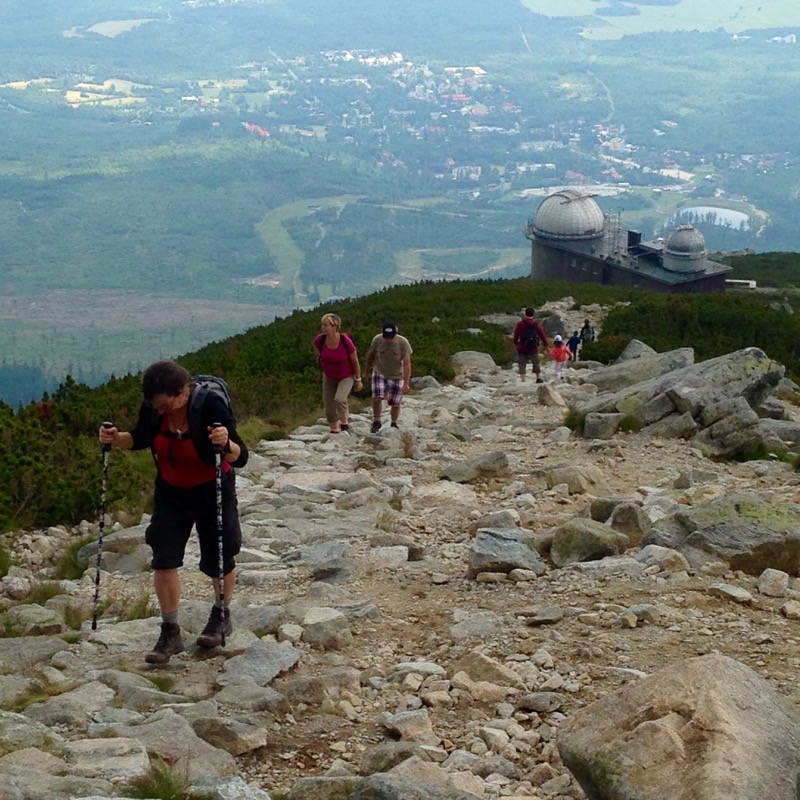
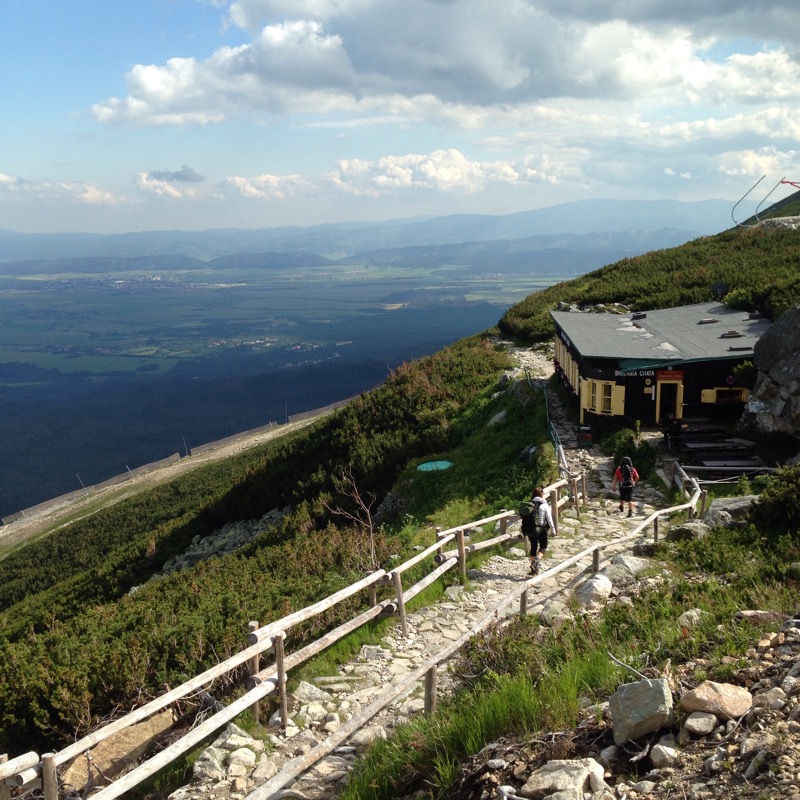
At the half way station we had walked from the previous day we headed in the opposite direction, past the observatory  

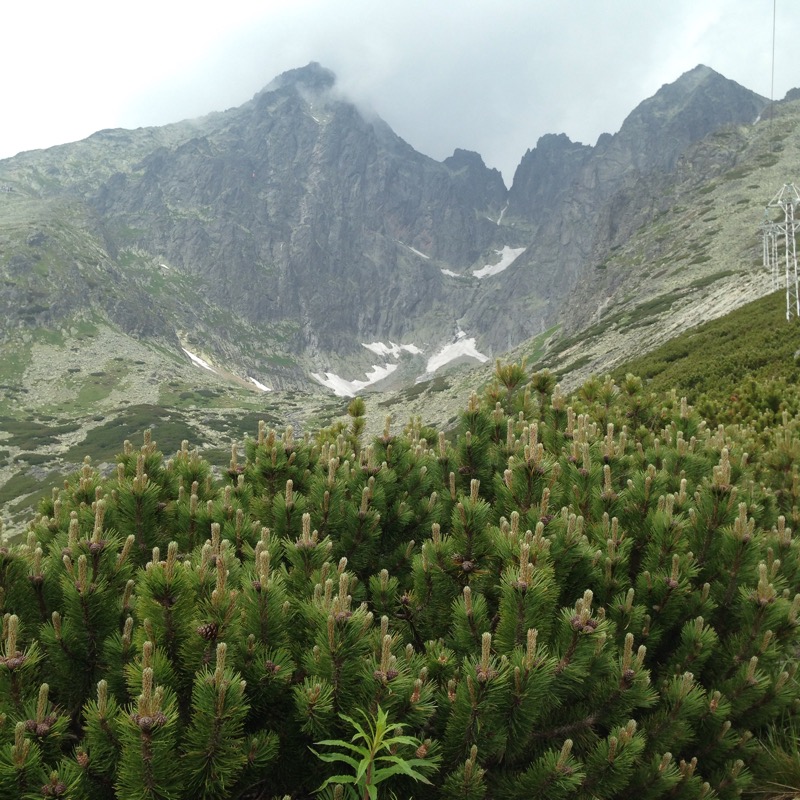
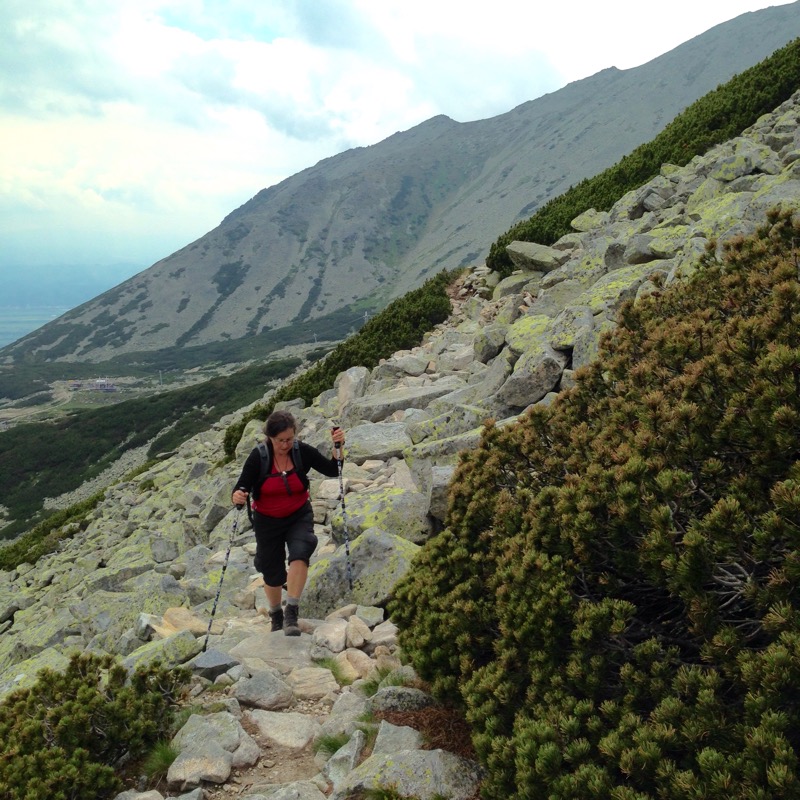
 and up into the dwarf pines.  


It  only about 4km to our target, a minor peak called Vefke Svistovka at 2036 m. It was slow going over a jumbled sea of rock and boulders.  

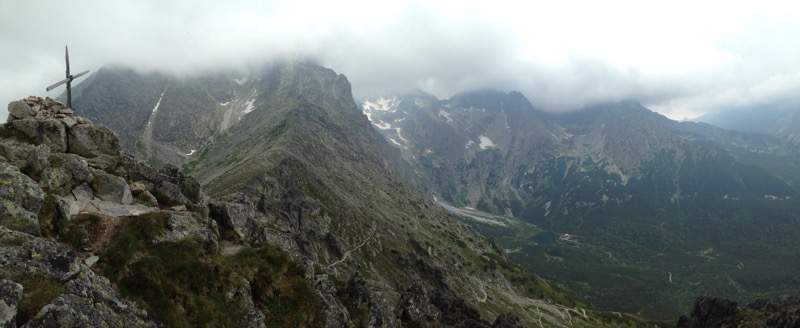
 This was followed by a steep zigzagging ascent but all our efforts were rewarded by the views from the top of the valley below us and we were relieved that we were not continuing on down the switchback path to the lakeside chata on the valley floor.  


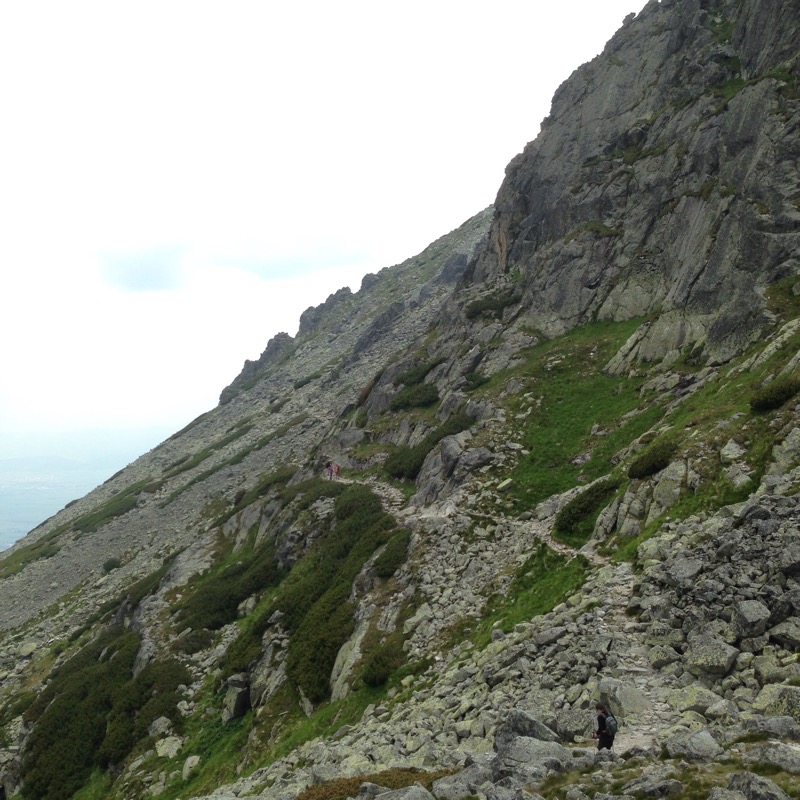
So , back down once more after the sarnies past a whole gang of chamois and over a whole heap of rockfall.  


What we thought was going to be an easy day had left us knackered again by the time we got back to the van so promised ourselves a day off the next day. 

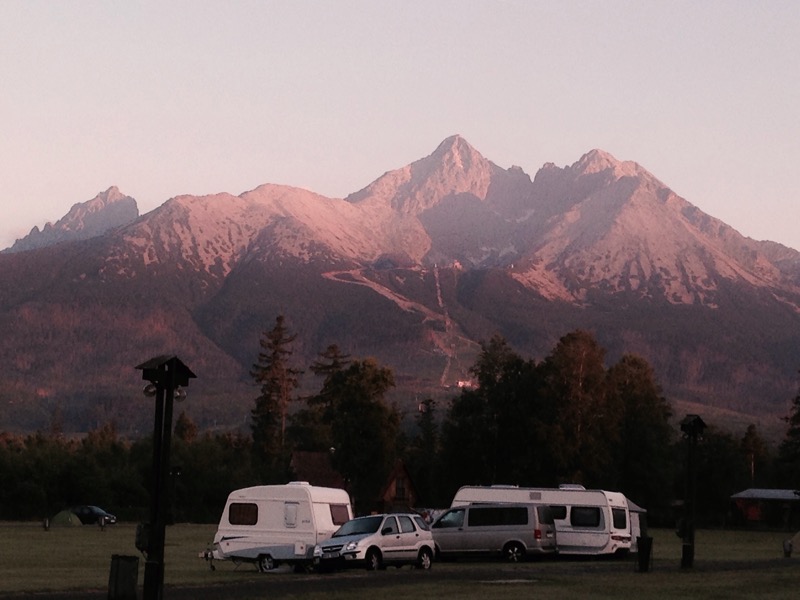
It didn’t quite work out like that as we were at it again from 7 till 5 but very enjoyable anyway. It was a fine clear morning 

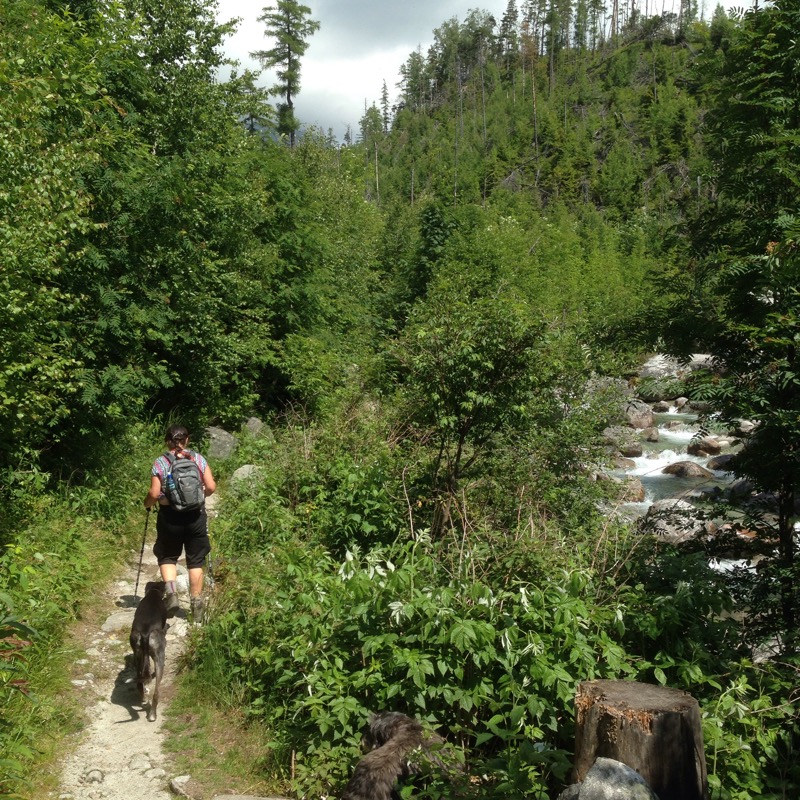
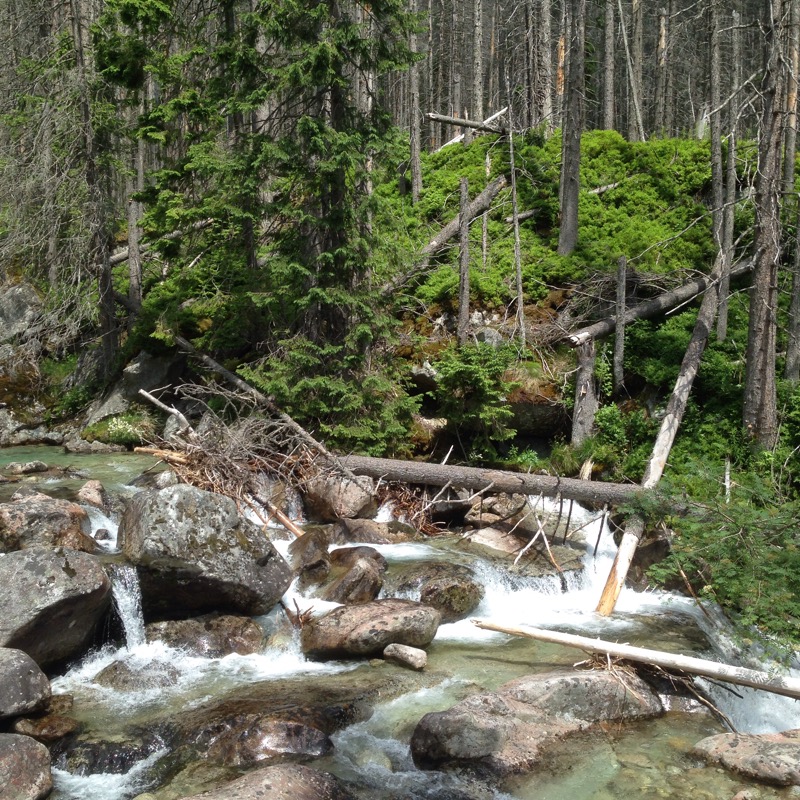
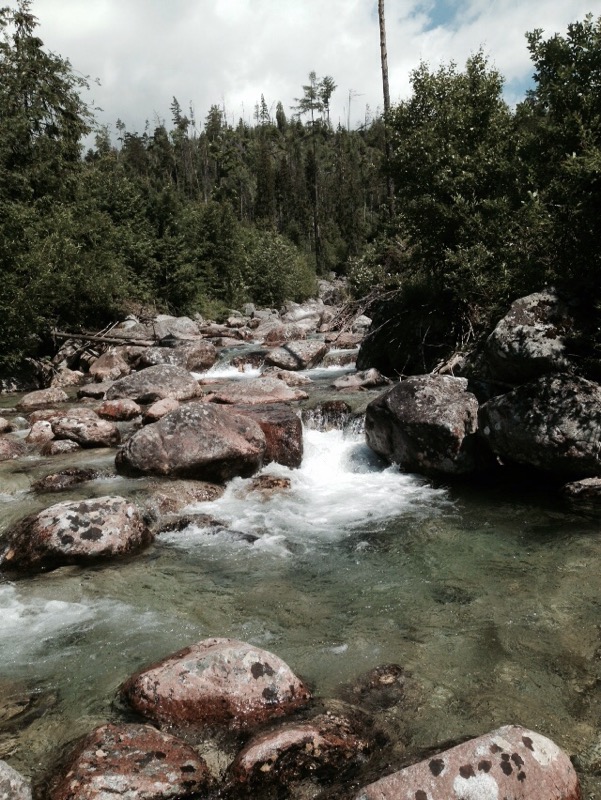
 with a rosy glow to the peaks in the sunrise. It looked like it was going to be a hot one so we decided to stay down in the shade and do a riverside walk through the trees up to some waterfalls. 

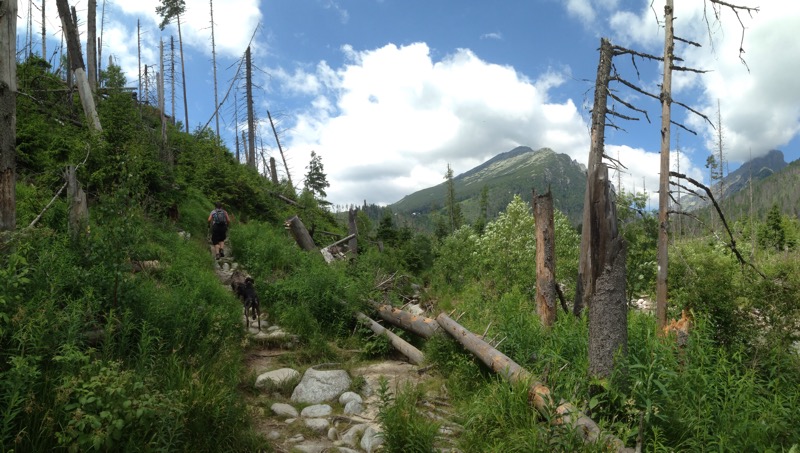
It allowed us to see close up the recovery from the Bora, the great destroying wind of a decade ago. I wrongly said in my previous post that it took out 24,000 hectares when in actual fact it was only 12,500 hectares.  5 million trees came down and they covered 230km of walking trail that had to be cleared. The Slovakian Olympic team,trainers, committee and staff were some off the first volunteers as well as scouts and schools. An all hands to the pumps effort apparently. 

The recovering forest is lovely in places with a mass of young birch and rowan filling the gaps  

 but unfortunately the wind was only half the damage. A beetle that kills the surviving pines took advantage of the new conditions and created havoc by destroying countless more and a battle is being waged against them by setting up thousands of pheromone traps. We had been seeing them in the woods since East Germany and it now made sense.  

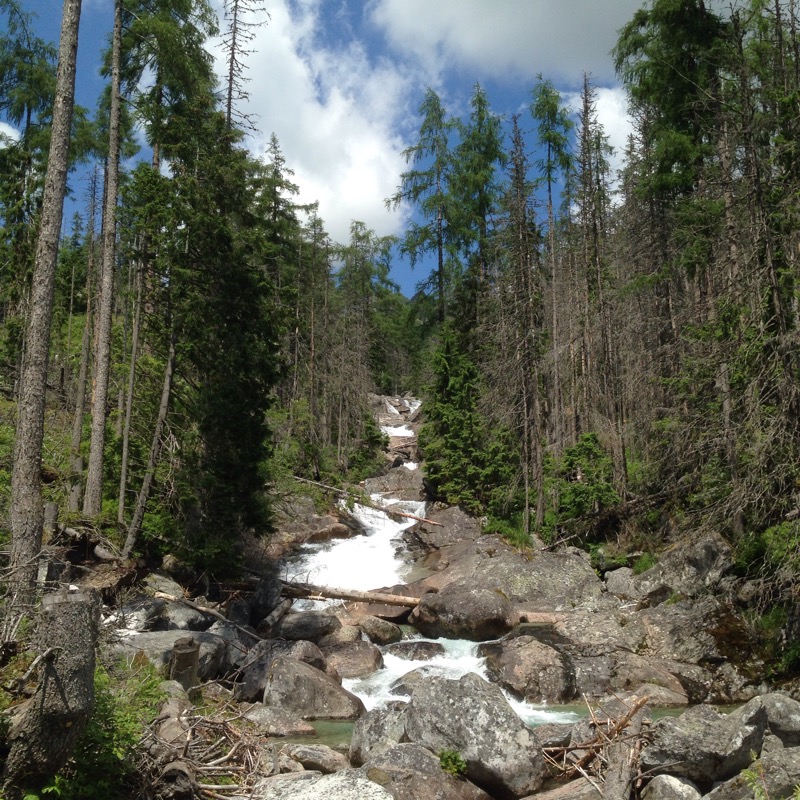
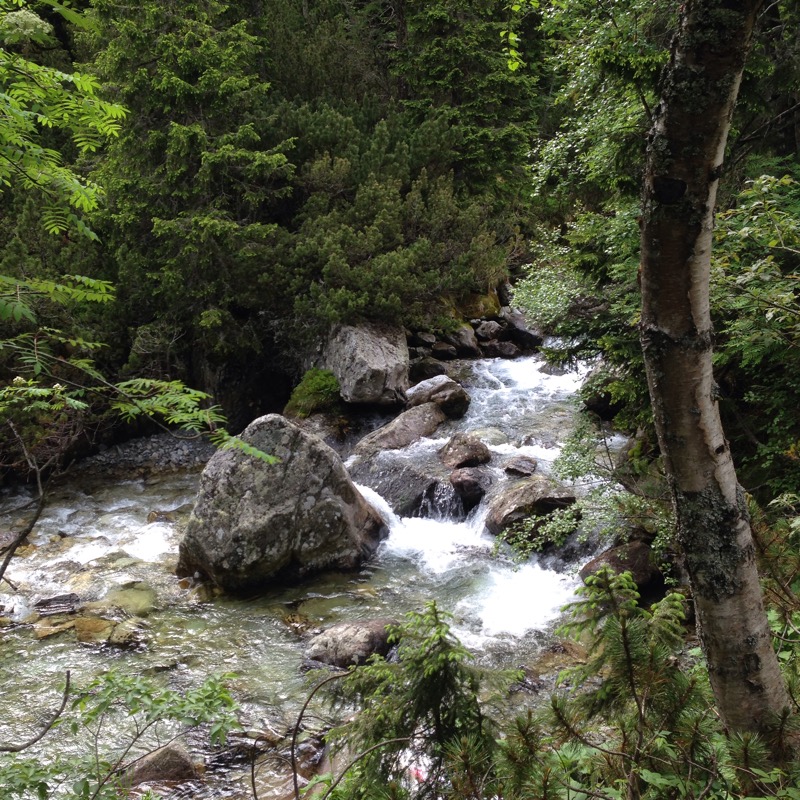
   It was sad to see all the damage but the cascades still made for a beautiful scene.  


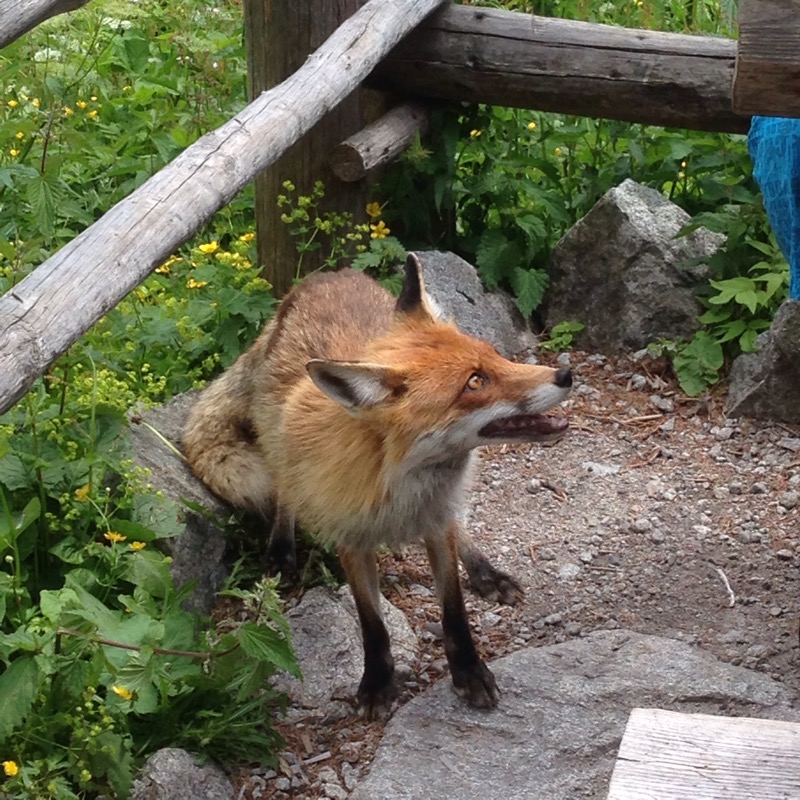
We got up to a chata in a clearing where we were amazed to see a wild fox hanging around the picnic tables.  

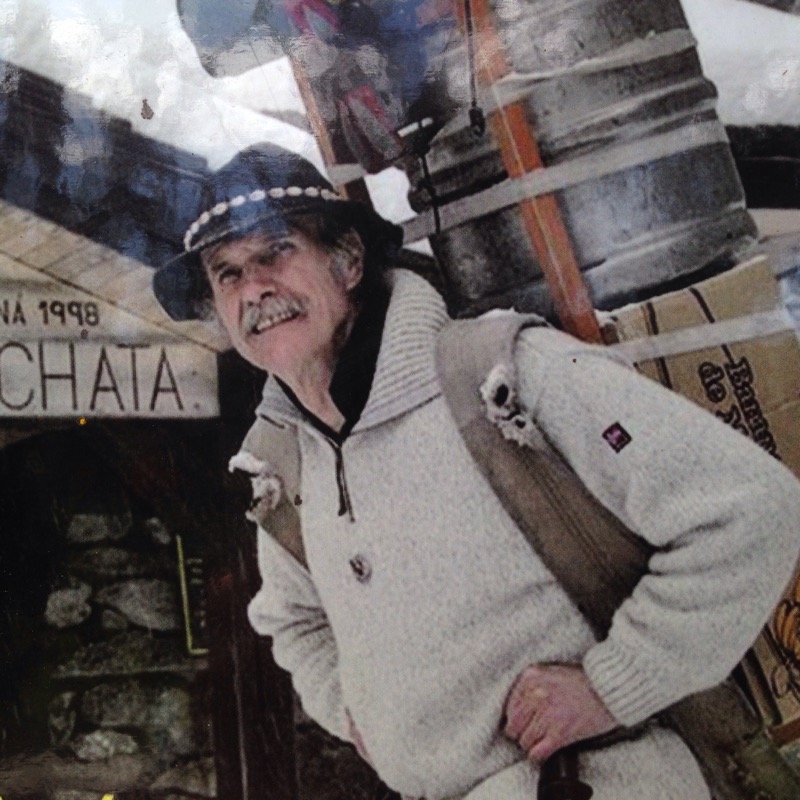
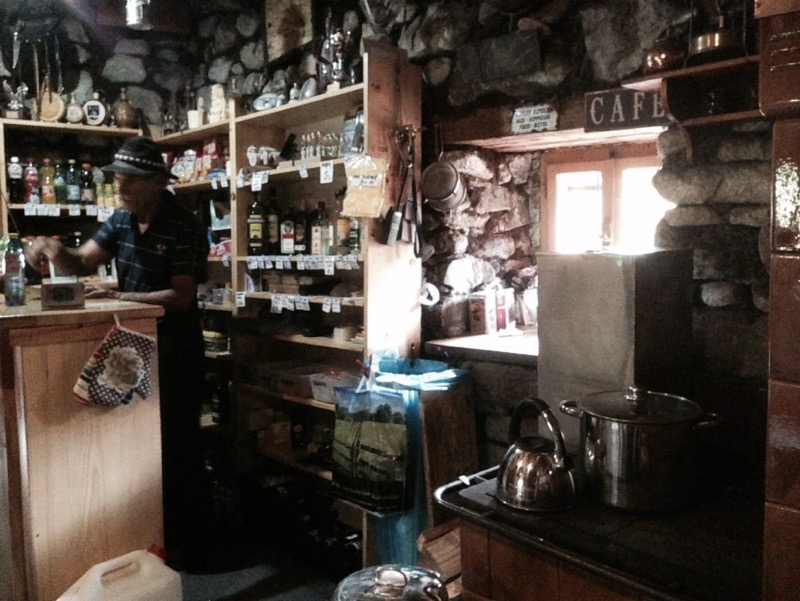
   The whole place was impressive, run by a character from a distinguished line of chata men and porters who stuffed his little but with memorabilia.  


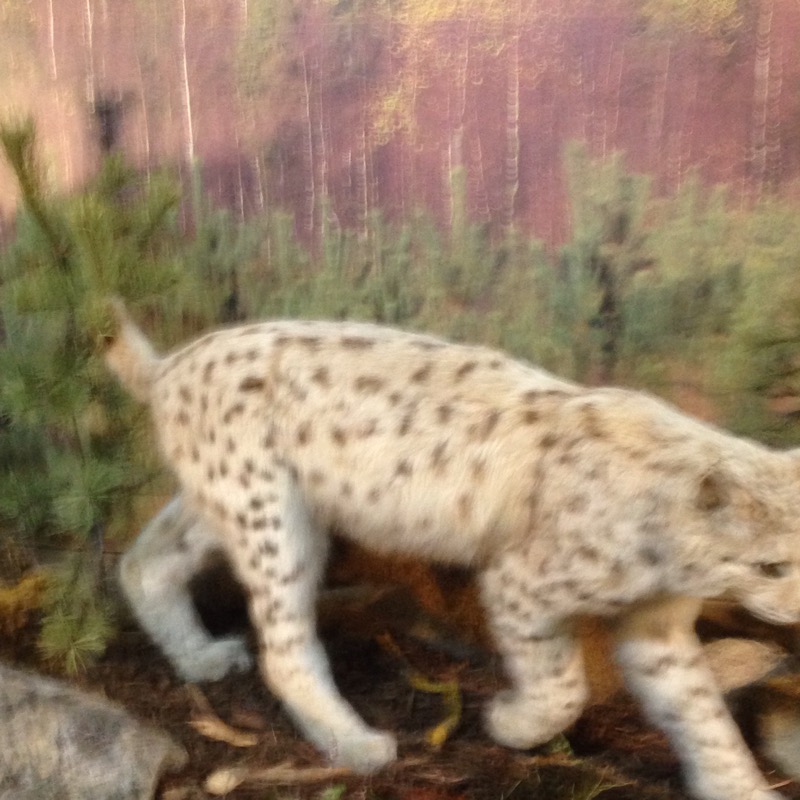
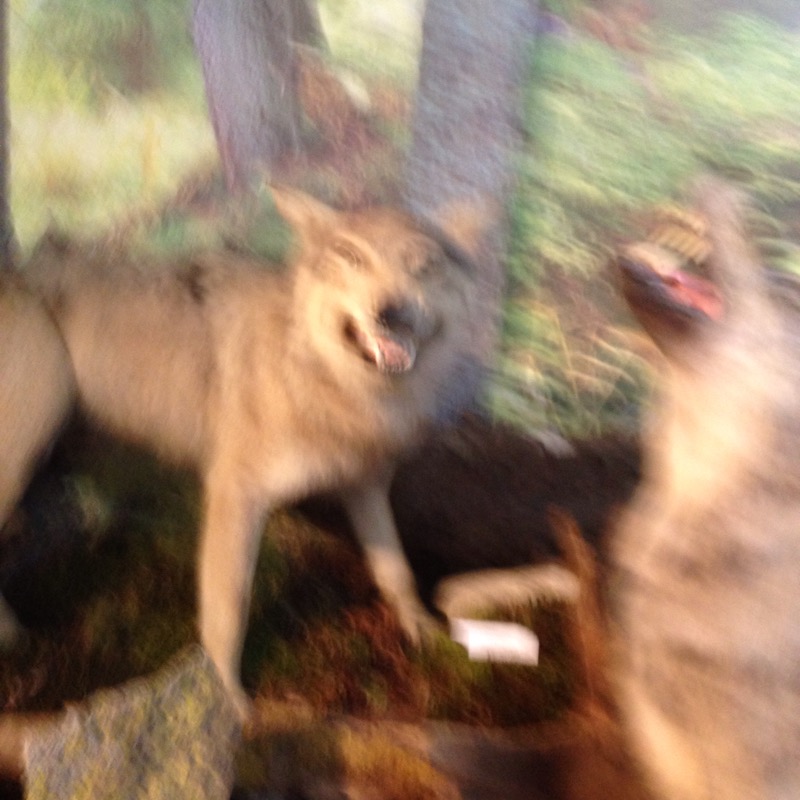
We surprised some wildlife and ourselves on the way back down  

   but managed to escape unharmed. 

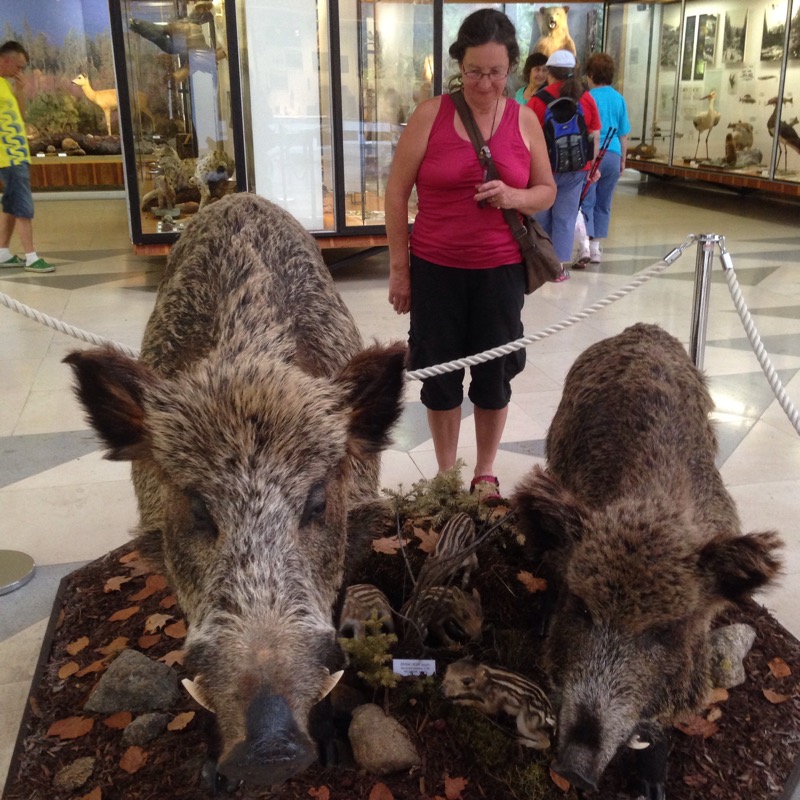
Not surprising of course as they were stuffed and in display cabinets I the national park museum we visited later.  

 I wouldn’t want to meet one of these guys or the big brown bears. 

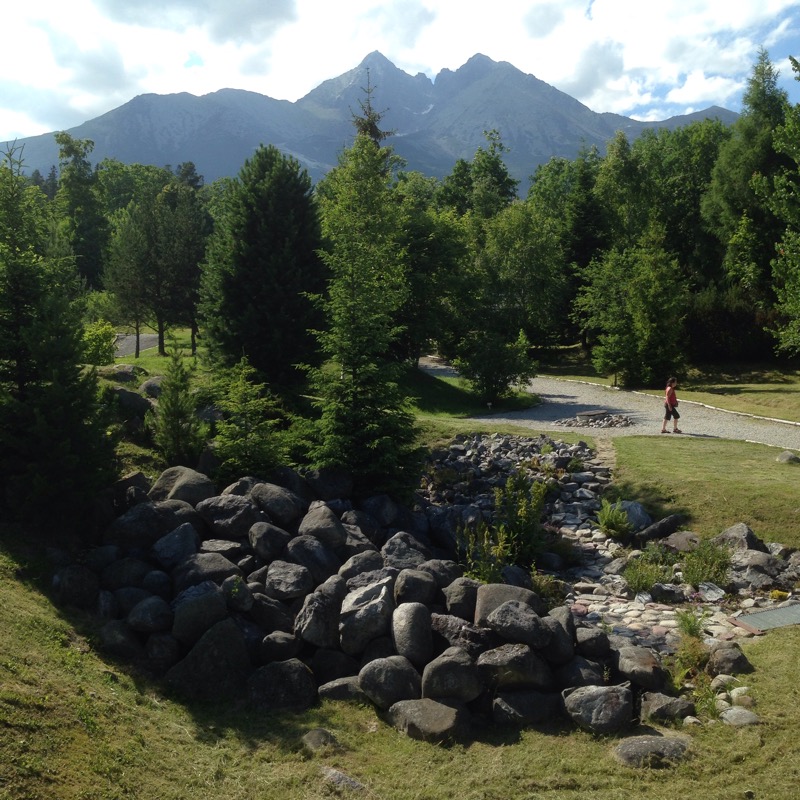
Next door was a nice spacious botanical garden containing all the plants we had been admiring in the wild and loads we hadn’t spotted.  

         Including the famous, thanks to Engleburt Humperdink, Edelweiss. 

  
Back to camp after another busy day with just enough time to sample some of the local elixirs before dinner. 

THE GRAND TOUR: SLOVAKIA 28/29/30th JUNE 

The rain never came on our night under the bridge but it was a fine park up a anyway and we weren’t disturbed by the cars or all the people going to mass in the early morning. Been surprised how early things get going in hard working Poland with a lot of people out and about when I get up around 6. 

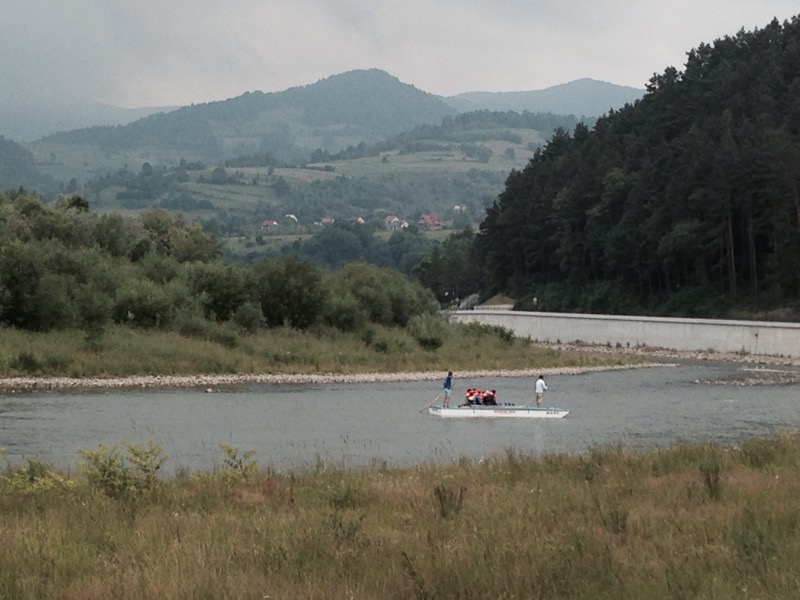
The river next to us was popular for rafting 

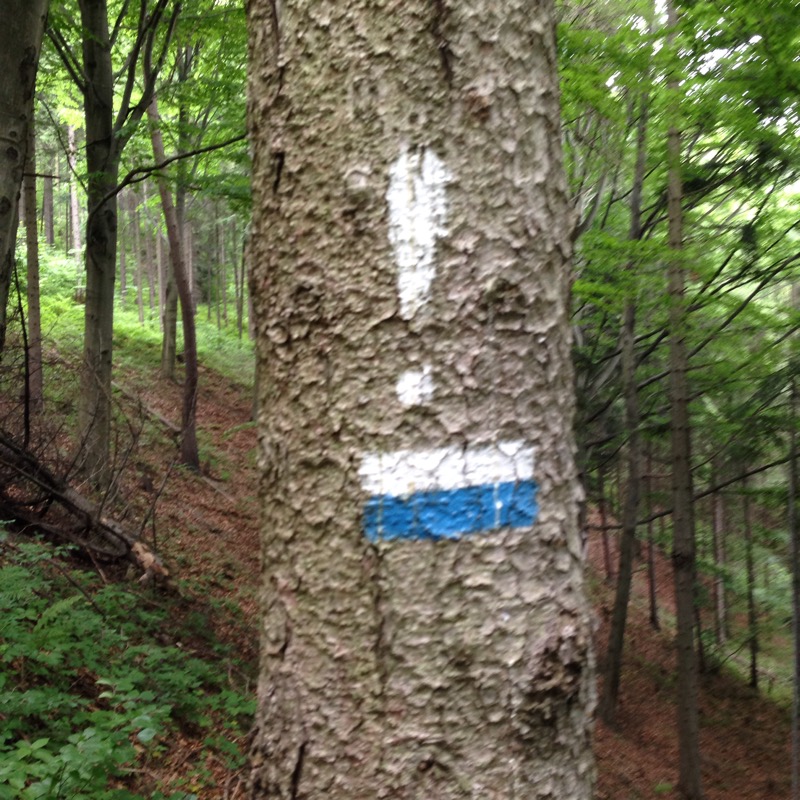
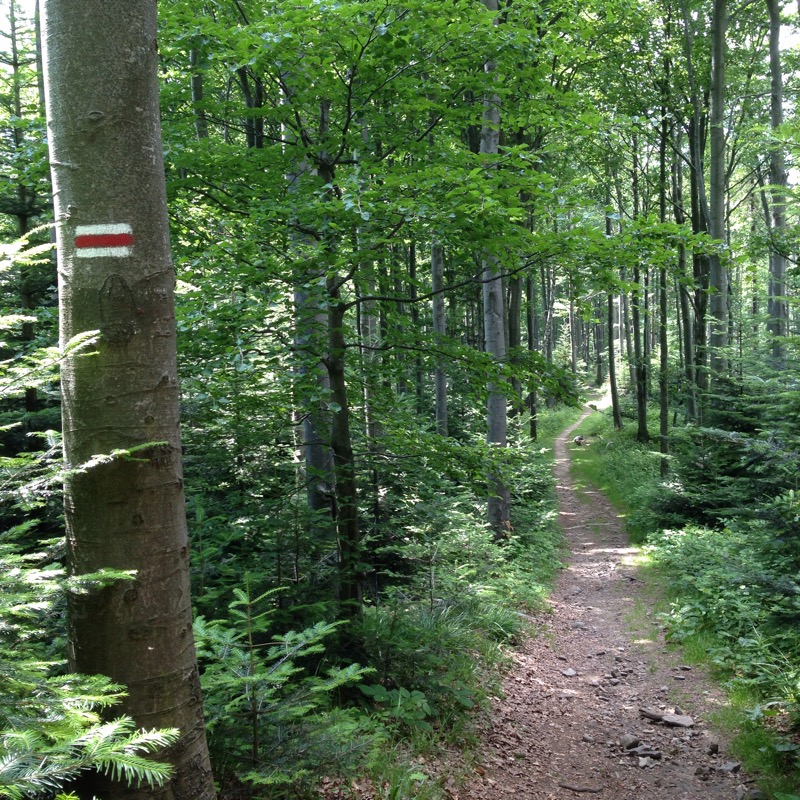
 and we watched some as we climbed up the nearby trail to a viewpoint before heading off over the border. One of the things that has impressed us here is the trail markings and a new one on us was the one to warn you to pay attention coz something’s changing.  

 I guess we’re fairly easily impressed. 

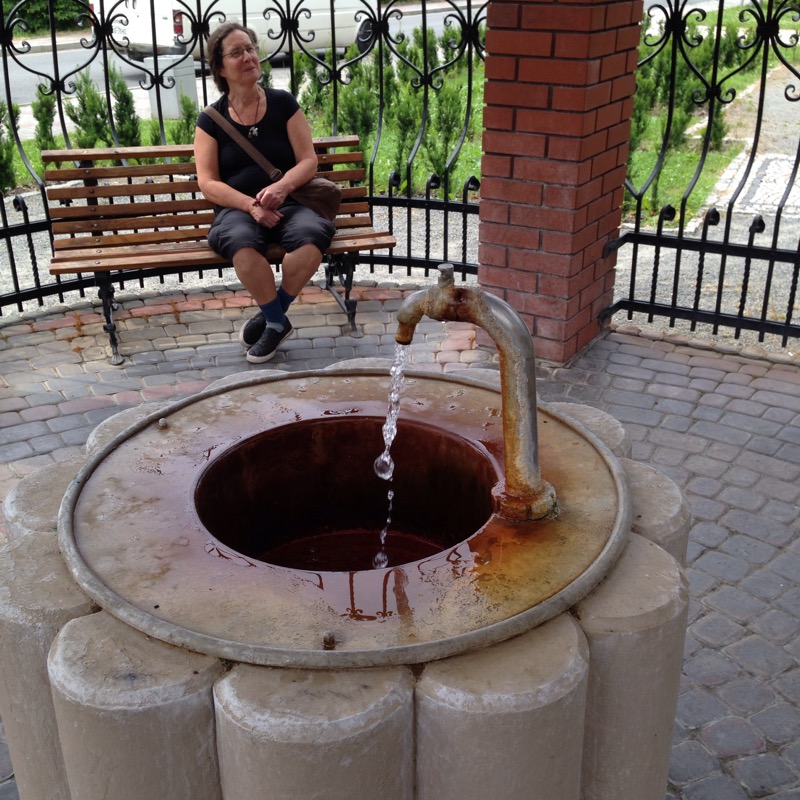
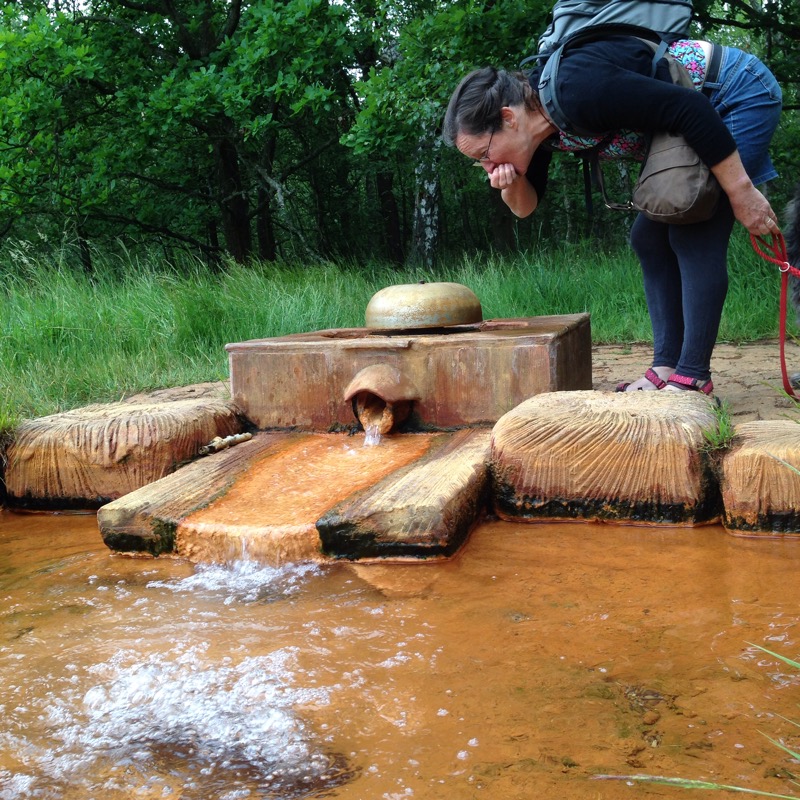
We were in yet another spa town,( these are mineral rich hills), so we had to do the obligatory tasting of the healing waters.  

This one was supposed to be good for the digestive tract and I must say the following morning I produced the proof of that.   It still didn’t taste too good. 

Speaking of mineral springs we have discovered that the “greasers” mentioned in the last post were actually harvesting crude oil that came to the surface in a few places around Losie and had been at it since the 16th century. How about that?

So we spent the remains of our szotys on a bizarre selection of local produce and some tasty beers and drove up and up to the next country on the itinerary, Slovakia, and strangely, there did seem to be an immediate difference. 

The countryside was more open, less forested, wide rolling plains, and getting nearer by the minute the rising bulk of the dramatic Tatra mountains. The towns seemed poorer, the buildings a little shabbier and more plain blocks of flats. There didn’t seem to be any of the traditional wooden houses we had seen so many of in Poland. 

We didn’t have far to go and were soon settled into a campsite with a view of the peaks.  


Our early start the next day came to nothing as the thunderstorm finally arrived and we had to abandon the mission to the mountains. We were glad we hadn’t managed to get up there when the heavy rain continued for hours and we hung out in town and camp drying off. 

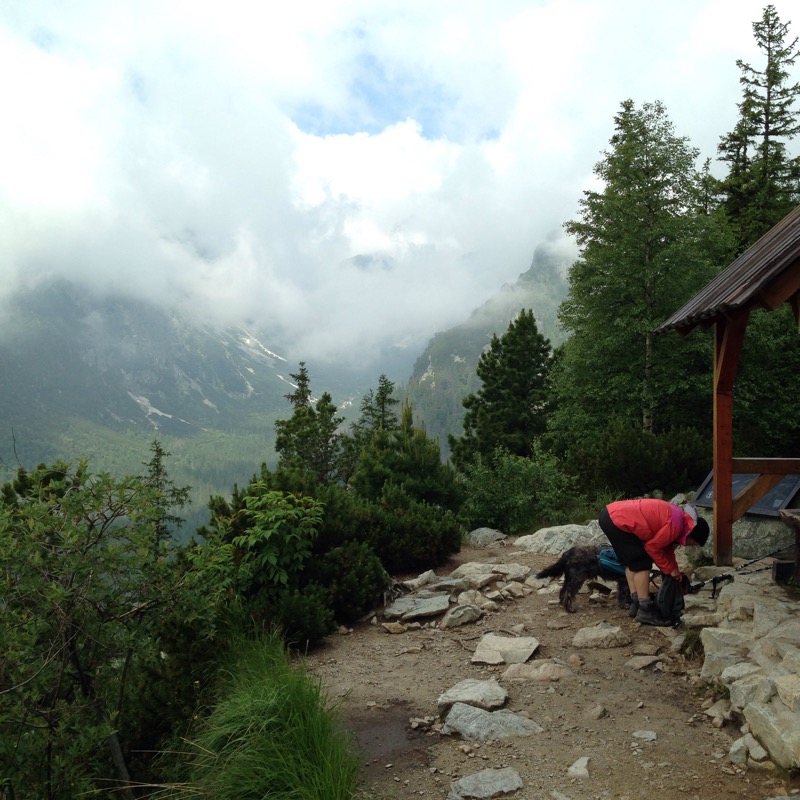
We had discovered that you a take dogs on the cable car so yesterday we headed up to 1700m sweat free and even though it was cloudy too start,  

 had faith it would burn off later. 

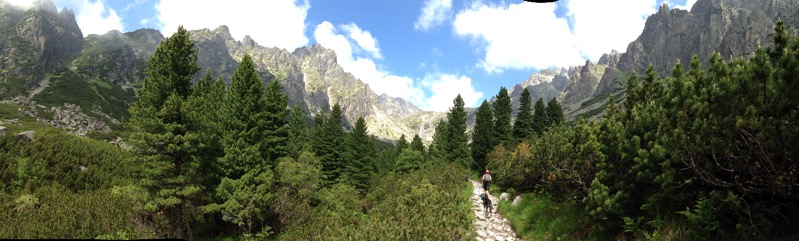
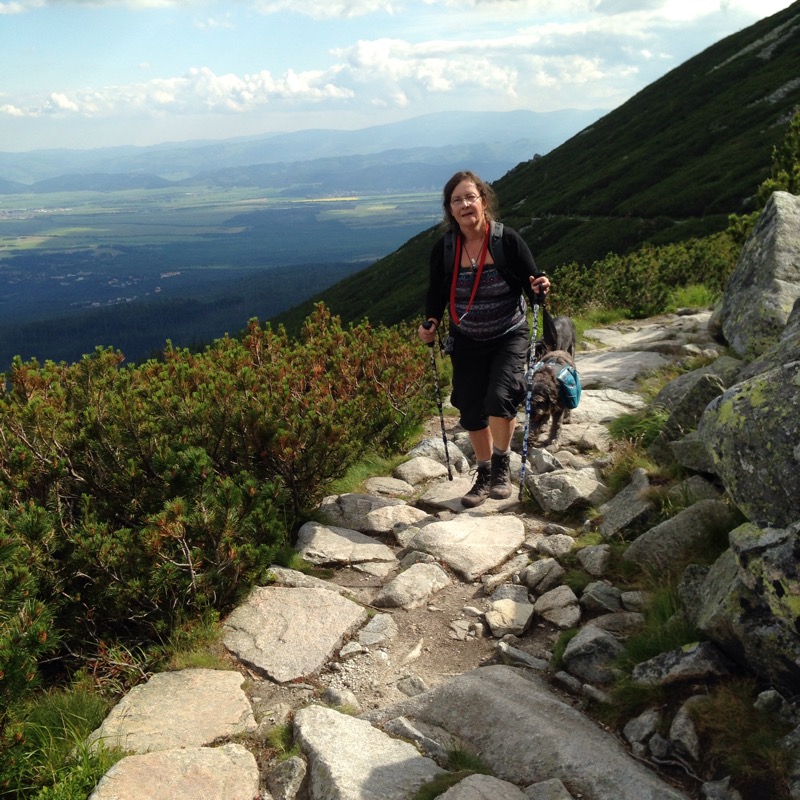
And so it proved to be. After half and hour on the stone laid track we started to see some vistas of the jagged soaring peaks and it got better all day as we climbed through the pine forest and then the dwarf pine.  

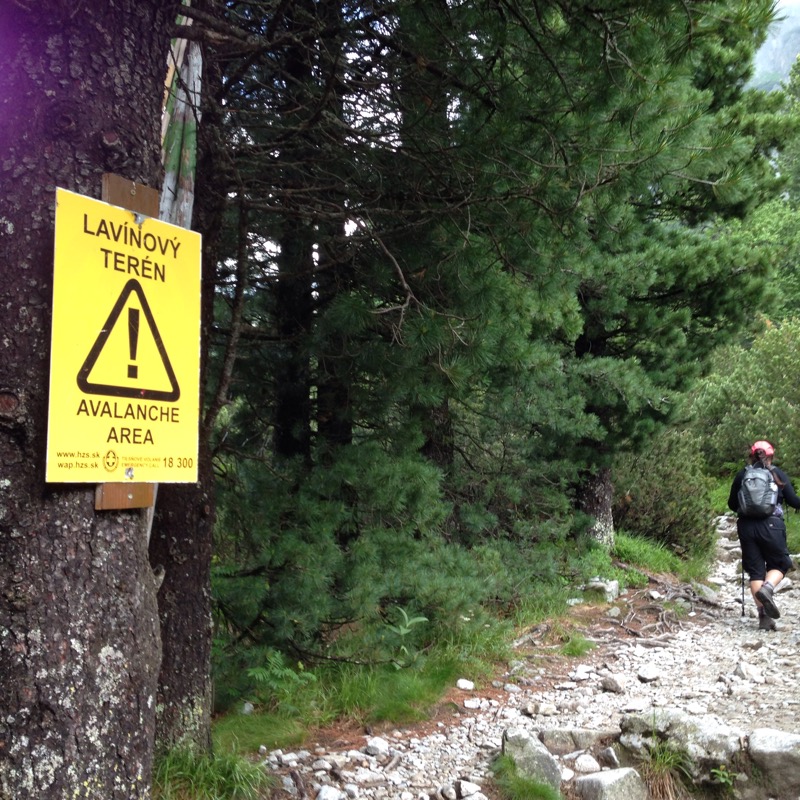
  We past areas prone to avalanche  

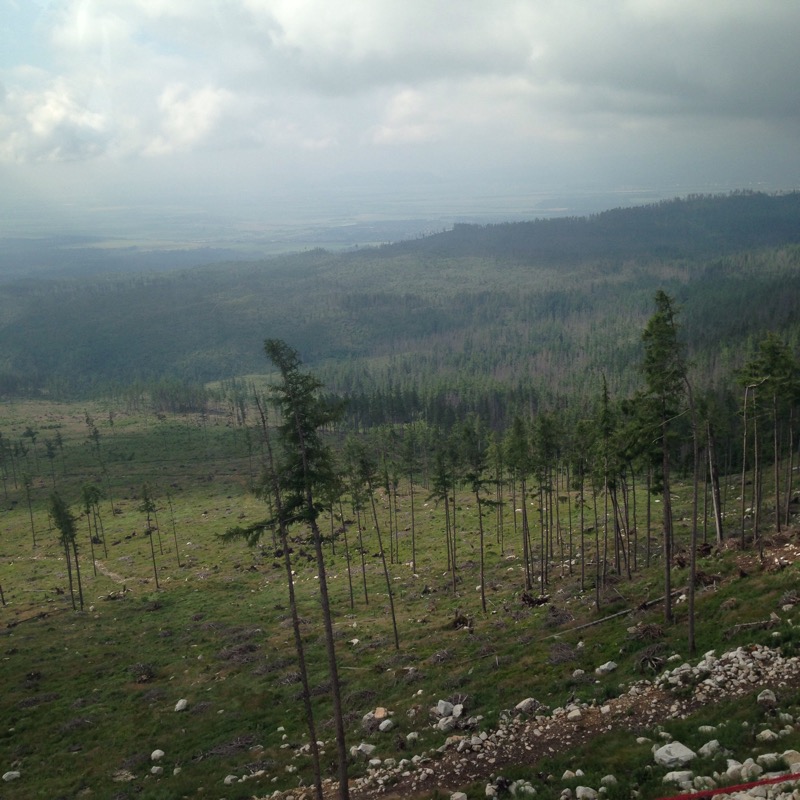
 and a lot of dead or dying trees. In 2004 there had been a devastating wind in the High Tatras which had felled 1000’s of trees. In all about 24,000 hectares was destroyed along with railway lines and every road blocked with uprooted trees. It took months for teams to clear the wreckage and the once hidden villages were open and exposed for the first time. Some areas have been replanted, some left to naturally regenerate and some left open to benefit from the new vistas that have opened up.  


After seeing a bold as brass otter swimming beside us in the lake the other night and the bear skin on the shed door we were wondering if we might come across a wolf or lynx or wild boar all of which live in these forests. We didn’t but getting up high, above the chata or ” mountain but” we’d stopped at for lunch at over 2000m, we heard the screaching of a marmot and soon after spotted a big chamois peering down at us from a rocky ledge.  

   We’d got up past patches of snow and ice by this stage 

   and we were on a section of trail that only opens mid June. We got to a section that involved the use of secured chains to haul yourself up the rock face and the dogs gave up. Sally stayed with them and admired the view while I clambered on to see if I could get to the next pass and get a look at the highest tarn or lake in the whole of the Tratra’s.  

   Time had run out on us though so we had to hurry back down the valley, pausing only to re-hydrate at a chata, to catch the last cable car.  

 Down past the tumbling streams we had seen emerging from the mountainside earlier 

 and along the path with views that had been hidden to us in the cloud before.  

   We got back without enough time to experience the hospitality of the final chata unfortunately  

 but we have learnt to appreciate what a wonderful service they provide. Everything is portered in but prices are still really good. We are trying to find out if we can stay in one with the dogs and so go deeper into these amazing mountains. 

THE GRAND TOUR: POLAND 24/25/26/27th JUNE

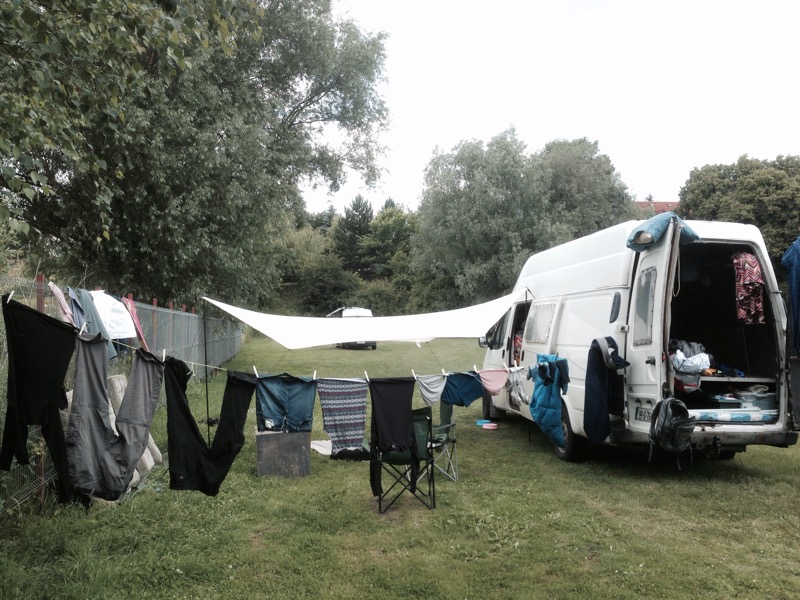
We enjoyed a morning bring down the tone of our campsite on the outskirts of Krakow by hanging up our washing and airing all our cushions and bedding etc surrounded by the smart luxury motor homes. We have a “camper van”. Big difference.  

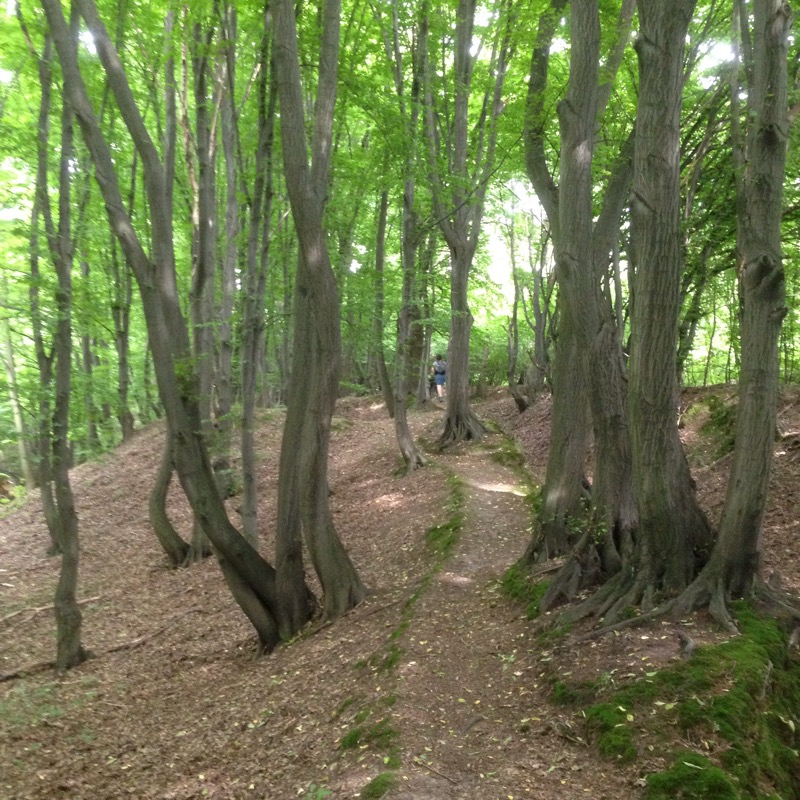
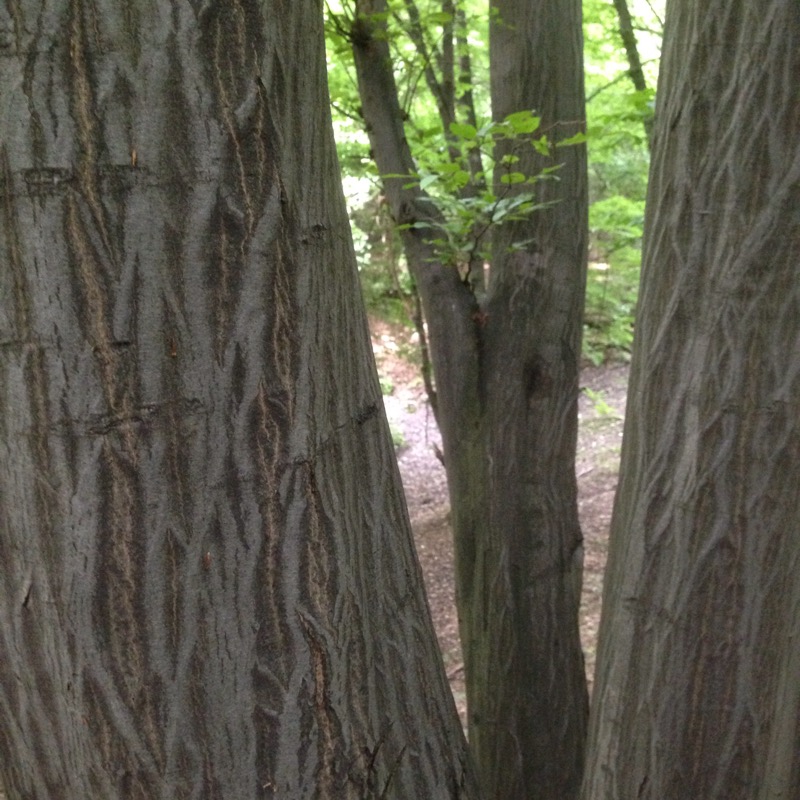
 We hiked up through the Wolski Woods from the camp to a viewpoint overlooking Krackow. Some of the trees sported an unfamiliar bark    
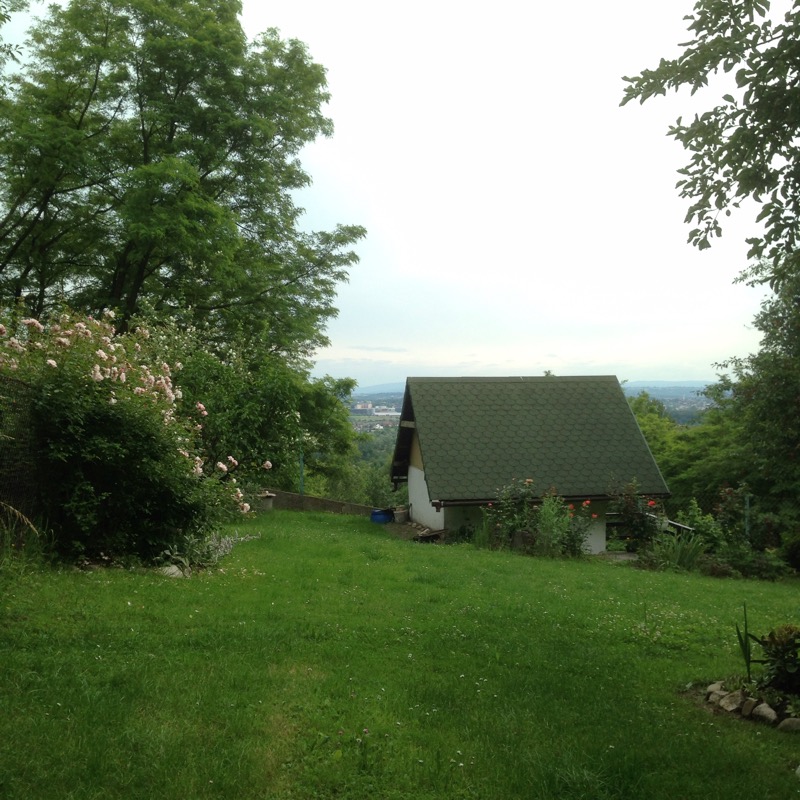
and there were little allotment gardens and the “chaty” huts that have been sure a feature since East Germany. We had learnt in the Communism that after so many people had been housed in hastily built prefab blocks of high rise flats with their thin walls and lack of privacy that a huge movement had arisen of cabins with little gardens being put together DIY style in the country for people to escape to at weekends and enjoy their own little empires.  


At the top of the hill we emerged out of the trees at a giant mound with a spiral path to the summit. We discovered that it had been built to commemorate Tadeusz Kosciuszko, a polish hero of the 18th century, who had fought for Independence in the American Revolutionary War and then took on Russia to free his Polish homeland. Unfortunately he lost and Poland ceased to exist for 125years. 

  A hero nonetheless, the mound contained soil from every state in America and was crowned with a mighty boulder from the Tartry Mountains, Poland’s spiritual heart. 

There was also, luckily,a friendly bar/restaurant  up there and we stopped to re-hydrate and take in the view of the city while chatting to a Polish family who had moved to the States in the seventies.  


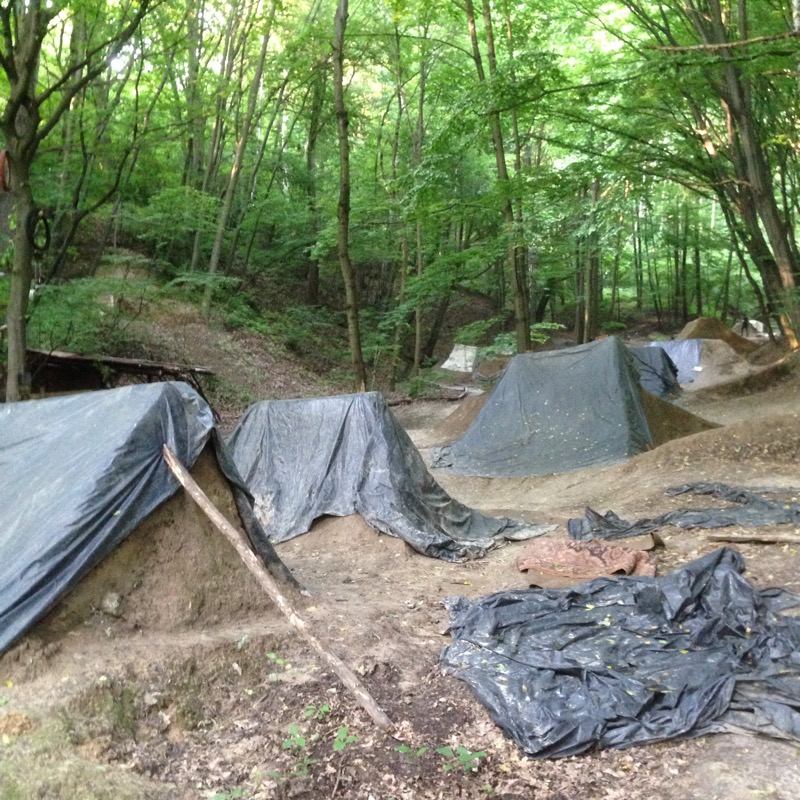
We tried a different route back through the woods and got lost but stumbled upon some lads building an impressive and extreme mountain bike trail. The photo cannot do it justice as it covered about an acre but they had sure put the time in.  


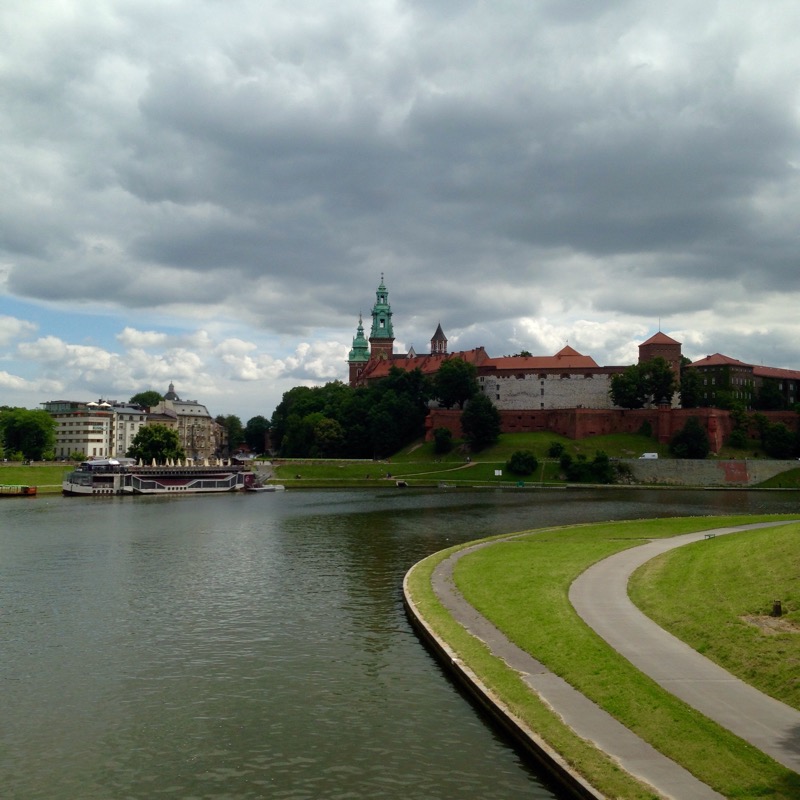
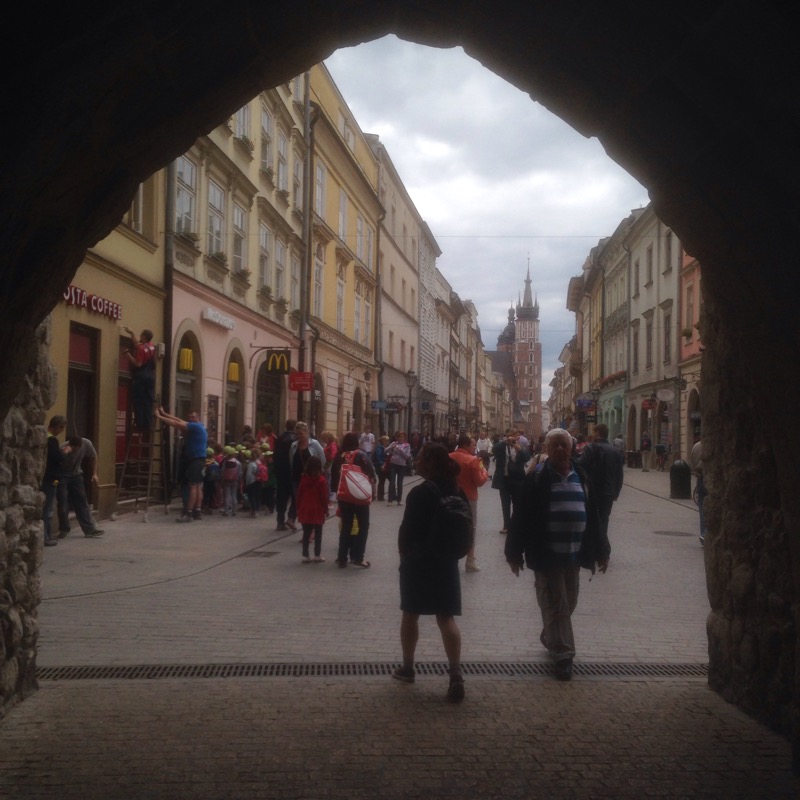
The wooded campsite was only 4km from the city centre so it didn’t take long to drive in the next day to explore. Like Prague, Krakow has a fine big river running under it’s castle 

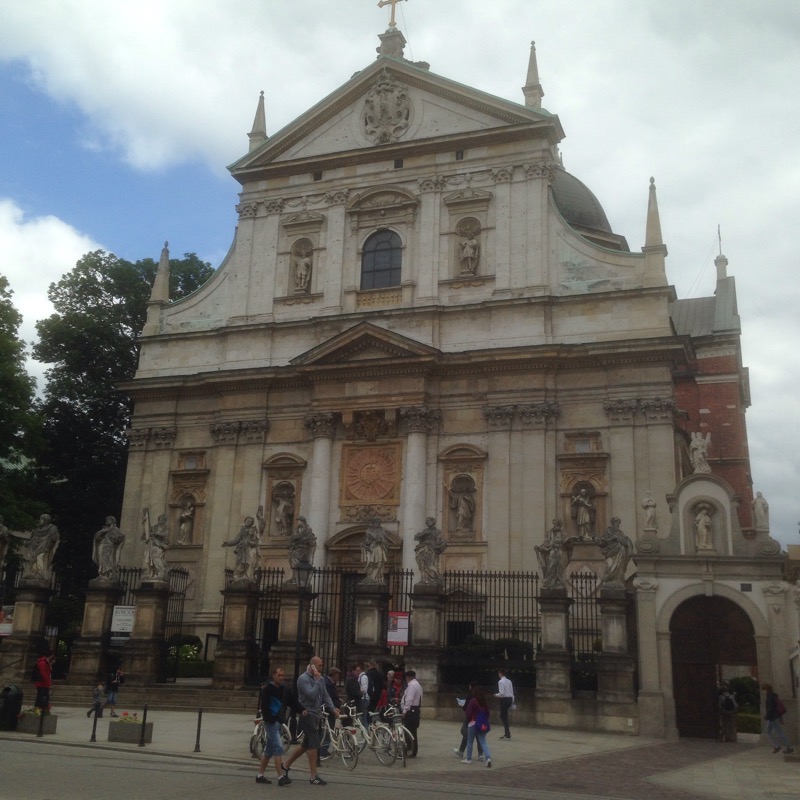
 and a wealth of churches and imposing architecture.  

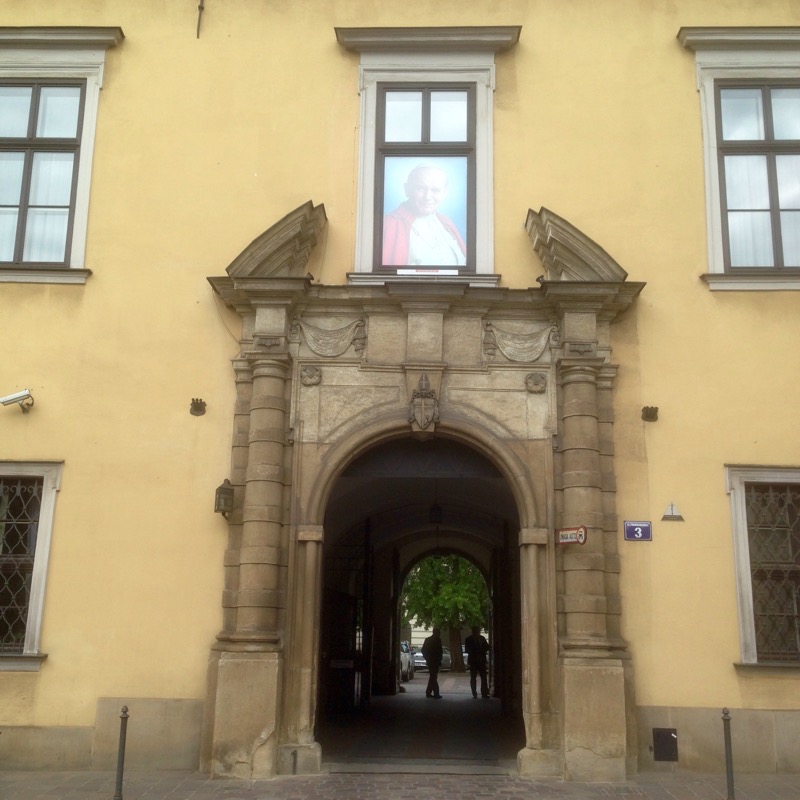
     Another local hero features prominently everywhere here. He was upstairs in the window of this building.  

 The archbishop of Krackow and born nearby, Cardinal Karol Jozef Wojtyla, known to the world as Pope John Paul 2nd. The only Polish Pope in history, and the first non Italian since 1520, he is credited with being instrumental in bring down communism and his image and name are everywhere. 

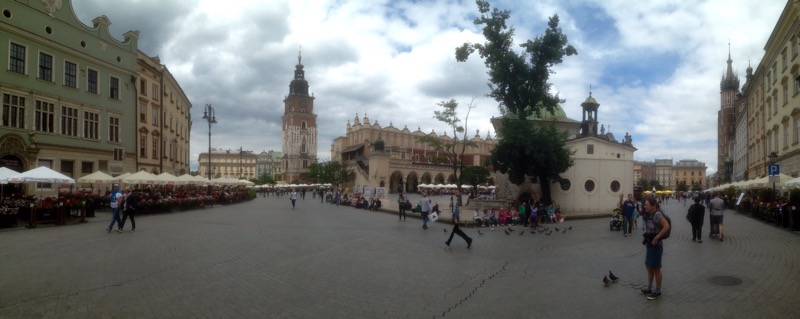
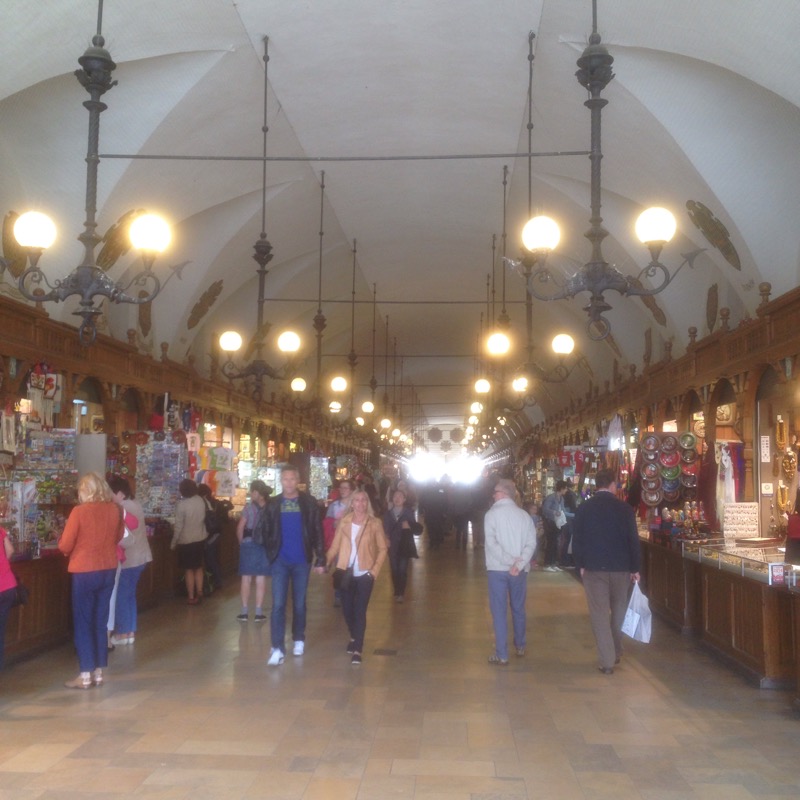
Kraków has what I believe is the biggest square in Europe  

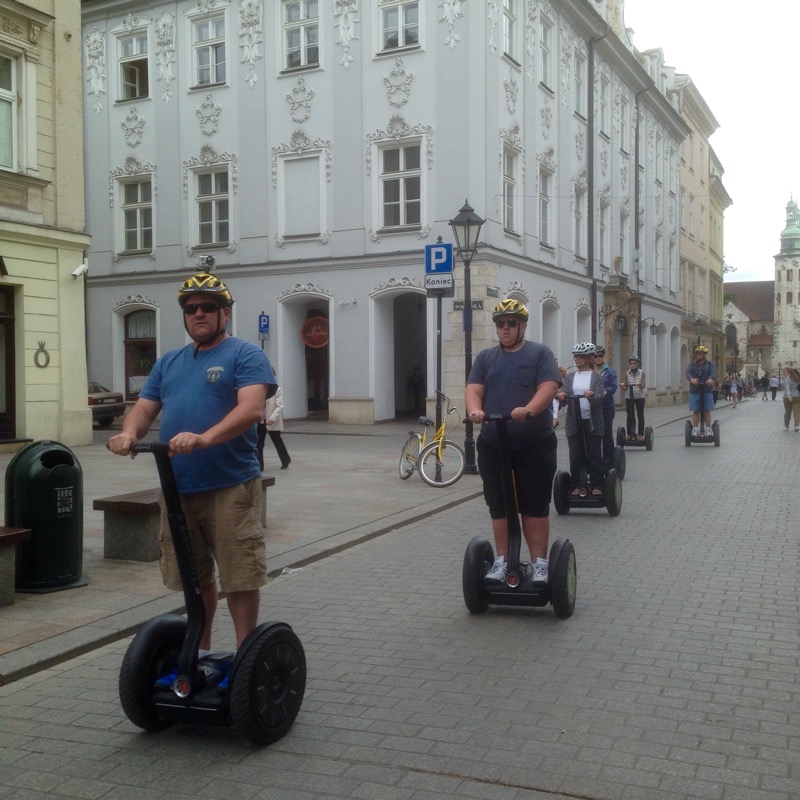
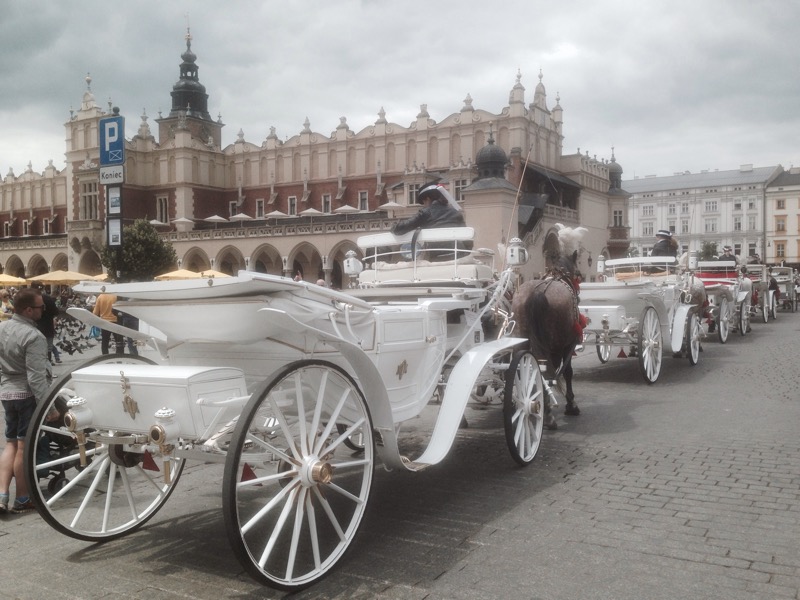
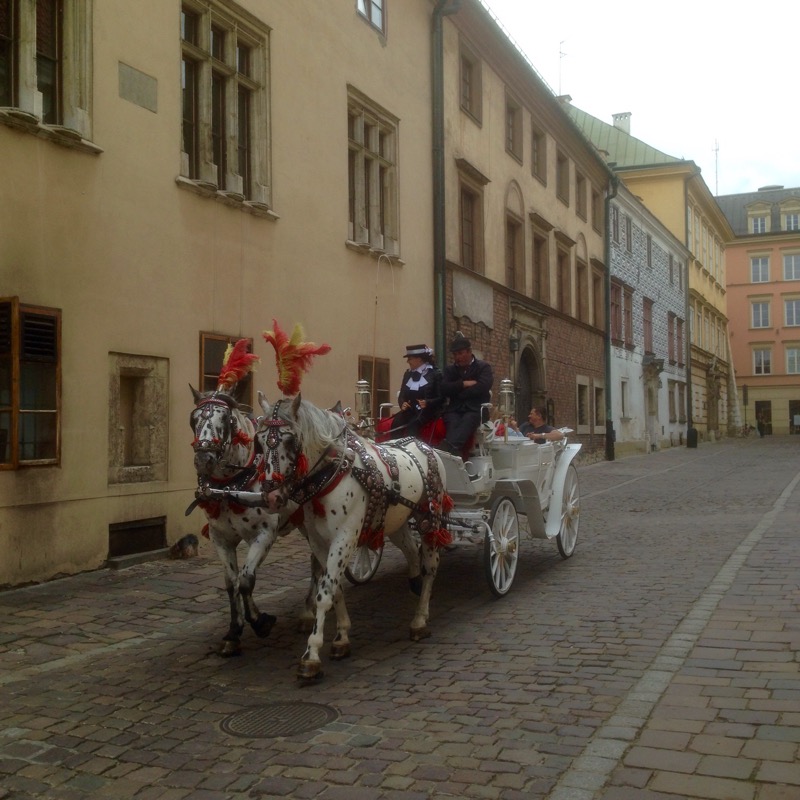
 and it was a great place have a coffee and watch the world go by ( on Segways and in horse drawn carriage).  

     There was a massive indoor market in the middle 

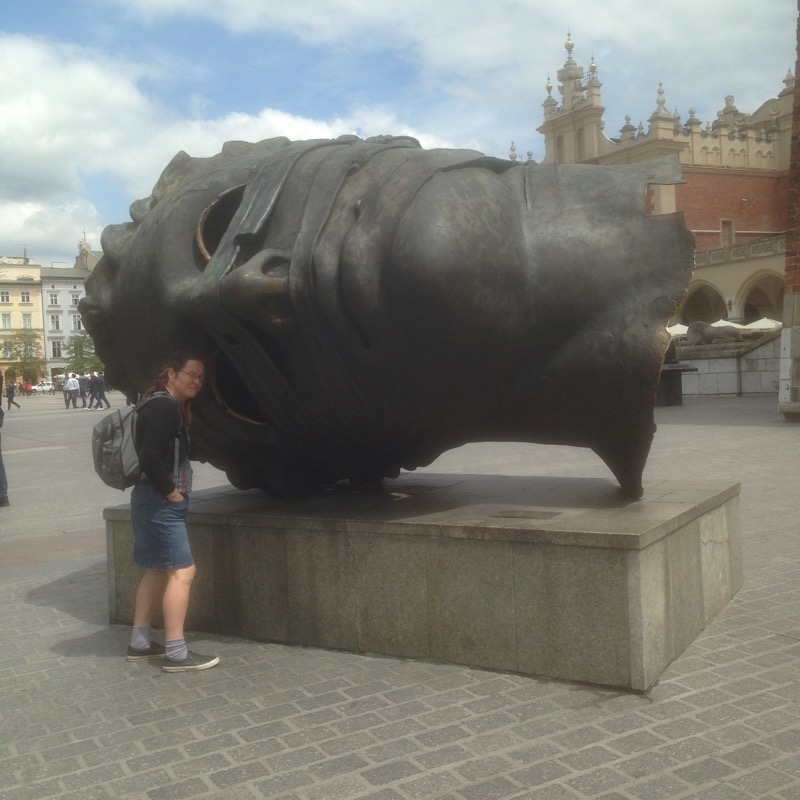
 and sculpture around the edges.  

 After having such a pleasant time we thought we had better visit the Ghetto area where the Jews had been kept until a worse fate awaited them. It is still a depressingly run down place 

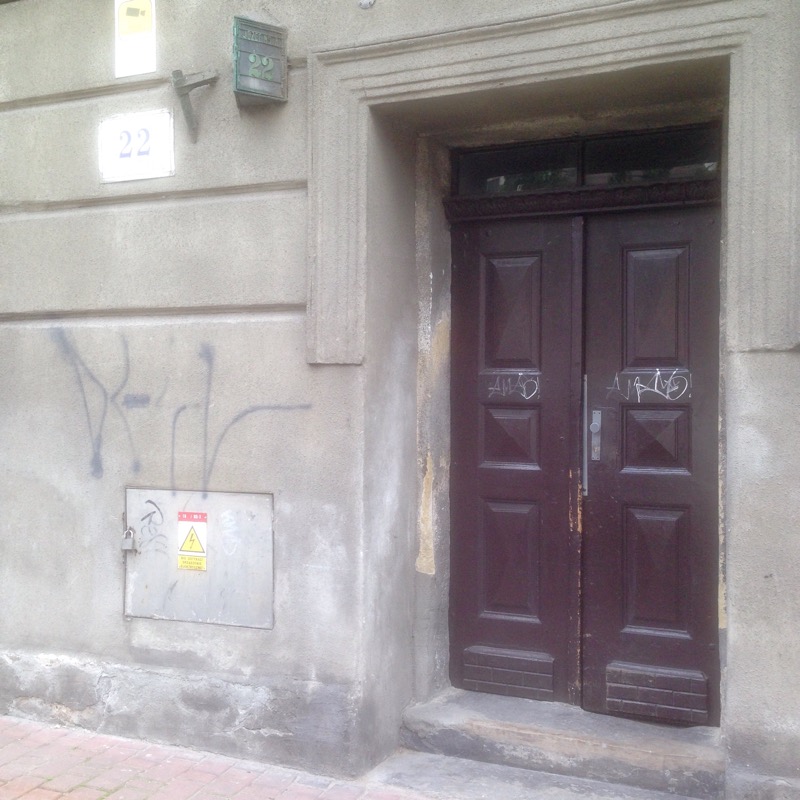
 containing a lot of hideous memories. No 22 years was a kindergarten where they were all killed when the Nazis cleared the Ghetto.  


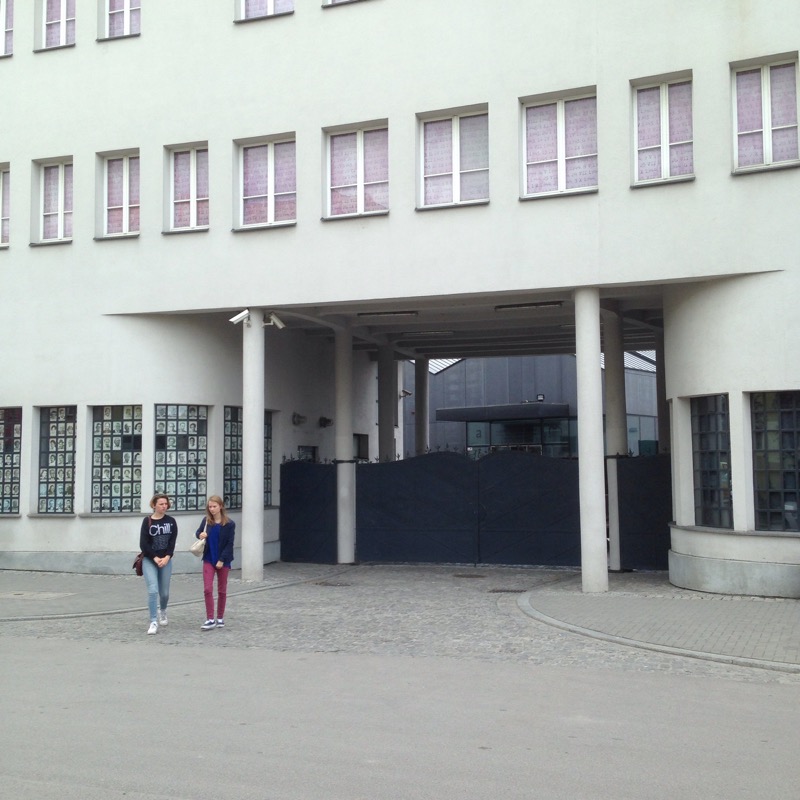
Just down the road was the scene of some better news- the Schrindler factory where many lives were saved. Now a museum 

 it is next to the Krackow modern art galleries that were displaying huge hoarding of the current show which probably upset a few of the visitors next door.  


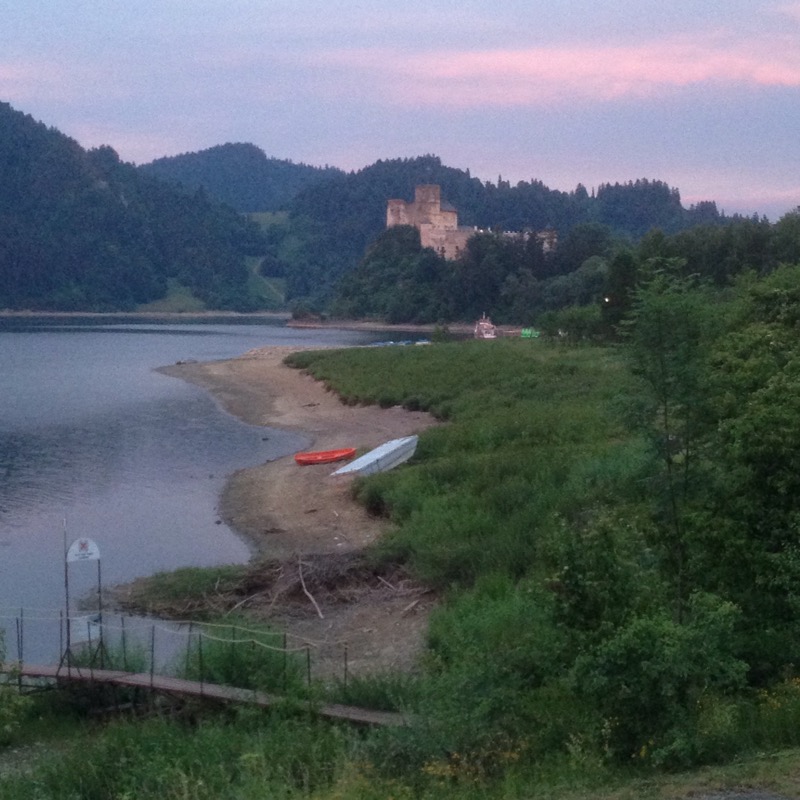
Time to go South, to the mountains. We headed to the Popradzki Natural Park in the Pieniny and Beskid Mountains where we wanted to hike. We have to stick to Natural Parks because dogs aren’t allowed in the National Parks. We found ourselves a lake side park up for the night overlooking a well preserved castle 

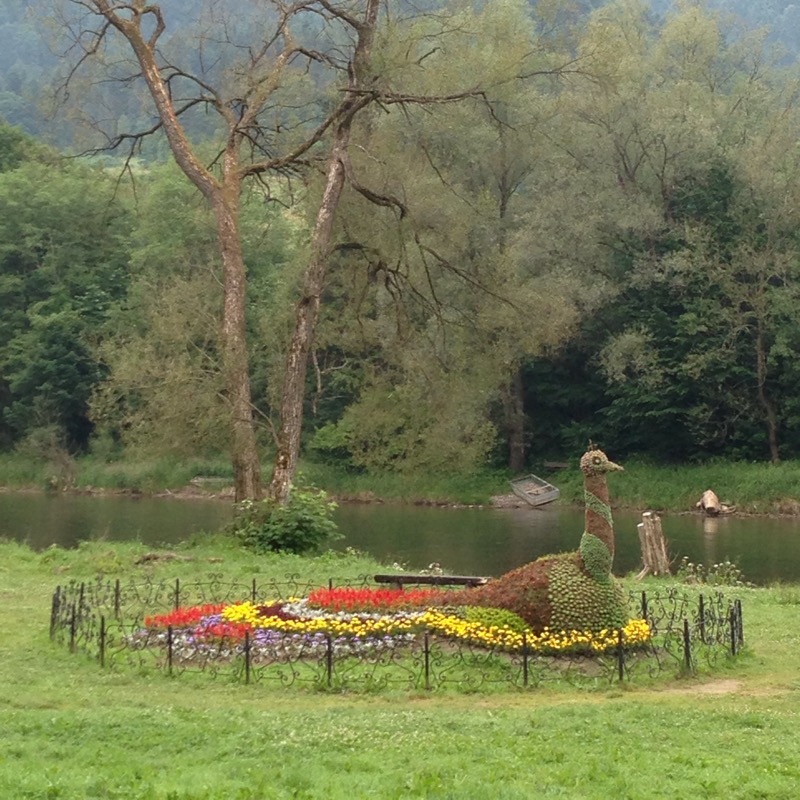
 and in the morning headed to a popular and prosperous spa town, Szczawnica, at the beginning of a 26km walk we had put together from the mass of trails on offer. One of the features of this area seems to be floral sculpture and there’s plenty of colourful ones on display.  


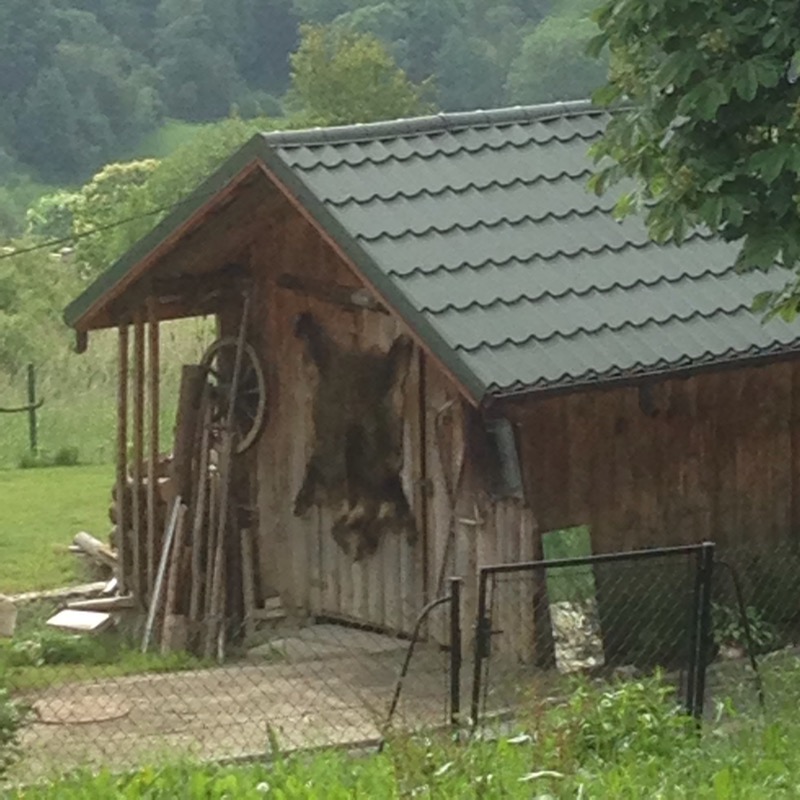
It’s a pretty wild area with forests as far as the eye can see and the first thing we come across is a bearskin drying on a shed door.  


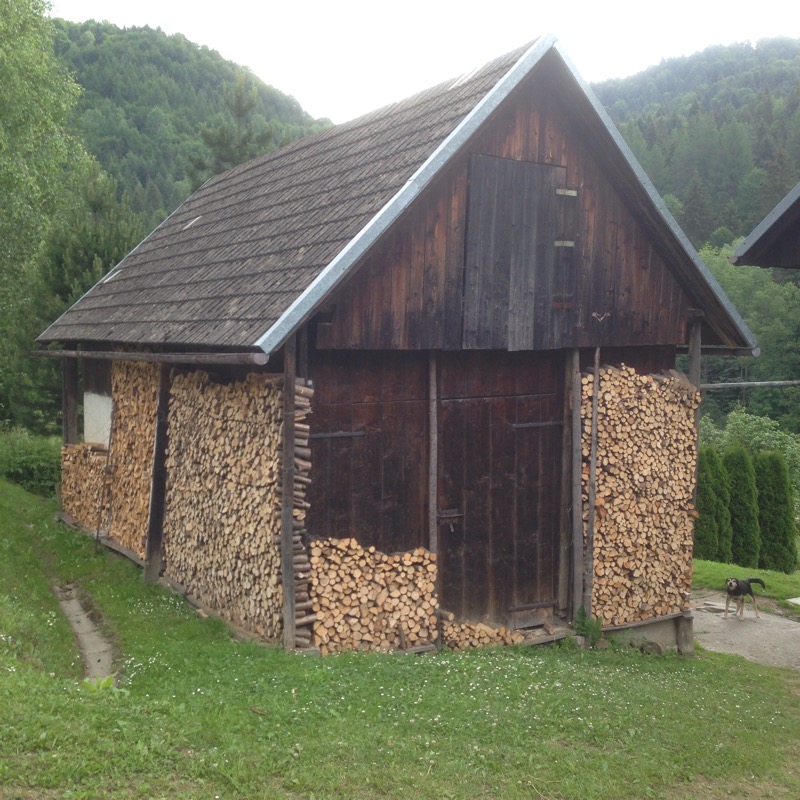
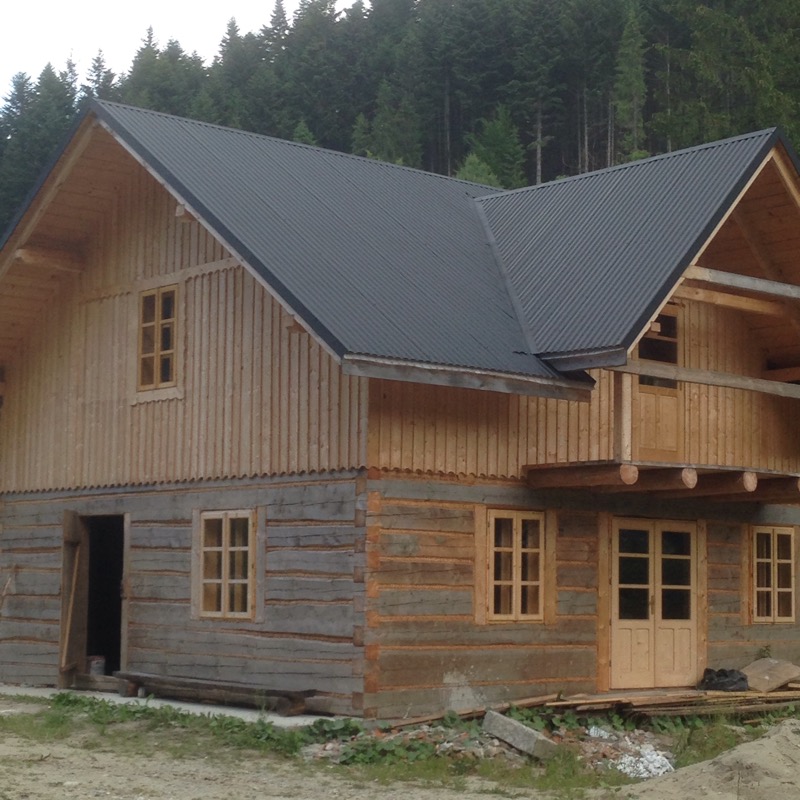
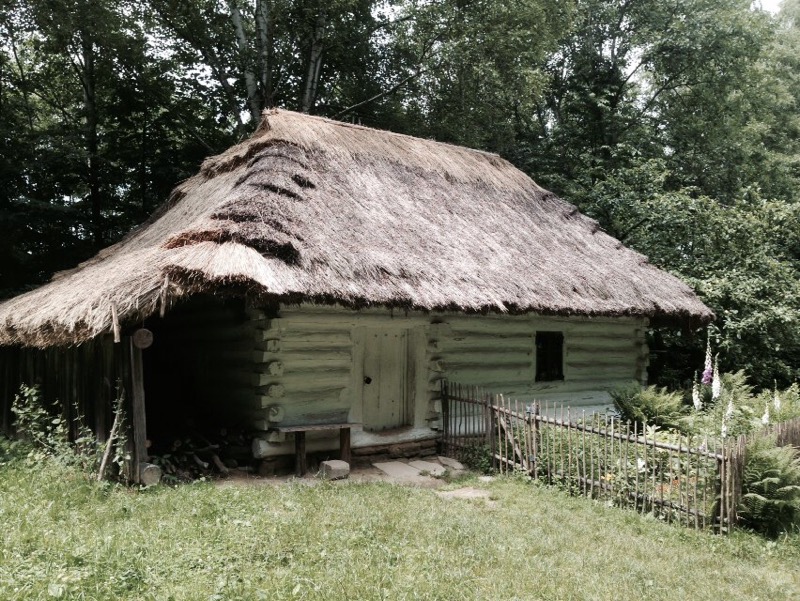
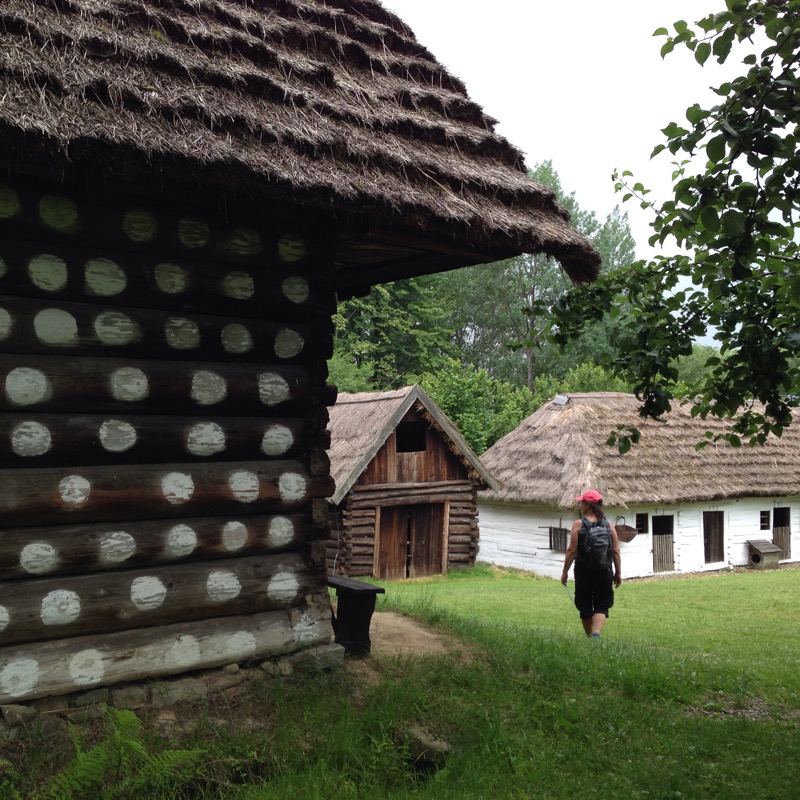
It really is all about timber in this neck of the woods. There is so much of it. In woodpiles, in planks drying in sheds and especially in the buildings.  

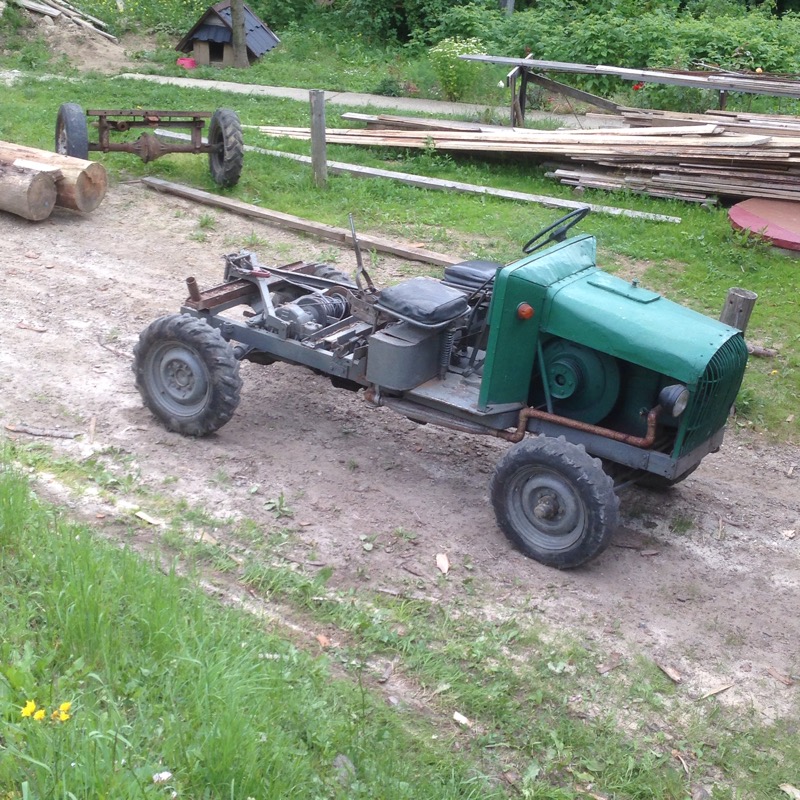
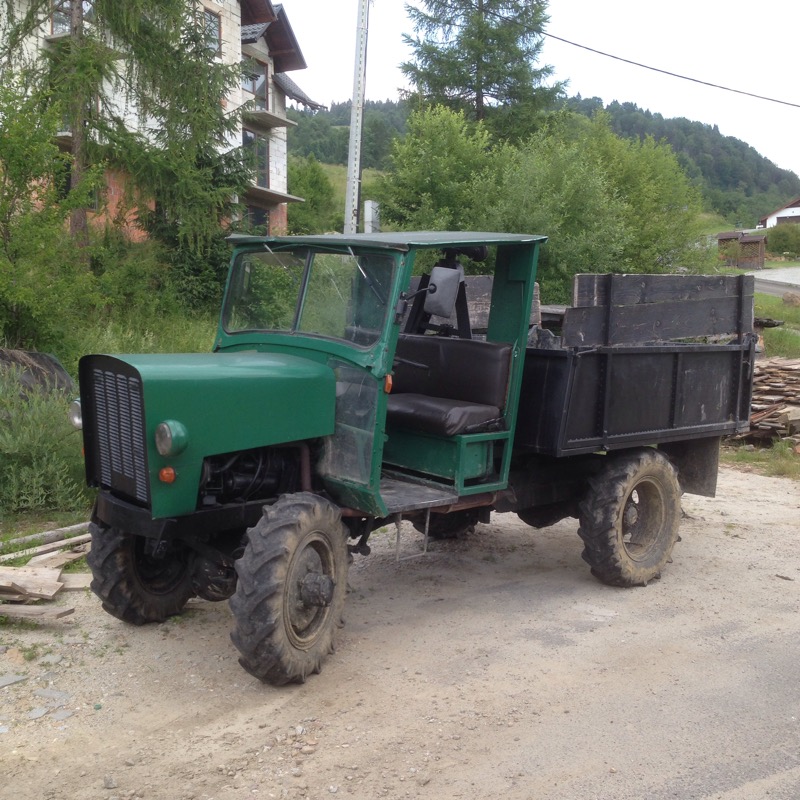
   They use all sorts of vehicles for dragging it out of the forest.  


 We passed wayside shrines and waterfalls on the long steep climb.  


 Eventually reaching the summit of the highest peak on the ridge at 1173m where what the map  had indicated as a “mountain but” turned out to be a big place where you can eat drink and sleep in a room or camp with benches and tables around a big fire pit complete with cooking cranes and trivets. Very civilised. We discovered their is a whole chain of these places across the mountains, unfortunately mostly in the dog unfriendly National Parks, but we’re hoping we might use them on the Slovak side of the Tatras which allow dogs (might have to wear muzzles). 


We discovered that we were on a long distance Papal Path but not what that meant. Did the man himself trek these paths?

Descending through the beech trees 

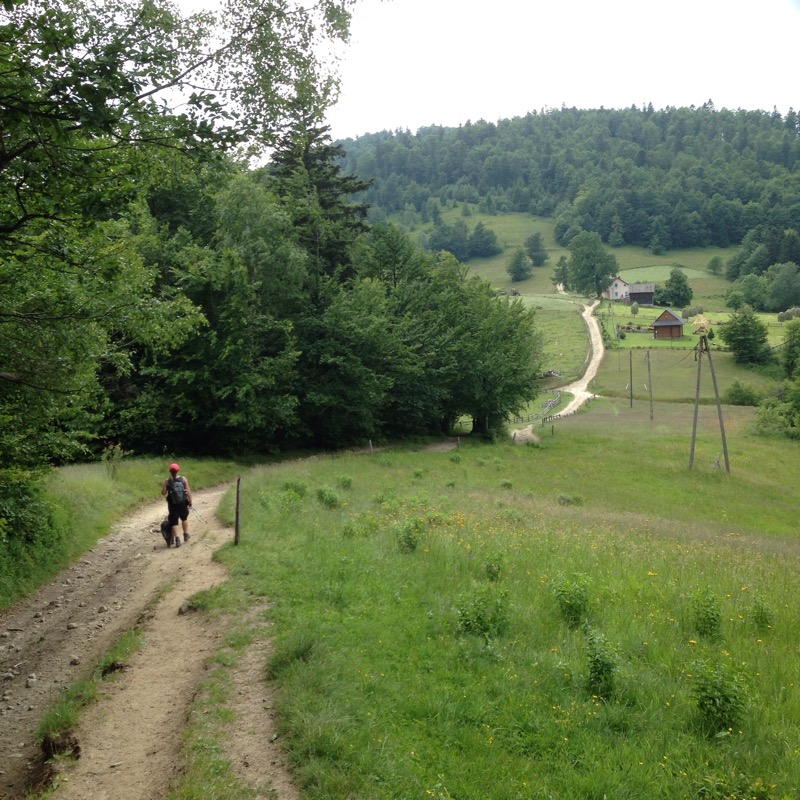
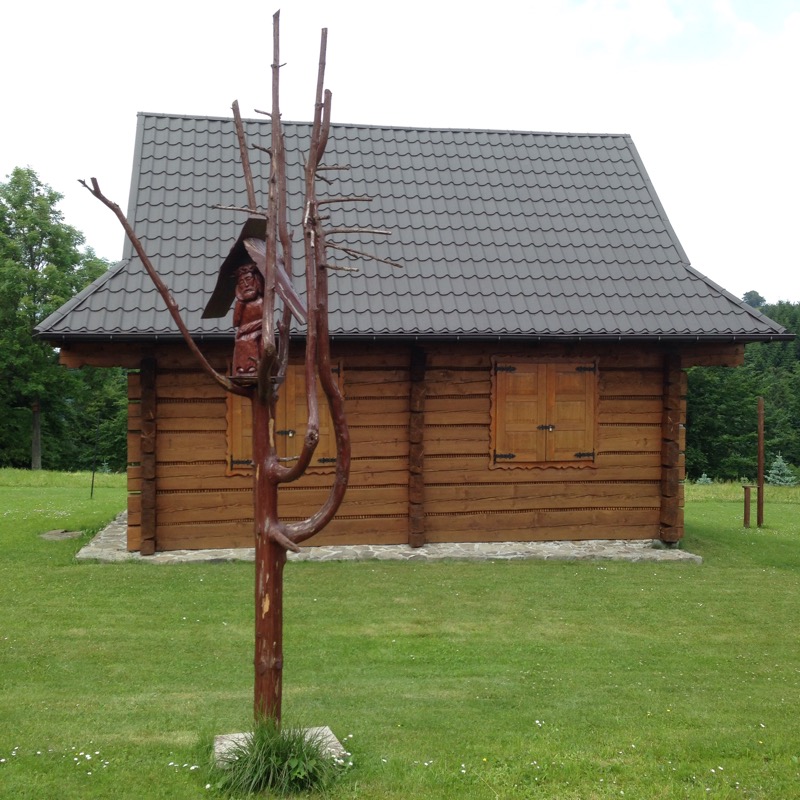
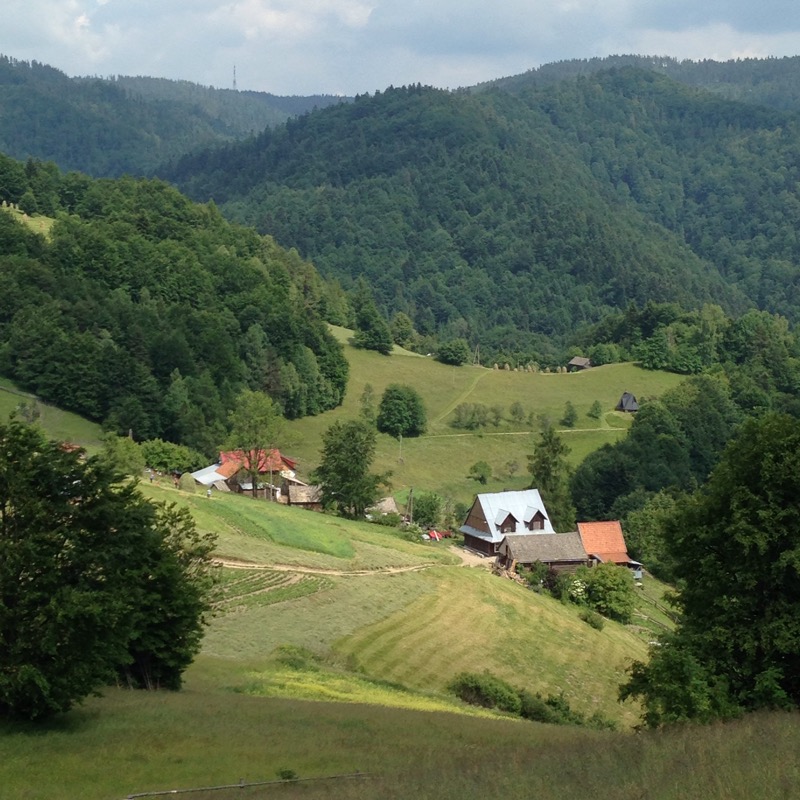
 we came down into som lovely alpine meadows and really isolated farmhouses where it was good to see people are still building the traditional style wooden houses.  

   At the end of a very rough 4WD track we wondered how the gang of kids playing there got to school. The parents were out cutting and turning the hay by hand on steep fields between potato and other crops and orchards. It all looked idyllic but was surely a tough life.  


An hour or so later we arrived at another “mountain but” and replaced lost liquid with cold beer looking down on our destination.  

   This one had an even better fire pit for the campers.  


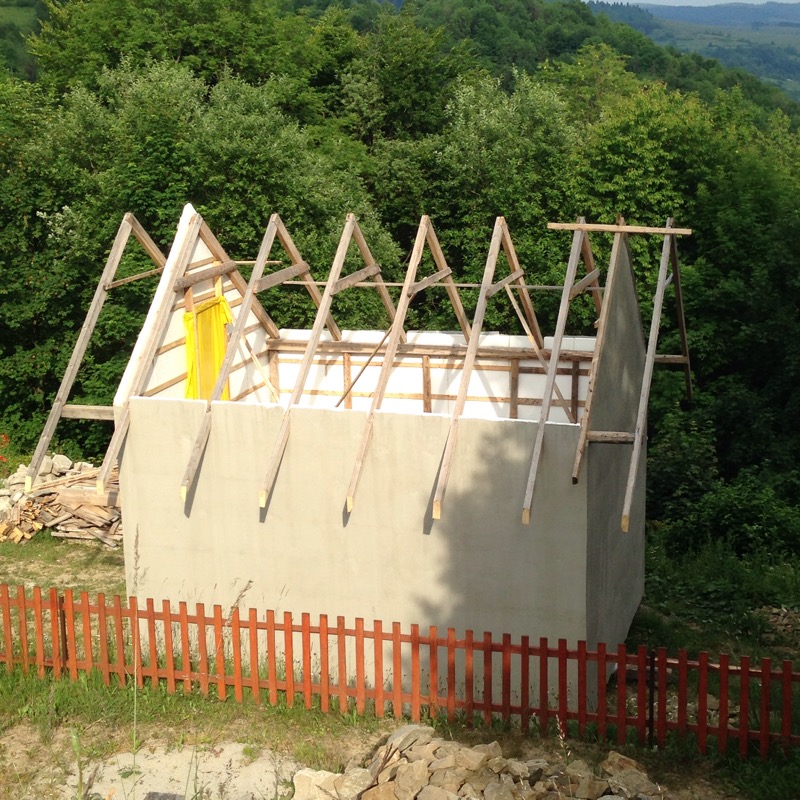
Winding our way through the flower filled meadows we passed a couple of new builds in a truly minimalist style I appreciated.  


 A small amount of timber framing infilled only with rendered polystyrene insulation sheets. You’d want to be careful hammering in your picture hooks. 

By the time we got back we were fit only for finding a little campsite on the river for a fiver and heading for bar/restaurant for more pot luck menu choices and to watch the canoeists and fly fisherman. 

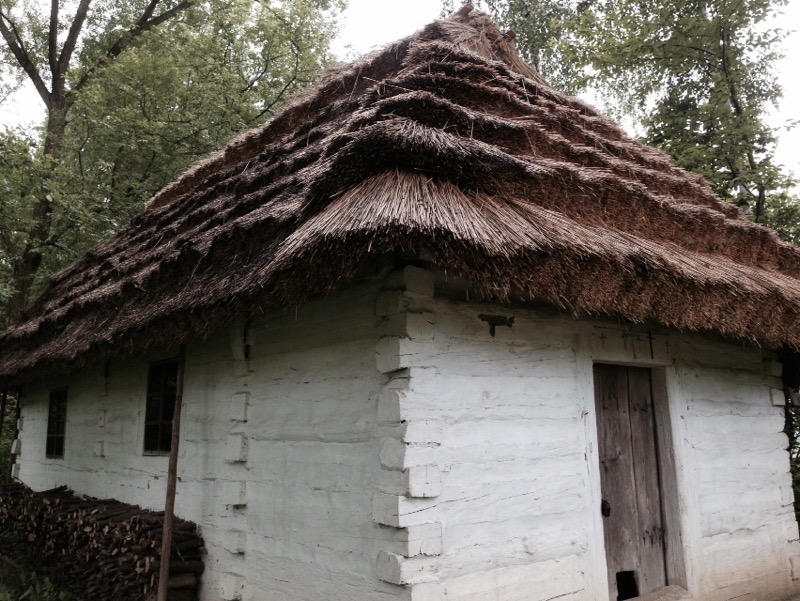
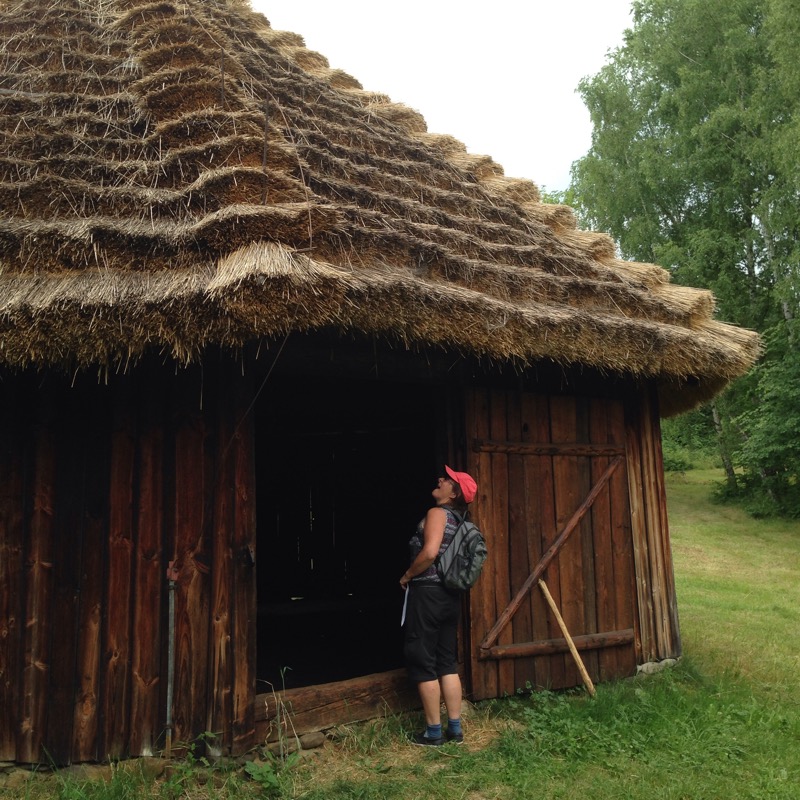
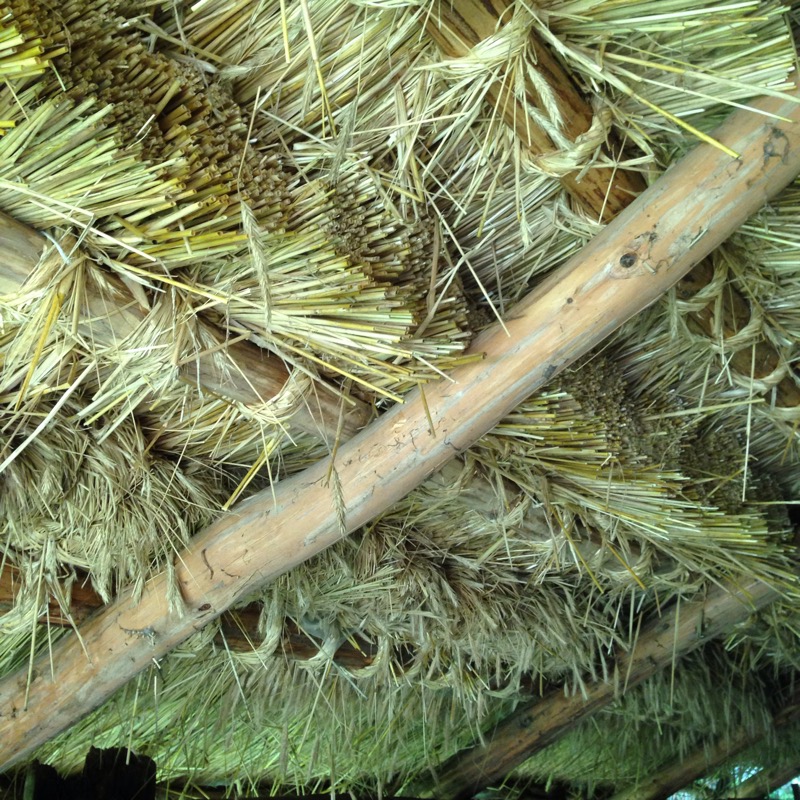
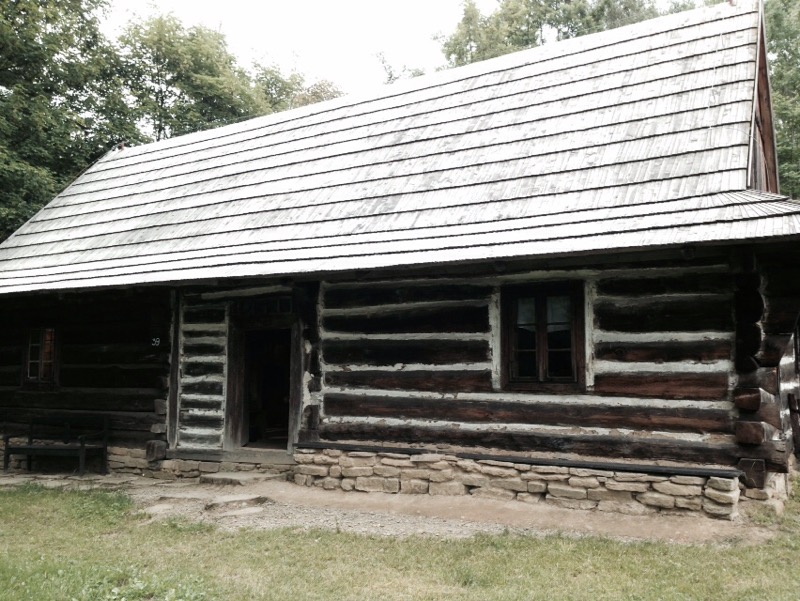
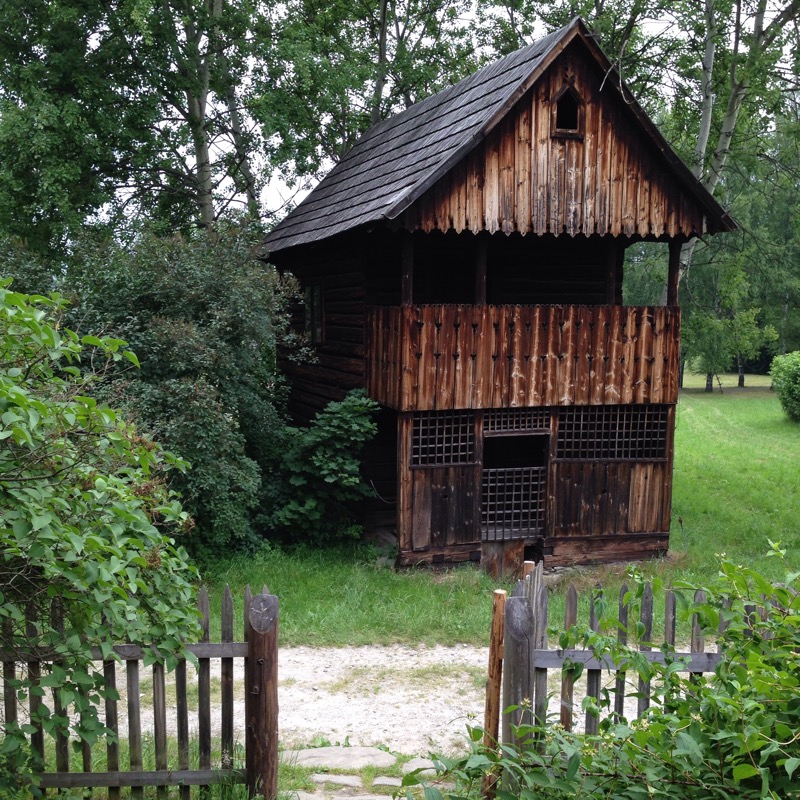
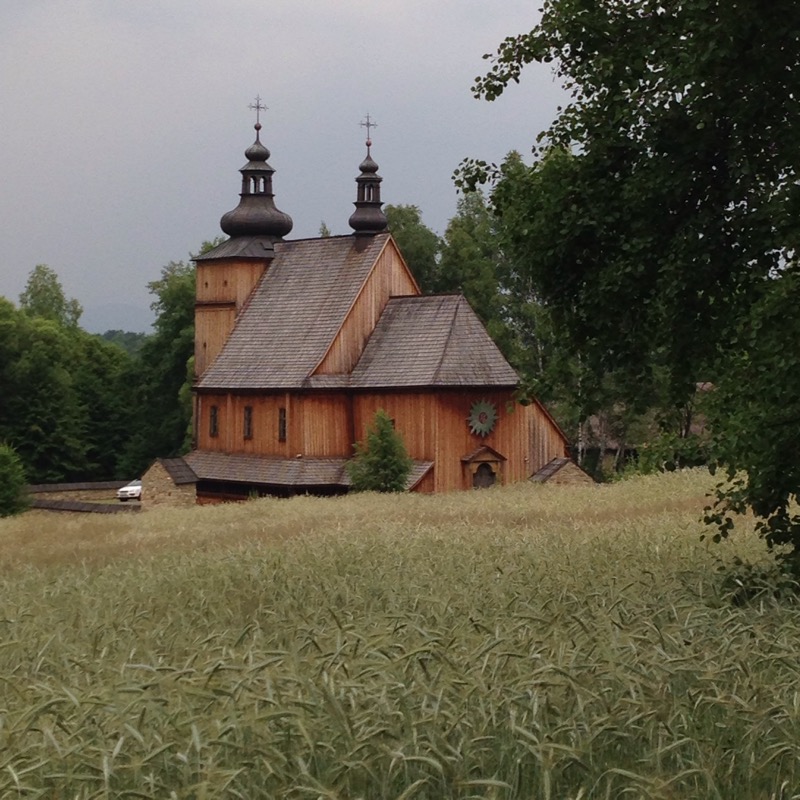
Yesterday we tried to walk in an amazing looking area of National Park but got turned back with the dogs so headed off to the Sadecki Ethnographic Park which has a big collection of buildings from the region of different types and from different classses and ethnic groups. Just like Bunratty- but with timber. They had shaggy thatch.  


And timber shingle roofs.  

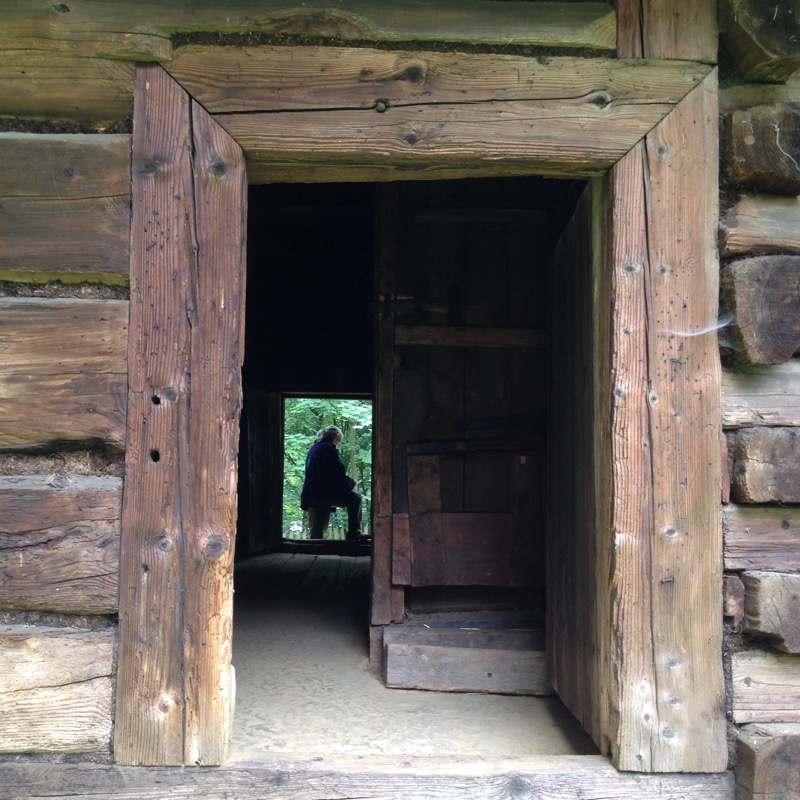
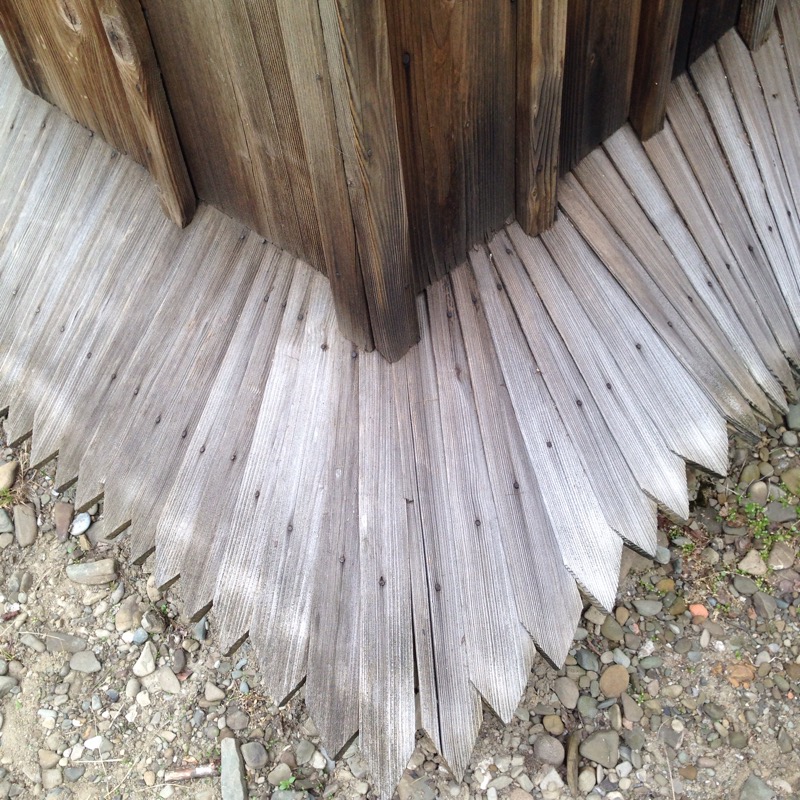
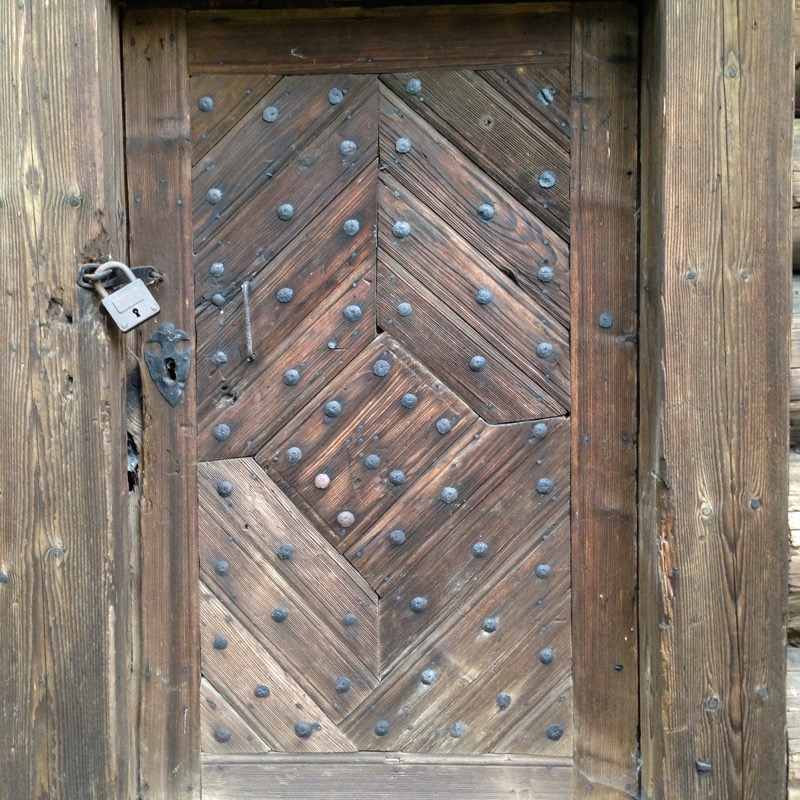
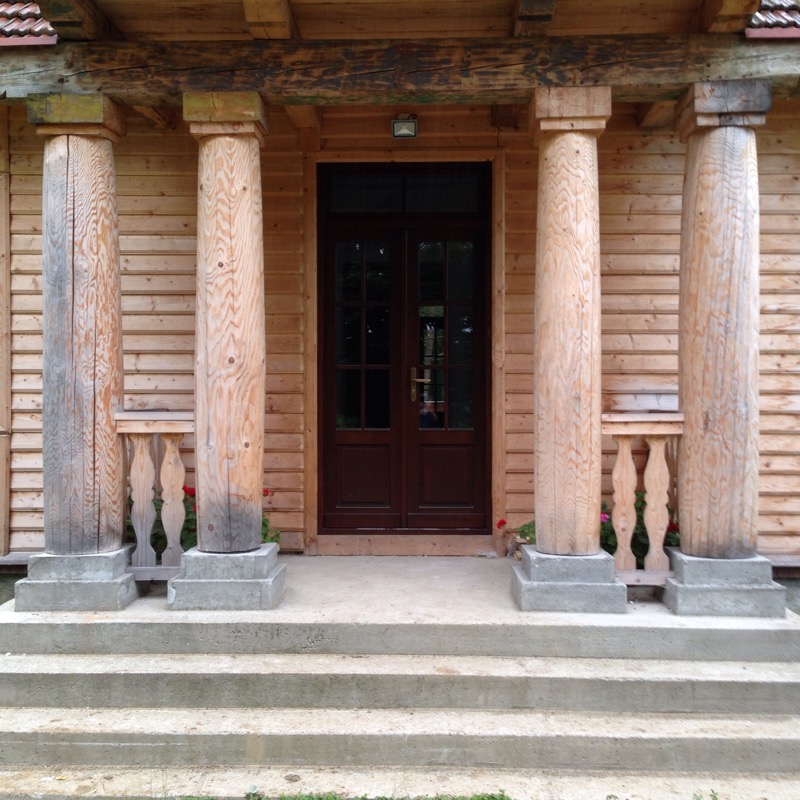
     The details in the timber work were a marvel.  

         As were the interiors and stoves and domestic bits and pieces.  

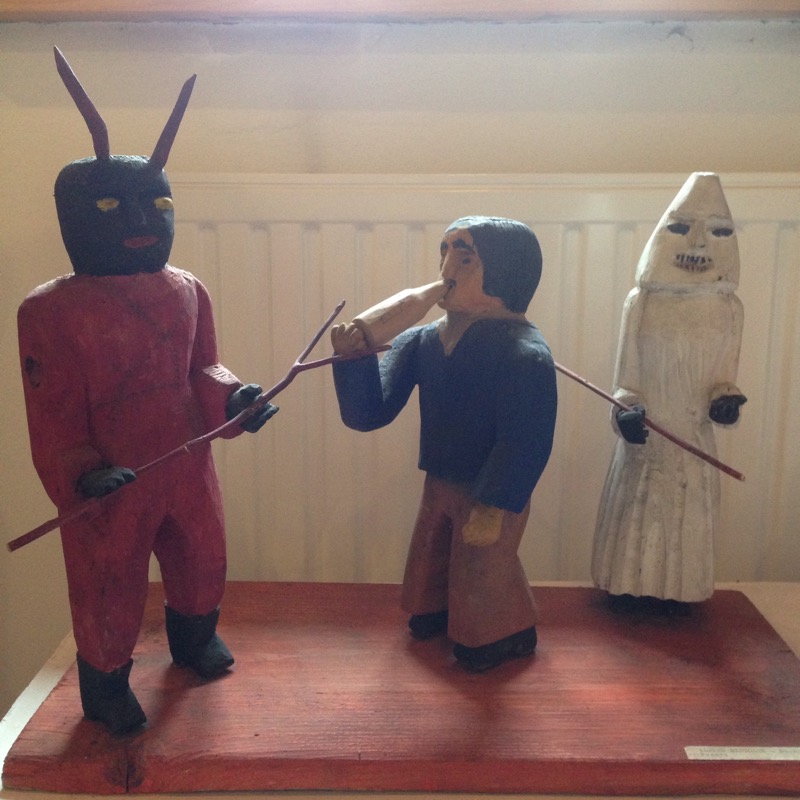
       There was a collection of carvings by naive artists  

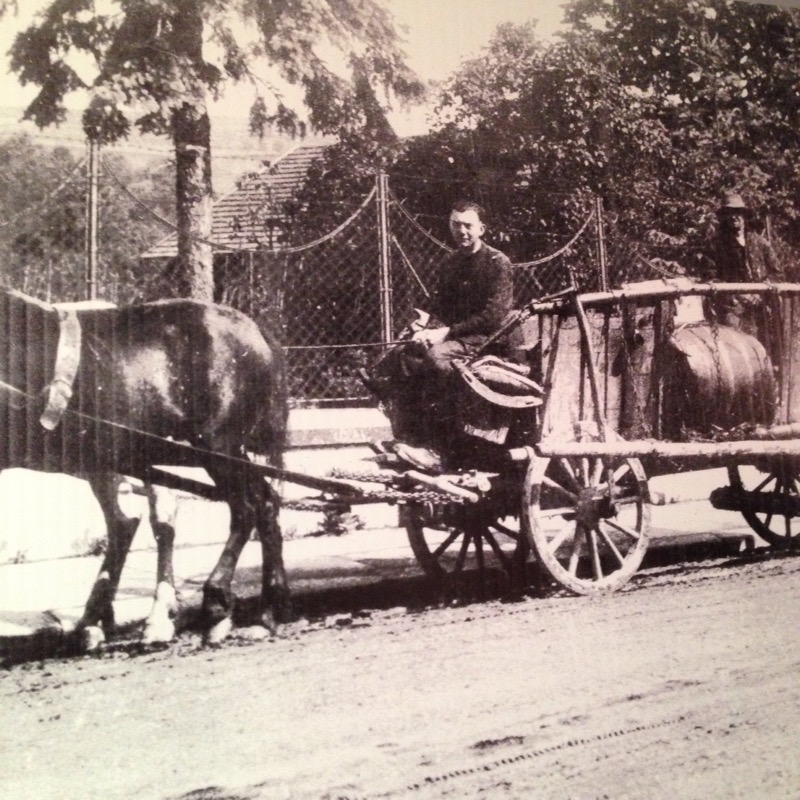
     and another exhibit featured the “greasers” of Losie famous for their grease production which they seemed to have travelled the whole of Europe selling from their wagons.  

   There is even a Greaser Trail that we were tempted to do as a sort of pilgrimage to the lost art of the lubricant men. Unfortunately we couldn’t understand how they made it but it’s worth a Google. 

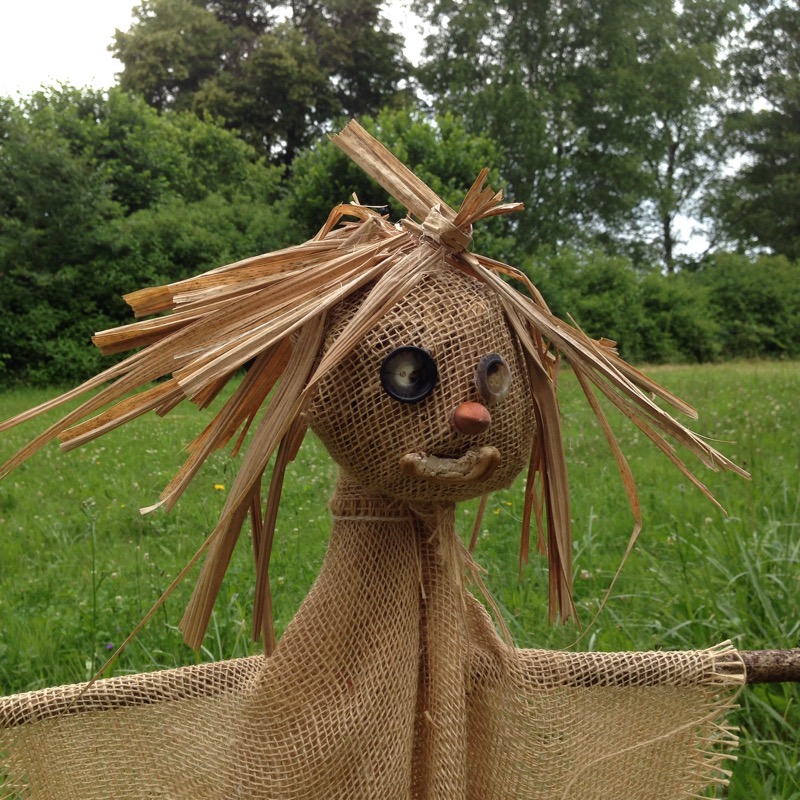
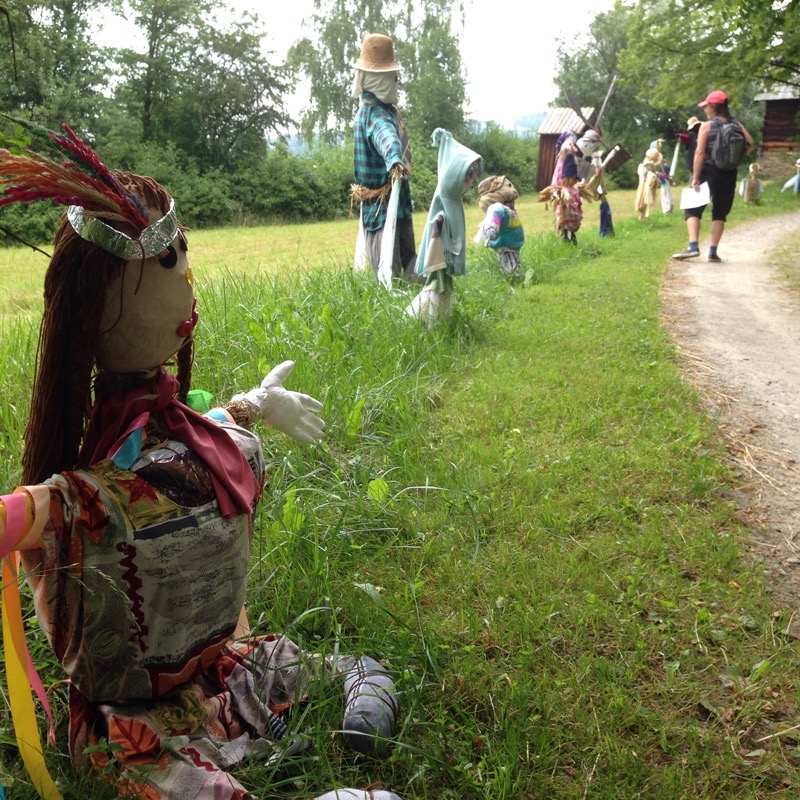
Another bizarre feature was a display of scarecrows that looked like they had been put together by kids as part of a big event scheduled for the next day.  


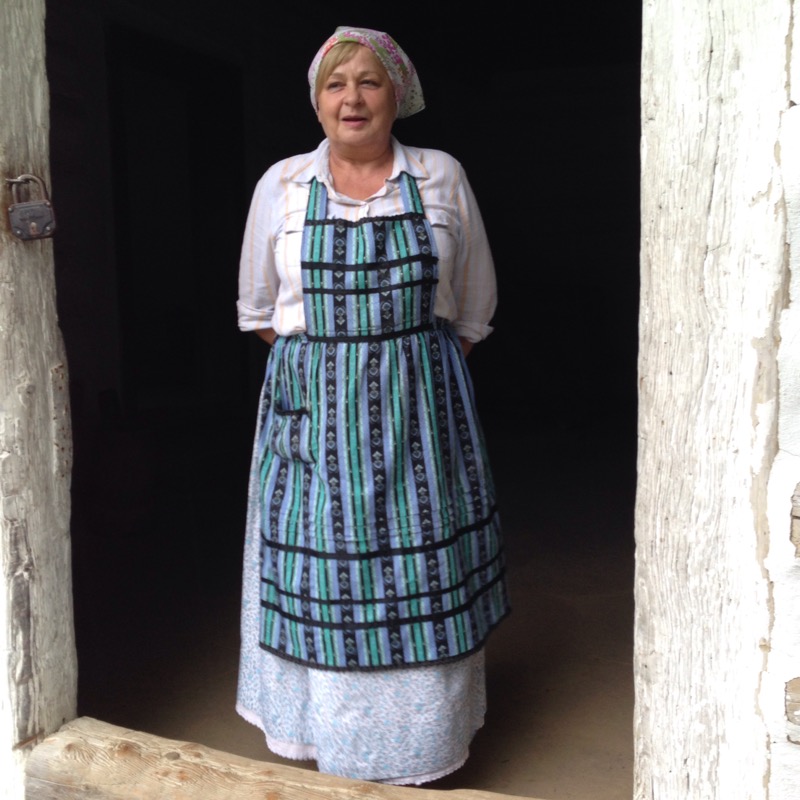
Our final visit was to a house where John Paul himself had officiated at a wedding and where the friendly costumed lady gave us some bread just baked in the massive clay oven.  


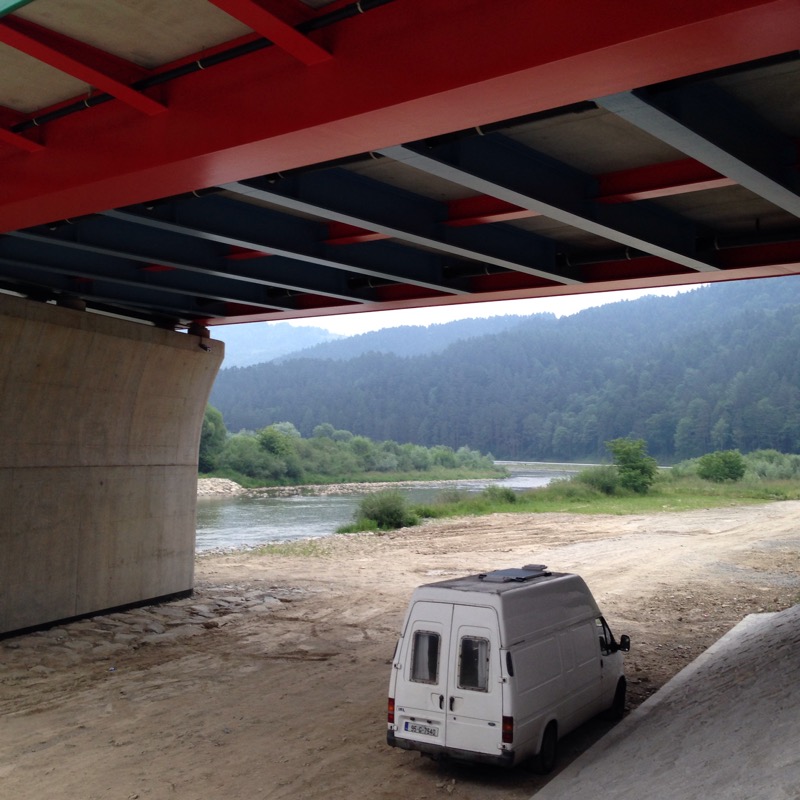
With a thunderstorm forecast and the dog and park situation being a bit of a hassle we decided to abandon Poland and head for the border. We parked up for the night by the Popradzki river under the new bridge for protection from the storm.  


The place is called Piwniczna-zdroj. Try asking for directions after a few drinks. 

THE GRAND TOUR: CZECH /POLAND 21/22/23 JUNE

Its a lovely blue sky morning in a huge wooded park on a hill near the centre of Kraków.  We’ve had some pretty miserable weather at times recently but has suited the places we’ve been exploring.

We’ve spent the last three days learning about and witnessing horrible histories of Central Europe over the last 75 years.

On our second day in Prague we returned to explore more of the city

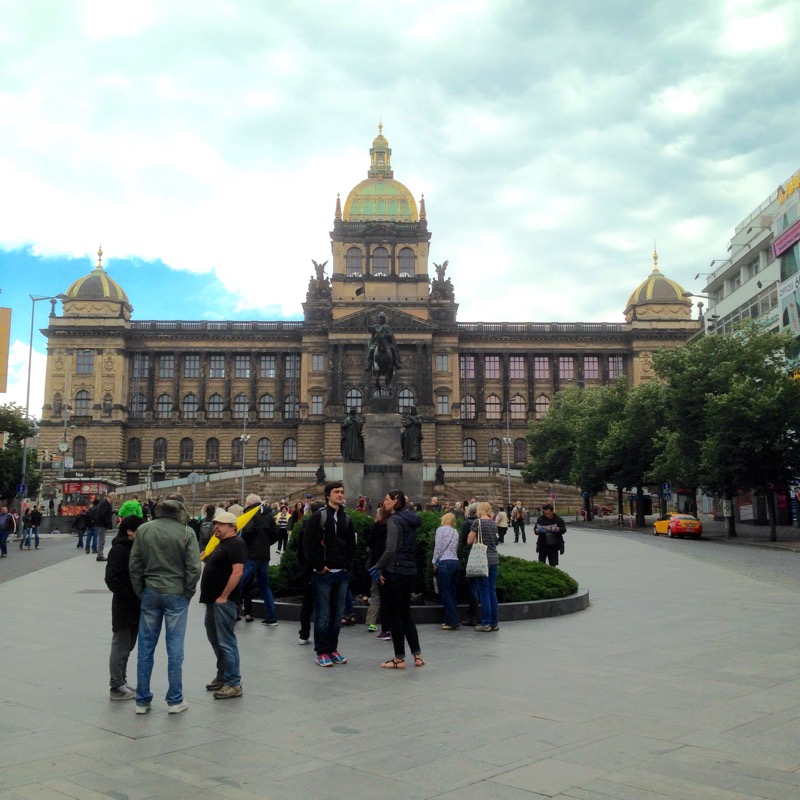
 and walked up to Wenceslas Square outside the natural history museum, the scene of some major events in the Velvet Revolution as we were about to learn.

We were looking for the museum of Communism and eventually tracked it down, ironically, on one of Prague’s busiest shopping streets lined with international brand names. Housed in the elegant Palace Savarin it sits above Mc Donald’s and next to a casino. The boys will be turning in their graves.

An American who was passing through during the revolution in the late 80’s decided to stay and take advantage of the new commercial possibilities and ended up with a string of bars and restaurants. Always fascinated by communism he eventually spent a lot of time and money to set up this reminder of how radically different things had been until a short time ago.

Together with a Czech filmmaker they put together a “three act tragedy”     The Dream, Reality and Nightmare of the communist regime and with film and propaganda posters and artefacts etc the little museum puts on a stunning display of the utopian ideal, the reality of life under the regime and the nightmare of a state controlled by the secret police through surveillance, censorship and imprisonment.

It’s hard for us westerners to imagine the world they inhabited but the museum really helped to bring home how bad it was. It’s felt by many here that the recent past hasn’t been acknowledged and that perpetrators of injustice have not been held to account but with 99 per cent of the population involved in the system and with a bad conscience  that they were forced to collaborate its perhaps not surprising. It is also difficult for anyone under 30 to appreciate what life was like as most people don’t talk about it so this space is important for them and it was good to see so many there.
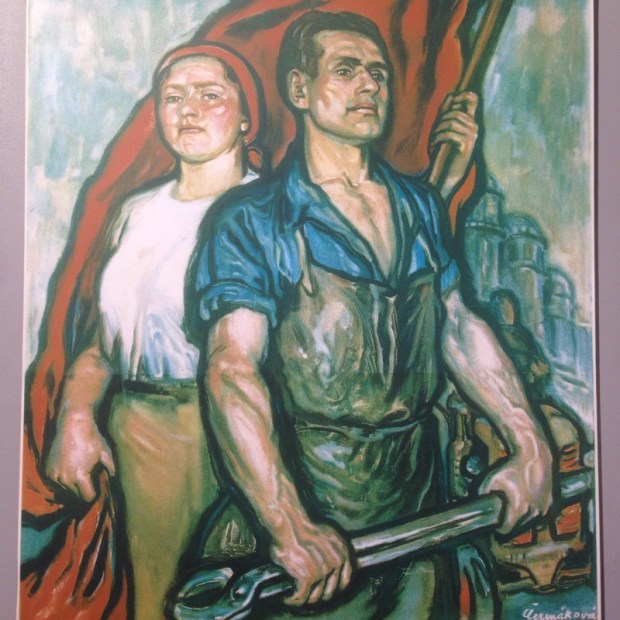
After looking at all the exhibits concerning the crushing of the relative freedoms introduced in the Prague Spring in 68 by Soviet forces it was moving to watch all the footage of unrest and uprising during the Velvet Revolution and the eventual collapse of the communist state.

Powerful stuff. Wenceslas Square was where a student burnt himself to death ( it took 3 days to die) in protest at the regime and help to kickstart the momentous changes to come.

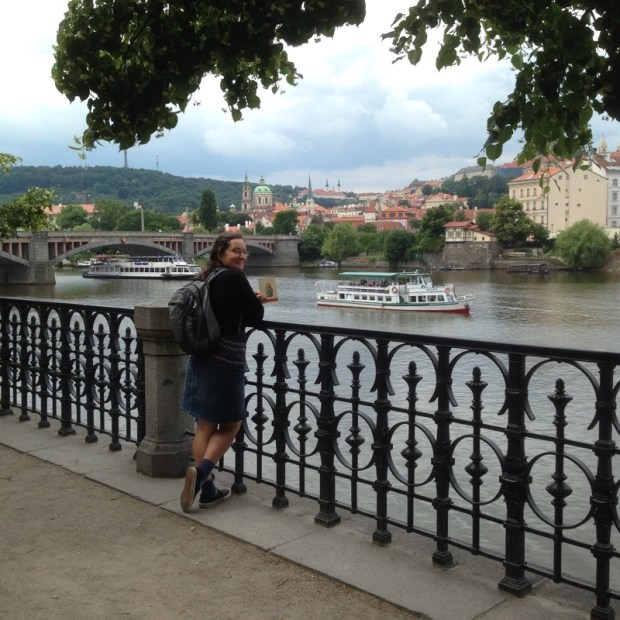
We left the beautiful historical city that afternoon reflecting how much it had changed just in the last 25 years.
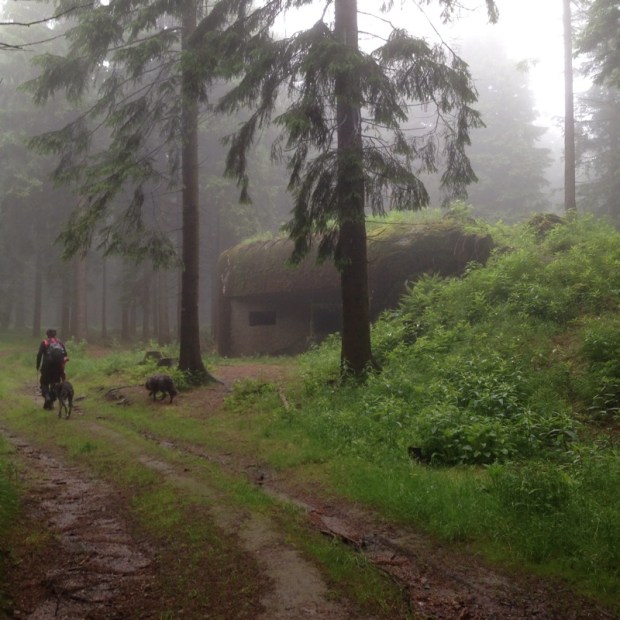
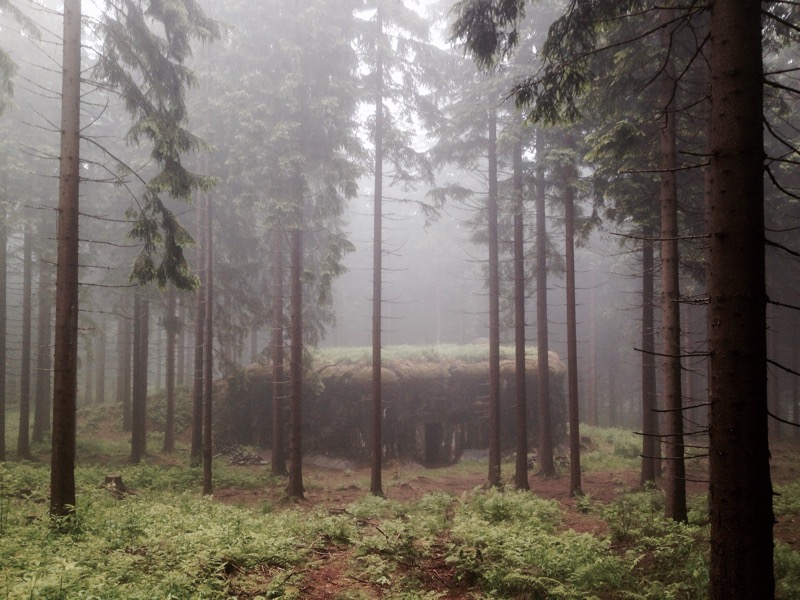
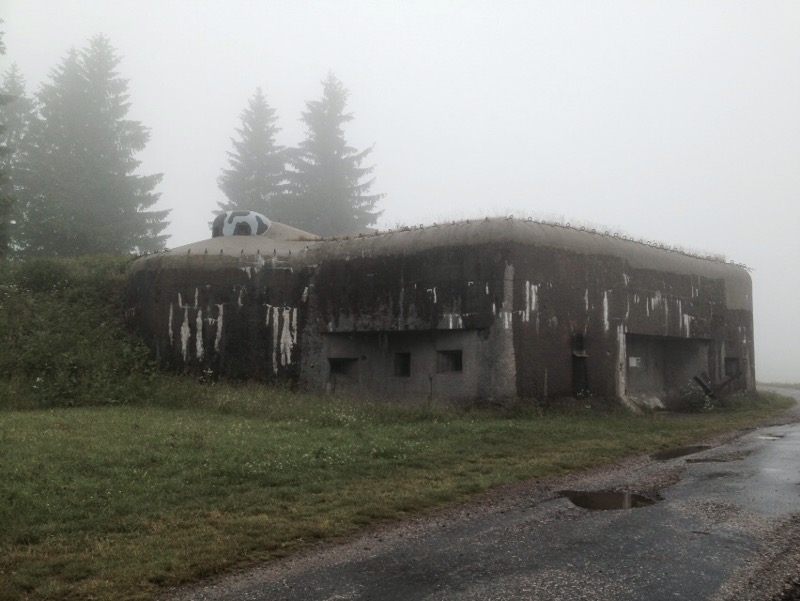
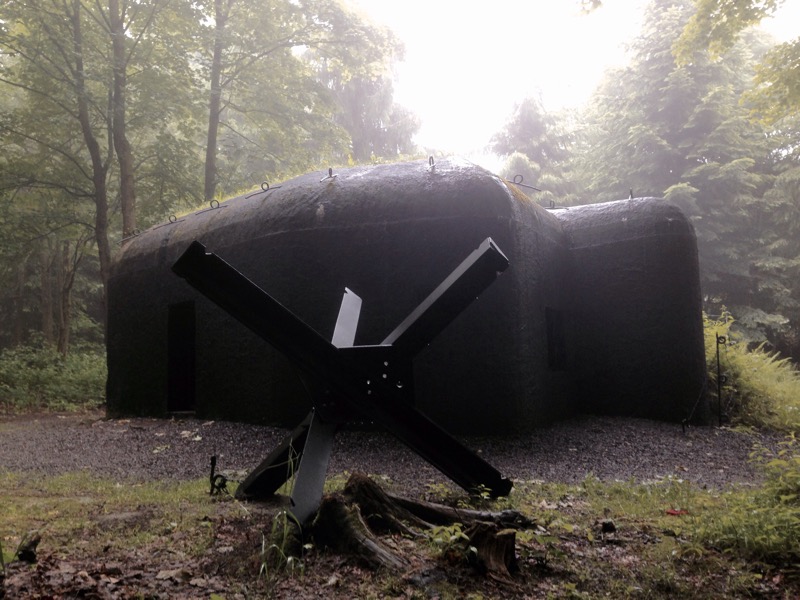
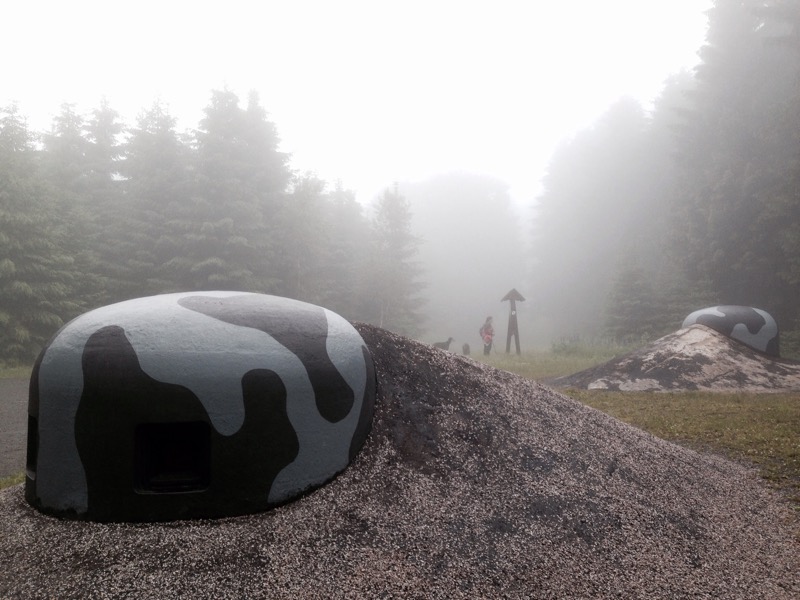
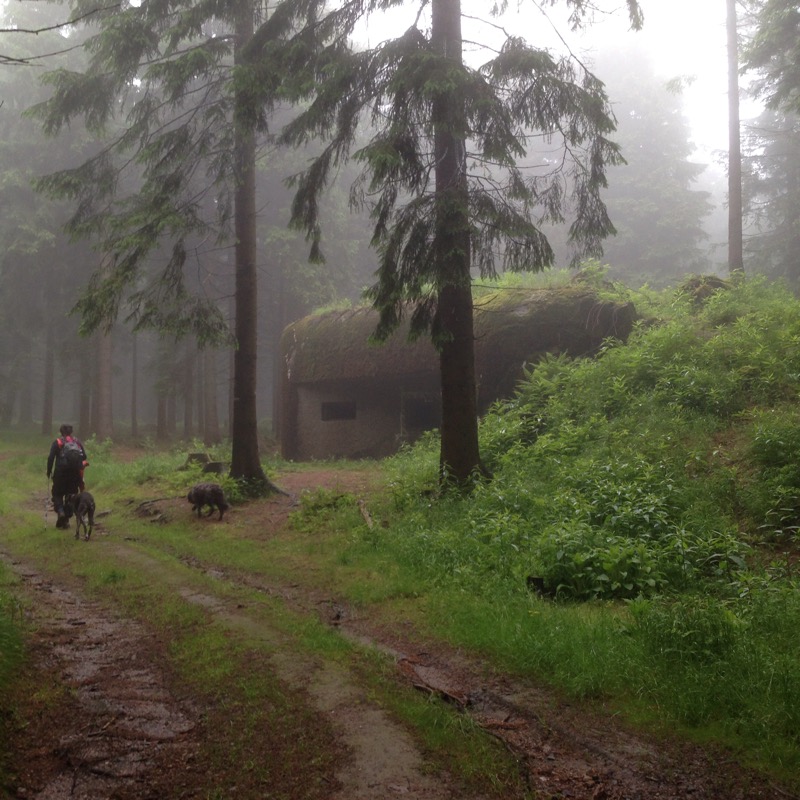
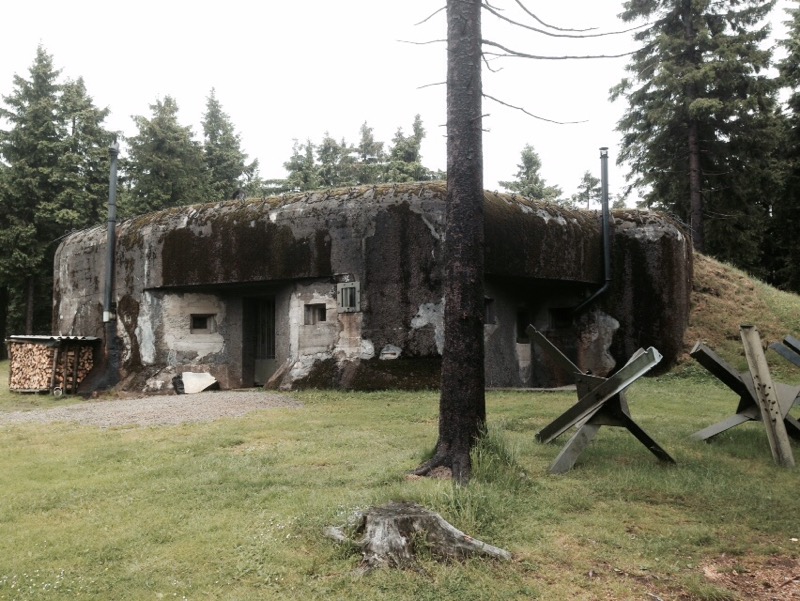
We were headed for the Eagle Mountains, an area of national park to the north east, along the border with Poland. Before the Second World War it had been the Czech/ Germany border and Hitler had plans for the area as it had a large ethnic German population.   The Czech government initiated a massive and very rapid defence programme to build a vast line of fortifications along this vulnerable border. Over 10,000 pillboxes, bunkers and blockhouses were built to a French design and most are still there, scattered throughout the forests of the mountainous area.
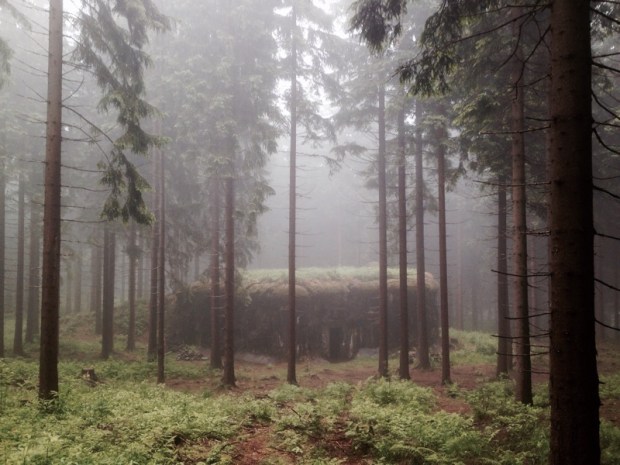
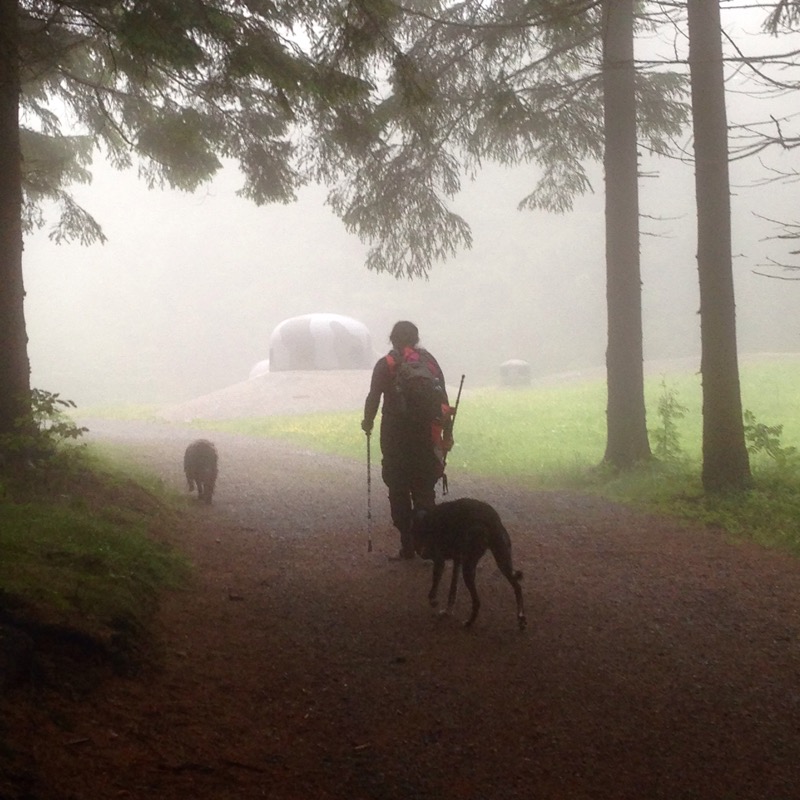
 There are many hiking paths through the area including the multi day Friendship Trail which traverses the entire ridge of Eagle Mountains and we did an educational trail which linked some of the major fortifications.

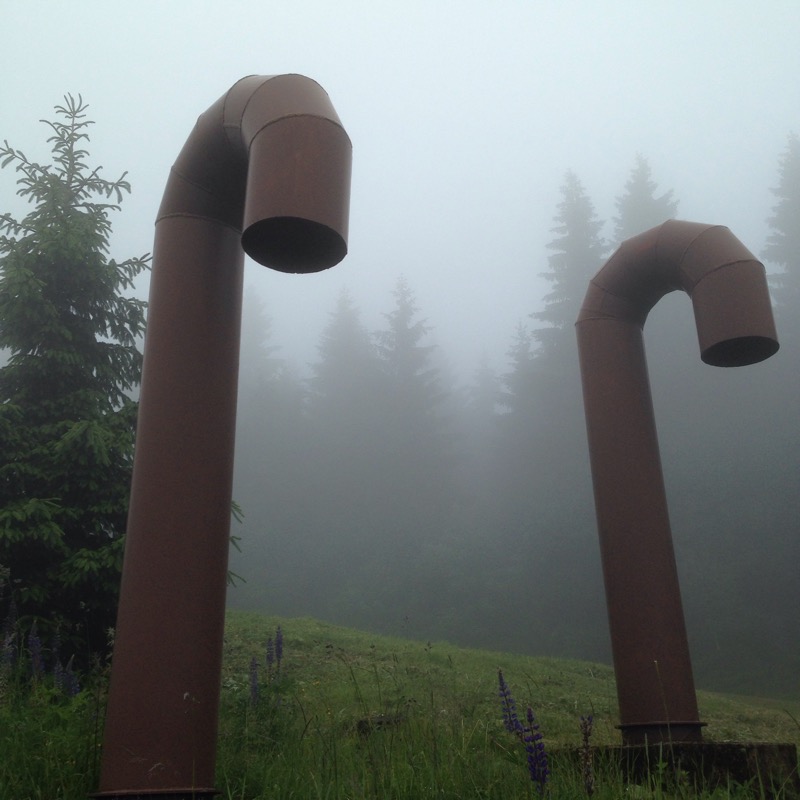
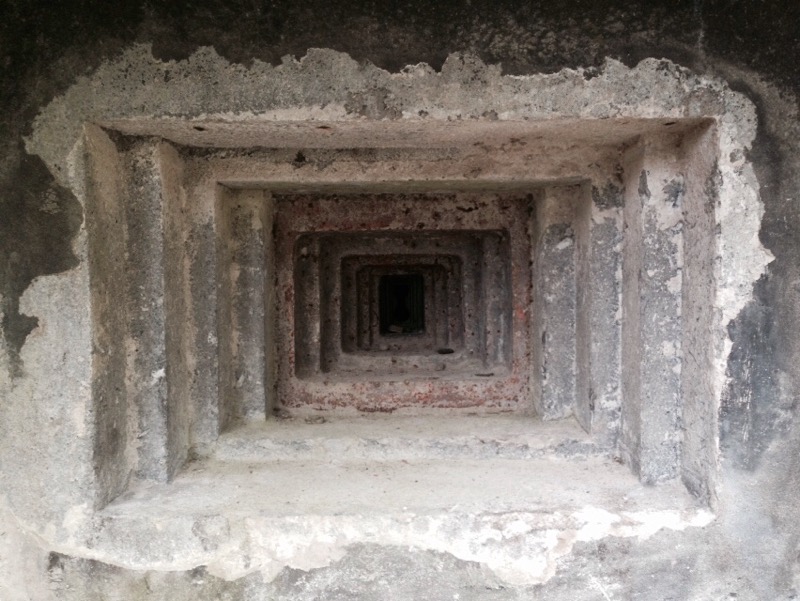
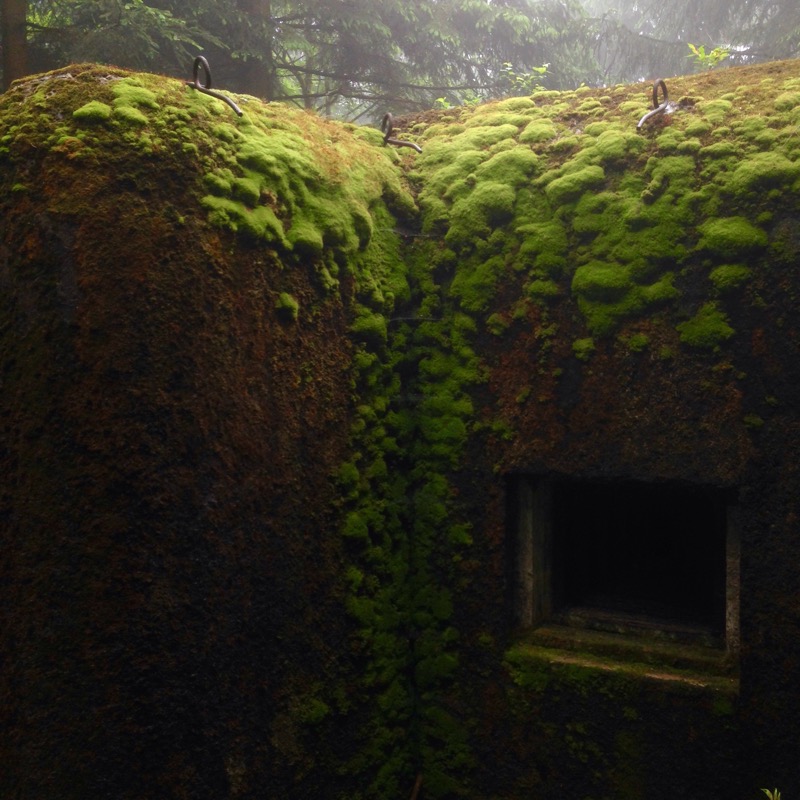
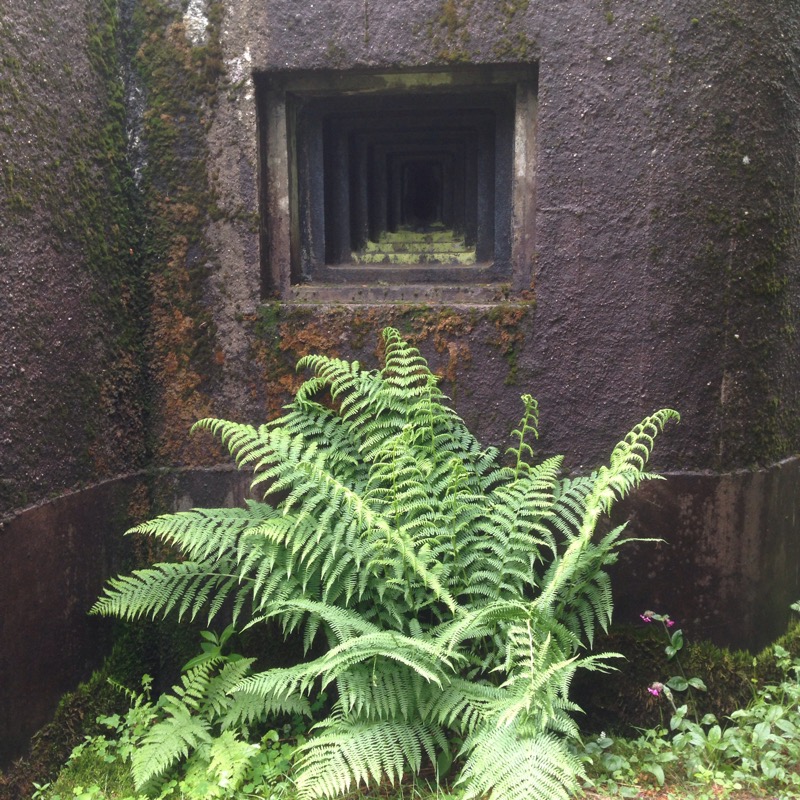
It was a suitably misty day for the strangely surreal objects that appeared out of the gloom with vent pipes and gun windows.
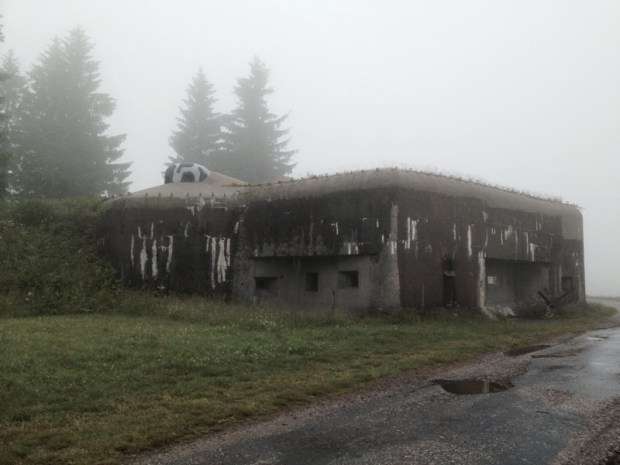
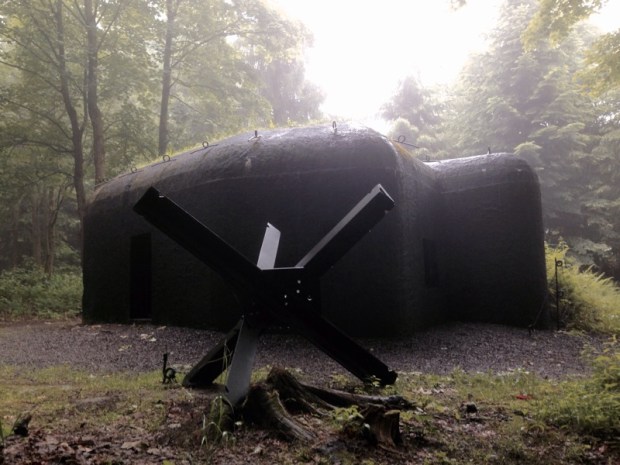
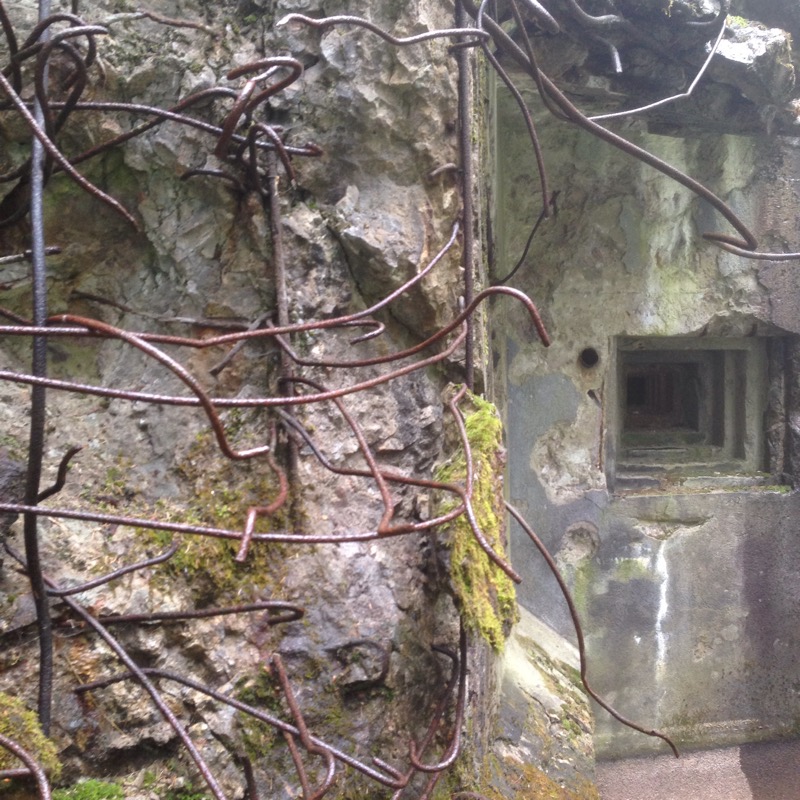
We climbed to 1000 m and were well into the cloud as we looked at the places where 1000’s of men, up to a couple of hundred in one underground bunker, were prepared to defend at any cost.

The good news was that no lives were lost in these bunkers, the tragedy was that all the effort inbuilding them was wasted as the whole area was given to the Germans in a deal put together by the Brits and the French to “appease ” and thought by Chamberlain to have averted war.  
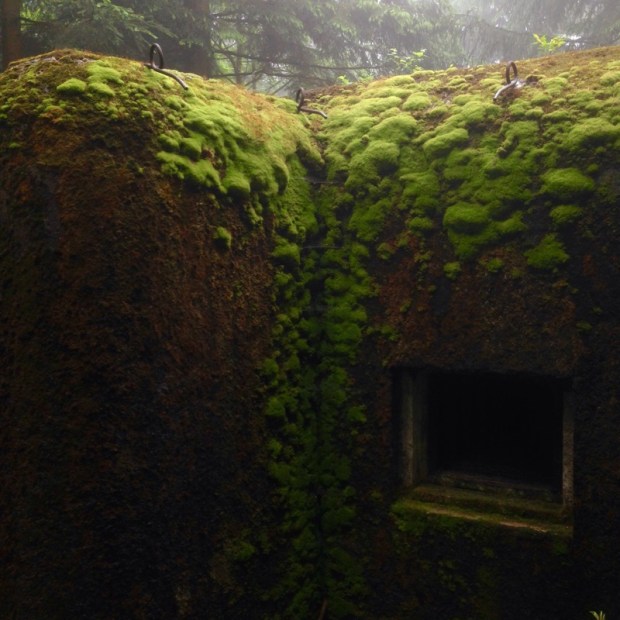
Of course things didn’t work out like that and the Germans used all those fortifications to practice and test how to defeat identical ones on the French and Belgian lines and invaded the rest of the country.

After the day before’s history lesson it was ironic to think that the Czechs greeted Russian tanks into their country twice. Once for liberation and once for oppression.

During the Cold War one of the biggest forts was used as a nerve centre for nuclear war where a couple of hundred people could live and work under the 10 ft of concrete. Luckily it wasn’t needed and after the Velvet Revolution the whole programme was abandoned.

We went past a group of Czech soldiers who still used one on the trail as a base
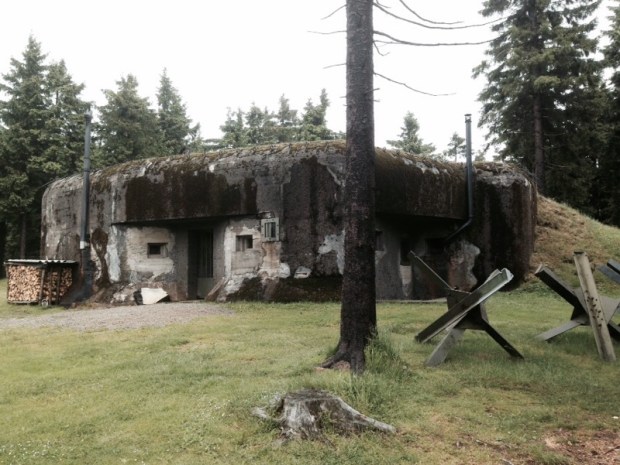
 and read that others had been sold into private ownership or turned into museums by enthusiasts but mostly they have been left to moulder in the forest.   With the weather still pretty grim we decided to say goodbye to the Republic after a week there and head over the mountains to Poland in the hope of better climes.

No such luck. After weaving through the tiny border back roads of Serena’s shortist route ( she loves to take us off the tourist trail to see the “real” country, always a surprising journey) we hit the motorway and lashing rain. At one point it got so bad a windscreen wiper gave up and tried to throw itself off the van requiring me to pull onto the hard shoulder and manhandle it while the thundering trucks sprayed me. With visibility approaching zero we pulled into a service station for the night alongside a fleet of lorries involved in some long distance runs.

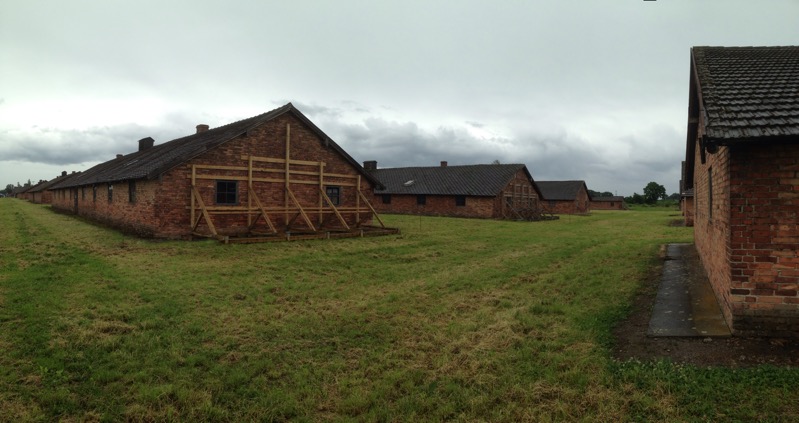
Still grey and drizzly in the morning we continued on to the grimmest destination of the trip. Oswiecim. Better known by it’s German name of Auschwitz.

Since the war the town has become a centre for peace and reconciliation and on the way in we passed a billboard advertising the Life Festival organised by Artists against War headlining Chris de Burgh and UB40 but the horrors had been so great there that there still seemed to be a dark cloud over the place. Maybe that was because there WAS a dark cloud over the place.

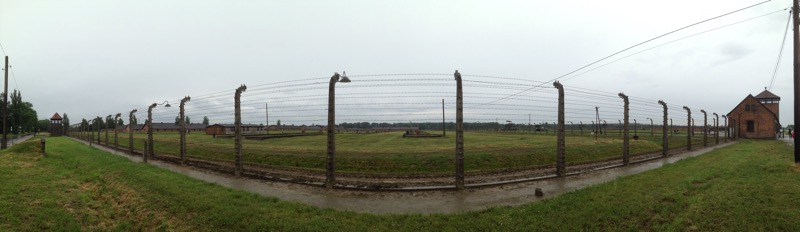
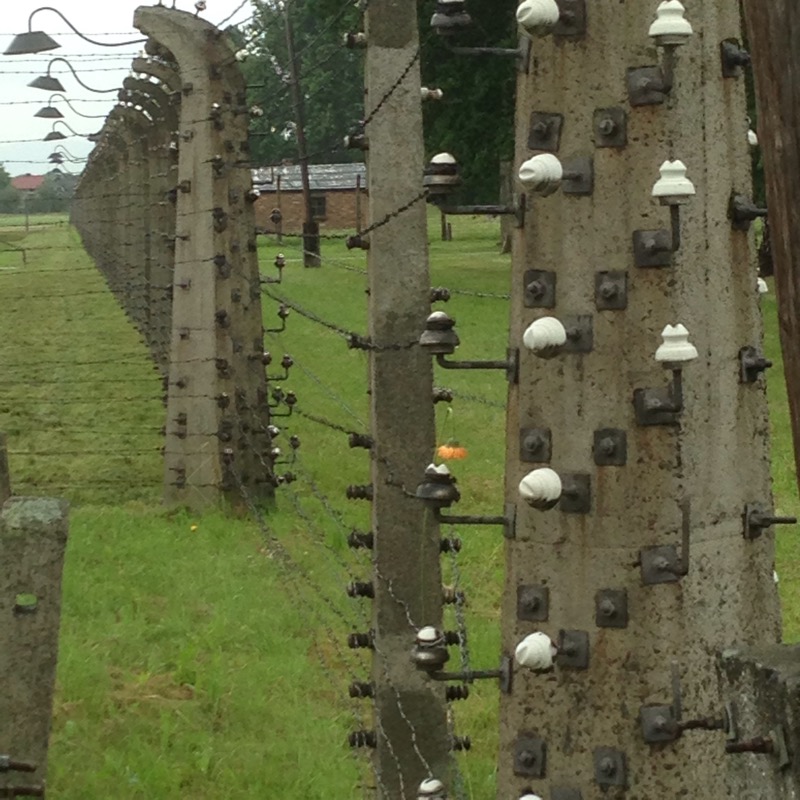
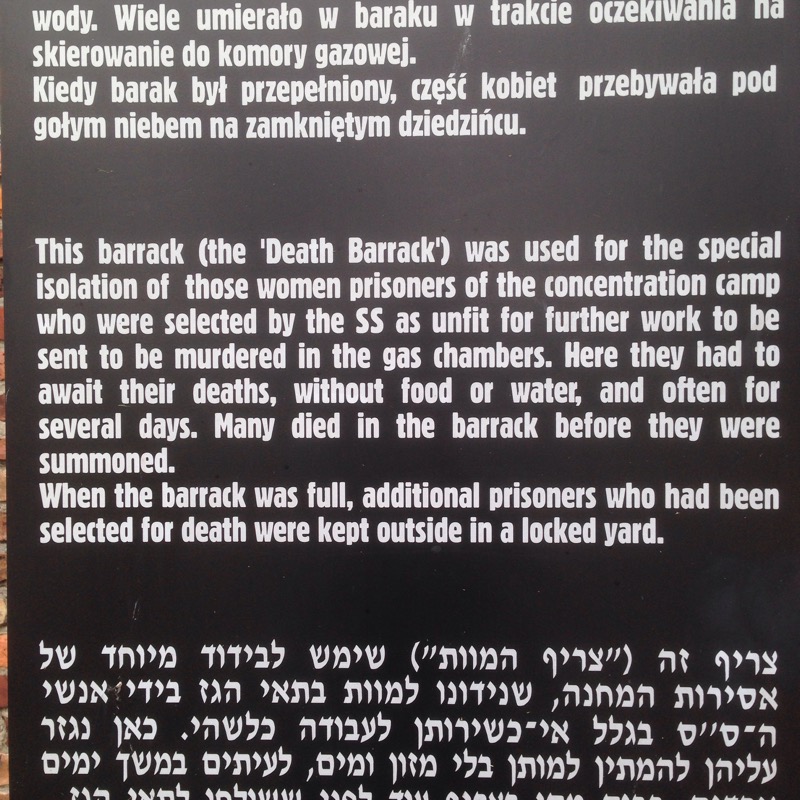
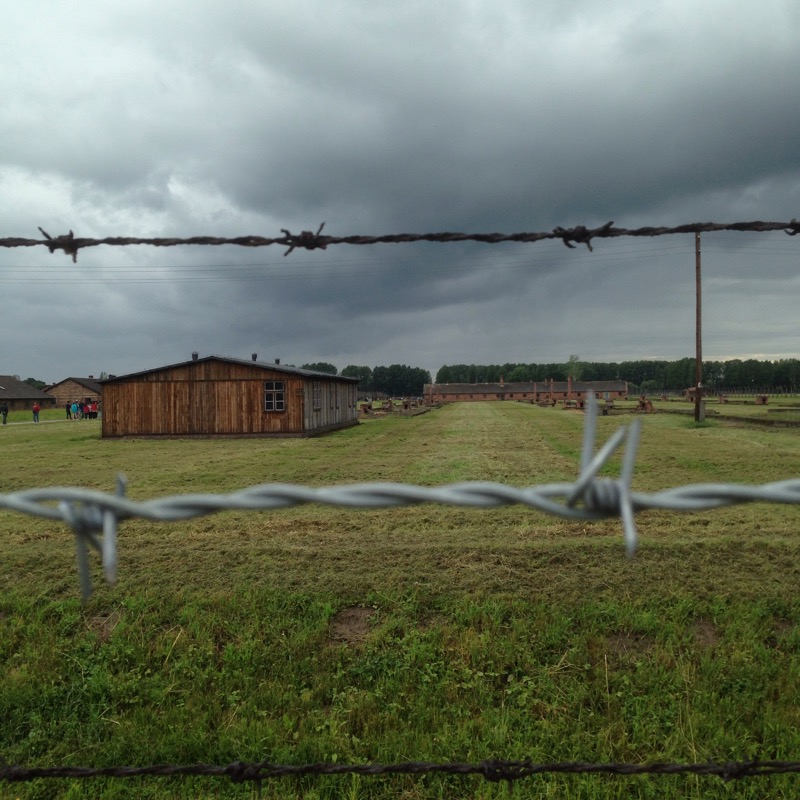
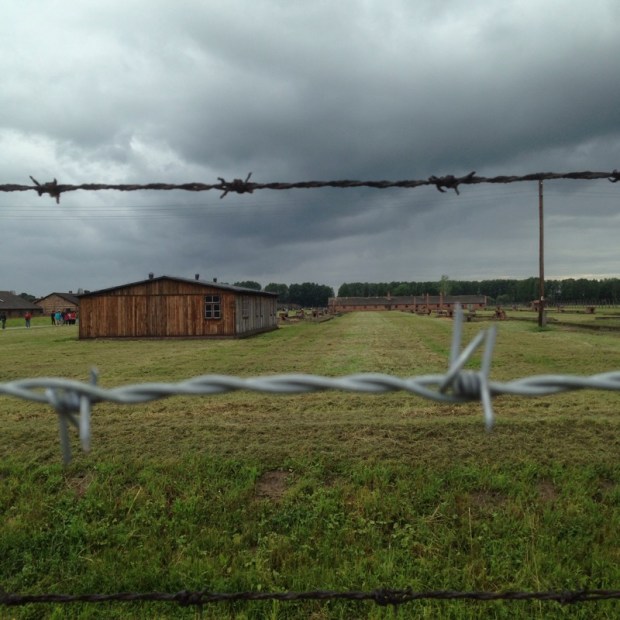
Arriving at the museum at the main camp of Auschwitz we discovered it was very busy and we couldn’t get in for the tour ( you had to join a group of your language from 10am till 4pm) for a couple of hours so we took a shuttle bus the 5 min trip to Birkenau where the lessons in extermination learnt in Auschwitz where ruthlessly applied to an incomprehendable extent. We’ve all heard the extraordinary numbers of murders committed there and about the methods employed by the killing machine but to walk through the space where one and a half million people where erased was powerfully emotional and upsetting.
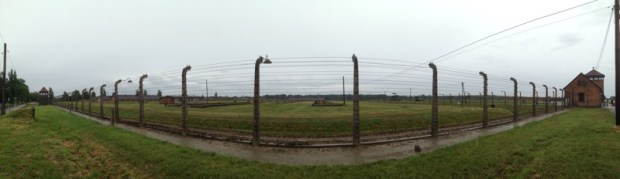

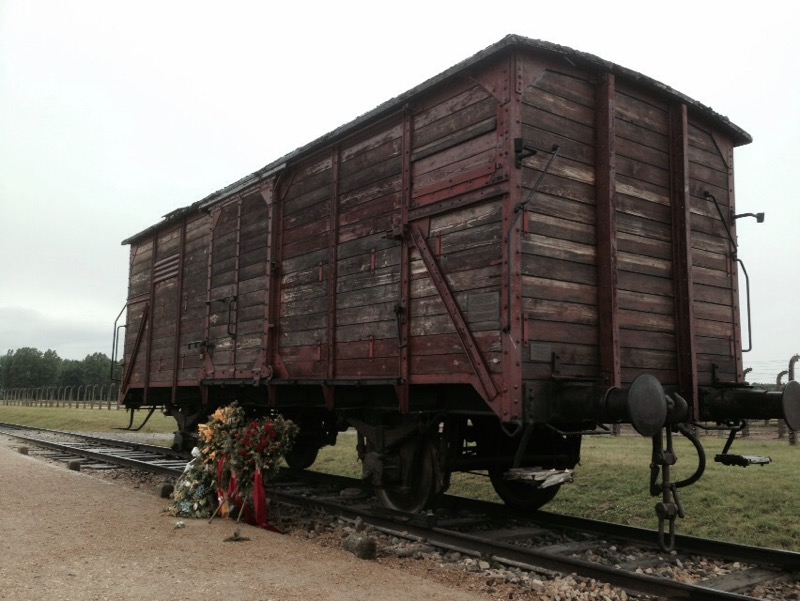
The train tracks

 And wagons

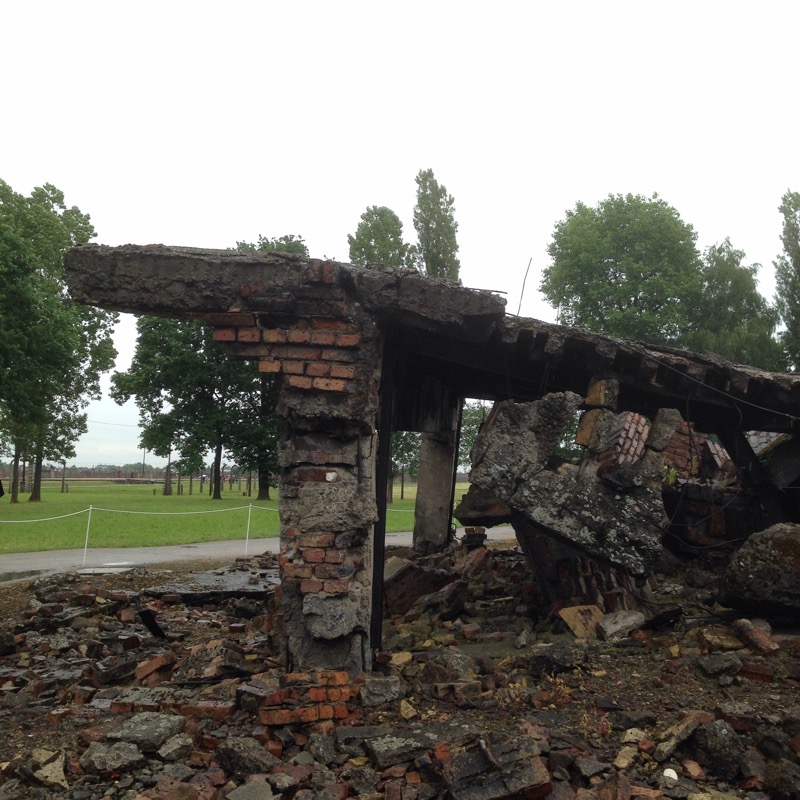
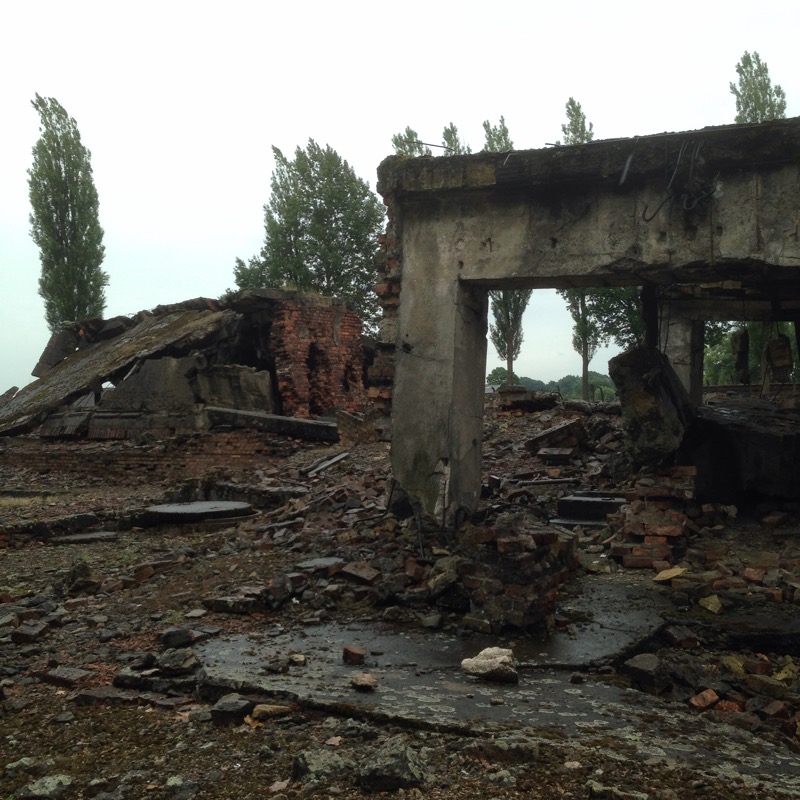
 That delivered a constant stream of humanity that was processed into those sent to the barracks to work until they died and those sent to the gas chambers to die immediately. The crematorium and gas chambers at Birkenau were destroyed by the Germans as the Allies approached ( was it guilt?) but the remaining rubble exuded a terrible energy.

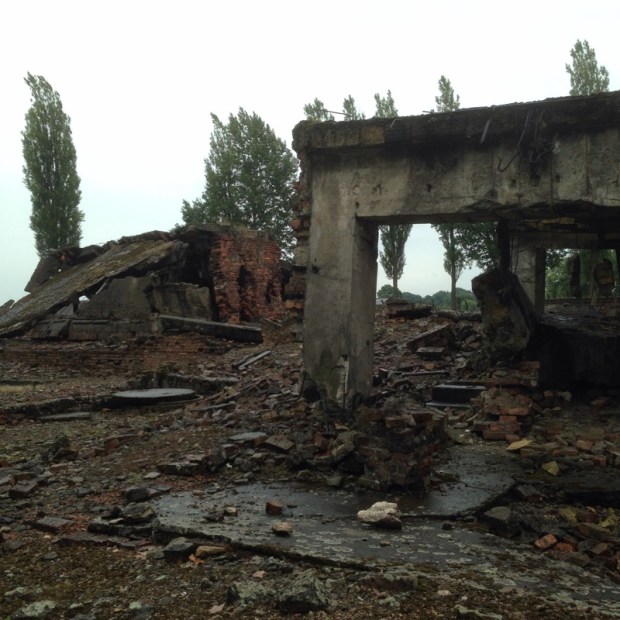


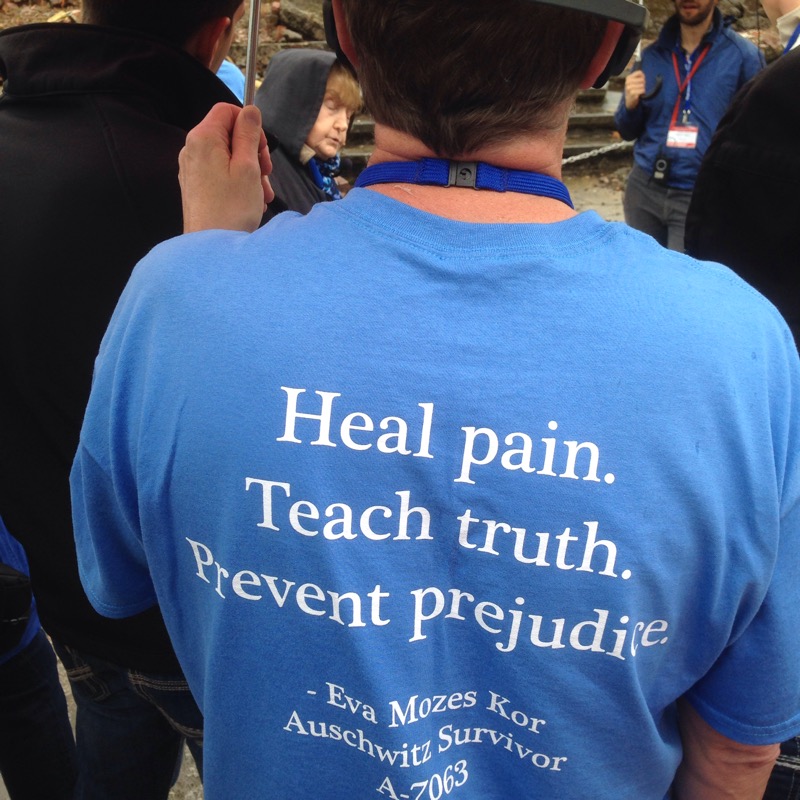
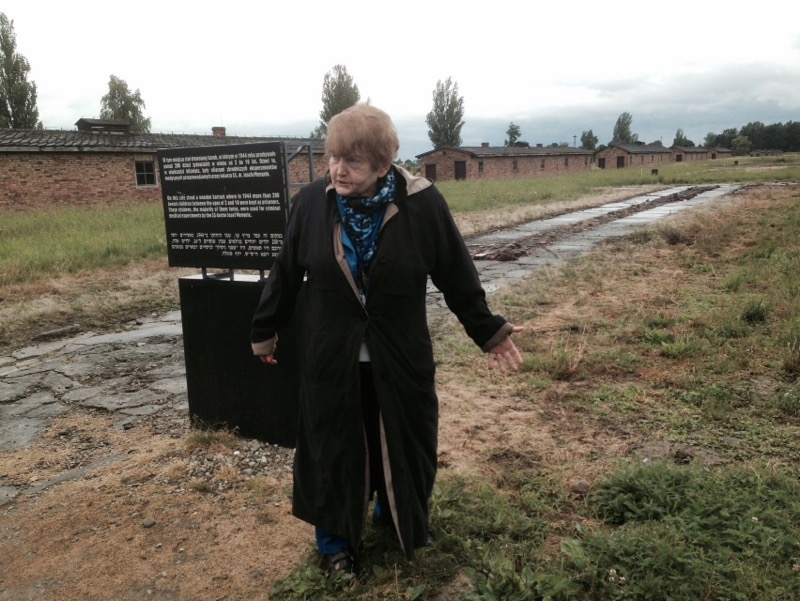
At Birkenau you can visit without a guide but we were lucky enough to be there on the one day a year when Eva Mozes Kor, a camp survivor, was leading a group around and speaking of her experiences.
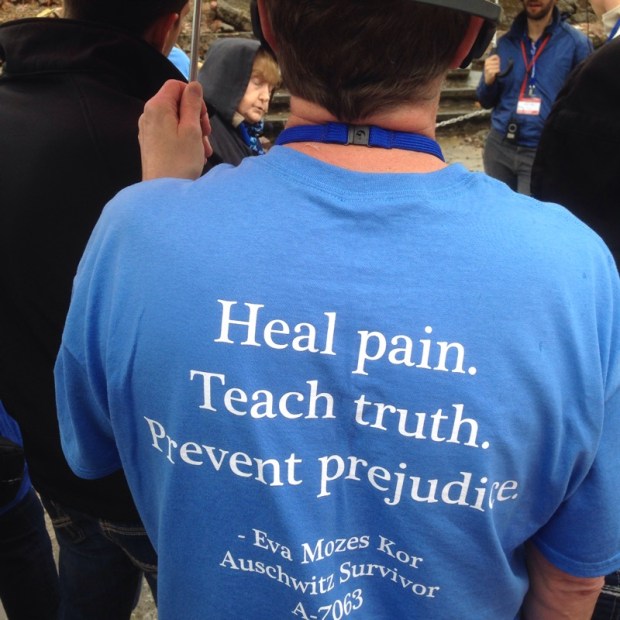
   She was a ten year in the camp with her twin sister and experimented on by Dr Mengeles and her stories of her parents murder and her survival were powerful stuff.


We walked with her and the group through the camp learning about the camp life and how it was survived.
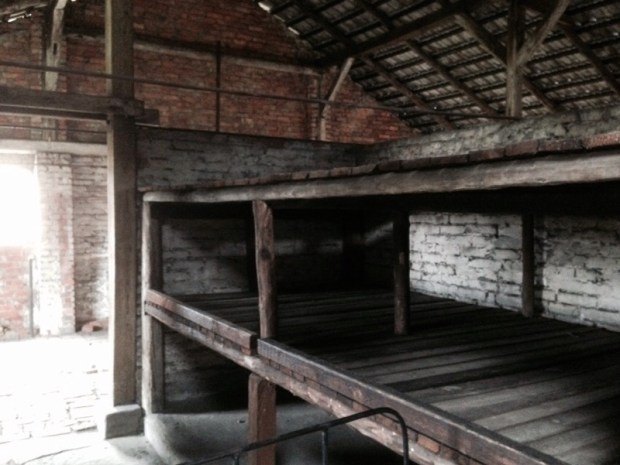
 Eva works tirelessly on keeping the memory of the Holocaust alive and for peace and reconciliation and we felt grateful to have been there with her.
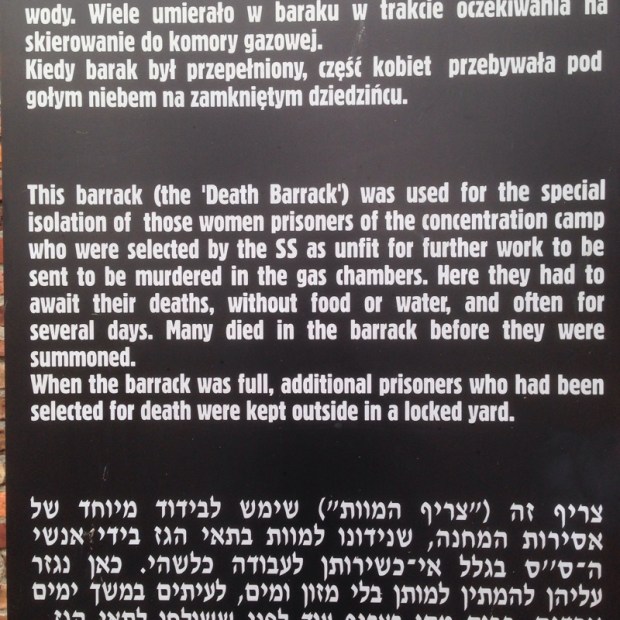
Returning to Auschwitz we watched a movie containing footage we had seen before but that now meant much more of the terrible events that happened just 10 short years before our births and we were reminded that similar shit still goes on around the world.

You would hope that the thousands of people who come to see this place every week take pacifism away with them and that slowly lessons can be learnt.

Joining one of many tour groups starting at 1.30 and shuffling around the camp en mass it seemed a little ironic that the place still “processes ” so many people in a never ending cycle.

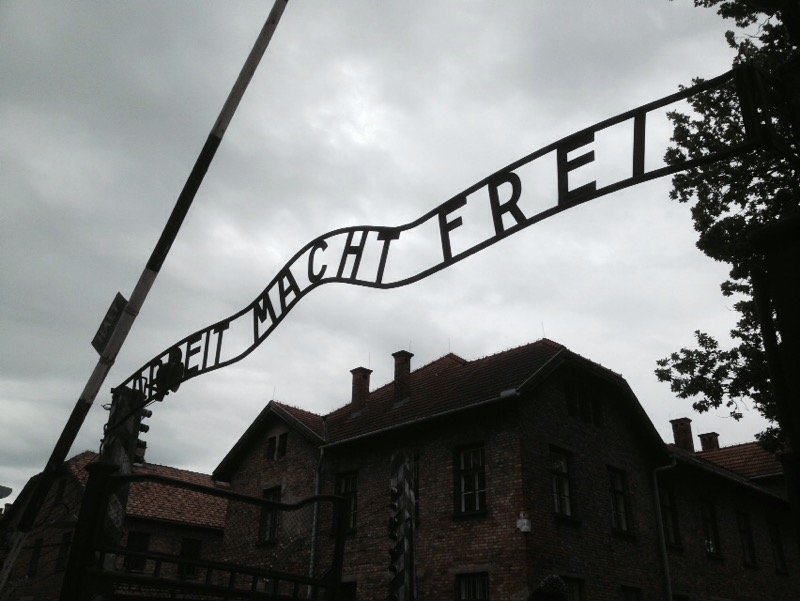
We past under the ” work will set you free” as did hundreds of thousands of victims before us and entered the camp.
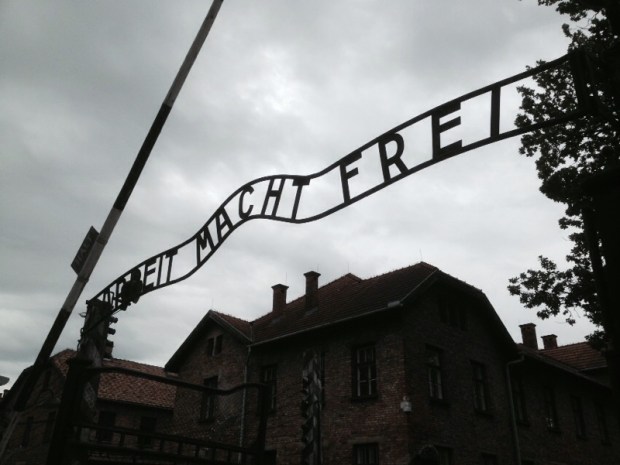
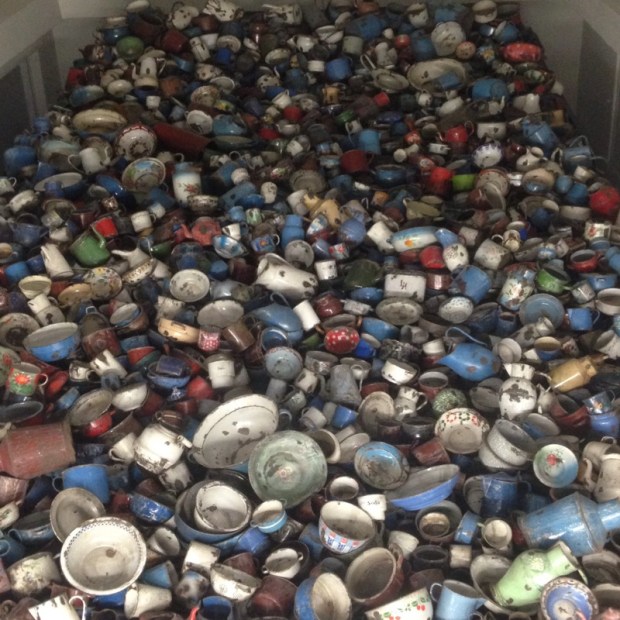
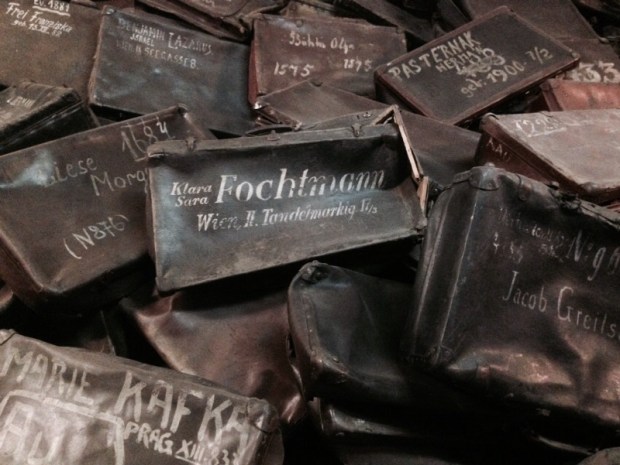
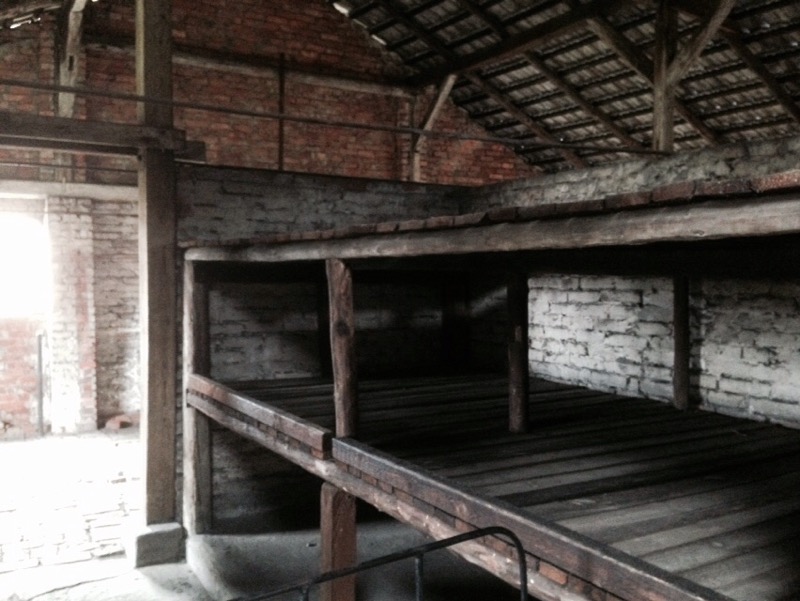
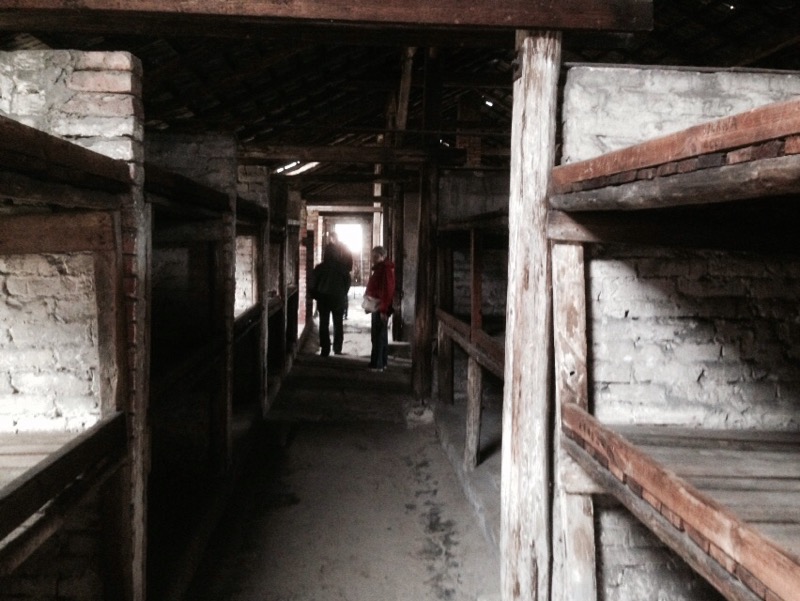
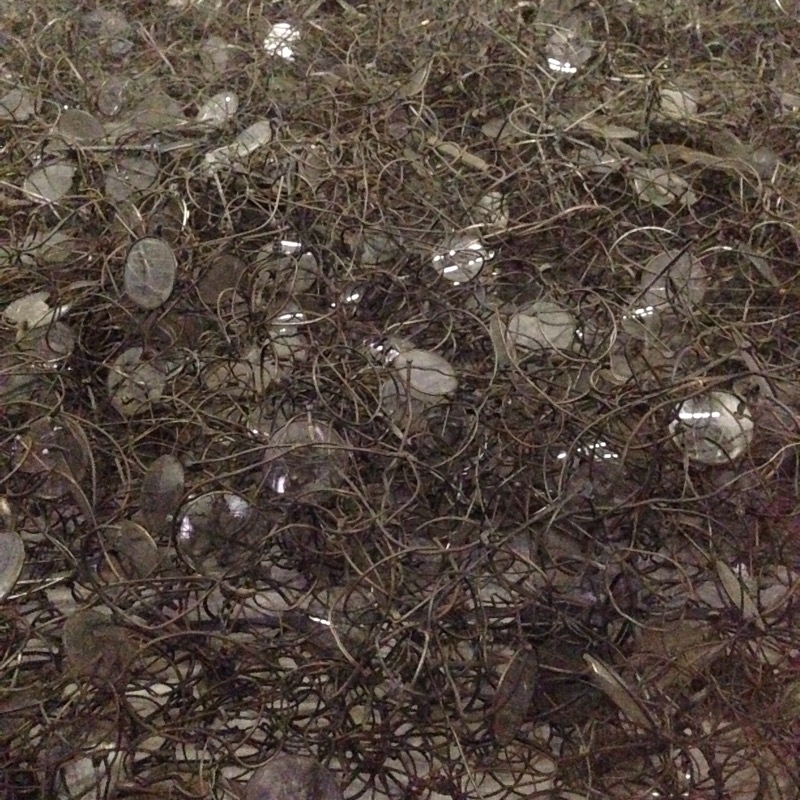
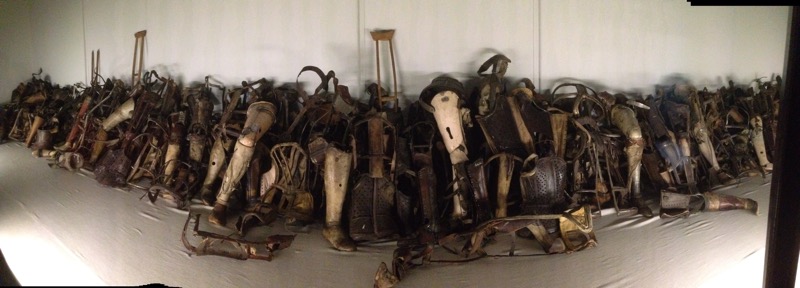
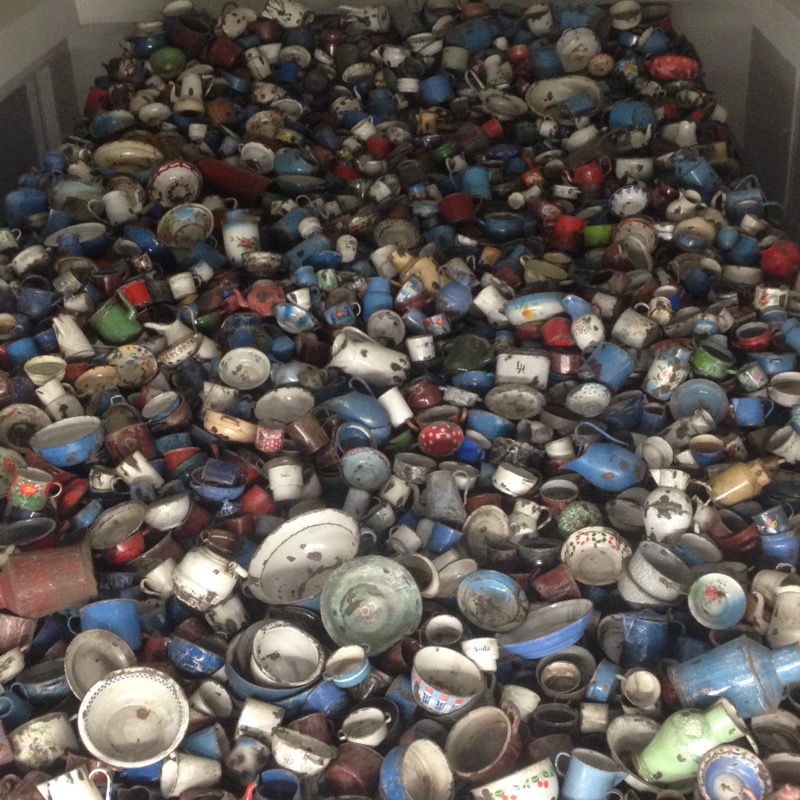
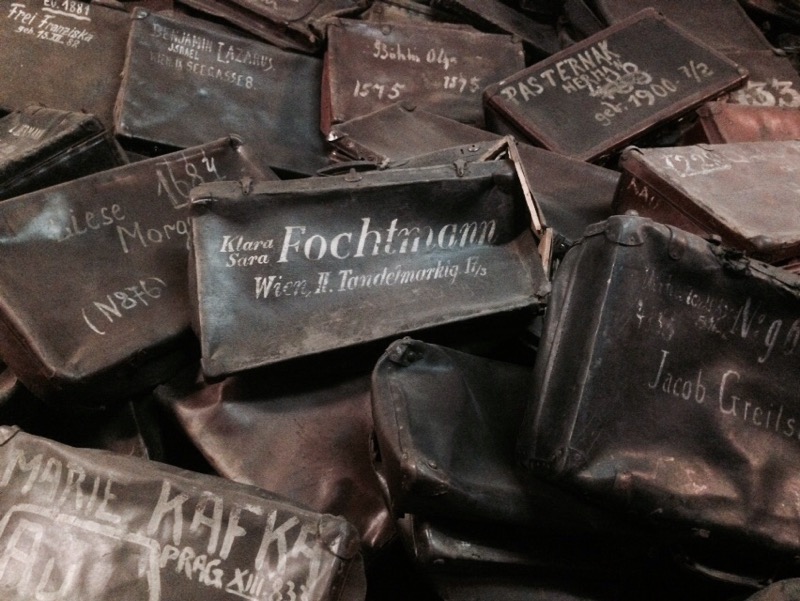
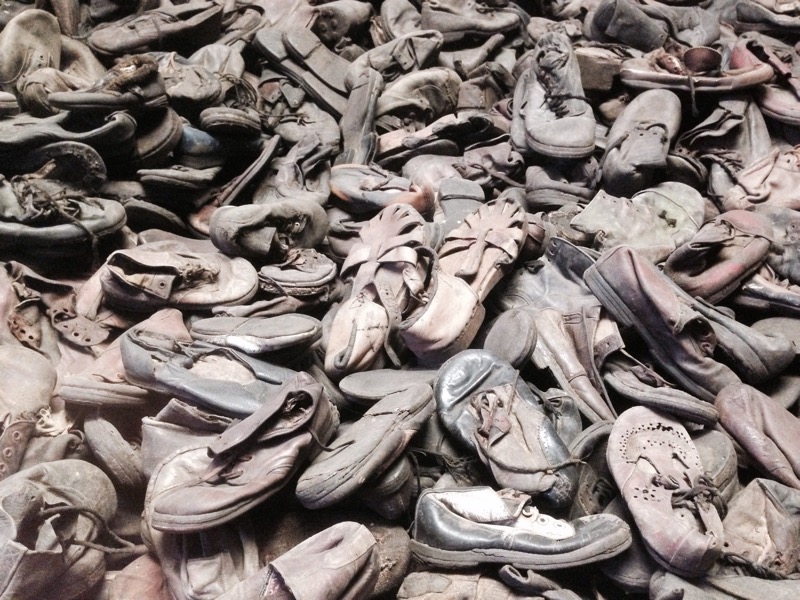
We were shown around the barracks, the sleeping quarters, wash houses, interrogation rooms, punishment blocks and firing squad wall in the same order as many of the prisoners would have experienced them. Most poignant were the exhibits of personal possessions left behind by the victims not sent for recycling for the benefit of the Third Reich war effort before the liberators arrived.

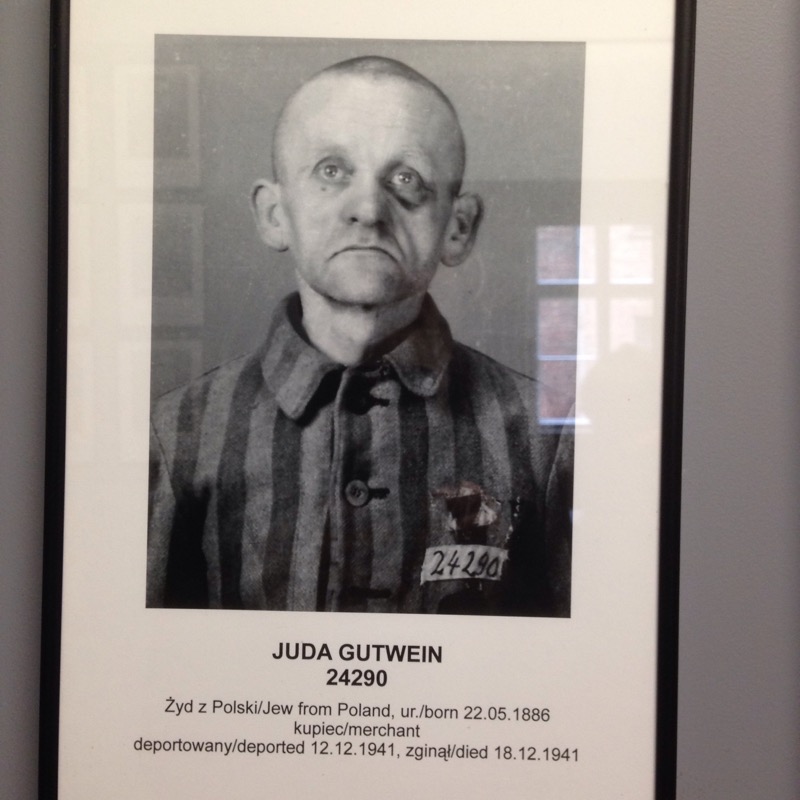
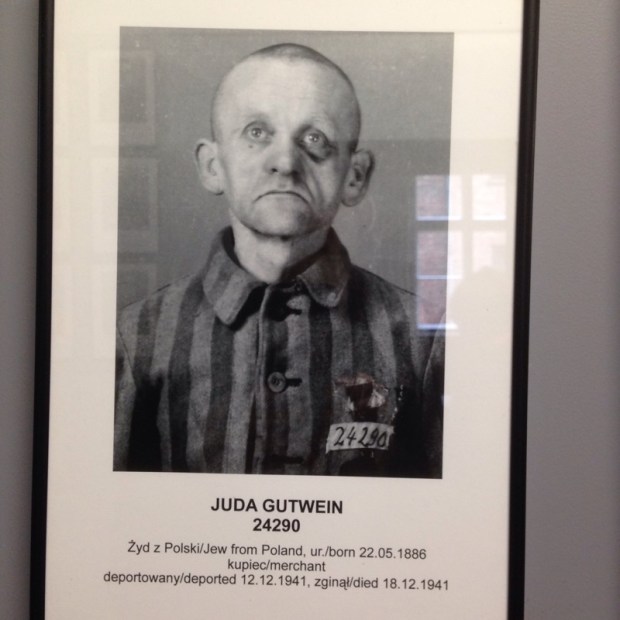
Another building housed hundreds of the identification photographs of the victims with the dates of admission and death.
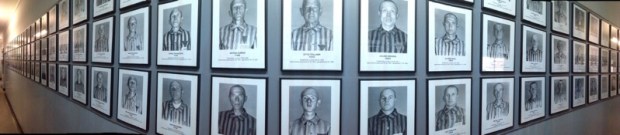
This poor fellow was one of countless who didn’t last long.
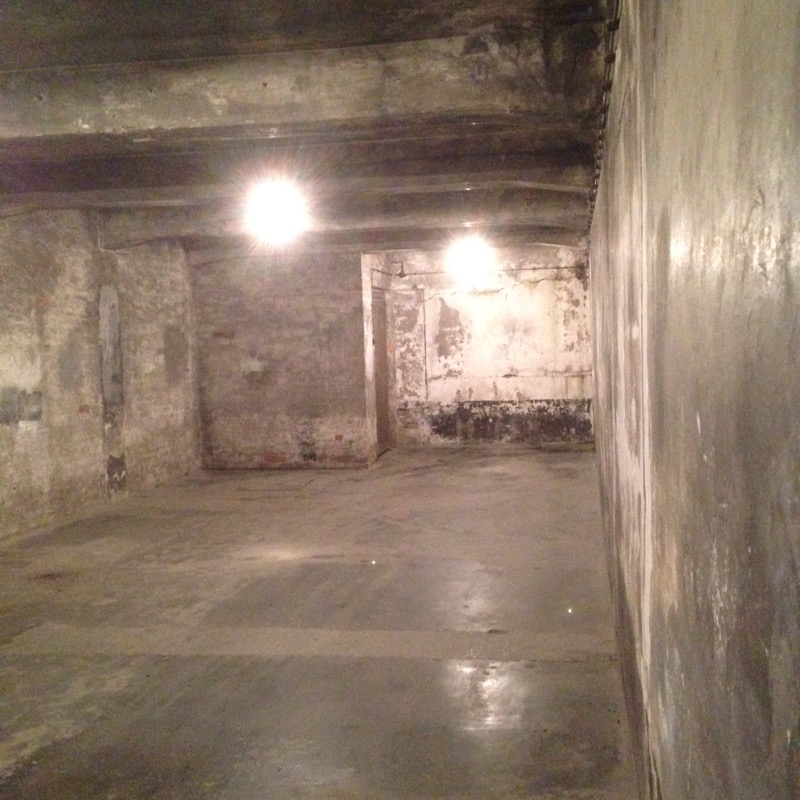
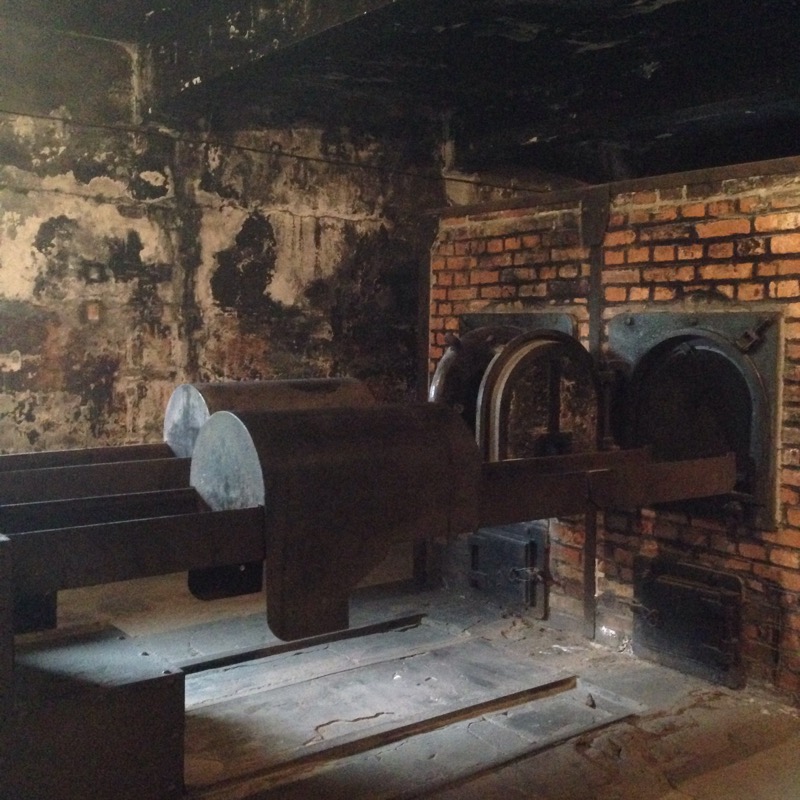
Then came the most loathsome final exhibit, the “final solution” to the “Jewish problem”. The one where everyone fell silent.
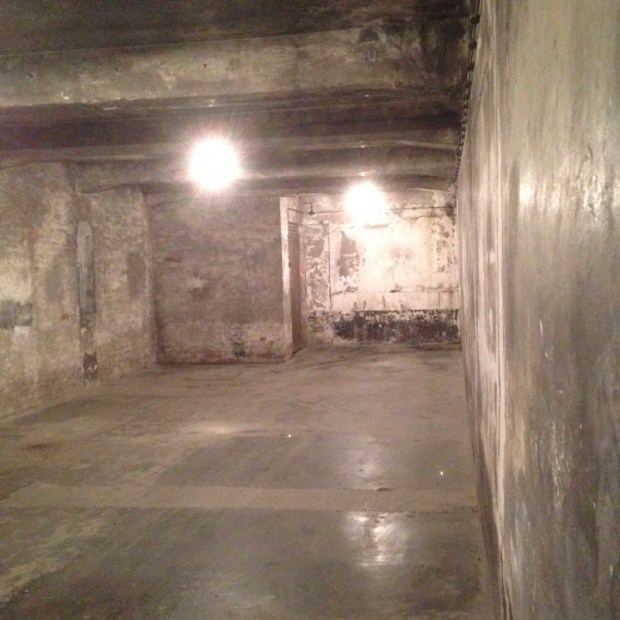

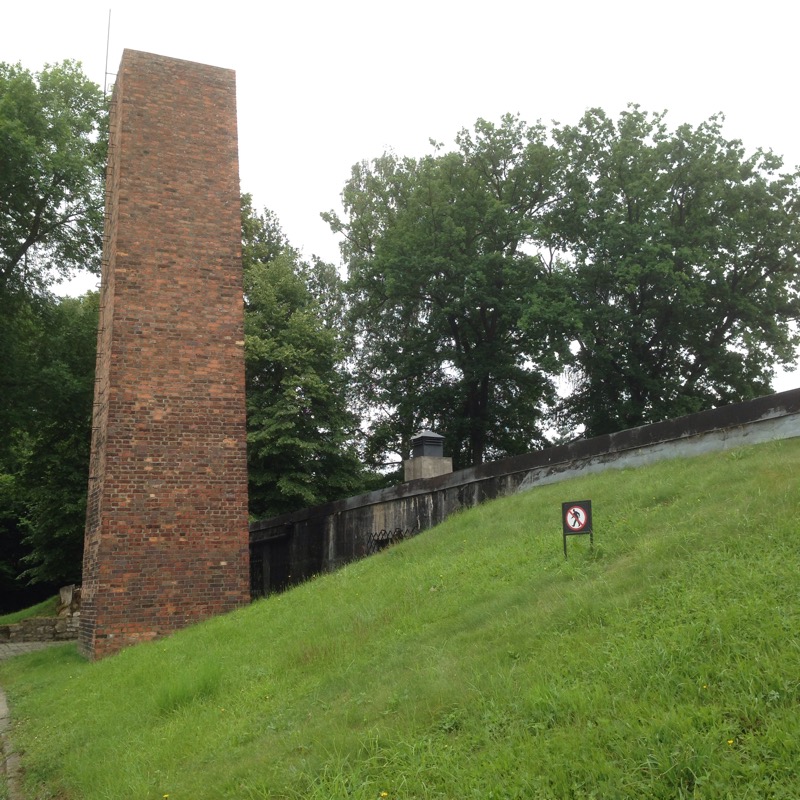
The one surviving gas chamber, oven and crematorium chimney.

As we filed away towards the exit another load of noisy groups began their tours.

THE GRAND TOUR: CZECH 19/20th June

12/ 10 km

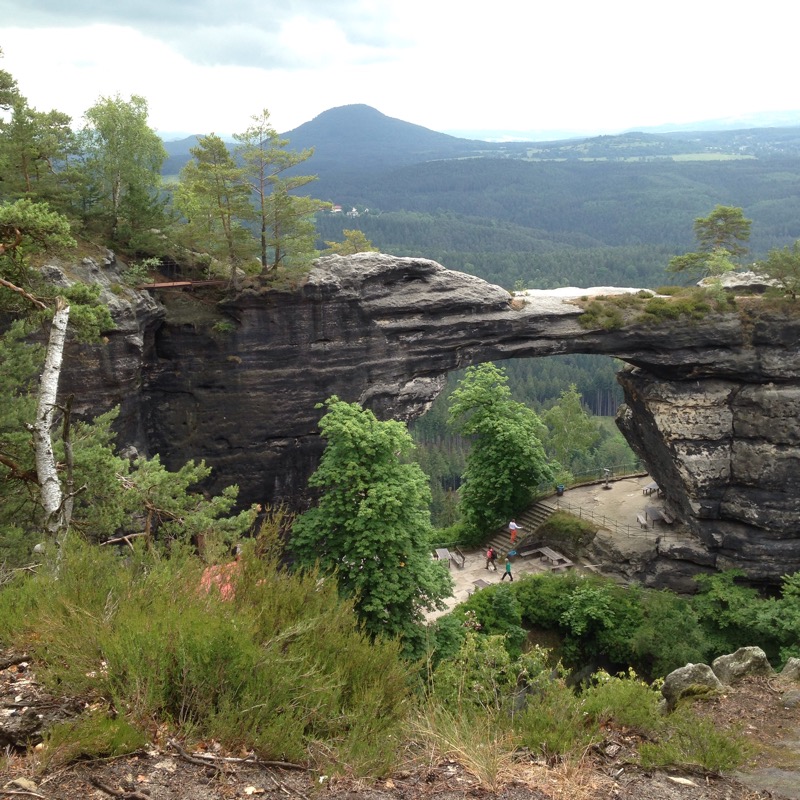
A dull start to the day made for a cool walk in the woods from the camp up towards the iconic natural feature of the area, the massive stone arch of The Pravcicka Gate.

There was an educational trail at the beginning featuring another wood block instrument of different species.

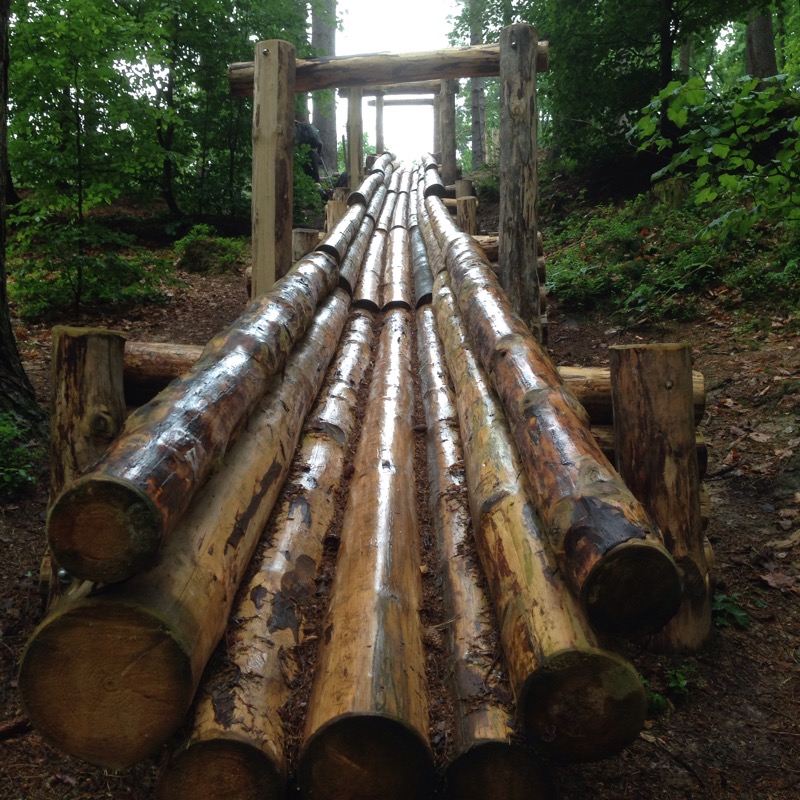
 and a timber slide used to get timber out of the forest and into the river to be floated to the towns downstream.

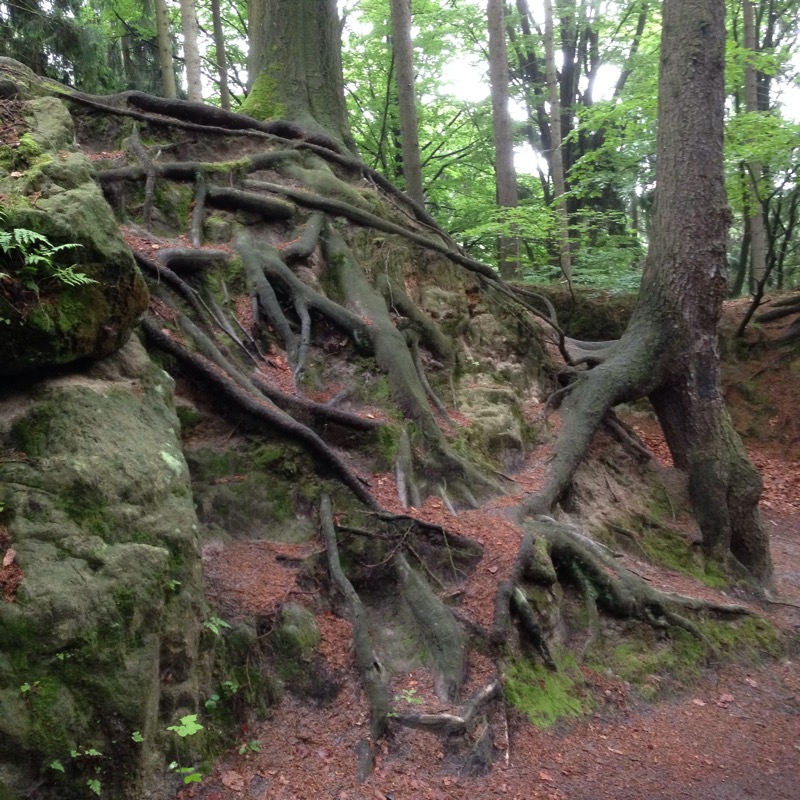
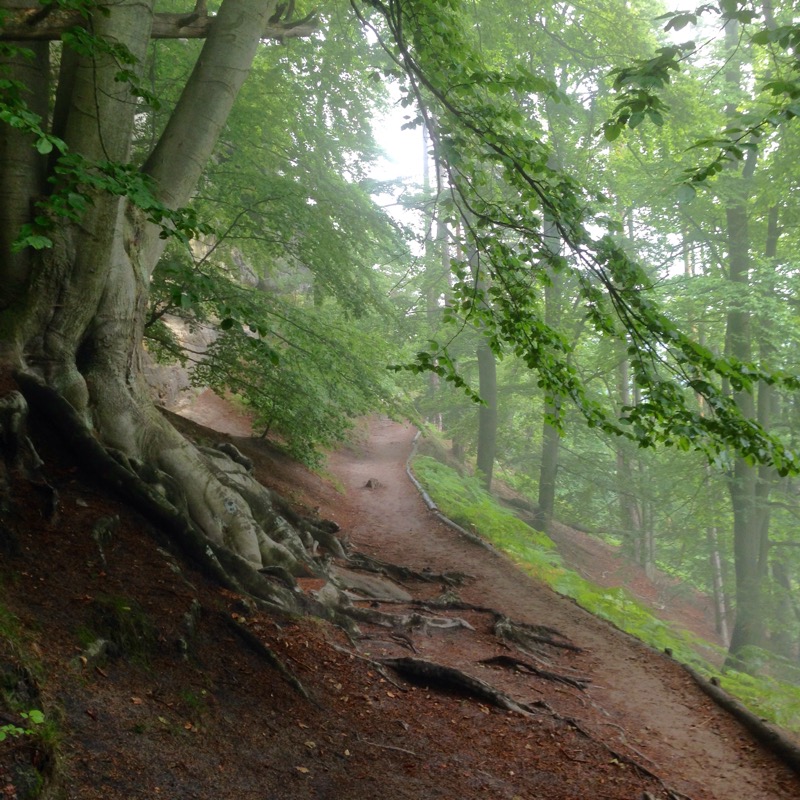
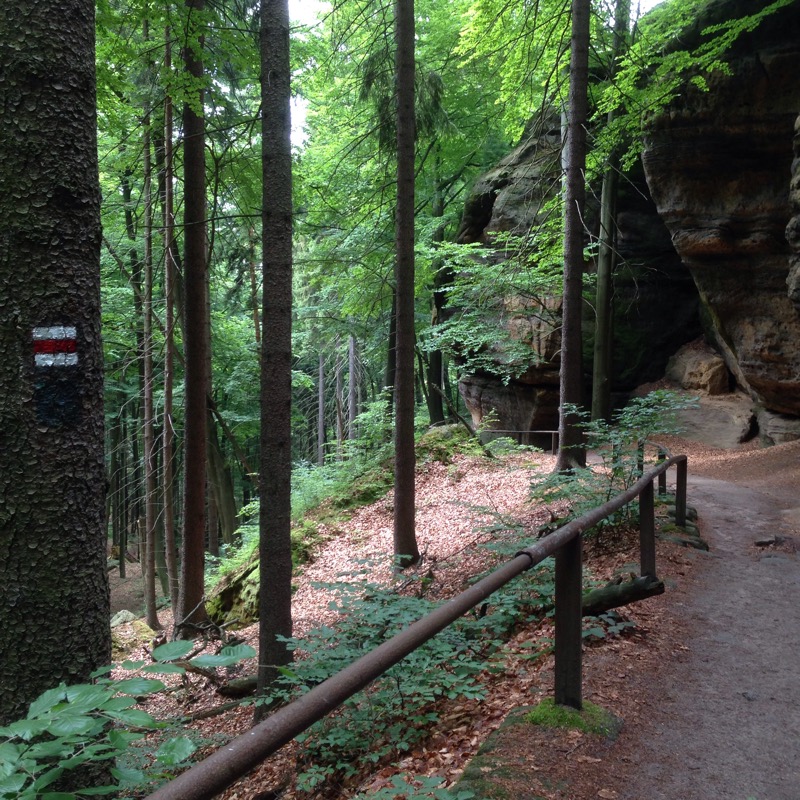
Our route was known as Gabriella’s Way and was lined with magnificent beech trees whose roots spread like fingers across the sandy path.

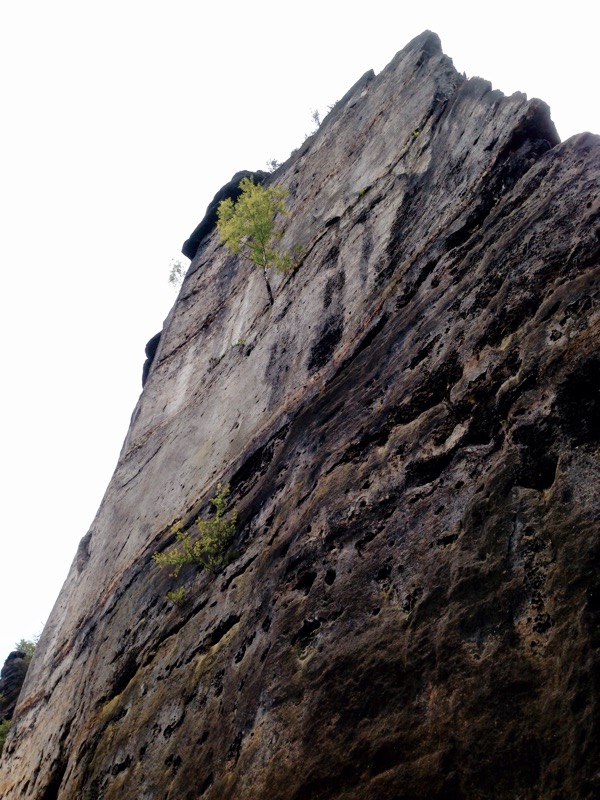
 The cliffs seemed taller and more sheer than the day before and some sported trees growing out of the vertical rock faces.

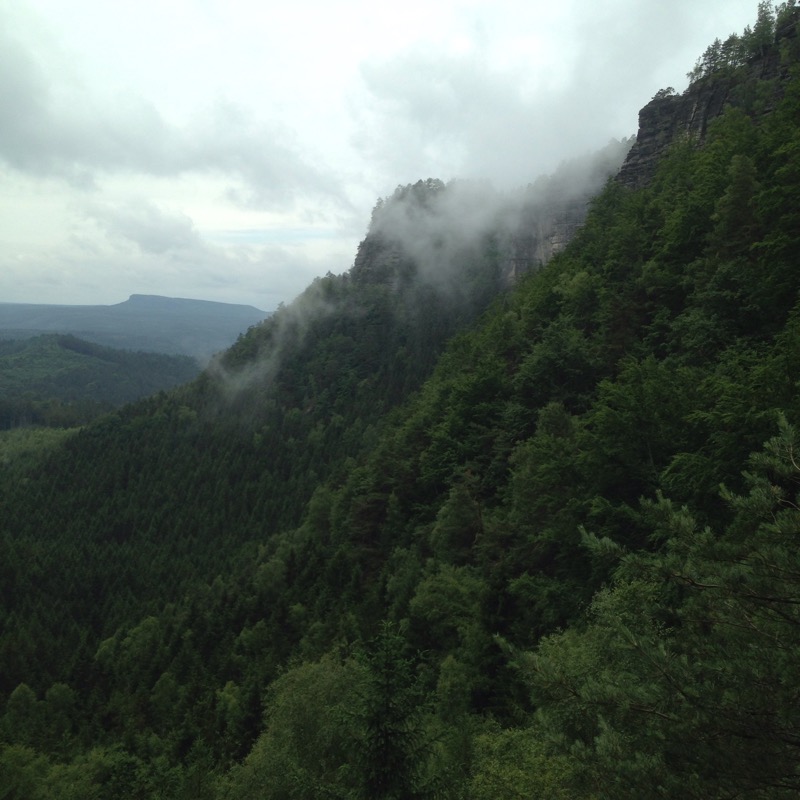
 When the canopy opened up in places the views were shrouded in mist.

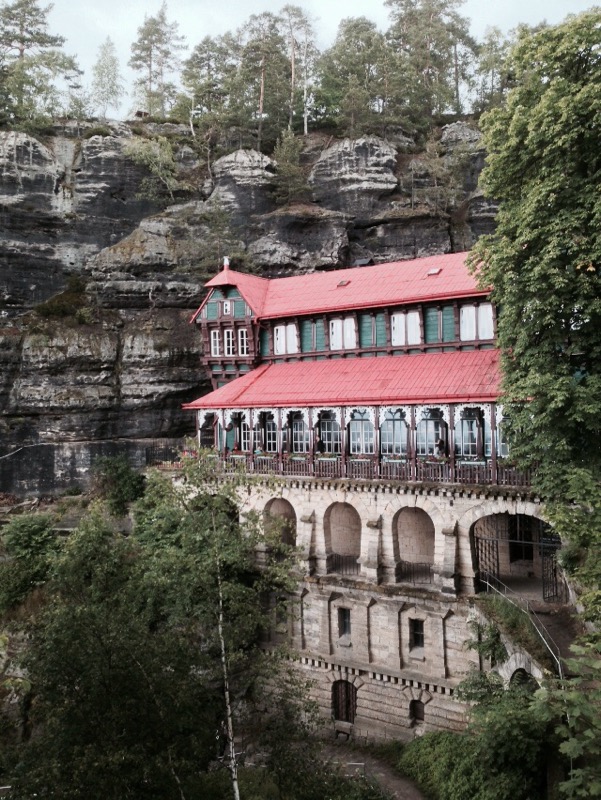
This was a popular hike and we shared the route with more people than usual and when we arrived at the little chateau built way beyond any road with the aid of mules and cable car it was busy with visitors.

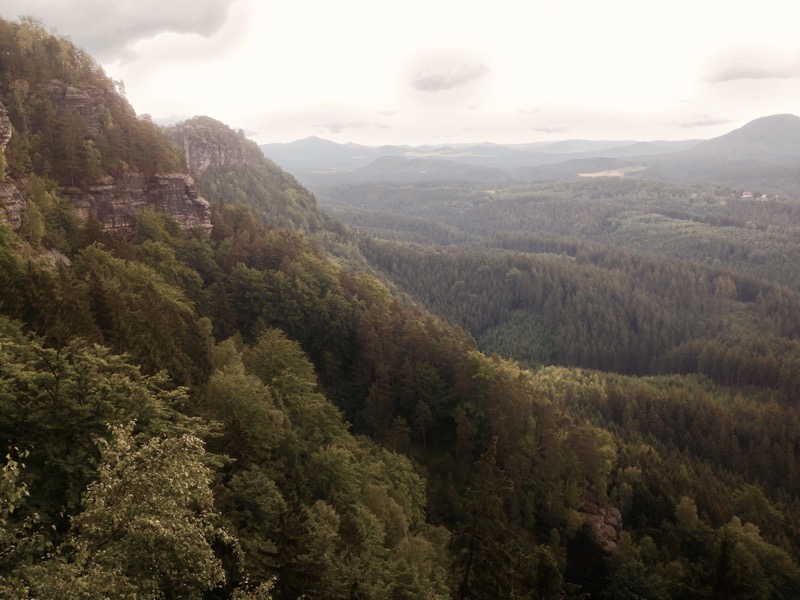
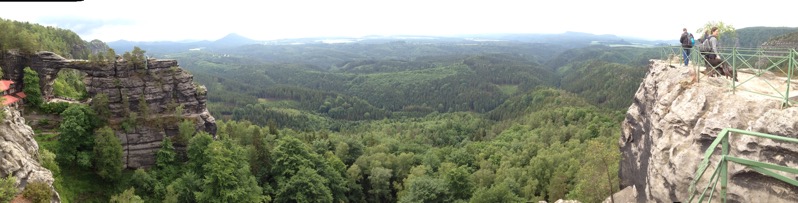
 The arch above it, the largest of it’s kind in Europe, was truly amazing.

 The air had cleared to reveal more far ranging views across the area we’d been walking through.

 and pillars of rock stood up above the forest here and there.

 There were flights of steep steps up above the arch to walkways connecting huge slabs of rock but nowadays no access to the arch itself.

We return to camp on a circular route that took us through more forest

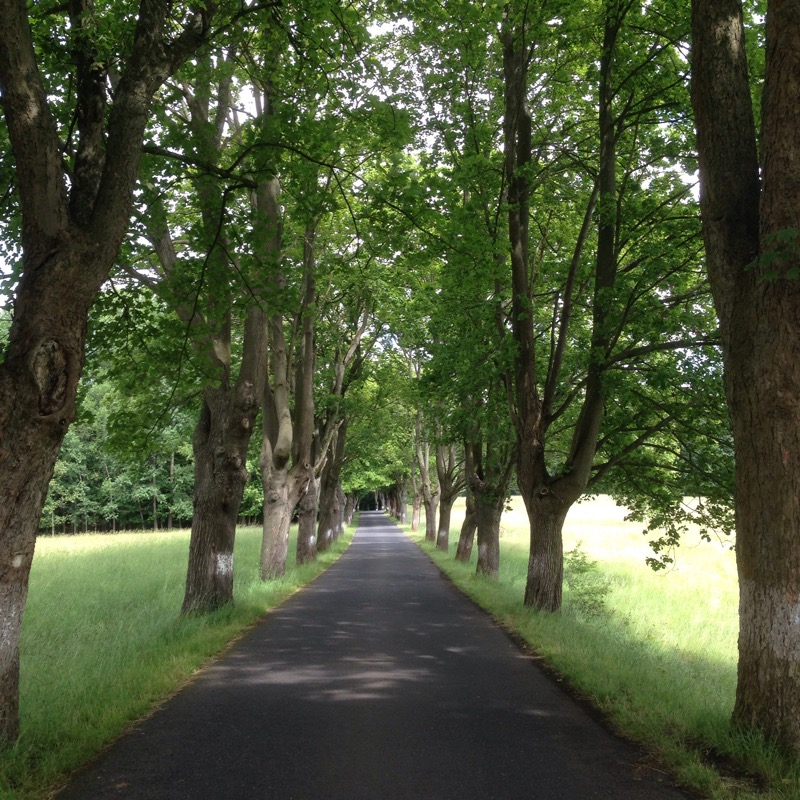
 and along tree lined roads by the unfenced  hay meadows.

 We went through another village of pretty houses with a good few pensions and restaurants and what seemed to us to be more life than over the border in east Germany.

After a couple of weeks in the splendours of nature we were looking forward to seeing some of mankinds best work so packed up and headed for what has to be one of the most beautiful cities in the world. Prague. Sally had found a campsite on the river a short tram ride from the centre. When we arrived at the small camp we discovered that the World Cup canoe slalom was happening next to us which was quite exciting. The real excitement came the next day when we rubbernecked around the sights of the old town with the rest of the hoards of tourists.

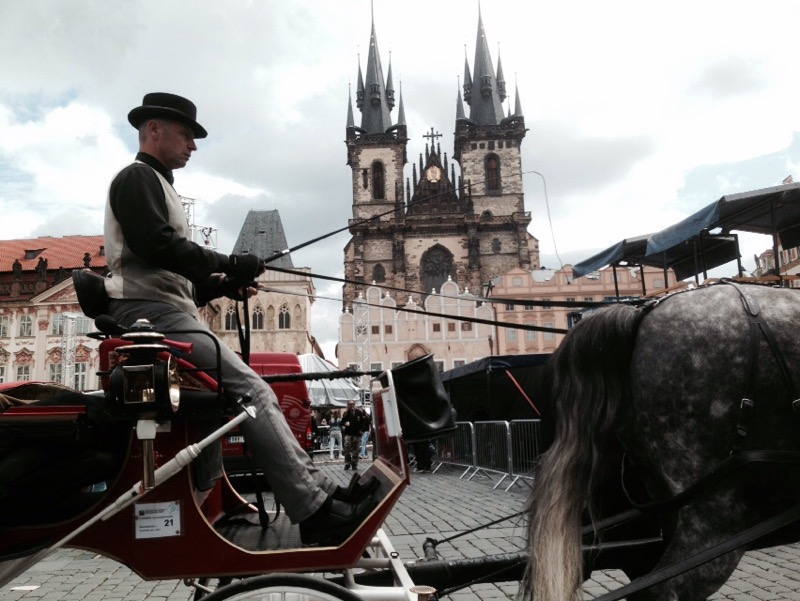
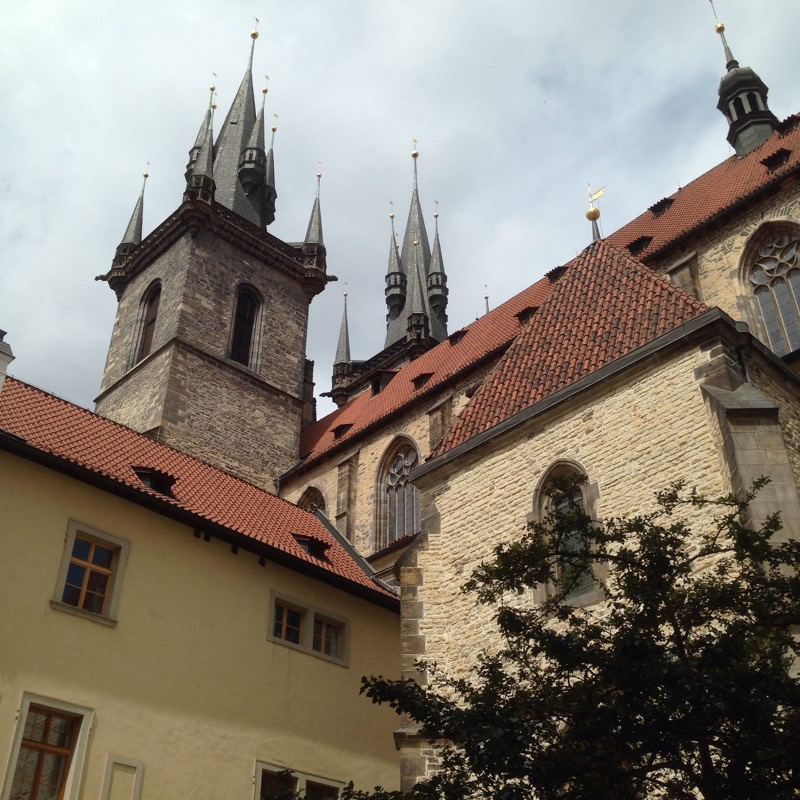
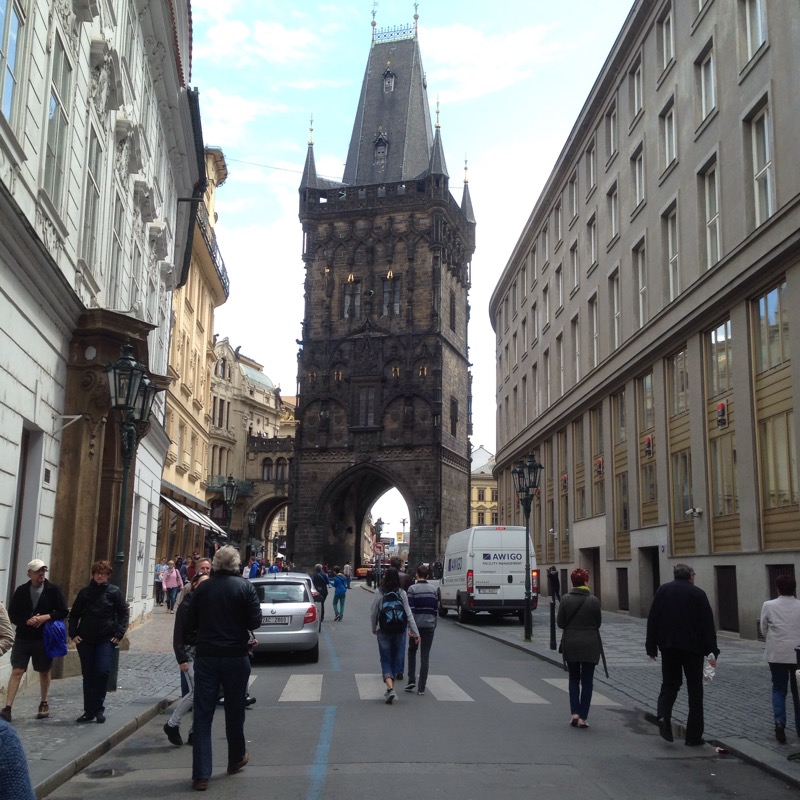
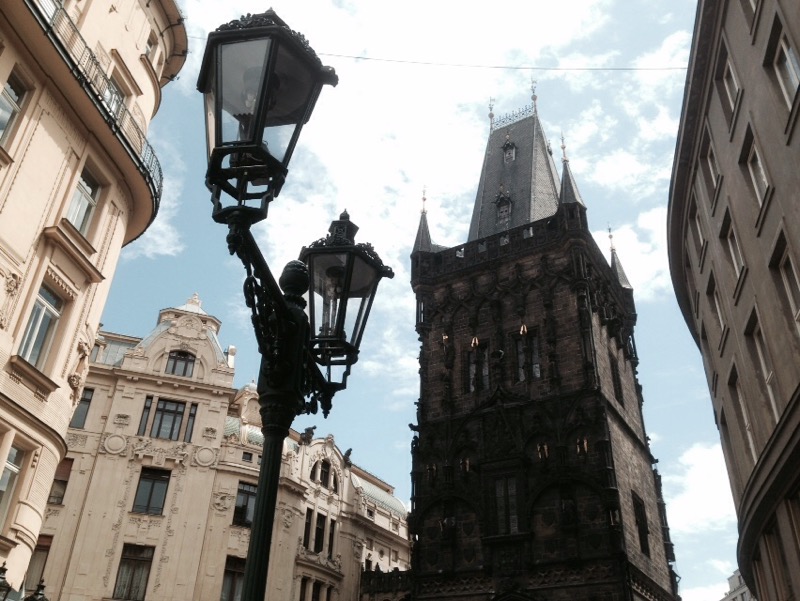
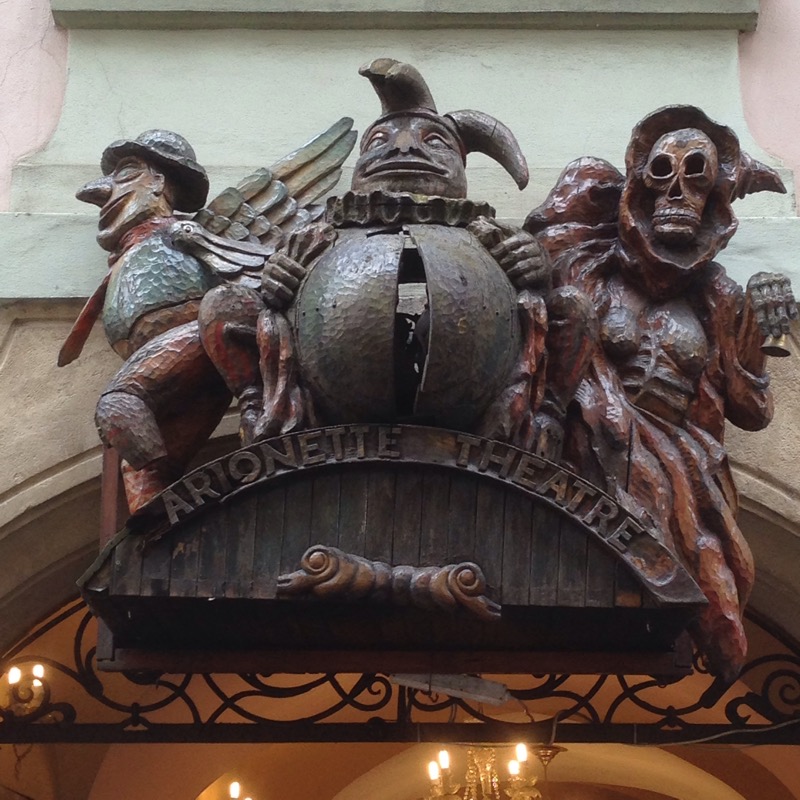
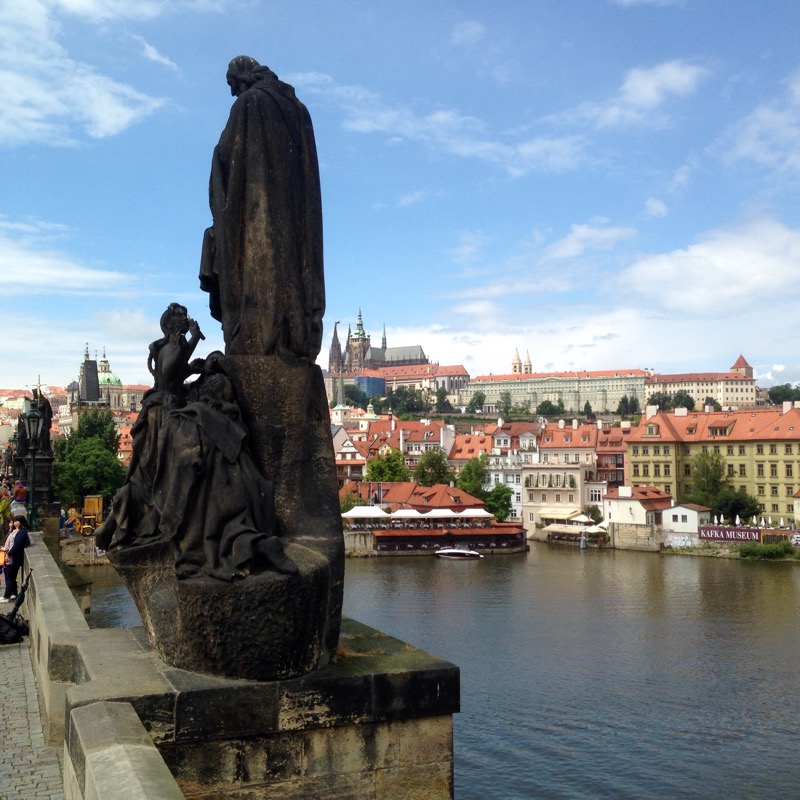
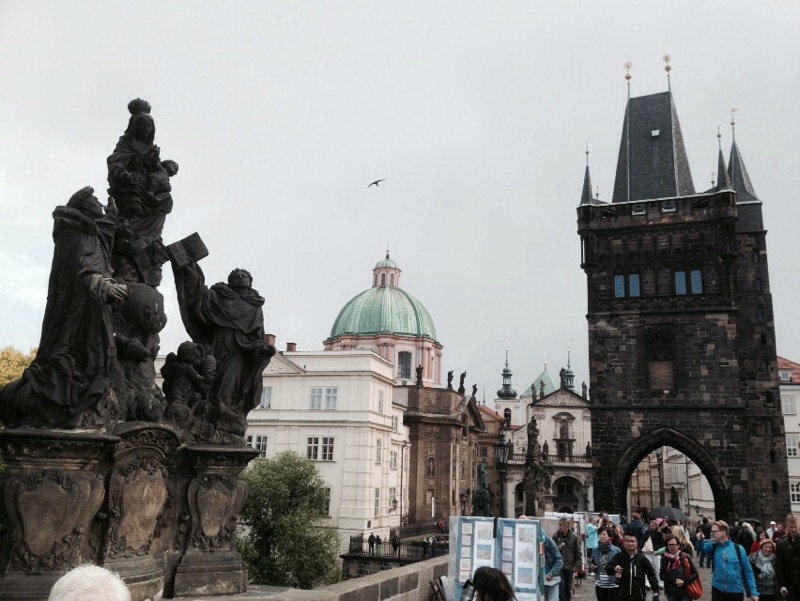
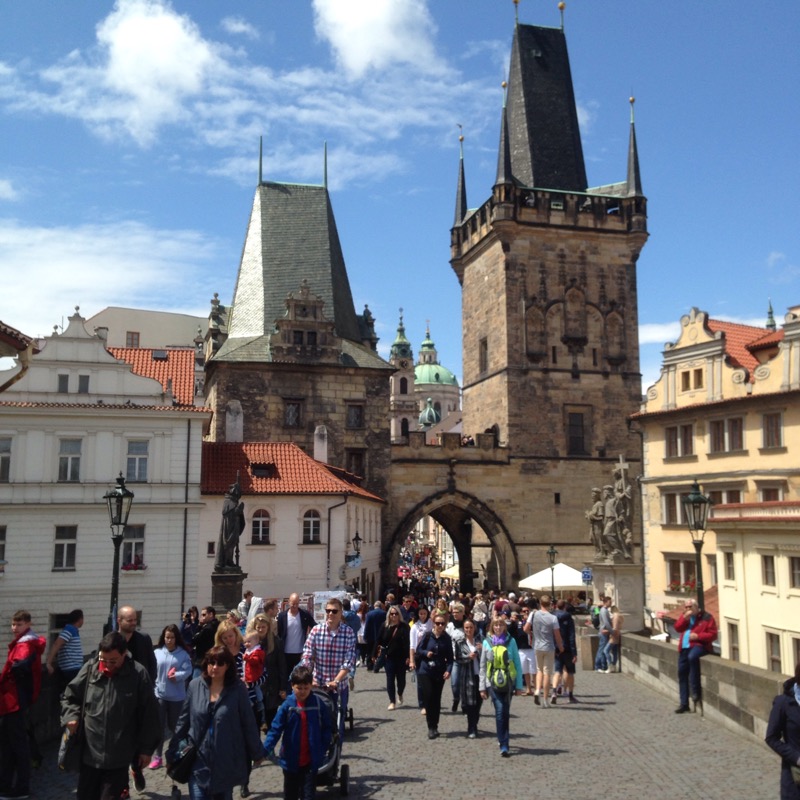
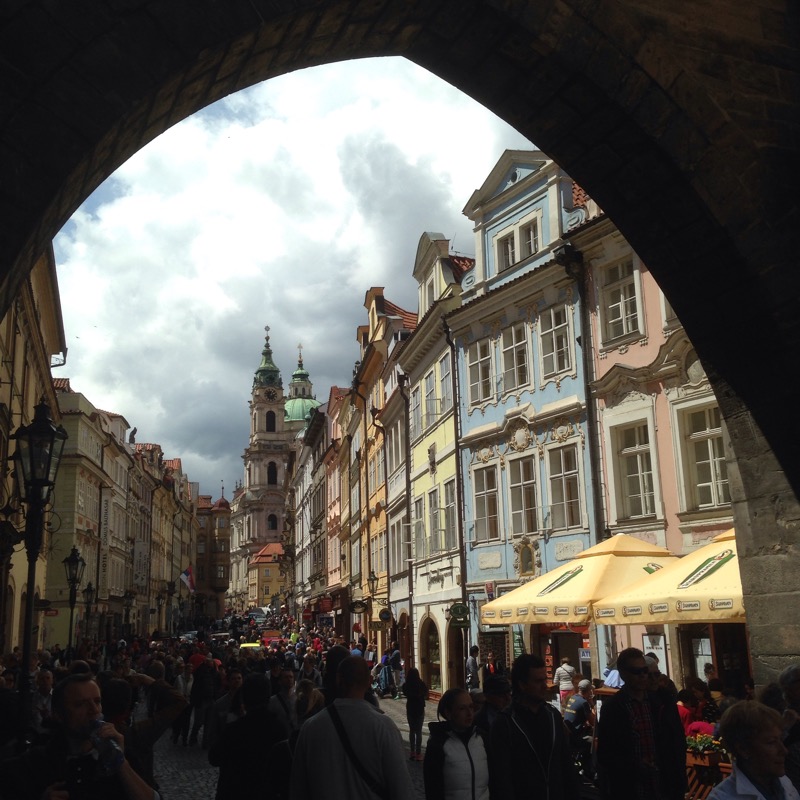
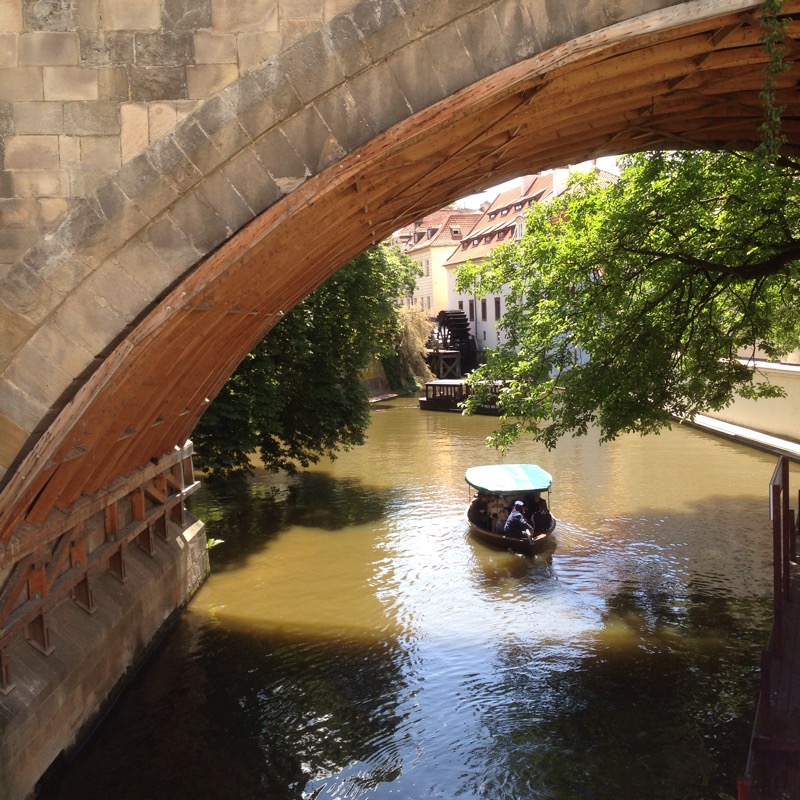
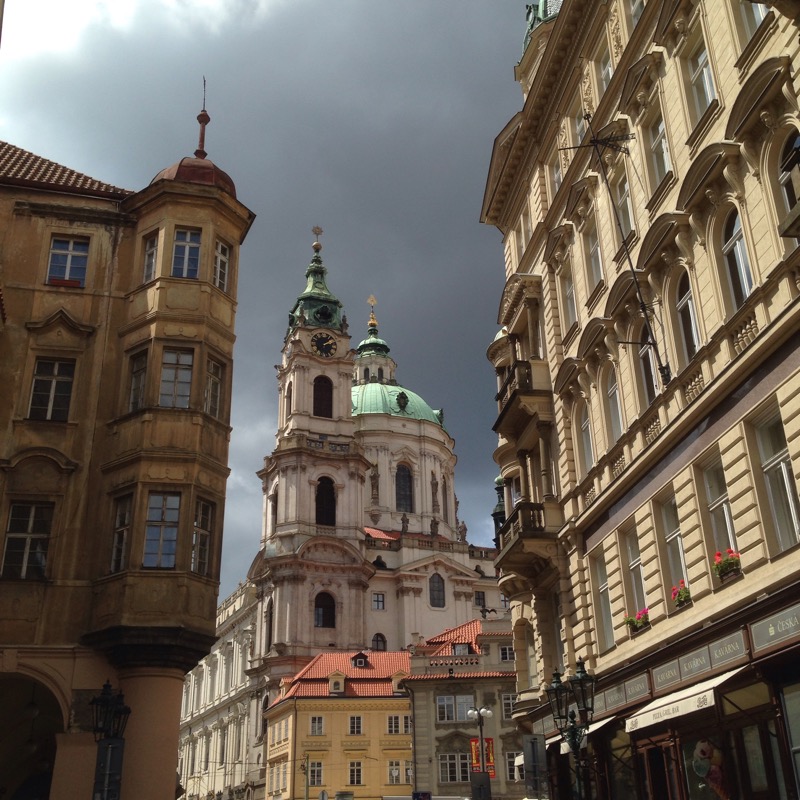
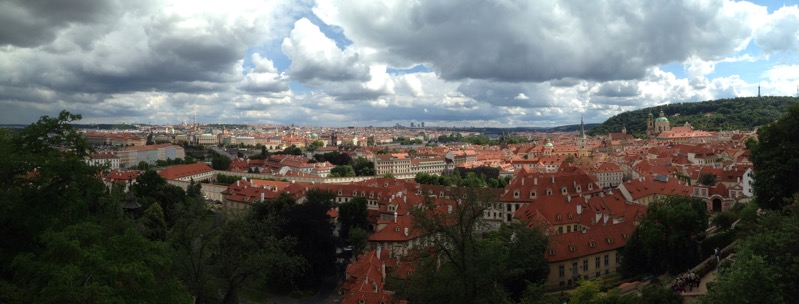
These photos can’t do justice to the subtle beauty to the mingling architectural periods and designs but give a flavour of our stroll down “the Royal Route” from the Powder Gate to Prague Castle.


There were great details like the astronomical clock on the town hall

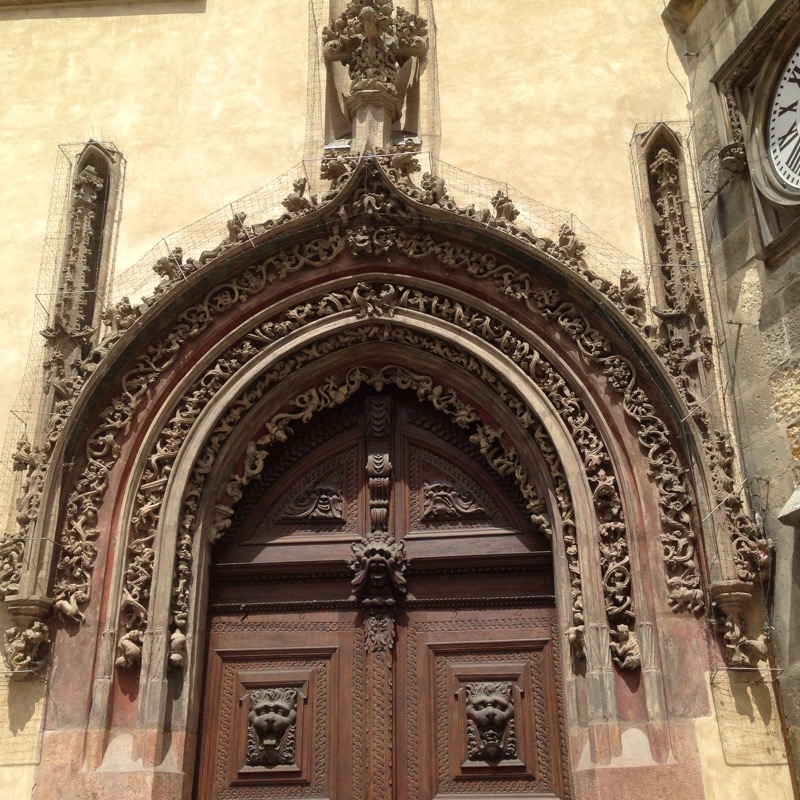
 and ornate doorways.

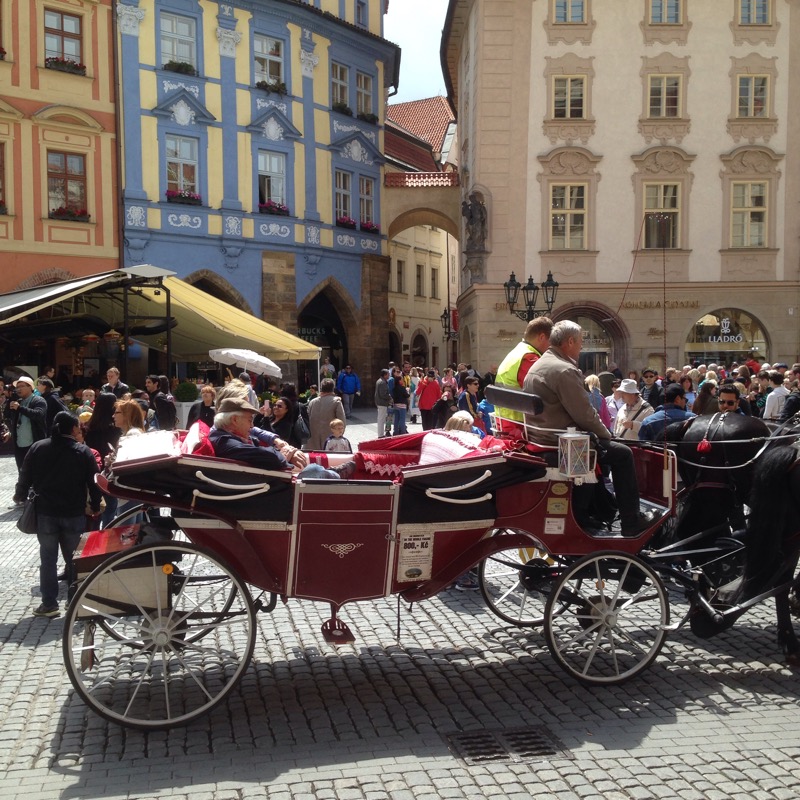
 People took rides in carriages

  in fancy cars

  and lots on Segways

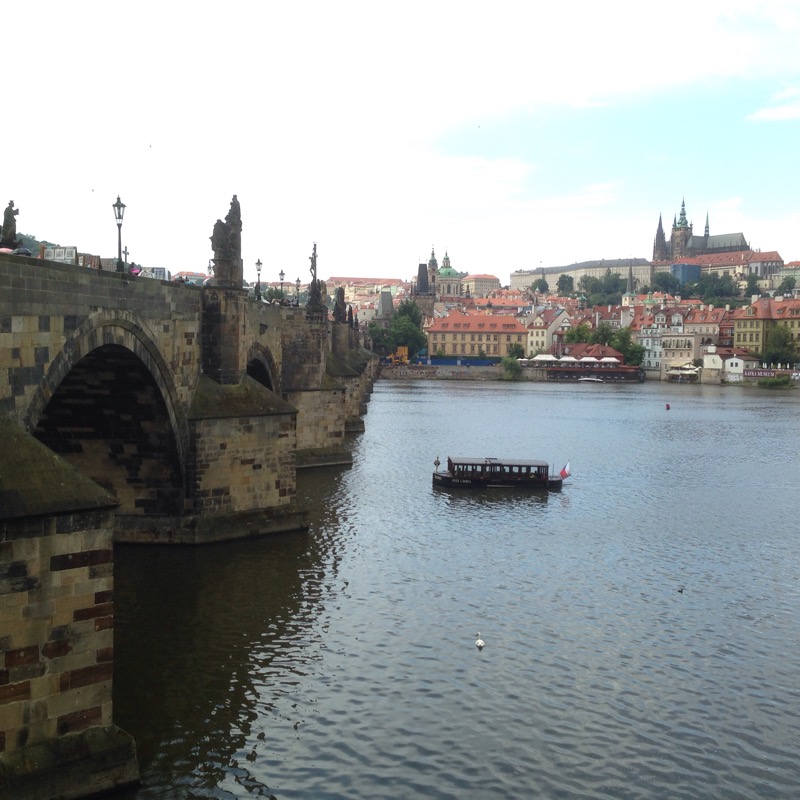
  The famous Charles Bridge did not disappoint

  With great views across the river to the castle.

  On the bridge a series of statues had in places been rubbed to a shine by countless thousands of passerbys.

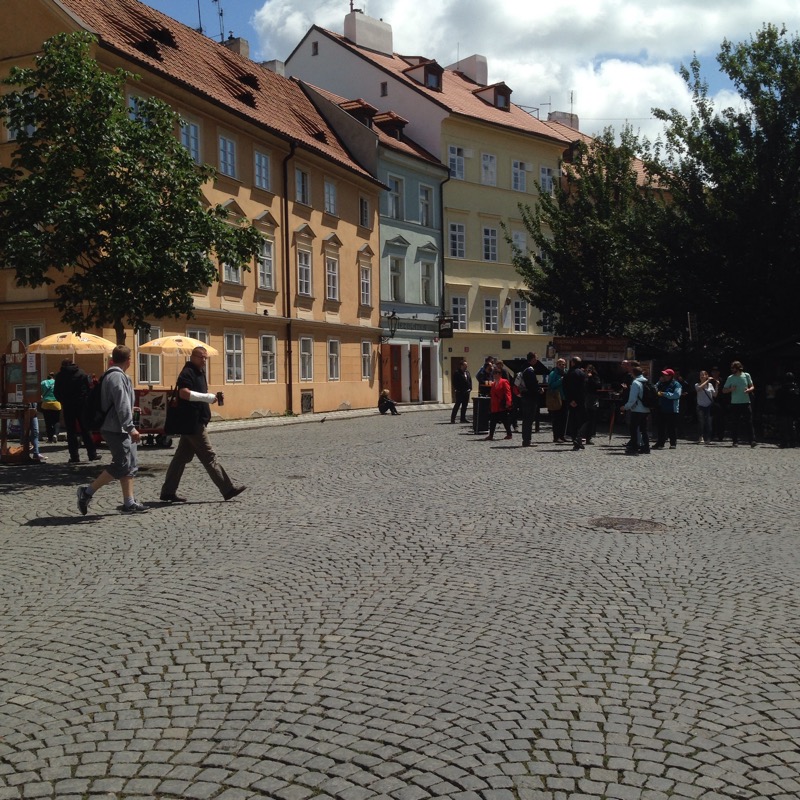
  More historic gateways led to yet more  grand vistas and intimate spaces.

Sally particularly liked the cobble paving and now wants me to do the yard.

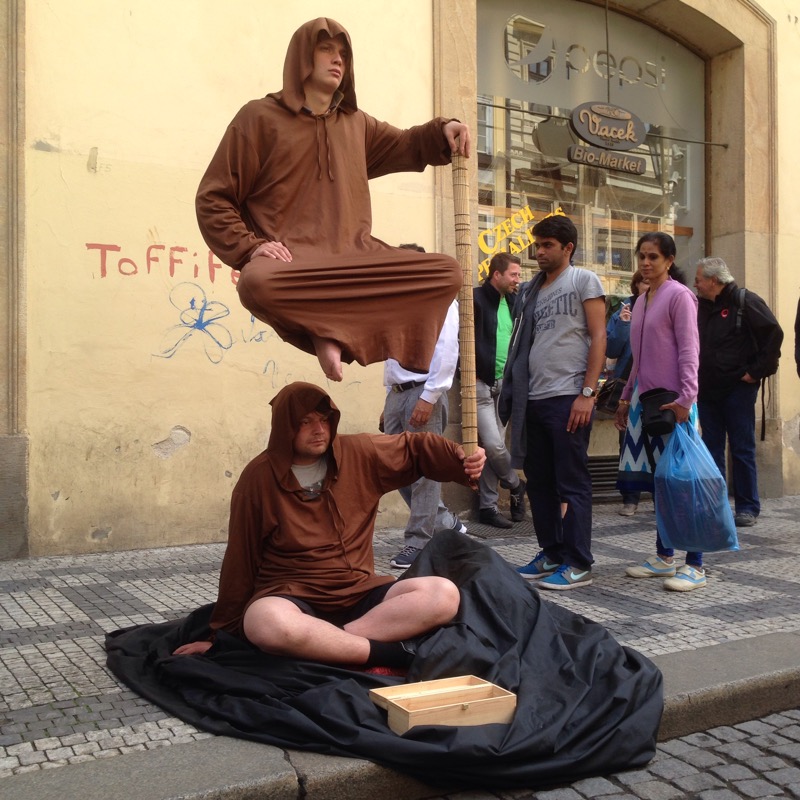
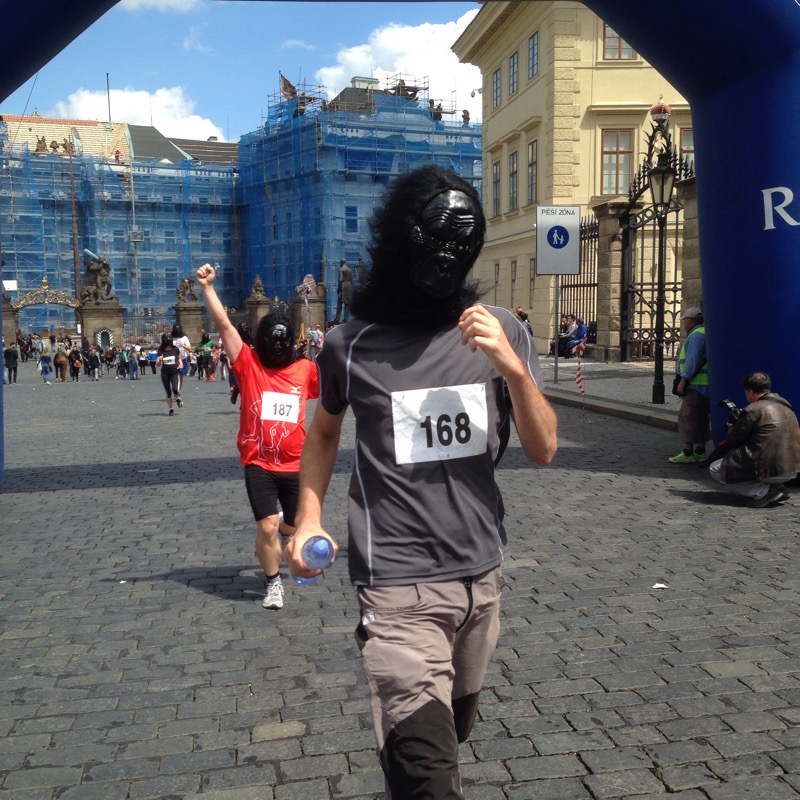
An intriguing street act I hadn’t seen before led us up towards the castle where a gorilla run was incongruous.

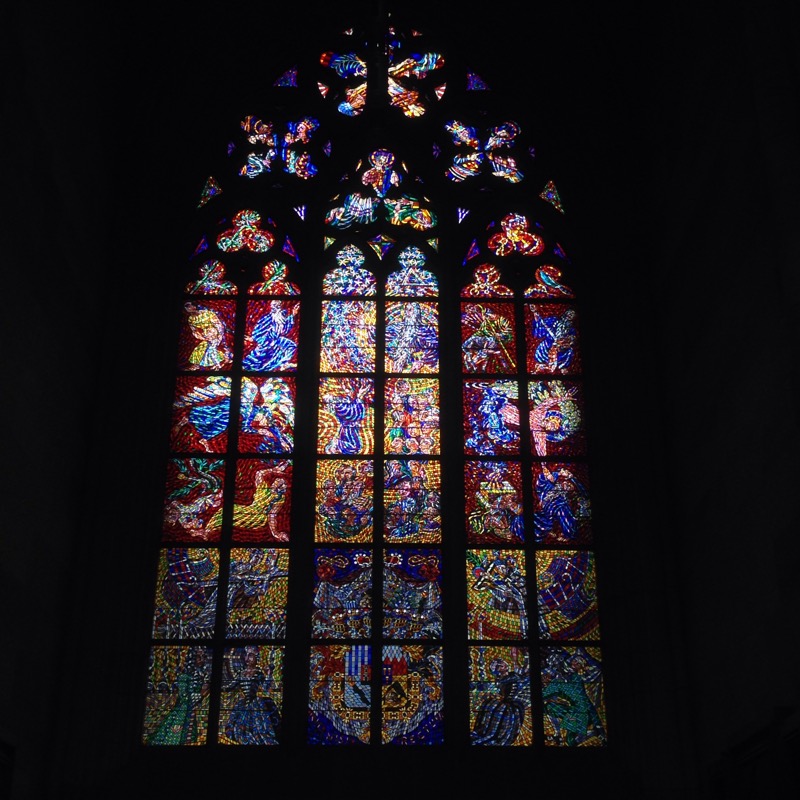
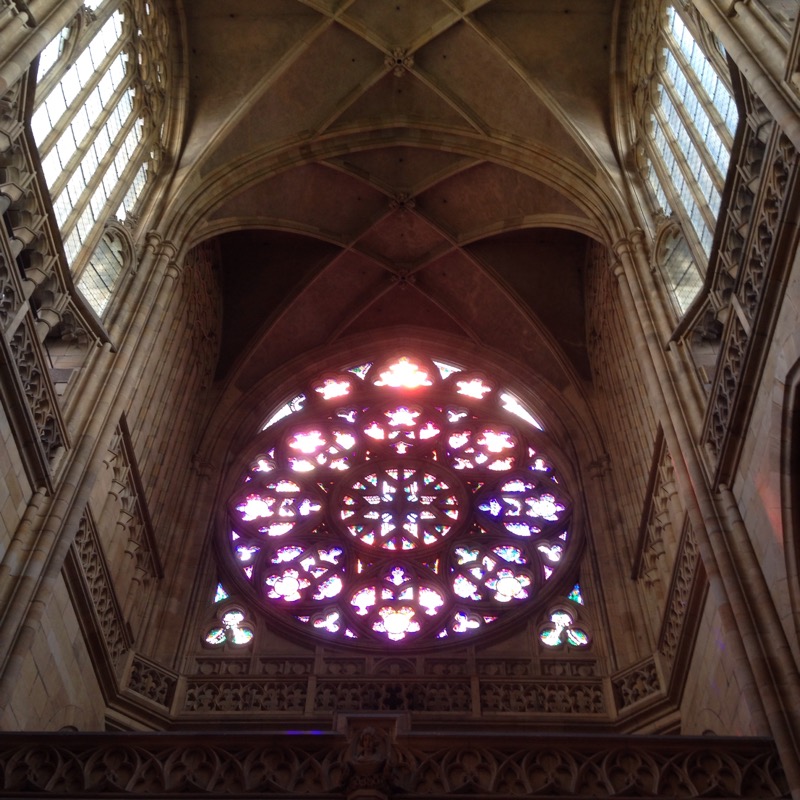
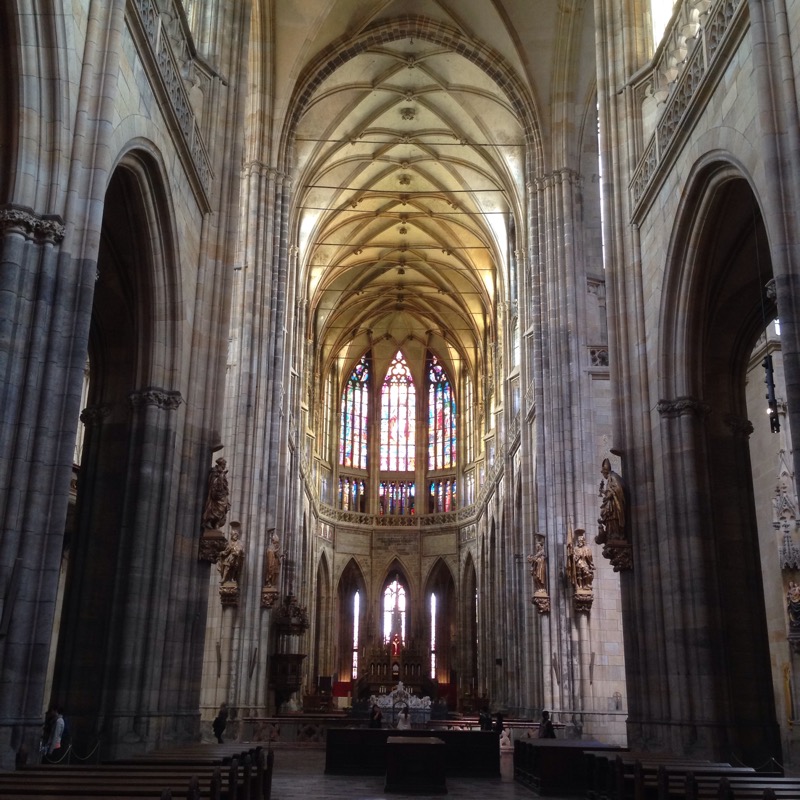
Up in the enormous castle grounds we were overwhelmed by the windows in St Vitus cathedral.

Feeling sated of splendours and getting overwhelmed by the crowds we took in one last viewpoint and retreated to the river camp to regroup for another advance into the city the next day.

THE GRAND TOUR: CZECH 17/18th JUNE

9/ 26km

Heading into town in the morning , past some inviting holiday accommodation,

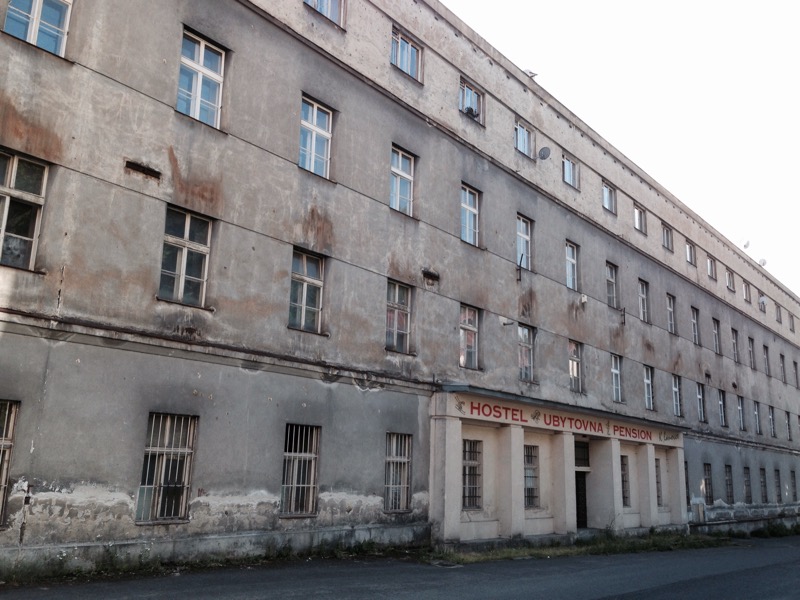
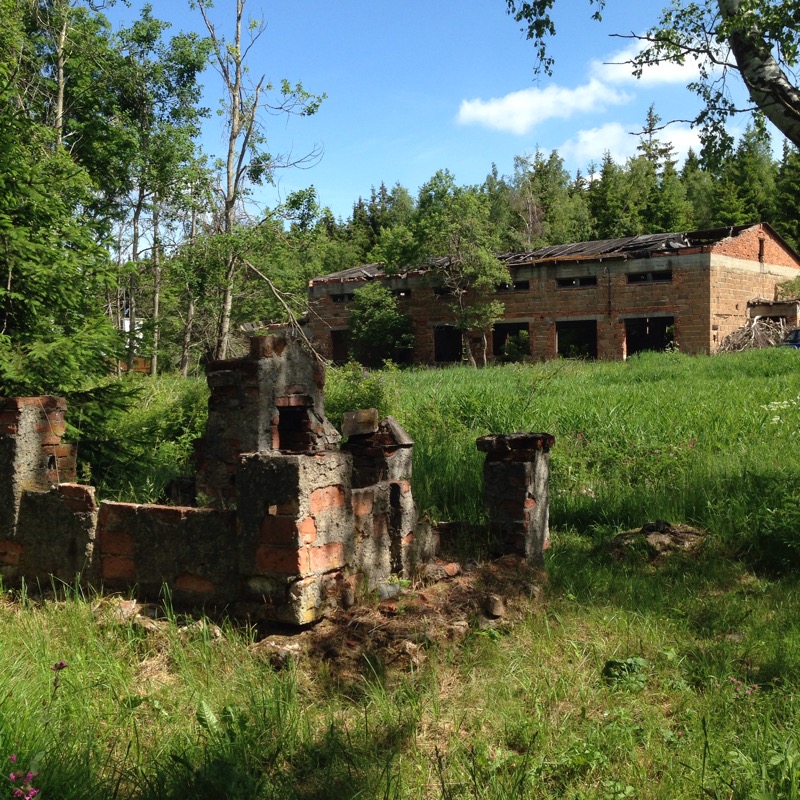
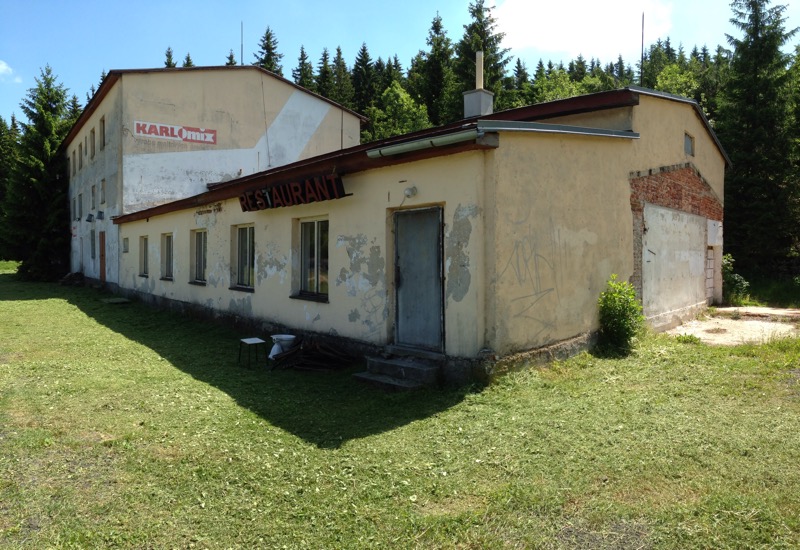
 the helpful lady in the info centre directed us to the uranium mine that had been opened to the public. Getting there we were told to come back in 3 hours. It seemed like they were busy with school groups. We read that there was a 9km trail from there that takes in some of the concentration/ prison camps and the sites of mine shafts from the soviet era from 40’s to the 60’s, so set off in the sunshine into beautiful scenery that belied it’s brutal past. We past the remains of camps

 one of which had been converted into a restaurant at some stage and the slag heaps and panning ponds

 and poked about in small buildings with unknown purpose.

 There were poignant maps of the past

 set amongst the placid woods.

 A walk that contrasted the beauties of nature with the savagery of man,the trail brought us round to Jachymov, now again a bustling and attractive spa town host to tourists not slaves.

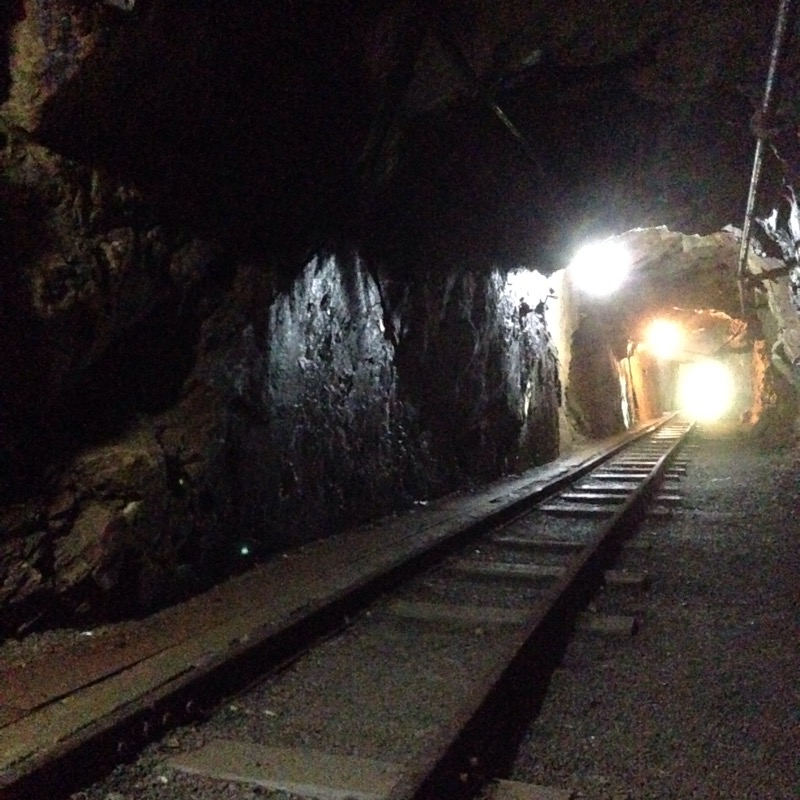
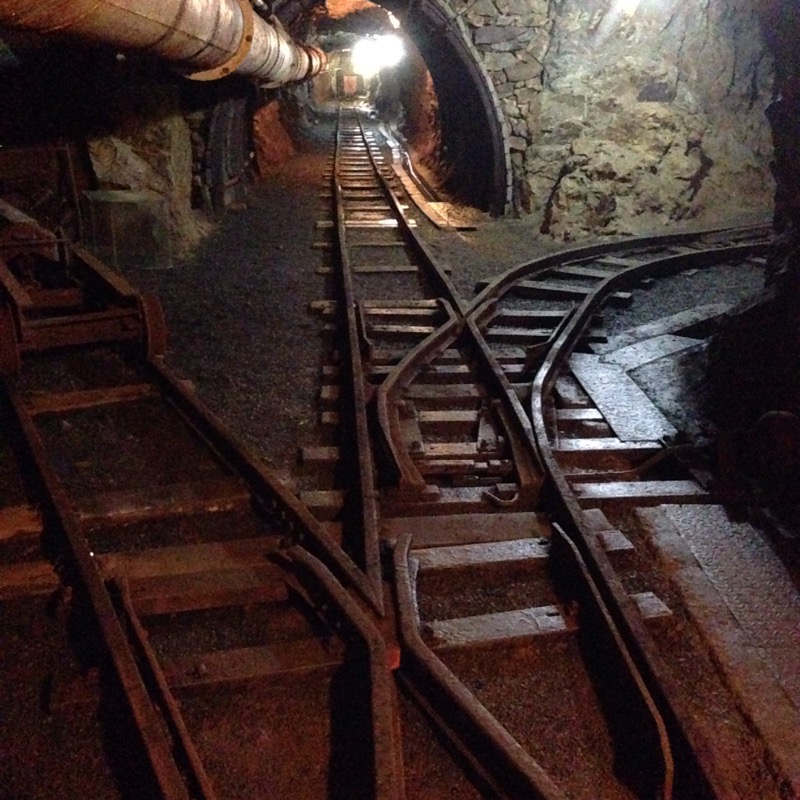
  It got easier to imagine the horror of that past reality when we went underground into the uranium mine itself passing through the welded gates that kept the prisoners in.

 The tunnels open to the public extend for about 200mt which was more than enough to make you realise how grim it must have been.

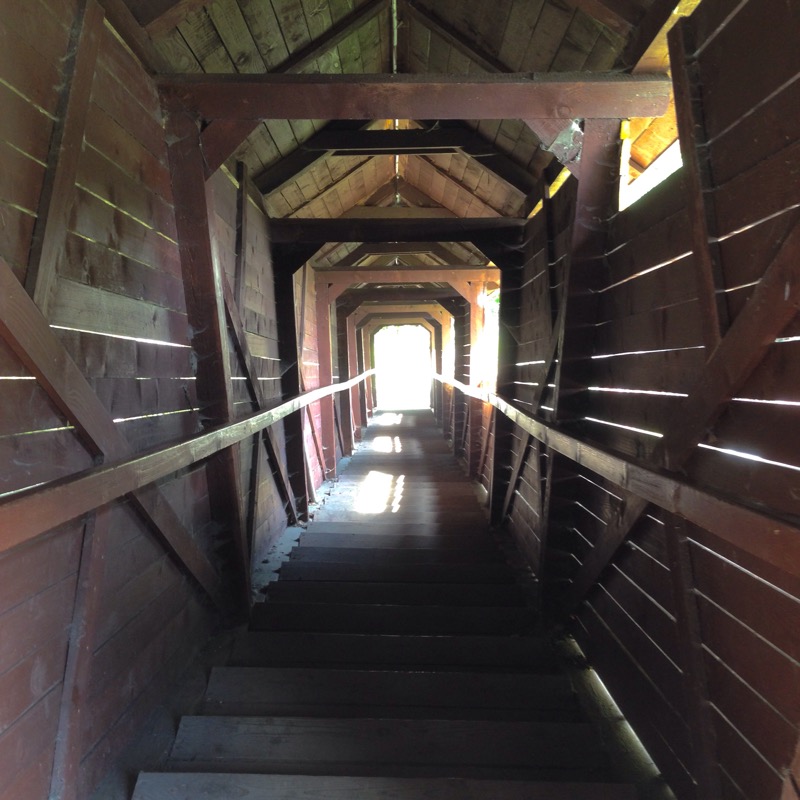
 On the way back into town afterwards we went down the old wooden steps the prisoners used every day.

After that somewhat somber experience it was time to top up on the good times so we drove northeast to Bohemian Switzerland on the German border, another national park and area of great beauty.

On the way across the flat central plains we past lots of power stations with cooling tower chimneys sending plumes of smoke into the blue sky, and more massive areas of what looked like strip mining of coal. We had read that their had been extensive devastation of the forests in the Jachymov area in the 70’s and 80’s due to coal mining and burning but as went north again into the hills the ancient forests spread as far as the eye could see and looked very healthy.

We drove along the Labe river valley in the sunshine to the pretty town of Hrensko where the towering sandstone blocks for the which the area is known began.

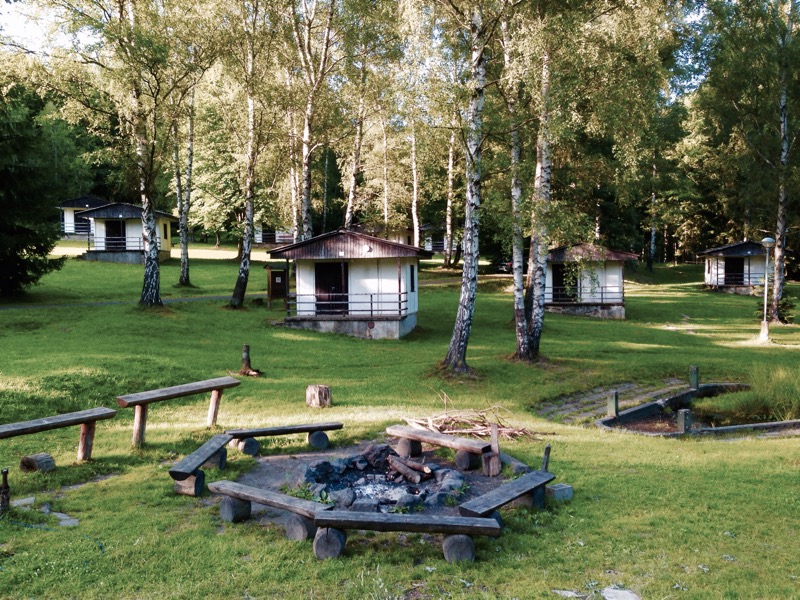
 Another few miles and we were at our camp in the tiny Menzi Louka deep in the forest where a collection of cabins had seen better days.

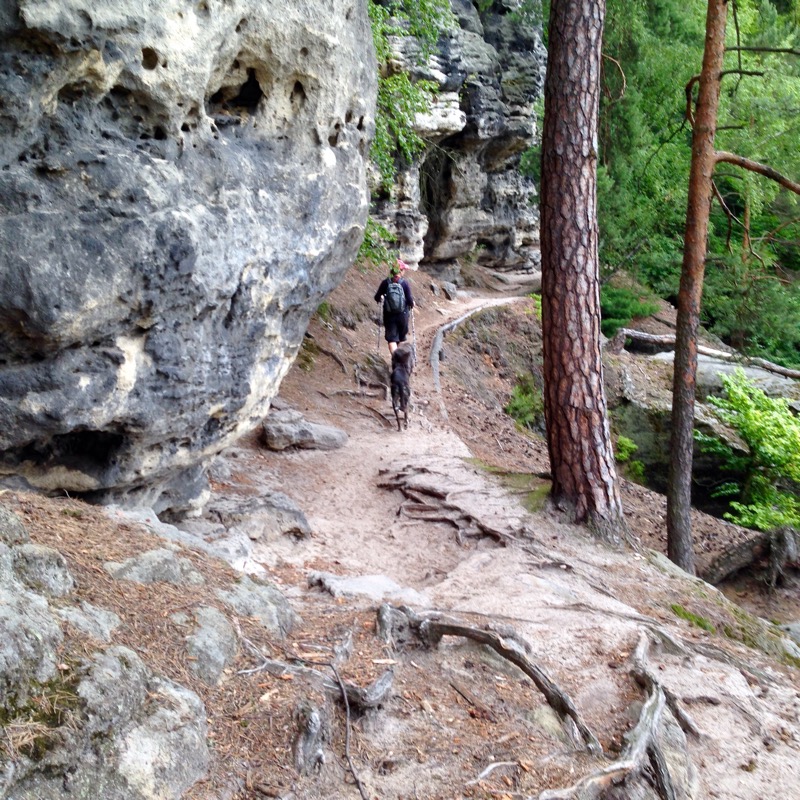
The following days hike was a real pleasure despite the many steep ups and downs. The ascents through the beech, oak and pines were made easier by the steps either of timber logs or often cut into the Rock.

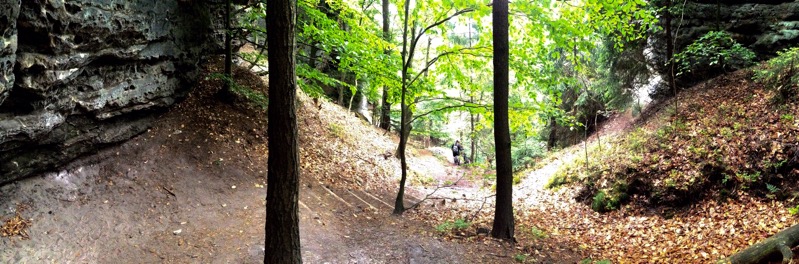
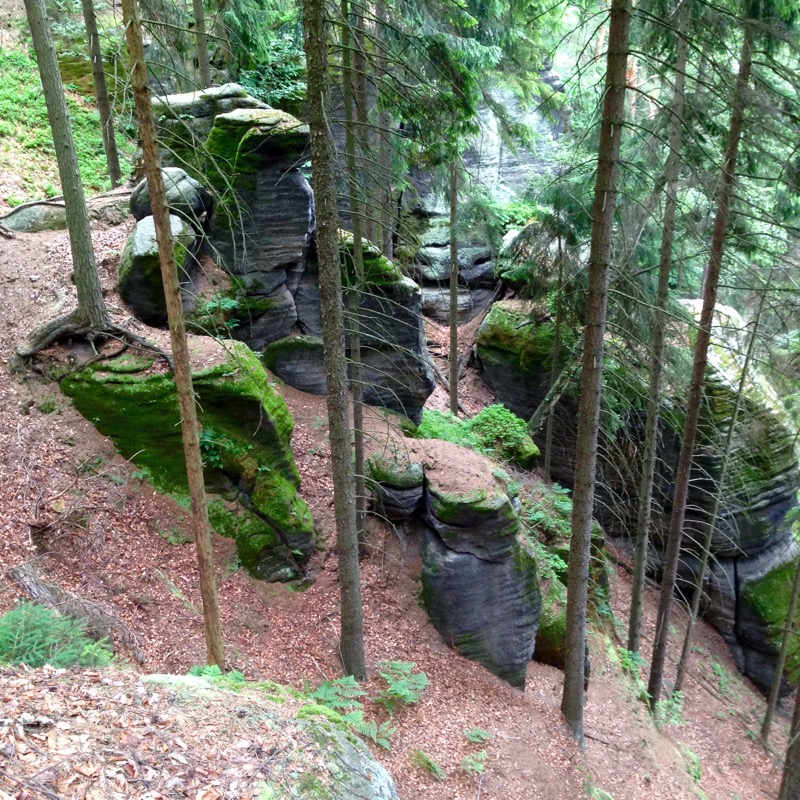
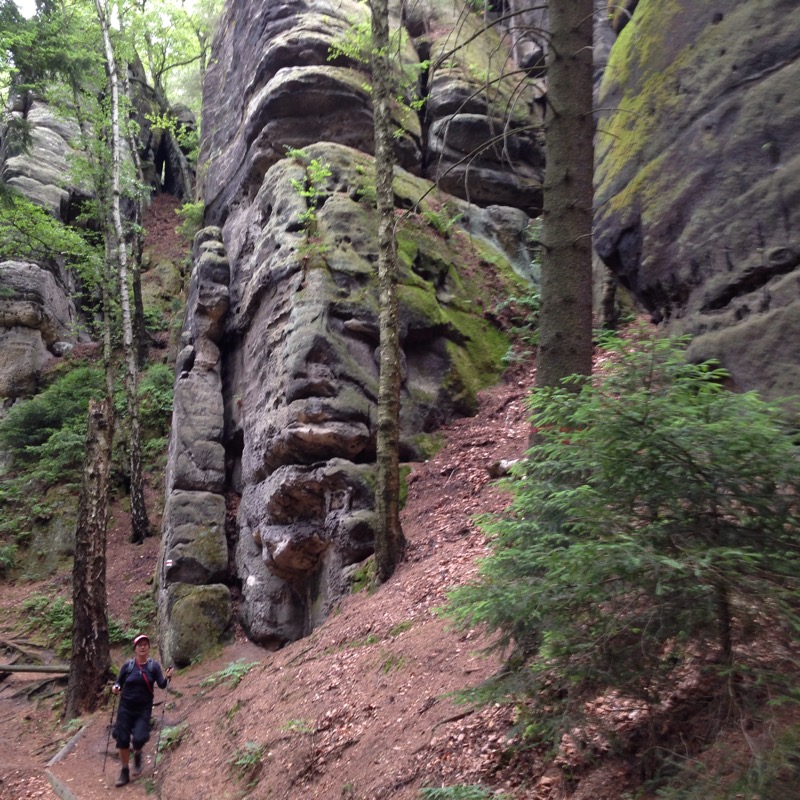
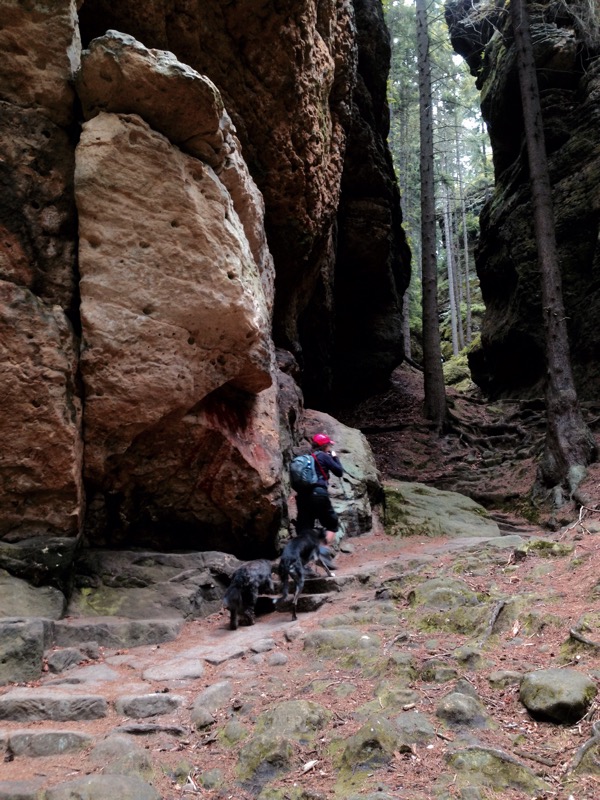
The woods were magnificent. Towering trunks straight as an arrow shot up from the steep slopes between huge hunks of weathered sandstone.

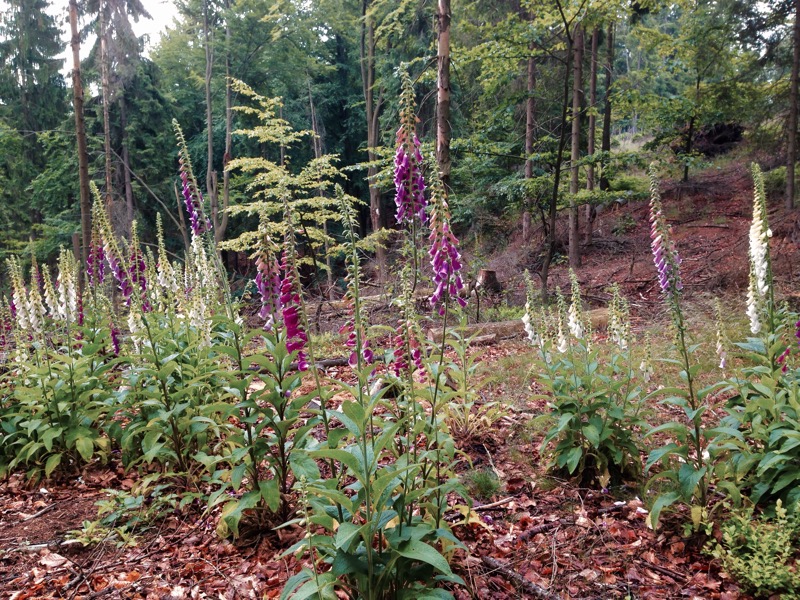
Where there was light foxgloves filled it with colour

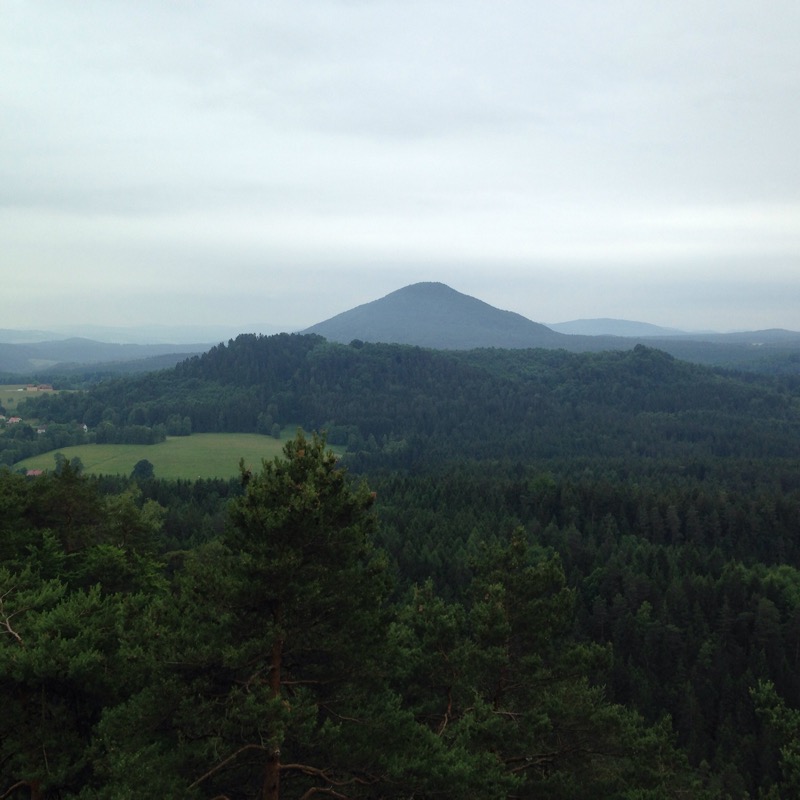
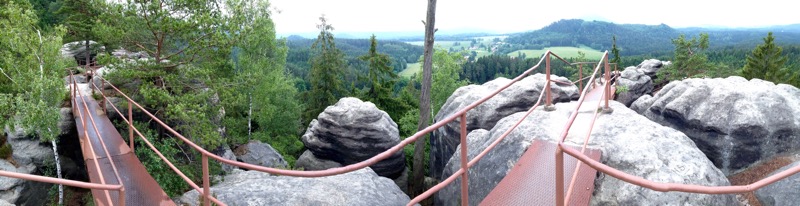
 there were ladders and cables and handholds to enable you to get to the pinnacle of some of the imposing rock towers which gave us views out across a sea of trees.

 The dogs were left below a few times as we clambered up some pretty hairy stuff incredulous at the efforts put in to make it possible.

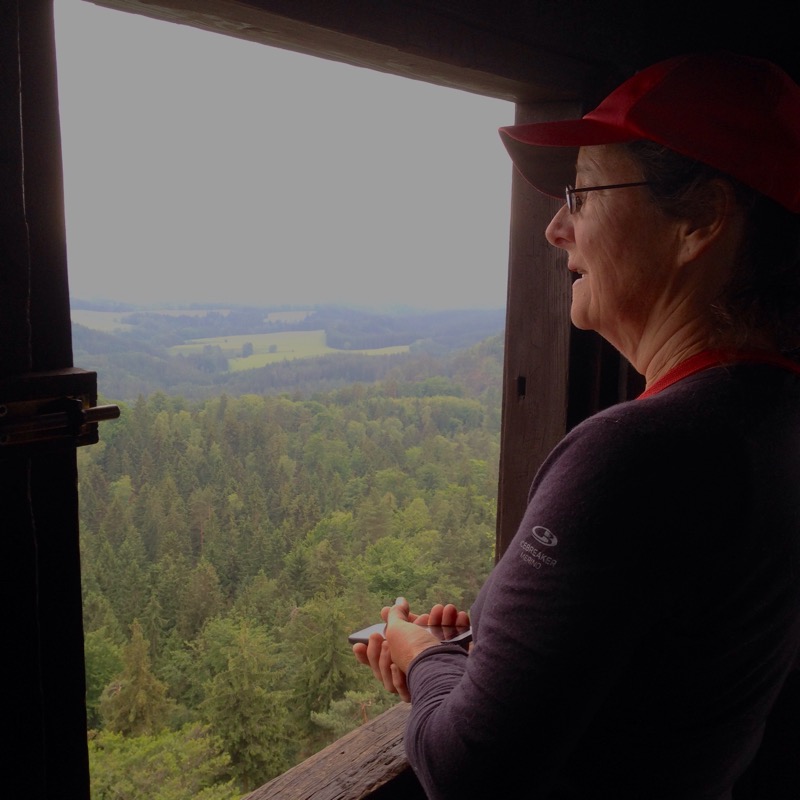
 One of the peaks even had a little hut bolted securely to the rock with picture windows

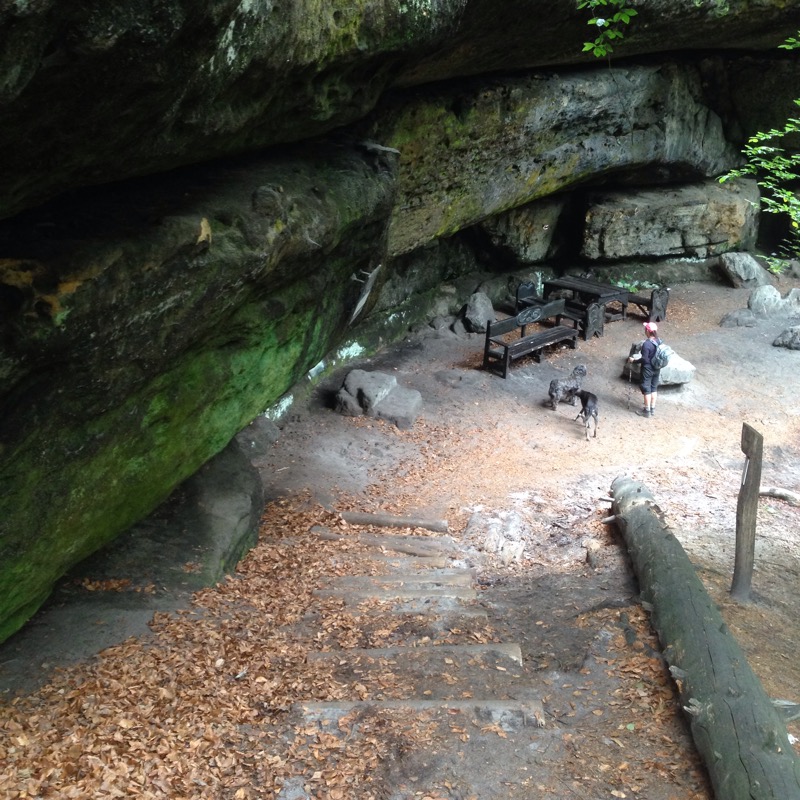
 All enchanting, as were the carved benches and picnic tables in scenic spots along the way.

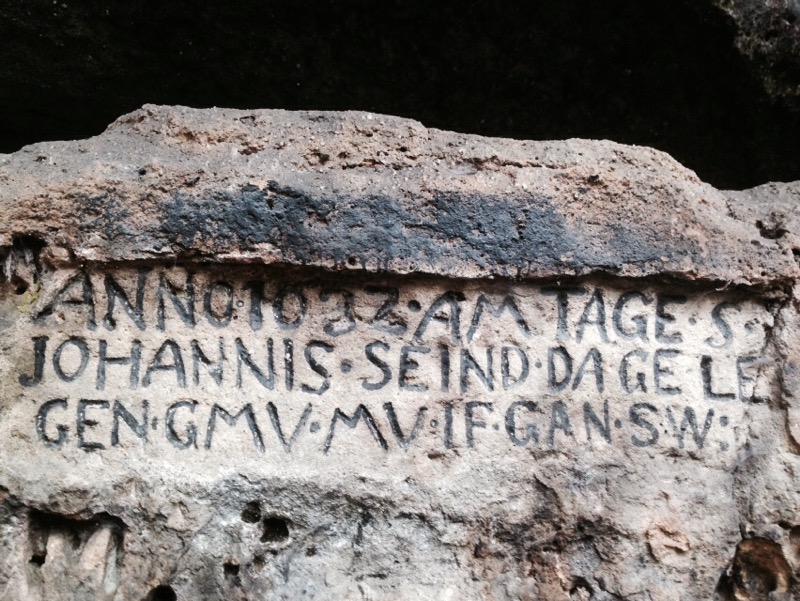
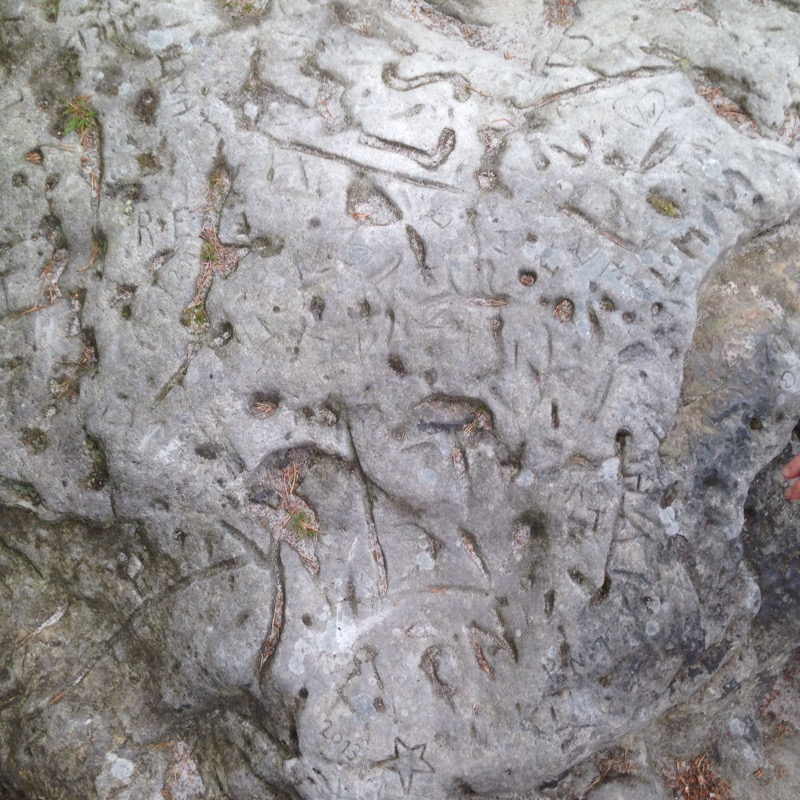
 There were carvings and graffiti dating back nearly 400 years.

 Glorious, spectacular, awesomeness.
We emerged, hungry, five hours later into Jetrichovice and stopped to eat some unknown items from an unreadable menu. So far we’ve been lucky but awaiting the time we have to tuck in smiling to a dish of unthinkables like we order it all the time.

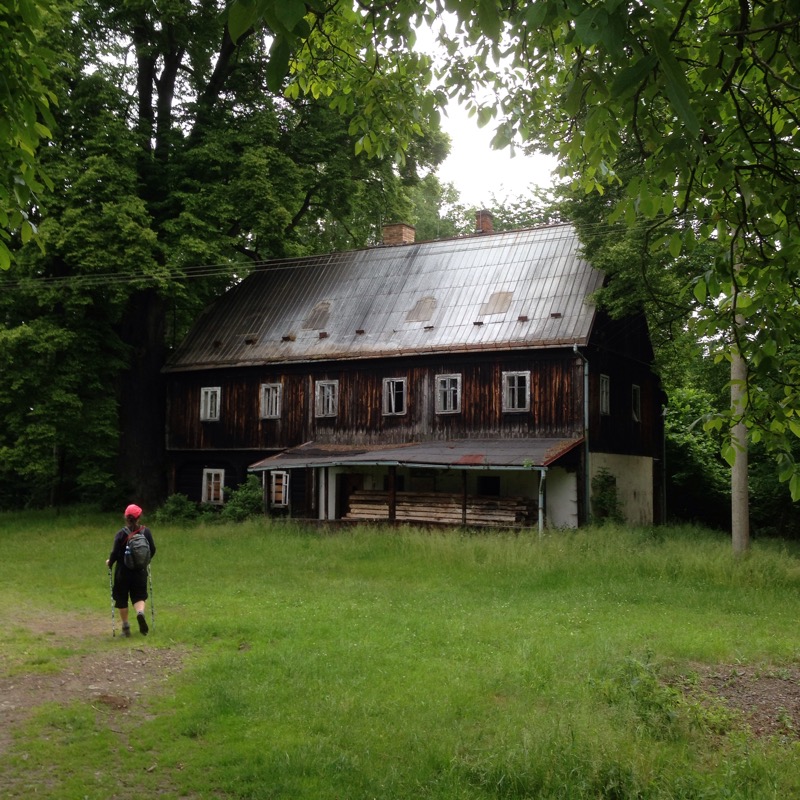
The wooded architecture in these rural Czech towns is stunning and it’s nice to see that quite a few old one are being restored. They are also keen gardeners and we were treated to some heady scents as we walked out of the town and down along a stream.

As we followed the steam down through the woods

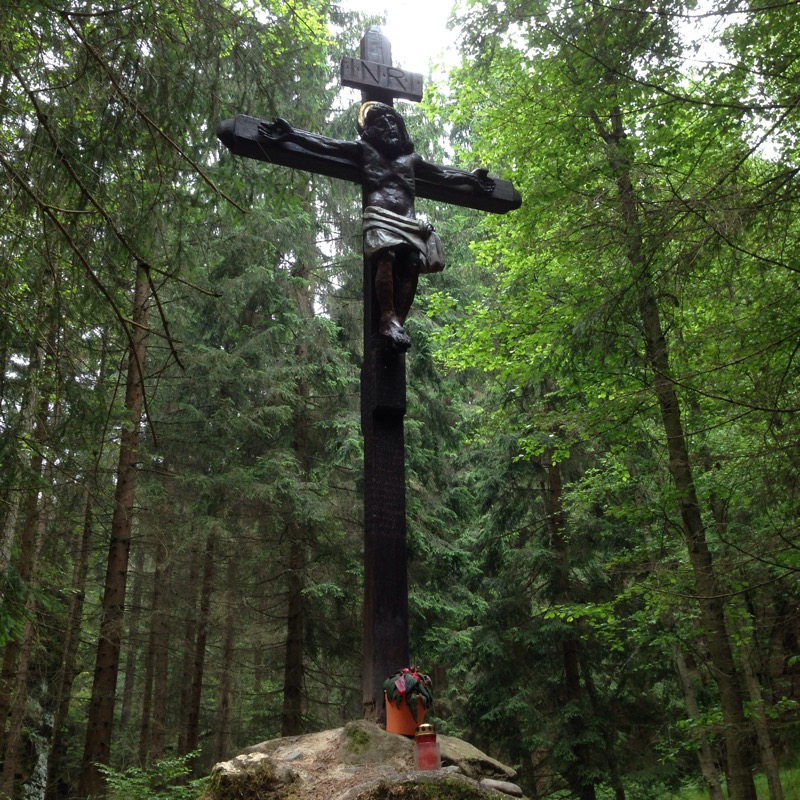
 between sandstone cliffs on either side we passed a number of religious shrines, crosses  and wells all dedicated to different saints.
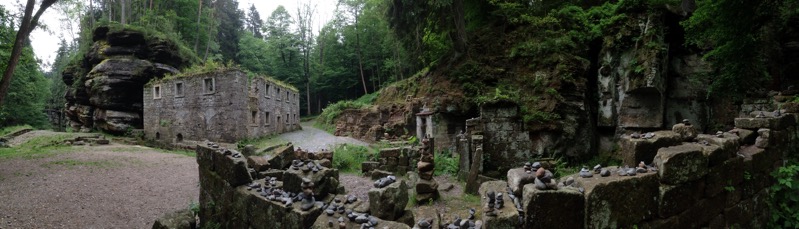
Eventually the stream led us to a collection of ruins on the banks of the bigger river in a majestic setting.
There were some laboriously carved rooms with stone beds set into the cliff which , coupled with the shrines along the way, made us think that this was not just the mill the info said it was.

One last major climb

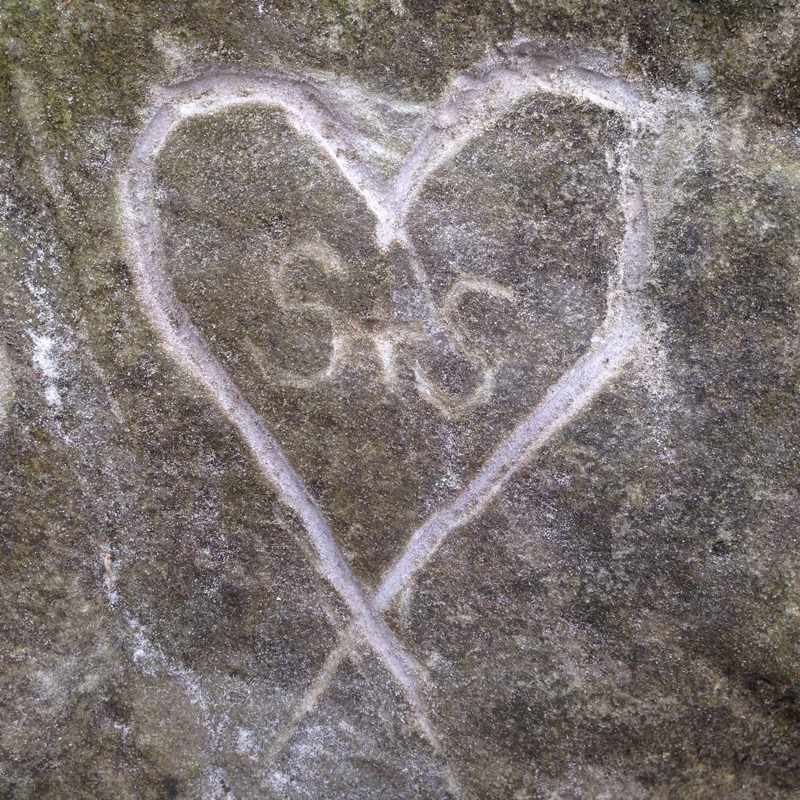
 and an offshoot of the way to a viewpoint with a large soft rock carved over the centuries by many weary walkers.

We added ours before finishing the hike by passing some more handsome wooden buildings on the way back into camp.

THE GRAND TOUR: CZECH 14/15/16th JUNE

0/10/19km

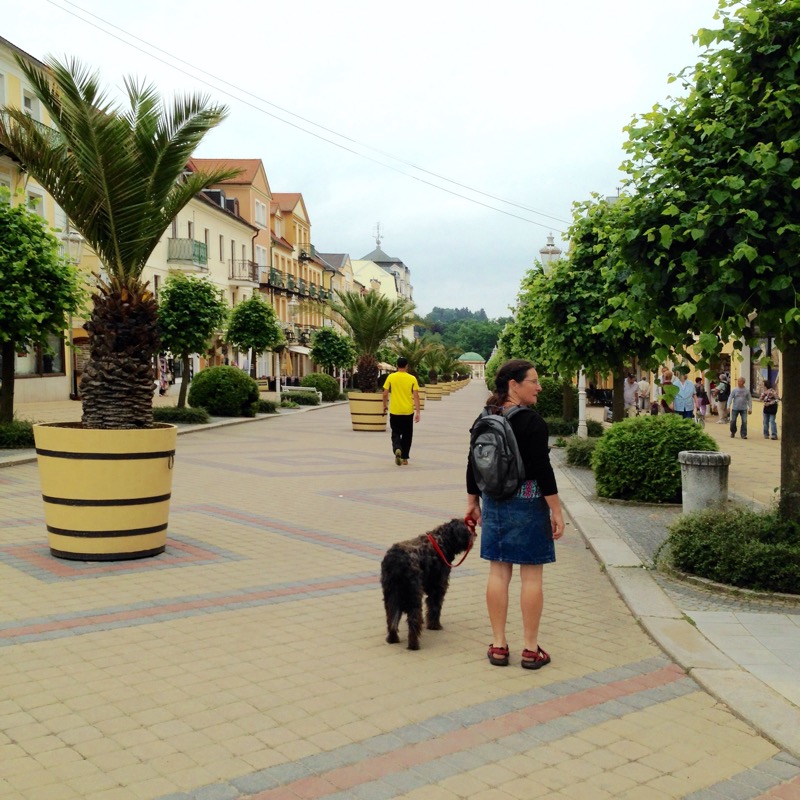
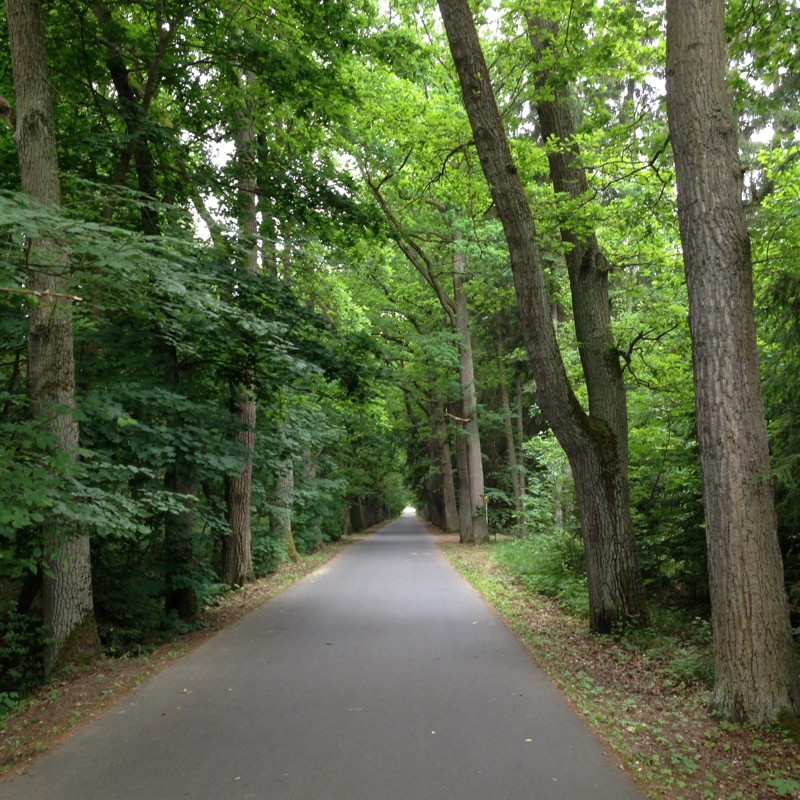
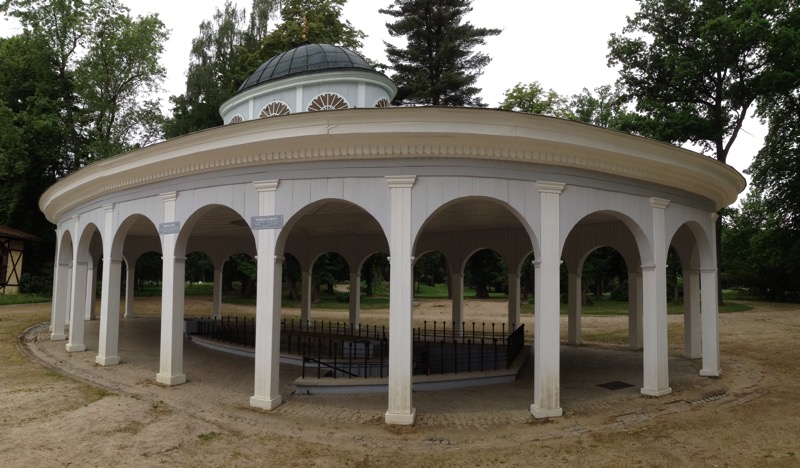
A hot Sunday on our last day on Germany. I could see the benefits of a stay on a campsite when the bread and cake van came round. We did our best to blend in for a while    and then it was time to get going.  We had asked Serena to direct us to Czech without going on the motorway as we had not got a vignette, a toll card, so we had a lovely back road drive across open high country to the border past windmills and solar farms and a biomass plant. All very green.  Wild camping and park ups are apparently illegal in Czech so soon after the border we headed for a campsite near the spa town of Frantiskovy Lazne. Greeted by a very friendly lady who dug deep to revive her 30 yr old school English lessons we were given free rein to park where we liked in the small laid back camp. The grassy field was being smothered in poplar fluff.    We went on a walk around and a meal at the nearby lakeside restaurant where everyone was friendly and the whole vibe seemed more relaxed and funky than East Germany with a LOT of young hip looking folk about. And they love their trees.     Next day it was time to explore the town, one of the pillars of the west bohemian spa triangle. With 23 different mineral springs with very high iron, salt, co2, and other stuff it was a hugely popular place at the turn of the 20th century and it’s fine architecture was surrounded by landscaped parklands that spread the 2 km to the camp along tree lined avenues.  

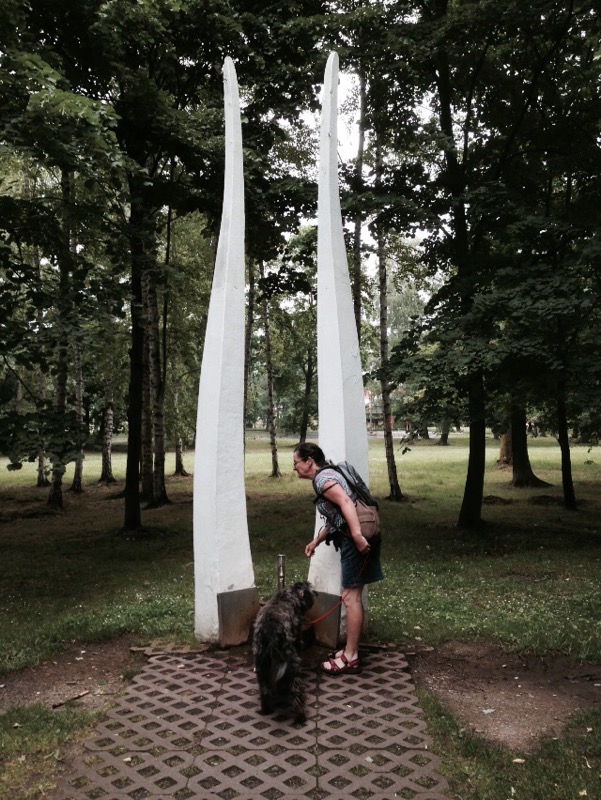
 We tried a lot of the waters, and most were pretty vile but came in nice wrappings.  

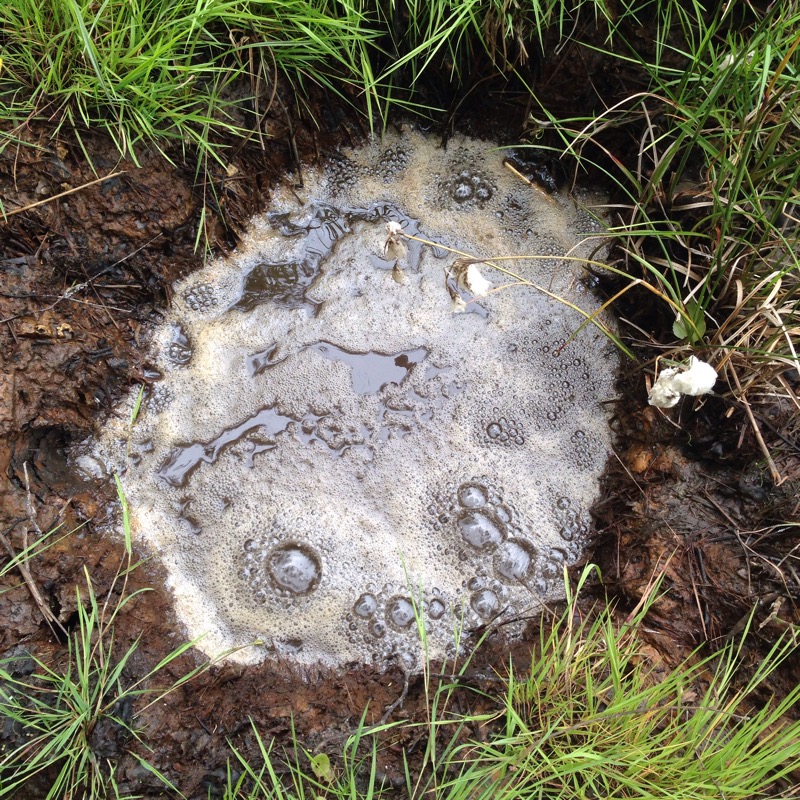
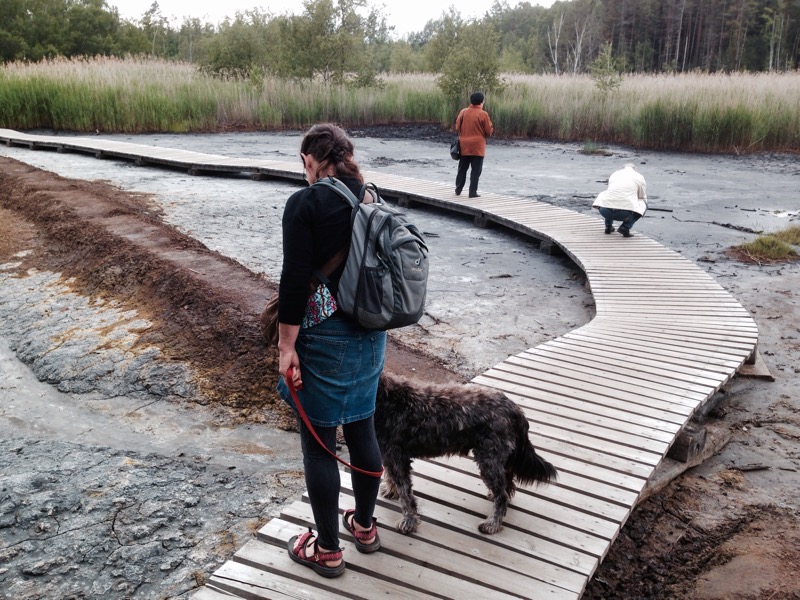
  In the afternoon we headed to a reserve nearby where across the 100’s of acres of moor and wetlands there were many mineral spring sources and a large quantity of pure carbon dioxide comes to the surface in mud volcanos.  

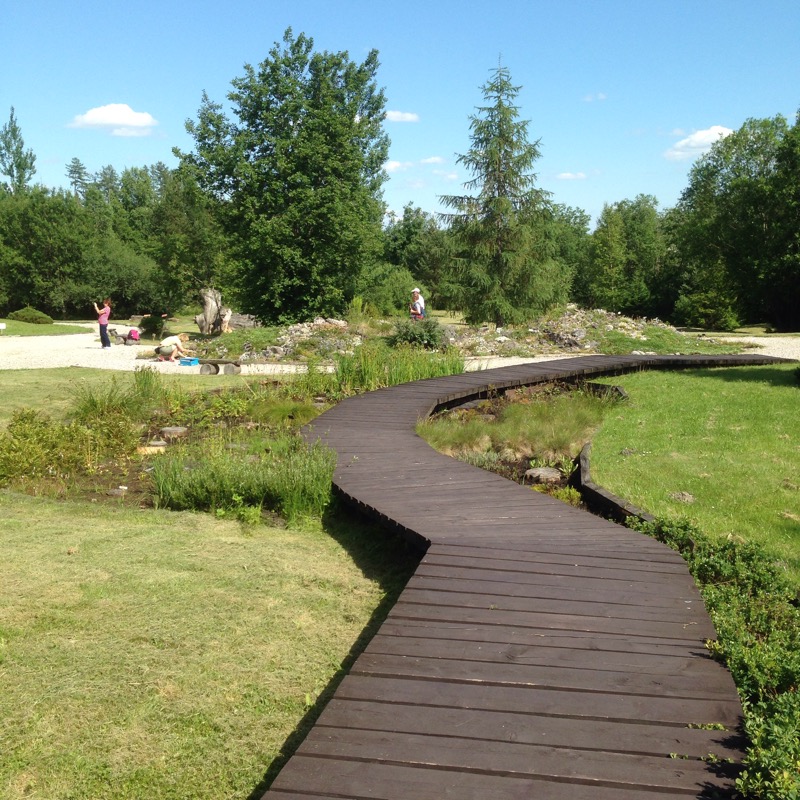
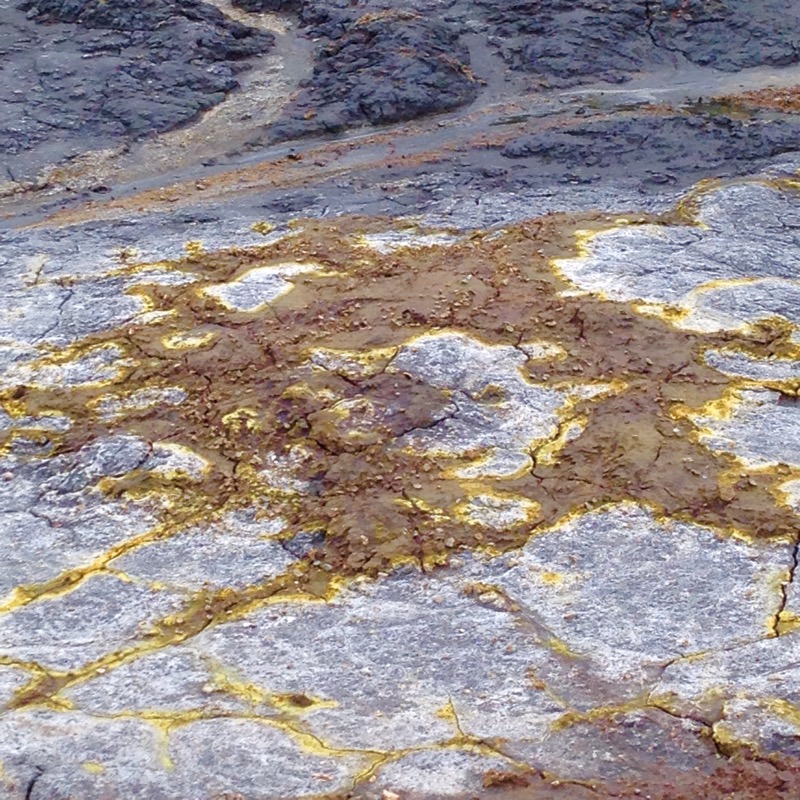
 There was a boardwalk across the strange landscape that had beautiful patches of sulphur coloured ground.  

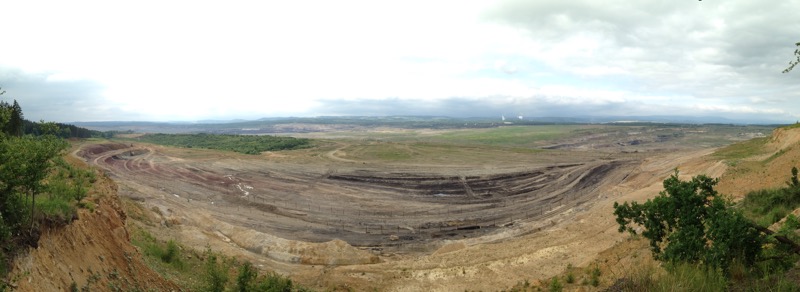
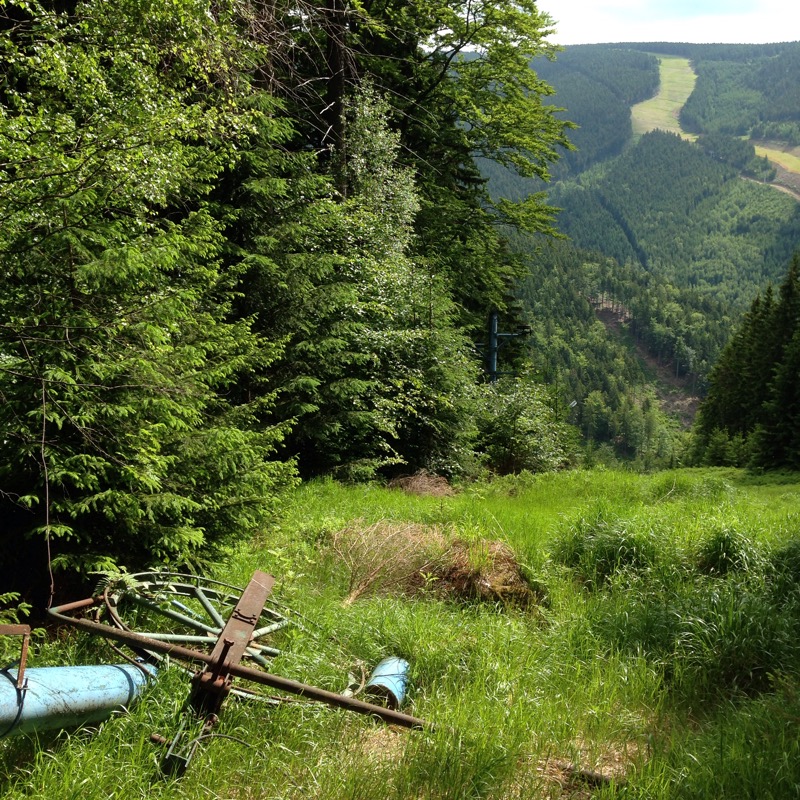
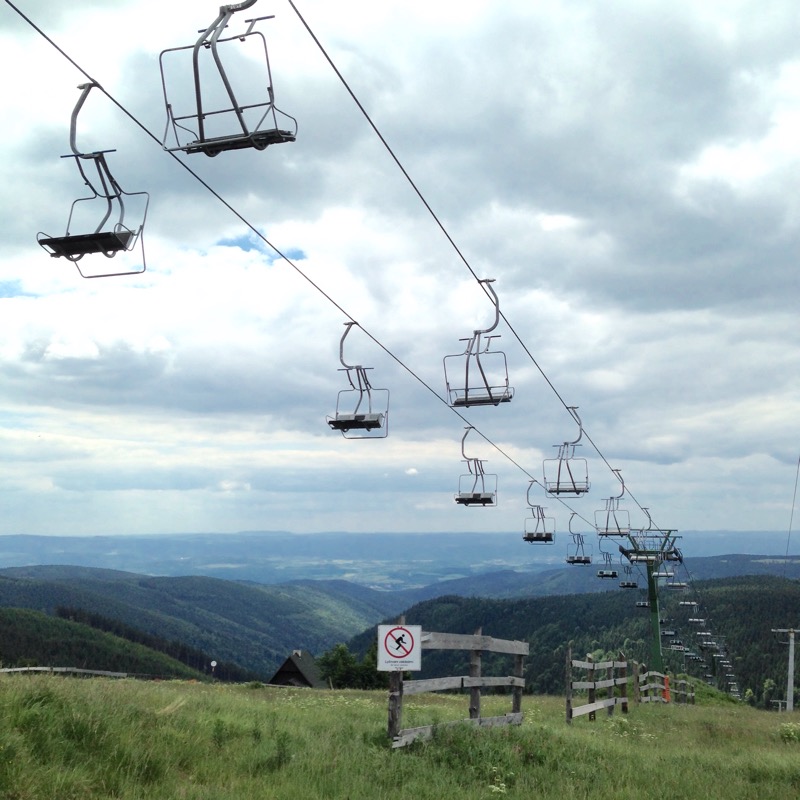
  There was another area of Bohemia I wanted to explore above the spa town of Karlovy Vary. The Krusne mountains have been mined for tin, iron , copper, zinc since the 16th century and when uranium was discovered there in the 1950’s the Soviets brought 15000 mostly political prisoners in to toil below ground extracting it for Russian nuclear experiments.  On our way there we past a huge area of open cast mining where the planet had been stripped away.     . We found our way, well Serena did, to a lovely pension with a small field of cabins to park in up in the woods below the mountains. The friendly owner of Pod Lanovkou charged us a couple of euros to use the showers and toilets but nothing to park up.    In the morning we did a 18km hike up to the top of Klinovec the highest peak at 1224m. The way went through forest with abandoned ski lifts and runs and across meadows thick with wild flowers.  

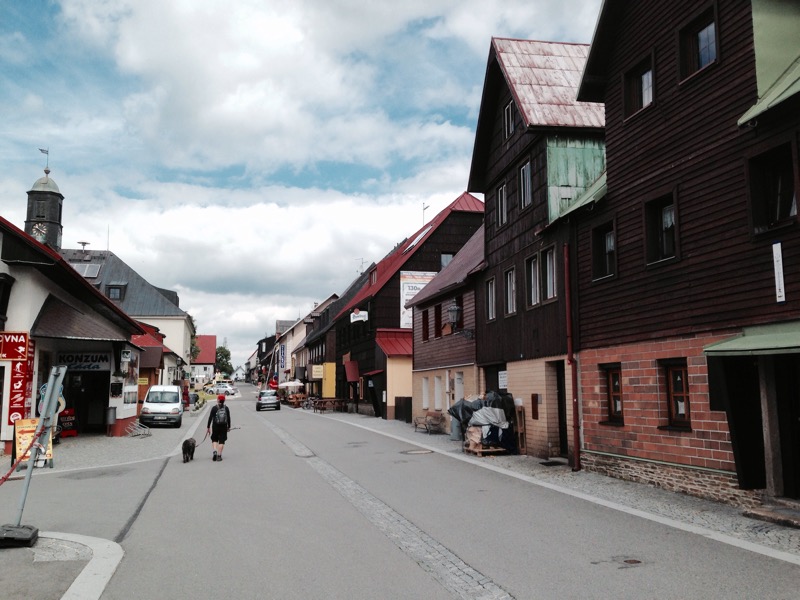
 We stopped for a coffee in the highest town in Central Europe,Bozi Dar which was a nice looking ski walking and biking centre.  

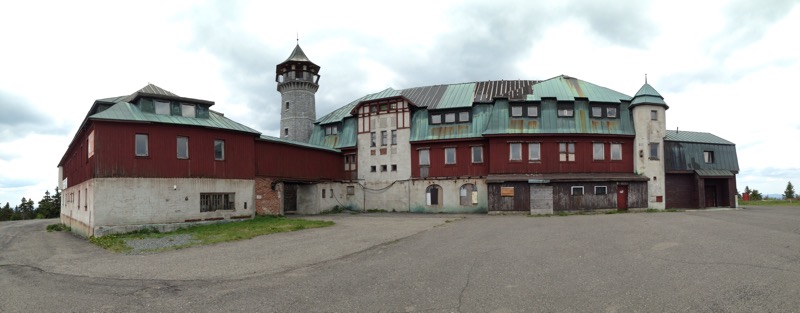
  For what is the second most irreligious country in the world they have many fine churches.     Then up to the top with more ski lifts, flower meadows with views and a summit abandoned hotel.  

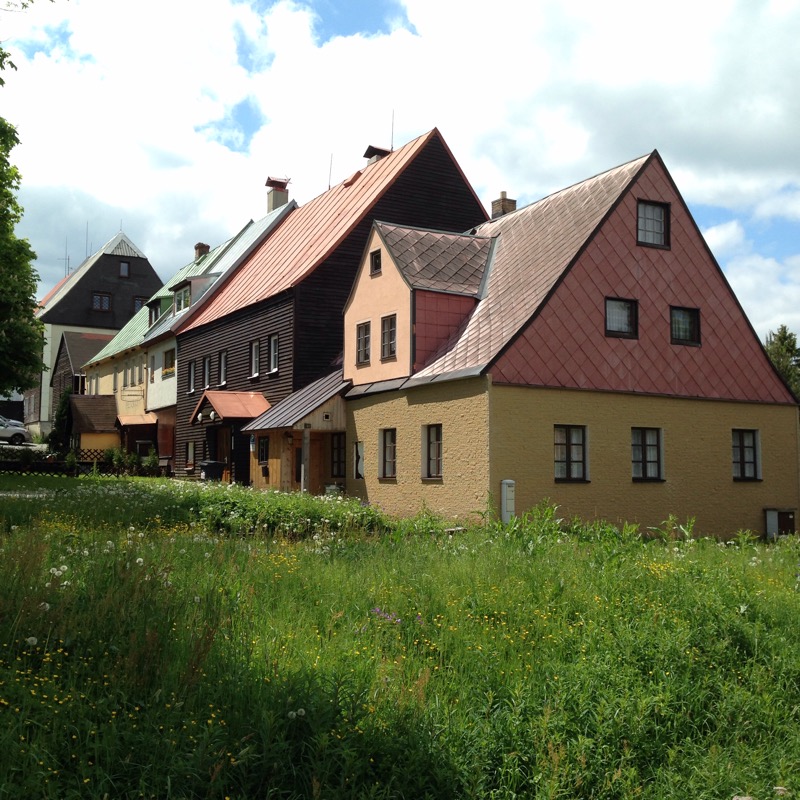
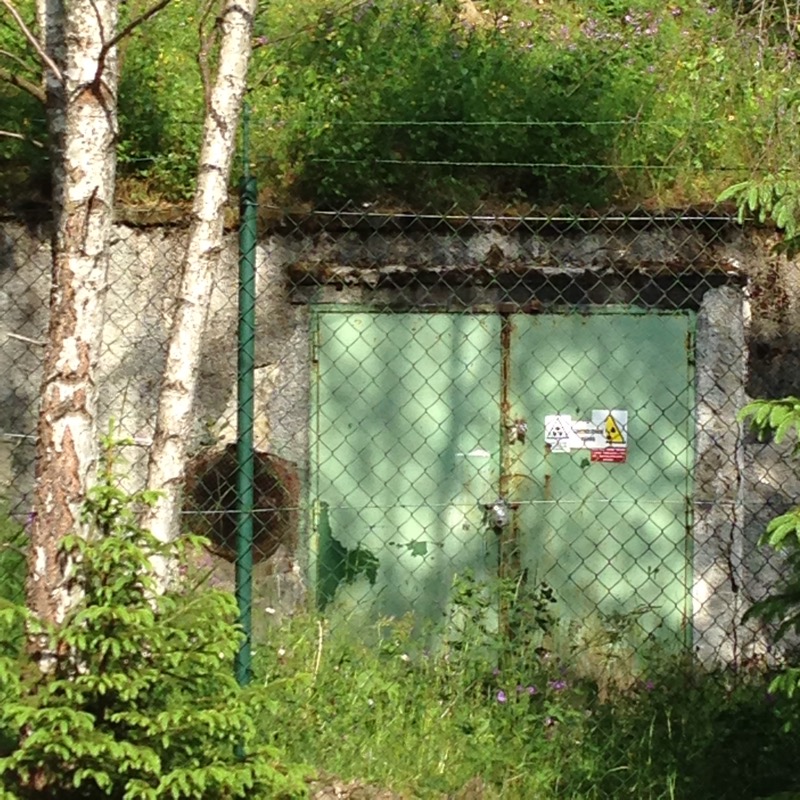
 On our way down we passed a gang of dark skinned workers making a new trail through the forest.    And after a steep scramble made it back to camp where the owner told me that this very site had been a uranium mining work camp and pointed out the mine entrance and buildings. We had been hiking over the top of the tunnels.  

  Tomorrow we will explore more of the “Jachymov Hell Trail”

THE GRAND TOUR: GERMANY 12/13th JUNE

19km / 12km

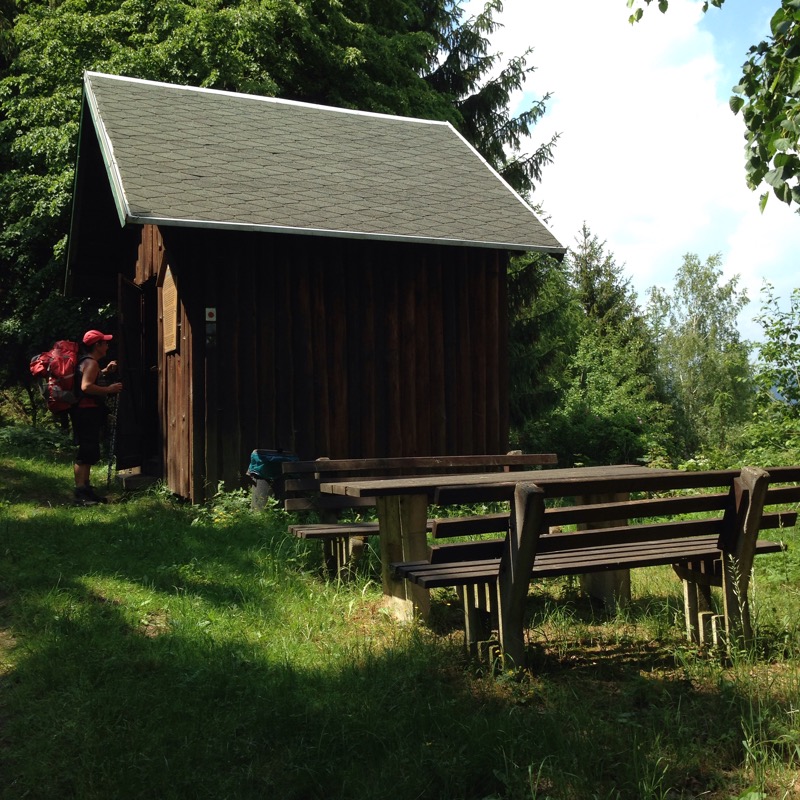
We had a night of rumbling thunder and flashing lightening and enough rain to make us grateful for the shelter of the hut. 

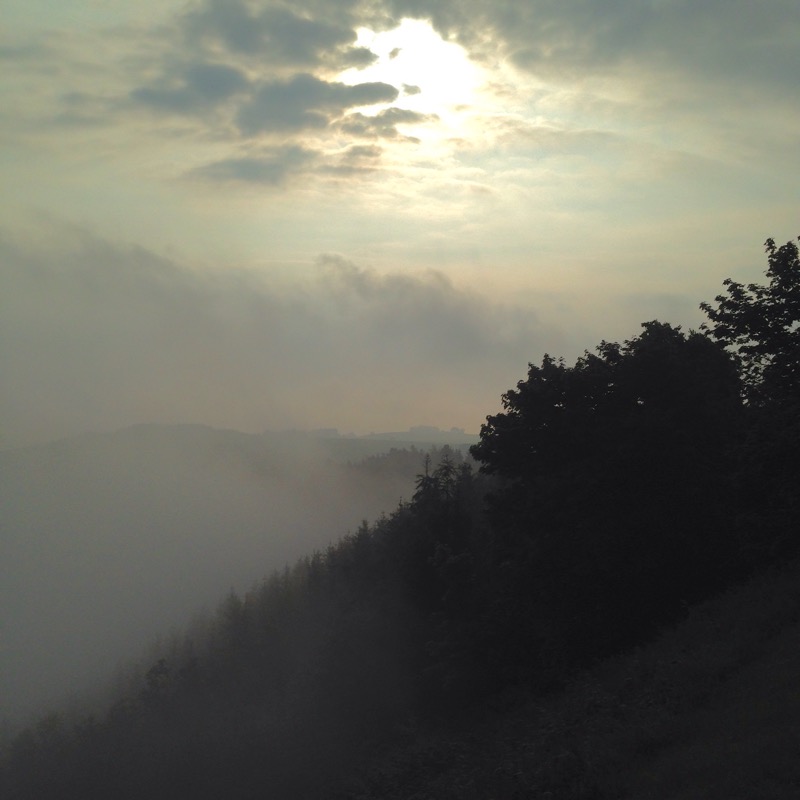
The morning started off with mist below us in the valley 

 but the sun soon burnt it off and we left the hilltop to the parascenders who were starting to set up. 

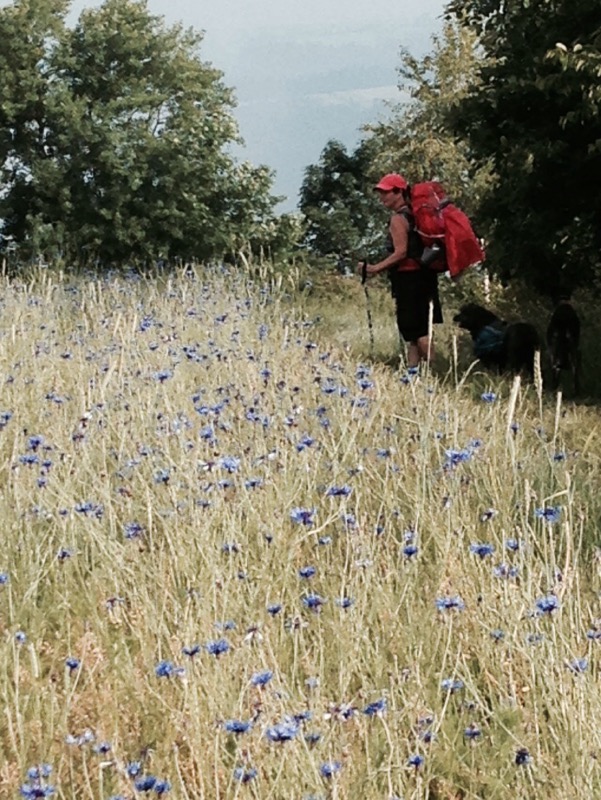
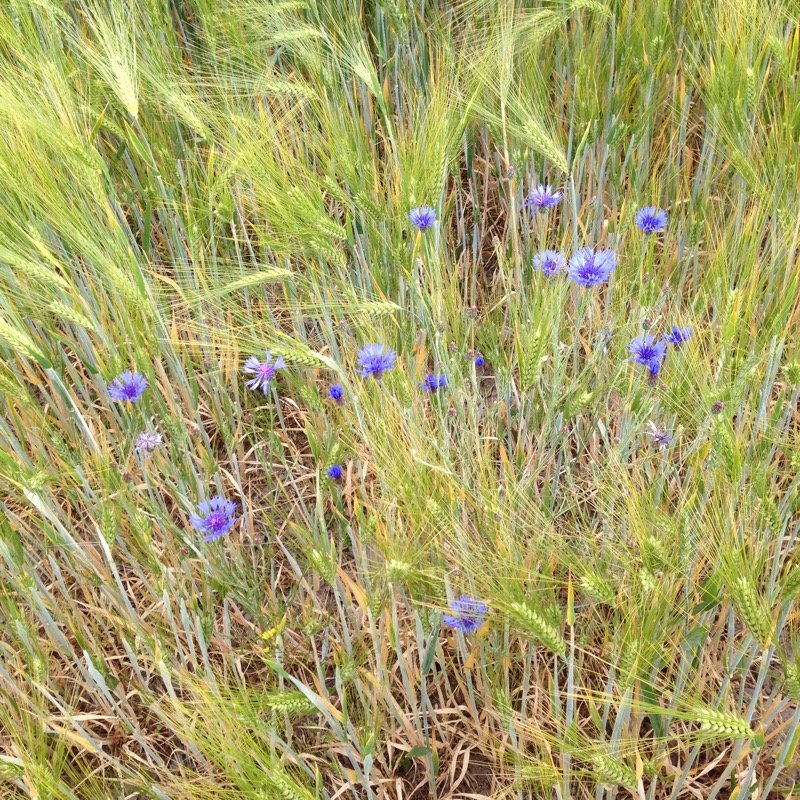
The walk to the next village took us alongside more cornflower ringed fields  

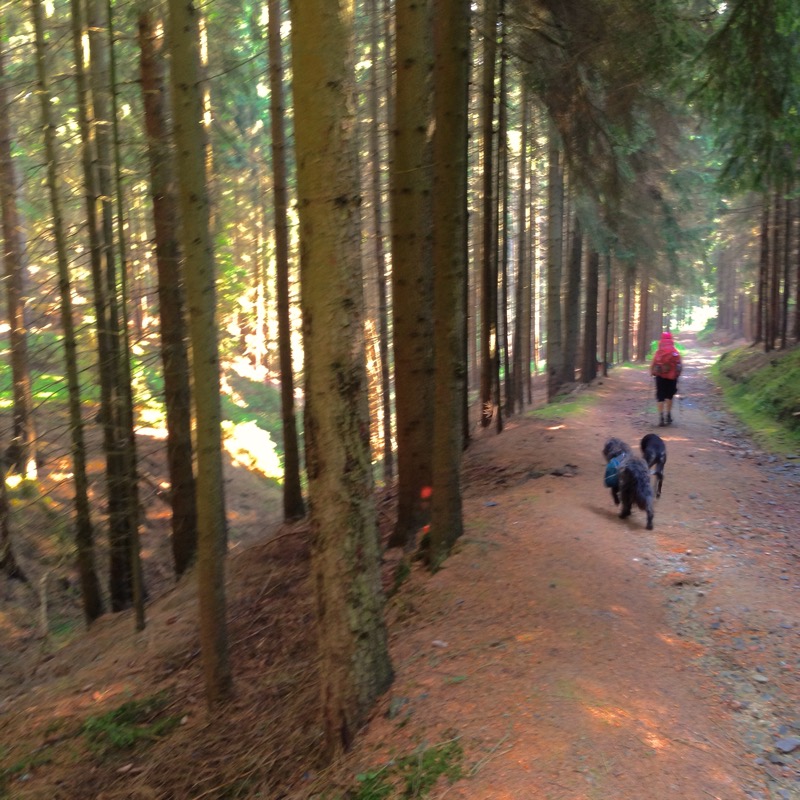
 and across farmland surrounded by forest where the dogs took off after a deer, scruff’s pack not slowing him down. 

  
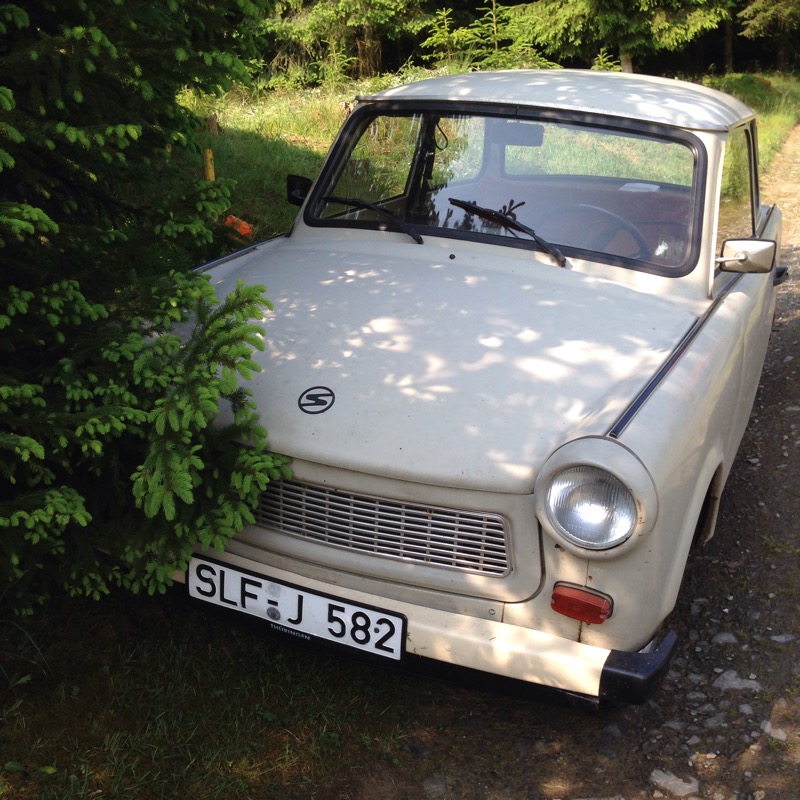
In the village we were lucky to find a shop open for supplies as we’ve been disappointed in a few places that have been deserted and shop less. I came across my first Trabant, the old communist car of the people, and later in the day another that had been “pimped” 
   I’ve been surprised at the lack of old motors here and the Tranny stands out a bit, as it seems do we. There are NO other foreigners here and people sometimes seem wary of us or very curious anyway. Some of the villages are a bit eerily tumbleweed and staring locals, if you actually see anyone. 

The heat was building up rapidly and we were glad to get into the cool of the forest on our way down to the lake. 


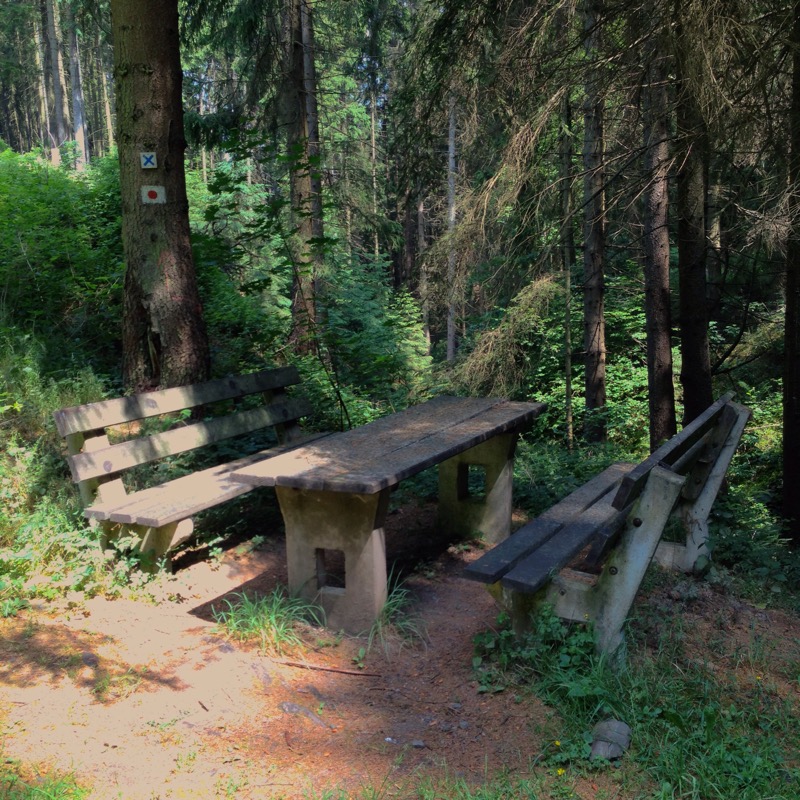
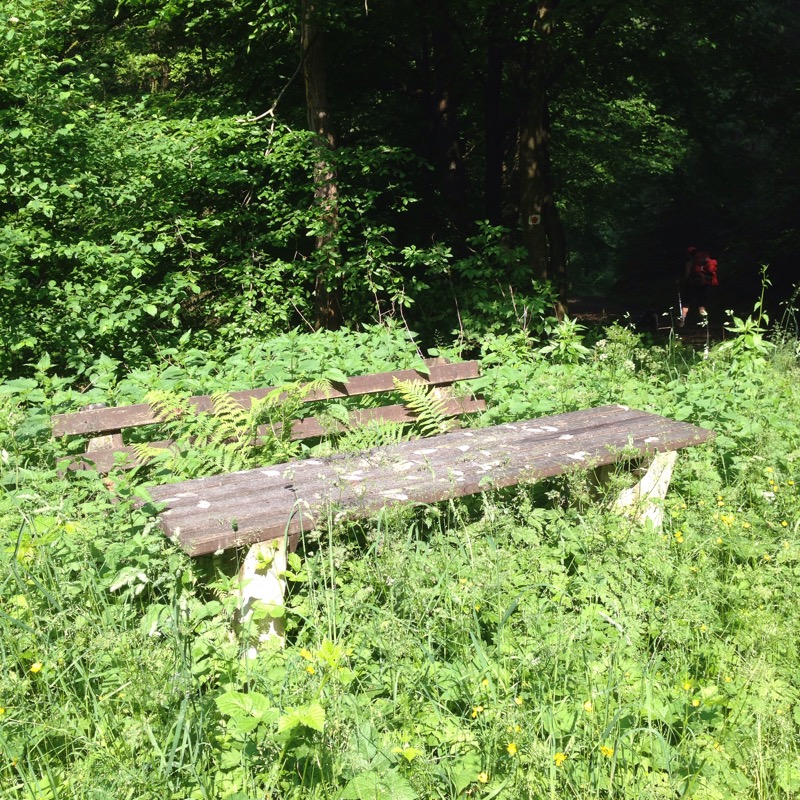
There are benches along the trail everywhere, even on the forest.  

   Some have seen better days 

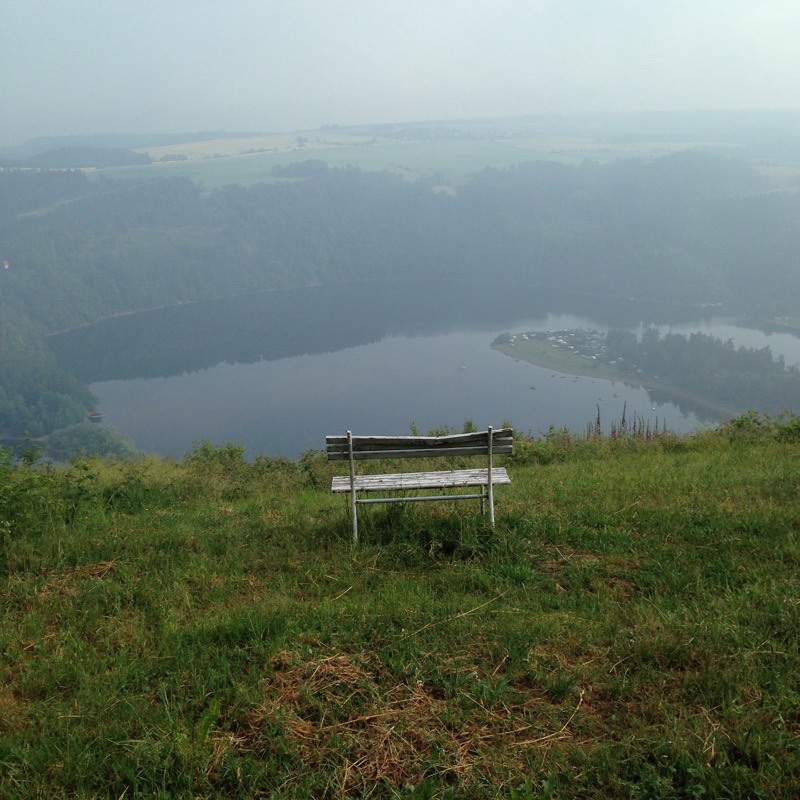
 but they are often just where you want them for a bit of a rest and view.  


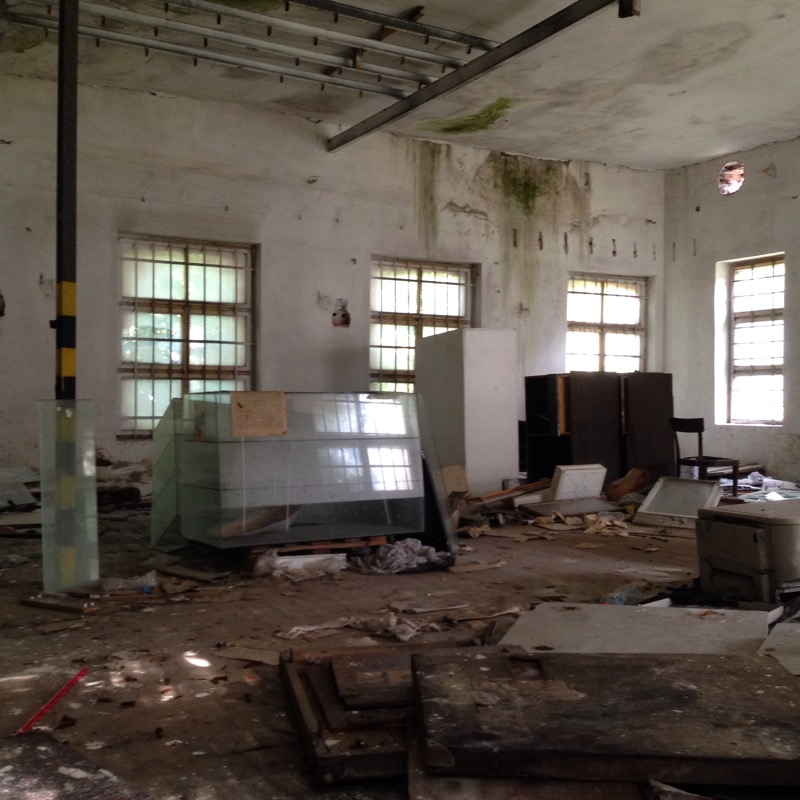
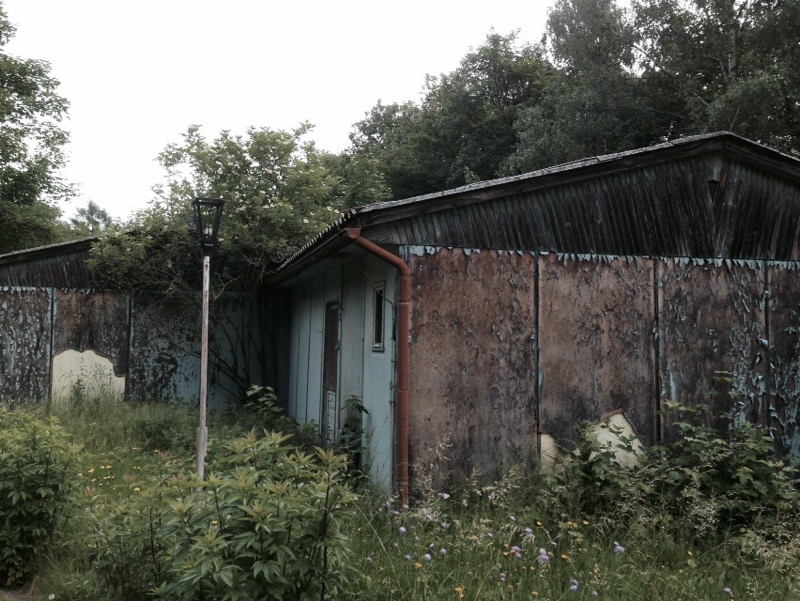
We passed through a huge deserted camping site and have seen a few big developments from what looked like 60’s and 70’s that have been abandoned. We wondered if they were communist era workers holiday camps that are no longer wanted. 

At the lake was a popular “Eco” campsite that was dog friendly and had a nice beach so we hung out for awhile and had a swim.  

 It was the campsite with the cabins that we had been looking down on when we slept at the viewpoint two nights earlier. We had to stop for a swim a couple more times that day to cool off and the wooded hills made for a great backdrop while floating on my back amongst the jumping fishes. 

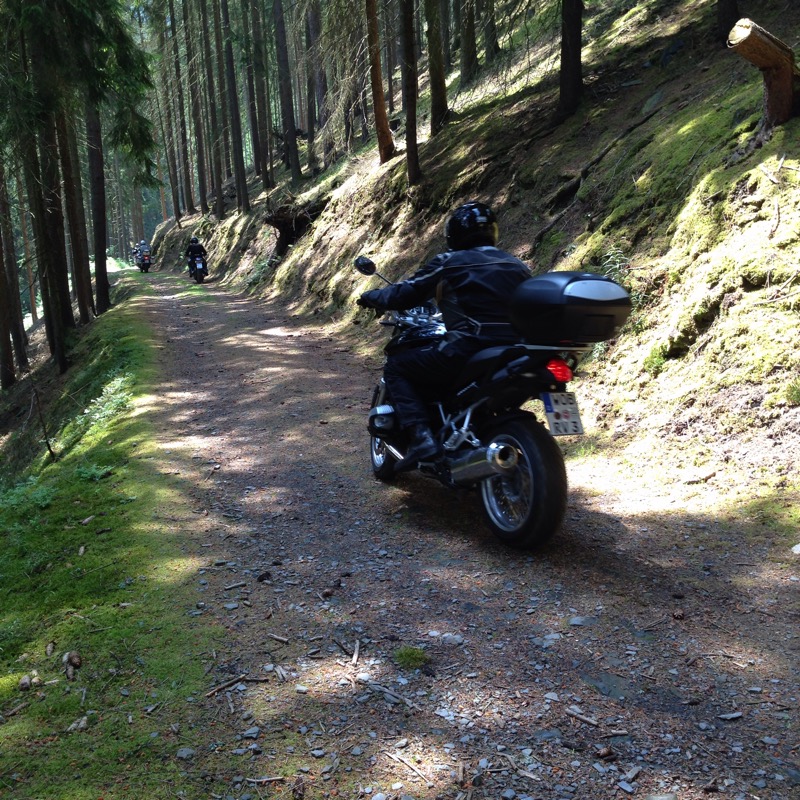
Back on a small forest track we were surprised by a convoy of big bikes.  


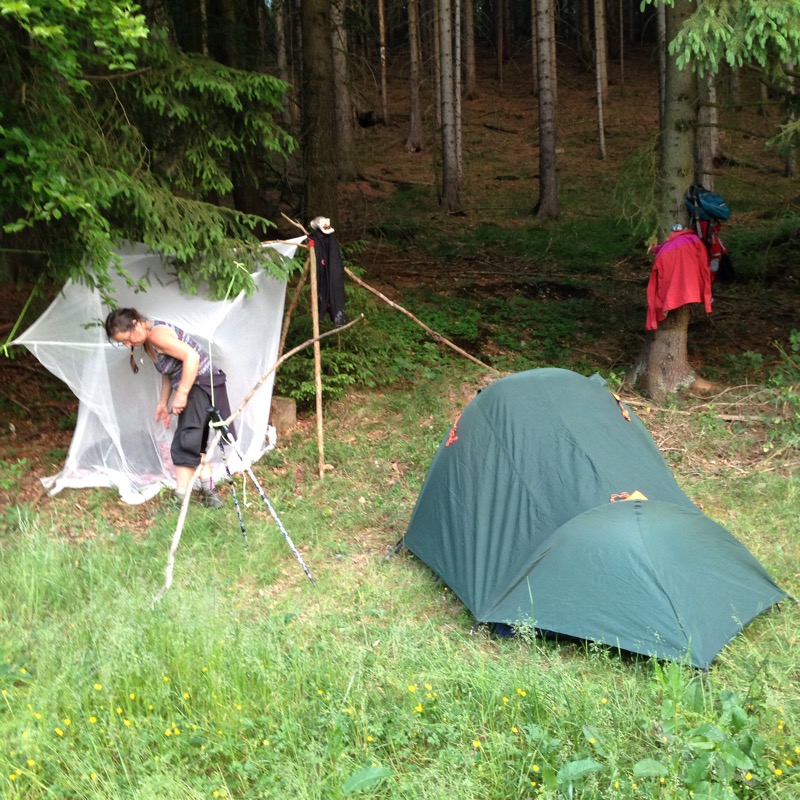
At the end of a hot afternoons hiking we came, at last, to an open bar serving food and we quenched our thirst and gambolled with the menu, getting a good result which gave us the strength to climb the last big hill and find a place to erect the tent and mozzy net for the hounds.  


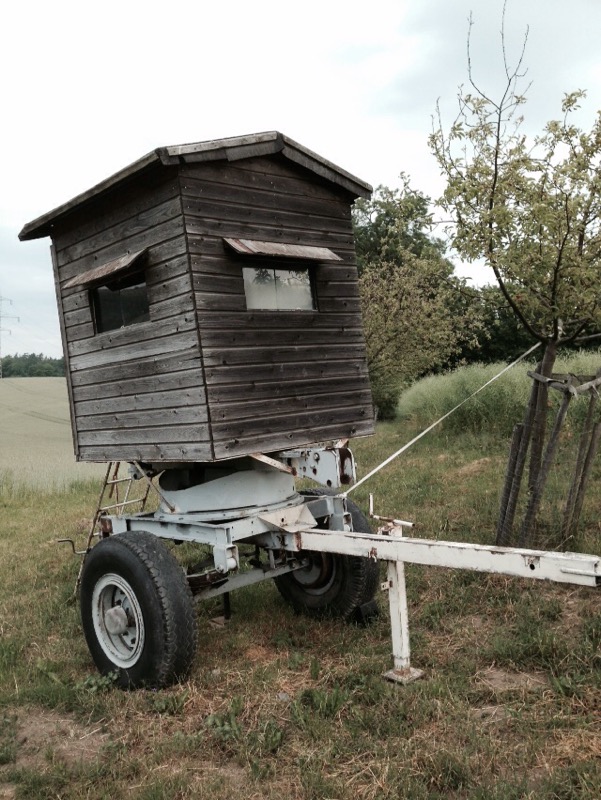
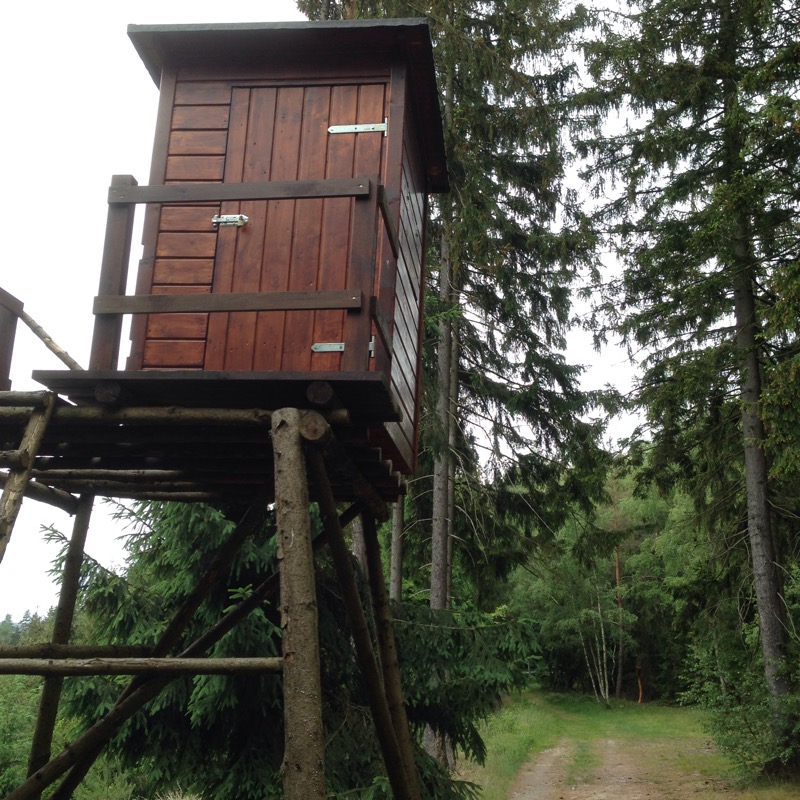
A gun shot in the early night followed later by a lot of stag bellowing made for a disturbed sleep but we made it though unharmed and in the morning I investigated the hide next to us. There are even more hides than benches and they come in a variety of styles from the basic but movable metal ladder strapped to a tree trunk to totally enclosed rooms with a view.  

   The one next to us had carpet and comfy padded seating and magazines to read while awaiting the kill. 

So on our last, short, day on the trail we once again headed off down the wildflower strewn ways  

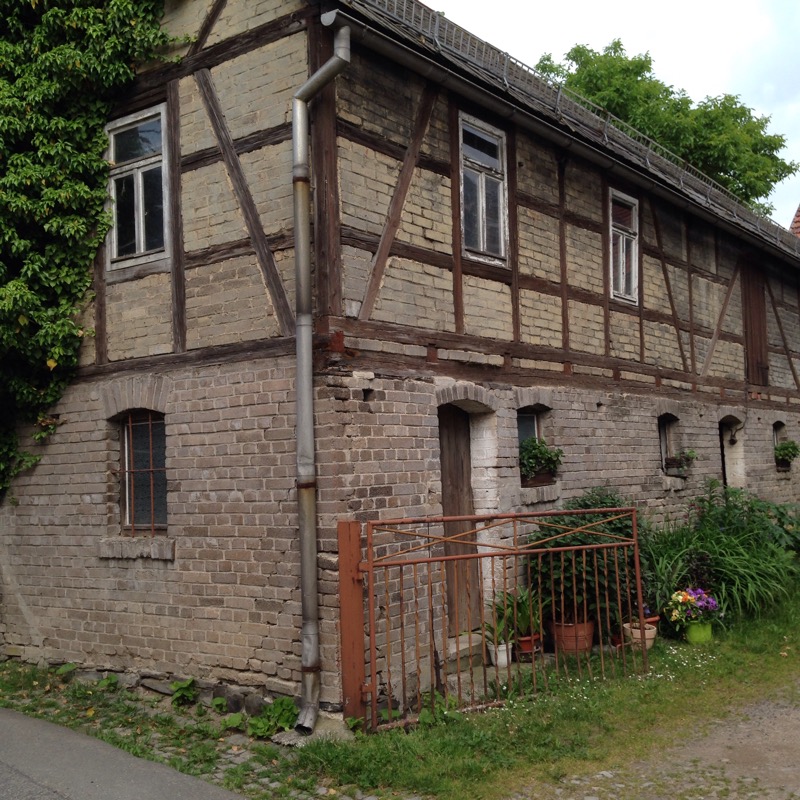
   and past vast woodpiles outside the old village houses.  


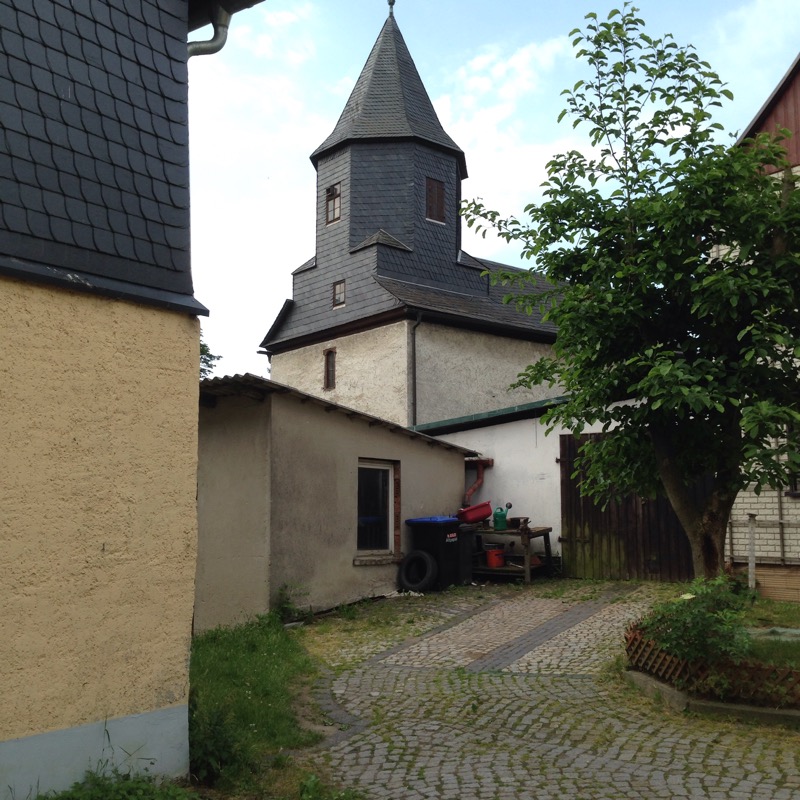
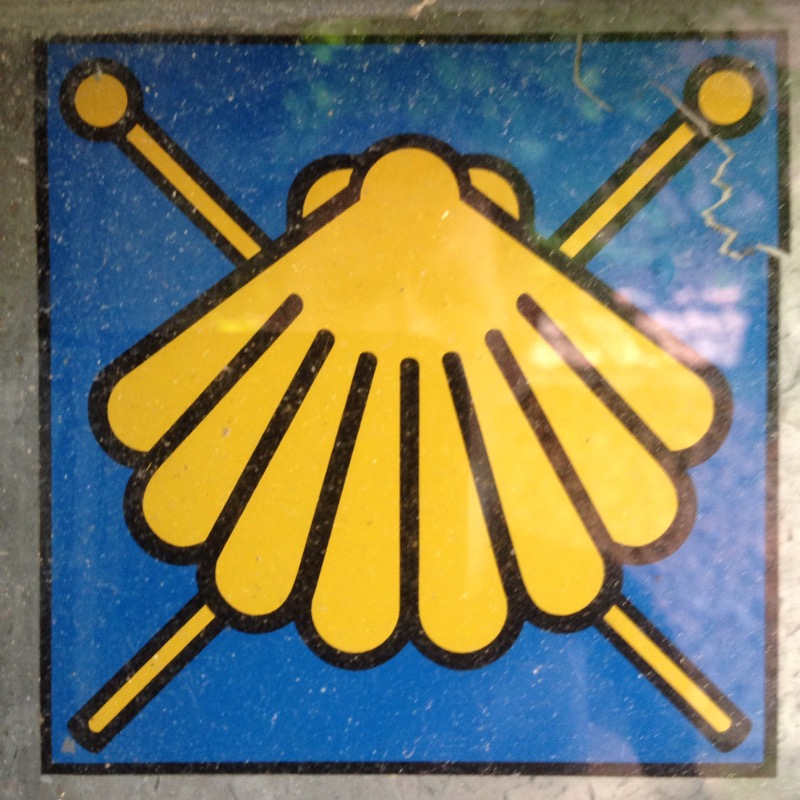
At St Jacob, our highest point of the trail at 560m , there was a church dedicated to the Saint who is the same as St James of Santiago de Compostella and the pilgrimage goes either from or through here.  


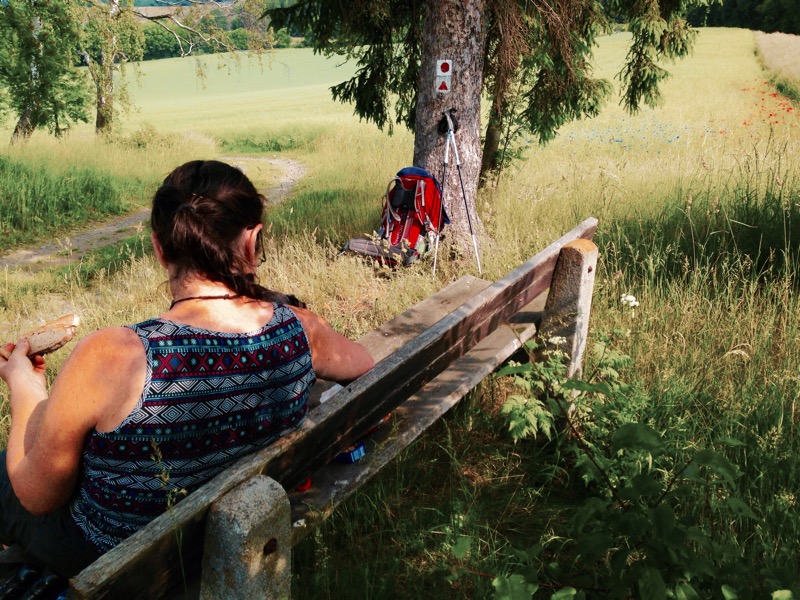
A breakfast rest on our last bench 

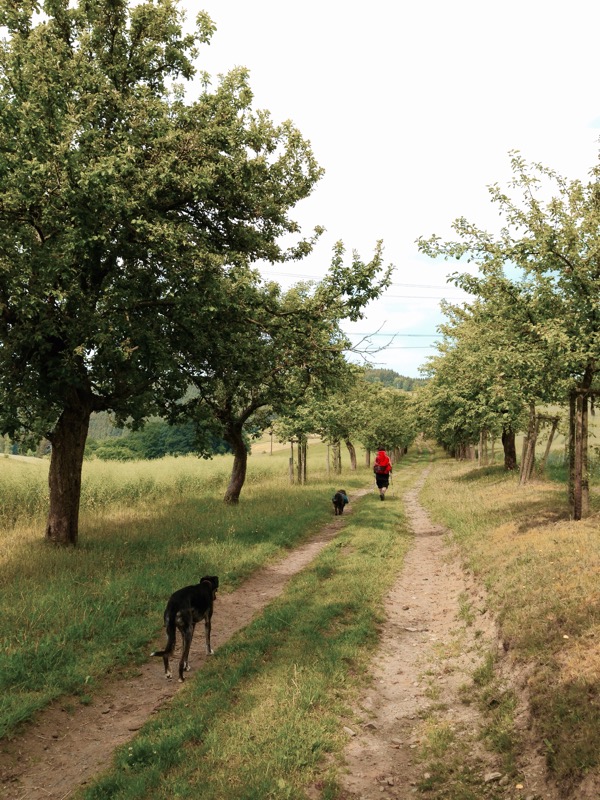
 was followed by a walk down a lovely fruit tree lined farm track  

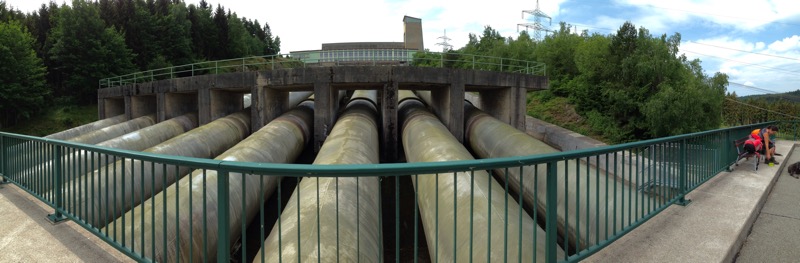
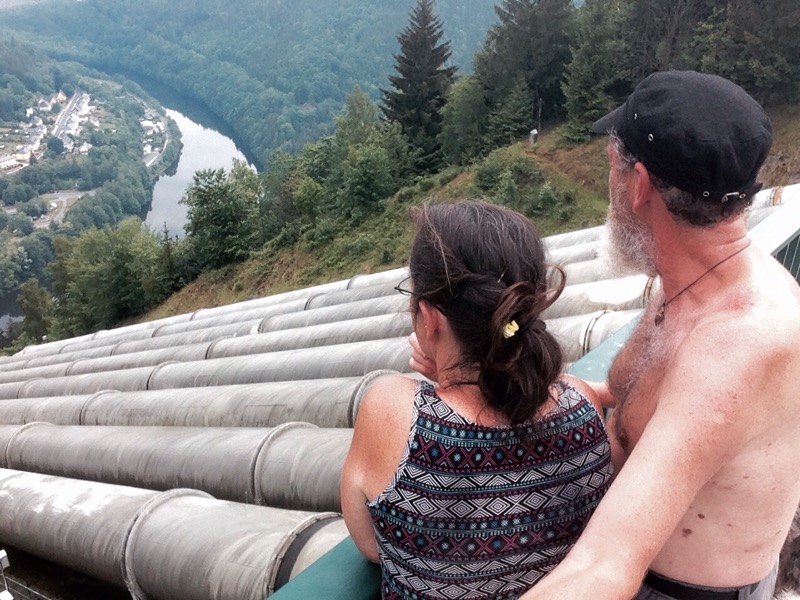
 to finally arrive at the platform over the turbine pipes we had seen on our first day on the trail. 

  
  We had made it.

Just a few km downhill took us back to the van where we gratefully raided the fridge and food cupboards before heading off to a ” proper” campsite for showers and a washing machine. Did some house(van) work, got the awning up and planned our escape. 

Thank you Germany for the forests, wild flowers, benches, huts and trails. 


THE GRAND TOUR: GERMANY 11th JUNE 

Bockfelsen to Altenbeuthen  23km

A grey start to the day as we decamped and set off over high ground through the cornflower rich grain fields  


When we reached the lakeside again we were roughly half way along its length and there was a ferry crossing and this strange cruise boat.  


There’s a lot of ups and downs on the route and after climbing up the steep slope through the oak woods we found ourselves on a narrow path under a cliff with a long sheer drop beside us. Steel cable had been attached to the rock to hang on to.  

 More danger lay ahead when we arrived at tape across the track and verboten signs.  

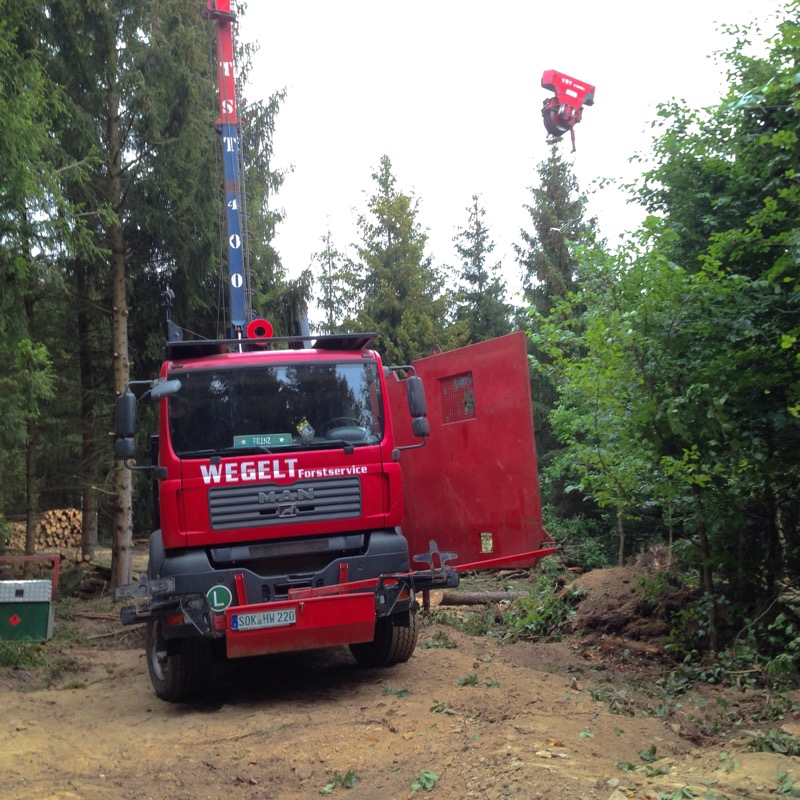
 They were doing some serious tree felling involving big machines and cable lines but we were able to get around them and carry on.  


Eventually coming down into Ziegenruck ,the largest town on the trail, we were still lucky to get to the shop before it shut for a three hour lunch break.  


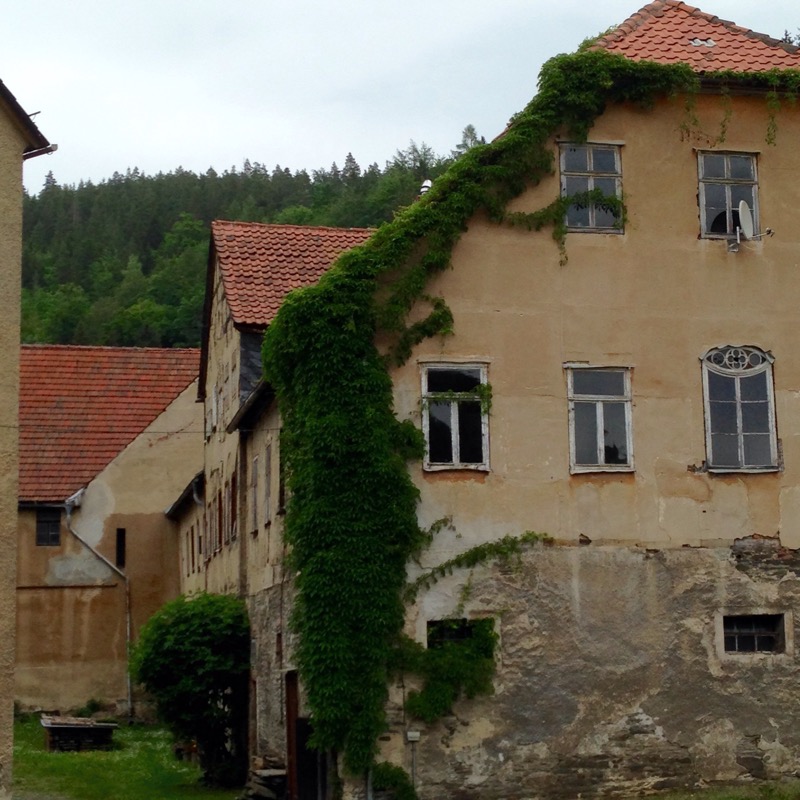
The place may have been quiet but it had some nice old buildings and a “waterworks ” museum where we picnicked.  


We ended up walking along an abandoned railway bridge and through 200m of tunnel to get back on track 

 and into the woods again which had loads of mimosa growing and scenting the air sweetly. The paths in the trees have mostly been really soft with deep leaf litter and easy on weary feet. They are also full of interesting details.  


We stopped at a lakeside picnic hutte where I had a swim and a wash and then we climbed for the last time up above the trees past some more cabins  

   and finally into another deathly quiet village that luckily had an open pension for us to quench the thirst.  


After being revived from our efforts of the day it was easy enough to make it another km to our bed for the night in a hut with a view.  

 There was a fire pit to use and it was a pity it started to drizzle a bit. This is also a hang gliding or paracending spot and it looks like something’s planned for the weekend cos there is a trailer full of tables and another full of staging parked up. 

And handily a his and hers portaloo. 

THE GRAND TOUR: GERMANY 10th JUNE

From Hohenwarte to Bockfelsen viewpoint 23km

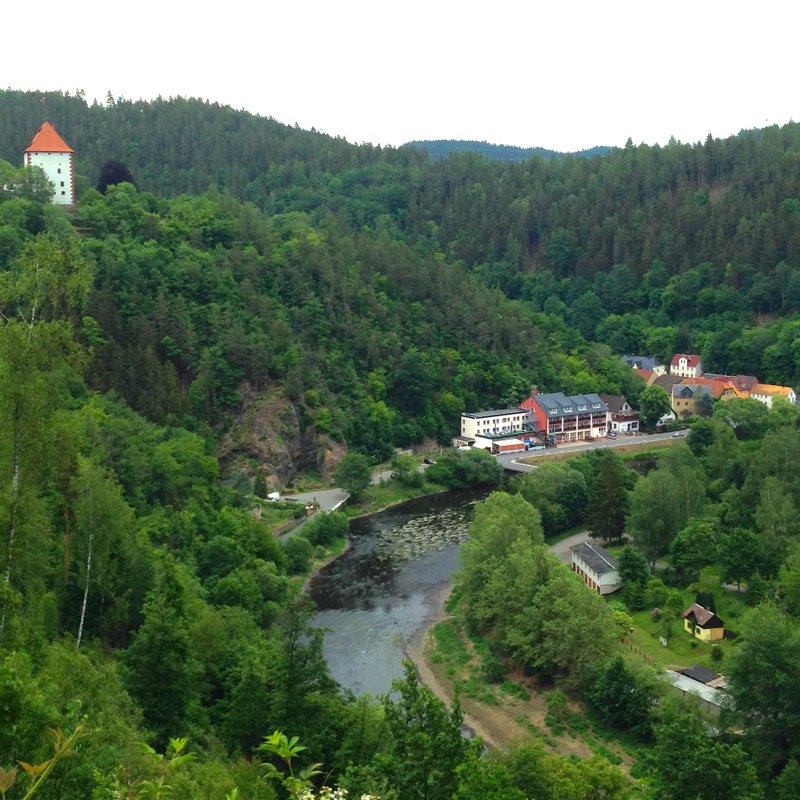
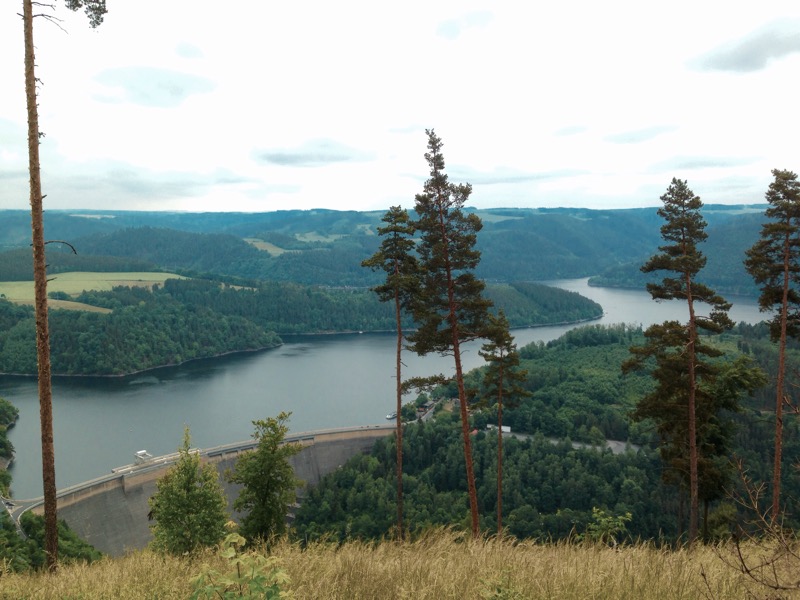
Set off down to the river from our park up above the massive dam wall of the Hohenwartestausee, the lake/ river system / serpentine reservoir were circulating for the next few days. Crossed it on footbridge  

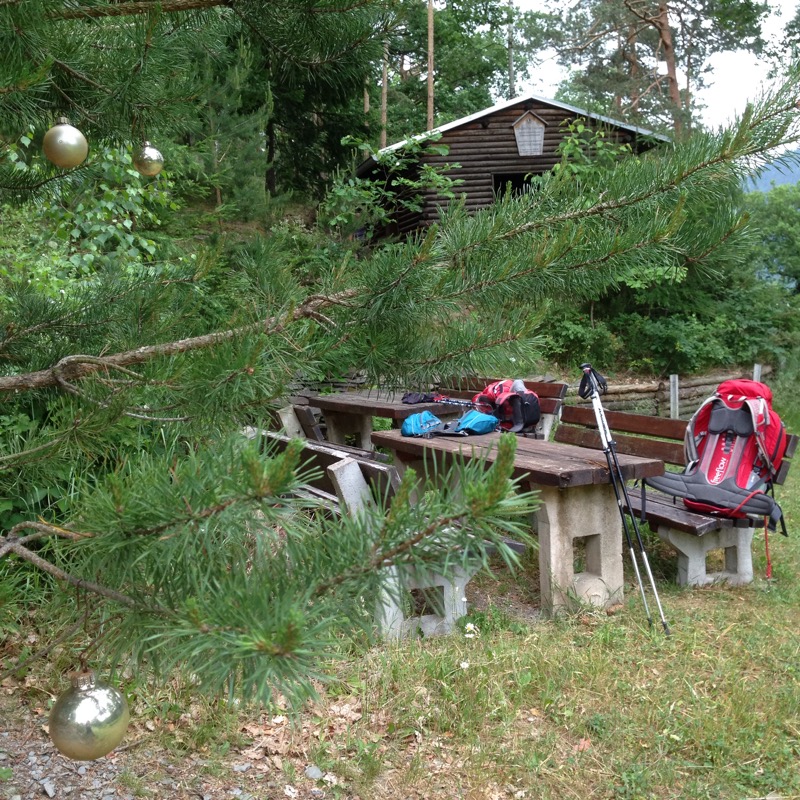
 and entered the woods for a steep climb up to our first “hutte” which still had some Christmas decorations up. 

  
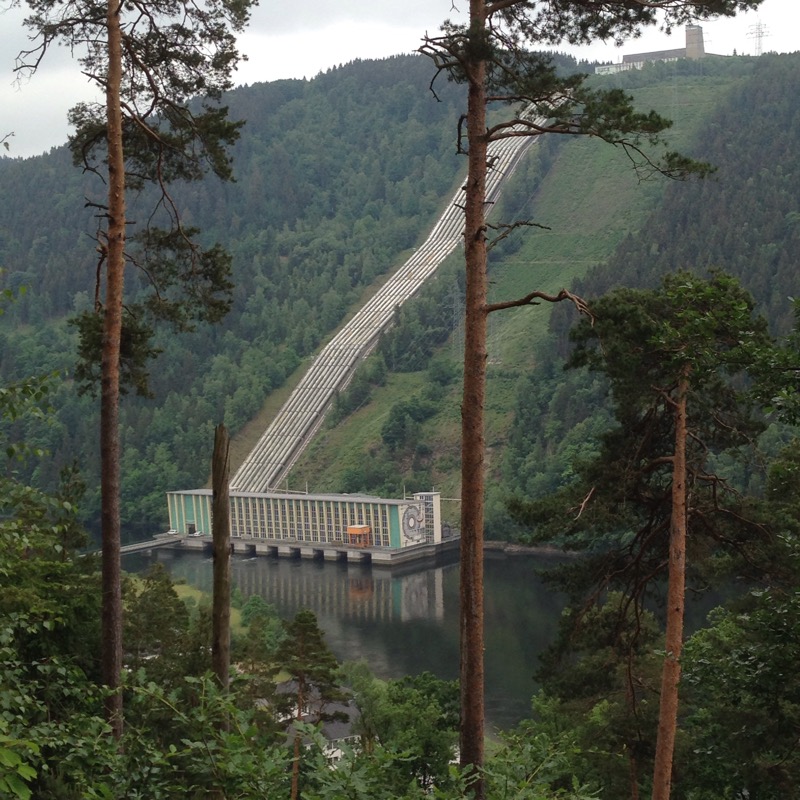
We got a look at the massive turbine pipes we’ll be crossing in a few days  

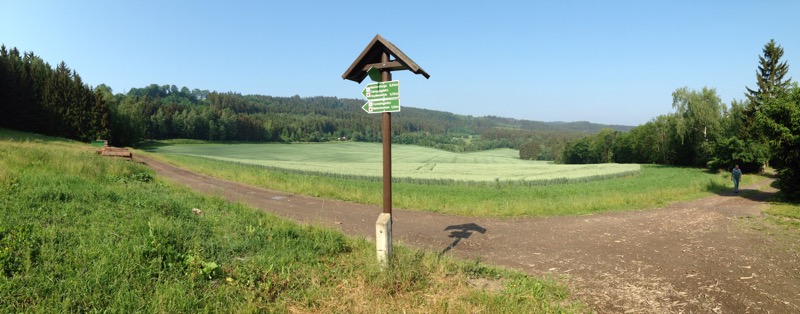
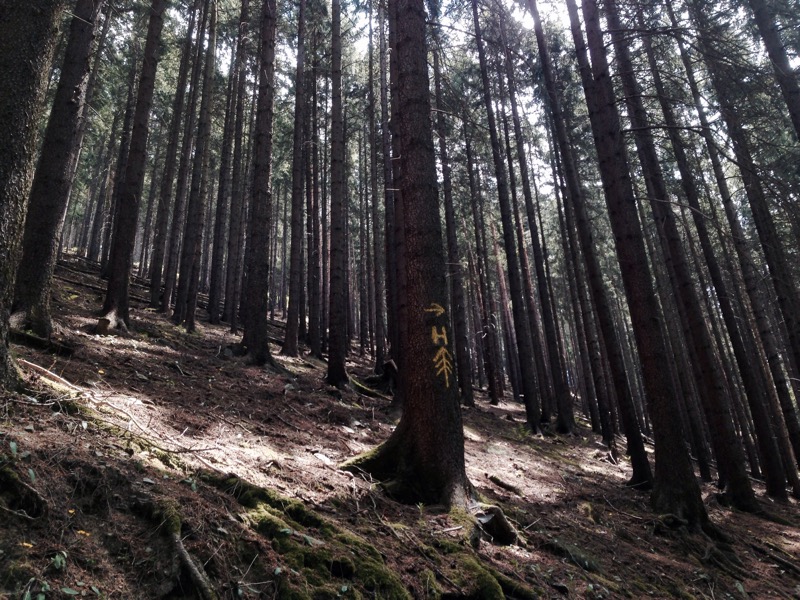
 before missing one of our red circle on white background markers and struggling back and forth for awhile before gaining the hilltop ridge at over 500m and getting back on track and stopping to admire the view. 

  
We came upon an elderly forester doing something strange to the bushes and had a non conversation. We keep throwing in Spanish words when trying to communicate here. I guess it shows some effort to speak a foreign language even if it’s the wrong one. I must say we’re struggling to understand, God help us in Czech, Slovakia, Hungary etc. 

Further down the trail we came across a mineral lick on a stick, presumably for deer.  

 How nice we thought until a few yards on we discovered the shooting hide that was nicely line of sight to the licking deer.  


There was another “hutte” a bit later that had some great wood carvings around it. There have been a lot of wooden sculptures and they are an inspiration for my two scots pine trunks.  


Something else popular are the miniature spirit bottles. We’ve seen them being knocked back a few times and find the empties all over.  


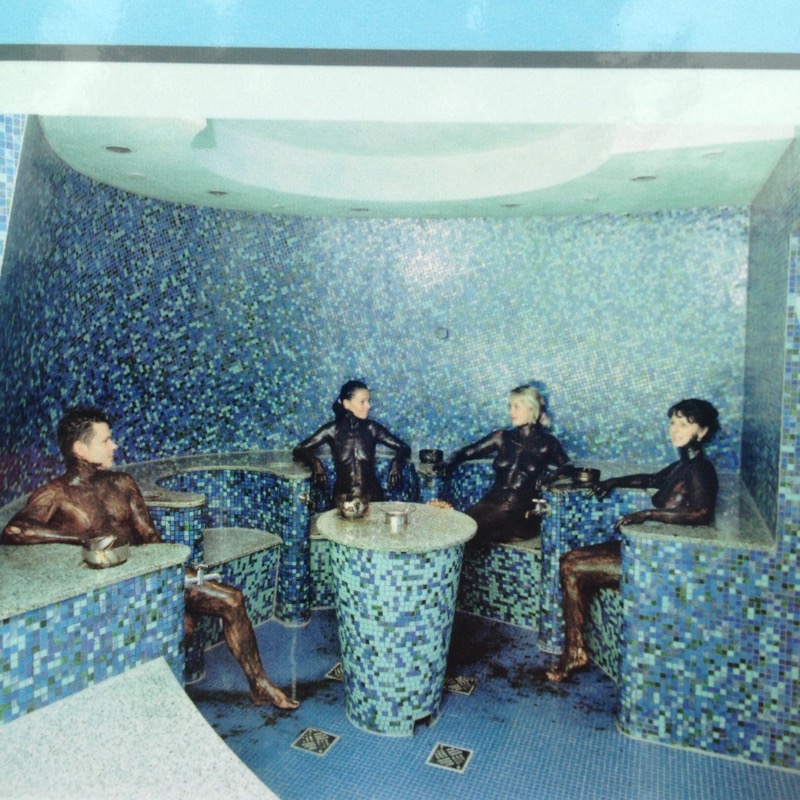
We stopped for a quick naked mud sauna at the Hotel am Stausee (as you do). 


We emerged at the lake side not that far from where we had started about three hours previously passing a row of what was to be a common feature on stretches of shoreline. Cabins.  

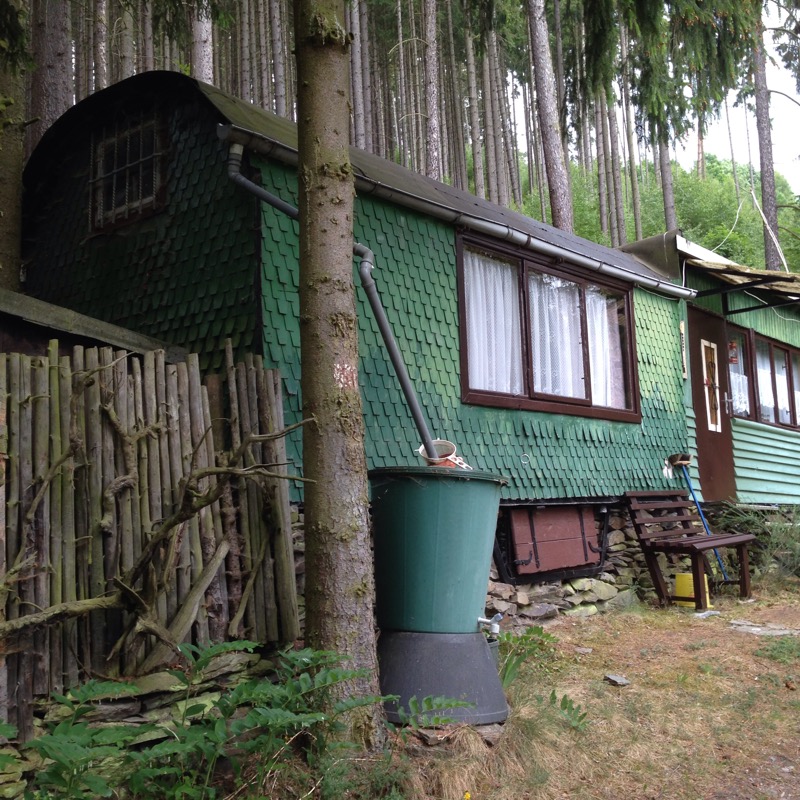
 These first were abandoned and shabby but they come in a multitude shapes, sizes and styles and are very often built around, over and even under caravans. Some of the lower orders just have a caravan.  


It was interesting to walk past a long strip of the cobbled together structures all higgle de piggledy along the waterside a lot with nice gardens of flowers.   Some were pretty posh with veranders, decking and pontoons with boats. This was supposed to be a campsite. 

We couldn’t resist the call of a beer garden sign and called in for coffee which soon included large platefulls of food and glasses of local ale. 

On our map we spotted the symbol for an exceptional tree trunk in a couple of km and this one was named ” cliff pine”, so we hurried on with anticipation. It was a scots pine struggling valiantly to grow out of the cliff and doing well.  


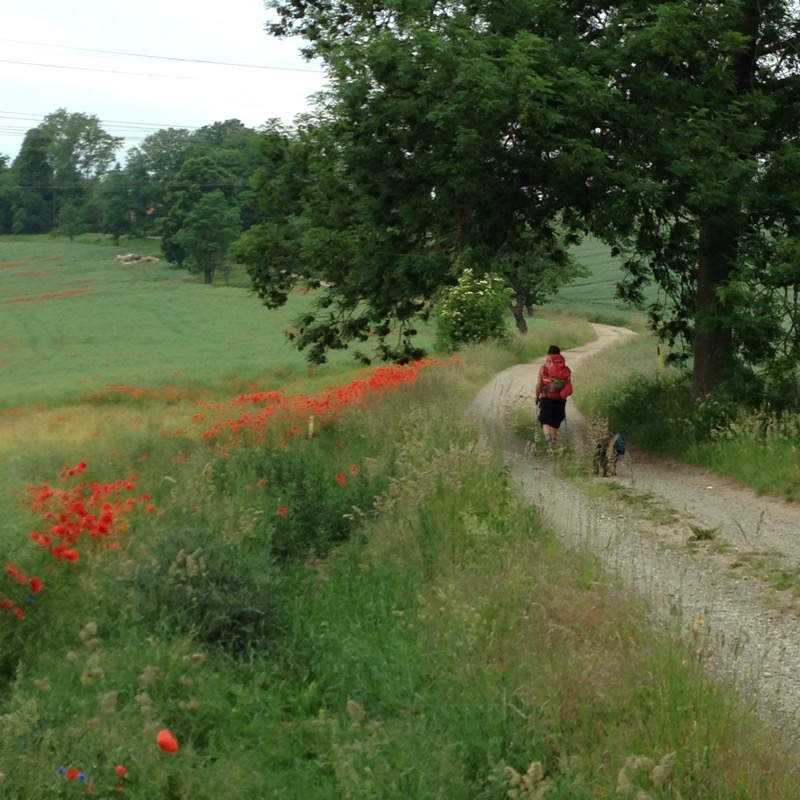
The grain fields were frequently ringed with poppies and cornflowers 

 and made for beautiful stretches between the forests, which were also a joy with their cathedral like spaces.  

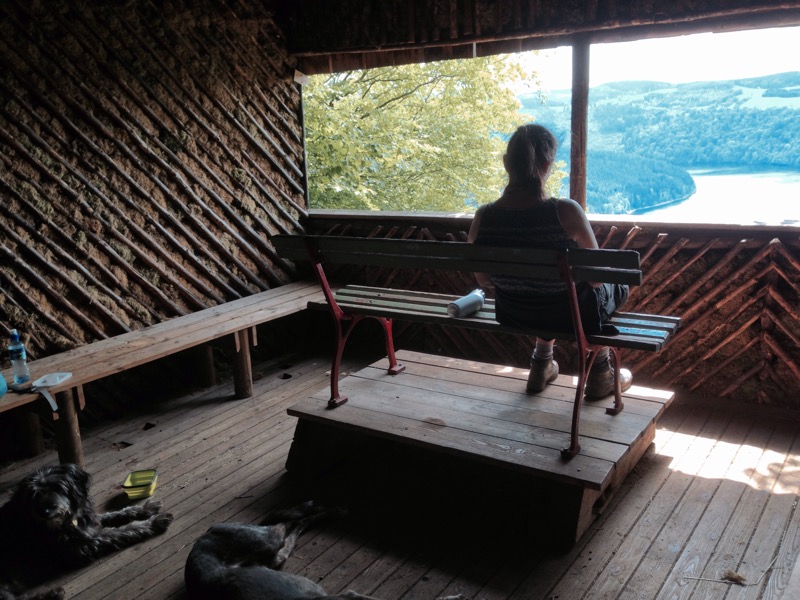
 Our next stop was the Mooshauschen hutte  

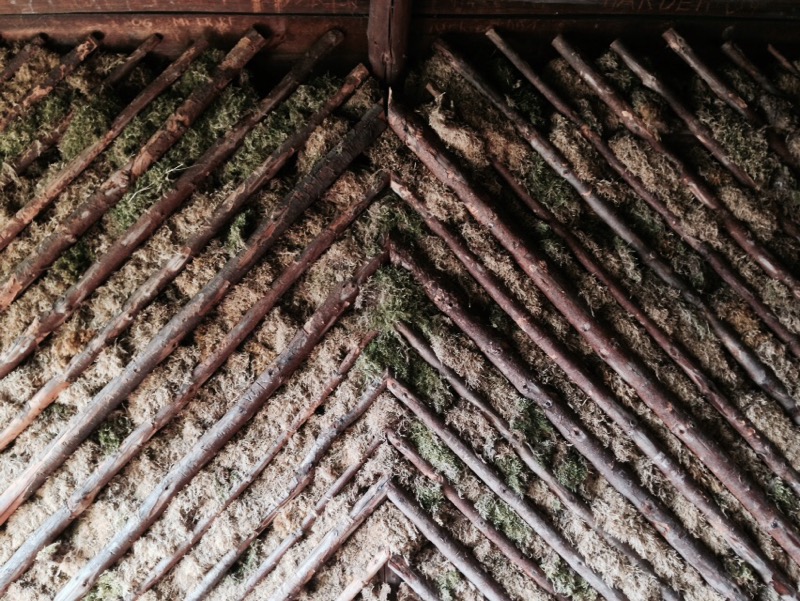
 which had a great view and lovely moss filled internal walls.  

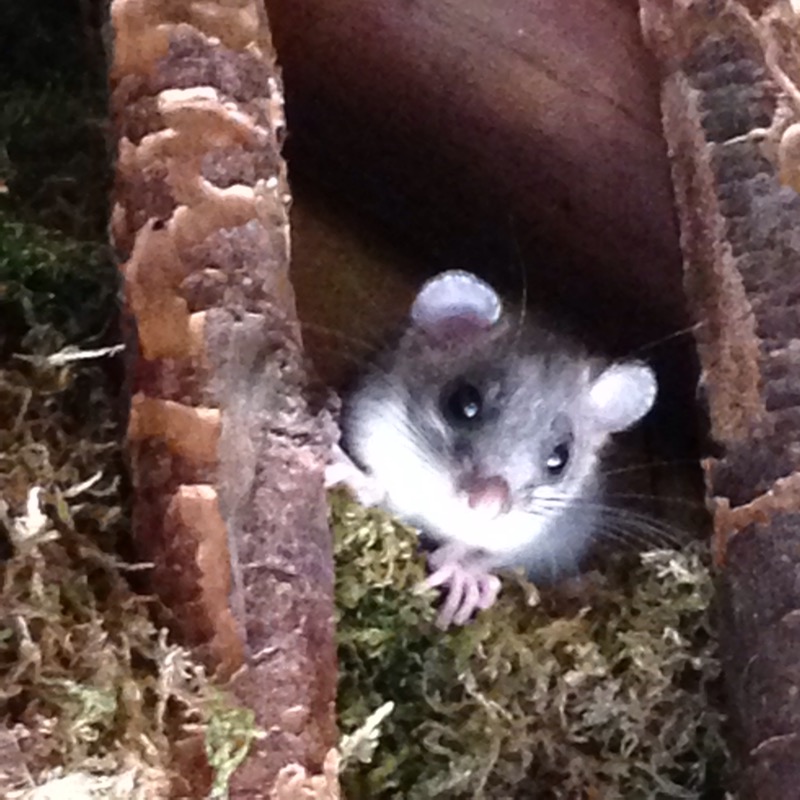
   It also had charming hosts.  

 Don’t know what they were but there were a good few of them in the walls and roof and they were not afraid of us. 

Wilhelmsdorf was the supposed end of the first days walk but we were only calling in to look for dog food but it was another seemingly empty hamlet with plenty of fine houses and civic spaces but nobody about and no shops.  


Back to the woods – mixed mostly conifers of every type in small blocks, thinned selectively and allowed to grow to maturity.  


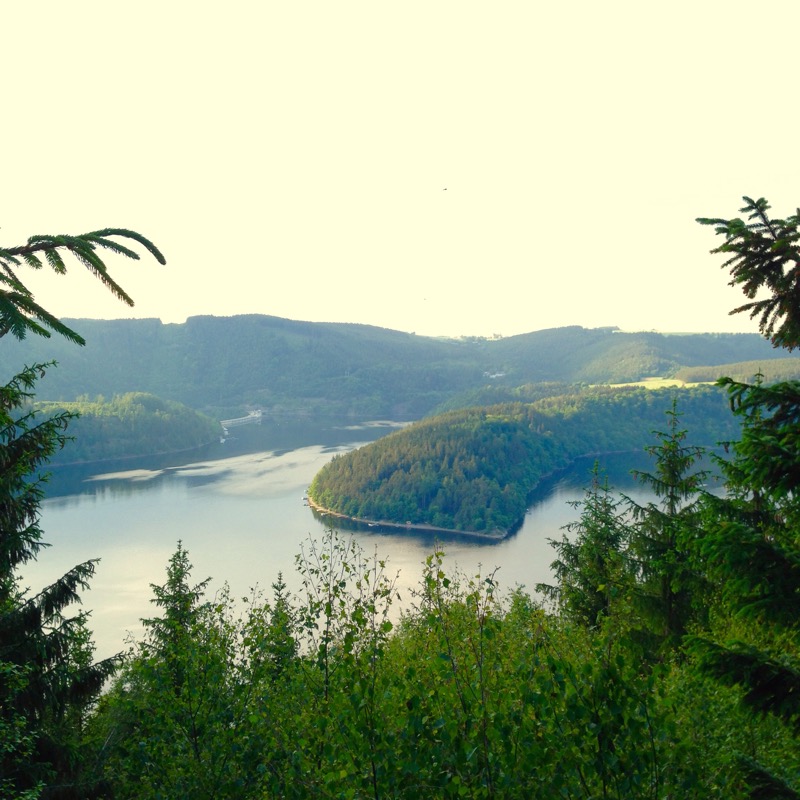
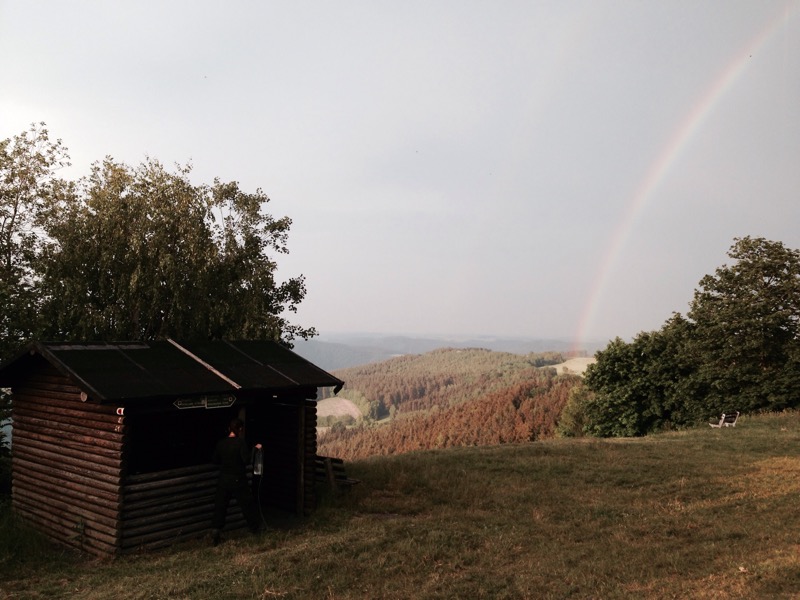
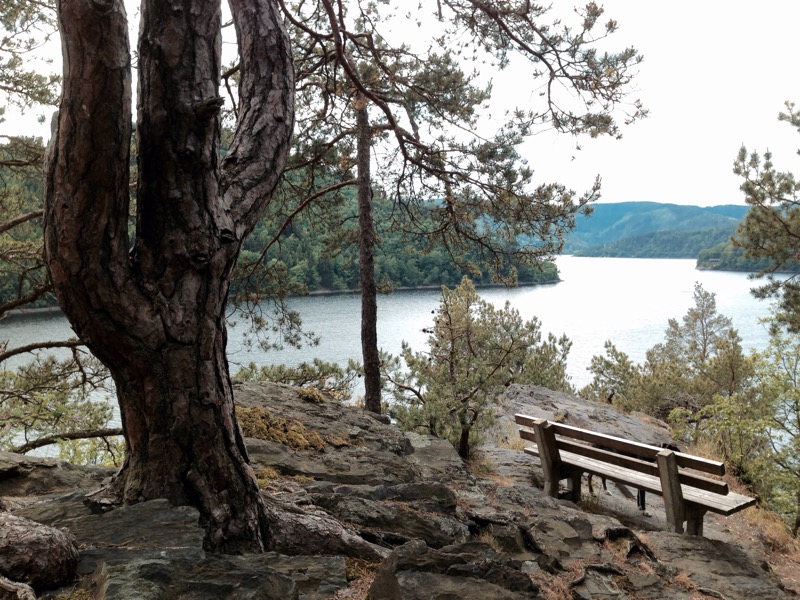
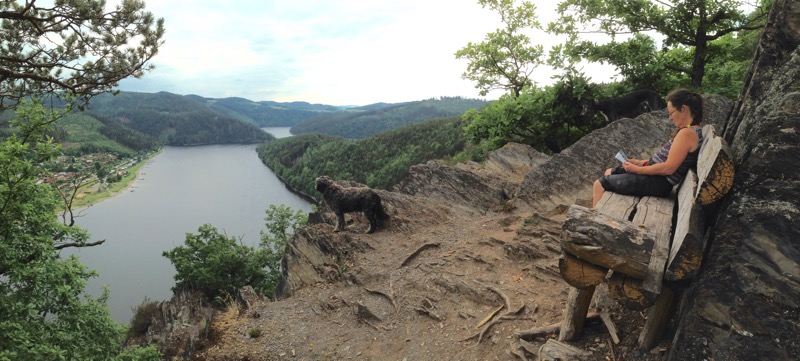
We ended up for the night camping at a high rocky viewpoint overlooking the water and the cabins beside it.  

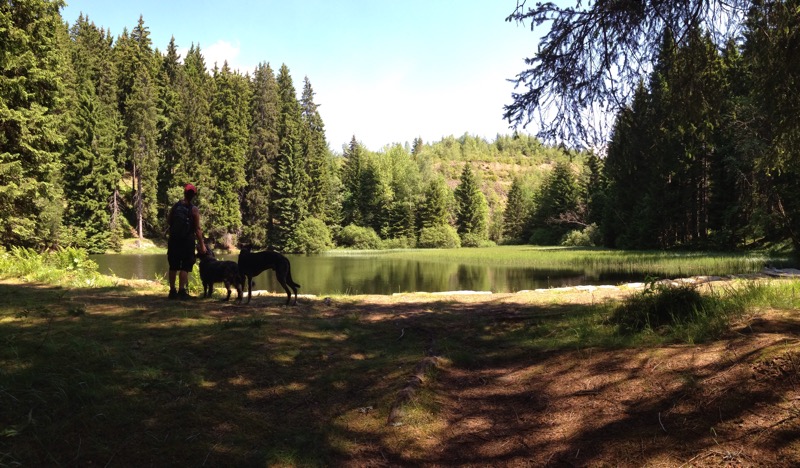
   Fell asleep to the sounds of deer, foxes and owls.