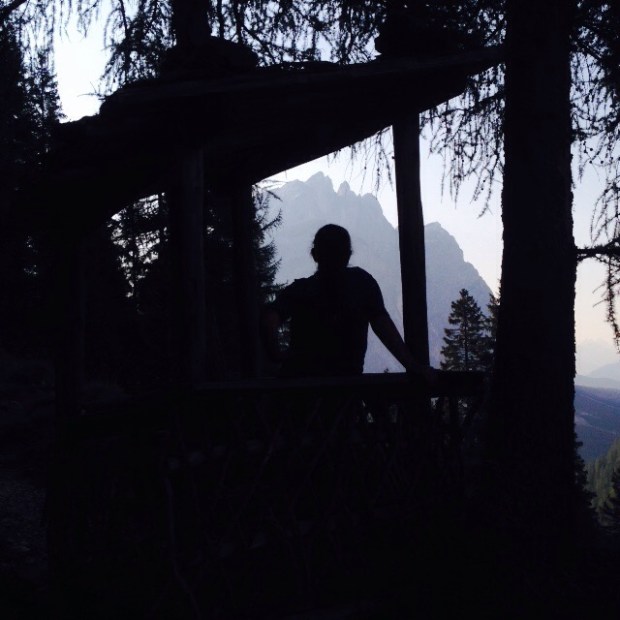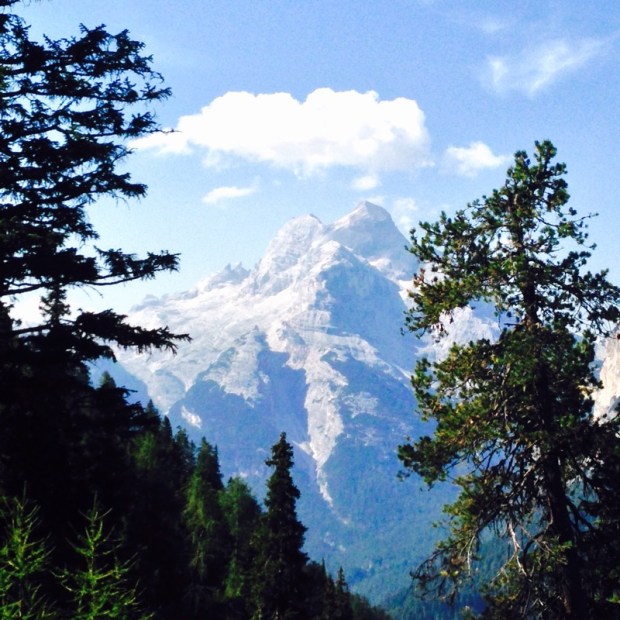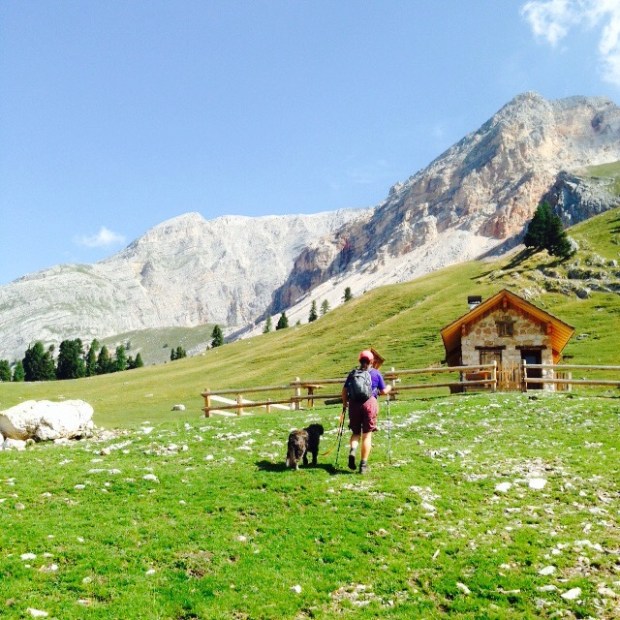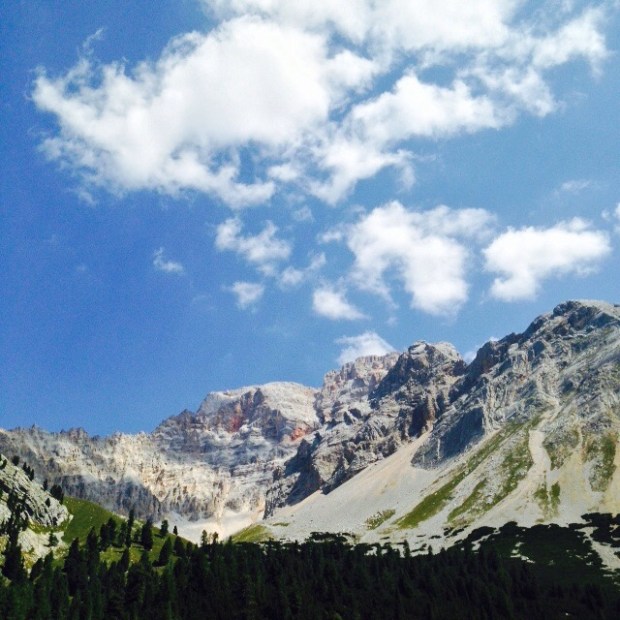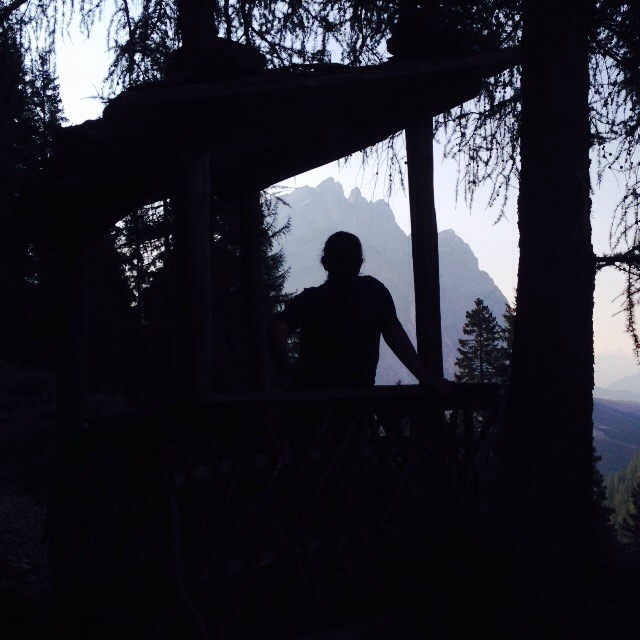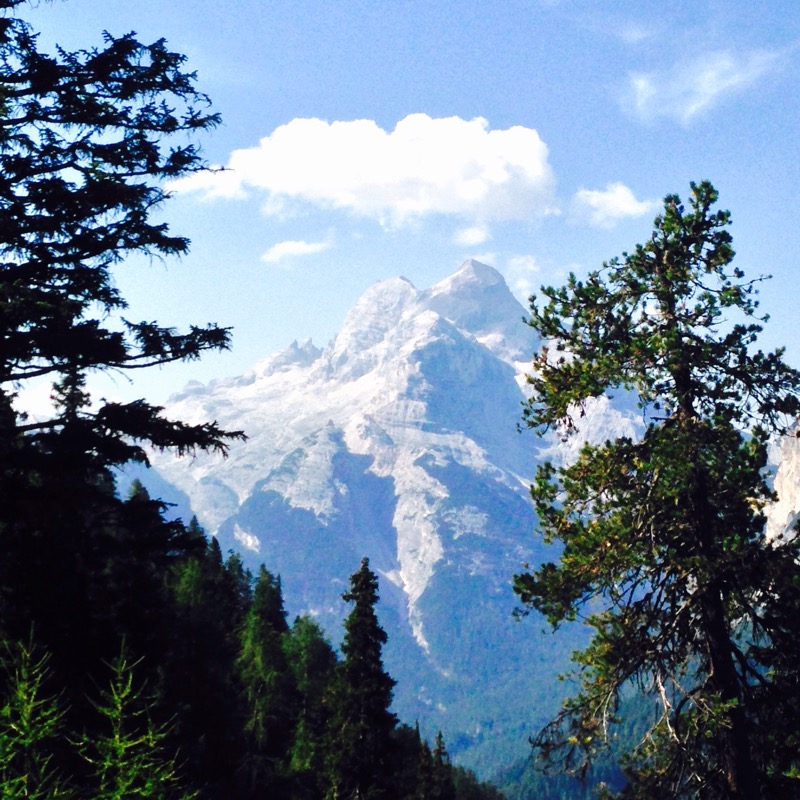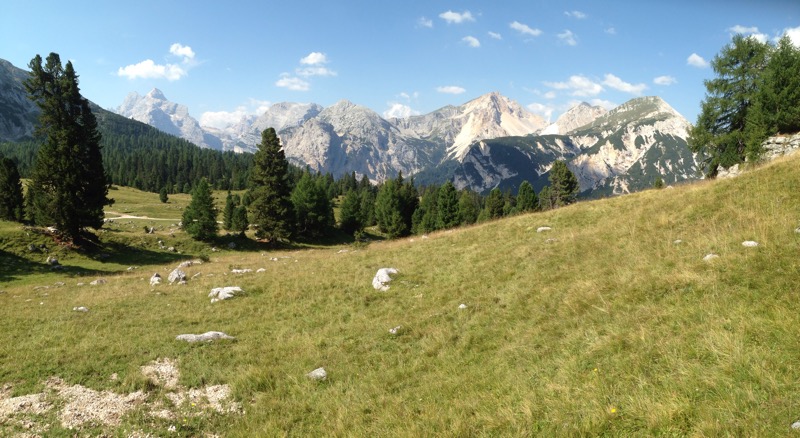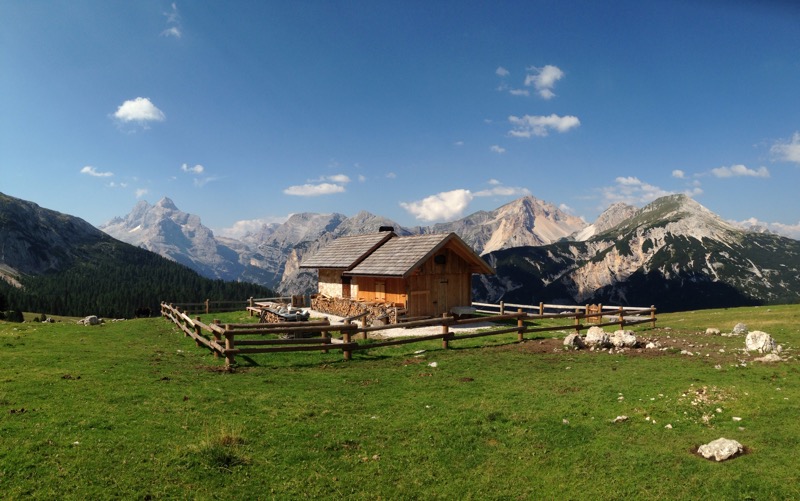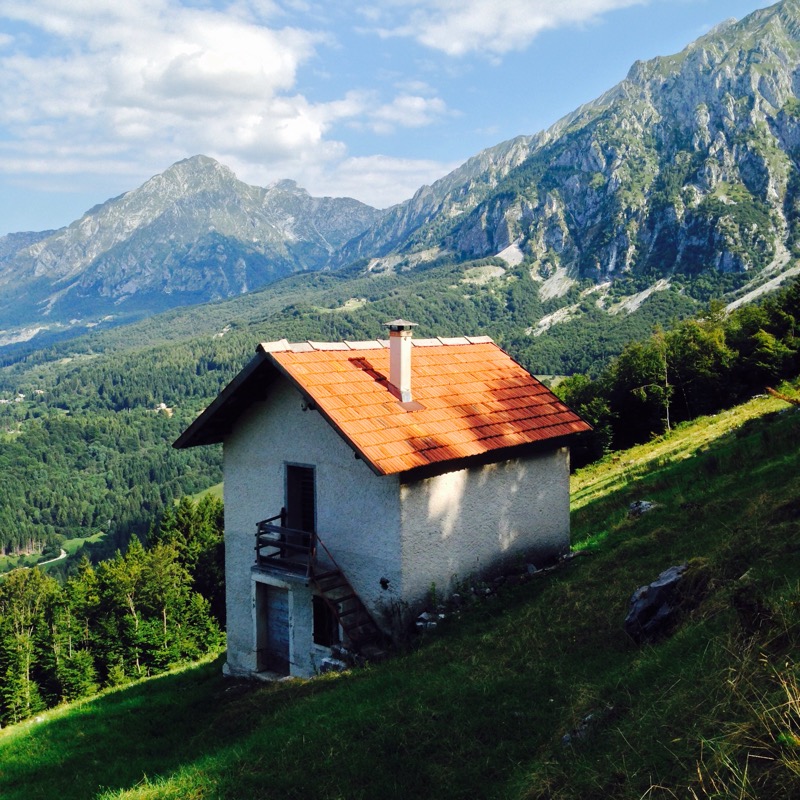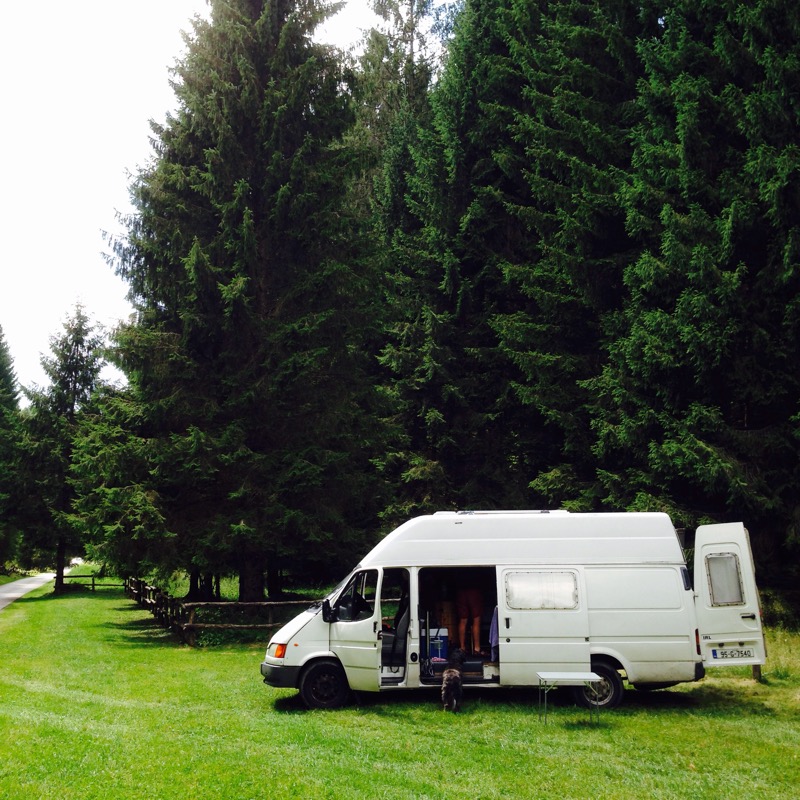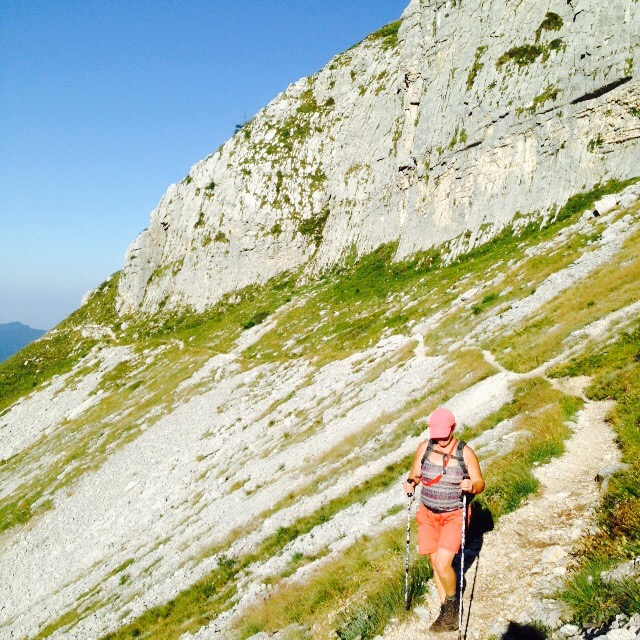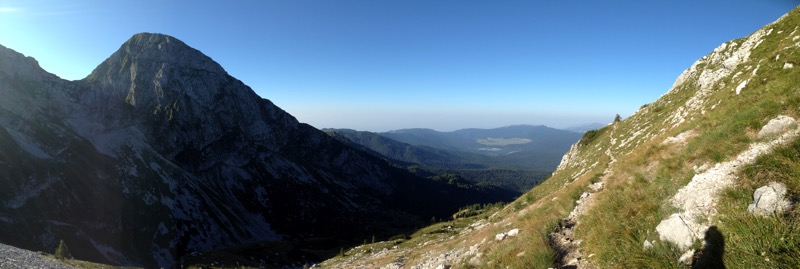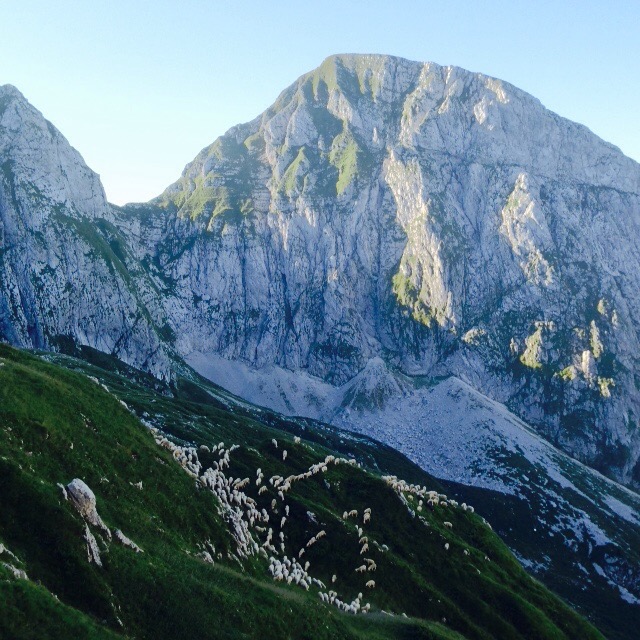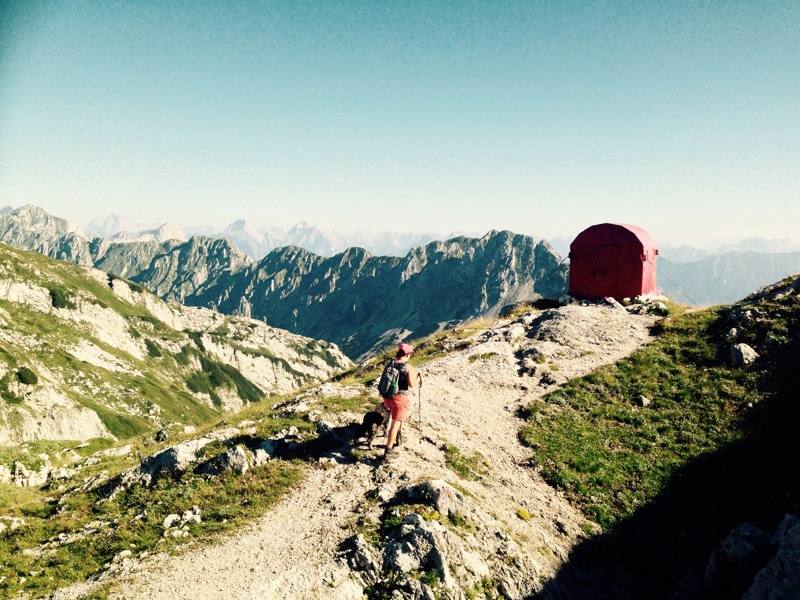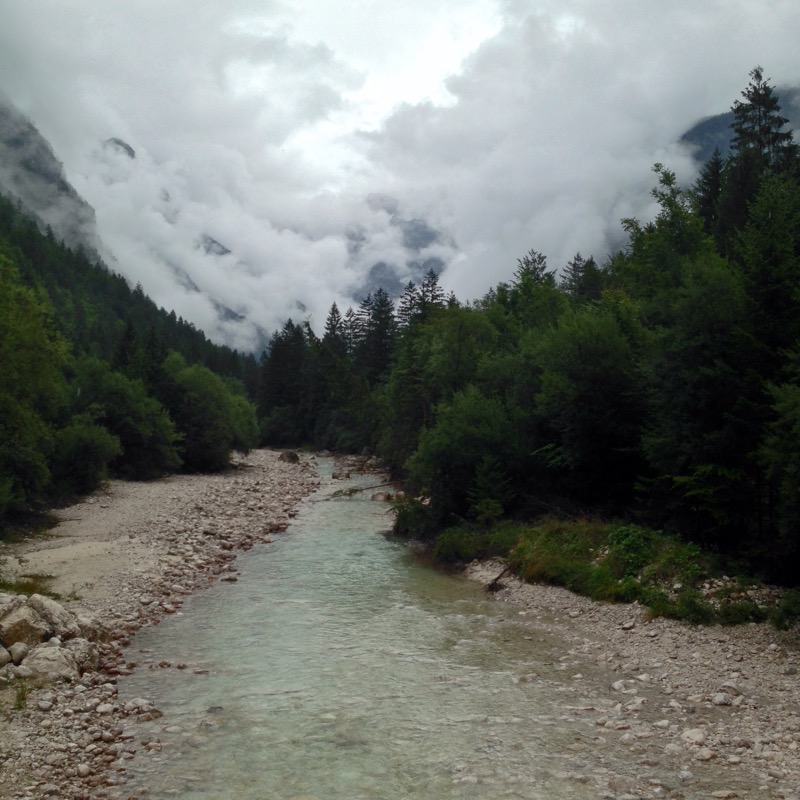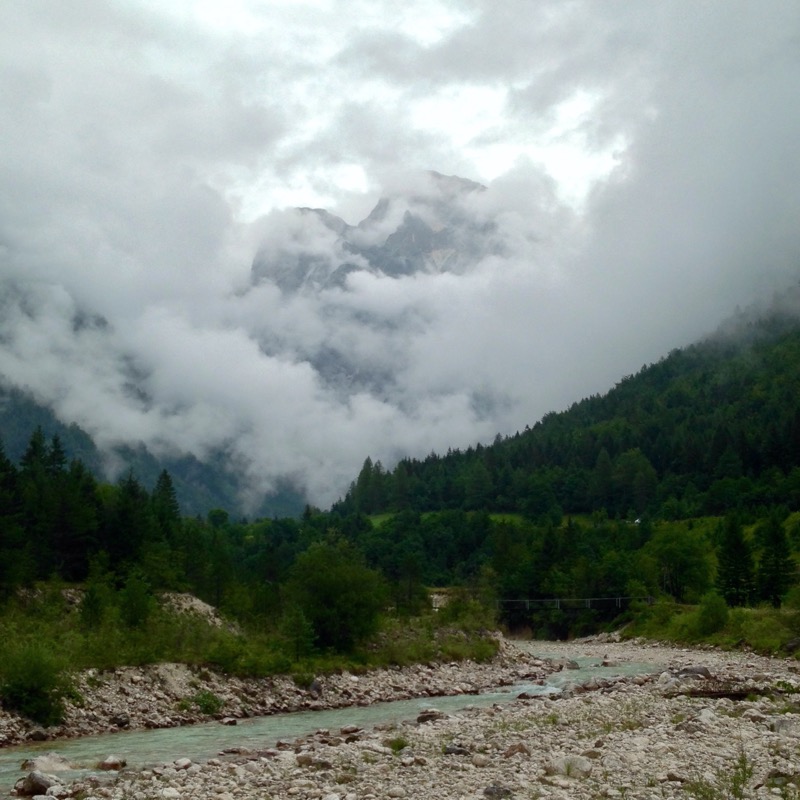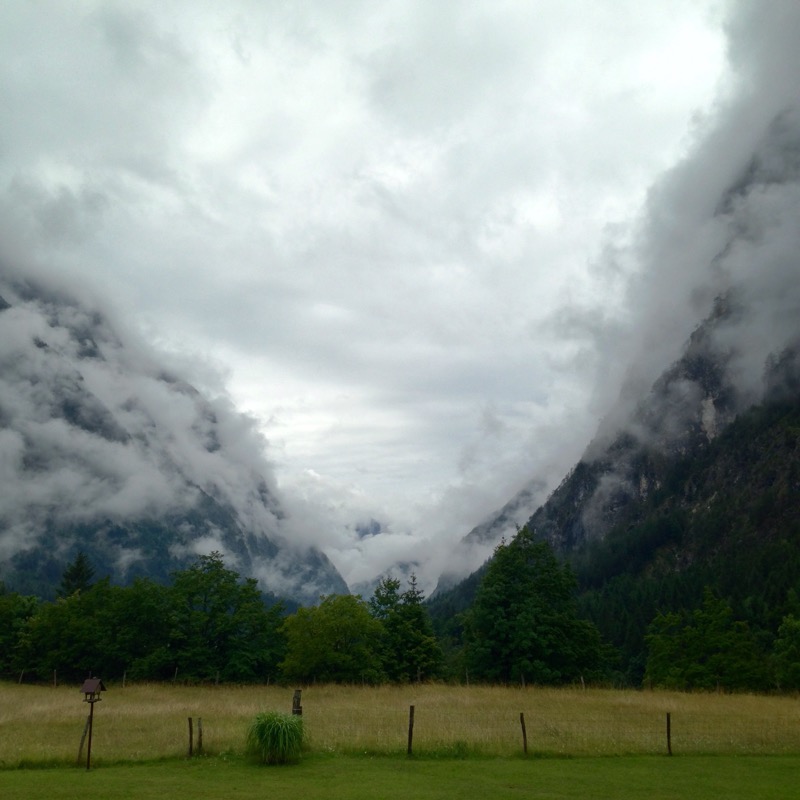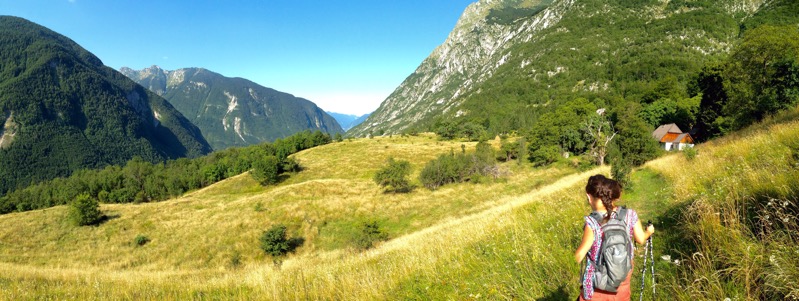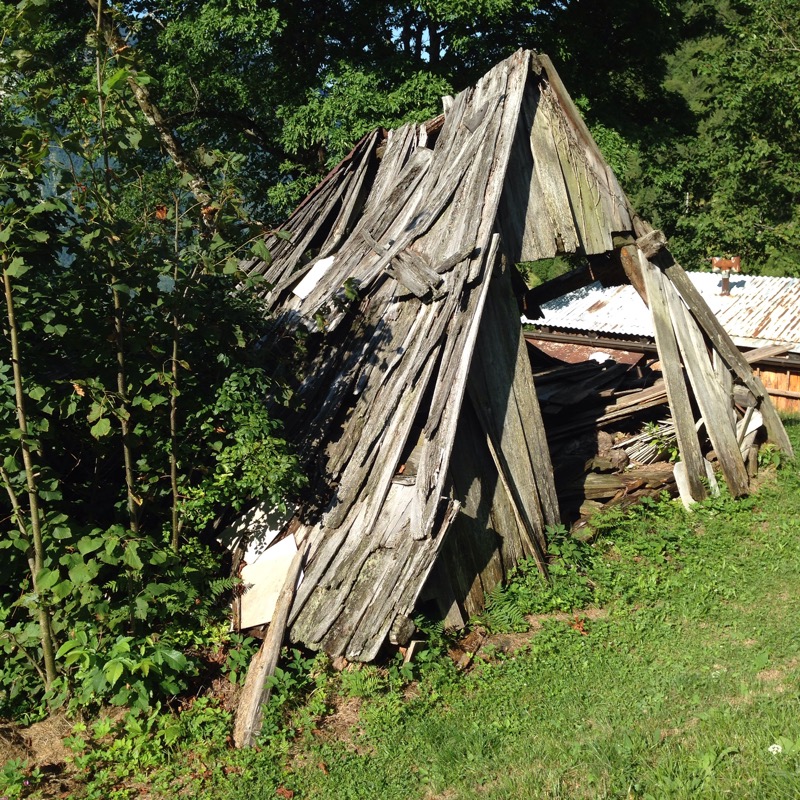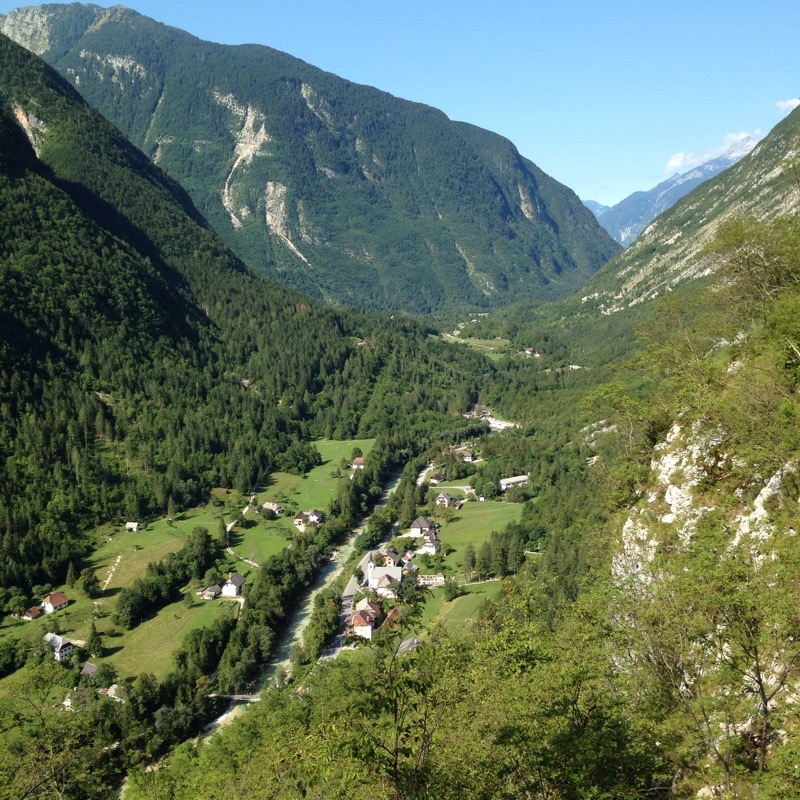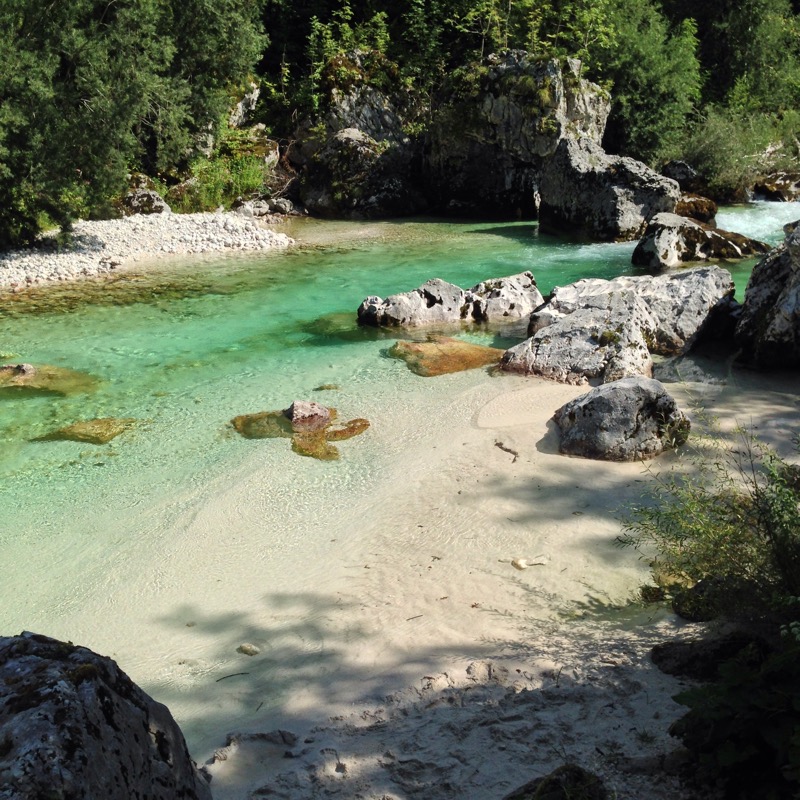
THE GRAND TOUR: FRANCE 18/19th AUGUST 

Our next move was to drive 300km west to Clermont Ferand and the volcanos of the Auvergne.

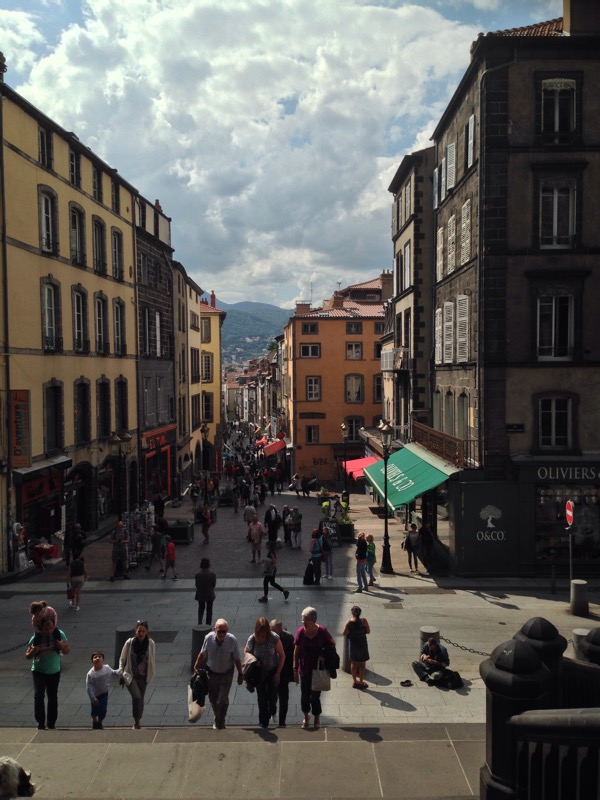
We had planned to spend some time hiking around this area and needed some info so headed into the city centre.

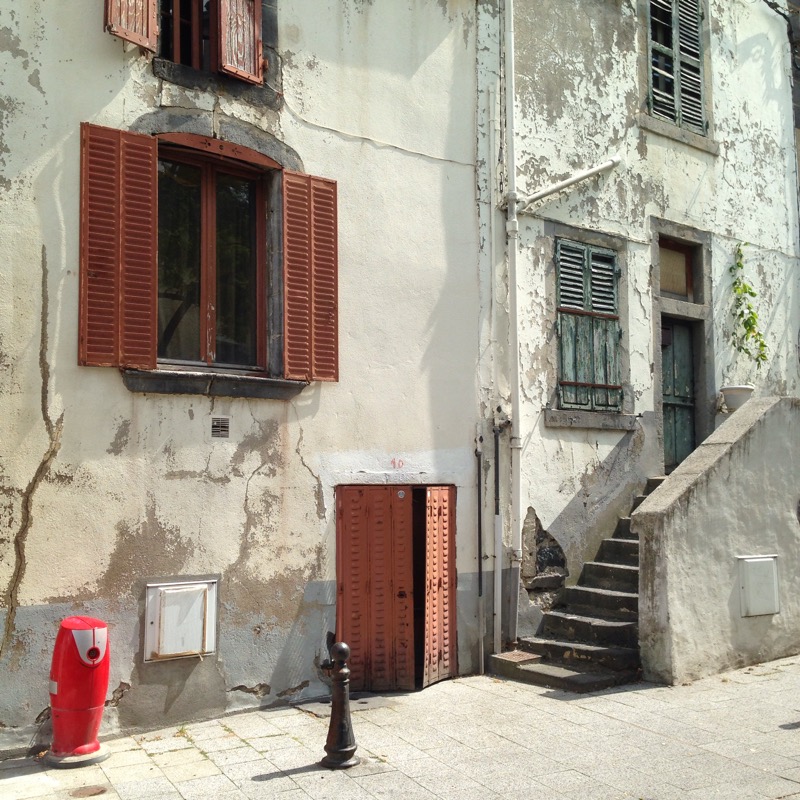
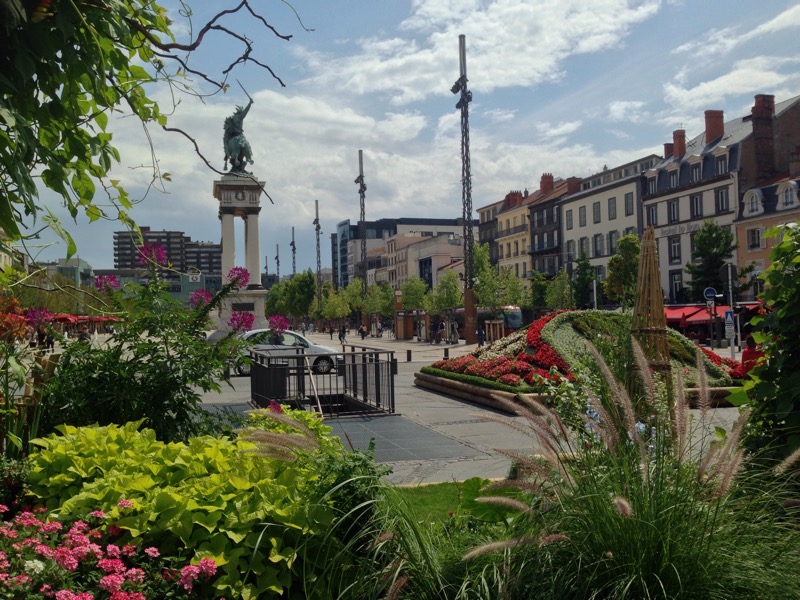
 Chic and sophisticated plantings and transportation and streets capes.

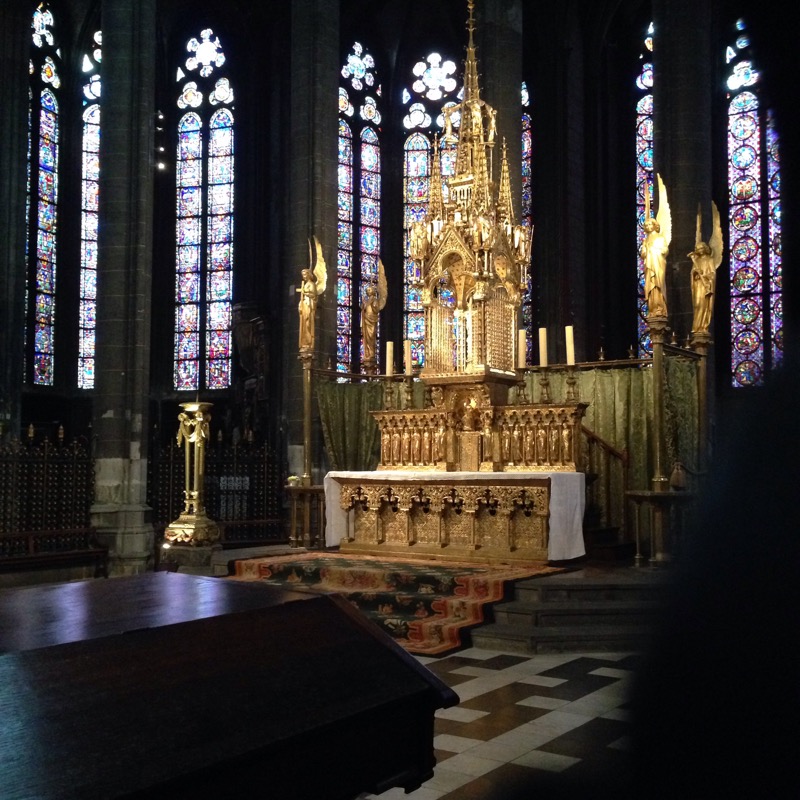
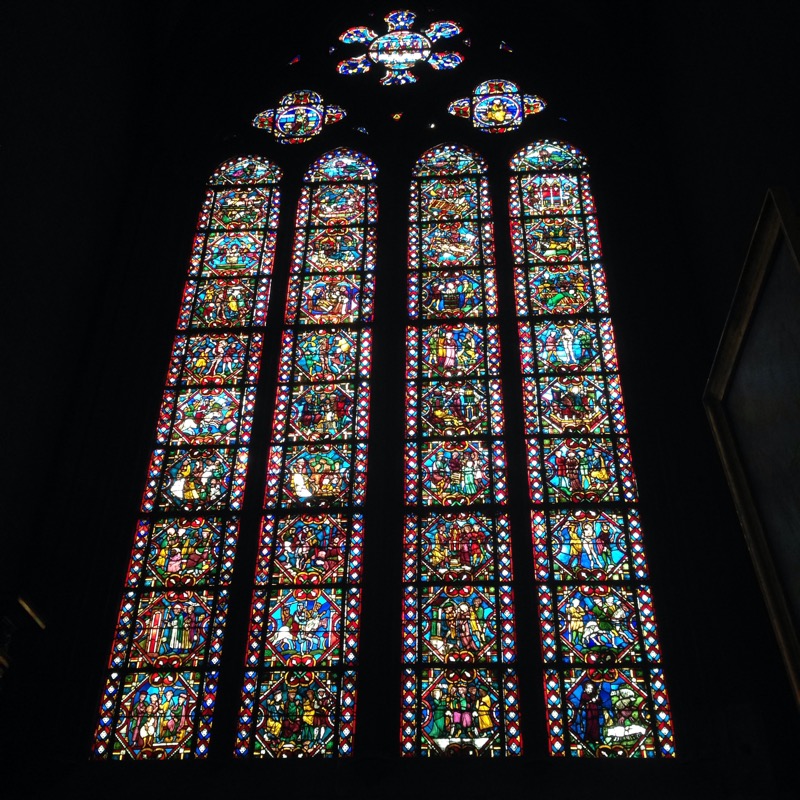
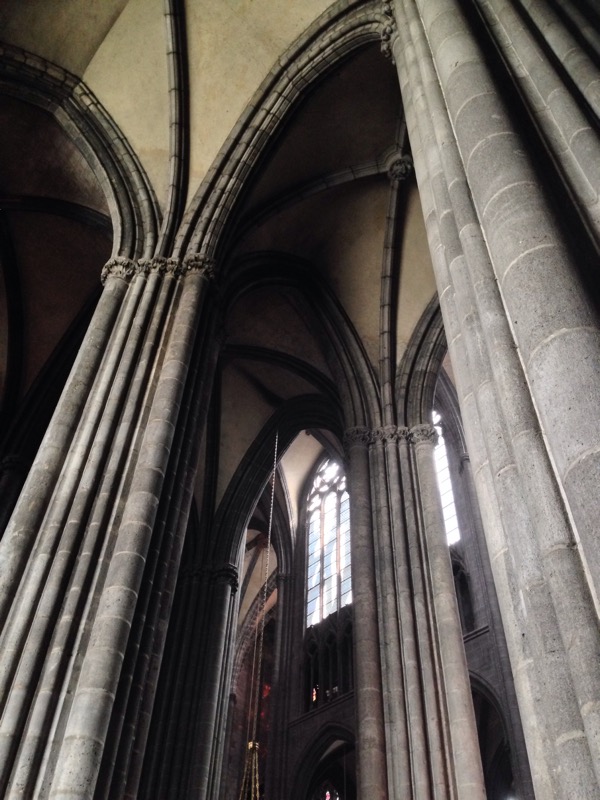
 We visited the cathedral and marvelled again at the money and majesty needed to do this thing.

 ‘Twas a handsome city

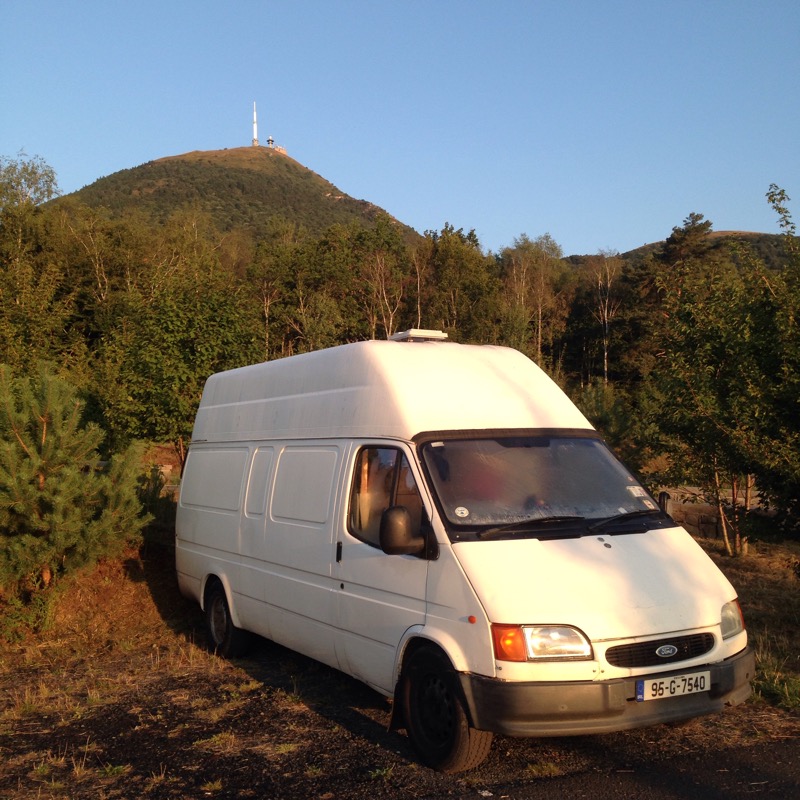
 but not the wilds I was looking for, so after a long stop at the olive oil and other overpriced frippery store , managed to get to the take off point for a hike around some volcanic comes. Unfortunately that point was a massive car park but it had a good view and as the hordes left we settled in for the night.

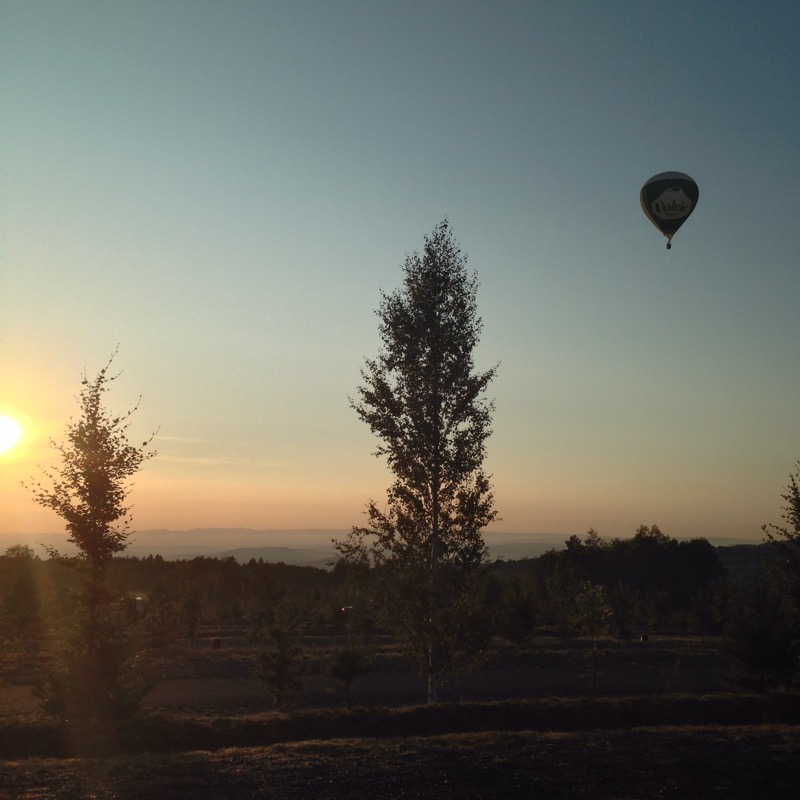
Bright and early we hit the trail, noticing how much cooler no colder it is now. A balloon rose over the scene

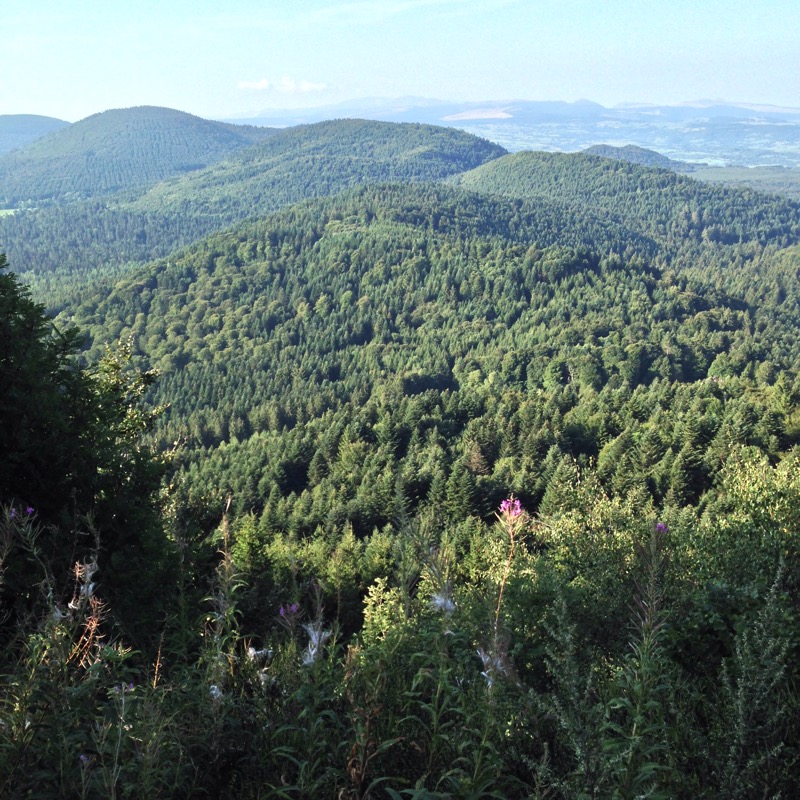
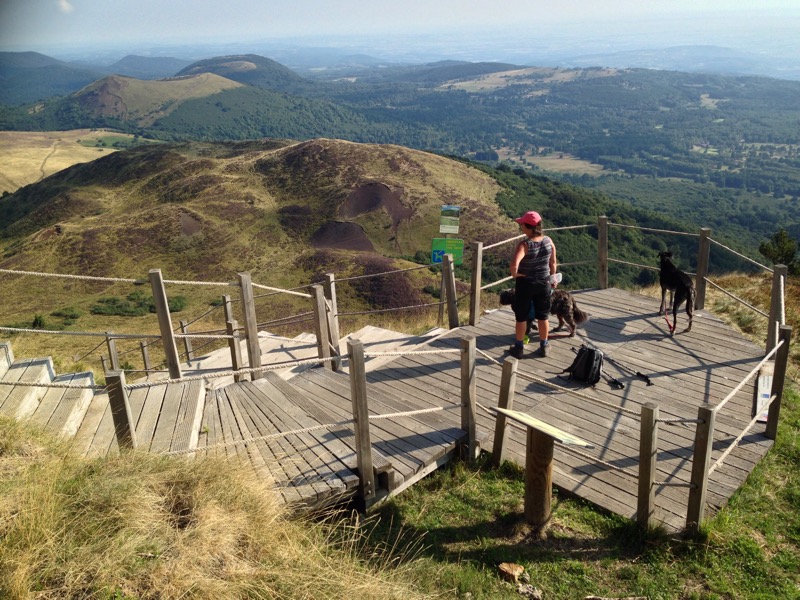
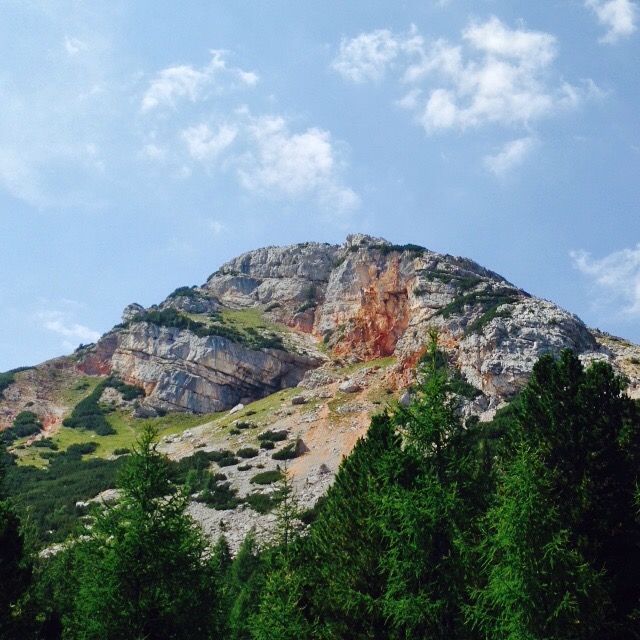
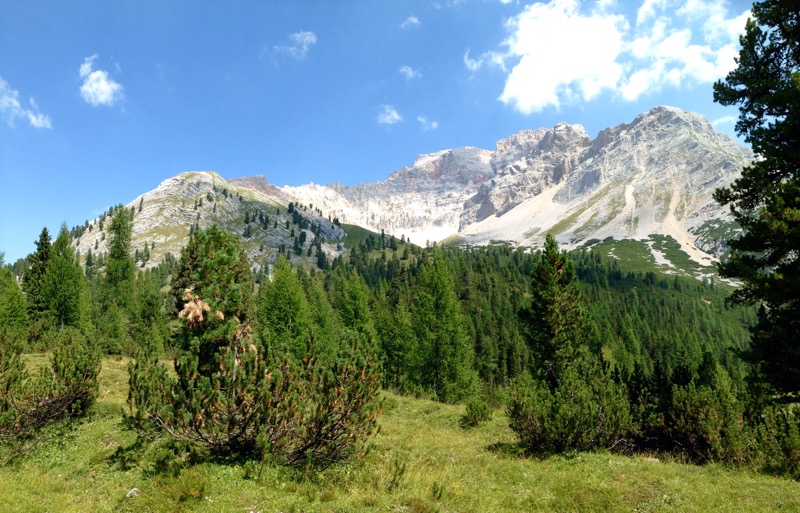
 as we headed up the Puy de Dome, the tallest volcano in the region with a fine view of the other forested cones to the south.

We did it the hard way while most folk took the train.

 The thing ran till 11 at night but didn’t give you time to stop and take in the sights like we did.

 There were flights of steps running down this volcano and up its neighbour and they were made from oak. 

  A very different, more open landscape, to the mountains we’ve been in. They were working hard to protect it with the steps and fencing.

 and the caldera of the cones was impressive.

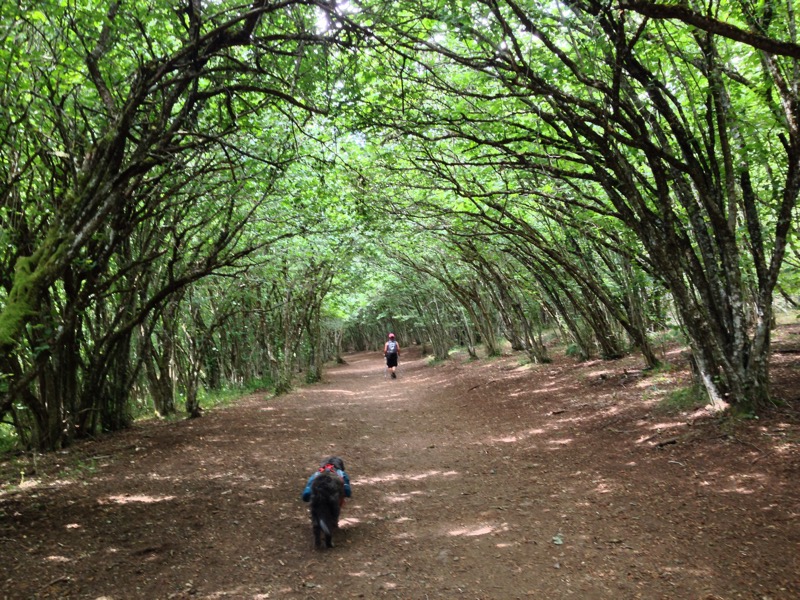
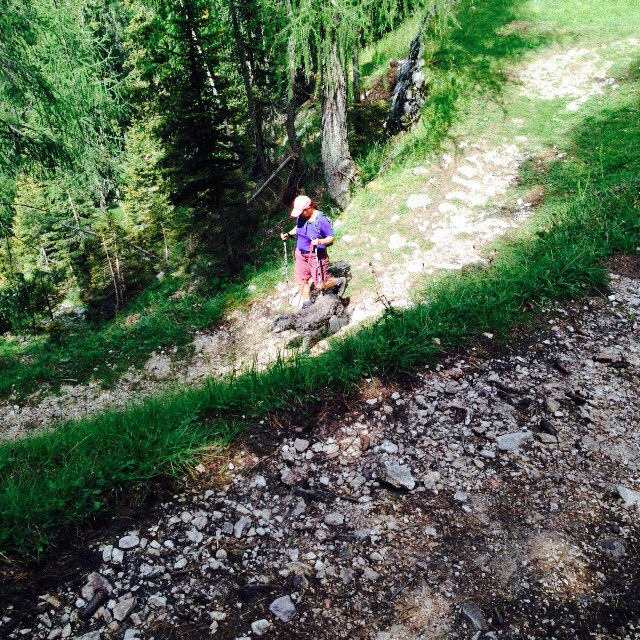
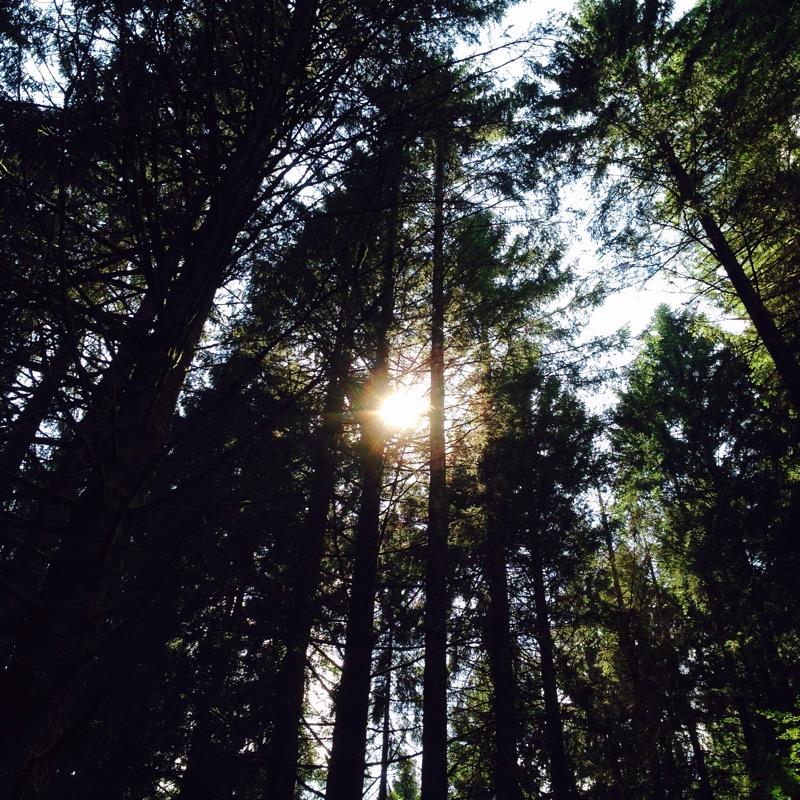
Back down through hazel wood

 and heathland and some nice mature birch

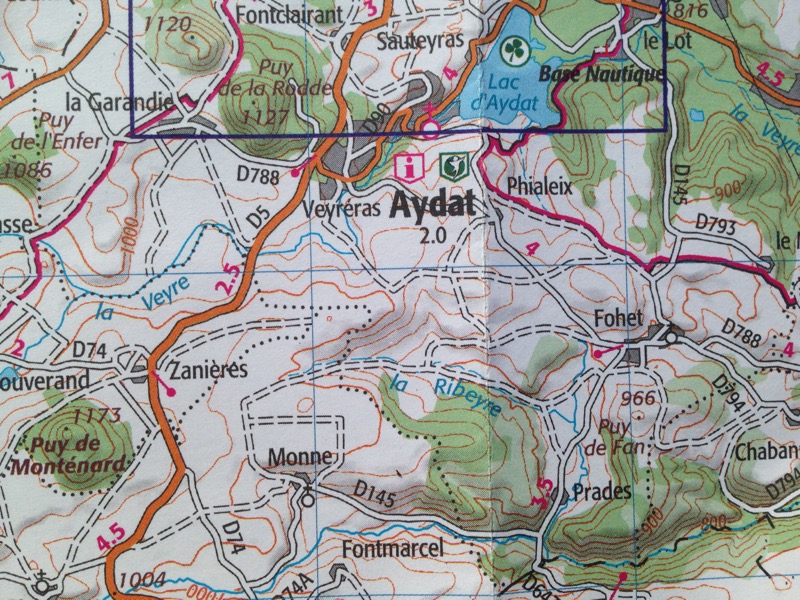
Back at base we planned our backpack exploration of the area to the south and drove off to Aydat from where we will hit the GR 30 at dawn tomorrow for a three day hike and leave the wheels behind.

THE GRAND TOUR:ITALY to FRANCE 16/17th AUGUST 

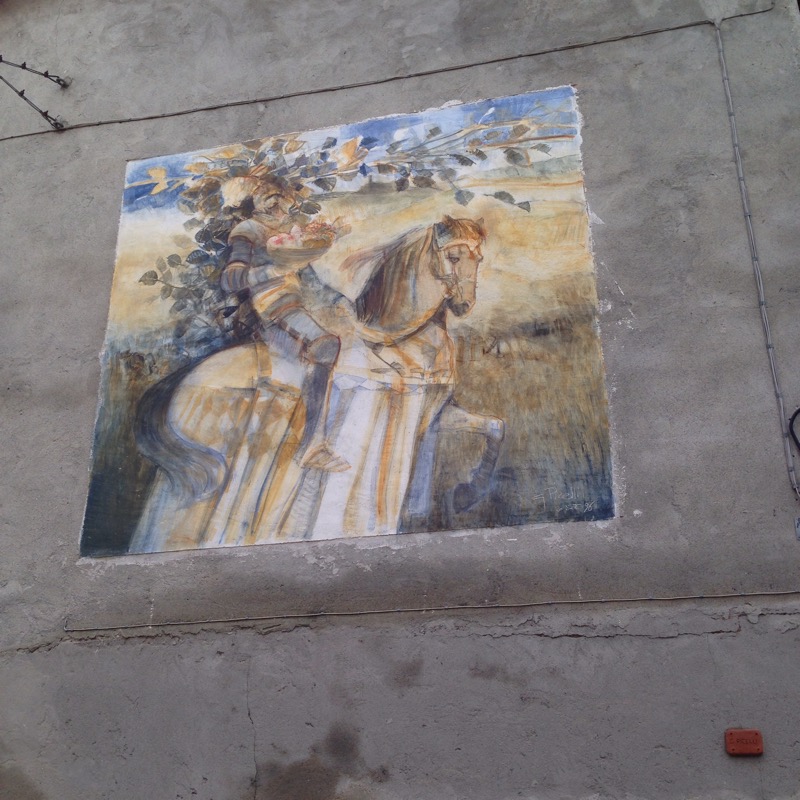
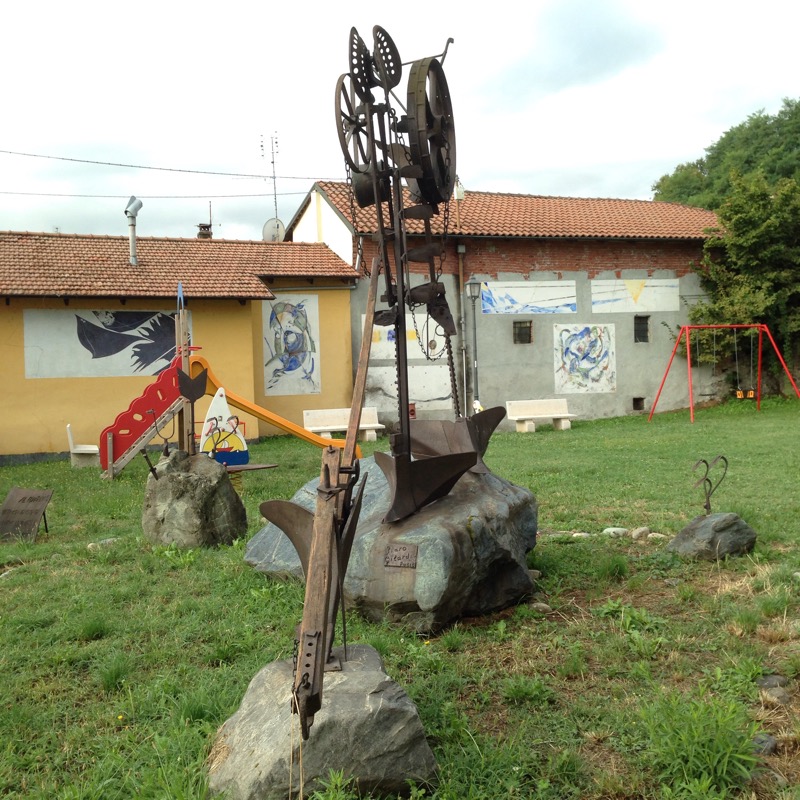
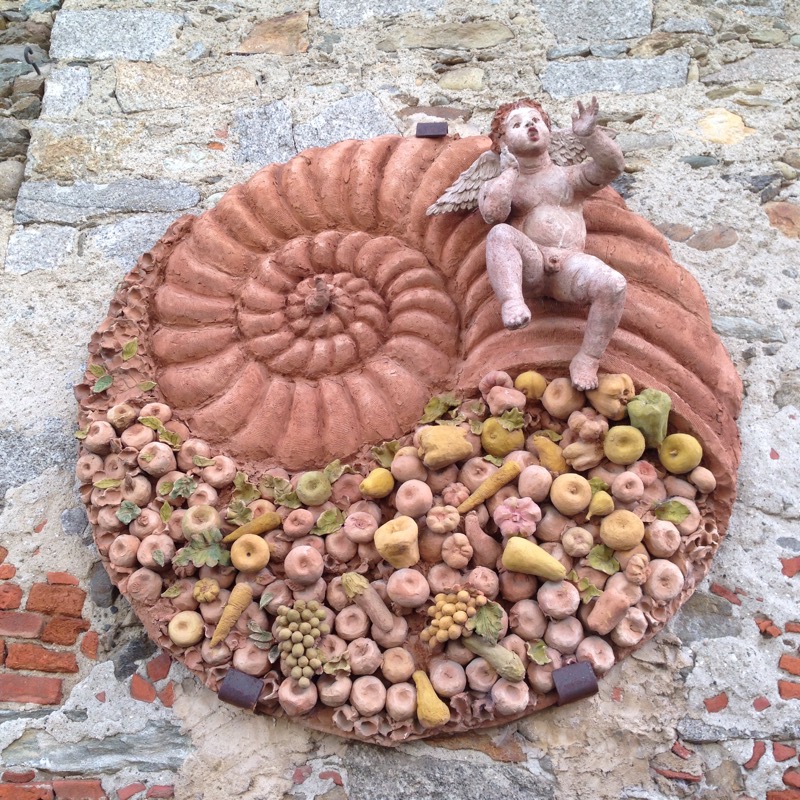
Our sunny Sunday morning in the unsung village of Maglione was spent discovering why it was known as a City of Art. In the mid 80’s Maurizio Corgnati had the idea to create an outdoor gallery of contemporary art here and there are now around 170 works mounted or created on the walls of the buildings and sculpture dotted around between. Some have faded and flaked over the years but that was part of the plan. For the art to grow and die back with the fabric of the place. 

Anyway it was a nice walk with different scenery to the forests and mountains of our usual backdrop.  


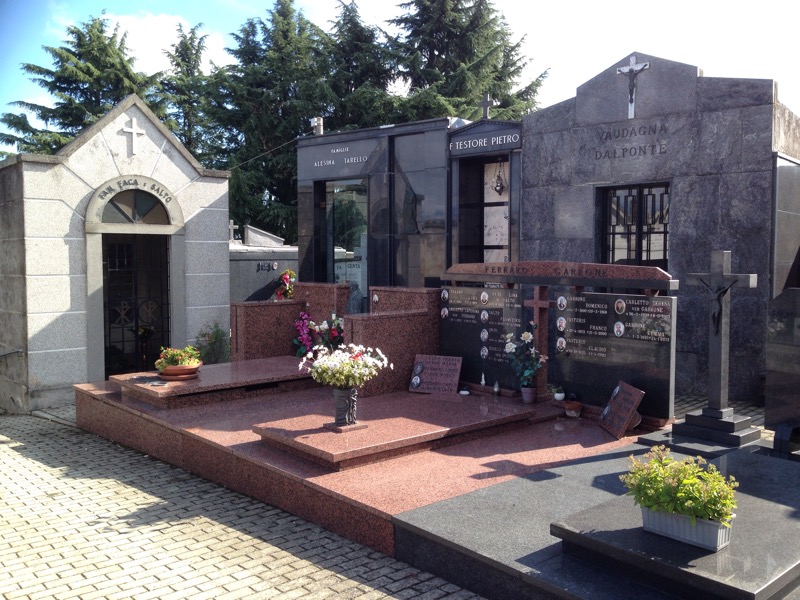
We wandered up to a viewpoint by the church and looked out over the geological marvel of the Moraine Amphitheater of Ivrea but were more interested in the vast and stylish family vaults in the cemetery.  


Before we left I realised that the strange structure next to our parkup was a work by the landscape artist Nils-Udo of whom I’m a fan. This piece, a raised circular grotto like earthwork, has gone wild.  

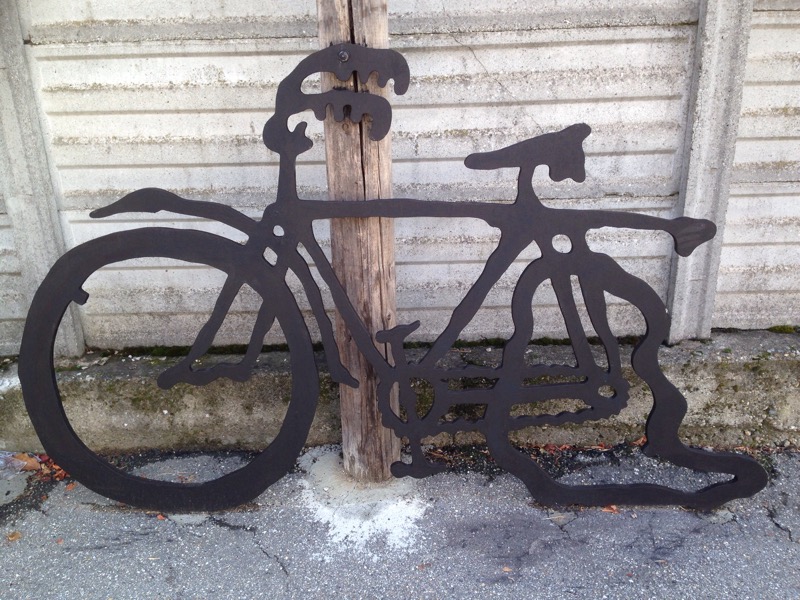
 I also managed to find a touring bicycle to photograph as requested.  


We programmed Serena to take us to another parkup listed in the guide, far up in the Susa valley en route en France. It’s like a magical mystery tour letting the guide and the GPS decide destination and directions. It’s an exercise in letting go of control and surrendering to a higher power. Fate. And it usually works out grand. If it doesn’t it teaches you acceptance. 

The valley extends from Torino or Turin of sacred shroud fame all the way up to the passes over the mountains and nowadays the tunnels through them from Bardonecchia into France. Since the Middle Ages there have been numerous abbeys and monasteries of Franciscans, Augustinians and Benedictines and its on a Camino to Santiago de Compostella and the Via Francigena pilgrimage from Canterbury to Rome. I was tempted to get the staff out. 

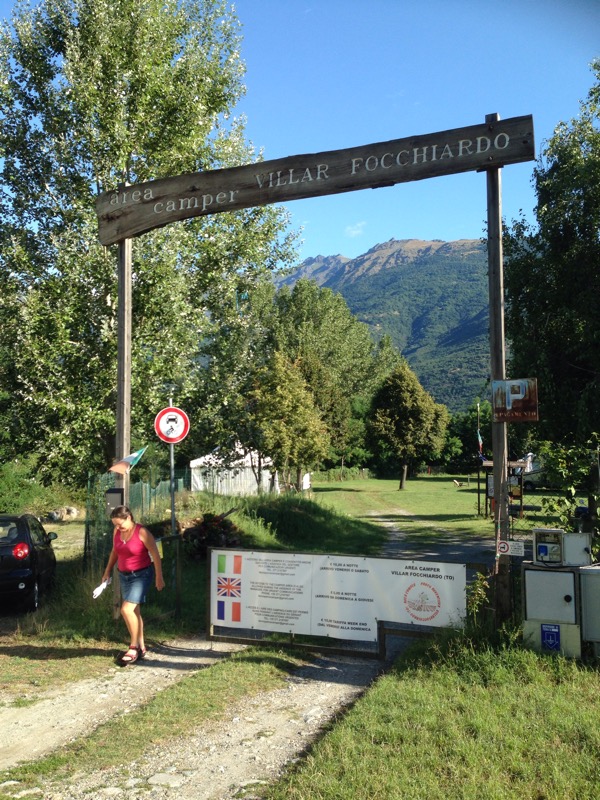
Our camp was a nice small scale community run affair above Villar Focchiardo and below the forested mountains of the Parco Naturale Orsiera Rocciavre where they charged us a fiver. Fair enough.  

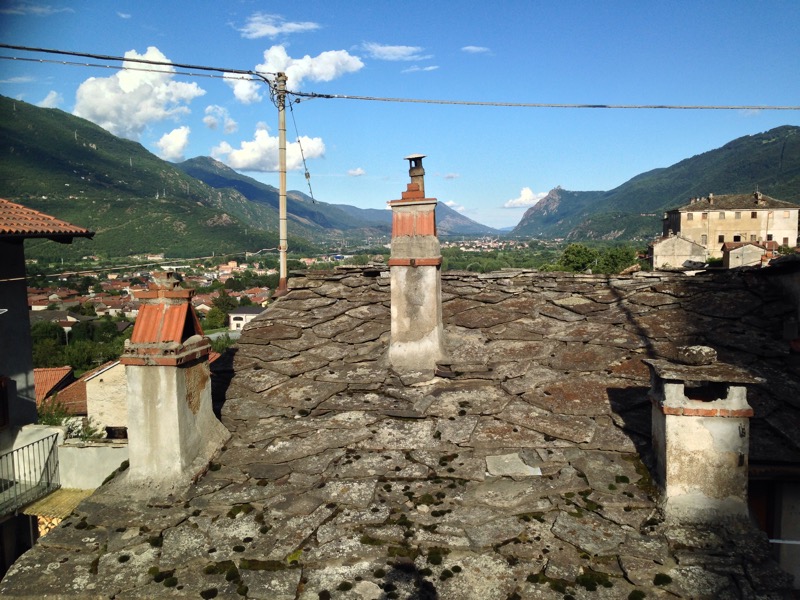
 The village had views down the valley over the fine stone roofs.  

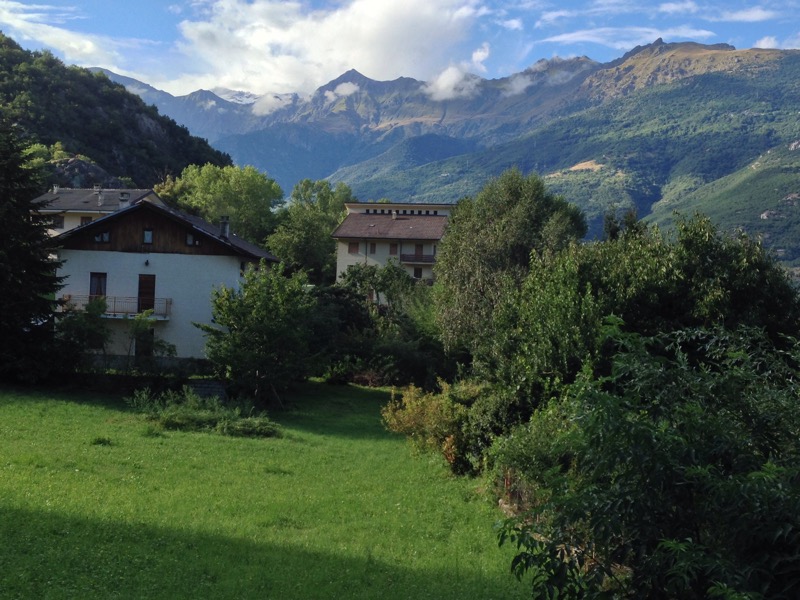
 And across the chestnut forests the region is famous for.  


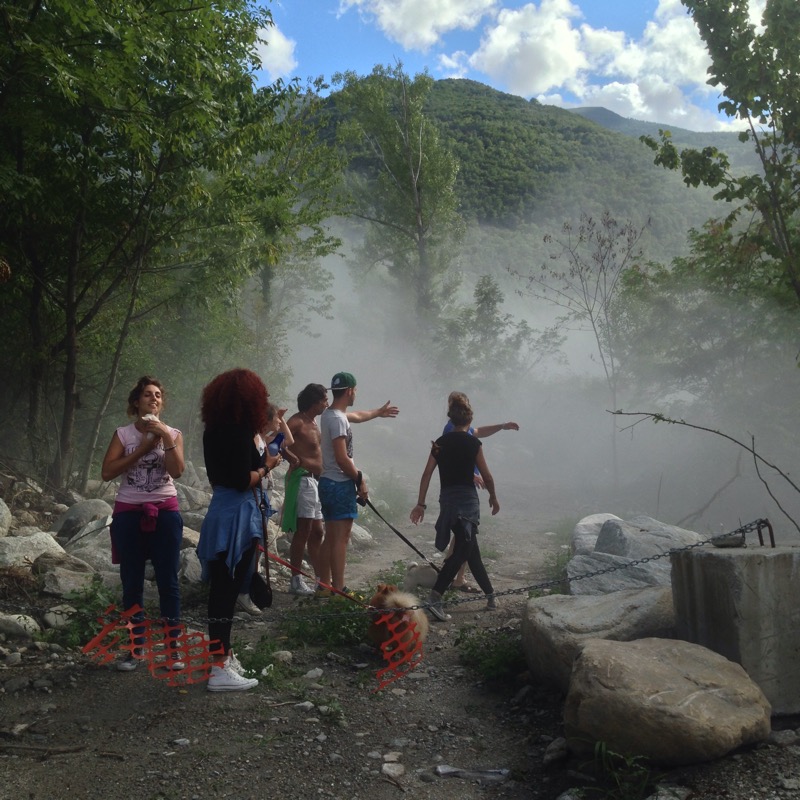
 But the thrills came later in the afternoon when a sudden loud crumbling crashing rumble and cloud of dusty smoke had everyone out rubbernecking the landslide on the cliffs above us.  


 Before long the civil defence and fire brigade were out and the church bell was ringing the news but after some barriers were erected and some no go tape strung around it was deemed “all clear” and there was no evacuation. 

The next day we hoped the mountains would hold together as we drove through numerous tunnels finally joining a long queue to enter the big one. 12 km of the Tunel do Frejus to France. A mighty piece of engineering that we had to cover the cost of. We reckoned it would be a tenner and handed one over. Yer mans waiting for more. We see the electronic price display flashing before our eyes. € 58.50.  Short and curlies. 

  
Arriving into France and only saved a customs going over by the more interesting car from Bosnia Herzegovina that came after us, we drove to a lakeside parkup at le Bourget du Lac to lick our wounds, plan our next move and have a swim.  


THE GRAND TOUR: ITALY 13/14/15th AUGUST 

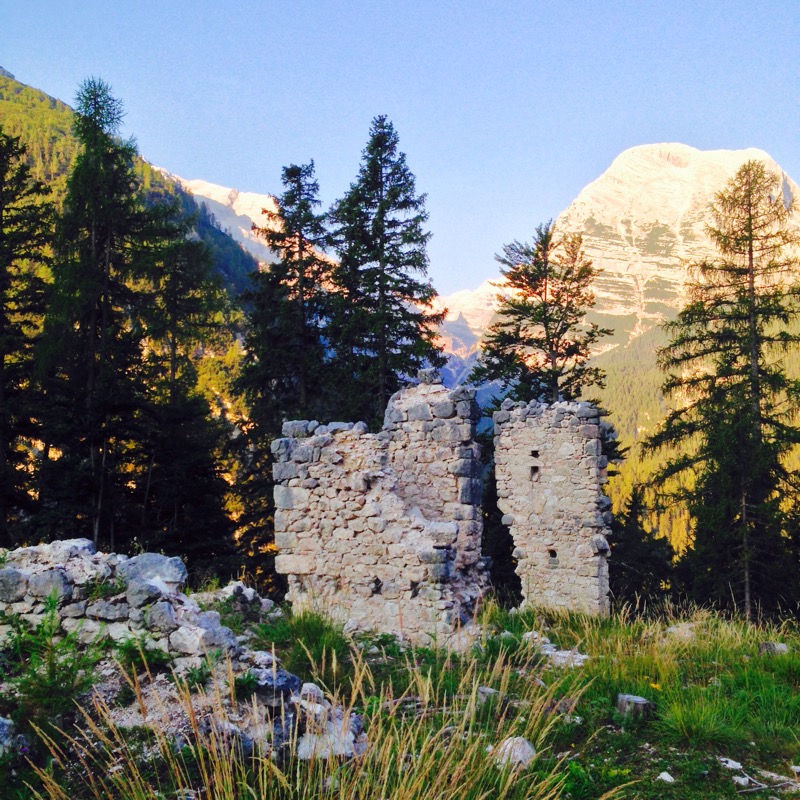
We had spent the night in the Ampezzo National Park next to the ruins of a famous hunting lodge that had been built by Irish Countess Lady Emily Howard-Bury and her American millionairess friend Anna Potters-Pott. (I’m not making this up) Originally it had looked more like a castle than a lodge  but it had become a victim of WWI when burned down by the Austro Hungarian side to prevent the Italians from using it.  Apparently soldiers from both sides would gather there peacefully together looking for food.

Anna had died of a heart attack at 40 while out hunting some years earlier and  Lady Emily had buried her ashes in a golden urn in the forest she loved so much.

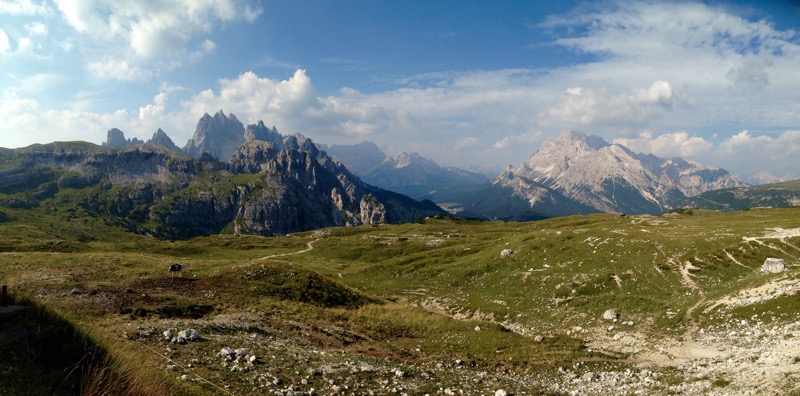
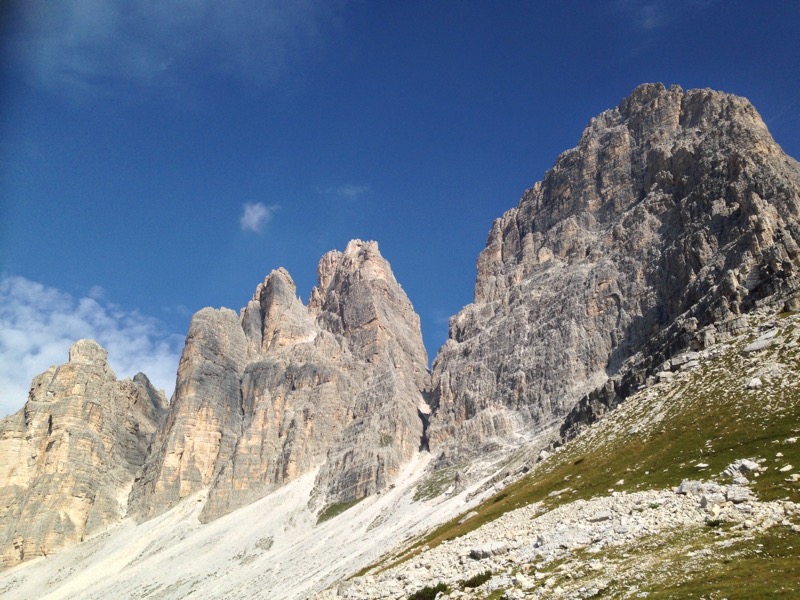
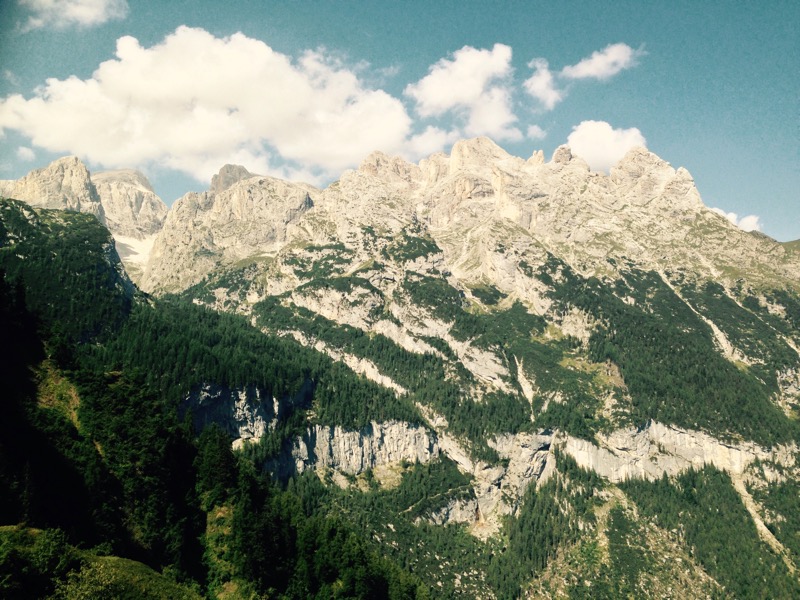
This was going to be a busy weekend. A national holiday, the feast of the Assumption, and we were heading to what’s probably the most beautiful and popular part of the Dolomites, the Tre Cime du Lavaredo or Drei Zinnen both languages being spoken this far north.

The village of Misurina had a camp site and camper park at the beginning of a toll road leading into the iconic peaks that are featured in most illustrations of these mountains. We started up early again to give Tranny cold air around her/his radiator on the climb.

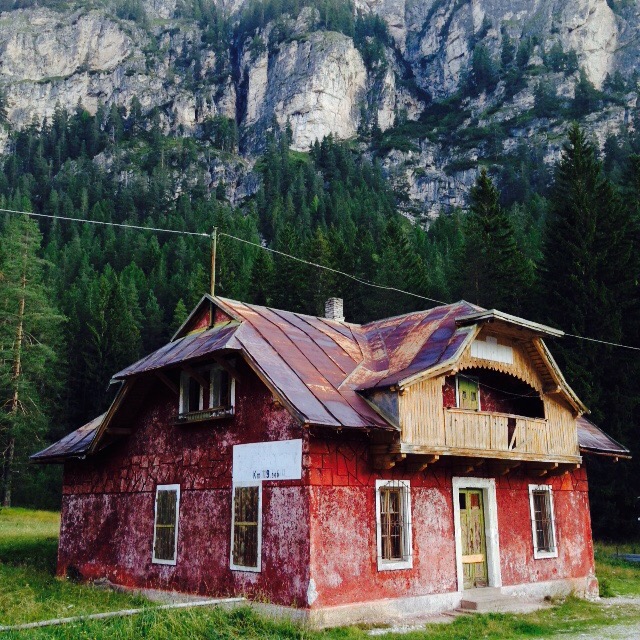
 There were some nice old lodges on the way.

 And the town itself is nicely situated on a lake surrounded by dramatic scenery.

The campsite and parkup were rammed but we slid into a vacated place and did our best to fit in while we showered and washed clothes etc.

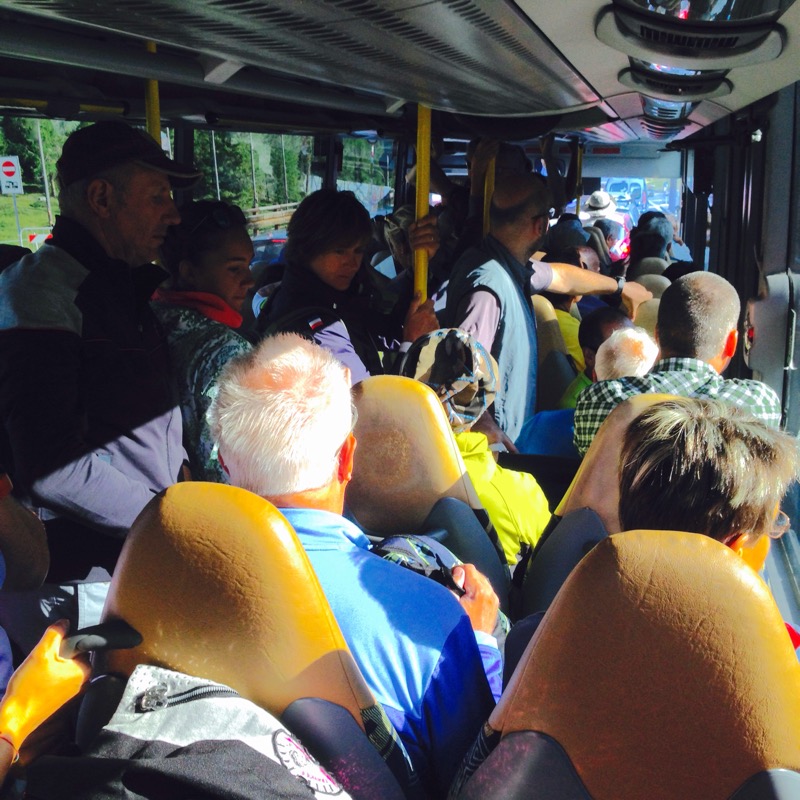
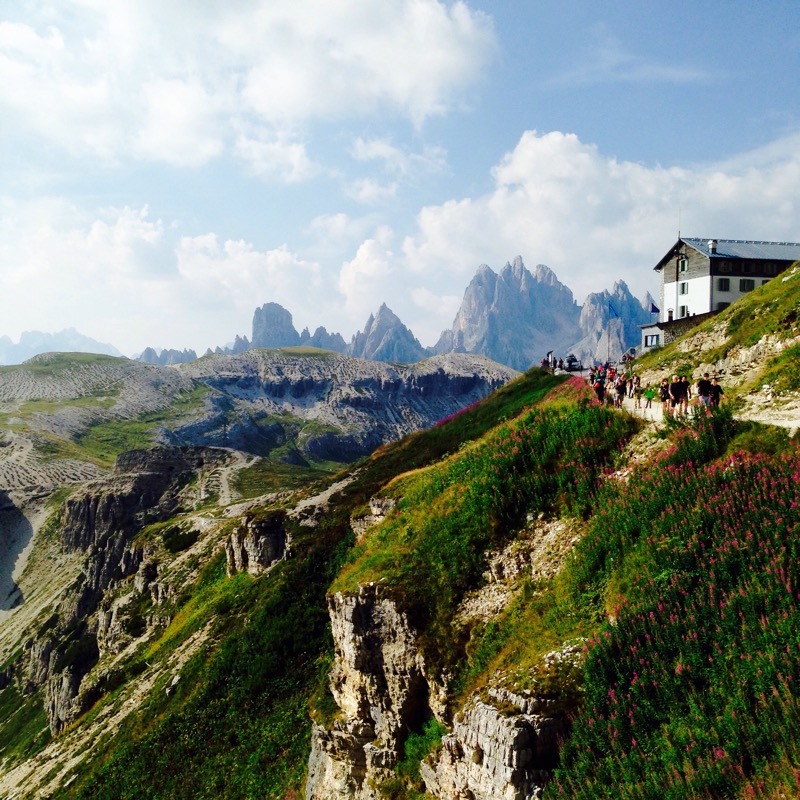
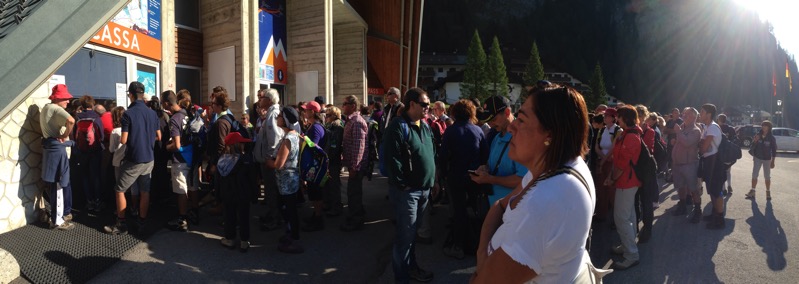
After a day of domestic chores and watching the constant stream of motor home coming and going we resolved to get the first shuttle bus to the Refugio where campers pay 36€ to park overnight ,and follow a trail that goes all around the base of the celebrated peaks. It was a repeat of the queue for Marmolada cable car except we had the dogs as well. A mighty scrum altogether.

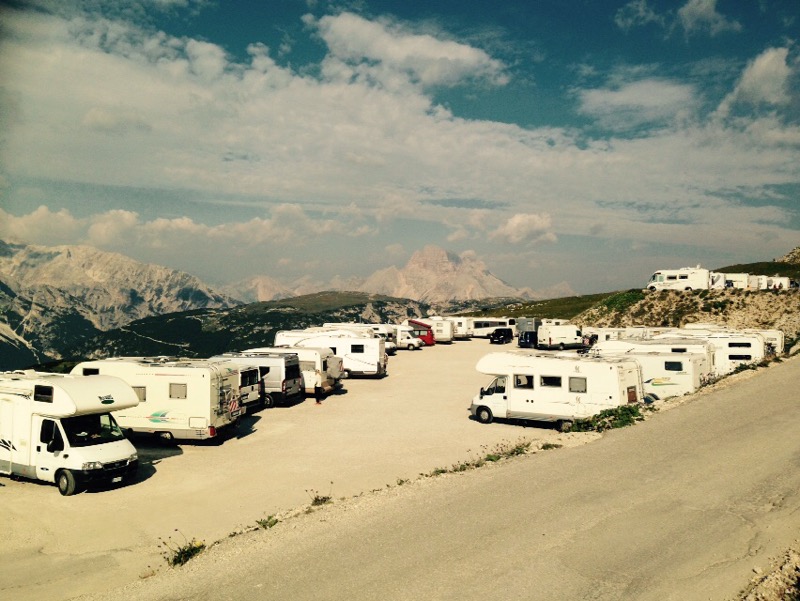
The bus journey saved us about 7 km and 600m ascent and when we got there the expensive car parks were filling up and were obviously a real earner making the conservationists calls to shut them down to limit the pressure on the mountains unlikely to succeed.

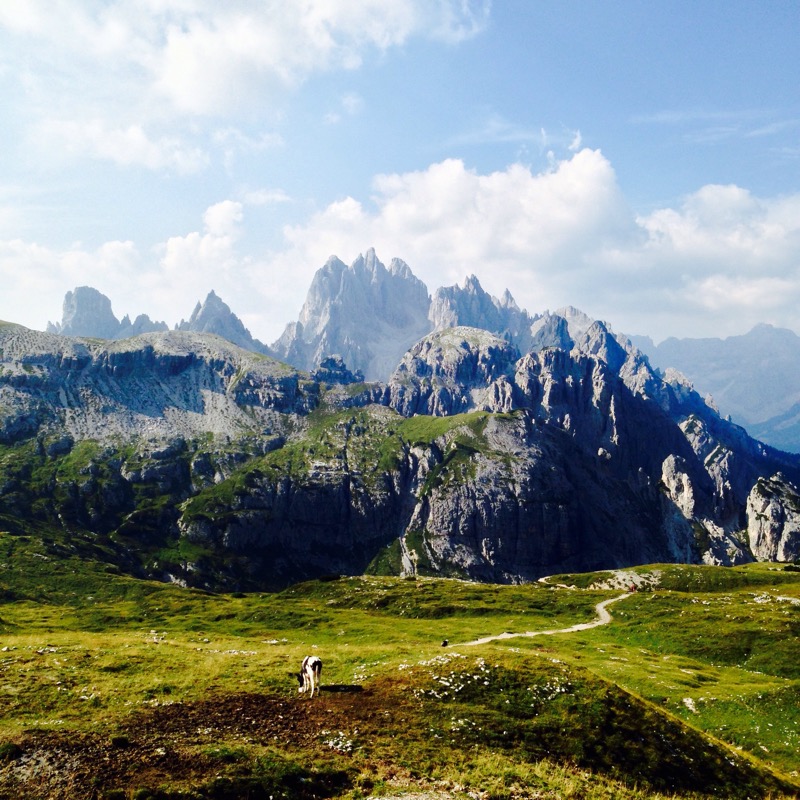
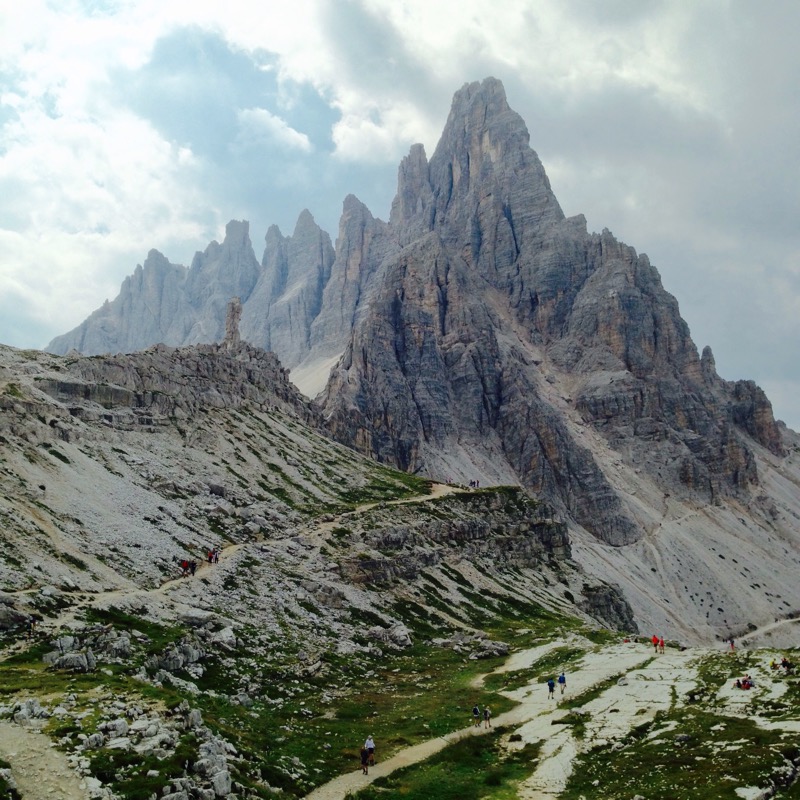
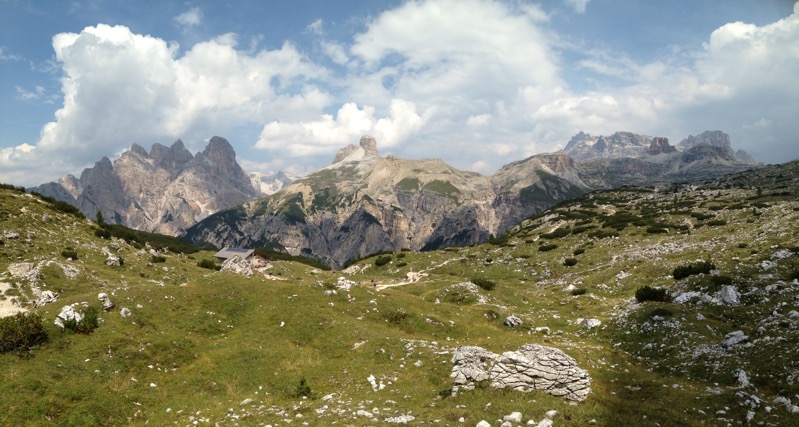
But immediately you could see why everybody wants to go there.

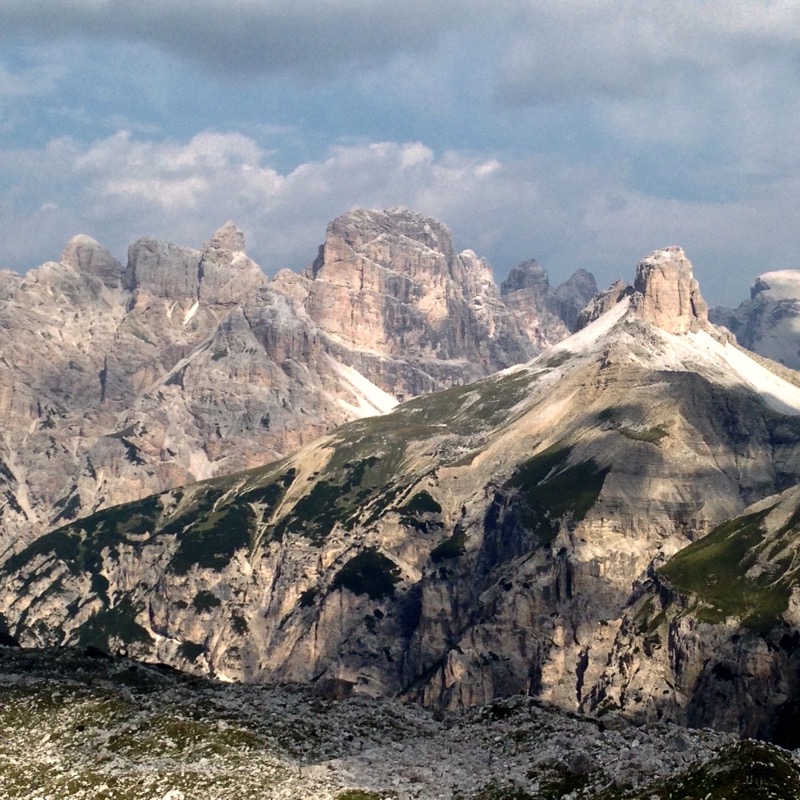
 I have good signal strength right now in a hypermarket so I’m going to whack up a load of pictures while I can. Sorry if it’s overload.  

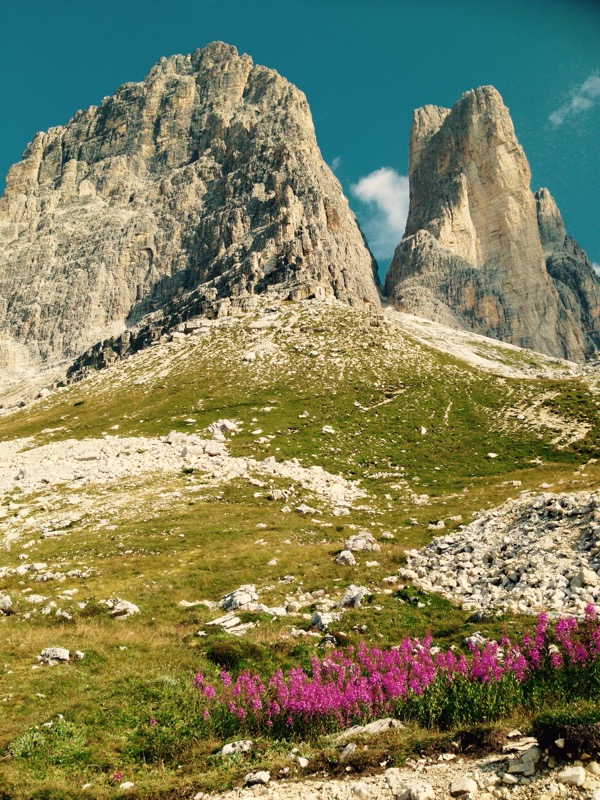
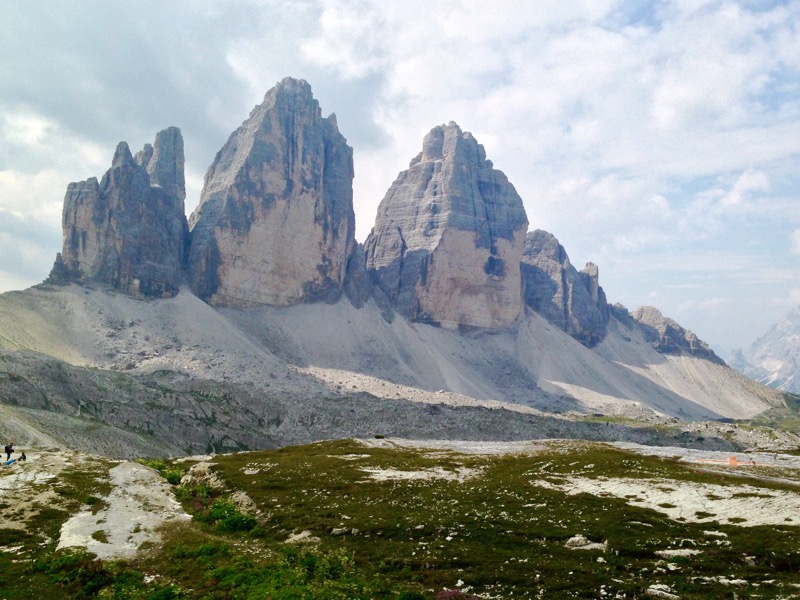
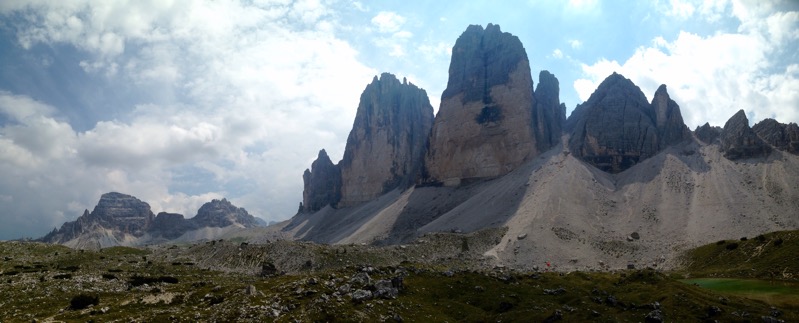
 We happily joined a stream of humanity on a conga line like procession around the three extraordinary towers of stone.

 Two tiny climbers are visible half way up the sheer wall.

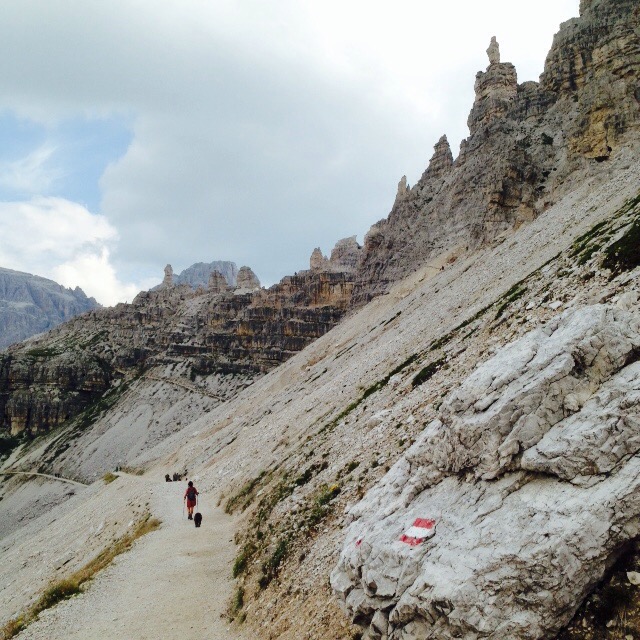
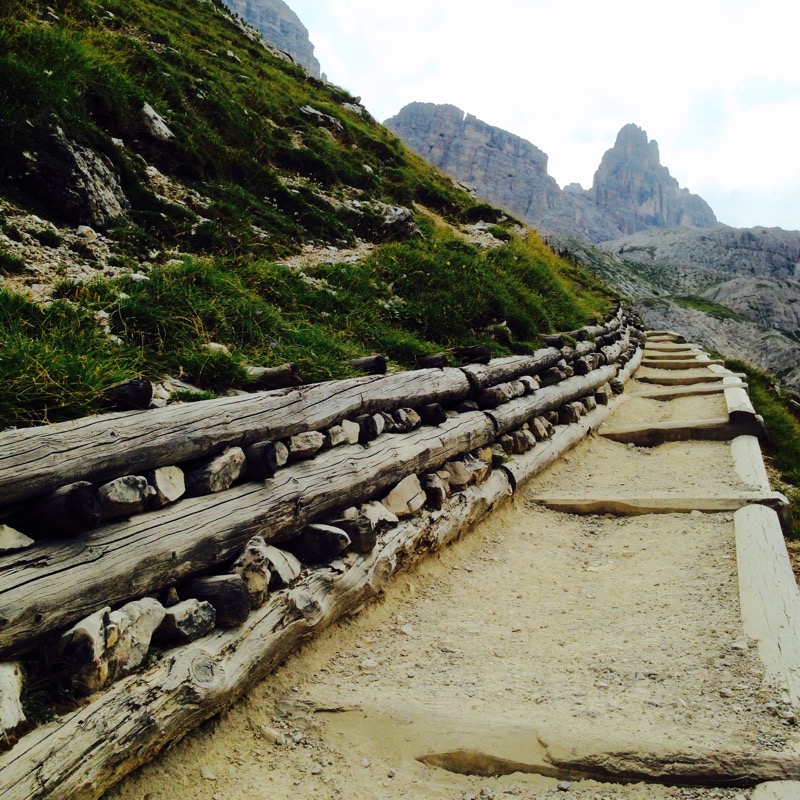
  A lot of work had been done to the track and people of all ages were using it.

 We stopped for picnic on the rocks and decided to avoided the crowded bus and walk back to the village.

 It will stick in my dis functional memory as one of the finest walks of my life and sharing it with hordes did nothing to detract from the glories.

What did though was getting back to discover that the €10 parking ticket we’d put on Tranny wasn’t enough to stop us getting a €30 fine for putting a camper in a car park. By now the town was heaving and with clouds gathering and rain forecast it was time to pull out. We made it out of the valley to the north and against a stream of traffic, up another a little further west the Val do Braies Vecchia.

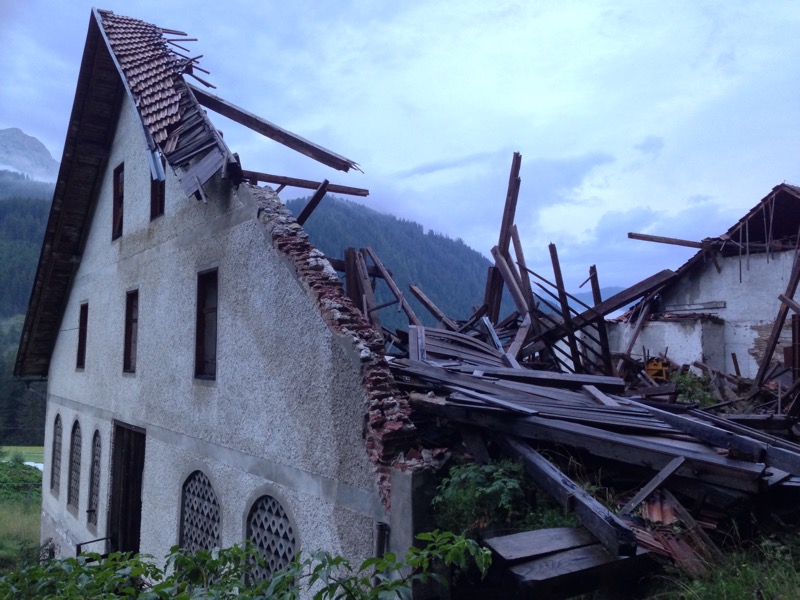
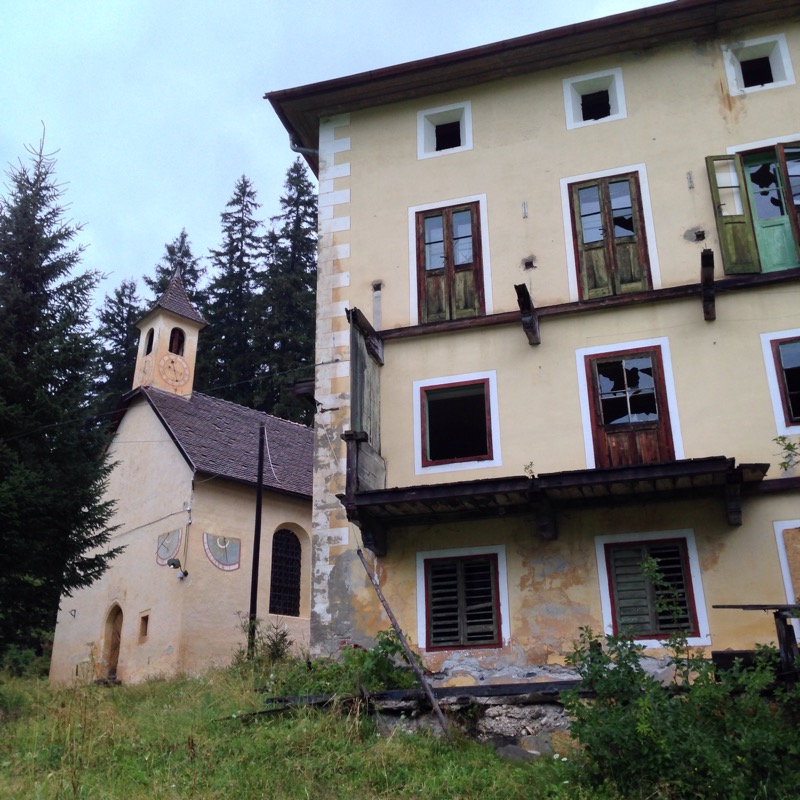
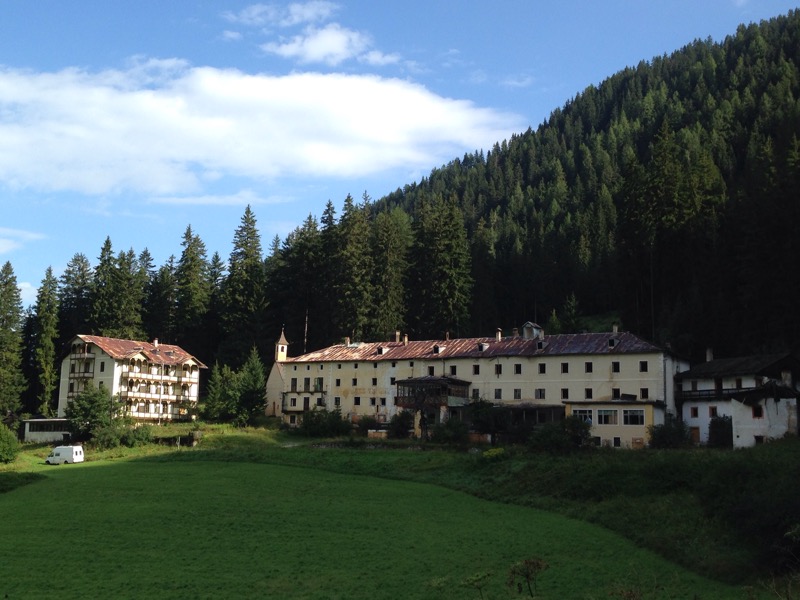
It started to rain hard just after we had parked up outside some abandoned buildings which we sussed out had been victims of earthquake.

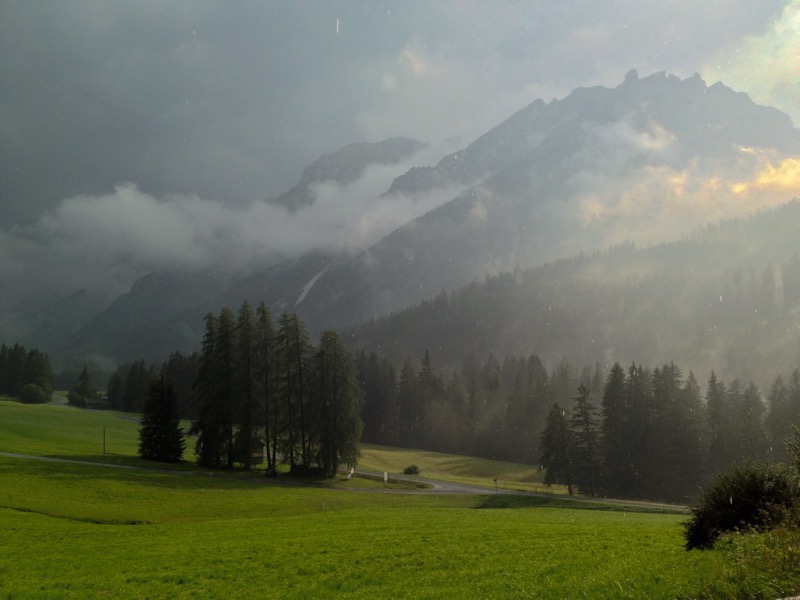
  Serious thunder and lightning that lit up the clouds lasted most of the night but the morning brought an improvement and we were able to take our last walk in the Dolomites.

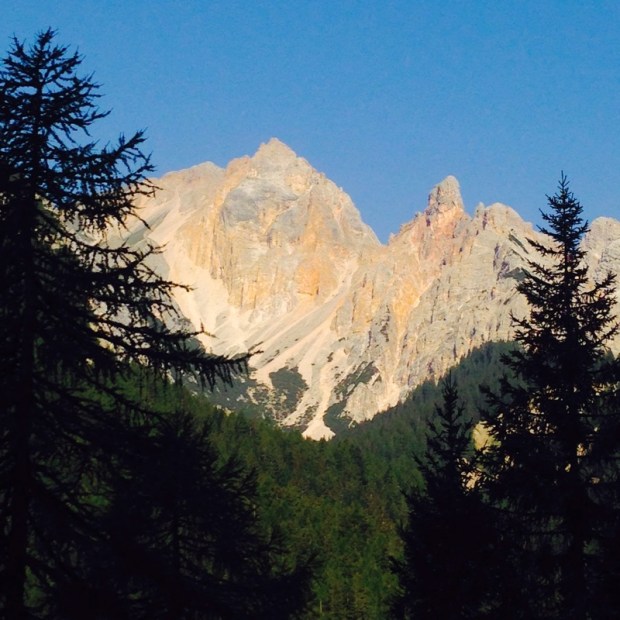
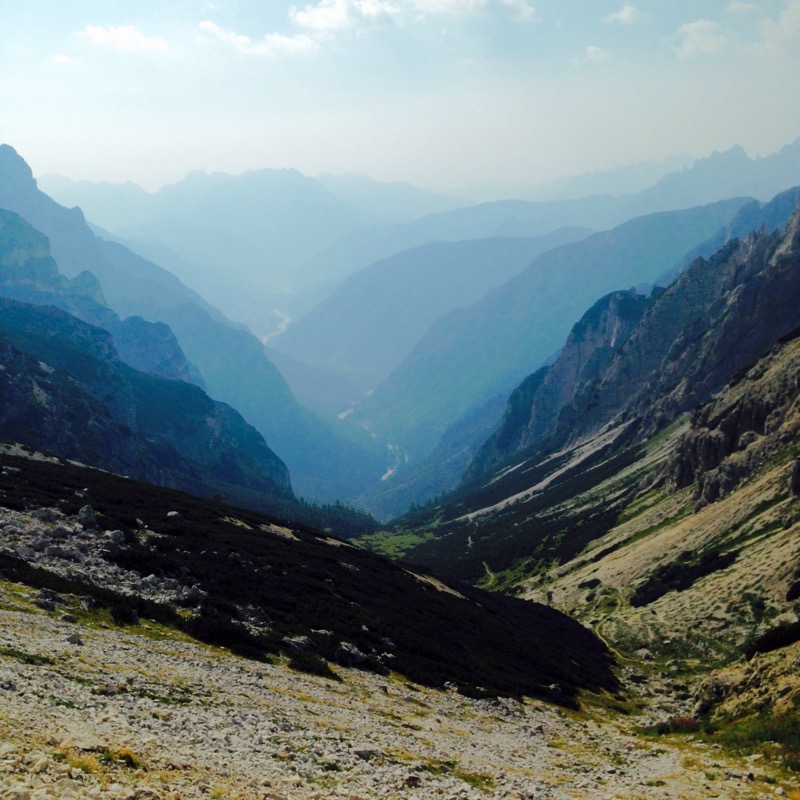
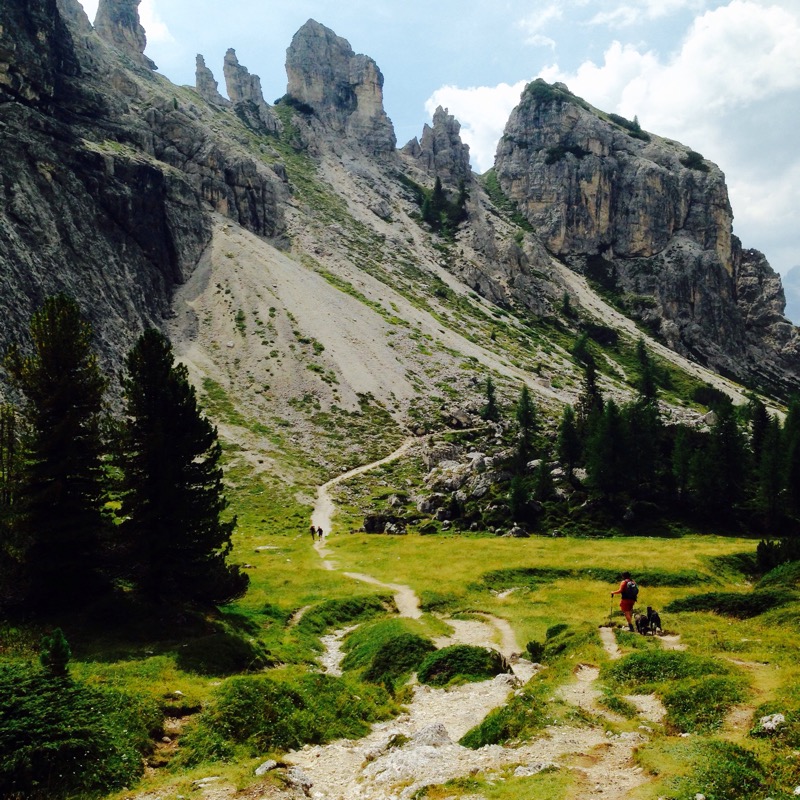
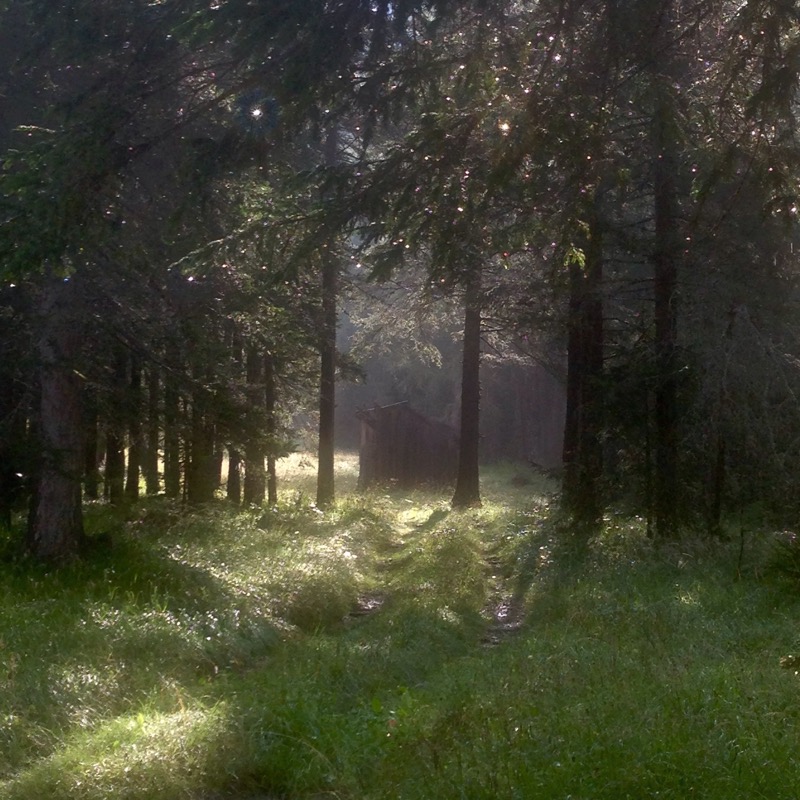
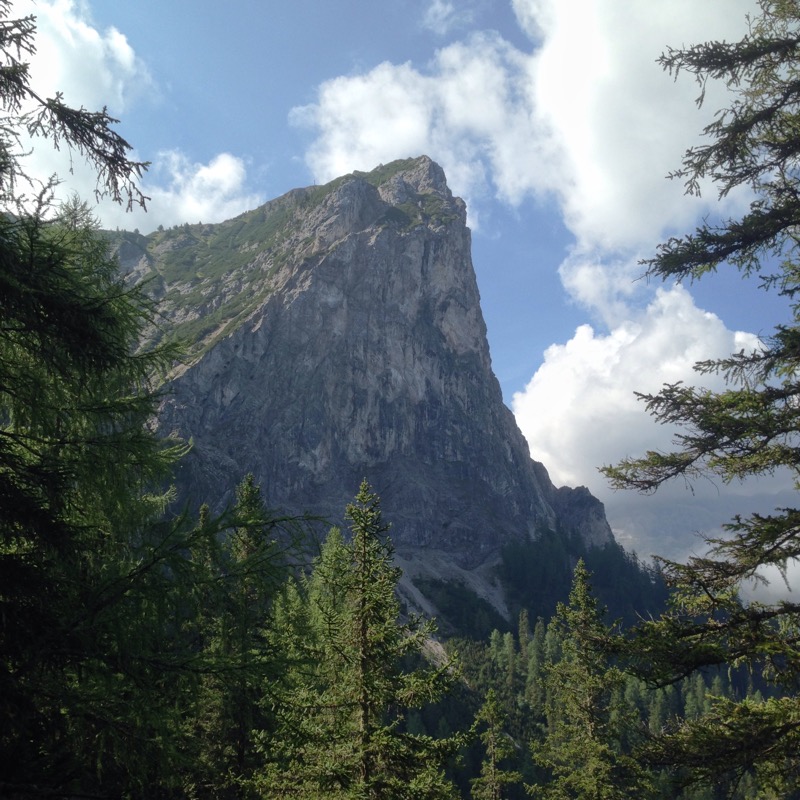
 Up through the misty pines to a Coll overlooking an impressive cliff and back across the valley.

Over our 10 days in the Dolomites we had hiked in 6 different National or Natural Parks and even in the honey pot areas of mass tourism their was an awareness of their special need for conservation. Those white towers of stone, flower filled alpine meadows and vast green forests have been beautiful for millennia, long may it last.

The come down from our figurative and literal high was bad. We needed to cross Italy from east to west. The general busyness had persuaded us to give up on visiting the Lakes and head for the Valle do Susa in Piedmont on the way to France.

I’m not used to traffic jams and not very good at dealing with them. We alternated between motorway and A roads trying to find some space to drive through. The desperate situation was alleviated by the fact that the flashy Ferraris and Porches weren’t going anywhere at the same speed as us.

Eventually, for unknown reasons, it cleared enough for Tranny to prove her/him self again by cruising for hours at 120kph. And through a deluge. We felt like storm chasers as we belted along the edge of the strangest cloud formation.

Luckily Serena was on hand to guide us to a place of safety. Our parkup guide had listed somewhere just off the motorway as an “art city” although it didn’t appear in Lonely Planet or any of our maps. It was just what we needed to escape a rainy motorway at dinner time.

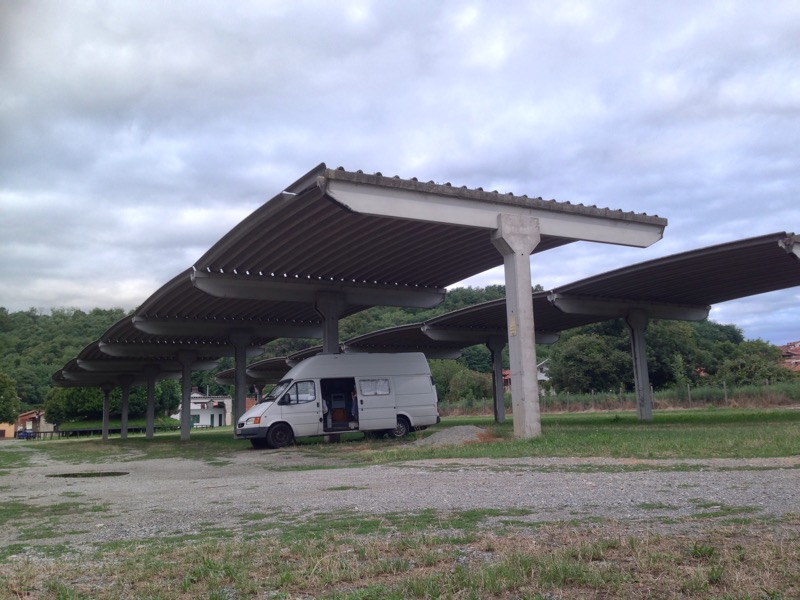
 An empty grassy lot in a quaint and quiet village with A ROOF over the pitches and a restaurant next to it.
Remember the name. Maglione.

THE GRAND TOUR: ITALY 10/11/12th AUGUST 


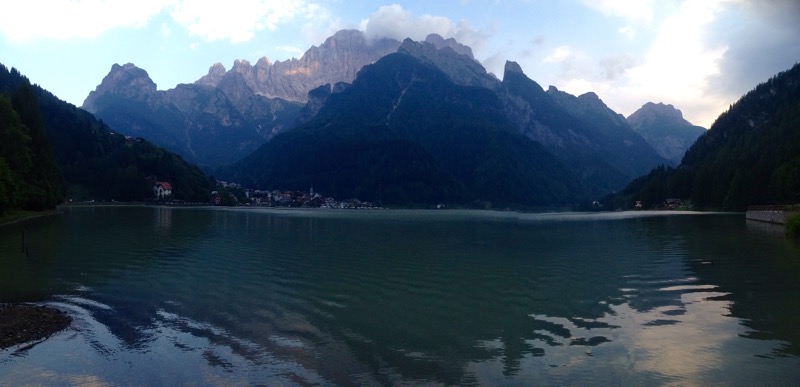
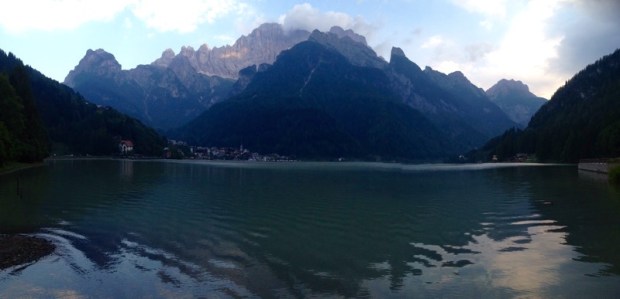
Dawn on Lago d’ Allegne from our park up. 

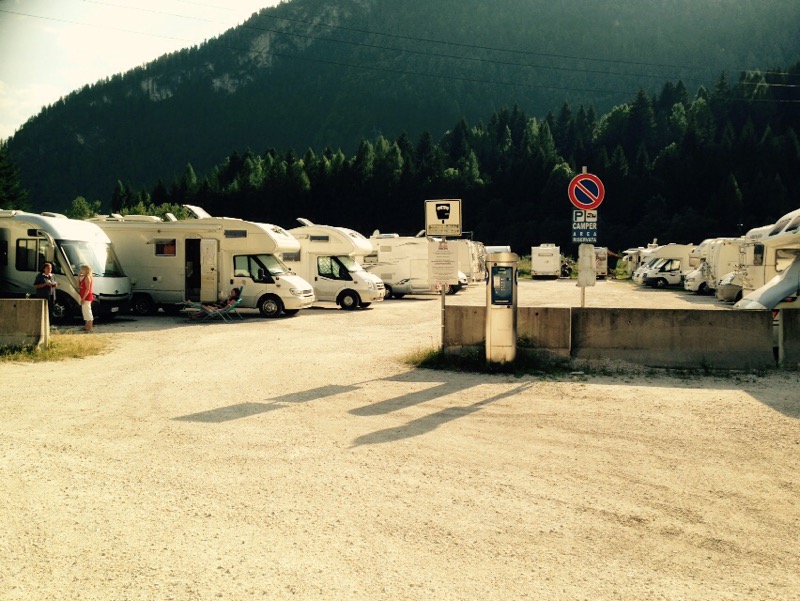
Italy has been very good to us in terms of nice places to stay for the night. Not always strictly by the rules but it does seem pretty relaxed. There are thousands of ” motor homes” here, way more than anywhere else we’ve been and they’re nearly all Italian. Gone are the Dutch and Germans. 

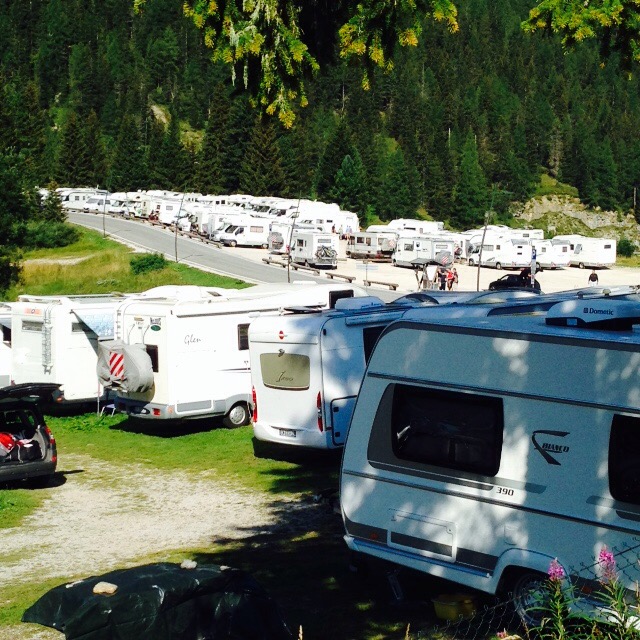
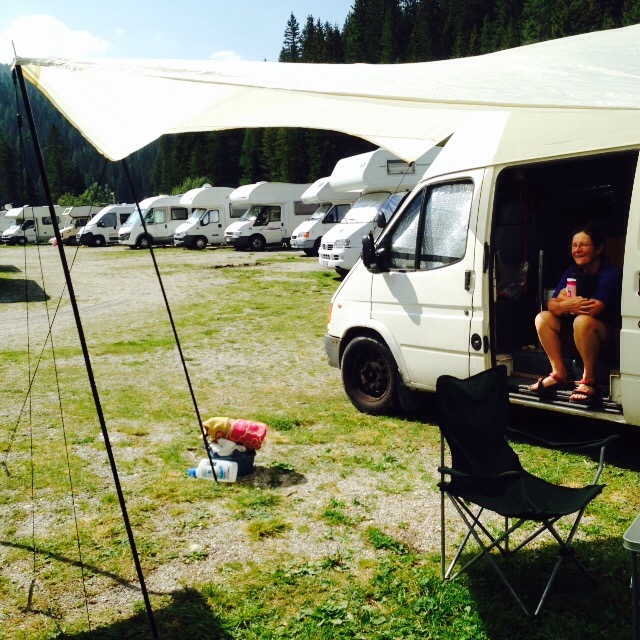
There are lots of municipal camper park ups but it’s the height of the holiday season and they’re pretty crammed, especially in towns. As are the camp sites. It seems like there is some inverse law that means the more unattractive the location, the more camperv, sorry motor homes will be in it. While we were lake side, the town side park up looked like this.  
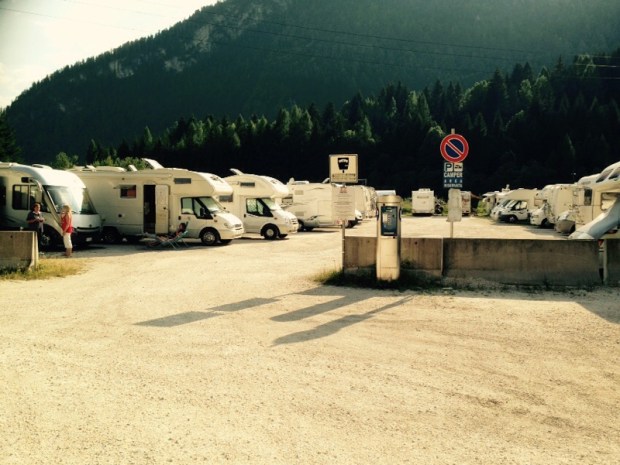
 Or a small section of it did. There’s as much again on either side of the shot. 

Anyway, each to their own. I guess some folk are sociable. I am improving my skills at interacting with mass tourism facilities and to continue working on them I resolved not to hike on our own up mountains for a couple of days but to join countless others on cable car trips instead. 

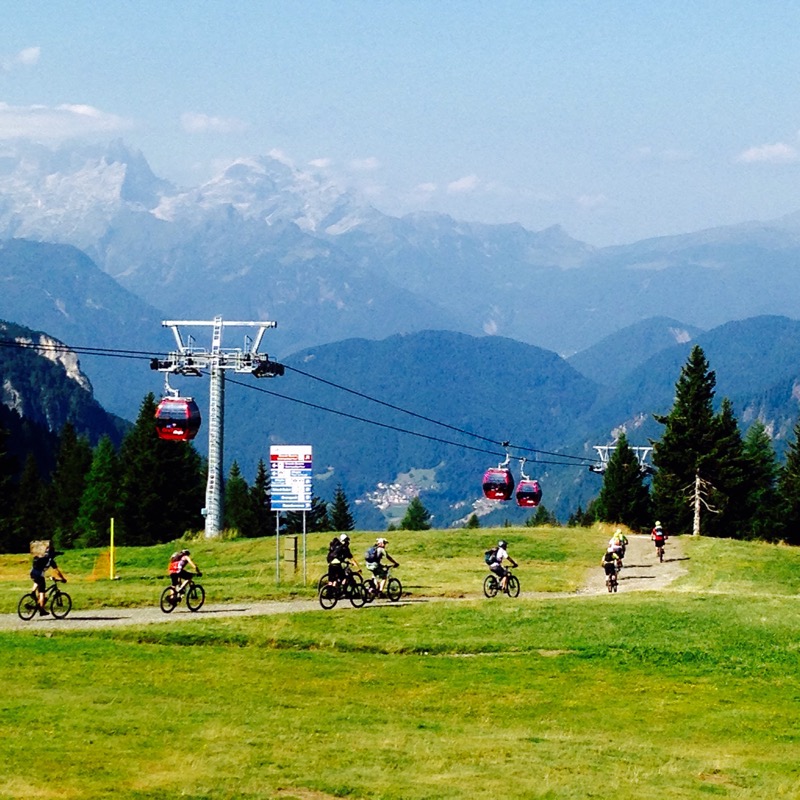
From Alleghe there was a two stage lift to the ski runs atop Col del Baldi at 1930m. The second stage had been turned from a chair lift to a cable car this year so we were able to take the dogs. 

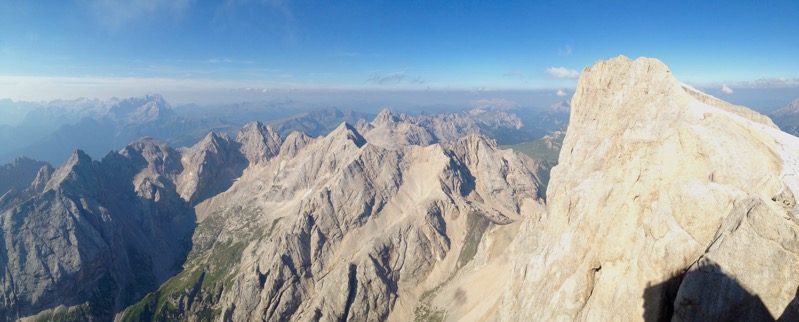
A few minutes and 900m later we were gazing in wonder at 350 degrees of splendour.  


What impressed us most apart from the peaks was the fact that all the ski runs were grassy loveliness. In Slovakia, Poland and Slovenia we’d seen some really scared up mountains but these looked landscaped and manicured, almost like golf courses. 

  
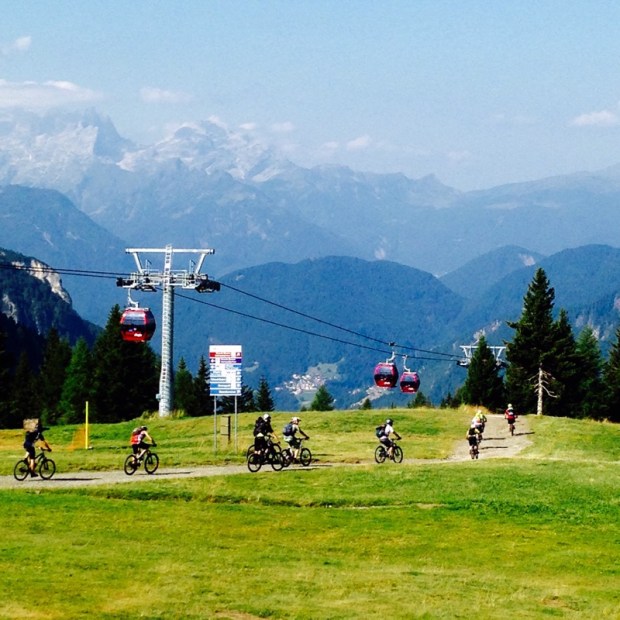
Another sport that was well catered for was mountain biking as the bikes could be taken up on the cable car and then avail of gravity to get them down. 

Here’s a couple more pictures of bikes to quench the thirst of Giles.  


There was a busy bar/restaurant and lots of picnicking and sunbathing around the CC station and a network of trails that headed off hither and thither. Some people were picking bilberry or blueberry of which there was a carpet.  
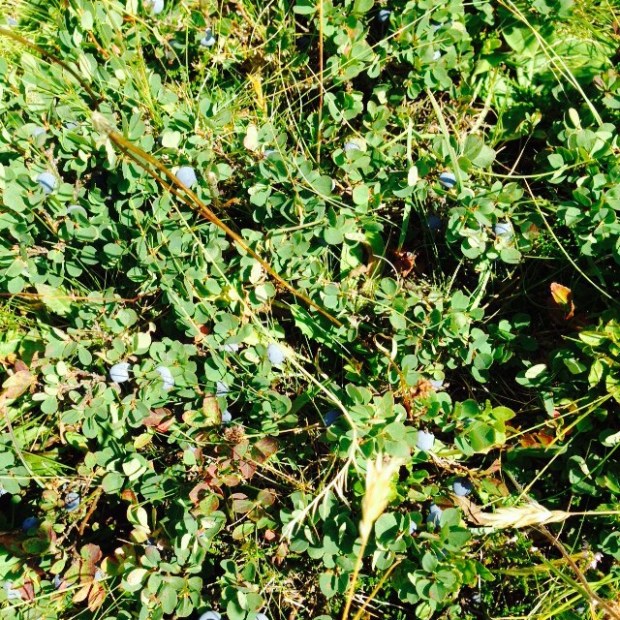
 As our mission for the day was to mingle with the masses we didn’t stray too far only climbing a solitary bump to check unseen vista. But what do you do when your not hiking? Chat? I wasn’t quite ready for that level of human interaction so found time passing slowly and after what I’ve just worked out to be 7 hours (no wonder it seemed like a long time. I’m better at doing nothing than I thought) we zoomed back down to cool off in the lake and head off in search of a remote, rural, isolated and quiet place to stay. 
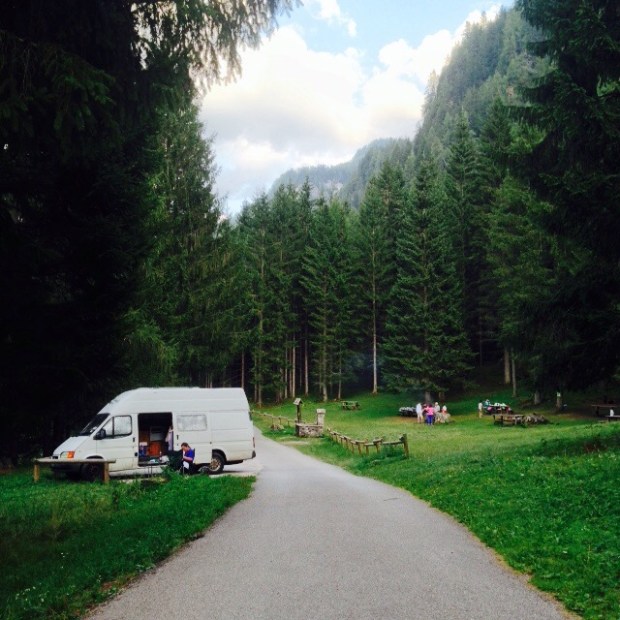
  Another picnic place in the shady trees by a river surrounded by soaring towers of limestone.  
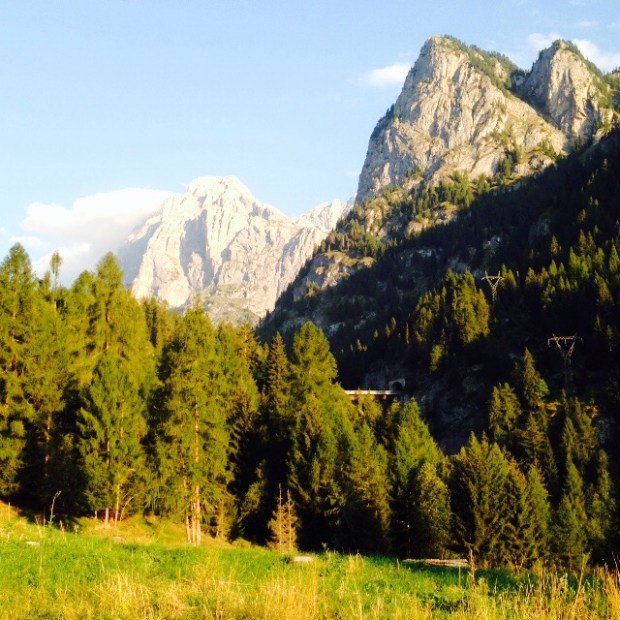
 And in the background was our goal for the morning, Marmolada, known as the Queen of the Dolomites, the highest of them all at 3343m. But we weren’t going back to our old ways and hiking up, no we still had work to do on the crowd tolerance. 

And getting up at six to drive the last steep bit while the air was still cool meant we were at the station plenty early to avoid a queue and be unnecessarily tested. Or maybe not.  

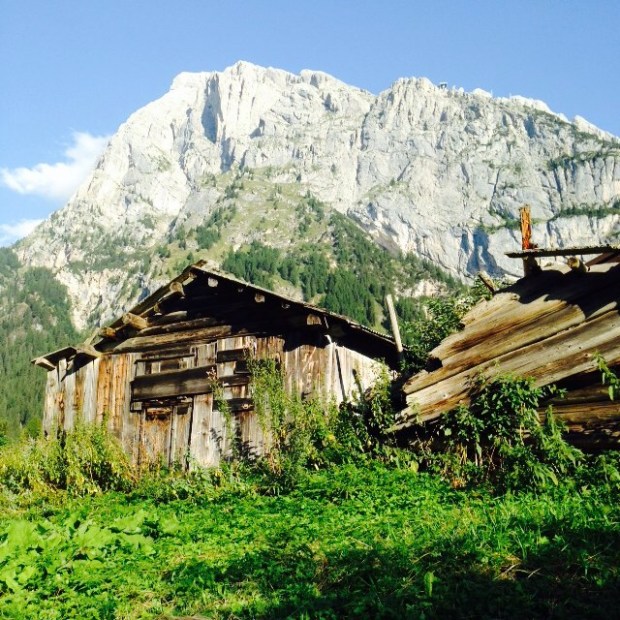
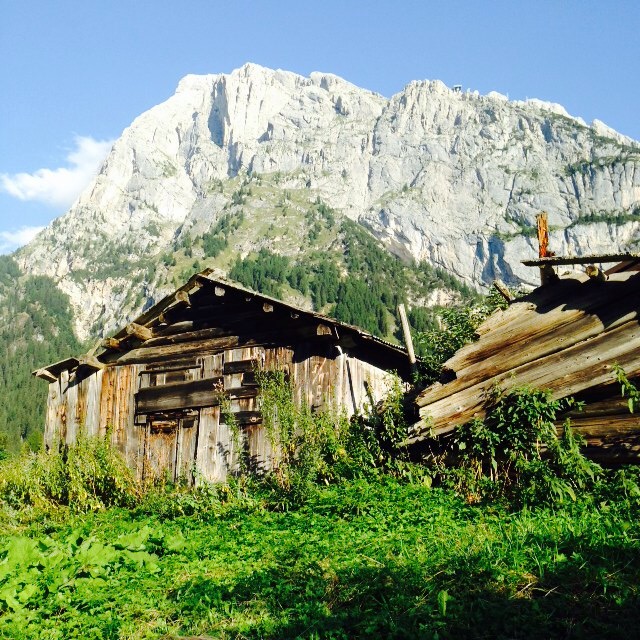
 Still there were some lovely sheds I could spend time with while we waited.  
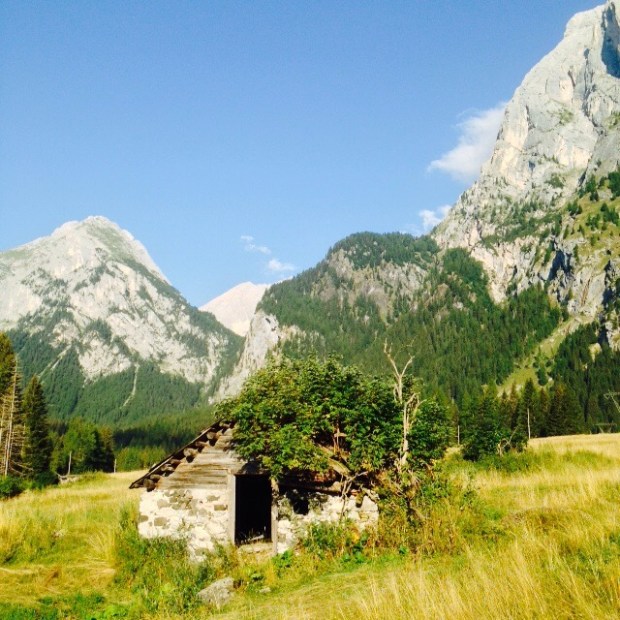
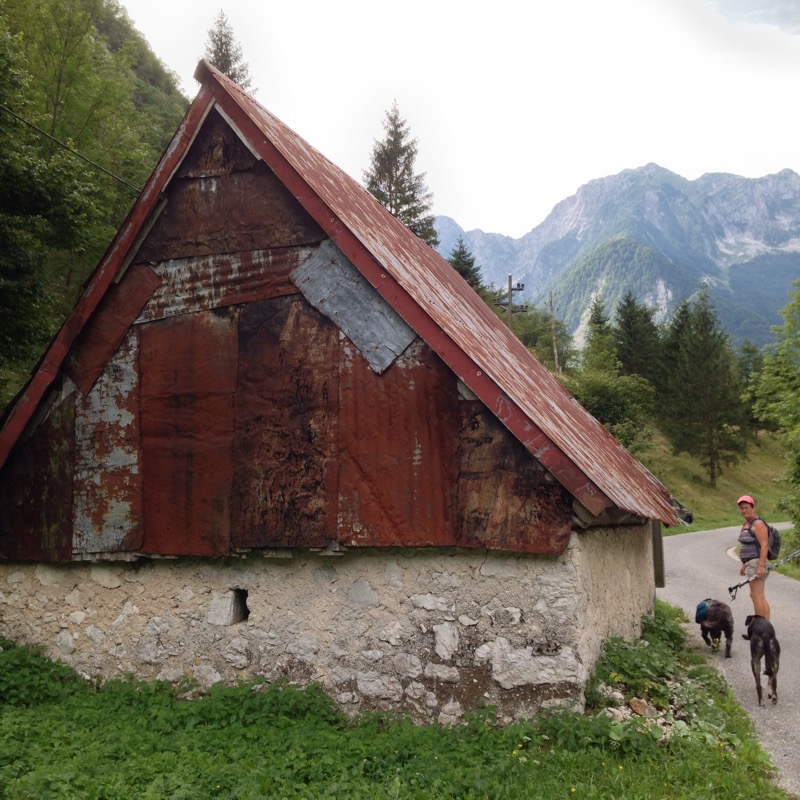
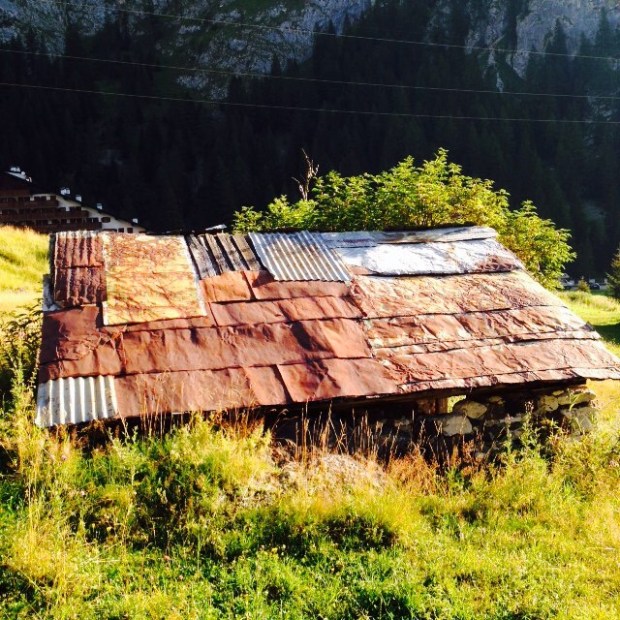
   And some even had the iron roofs I like so much. We had realised in Slovenia, whilst admiring the corrugated iron shed rooves that they were actually recycled 1st World War iron and it was everywhere. 100 yr old thick iron with a coating or patina of rust but still good and outperforming stuff obviously much younger. And here we were again on another Italian /Austro Hungarian WW1 front and the Tin was back.  
 

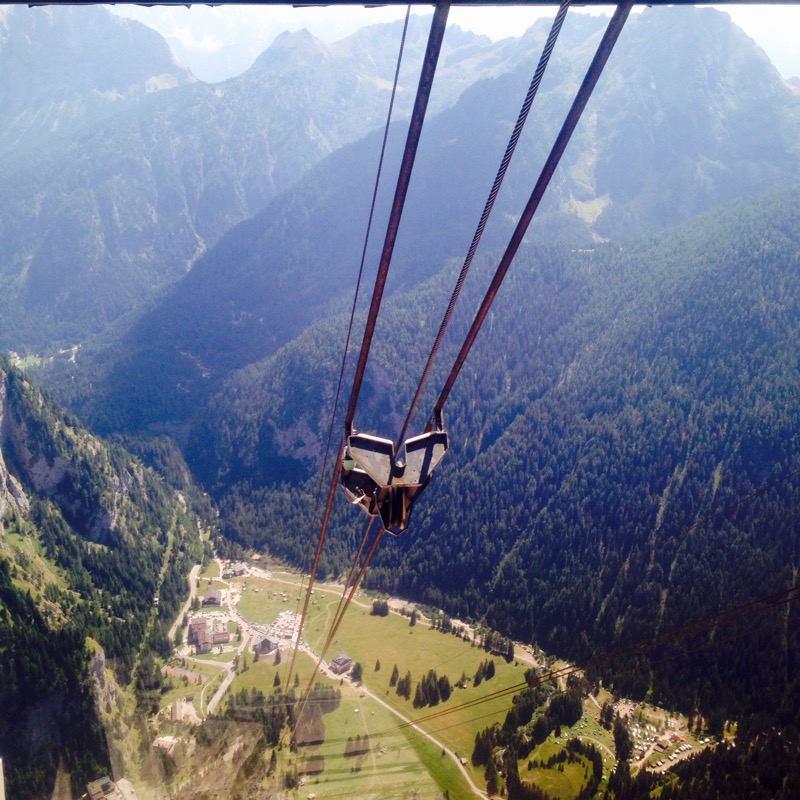
The cable car which took 70 punters shooting up the vertical wall of rock took 3 stages to work it’s way to the top. From the village of Malga Ciapela at 1435m to El Banch at 2236,  

 straight onto another car to cross the rocky expanse of Valon d’ Antermala  
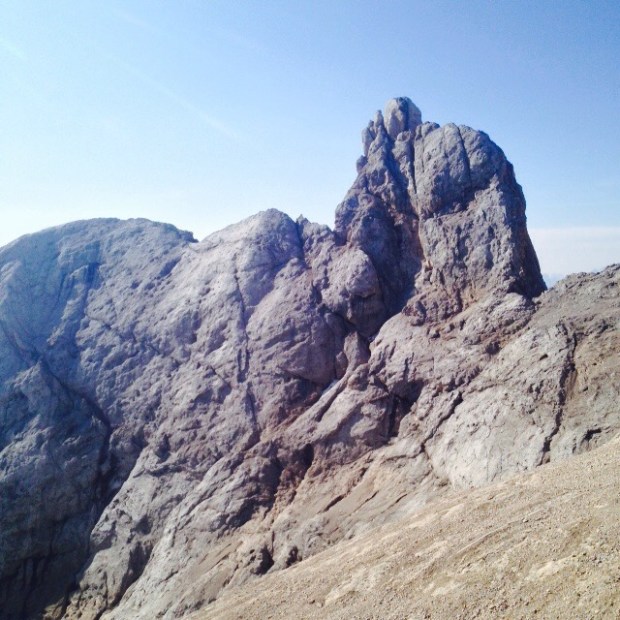
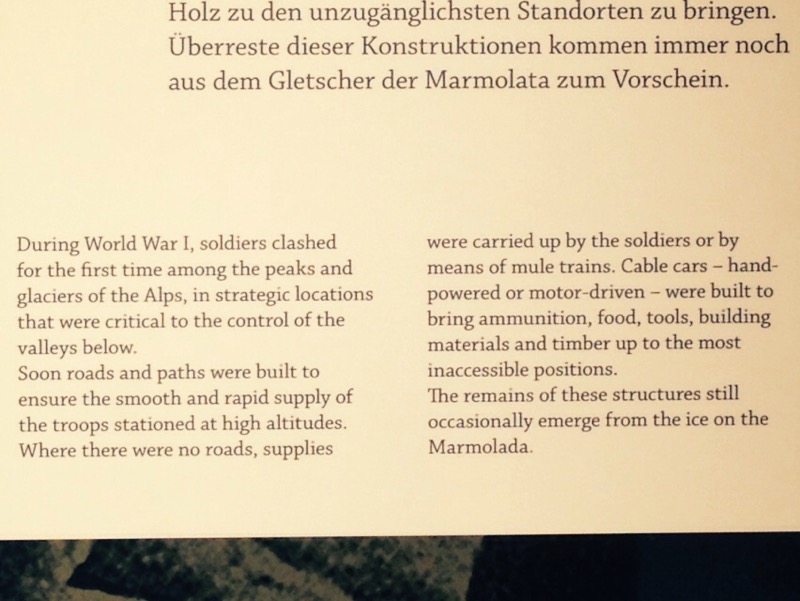
 to Refugio Serauta at 2950m where there was a new museum devoted to the WW 1 activities at 3000m on the mountain.  
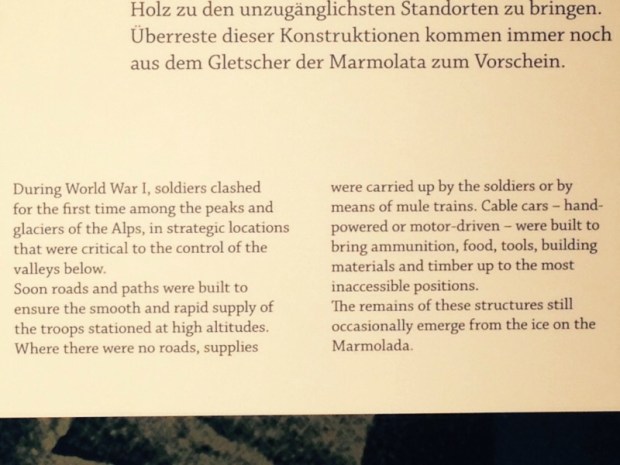
  

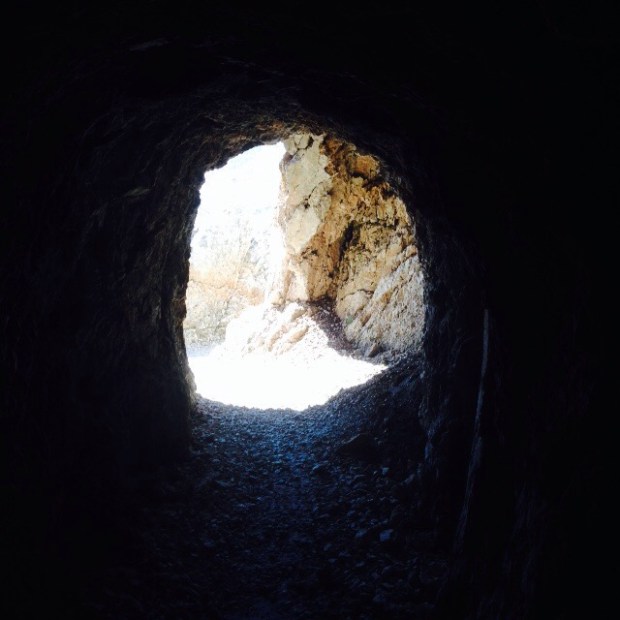
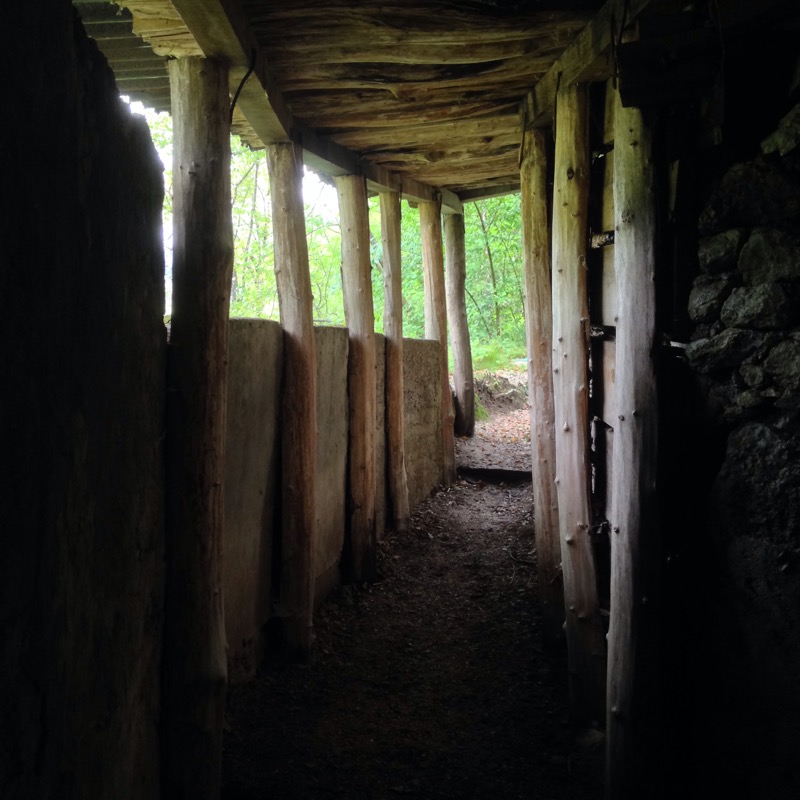
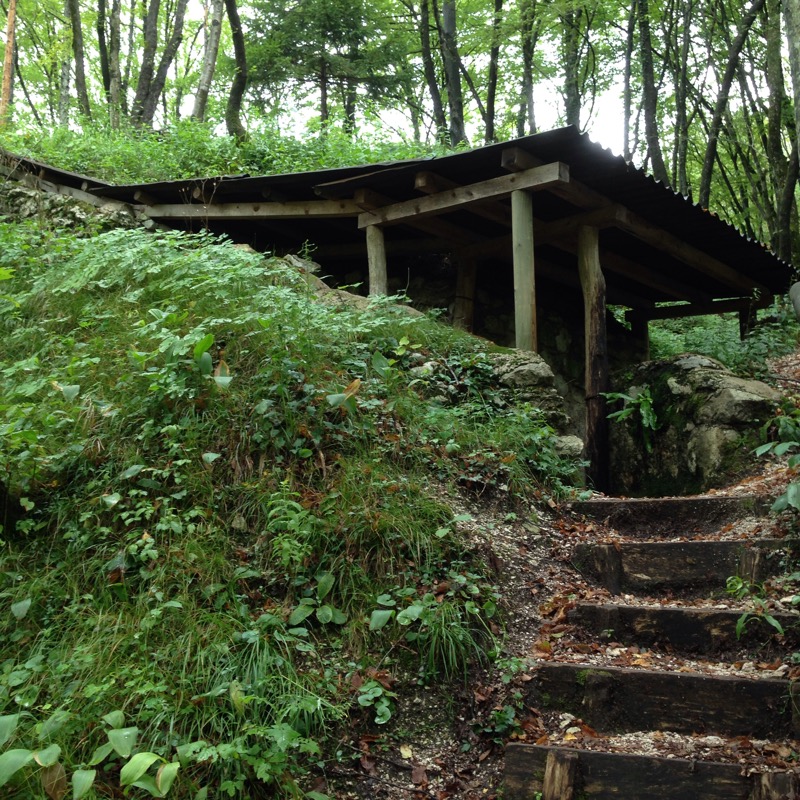
 Unsurprisingly it’s the highest museum in Europe, and its surrounded by trenches and caves, steps and observation posts cut into the rock. Over 10,000ft up mind. 
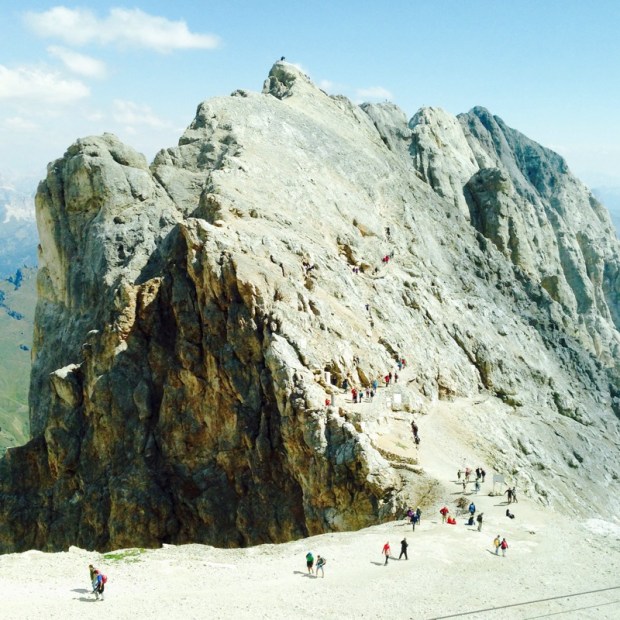
   
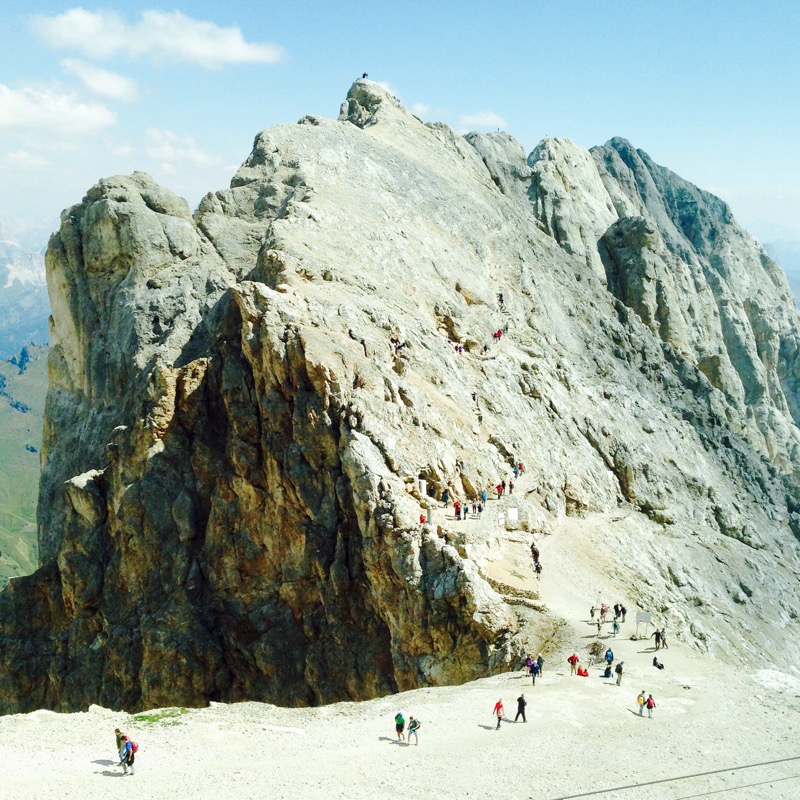
 And then into another car to whisk us over the cracked icy wastes of the mountains glacier  

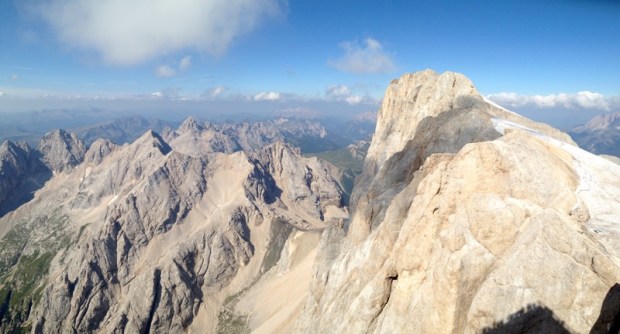
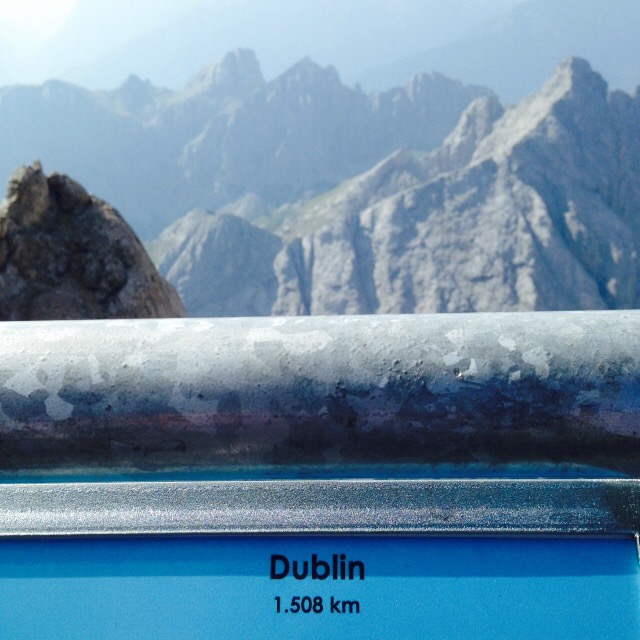
 to the top station with a new viewing platform on which to suck up the thrills and swallow down on the wonder.  
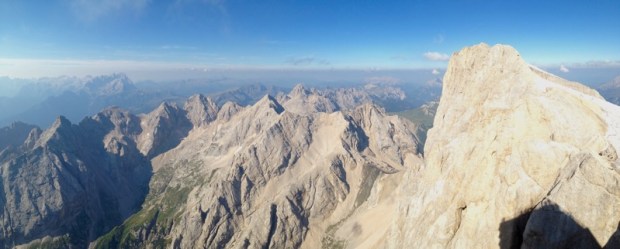


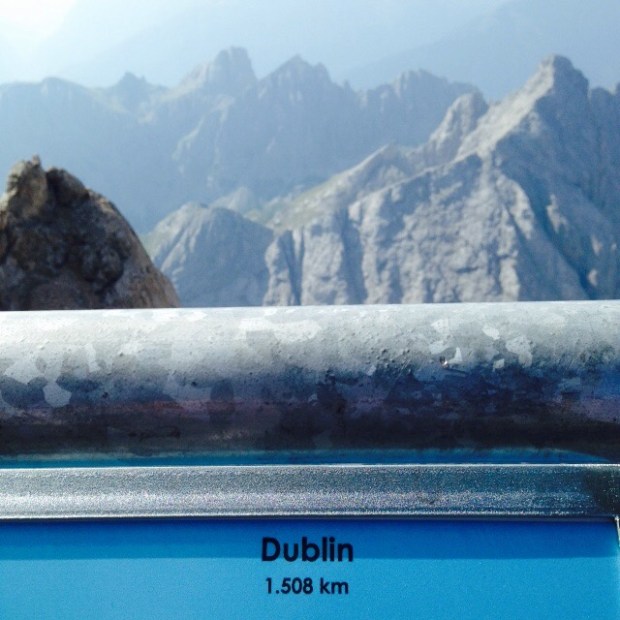
 And so far from home.  

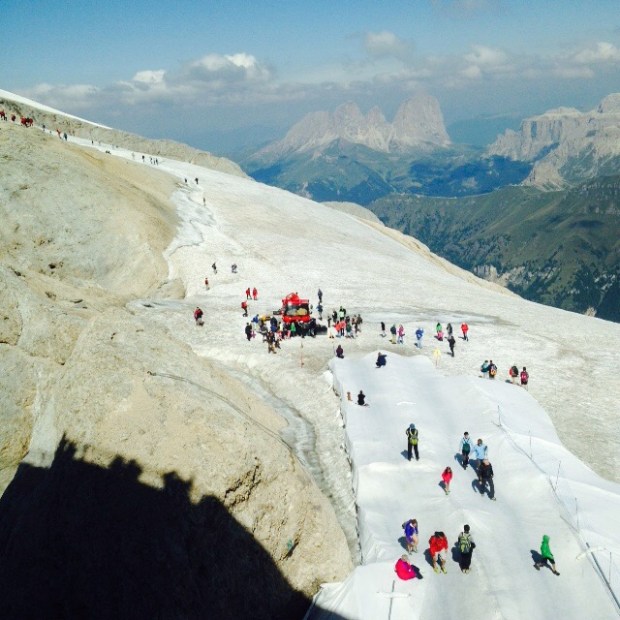
  Then down onto the glacier itself where,again, the refreshing lack of paranoid health and safety measures allowed for a slide of a lifetime (probably).  
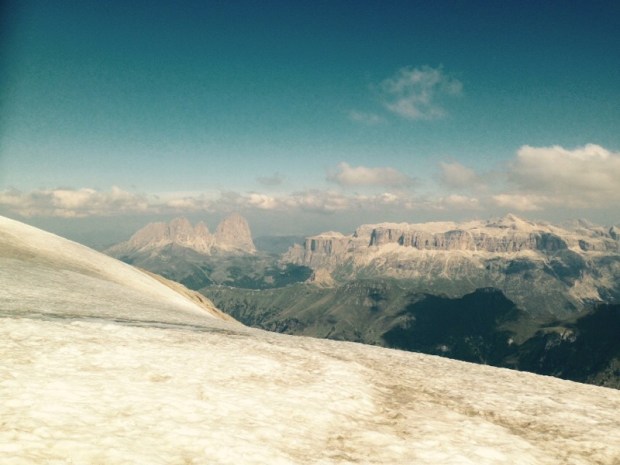
   And how the hell did they get that up there.  
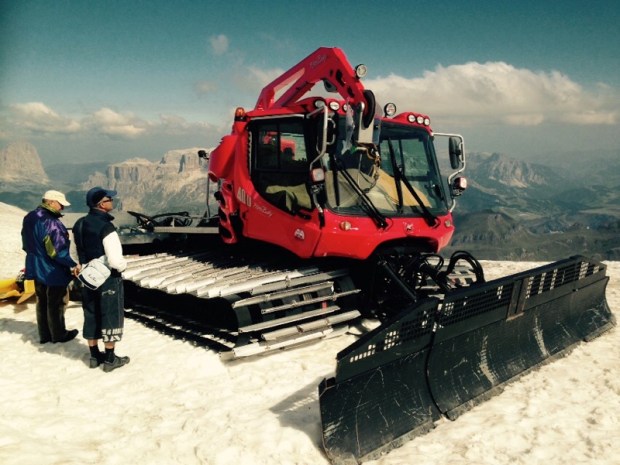
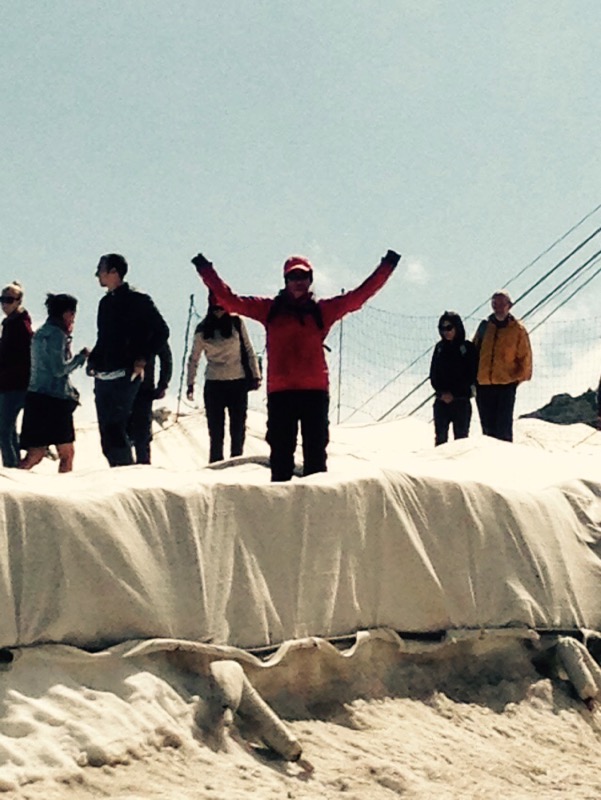
 Of course in the winter it’s all about the skiing and taking off from here they have 1200 km of pistes to work. I couldn’t persuade the Missus to come onto the ice but she did wave.  
 We also visited the grotto chapel hacked out of the rock to accommodate the Madonna donated and consecrated by John Paul 11 when he visited the mountain in 1979.  

   The brand new war museum was well designed with interesting exhibits but we had seen a lot further East on the Isonzo front where 300,000 had died. What was amazing on the Marmolada was the Ice City carved out of the glacier by the Austro Hungarians. 10km of tunnels with every kind of facility within. One of the largest, the so called Eisstadt was home to 300 under ice riflemen. 

We had left the dogs slowly baking so had to return 
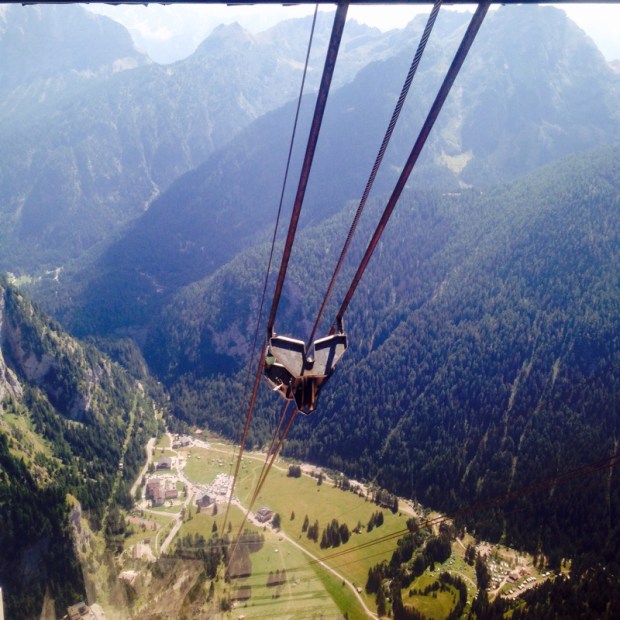
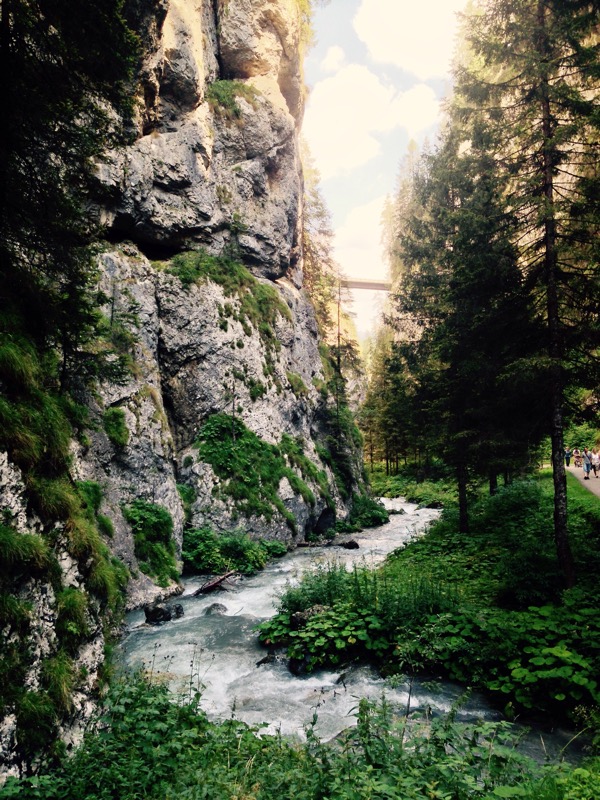
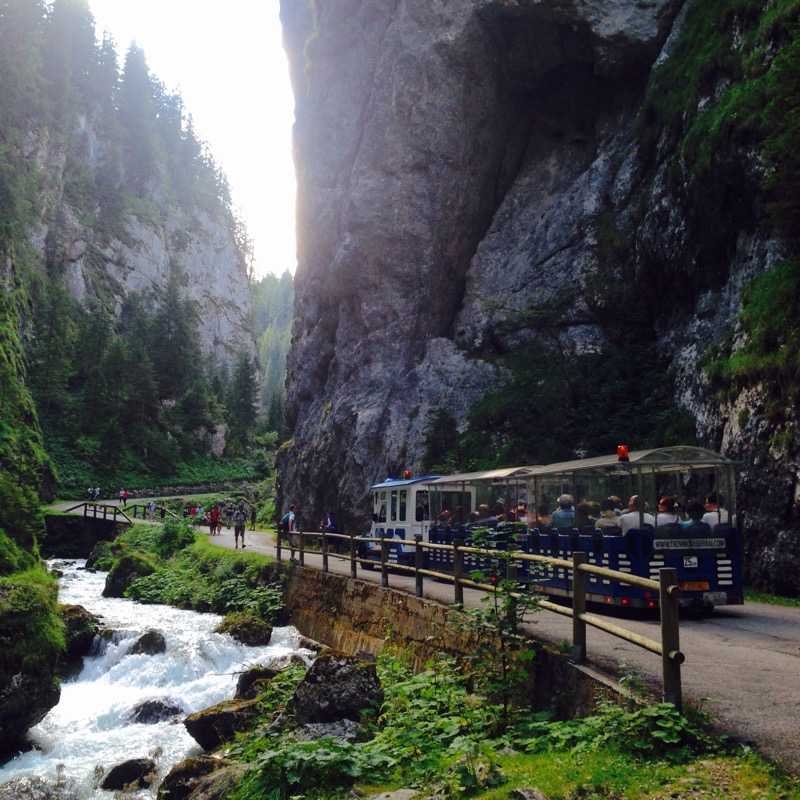
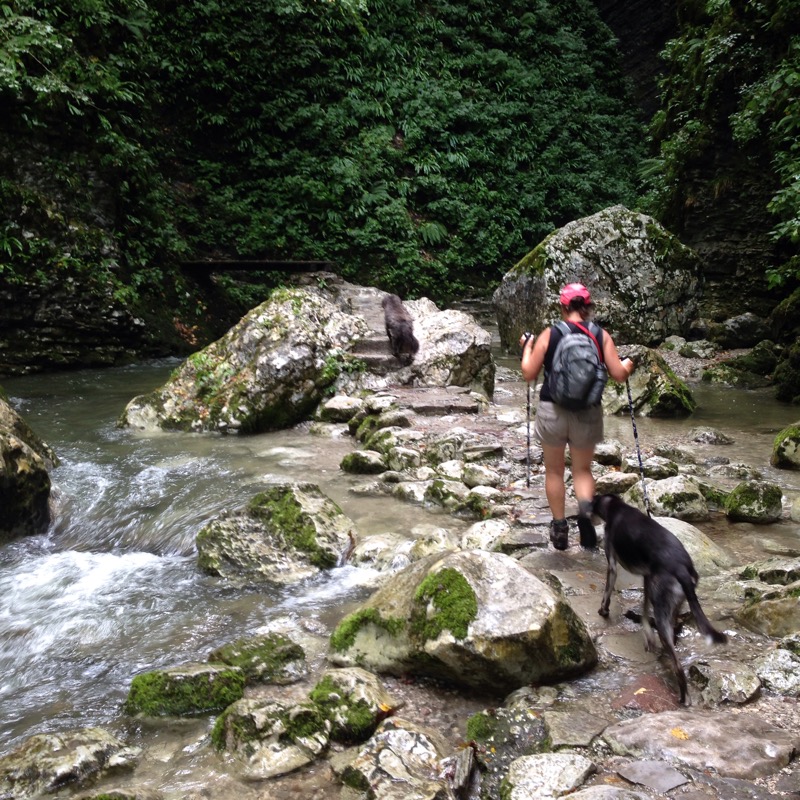
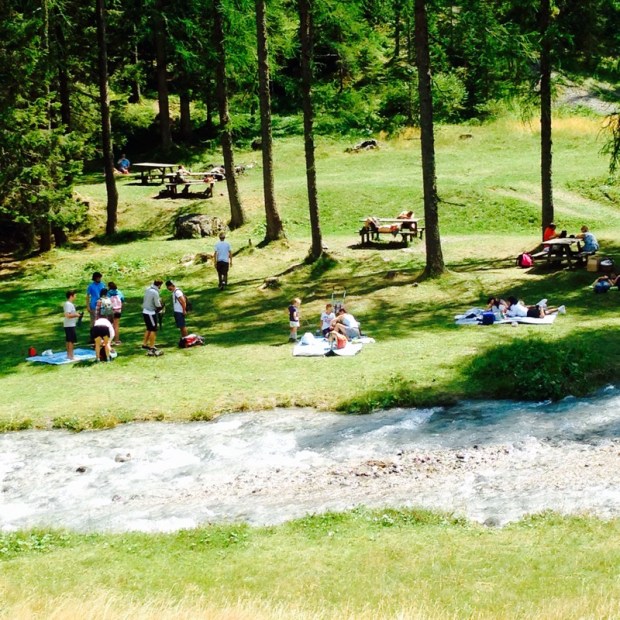
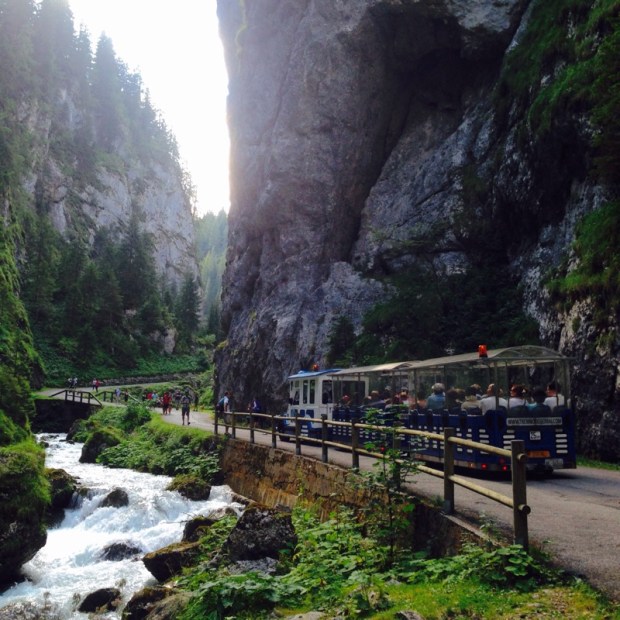
 to base and take a walk down the “Temple of Nature” a very deep river gorge that runs down to the neighbouring village of Sottoguda. More ubiquitous picnic areas  
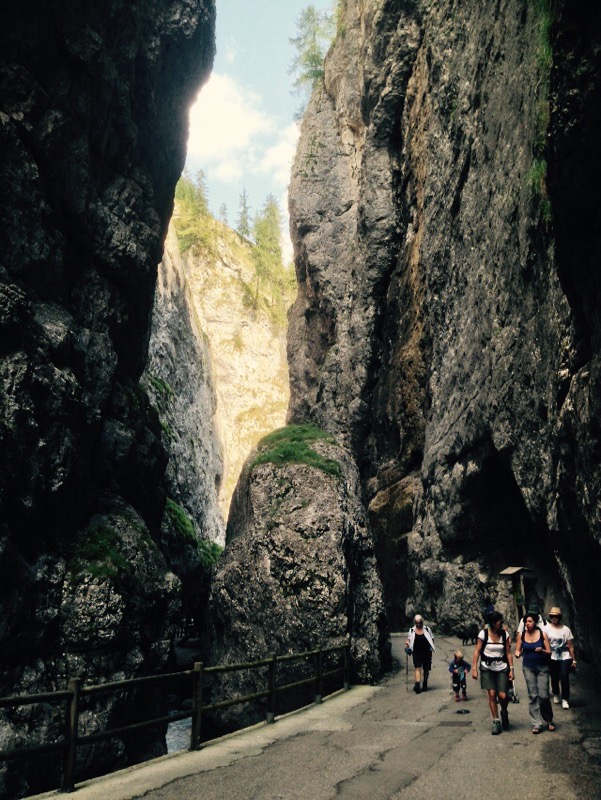
 brought us down into the gorge  

  where WW1 men had dug around a obstructing boulder  
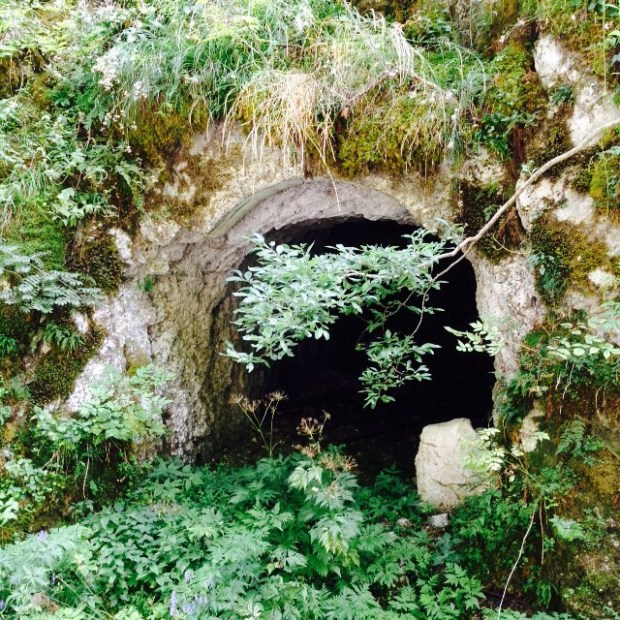
   And made caverns and caves along the way.  
 

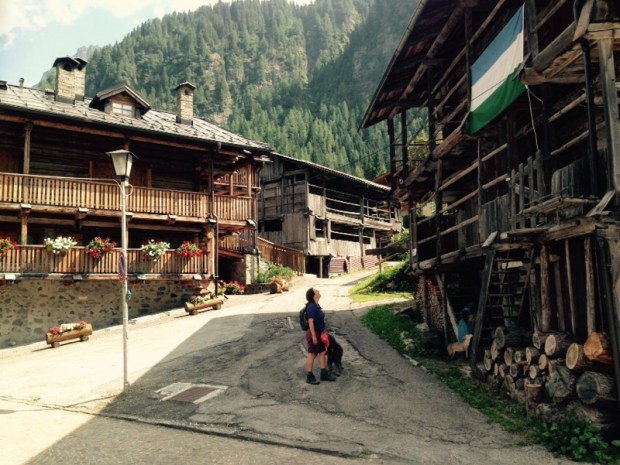
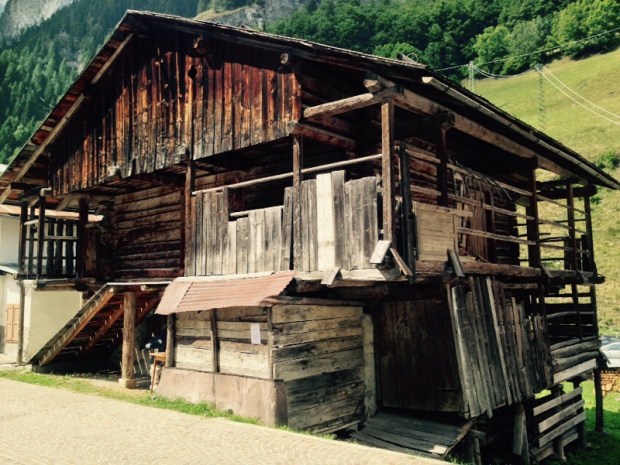
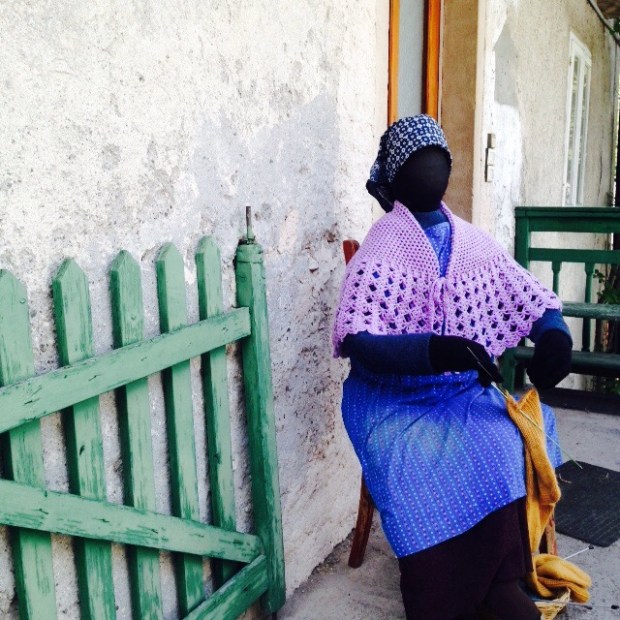
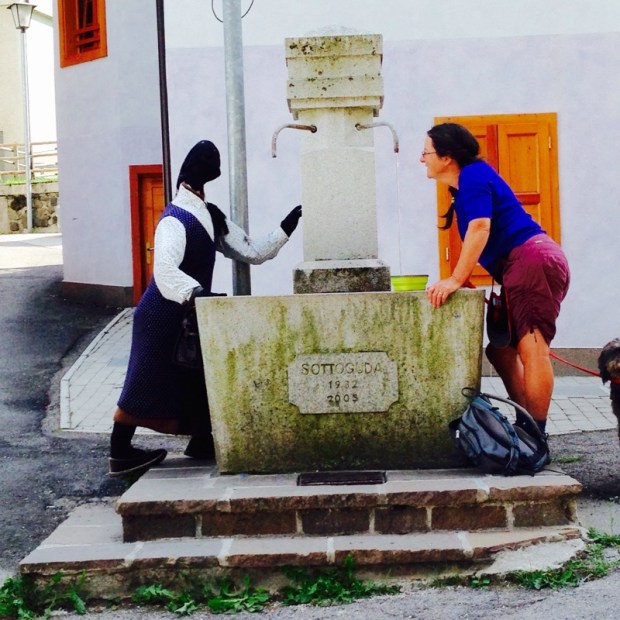
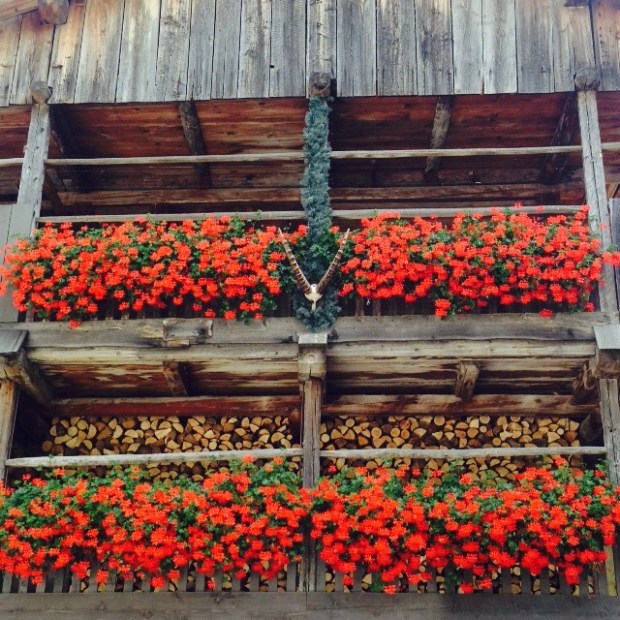
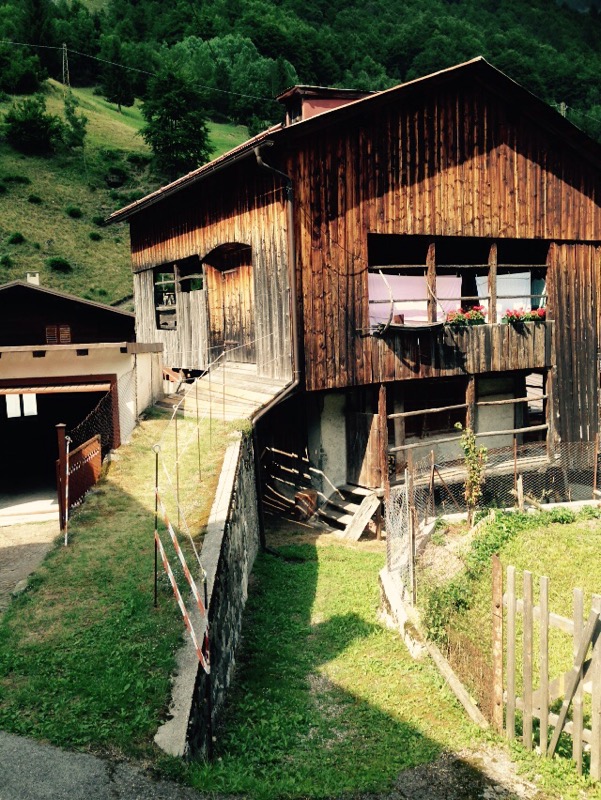
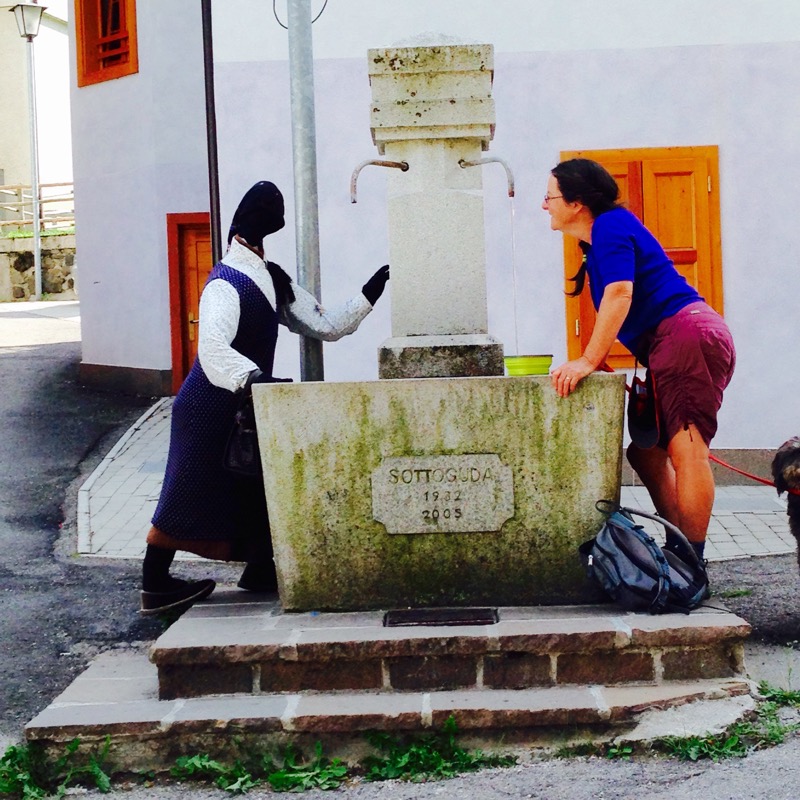
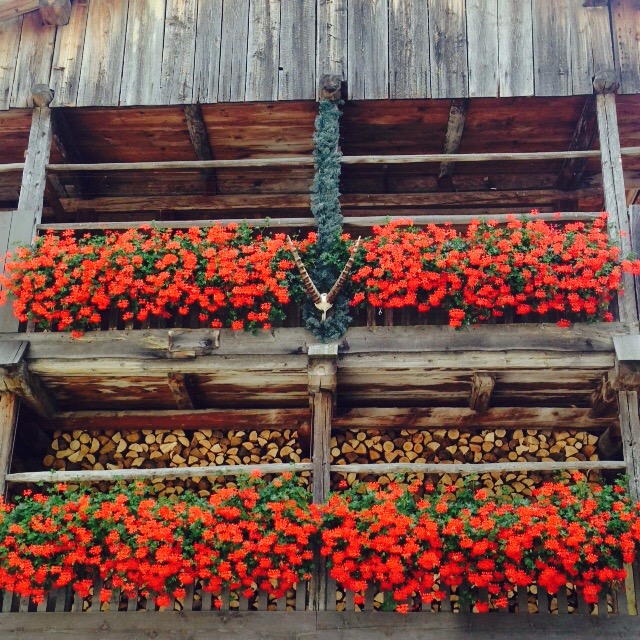
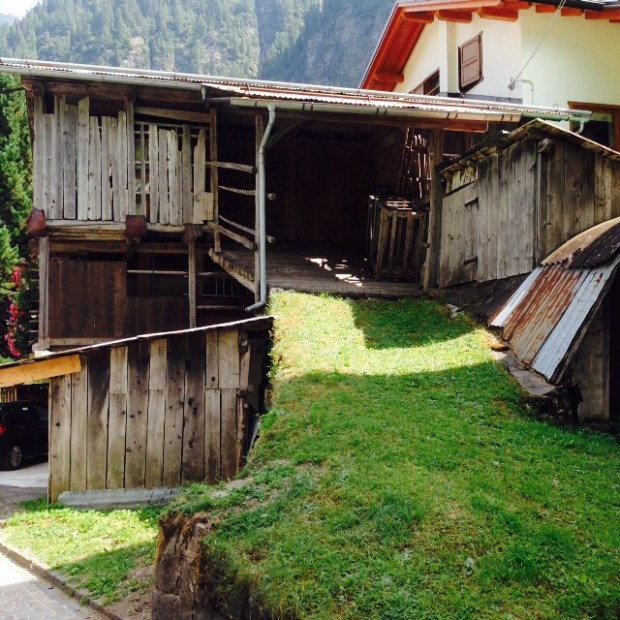
The village below was a treat with it’s wooden buildings, floral displays and quaint inhabitants.  
                   

In our program of social readjustment we hadn’t reached a level that allowed use of the “fun train” so we were forced to walk back up the hill.  
 Leaving the dogs looking for cool  


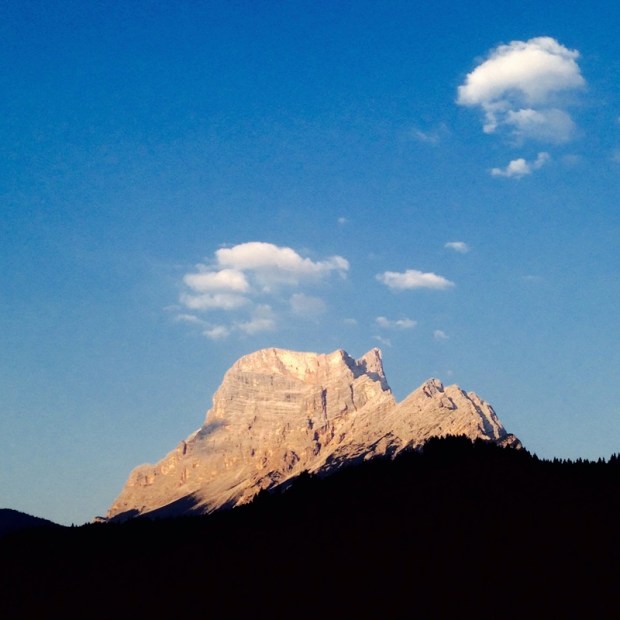
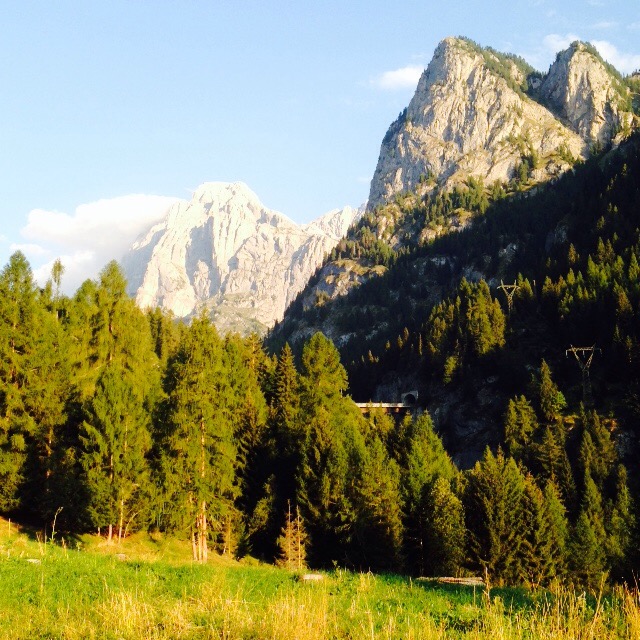
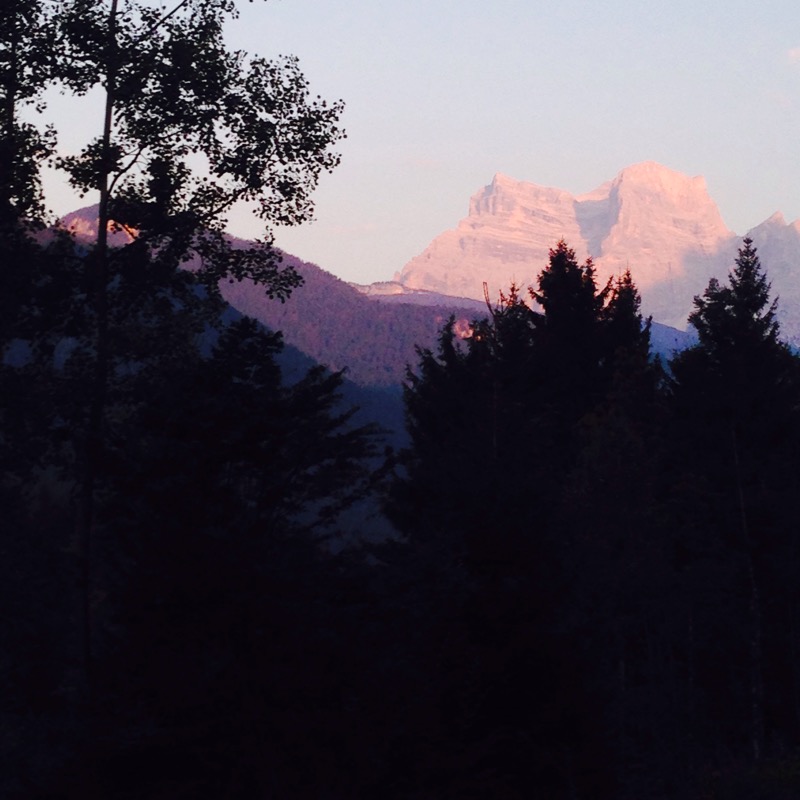
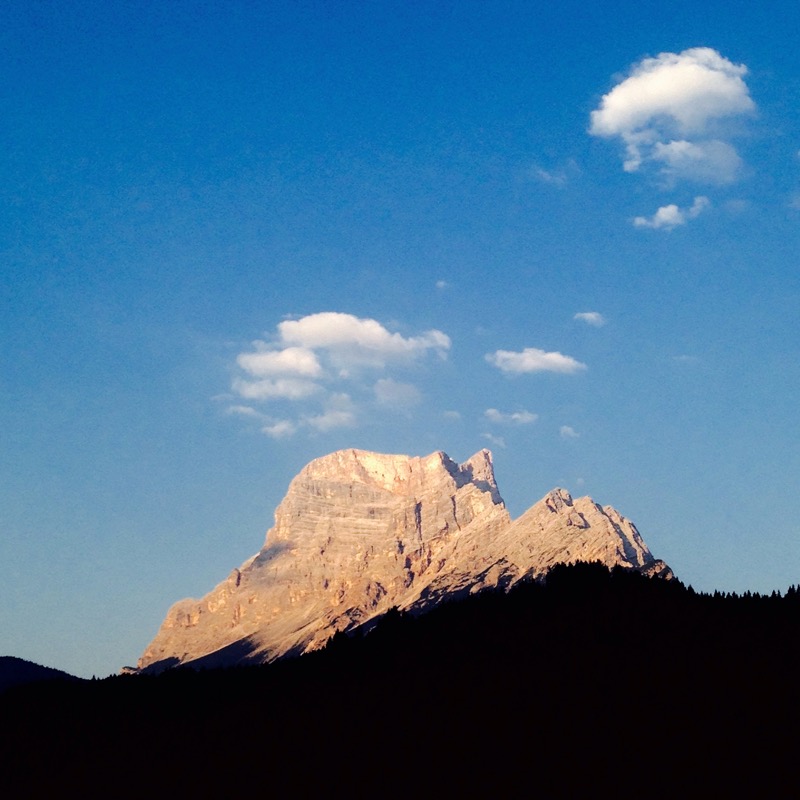
Off again, and this time for quite a spin. Because we are wary of taking Tranny up steep winding roads we had to go the long way round to get to and beyond Cortina d’Ampezzo the main tourist hub of the Dolomites. The steep sided valley and lack of side roads meant out park up was not of the usual high standard but we had a lovely pink mt Pelmo in the morning.  
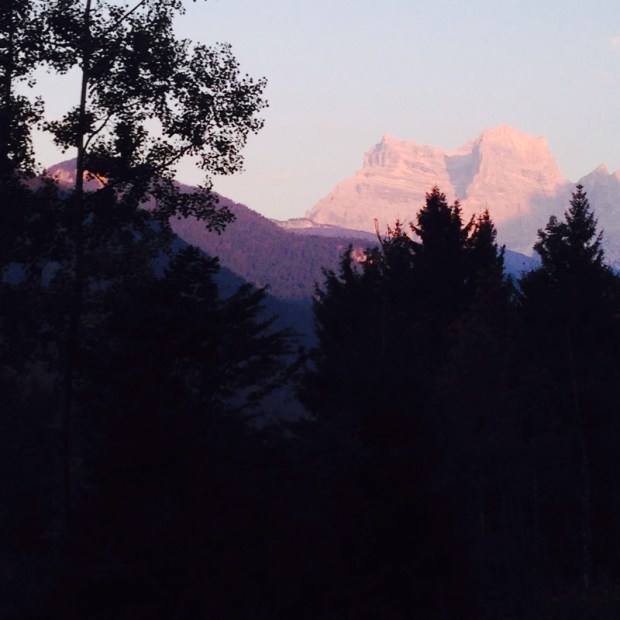
   

 We travelled on up in the cool early morning air to get through the town and into a valley to the north where we could park up and hike. 

From Uberto we walked up the Val Salata to the Refugio Stua and then up and up above the tree line to the Alpine meadows of Lerosa at 2020m. A good 18km and 600m climb.  
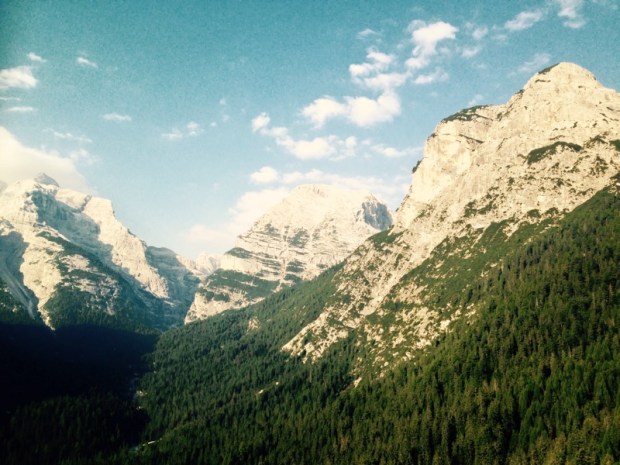
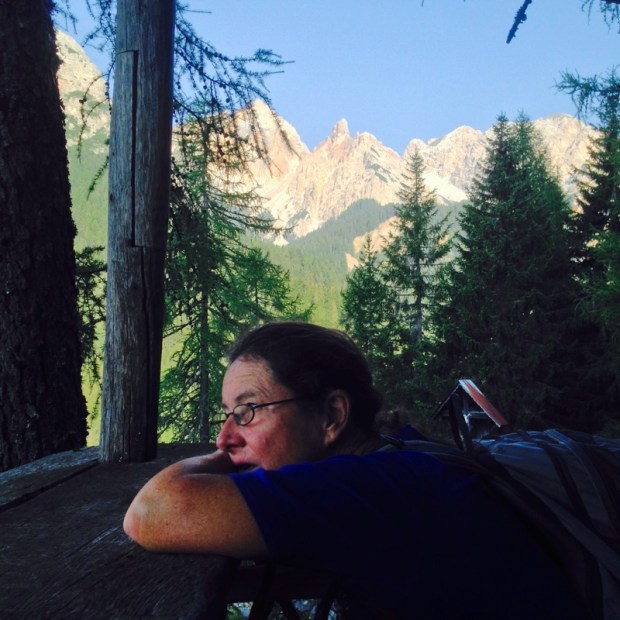
   The landscape was dreamy and a little rustic hut made a perfect spot for contemplation.  
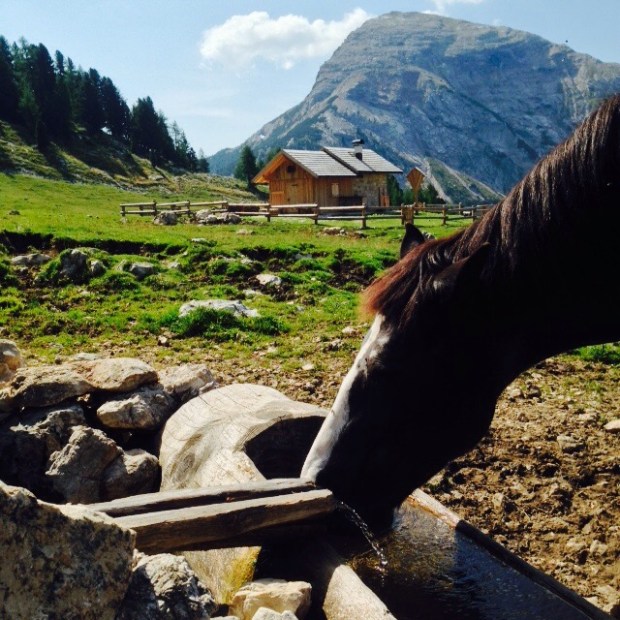
     Getting up into the high pasture we took a detour to a beautiful restored house.  
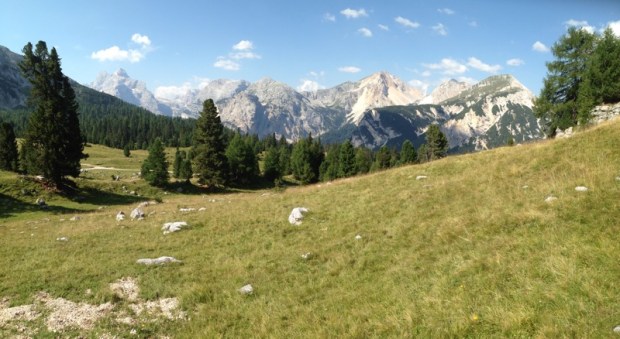
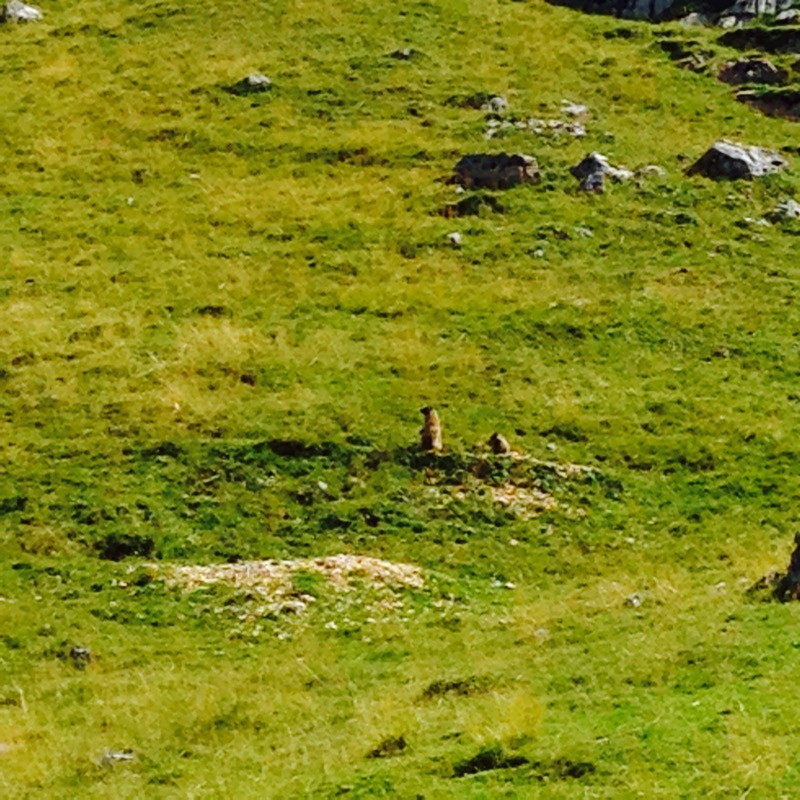
     Where we spotted marmots  

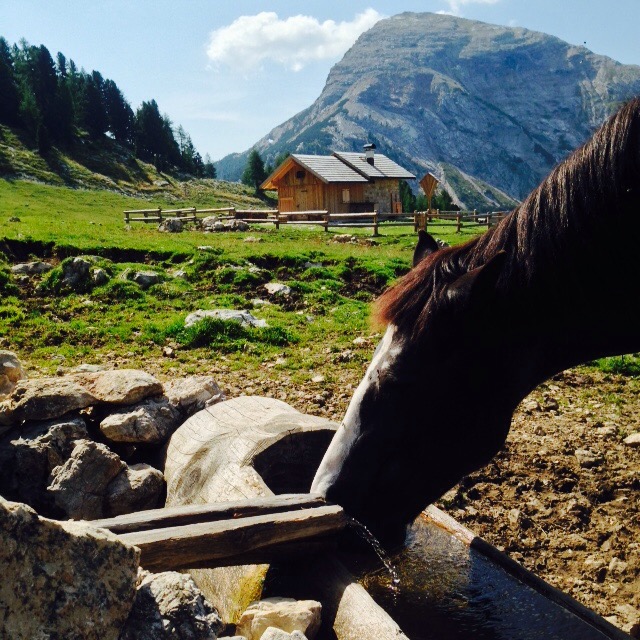
 but couldn’t get close. And horses availing of the spring waters.  
 

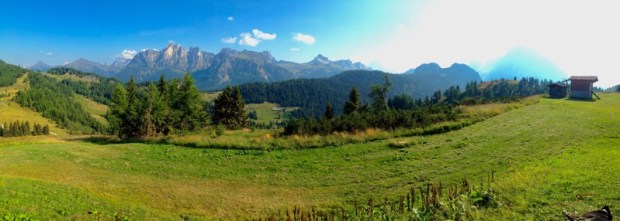
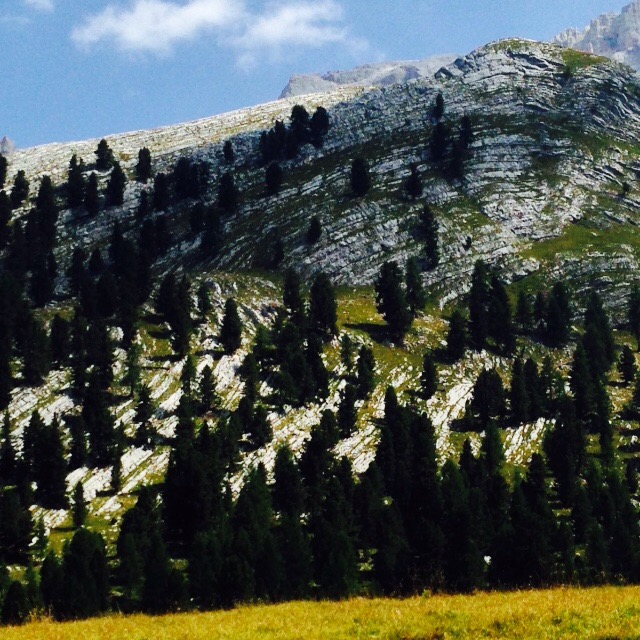
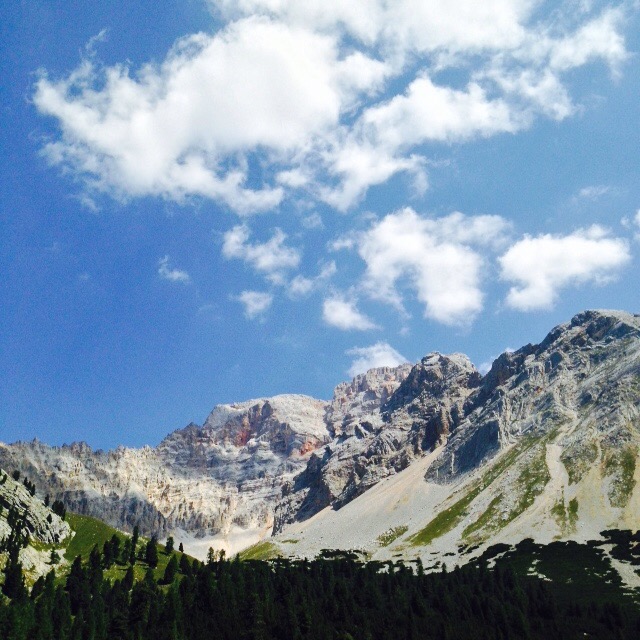
Further on we were treated to views of spiralling layers of rock in more mountain ranges.  

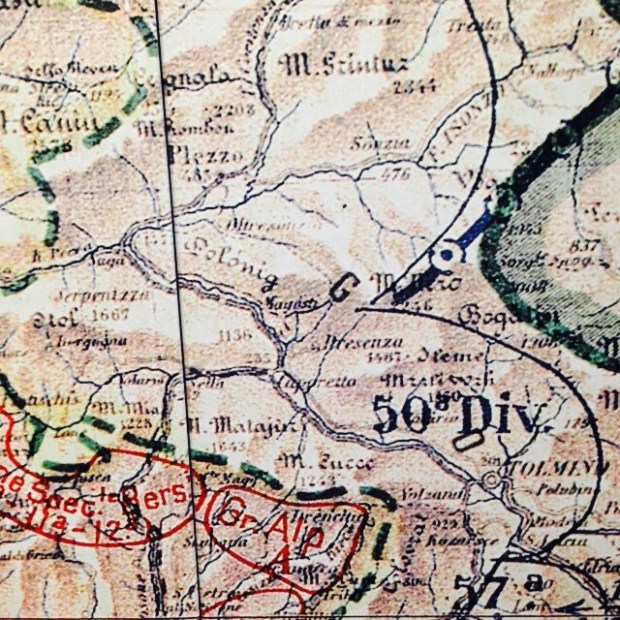
     And inescapable reminders of WW1 with the sites of cemeteries  
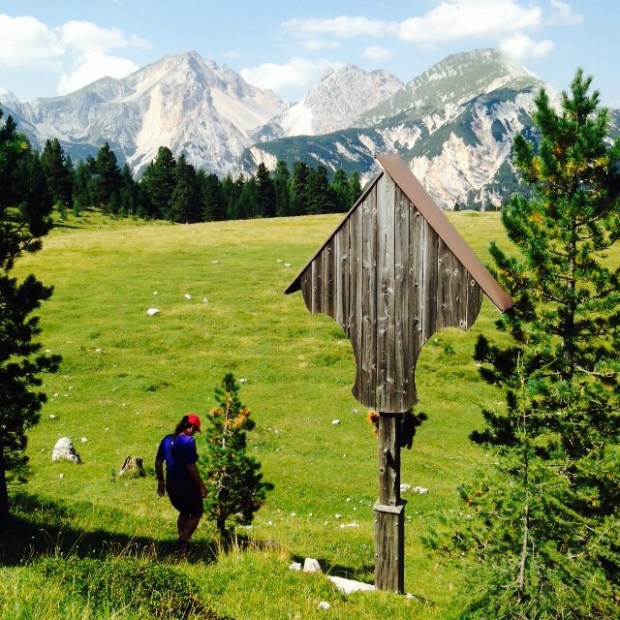
 and trenches  

 and the old military road  

 but the memories were faint and overlaid with a landscape of timeless beauty.  
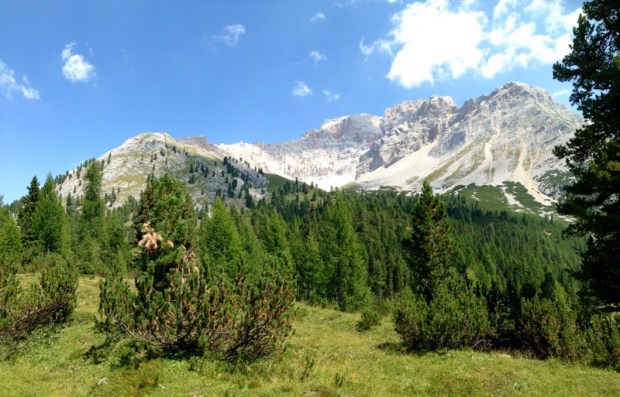
     

Good to be walking in it. 
THE GRAND TOUR:ITALY 7/8/9th AUGUST 

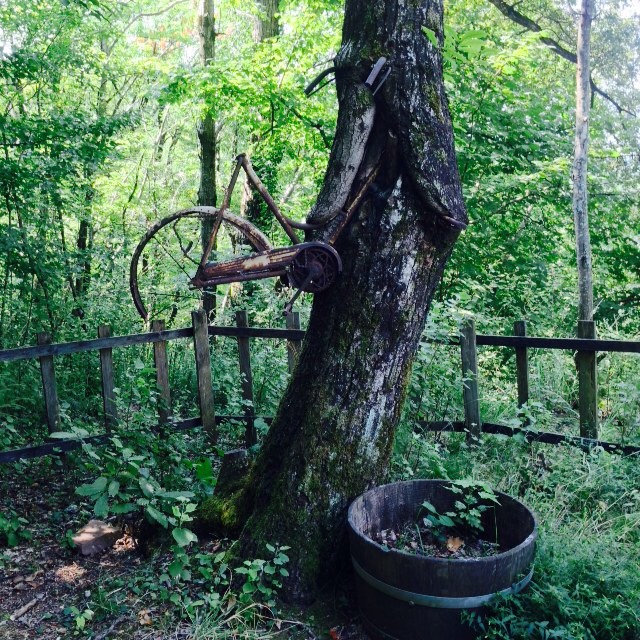
I’m taking photo requests now so when regular commentator Giles asked for, rather bizarrely, more photographs of bicycles I set out to find the best I could. My research led me to an area of the Alpago north of Il Lago do Santa Croce. 

There were tales of a legendary bicycle lost deep in the chestnut forest above the village of Sitran for many years that had become one with nature. 

Armed with maps and guides and a nose for the curious I eventually found the bike, englobed as the stories had said. I will reveal the evidence at the end of this post to keep the bi (cycle) curious reading. 

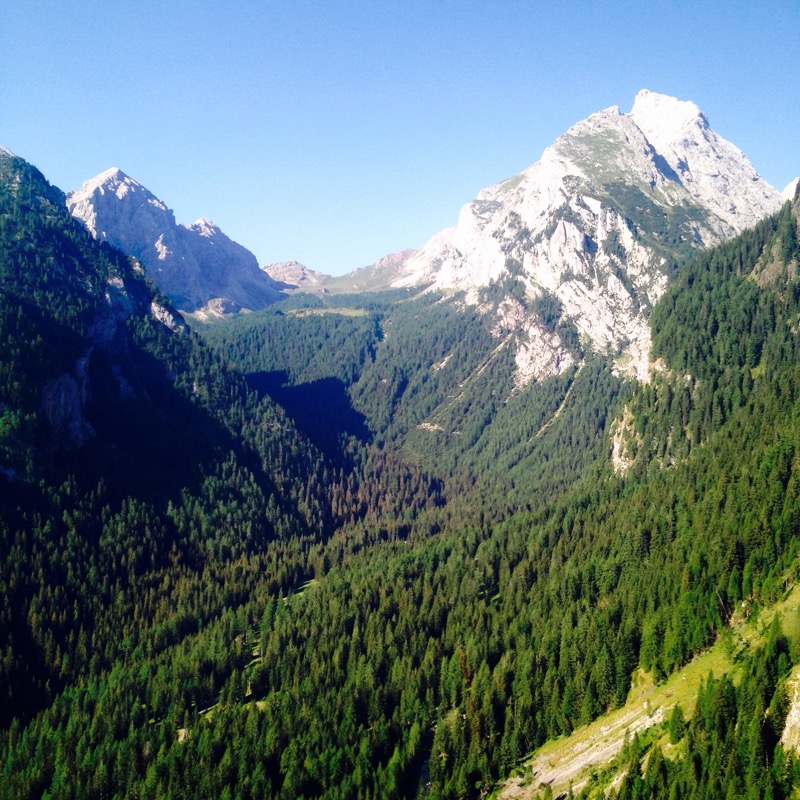
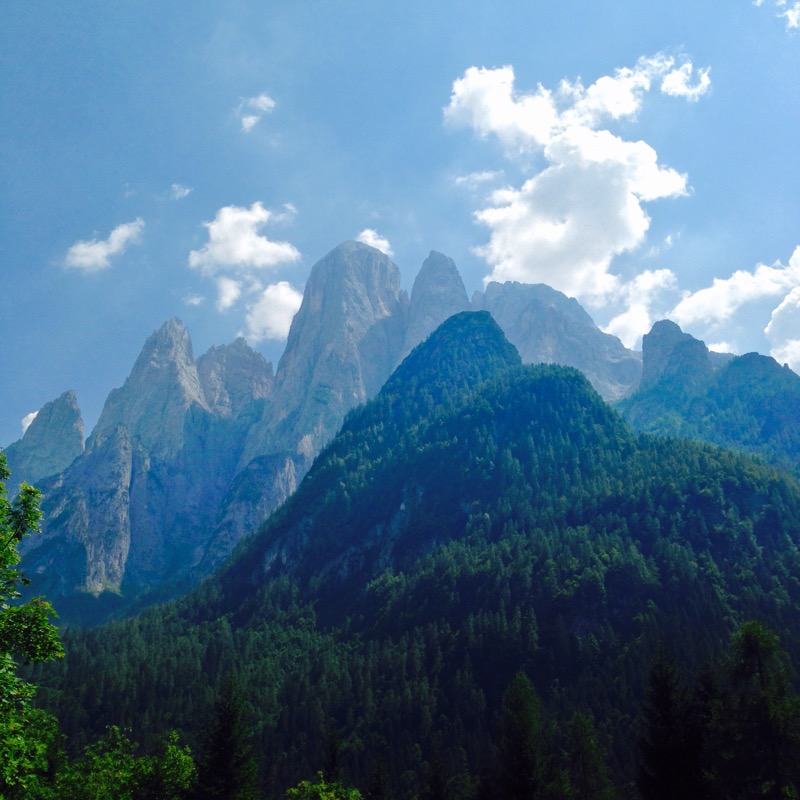
So after a couple of days in the Alpago mountains looking across at the Dolomites it was time to get in there. The 32,000 acres of the Dolomiti Bellunesi National Park, which was only established in ’93, was our first destination. After what seemed an eternity of strip malls, run down industrial units and hyper markets on the outskirts of Belluno we turned in towards the dramatic profiles of the limestone pinnacles that make up this most beautiful of mountainscapes.  
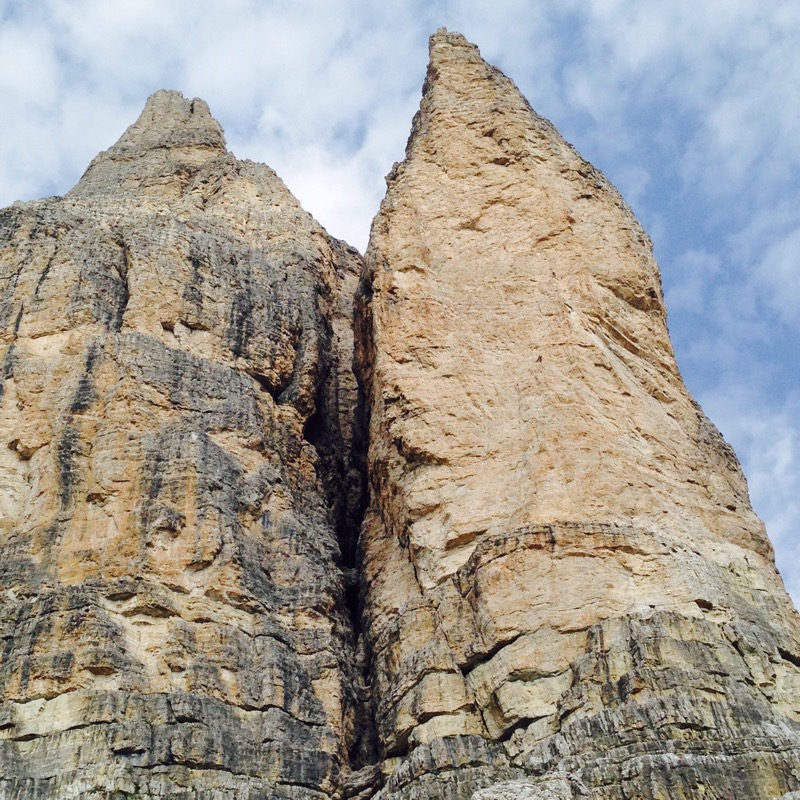
 

Listed as a natural World Heritage site by Unesco, the Dolomites have been considered special for a long time. The first written descriptions were of extraordinary visions and powerful emotions and used words such as sublime, purity, intensity,grandeur,mystical aestheticism and transcendence. 
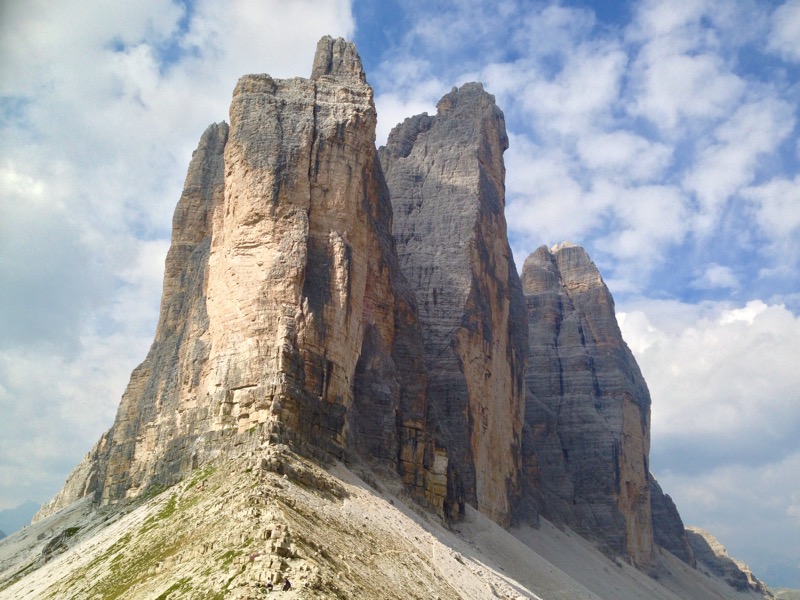
The first Dolomite travel guide in English, John Murray’s Red Book from 1837 defined the landscape as ” imparting an air of novelty and sublime grandeur to the scene which can only be appreciated by those who have viewed it ”

We have and we can. 

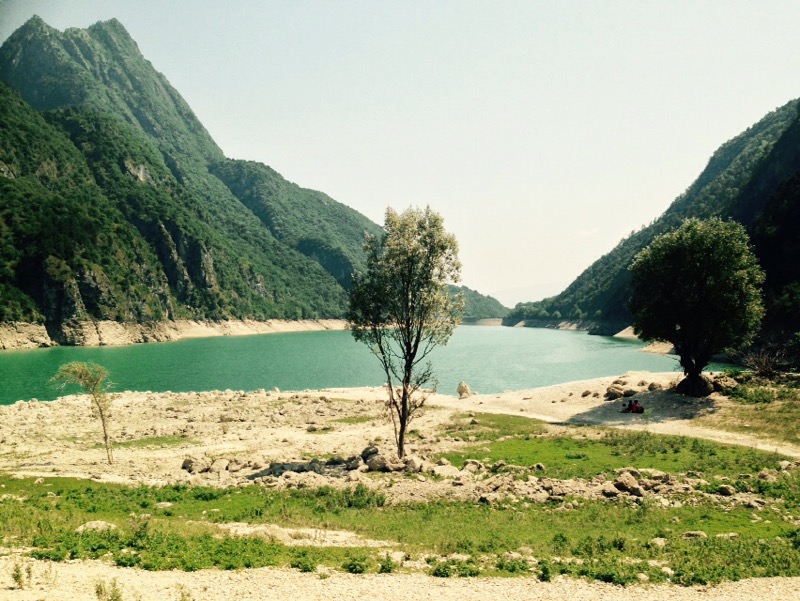
We turned off the busy main road and were quickly enveloped in a tranquil valley. The Val de Mis has been dammed and flooded to create a pale blue reservoir with a narrow road on one side. Half way along a rest and recreation area has been created with picnic lawns with shady trees, an exercise and workout zone ( handy in this heat!), a bar and restaurant ( much handier), a bunch of wooden chalets, an amphitheater, an area of hardstanding pitches with water and electricity and shower/ toilets and a grassy free park up by the lake. All good.     


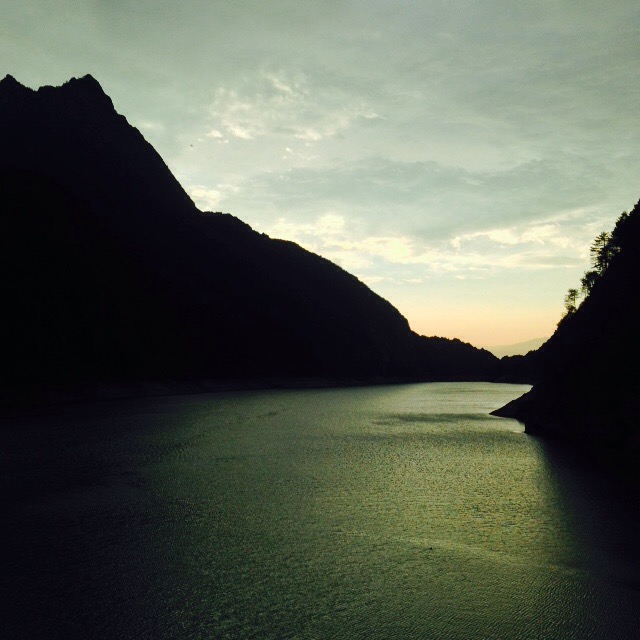
It made for a perfect spot for the night with the setting sun turning the mountain golden. 


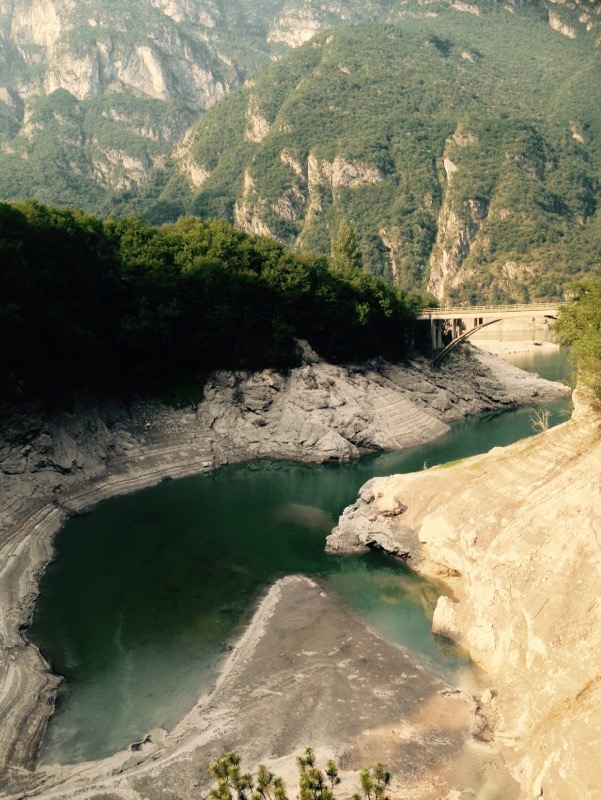
It was a sweet relief to get into the cool water although a bit alarming to realise that the level was slowly dropping to satisfy the needs of the city. There had been no rain here and a heat wave so there wS a lot more water going out than coming in. I kept an eye on a partially submerged rock and the lake level dropped a couple of feet overnight. That’s a lot of water. 

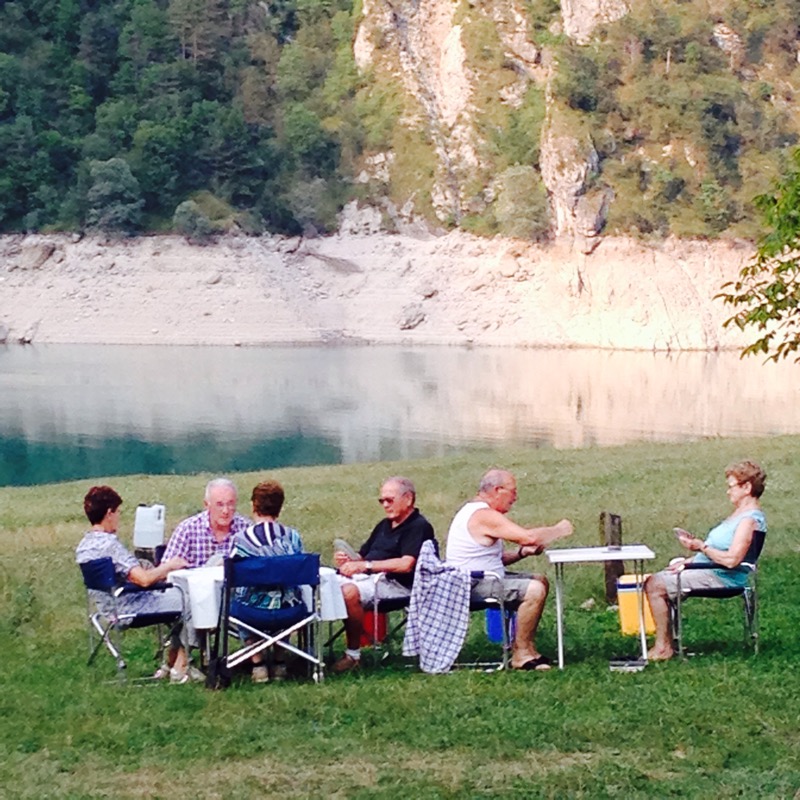
      Still, most people didn’t seem to want to swim anyway but picnic. Obviously an event of great cultural significance the Italians take it seriously, spending hours over a relaxed lunch in the shade. Or dinner. Some folks came out to play cards before the eating began.  


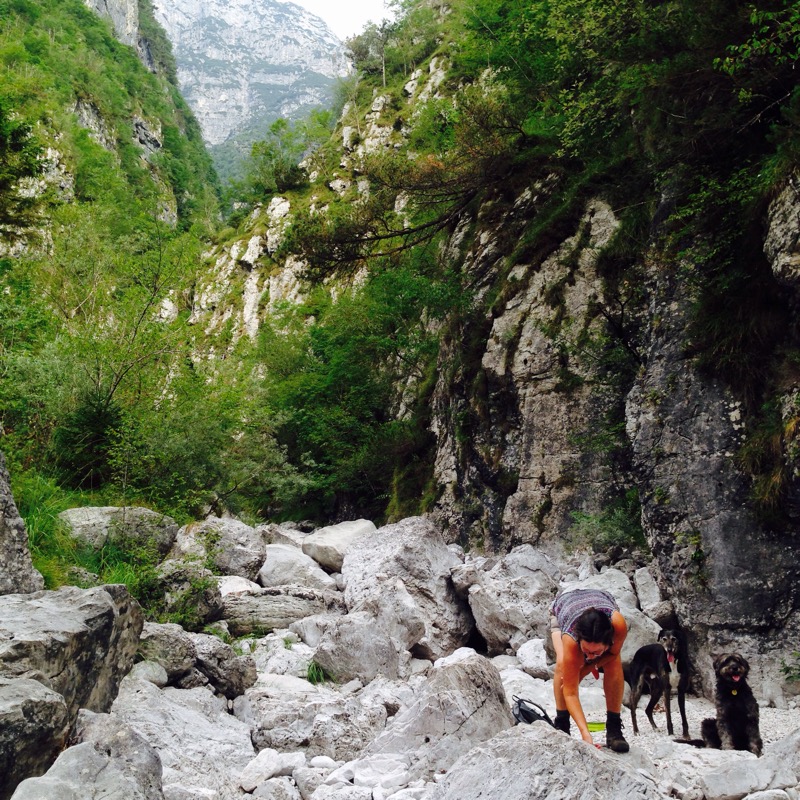
  In the morning we hiked up the steep sided lateral valley walls of Val Falcina. More ancient coppice for charcoal the wood was mainly hazel and hop hornbeam, a new one on us but plentiful in these parts.  


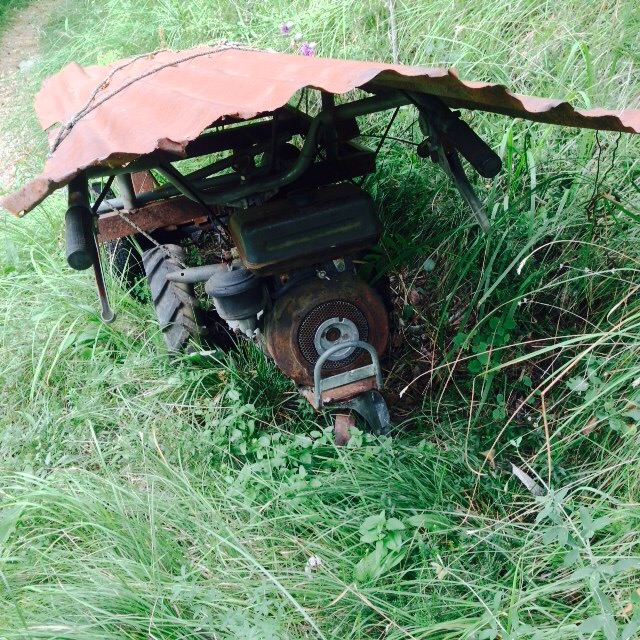
We had spotted an old cable that had been used to get the wood or charcoal down and way up on the trail we found an old motor barrow.  

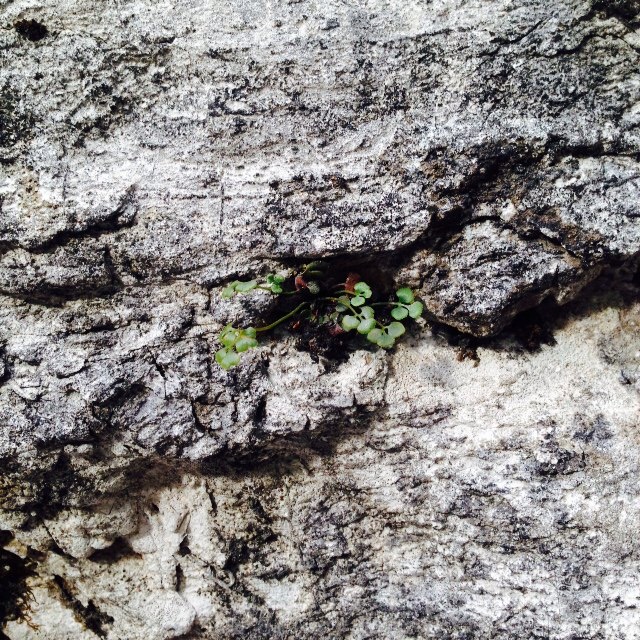
  A little later, when we came down to the river we were ” treated” to a view of some stromatolites or layers of petrified tropical algae from back in the day, ( put me straight Milo).  

 Fossils were found in the dry riverbed among interesting rocks.  


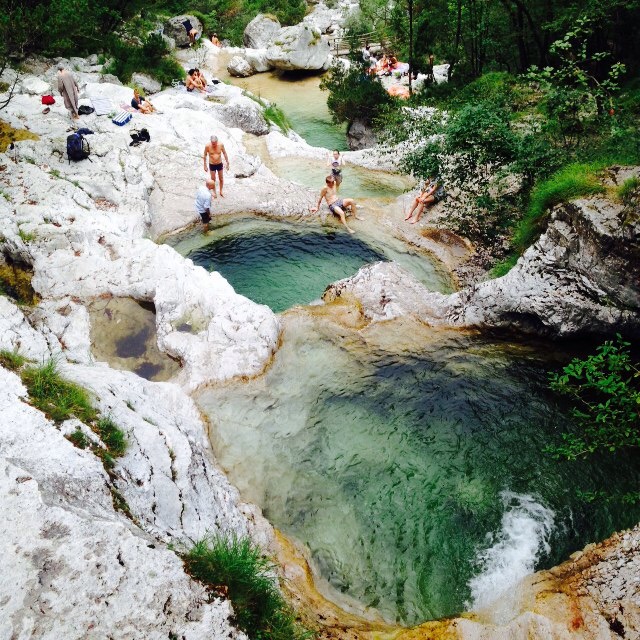
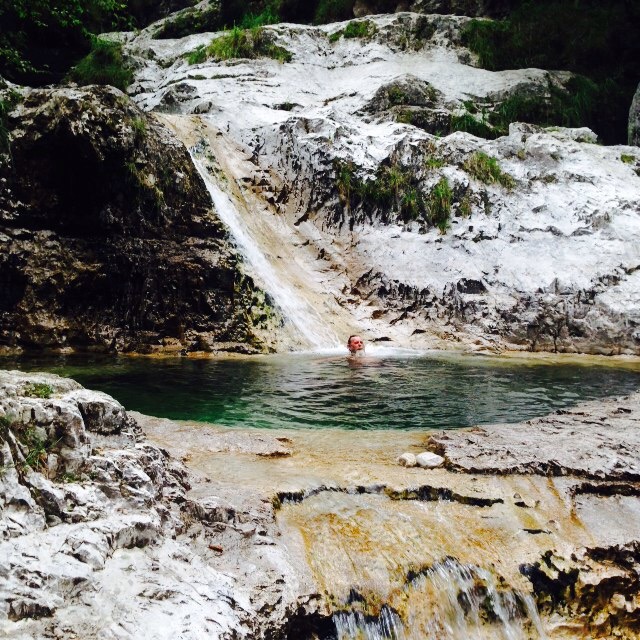
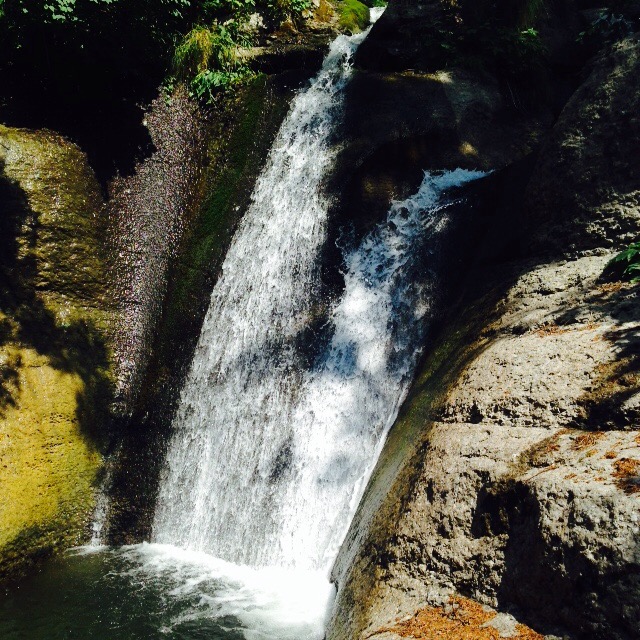
The afternoon was spent further up the lake at the Cadini del Brenton, a long series of stunning pools of green water linked by waterfalls.  

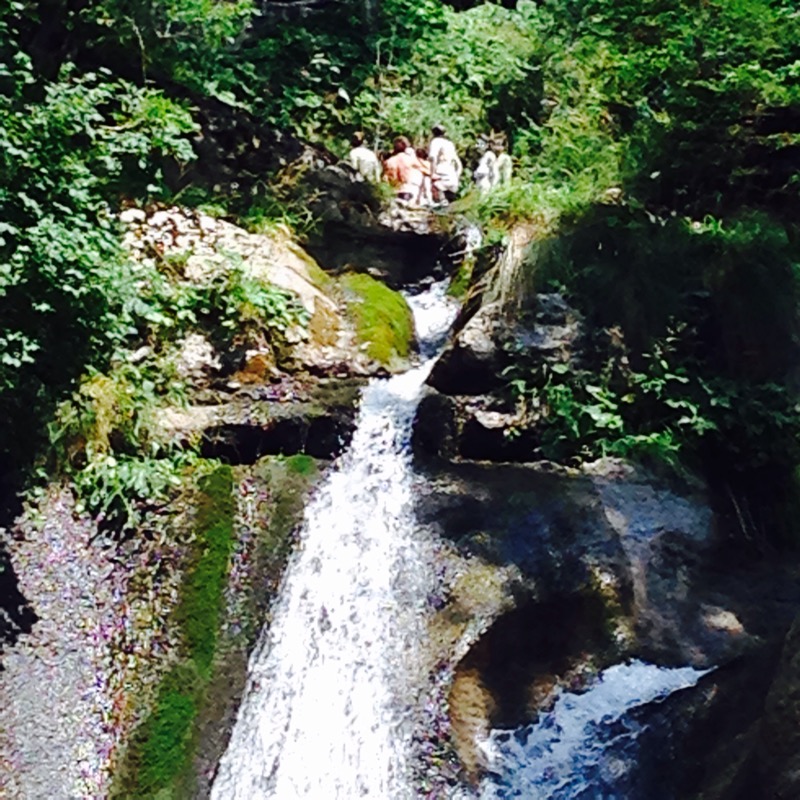
  Some fit and buff athletic types were leaping from pool to pool but others were more sedate.  

 The pools were described as vortices and there was some great swirling jacuzzi effects. The clouds had been gathering while we were there and eventually the thunder was followed by  the storm sending sheets of heavy rain and hail and sending everyone scurrying back down the hill. 

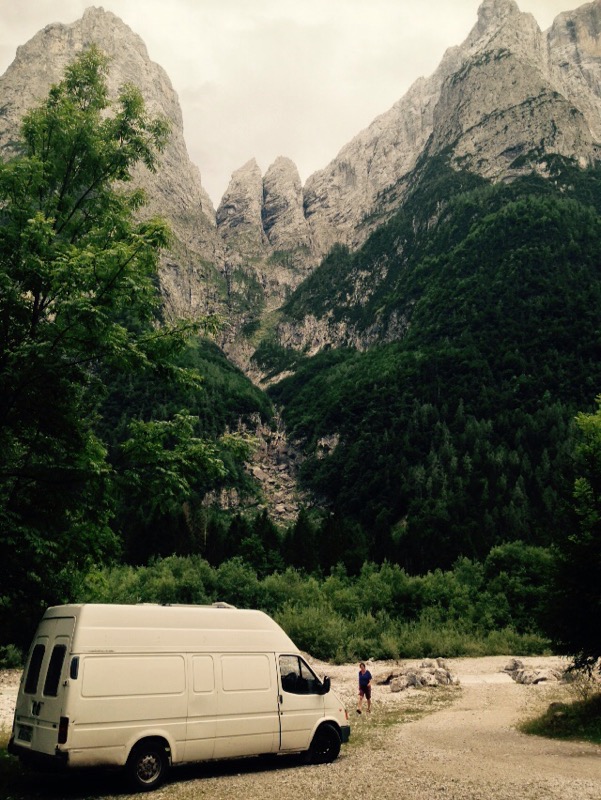
With no point hanging about in the wet we left the Mis and drove north,deeper into the Dolomites, to Val Lucano and with the sky cleared, another great park up.  

   It was yet another picnic area with bar b que’s and tables and benches. We met an Italian couple there who gave us some tips on where to go. The women had lived in Galway and been to Ireland many times. The Italians seem more interested in our licence plate than anywhere else has been and Tranny has been getting many admiring glances. 

Sally had had enough of scrambling on rock and slipping on scree so we devised a hike for the next day from the end of the valley up a forest track for 1000m to a col overlooking the range to the north. So, with the heat that was in it, we were off by 7, past the last houses of the village  

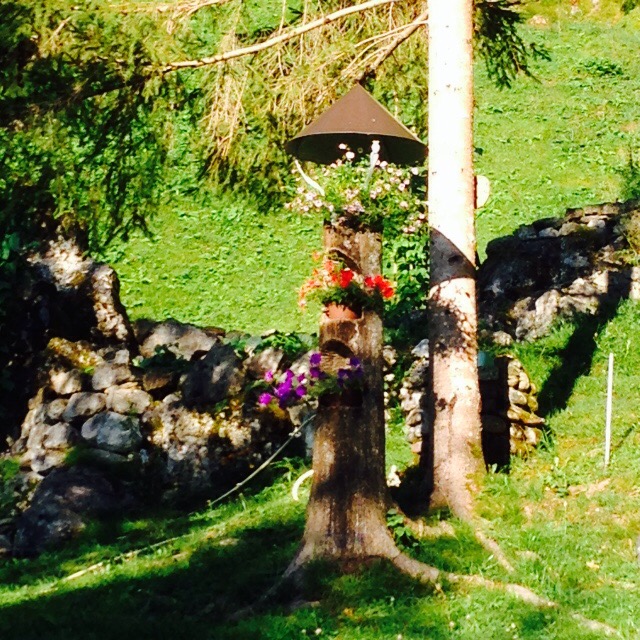
 and their tree trunk flower beds 

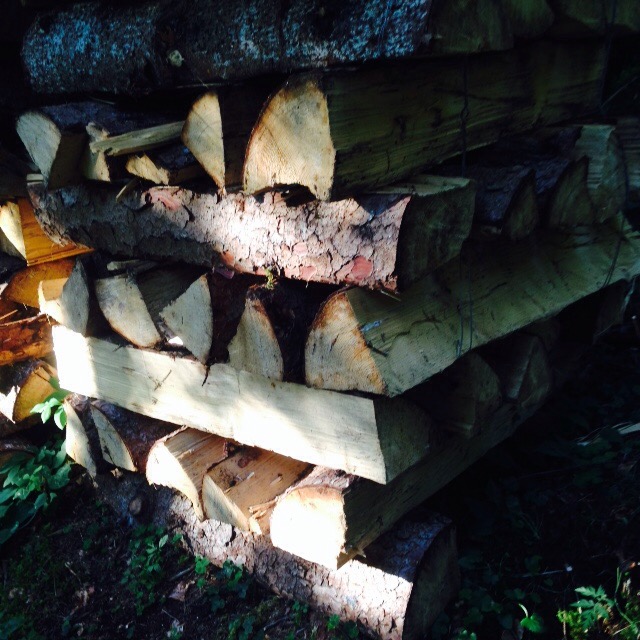
 Past more neat piles of riven timber 

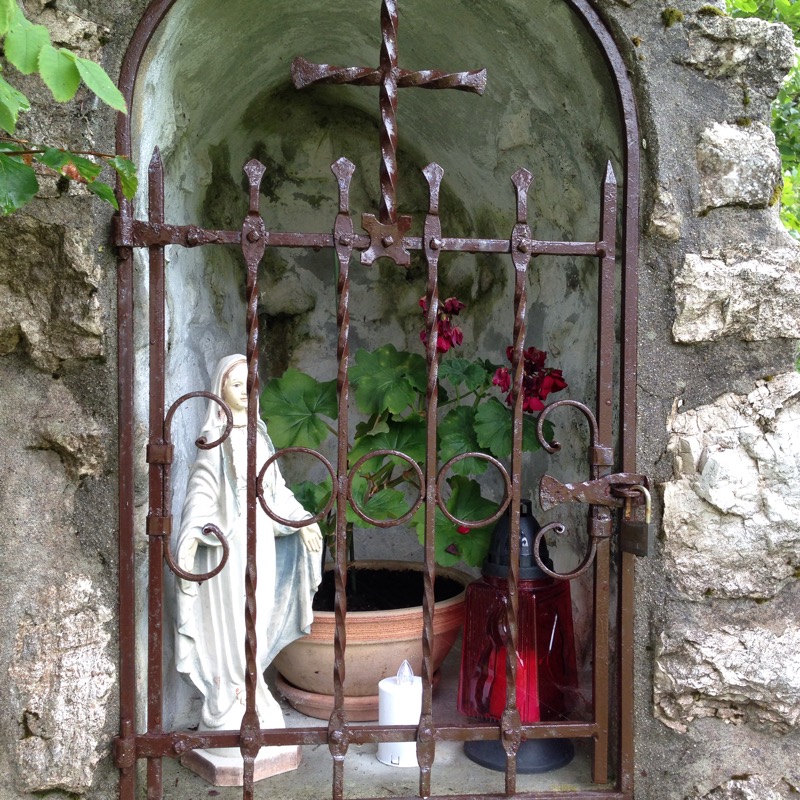
 and wayside shrines 

 while the landscape through the trees got loftier  

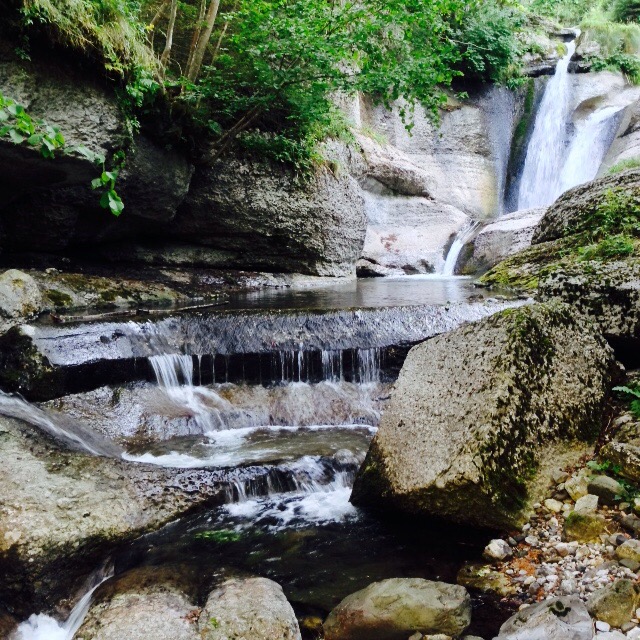
 we reached what seemed to be an old mill site with more swirling pools  

 and massive cubes of cut stone lying around in a jumble gathering moss. 

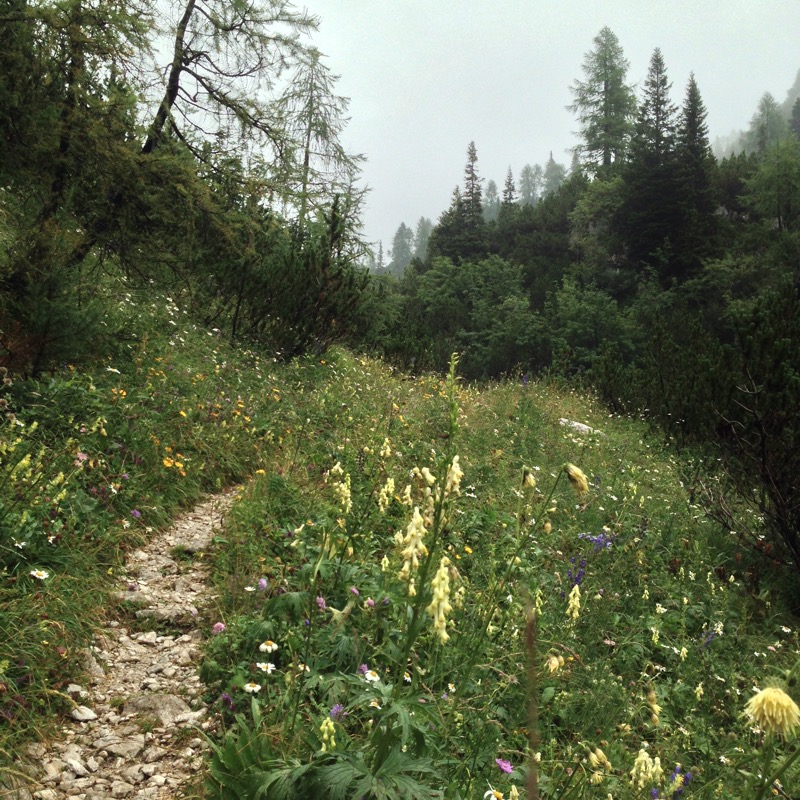
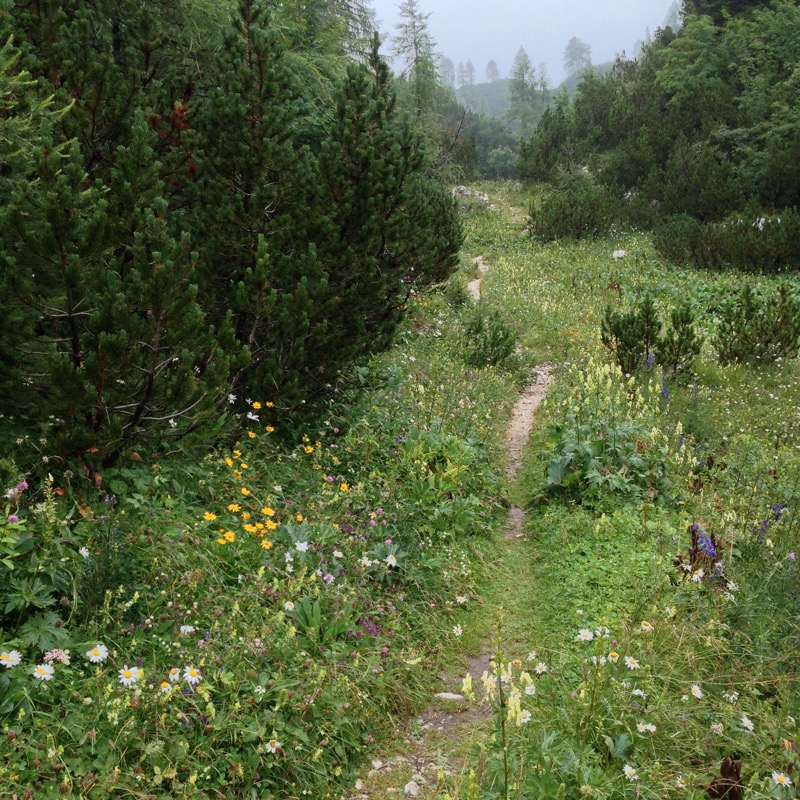
Switchbacking up through the shady forest we didn’t notice the build up in heat till we finally rose above the tree line for the final climb up across the lush wildflower filled alpine meadows.  

   Where there was a mountain hut busy with hikers and bikers and a fountain of cool spring water. The views were worthy of the effort.  In the distance we could see a slither of glacier atop Mamalada, the highest of them all. 

   From the Coll paths led into the high mountains in all directions but we were not prepared to go further and after feasting our eyes and bellys we returned to the old mill for a swim in the cold pools.  

 And above us, in a “privado” area, some new age mud therapy was in progress.  

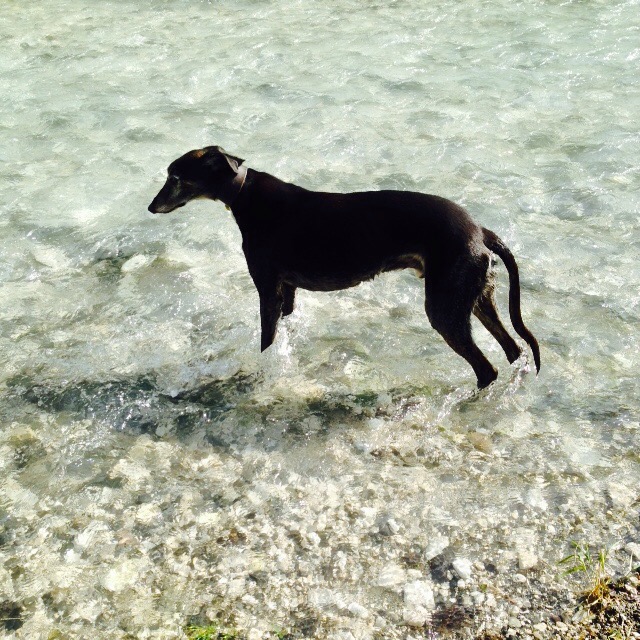
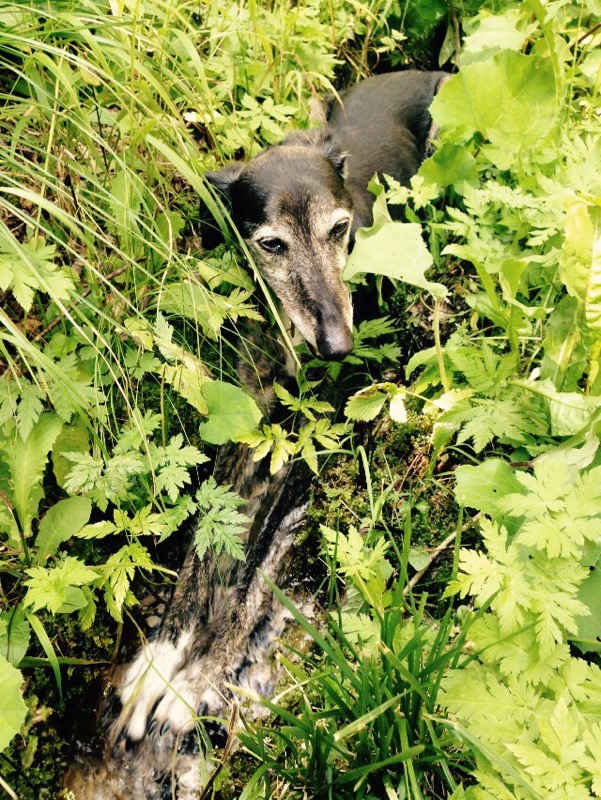
 The dogs were also keen to cool down at any opportunity and Toby took to ditch bathing.  


With the heat making day long hikes impossible we decided to check out the cable car up from Alleghe, a lakeside town further north up the road. The lake had been created when a massive landslide had blocked off the valley and the rising river waters had flooded 4 hamlets slowly submerging them. A few years later to add insult another landslide into the lake had created a tsunami that took out a load more homes. But all is tranquillity now and the lakeside made another room with a view.  


And finally, the big reveal. The bicycle englobed. By a chestnut tree. 


THE GRAND TOUR: ITALY 4/5/6th AUGUST 

A crystal clear starry sky all night, and the tips of the white towers that encircled us slowly shining as the rising sun threw shards of light above the valley and the wide pale moon just sat there watching. 

I hadn’t been on the pipe. That’s how waking up at the top of Slovenia sounds. 

But we turned our backs on all the magic and headed out towards the border and as fate would have it our very last encounter with the country was a surreal alternative to the impression we’d had. Realising we had Slovenian stamped postcards to send we pulled into the big building before the border and asked them to add it to their post. We didn’t stay to play.  


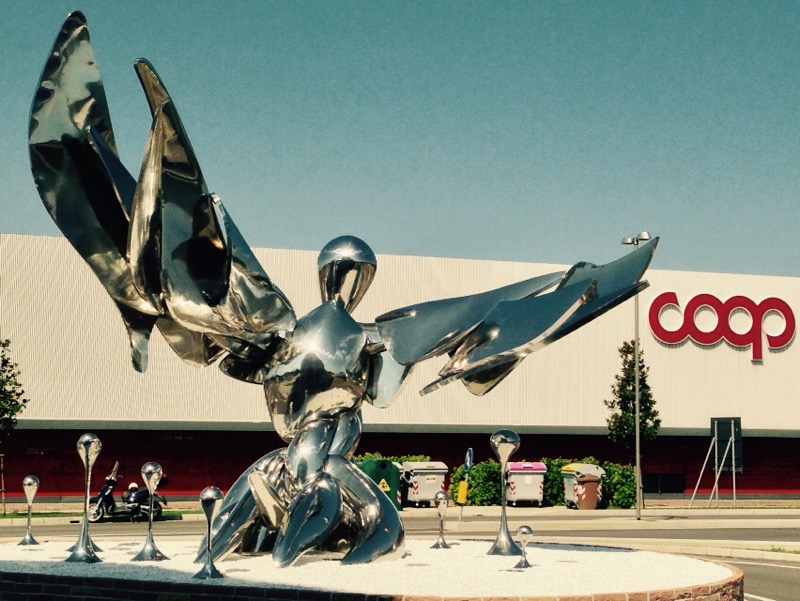
Arriving in the first place to restock supplies in Italy was also a culture shock. After 2 months in former Soviet block countries the wanton consumerism was impressive. With a huge amount of style and bling.  

   We don’t have these kinds of artworks outside Supervalu.  


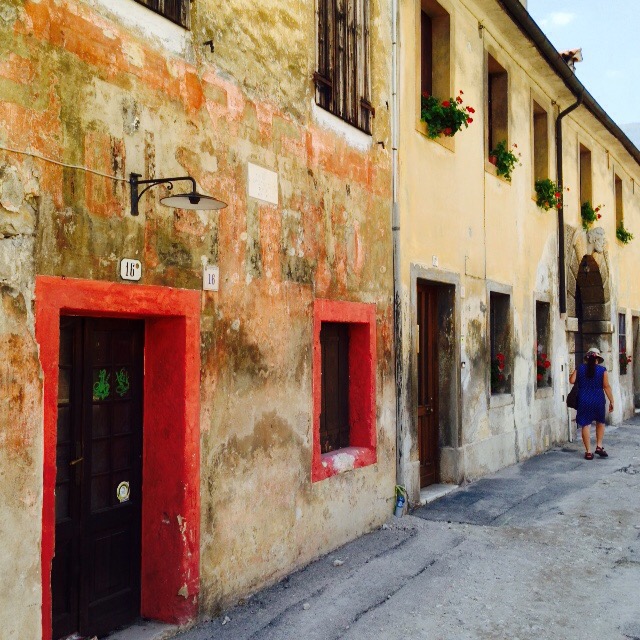
But style has been big here for centuries and the old city centre streets are a crumbling fading warren of urbane perfection.  


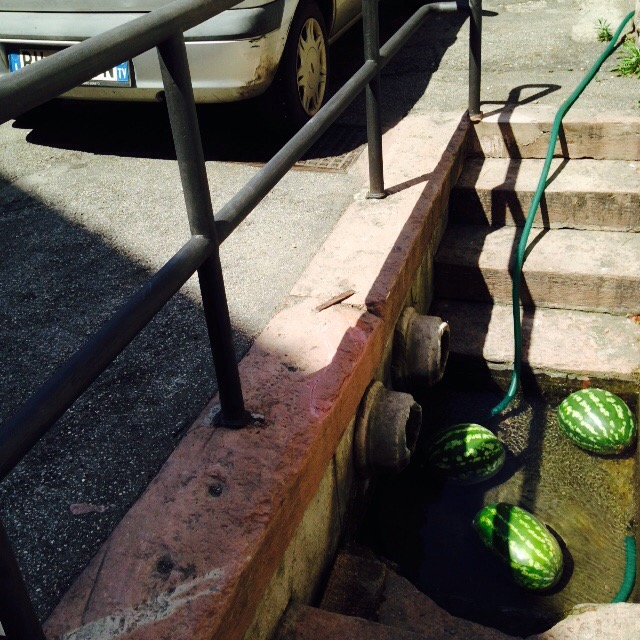
 And they know how to keep their melons cool.  

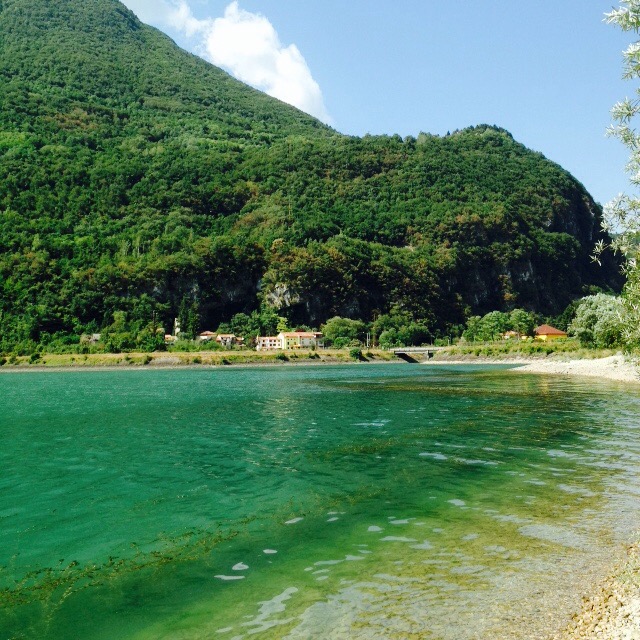
 I’m sure the rain lashed brethren back home in Eire don’t want to hear about it, but it’s a battle to stay cool here. We had to make an emergency stop at the Lago Morto ( does that mean Lake Dead ?) 

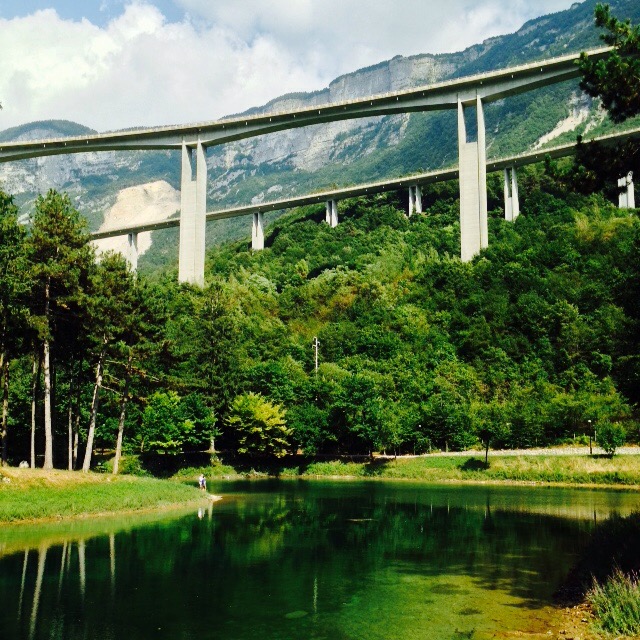
 an emerald green hydroelectric reservoir with the mighty legs of a motorway stepping around it, but still heaven in its heatstroke saving cool.  

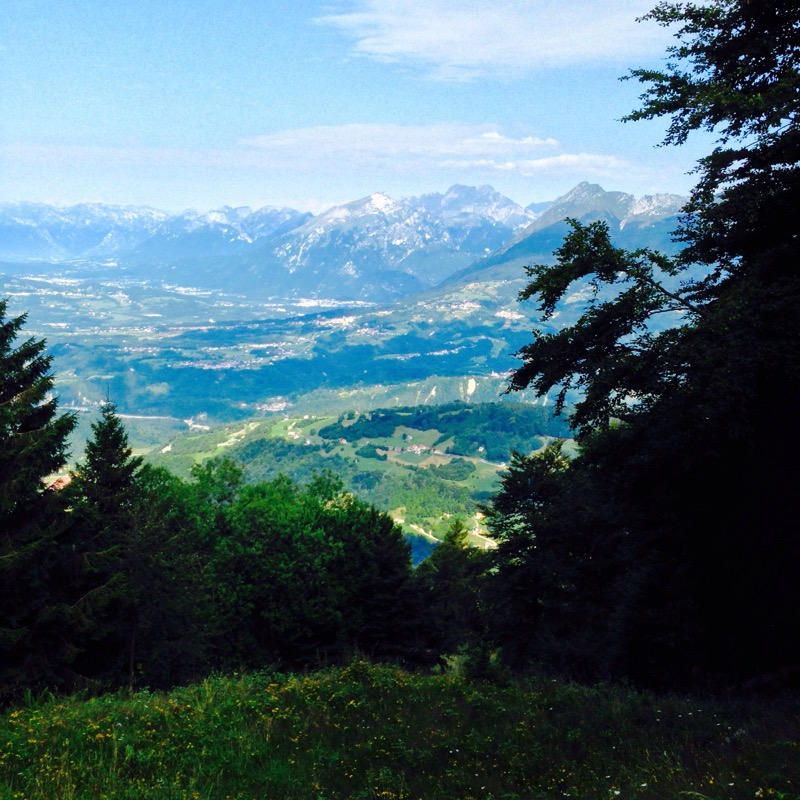
 We headed for the hills again, to a free municipal camper park up in  the village of Tambre, 950 m up in the Alpago mountains, overlooking the big blue Lago do Santa Croce and the bulk of the Dolomites, our next destination.  

 Armed with local route maps from the lovely, if somewhat flirtatious, lady at the tourist info we devised an early morning 4 hr hike up into the wilds.  

 All went well until we got lost on the return due to poor, wrong and missing signage and a spiders web of possible tracks. I might have to go back to tourist info.  

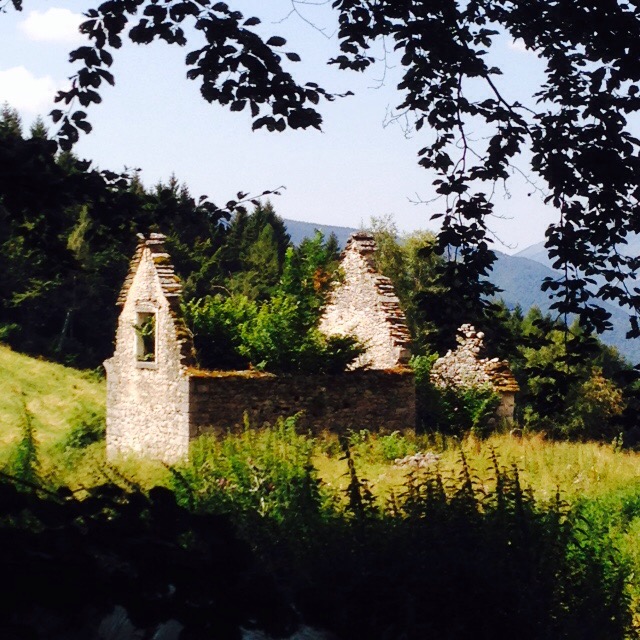
 Skilled mapmanship got us back on track passed sad ruins and through thankfully shady forest.  

   It wasn’t all abandoned either. Lots of the old places had been done up and new hamlets were appearing with the ever present finger bar mower, which along with the tiny tractors and trailers, I would love to see at home.  


Finally arriving back at base we drove along the high tableland of the Consiglio forest, a wonderful area we had happened upon of thousands of hectares of mixed woodland, mainly beech but also stretches of conifers that are popular with shade seeking picnickers.  

   Lots of mown grass, tables and benches and fresh water are all laid on to aid the enjoyment of the forest. Coillte have some catching up to do. While we were there what looked like the Italian national squad came past.  


A little further into the forest was an ethnographic museum that although frustratingly only in Italian had great exhibits about the forest folk. The Venetians of the 15th century used loads of the beech for oars and boat building.  

 And later on a huge industry of wood work developed particularly the making of beech strips 1/4 in thick for use in loads of stuff.  


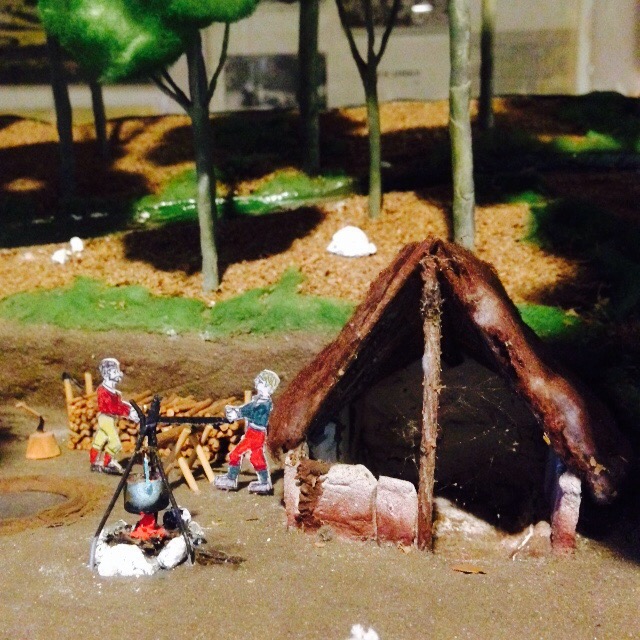
 And we met the charcoal makers.  

 Really interesting displays on water powered saw mills, ariel runways for the lumber, tools and houses etc etc. And we didn’t understand a word. Even showed us timber dam construction.  

 No nails involved of course. 

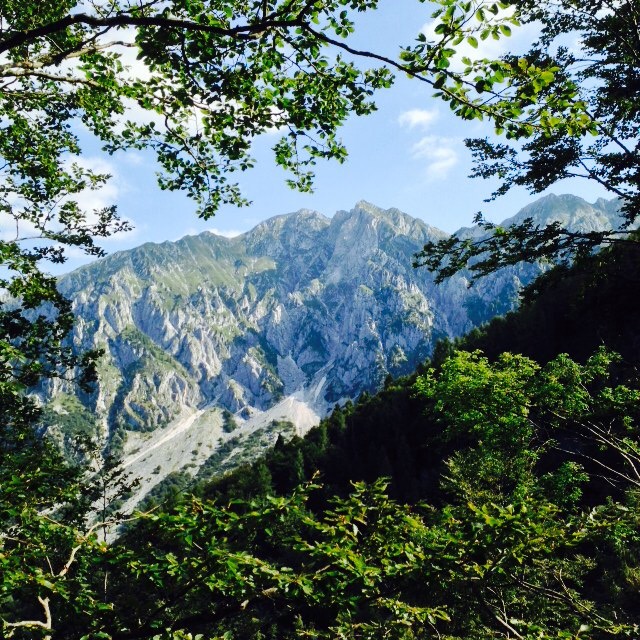
But we had a date with the big stuff in the morning. A 1000 m climb from the highest park up we could find to Rifugio Seenza and the Laste saddle. And a more beautiful sunset camp you couldn’t wish to find.  


A more or less circular 5 hour route we needed to start early to avoid the heat, so the kettle was on at 5.30 and a hiker had already gone past. We had decided to go clockwise which meant a long steep climb to start, but in shade, followed by a more gradual traverse of the high cliffs and a steep descent from the summit on the way back that would quickly get us into shady forest.  

 The cloud had nestled into a bowl in the middle of the forest that bury off as we climbed.  

 All too soon we were in the sun, which even at 7.30 seemed hot.  

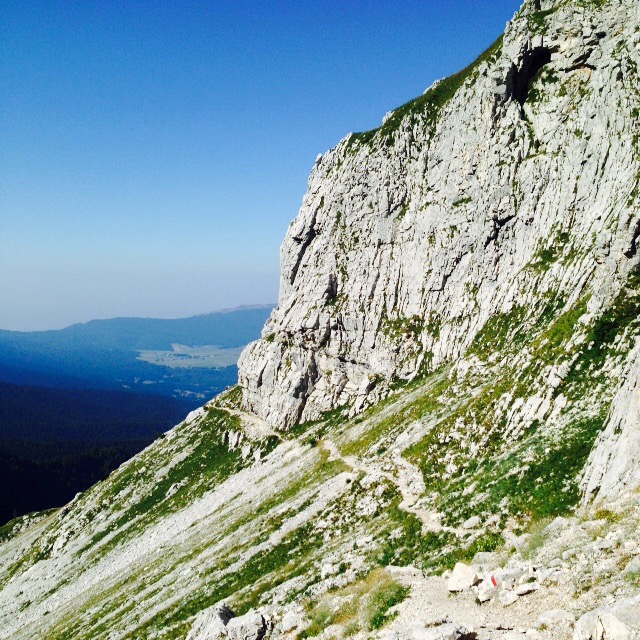
 And then we were over a shoulder, above the tree line and another world revealed itself.  

     We heard sheep as we approached the refugio but it took a while to spot them high on the wild flower slopes.  

 The shepherd and his dog were keeping a watchful eye from the balcony where we were grateful of a coffee and rest.  

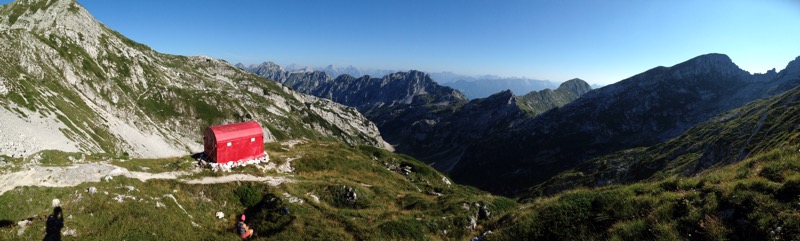
 The real splendours awaited us at the Coll another 15 mins higher where the emergency shelter was reassuringly rugged.  


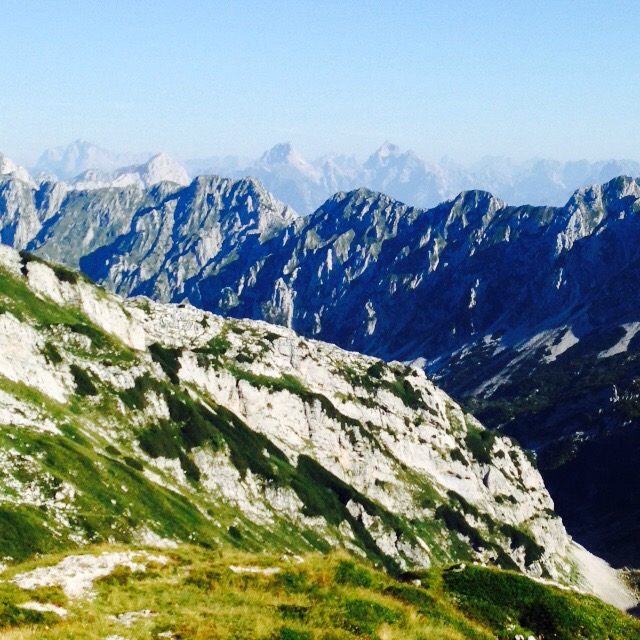
The views, of miles and miles of mountain ridges, was jaw dropping and had to be taken in bit by bit over time to avoid a rush to the head. 

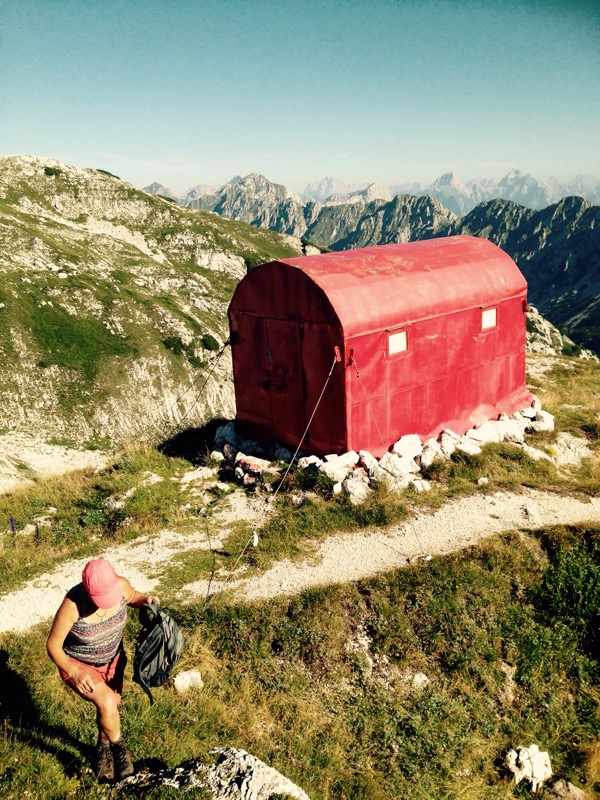
My love affair with the Julian Alps was in jeopardy, I had a new mountain mistress.  


Time to go down before we got giddy. 

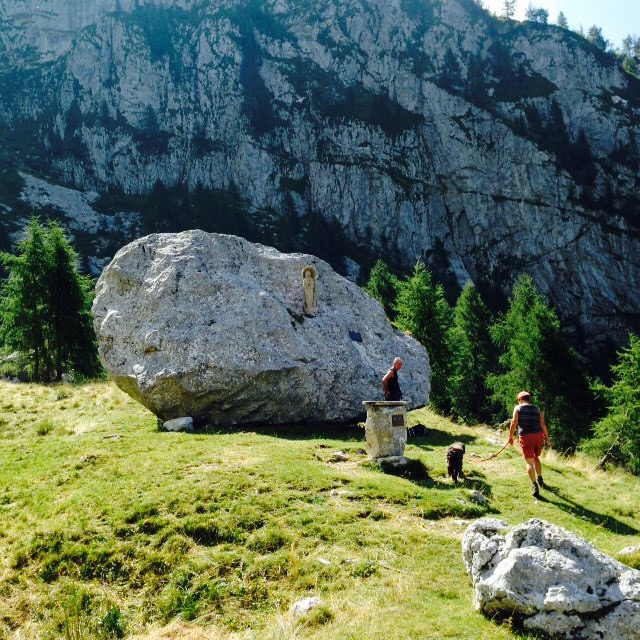
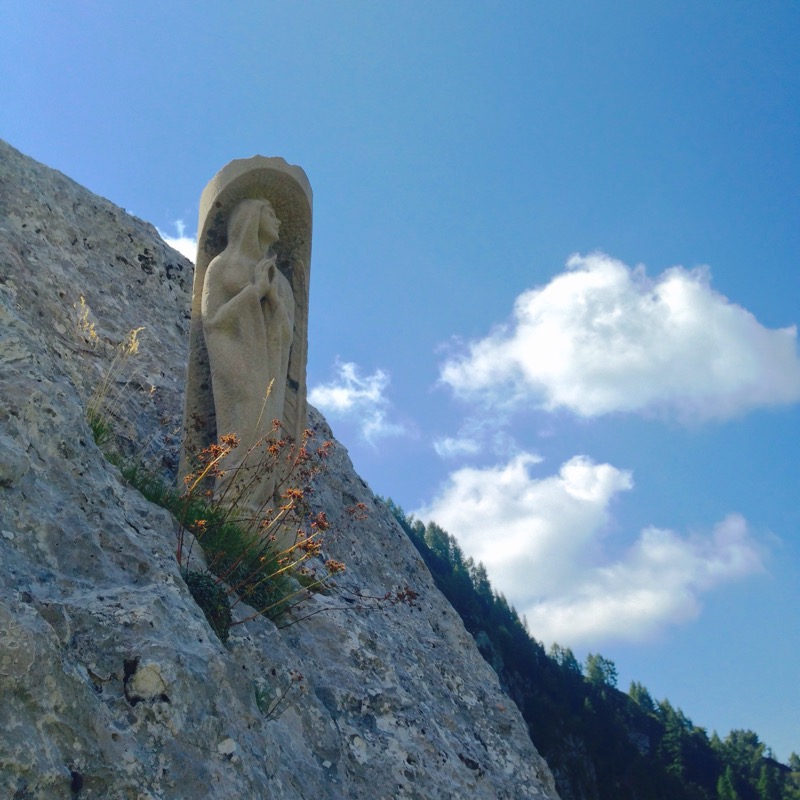
  On the way we passed a huge erratic and madonna shrine were we left an offering to mark the life of a friend cut short untimely like his brother’s before him.  
   

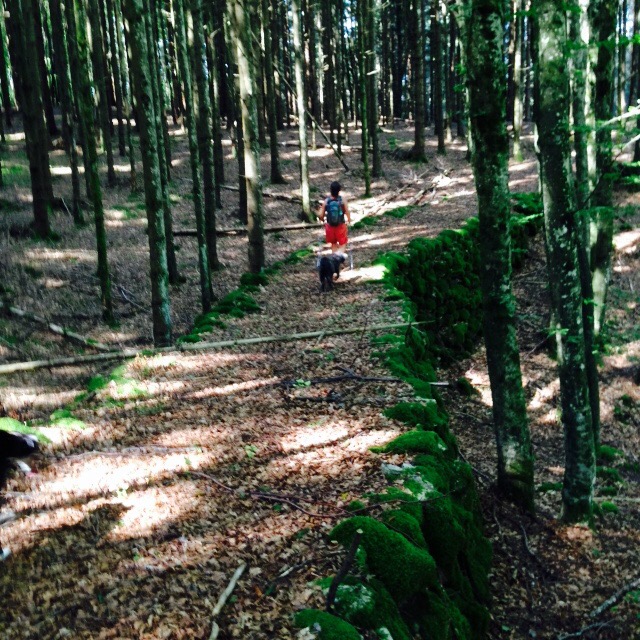
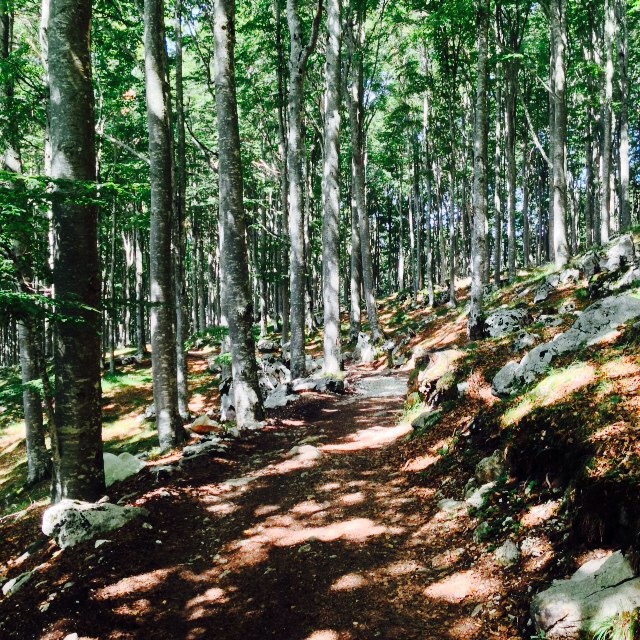
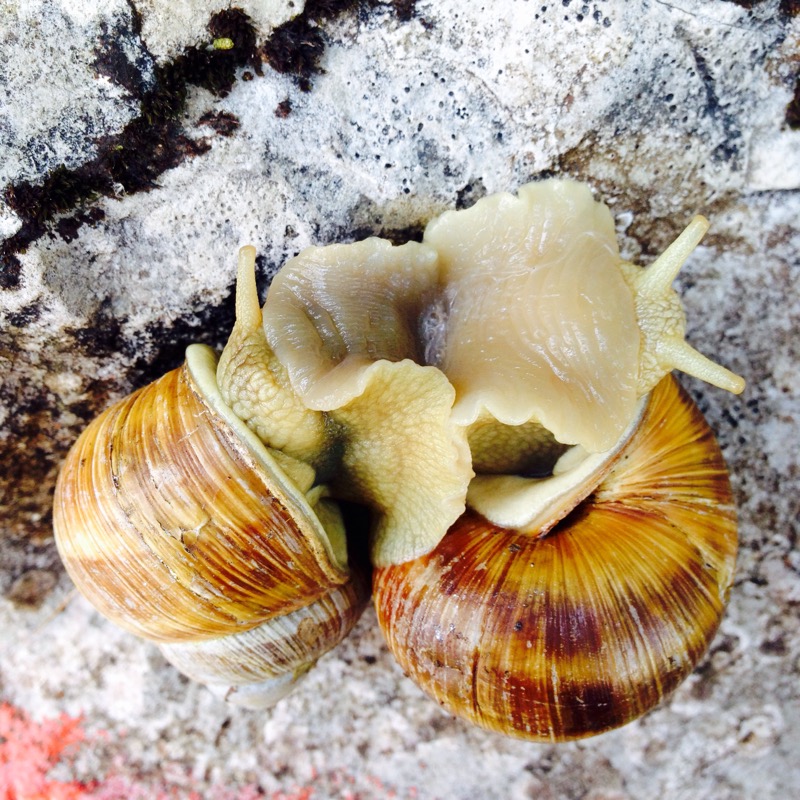
And on down to the peaceful cathedral of beech stippled with light and adorned with snails in a tight embrace.  


 Tonight at our lakeside camp we feel love and light a candle for the Brennan brothers. 

THE GRAND TOUR: SLOVENIA 2/3rd AUGUST

It hammered it down in the night leaving a lot of moisture to float back up to the heavens during the morning.  

 We decided to stay another day anyway. We needed to reach the source of the Soca, the hole in the mountains from which the life/ energy force and healing waters emerge. 

So we packed up and tatted down and dissolved into the white clouds in the white Tranny.  


We were driving alongside the river, climbing all the while with suitably spacey music to accompany the wispy wonderland appearing through the windscreen.  


The last village up the valley was Trenta, a major gateway to the high Alps for walkers and climbers, and home to the national parks biggest info centre. We visited the museum and soaked up geographical, geological and biological knowledge and then vegged out watching a couple of mesmerising movies/artworks on the sacred Soca and the forest forces.    

       We also learnt how to handle meeting a bear.  

 There was a host of other exhibits including fantastically detailed nature illustrations  

 and a charming recreation of a simple vernacular house.  


The only knowledge missing was botany so we motored on a few km to the Juliana Alpine Garden created in the 20’s on a little patch of limestone.  

  The man who made it really loved the area.  

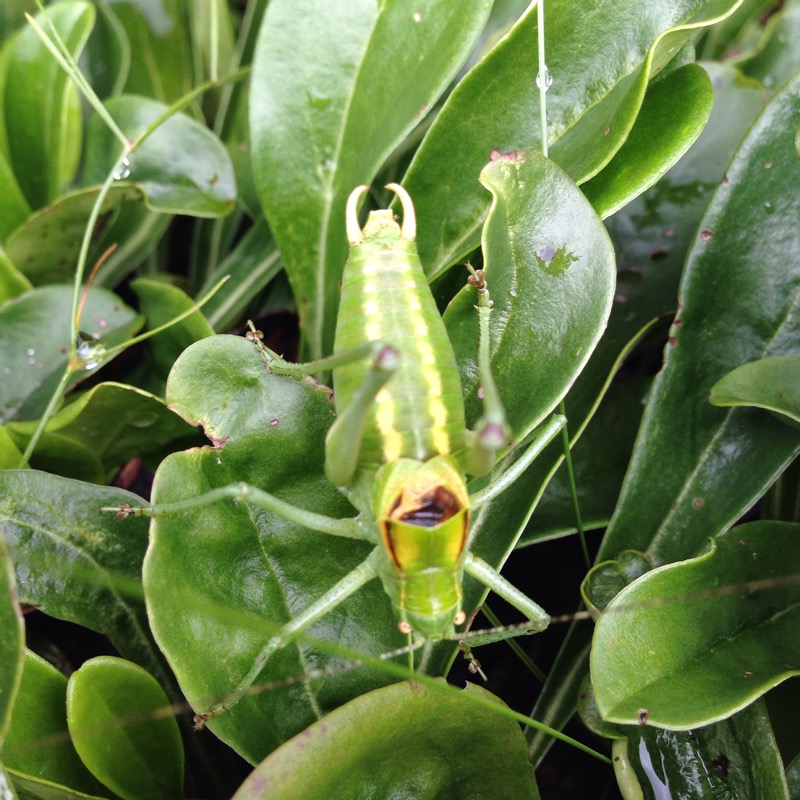
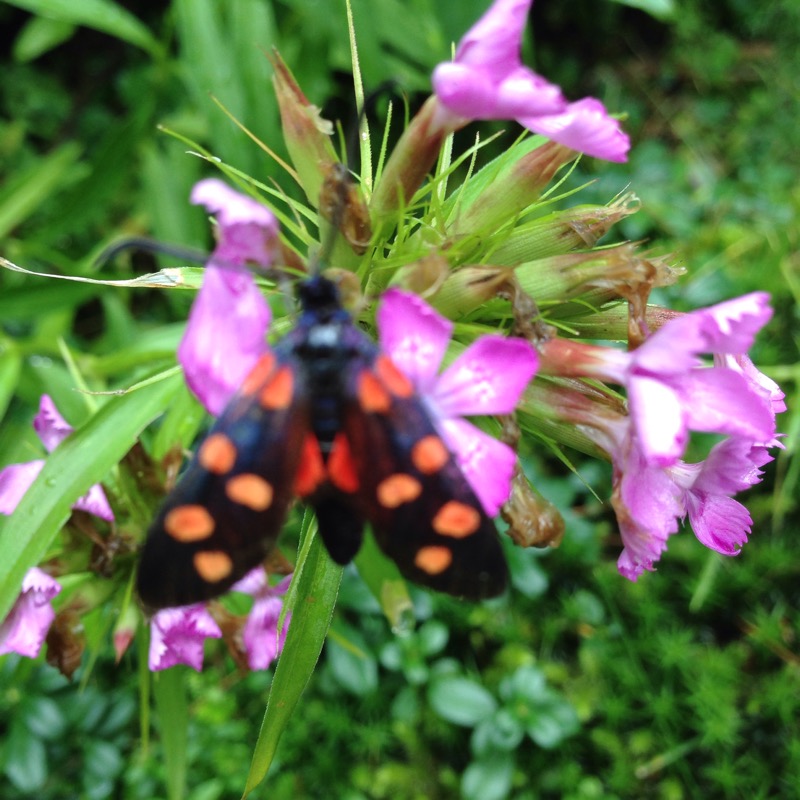
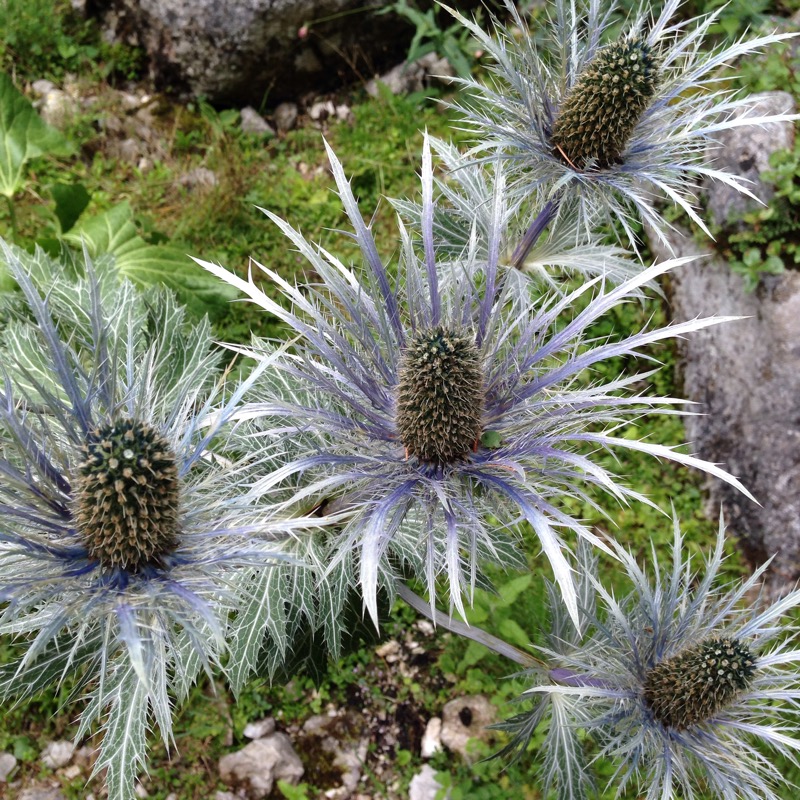
 Here are some of the insects and plants that we liked.  


 Even the little ticket office was a miniature delight.  


So, finally to the end of the road and a short walk to the source of the Soca.  


Short in distance but long in thrills or some adrenaline sport kind of jargon. We had taken the dogs but before long the cables started  

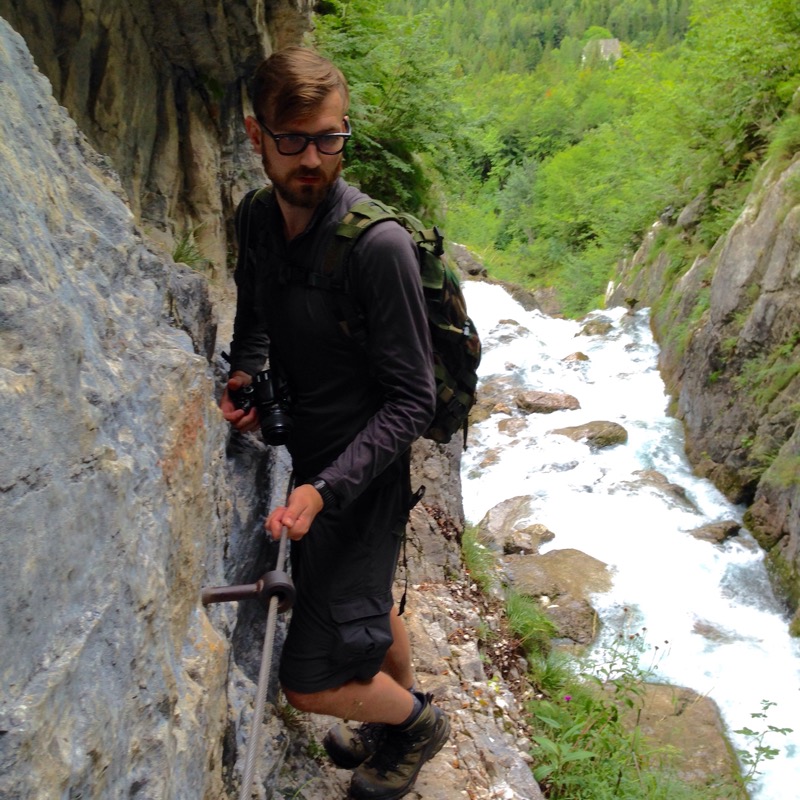
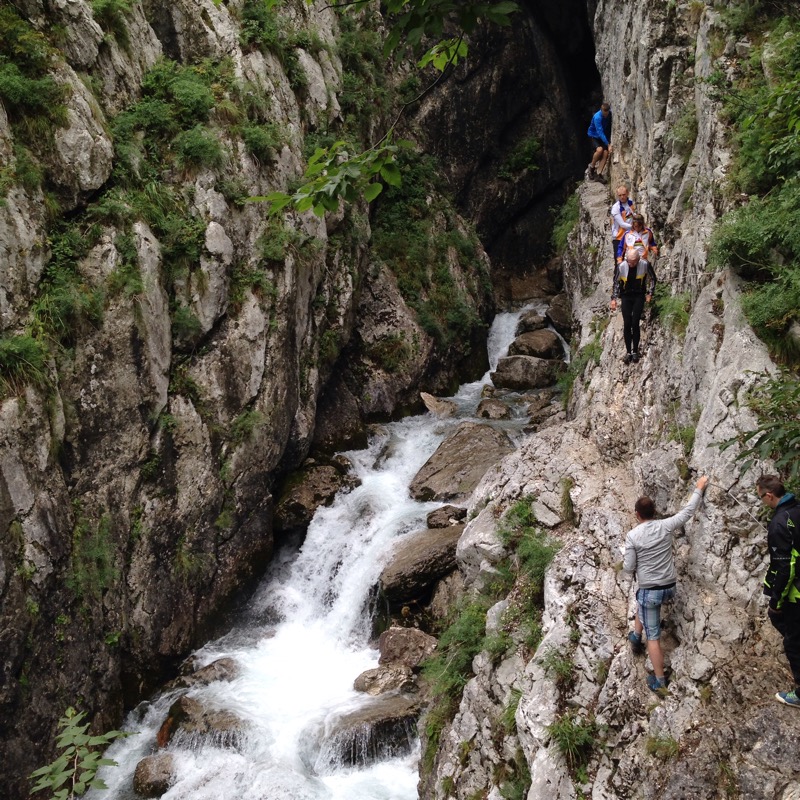
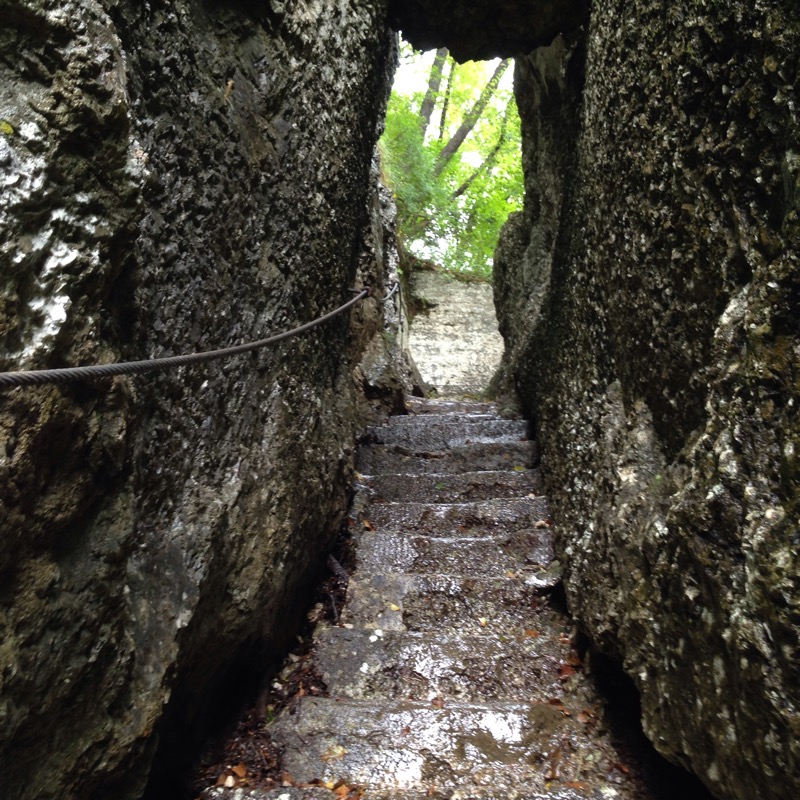
 the track narrowed and a women advised us the dogs weren’t going to be able for it. It was become clear that Sally wasn’t either so she stayed with dogs , gave me a bottle to collect water from the source in, and I carried on up an ever narrowing ledge, occasionally having to get real up close and personal with people trying to squeeze around on the return journey.  

 No way could this exist in Ireland. Heath and safety nightmare. 

Supply a steel cable, cut a few niches on the rock, bang in a few  metal pegs on the vertical bits and let ’em off.  

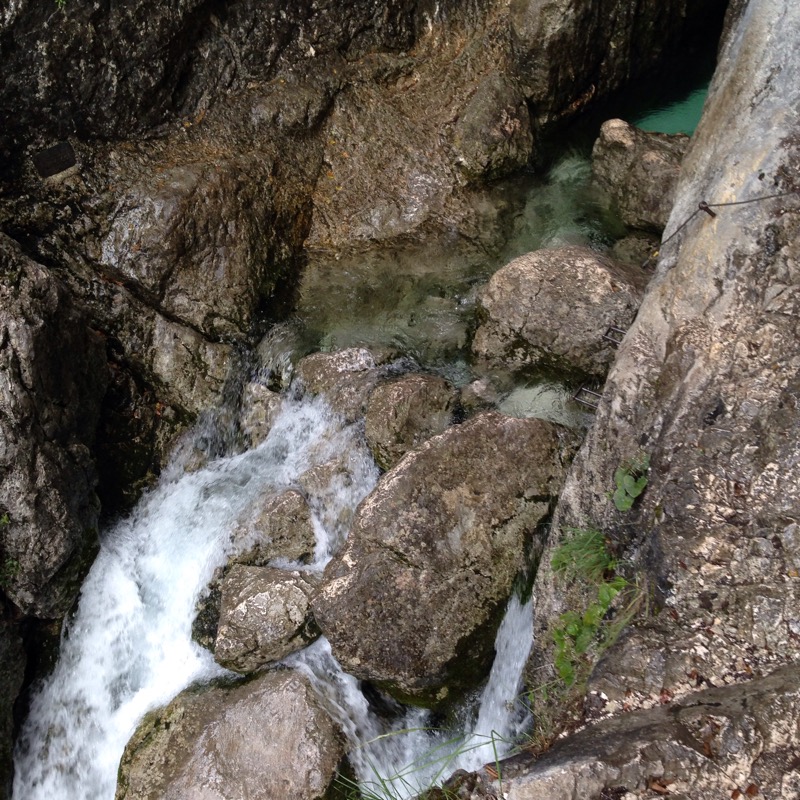
 I clung on with one hand as I took pictures of the deep cleft into the mountain.  

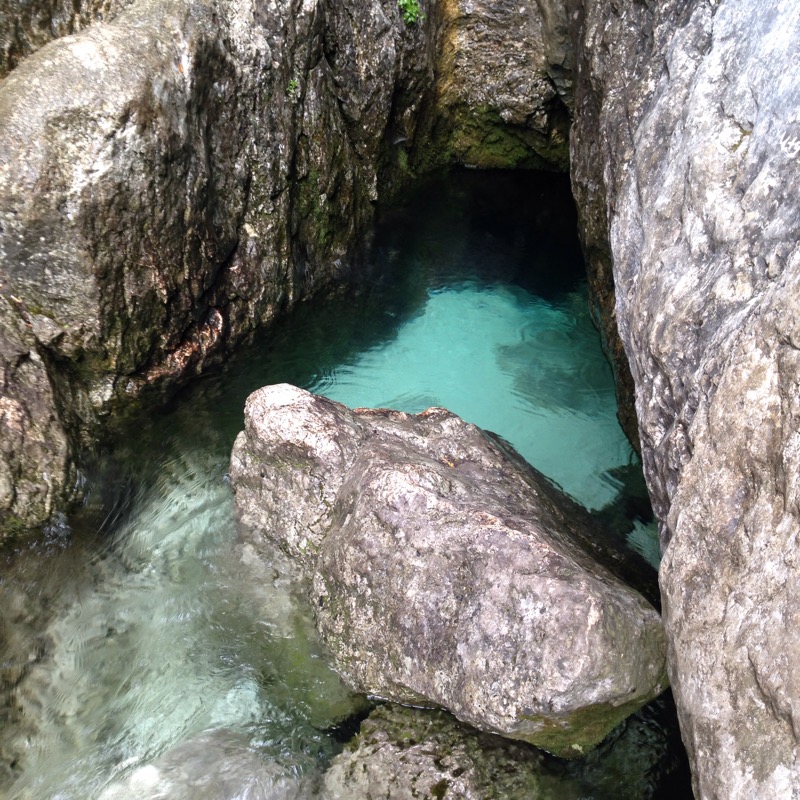
 A few more metal pegs and I was down at the suddenly tranquil pool where the Soca erupted.  


So we now have a bottle of liquid power healing from the Slovenian Julian Alps to join our collection of Irish Holy well waters. 

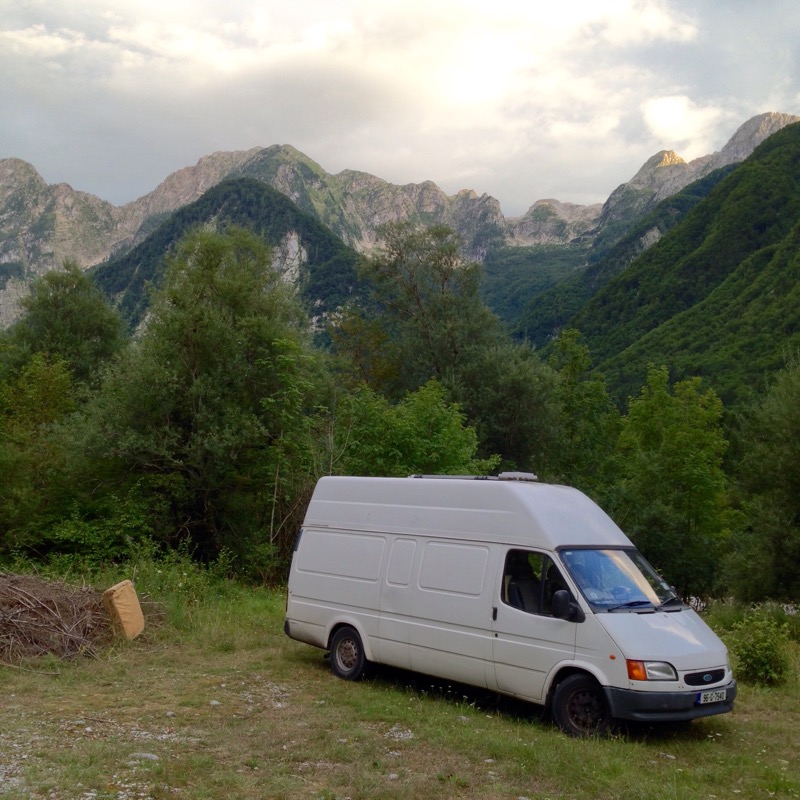
We wanted to park up for the night down the Lepena valley that we had been looking at from the camp and so drove up to the end under a ring of peaks.  

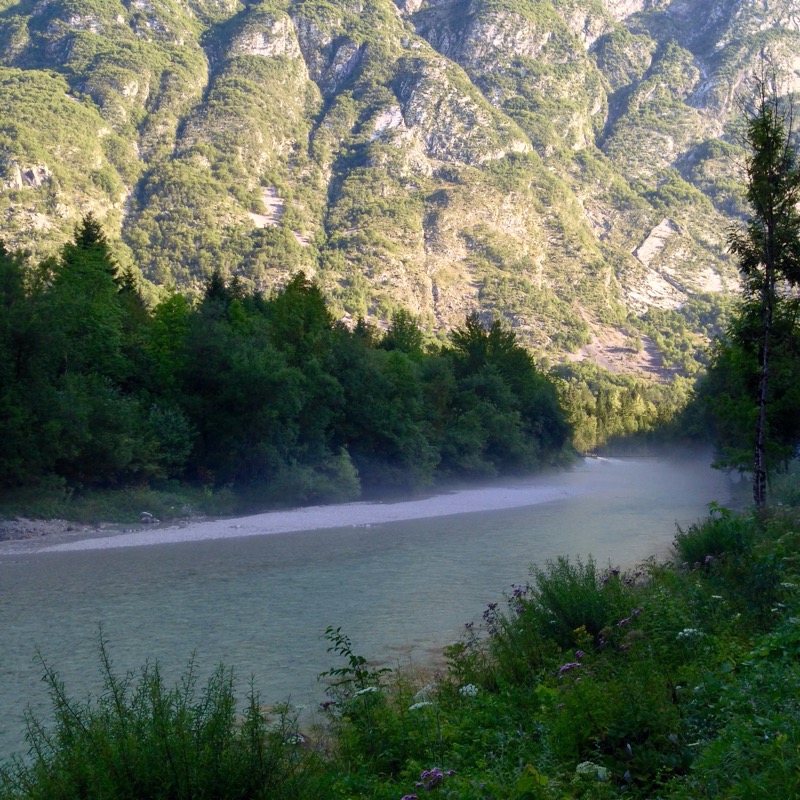
 Next to the river, with the doors open we could hear the waters gurgling all night while a big moon shone on the white Rock. Driving on in the morning alongside the steaming Soca

 we headed to the start of a trail up the side of Bavski Grintavec mountain. 

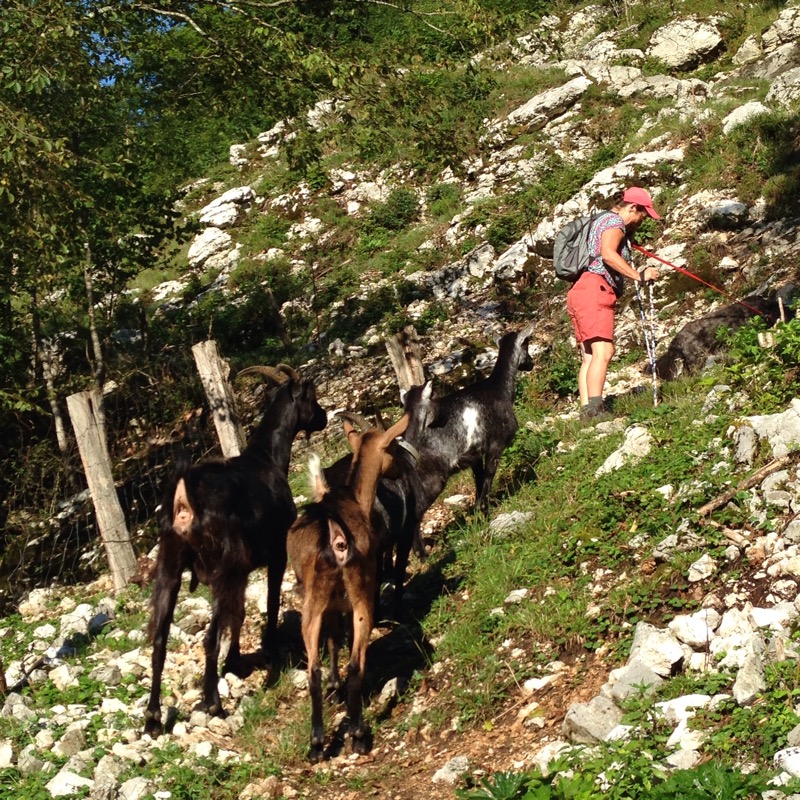
Led by a down to earth local goat women through her yard to the track we headed up into yetmore beech forest.  


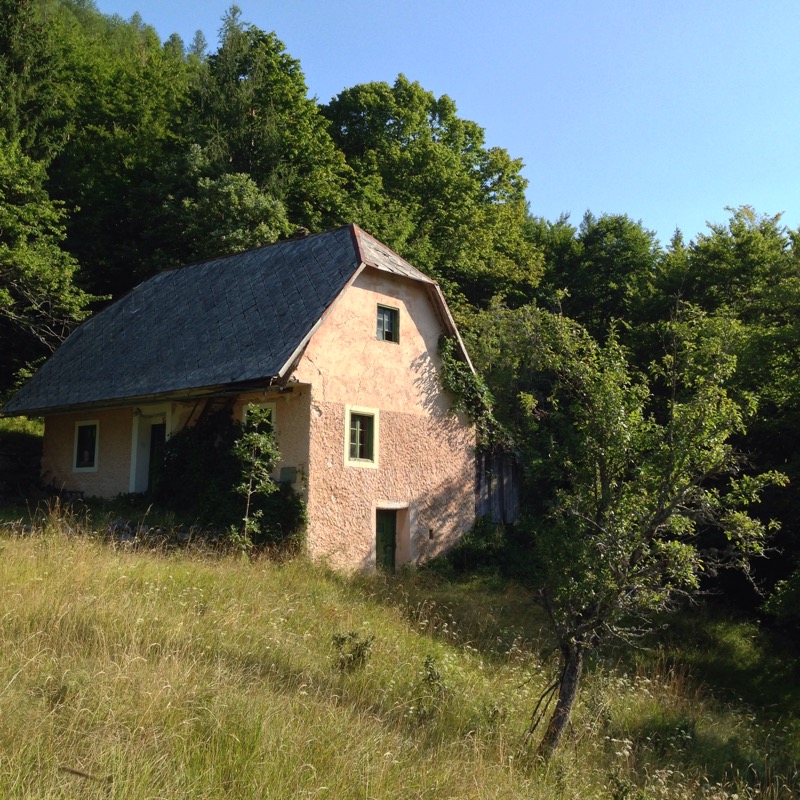
We were going up to have a look at the deserted hamlet of Lemovje high above the valley. It was a beautiful place but a little melancholy with its lovely houses crumbling away.  

         One of the houses was being renovated and another looked like someone was resident with solar panel and mown grass so maybe it will be revived. 

Fantastic views but i guess that doesn’t make your life easier.  


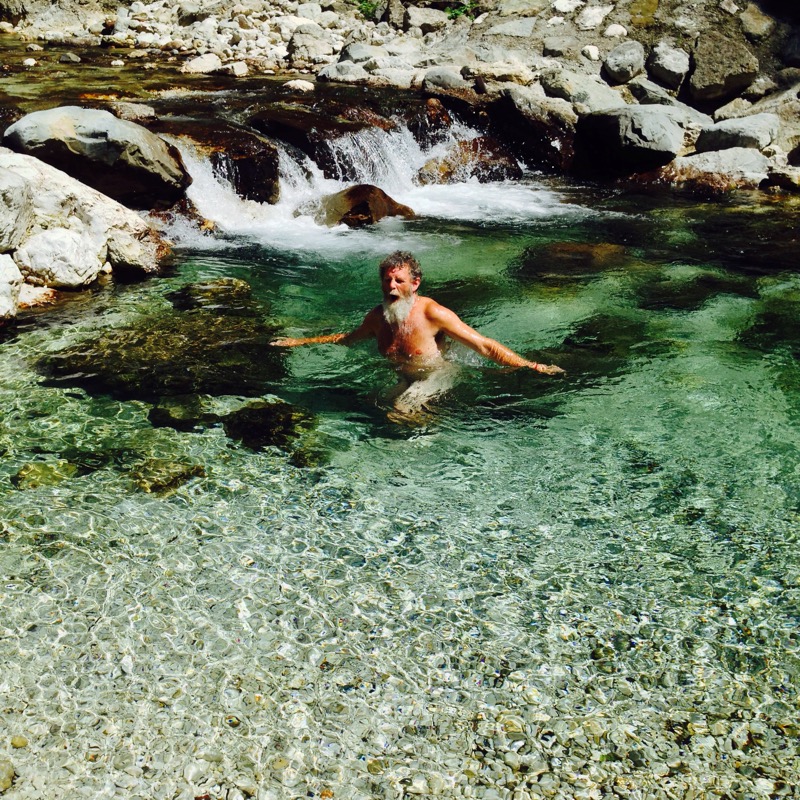
After the climb we were relived to be back down to the river which we hiked for a few km passing azure pools that became irresistible.  

   You can see from Sally’s expression the temperature. 

We passed some great gardens and houses along the riverbank 


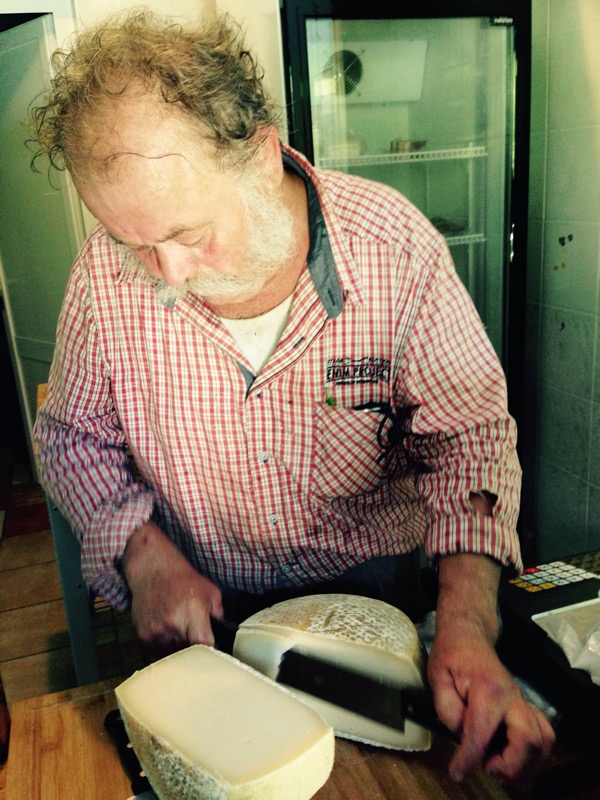
We had passed some sheep on a little beach and discovered further on a farm that made sheep cheese. We also managed to get a fleece that Sally has been yearning for and some real sausage from a real man.  


Further and further up the valley leading to the pass to Italy, stoping for more refreshing dips.  


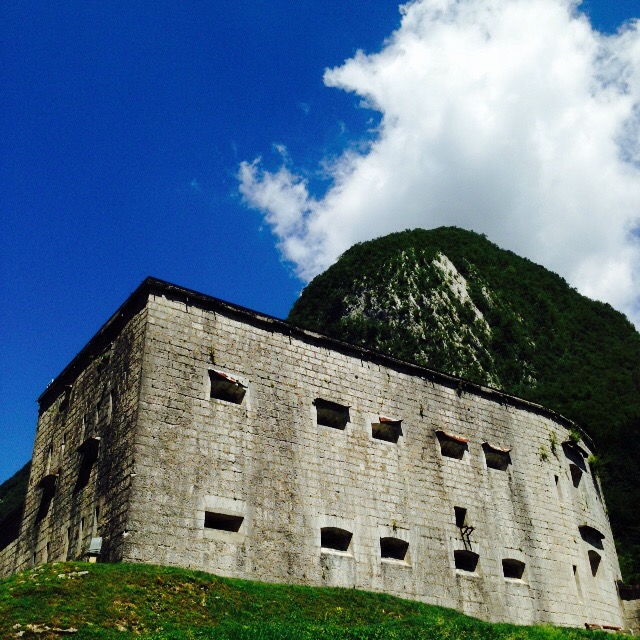
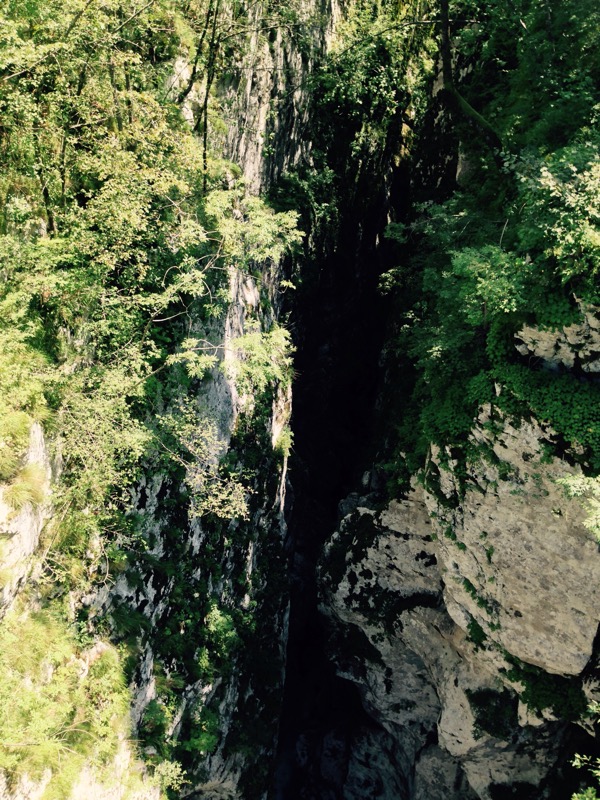
Passed Kluze fortress, invaded by Napoleon, and adjoining the super deep chasm.  


Until finally to the wonderfully named Log Pod Mangarton at the head of the valley.  

   Beautiful but the home of tragedy in2000 when a mudslide took out half the village. And of course WW1.  


We’re staying tonight, our last on Slovenia, under these powerful peaks. 

It’s been a great love affair.  


THE GRAND TOUR:SLOVENIA 31st JULY 1st AUGUST 

I have a pile of walking guides in the Tranny to places I had wanted to visit on this trip but now ,as day after day in the Julian Alps only reveal more vistas to explore, and the first day of autumn is upon us and with it the realisation that time, for our journey at least, is finite- I might not get to open some of them. 

As someone who hates to turn down the possibility of checking out pastures new it’s a dilemma. “Should I stay or should I go?”

My dual personality is battling it out. One half is loving it here and never wants to leave, the other is reminding us of all the other glories that await further down the road. And that this is our chance. Could be the last. “Maybe the last time, I don’t know”


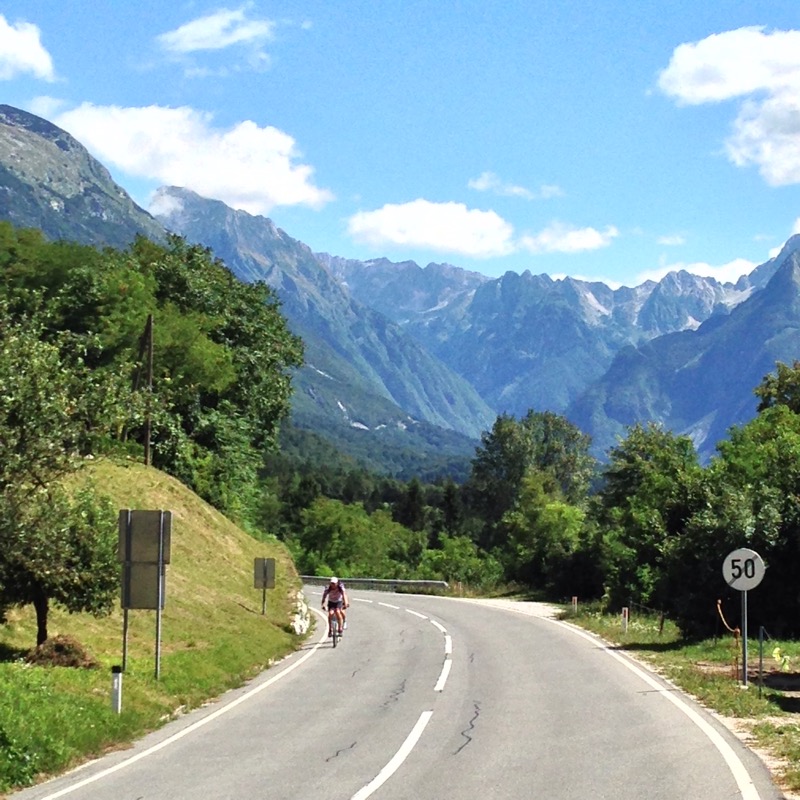
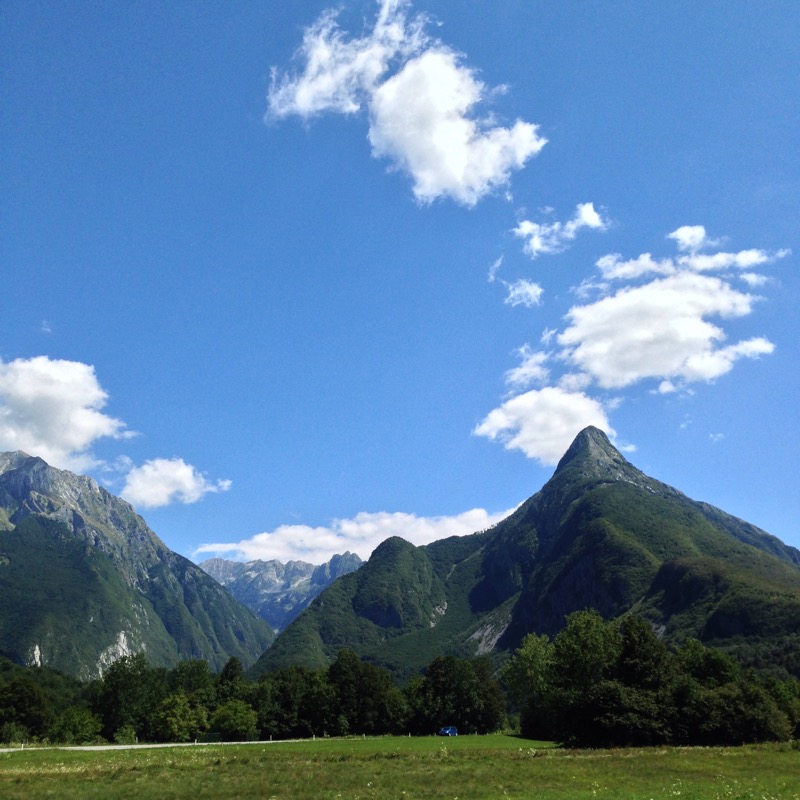
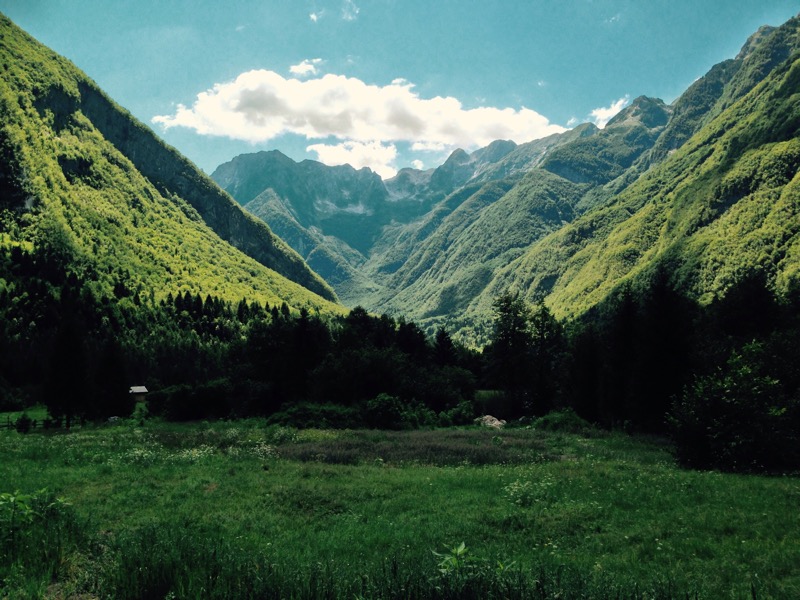
But for now the dominant mantra is”be here now”  and we are. And we really enjoyed getting here. As we curved around the peaks heading north , then turning East the views had us choked.  


  That’s a lovely piece of planet isn’t it?

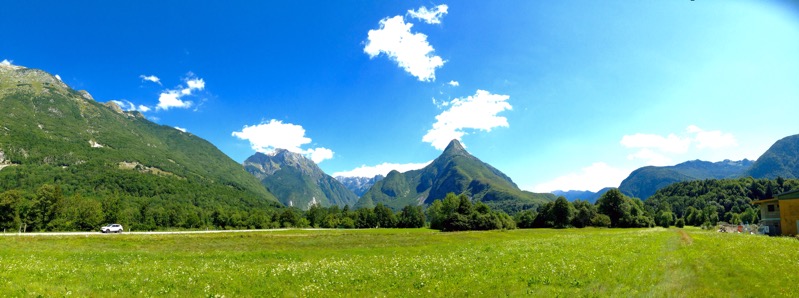
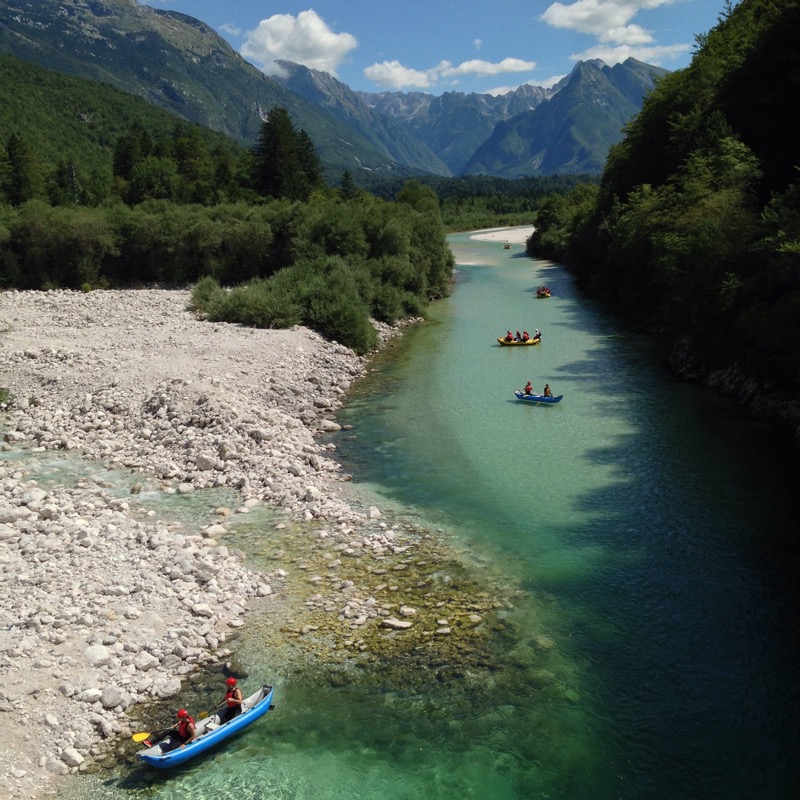
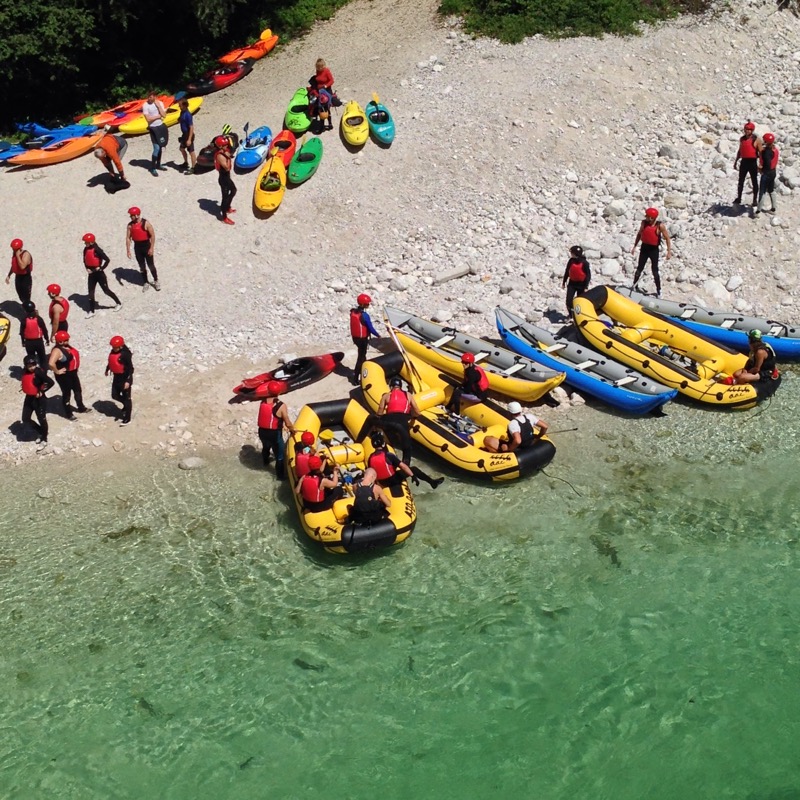
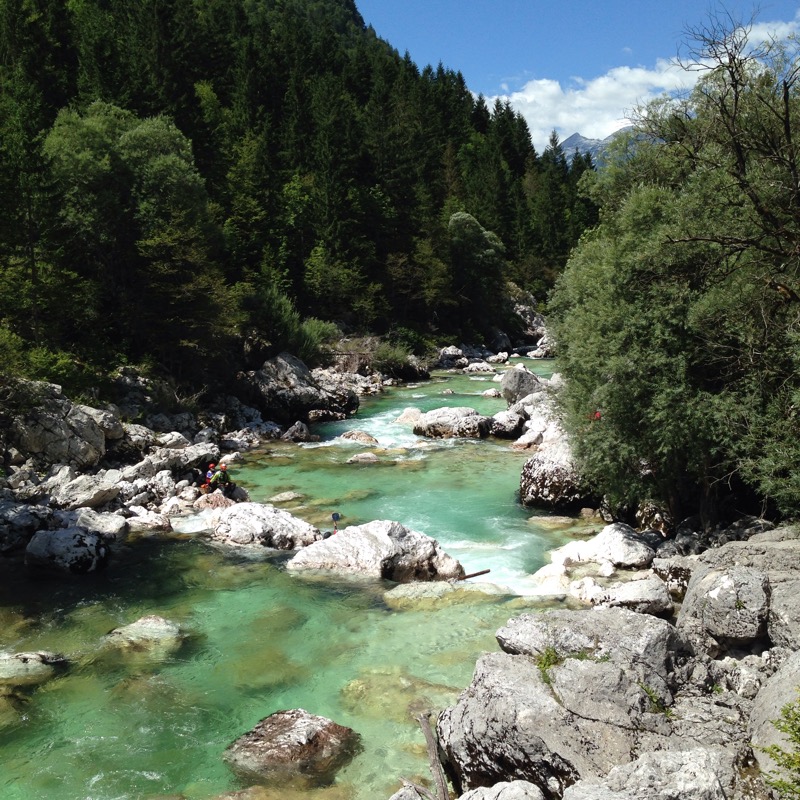
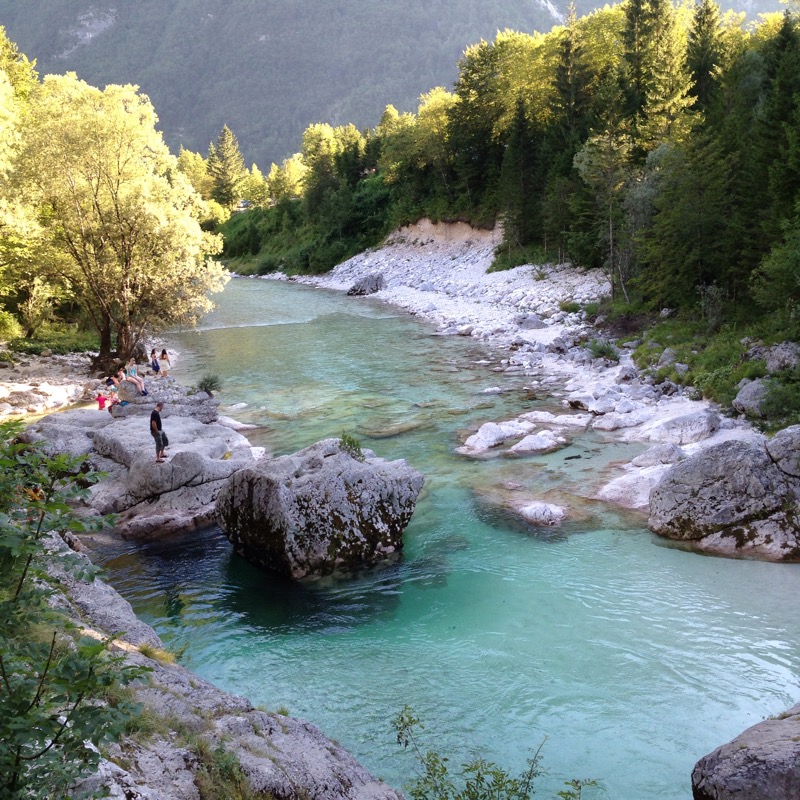
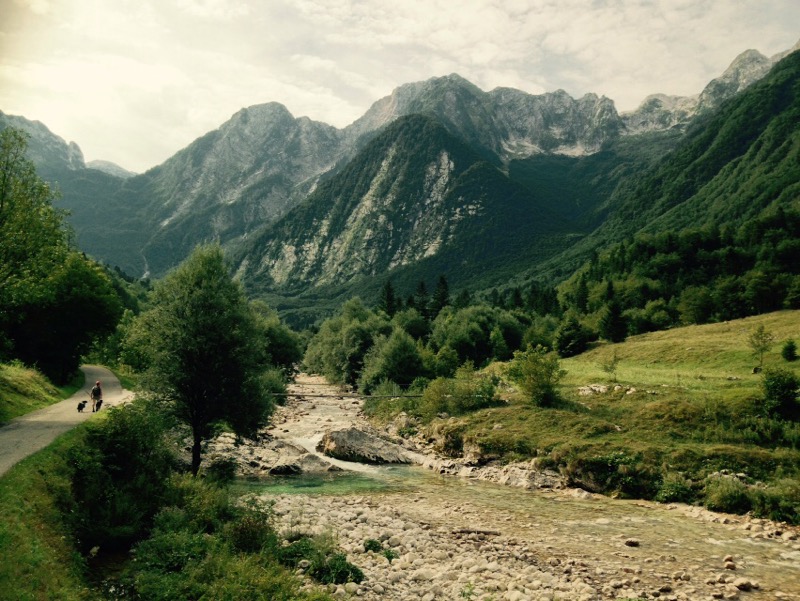
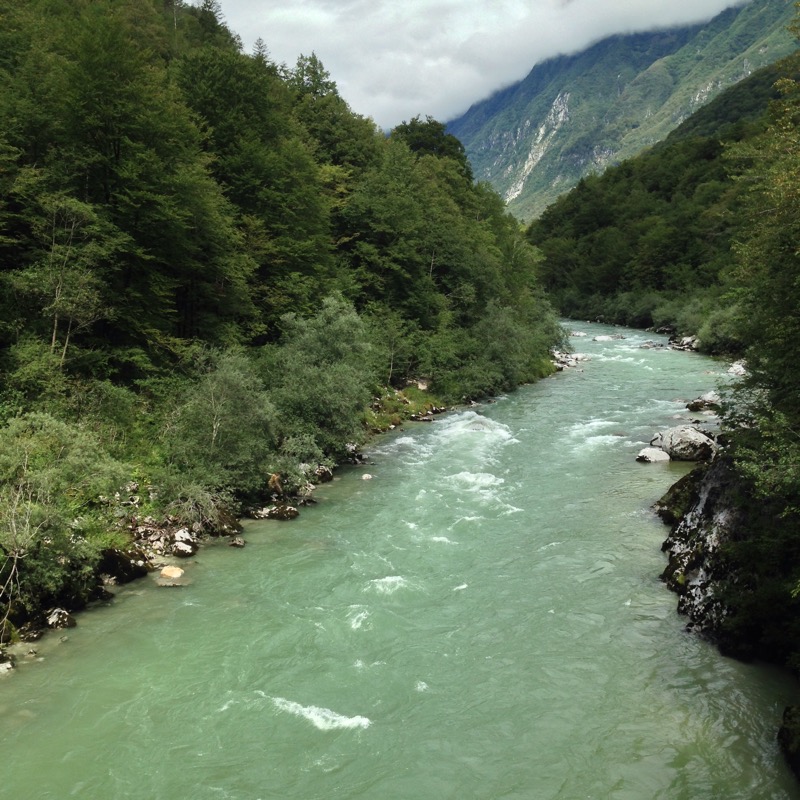
  We turned off to go up the Soca valley, home of EXTREME and ADRENALIN sports but all I saw was beautiful clear turquoise water and people messing about in boats.  


 By the time we got to the camp site we were engorged with nature and all we could do was supp slowly at the surroundings.  

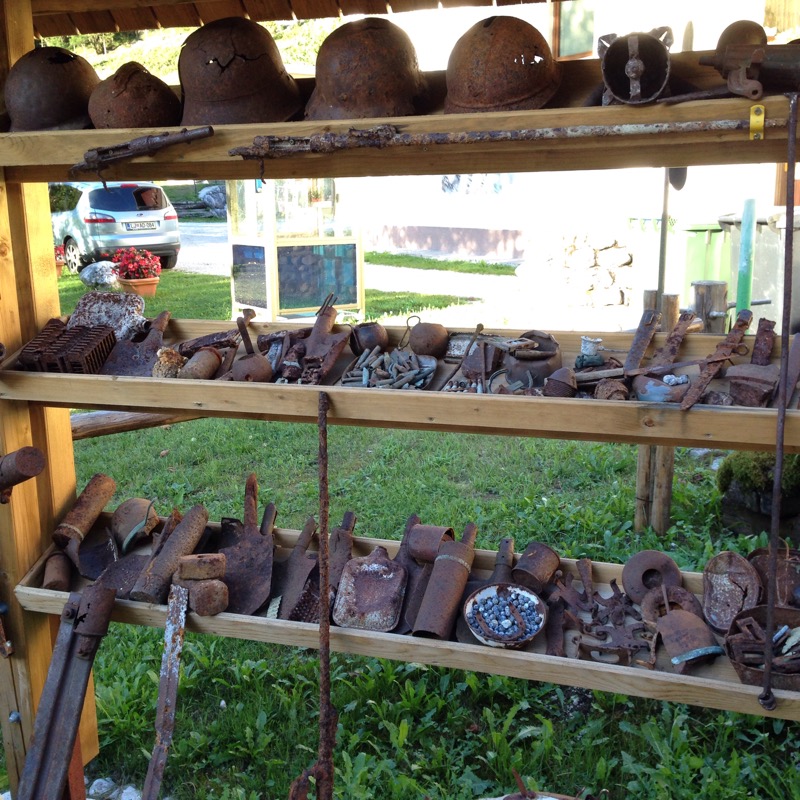
     Although we did manage to stroll down the road a little to check out a route for the next day. And call in at neighbouring camp site where their WW1 finds were on display.  


We were to find our own mementos of that desperate conflict the next day when we took off down the valley and then up and up into the mountains on trails made by soldiers 100 years ago. 

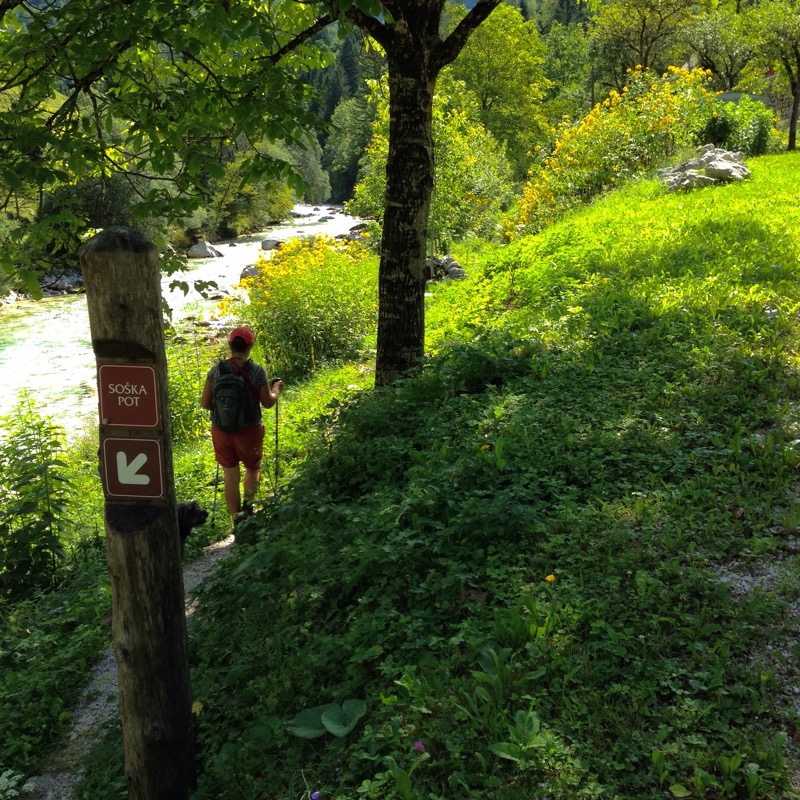
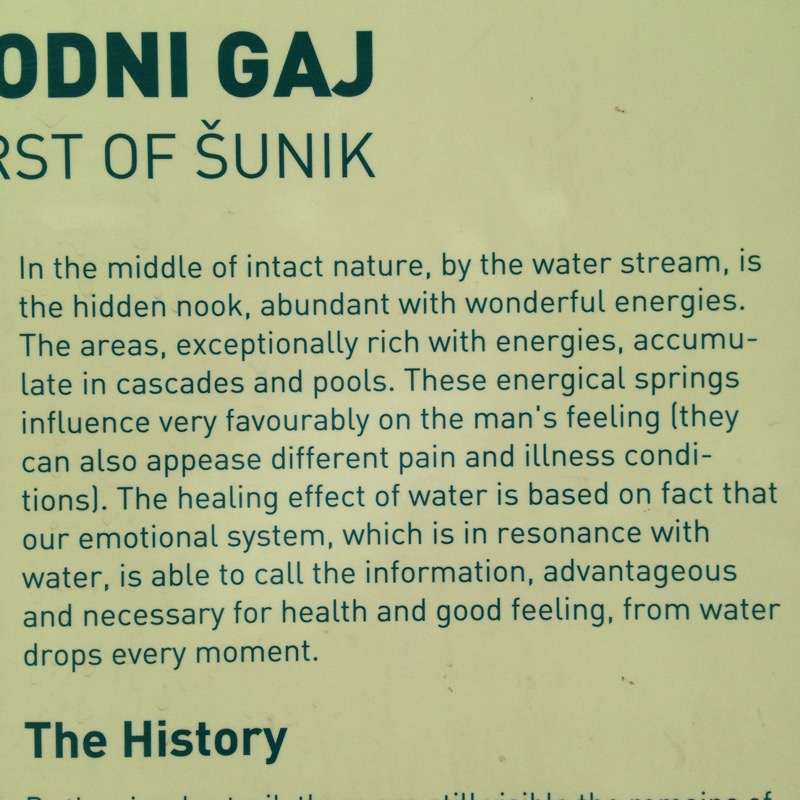
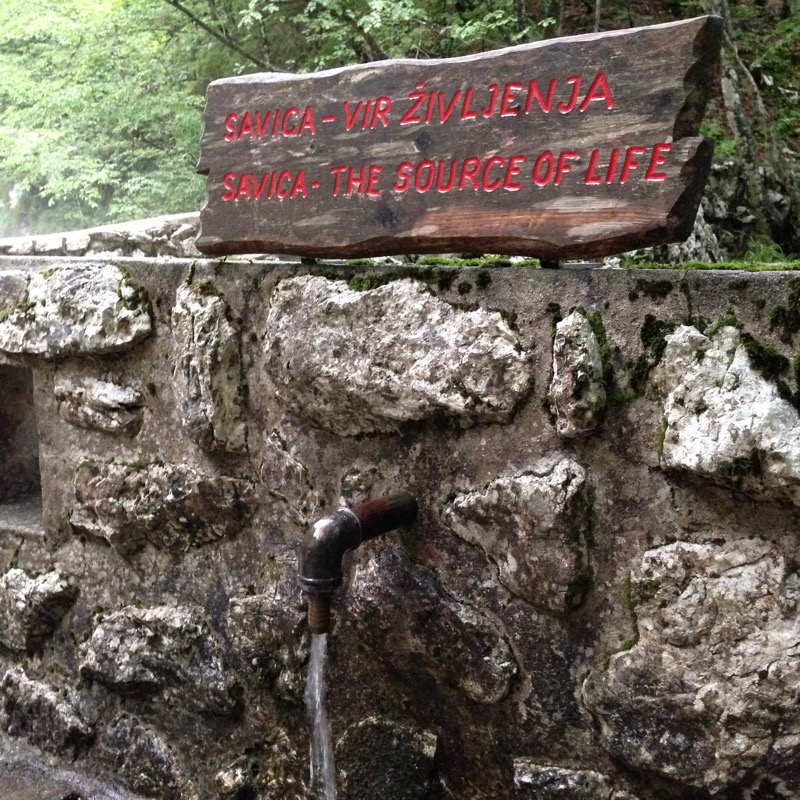
Ironically the beginning of the trail was marked  by a signboard, as we crossed the rushing river, describing the healing power of the waters.   


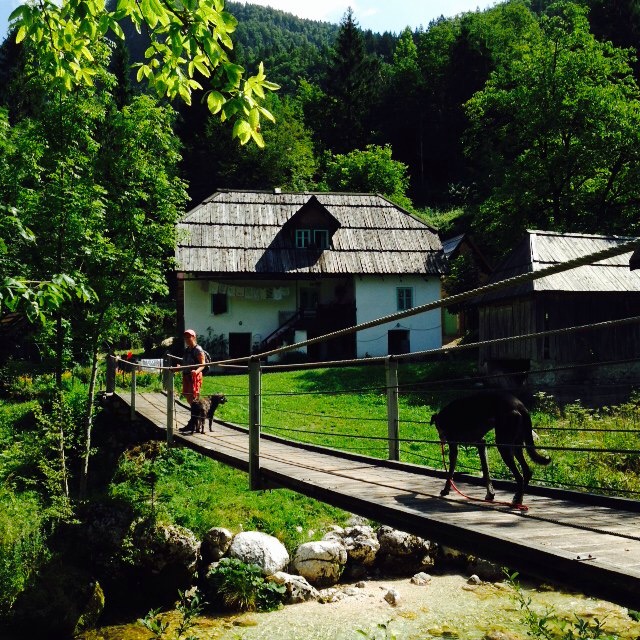
Scruff had done well leading us across the suspension bridge.  

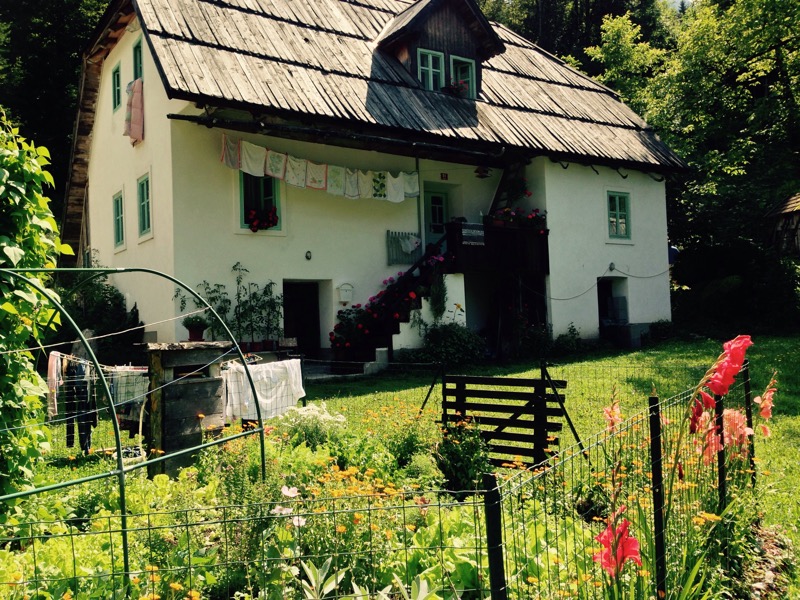
 And more old iron buildings in picturesque spots.  

   We climbed to a more or less deserted hamlet  

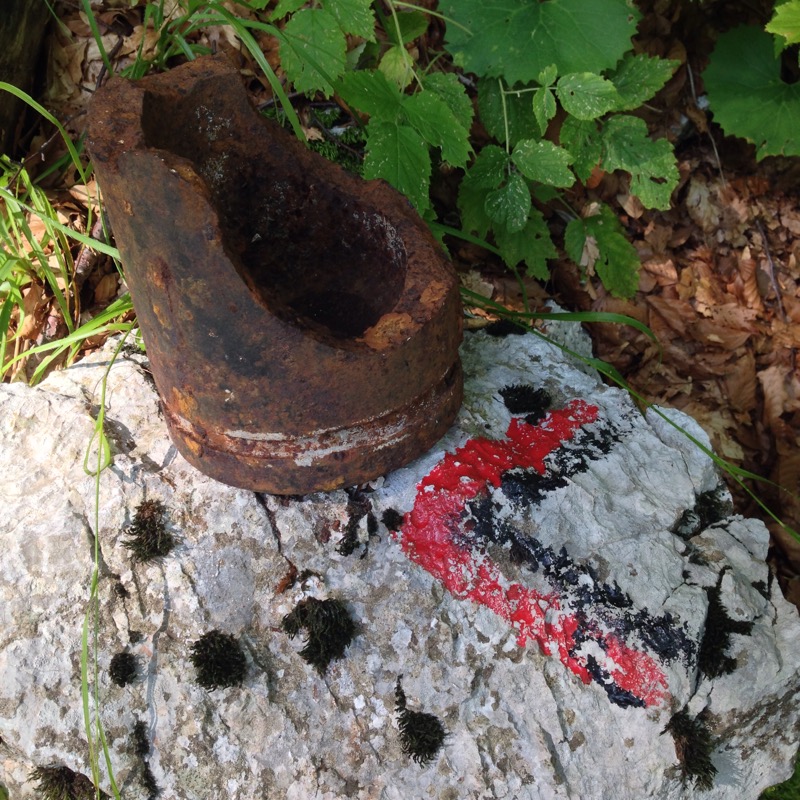
 and then zig zagged or way higher and higher on the old military route to the lines way above on the ridge. How the supplies and equipment were ever dragged up there was beyond us as we struggled to get up unencumbered. The slope was littered with defensive positions and remnants of the Great War.  


We reached a chapel of sorts and a monument to the troops who died in an avalanche on Christmas 1916.  

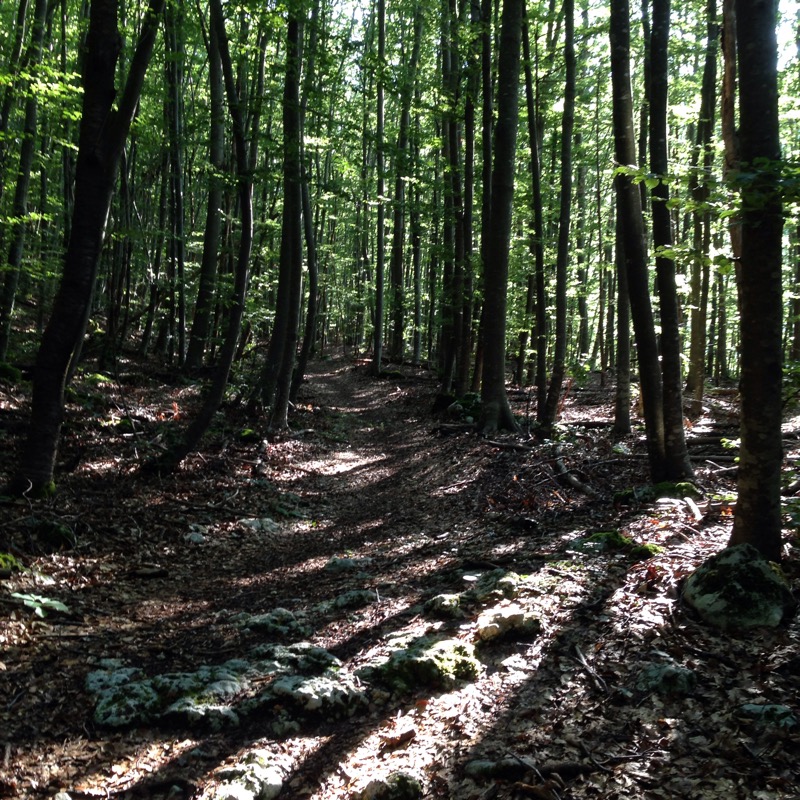
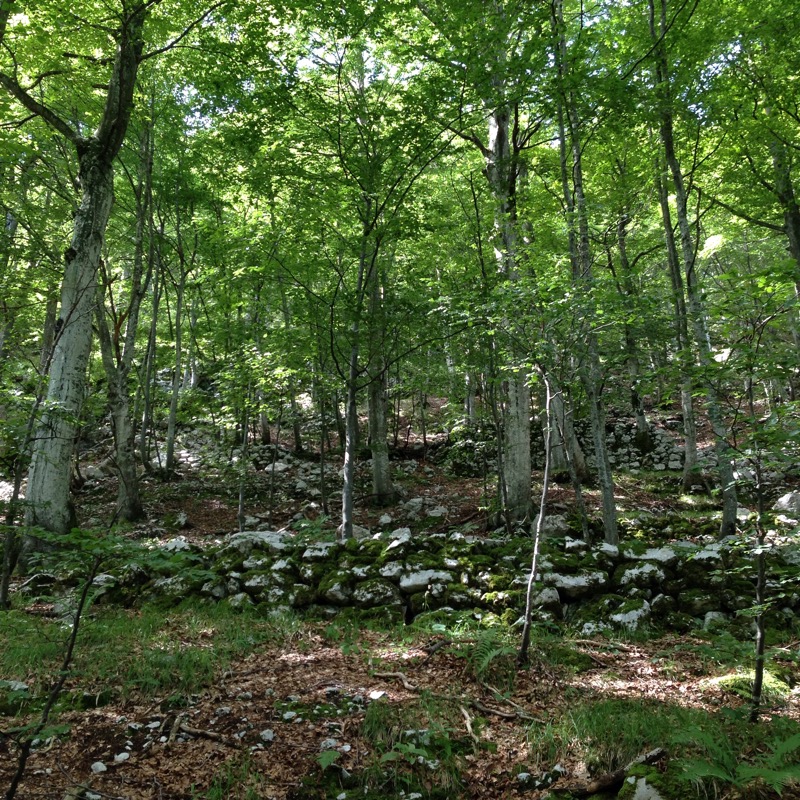
 The landscape was benevolent towards us as we hiked through the beech and hornbeam forest.  

 with the stone walls of the conflict all around. Hard to imagine the horrors of the past in the tranquility of the now.  


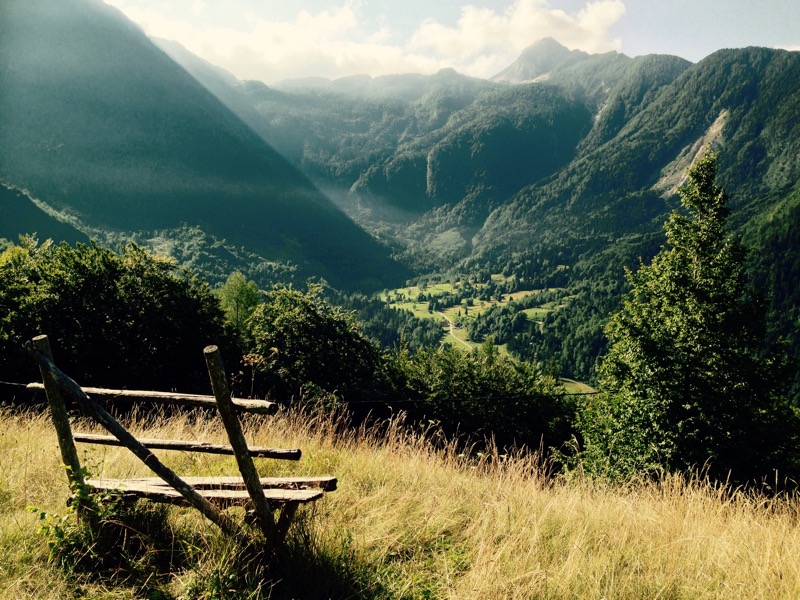
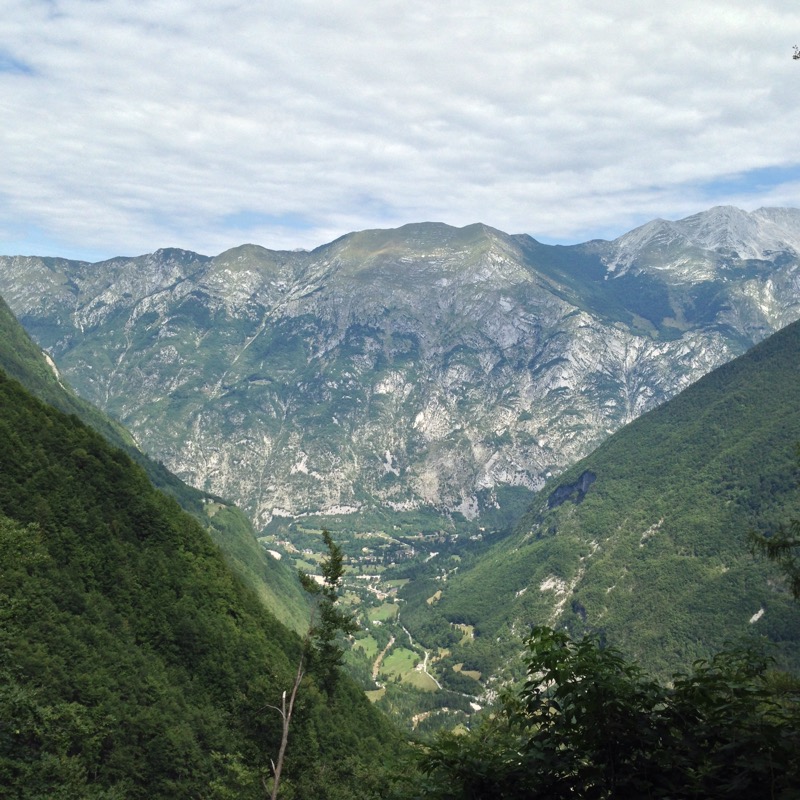
We had climbed over 1000m in the trees and it was good to come to an opening that rewarded us with a view of the valley below.  

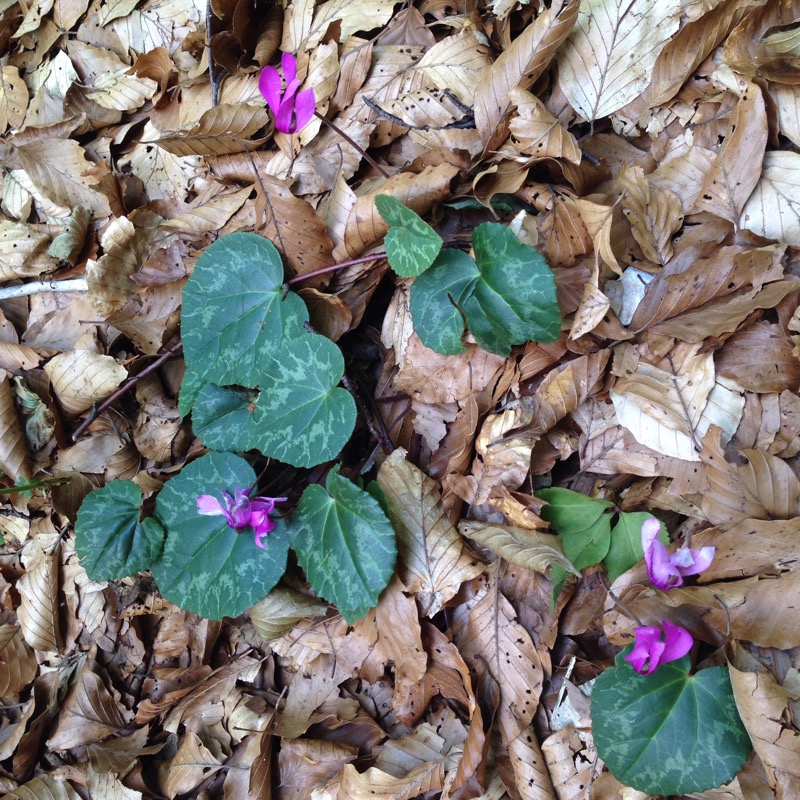
 And the picture at our feet of the countless cyclamen was equally as good.  

 After a traverse across the mountains we came to another memorial, this time to the troops from Bosnia Herzegovina who had lost their lives.  


And then we were on the way down again, alongside the rushing waters.  

   Passed symbols of war 

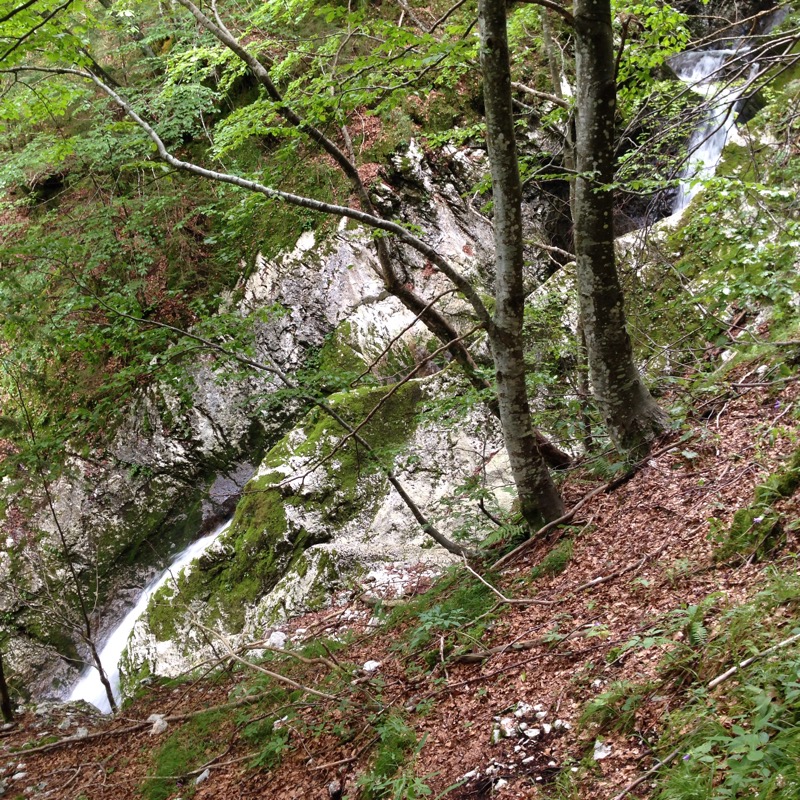
 and more natural threats of huge rock fall. The forests were left intact as a natural defence against these crashing into the houses and avalanche. 

  to the healing waters below  


The dogs were knackered so after leaving them at camp we returned to the river for a cooling dip.  

 There was a place just upstream of the suspension bridge where the Soca river surged through a gorge into deep pools and channels and folk gathered to hurl themselves from high cliffs into the bracing waters. Sally and I had a swim as the teens whooped and hollered with the joy of life  as they defied death in the healing waters. (Sorry, I didn’t take the phone for pictures). 

Tonight the rain is back. Tomorrow the weather will determine “Should I stay or should I go” 

THE GRAND TOUR:SLOVENIA 28/29/30th JULY 

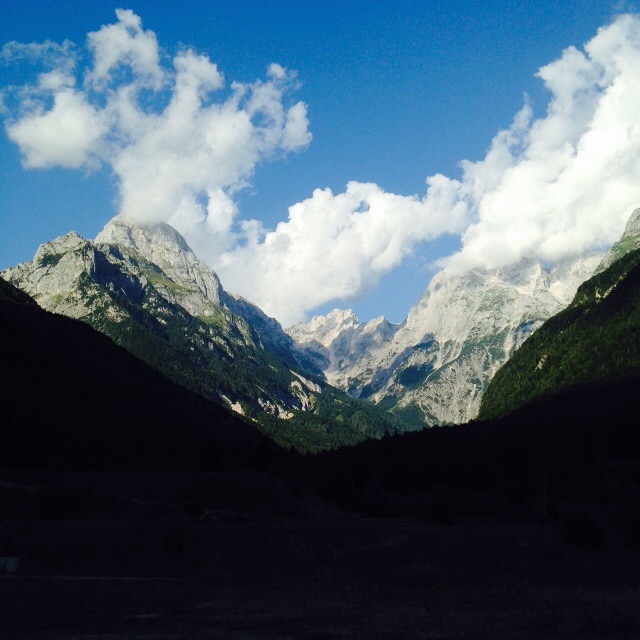
The love affair with Slovenia has developed from its early infatuation through some disappointment and into a deep and passionate craving. The dissapointmen came when we had to sit in the van and listen to heavy rain hammering the roof and hid the beauties of the mountains from us.It was a reminder of what camping holidays at home could be.  The lustful passion returned last night when, parked up under the highest peak in the southwestern corner of the park, Krn,the cloud lifted from the summit and the setting sun bathed it in a mellow yellow light.   

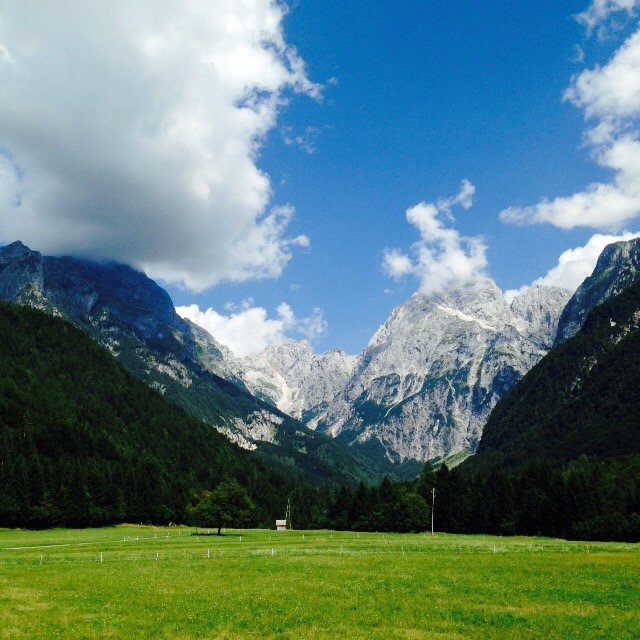
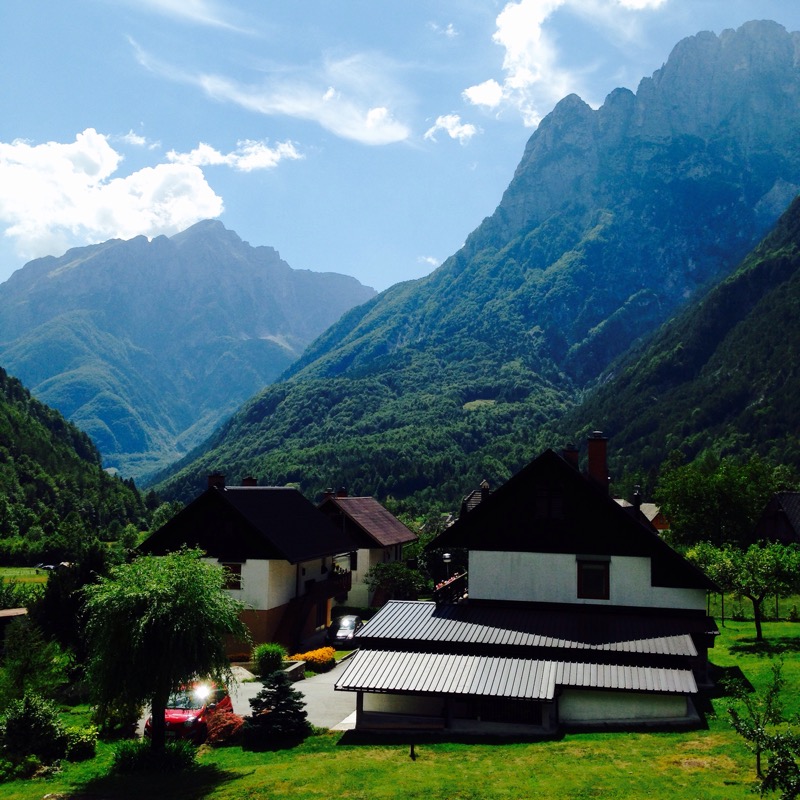
 And this morning we headed further north into scenery so dramatically exquisite that no camera, and certainly not a phone camera, was going to be able to capture it. The view from our pitch on the camp site recommended by the lovely people at camp Zlatorog is an example. 


But I’m getting ahead of myself and first I must report on our journey, which involves going back in time on our tour of man’s inhumanity to man. Back before the Cold War, before the paranoia of the ex-communist states, before the Second World War, before the bunkers on the Czech/Polish border and the grisly reminders of  the concentration camps. Back to the trench warfare of the First World War on a front you may never have heard of. 

We had to get the Tranny up and over its first big climb since major boil over and it managed it fine, although at a sedate pace. The southern side of the Julian Alps revealed more miles of forest interspersed with steep sided hay meadows.  

 On the valley floor we skirted the mountains round to Kobarid and pitched up on an Eco Camping site, Kamp Koren. Basically one that is inspected to come up to certain criteria of greenness or greenwash. This one had the solar this and that and energy saving how’s yer fathers and some goats rabbits and veg garden. And the views were good.    

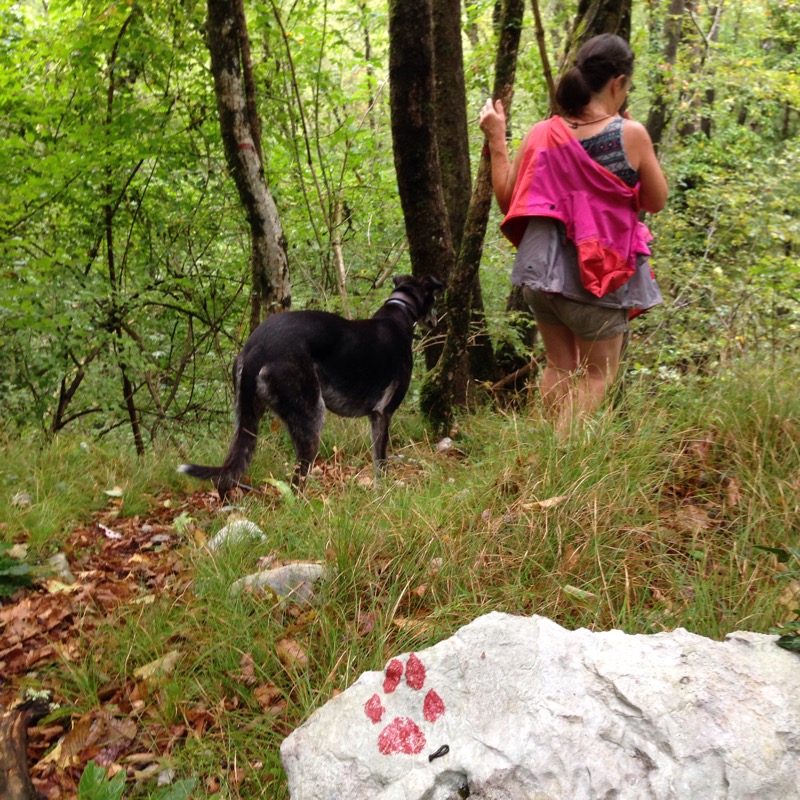
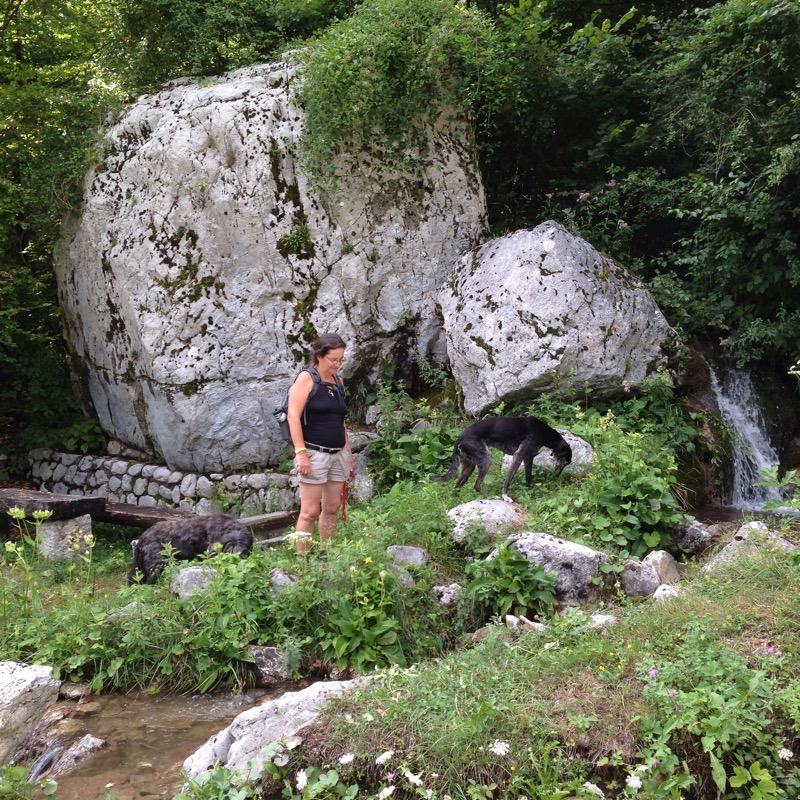
 Next day we took dogs for a walk on their very own doggy trail, marked with paw prints  

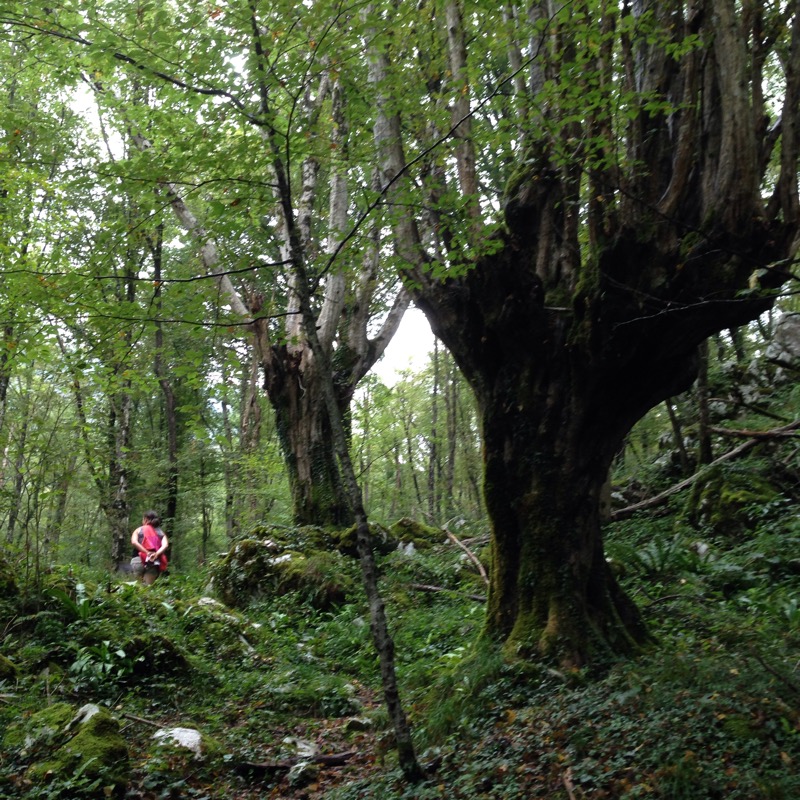
 up a wooded knoll behind the camp past some ancient pollards.  

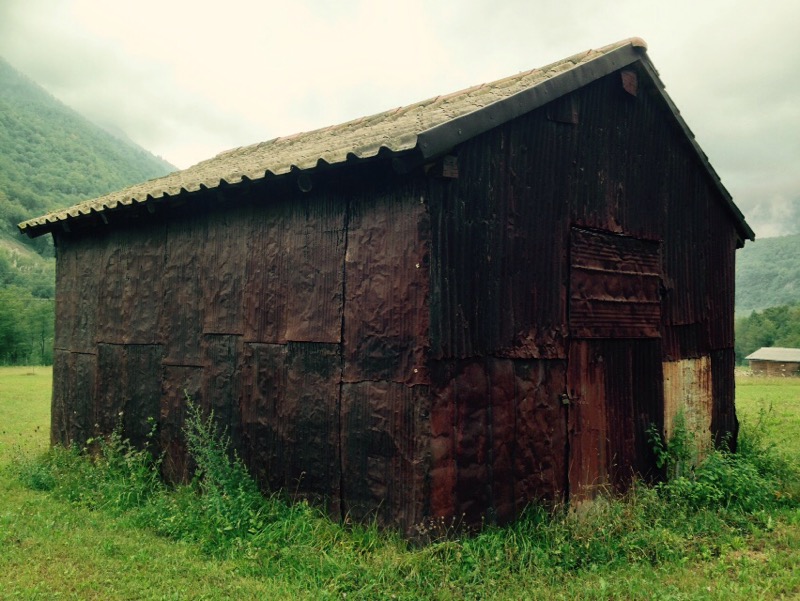
 And fine sheds of beaten oil drums.  


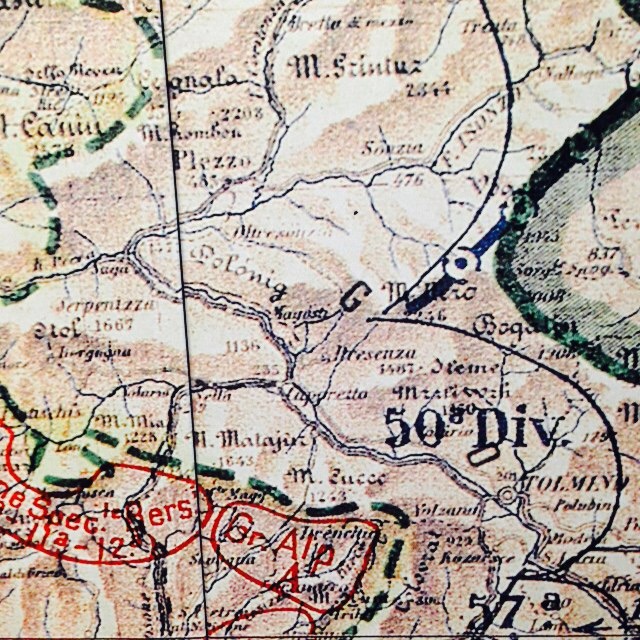
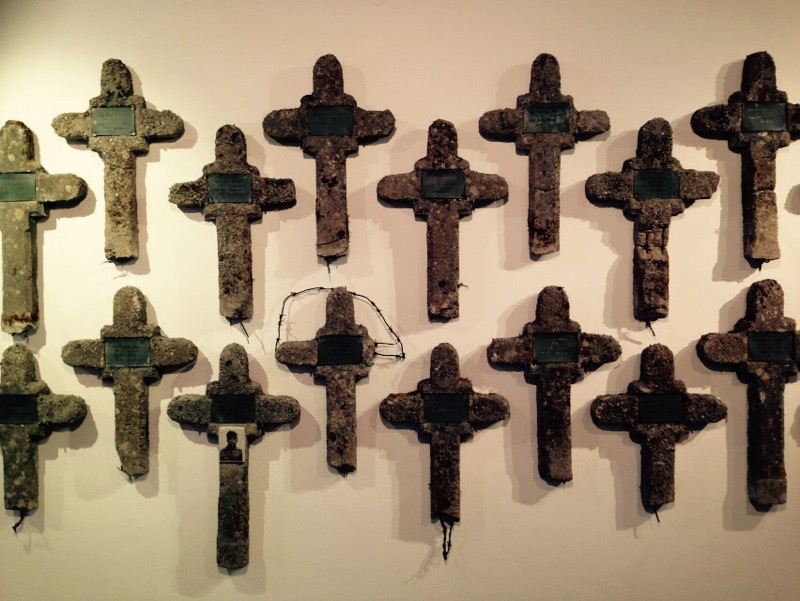
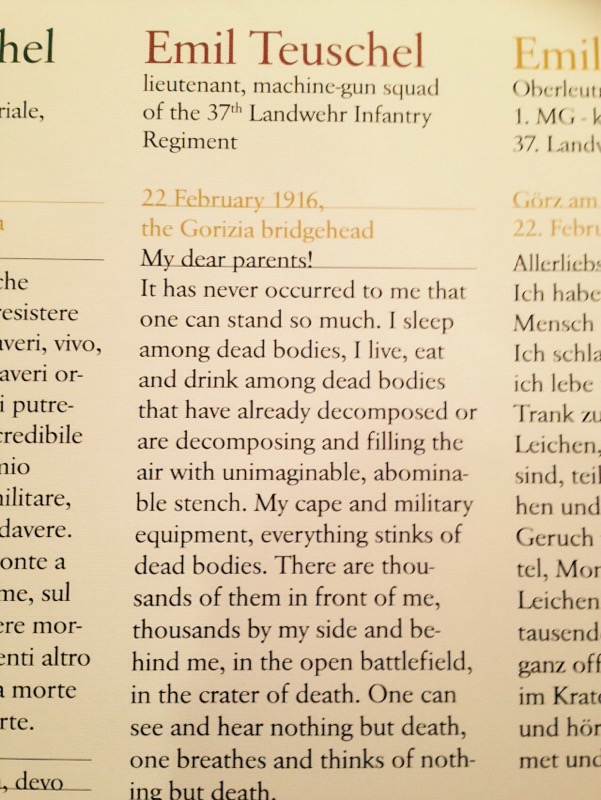
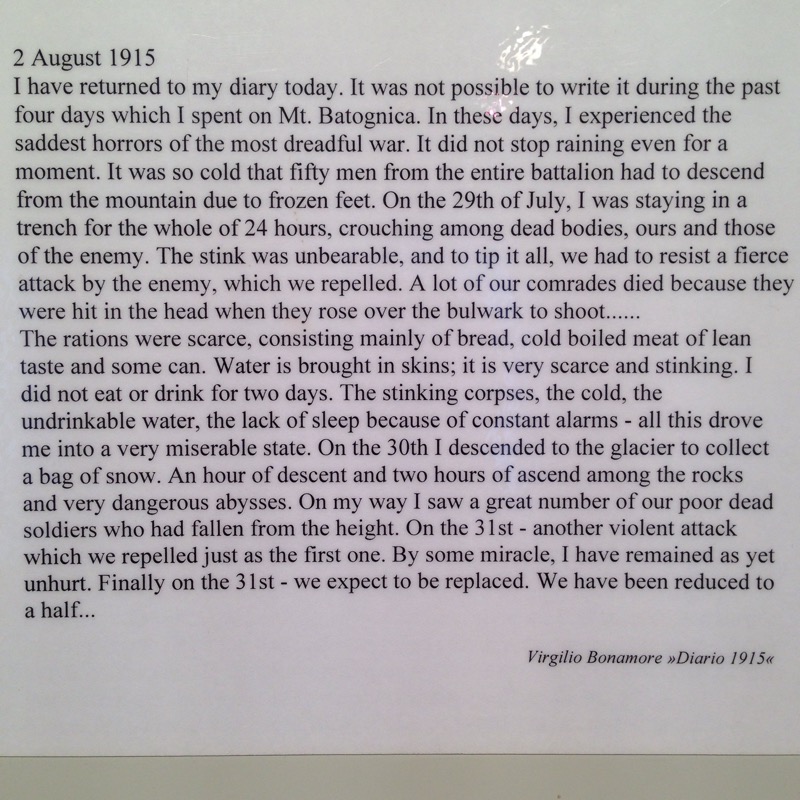
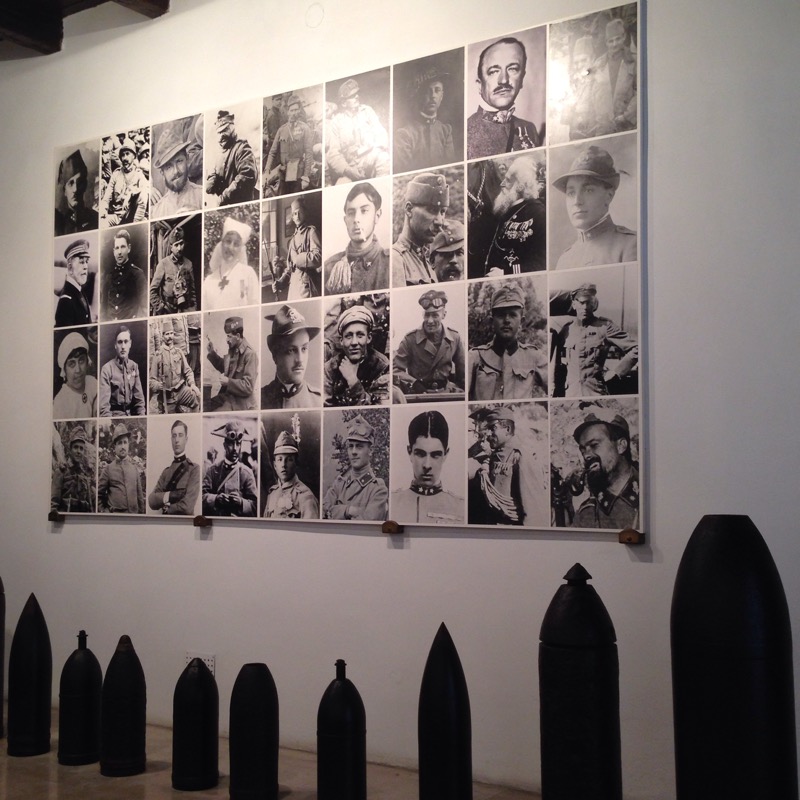
The threatened rain came and we hid in the van reading about the trails we could be hiking. The area is most well known for being at the centre of vicious and entrenched (literally) fighting between 1915 and 1917 along the Isonzo front and culminated in the Battle of Kobarid when hundreds of thousands of Austro-Hungarian, German fought Italian troops in countless miles of trenches and fortifications across, along and over the mighty mountains. The whole sorry saga is immortalised in Hemingway’s “A Farewell to Arms” and when the rain eased up we visited the award winning museum in town dedicated to telling the story. There were many moving exhibits.  

   And own word testimony from both sides of the conflict.  

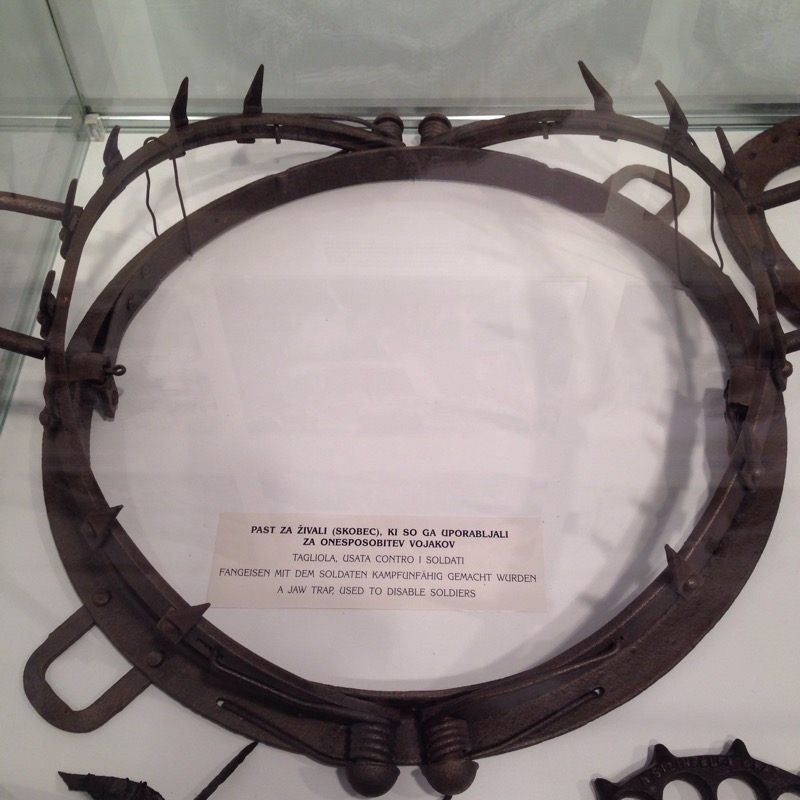
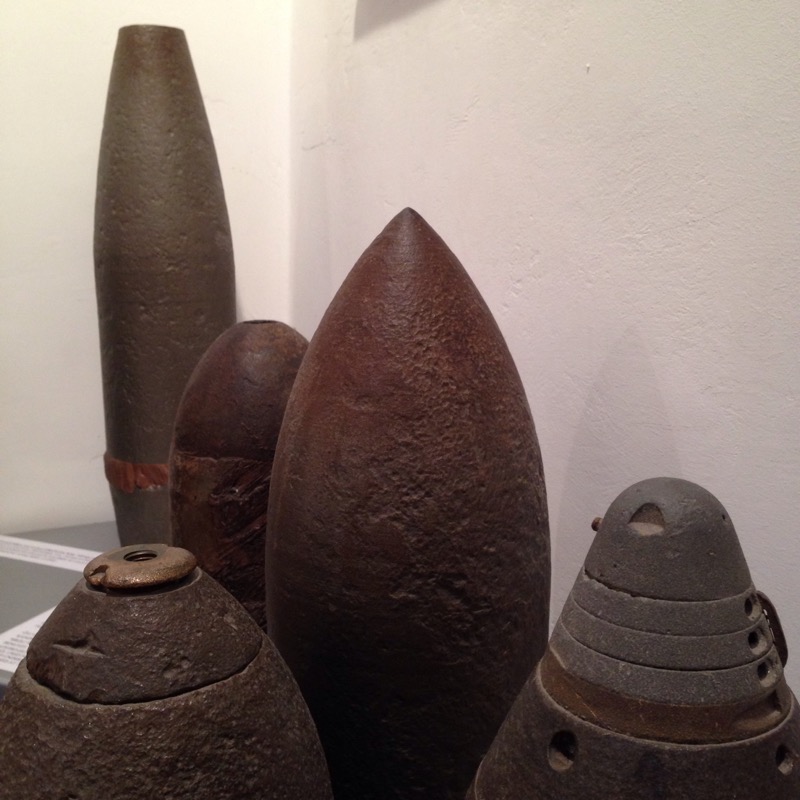
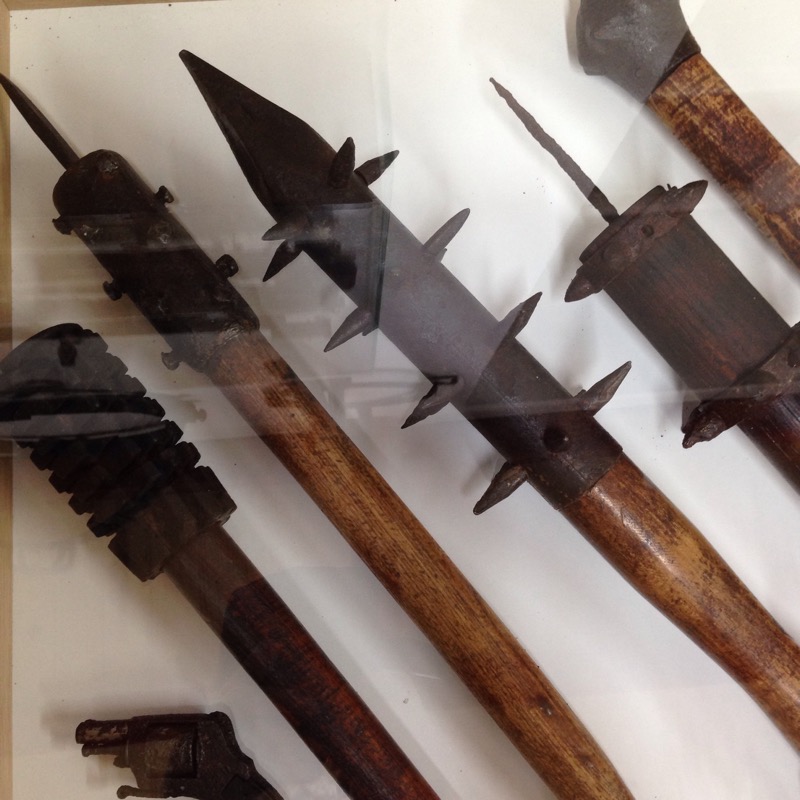
   The amount and size and variety of different weapons was an eye opener.  

   And after hiking a little in these mountains the knowledge that the poor feckers had spent two long winters at the tops in ice and snow raining hell on each other out of morters and guns they had dragged up there was a sobering reminder again of our good luck. The western front was grim but at least they didn’t have to contend with avalanche, rockfall and frostbite. 

The next day, after heavy rains all night, was brighter and we headed off on the Historical Trail, a 4 hour loop around the area passing natures beauty and mankinds folly. The turquoise Soca river ran below the camp and there were many lines of defence on both sides that we passed through.  


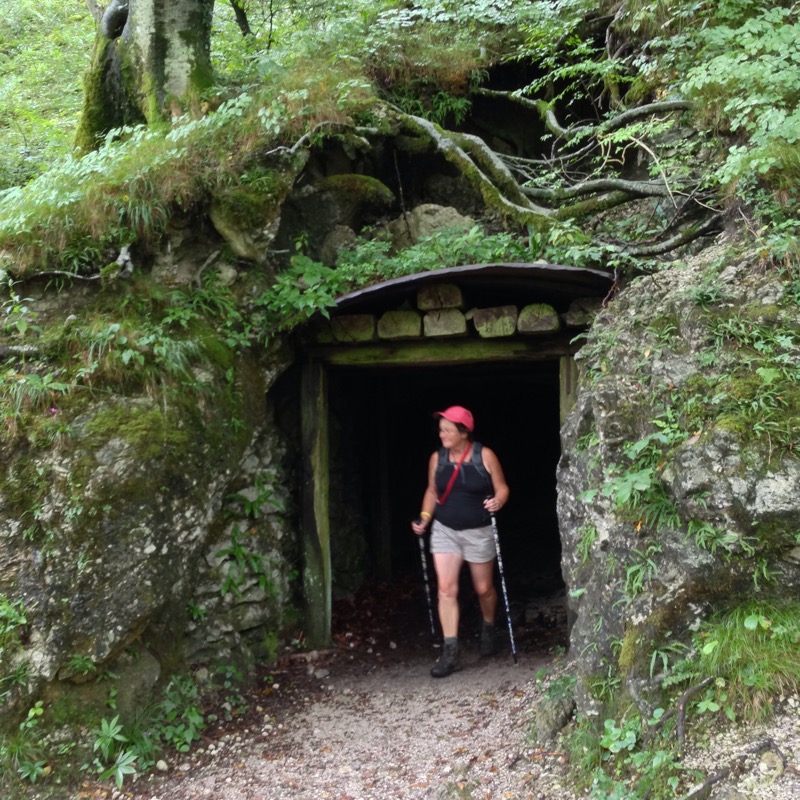
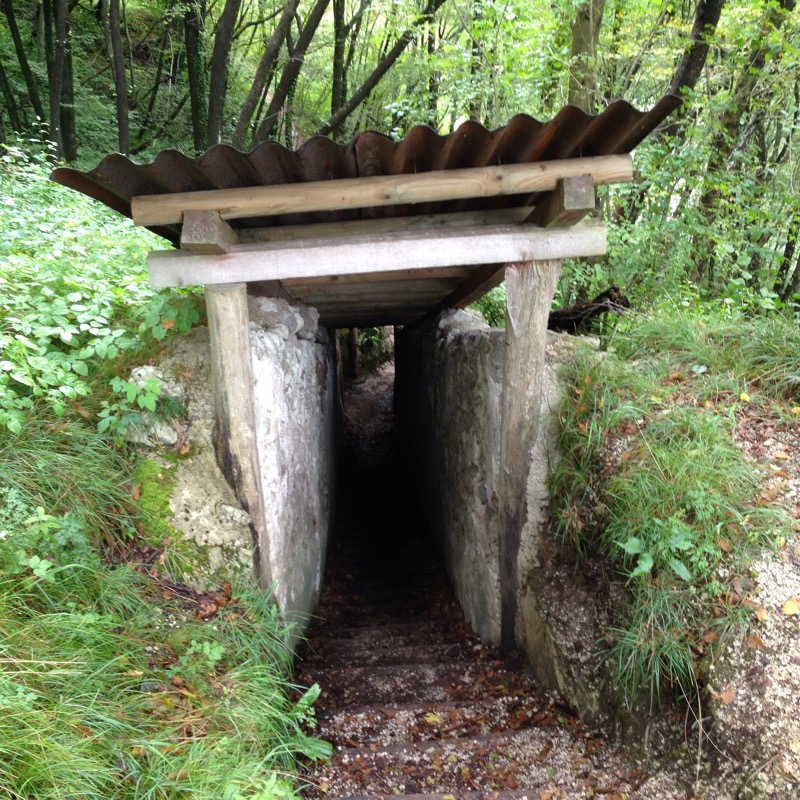
Gun emplacements, observation posts, dug outs, trenches and forts were buried into the skin of the mountains.  


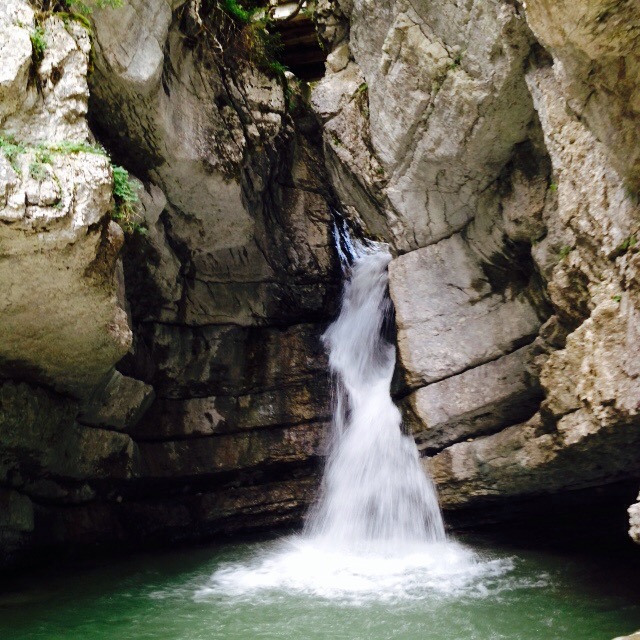
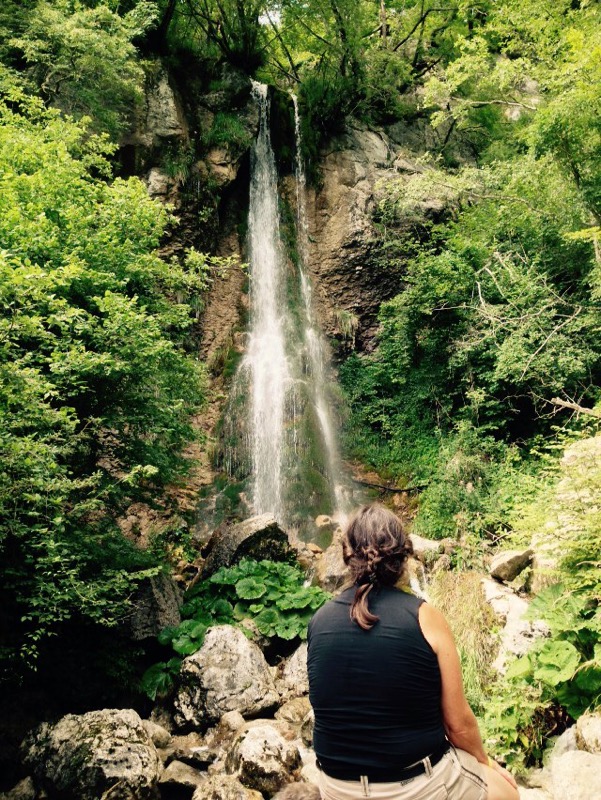
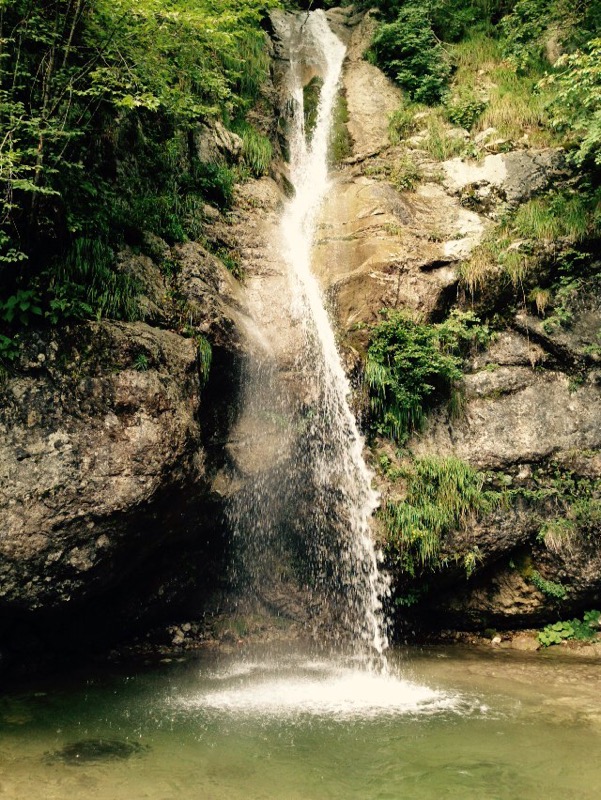
 A touch of the timelessness of the natural world was a relief. The river defended so desperately for a couple of years has been fed by a series of springs and mighty waterfalls for millennia and we enjoyed a Heath and Safety nightmare on slippery rocks and crazy boardwalks to visit one raging 15 m into the cave it has carved itself.  


Then over the Soca gorge on a suspension bridge built on the same spot as a wooden one in 1st WW.  

 Up another forested hill lined with 100yr old trenches.  


 Atop the rocky hill, Tonocov Grad has been a settlement for centuries. Copper age, Middle Ages and a heyday in late Roman times. Then came the Ostiogoths and Byzantiums  (no, me neither). There was also the remains of a very early Christian church.  


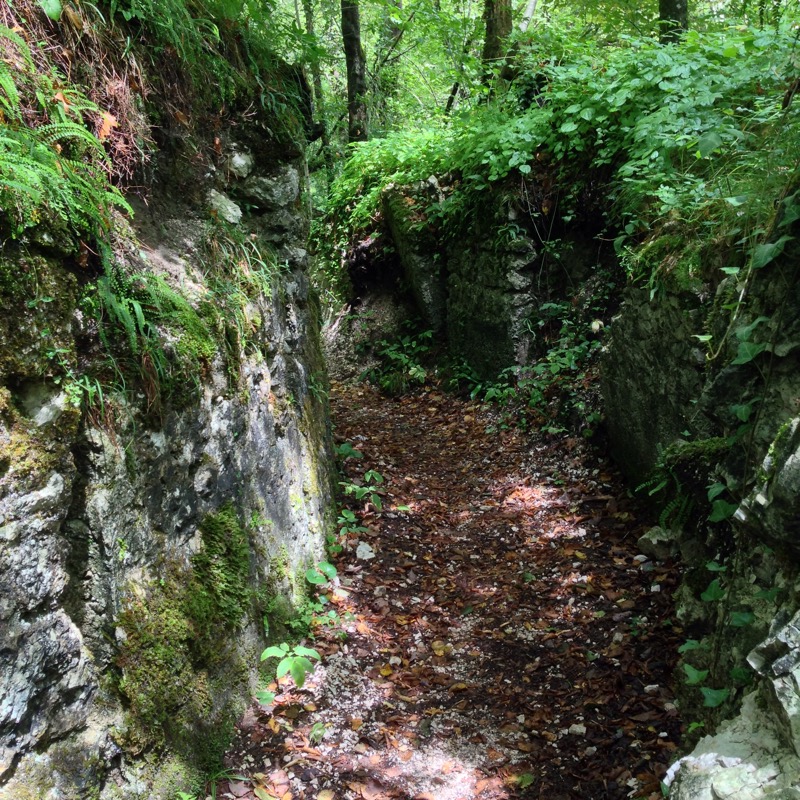
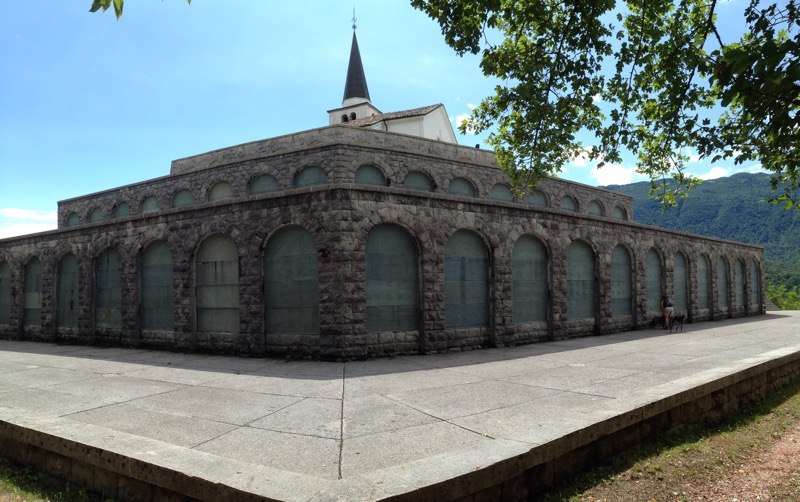
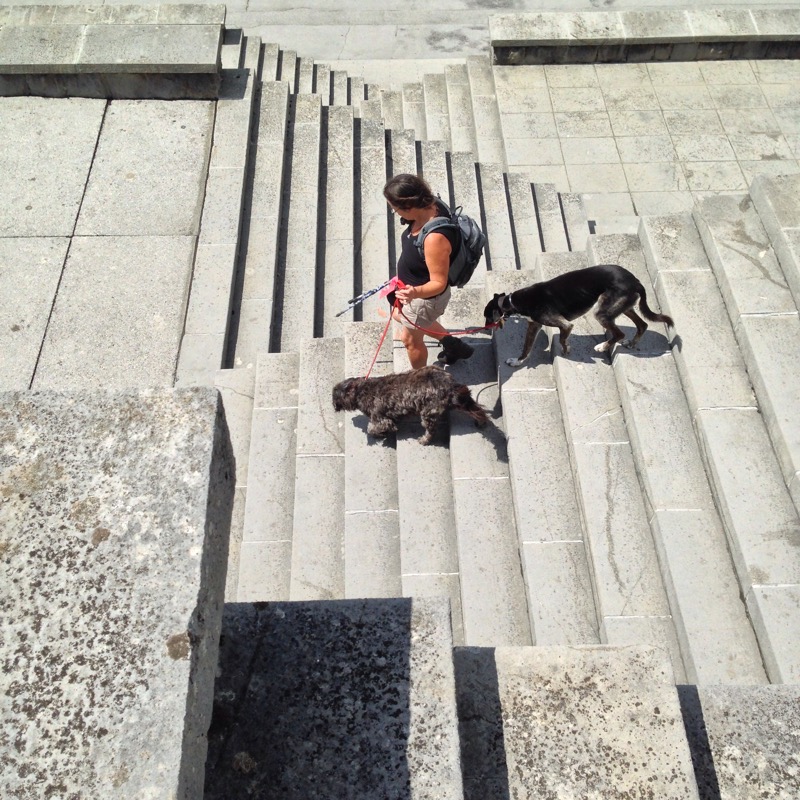
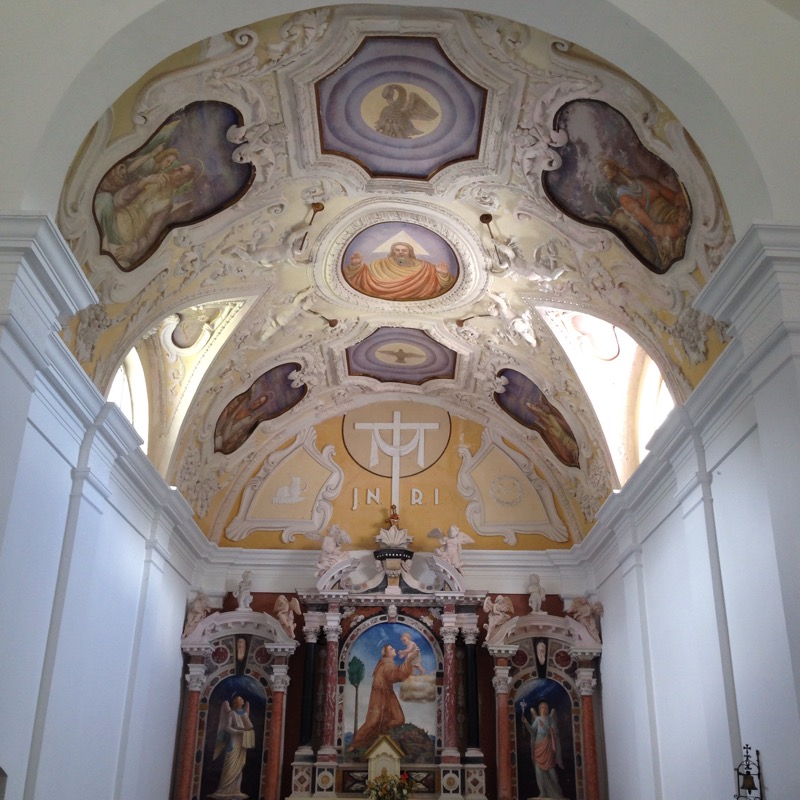
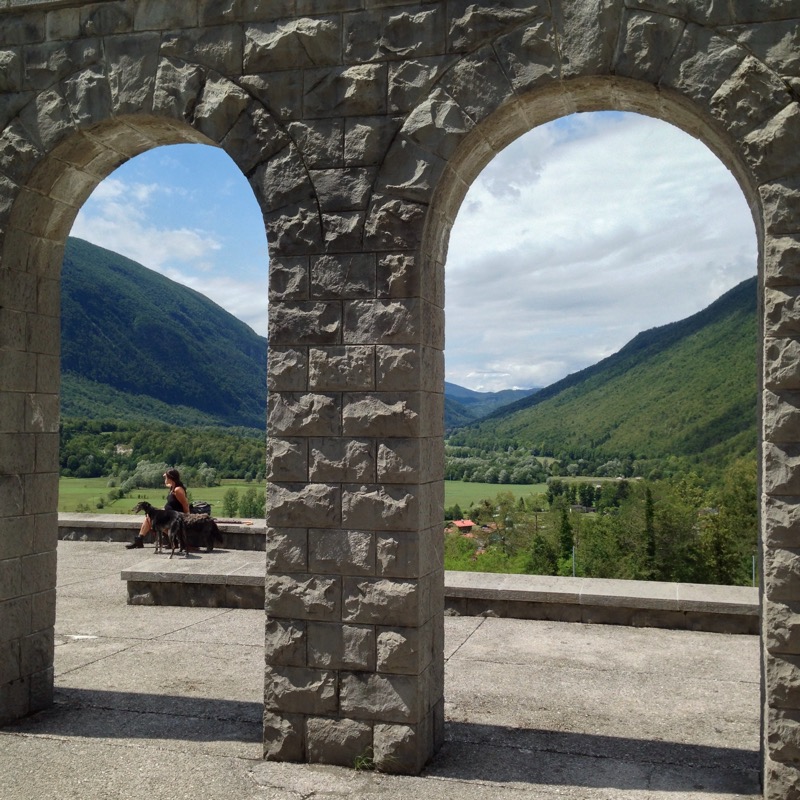
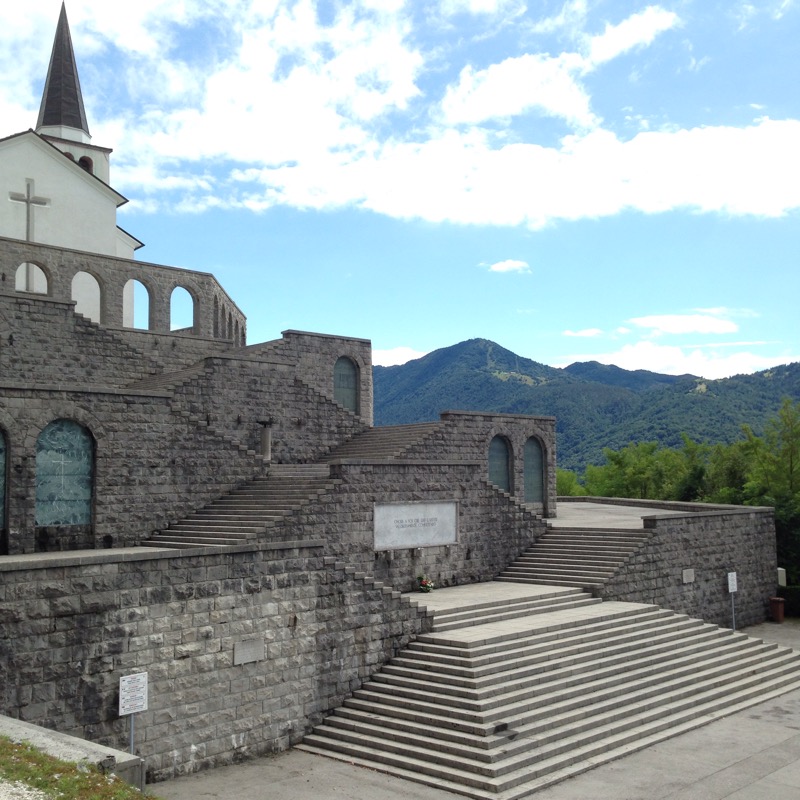
At the bottom of the hill was another church, this one from the 17th century, that had an Italian Charnel House built around it. Opened by Mussolini in 1938, as this was the victorious Italians territory between the wars, it contained the remains of over 7,000 Italian soldiers killed in the Isonzo Front.  

   The church had great frescoes and views across the Soca valley.  
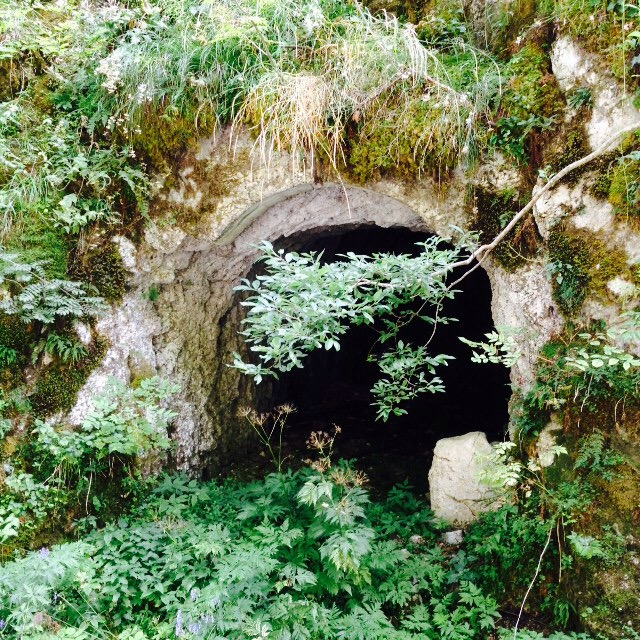


 Nearby there was a little place housing a collection of artefacts a keen amateur had found all along the lines of Italian retreat. Ironic that the country ending up In control  after the German surrender had retreated a year previously. More igenious methods of barbarity.  


With the sun now shining strongly again it was time for more natural beauty so we drove up the switchback road into the mountains to the little village of Dreznica where we followed a trail still higher on foot to a couple of spectacular (after all the rain) waterfalls called Sopota and Krampez and I had the most powerful power showers of my life under both of them (Sally has the evidence).  


REFRESHING!!

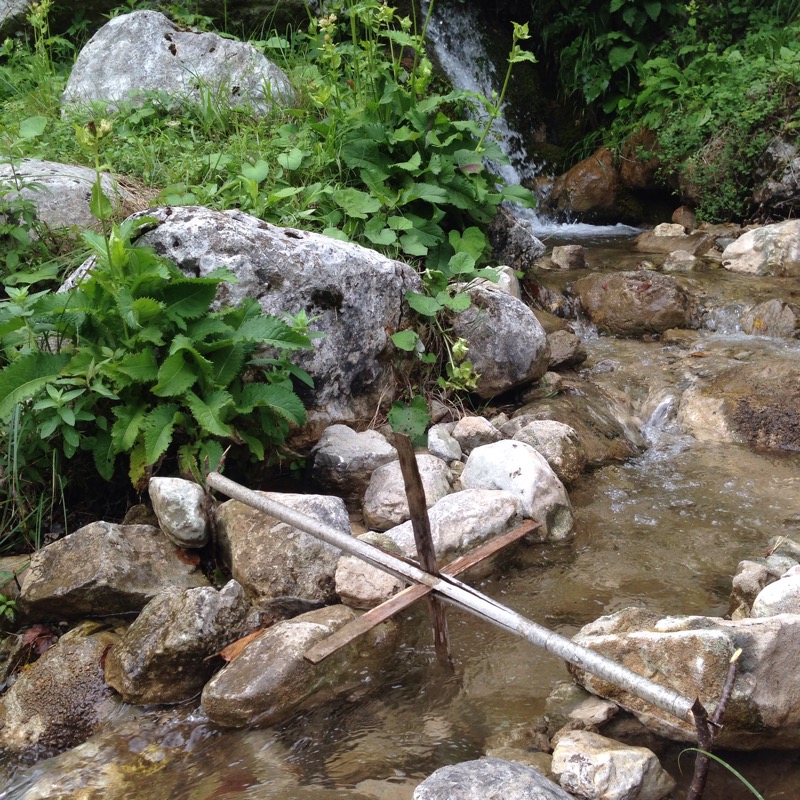
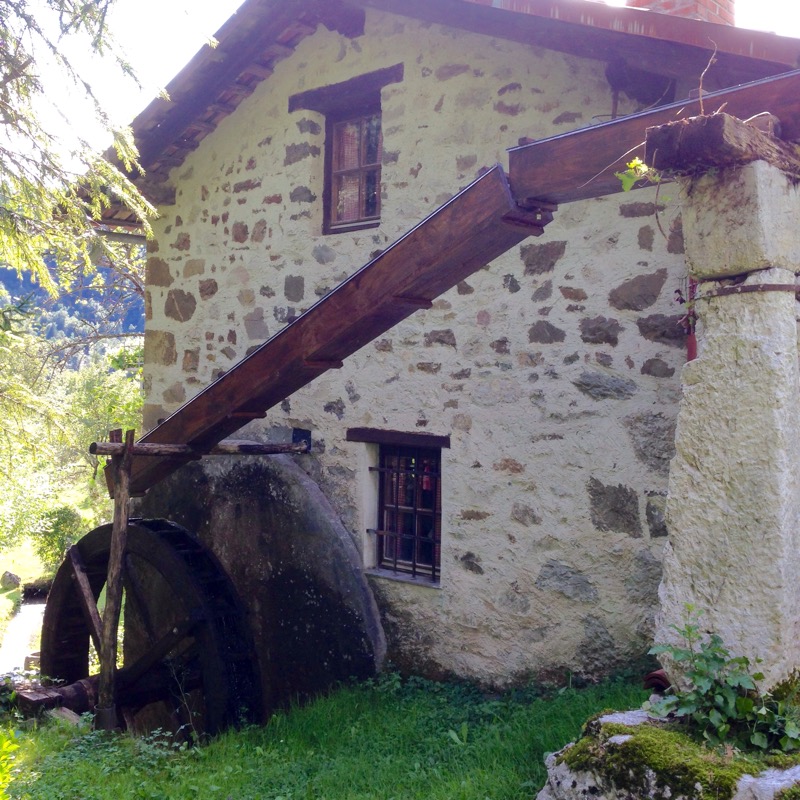
The walk continued passed more water features of delight. I’ve seen a few of these really simple little water wheels in streams and springs.  

 This one was in what was probably a ” power spot” as there were plenty in the area and weeklong tours were available to visit some. And you got your energy levels checked before and after to prove it.  

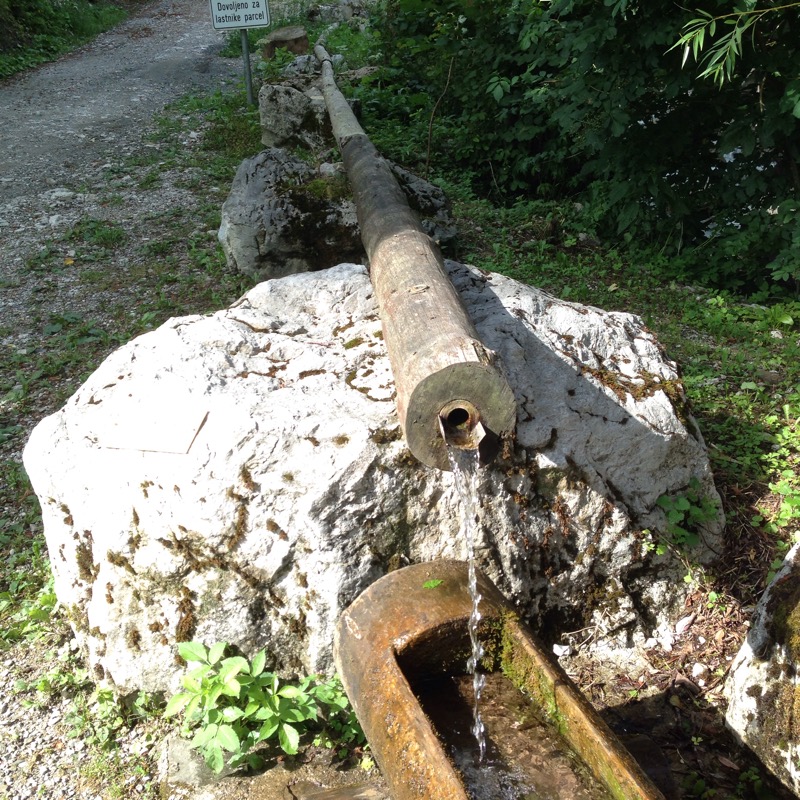
 A few yards further was a timber water pipe  

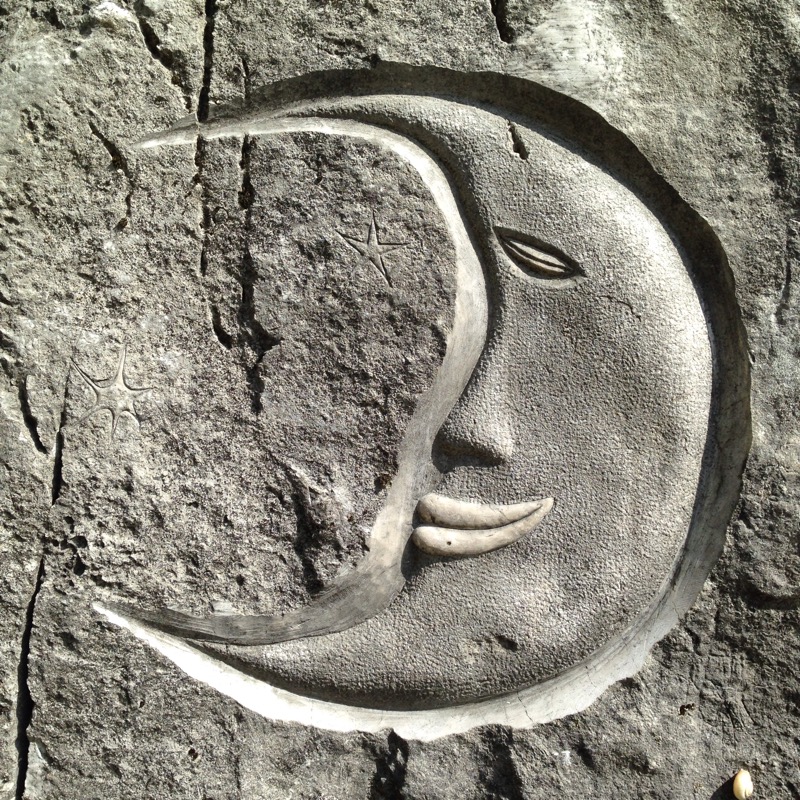
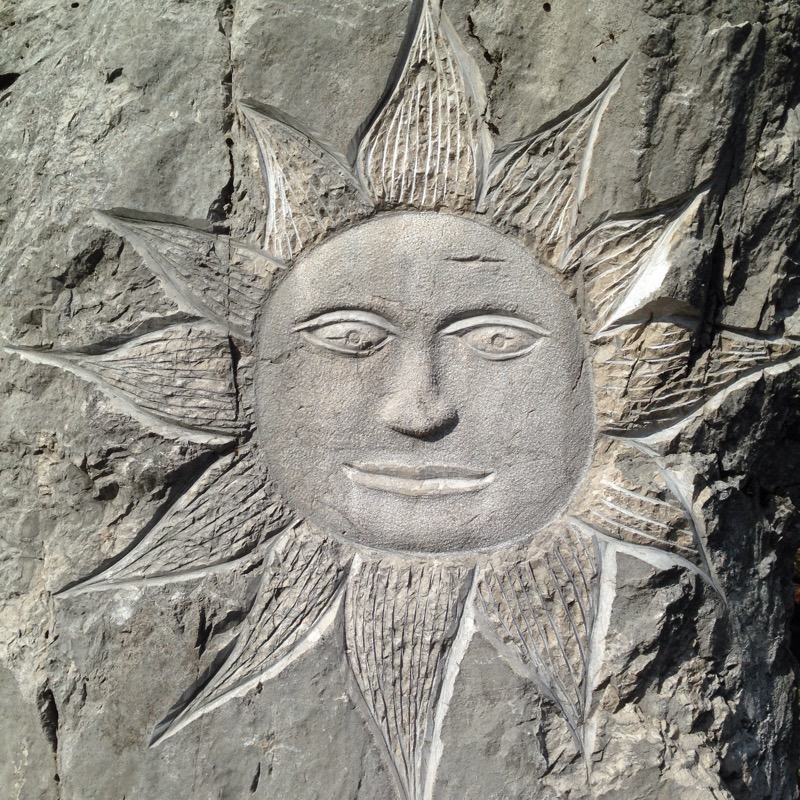
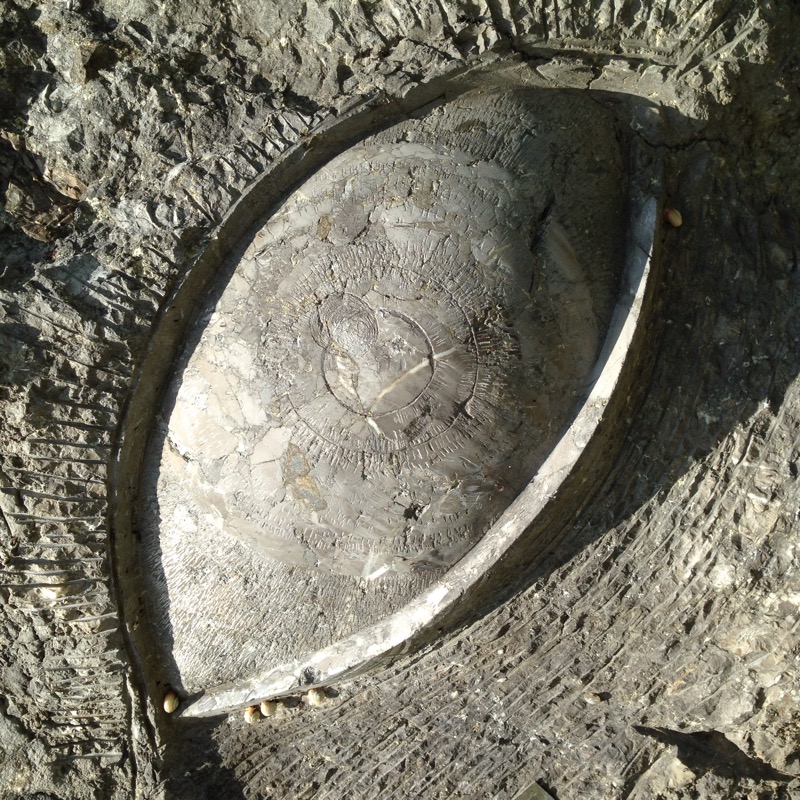
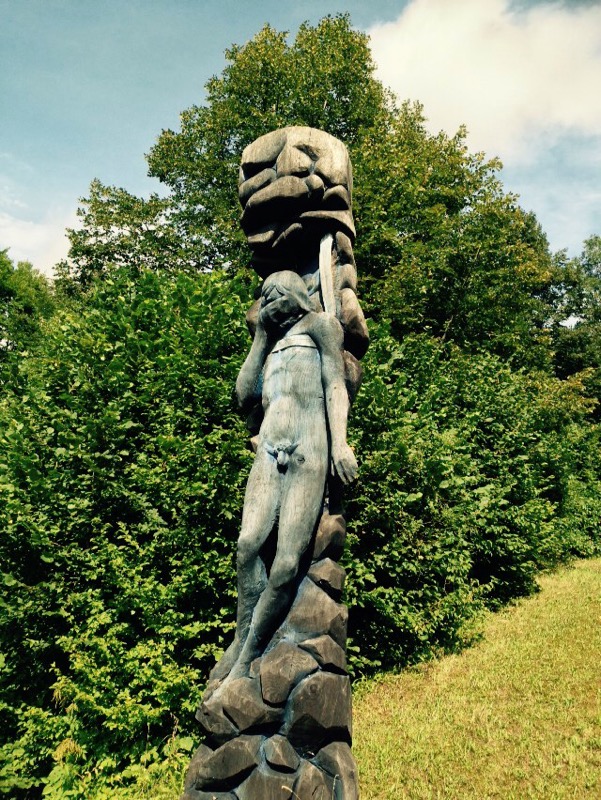
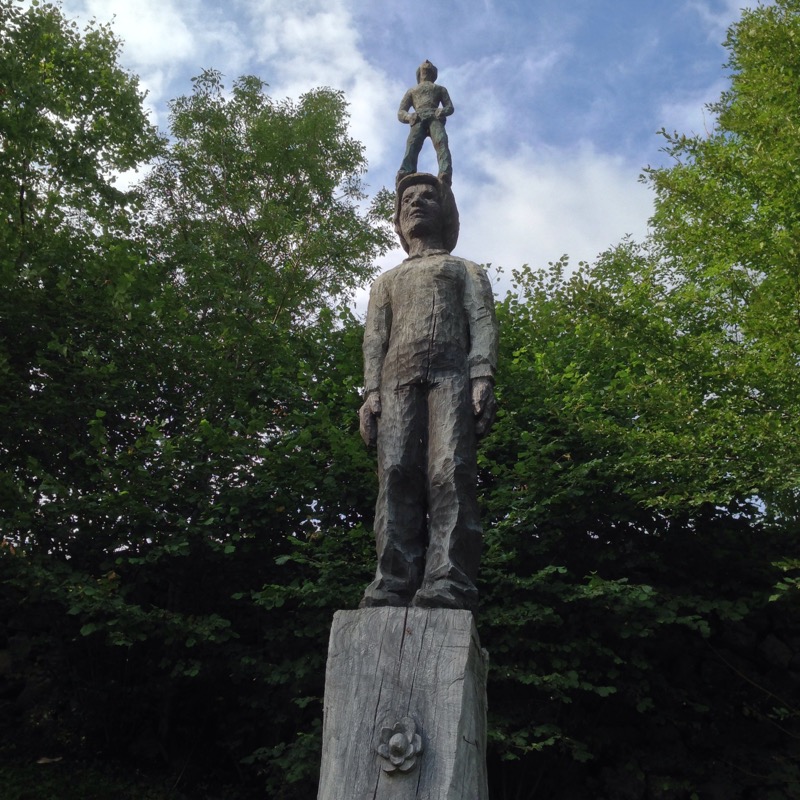
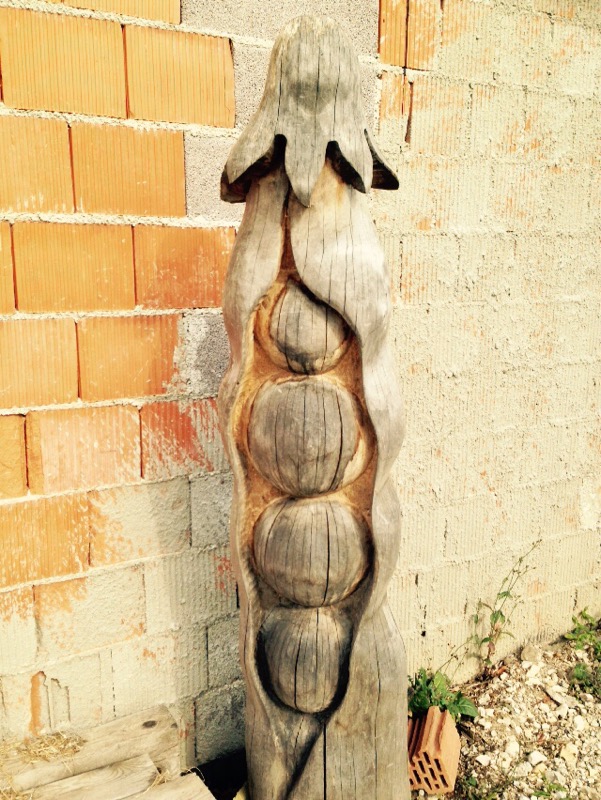
 and a string of artwork leading to the next village.  

     Another, bigger waterwheel  

 and more sculpture in wood now.  


The views across the fields to thechurch in Dreznica were lovely  
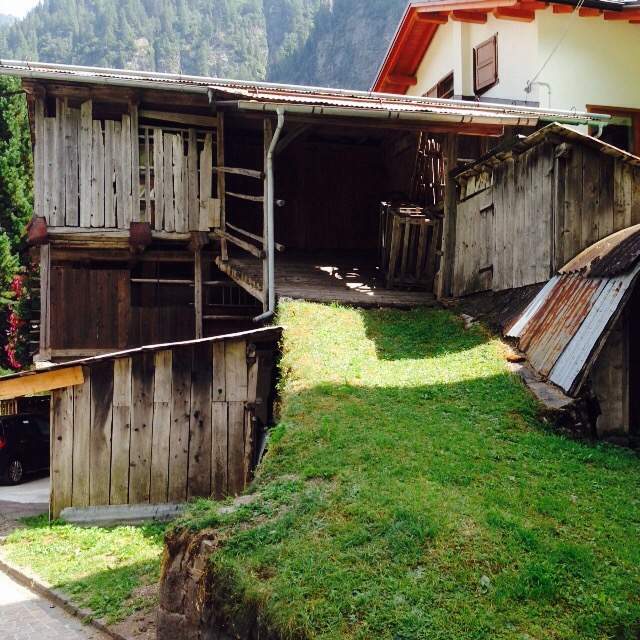
 but not quite as lovely as those that greeted us when we drove another couple of hundred meters higher to the starting point of trails to climb Krn. 

Which is where we came in.  
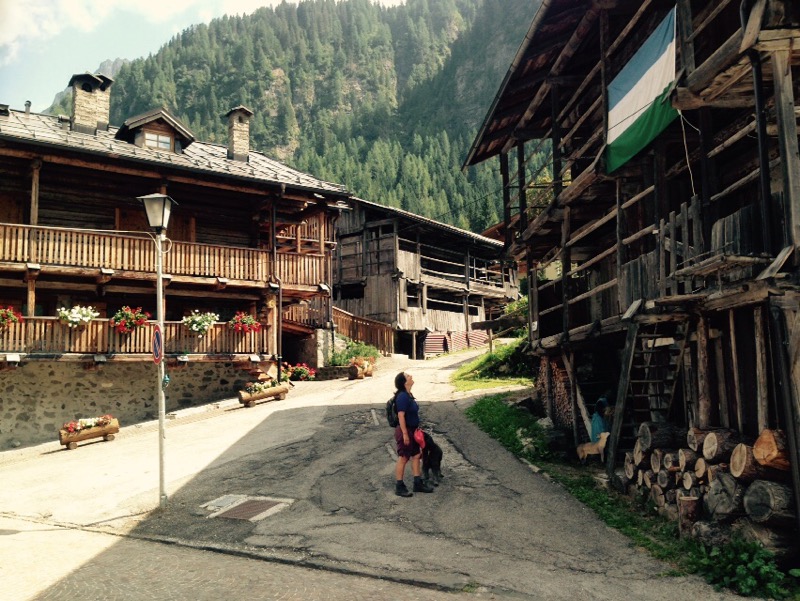
 

THE GRAND TOUR:SLOVENIA 25/26/27th JULY

  At the end of the lake, high up on the 1300m wall of limestone that curves around us ,is the waterfall that feeds it. Called Savica, it has been a source of inspiration to poets and artists over centuries and is probably the most famous in the country. We headed up for a look. 

  On route we found out we were heading in the direction of home. Although the falls are at 900m, that still left a lot of cliff we were planning on climbing the next day so we eyed them up warily.  
 We heard the roar of the falls way before we had climbed the 550 steps that led us there and all that power has been harvested since 1947  

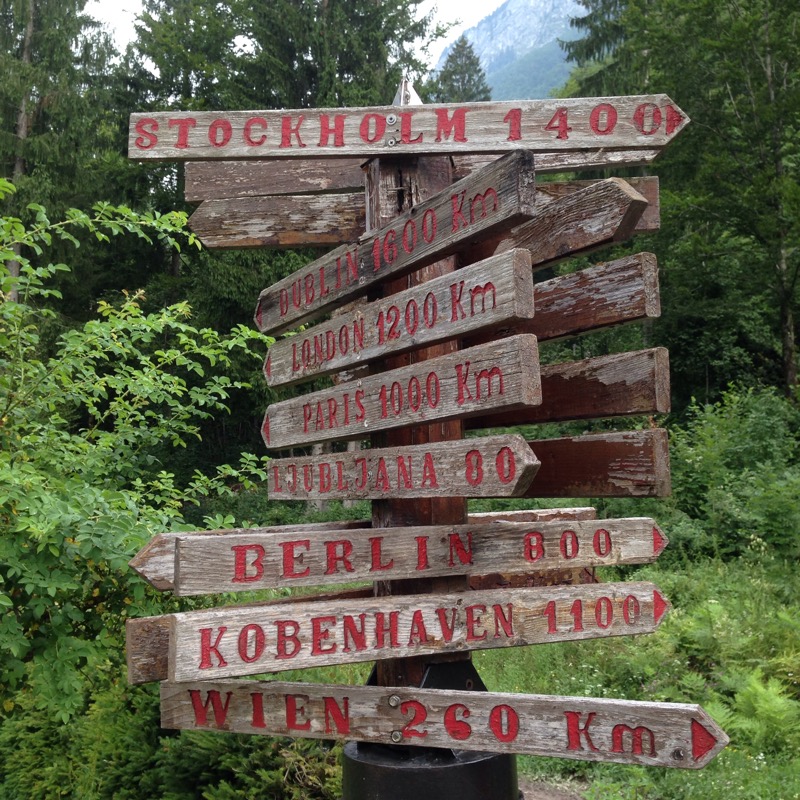
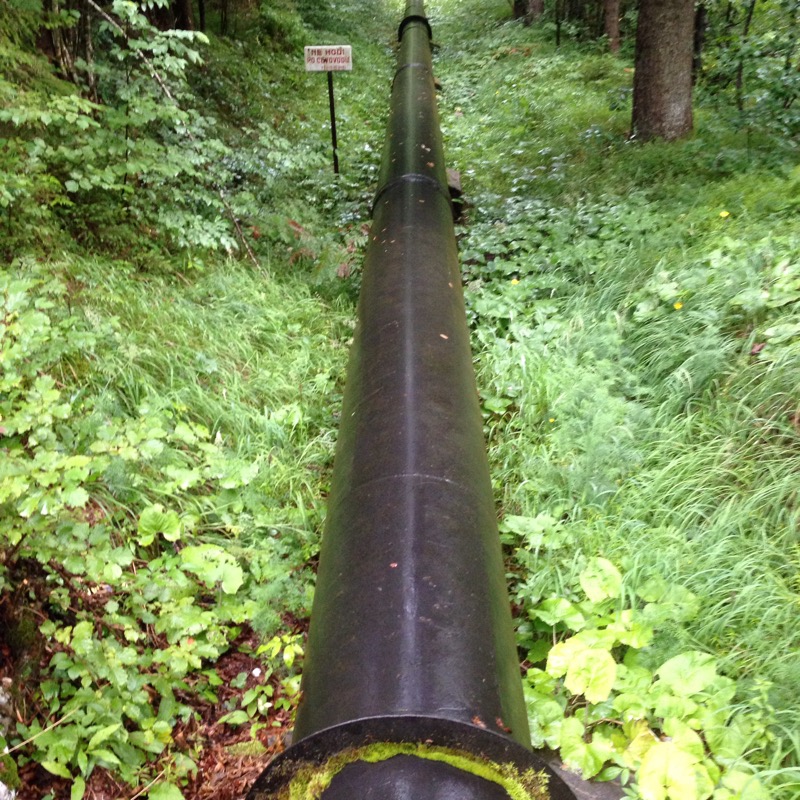
 when they built the countries first hydroelectric power plant. The clean green Slovens are pleased to report that todate it has saved the burning of 1.2 million tonnes of coal, enough to fill 600,000 wagons stretching from here to Stockholm. Bet you didn’t know that. 

The waters were far more impressive before they enter the pipe.  

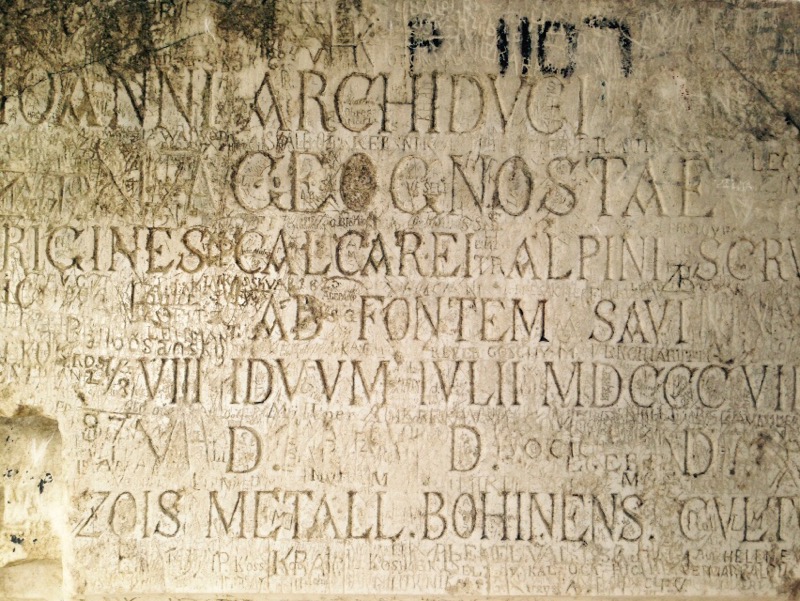
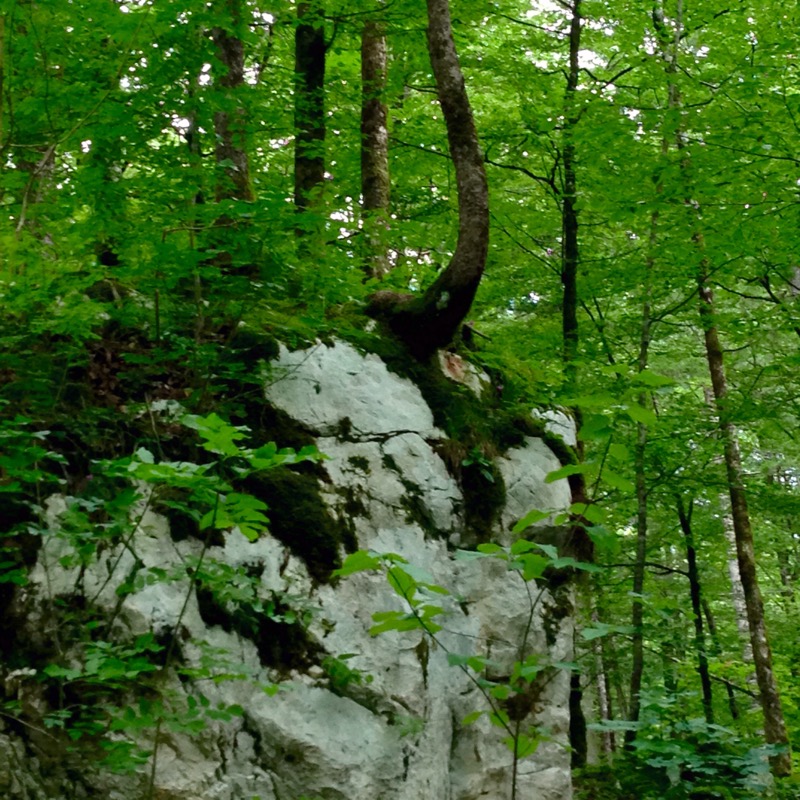
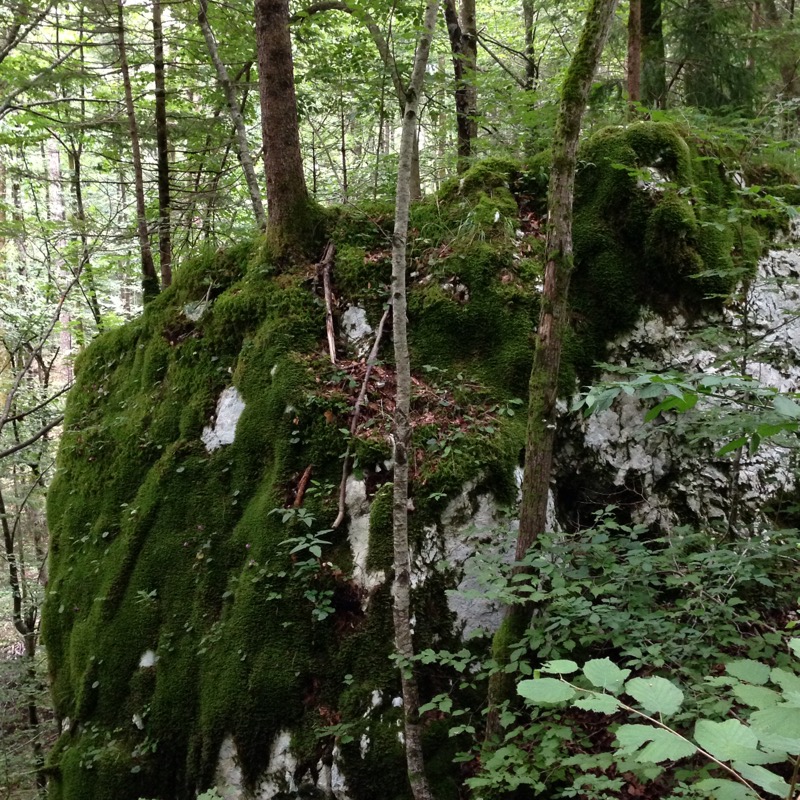
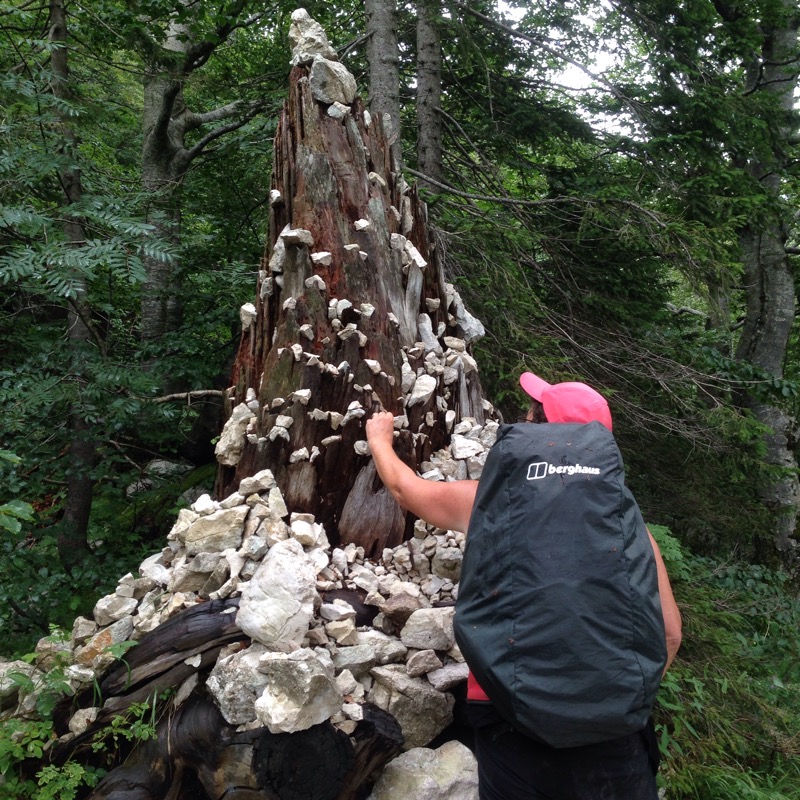
 There was a plaque in the observation tower commemorating a visit by Archduke John of Austria that had lots of the same carefully carved antique graffiti we had seen in Hungary.   On our way back down through the limestone boulders and beech trees I started to collect images of stone-trees or tree-stones.         

The mountains called again, and we must go. Up into the central range of the Julian Alps, towards the peak held almost sacred to Solvenians, Triglav. This towering lump of limestone is something that every citizen is supposed to scale in their life and they seem to take it as seriously as the Irish would Croagh Patrick. 

There is a network of huts across the high mountains that accommodate those wanting to climb and hike for days on end without coming down. Strategically placed 3 or so hours apart on prominent peaks or junctions of trails they offer bed, board and warmth. Across the Julian Alps there are about 50 of them, called mountain huts but often huge affairs with beds for up to 300 people, proving how popular trekking in the mountains is here. There are also about a dozen unmanned bivouacs with space for between 2 and 10 in case someone got caught out. 

Run by the Alpine Association of Slovenia, who also manage the trails, they have a policy of not turning anyone away and will find floor space somewhere for those in need. Which is just as well as camping is prohibited in the park and conditions can be inhospitable to say the least. 

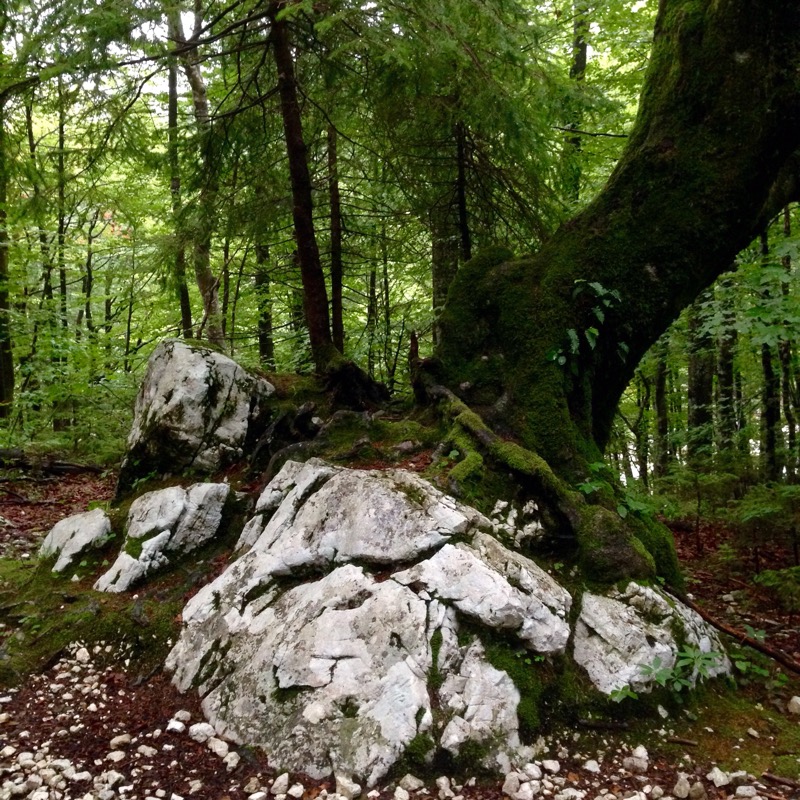
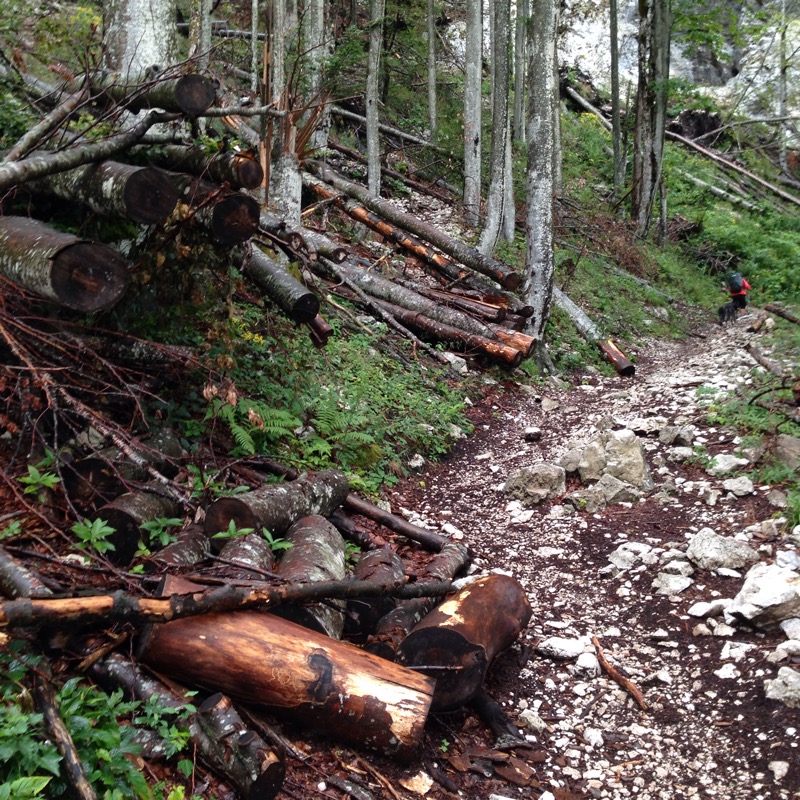
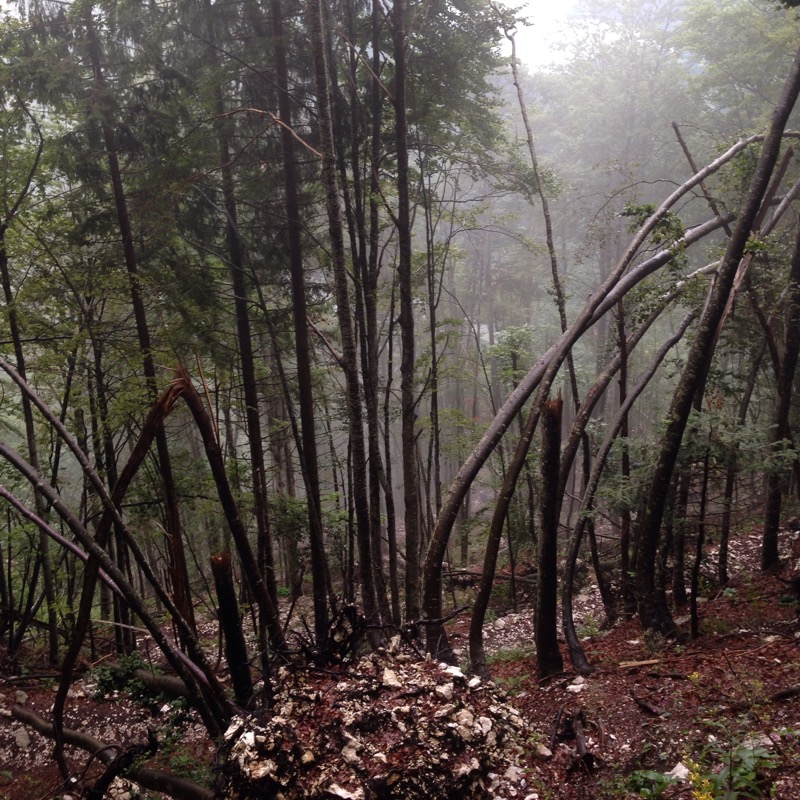
They weren’t that great when we headed up a long 2 1/2hr zig zag track to scale the wall of Komarca. There was a shorter, more direct route up, but it involved chains and ladders that the dogs couldn’t handle so we had a relatively easy hike up through the forest above the waterfall. In the last couple of decades the area has suffered fire, earthquake and devastating winds and we saw plenty of trees down.  

   Another clue to the Slovenian nature worship could be the number of little cairns everywhere along the trails 

 although there are also lots of Christian shrines as well  

 This one was at Dom an Komni, the hut we came to eventually a little wet, hungry and cold. There had been a serious drop in temperature. From 36 degrees at the lake the day before to 6 degrees up there in the cloud. So we were glad to warm ourselves up with coffee and ham and eggs and didn’t object to the inflated prices they charge to cover the cost of getting the stuff up there to 1500m. Actually the prices are fine. A pint gets more expensive the higher you go but still ranges from 2.50€ to 4€. 

The cloud have lifted for awhile when we came out and we could see where we had come from for the first time.  


We carried on up another couple of hundred meters over the next 3 hours through a misty soft day that at times was very like a walk in the burren with more flowers.  

         We passed some lovely wooden water troughs which are a feature here.  

 And a lot more flower filled mini valleys and rocky escarpments.  


At last we glimpsed through the cloud a lake and knew we had made it to Dolina Triglavskih Jezer, the spectacular Triglav valley with 7 lakes. Not so spectacular for us though. We were staying with the dogs in the ” winter hut”, the one in the foreground.  

 The setting could have looked like the picture on the wall outside.  

 We had a lie down after our efforts to get there and discovered that above and next to us was a large party of raucous teenage French lads so no rest to be had. 

After dinner we were rewarded by an hour of rising cloud which revealed the world around us and saw us scurrying further into the valley before dark.  


To be fair to the French lads silence reigned after 9ish and we slept well in our little bunkhouse in the mountains. 

At breakfast we marvelled again at the young children that walk and get carried into these amazing environments. It seems it’s normal to take your baby to sleep at the top of mountains 2 or 3 times the height of Carrantuohill for days on end. And there’s loads of teenagers who want to hike from dawn till dusk, not a mobile signal to be had. 

The promised thunderstorms had luckily not materialised so everyone was studying maps and eyeing up the weather conditions. We were taking a different, longer route back down so, with the misty drizzle clouds still about, we gave up on hiking further up the valley and headed for home.  

       This time we got to the little lake at the top of the direct route up Komarca and the path was studded with by rocks fallen from the cliffs above. Wouldn’t want to be unlucky.  


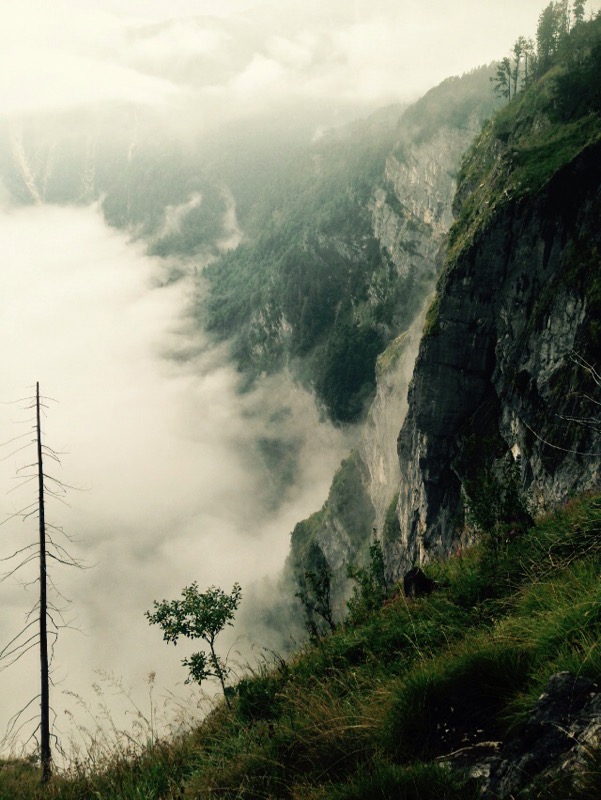
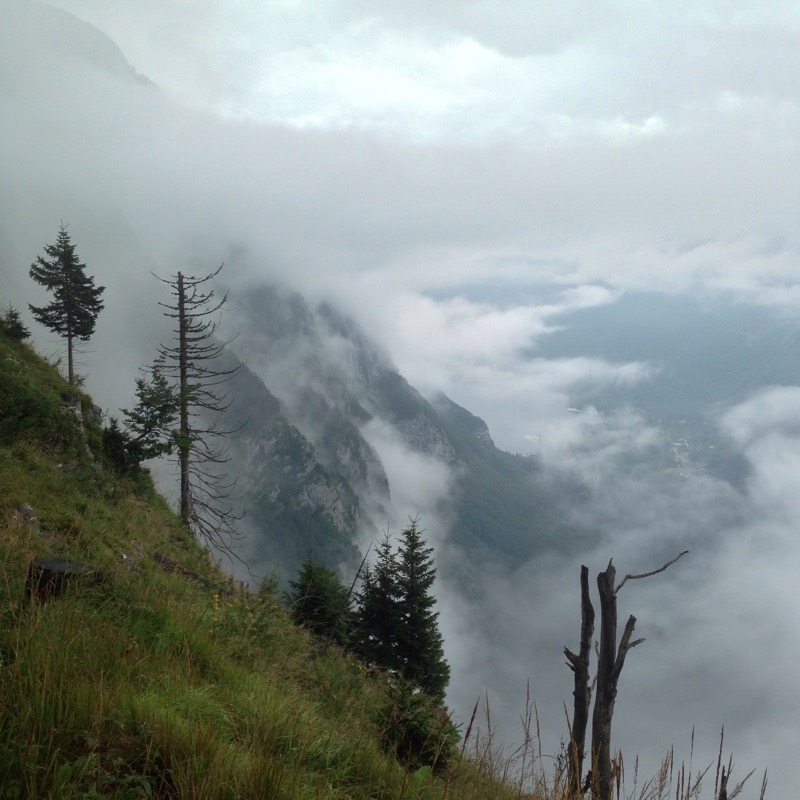
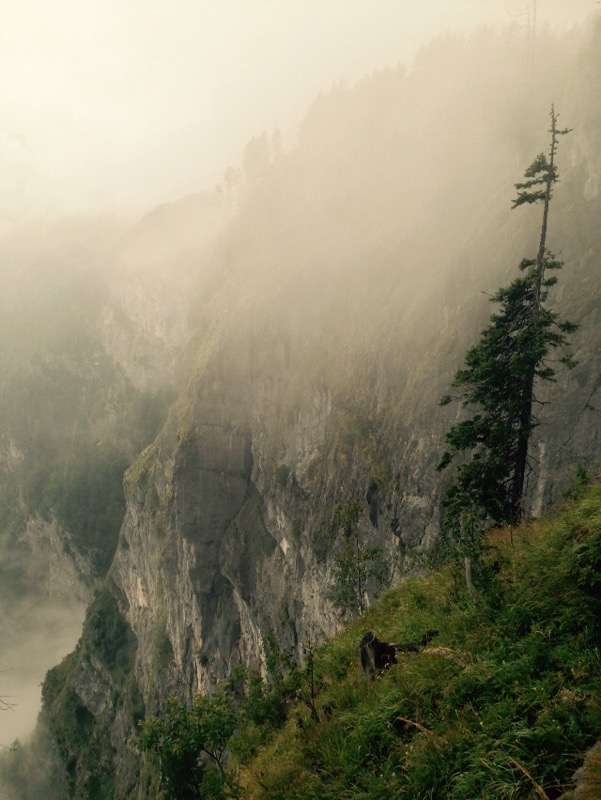
We hiked along the top edge for quite a distance and there were a couple of places that were open to the cloudy valley below.  


And then , ignoring the hut we had stopped at the day before in our desire to be back down at the happy camp, we hurried on down through the beech woods.  


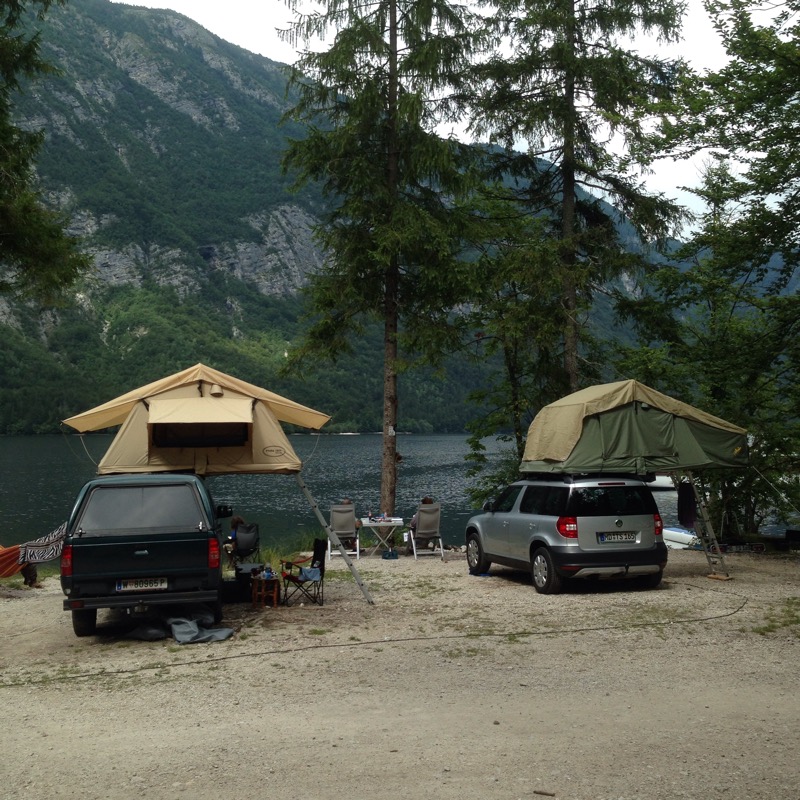
With the sunshine gone the camp is much quieter but still has an interesting selection of campers. I’ve been wondering about these ones.  


But now, finally, it’s time to say farewell to camp Zlatarog. We’ve never stayed so long in one place and probably won’t again. The lovely people here have recommended another camp further west but warned us it won’t be as wild. The e boat heads off and if the van battery is ok so will we.