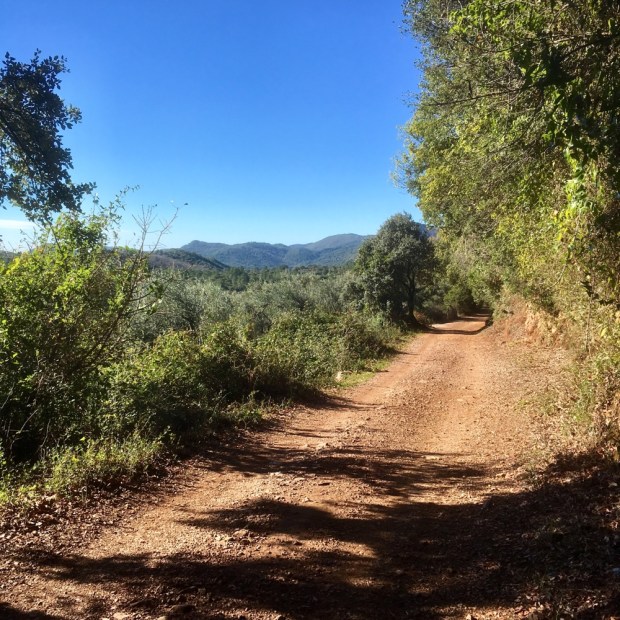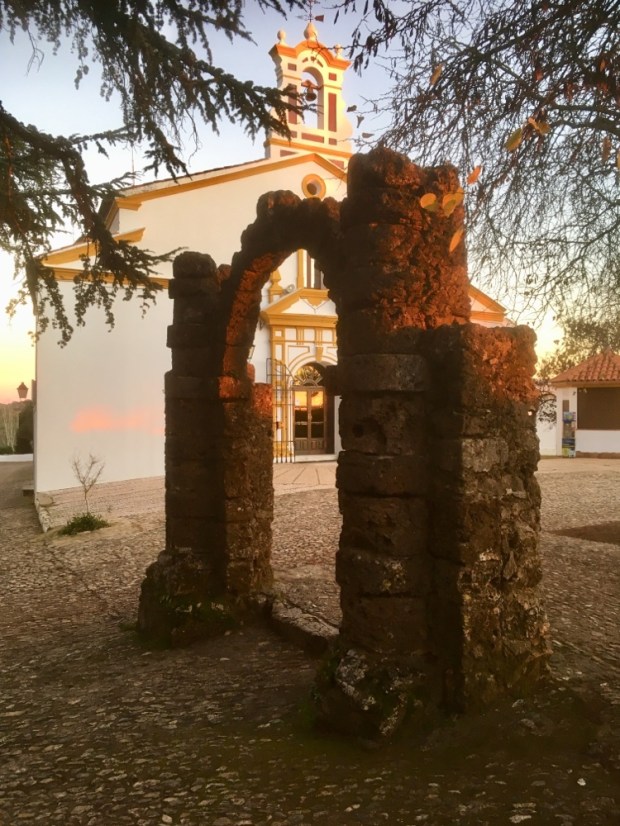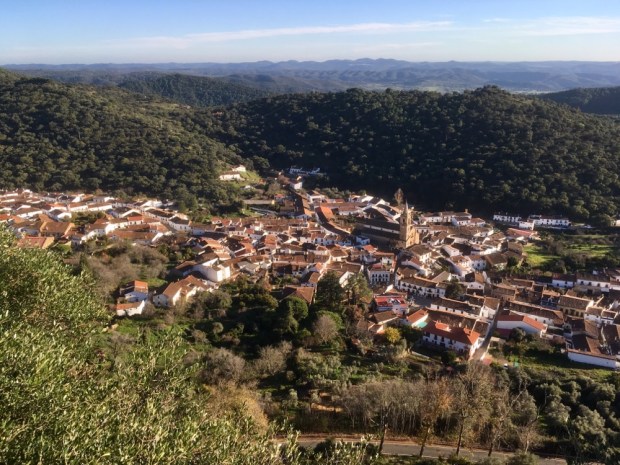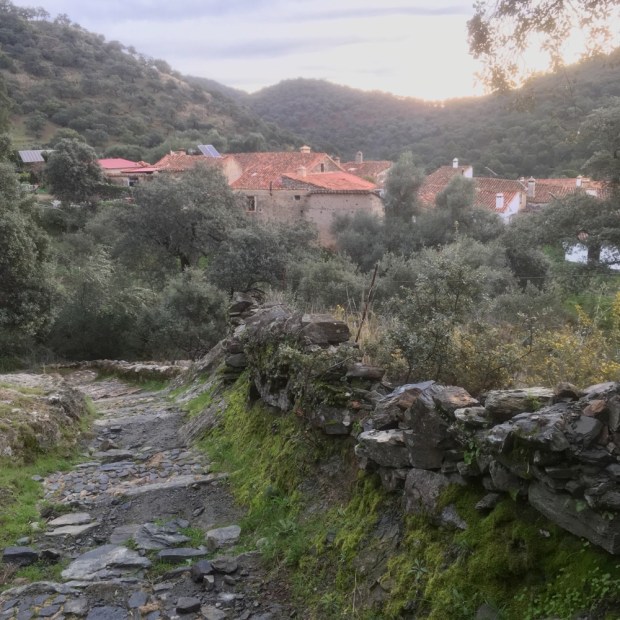
Walking Hiking Rambling

KUMANO KODO: The Kohechi Pilgrimage 3

So much to tell- so little time. By the time we finally get to the trailhead at the end of the day and find our beds there is just enough time to take a few cups of fresh green tea, take a muscle relaxing Onsen bath and have a delicious dinner before collapsing onto the freshly laid out futon. But wrestling with when I have time to blog is definitely a first world problem.

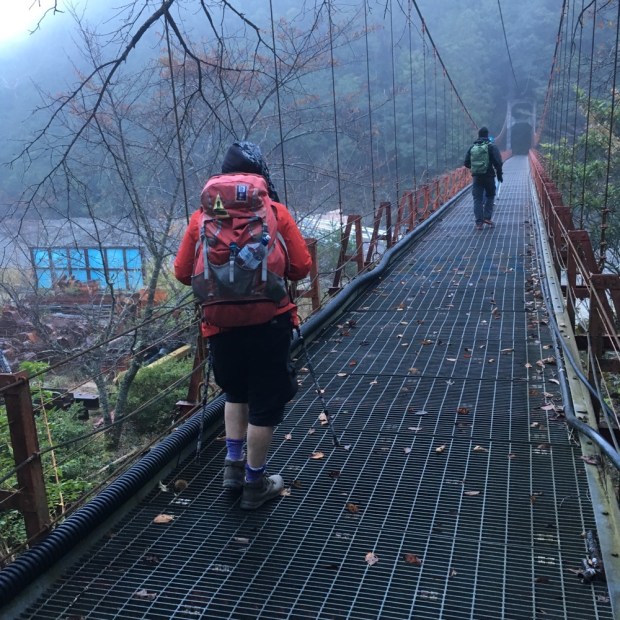
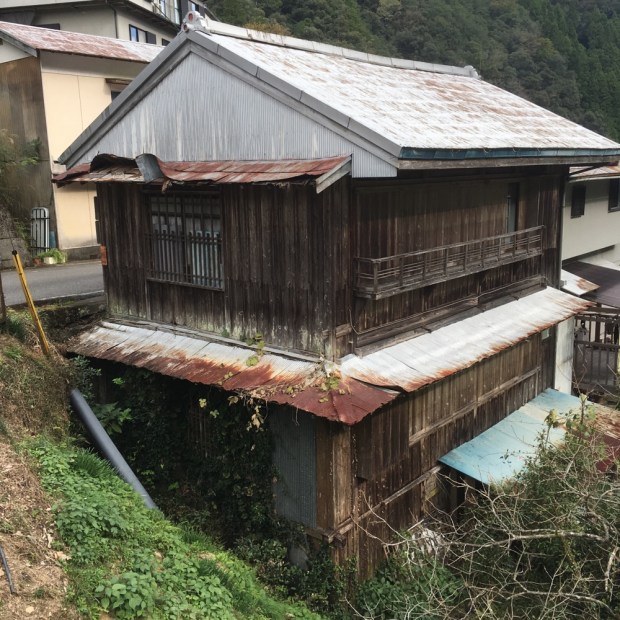
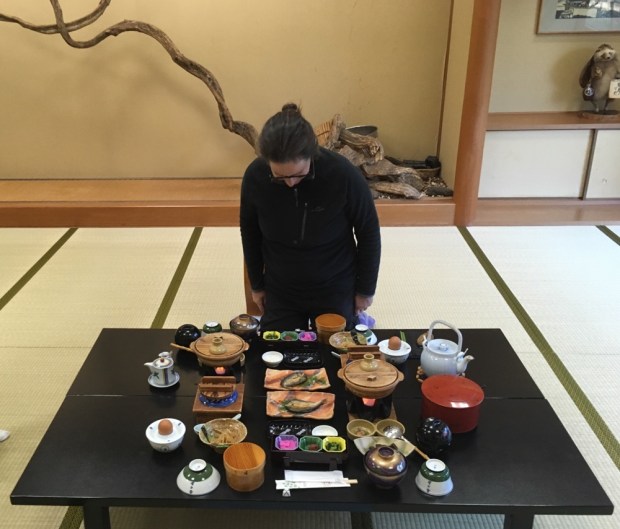
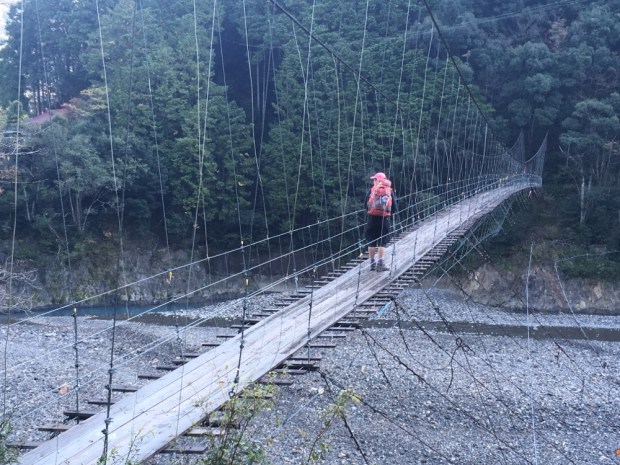
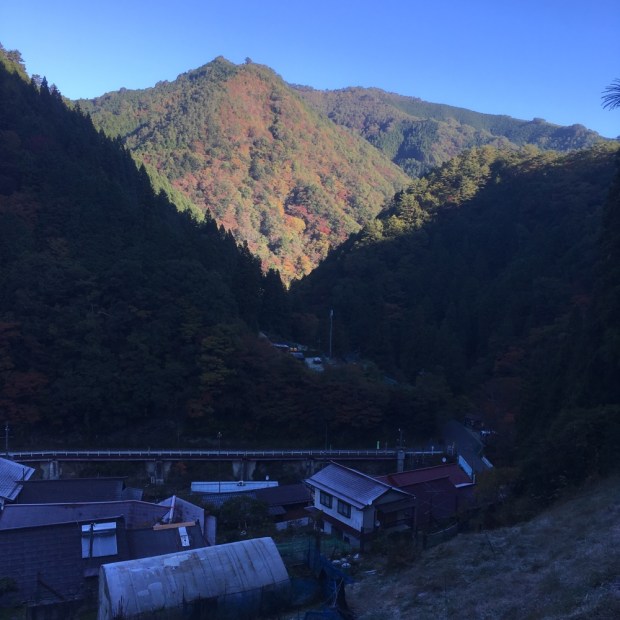
We had an early multi course breakfast in the ancient farmhouse by the river in Miura-guchi. The son had been up since 5am hacking and coughing through the , literally, paper thin walls and noisily sliding the various layers of outer walls backwards and forwards. So by soon after 7 we were saying our goodbyes and following the Singapore couple across a suspension bridge in the mist.

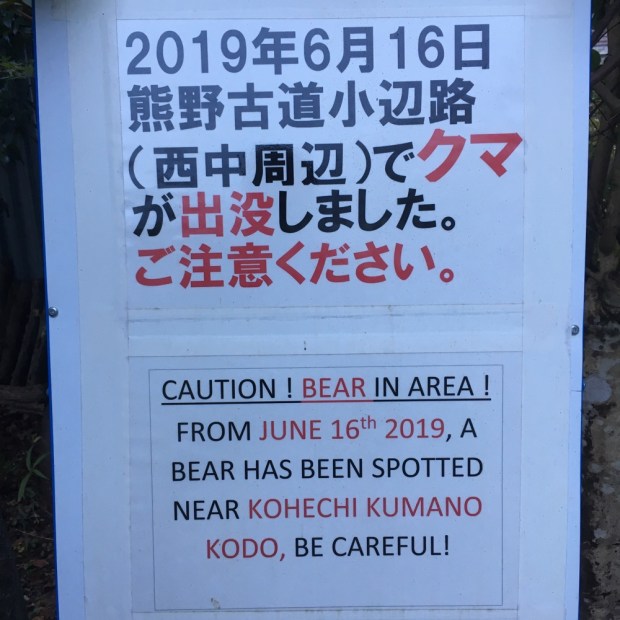
We were a little alarmed to read a sign put up at the bridge but figured “that was months ago- they’re not gonna hang around”!

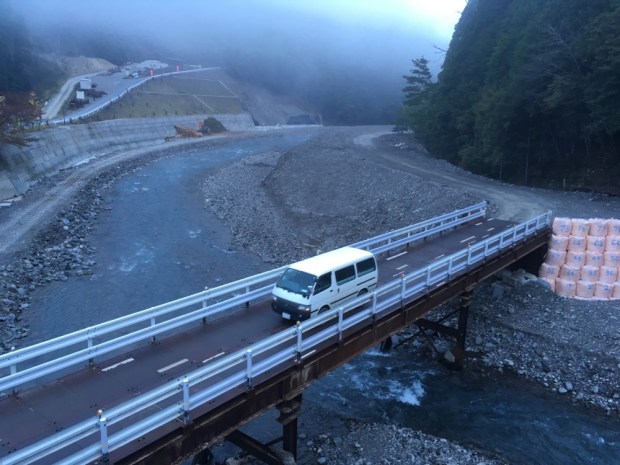
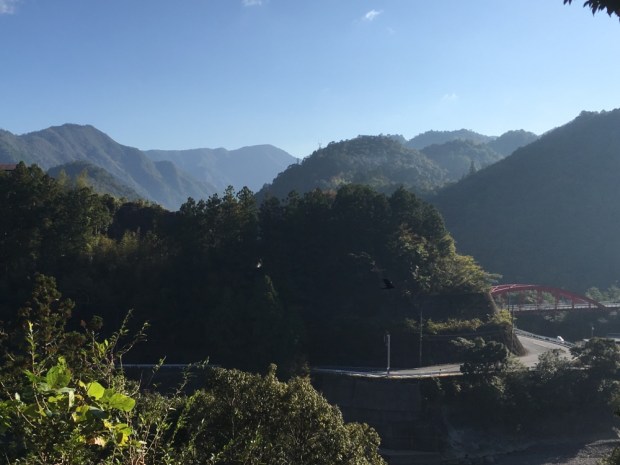
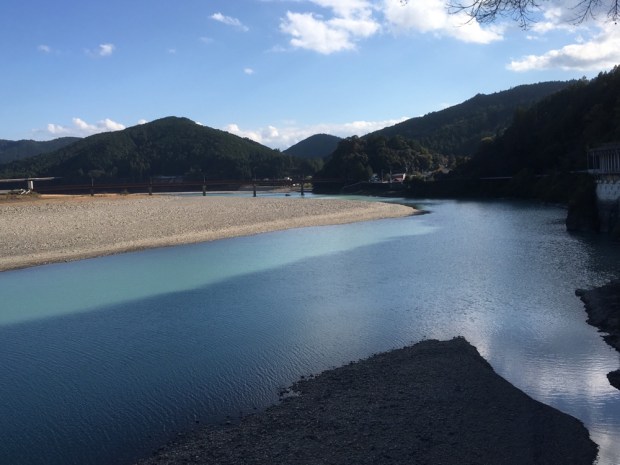
They’re was a lot of big engineering work being done all along the river bed whether because floods or landslides or earthquakes or volcanos I don’t know but seeing damaged landscapes made me appreciate how safe and soft our Irish environment is. What’s a little rain?

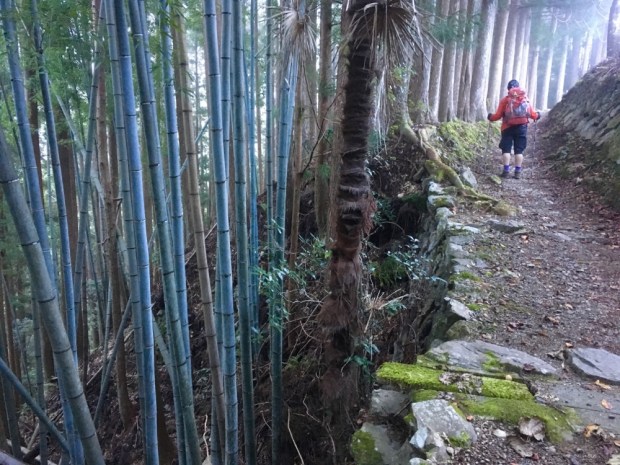
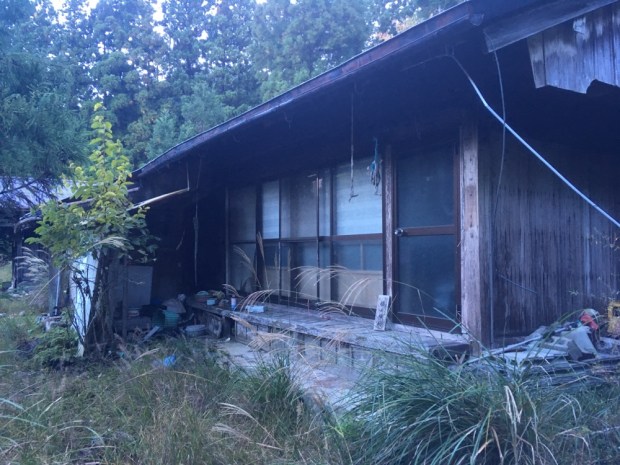
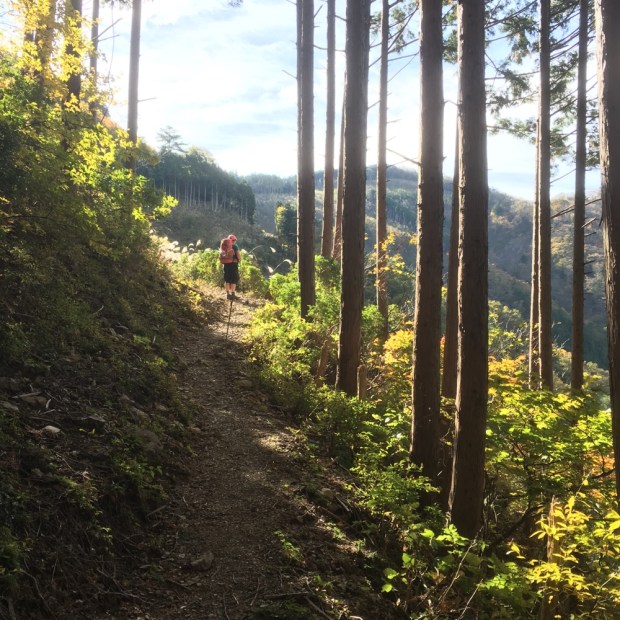
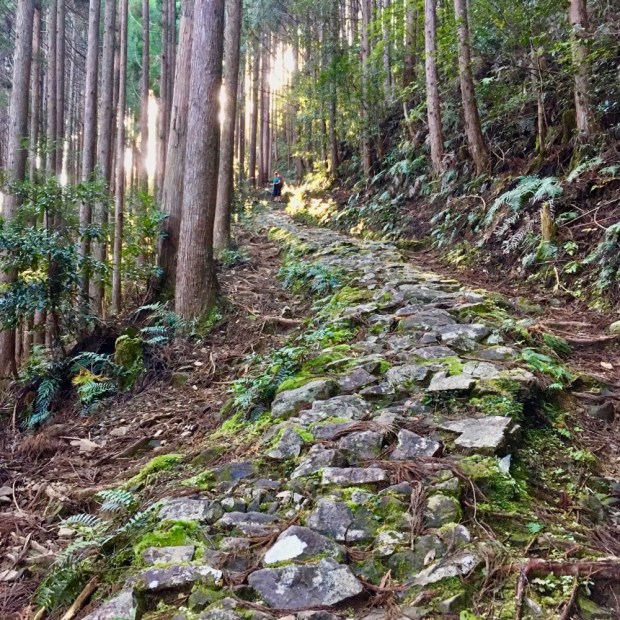
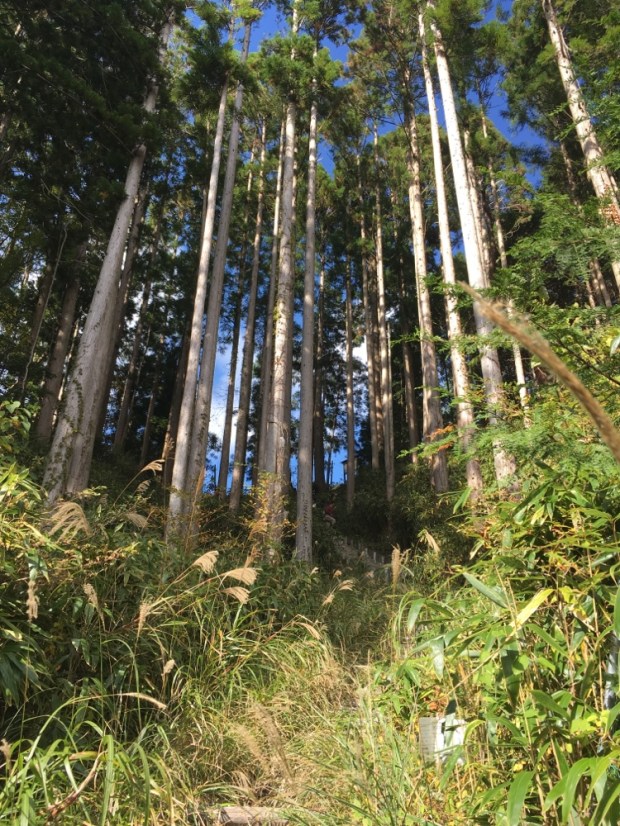
And so we began a mammoth ascent of actually only 815 m as measured by science. My muscles took a different reading as we slowly worked our way up through the towering cedar forest, passing the abandoned farmhouses of time gone by. On the lower slopes at least there were many old stone walled terraces or rice paddies that had long been given over to trees and I wondered when all this afforestation had happened.

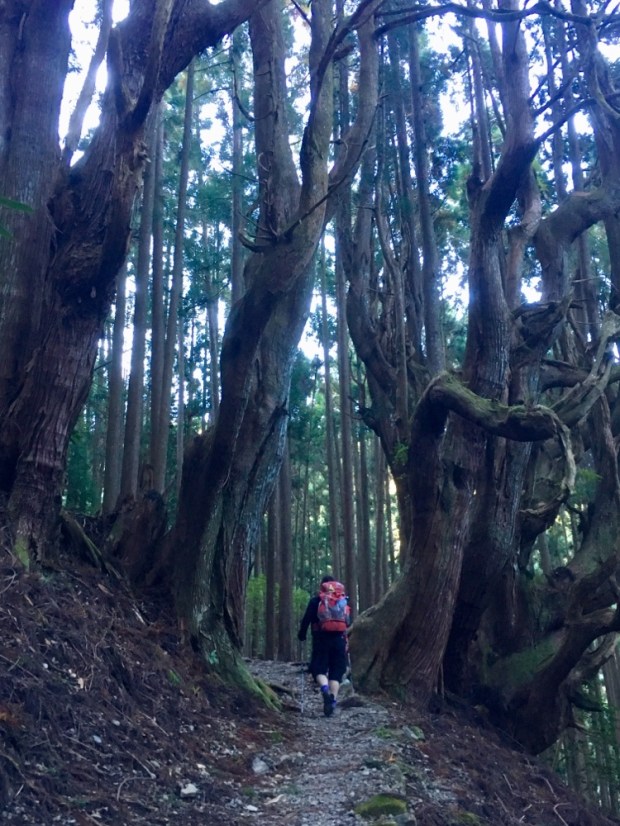
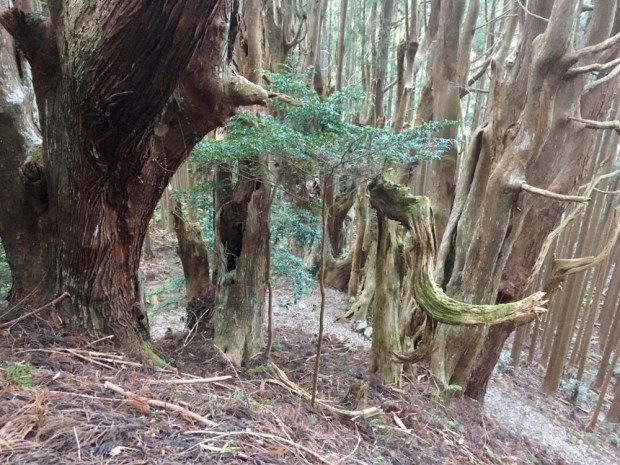
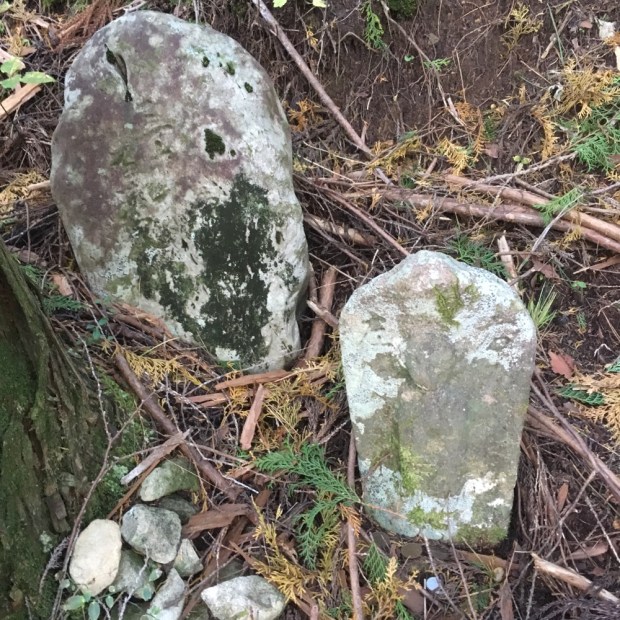
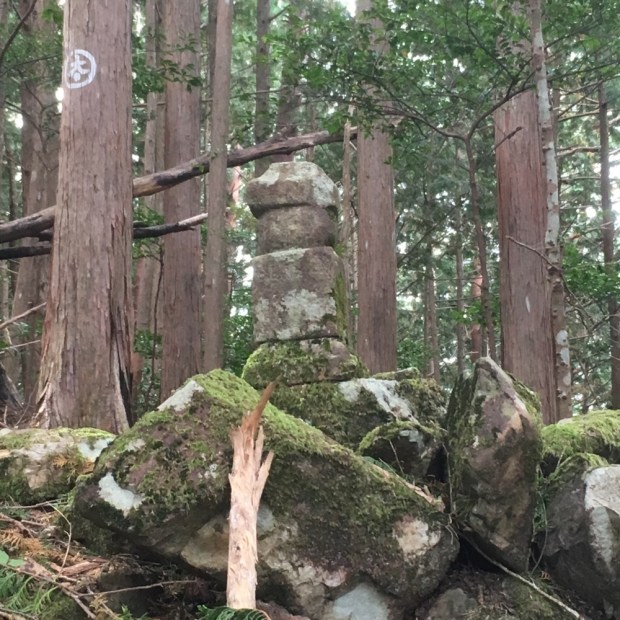
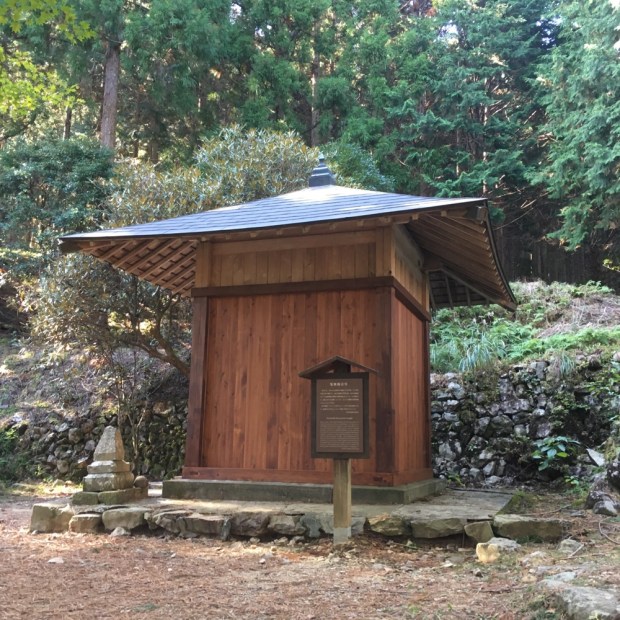
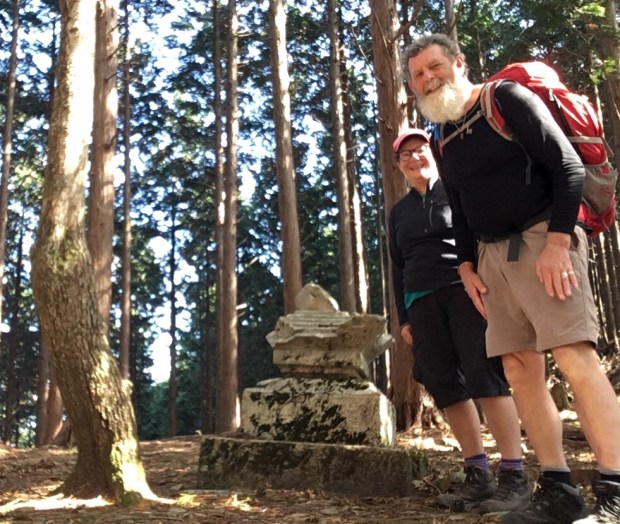
We passed a line of 500 yr old cedar trees planted as a windbreak on a long gone farmstead and other ancient waymarkers and gravestones and shrines and really felt the link to centuries and millennia of pilgrims past before us.

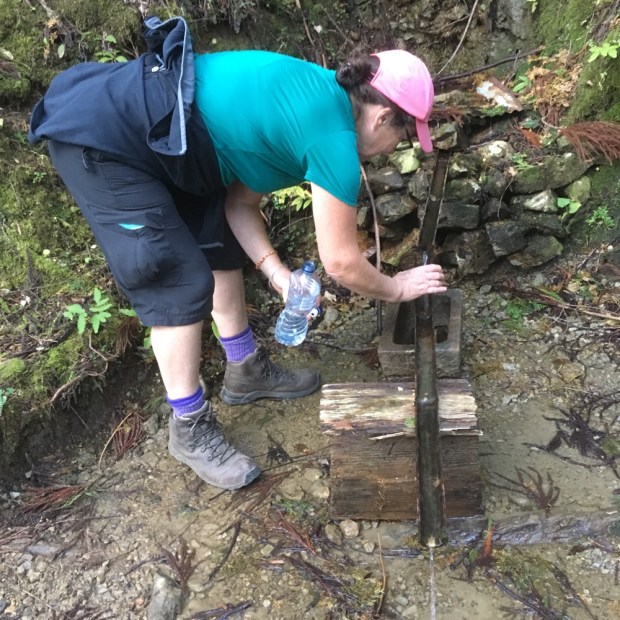
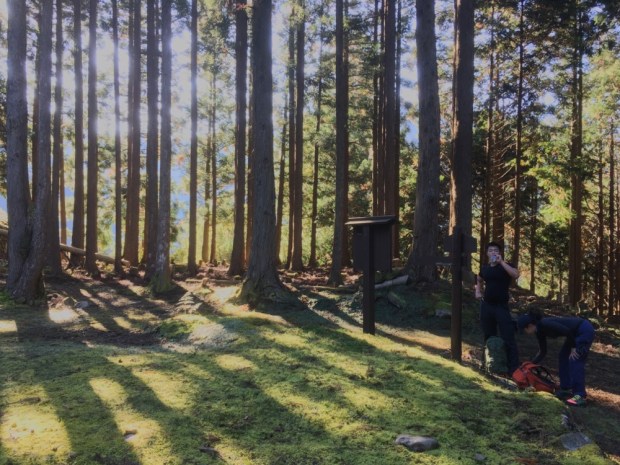
We reached the Sanju-cho spring and drank of the sweet waters to replace all the not so sweet ones now making my sodden T-shirt stick to my back and carried on up and up marveling at the trees around us. I had often thought when walking through big woods that they were cathedral like with their vaulted ceilings and towering columns. But here in Shinto land they are the cathedral – no man made artifice nesessary.

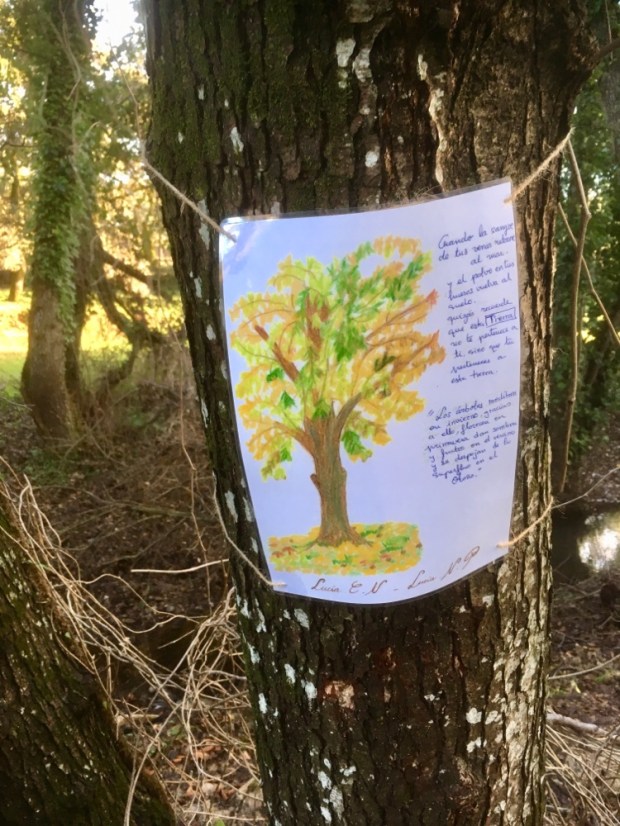
Walking through and being immersed so deeply under the canopy for days I’ve thought about all the stuff I’ve been reading recently concerning the “wood wide web”. The fact that trees are so much more interconnected than we realized. That they looked after each other in all sorts of complex ways.

It’s kinda humbling to be in the presence of living things whose lives , given a chance by us and the deities, can span millennia.

We finally made it to the top of the days hike at just over 1000m. A covered shelter and the Singapore couple greeted us and in a little while we greeted the 3 Americans last seen at Omata bus stop and a little while later the other 3 japanese Americans who had been struggling yesterday. And we’d passed the real pilgrim earlier as well. All present and correct.

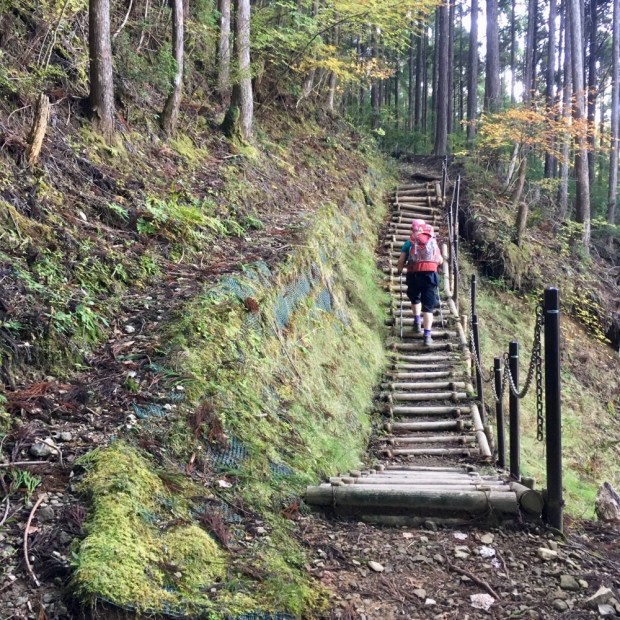
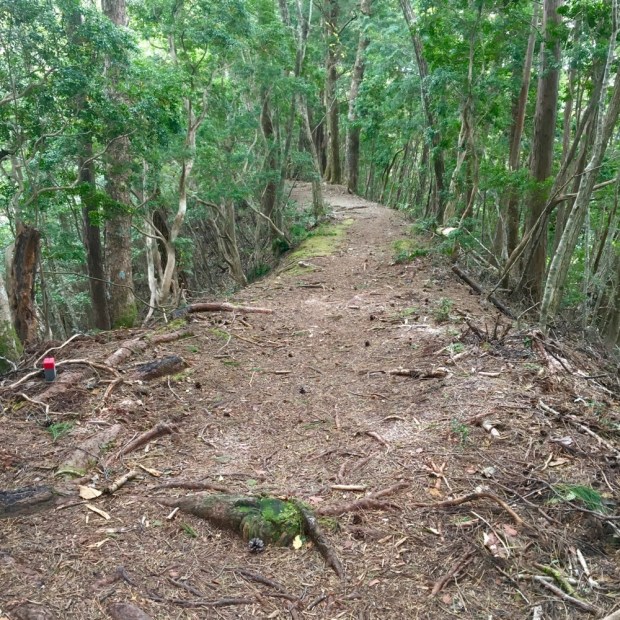
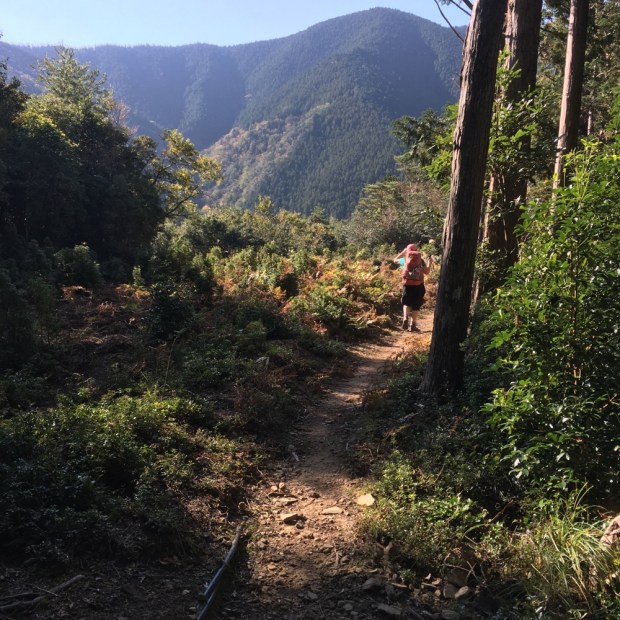
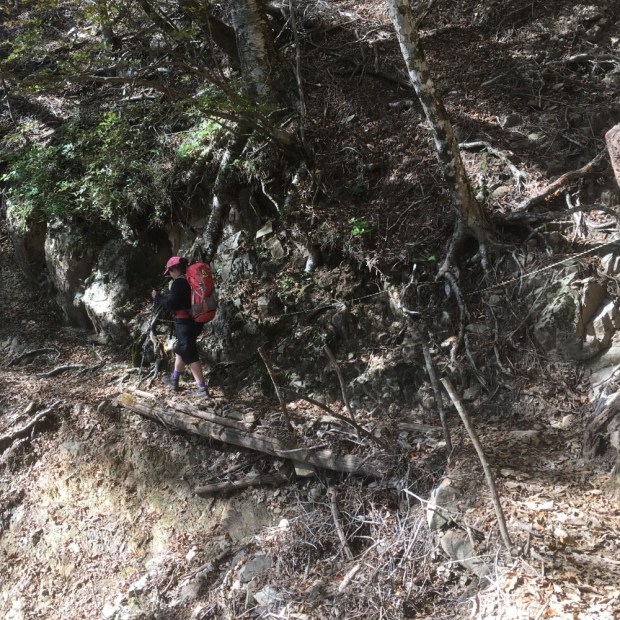
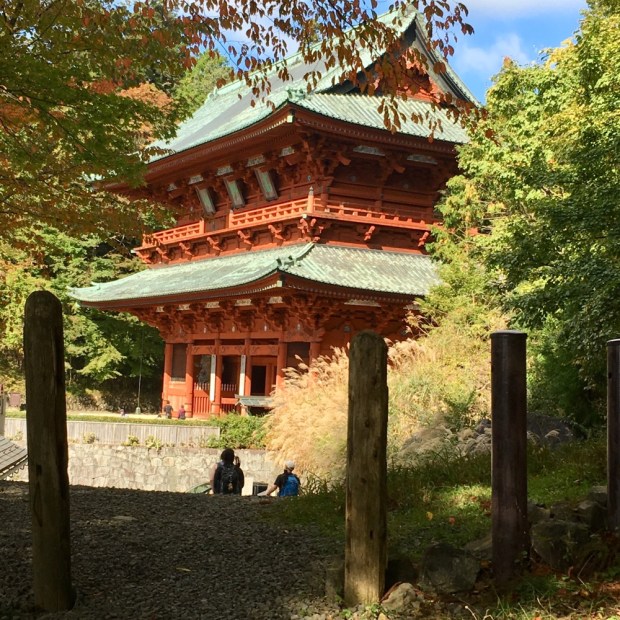
Steeling ourselves for a long knee straining descent we headed down another forest path past a 5 story stupa and a view across the valley to an old village. Sometimes the path was on a narrow ridge with steep sides dropping off on both sides. Sometimes very narrow and built up with logs.

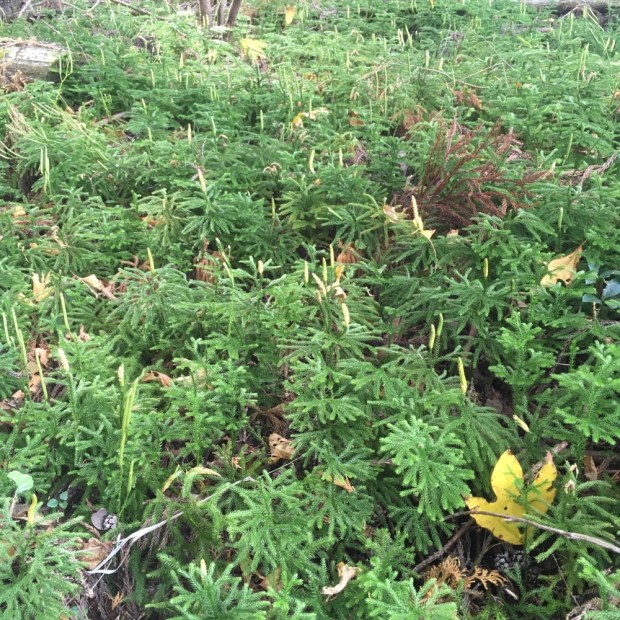
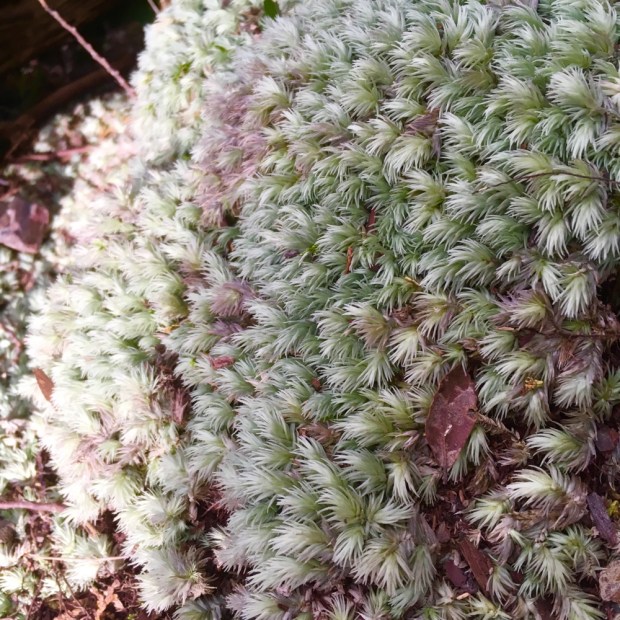
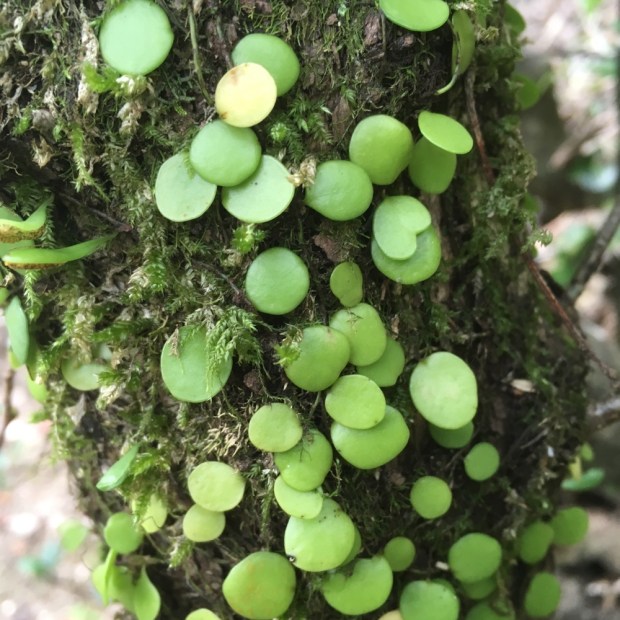
There were some new forms of vegetation to us, creeping miniature trees , mosses and funny green dots.

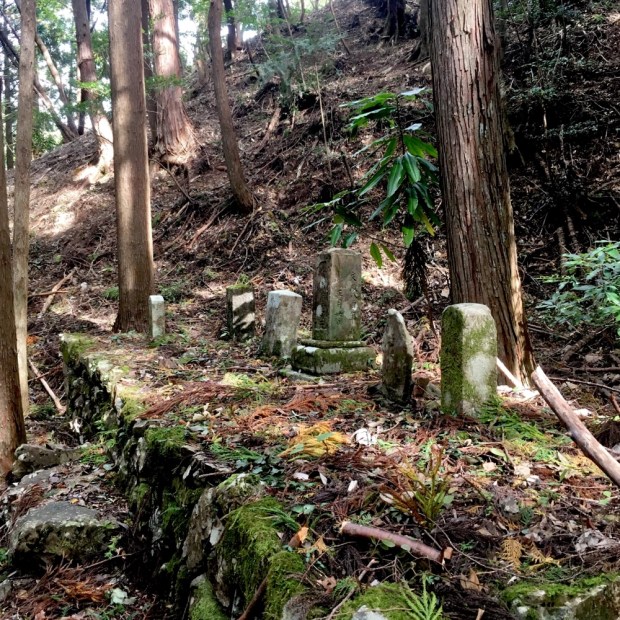
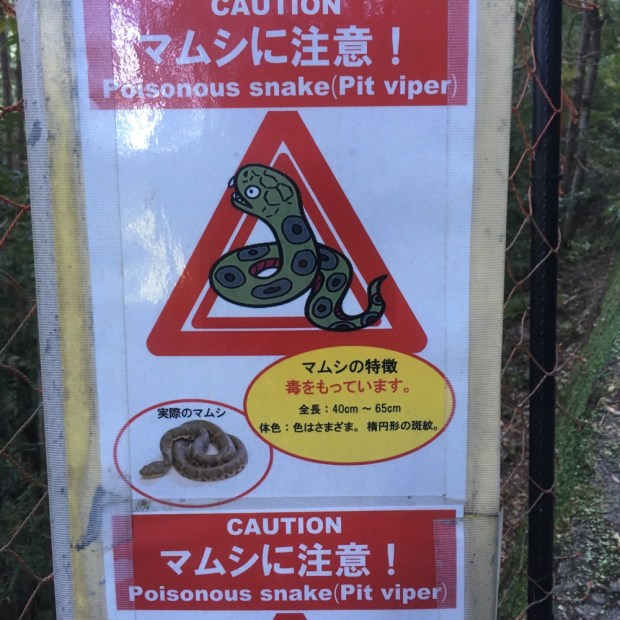
We passed more gravestones in lovely spots and carried on down until all of a sudden Sally gave a start. A pit viper had crossed her path by some old wooden buildings.

Their bites can be lethal so it could have all gone horribly wrong.

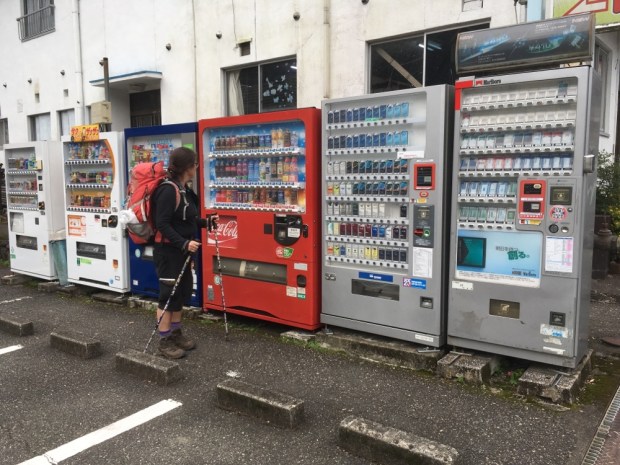
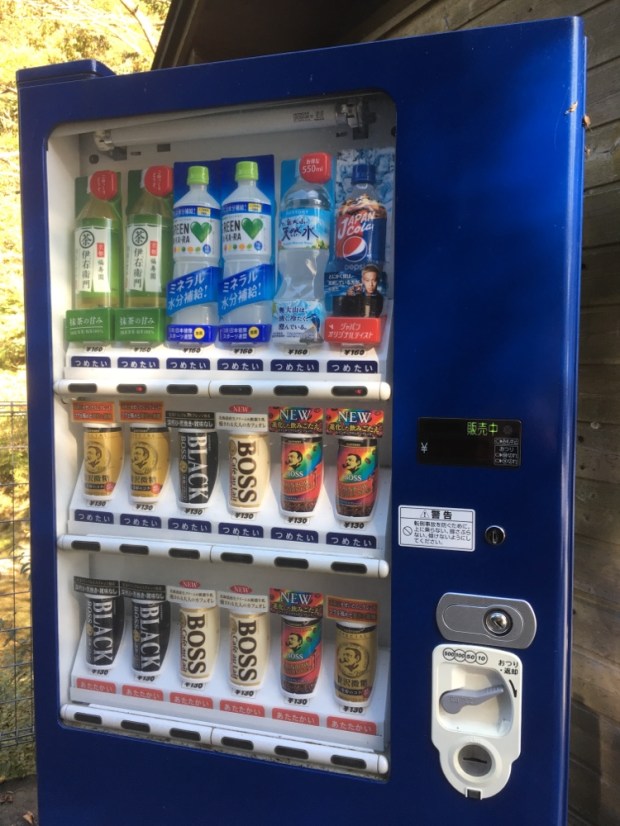
Back on tarmac we had completed the mountain stage and there were another 5 km of road walking to our hotel so after meeting up with the others at the bus stop we decided to give our feet a break and get aboard. Before we knew it we were back in ” civilization” looking at things to buy from vending machines and supermarkets in the river side village of Totsukawa.

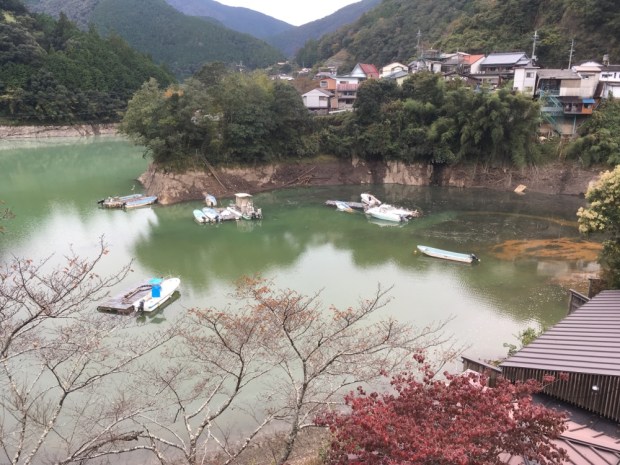
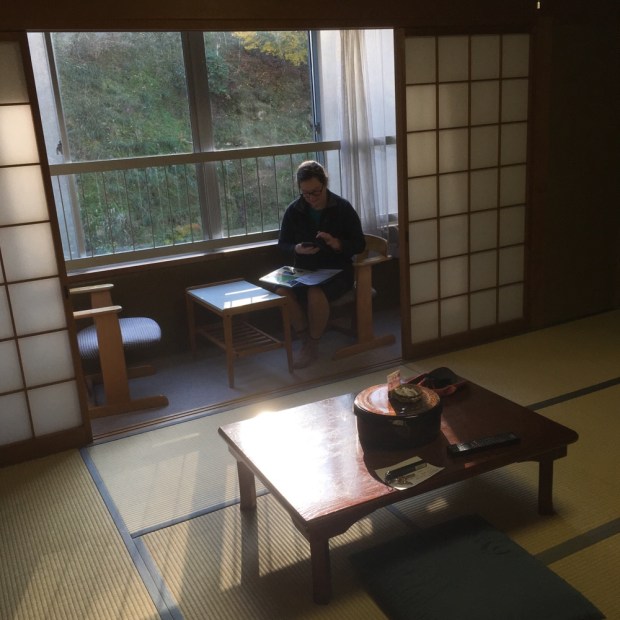
Our hotel room looked out over the river. We had a shared bathroom- but it was a very big one and included indoor and outdoor Onsen.

Exactly what the body needs after all that muscle and joint straining.

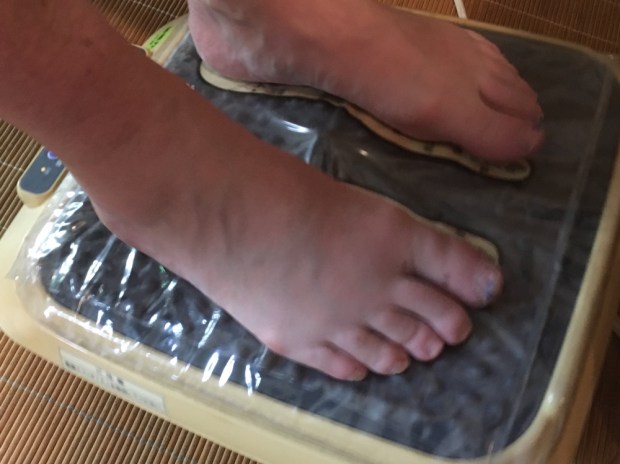
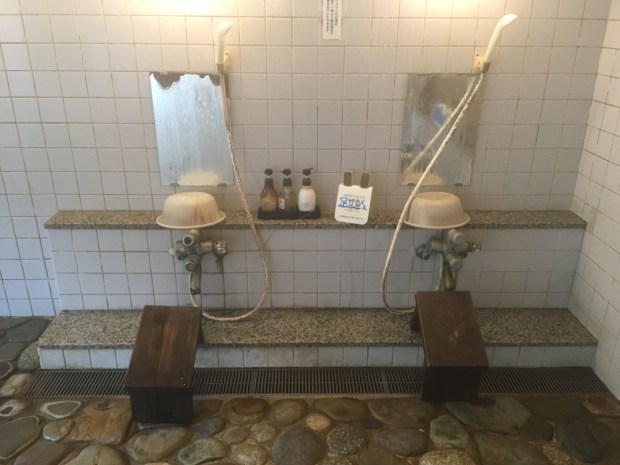
The cleaning rituals are pretty intense. There is a lot of scrubbing and sloshing and showering before entering an Onsen. There are separate men’s and women’s and you disrobe in a dressing room space and take a tiny modesty towel into the washing and cleaning area. You sit on a stool in front of a lot of taps and buckets that you deftly control to shower and douse every part of yourself. And then you lower yourself into the hot mineral waters with the modesty towel on your head. Well I didn’t but seemed the thing to do. All that remained for a total post hike makeover was the electronic foot shiatsu machine.

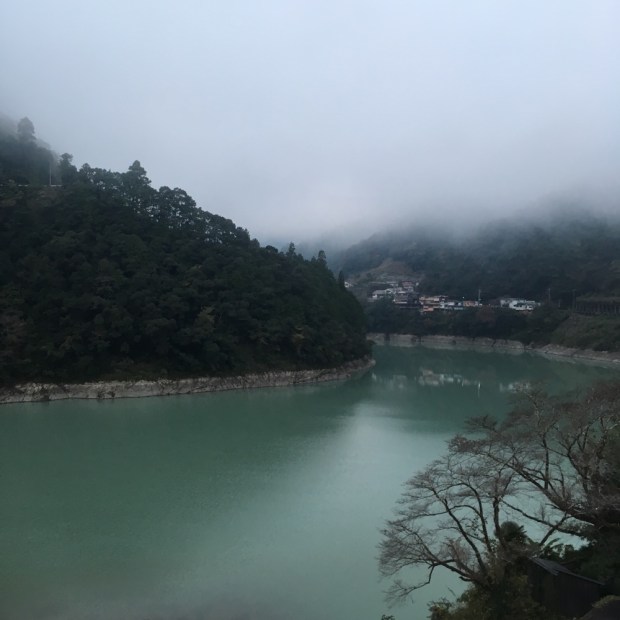
We’ll all of that made us sleep very well and so it was a late (8am) start on the trail the next misty morning after another massive breakfast.

This was going to be the tough one. The ” hike from hell”. The 1075m climb and the 1170m come down. The finale of the Kohechi Pilgrimage route that led to the sacred shrines and temples of Kumano Hongu Taisha. It started with a very wobbly suspension bridge and carried on with a little riverside walk before the climbing began.

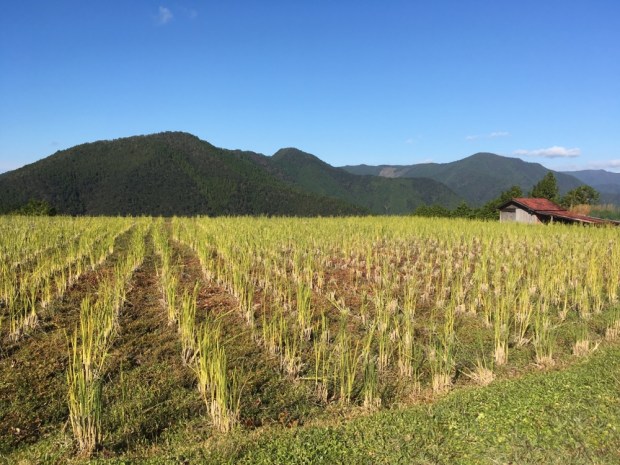
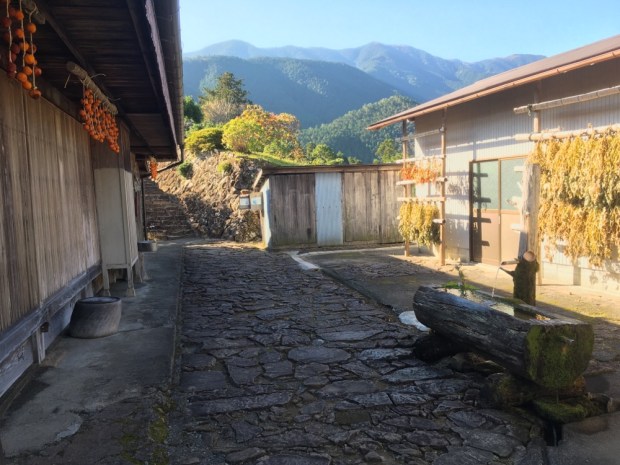
We reached the lovely little settlement of Hatenashi with immaculate rice paddies and gardens and fine wooden houses proudly displaying their drying produce.

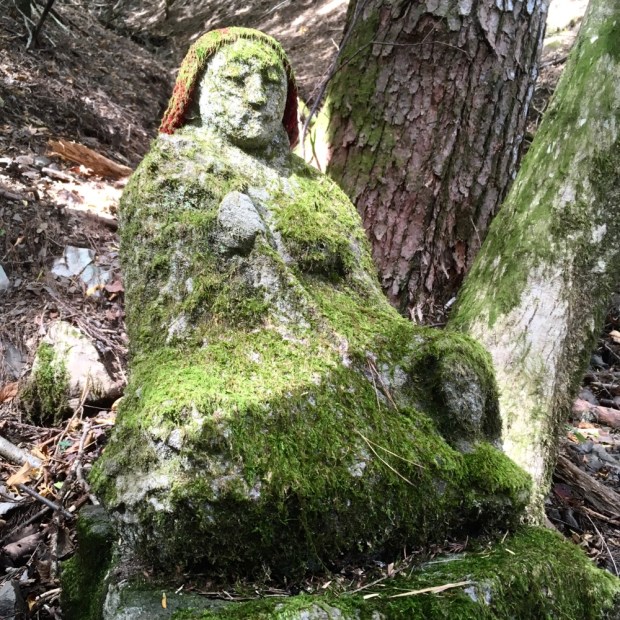
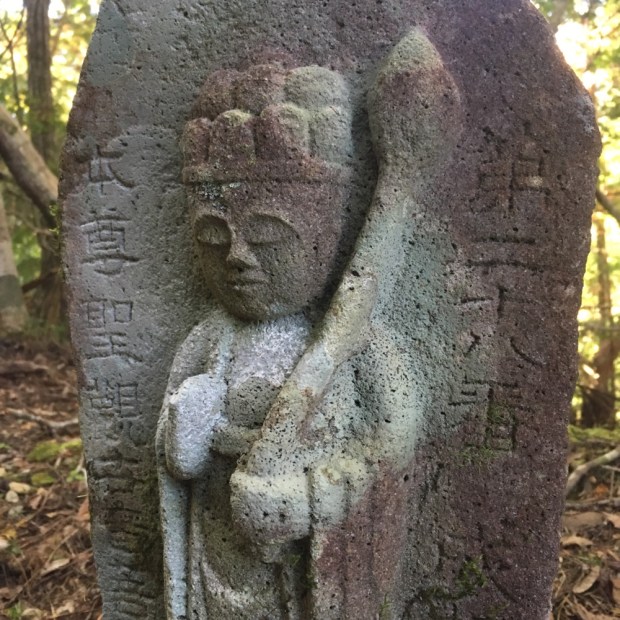
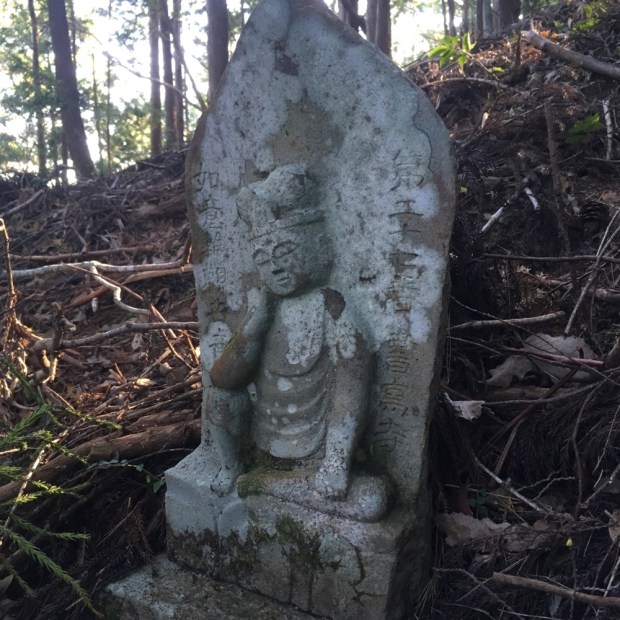
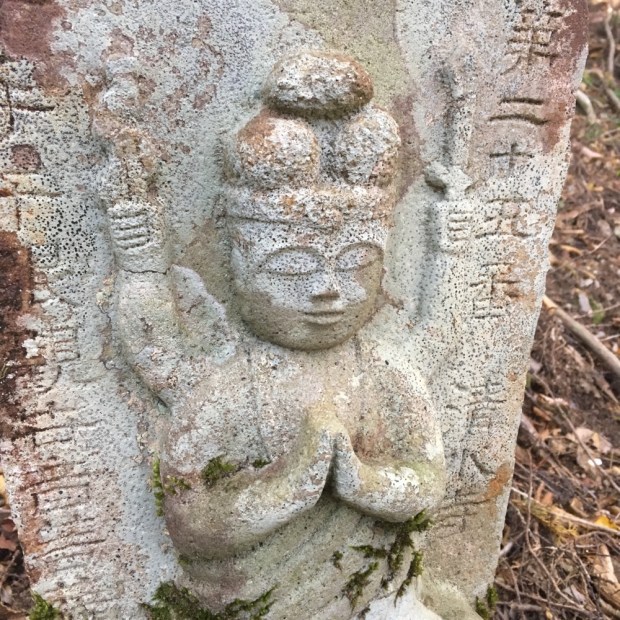
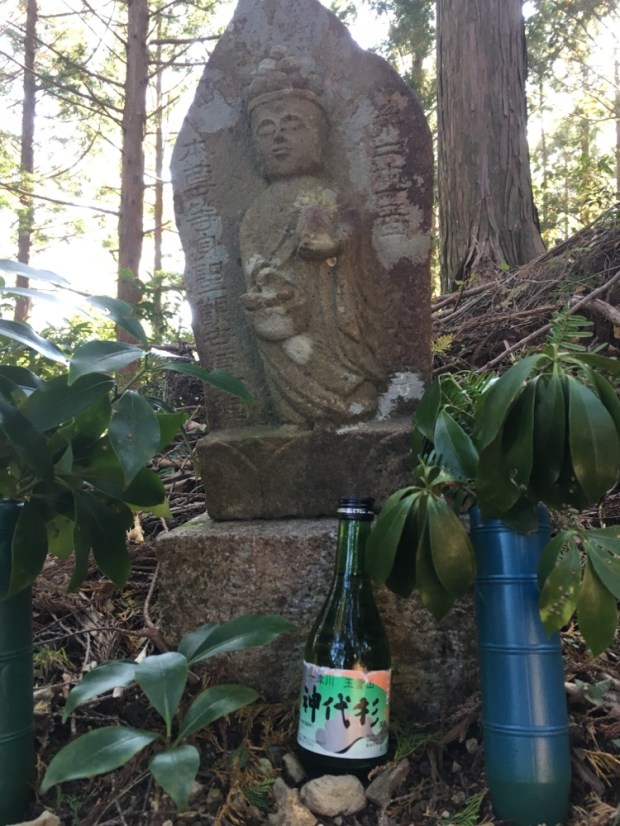
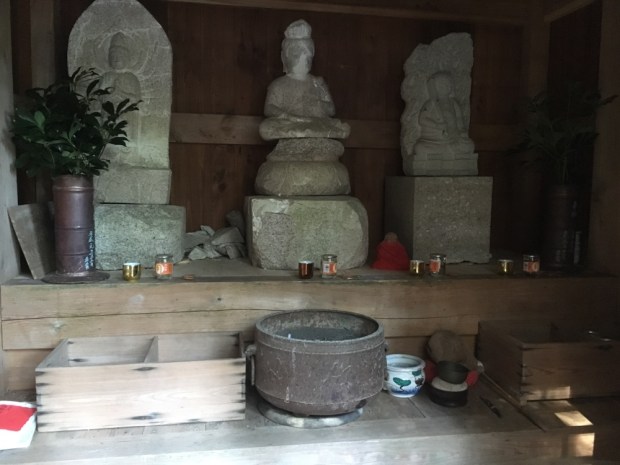
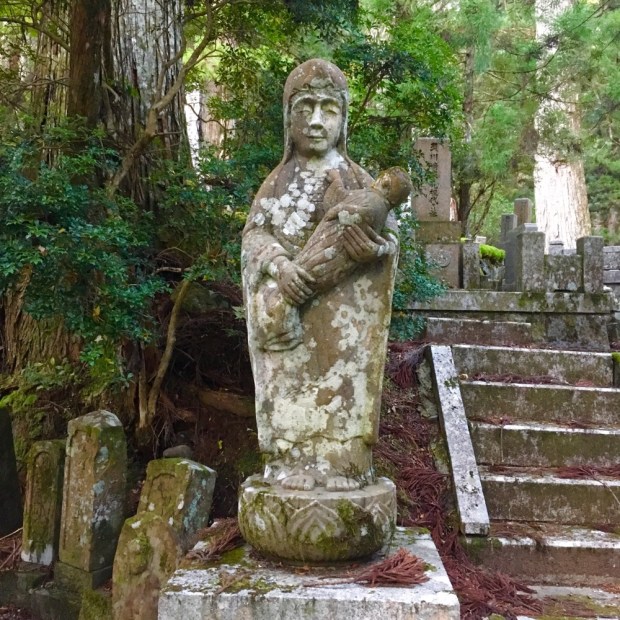
From here on we were guided along the route by the 33 statues of Kannon, a Buddhist deity and Bodhisattva of mercy. Represented as both male and female Kannon has 33 different manifestations and to visit each one is to complete a pilgrimage. So today would be a pilgrimage within a pilgrimage.

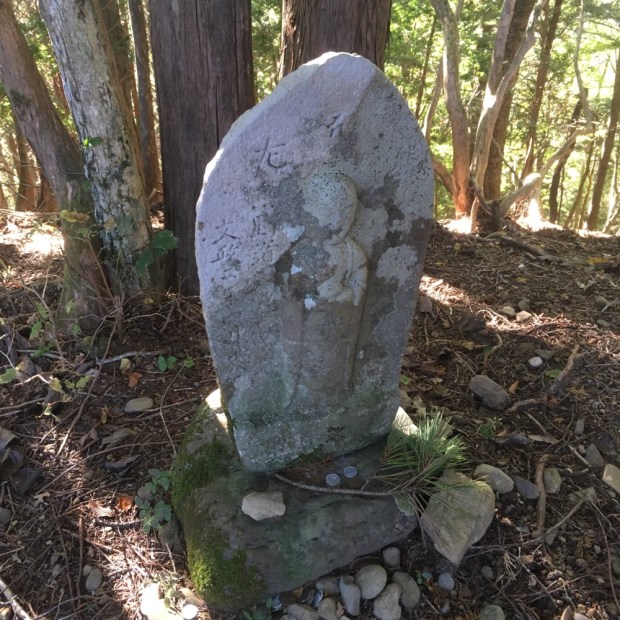
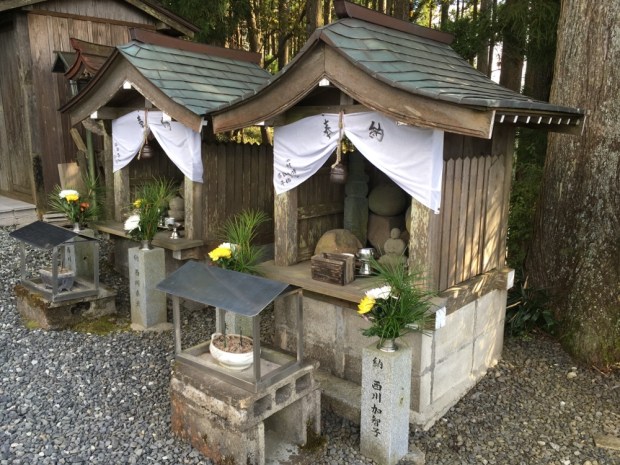
There’s a sample. As you can see there are always offerings- someone left a bottle of saki. Turning a corner we could see way above the ridge we had to climb over. Daunting. We passed a place that had been cultivated back in the day. A rare example of a rain fed ridge paddy field. And later a little wooden Kannon-do temple where we took a break.

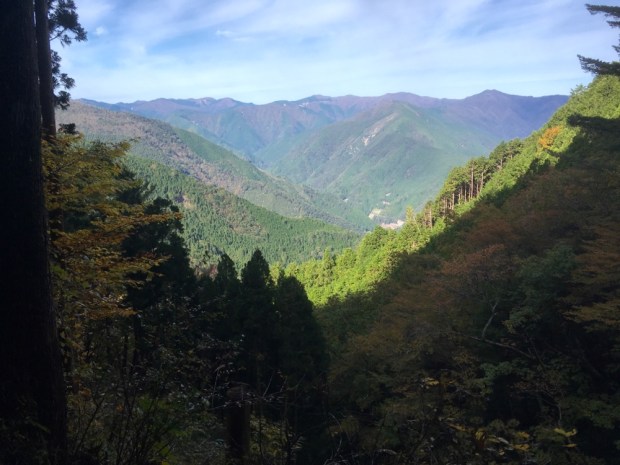
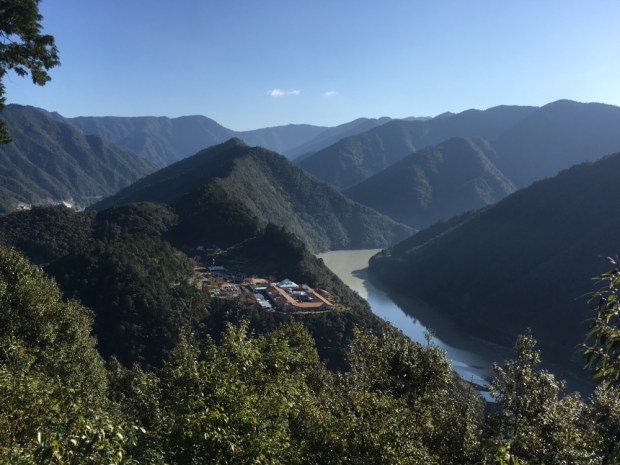
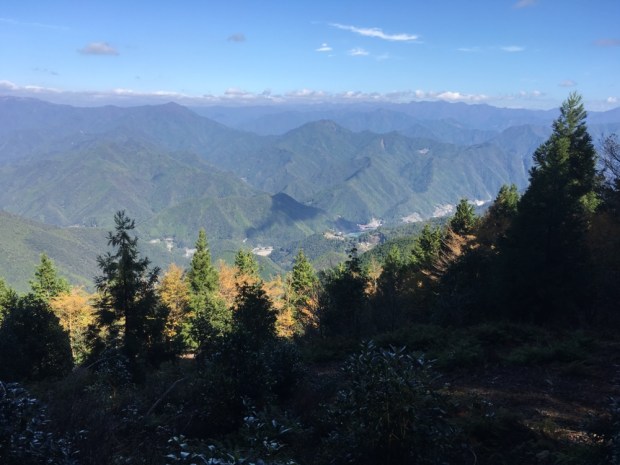
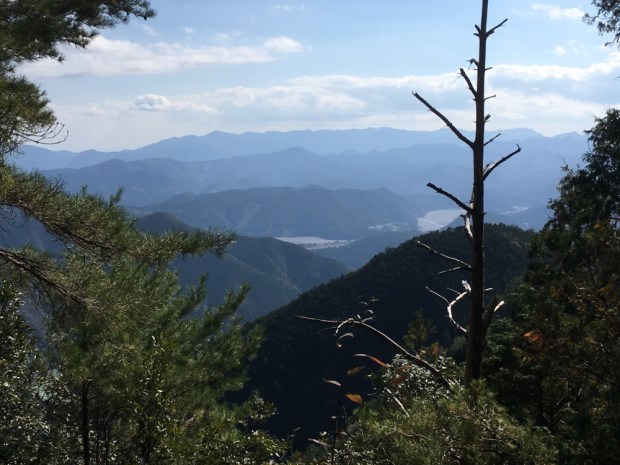
And then after another had slog it was all made worthwhile by an opening that allowed a view over the last few days terrain.

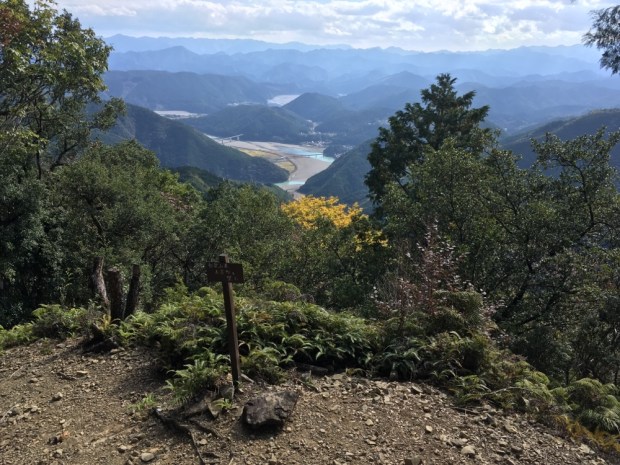
Nose down we struggled on up and then we’d done it. The wind was suddenly chilly on the pass so a quick selfie and carry on down towards Hongu. Past more remains of old tea houses and a lunch spot with a view of the curving Kumano- gawa river and the serried ranks of peaks lined up into the distance.

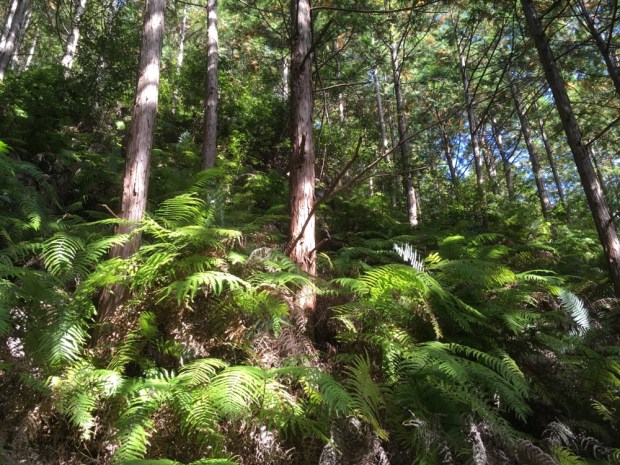
There were more and more of the lovely blue flowers we’d been seeing and also more of the delicate ferns.

As we came out of the forest we emerged onto the riverside road for a few Kms before turning onto tracks again for the last leg up and down into town. They’re must have been a huge amount of pilgrim traffic at one time as the path was wide and worn.

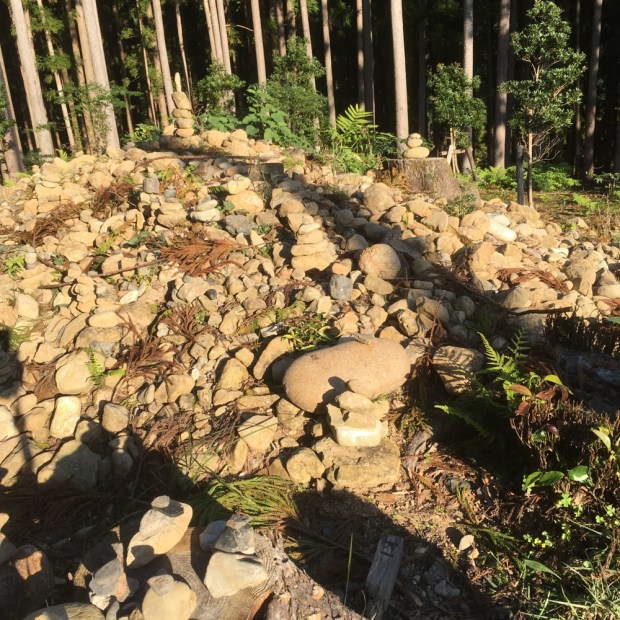
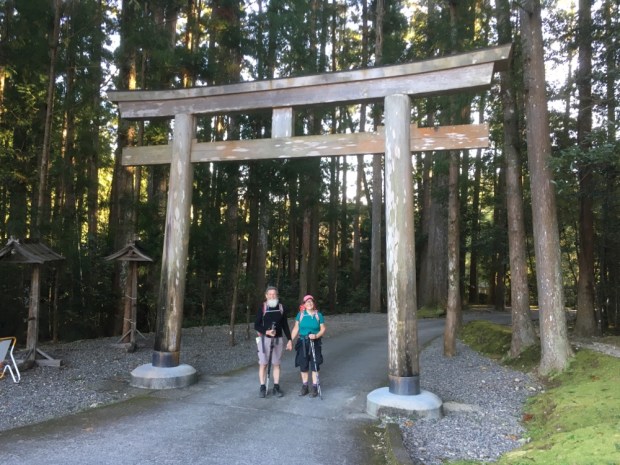
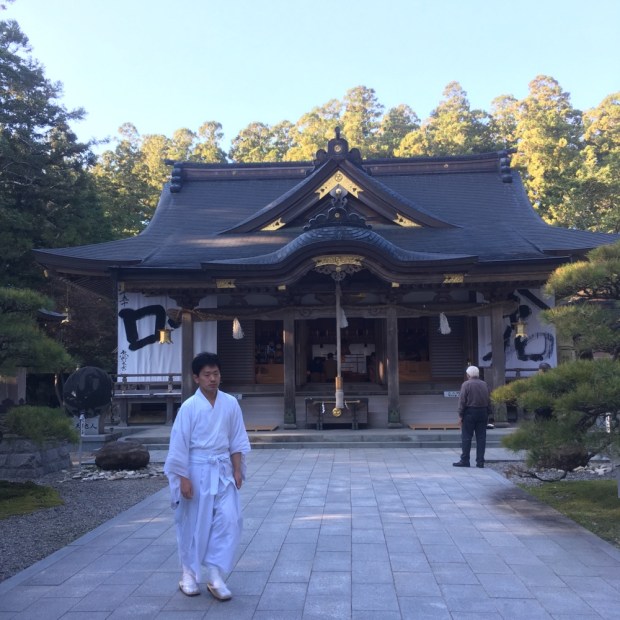
We’d done it. The snakes had left us alone. We left a stone of thanks with the countless others and carried on down passed the Haraido-oji, the final purification station, to the Torii gates leading to our first of the three grand shrines of Kumano.

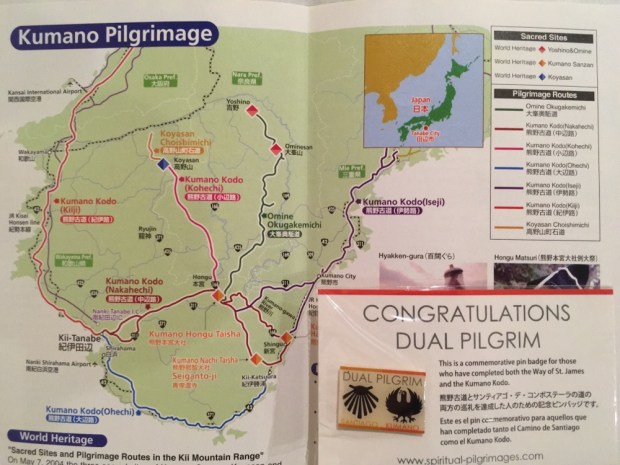
We hurried to the Heritage Centre and presented ourselves and our pilgrims passports from here and Spain and were reverently decreed to be “Duel Pilgrims” and presented with a rice paper certificate.

Then we had to hurry to the bus to our bed from where we catch a 6 am bus to the start of Another pilgrimage route to Hongu.

The man at the Heritage Centre better get some ” Triple Pilgrim” certs made up.

KUMANO KODO: The Kohechi Pilgrimage 2

Koyasan to Omata and Miura- guchi

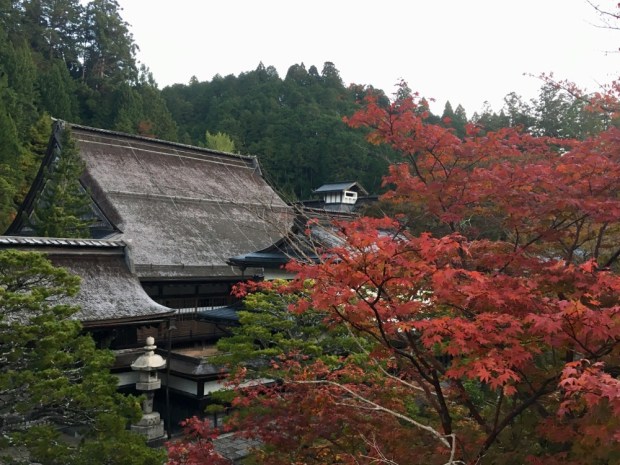
Koyasan has been a Centre of pilgrimage for over 1000 years. The 117 temples here have been built and rebuilt many times over the millennia and are home to Japanese Esoteric Buddhism.

When Buddhism first arrived in the 6th century there was initially conflict with the indigenous and ancient belief system, Shinto. More than a religion, Shinto was a communal way of living with no founder, no formal scriptures and no absolute God. It did have plenty of spirits though, so many that they are known as Yao- yorozu ( the 8 million deities). They are the Kami and are found in nature – rivers, trees, mountains, rocks etc but also wind, sun, thunder. And animals. And phenomena such as growth and fertility. Kind of nature worship.

Shinto didn’t even have a name until other religions arrived and they needed to differentiate. The two faiths mixed and merged and morphed and evolved. In the seventh century a mixture of mountain worship, Shintoism, Taoism and Esoteric Buddhism emerged in the mountains and forest of the Kii peninsula called Shugendo. The priests saw the wild and natural landscape as a place to attain enlightenment and hiking through them it’s easy to see why.

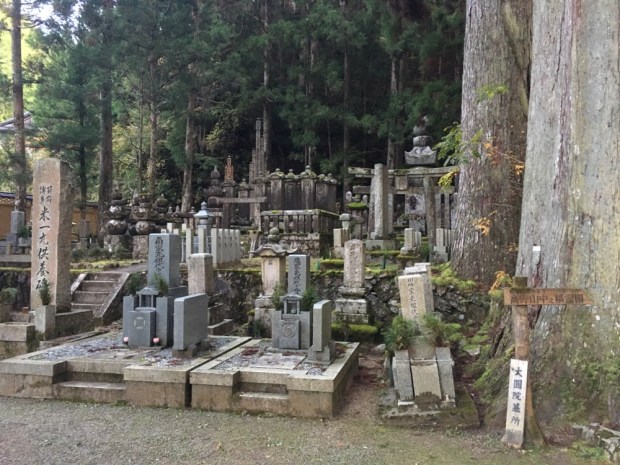
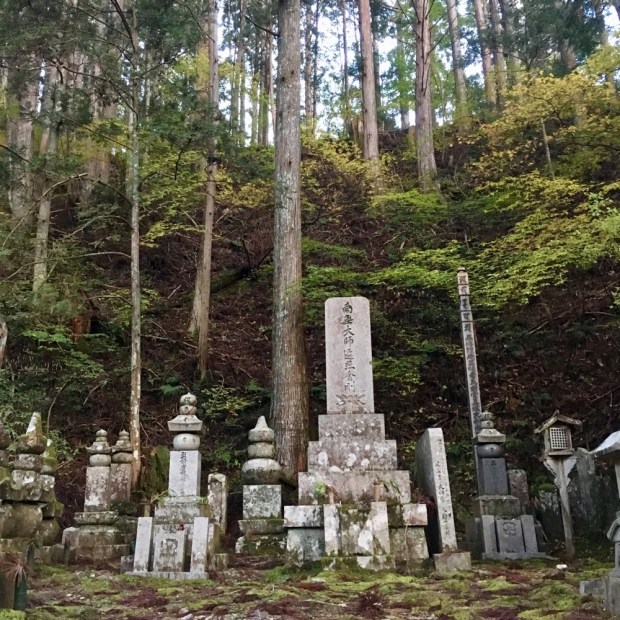
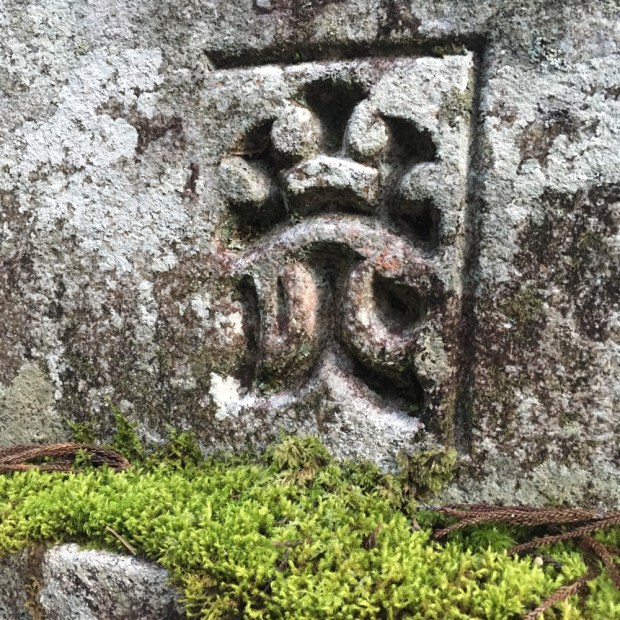
Before leaving Koyasan I explored Okunoin, the serene forest burial ground where over 300,000 gravestones and monuments are sheltered by massive 500 yr old cedar trees. The founder of Koyasan, Kobo Daishi , has a mausoleum here and for many hundreds of years others from all walks of life have followed him. Slowly the moss and lichens take them back into the forest.

Then it was back to the temple for the morning ceremony of incense burning, chanting mantras and the ringing of chimes and gongs. All very nice but I could never find the place on the ” chant sheet” and was unable to join in so just soaked up the ambiance and lushly decorated surroundings. Fortified with this and the following breakfast we headed out on the trail at last.

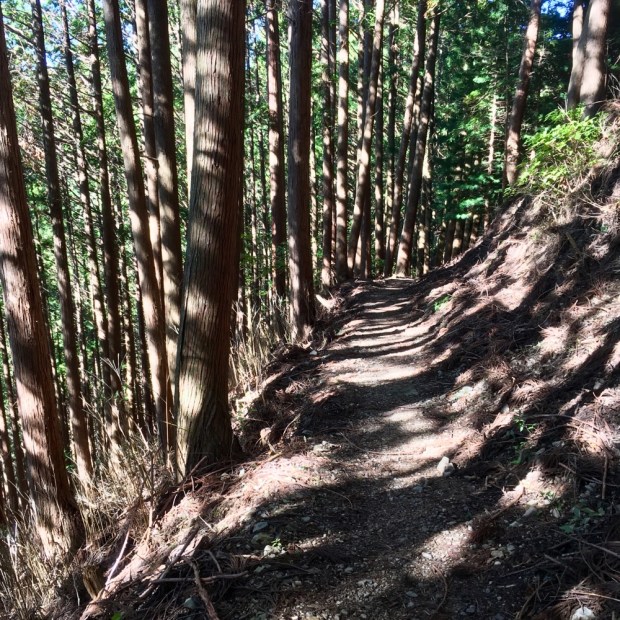
It was steep almost immediately, heading up a gravel then forest track through the trees.

After a few km we came to a little wooden box containing a stamp for our pilgrim passports and the view opened out.

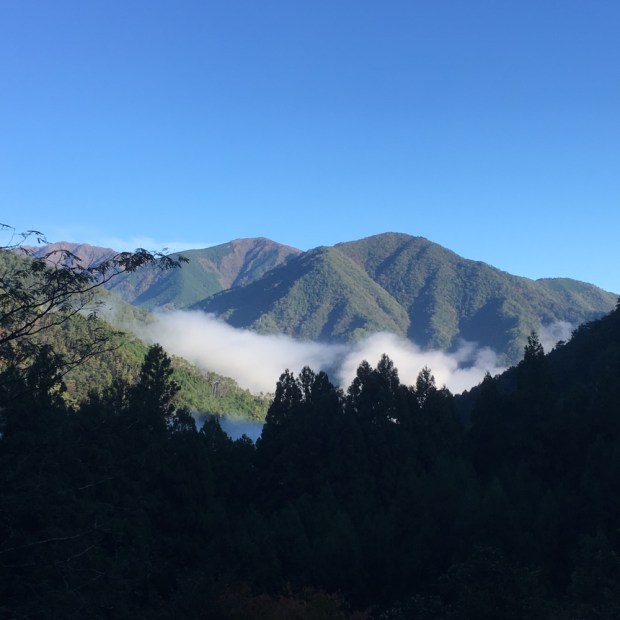
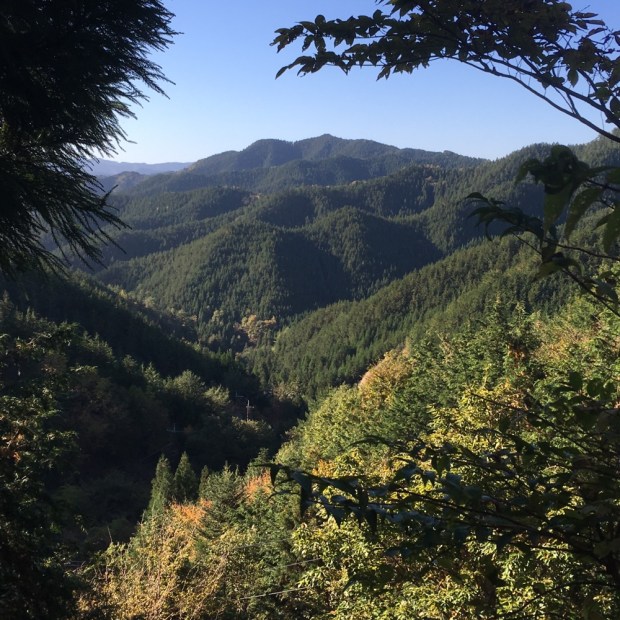
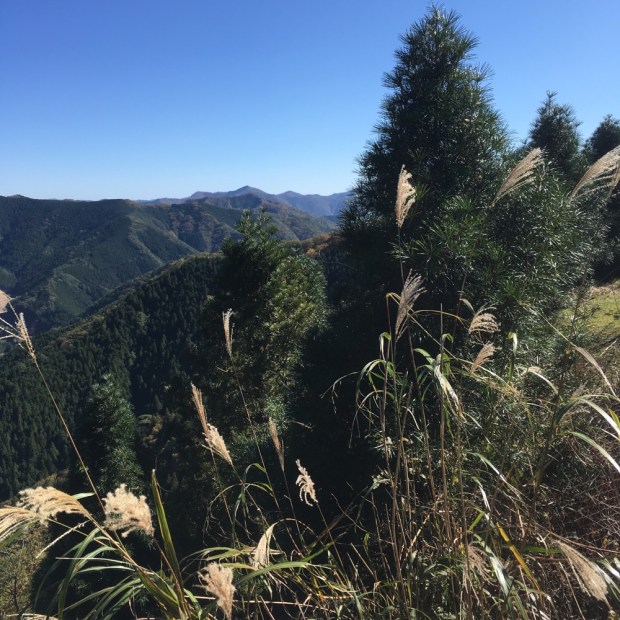
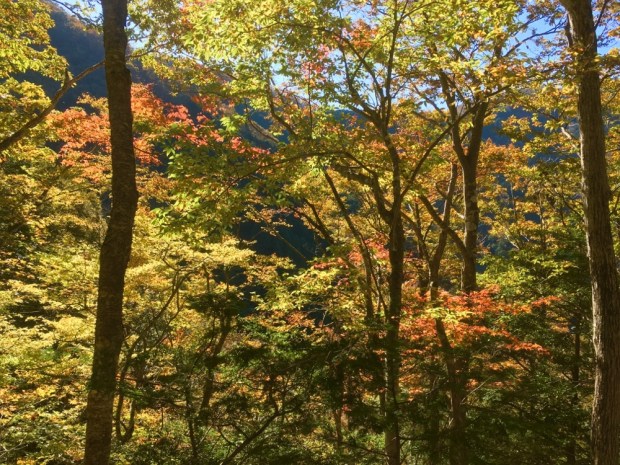
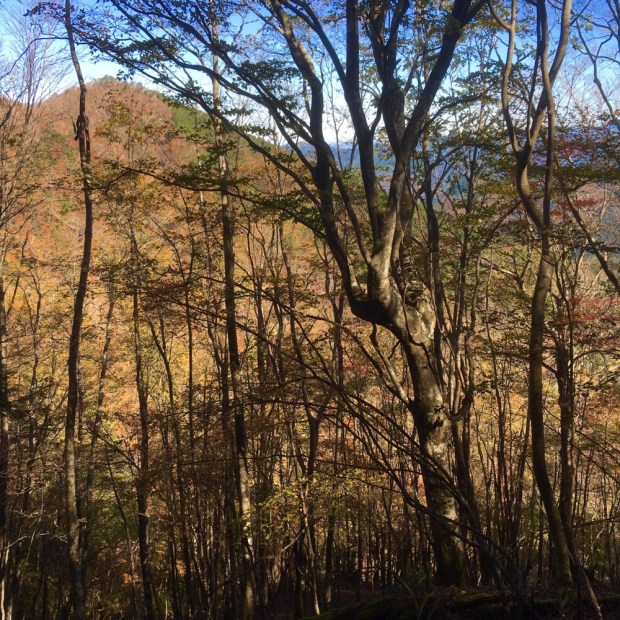
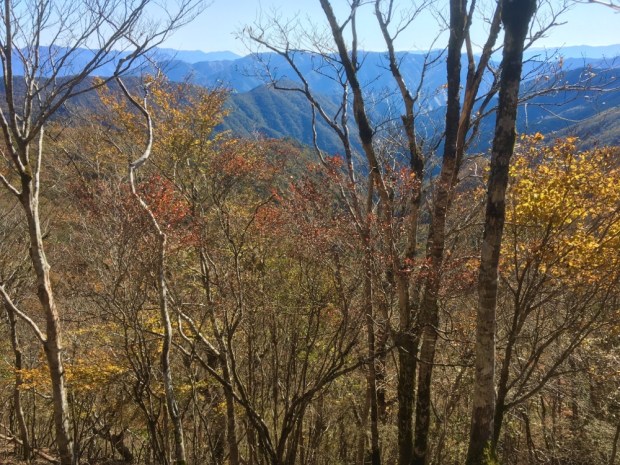
To the horizon the deeply folded steep sided forested slopes rose and fell like giant waves across the land.The autumn colours were a glory on the deciduous trees that formed islands amongst the mass of cedar, larch and pine and cypress.

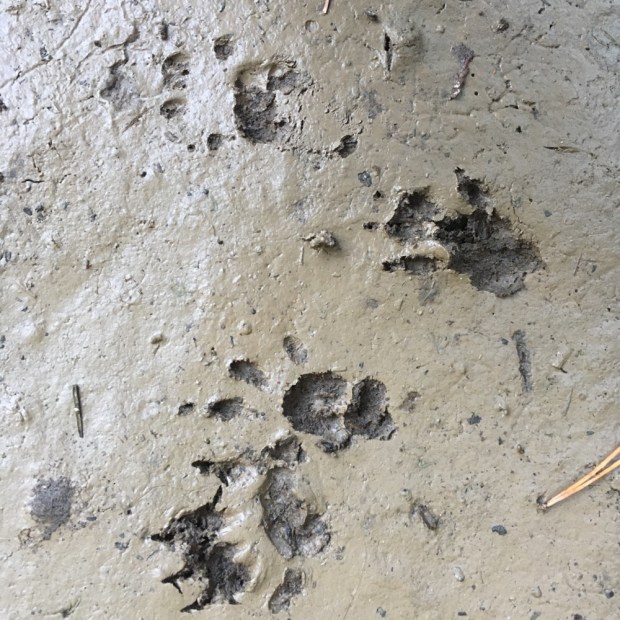
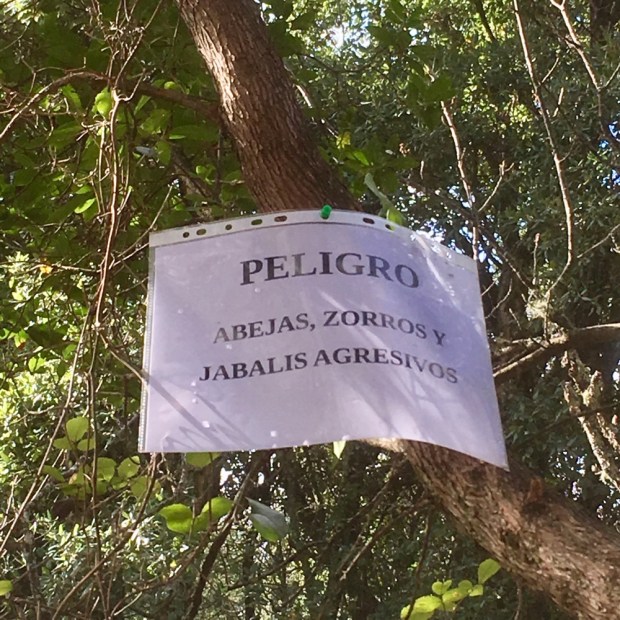
After being warned of bears, snakes, and boar we studied any tracks with care.

We didn’t have to go too far to be reminded of the killer giant hornets around either.

A sign on the suspension bridge alerted us to their presence.

On the other side of the bridge we had what the guide book described as a ” ridiculously steep road climb” up into the tiny hamlet of Otaki where there was a little all weather shelter and a couple of houses.

Continuing up and up we came to a busy stretch of tarmac for 1.6km known as the scenic Koya-Ryujin Skyline road , protected by elaborate concrete works before turning off into bear country again.

We flattened out for awhile at around 1100m joining an old forest road with varied trees and scrubs on either side and awe inspiring views in the distance. We spotted a lot of the unusual Japanese Umbrella Pine. A living fossil that’s been around for 230 million years it has no close relatives.

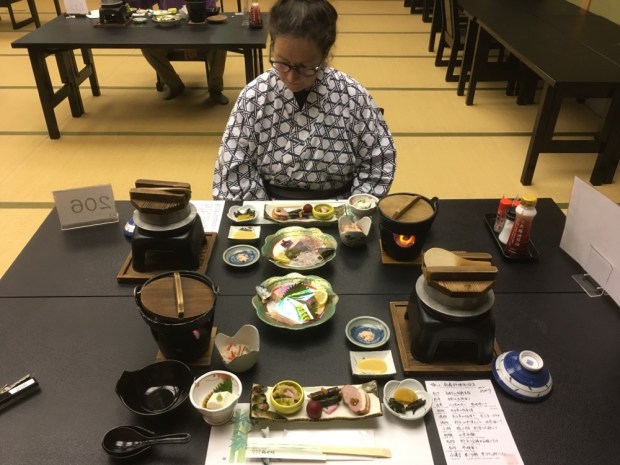
A long steep descent took us down on aching knees past a Jizo statue to the riverside Omata bus stop and vending machine where , after a couple of cans of coffee from it, we rang our accommodation and a couple of minutes later were minibus bound for an Onsen,( hot spring mineral water bath) and a wonderful 10 course dinner. A lot of gain for our pain.

The Onsen is a Japanese cultural phenomena. A ritual that involves all the elements of the meticulous washing that goes into an ordinary Japanese hot bath but with a lot of added value. According to the Japanese Ministry of the Environment there are 3000 Onsen areas in japan with – 28,000 thermal fountain heads discharging 2,700,000 liters of water every minute. Some are indoor, some outdoor and some are just dug out of the river bed. They have healing,spiritual and domestic value ( for cooking in).

We had one at our hotel with huge glass windows looking out onto the river and mountains above and it was so lovely we were at it again at 6 in the morning before we started up ( literally) the trail again in the frosty morning light.

A very long, very steep trek up through the cypress forest was finally relieved by a bit of flat ground where a farm had been until the 1980’s. Now there is just a charming cabin where you can spend the night for free complete with wood burner and fuel and insulated beds. There’s even a wall clock.

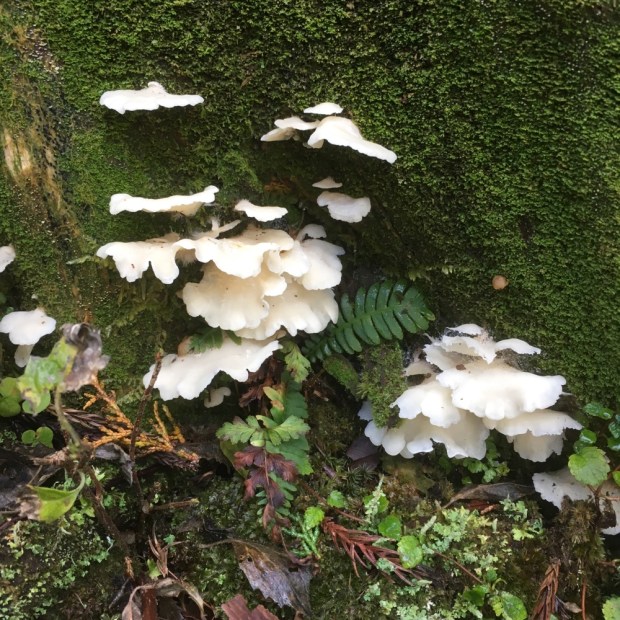
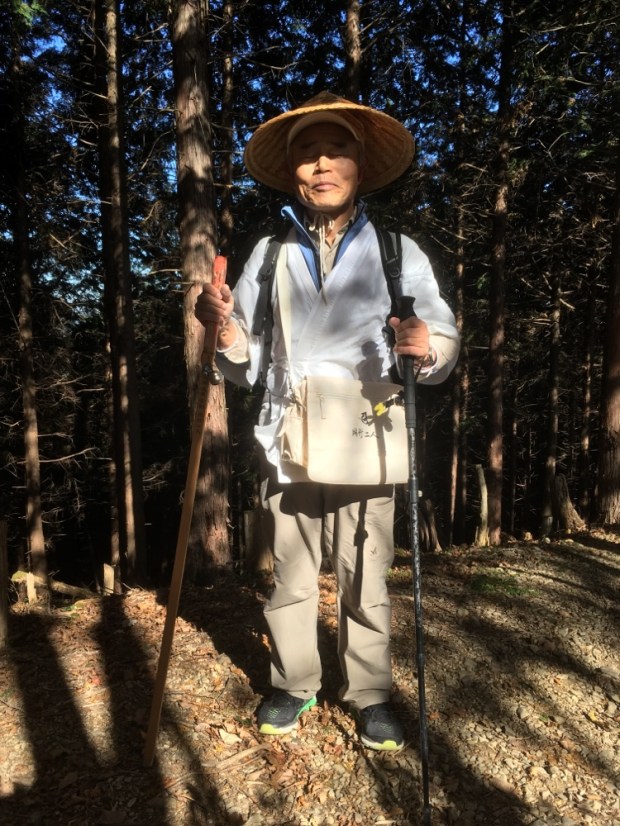
Onwards and upwards past some mushrooms that could have been on the menu last night and into some lovely beach forest with lime and linden and cherry and maple all putting on a lovely show. At the Hinoke- Toge pass at over 1200m we stopped for another rest and met up with a lovely pilgrim. The real deal.

Following the trail along the ridge for another couple of km we slowly rose to the highest point on the whole Kumano Kodo pilgrimage the Obako-toge pass at either 1246, or over 1300m according to your source. Beautiful views, good picnic spot and another free shelter although not as nice as the other.

There was a gathering. We had caught up with a group of 3 Japanese/American and a couple from Singapore and 4 more joined from the other direction from Canada and we shared stories. Unfortunately the Canadians told us we were heading for ” the hike from hell!” in a couple of days. And there I was thinking I was in heaven! Actually the route down did get a little trickier with fallen trees, landslides and very narrow paths.

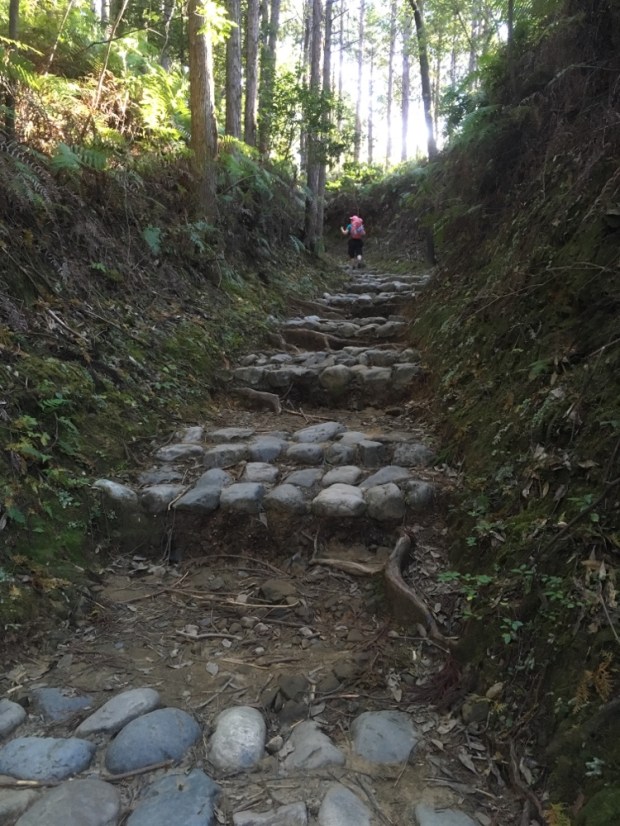
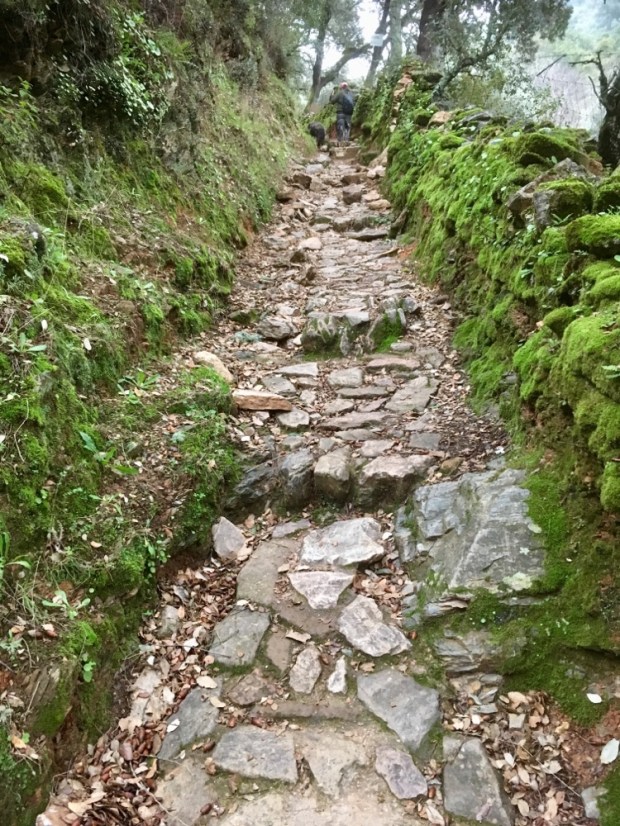
We came to our first cobbled or stone stepped section and another couple of wayside statues on the now steep finale to our day, reaching the river at Miura- guchi. Stepping through the ancient wooden portal we were ushered into a very traditional 300 yr old house ran by mama and son.

Very simple but good food and hot water and soft futon. After a hard day on the trail what more could you need?

KUMANO KODO: The Kohechi Pilgrimage 65km

KOYASAN

For forty years we’ve been thinking how wonderful it would be to travel to rural Japan. Back then we were macrobiotic , a belief system that came out of the countries Taoist leanings, and at that time had a big reliance on traditional Japanese foods. Our fantasies of visiting miso, tofu and tempeh kitchens and studying the seaweed farms were economically out of reach and eventually the macrobiotics faded with the travel dreams.

Later I got into hiking. I had a special fondness for pilgrimages and nearly 15 years ago I walked the 880km Camino Frances to Santiago and on to Finisterre, so when I discovered the Kumano Kodo on the Kii peninsular south of Osaka my interest was piqued to say the least.

We were heading to Oz anyway to stay with our son so a 10 day stop over was planned. A very helpful agency ( kumano-travel.com) assisted with sorting accommodation along two different routes to the 3 Shinto/ Buddhist shrines that have formed this pilgrimage for over 1000 yrs.

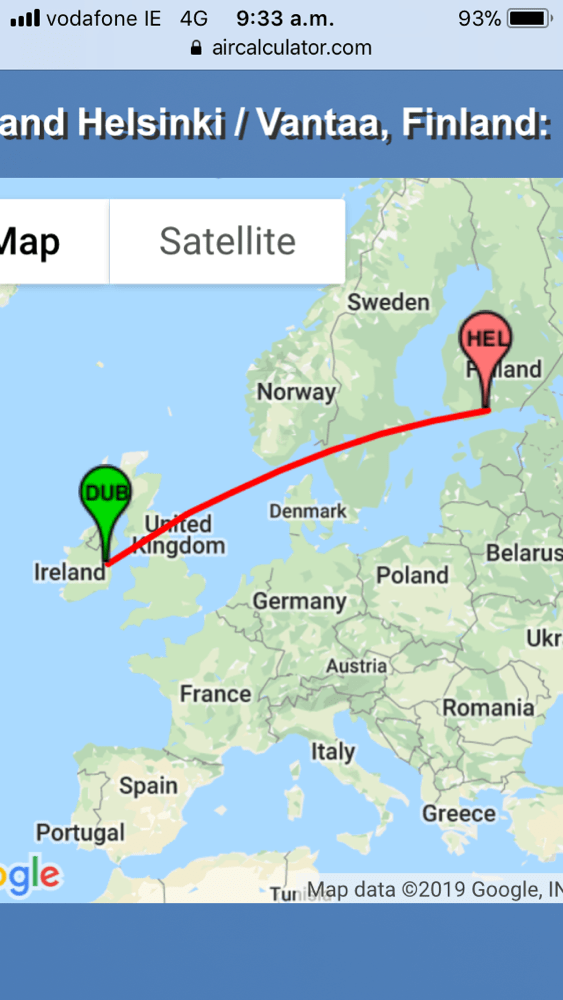
Starting at 800 m altitude in Koyasan, the Kohechi is the toughest of the half dozen routes, traveling over 1000 m passes everyday on steep tracks through the forested mountains. We arrived by bus on switchback roads from the airport after a sleepless day and nights flight from Ireland via Finland.

We got in the mood for some Japanese style ” forest bathing” in the middle of hectic Helsinki airport where a 360 degree movie of forest, stream and lakes was very chilling.

The real thing came as soon as we got off the bus with a steep stepped path up through the trees to our first shrines and temples with votive offerings of candles, coins and incense.

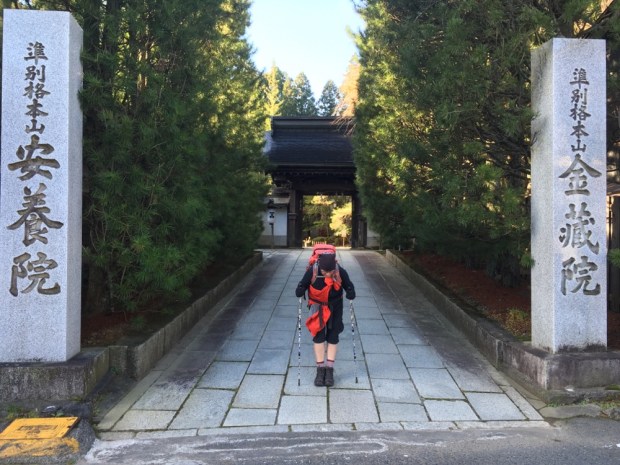
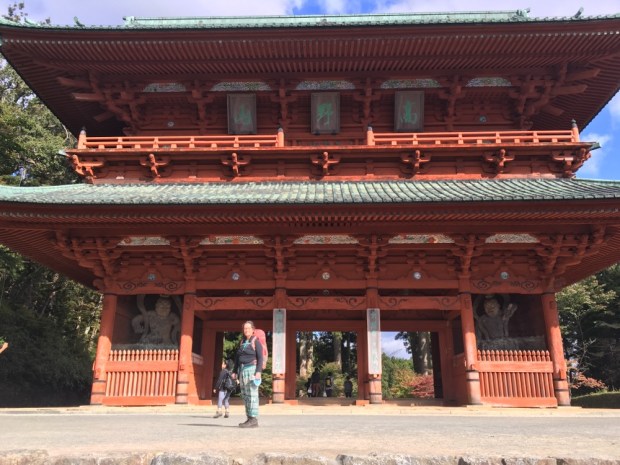
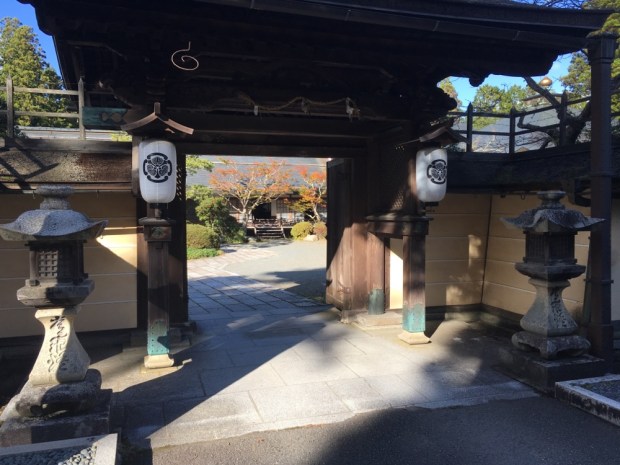
We entered the Koyasan sacred temple complex through the Daimon gate and continued in the unexpected sunshine to explore the UNESCO World Heritage site.

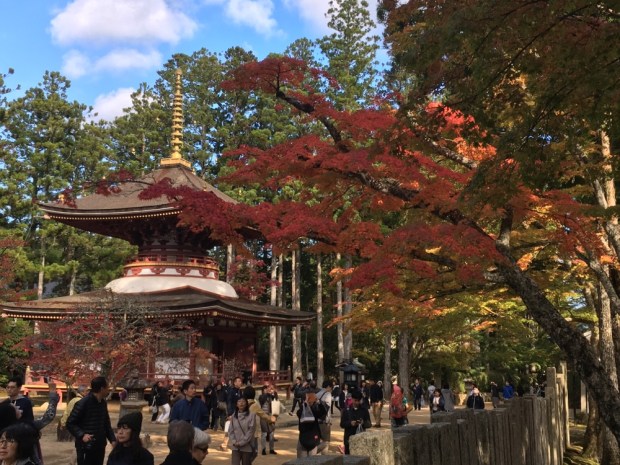
We had read that the autumn colors could be spectacular- and indeed they were. There were many holy water sources that people were bathing in and drinking from and Buddhist monks were selling calligraphy and assorted charms and amulets.

They seem to dress the statuary for dinner! We called into the tourist info Centre where I had arranged to pick up our ” pilgrim passports”. In 2014 I think, the pilgrimages were twinned with the Camino de Santiago and both declared World Heritage routes. So we collect stamps along the way to obtain the select status of ” Dual Pilgrim”!

We found the temple we were staying in and were led by a cheerful monk to a traditional room complete with sliding doors/walls of paper, futons, tatami mats and a little balcony onlooking a wooded garden.

An early Buddhist vegetarian dinner, where a monk kindly gave me a little stool after witnessing my struggles to manage on the floor, of pickles, tofu, seaweed, rice, radish, raw fish, tempura, miso, shoyu and all our other old favorites was followed by a communal Japanese hot bath and bedtime in our kimono.

In the early morning we will attend the Buddhist ceremony with the monks and after another healthy vegetarian meal will strike out into the mountains on the first leg to Omata. Only 17km but estimated at 8 hours. Must be steep!

Sayonara.

Rambles on the Sheeps Head

On a gorgeous autumnal weekend we returned to West Cork on a visit, staying with a friend on the narrow finger of rocky land that points out into  the Atlantic between the Mizen and Beara peninsulas. With Dunmanus bay to the south and Bantry bay to the north there is usually a stunning sea view to admire from the network of way marked walking routes that the Sheeps Head is blessed with.

IMG_3962

Anyone living around the area is really spoilt for choice when looking for a wild and open hiking route. Not only is there the long distance (175km) Sheeps Head Way that circles the entire peninsular and now continues, via Bantry to Drimoleague and Kealkil, but there about 20 other loops and linear spurs that criss cross north and south, of varying distances . We only had time for a couple of loops but are determined to return.

Screen Shot 2019-10-31 at 20.55.34

The logo for the Way features two rams with interlocking horns and is taken from some 6th century carvings on a standing stone near Bantry. They are supposed to illustrate the Gospel story of the people of Gidgeon and the Israelites who fought for many years. No-one won, no-one surrendered- they accepted to live together. So the interlocking rams symbolise togetherness and resilience. The route was opened by the then President Mary Robinson in 1996 and has since won awards and been chosen as best Irish Walk by Country Walking magazine.

Screen Shot 2019-10-28 at 11.49.49

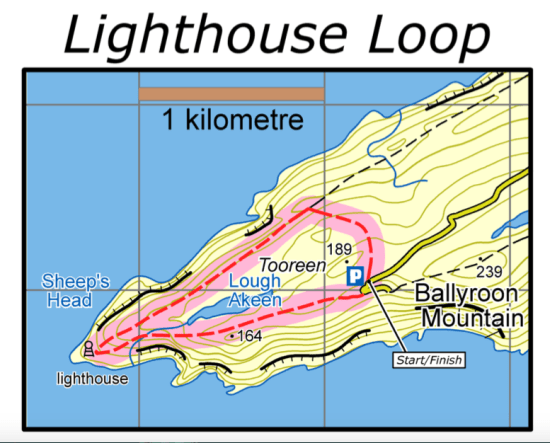
We headed down in the camper to the end of the road on our first evening to do the Lighthouse loop before the sun sank into the sea. Listed on the Irishtrails website as moderate/difficult the 4km route was supposed to take 2 hours but we found it easy enough though rugged in places which made it interesting. Starting off from the charming carpark cafe the Cuppa Tae ” the tea shop at the end of the world” we set off north to loop anticlockwise.

IMG_3919

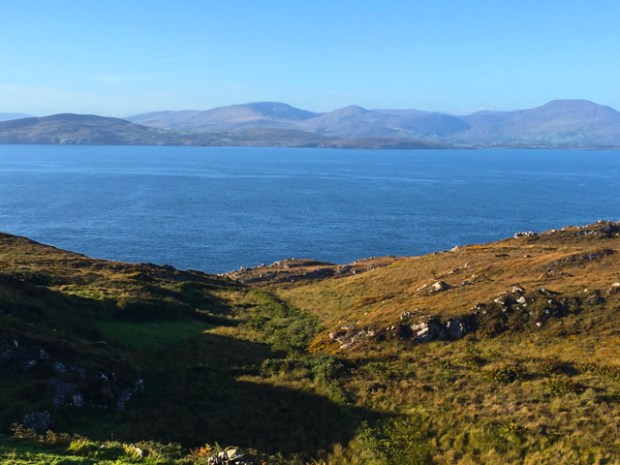
A narrow rocky path led us steeply down into a little valley towards the deep blue sea and the mountains of the Beara. In such a remote spot we were surprised to pass the remaining stone walls of a simple dwelling.

IMG_3922

We continued on over marshy hollows and rocky outcrops to where our loop joined the Sheeps Head Way proper and turned west along a narrow undulating cliff top path .

IMG_3921

The bays both north and south of us are thankfully free of the jarring fish farm nets and mussel rafts that blight so many other once pristine seascapes off the coast of western Ireland. Seamus Heaney wrote a poem about here called “The Peninsular” whose last lines describe this end of the world well. “Water and ground in their extremity”

IMG_3927

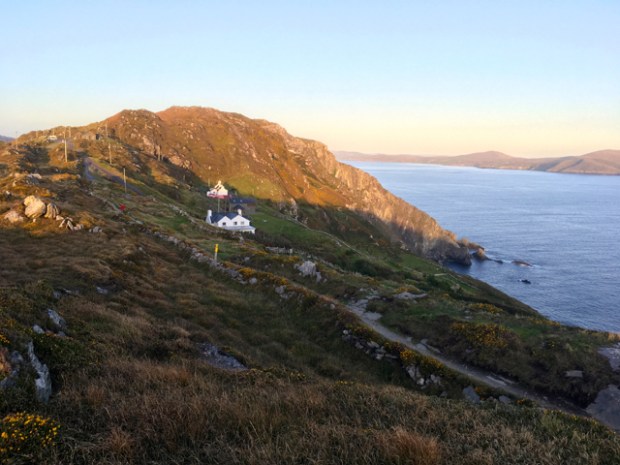
We puzzled over the enigmatic circle of white stones before spying the tiny lighthouse below us and realising its function as a rustic helipad. The small white building clinging tightly to the rocks at the grounds extremity is not very old. Built in 1968 to guide tankers to the ill-fated oil terminal on Whiddy Island off Bantry, its light is visible for 18 miles across the often ferociously turbulent waters.

IMG_3932

The primitive helipad must have been a busy spot during the construction when 25o helicopter flights were needed to transport all the materials including the lantern and optics from Kilcrohane 9km away. They also had to fly out all the poles needed to bring out the electricity to power the light.

IMG_3945

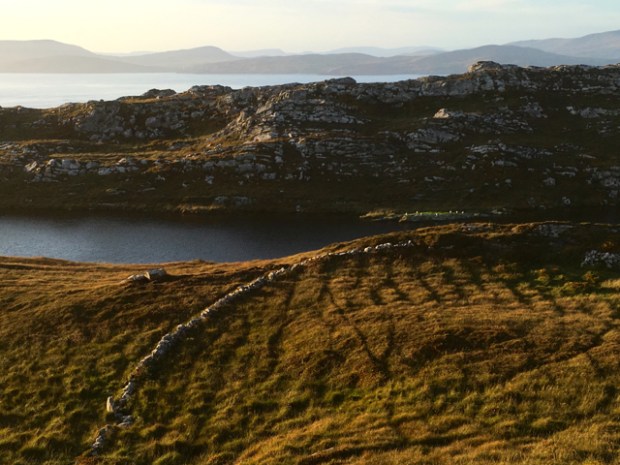
Gazing out west from the rocks above the lighthouse we weren’t lucky enough to spot one of the whales or dolphins that regularly appear on their migrations and so turned onto the now well worn and larger path back towards the car park passing some dramatic cliffs and then the still waters of Lough Akeen, where the surrounding fields still bore the memories of long gone residents in the form of the potato ridges, clearly visible in the slanting evening light.

IMG_3946

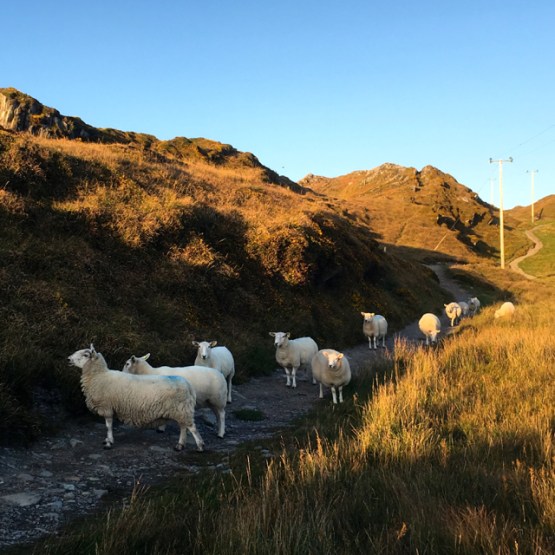
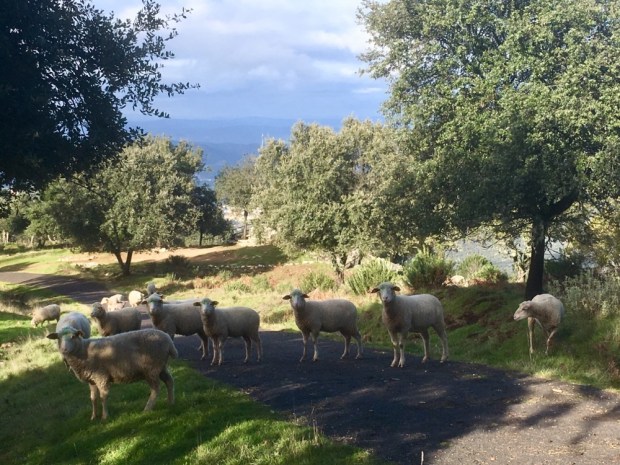
The stony path filled with sheep that scattered into the heathery grass as we slowly climbed up past the outlying farmhouses to the sadly closed “Cuppan Tae”.

IMG_3948

IMG_3951


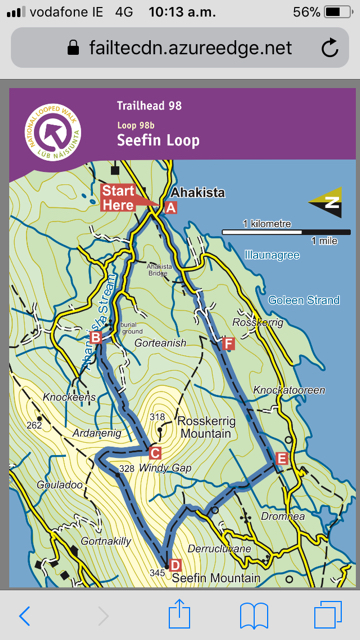
The following day we were blessed with more beautiful weather as we set off on another, longer loop walk. The Seefin loop is 13km and climbs to the highest point on the peninsular at 318m. The route includes a bit of quiet backroad, ancient old boreens, field paths and open and heathery hillsides. We would be hiking down the rocky old red sandstone ridge of what author, musician and walker Mike Harding described as ” the most beautiful landscape in Ireland”. Praise indeed!

IMG_3957

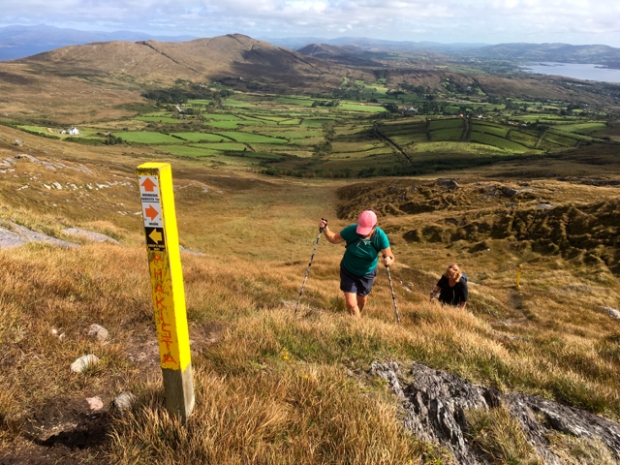
Setting off from Ahakista on a typical tranquil West Cork backroad lined with fuchsia we followed the stream passed the old burial ground, and leaving the tarmac behind, began to climb a boreen between the field hedges.

IMG_3960

Once out on the open hillside we followed the marker posts up the flank of Rosskerrig to Windy Gap as the vistas grew ever more impressive, with the sea views on both sides.

IMG_3964

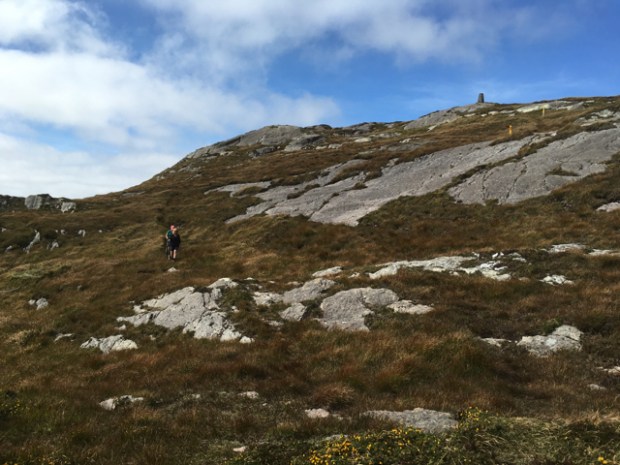
At a meeting of routes we turned towards the Sheeps Head peak glorying in the sunshine. This area is blessed with perhaps the mildest climate in Ireland due to the warming effect of the Gulf stream that washes this coastline.


Ground down over countless millennia the skeletal bones of this landscape show through the thin covering of rough grasses. We spotted many sticky sundew plants hiding in the turves awaiting their insect dinners. It was a fairly steep descent from the trig point on Seefin, heading south with marvellous views to the Mizen Head and Mount Gabriel with Cape Clear and the other islands of Roaring Water Bay faint in the distance.

IMG_3978

IMG_3980

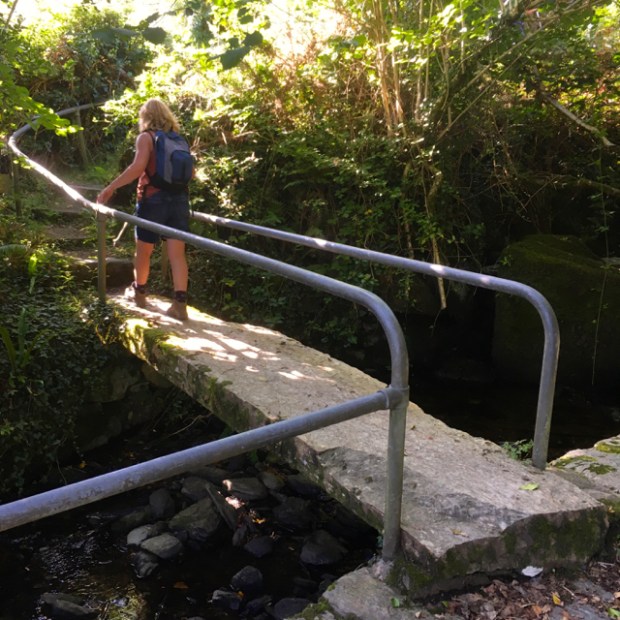
Before long we had reached the highest farmyard on the slopes and crossing it, we carried on down an old Mass Path over a little bridge to reach the original Ahakista road now a charming 3km green lane complete with a stone seat to rest awhile.

On reaching tarmac again we turned to cross an impressive stone slab bridge spanning a stream to reach one of west corks many stone circles. This one was cleared of thick vegetation on rediscovery in 1995.

IMG_3989IMG_3993

A short distance through the bracken, heather and gorse and we were back at the fuchsia lined lane and our car. A pint in the waters edge garden of Arundels by the Pier completed a memorable West Cork ramble.

                                                    A BURREN RIDGEWALK

While I’m here at my blogging spot i’ll just do a brief post on my last hike, a 13km Burren ridge walk from the bottom of Abbey Hill to the top of Slieve Carron.

IMG_4053

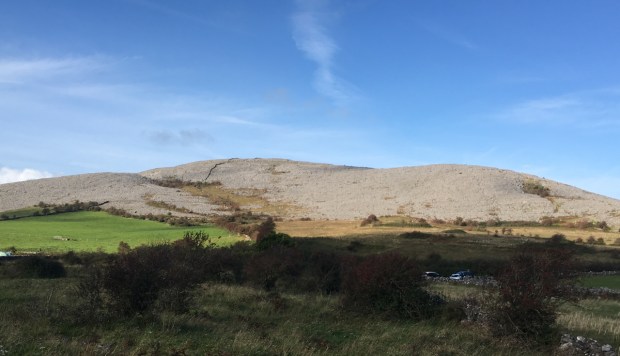
Parking at the end of the grassy unpaved road that traverses the lower slopes of Abbey Hill I started across the narrow strip of grassland that borders the naked limestone whose shelves of rock reached up towards my first summit on Oughtmama. I followed the stone wall that separated counties Clare and Galway, the views of Kinvara Bay and the Gort lowlands a colourful and fertile contrast to the stark bare hillsides above me.

IMG_E4055IMG_4056

A flatish stretch before the peak was followed by views down the wild and lonely valley that contains the remains of the 3 Ucht Mama churches, long roofless and abandoned.

IMG_4057IMG_E4058

From here, over Turlough Hill and on towards Mt Carron, I was deeply immersed in the glaciologist-karst landscape, the only sounds the clinking and clanking of the loose rocks I strode over as I crossed the slabs and cracks of the clinks and grikes. A powerful and unearthly world with so many contrasts and contradictions. Seemingly a sterile desert- so rich in flora. Seemingly so empty of human life- containing a wealth of the ghosts of settlement through the ages. Huge areas of bare grey rock-alongside fertile fields of vivid emerald green.

Revelling in the “natural” world I had to remind myself that it all displayed the hand of man. The bare hills- denuded of trees by neolithic farmers, the massive man hours involved in the stone wall building and the sacred sites and defendable spaces of the burial cairns and hill forts.

Atop the huge burial cairn on the summit of Slieve Carron , yet to be excavated, I pondered all those passed lives , including that of a close friend whose memorial site was just below me, and felt deep gratitude that I also lived a life amongst these surroundings.

Return to the Galtee Mountains

IMG_3822

I first climbed Galtymore, at 919m the highest peak in the Galtees, nearly 40 years ago whilst tackling all of Irelands 3000 footers with my old chum Phillip who has long since passed away. I have thought of him on my other visits to the area but have always been thwarted in efforts to climb again in the deeply folded hills by the fact that I’ve been accompanied by unwelcome dogs- forced back by insistent signage and unwilling to incur the wrath of an irate sheep farmer.

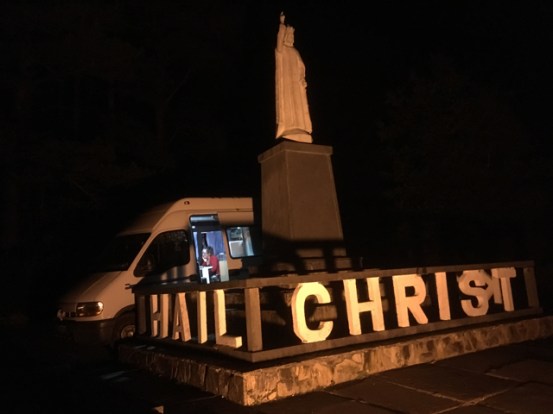
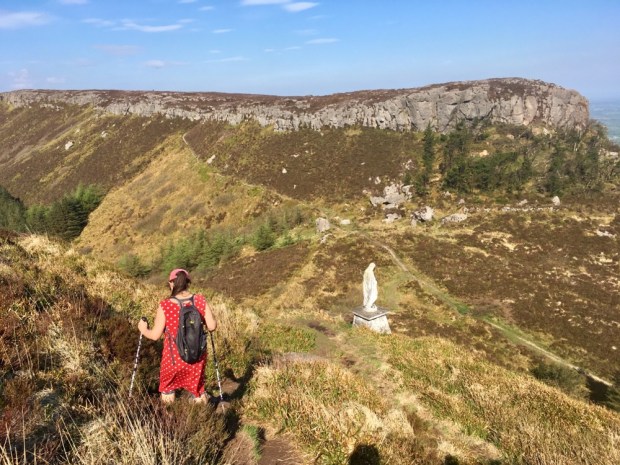
But now our dogs have also passed away and Sally and I returned to hike unheeded, parking up the night before under the protection of the famous statue of Christ the King, his hand raised “in blessing the Glen, its people and all those who pass by”.

IMG_3828

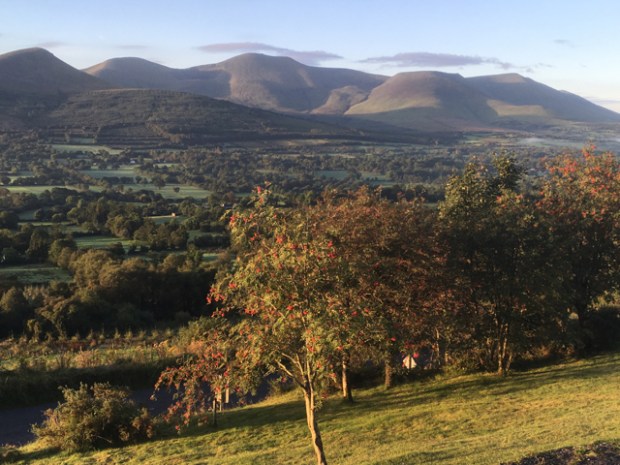
The glen being blessed is the beautiful Glen of Aherlow, running east/west below Tipperary on the north side of the Galtees, the highest inland mountain range in Ireland.

IMG_3842

IMG_3836

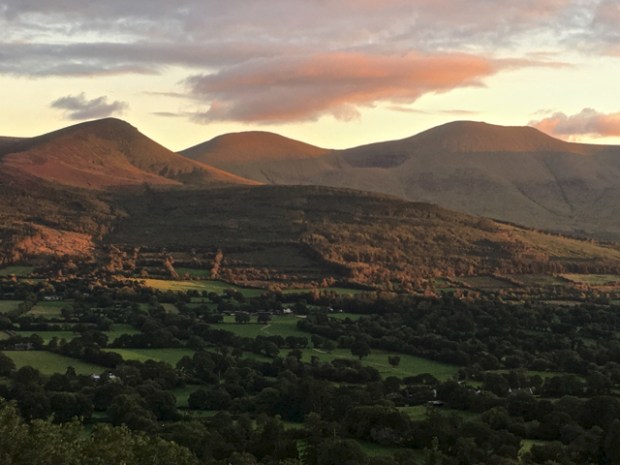
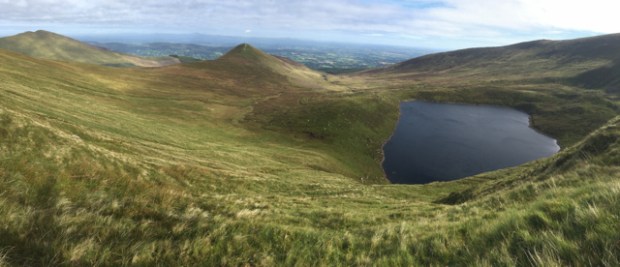
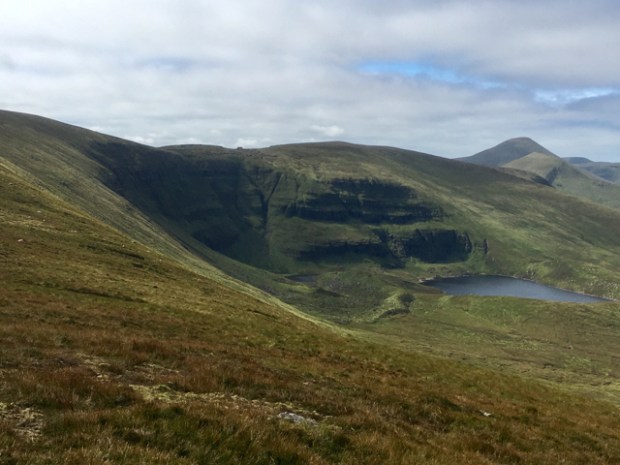
It looked fine in the morning light as I surveyed peaks and valleys and tried to follow the route we would take to Lough Muskry, the largest of the 5 glacial cirques lakes on the northern slopes of the Galtees. From there our 14km hike would take us up to the ridge above before circling around to the east crossing Greenane peak at over 800m before looping back down to the valley floor. Ground out of the mountain by rock and ice 25,000 years ago the 20 acre lake is over 100ft deep and a major source of water for the area.

IMG_3864

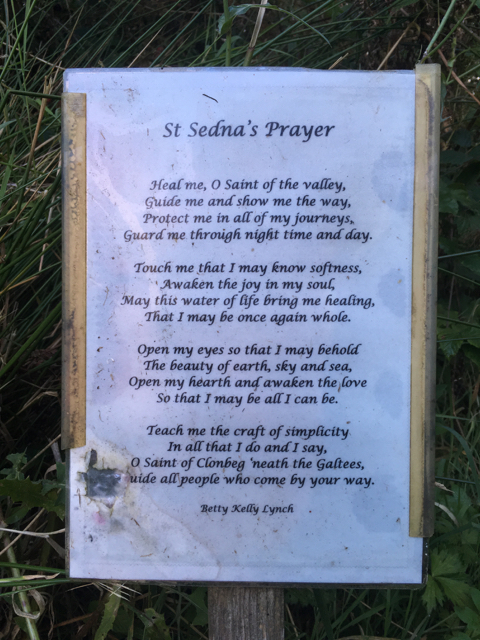
On our way from Christ the King to our starting point we called in to Clonbeg ,where St Sedna’s holy well and rag tree rest quietly beside the ruins of a medieval church in the grounds of the Church of Ireland chapel built as the Massey family memorial. The churchyard contains the graves of both catholic and protestant and has a tranquil and timeless vibe about it.

IMG_3849

IMG_3847

IMG_3848I cleared the pondweed and had a sip of water to fortify me for the hike. The story goes that 3 local men off to the Crimean war visited St Sedna’s  well before heading off and their safe return was attributed to the miraculous powers of the waters.

IMG_3846

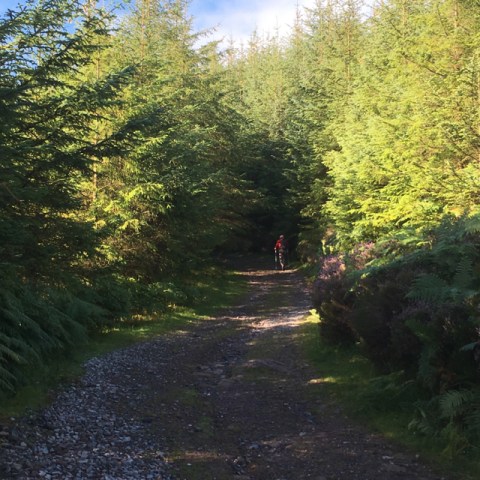
Healed, guided, protected and guarded by St Sedna we drove to the trailhead, (truth be told, after getting lost) and started up the forest track from the empty car park. We were the first onto the hills on this fine sunny weekend morning.

IMG_3853

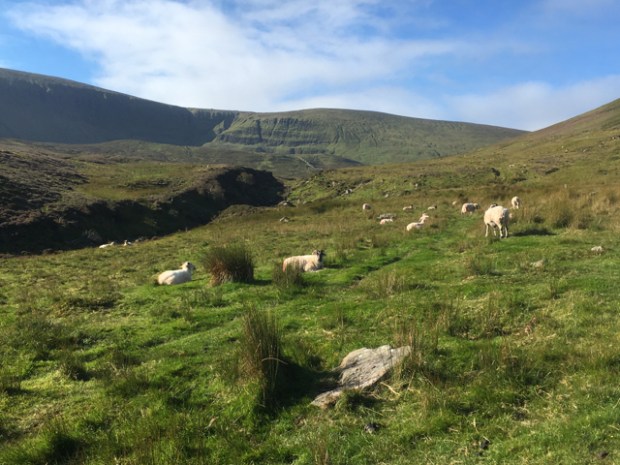
The track followed a rushing stream up a long valley as we slowly rose to the forest boundary and the open mountainside. The formidable cliffs above Lough Muskry came into view as we continued up a grassy path alongside the sheep.

IMG_3854

IMG_3855

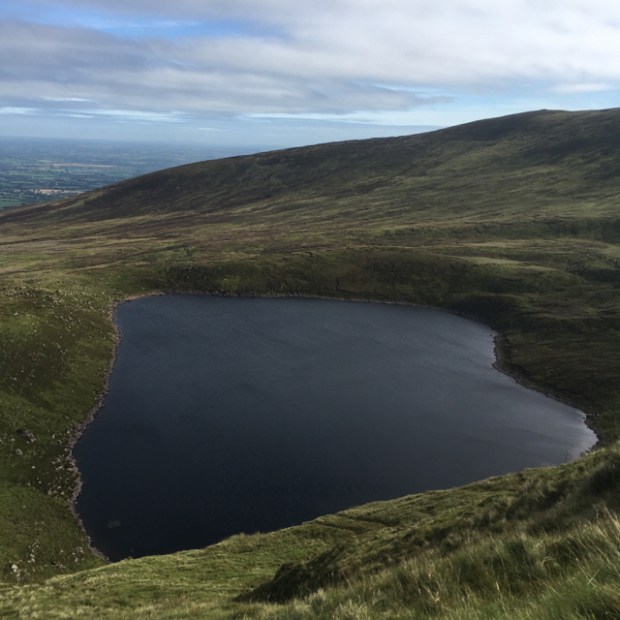
Looking back northwards the rich and fertile Tipperary farmland lay like a green blanket to the horizon. We climbed steeper now, across the eastern slopes of Knockastackeen, forded a stream and reached a point above the still and dark waters of the lake. Originally known as Lough Beal Sead, the Lake of the Jewel Mouth, it was the dwelling place of 150 comely maidens who would be transformed into birds every second year, one of whom became The Most Beautiful Bird in the World and was allowed to wear a necklace containing the sparkling Jewel of Beal Sead.

IMG_3865

We were now at about 500m and had a very steep climb up the grassy slope beside the cliffs to an unnamed peak at 785m where we turned east towards the jumble of conglomerate rocks known as O’Loughnan’s Castle standing atop the ridge. These and other nearby rocky outcrops are former nunataks, the bits of rock that poked out above the glaciers.

IMG_3869IMG_3872

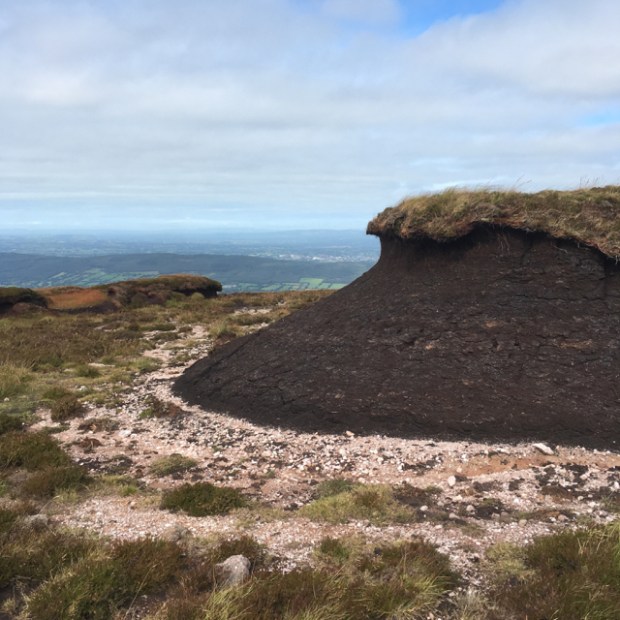
Crossing the broad peaty col through some peat hags we climbed the long and gradual slope to the trig point on the flattened summit of Greenane. The wonderful view from there was not only of the whole Galtees but also the Comeraghs and Knockmealdowns to the south and east and the Slieve Felims and Silvermines to the north as well as pale ranges in counties Clare, Limerick, Kerry, Galway, Offaly, Waterford and Cork. I was also sure I could see the sea around Dungarvan through a gap in the mountains. Greenane means ” sunny spot” and so it was, enjoying our sarnies and feasting on the view.


After a chat with the fit fellow we’d seen racing up the slope behind us we headed off down the ridge to a lower peak “Farbreaga”- False Man, from the pile of rocks at the summit that supposedly looks like a man from afar. The rocks could be the scattered remains of a booley house- a stone shelter used by farmers until the 1850’s when grazing cattle high on the mountains in the summer months.

IMG_3894

We turned off the ridge and descended through the maze of eroded peat hags enjoying spectacular views of Muskry and the cliffs.

IMG_3897IMG_3898IMG_E3896

With our eye on the forest entrance we had left in the morning we clambered down the tussocky slopes to reach the rushing stream, its tumbling waters twinkling in the sunshine.

IMG_3900

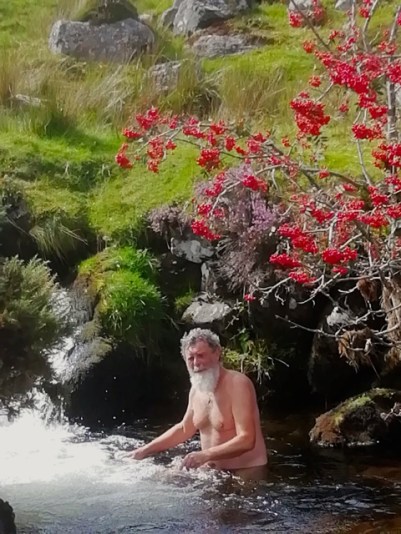
It had been a fine hike and we determined to return again, realising in was as near to us as the more frequently visited Connemara. There were more people about now heading up into the hills for a post sunday lunch walk but by the look of the sky we’d had the best of the day and it was time to have a quick hidden skinny dip in the chilly waters before rejoining the forest track back to the now full carpark before the rain arrived.

CPRN7231

THE FISHERMANS TRAIL: Vila Nova de Milfontes to Porto Covo (20km)

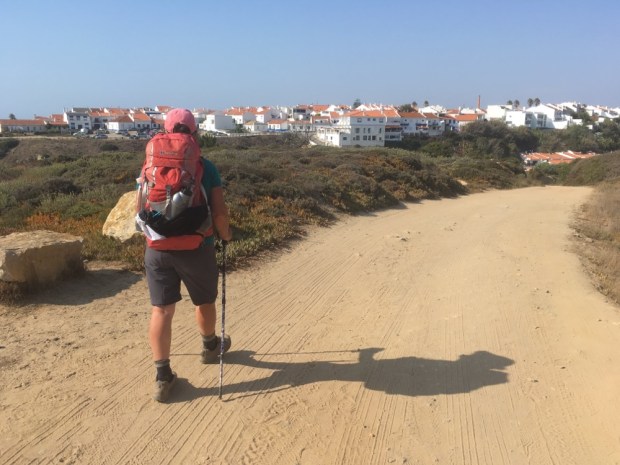
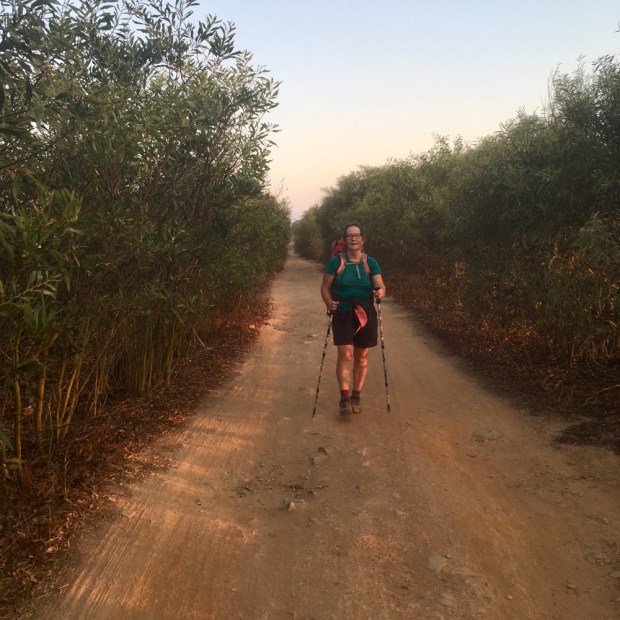
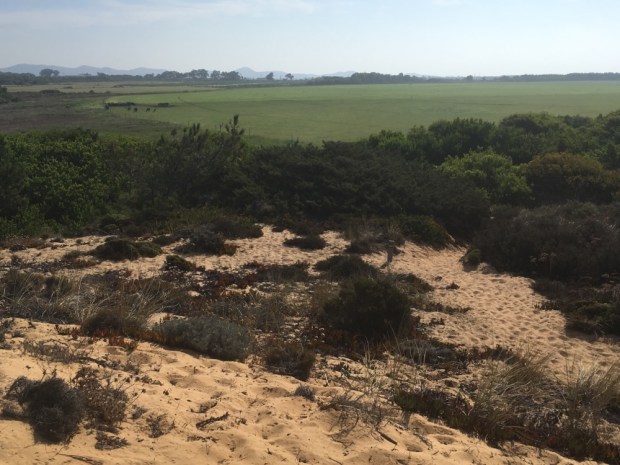
Our last day on the trail was the toughest with long stretches of deep soft sand traversing the most extensive consolidated sand dunes in the whole of Portugal. It was another reason we had started in the south with a short and easy acclimatization to track life.

Our day had started early to claim as much cool as we could. With all the advice against hiking here in August we had been careful, and lucky, with unseasonable temperatures in the high 20’s rather than 30’s.

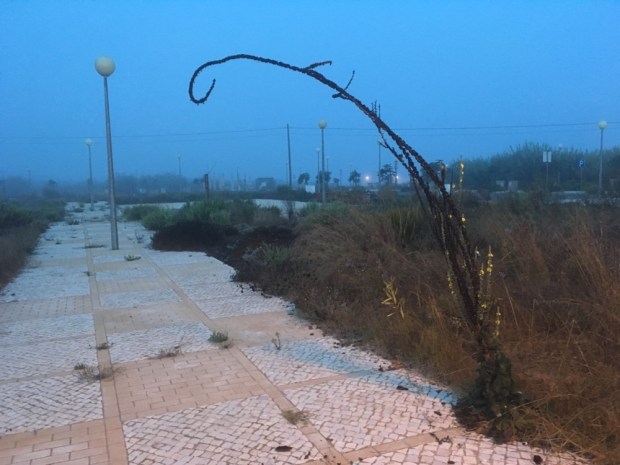
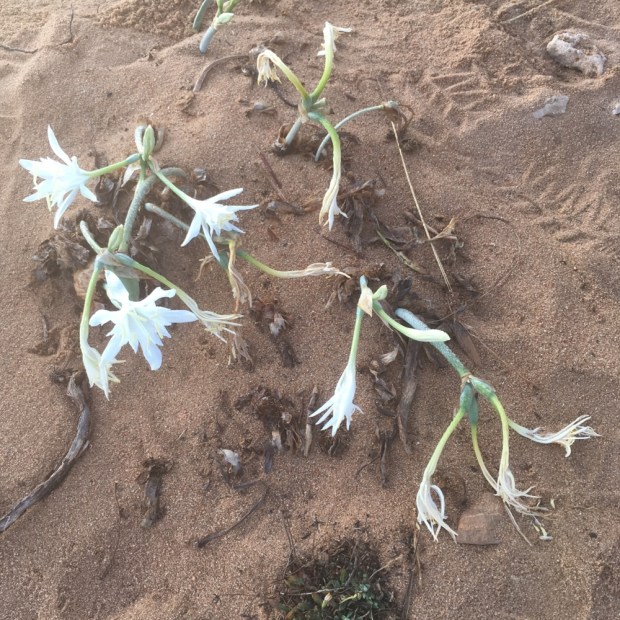
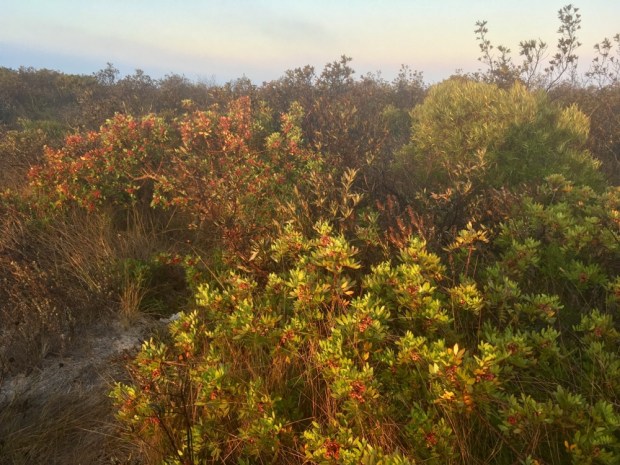
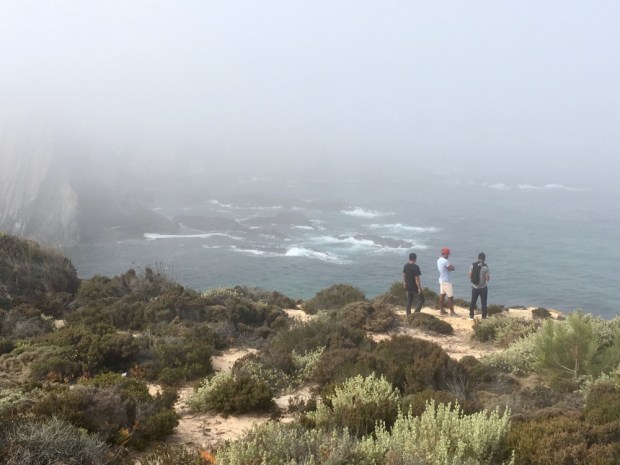
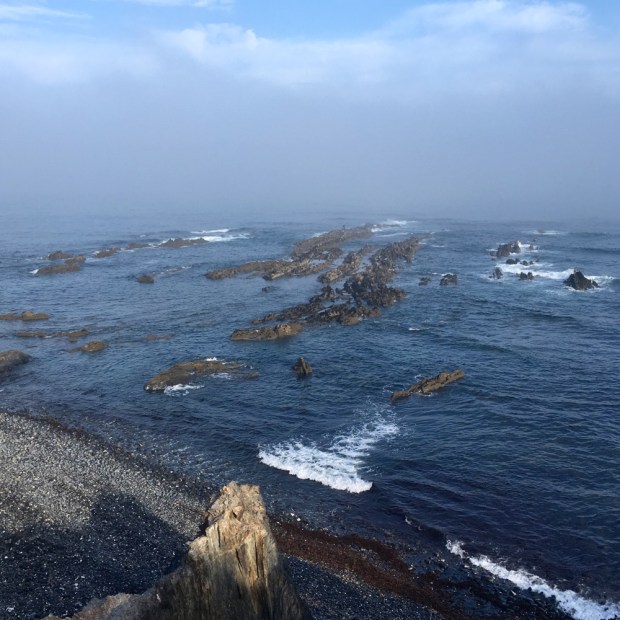
Passing through the unfinished developments at the edge of town, strange plants emerged from the gloom.

The overnight sea mist had left its deposit of moisture and the snails were out in force, covering the bushes and making abstract art of their trails in the sand.

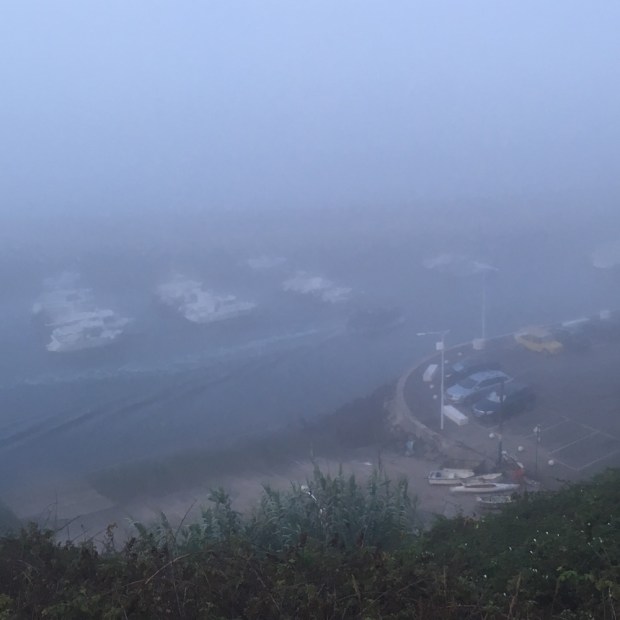
After a couple of km we heard boat engines and watched a fishing boat make its way out of the harbor at Porto das Barca’s through the mist.

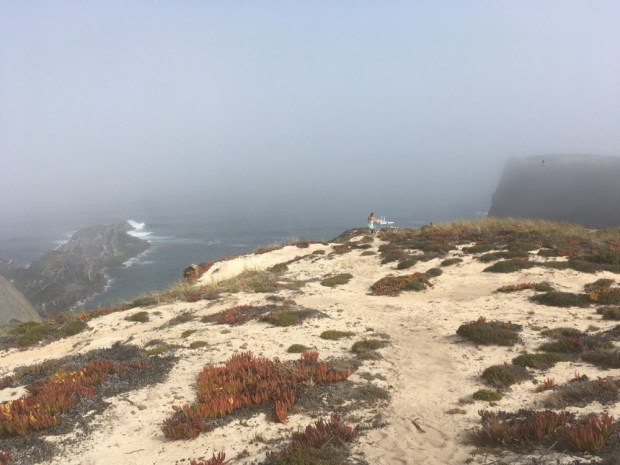
As the sun started to rise the warming temperature burned off the mist and the coastline appeared again.

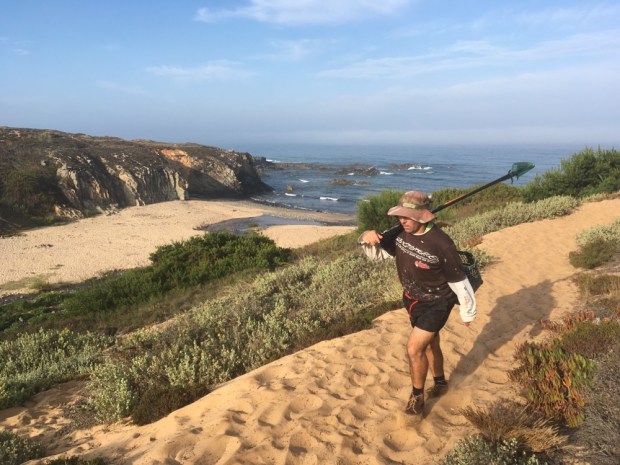
After the last few days of luxuriating in the macrocosm of the wide open spaces and dramatic headlands of this beautiful and undeveloped Alentejo Coast I started to appreciate the microcosm of the plant and rock formations.

I think I’d would be fabulous to be here in April or May when there is a carpet of flowers although with so many evergreen species there is always color when a lot of Southern Europe is a uniform burnt brown.

The scent of the various herbs has also been a delight as well as the familiar heady aroma of hot pine needles and the invigorating briny sea smell carried of the spray.

Our aural senses had been satisfied with the constant rhythmic thud and crash of the breakers, the calls of the seabirds and the only vehicle noise was the low hum of boat engines carrying far across the waves.

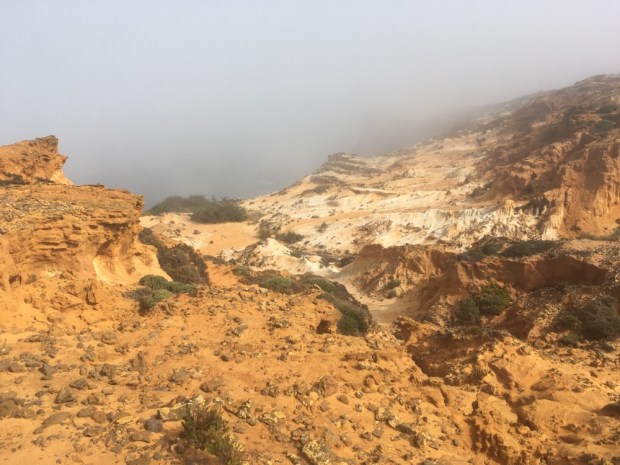
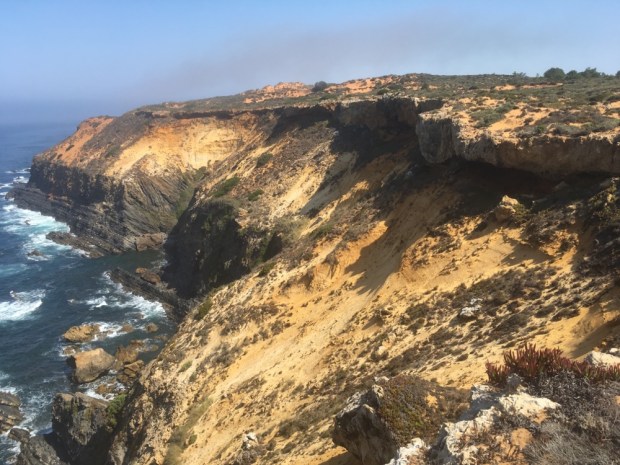
The rocks told tales of rising and lowering seas and coastline with massive contortions of strata witness to upheavals over millions of years. At times the beaches were 60 miles out into the current waters and yet sometimes we were walking on a bed of coral and shells on the cliff tops high above the sea.

Everywhere were little paths threading down to the fishing rocks on impossibly steep routes. We saw ladders and ropes to aid the fishermans descent and large encampments on very remote beaches. How they got all their kit down and back up was beyond us.

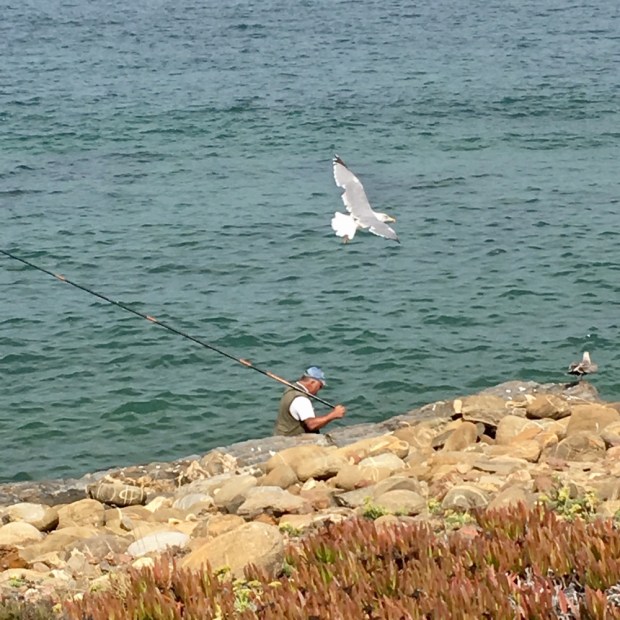
There is a guy fishing from the very end of that far spit of needle like rock in the last photo.

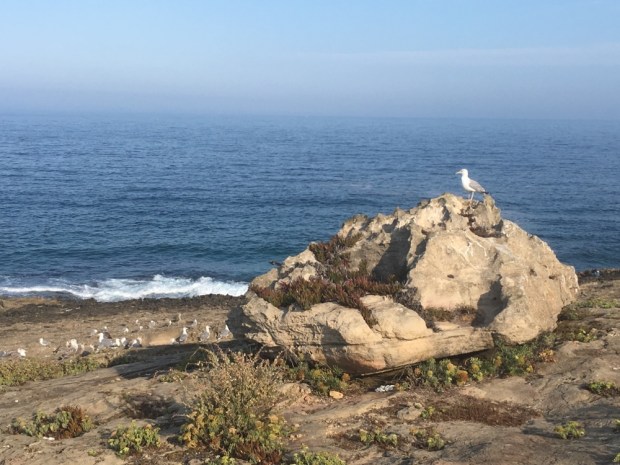
The white stocks also had precarious perches although with very good defenses building their stick nests atop towering sea stacks.

At Angra da Barrela the birds and fishermen came together on a rocky limestone headland lined with men and rods in a landscape very similar to Blackhead, at home in the Burren, another- different – fishing spot.

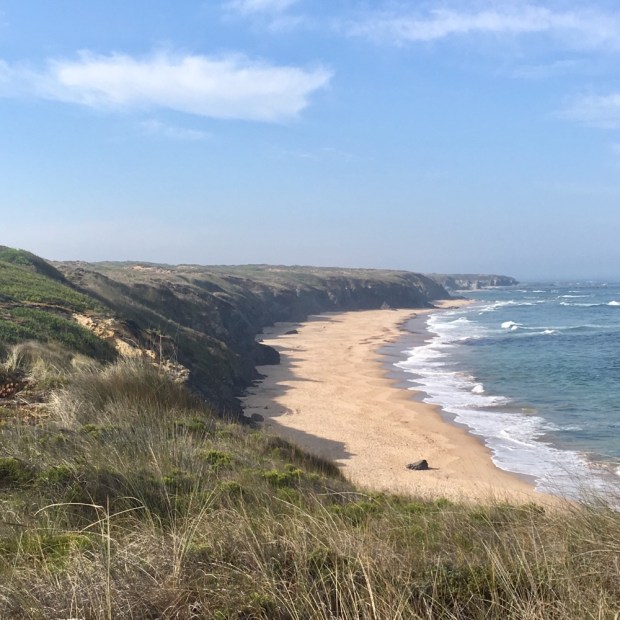
But it was the cliff top paths across the rugged headlands though the endemic plant life sculpted by the sun, salt and wind that was truly a joy, although the sections of deep sinking sand were slow and hard.

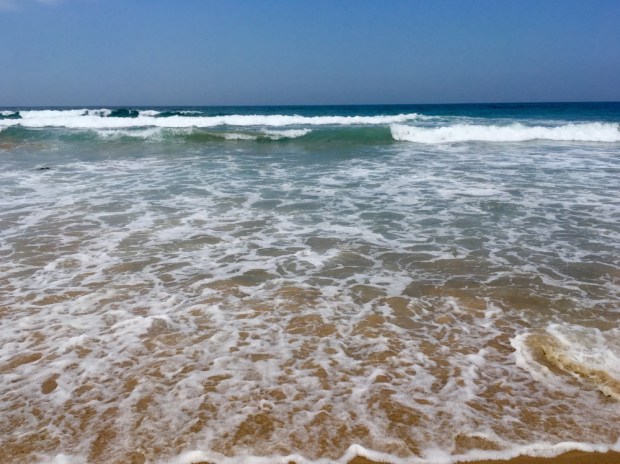
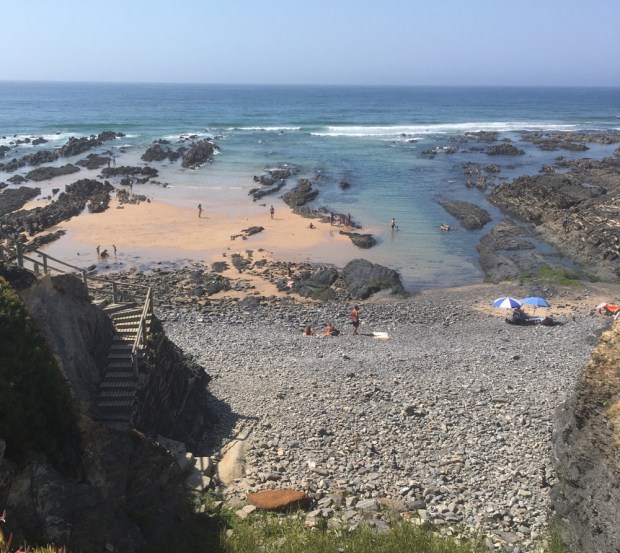
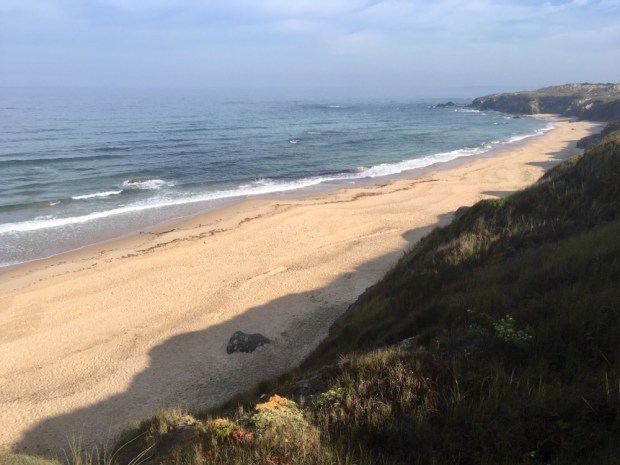
And of course the fabulous beaches with the promise of cold water immersion in the heat of the afternoon were a treat keenly anticipated as the sweat dripped.

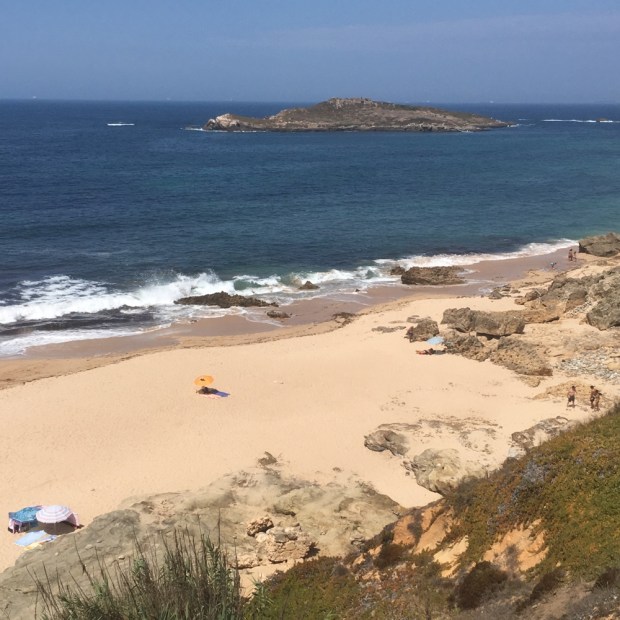
We stopped for lunch in the bar restaurant next to the fort above the island protected beach of Ilha do Pessegueiro- hanging on to our last couple of hours on the trail.

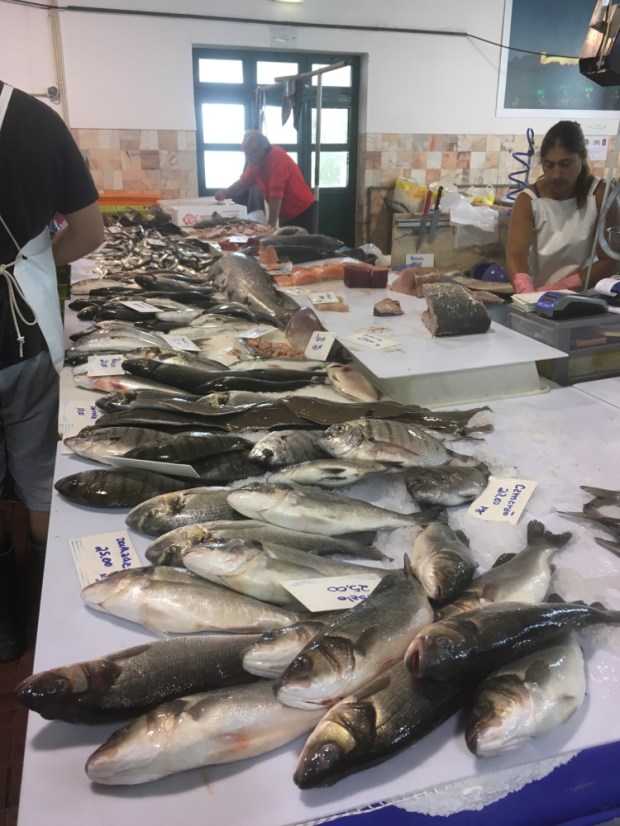
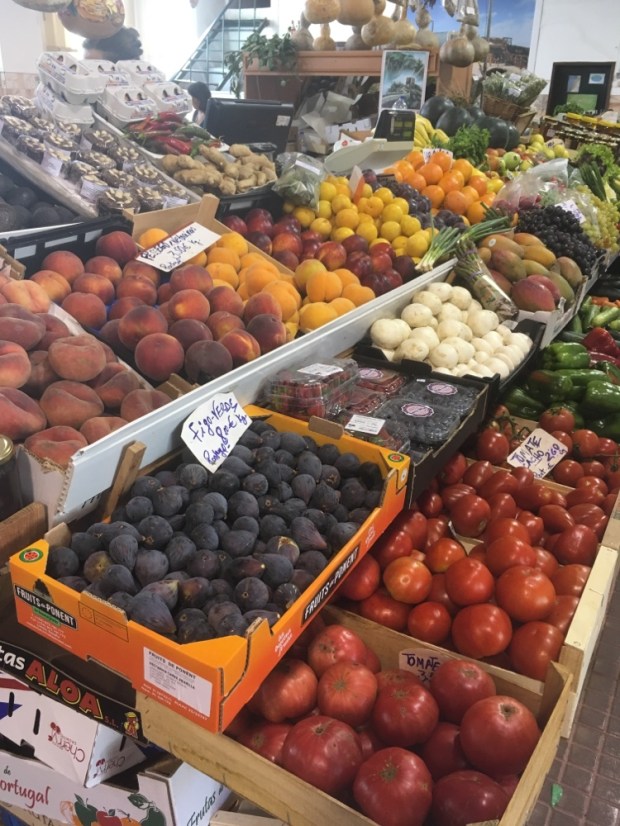
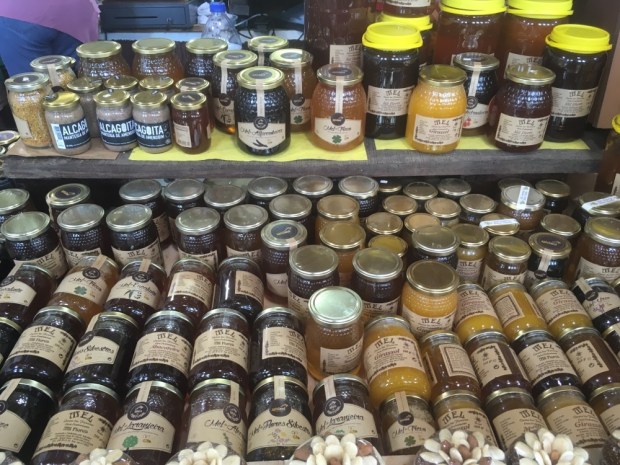
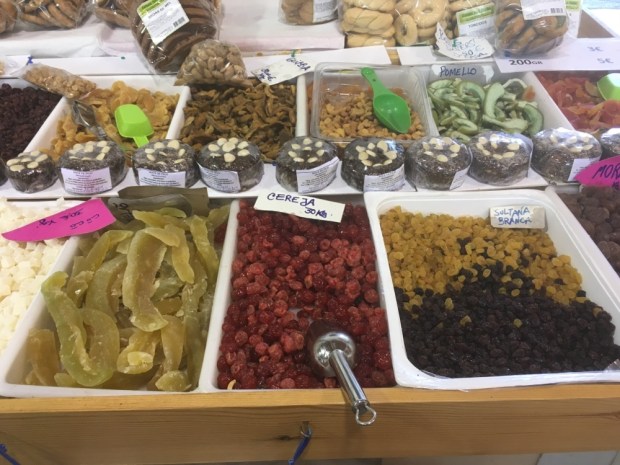
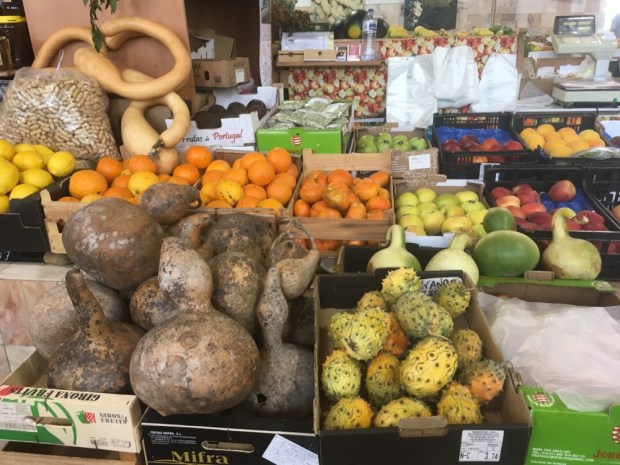
The fresh fish available on this route is another plus. In fact the eating alone could justify a visit to the area. There appeared to be a culture that recognized the value of good, fresh, local healthy food- and the wine was also very quaffable! The variety of cheap fruit, veg, fish and shellfish in the markets of small towns and villages was remarkable.

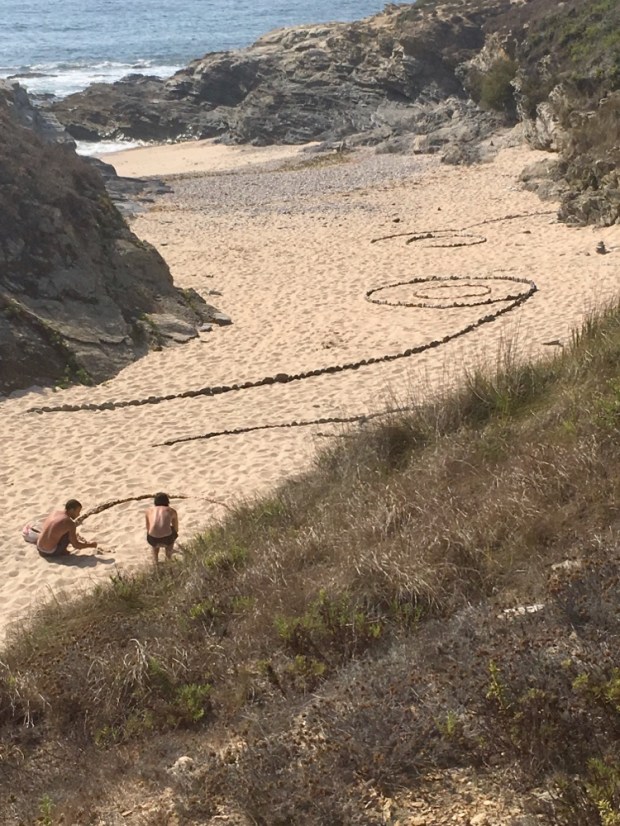
A last swim and we continued the final couple of km to Porto Covo passed a tiny beach where a couple of lads were working on a piece of land art. Probably the creators of the pebble spiral maze from the day before.

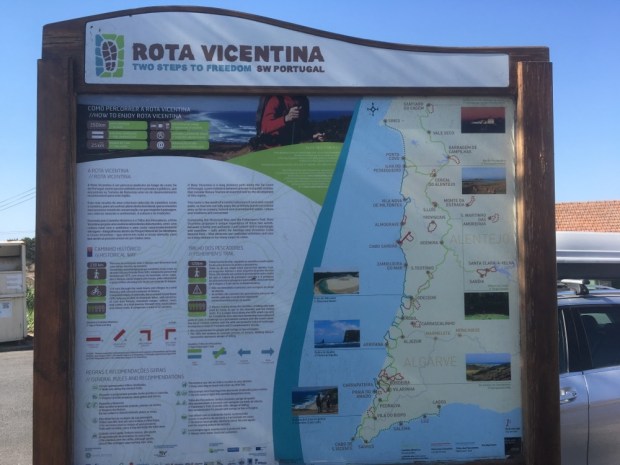
And so for us the Rota Vicentina , ” The last coastal wilderness of Southern Europe”, was a great discovery, and after buying the official map of all its varied routes, one I’m sure we will be returning to.

Our host that night said the hostel had one rule.

Leave your stress at the door.

We had left ours a long way back down The Fishermans Trail.

THE FISHERMANS TRAIL : Zambujeira do Mar to Almograve (23km) to Vila Nova de Milfontes (18km)

As this blog site can testify I’ve hiked a good few trails in the last few years, but I’ve gotta say this one is special.

If you like wild coastal scenery, walking through a gently undulating landscape of exotic flora and geology under blue skies and glorious sunshine before splashing in the crashing breakers of the Atlantic to cool off on secluded sandy beaches- then like me you’d love this Fisherman’s Trail.

Normally walked from north to south, and the route descriptions are all orientated that way, we were going the other way. Partly because of the transport links and logistics but also we thought it a good idea to have the sun behind us as much as possible.

So even though it’s not recommended to be out here on the trail in the heat of August there has been a good few folk coming against us these last couple of days. Well maybe 10 or 20 people, so probably not much relative to many popular routes !

We set off pre dawn from Zambujeira following a long straight road past a huge area of tunnels and greenhouses. Even through the sandy ground would seem infertile they seem to coax a lot of crops out of it. Water and chemicals I guess.

Hoping to see some the many nocturnal carnivores of the area, mongoose,weasel,marten,badger,genet,otter- we only came across a couple of dogs. We had seen a group of wild boar the morning before and a few rabbits, which were supposed to be the ” original stock of all rabbits worldwide.

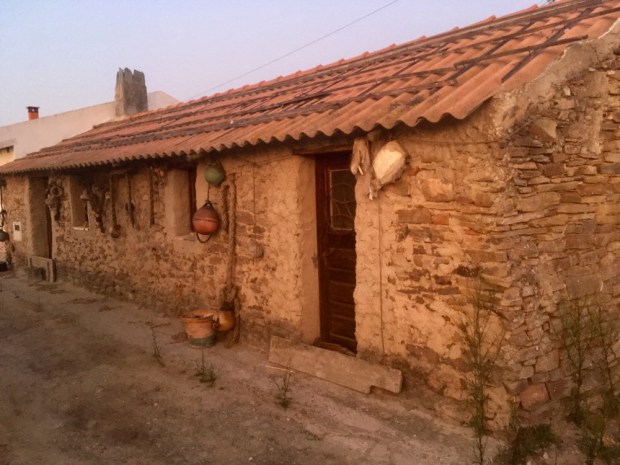
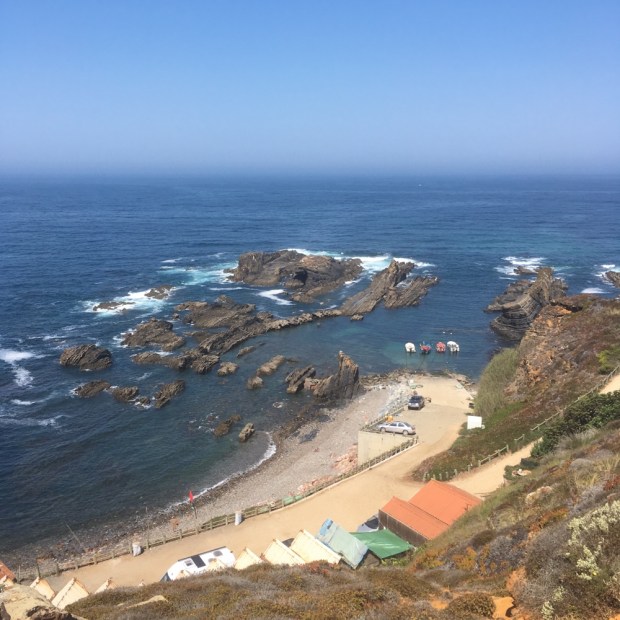
We reached the little fishing settlement of Entrada da Barca with its charming little houses and huts.

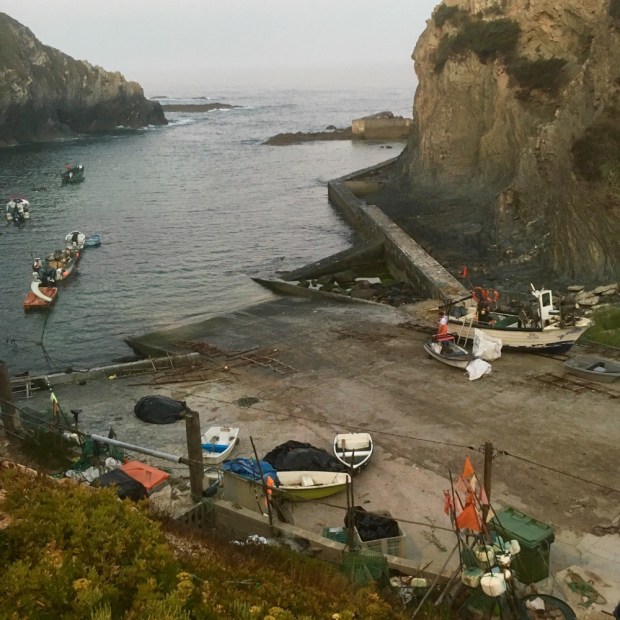
Down to the harbor where the boats were winched up the steep slip and up a zig zag of wooden steps to the cliff top paths above.

The first half of the walk to the little village of Cavaleiro was on a maze of vehicle tracks that ran along the cliff tops above rocky coves, many with precipitous paths or lines of rope to allow access for the hardy fisherfolk. The tracks also allowed access to many and varied campervans.

The dune vegetation got spectacular around the lighthouse of Cape Sardao where we learnt that many species only existed here. Famed for its bird life and unique stork nests the area also claimed to be the home of Rock Doves that are ” the original species from which all the feral pigeons in the world descend”!

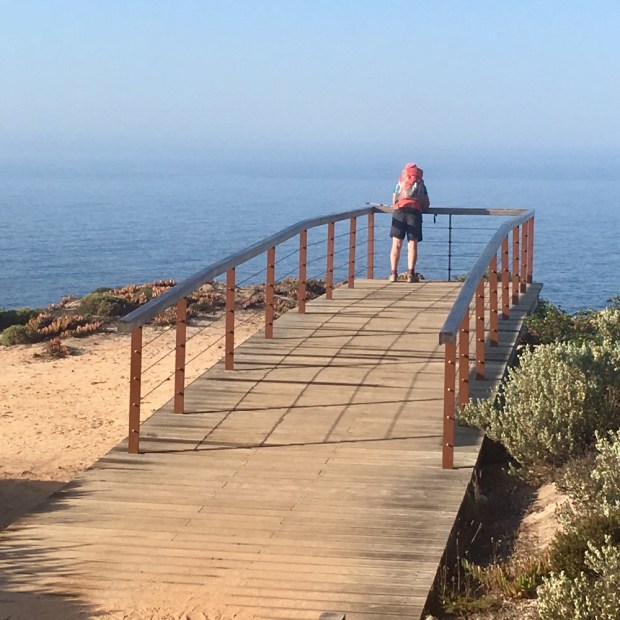
There were a number of viewing platforms built here and there presumably to help wheelchair access but seemed a bit of a eurofund folly.

Diverted inland to Cavaleiro to avoid a specially sensitive area we had coffee and chocolate, admired the farm buildings on the outskirts and then continued on a fantastic route of rock and dunes and forest of pine and acacia ( which we had learnt was very invasive and is spreading wildly)

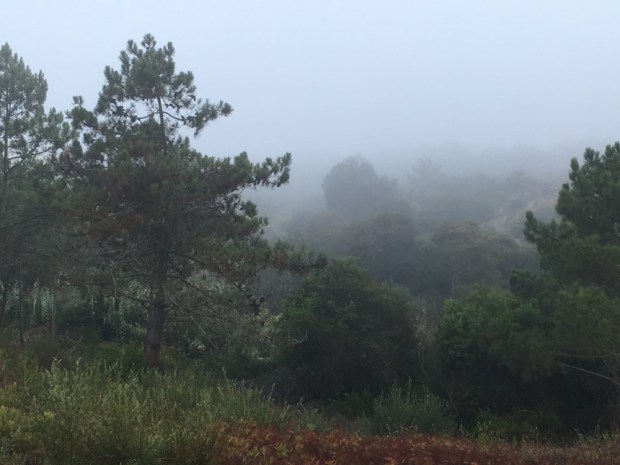
A sea mist had come in lending the scenery a mysterious aura.

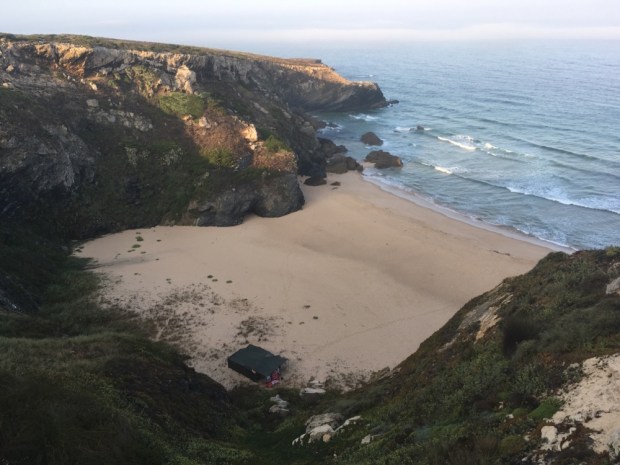
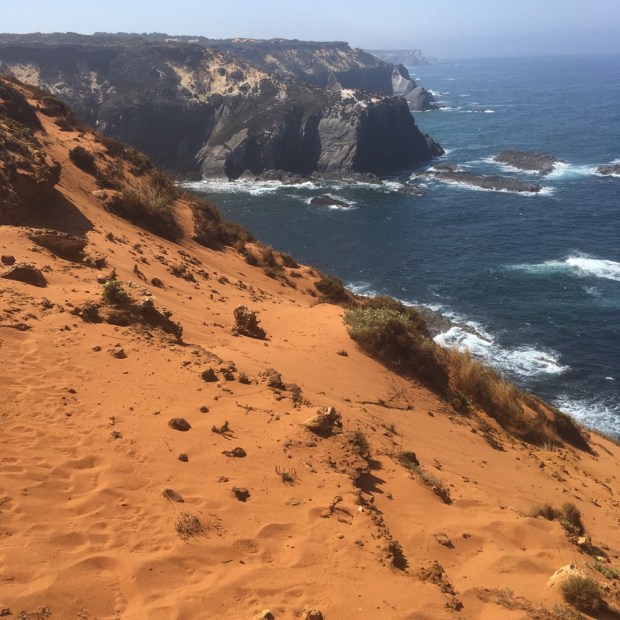
The craggy rocks and red sandstone cliffs were laid down over twisted and convoluted layers of an older base making a truly dramatic shoreline.

We’d had a fair bit of soft sand walking by the time we got to the small natural harbor of Lapa das Pombas

and were glad to reach the beaches of Almograve where we took a couple of hours out to enjoy the breakers before heading on again past the final coves of the day to our room in the youth hostel.

In the village there was an exhibition of photos and graphics of a huge oil spill that took place in 1989 and turned the entire coastline we have been walking into a black environmental nightmare. The massive clean up operation seemed successful though as we had been remarking how pristine it appeared to be.

A leisurely start this morning as we expected to be able to avail of a ferry service across the river Mira at the end of the hike, thereby shaving off 4km of mostly road walking. So with what we thought to be an easy 14km ahead of us we laid abed till 7! looking at the misty world beyond our balcony.

A slap up breakfast fueled a brisk walk out out town, past the grotto, fountain and wash area, onto a sandy path beside farmland and off to more coves passing fishermen returning from their spots.

Later we were amazed to see a fisherman casting from a rocky reef way out in the sea. Not sure if you can see him.

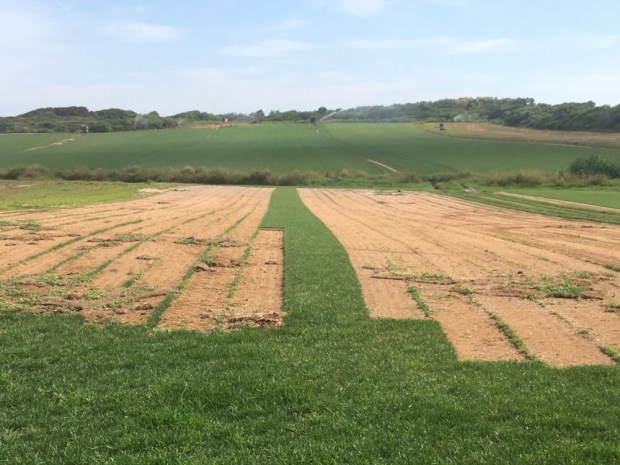
There was a lot of soft sand dunes to navigate past another set of beautiful coves for a few km before suddenly emerging next to irrigated glassland for grazing cows and cropped turves.

There was a series of wooden bridges over streams and tunnels through rampant vegetation of canna and acacia, and a lot more sand.

And then we were at the beach bar at Furnas looking for the ferry.

Alas it was not running. Don’t know why. Plenty of signs for it. It meant hiking down river to the bridge and a lot of fast moving cars as we trod the tarmac.

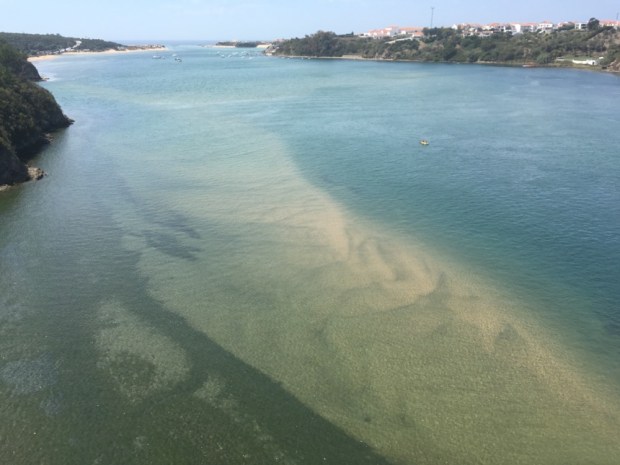
It wasn’t all bad though. The route went passed an interesting landscape of farmland and cork oak and river views before landing us in the maelstrom of a holiday Sunday resort town in full flood.

And a couple of goats on a table.

A Trip to Tipperary

Time to report on a modest Irish ramble after recent foreign escapades.

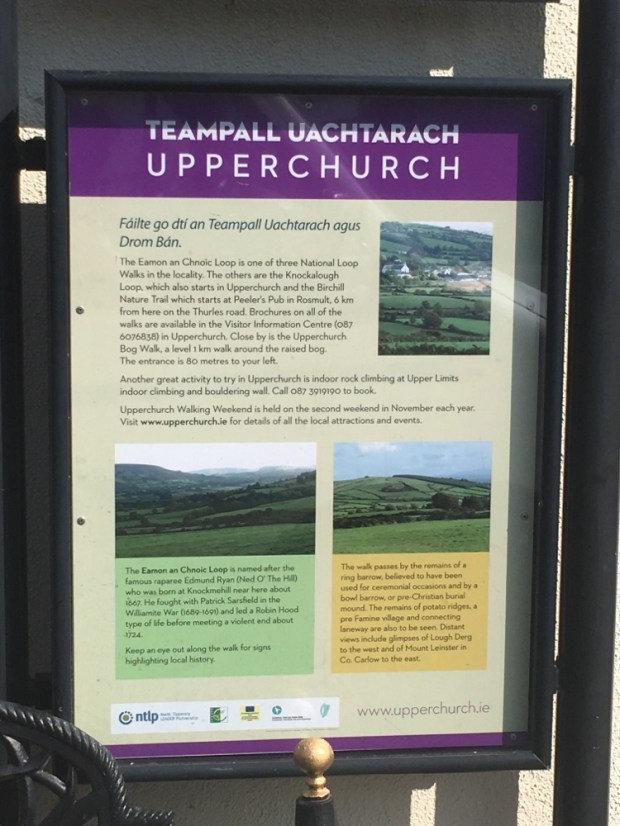
I’d been reading for a couple of years about a small village in deepest Tipp that has gone to great efforts to sell itself as a walking destination, setting up 3 Failte Ireland looped walks, guided walks and an annual walking festival. So when looking for a bank holiday hike location on line and seeing on the Irishtrails website that one of the loops was dog friendly ( a hard to find rarity) we loaded the camper and headed southeast… to Upperchurch.

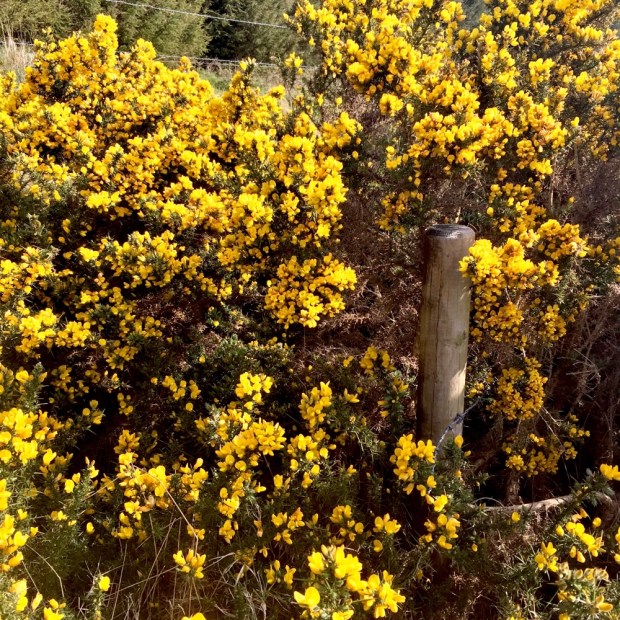
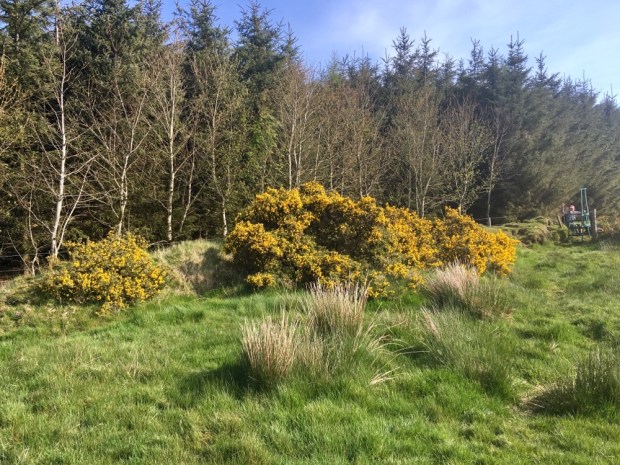
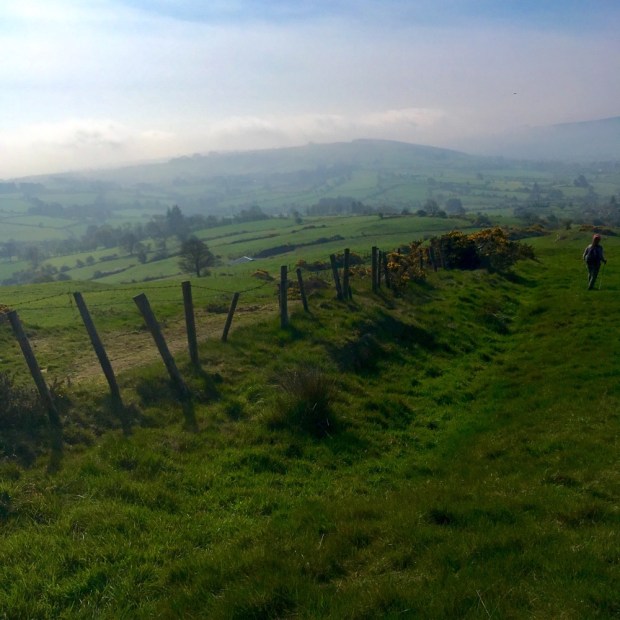
West of the Nenagh to Thurles road the village is at the eastern end of the Slieve Felim mountain range and set amidst a beguiling landscape of rounded rolling hills of fine green grassland and forest in the full forty shades with a fair smattering of golden gorse.

Unusually for rural Ireland these days the village still has 3 functioning pubs, a shop, community Centre complete with crèche and climbing wall and an information center. We stopped there to try and get maps of the walks and discovering it to be shut tried one of the bars. The welcoming owner spent some time rummaging around but couldn’t find what we wanted so kindly got his coworker to open the info centre and furnish us with leaflets and maps.

We discovered that the Beara- Breifne Way, a (very) long distance hiking trail that commemorates the 14 day/ 250 mile forced march of Donal Cam O’Sullivan Beare from West Cork to Leitrim, passes through here. Too late in the day to explore we headed up to the Ballyboy lookout to park up for the night.

In the very early morning we were surprised to be woken by increasing car activity outside. Still dark we couldn’t see what was occurring. We thought perhaps late night revelers or predawn hunters. But then I remembered some briefly scanned mention of an Easter Sunday Sunrise Mass happening somewhere in the area. I quickly got some clothes on and emerged from the van like a risen prophet to discover rows of seats had been placed in front of the camper and many folk in high viz looking expectantly towards me. Whoops- we’d parked in the alter-place. After a bit of banter I explained we were going to Upperchurch for a walk but as there were by then about 100 walkers heading up the road towards us was advised to go the opposite way, passing many more folk on their way to celebrate the resurrection of Jesus.

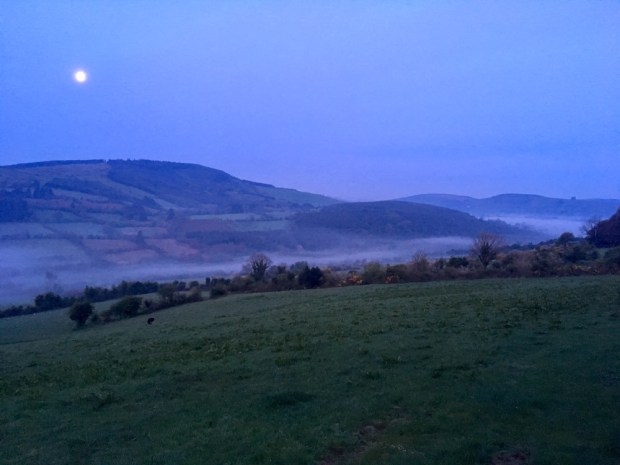
With the full moon still hanging above the misty valley in the dawn light we headed off into the mountains named in Irish after an ancient goddess, Sliabh Eibhlinne- the mountains of Ebliu.

After stopping for breakfast and waiting for the sun to burn off the mist we started off from the village on the Eamonn an Chnoic loop. Eamonn, or Ned of the Hill, was one of the 17th century Robin Hood type outlaws championing the cause of the dispossessed natives and harassing the English planters. Born locally he roamed these hills after shooting a tax collector dead for confiscating a poor women’s cow before coming to a sticky end , murdered for blood money, and his exploits inspired a famous ballad.

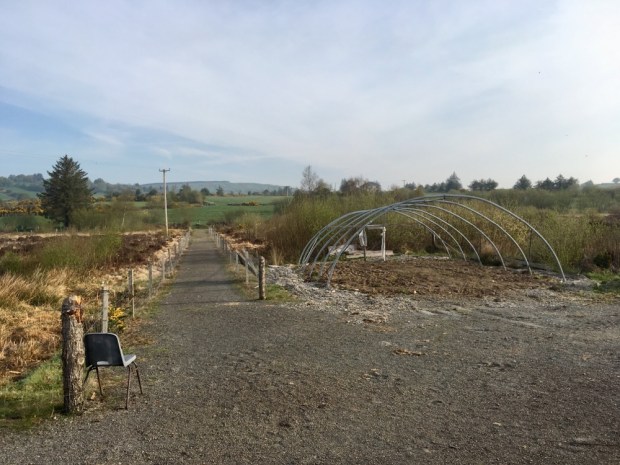
Passing another local walk initiative , a bog walk and garden, we continued up the quiet country road accompanied by our first cuckoo song of the year.

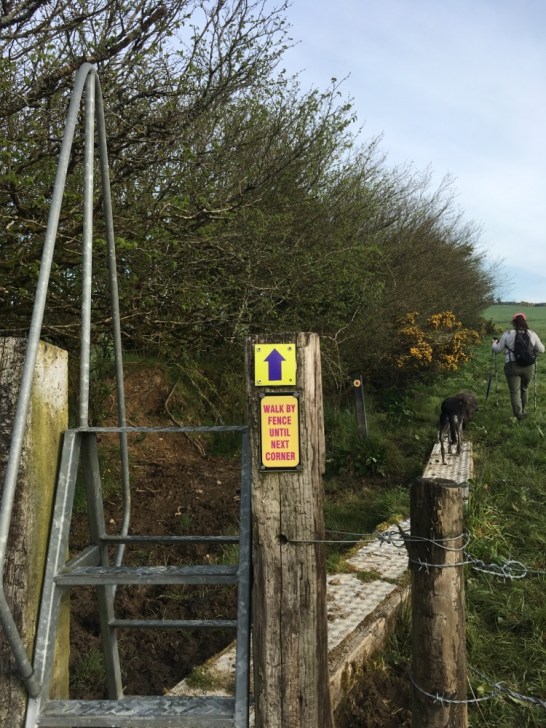
At our first stile we were disappointed to see a no dogs sign. We’d chosen this walk because it was listed as dogs permitted so with our mutts on leads and best behavior we carried on across a series of fields and stiles slowly climbing through Glenbeg.

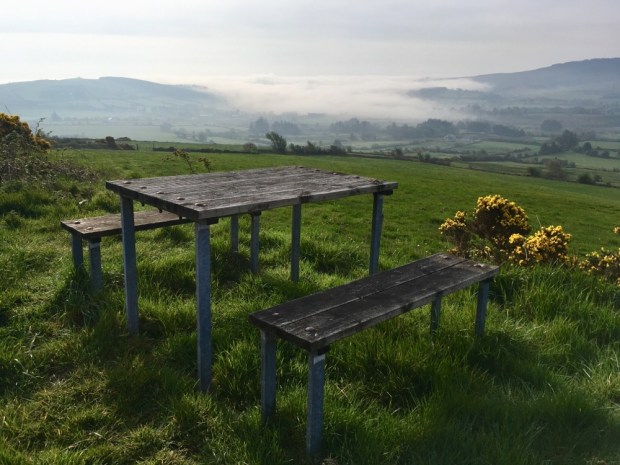
Passing a picnic spot overlooking the still misty river valley to the south we continued up on farm tracks beside a mass of sweet smelling gorse towards a band of forestry.

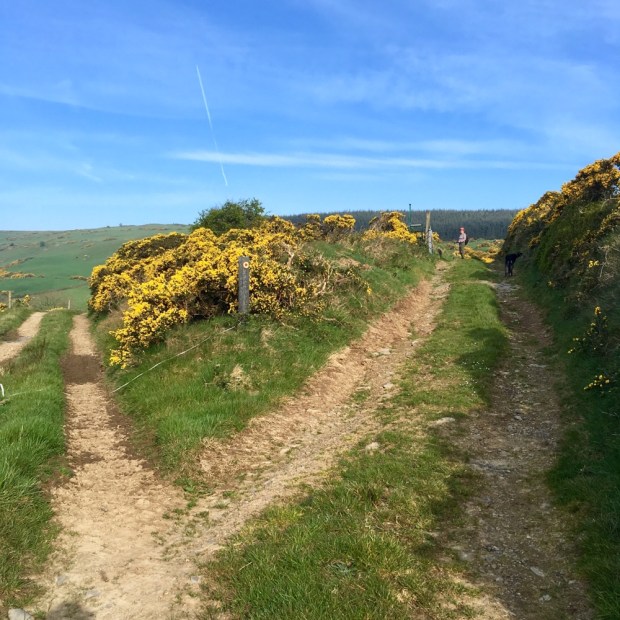
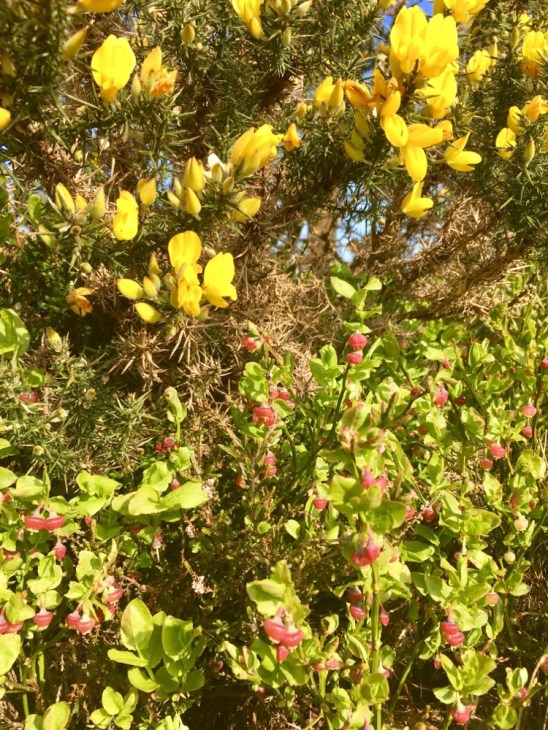
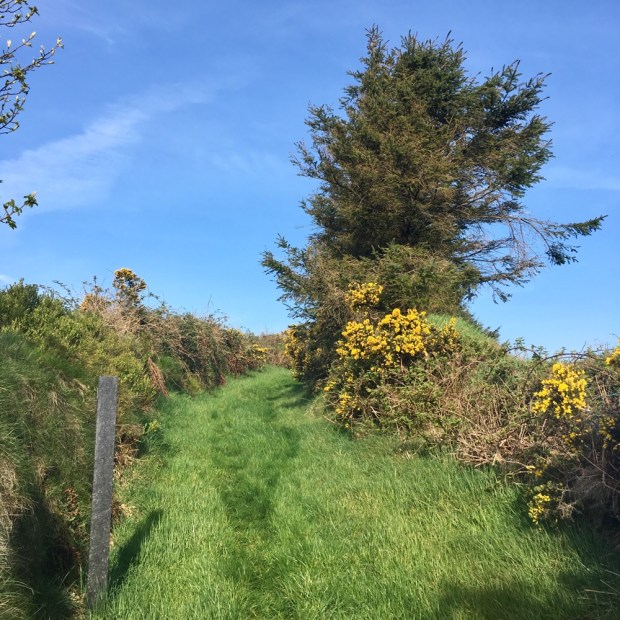
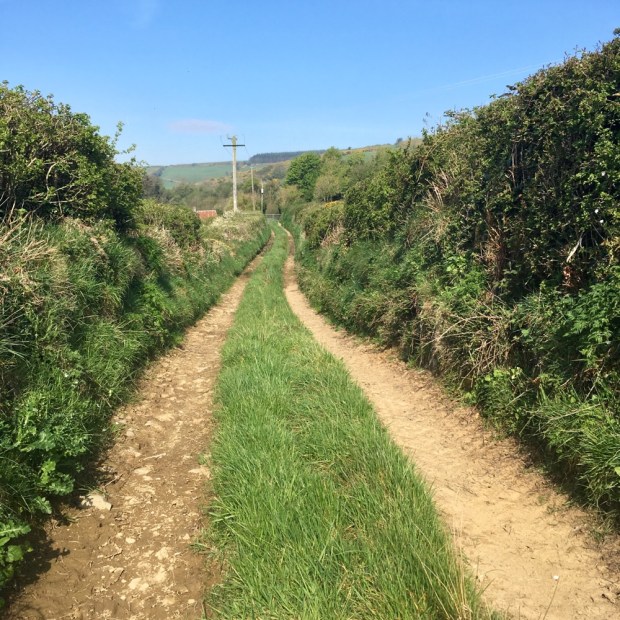
Turning east at the forest we followed an ancient sunken greenway through the gorse and bilberries and down towards a cottage near a ring fort.

We passed the site of a pre-famine hedge school where a schoolmaster named Burke held the only available classes of that period. Hard as those times were, the wildflowers in the “classroom” might have made things more pleasant than in the Industrial schools some of the children have have ended up in.

After only 500m of tarred road we were off cross country again for the rest of the walk. Climbing again to another block of forestry on the high ground we walked the fields beside what had been the official trail, now swallowed by gorse.

The forces of nature had overwhelmed other remnants from the past too. We failed to see the old potato ridges and foundations of a famine village supposed to be visible. 29 families from here emigrated to Monroe county in Iowa on one day in 1879. But we did see what’s left of a Bronze Age ring barrow and a little further along a rare bowl barrow.

Downhill all the way back to the village we had one slight route finding problem where signage was missing and fencing down but it was all very pleasant in the spring sunshine.

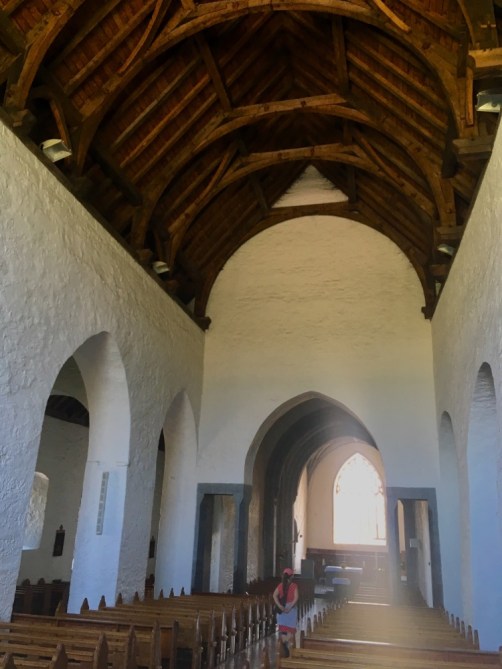
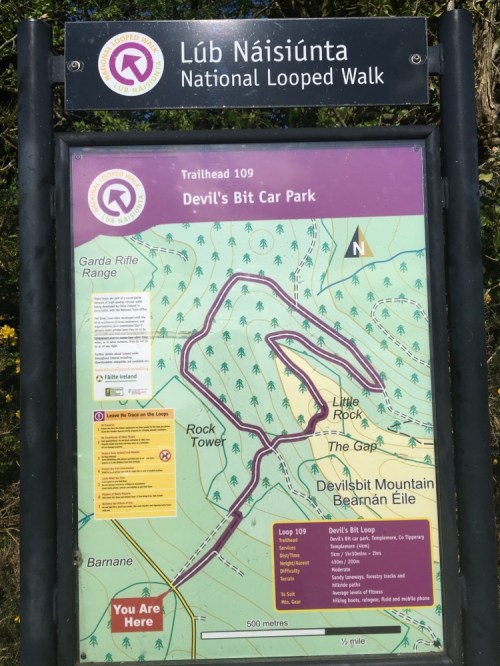
We took a quick detour to Holy Cross Abbey on our way to another looped hike at the Devils Bit. The restored Cistercian monastery has impressive stonework and a marvelous sloping floor beneath the pegged oak roof timbers.

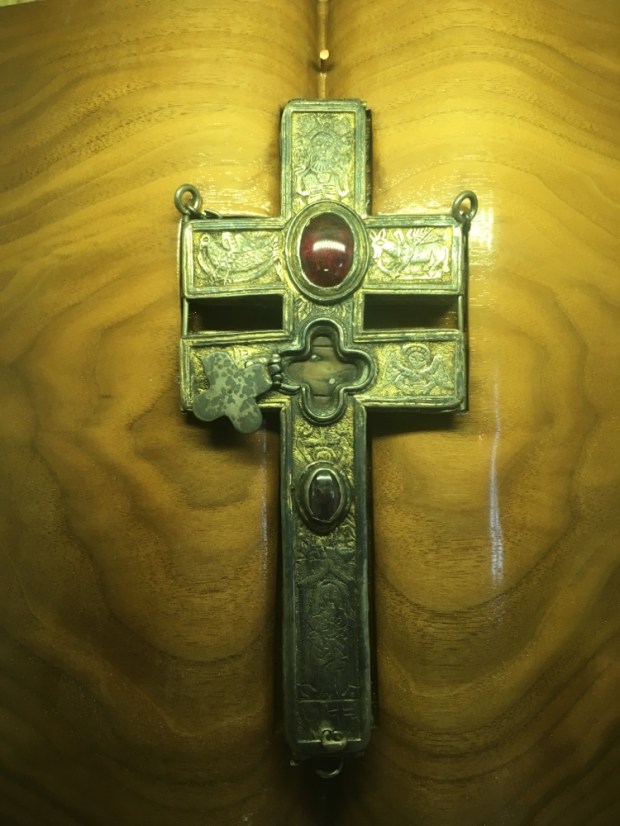
But the real draw for pilgrims over the last 800 years is a silver crucifix containing a relic of the true cross on which Jesus is said to have died. This, along with another artifact were stolen in October 2011 and recovered by the Garda 3 months later in what the parish priest Fr Tom Breen said ” once again demonstrates the power of praying”.

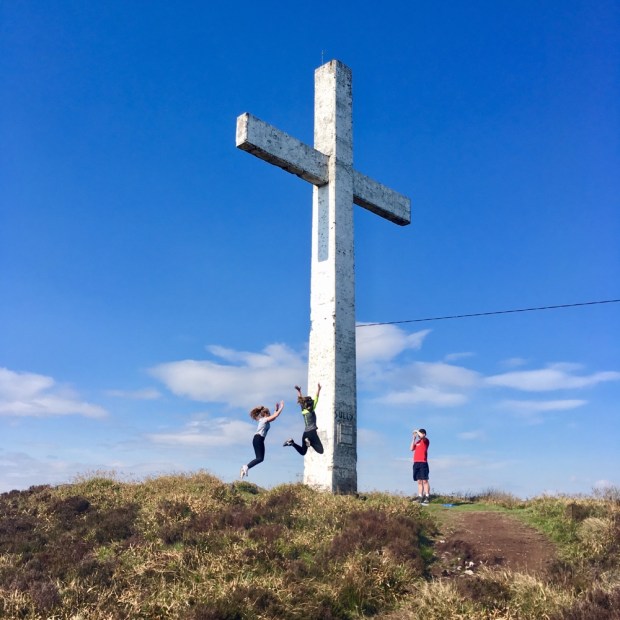
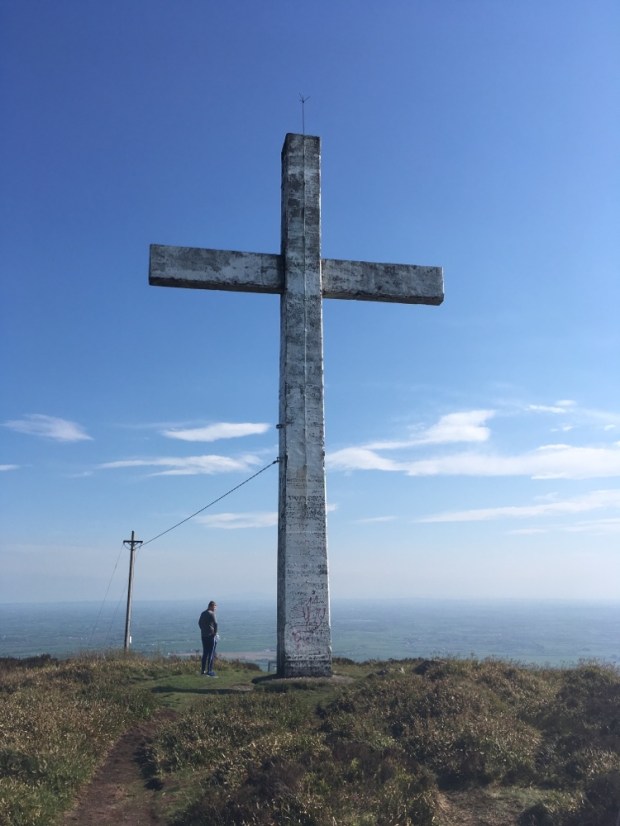
Another cross was our next destination but at ,45 ft high and a span of 25ft , was somewhat bigger.

Standing at 480m on an outcrop ( known as the Rock) it boasts a view of 8 counties. I always thought that the devil had spat ” the gap” that he bit out of the mountain to form the Rock of Cashel but then I read that the Rock of Cashel is actually (!) the tooth he spat out after breaking it biting the mountain.

Easter Sunday and the car park was jammers with families setting off up the steep track towards the Rock.

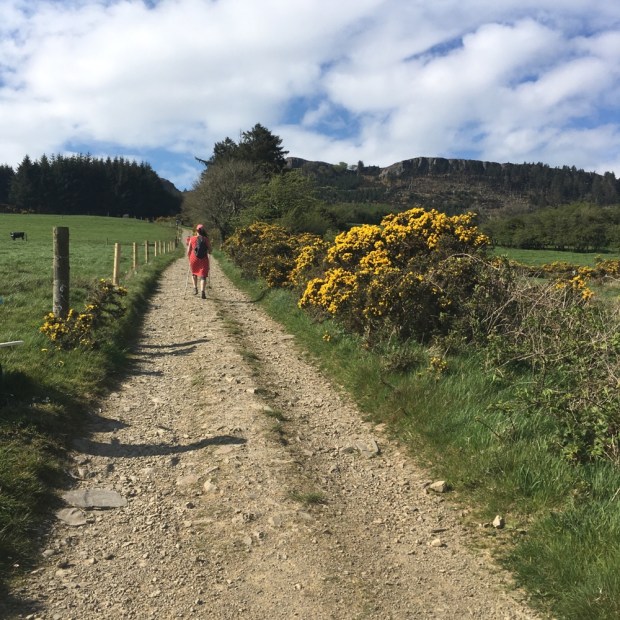
Passing Carden’s Folly where Daniel O’Connell is supposed to have addressed a monster meeting of 50,000 tithe payment resisters and a mock ” burial” of the tithes took place, we reached a stone alter and Marion shrine- the scene of another open air mass and pilgrimage in July.

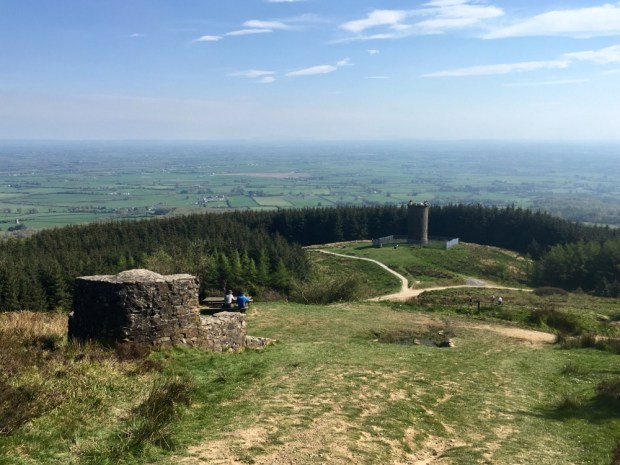
A steep stony scramble had us up to the looming cross and we rewarded ourselves by soaking up the 360 degrees views of the fertile plains and half a dozen mountain ranges faint in the hazy light.

We descended by climbing down a cliff face on the eastern side, down past another Marion shrine and into the gap that broke the devils teeth.

Nice to explore another unknown patch of Ireland and reaffirm that it’s still a varied and beautiful place to ramble around.

HIKING IN THE HIGH ATLAS

IMG_2305

I received a text.

“Hi Steve, how’s it going? I’m going for a walk in the Atlas. Wondered if you wanted to come”

It had come at a tricky time to justify going for a ramble, not long back from an extended trip to Spain. On the other hand, Bill, my mate for 55 years, had been going to the Atlas regularly and inviting me to join him for many years and so far I hadn’t managed it. As my mortality became more obvious my belief in “seize the day” became more obvious too, so I approached my significant other with the idea.  Keen to see a husband stressed out by a building project return to a more chilled state of mind she approved the plan.            10 days trekking with Bill and hopefully one of his Berber acquaintances from the mountains would be good for my mental health and my waistline. Not speaking French (or Berber!) and not being one for organised group tours, this would be a perfect opportunity for me to explore an exciting and exotic area within reach of a Ryanair flight.

Screen Shot 2019-04-04 at 10.20.57

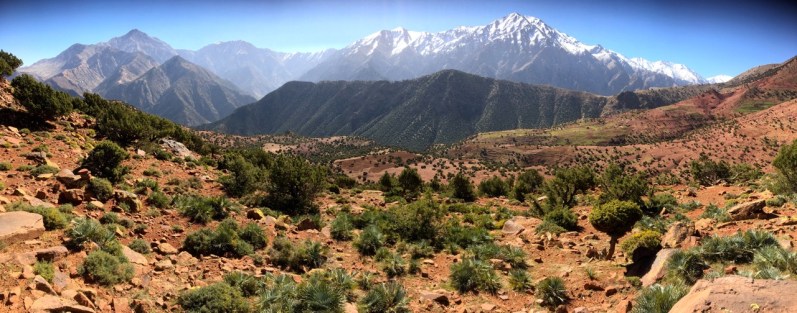
The Atlas mountain range stretches around 2,500km through Morocco, Algeria and Tunisia. I was headed for the High Atlas sub range in central Morocco, to the area near Jebel Toubkal- North Africa’s highest mountain (4167m), still deep in snow and off limits for us. Just 65km from the hustle and bustle of the Marrakesh souks and Medina, the snowy peaks were clearly visible from our shared “grand taxi” as we set off for Setti Fatma, a popular day trip from the city- where escapees from the exhausting heat of the plains can rest and dine beside the clear ,cold waters of the Ourika river valley and visit the snowmelt waterfalls, complete with groups of Barbary apes.

IMG_1894

The tarmac road runs out here and after a meal with Mohammed, a local guide and friend of Bills to get the low down on snow conditions on the high passes, we shouldered our packs and set off upriver in the glorious spring sunshine.

IMG_1900

Mohammed had talked about the problems arising from the terrible murder of two Scandinavian women hiking in the area last December. Although an increased police presence and security meant that the High Atlas was probably one of the safer regions in the world presently, the numbers of tourists and particularly hikers, was down significantly. This had a big impact on the Berber guides, muleteers, tour operators and gite owners who rely heavily on the flow of visitors to the mountains. Also damaged was the reputation of the people of the Berber villages in the mountains, an unwarranted slight on some of the most welcoming, friendly, happy and hospitable people I have come  across, despite their relative material poverty.
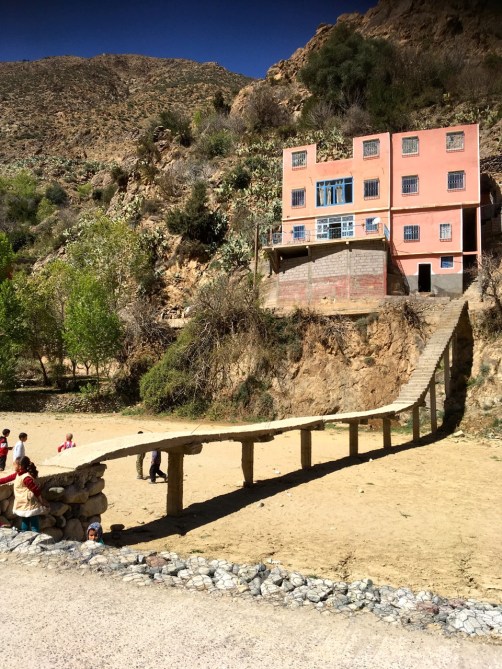
IMG_1905IMG_1927IMG_1901

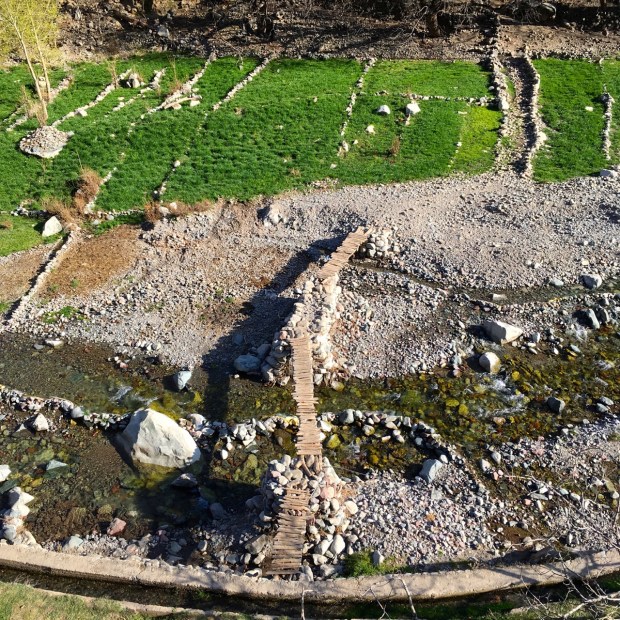
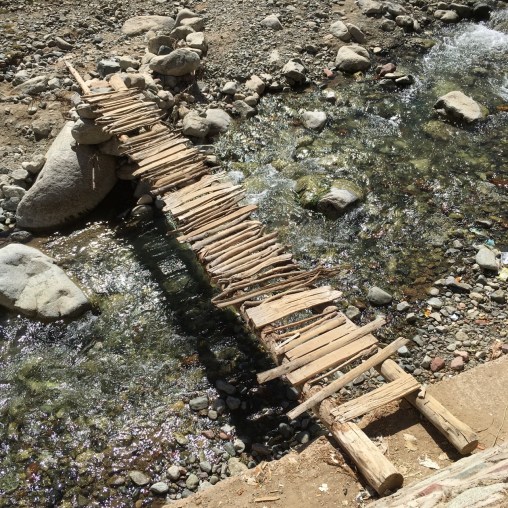
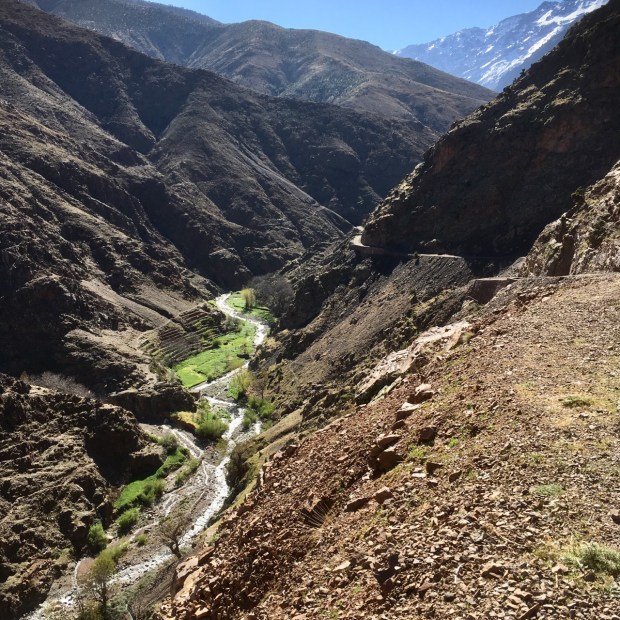
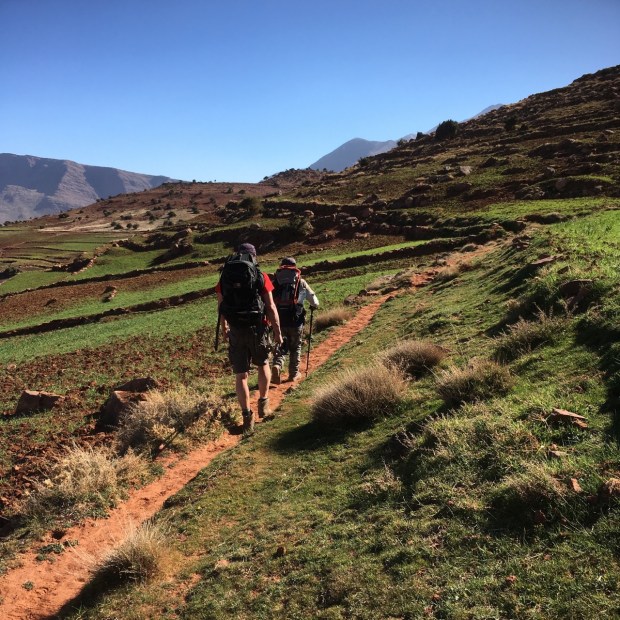
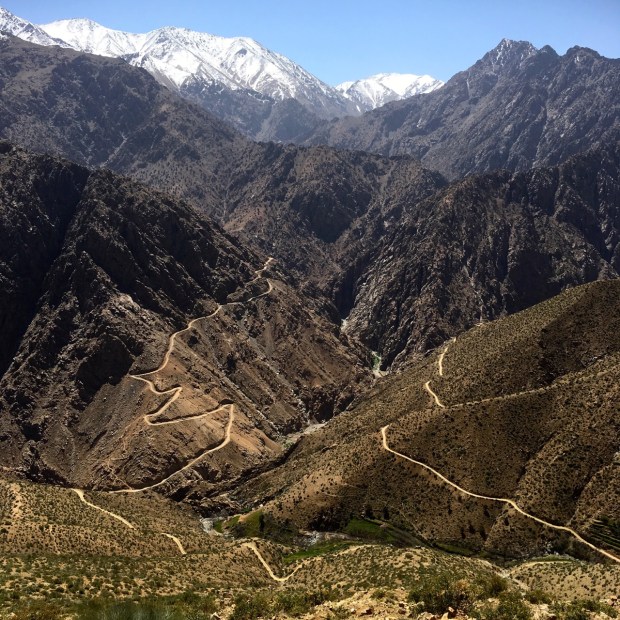
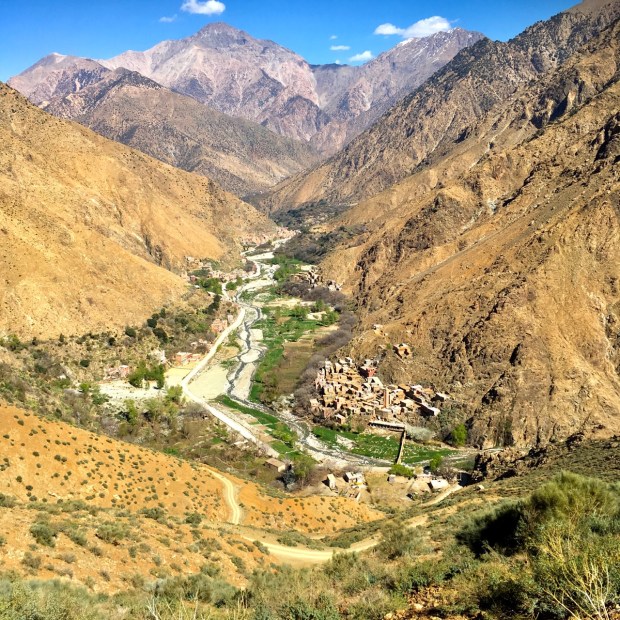
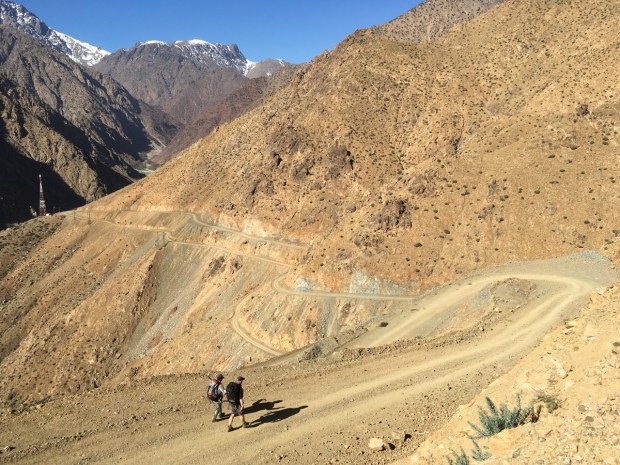
The dirt track followed the river bed with numerous bridges over a multitude of water courses before turning up on a zigzagging route that climbed the steep valley sides to present us with fine views back down towards Setti Fatma and deep into the mountains to the west.

IMG_E1911IMG_E1910

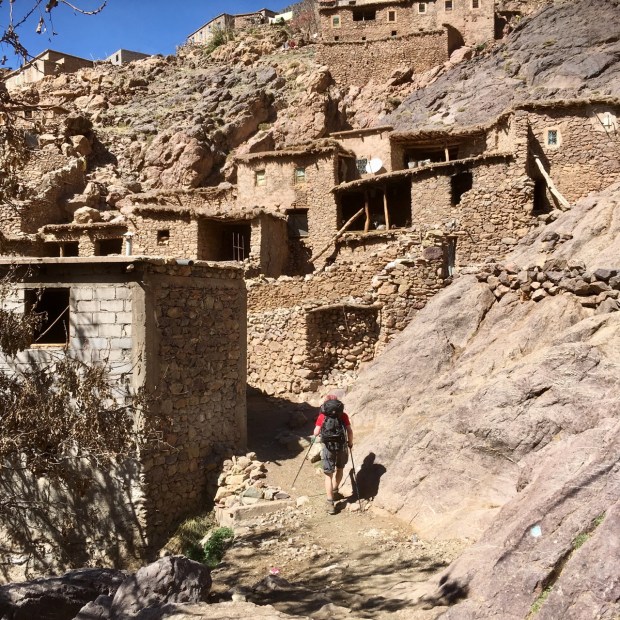
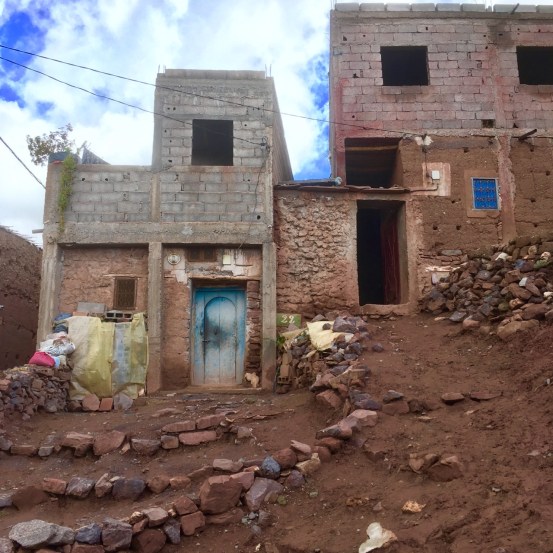
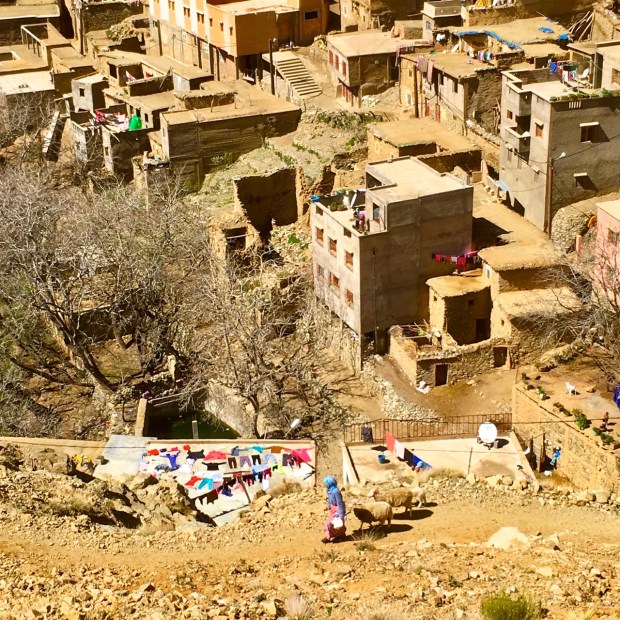
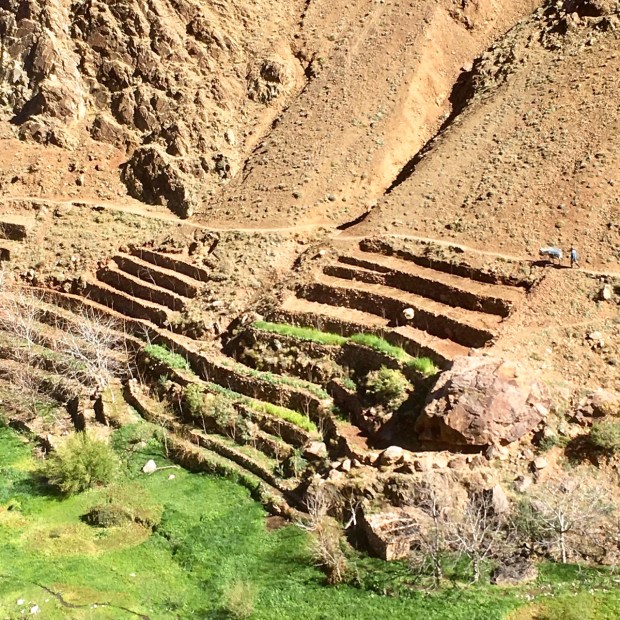
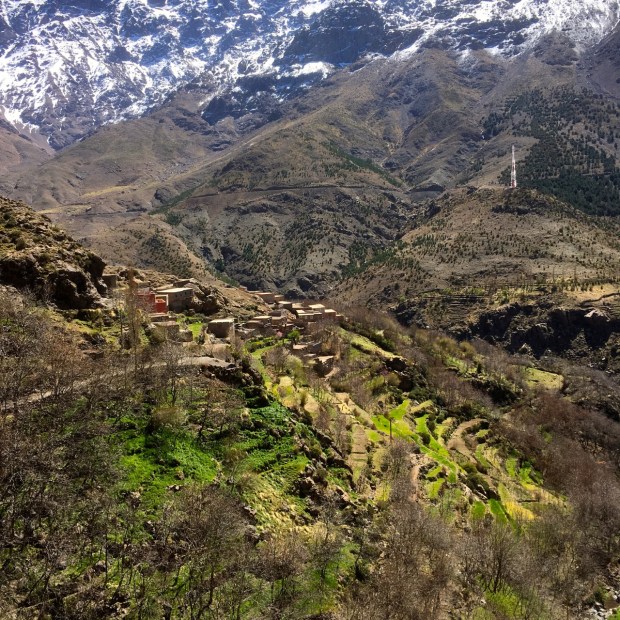
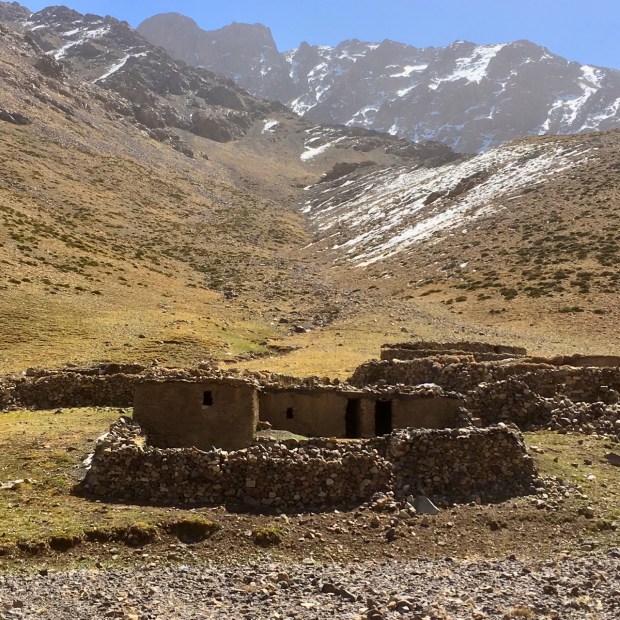
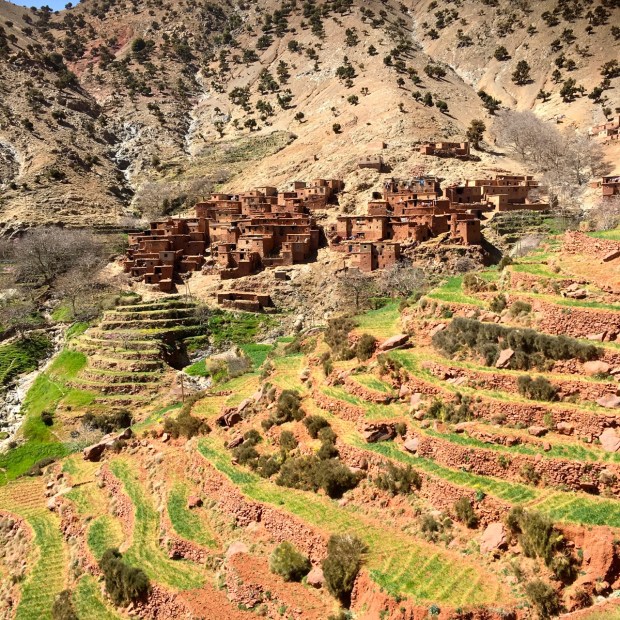
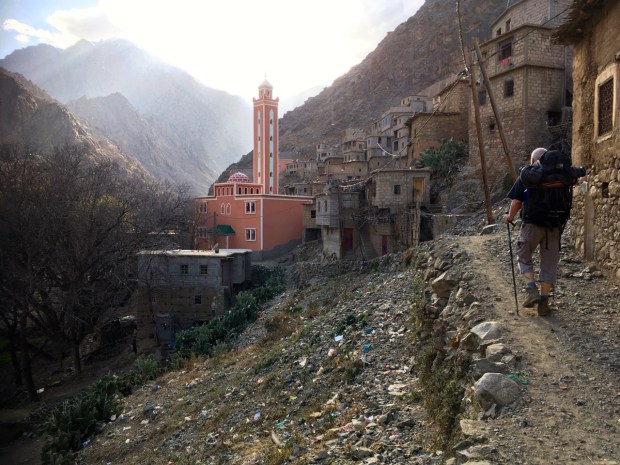
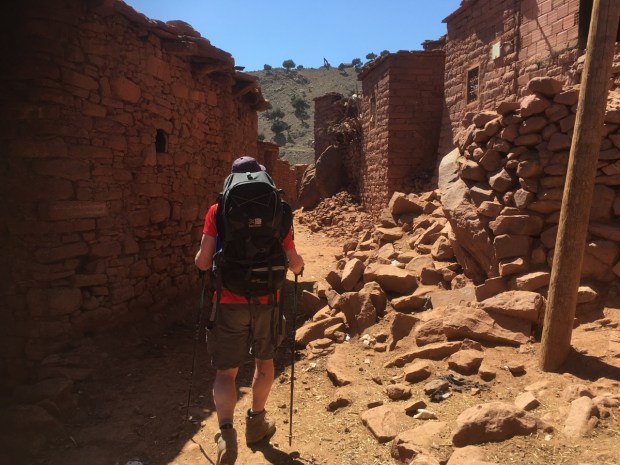
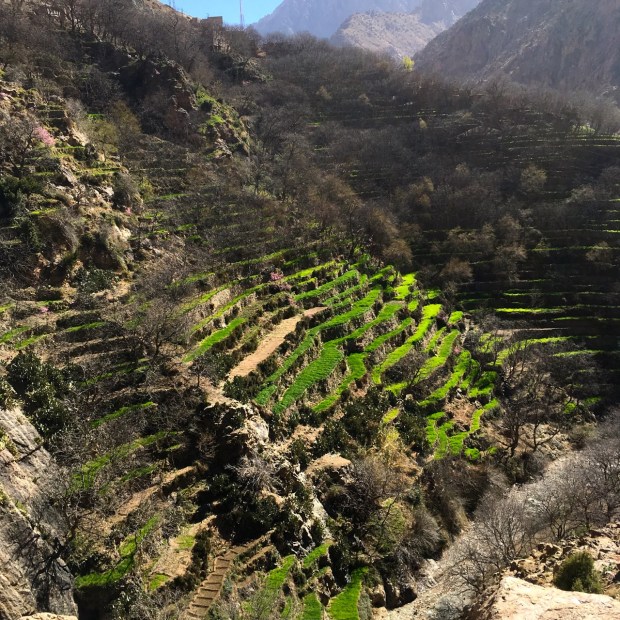
We passed a succession of earthen walled and roofed houses stacked up on the mountain slopes and immaculate layers of terracing with their iridescent green covering standing out from the buff and ochre surroundings.

IMG_E1914IMG_1926IMG_1920

It took us nearly 4 hours to climb the 12km to reach our goal, Timichi, at around 2000m. We were very warmly greeted at their gite or hostel by Brahim Oussalm and his family whom Bill has been visiting for over 20 years.

IMG_2373IMG_1934

Over sweet mint tea and then a filling dinner a plan was put together. Brahim was now 80 and no longer a muleteer and guide but Abdelhadi, one of his sons, (he has 13 children), agreed to join us. A clockwise circular route was devised keeping us mostly between 2000m and 3000m with some lower valleys and higher passes. We would find places to stay in the Berber villages over the following 9 days and hike between 10km and 20km a day through  varied  country, some of which is truly off the tourist trail.Atlas map
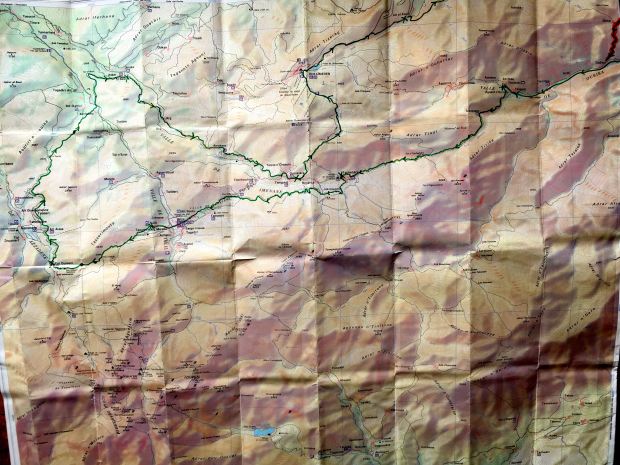
(I managed to get hold of a map after a couple of days on the trail, but unfortunately it didn’t include the northern end that we tackled on the last couple of days.)

We needed to make an early start in the morning with the next day involving a climb of 1200m into snow, so with the altitude already making itself felt a little- I retired to the simple sleeping quarters.

IMG_E1939

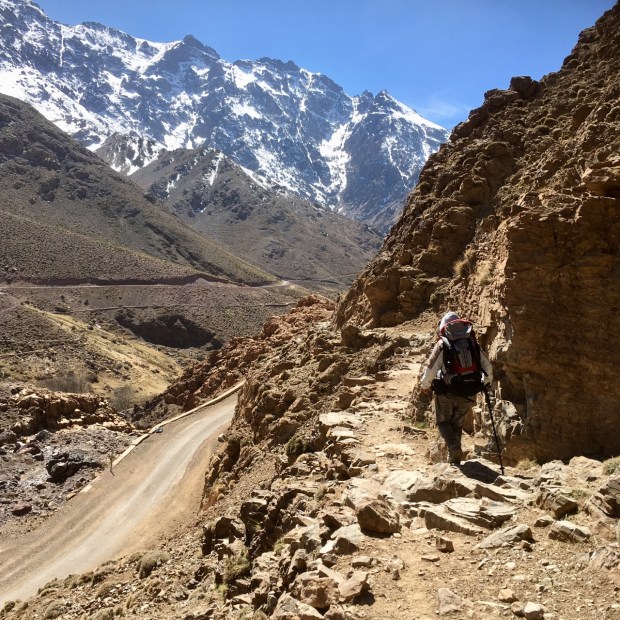
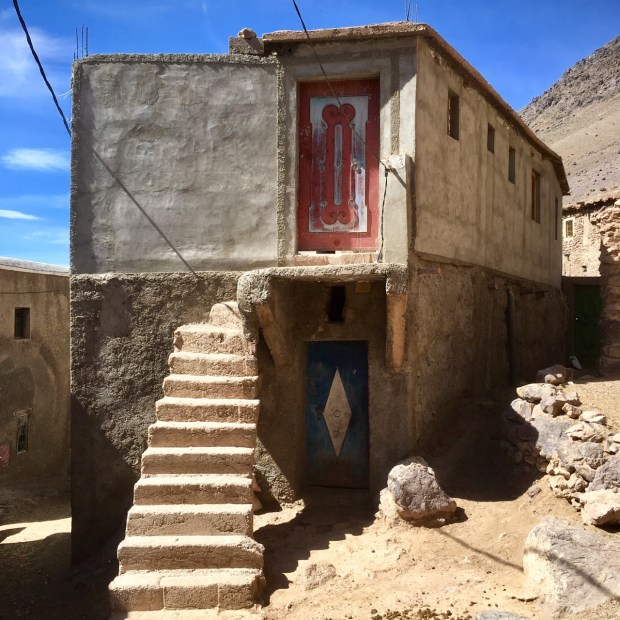
Setting off into the chilly dawn after a substantial breakfast we climbed a steep mule trail between rocks and scrub before emerging onto a gravel track. Big changes have occurred over the last few years for the Berber villages dotted around these mountains. The dots have been joined by a string of pistes or vehicle tracks, although we would only see a handful of jeeps and trucks over our 10 day journey. Electricity has also arrived and with it the surreal combination of centuries old earthen and stone houses adorned with satellite dishes and street lights to brighten the narrow warren of rough footpaths.

IMG_E2032

IMG_1944

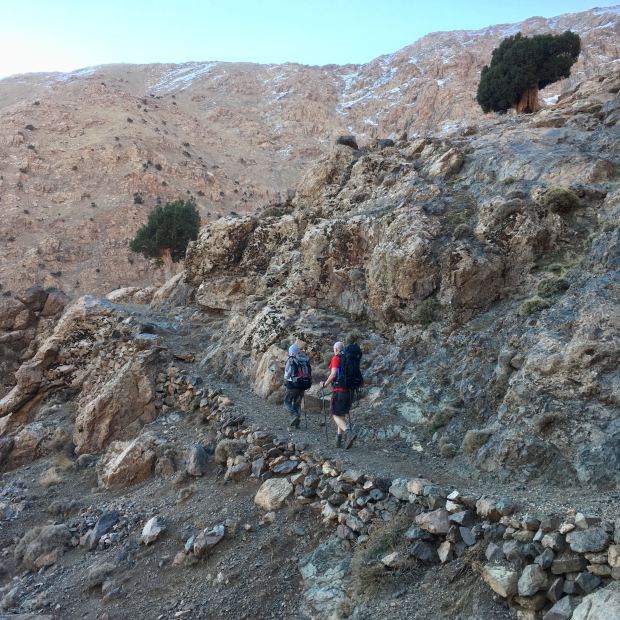
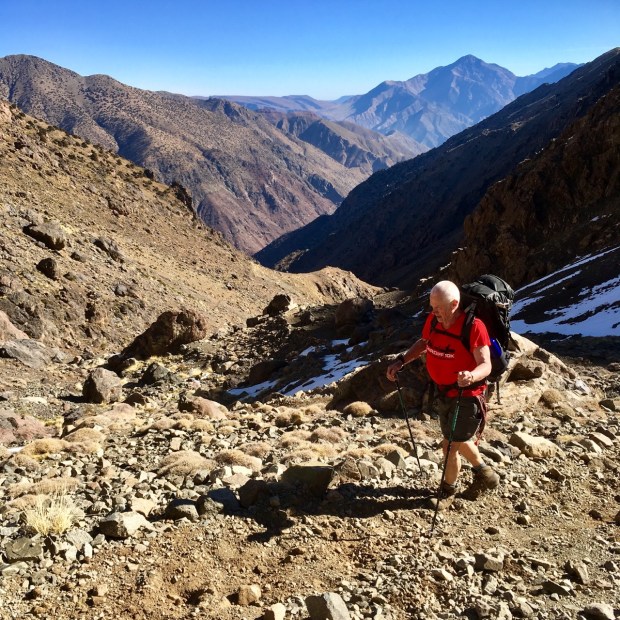
The track ran out after passing the strangely painted building in Labassene and a narrow trail wound its way on up towards the pass of Tizi n’ Tacheddirt entering the Toubkal National Park as the landscape became harsher, devoid of vegetation but for some ground hugging cushion plants and ancient juniper trees.

IMG_E1952IMG_E1950

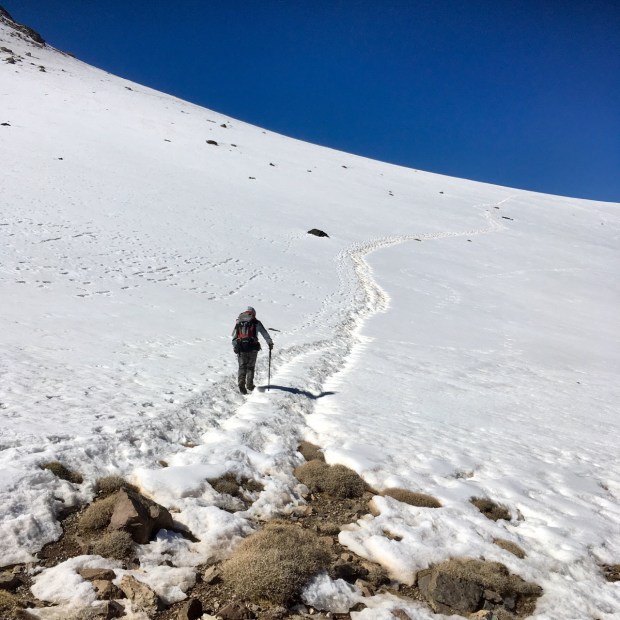
The patches of snow around us grew into a smooth blanket we traversed before reaching the pass at 3230m and the vista towards the west drew us down to eventually join a piste that led to Tacheddirt village, at the far end of which we were able to rest and warm ourselves on the balcony of our gite.

IMG_1953IMG_E1955IMG_E1960IMG_E1963IMG_E1966IMG_E1969IMG_E1973IMG_E1976

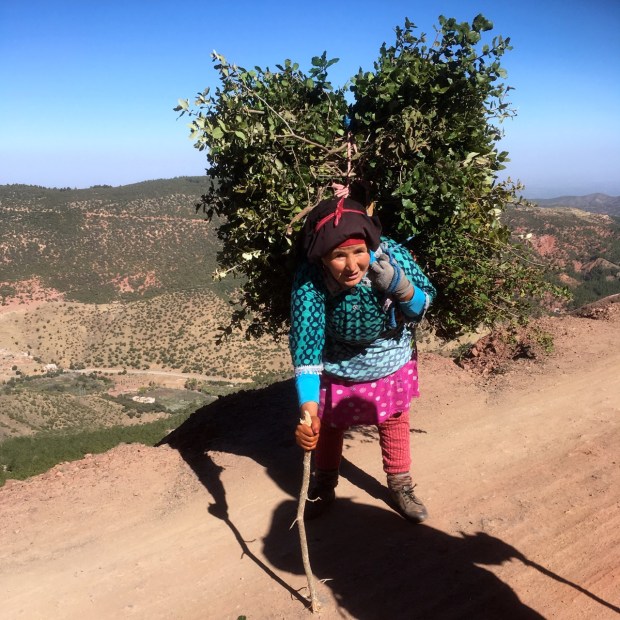
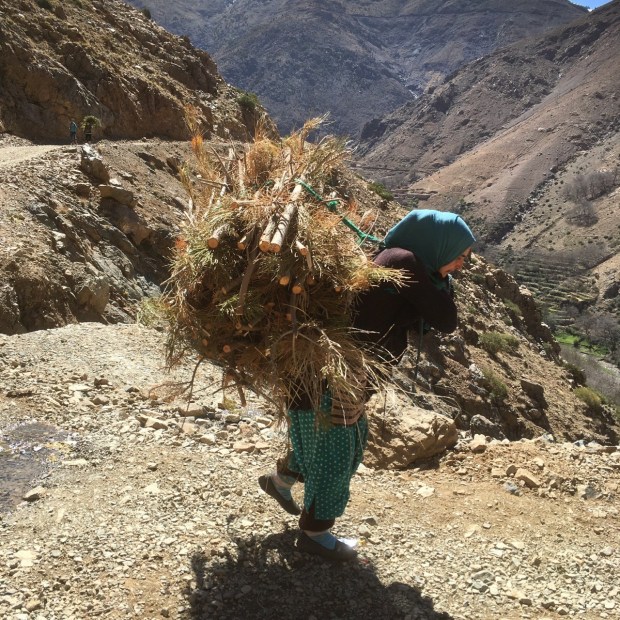
We sat and watched the passing life, friendly kids shouting hello as they played risky football on the tiny patches of flat land and young girls and women returned with their small herds of sheep and goats, the occasional cow led from behind by holding fast to their tail and huge bundles of fodder and firewood on the womens’ backs. Every family seemed to have a few hens and cocks that all mixed together in the streets/paths and chased each other from rooftop to rooftop.
IMG_2126

IMG_E1970

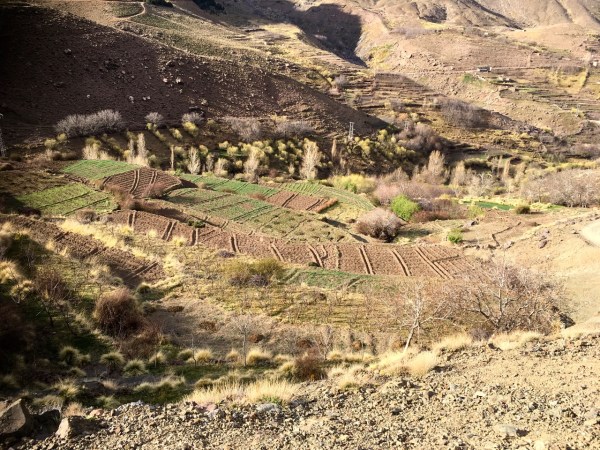
The well tended terraces obviously produced a lot of vegetables judging by our dinners. Onions, beans, cauliflower, carrot, marrow, greens and particularly potatoes. Barley was also grown for the grain and also cut repeatedly for fodder. There was also large variety of fruits and nuts with walnut the main, most important crop.
IMG_1985

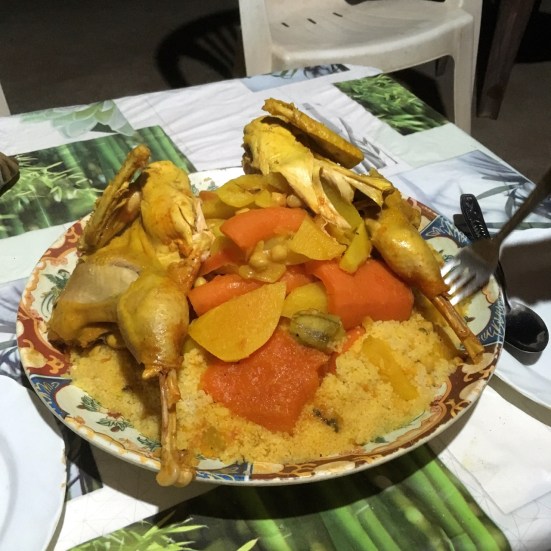
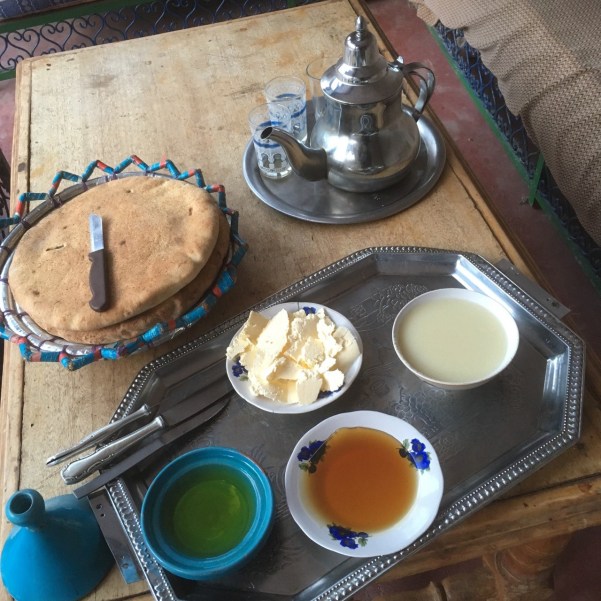
We were fed very well in all the houses we stayed in- the very simple kitchens preparing fresh bread and olive oil dip with mint tea on arrival- a tagine of veg and chicken or couscous for dinner and breakfast of pancakes and jam, yogurt, omelette and fruit.           Including our accommodation the bill was normally around  120dirhams or €12. Abdelhadi had friends and relatives in many of the villages and we were often offered mint tea, pored from a height into tiny glasses, along our way.
IMG_2146

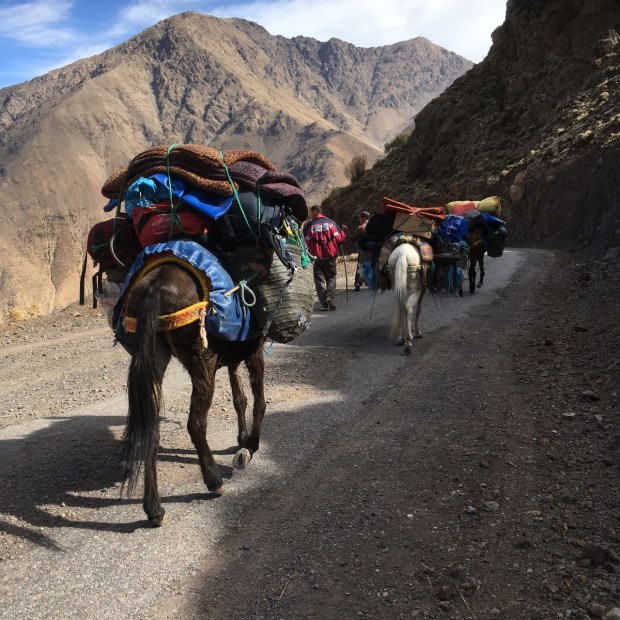
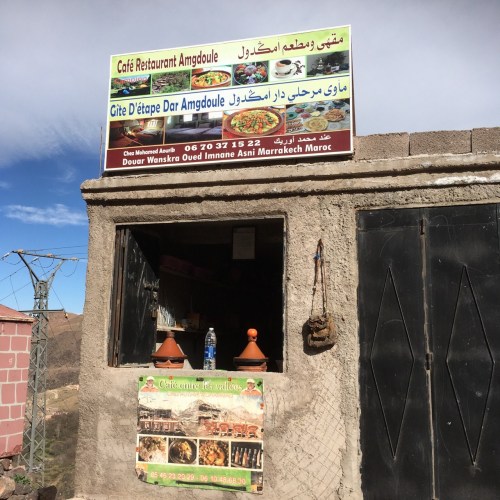
Brahim’s cousin owned our next nights gite, in Mzik, a couple of km above Imlil, the main base for climbers and trekkers heading off for Toubkal. We reached it after crossing the valley and climbing to another pass, Tizi N’Tamatert at 2280m where there was a roadside cafe/shop/gite and muleteers transported the luggage of climbers setting off to scale the peak of Adrar Tamalroute.

IMG_1987IMG_1992

IMG_1997

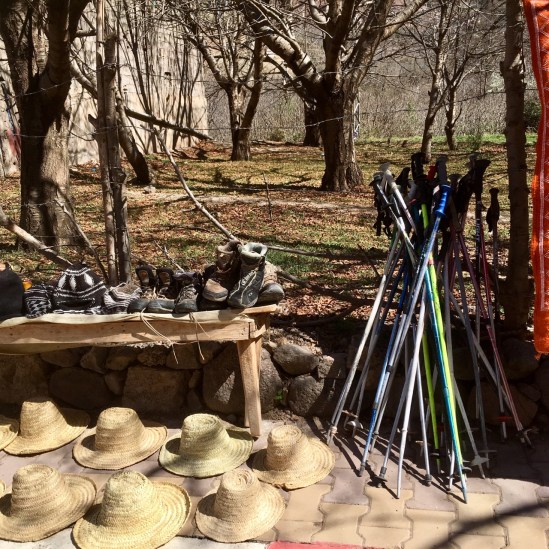
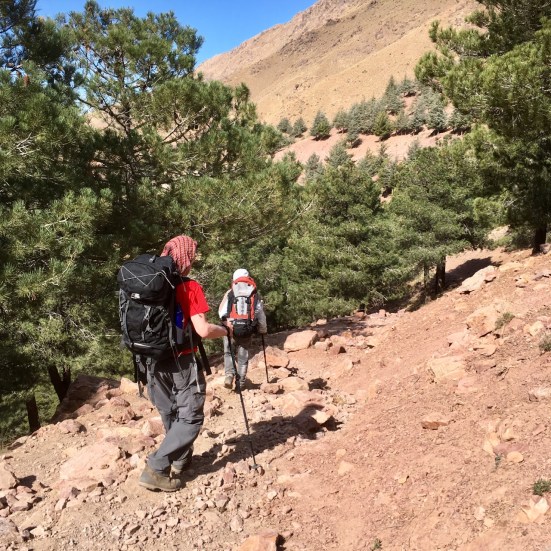
We descended from the pass through a sparse but shady pine forest, the trees bedecked with the white fluffy cocoons of the processionary moth. The valley widened out before Imlil and the relative prosperity of the town was revealed in some new and grand houses, the presence of cars and the amount of productive land. There are jobs here too, for guides, expedition and tour companies and shops selling outdoor equipment and the gear left behind the gear left by trekkers after returning from Toubkal.

Prince Harry and Meghan had been in the area the week before, visiting a secondary boarding school for girls in Asni set up to enable them to continue an education where only a quarter of them would normally get beyond primary level.
IMG_E2002IMG_E2005IMG_E2007

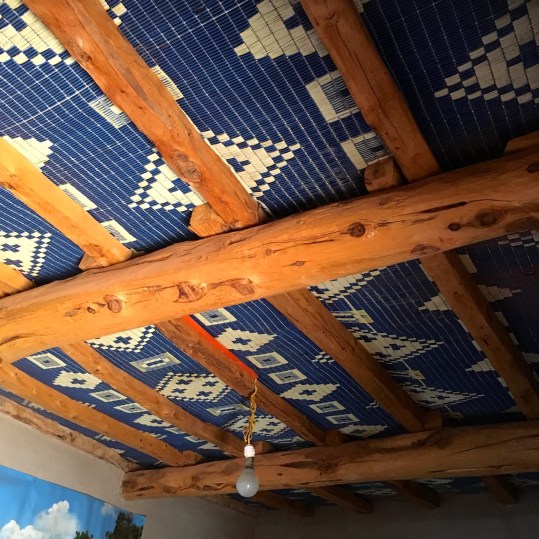
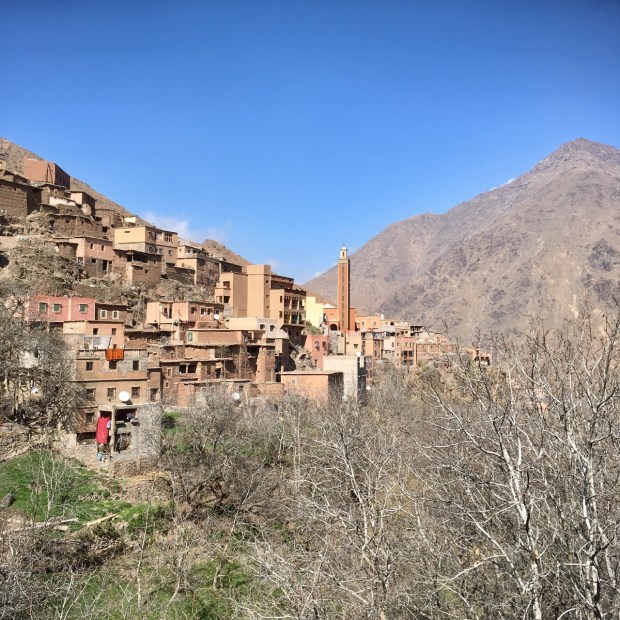
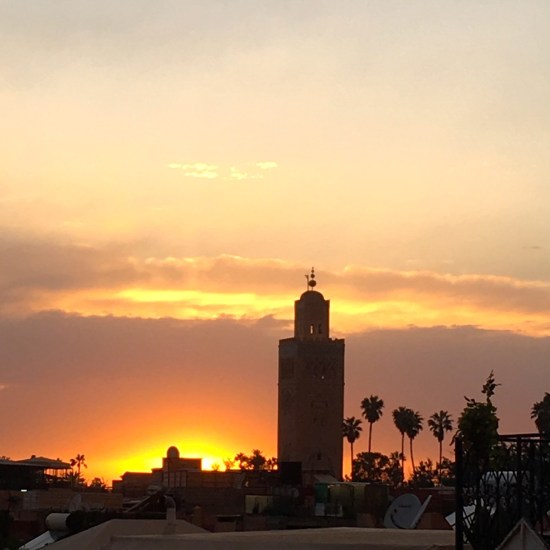
Our gite was in a less developed area surrounded by unfinished buildings and roadworks but the view from the rooftop was lovely with the minaret of the mosque positioned between the peaks that echoed to the muezzin’s call to prayer 5 times a day.

IMG_E2013IMG_E2014

The washed clothes I hung on our open window grill that night were as wet in the morning and we got out the waterproof jackets before heading off into the drizzle up into the cloud on a rocky track through clumps of broom, pine, holm oak and juniper to Tizi n’Mzik at 2500m. Damp and cold, with the juniper dusted with snow, we replenished our energy with dates and nuts before starting down the slippery scree slopes towards the Azzadene valley, still lost in the mist.

IMG_E2021IMG_E2027IMG_E2031

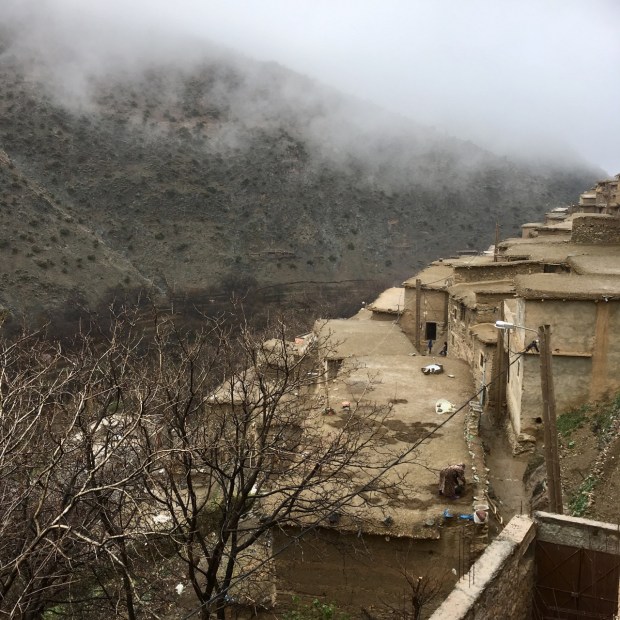
Eventually the cubist forms of the mud houses of Tizi Oussem emerged from the gloom and we were very grateful to have some hot sweet mint tea after finding the gite clinging to the slopes. I watched a women repairing her mud roof after the rain and  later our host invited us up to the kitchen for dinner- a thick barley soup and tagine- while we dried our clothes near the fireplace, and he made a huge bowl shaped loaf for breakfast.
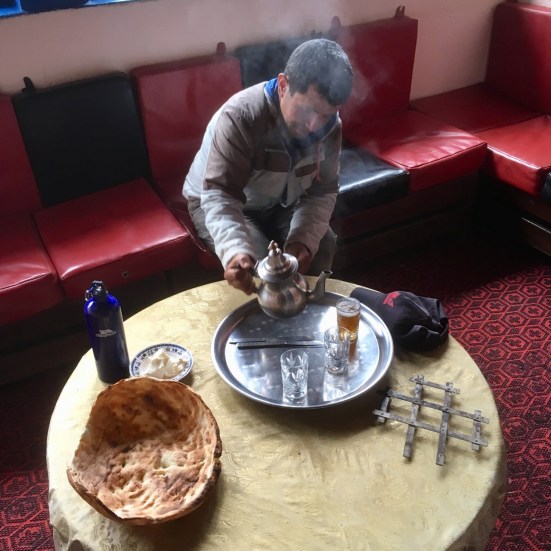
IMG_E2034

IMG_E2033

IMG_E2044

IMG_E2045

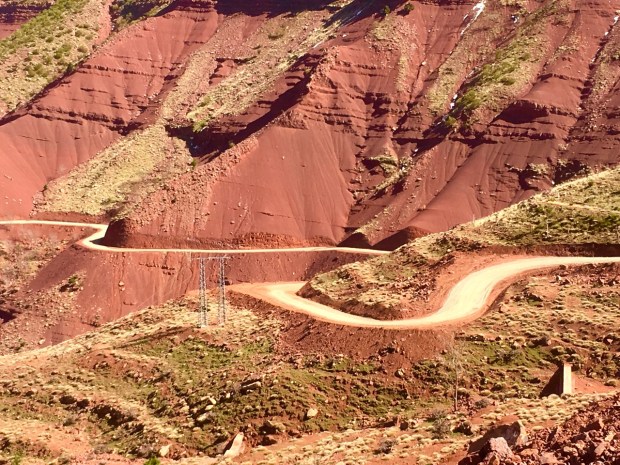
The clouds had lifted by the morning and we left the village to follow the Azzadene valley on a red earth piste past a string of hamlets built of the same vivid mud. The landscape was made up of different mineral rich rock types with hues ranging from black to purple, pink, red, grey, and green.

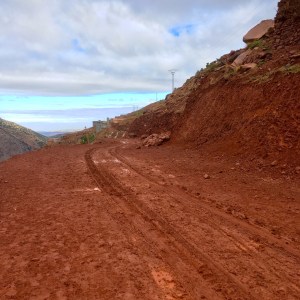
IMG_E2047IMG_E2059IMG_E2058IMG_E2056

IMG_E2063

Climbing through Tizi n’Techt we left the piste and turned to descend on a twisty scree trail towards the Ait Mizane valley, stopping for lunch among the sheep and goatherds whose flocks had nibbled the juniper into artful topiary.

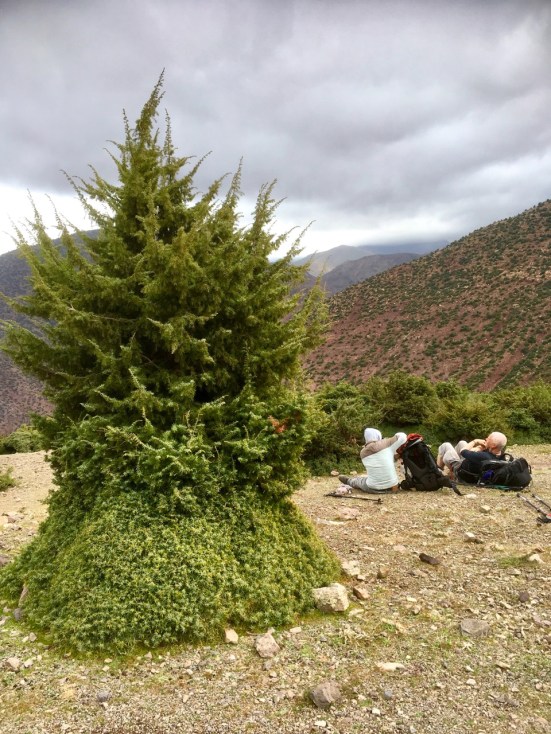
IMG_E2067

IMG_E2070

Clambering down through the buildings and tree blossom we crossed the river and climbed around the side of the mountain to another pass at Tizi el Bour to reach Imska after a 4 1/2hr hike. We were greeted by a smiling old women at the gite who was now running the place on her own after the loss of her husband. The Berber women seemed to be more independent and socially outgoing than I had imagined and although we were only witness to a snapshot of their obviously hard lives, I was often impressed by the great amount of shared laughter and joyful chat amongst groups of animated and smiling women and girls dressed in flamboyant and colourful clothes. ( They weren’t keen on being photographed so I didn’t).

IMG_E2076IMG_E2075IMG_E2078IMG_E2085IMG_E2088

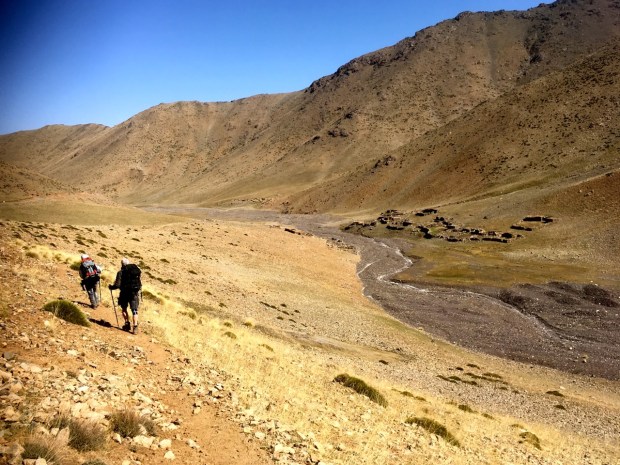
The next 2 days saw us climb up the Valle de Imenane from Imska on mostly gravel tracks through a scattering of villages to a gite at Ouaneskra and from there a steep trail up to the pass of Tizi n’ou Addi at 2954m and down through a beautiful high broad valley where clusters of shepherds houses awaited their seasonal occupation.

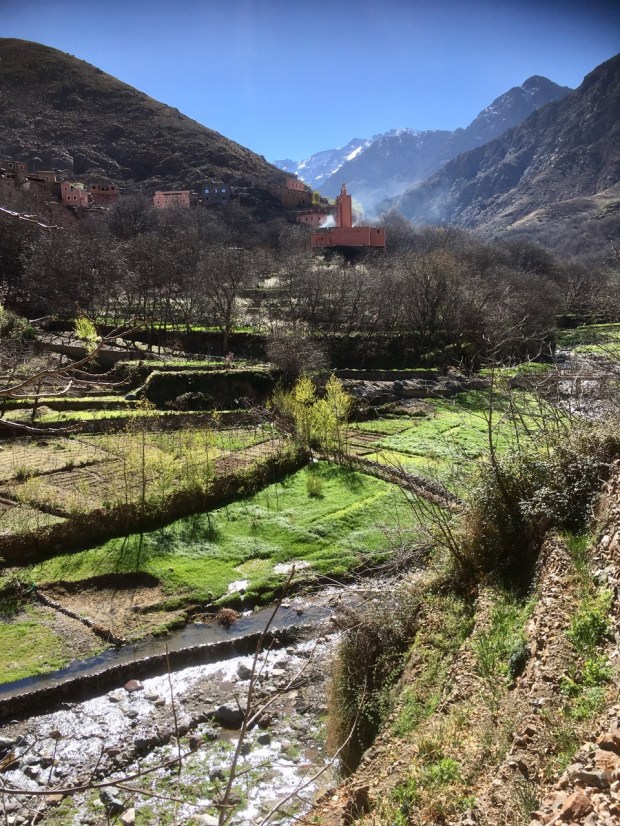
IMG_E2102IMG_E2108IMG_E2125IMG_E2107IMG_E2104IMG_E2131IMG_2142IMG_2136IMG_2156IMG_E2162IMG_E2167

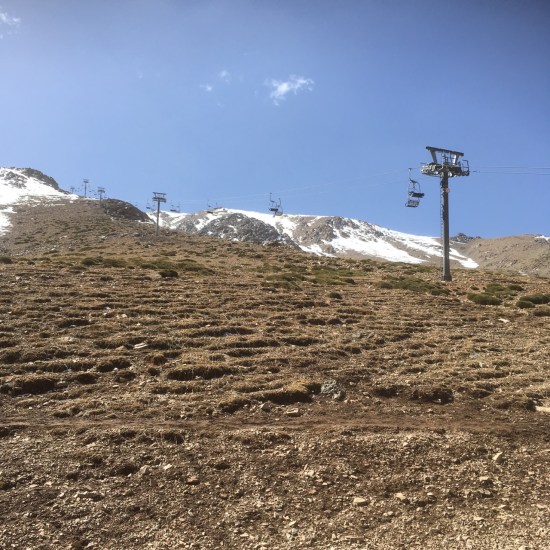
We started to see the ski lifts on the outskirts of Oukaimeden, Morocco’s only real ski resort and although there was very little skiable snow on the Sunday we were there the place was very busy with a big car park full of flashy motors, and  a mass of Marrakech day trippers walking or donkey riding up the slopes and eating and drinking in the wealth of restaurants and cafes. It was all a bit of a shock to the system after the empty trails and although we had planned on staying there the night we were relived to discover it was way too expensive and meet a fellow who had a simple room available in the village of Ait el Kack another 6 or so km down the valley to the east.
IMG_2170

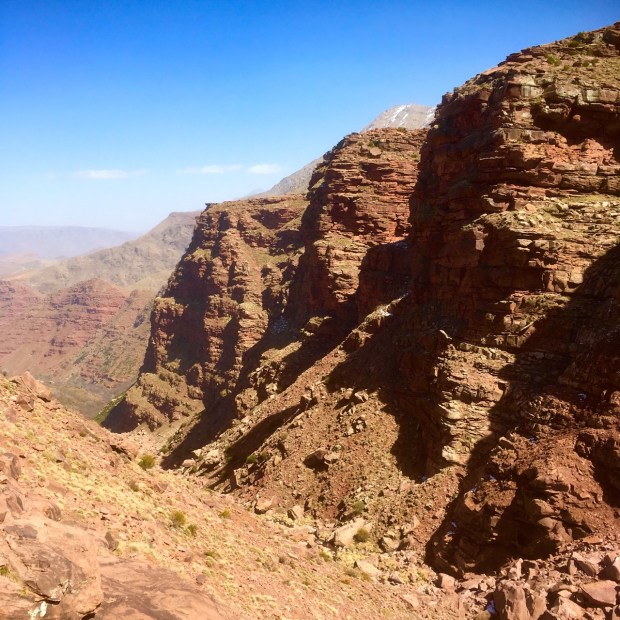
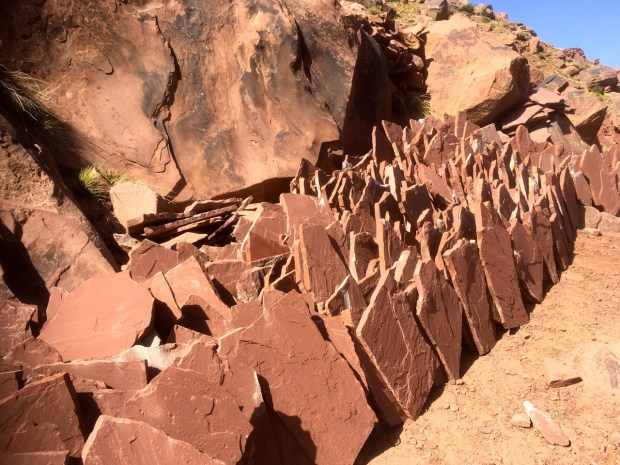
The geology of the landscape had changed again and the deep canyon like red sandstone gorge we hiked through had little quarries where the paving and building slabs were teased from the rock and transported by mules to the roadside for sale. (About 70c a flagstone!)
IMG_E2185IMG_2186

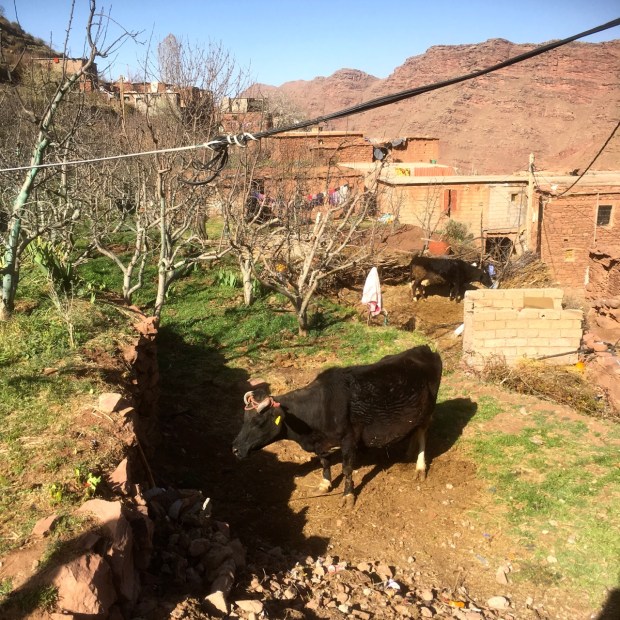
Our host for the night must have been doing ok from the overspill trade from Oukaimeden as he had a cow tethered on a little patch of ground joining the house and a great big  flat screen TV that the family gathered round all evening, although it was only showing the channel listing anytime we passed by. In the morning we disappeared off the top of my map on a new track being made that will eventually be tarmac and link all the way around to the Timichi valley and on around to Oukaimeden again creating a high level circular route through the currently remote and peaceful mountains.
IMG_2191IMG_2211IMG_2214IMG_2217

We reached a beautiful, broad and verdant plain high in the folds of the mountains with emerald fields of grain separated by rocky paths and walls in a landscape somewhat reminiscent of my local Burren stonescape complete with carpets of a delicate alpine flower. We were hoping to stop for the night here but the gite was shut forcing us to carry on another couple of hours on the empty and surreal highway cut through the red rock.

IMG_E2224IMG_E2232IMG_2225IMG_E2243IMG_E2241

We found a bed in the small village of Uouiri where the gravel track ran out, in a house run by the young daughters of a couple gone off to the souk in Marrakesh.The children here as in all the villages had simple pleasures- a game of marbles or stone tossing- riding recycled bikes- passing chase and football on levelled village pitches and other DIY pastimes. No screen hours here. We managed to capture a small bird and undo the string attached to its leg, only to discover later it was the small boy’s pet !
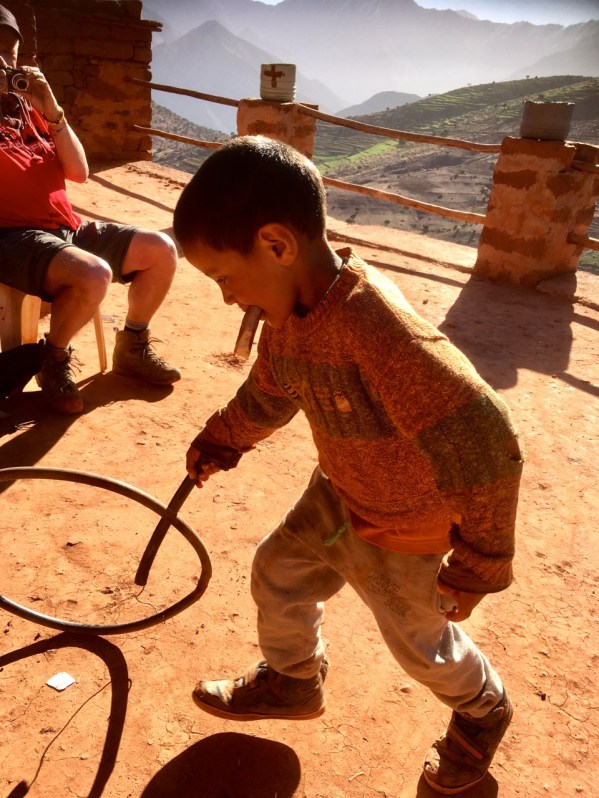
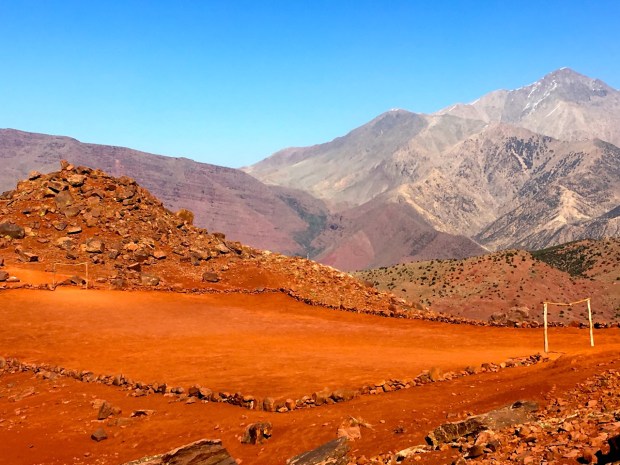
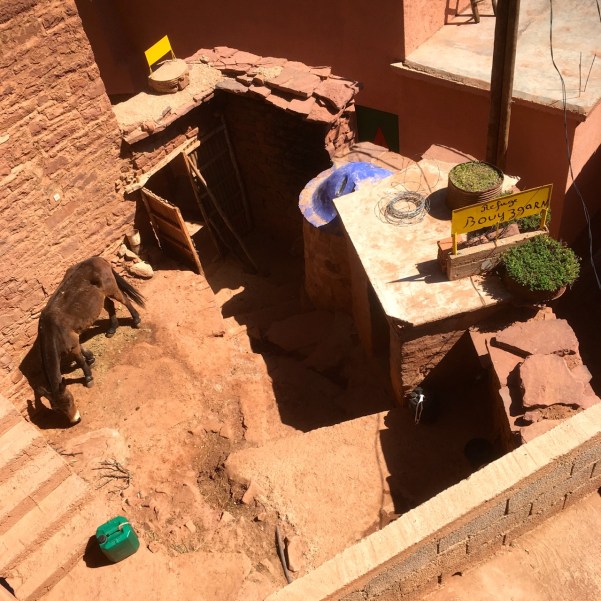
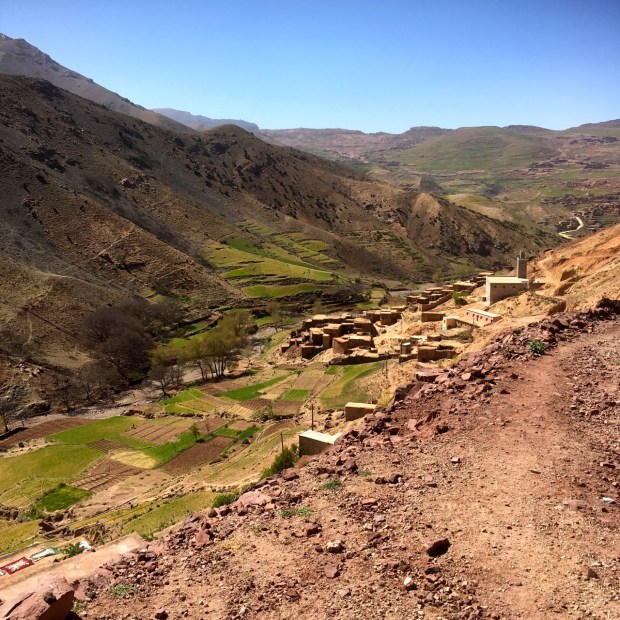
IMG_E2291IMG_2249Although a charming place and hosts I was unfortunately ravaged in the night by not only bedbugs but fleas as well leaving me with big itchy lumps for days. Having done a long day we were left with a short walk in the morning so we went off piste and took a scenic route round to Boulzgarn, where we were invited in for tea by a relative of Brahim, and admired his hamman or sauna. These structures are popular washing and social places in the villages, segregated by sex- where the women bath naked together but the men remain costumed, another surprising feature of supposedly modest muslim women.
IMG_2238IMG_E2252IMG_2255

IMG_E2297IMG_2298IMG_2312IMG_2314

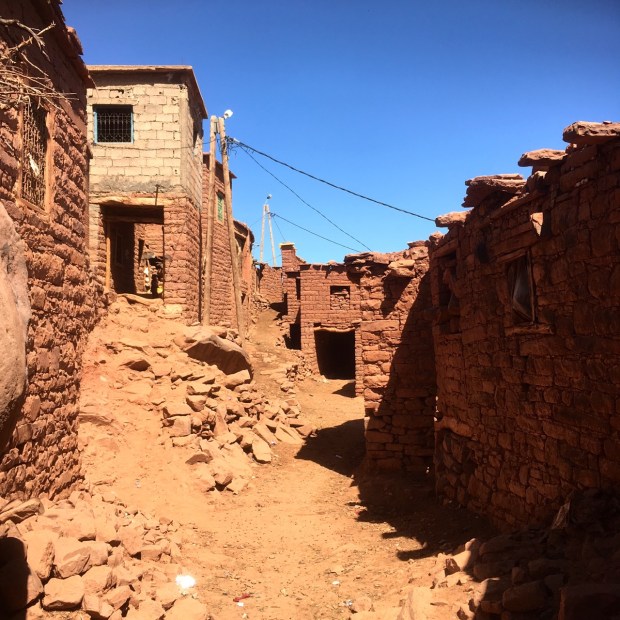
On our way out of the village on the maze of narrow paths we passed a fine example of the Berber village “downpipe”, a smoothly rendered line that takes the water from the earthen roof.
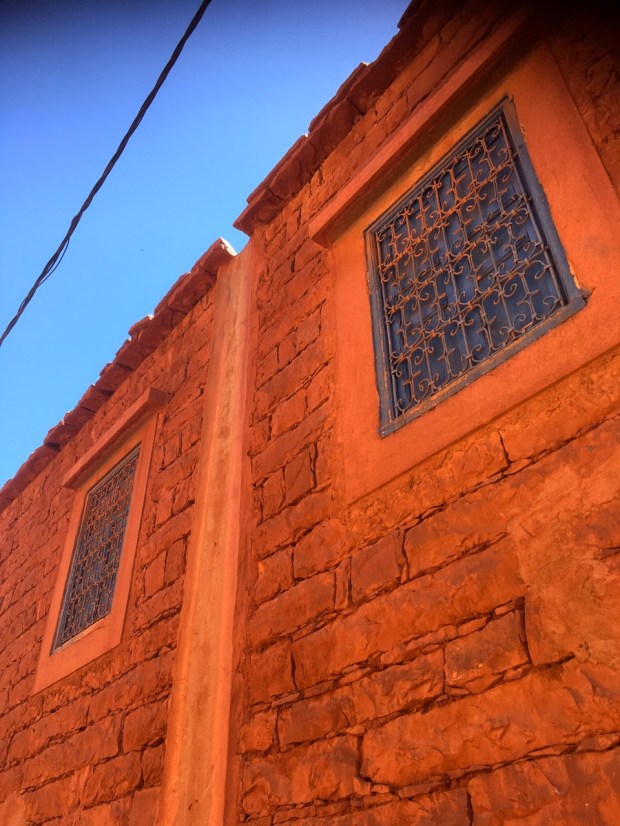
IMG_2316IMG_2317IMG_2319IMG_E2323Back to the trail we continued on to Chiker, our last stop before our return to Timichi and the first place we had encountered any other hikers – a group of students from Holland. On route we passed a flattened threshing area, similar to the many “eras” I have passed on my Spanish rambles. The views we encountered up and down the Ourika valley were the same as 9 days previously but from an even higher level.

IMG_2310IMG_2300IMG_E2332IMG_E2331IMG_2335

The next morning we set off past the diggers and trucks constructing the new road snaking through the steep sided slopes of rock, scree and  terraced fields, and Abdelhadi pointed out the spot where one villager had lost their lives falling into the gorge whilst collecting fodder. I wondered if and how a tarmac connection to the outside world would ease their harsh labour intensive lifestyles. Winding relentlessly down to the lush water meadows of the valley bottom, we rejoined our original route to Timichi where we were again received with a warm welcome from Brahim and that night were presented with a feast of couscous and chicken worthy of heros.
IMG_2352IMG_2357IMG_2358IMG_2375

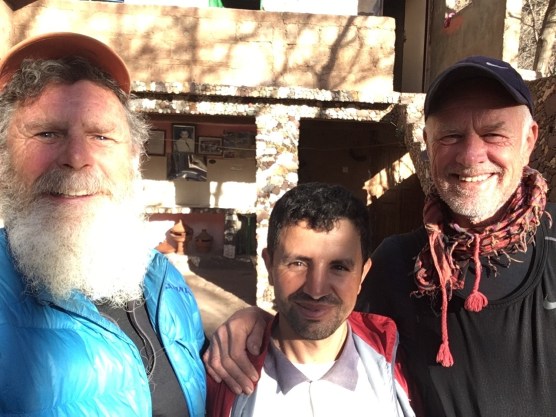
Brahim declared that he was going to market the following day and would accompany us on our final leg back to Setti Fatma from where we could get a bus to Marrakech. Abdelhadi was happy to be reunited with his young family whom he proudly took us to meet in the small and smokey building he called home. Adjoining it was a pile of concrete blocks and a small patch of levelled ground from an obviously long stalled extension project that Bill and I were happy to help fund in an (unasked for) gesture of thanks for all his time, effort, knowledge and company.
IMG_2379

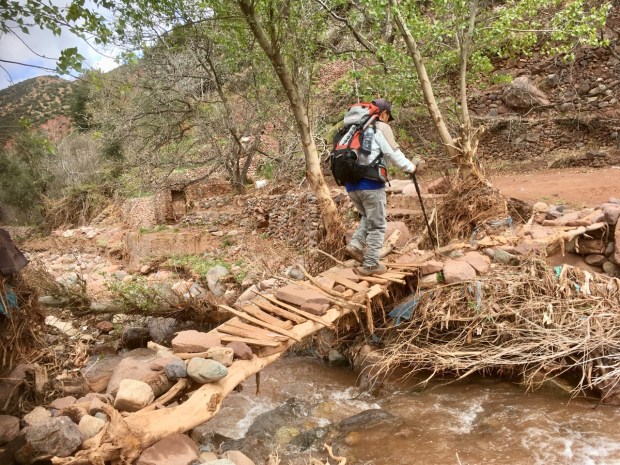
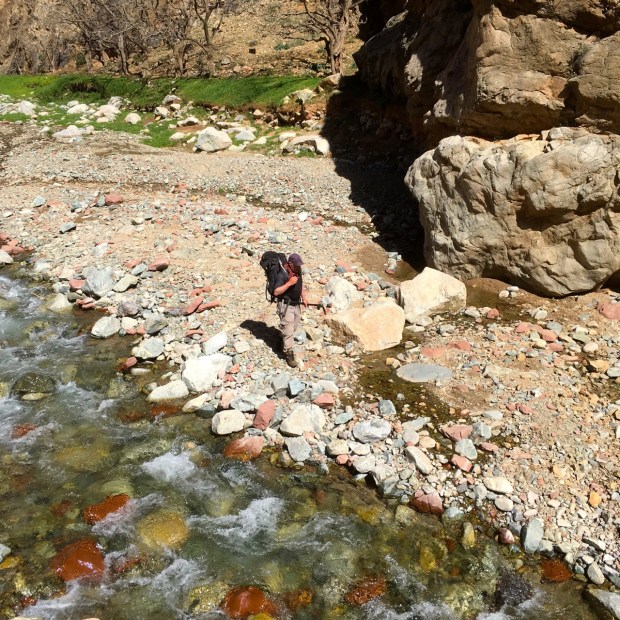
After saying our goodbyes in the morning we shouldered our packs for the last time and followed Brahim out. Rather than go back on the track the incredibly nimble 80 year old led us down through the green and shady woods and fields of the river valley stepping lightly over the numerous irrigation streams and channels. As we worked our way down stream the valley walls closed in and the watercourses merged to form a fast flowing turbulent body of water that we were frequently forced to cross on wobbly boulders.            While Brahim stepped lightly and quickly across we quivered and quaked somewhat before stumbling towards the octogenarians outstretched hands. An exercise in humility.

IMG_E2395IMG_2405IMG_2398

It was a beautiful way to finish our journey around the mountains, in the company of a man whose deep connection to the place and its people had existed for over 80 years and alongside, (and finally and inevitably IN), the waters that give it and them life.

An awe-inspiring landscape, a welcoming population. Good food and great trails. An exciting history and culture and a lesson in the possessions/happiness equilibrium . And all on the doorstep of Europe. Go before its bound with tarmac ribbons.
IMG_2432

Sierra de Aracena

The largest Natural Park in Andalucia, the Aracena y Los Picos de Aroche is 184,000 hectares of prime walking country.

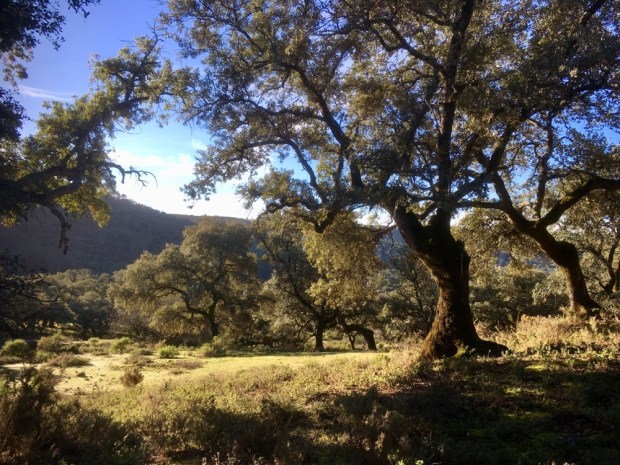
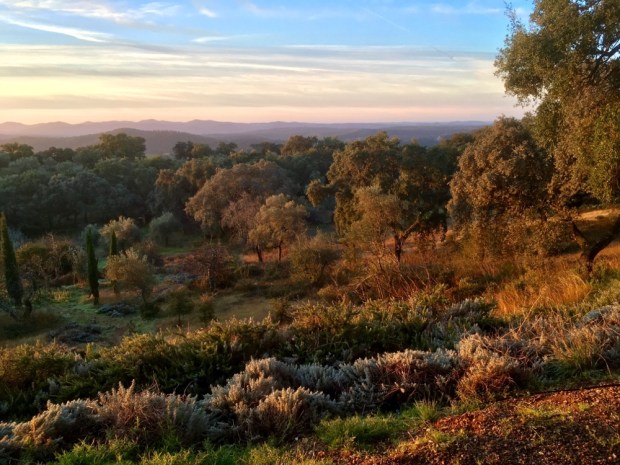
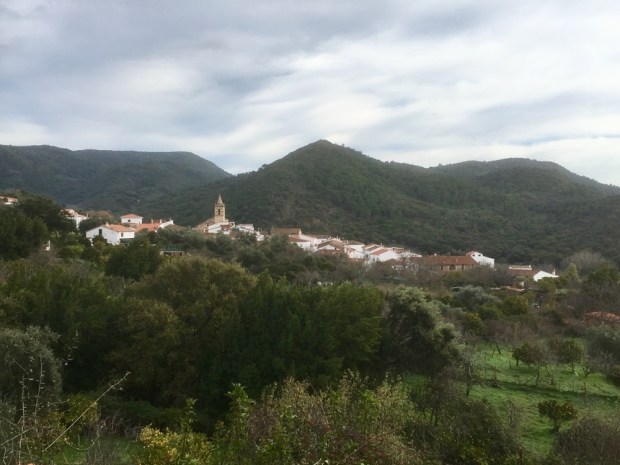
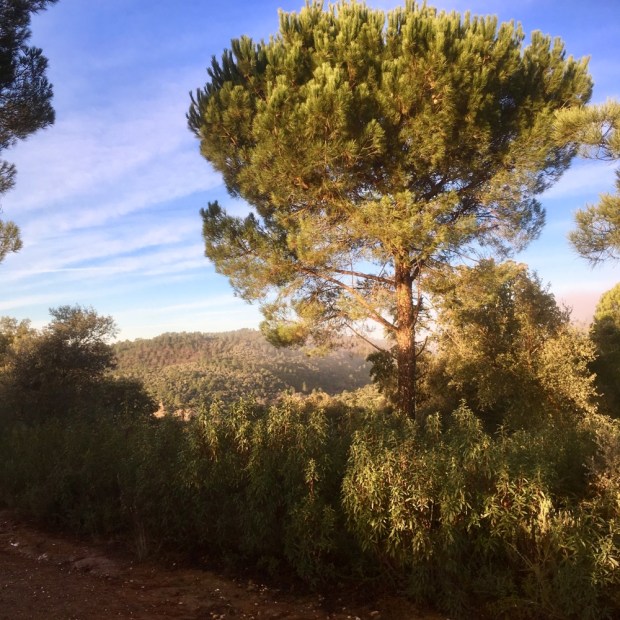
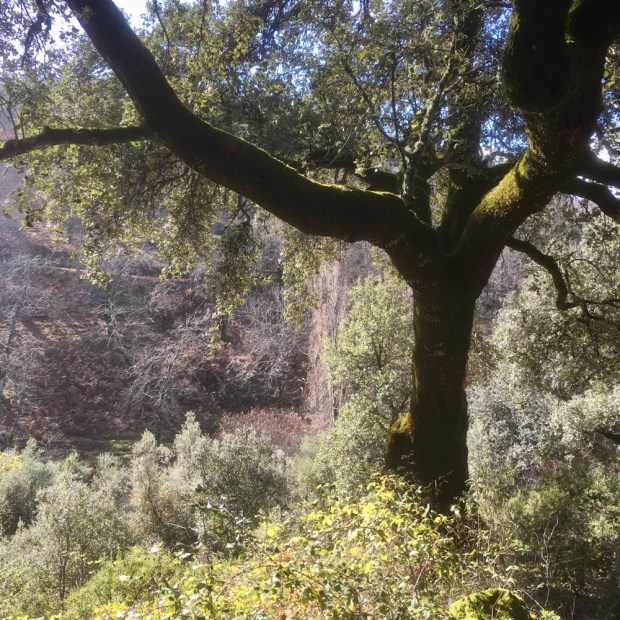
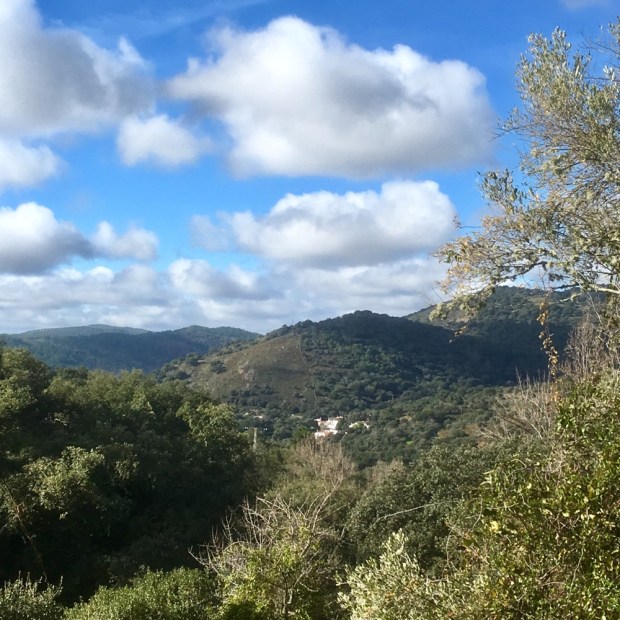
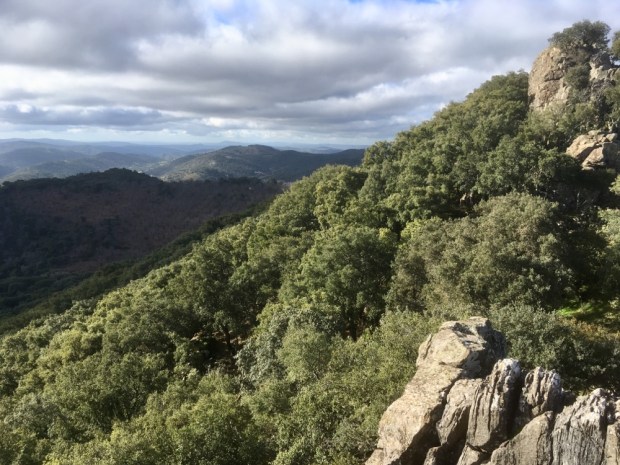
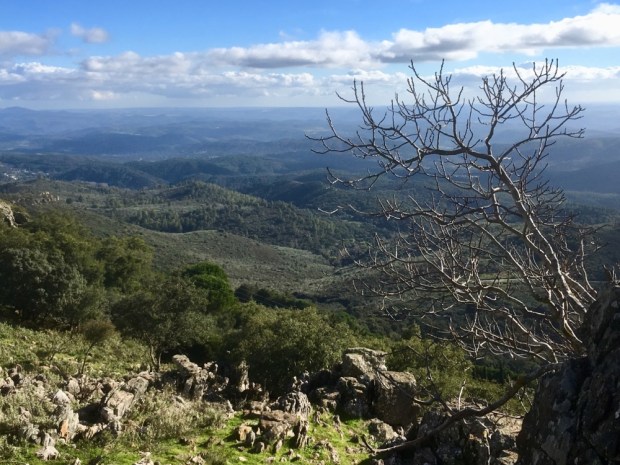
100km northwest of Seville, in the province of Huelva, this is where the cross Spain ridges of the Sierra Morena finally run out and the Atlantic weather systems drop their water bombs after crossing Portugal unchecked. Lush, green and 90% forested, the softly rounded hills, covered in their blanket of oaks and pines and chestnut are less rugged and wild than many higher, steeper and rockier Sierras but the Aracena is a hikers paradise with long or short walks on moderate gradients winding along the wealth of old drovers that string the pueblos and villages together.

We did 5 long looped rambles over 5 days, and felt we could have lost ourselves in the shady valleys and over the high ridges for months tramping the cobbled mulo trails.

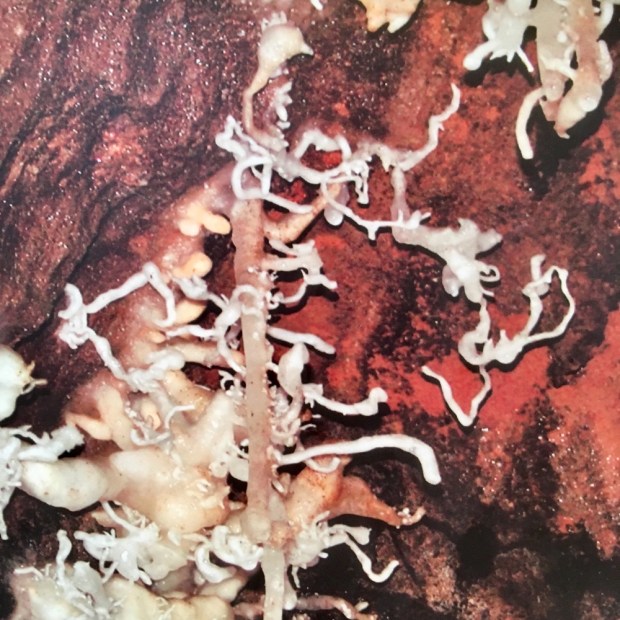
Our first couple of days were spent around Aracena town itself, a charming centre famous for its fantastic cave system right in the middle of town. Supposedly discovered by a shepherd and first opened to the public in 1914, the km or so of passageways and caverns visited on the tour feature a truly awesome ( not a word I use lightly) display of all forms of stalactite and stalagmite, the likes of which I have never seen before. Unfortunately no photography was allowed so I can only illustrate by showing a poster of just one interesting element.

We started early on our first 11km walk on a misty and then drizzly day, a loop to Corteconcepción. The moisture was a good illustration of how the region is seemingly so fertile and lush. Most of the fincas had fine huertas, or garden areas, which even out of season had a wide variety of fruit and veg, irrigated by various systems of water control, including one way stream gates.

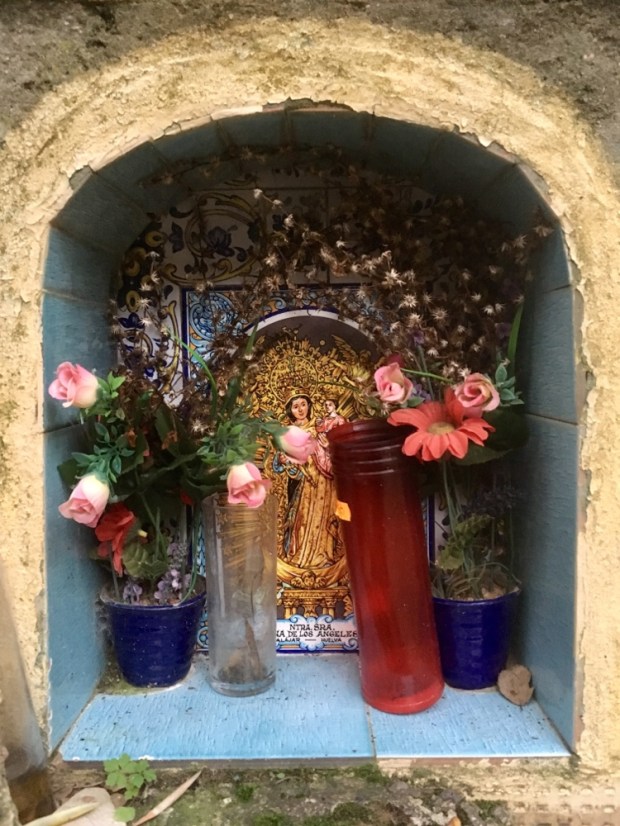
A very catholic rural people, there was an abundance of roadside shrines and gatepost tiles depicting the Virgin Mary, and the entire landscape was dotted with chapels, churches, convents, monasteries and hermitages.

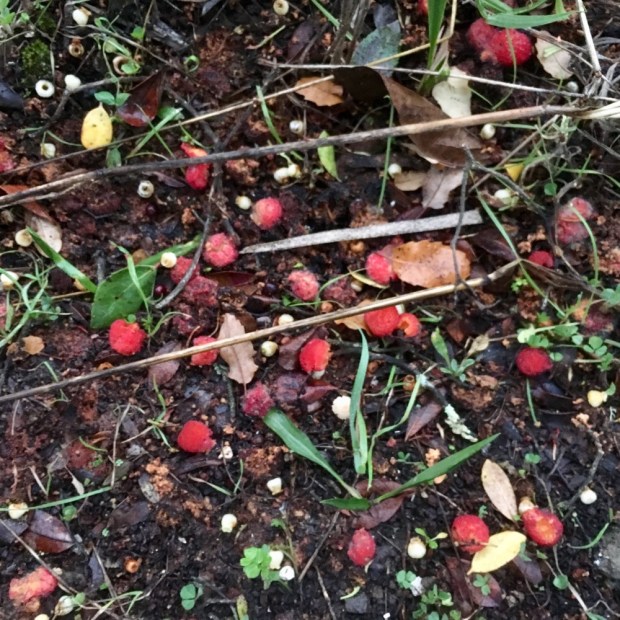
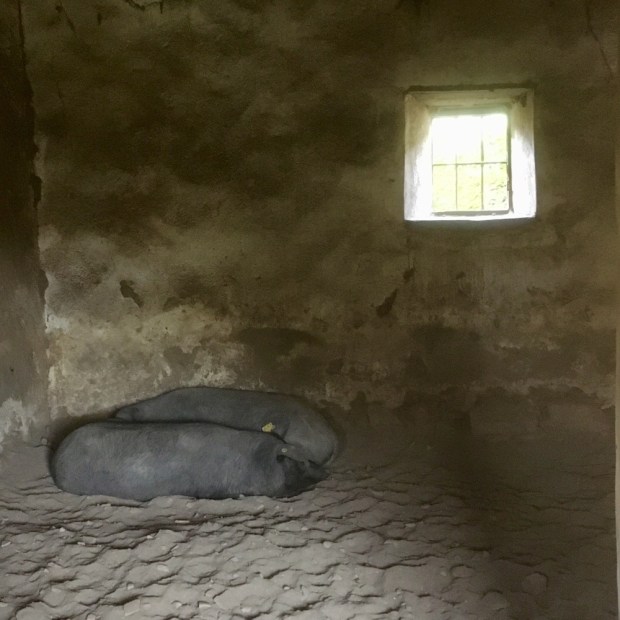
Passed the gardens of brassicas, root crops and the last remains of peppers, tomato etc and the orchards of orange, lemon, chestnut, pomegranate and persimmon was rich Dehesa country. Tracks lined with Arbutus, the strawberry tree, their fruit littering the ground, their flowers decorating the branches in a fitting Christmas style, were surrounded by oaks of every kind, under which the Iberian pigs snuffled and snorted, hovering up the plump and plentiful acorns.
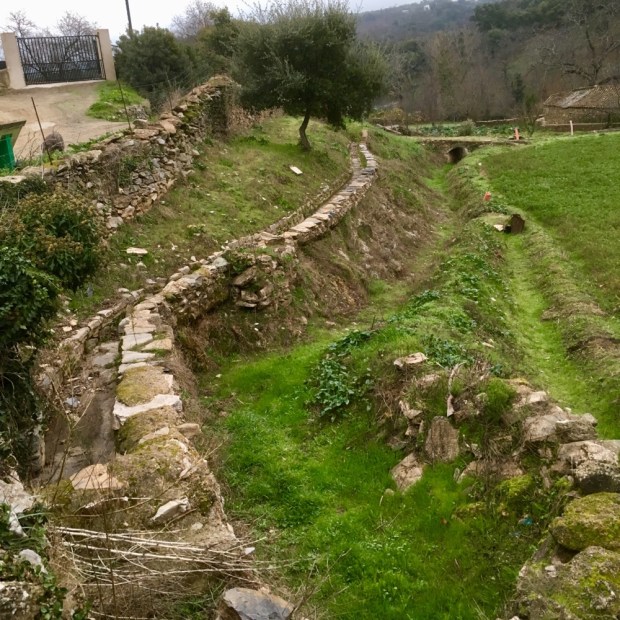
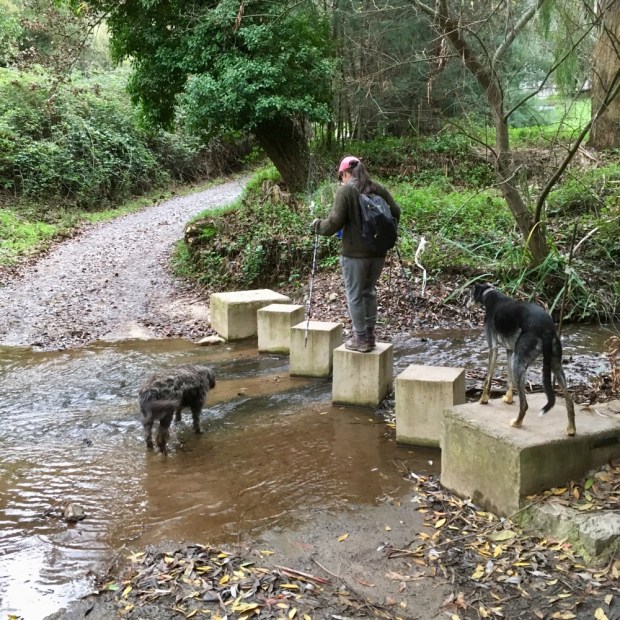
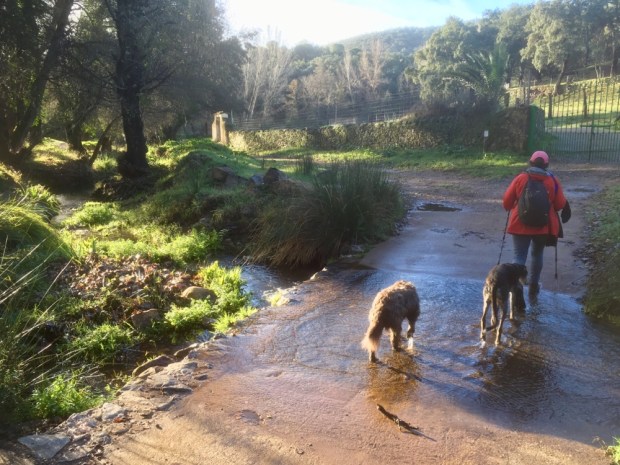
Unlike a lot of our Spanish treks we were often accompanied by the gurgling and burbling of running water and had to ford streams on a variety of stepping stones and bridges.

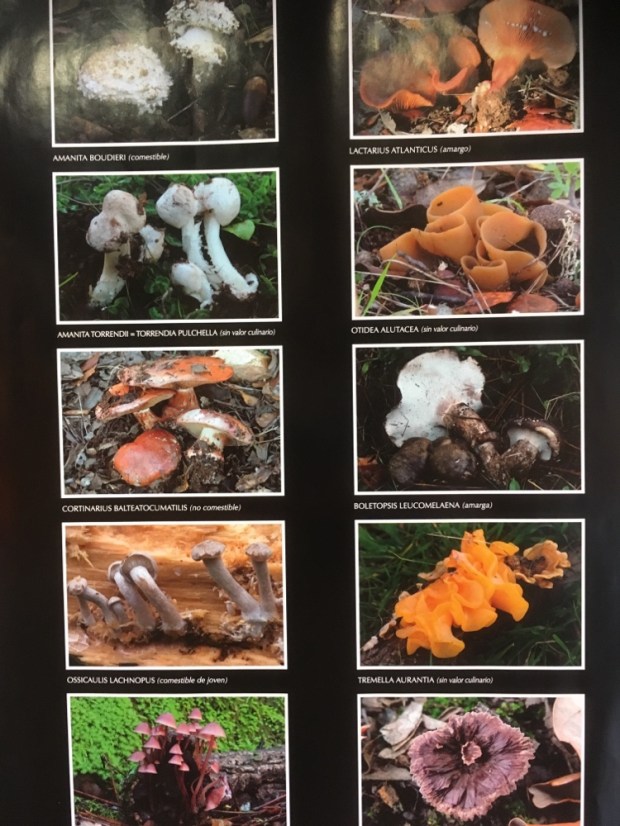
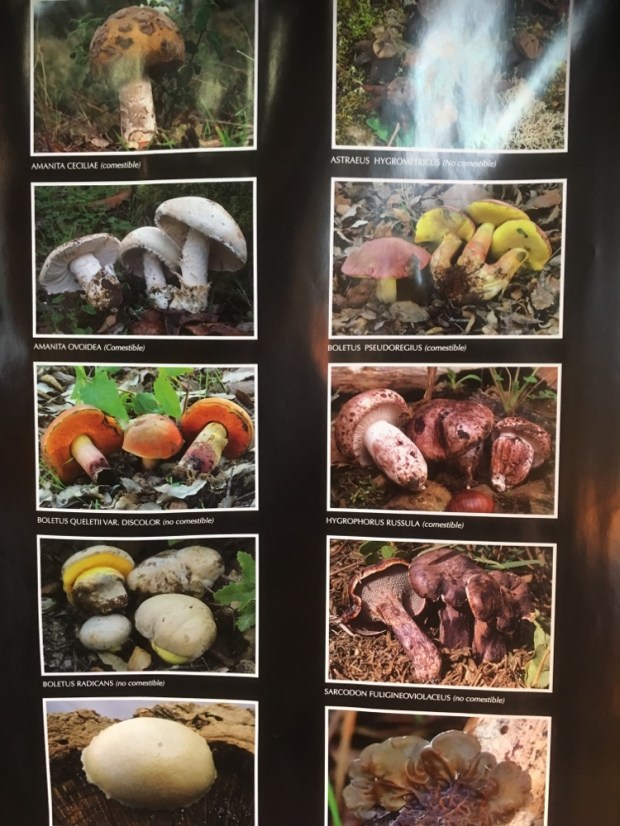
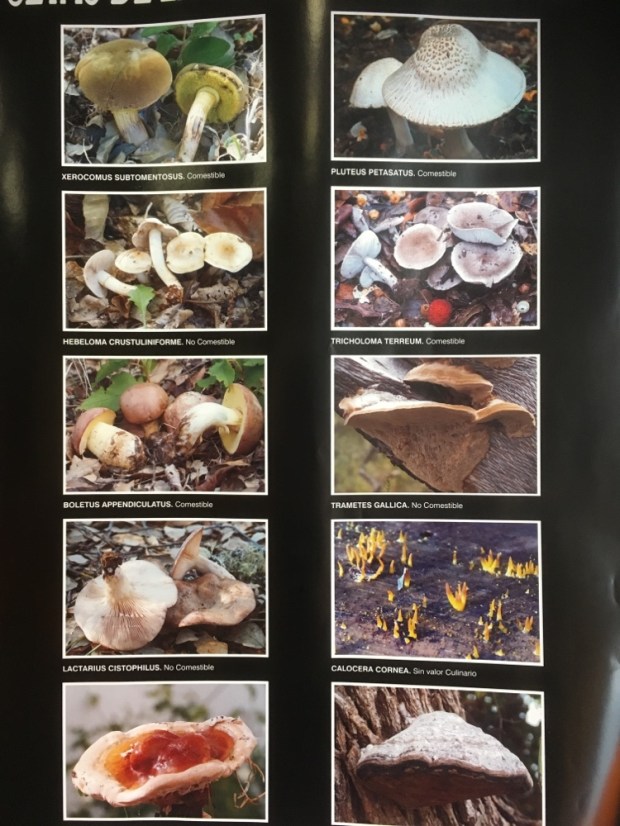
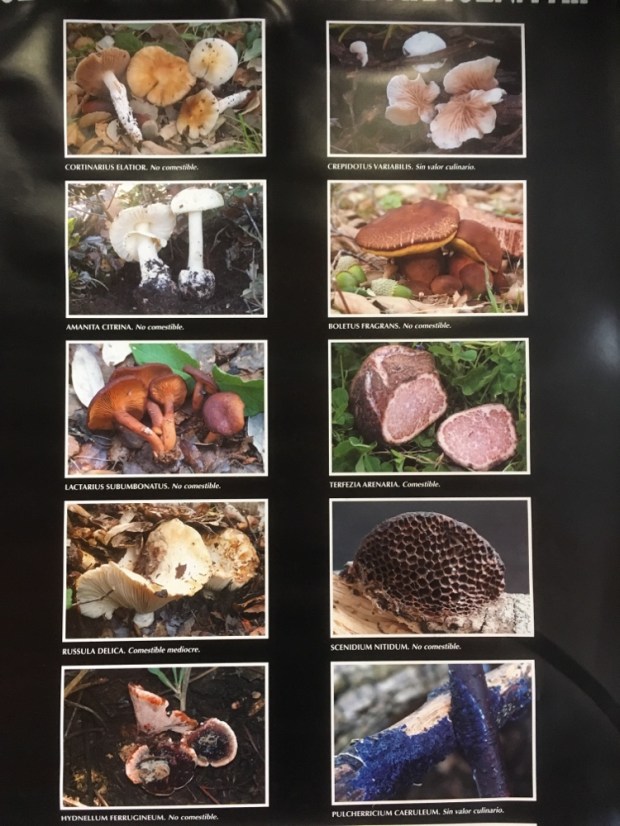
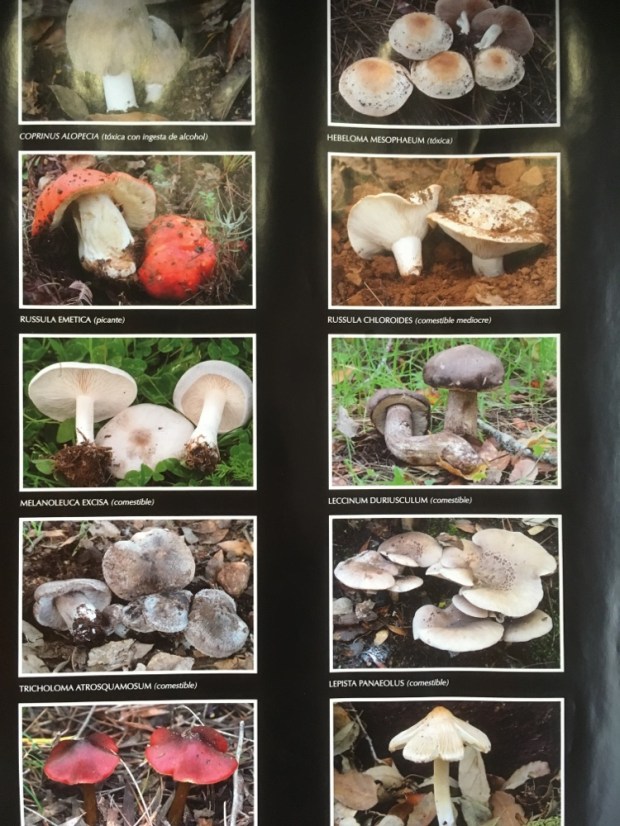
We spent the drizzly afternoon in the caves and in museums of jamon (ham) and setas (mushrooms), both of which, along with chestnuts, the region is rightly famous for. Autumn is the time to be here with a rich harvest going on and the chestnuts turning golden brown. The huge variety of mushrooms is amazing with many kinds gathered for the kitchens and tables.

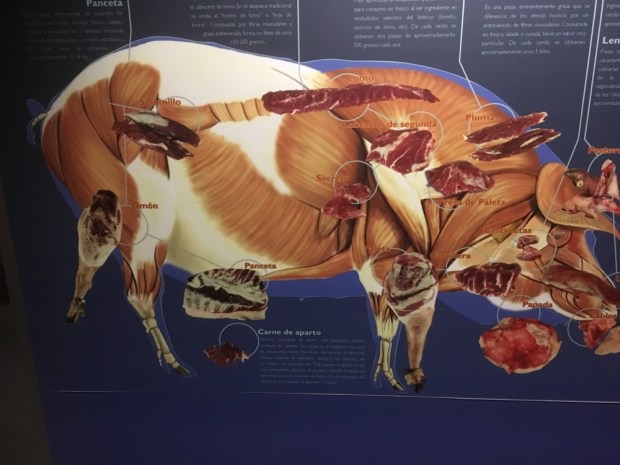
And as for the jamon, as much as we relished seeing the pigs enjoying their free ranging freedom, ( indeed we came upon many living feral in the open hills) the sad truth displayed in the museum of jamon was that it all ended in butchery.

But at least the end product was treated with a reverence rarely seen bestowed upon food unfortunately. There are many outlets in the area and indeed across Spain that are akin to cathedrals of pork, with the Iberian acorn fed pigs from Jabugo and the Aracena area on the high alter, and the jamon costing many hundreds of euro.

Next day was brighter and drier and we took off on another 16km circular route from Aracena west to the village of Linares de la Sierra.

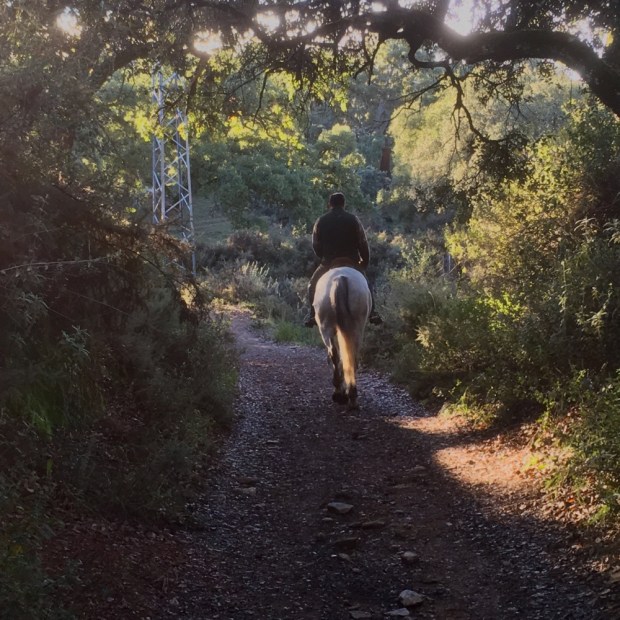
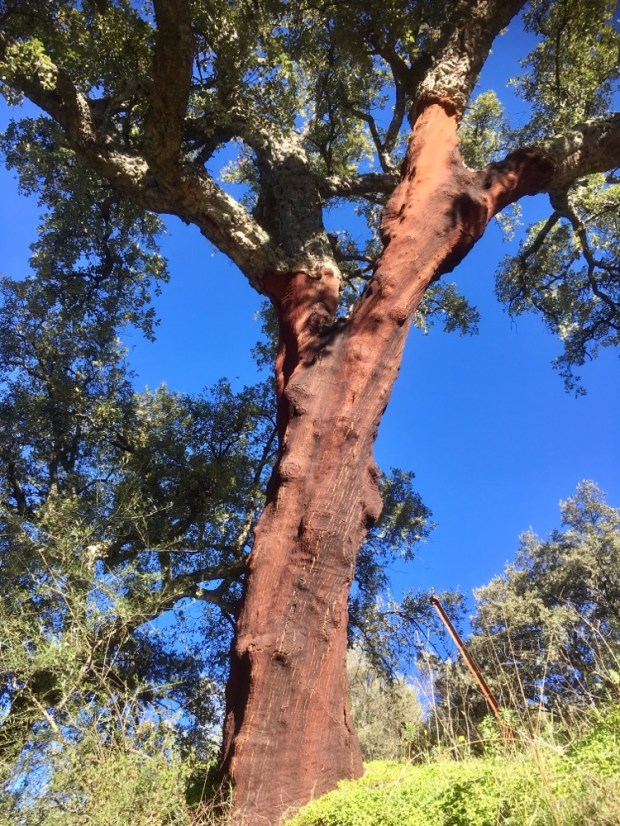
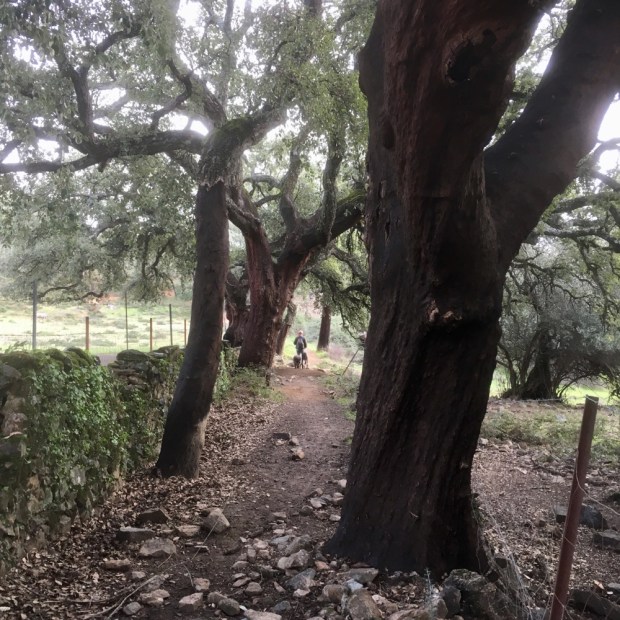
Finding or way out of town past the sports arena , swimming pool and football pitch we soon found ourselves among the freshly peeled alcornoques or cork oaks on a path shared with walkers and riders.

The amount of material gathered sustainably from the cork oaks is very impressive and must involve some hard graft with ladders and mules needed to harvest the trees across the hard to reach sierra. Although the wine industries adoption of plastic corks created worries for the indigenous industry there seems to be a big revival of other cork products and an impressive selection of goods are on sale in the area.

The trail climbed a ridge and then descended towards Linares, tucked deep into the folds of the green hills. We walked on sandy tracks, rocky trails and cobbled paths accompanied by birdsong, cowbells and snorting pigs.

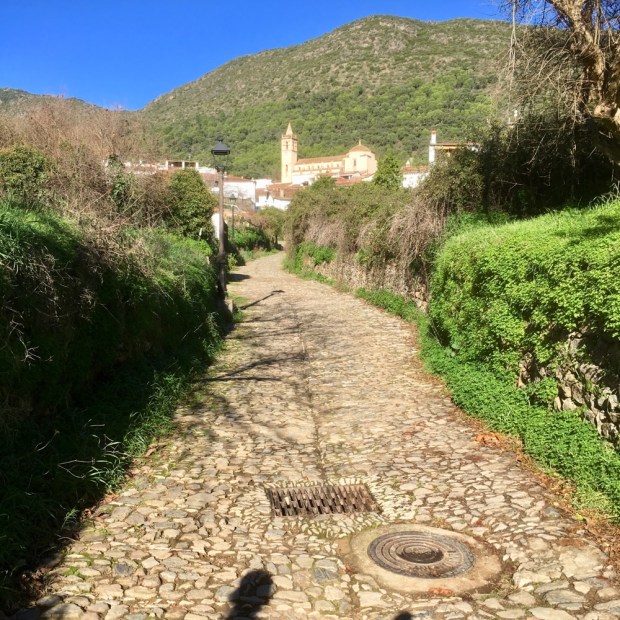
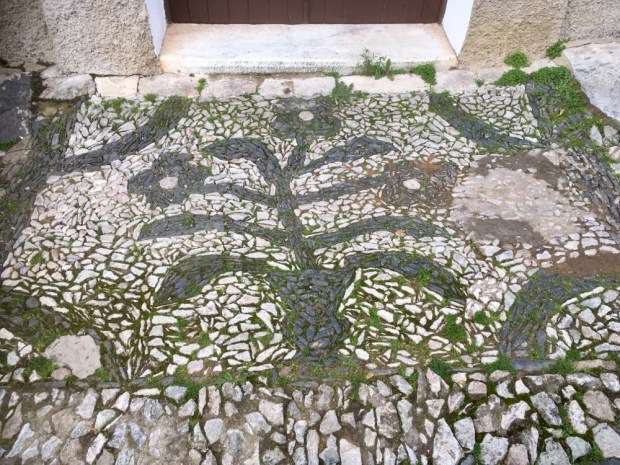
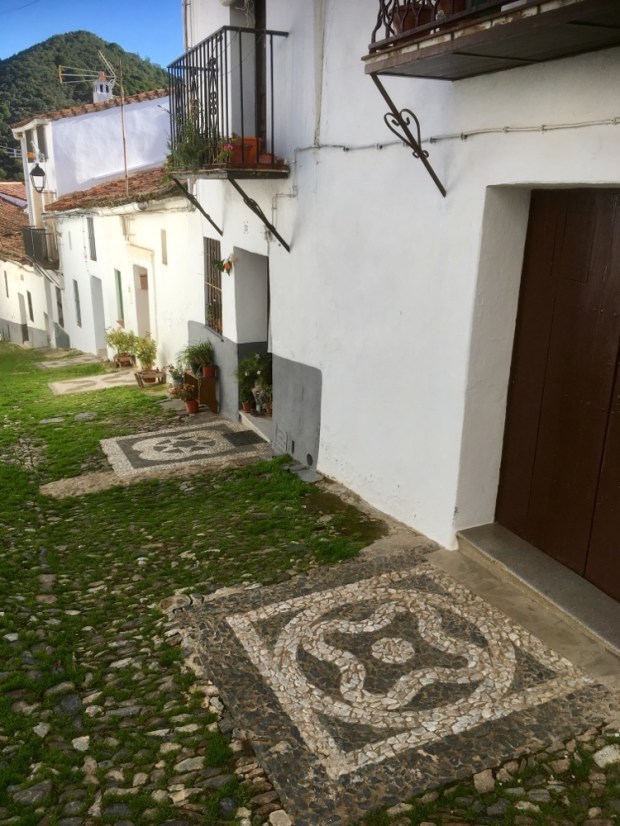
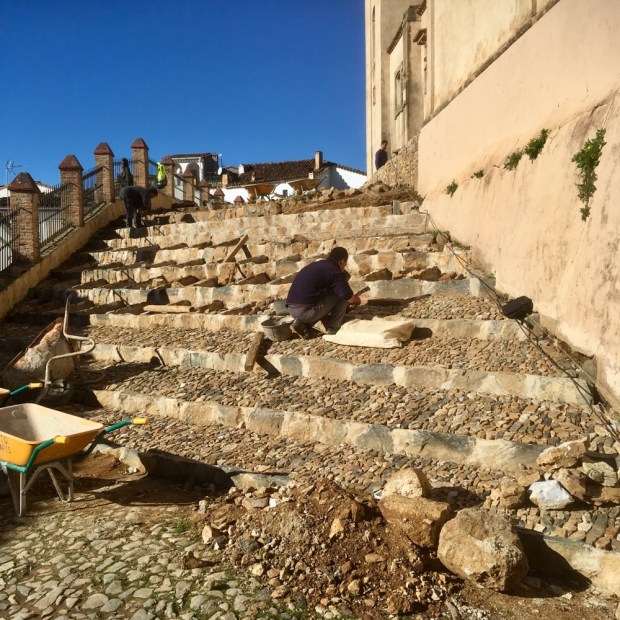
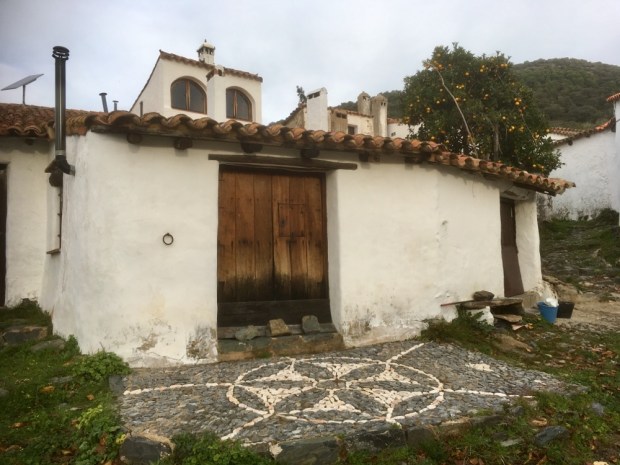
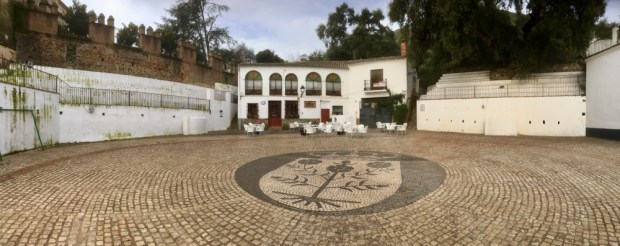
The village itself was an exhibition in the art of cobbling. The houses had individual designs in black and white marble cobbles at their front doors, the streets were intact and maintained and there was new and restored cobbling going on around the church.

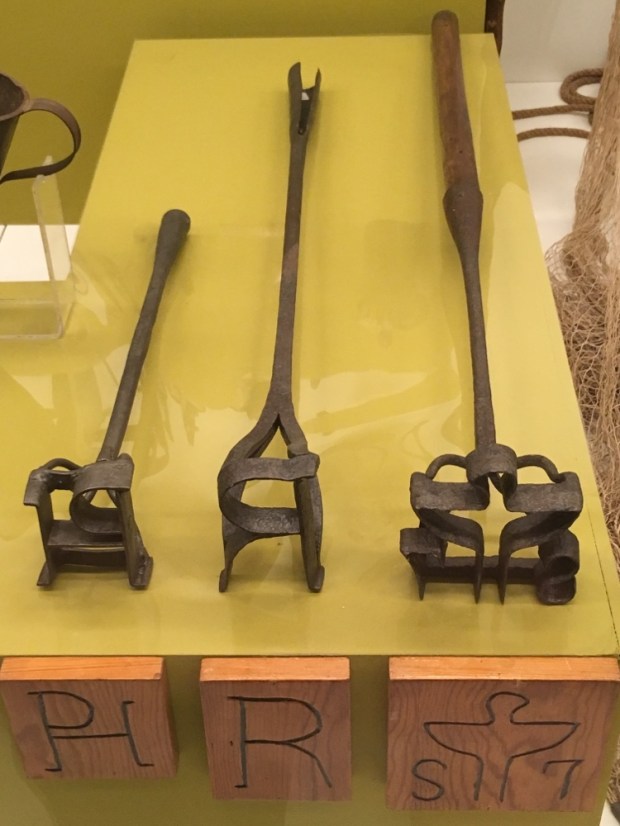
On our return to Aracena we passed through some more open country with big fincas, the gate posts displaying the hieroglyphic initials or signs with which their stock was branded. There was also one signed with the distance to Santiago de Compostela, presumably a returned pilgrim. And then on the approach to town some tasteful and expensive looking holiday rentals.

Finishing our circle we drove to our next days starting place outside Alájar, another attractive town in a beautiful setting with towering peak of Pena de Arias Montano rising sheer above it. We drove to the chapel of Our Lady of the Angels half way up and hiked up to the mirador for mighty views across the Sierra.

A shortish 12km loop with plenty of ups and downs circled from Alájar back to Linares by way of the once abandoned but now being resettled hamlet of Los Madroneros.

A new concrete track covers most of the distance to the isolated hamlet where solar panels and mobile phones have made living or staying out here a more viable option. There has been a fair bit of reconstruction going on and there are places to rent for anybody looking to avoid the rat race for awhile.

Our route now lead us through an area with broken down walls where the resident pigs had access to miles upon miles of open territory and even abandoned houses. Remarkably tame they joined us for a picnic.

Our approach to Linares was marked by a lot of wilder, less managed Dehesa with horse and scrub replacing the grazing grasses.

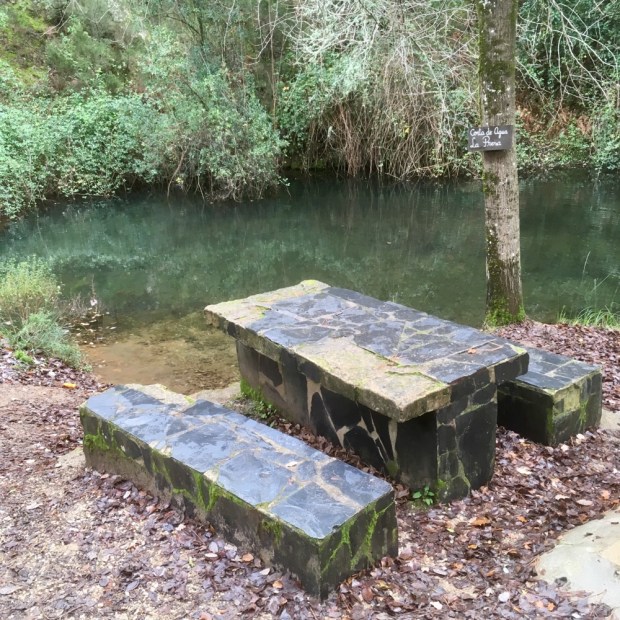
After a couple of cafe con leches in the bullring bar we climbed back up towards the camper on a steep track past the poolside Riberas recreation area where a dammed stream has become a popular picnic spot.

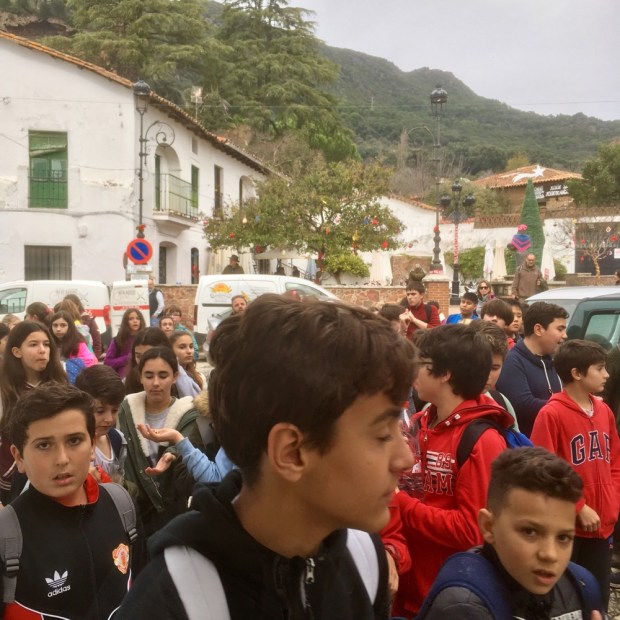
Alájar was busy with visiting school kids and people preparing the village for Christmas so we headed for the hills to stay in Castano del Robledo, ready for an 18 km circle from there to La Pressa, Alájar and back.

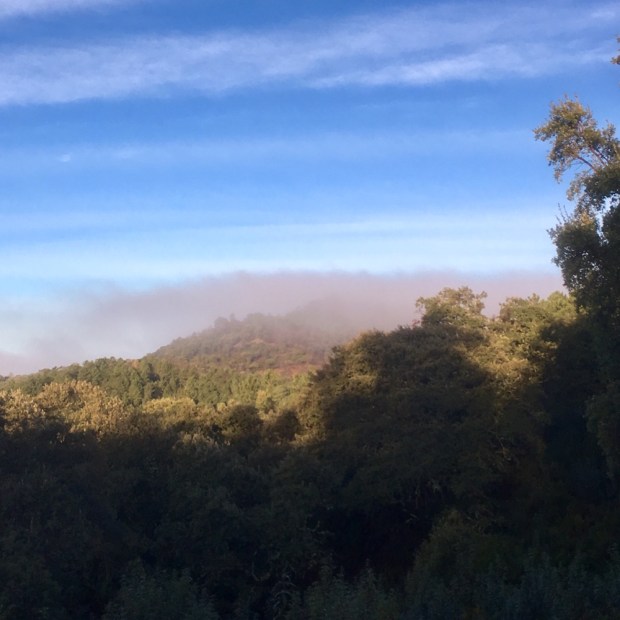
From our fine (and quiet) park up next to the cemetery we descended in the morning through a misty mixture of chestnut and pines with views out across the forested slopes.

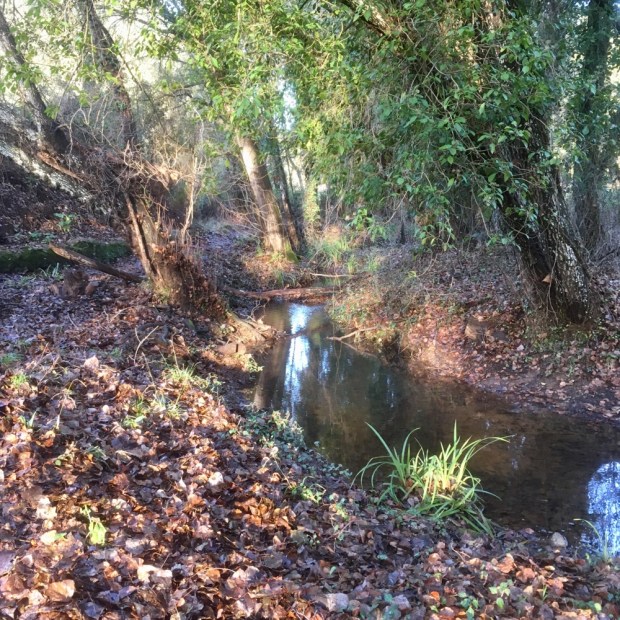
Coming to the valley floor we crossed various streams many times and on one I came a cropper and ended up on my back in the water.

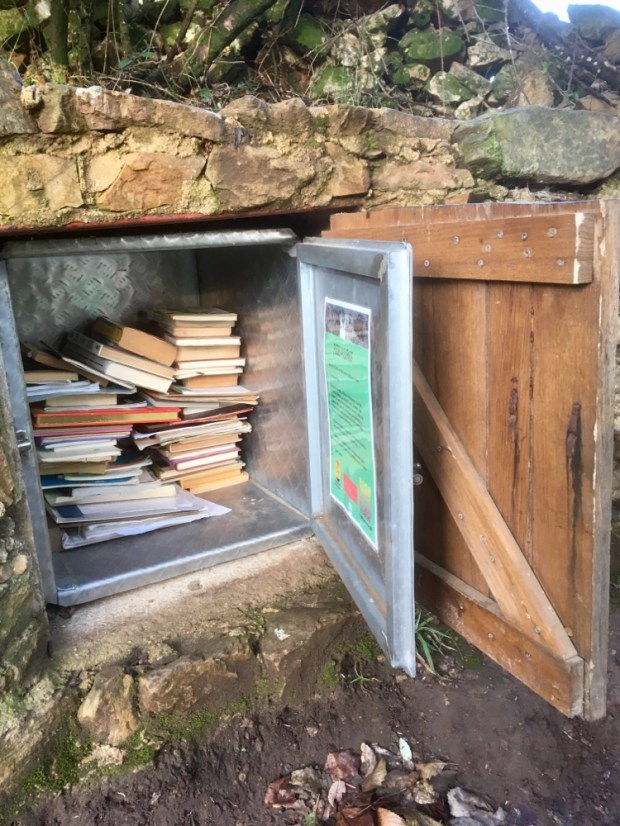
The riverside walk was obviously visited by school kids who had left pictures and poems celebrating nature along the route and even had a little library in a grove of trees.
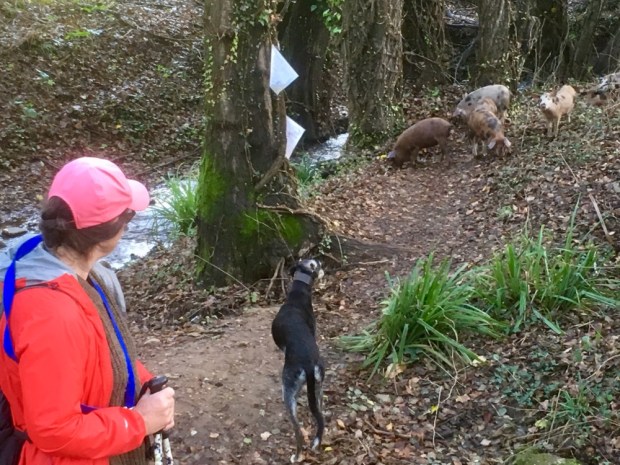
It was here we met a bunch of escapee piglets who showed no fear as they rootled past.

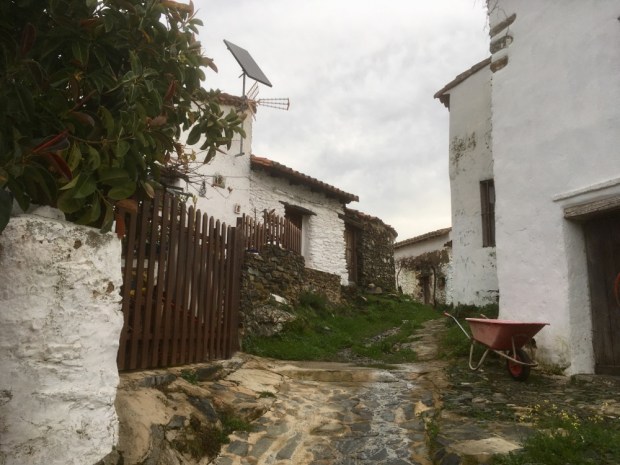
Past an enclave of holiday haciendas built by Dutch settlers, on a lovely track into Alájar and then up a cobbled way past the hippy hamlet of El Calabacino.

Abandoned and then squatted the community has now been regularized and some of the houses/ fincas look very settled and established.

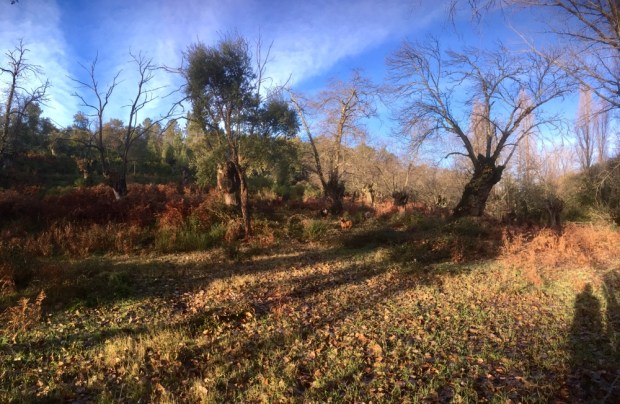
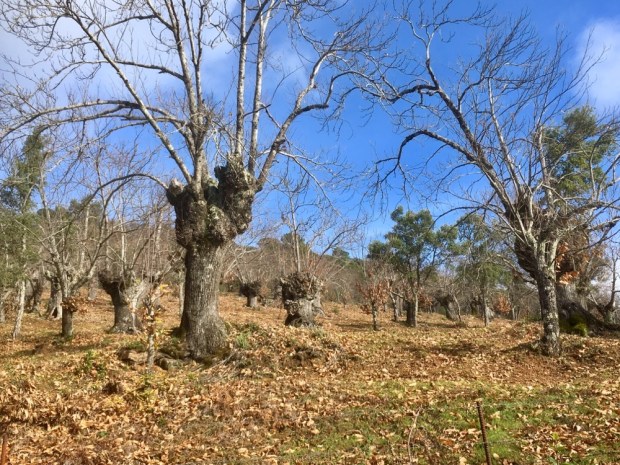
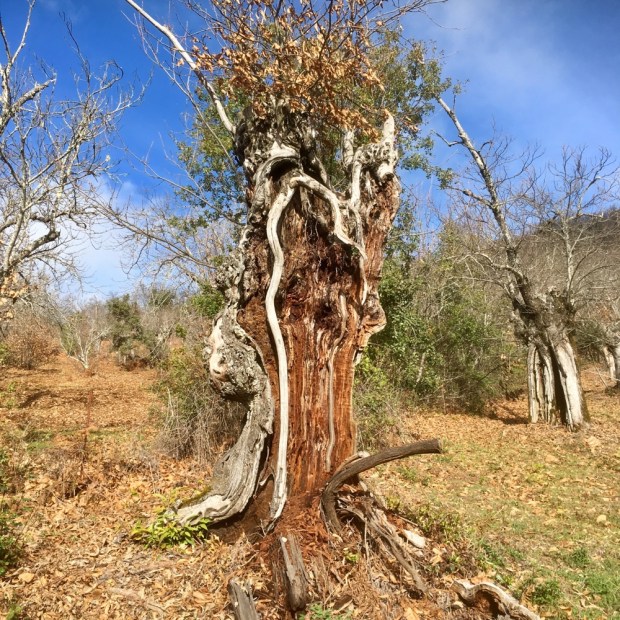
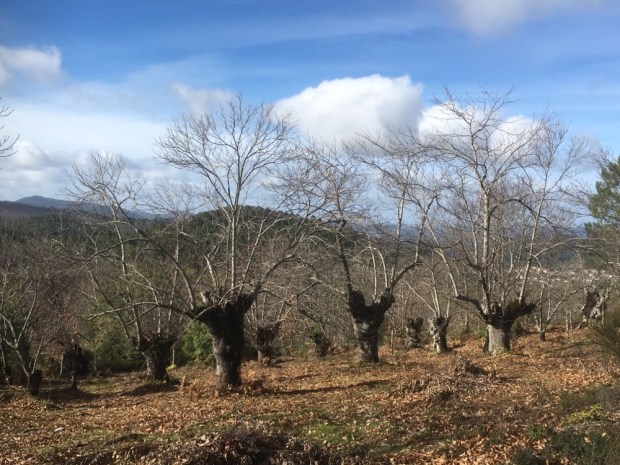
Above the hamlet the cobbled gave way to a concrete track that turned into a rutted sandy one that climbed up through our first large scale chestnut groves. Brought to this part of Spain by settlers from the north and Galicia after the reconquest the ancient and venerable trunks, pollarded for hundreds of years, have born witness to many changes to an area which on first impressions seems timeless.

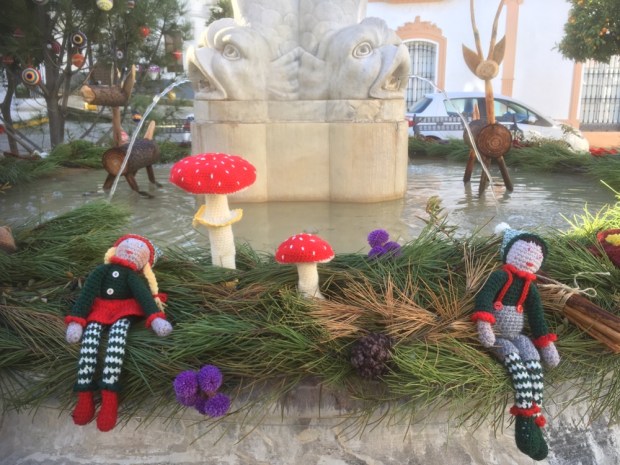
The final leg back to Robledo was down through deciduous oaks where the wildlife was dangerous, and into the town square woolbombed for Xmas.

More knitted decorations at the start of our last days loop, from Almonaster La Real, up the Cerro de San Cristobal mountain and around through Arroyo and Acebuche, a distance of around 14 km.

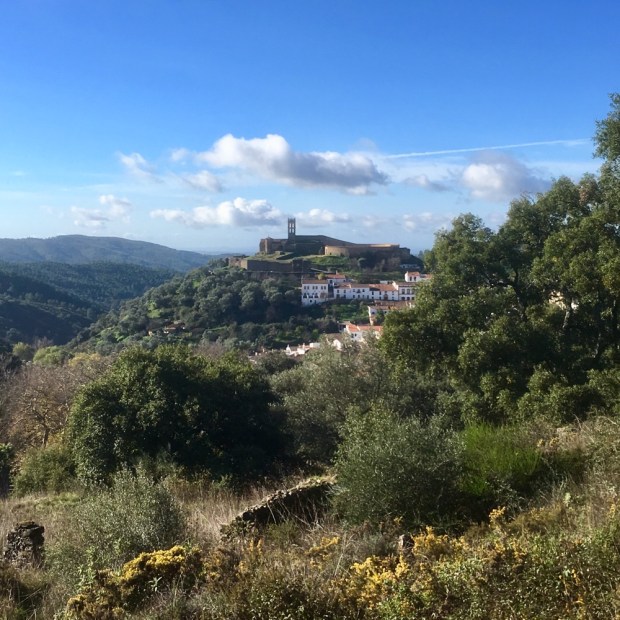
Looking back towards town on our steep onward bound trail the 10th century hilltop mosque was impressive with its adjoining bullring.

More glorious tracks, chestnut groves, clear streams, happy pigs, settlers idylls and forested slopes marked our last day in the Aracena.

Before setting off southwards to Seville at van speed we soaked up the view of the Sierra from its highest point on San Christobal. From a tad over 900m the whole landscape looked glorious.
We had discovered it looked just as appealing when deep down within it and vowed to return.