CAMINO MOZARABE: Granada to Baena 1

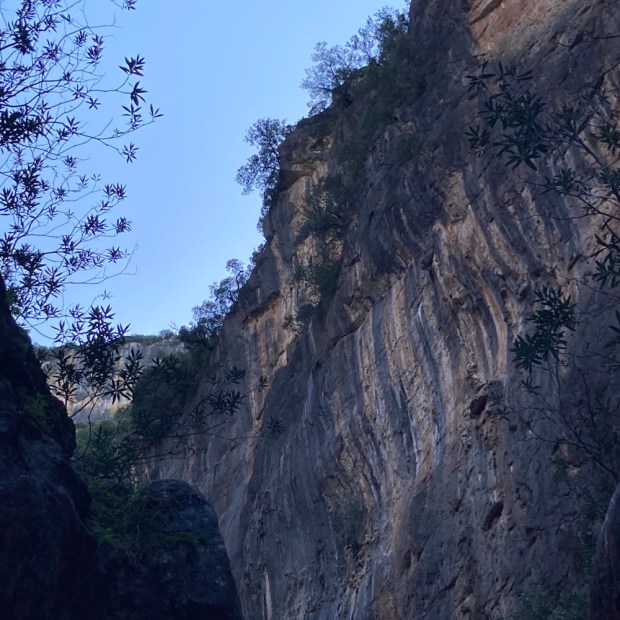
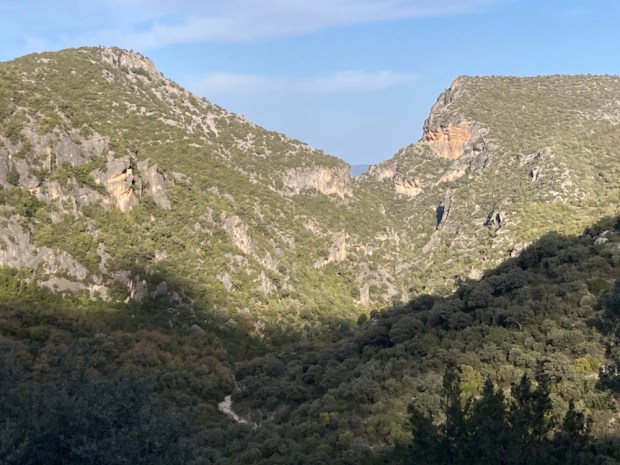
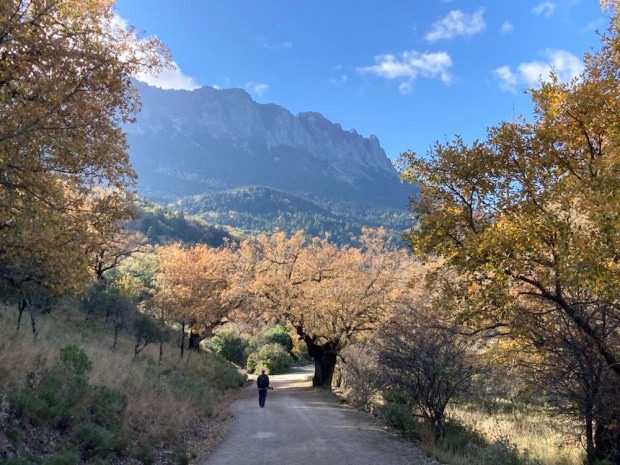
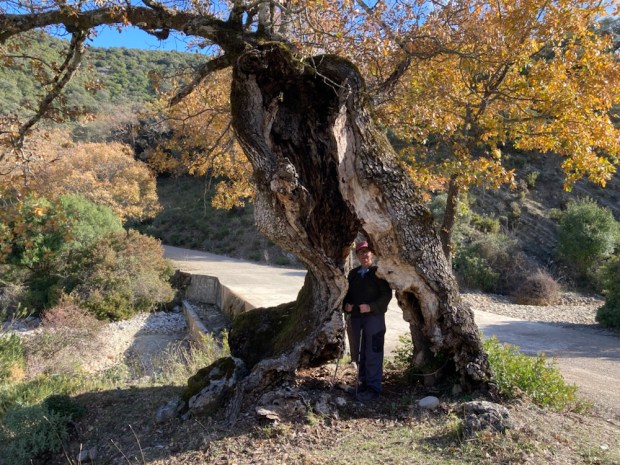
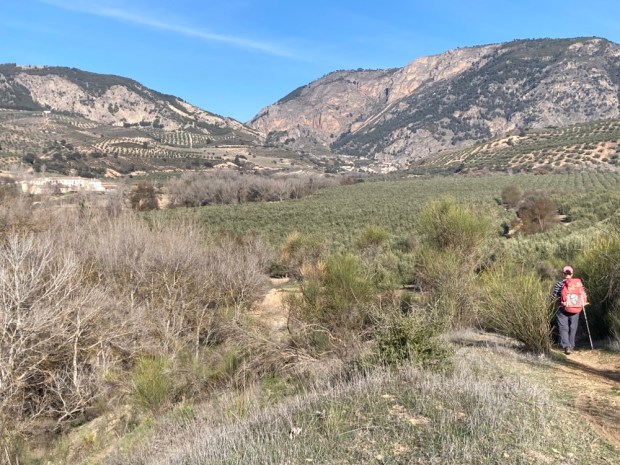
Off we go again. Continuing the Mozarabe from where we left off 2 years ago. This time it’s a 5 day, 105km pilgrimage through the olive trees of Granada and Córdoba provinces to meet the route from Malaga I walked 6 years ago at Baena.

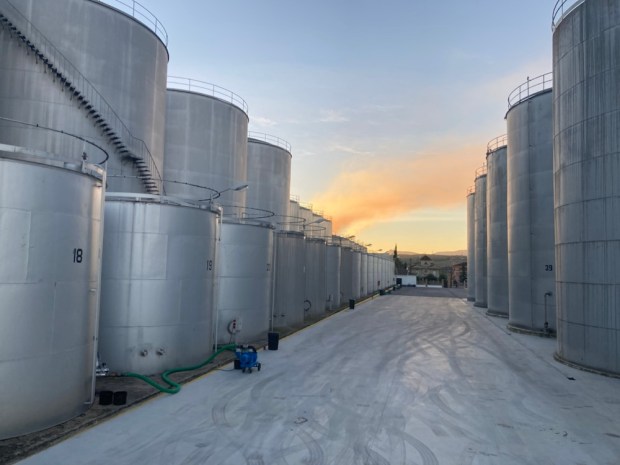
We parked up there overlooking a massive 24/7 olive processing plant, and in the morning left the camper and took the bus back to Granada, found our first arrow, and set off through the suburbs and industrial estates and out onto the industrial farmland beyond.

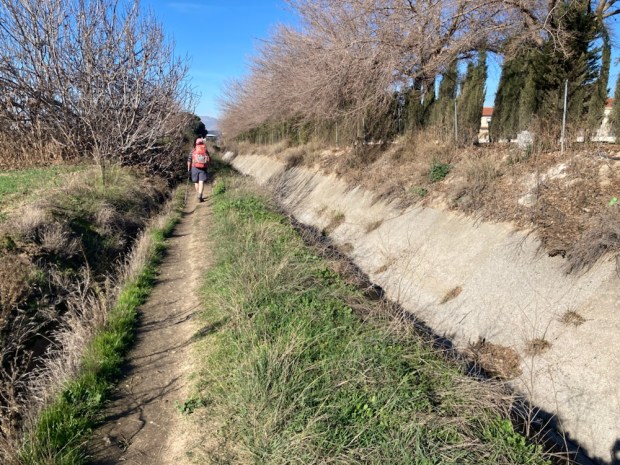
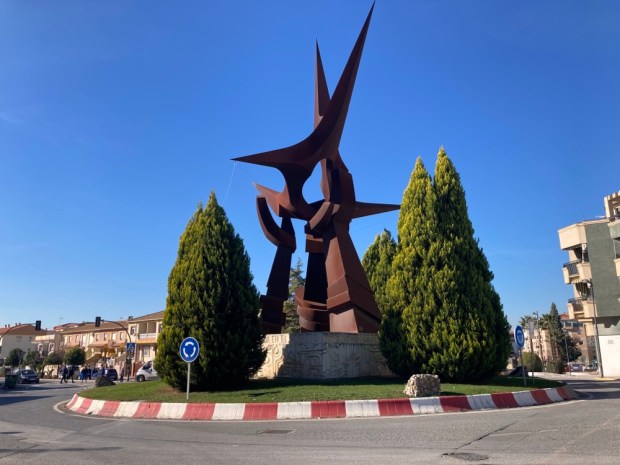
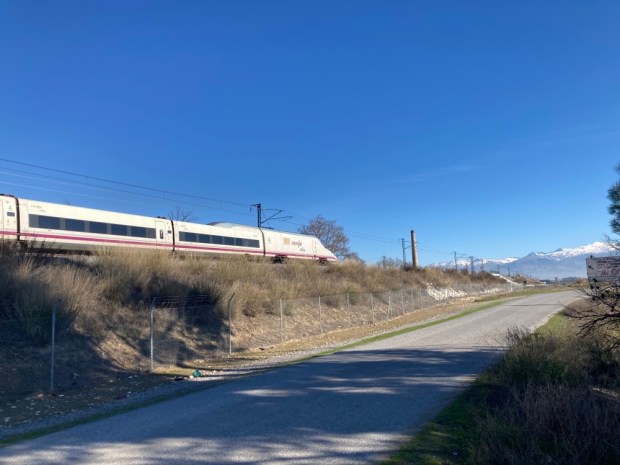
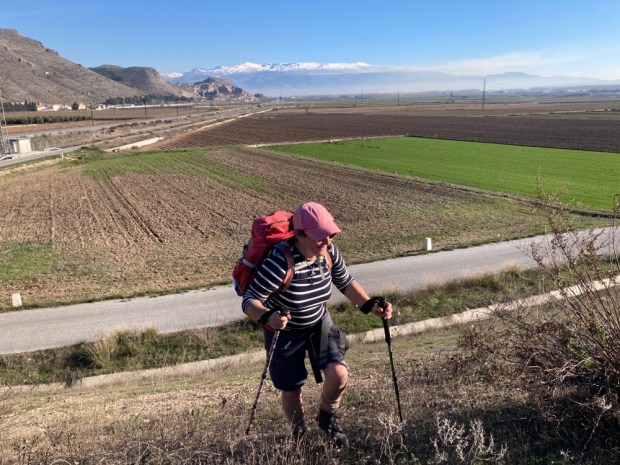
At one point the route was blocked by drainage works and a young jobsworth tried to stop our progress before an old hand, seeing we were peregrinos, led us through towards Santiago. The power of the pilgrim! Looking back the snow covered Sierra Nevada slowly shrank as we walked beside deep irrigation channels of pretty foul smelling water and, after Atarfe and its monumental roundabout sculptures, beside the high speed railway line to Seville. We clambered up an embankment and entered Pinos Puente after 20km and 4 1/2 hrs walking. Not too bad for first day.

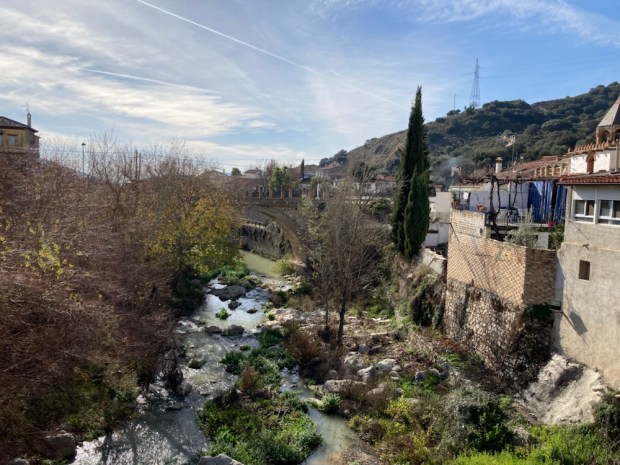
The hotel Montserrat looked after the pilgrims well giving us a 3 course dinner and a bottle of red for €10 each- and a fine bed to sleep on. Unfortunately we were dismayed by the huge amount of rubbish dumped on the roads and more shocking- in the river- as we made our way out of town in the morning on route to Moclin 16 km away.

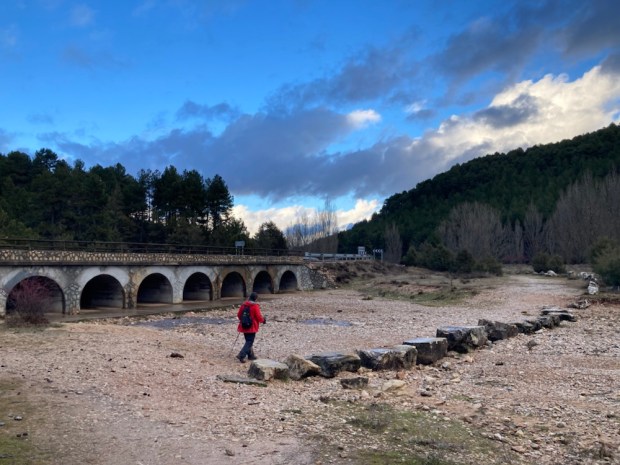
The ornate ceiling of the bridge tower sheltered loads of swallow nests.

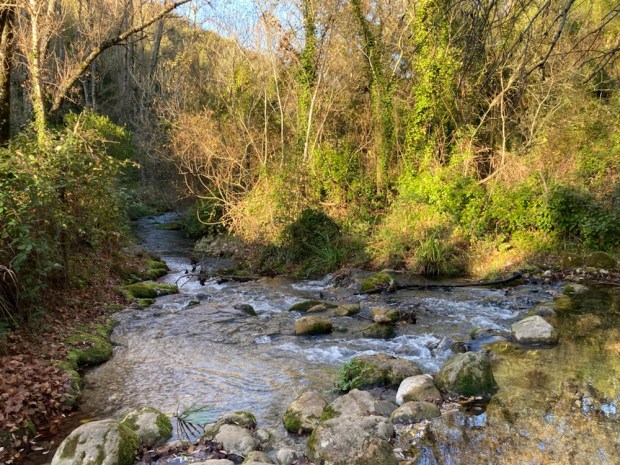
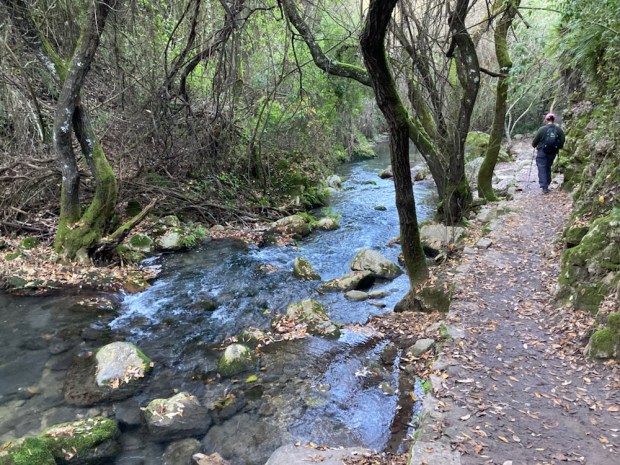
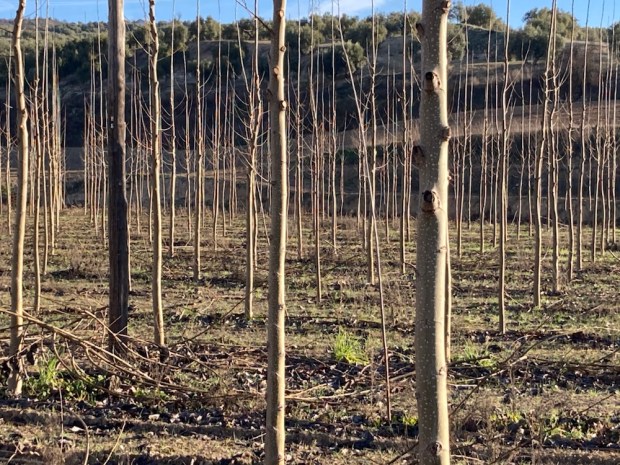
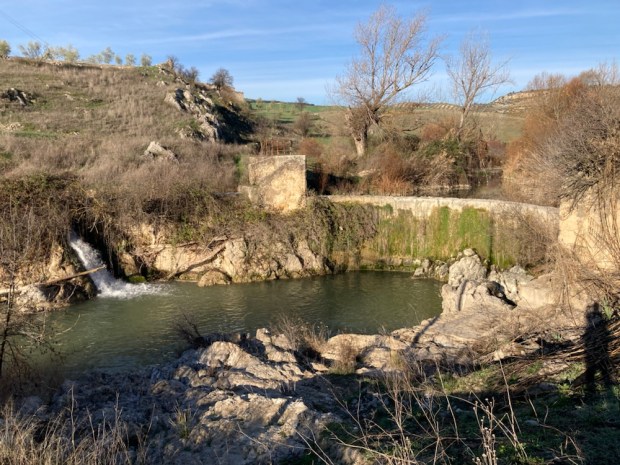
At last in open hilly countryside, but still on the road, we passed a ruined drying shed ( but had no idea what might be dried ) and poplar plantations , freshly pruned, growing alongside a river that offered the chance to swim in old mill ponds and natural rock pools – a bit cold today though with frost on the shadowed ground.

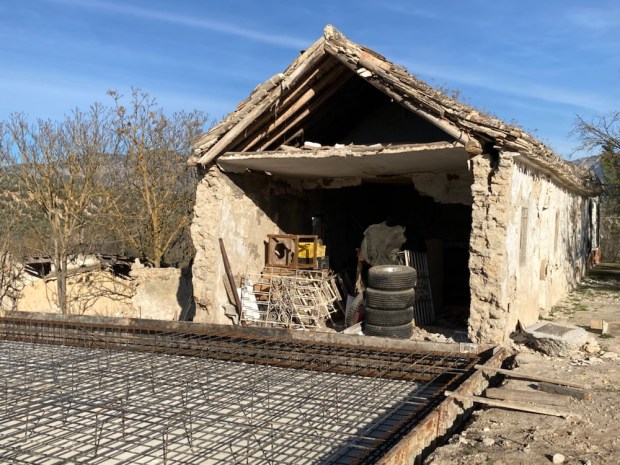
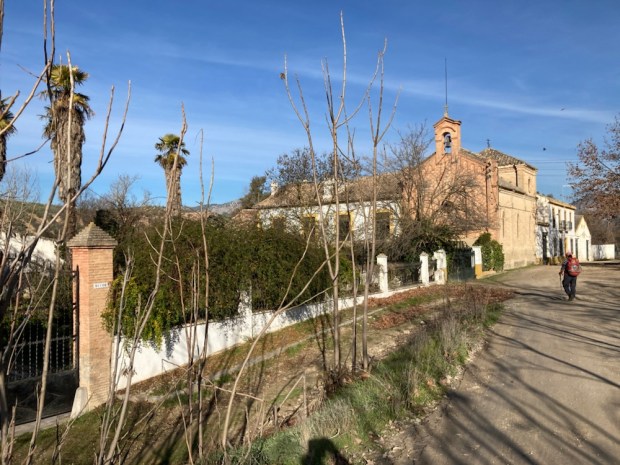
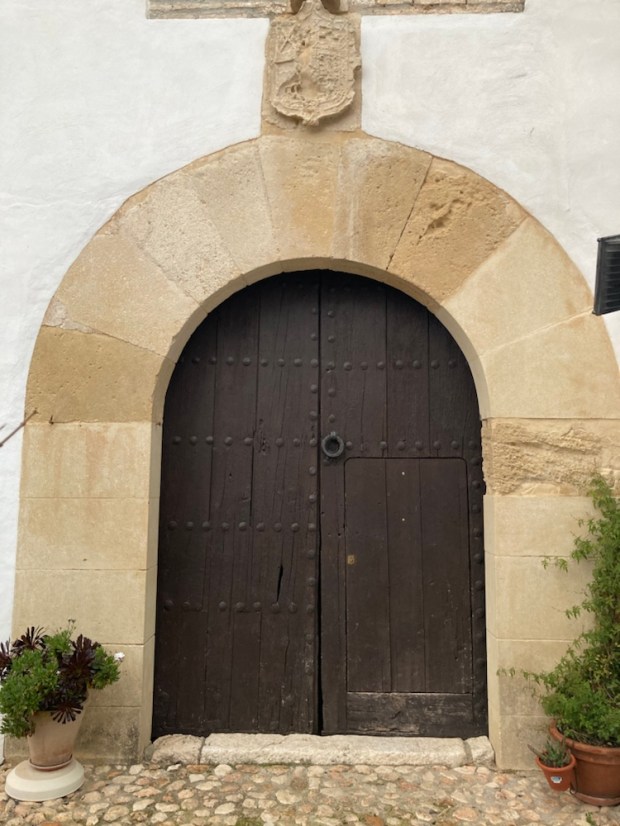
We finally turned off the tarmac at the ruined buildings of Cortijo Bucor. New huge concrete structures were being built hard against the crumbling originals, although the fine hacienda still seemed to be functioning, perhaps not its private chapel. There was a bit of an air of dereliction and it was sad to see way the dogs were confined- a familiar Spanish tale.

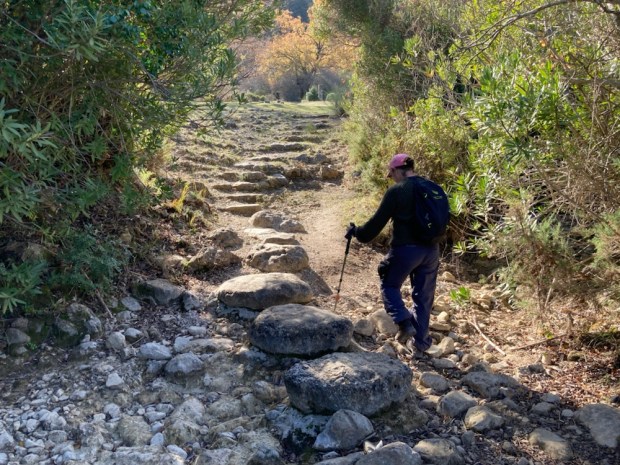
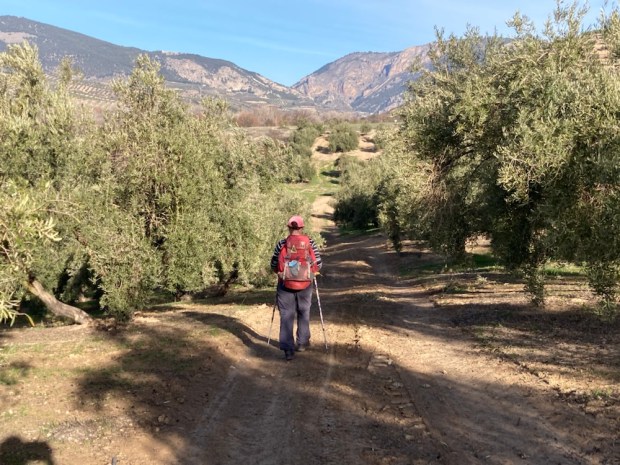
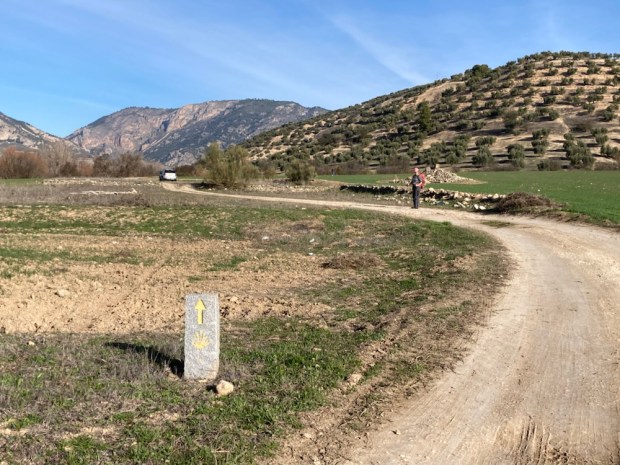
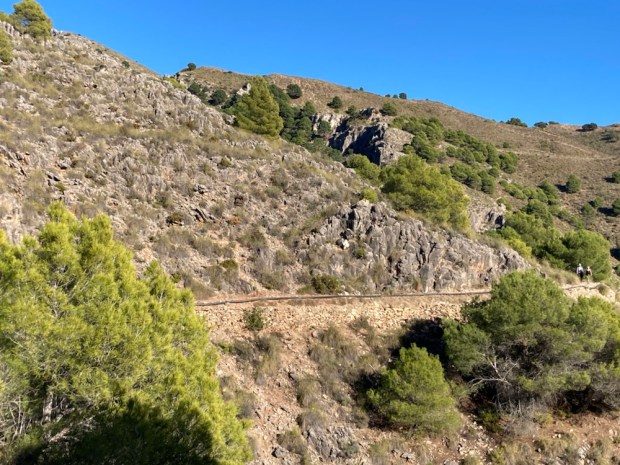
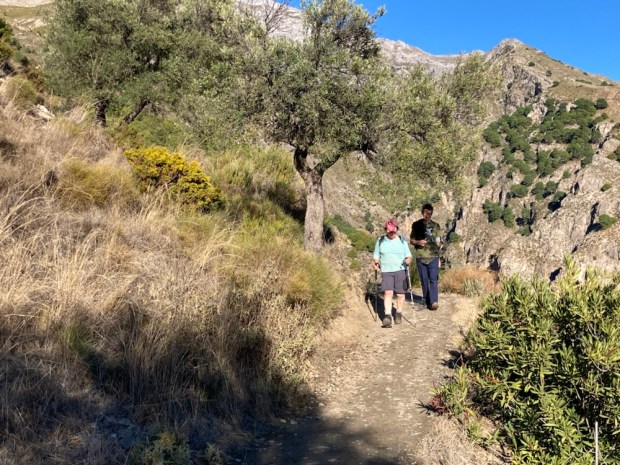
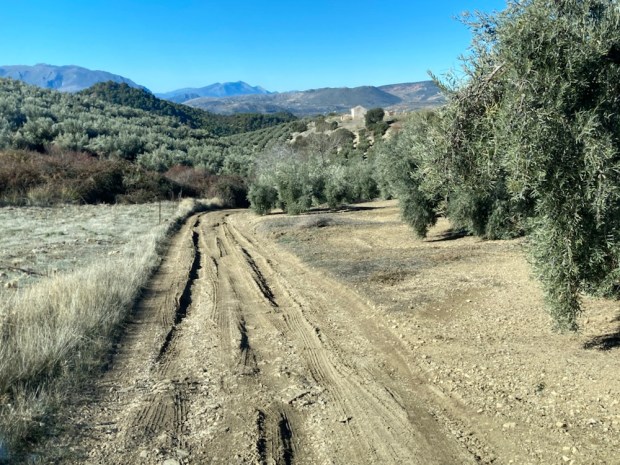
From there the Way led us through olive plantations on what looked like the original road. Still with cobbling intact in places in took us along the river valley on a track that rose and fell on the shoulder of the hills towards Olivares.

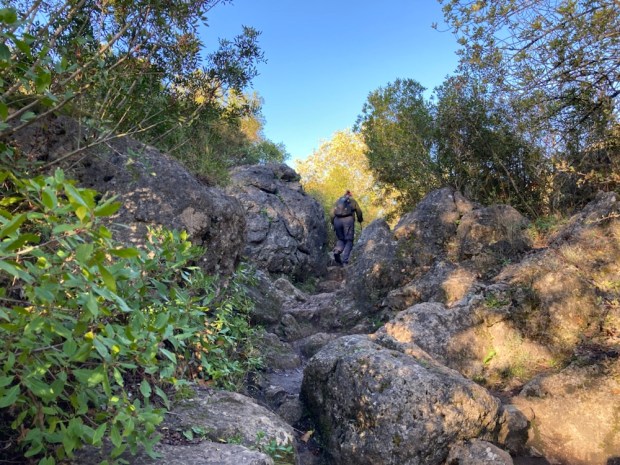
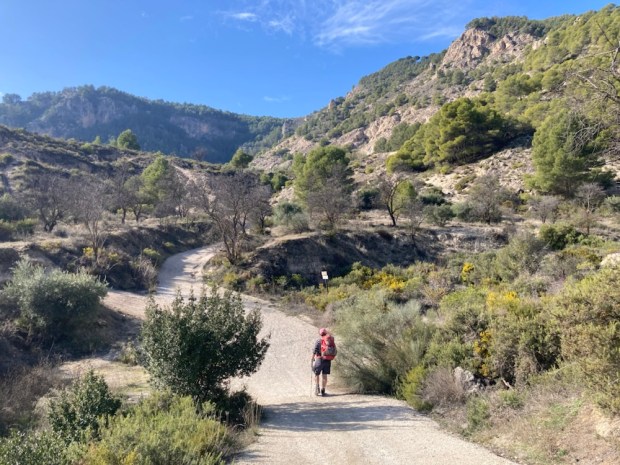
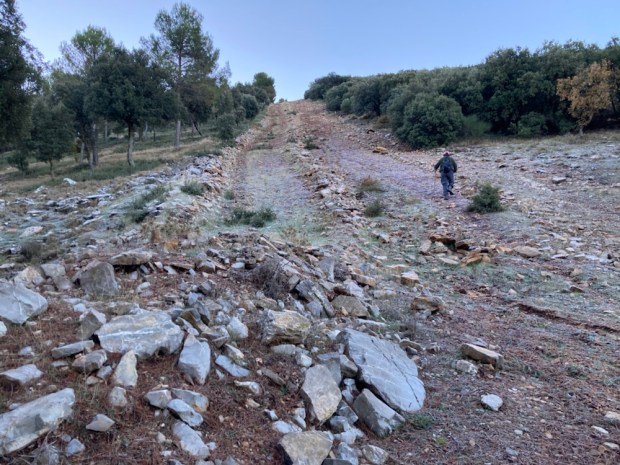
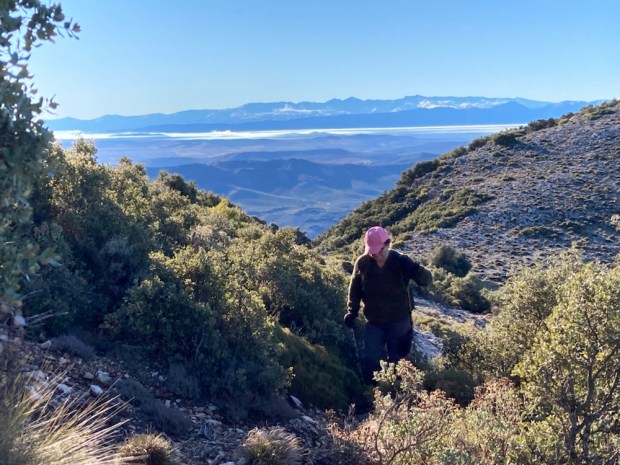
Crossing the river Velillos into town we had hoped for a cold drink but the bars were shut so we continued on. This was the hard but pretty stretch, a climb of 400 m up a track for 3.5 km to our destination.

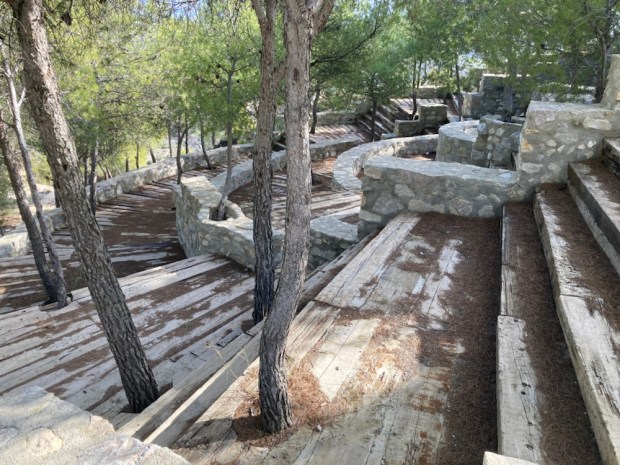
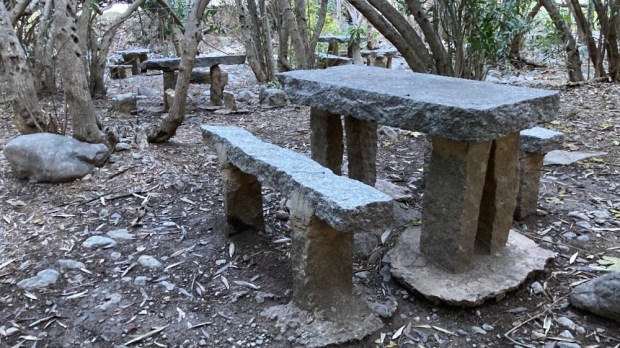
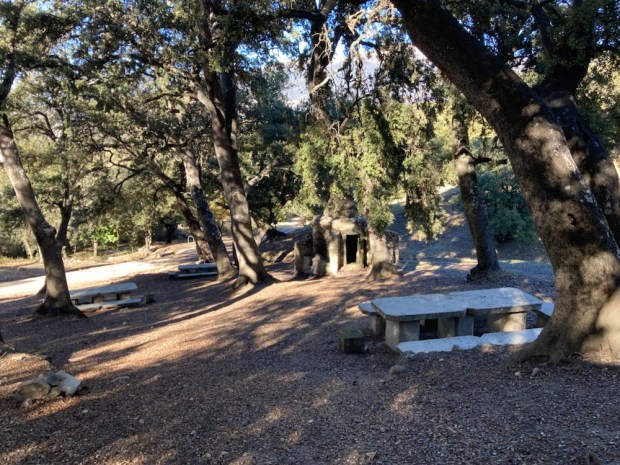
We stopped for food and rests at the sadly somewhat derelict area recreativa and again higher up where an amazingly complex structure was also rather unloved.

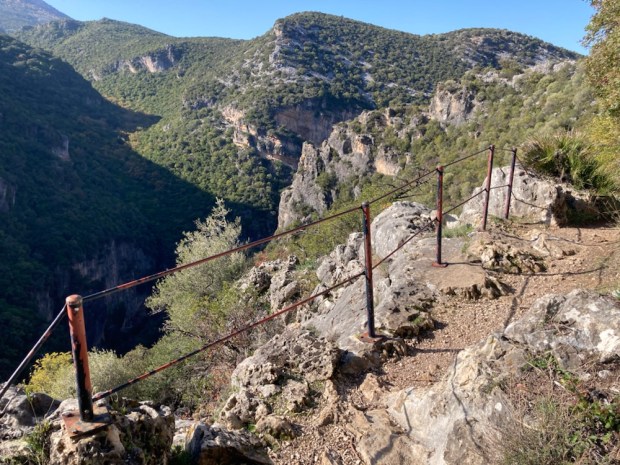
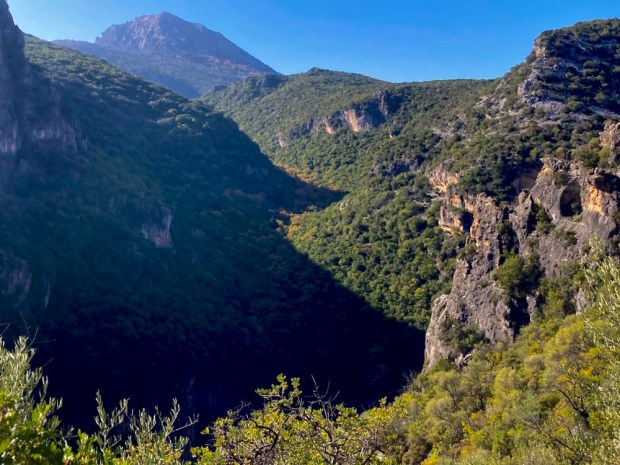
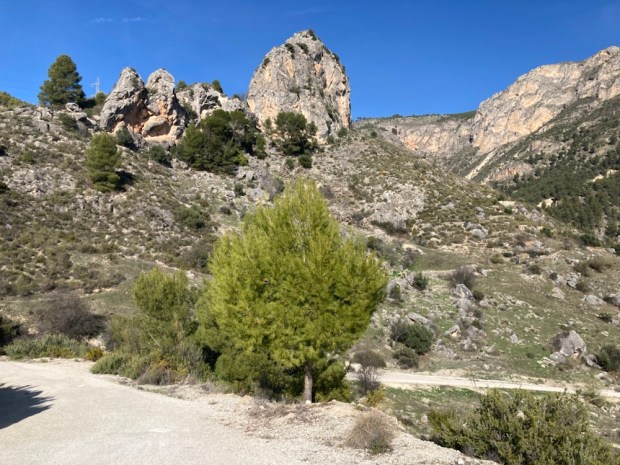
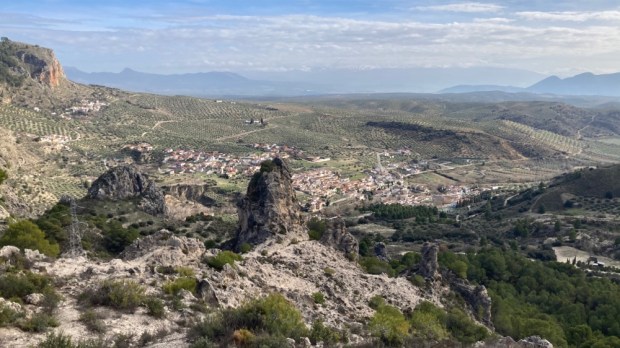
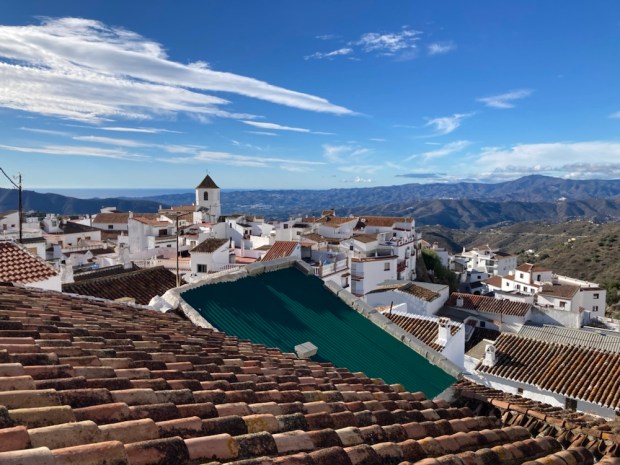
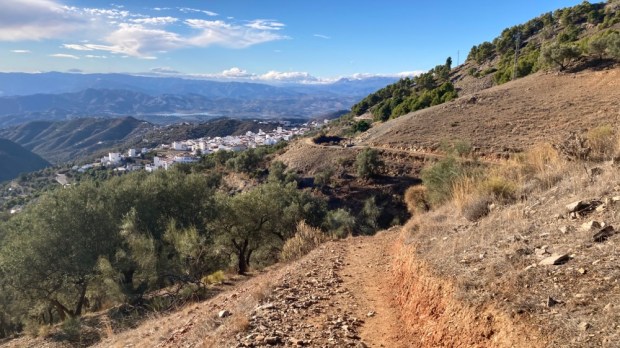
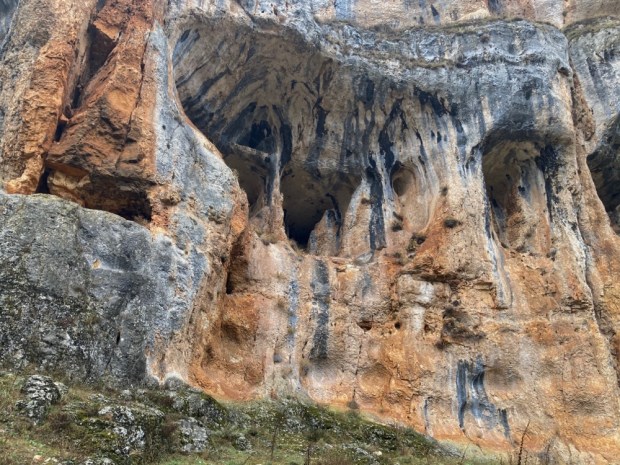
A mirador higher again gave us views over the entire days hike as well as down into the dramatic river gorge and up to the Moorish fortress walls of Moclin. Neolithic cave paintings were found on the cliffs below the castle and have been recreated in signage and motifs around the village.

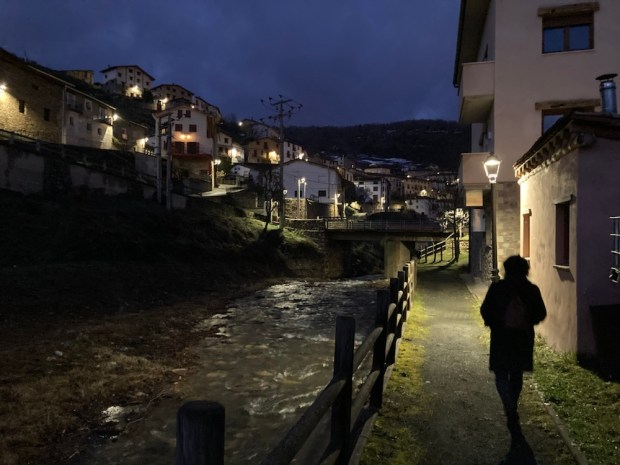
By the time we struggled the last few metres to our room for the night we had hiked over 16 km and the final climb had been tough. Our accommodation had been nicely renovated from ancient buildings and we looked forward to using the kitchen when the shop opened post siesta.

But it didn’t, and neither did the bar. No food, no drink. Luckily, whilst standing shocked outside the shop, the lady who had let us into our room appeared in the plaza and kindly gave us a couple of oranges and bananas and toms and eggs and tins of tuna and some bread. Praise be. The Camino provides.

But not alcohol!

EL SALTILLO-Getting high in Axarquia

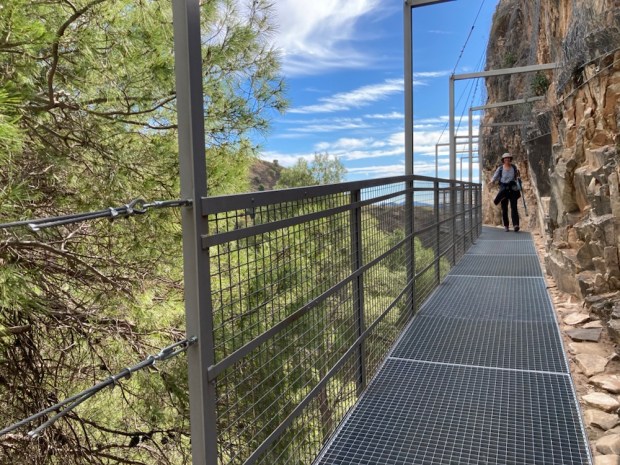
A dramatic walking route opened in the Parque Natural de Tejeda, Almijara y Alhama in October 2020 after many months construction. An old path following irrigation canals and pipes into the mountains above Canillas de Aceituno was transformed with a steel and timber suspension footbridge and other hanging walkways fixed to sheer cliff faces.

The €600,000 investment is hoped to bring in much needed tourist revenue to the area and it seems to be paying off. The day we tackled it the town at the start was busy with people with poles, and the pandemic has led to many more people exploring the vast natural areas away from the more crowded costa. In fact some places such as the Caminito del Rey and El Torcal have become a victim of their own success with long queues, traffic jams and overcrowding but we’ve always found that away from the honey pots Andalucia has space aplenty.

The walk starts in the Pueblo Blanco of Canillas de Aceituno at about 600m. If you just go to the bridge it’s a 8 km out and back but we were going to continue on and up to a mirador to make a hike of 11km.

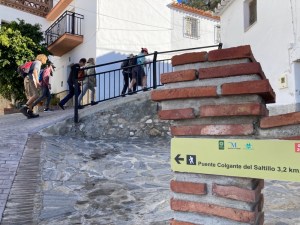
After a quick coffee we followed the signs steeply out the back of the town on a route that continues to the summit of Maroma, at 2065m, the high point of Malaga province.

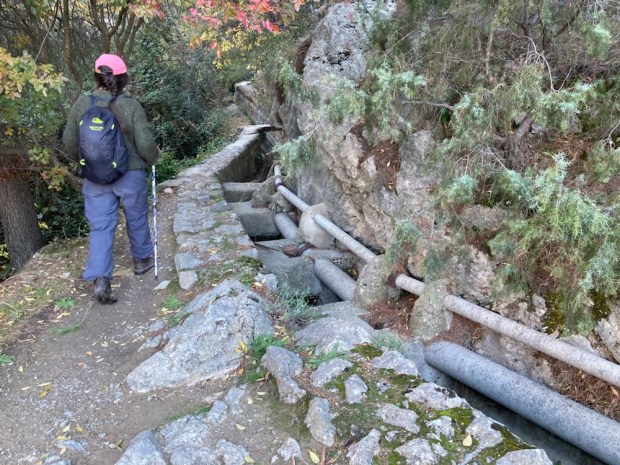
The way led up beside orchards and olive groves with the burbling waters of the acequia rushing along at our feet bringing life giving waters from the Sierra to the crops of the Axarquia.

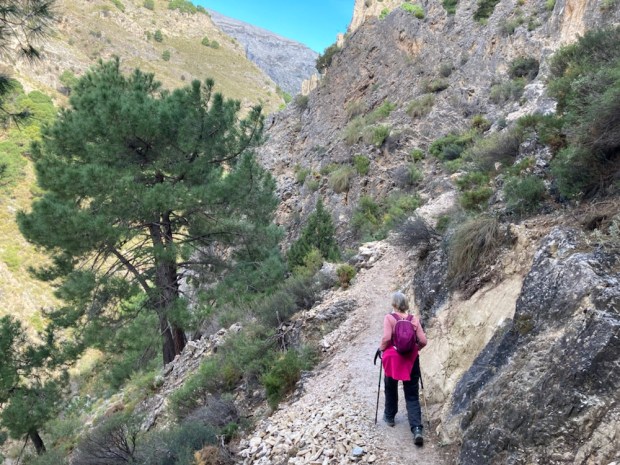
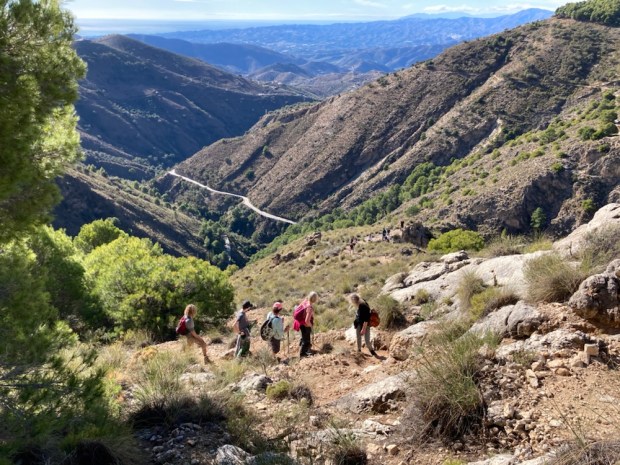
Away from the town the surroundings got rugged rapidly with the path following the contours of the land through scented pines and Mediterranean scrub of gorse, thyme and esparto. The ridges of the mountains above us separate the provinces of Granada and Malaga, which we looked out over to the west, as we rested and watered at El Albercon pool.

The deep folds and convoluted ravines we crossed showed signs of former lives with ruined buildings clinging to the shaley slopes. There was mining in the past and fine sand was collected from the mixture of eroded gneiss, quartzite, schist and limestone.

At about 3km in the summit of Maroma came into view and shortly after the suspension bridge below us.

Things got interesting as we negotiated our first fixed steel walkway and signs warned of the dangers of falling. In fact a women had fallen to her death shortly after the trail was opened and you need to keep your wits about you.

The trail forked, to the left more walkways and a trail led around the mountain to meet the waters of the Rio Almanchares at waterfalls and pools while ours to the right took us steeply down on giant steps through the pines, to cross the ravine 80m above the river.

An impressive feat of engineering, the 55m long bridge is Spain’s 3rd longest and involved helicopters, zip wires and mules in its construction.

The easy bit was over and as most walkers stopped for snacks before they returned to town we continued up. More giant steps, and chains to cling to started to appear. We had a 300m climb ahead and those without a good head for heights had it tough.

With pounding heart and throbbing legs we reached a more level hill top before continuing on a stony path up through the sparse trees towards Maroma with glorious views south across the peaks to the Mediterranean and the Rif mountains of Morocco. The tell tale signs of snuffling boar were all around and a couple of our party briefly spotted a darting mongoose.

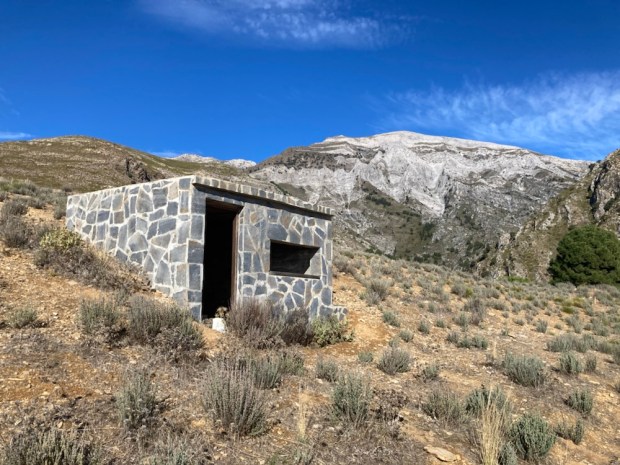
A small stone building of unknown purpose drew us to the top of the rise, over which lay our goal – the mirador, at 980m. This route is now linked to one of the 35 stages of the 750 km Gran Senda de Malaga, the GR249, a wild and wonderful trek I completed a few years ago and now attracting 2 million people a year to take on sections.

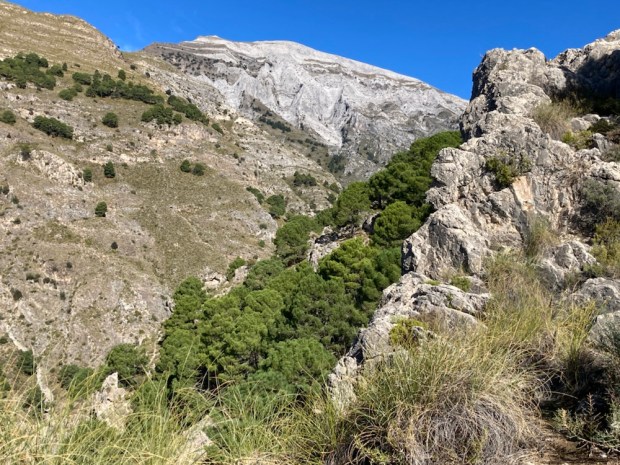
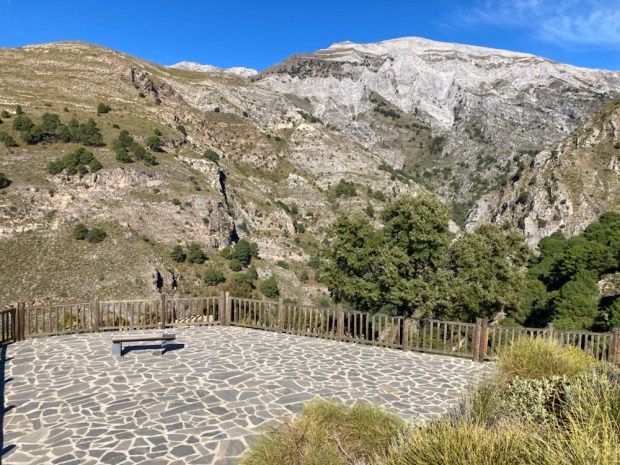
The expansive flagstone floor only had one, very welcome, bench to rest our weary limbs on as we soaked in the breathtaking vista of the fine fluted cliffs on the southern flank of Maroma, still high above us. The stunning views were a just reward for the effort put in to reach them, and just as good on our way back.

A great day out on a stunning route under a blue sky accompanied by the sounds of water, the scents of pine and thyme and the taste of adventure.

SIERRA de GRAZALEMA

South of Seville, east of Cádiz lies the Parque Natural Sierra de Grazalema, a 500sq km UNESCO Biosphere. 10 ” white villages” of Moorish origin are tucked defensively into the rugged folds of the high limestone peaks, 20 of which surpass 1000 m. The Sierra is the western tail end of the Cordillera Betica, the range we were hiking in 300km further east in the Sierra Mágina. Like the Mágina region this was the frontier between Muslim and Christian territories in the 13th to 15th centuries which explains the formidable positioning and also the names of the many towns called ” ….de la Frontera”.
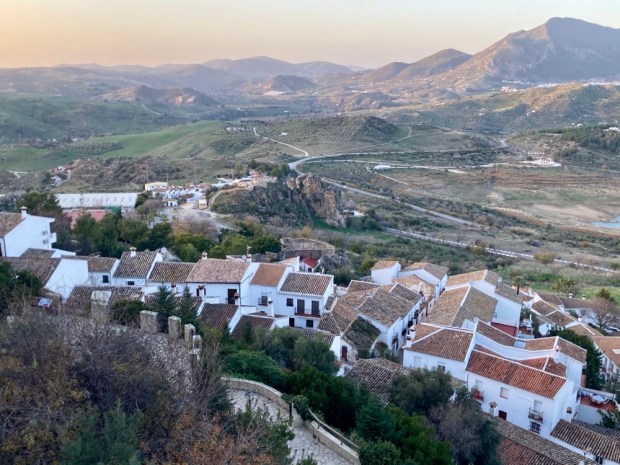
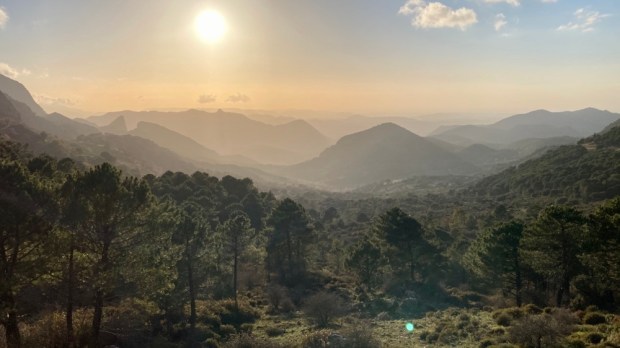
Although relatively small the park is immensely varied. Towering bald grey peaks and vertical cliffs lead down through deep clefts and gorges, through thick forests of holm, gall and cork oaks to grape and nut and olive plantations with lush grassy meadows and fields of grain.
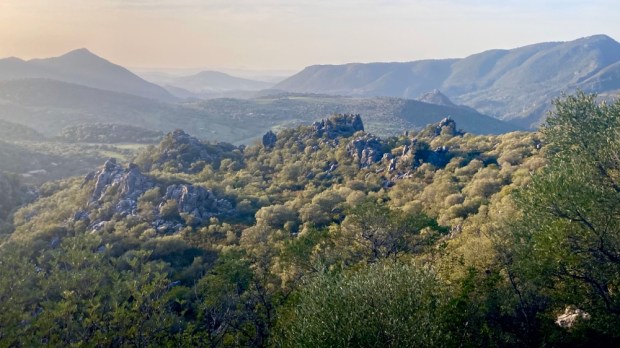
The mountains are the first high ground encountered by the wet winds from the Atlantic and the rain that is dumped on them make this the wettest area in Spain and the greenest in Andalucia. The favourable micro climate enables 1/3 of all plant species in Spain to thrive here, many endemic, which in turn encourages a wealth of bird life. Referred to as an ornithological wonderland the sky is often full of wheeling raptors soaring on the updrafts above the cliffs.

Although the land is productive with cow and goat cheeses, honey, wine, oil, grain and regional crafts of wool, cork, leather and esparto grass are still strong the area has been through hard times. A testament to the rural exodus of the mid 20 th century are the forlorn and crumbling cortijos returning to the land from which they were built.

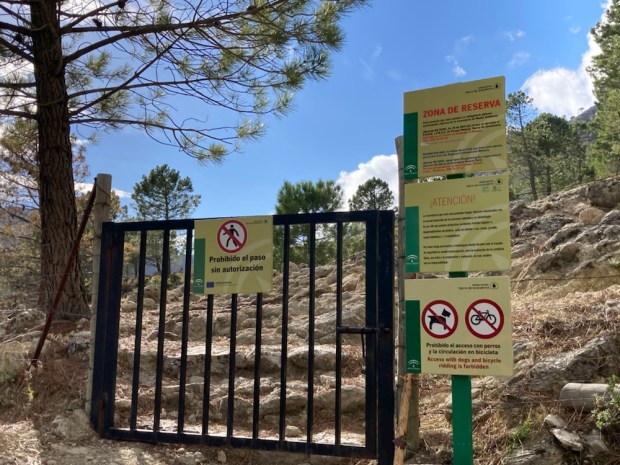
Tourism, particularly of the green variety, is helping to keep the region vibrant and droves descend on holidays and weekends from far and wide to explore and enjoy the natural beauty. So much so that permits are needed to hike 4 of the trails in the inner 30sq km “area de reserva”, the most spectacular and protected part of the park and even these are normally closed completely from July to October.
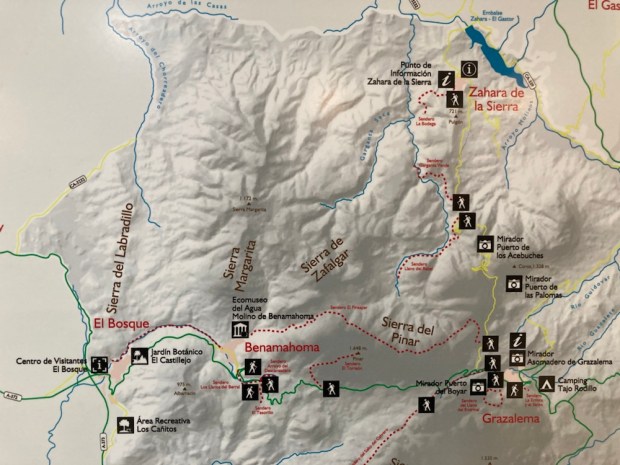
We managed to secure permits for 3 of the 4 walks at the Park info centre in El Bosque and with maps of other routes for later we set off on our first, the Sendero El Pinsapar.

From the parking and picnic area of Las Canteras high up on the road that twists and turns it’s way over the mountains from Grazalema to Zahara de la Sierra the 11km route climbs up through a pine forest planted to hold back the erosion the areas high rainfall can cause. The ground was coated thickly in the long needles cast off by the trees and we wondered if their acidifying effect on the limestone beneath would eventually create a neutral ph loam.
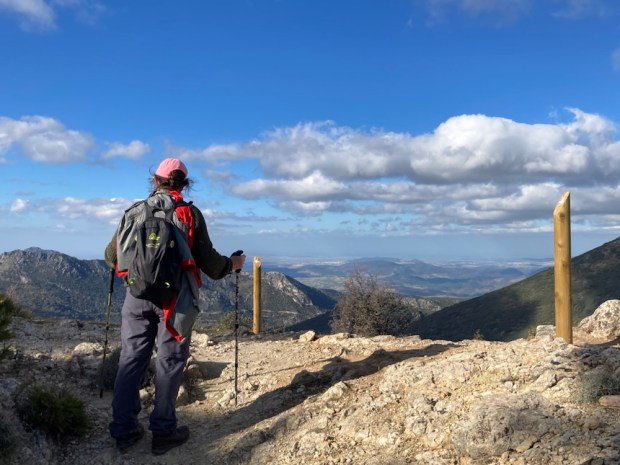
After a climb of around 300m we reached a pass at Puerto de las Cumbres, a natural gateway to the northern flank of the mountain where the route continued west on a much more level gradient half way between the valley floor below and the summits high above us. Pico San Cristobal stood out dramatically with fast moving cloud scudding across the blue around it and the mighty buttress of El Torreón, the highest peak of the Parque at 1654m loomed in the distance. A strong buffeting wind forced us on along a rocky path toward the sheltering Pinsapo trees.
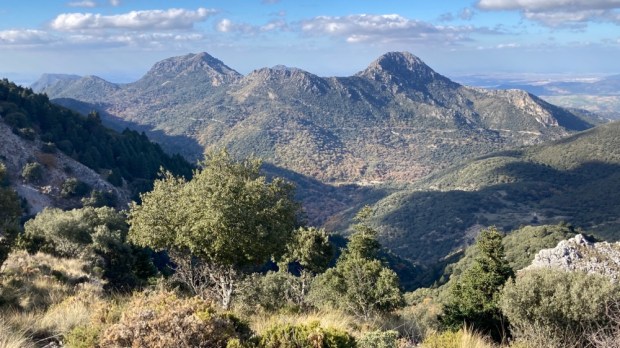
The Park’s UNESCO Biosphere status was granted primarily because of the huge stand of the rare Spanish fir, the Pinsapo, here. It only grows in the Sierras Grazalema, Bermeja further south near the coast and Nieve, where we had first discovered it last year. A relic that has survived since before the last ice age it had dwindled to a total of about 700ha but successful conservation and re afforestation programmes have increased its area to over 5000ha.

“Discovered” by Swiss botanist Pierre Boisser in 1837 these prehistoric trees can live from 200 to 500 years so some of these veterans had been here a long time. Sadly climate warming has made them more susceptible to dying from a fungal attack and future planting may need to move to the colder Sierra Nevada and Cazorla.

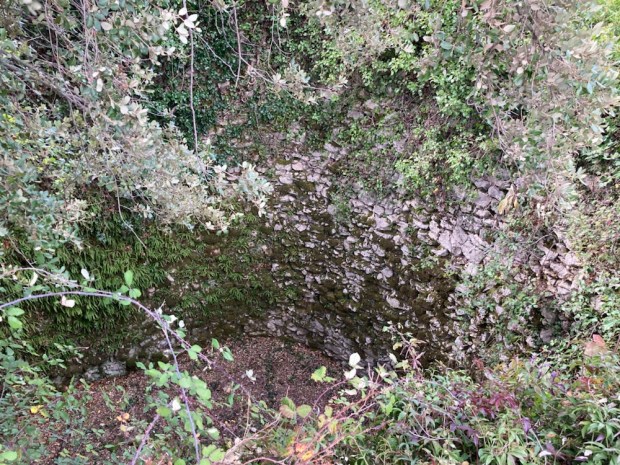
With a couple of hours till sunset we left the shady heart of the forest and returned to the col passing an ancient snow pit used for centuries to store ice and many trees adorned with large clumps of purple berried mistletoe.

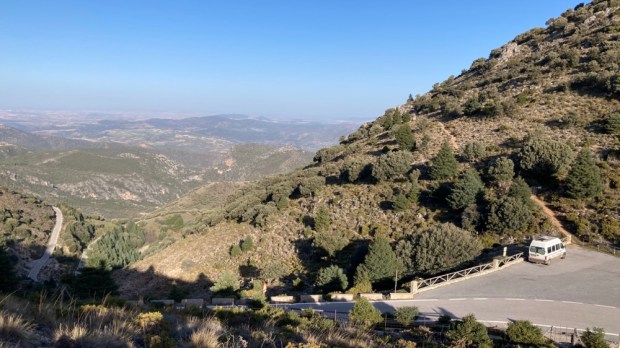
Climbing higher up the switchback road in the morning to the pass of Puerto de las Palomas at over 1300m we stopped at the mirador for breakfast before zig zagging down the northern side weary of the awesome drop close beside us.

The stamped and signed permit allowing us to hike the Sendero La Garganta Verde remained unseen as we started the trail a little later.

The Green Ravine has been slowly carved for millennia by the Bocaleones stream down through the limestone until now, although only 10m wide in places it reaches 400m deep. Sheep grazed unperturbed as we made our way through the thick Mediterranean scrub of broom, wild olive, gorse, mastic, palms and scented herbs. This inner reserve seemed particularly verdant and the plenty full bird life could feast on the heavy crops of fruits and berries.

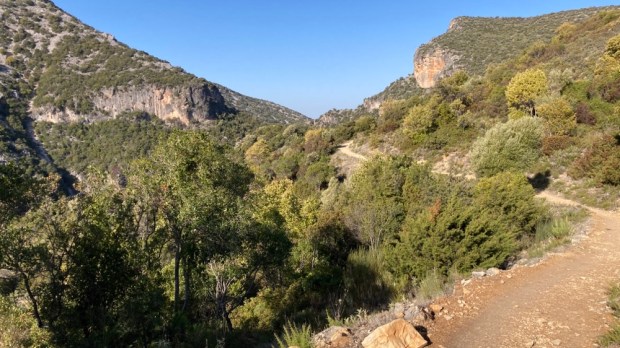
At a warning sign the path started a steep descent into the gorge, at times on stone steps laid or carved and aided by sturdy handrails. The views below into the depths and above to craggy cliff tops were dramatic.

100 pairs of griffon vultures live above the ravine, the largest colony in Europe, and they constantly took flight from their eyries, riding the thermal updrafts and gliding to and fro on their 8ft wingspans. As we ventured deeper between the towers of rock the air became cooler, more humid, and a silence descended as the breeze was cut off. The Ermita or cave just above the canyon floor revealed itself, clothed in the curious formations of limewater sculpture and the pink and greenish colouration caused by algae action.

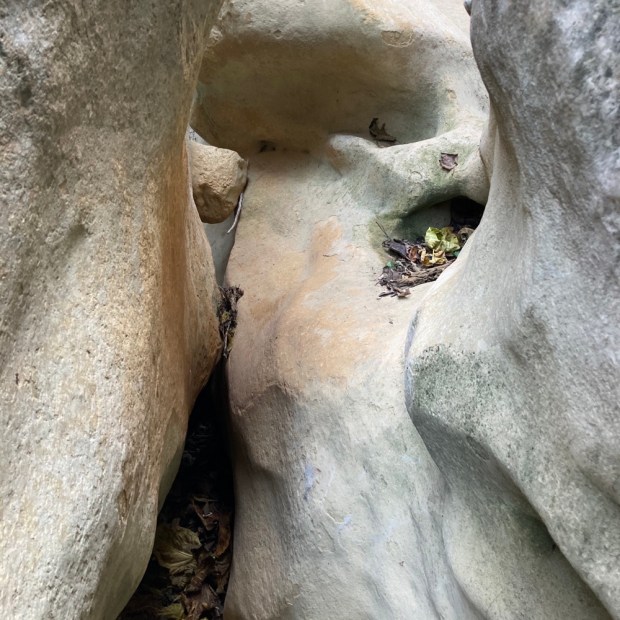
Finally reaching the shady still floor thick with oleander, laurel and poplar, our voices bounced back and forth on the canyon walls as we admired the natural stone carving of the Arroyo Bocaleones before starting on the laborious return to the top.

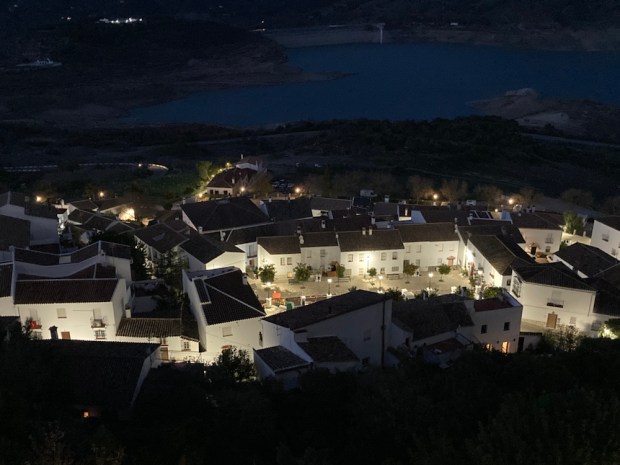
After a night in a room with a view in Zahara de la Sierra overlooking the sadly pretty empty reservoir we returned to the heart of the exclusion zone armed with our final permit- to the Sendero Llanos del Rabel. This easy trail on a wide and smooth forest track goes deep into an area of thick oak forest with views towards the Garganta Verde one way and the El Torreón massif on the other.

We soon came upon one of the many limekilns in the area, used to bake the rock into a powder for spreading on the land and also painting the houses to create the ” pueblo blanco” white villages. All the old holm oaks had multiple branches sprouting from the tops of thick trunks, indicating years of pollarding for fuel. The kilns would have got through a lot of timber.

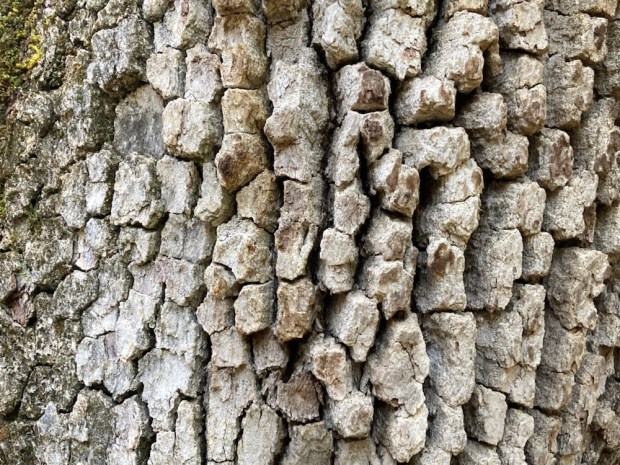
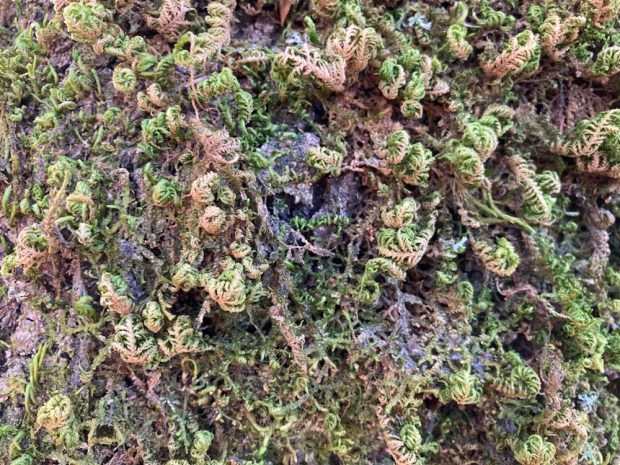
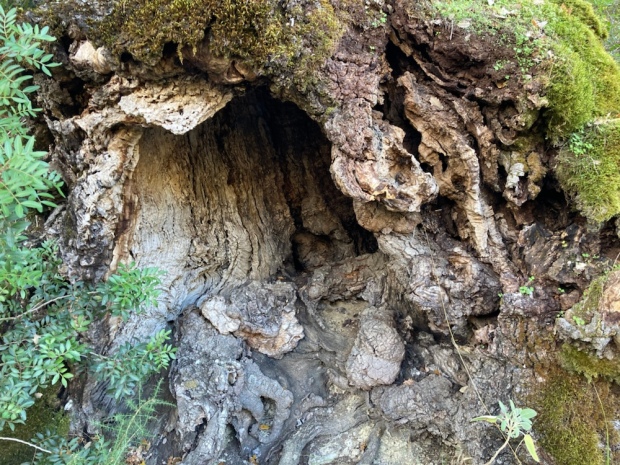
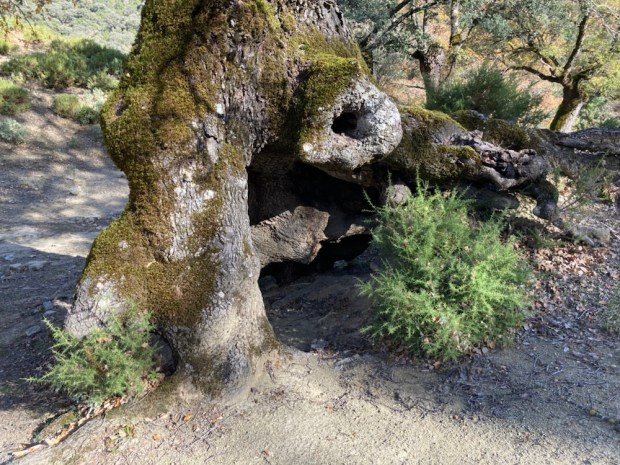
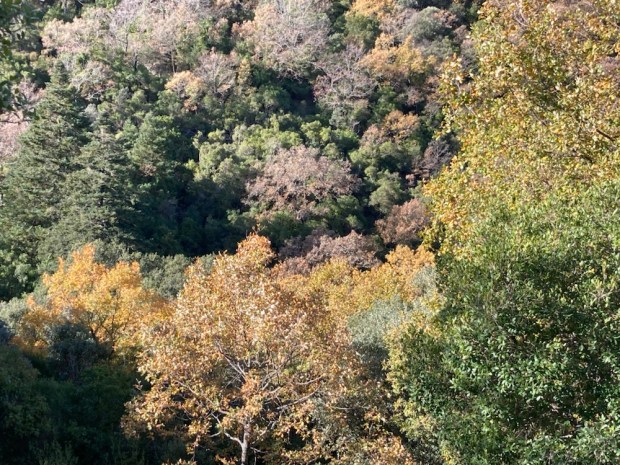
The variety of trees, particularly of oaks, made for a beautiful tapestry of colour with the holm, gall, portuguese, pyrenean, algerian and even cork (which usually prefers less alkaline conditions) carpeting the mountains in subtle shades of autumn. Some venerable old timers were hollowed and contorted in characterful ways and adorned with lichens and ferns or craggy bark.
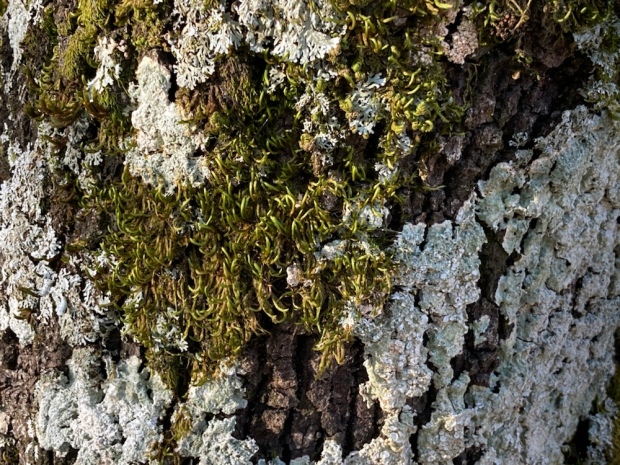
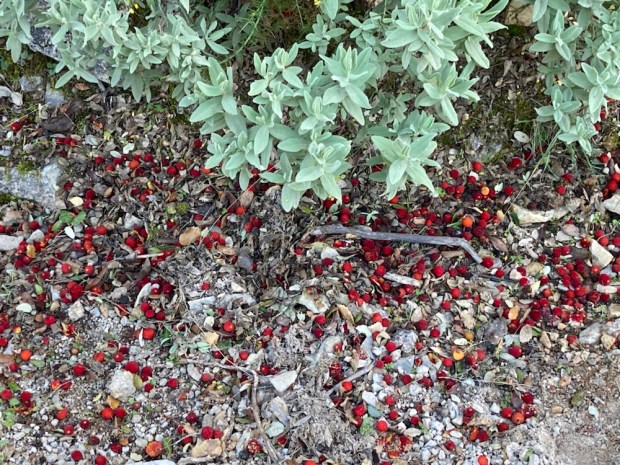
Other shrubs and plants were thriving here too. Honeysuckle, clematis, bramble and ivy climbed among the branches. Arbutus, the Strawberry tree dropped its fruit on the track and viburnum berrys hung in clusters.
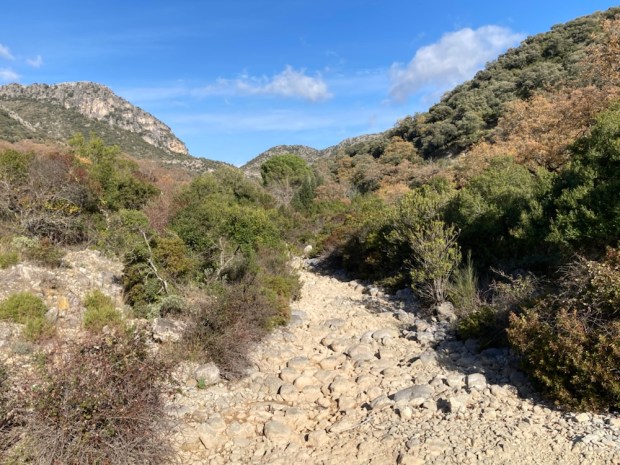
The track descended to a wide flat area on the valley floor through which a river runs by times and which housed a well placed Finca back in the day. A water trough, old fields and walls and ruined buildings lay silently where a looped trail led us up and around a small hill before we returned to the camper leaving the old homestead to the tree creepers, nuthatches, finches and tits that now made it their home.
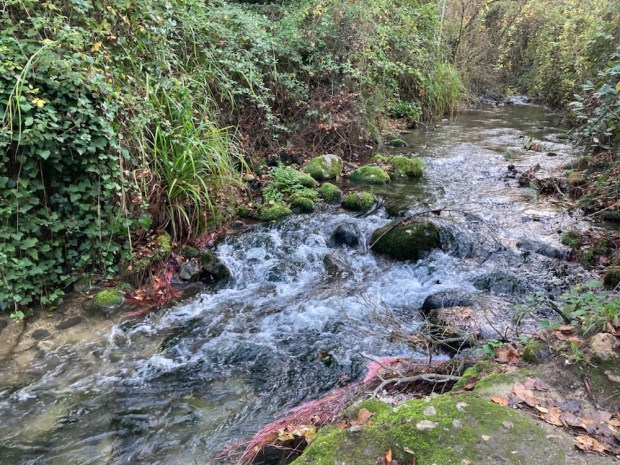
That night we moved back toward El Bosque to park up in Benamahoma, next to the river walk that connects the two towns. Although only 4.5km each way we also visited the botanic gardens in El Bosque which made it into a 4 hr hike- the same as the previous three walks. Although this area is renown for high rainfall we had yet to find any running water so the Sendero Rio Majaceite was a swirling, gurgling delight, tumbling down about 150m over the way, past the ruins of several woollen mills. The riverside path occasionally had to cross the rushing water on footbridges or clamber up and down steps to negotiate between cliffs and boulders but was mostly an easy stroll through a lush and shady tunnel.
Emerging onto verdant farmland at El Bosque the benefits of the river waters were obvious in the productive huertas or gardens that lined the bank. There used to be trout raised here in a series of tanks but are now left wild in the river, the most southerly to support them in Europe. They share the waters with otters while dippers, nightingales, warblers and woodpeckers make themselves at home in the thickets of elm, willow and poplar.

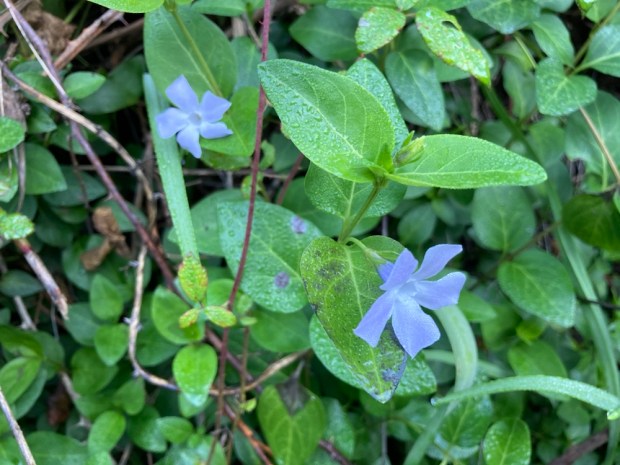
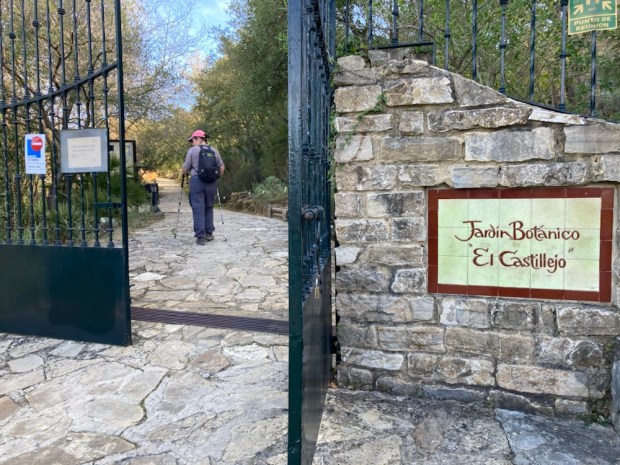
The botanic garden was a great place for us to try and get to grips with the names of the Mediterranean plants we have spent so much time walking through. Everything was well laid out and labelled and cared for but with over 300 species of tree it became a bit of factual overload so we stopped to picnic. The return leg along the river was just as pleasant but busier. This is a popular walk and it was a Sunday. I can imagine that the shade and water are a massive draw in the heat of summer.
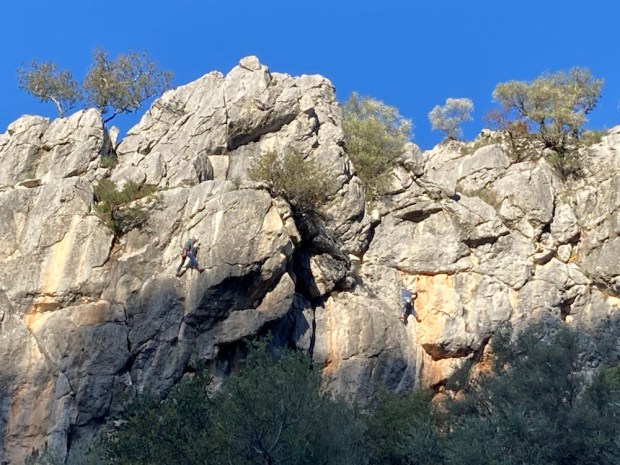
We drove south through the park toward Ubrique and then up on the switchback A374 to Benaocaz to spend the night amongst a load of other campers on some waste ground. Before the sun set we walked the Sendero Ojo del Moro, to the Eye of the Moor, a look out spot commanding a fine view over the valley of Tavizna. Up a steep rocky path under sheer cliffs we saw the reason for the gathering of campers. This was a popular climbing area and lithe bodies clung to the rock like geckos.

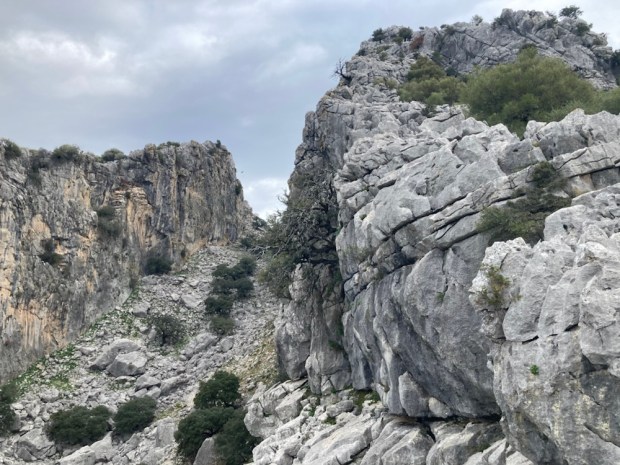
The next days hike was part of a big loop we had planned to do before we found out that some landowner had now closed off the route. But we were able to get as far as the Salto del Cabrero, the Leap of the Goatherd, a geological feature of a big split in the mountain.

It certainly was goat country. The sight of pens and sheds and shelters and the noise of bleating and bells and the smells of billy and shit were all around us as we set off down a path of trampled earth between hoof polished rock.

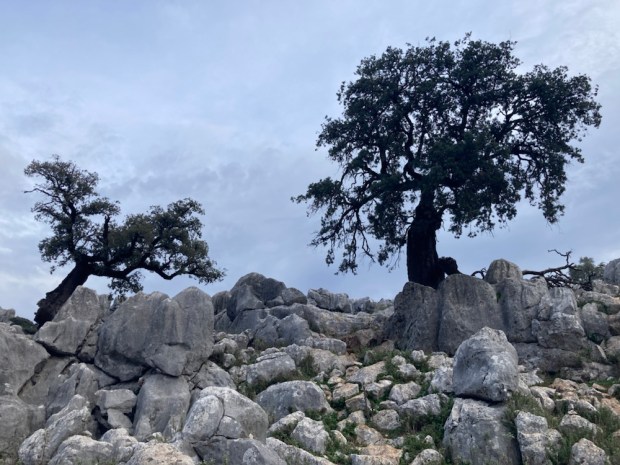
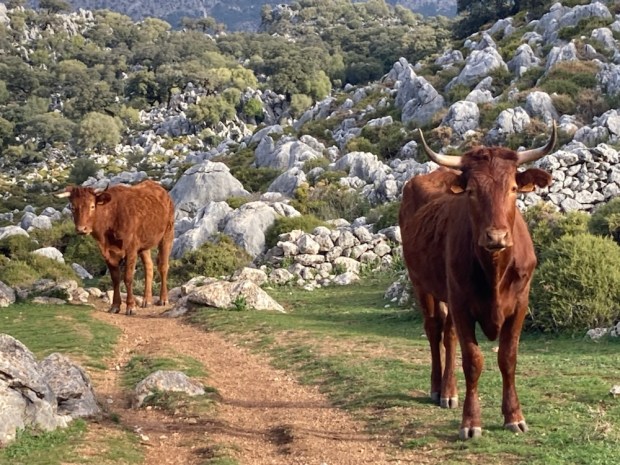
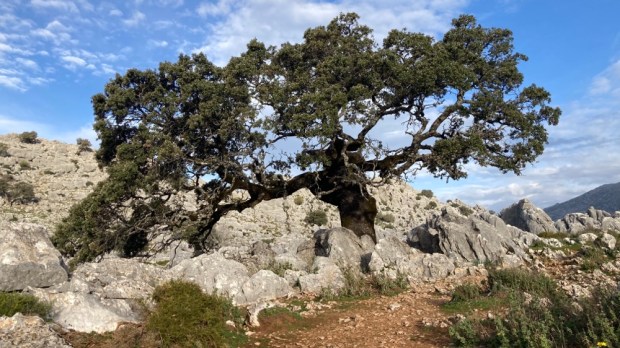
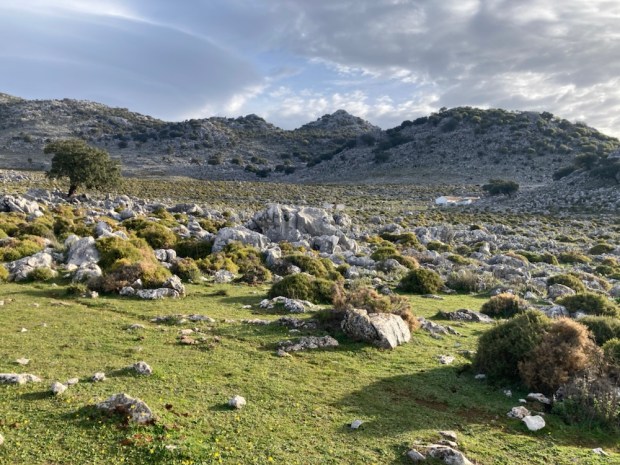
The wild olive and gorse had been nibbled into glorious topiary by the ever hunger goats and higher up through a sculpture park of limestone boulders and lonely old oaks were grazing long horn cattle.
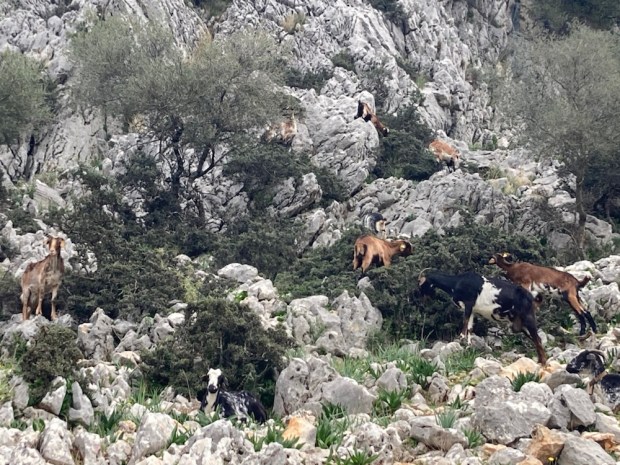
On the high rocky plateau there was a little cortijo in the distance where we took a spur off the track to a viewpoint of the canyon leapt by the goatherd and watched more vultures patrolling the skies.
Returning the the main track we tried to continue to see the better view of the split from the northern side but soon came upon the closed gates and hostile signage. We didn’t want to blemish our clean record of permit holding, rule obeying conformity and so backed off and retreated from whence we came.

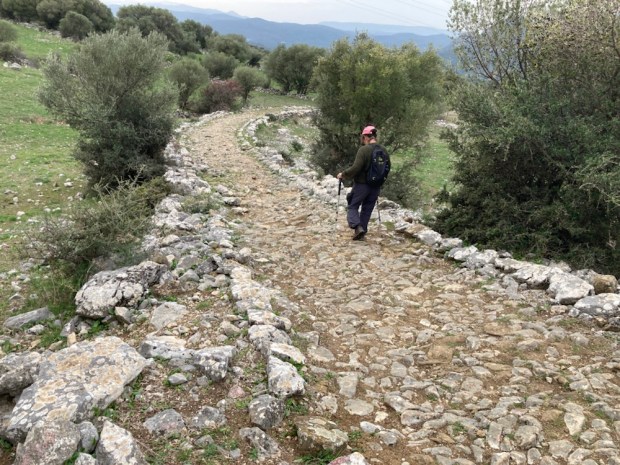
Our final walk was a short exploration from the other end of Benaocaz of the Sendero La Calzada Romana. This route down to Ubrique is on a Roman- Medieval road, parts of which date back to 1st c BC.

Part of a much longer main road from the Med coast to the interior at Córdoba it is impressive in its construction, and durability. Considering it is one of the most popular Senderos in the area and has been trampled by feet, hooves and cart wheels for 2000 years it is doing well.

At an ancient cobbled crossroads it was time to turn back and turn for home. We’d been meaning to come here for a long time and the Parque had been generous in showing us its splendours. Perhaps we’d been lucky with the weather or perhaps, as the emptying reservoirs and dieing Pinsapo indicated, things were changing. But as the weather worn limestone, Neolithic cave paintings, Roman roads, Moorish castles and abandoned cortijos show,change is a constant, and hopefully the beauty will survive.
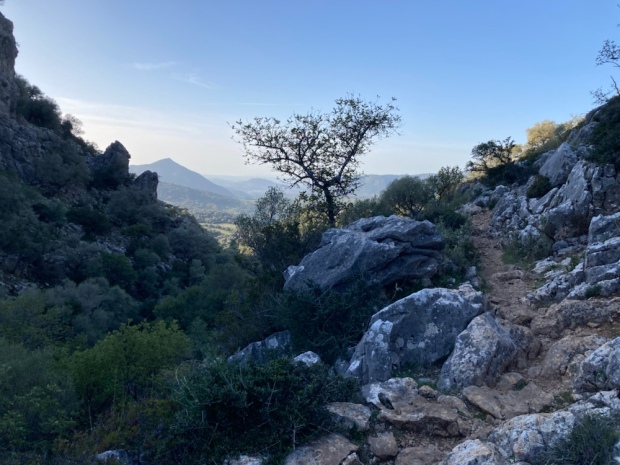
SIERRA MÁGINA

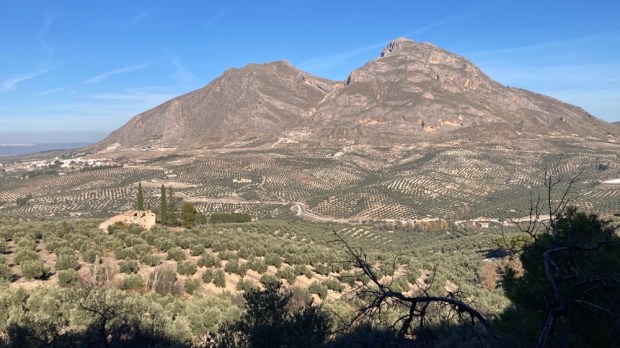
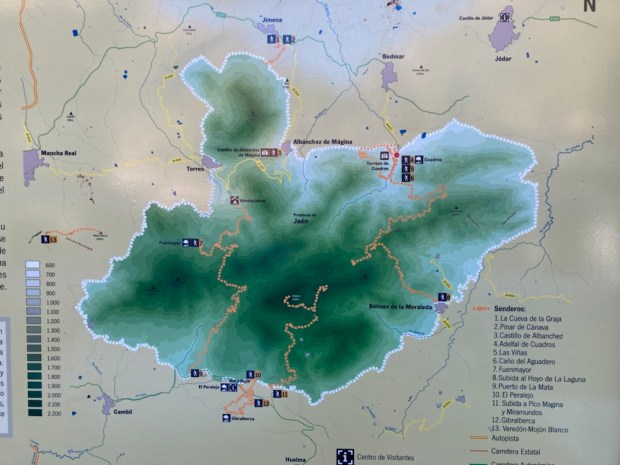
About 550km south of the Canon del Rio Lobos is the Parque Natural de Sierra Mágina. Established in 1989 the 20,000 hectare protected area is in the province of Jaen. Named by the Moors as the Mountains of the Spirits its rugged limestone peaks reach over 2000 m and are surrounded by the largest olive growing area in Spain. The Jaen province produces 50% of Spain’s production and 20% of the world total. That’s a lot of picking. Over half a million hectares of olive trees.

The Sierra rises up out of the sea of olives in distinct layers of altitude levels. Forests of pines and oaks give way to juniper, yew and a rich mix of flora species, 45 of which are endemic to the region such as the hedgehog broom. The Sierra’s particular ecosystems and climatic niches make it one of the most important environments in Spain and also support endemic fauna such as the rare black cork oak spider, a snail that lives in fissures in the rocks and a high altitude grasshopper. We were disappointed not to sight the rare Betica midwife toad.

For hundreds of years the Sierra was the natural border between the Muslim kingdom of Granada and Christian Castilla and the fortifications and castles from that period still loom over the land.

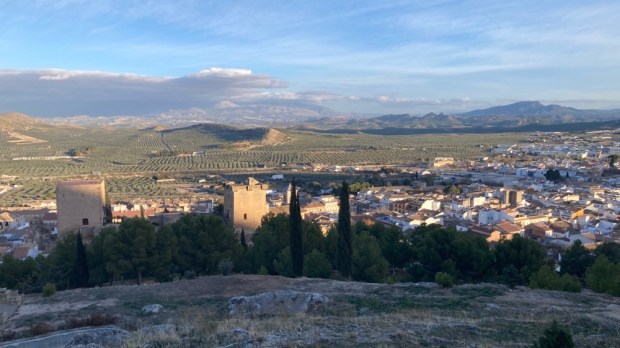
We parked up above one of the best preserved and oldest in Andalucia in Jódar hoping to visit it and the parks information centre inside but it remained stubbornly closed throughout all advertised opening hours. But the view was good.

Moving on into the park in the morning we drove up to the Area Recreativa Cuadros and walked through the river side oleander forest that housed many shady picnic tables and benches and up on paths of needles and stone into the pines.
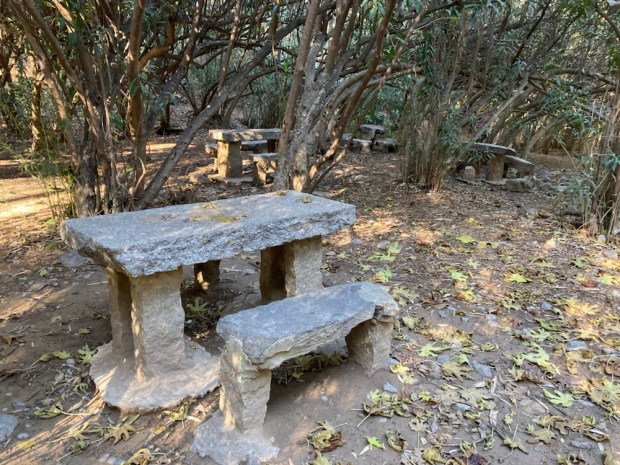
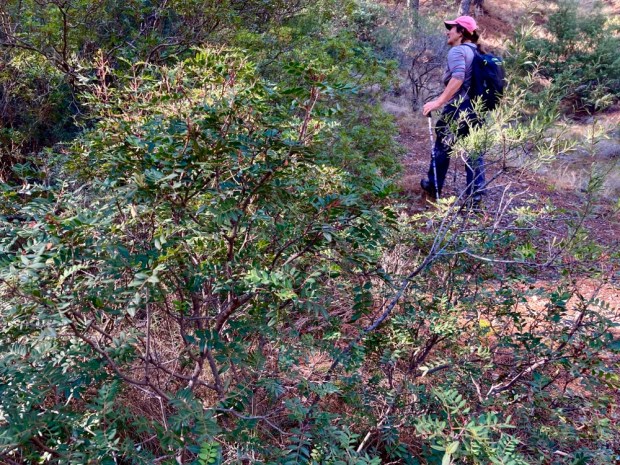
We were on the Las Vinas trail, named after the vineyards that predominated here until the late 19th c when the phylloxera epidemic wiped out that livelihood. A 10 km loop it circled up above the River Cuadros valley through the pines and back down through the olives. The woods were thick with the mastic shrub, Pistacia Lentiscus, from which the sap would be harvested by cutting the bark and turned into a substance for everything from chewing gum to varnish.

The aromatic incense juniper was another common species while the colourful leaves of maples reminded us of the season.

Emerging from the trees the views of mountain and plain opened up and the noise of the petrol engined olive rakes buzzed from below.

We stopped at a fuente and were joined by the GR 7 /E4 walking route, on its way across Europe to Greece. Then we continued on a track through the groves on a spur to visit the 11th century Torreón de Cuadros, the Chequered Tower – so called because of its two tone appearance due to its construction of stone from two different quarries.

Jaen province has the highest concentration of castles and defensive buildings in Spain and this 12m high watchtower with its arrow slits stood high over the gorge- guarding the Muslim/ Christian frontier.

Returning to the loop we managed to find our way on an unmarked route back to the oleander forest,( Europe’s biggest!), along an acequia which involved a 50m tunnel.

Back in the camper we drove around to the southern side of the park and high up on rough dirt roads, past the Area Recreativa Gibralerca, and on to a fine high park up amidst the Holm oak, with sunset views over the highest peaks of the Sierra.

With the help of walking app Wikiloc I had sorted another 10km loop for the morning but this one involved a bigger elevation gain to reach a summit called Pico de la Laguna at 1525m. Setting off down the track in the morning it was still frosty in the shady ravines but we certainly warmed up when scrambling up the steep firebreak for 400m to follow the ibex we saw running across the rocky shoulder towards the mountain top.

The view more than rewarded our efforts with a magnificent 360 covering a vast area of Andalucia. But the cold wind moved us on over the mountain towards a forest fire lookout station on a lower peak to the northeast. Even on this inhospitable high ground there were signs of land management with traces of stone wall and flat areas of cleared high pasture and coppice Holm oaks.

Down past the herbage manicured by animal teeth and up to the lonely lookout, empty now, perhaps out of season, perhaps the lookout is busy picking olives from the multitude below.

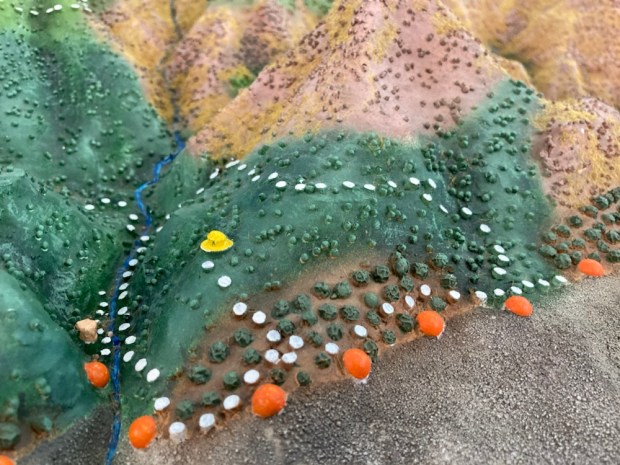
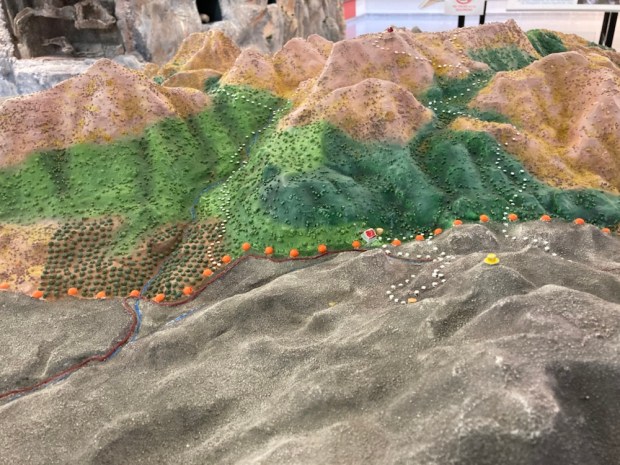
A longer decent on the firebreak and we were on track to the camper again giving us time to visit the park info centre at nearby Mata Bejid where the reconstruction model of our walks did not seem quite so epic as they had appeared to us.

EL CANON del RIO LOBOS

An hour or so south and west of the Holly forest we parked up for the night at the beginning of our next hike, from the seven eyed bridge or Puente de los Siete Ojos. We were about halfway down the dramatic gorge of the Rio Lobos, named after the wolves that still frequent the area. We were going to do a 17km out and back to the beautifully situated Chapel of San Bartolomé in the morning.

We were in a 10,000 hectare Natural Park and special conservation area for birds. The canyon is often cited as one of the prettiest landscapes in the whole of Spain and there’s a lot of stiff competition.

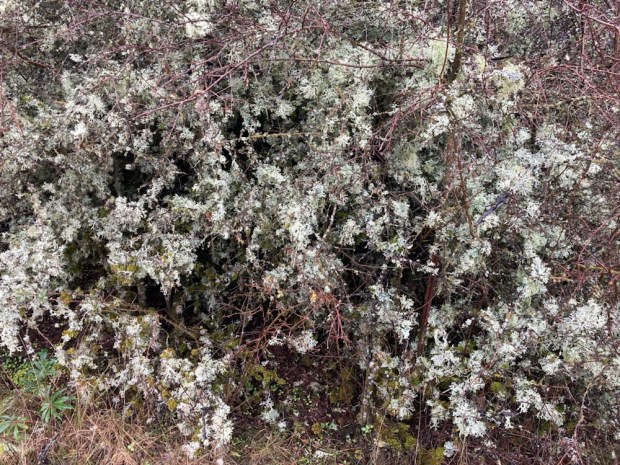
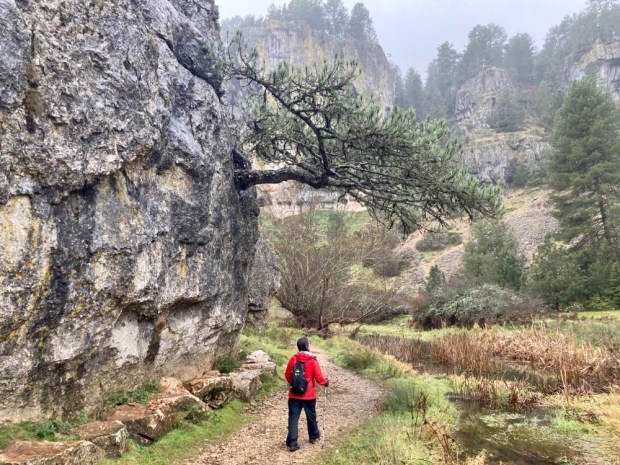
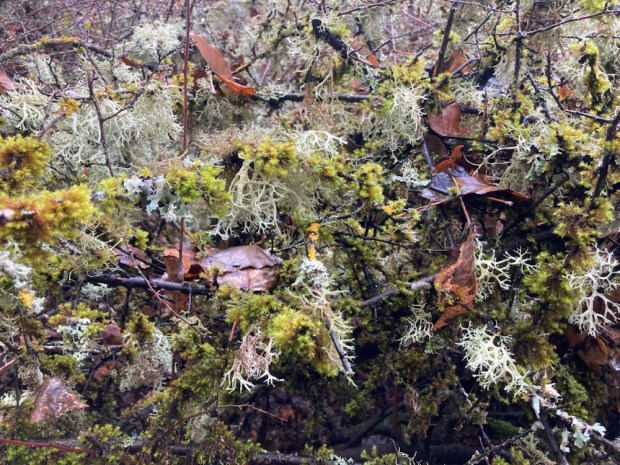
Setting off under a grey and misty sky we followed the signage down stream and into the mossy pine woods strung with lichens.

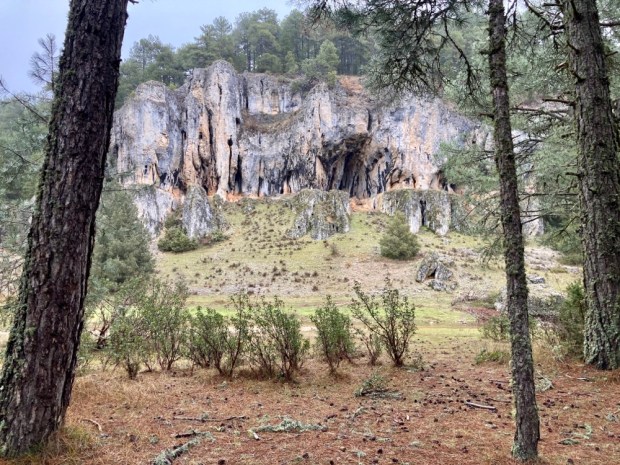
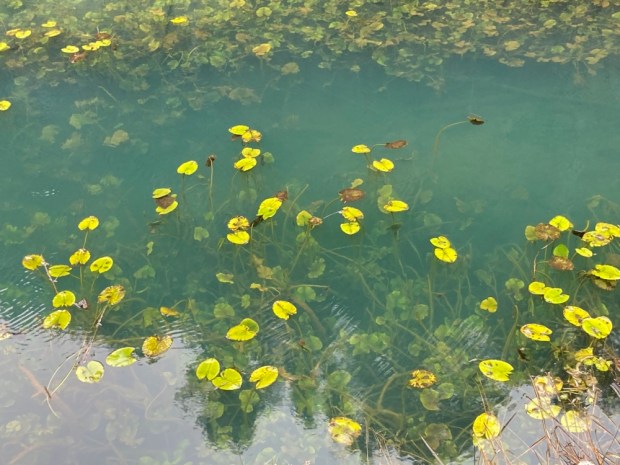
The gorge was fairly broad here with low cliffs of perforated limestone in the forest either side of the river that came and went above ground. Most of the Lobos is underground most of the time, sinking down through swallow holes before emerging again into pools of lily pads.

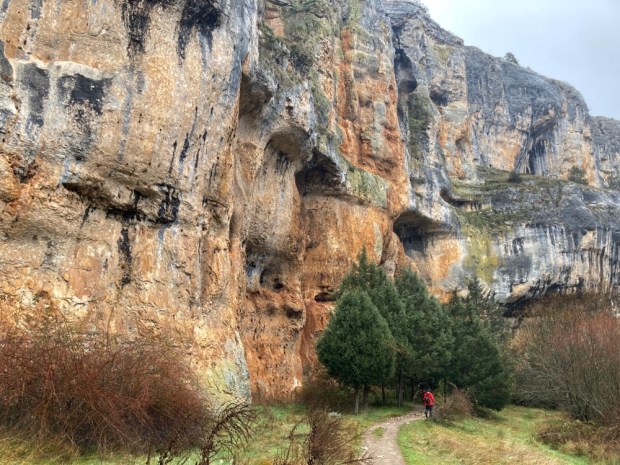
The limestone cliffs got higher around us as we continued south on steppingstones, rock steps and walkways. Dramatic caves and chasms dotted the rock faces gouged out by millennia of rain and river water.

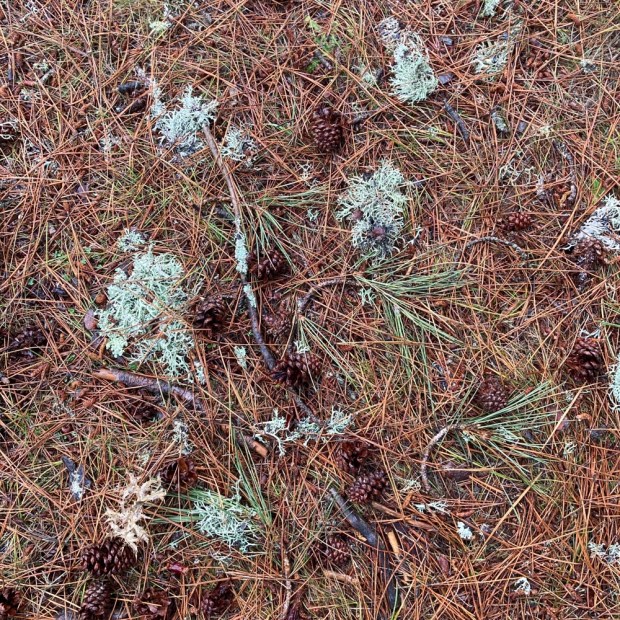
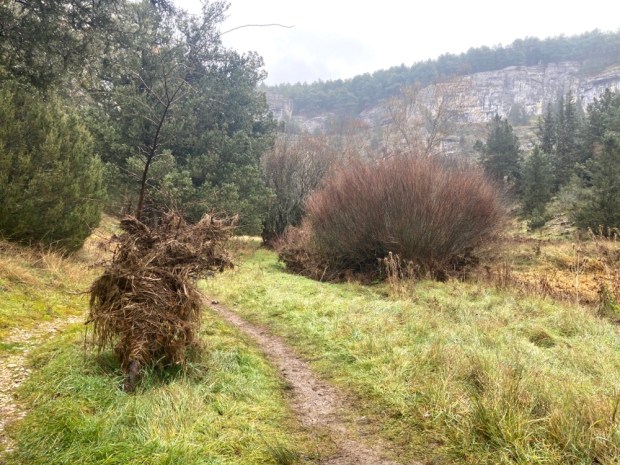
The flood waters looked like they had been about 2 m higher recently, judging by debris left high and dry in the bushes. The pines of earlier had merged into mostly juniper with hawthorn,willow, poplar and scrub of rose, gorse and spindle. The amount of lush and fulsome lichens was amazing both in the trees and on the forest floor amidst the euphorbia and hellebore.

The pines were often coated with the cotton balls of the processionary moth whose caterpillars will be dropping to the ground and moving off in line before long.

There are 151 species of bird living in the park but the main draw are the Griffon vultures, of which there are 135 breeding pairs. They sat hunched on the cliff tops, sometimes with wings spread and sometimes placed just so like some art installation. Added to the Egyptian and other vulture species here as well as the multitude of different Eagles, Falcons and Harriers, I’m amazed there is enough carrion prey to keep them going.

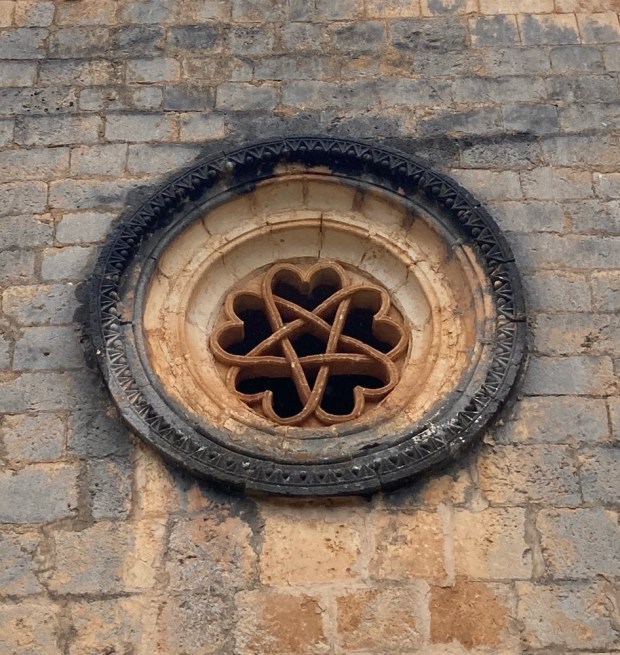
The track got busier as we approached the 12 th century chapel built by the Order of the Knights Templar. The major honey pot of the park and easily accessed from the southern end of the gorge it gets pretty crowed in summer. A spectacular setting to be sure and an attractive building with fine rose windows and corbelled doorway. Opposite is a huge cave where Iron Age engravings and earlier art have been found.

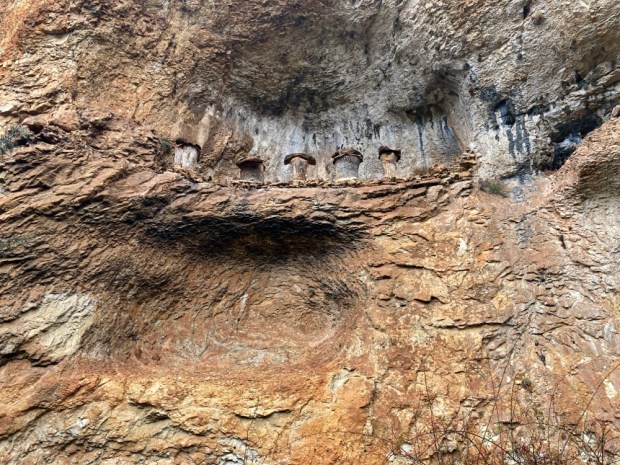
The multitude of caves along the gorge have been witness to countless generations of humanity. Stone Age tools, Bronge Age ceramics, Iron Age carvings, Celtic funereal artefacts, and bees hives from the Templars.

Truly spectacular, and we returned to the Siete Ojos replete but weary. Taking on Lobos water from the fuente we were ready for a 500 km drive south.

SIERRA de CEBOLLERA and ACEBAL de GARAGUETA

As the winter storm clouds gather over Ireland and the temperature and raindrops fall the call to Spanish adventures cannot be ignored. A 30 hour intermission in a cramped cabin surrounded by a swelling mass of moving ocean and we were once again driving into the mountains heading south.

Taking a different diversion to previous routes we drove deep into the Rioja region and up into the Sierra de Cebollera on the N 111 from Logroño towards Soria. Accompanied by rushing rivers and unbroken expanses of green,brown and gold forest of pine, beech and oak we climbed toward the snow. I had some rambles in mind in the Natural Park and we turned up to Villoslada de Cameros where the parks info centre sat next to the river below the ancient village of sturdy stone houses. Arriving at dusk we had a stroll up into town joined by some friendly hounds.

Our hiking destination, Lumbreras, was a few km down the road- but those km were up – and the snow deepened as we climbed up around the bends in the morning. By the time we arrived at the trailhead at about 1200m and struggled into our cold and wet weather gear the going did not look good.

We made an attempt but it soon became obvious that 8.6 km in deep snow was not a good plan and so had to enjoy what we could of the 23,000 hectare of well preserved forest of mostly Rebollar oak, the ones that keep their leaves, from the road.

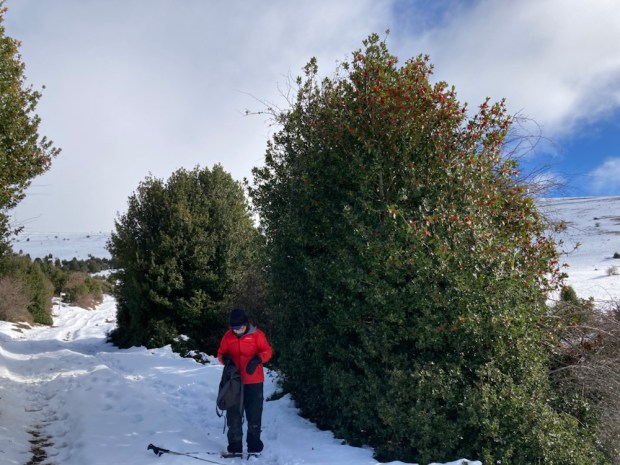
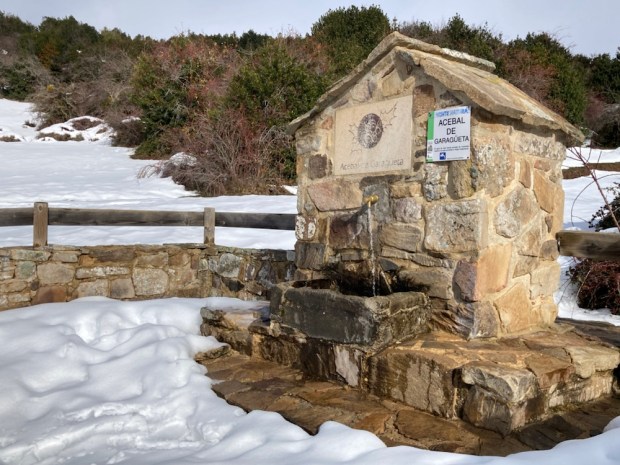
Back in the camper and up and over the Puerto Piqueras at 1700 m, or actually through a tunnel beneath, and on into Castillo y Leon and the Reserva Natural del Acebal de Garagueta, the greatest Holly forest in Europe. Might not seem a big deal but we love our Hollys and this was special.

After calling in to the info centre in Arévalo de la Sierra and arming ourself with a map and some postcards we drove up the dirt track to the reserve. 300 h of Holly on a mountainside between 1400m and 1600m overlooking a huge sweep of Spain.

A large group of mighty vultures circled lazily above us in an improving sky as we set off down the track. Some horses snuffled in the snow for the remaining herbage and nibbled the leaves of the Holly to create an impenetrable topiary, and excluding themselves from access to its bark- saving the tree from injury.

Actually we had learnt at the info centre that it was human inhabitants that stripped the bark from the Holly and went through a lengthy process of scraping and soaking and mashing fibres to create bird lime, the sticky glue painted on branches to cruelly catch small “edible” birds, a practise finally outlawed by European law this year but frequently overlooked. In Spain the song thrush is a popular snack.

As a local resource the Holly forest had obviously been utilised for millennia for all it could supply – fuel, fodder and prey- but is now protected and the flocks of birds scattering between thick deep shelter and an abundance of berry food were impressive. The bright red berries and rose hips compete with the subtle hues of the mistletoe for the birds attention. They need to go through a gut or , with the Christmas kissing mistletoe, be wiped from a beak into a branch crevice in order to propagate. But strangely, even in this protected zone with a mass of birds and berries, there was no regeneration of trees visible.

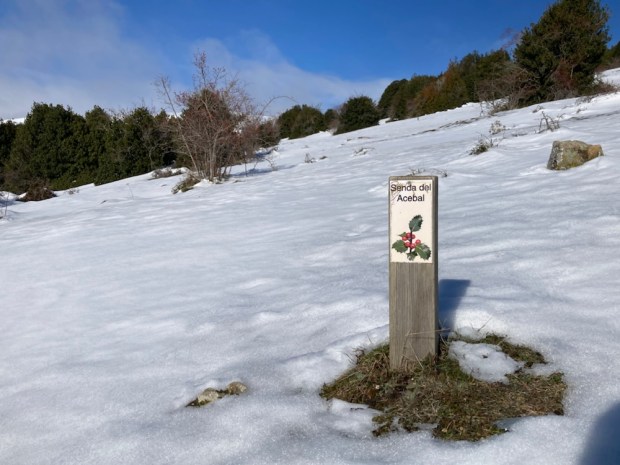
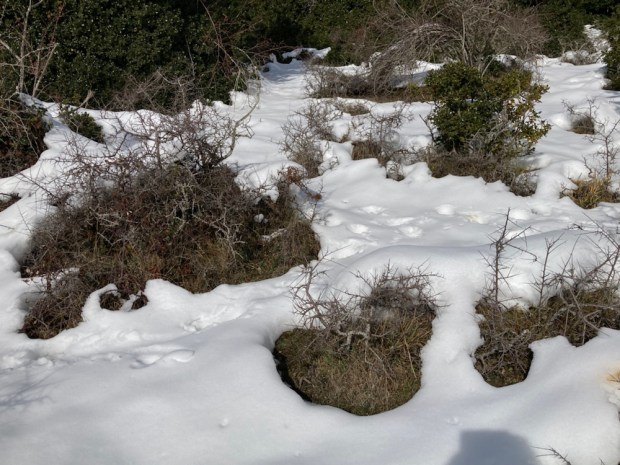
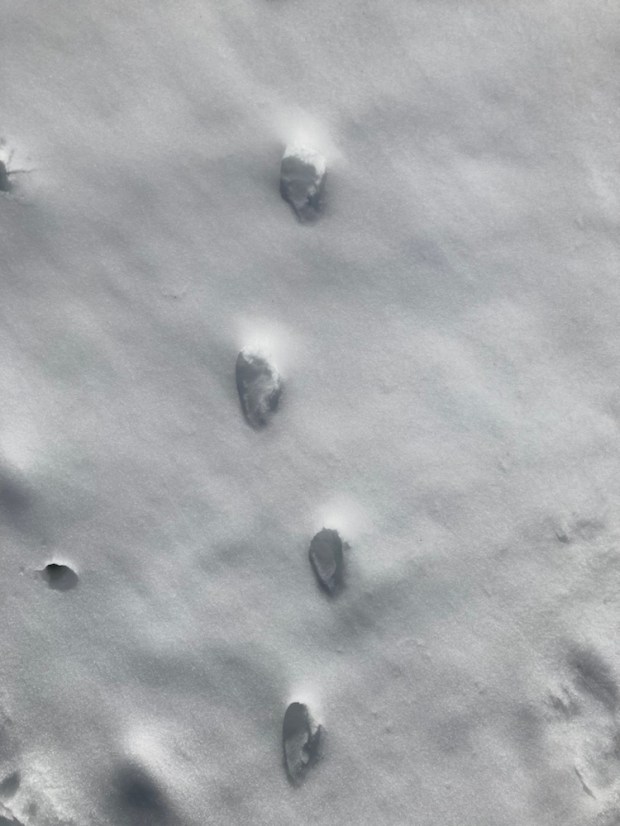
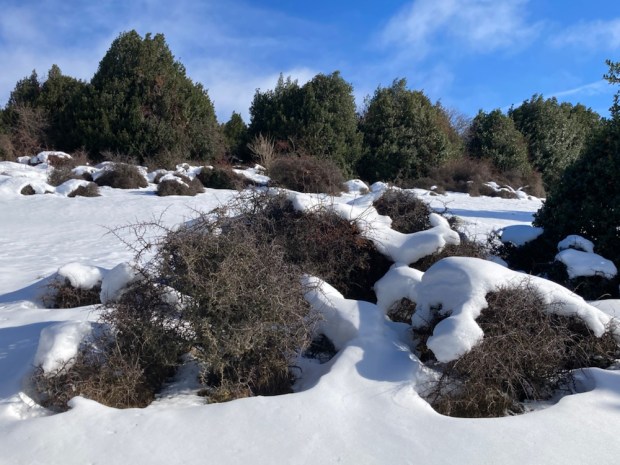
We left the main path to follow little wooden markers half buried in the virgin snow. Not quite pristine as animal prints too vague to identify crisscrossed our route. Could be fox, deer, boar, rabbit, hare, shrew, mouse, hedgehog, badger or weasel. Snow hung in pillows on the trees and formed sensual mounds over scrubs.

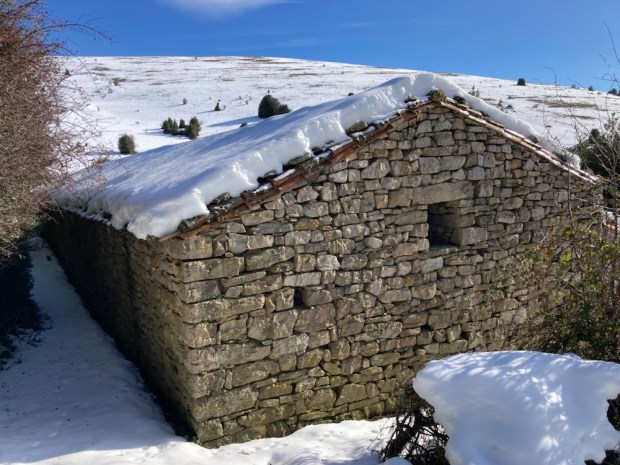
We reached a lovely little circular shepherds hut finely built of stone with a corbeled roof in Celtic style. The nomadic lifestyle of transhumance was practised until quite recently with livestock being moved to these high grounds in the summer and down to Andalucia or Extremadora in the harsh winters. This hut was built in the 1930’s. The style relates to the fact that this area was the cultural stronghold of the Celtiberians for the last few centuries BC until the destruction by the Romans of nearby Numancia after a desperate 8 month siege in 133BC.

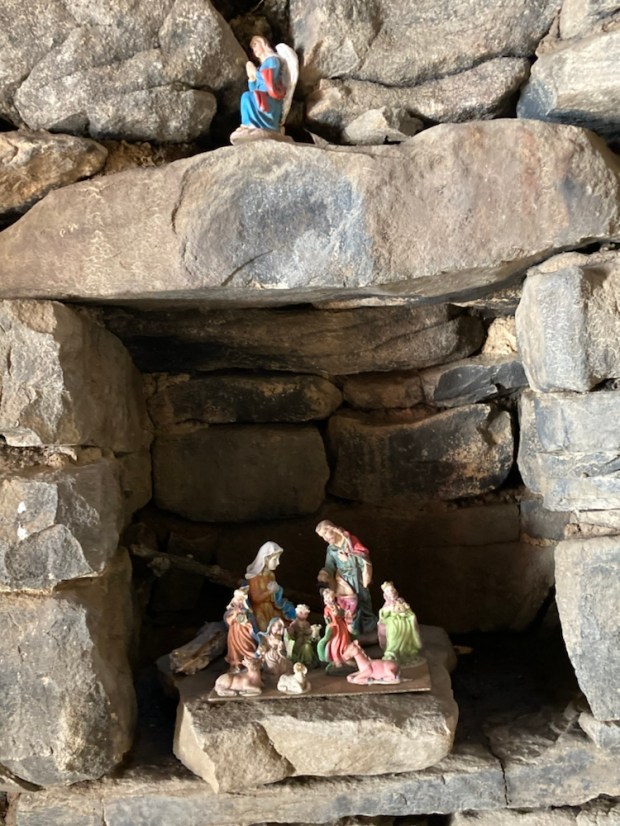
Inside someone had placed a little Christian grotto in an alcove.

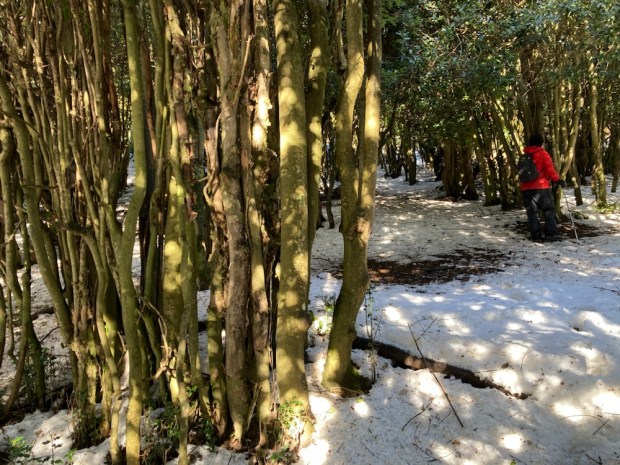
Our path now swung up and around the mountain, returning towards our starting point near a large stone barn and fuente. Here was one of the few areas we could get inside the trees to admire their shade and shelter.

And so back to the camper under the watchful eyes of the vultures hoping perhaps for a fatal fall.

Onwards.

CONNEMARA WEST: Walking into Paradise

For Sam

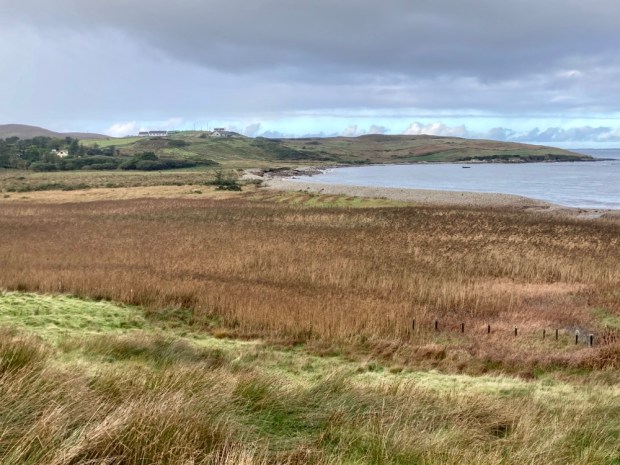
A few days commitment free and an invitation from old friends to visit them on Omey Island was all the encouragement we needed to load up the camper and head into the west. The Wild West weather wise. Our friends place on the far western edge of an island off the far western edge of Ireland was no place for camping the day we set off so we decided to seek shelter and explore the Aughrus peninsular to the north till the weather improved.

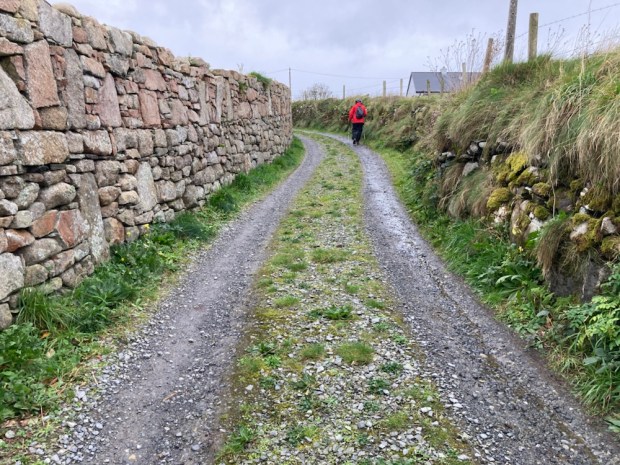
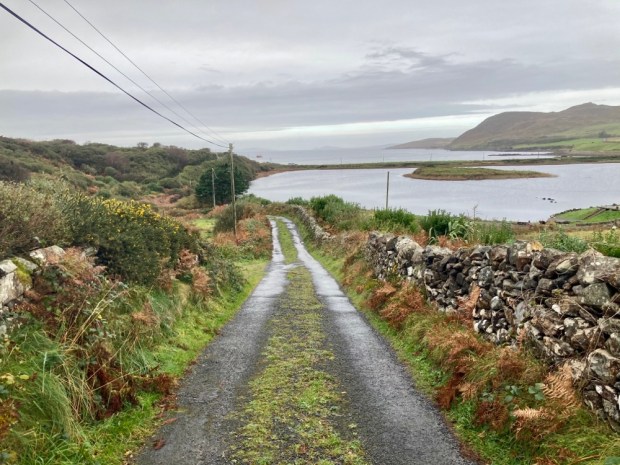
Parking up at the harbour in Cleggan we took the little boreen up past the pink granite house that the poet Richard Murphy built himself from the stone of abandoned cottages. The lane led us up one of the many drumlins in the area, little hills of boulder clay and glacial till. The good drainage afforded made for more fertile grazing land and the appearance of the stone studded soil, viewed from the sea that has cut a cross section through it, explains its name- Cnoc Breac / Speckled Hill.

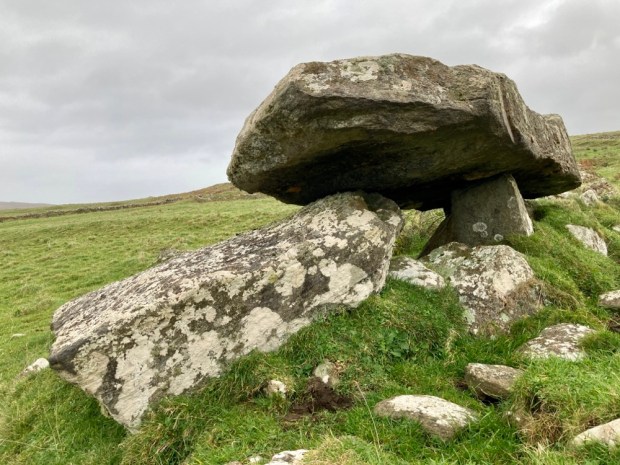
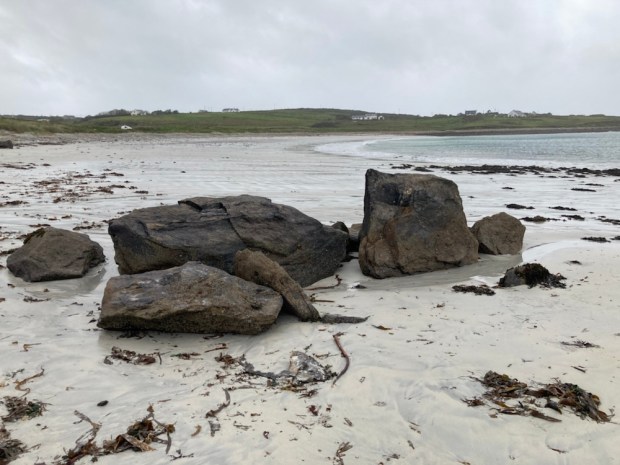
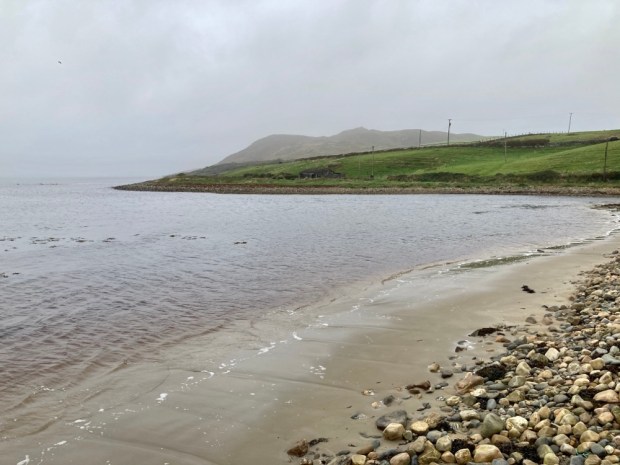
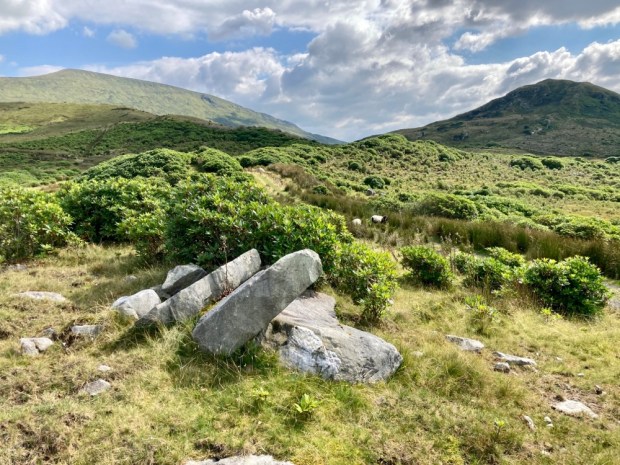
Cresting the rise we continued down a long neglected little boreen through fields of cattle with faint views of the islands of Inisbofin and Inishshark across the misted sea. A fine Neolithic tomb, erected perhaps 6000 years ago sits near the sands of Sellerna Bay ( Sailearnach- sally or willow garden) where willow for lobster pots and baskets would have been grown.

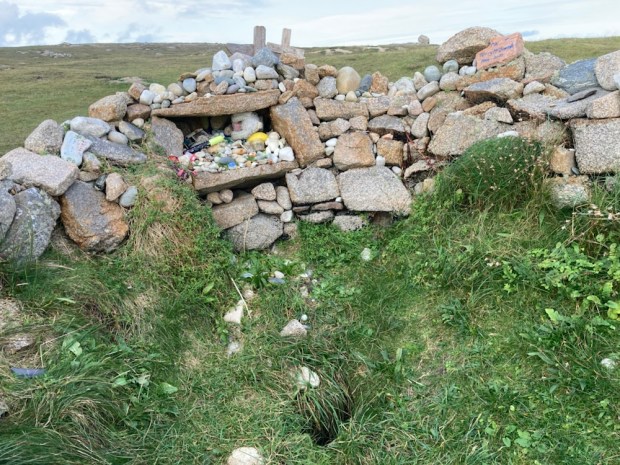
Above the other, western, end of the crescent beach lies another, sadder, memorial to death. A scattering of small stones amongst the grassy tussocks are the only markers to the lives of the unbaptised children in this Cillin.

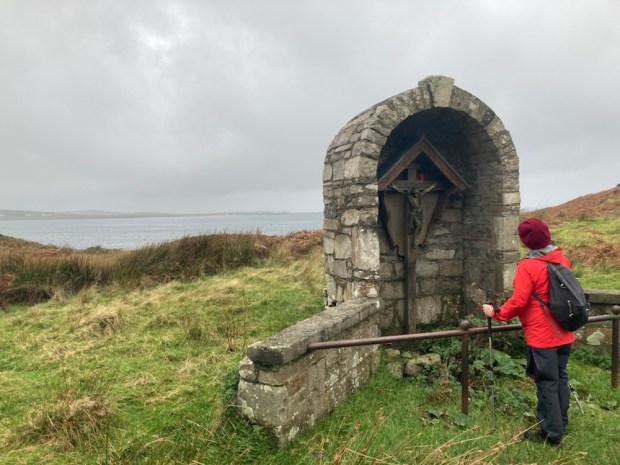
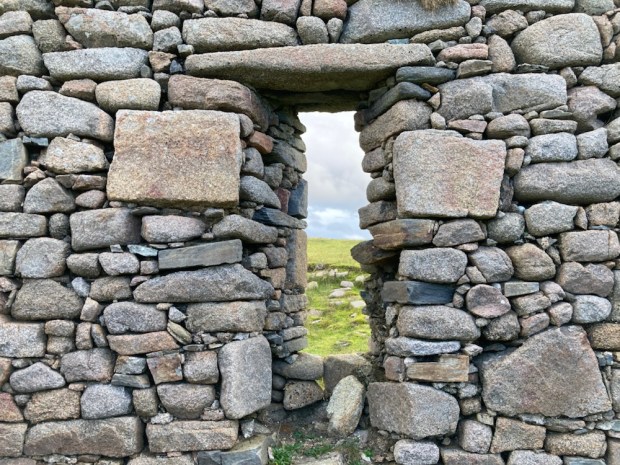
Crossing a little stream into the town land of Rossadillisk- named after the edible seaweed dillisk or dulse that grows on the shoreline-we clambered over the rocks before discovering an easier cliff top path that led us to the next beach, Tra Bhride ( Bridgets Strand) where some enigmatic structures look out onto the scene of a great tragedy.

The Cleggan Disaster of October 1927 devastated the area when a violent storm swept down the coast taking the lives of 45 fishermen, 16 of them from this small town land – dependant on fishing. Prior to the storm there were 36 households here- within 10 years it had reduced to 6, ruined by the event which also took 10 lives from Inishboffin and 19 from Lacken Bay and Iniskea island further north in Mayo, where the tragedy led to the total abandonment of the island I visited and wrote about in my The Back of Beyond: The Barony of Erris blog post. A heart and community breaking event which saw a calm and pleasant evening turn without warning into hellish maelstrom that smashed the fragile canvas currachs onto the rocks within sight of their families who wailed from the shore.

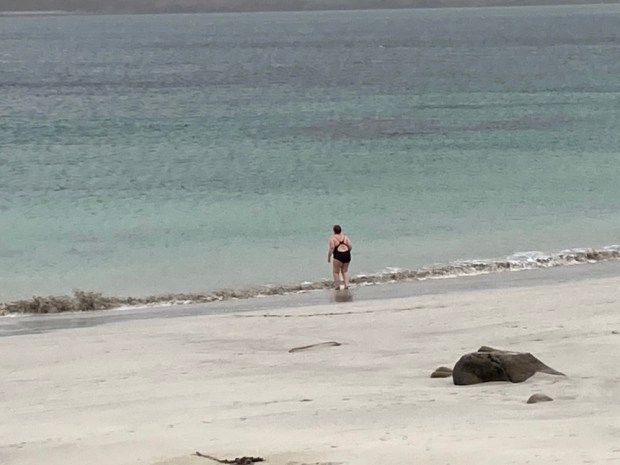
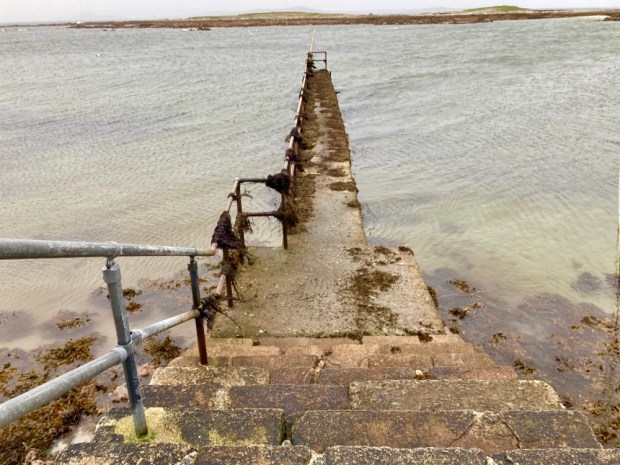
We left a lone brave swimmer and carried on around Rossadillisk Point to the little harbour pier and jetty jutting out towards the off shore reef.

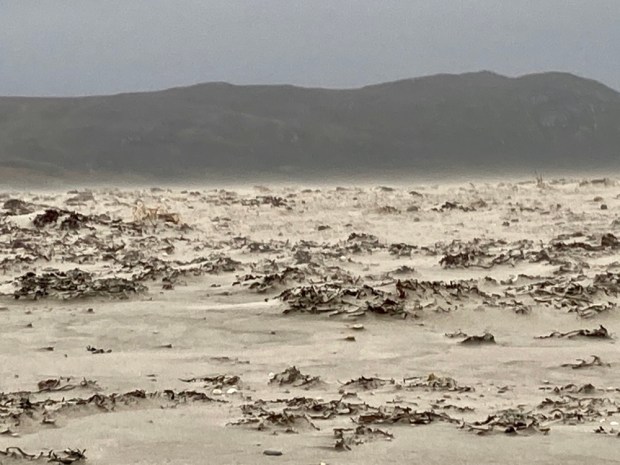
Paradise in fine weather maybe but the winds on this western fringe can raise a sand storm, tear flags apart and, as it did in October 1927, rip the roofs from houses. Luckily we only suffered some squally showers on our return to Cleggan.

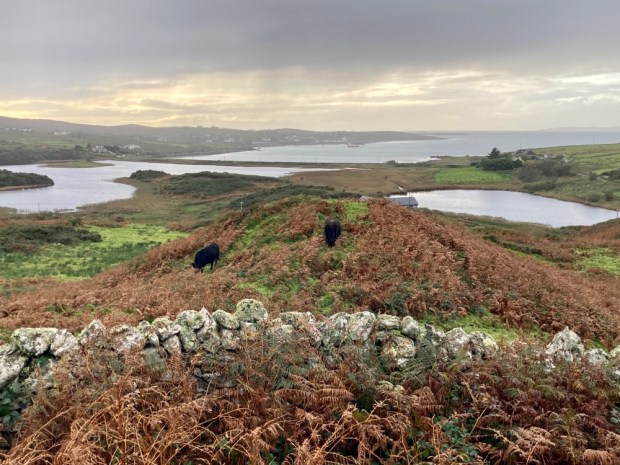
The bald dome of Cleggan Head rises 500ft above the ocean on the north side of the bay and in the morning we walked across the causeway between beach and lake towards it. Not to scale it’s bracken and heather clothed slopes to the ruined Napoleonic signal tower in search of the resident Peregrine falcons but to follow the farm track, past the fine Victorian complex of houses and converted outbuildings of the Musgraves estate and down to the little cove of Port on the headlands northern shore.

The farms 500 acres of rough grazing on the head along with another 500 of commonage to the east are part of a Europe wide study of extensive grazing and the ecology and biodiversity and farm incomes that can go with such a sustainable system. People have certainly been farming here since the very first clearance of the trees over 5000 years ago, a monument of those original settlers lies next to the sea below the track – a humped backed wedgetomb. Passing another monument, to a family member who died in a riding accident, we carried on through a series of cleverly hung self closing gates to the little secluded cove and its ancient holy well.

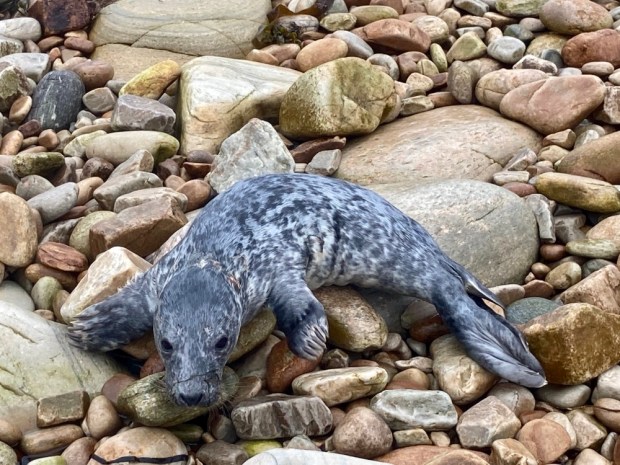
We came upon an injured young seal on the grassland above the beach and spent a good while in worried telephone consultation with Jo from the farm and Seal rescue down in Wexford who were sending out a local volunteer before we managed to encourage it back into the water to hopefully find mum.

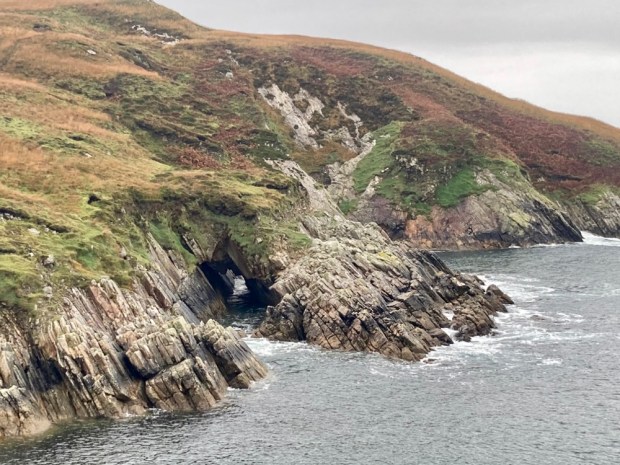
After watching the seal disappear into the water we explored the dramatic and indented rocky cliffs of schist before retreating from another wind driven shower.

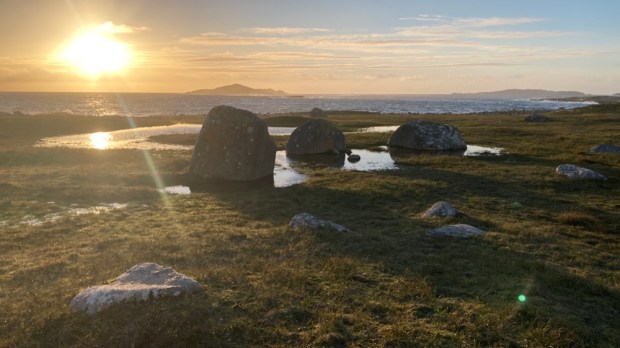
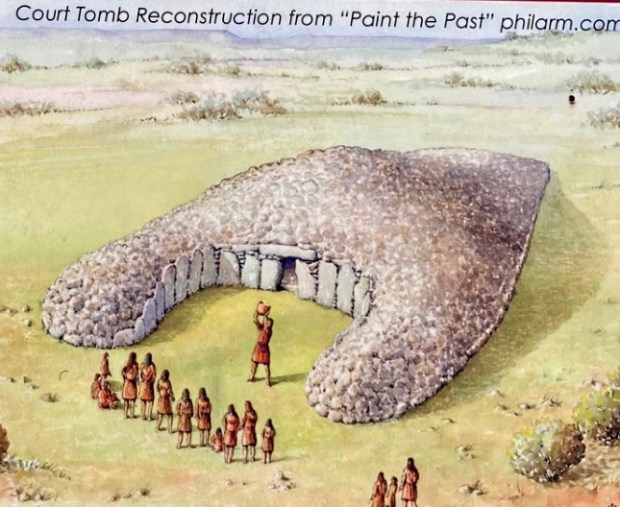
After lunch in the camper on the causeway we embarked upon walk number 2 on the above map of the area, to explore the town land of Sheeauns, or Na Siain, the fairy mounds, an area of low rounded hillocks of glacial moraine or drumlins that accommodates a wealth of Bronze Age monuments. Stone alignments, rows and sacred standing stones litter the landscape hereabouts along with the 1000 year older tombs of Neolithic times. Portal tombs, wedge tombs, court tomb and passage tombs – different designs laid bare after millennia of wind and rain have washed away their covering of soil- 32 of which have been found in this corner of Connemara , the richest concentration in Ireland- testify to a rich and unknowable past life around these quiet fairy mounds that now harbour more recent relics of people gone before.

But in climbing up to inspect the ring fort atop a prominent fairy hill I incurred the wrath, not of the fairies, but of the farmer who owned the land and the cattle or sheep pen that had been refashioned from the Iron Age structure. Banished from the ancient homestead I retreated to the camper and onward to Sellerna beach for the night.

With an improvement in weather forecast we were ready for Omey but had to wait for slack tide in order to cross from the mainland. That gave us time next morning for one more exploration of Cleggan head and its beaches and cliffs.

A couple of km east of Port the OS map showed a track from the town land of Bundouglas crossing northwest across the headland towards high cliffs on the indented coastline. From there we hiked back around to the stony beach below Shanboolard Hall which we also planned to visit.

The track, presumably made for getting to the shallow turf banks scattered across a wide area, ended abruptly at the high cliff edge. The savage seas here have torn into the sandstone and glacial till leaving the harder quartzite jutting out or standing tall in defiance. Kayak tours are popular below the cliffs, exploring the caves, coves, arches, stacks and stumps.

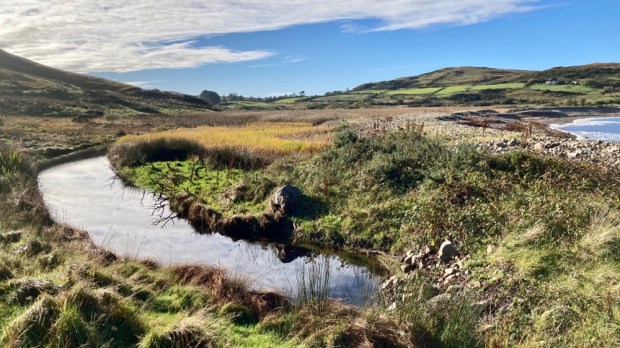
Making our way eastwards along the high ground buffeted by squally showers we passed a series of small bays, deep clefts scoured out by the waves, with exotic names- Ooeyuna, Ooeywalter, Ooeywaria, Ooeyandinnawarriv, Ooeylaunnlauraush and Ooeyansconsa. Views opened up down Ballynakill Harbour towards the 12 Bens and eventually we made it down onto the crescent wall of storm tossed pebbles and crossed to climb the grassy track leading up to Shanboolard Hall, another fine Anglo Irish estate house now an organic farm with walked gardens and a mighty wind turbine.

Related by marriage to the Musgraves of Cleggan House ,just over the headland, the former owner here relished in the name Captain Graham de Montmorency Armstrong- Lushington Tulloch. Now producing a wealth of organic fruit and veg they also have free range pigs and chickens, Connemara ponies and horses and a few Guinea fowl and bee hives. And a 3 bed holiday cottage to let. We had a chat with a couple working away in the garden and returned to the storm beach, crossing the stream emerging from the reed covered wetland.

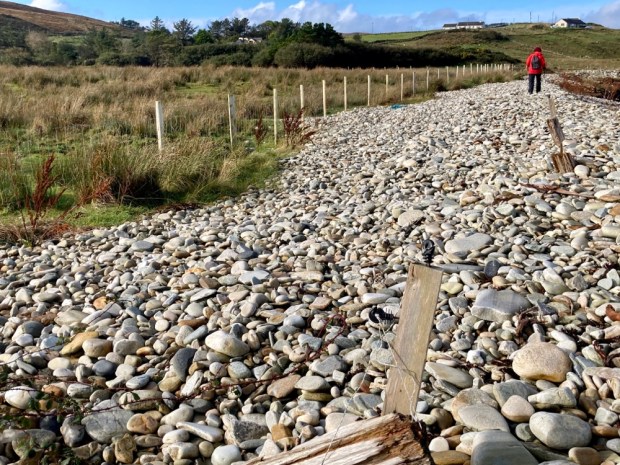
The constant movement of the beachpebble mound was illustrated by the buried line of redundant fencing that led us to the boot marking the way back to the camper.

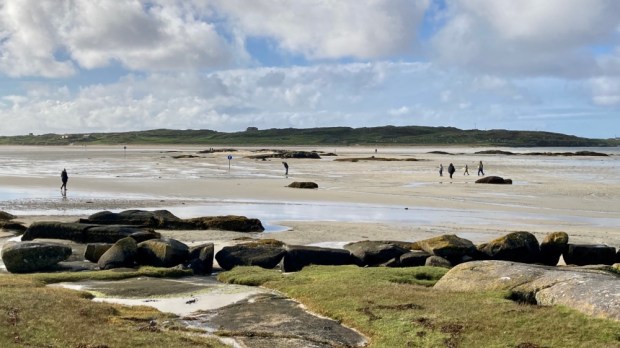
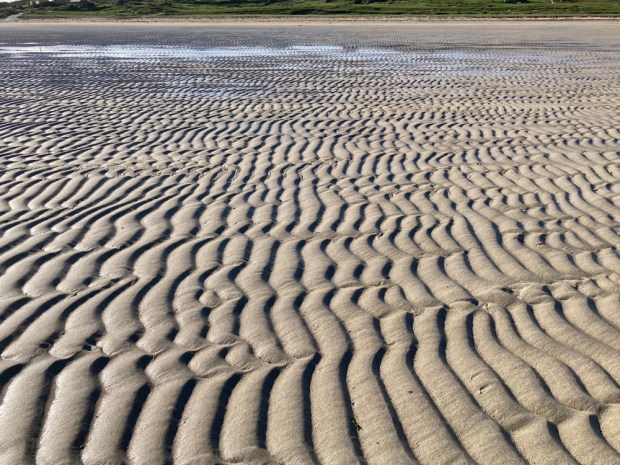
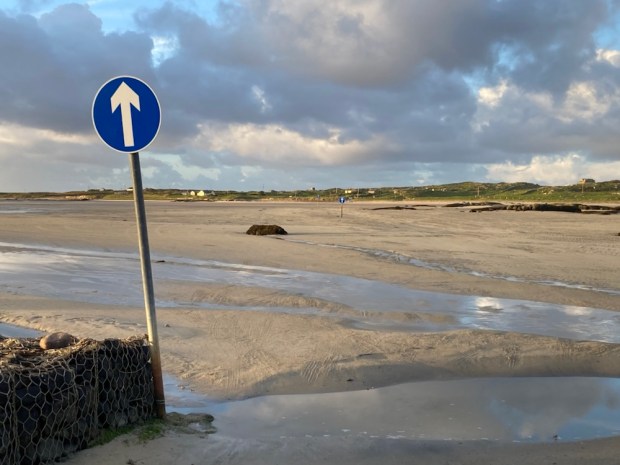
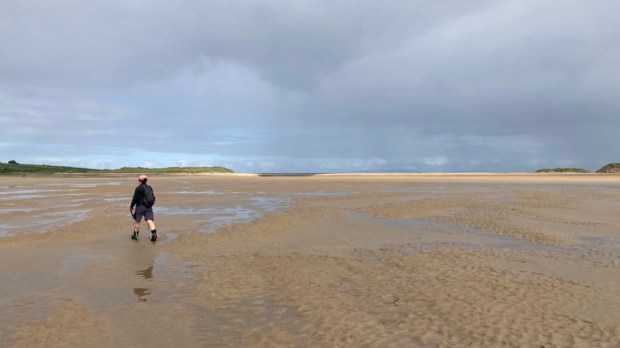
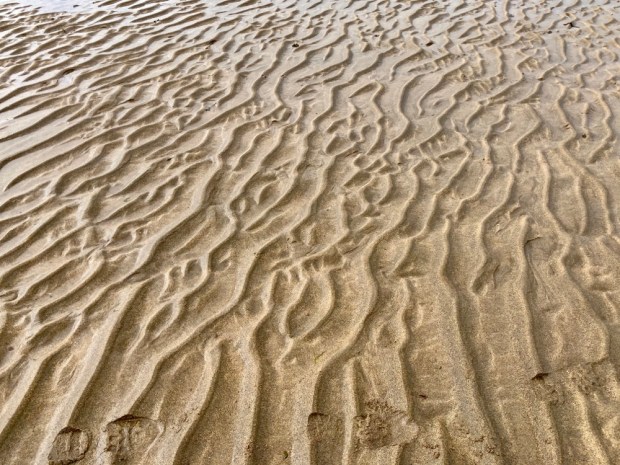
The sky was blue, rain and wind gone, the tide was retreating so off to cross the strand to Omey. Home to nearly 400 people before the famine and half that shortly after, it has only one permanent household now, our friends on the far western tip. The way across the wave rippled sands, open a few hours either side of low tide, is marked although locals seem to use other routes.

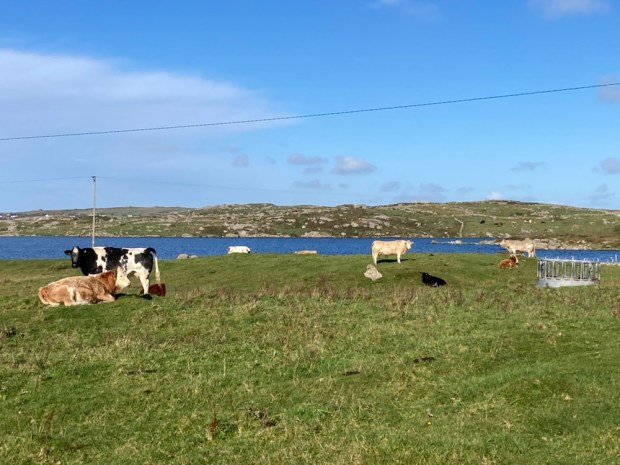
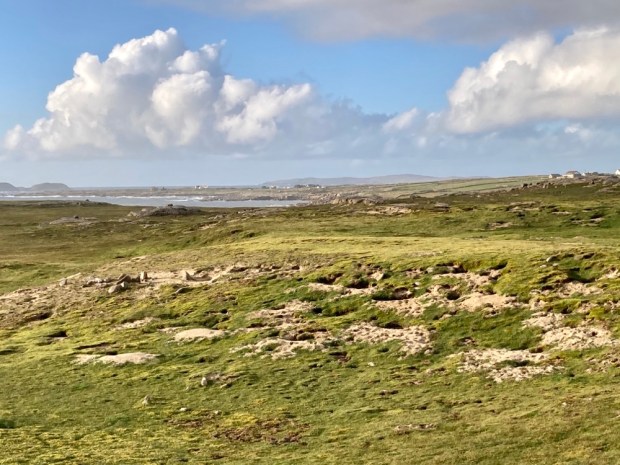
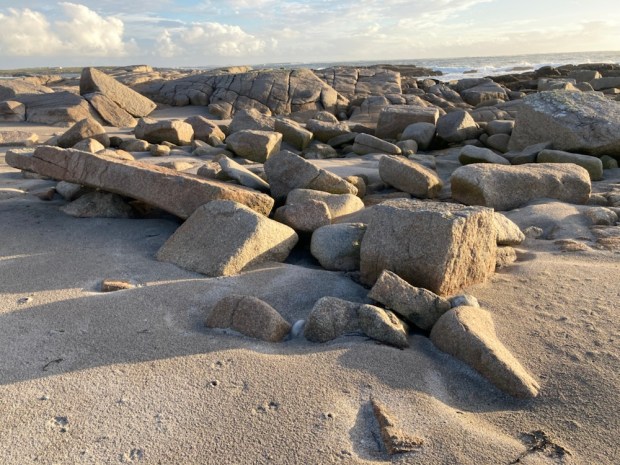
Once across the one narrow track leads up a rocky shore and passed small fields of grazing cattle on the eastern side. There are no sheep on the island, leaving it to the multitude of rabbits, whose burrows litter the sandy banks, to nibble the machair vegetation down to the nub. A large circular lake, Fahy Lough, takes up much of the centre of the island while the west is open and wild, with outcrops of granite looking like the works of Hepworth or Moore.

We took a leisurely stroll in the afternoon sun across the beach of Tra Rabhach to visit the holy well of St Feichin who came in the 6th century to found a monastic settlement and encountered fierce opposition from the locals, reputedly the very last pagans in Ireland. We carried on over the hillock high point of 26m adding our offering to the cairn and went on to gaze down at the excavated ruins of the medieval church, buried for centuries beneath the sands until dug out by the parish priest and locals in 1981. 100 years earlier, in 1881, a touring Daily Mail writer noted ” against the inhabited part of the island is what is now a mere sandbank. It is covered with sand, and not a soul dwells thereon. But there were people there once who clung in their stone cabins till the sand finally covered them; so that they might fairly be described as dwellers or burrowers therein”

The island struggled to feed its 400 inhabitants in the thin sandy soil although potatoes could do well as the same writer noted,” There us too much fresh air; for it blows so hard that people are afraid to disturb the thin covering of herbage……” if ye break the shkin of ‘um, your honour, the wind blows the sand away and leaves the pitaties bare. And, begorra, there are nights when the pitaties themselves ‘ud be blown away”.”

But we were blessed with being on Omey during a possibly very narrow window of time when the living is easy. There have been many changes to the island since the 1000 yr old shell middens were created here from the wastes of the society. And the changes wrought by the wastes of the present global society are likely to really stir up the sands of Omey. May St Feichin and his pagan god predecessors protect us.

NORTH MAYO: Woods and Moor, Bog and Shore

A couple of weeks after my last ramblings in the Nephin Wilderness Park we returned to Mayo, to explore the landscape to the north. We started by visiting Enniscoe House and its 3 km Woodland Loop. Actually we started in the Kaffa Coffee Cafe and museum in a converted outbuilding of the 18th century Georgian mansion before meandering around the walled ornamental and organic fruit and veg garden restored under the Great Gardens of Ireland Programme. It looked like Covid regulations or something had hit the upkeep of the gardens hard which was sad to see and we moved on to the woodland beyond the walls.

The gardens have been certified organic for over 25 years and other good things have been initiated here over decades. In 1993 10,000 sessile oaks, Ireland’s National Tree, were planted with help from the Tree Council ( and Mitsubishi) and the woods are part of a Neighbourwood Scheme to create local and community amenities for recreation in nature. They won the Forest Service Biodiversity award in 2013. It’s also an International Phenological Garden, one of 28 sites in Ireland that notes important dates in nature each year. Leafing, flowering, ripening and leaf fall etc- all important info- not least for the study of climate change.

We set off to follow the trail to Lough Conn and back around Fox Covert, Burnt Wood and other named avenues.

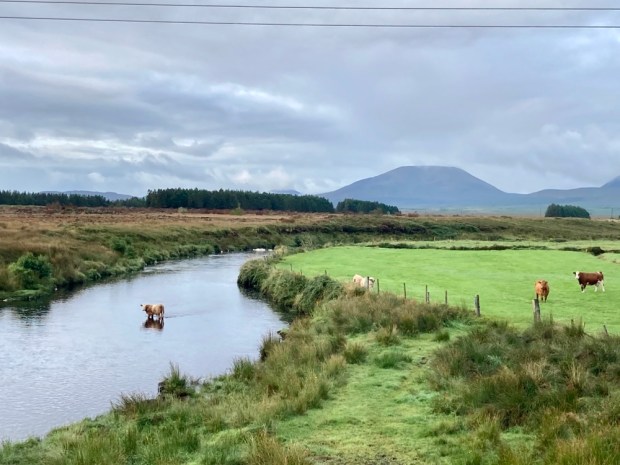
We parked up that night on the site of the old turf power station on Bellacorick bog, the flow country that stretches north from the Nephin mountains all the way to the coast.

Opened in 1963 it consumed 1000 tonnes of turf a day for 40 years finally being decommissioned in ’03 and demolished in ’07.

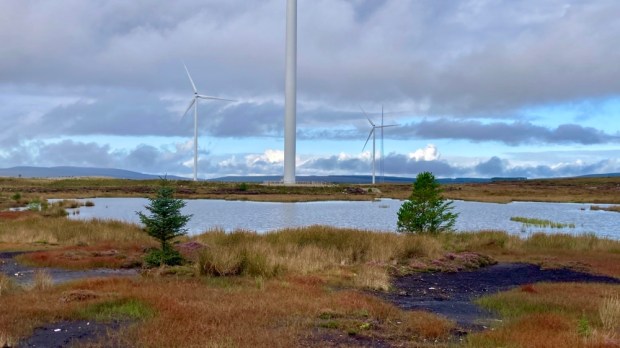
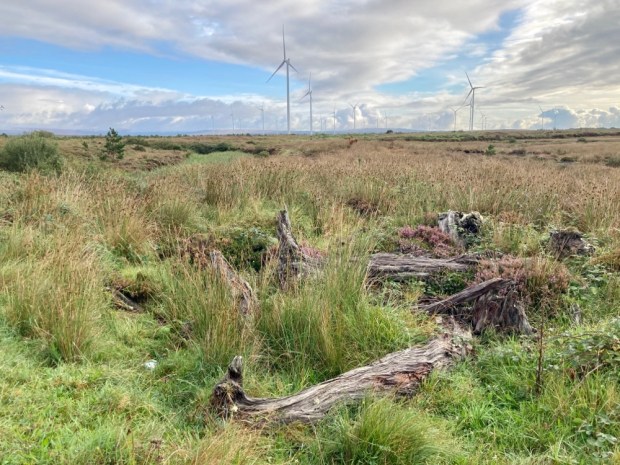
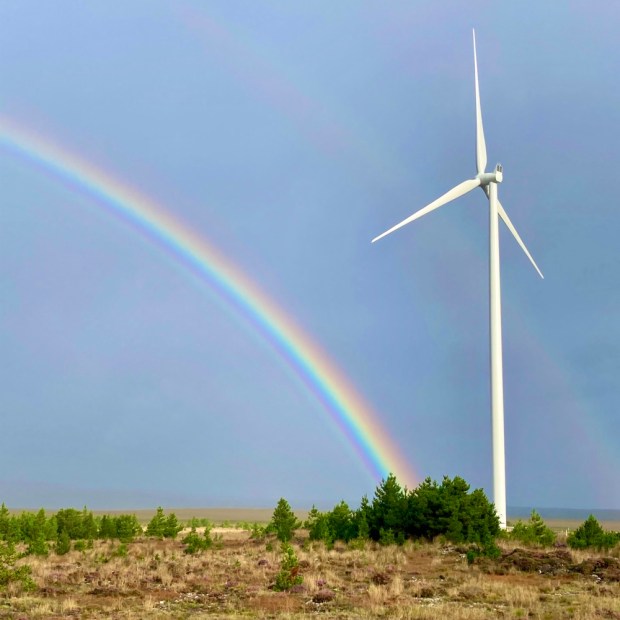
Ireland’s 1st commercial windfarm opened on the adjoining Bord na Mona land ( they have 10,000 hectares of bog) in ’92 with the 21 small turbines producing only 6.5MW. I say only because a new windfarm opened there in 2019 with the 29 big turbines producing 93MW!

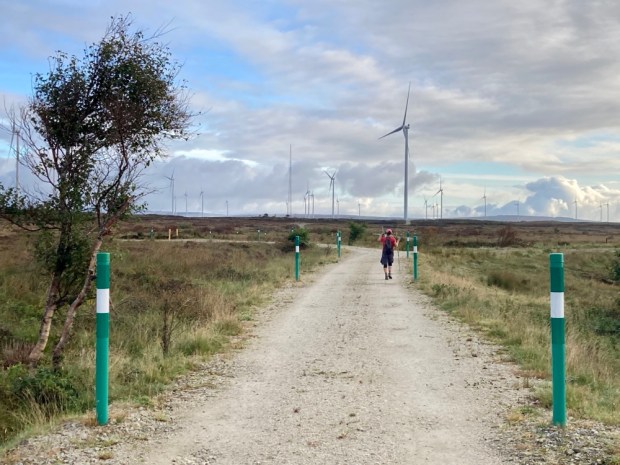
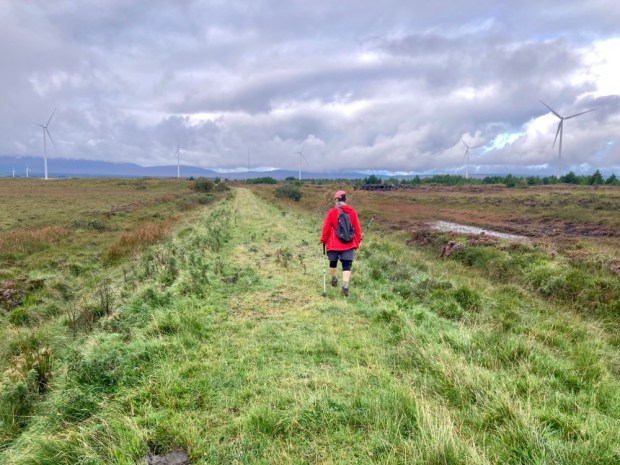
In the morning we crossed a new bridge over the Oweninny and joined the 13km looped walk around the site.

A joint venture between Bord na Mona and the ESB, the renewable energy plant is a major part of BnM’s “Brown to Green” rebranding. Although I think much of the cut away bog there is beyond restitution into a working carbon sink eco system, it is heartening to see its rapid transformation into a more ” natural” state.

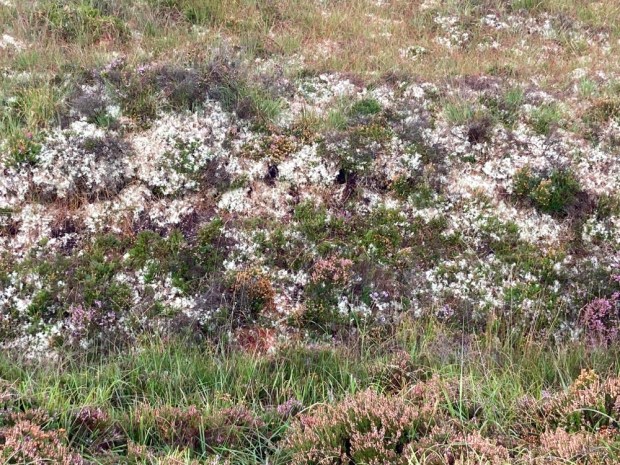
Cows and sheep grazing, insects and birds on the ponds and wild growth of heathers, grasses, lichens and mosses all testified to recovery. The paths followed the miles of old railway track, laid down to facilitate the removal of 1000 tonnes of ground a day. 10km of new roads have now been made for phase 2, complete next year and doubling the number of turbines and producing an additional 83MW of clean energy.

A nice flat easy hike across an amazing landscape under a very big sky. Unfortunately we discovered we shouldn’t have been on it at all when we tried to go to the visitor centre and discovered it closed due to construction of phase 2. A further, phase 3, is now in the planning stages- to bring another 50 MW on stream further to the east.

From a scene of a landscape heritage destroyed by exploitation of a natural resource to a scene of cultural and historical heritage destroyed for the same reason.

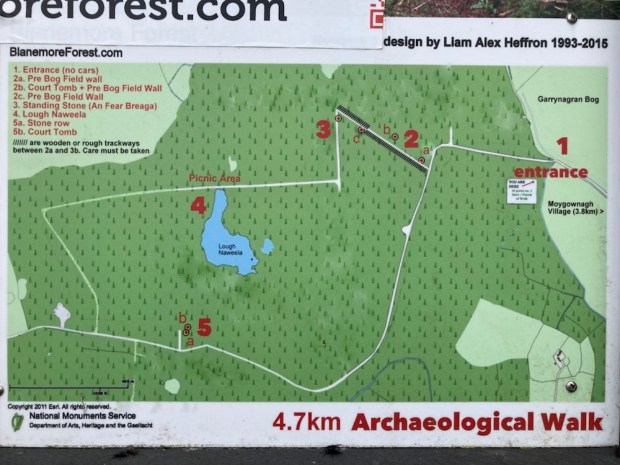
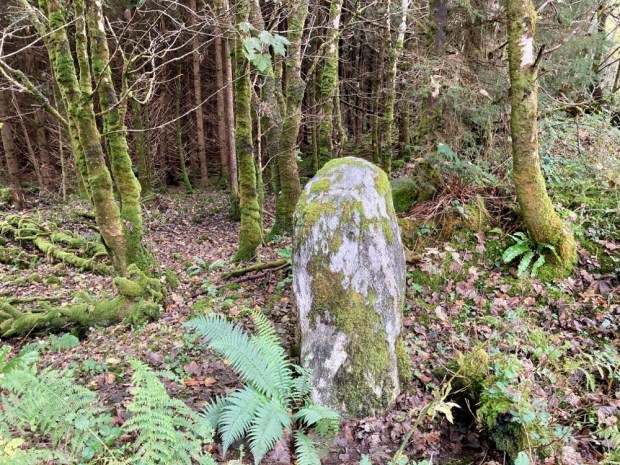
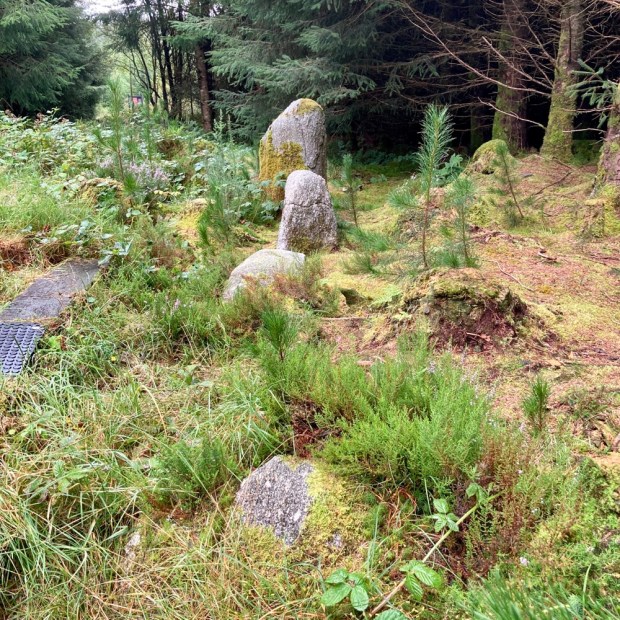
Across the bog a few km, near the proposed site of phase 3, is Blanemore Forest and its 4.7 km loop. A spruce, pine and larch plantation was thoughtlessly put down on top of a wealth of Neolithic and Bronze Age monuments.

Although surveyed in the early 1960’s, when the state forestry board first bought and planted the land, the pre-bog boundary walls, field systems, court- tombs, stone row and standing stone here were “lost” for decades before being brought to light in ‘ 93 by a couple of archaeology students. Since then the local community has done much to preserve and present these remnants of Ireland’s first farmers over 5000 years ago.

For 500 years from 3,800BC Neolithic farmers cleared forest and created fields for grazing cattle before a change to a wetter climate and the growth of bog coupled with soil erosion led to the disappearance of the settlement here. The nearby Ceide Fields complex spans 1000’s of acres and is the largest Neolithic site in the world.

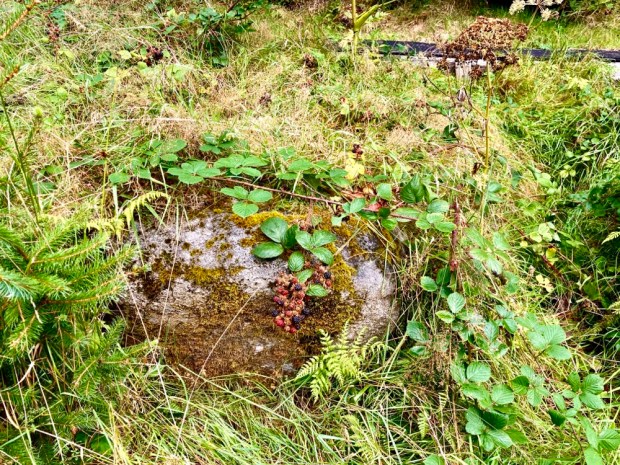
The trail led us on forest track and rubber mat boardwalks past information boards at each of the sites. Unfortunately much has been swallowed by the bog and forest and the repeated planting and harvesting operations have caused a lot of damage. In fact the capstone of the largest court tomb was deliberately knocked off by digger in the 60’s to see what lay under “the large flag” of the ” giants grave”. Thankfully all archaeology within state forests is now protected.

The site also contains a couple of impressive Bronze Age monuments from when farming returned about 600 years later as things warmed up again temporarily.

A large standing stone and a stone alignment atop a gravel ridge had a very different prospect before the trees surrounded them. It is conjectured that the stone row is in alignment with Nephin on the winter Soltice when the sun would appear to “roll” down its shoulder, similar to an event we have witnessed on Croagh Patrick.

After a few hundred years the wet returned, the farmers retreated east to the limestone, and the bog reclaimed the area again. Who knows what might be revealed later in this climate change?

It was a big weekend in Mayo and particularly in our next destination, Ballycastle. Not only was the Sam Maguire cup within reach again in Mayo’s 10th Gaelic football final since their last win after a 70 year wait but the Red Bull cliff diving championship was also happening from the dramatic coast there, creating a lot of razzmatazz.

We watched the game in a fairly raucous pub with the excitement growing for hours before the throw in. Sad to say it didn’t go well and we slid away to the camper after the final whistle unable to share the agony of the true Mayo people.

Sunday morning we walked down through town to the trail head of the Sralagagh 9.5km Loop and headed off a small road that became a boreen that became a track. Abandoned gravel pits, rough overgrown fields, some mattress dumping and views of farms smothered by forestry monoculture doesn’t sound great but our surroundings had a melancholy charm enhanced by the frequent gurgling of multiple watercourses.

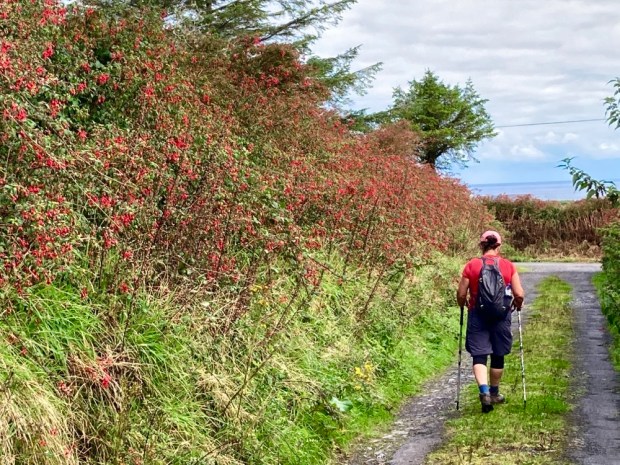
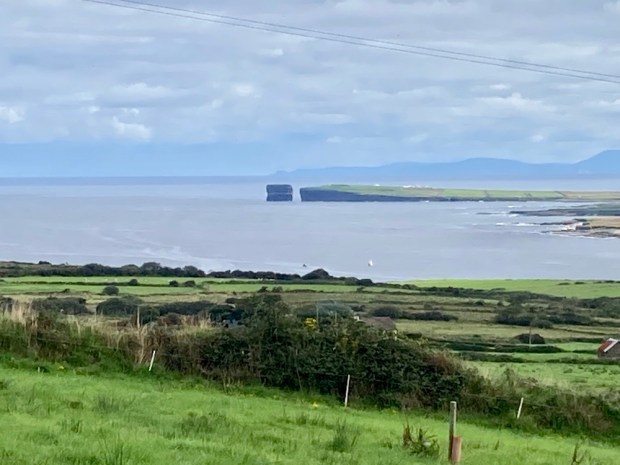
We reached old turf banks and at the highest point we turned down a bog track that stretched far into the distance. This deserted place must have been a busy hive of industry for generations of families producing fuel. From here we could look back to a sunlit Ballycastle and, further down the fuchsia track, the towering sea stack off Downpatrick Head where the diving was taking place.

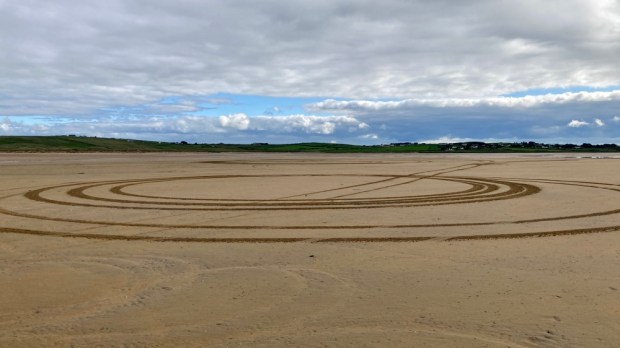
A coffee at the beach watching kayakers setting off for a fisheye view of the cliff divers, and we drove east over the headland for our last walking environment- the shore. The tide was out on Lacken Bay exposing miles of golden sands. There is a centuries old tradition of horse racing on the strand and every May thoroughbreds from around the country compete over a 5 furlong looped track surrounded by spectators who also engage in a variety of family fun sporting activities. Rather than sleek steeds racing around the sand we had to endure a boy racer doing doughnuts.

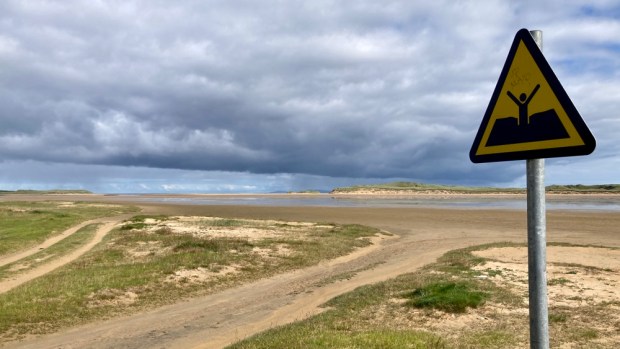
This is the scene of the French landing in 1798, the last act in that ill fated rebellion, and the troops marched across these sands to Killala and eventual defeat at Ballinamuck when the French were allowed to surrender whilst the Irish were massacred. We walked out into wide airy space experiencing a similar openness to the flat bog land horizons, tip toeing over the rivulets of retreating waters and admiring the big skies and small sandy details.

A lovely series of walks, but a slight sense of sadness crept in when contemplating the loss of life in the bloody rebellion and the memorial to fishing disaster, the migratory birds lining up to leave, signifying the end of summer and ,of course, the sad defeat of the Mayo hurlers.

WILD NEPHIN : Into the Heart of Mayo

Sustained sunshine and a dry Indian summer provided too good an opportunity to miss. After a few ” mild” walks I hankered after some “wild”. And so thoughts turned to Nephin and what is usually uncomfortably wet and soggy terrain. I’d twice crossed the boggy wastelands of Ballycroy and the Bangor Trail and relished the empty openness of that Big Country. I had also been inspired by Sean Lysaght’s book on Wild Nephin and had pored over the excellent 1:25,000 scale map of the area put together by Barry Dalby of EastWest Mapping.

So a maiden voyage in the repaired and whine and grind free campervan got me to a lovely parkup on the shores of Lough Cullin with the setting sun rolling down the shoulder of my goal for the morning.

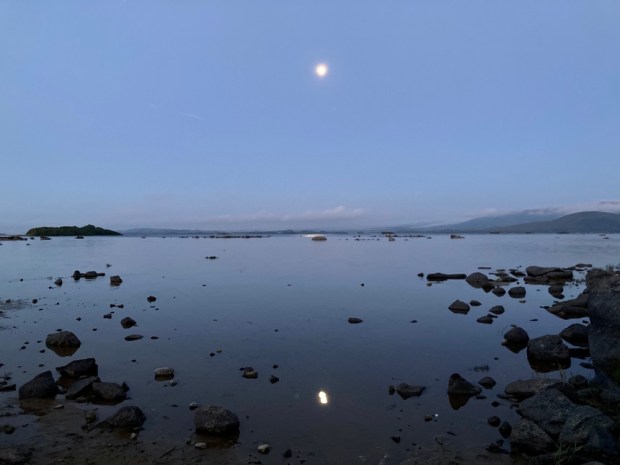
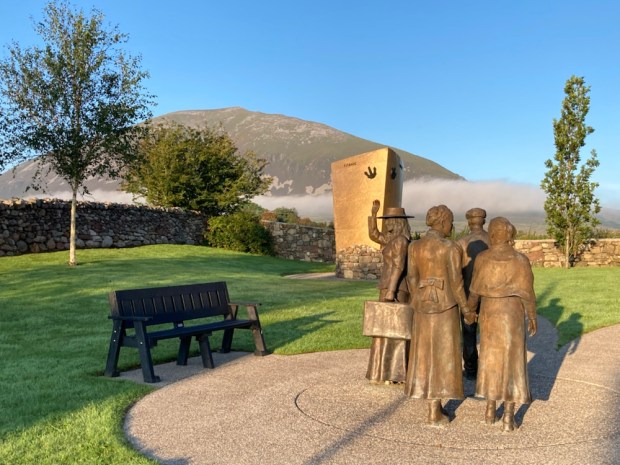
A big full moon hanging over the lake when I awoke added to the call of the wild as I drove off, stopping on route at the poignant Titanic memorial in the village of Lahardaun. 14 souls from the area lost their lives in the disaster and others miraculously survived. Anne McGowan, a local, survived and lived on to reach 95 years finally dying in 1990. Every year here at 2.20 on April 15 th the church bell tolls and a ceremony is held in their memory.

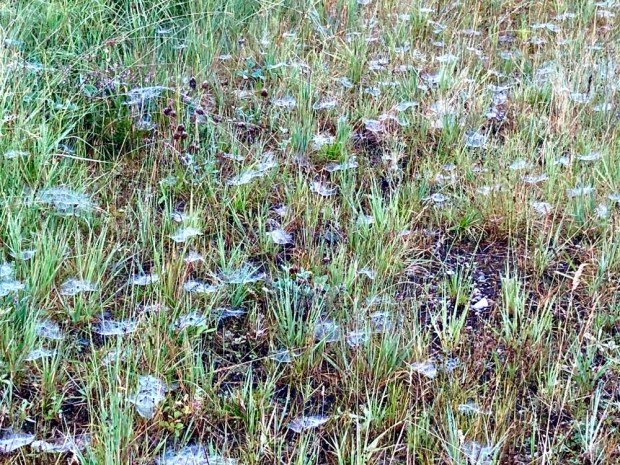
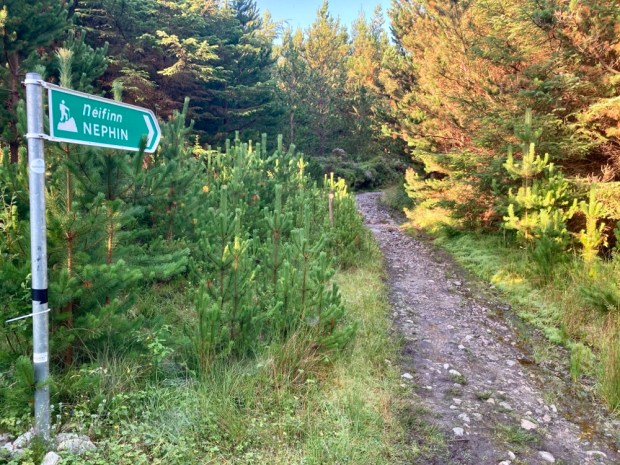
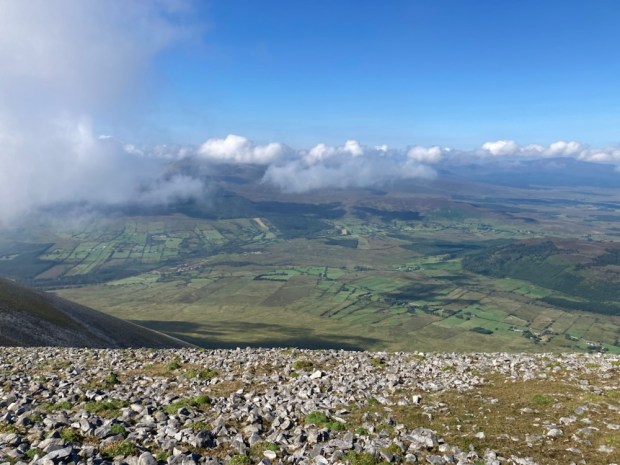
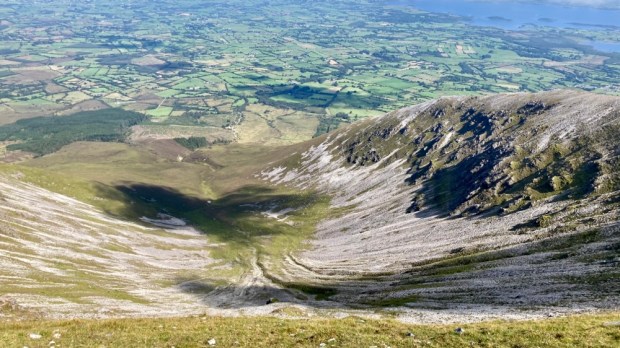
Nephin is the highest standalone mountain in Ireland and second highest point in Connacht, second only to Mweelrea. From its summit at 806 m there are outstanding views over the vast tracts of moorland, forest, blanket bog, farmland and the mountains of Donegal, Sligo, Galway, even Clare on a clear day. And of course Croagh Patrick and the Nephin Beg range. It’s a mountain I’d been attracted to for decades with its enticing and mystical pyramidical formation, but been unsure the best way to tackle it. Problem solved by local community groups with help from Coillte and the Co Council who created a marked trail on the north face with its fantastic Corrie. Known as “Finn Mc Cool’s Armchair” the Corrie does not contain a lake but is certainly dramatic. Leaving the camper in a recently created trail head car park I started off up a forest track with the early morning dew still glowing on the spider’s webs and a small blanket of cloud still draped over the summit.

An old Mass Path lead me on to the edge of the forest and out on the heather clad open mountain. The path got muddy and eroded in places, the downside of creating a route and car park and increasing the amount of footfall. Moving on up and starting to slow as the incline increased I was bemused to be overtaken by a young one running up the, to me , daunting climb stretching ahead. He turned out to be an Italian, and bizarrely a mad Mayo football fan, over for the final, as I discovered when he passed me again on his way down.

The views opened up as I rose up through the heather and scrambled on the loose rocks. I looked over to the west at the lower rounded hill of Tristia, where I planned to visit a holy well.

I moved over towards the edge of the steep drop into the corrie, thrilled by the views, and clambered on up towards the now visible trig point.

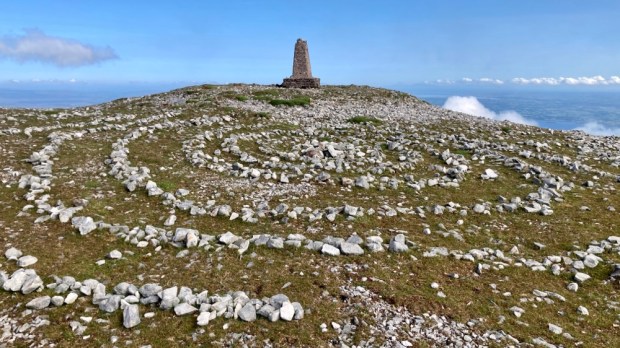
At the summit I found a spiral art work had been created below the trig point and a wasp nest was resident in it. I discovered this while resting against it congratulating myself on a successful ascent, just before receiving a couple of stings. A mysterious figure emerged from the cloud to the west.

Eamon was on a mission from Scotland to climb all the Irish peaks over 600m, known as the Vandeleur-Lynams, of which there are 273. He was doing this without transport, hitching to the trailheads. He was also doing it without paying for accommodation instead hoping to meet friendly folk to put him up or camping out. But just to ensure that his life did not become too easy and diminish the challenge he was doing it without a tent, just sleeping bag and mat!

And he was about my age. Not one for the Saga coach tour then- and way beyond the definition of Active Retirement.

With so many peaks to bag he couldn’t stay too long and disappeared back into the cloud leaving me to carry on around the rim of the corrie and start back down on the opposite slope to complete a horseshoe climb. I could make out tiny figures scaling the shoulder across the gulf of Finn’s armchair and I disturbed a resting sheep who hobbled off with a broken leg. How long to survive?

Jumbled rocks gave way to rough grass and heather on the steep slope down towards the ravine caused by the scouring waters of the stream that becomes Castlehill river.

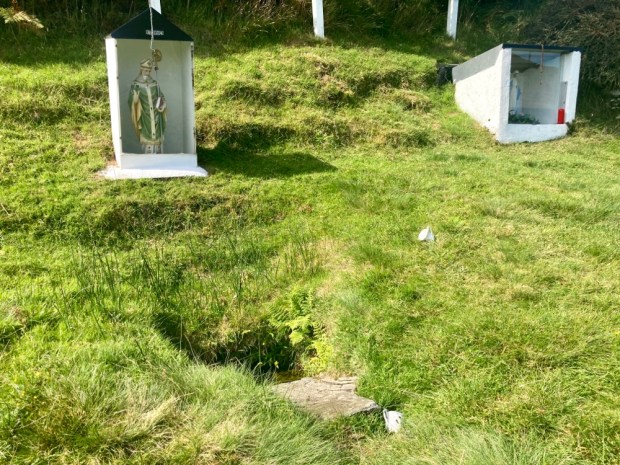
After the exertion of the climb I took the restorative waters at the holy well on the slope of Tristia, a few km away. Originally a site of pre Christian celebration at Lughnasa it was later dedicated to St Patrick after he was said to have called here himself for a drink. In fact there are two wells, one for Patrick and the other, in a gesture of sexual equality, Bridget. The waters are reputed to cure lost eyesight and to bring about reconciliation to troubled families.

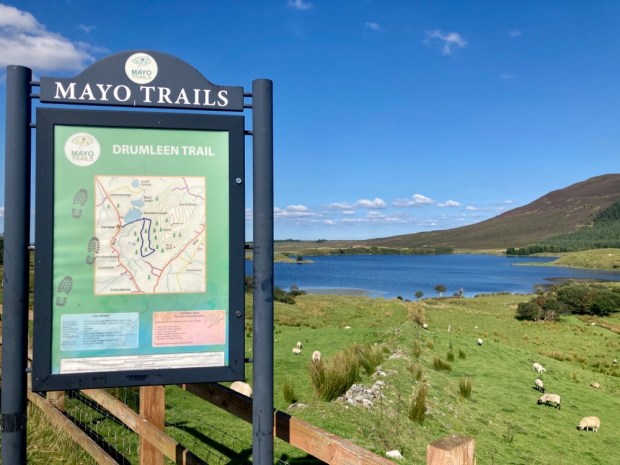
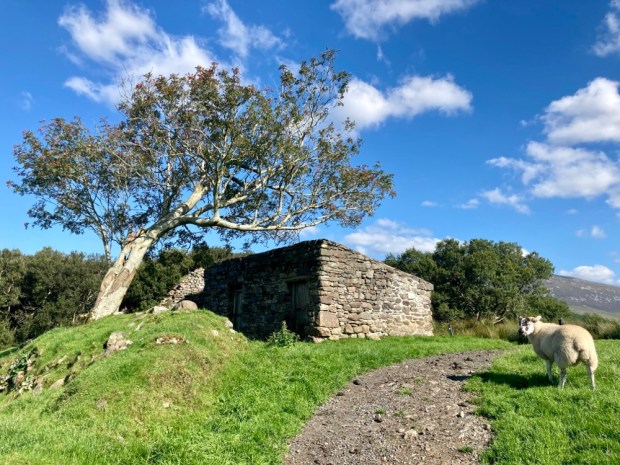
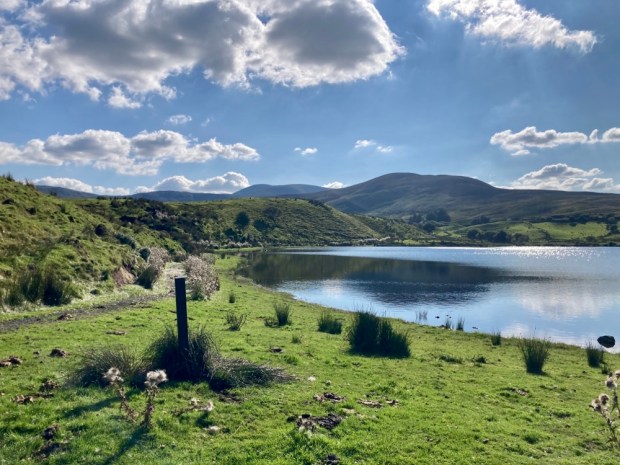
With a fair bit of fine day left I moved around to the opposite side of the hill to Drumleen Lough for a refreshing swim. An easy 3km loop walk encircles the lake thanks to the efforts of local community and willingness of landowners. A laid gravel track and boardwalks take one past an old homestead and around the lake held between the glacial drumlins with a thoughtfully placed picnic table and benches where I stripped off and cooled myself in the placid waters.

With the evening drawing in it was time to head deeper into the Nephin Wilderness and find a parkup. Turning off the Bangor road toward Keenagh with the vast expanse of the bog stretching away to the north I visited Bunaveela Lough before finding a beautiful spot in a little lay-by overlooking the forest and folded landscape above the Goulaun river.

Another place of curative waters was my first destination in the morning – deep into the bowels of Glen Augh under the watchful eye of Mount Eagle. Driving up a forestry track as far as possible, I followed on foot the post markers leading along boggy firebreaks to Jamesie’s Well. The old lodge pole pines were festooned with lichen- a testament to the pure air. Unfortunately the rhododendron that plagues so much of the area, and could cause problems for the hands off rewilding plans for the park, had managed to get a purchase even here.

There were actually 3 spring wells spurting the purist of waters from under the trees. Said to be effective in the treatment of kidney stones, when Jamesie McIntyre passed a stone after drinking the waters, they will not work for those attempting to sell the aqua viva.

I supped deep from each in turn before following the gurgling sounds of the infant Srahrevagh River up to Lough Doo in the saddle between Mt Eagle and Top of Lena peaks. Blazing sun, cooling waters, empty, isolated and open to enormous vistas – perfect for a bit of “wild swimming”.

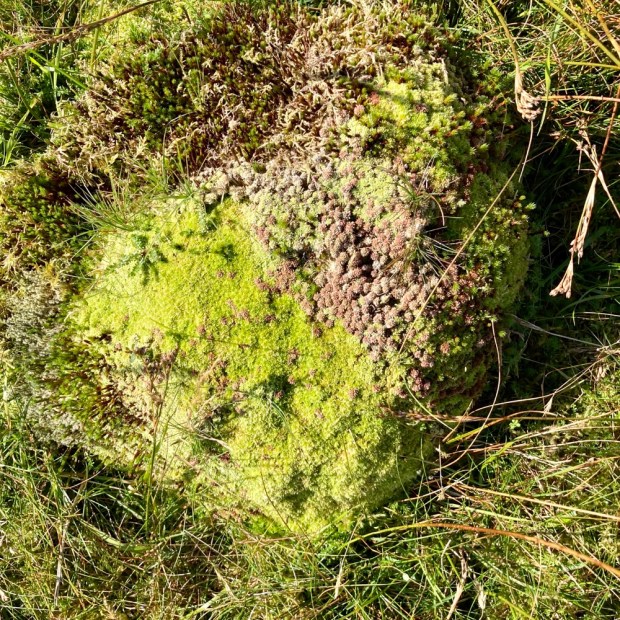
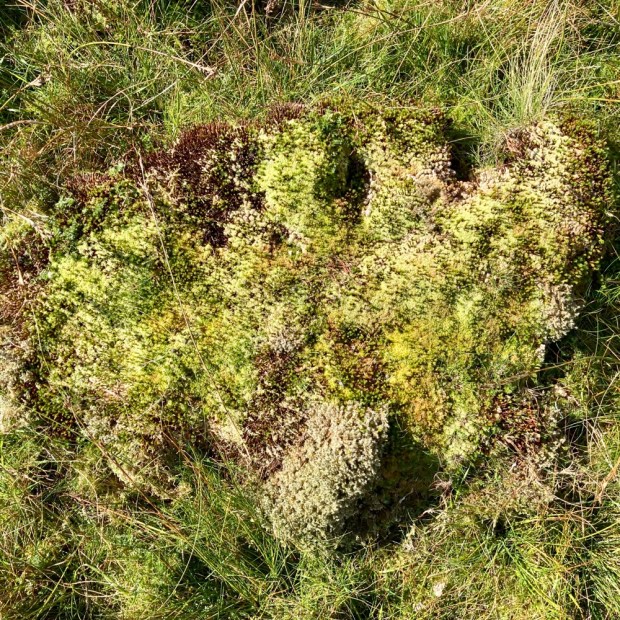
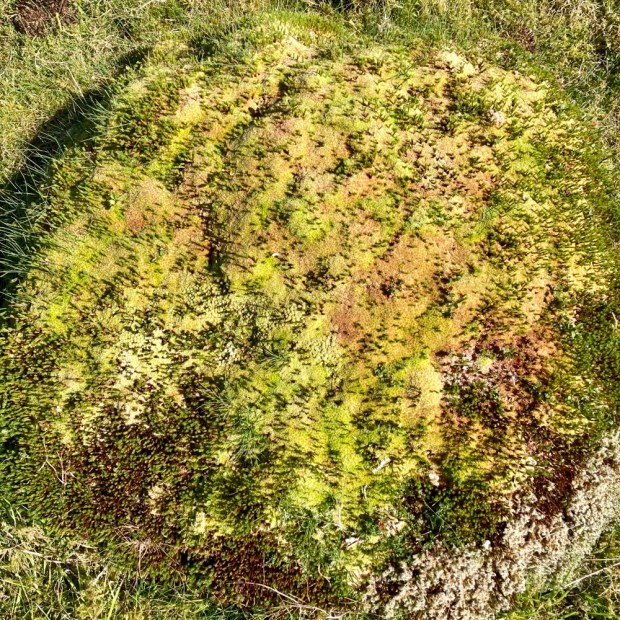
The views only improved as I climbed on up to the summit, admiring the micro worlds held within the clumps of mosses and the macro world of the vastness of earth under the heavens.

Back down in the river valley I went in search of some waterfalls known as The Lep or leap. Hidden in a deep and steep ravine, sheltered by ancient gnarled oaks whose precarious positions have protected them from browsing sheep and men with saws, the falls are heard way before they are found. Even now, after weeks of dry weather, the cascades were impressive. To be here in a winters flood would be awesome.

Inspired by my view east from Mt Eagle of ancient trackways and settlements at the far end of Glen Lara and the booleys of The Pullidge I set out from Shrahmore Lodge towards the mighty Burren Corrough. This land, once so full of hard lives, was now deserted but still harboured remnants. Potato ridges, ditches and banks, the deep impressions of discarded turf banks, stone walls of cottage and booley huts.

There was a melancholy to the place and I had planned another wild swim in Derrybrock Lough but on reaching it somehow my desire for immersion faltered. Perhaps something to do with the fairies the area is associated with , a place children were warned to avoid. The lakes Irish name , Doire Bhroc ( Badger Wood), is another cause for sadness- the despoliation of the landscape has seen both badger and wood eradicated. In the end though the blue sky and shining sun banished the banshees and the swim was a blessing.

Invigorated by the swim I carried on over the tussocks of rush and grasses into a vision of the American Badlands or the Mongolian steppes. The vastness was a little daunting, or maybe it was the fairies, and I decided I’d better retreat before the light did. From the furthest flung roofed building, adrift in the featureless void, I struggled to follow the ghost of a cart track back to the van. In another few decades this could all be a rhododendron forest, so many of them were progressing across the land, triffid like.

I drove south then west to cross the Black River and around the top of Lough Freeagh to continue down a forestry track into Glennamong. Parking up next to the bridge I was visited by a logging lorry just before dark and another late at night and again in the misty (and midgy) morning. Their timber cargo was going to Enniskillen in the north which seemed absurdly far away but the driver told me they go all over the country.

A still and humid morning had the midges out in swarms so as soon as the mist had risen enough for me to see my route up towards Ben Gorm I was off, first through a clearing in the plantation, then up over the sheep wrecked mountainside of sparse vegetation, hags of turf and swampy hollows. The erosion had revealed a lot of prehistoric tree stumps, relics of another age and another climate. And there were sundews.

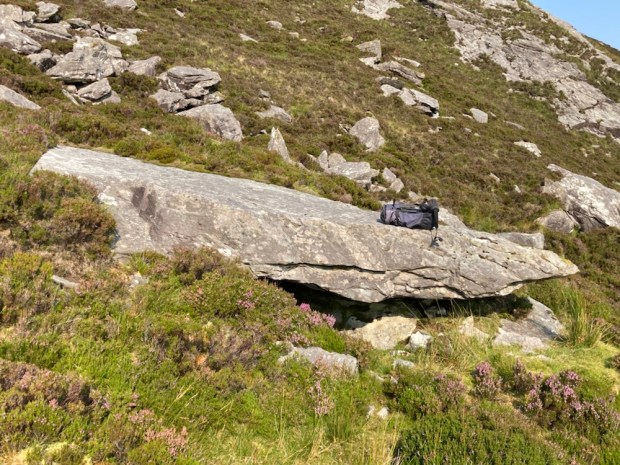
I’d read about a discovery I was hopeful to find high up in the moraine of jumbled boulders and rocks that have detached themselves from the side of Ben Gorm and lie strewn around dangerously awaiting careless ankles. A local man had followed a fox into a narrow fissure in the rocks and found a 20 m corridor and later chambers containing human bones. Subsequent examination determined that the chambers had been used for ritual burial for several centuries from over 5000 years ago. My first effort was woefully inadequate as far as Neolithic burial chambers go but I spied what must be it, a huge slab, high up the cliff, guarding a wide opening.
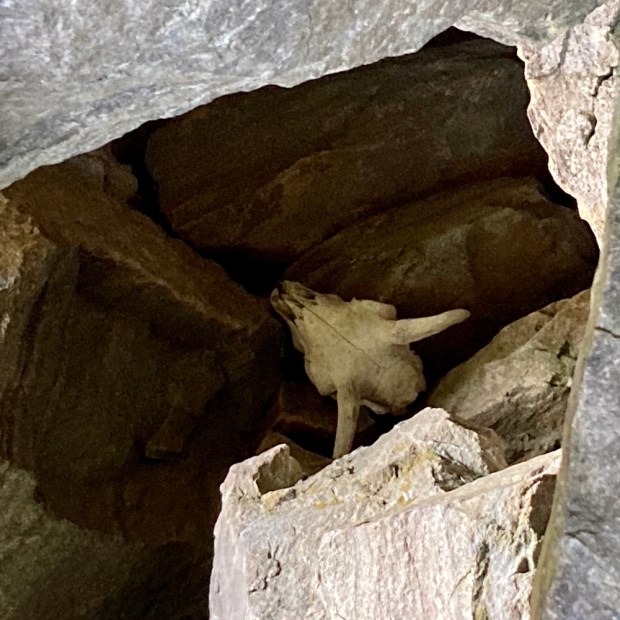
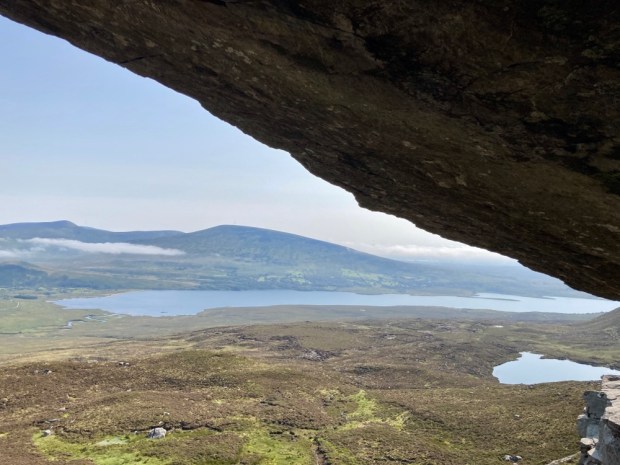
Unfortunately a difficult clamber up there revealed only the skull of a sheep, but the view was good.

I had got myself into a position where the only way was up, and it was a sweaty scramble clinging to rocks and heather before I finally breached the ridge and hauled myself to the reward.

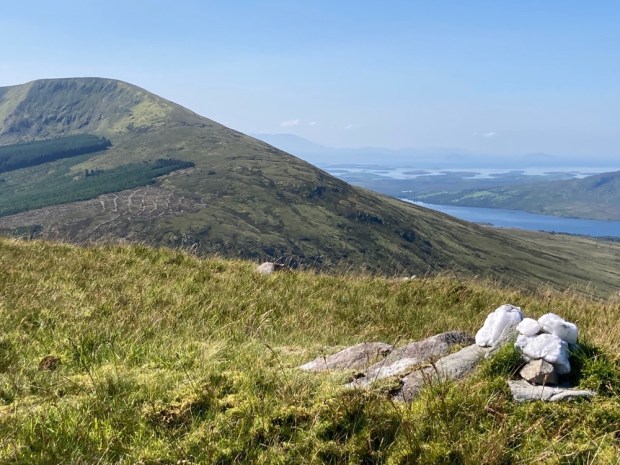
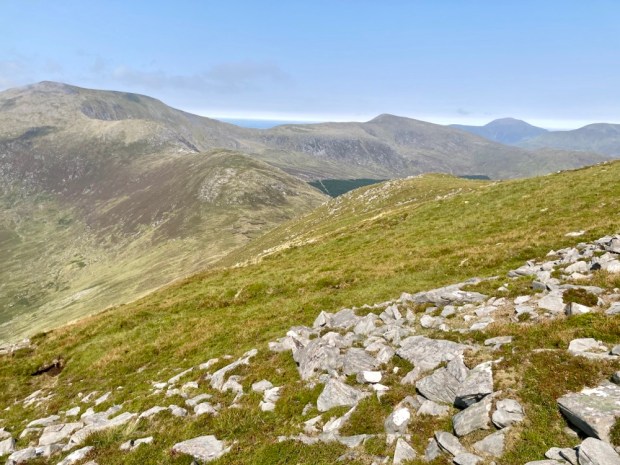
Beautiful weather beautiful views. The pinnacle of Croagh Patrick rose above a sea of islands in Clew Bay to the south and the wilderness of the Nephin range faded into the east. To the west were the mountains and cliffs of Achill while down to the east the camper, and a long journey home awaited.

My thirst for the wild had been sated but my attachment to this landscape had only grown. Laid out in such a grand scale it displays its history in geological and human scale openly and I can only wonder what comes next.

CURRAGHMORE AND CHARLEVILLE CASTLE ESTATES: A Walk on the Mild Side

Finally getting my fingers to the keyboard to write about a couple of micro adventures- weeks separated in time but sharing many similarities.
First up was a little side trip from our visit to this years Covid constricted Sproai festival, Waterford city’s annual street performance jamboree. We drove west up the Suir valley to the super wide streets of Portlaw, the 19th century model town created by mill owning Quakers. From there we took the oddly named Scrouty road to the car park entrance to Tower Hill woods to begin a 4.5km loop.

There are 100’s of acres of glorious mixed oak woodland hereabouts, mostly owned by the Curraghmore estate, and although this particular patch had been described as representing one of the larger remaining tracts of oak woods in the country, it seemed mostly coniferous to us. We passed an old stone boundary wall which obviously predates the supposed “ancient woodland” and reached an open area with stunning views to the Comeragh mountains.

We emerged from the shade of the trees into a fine sunny day under blue skies and followed the track across the shoulder of the hill till reaching a road at Hussain gap where one of the Marquis of Waterford had his faithful war horse buried. The gravestone of Jock the Charger had been removed to the house for safekeeping after some inaccurate tree felling had broken it.

Some of the 12 miles of estate boundary walls we passed along the road were being restored with traditional lime mortar aided by state and European GLAS grant aid- an ironic twist on the fact they were originally constructed as famine ” relief” for a penny a day and food.

Shortly turning off the road and into the forest again we climbed on a path past seeding willow herb and spindly holly towards the De la Poer tower.

Sitting atop the 230m hill the tower was built in 1785 by the 1st Marquis of Waterford in memory of his eldest son who died aged 13 in a riding accident jumping his horse over the courtyard railings. A solid construction with walls up to 7 ft thick and a 92 step spiral staircase that leads up to a view over 5 counties.

We sat at the top looking down at our next destination, the house and grounds of Curraghmore. The 2500 acres of the estate make up the largest private Demesne in Ireland and are home to a remarkable tree collection including the tallest tree in Ireland, a Sitka Spruce planted in 1830’s and about 180ft tall.

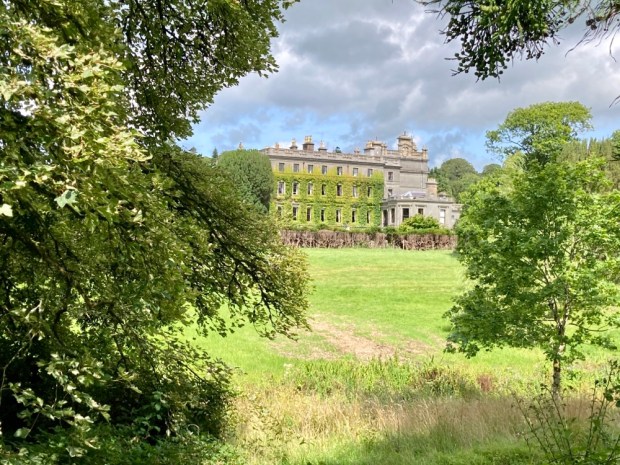
The De la Poers have been here since the 12th c and the original Norman keep with its 12ft thick walls has been encased by a Victorian mansion. The fine back courtyard, where we took our luncheon in the cafe, is overlooked by St Huberts Stag sporting a crucifix between the antlers.

Traditionally hosting polo matches in summer and shooting parties in winter the glorious grounds of lawn, lake, woodland, borders, parterre and formal gardens were the unlikely setting for the All Together Now music festival in 2018 and 19 and are signed up for 3 more. 15,000 people camped and danced and partied in these refined surroundings over long weekends with no damage done- but leaving tell tale traces dotted incongruously about like objects implanted from a future reality.
I wondered what Lady Catherine, the Countess of Tyrone, would have made of it. Being a creative herself I feel she would approve. In 1754 she took 261 days to construct the Shell House with “her proper” hands and instructed captains leaving Waterford harbour for exotic destinations to return with shells with which to decorate its interior- unfortunately hidden from our view.
We had to return to Sproai and so left without fully exploring the planting Lady Catherine was instrumental in. Exotic trees as well as shells found their way to Curraghmore. Chinese Fir, Japanese Umbrella Pine, Lebanese Cedar, Western Hemlock, Mexican White Pine, Caucasian Fir, Chinese Plum Yew, Serbian Spruce, Bhutan Pine, Japanese Red Cedar, Chilean Southern Beech, Cappadocian Maple- it’s an impressive list, and an impressive landscape. We will return.

Another historic estate that hosts a music festival, and has done annually for 13 years, is Charleville, just outside Tullamore, Co Offaly. It also has a remarkable collection of trees as we discovered on our latest ” train and trail trip”.
Alighting the Dublin bound train in Tullamore it was a short walk to the entrance to Charleville Forest where we were immediately gifted with the presence of The King Oak.

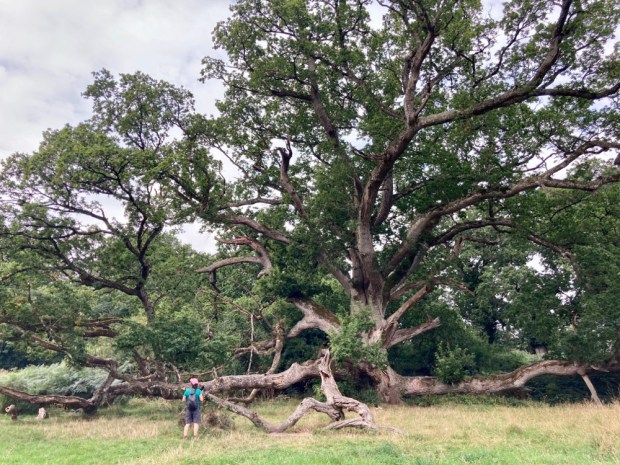
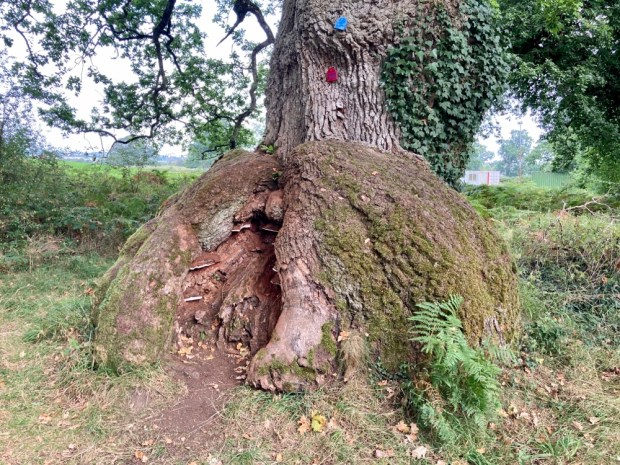
This approx 700yr old venerable being is one of many in the ancient forest that has survived here after 1700 acres were given to the Moore family by Queen Elizebeth 1. Voted third in the European Tree of the Year in 2013 the oak has a girth of 26ft and the lower branches spread 150ft. It was struck by lightening in 1963 and survived, split but still strong.

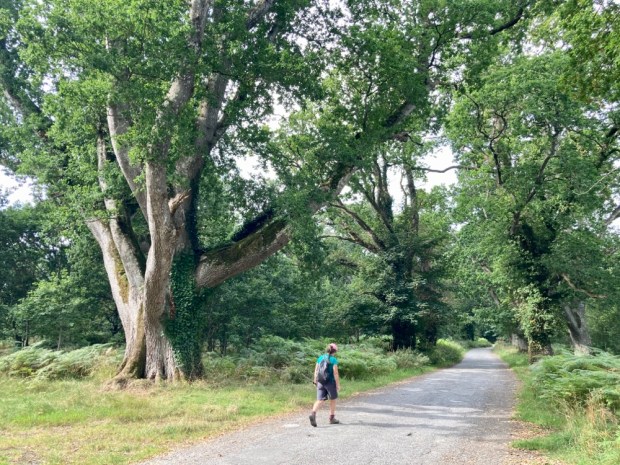
The forest here has been considered magical for centuries and was sacred to the druids. As we continued up the lane towards the castle we were in awe of the majestic towering oaks that formed the top canopy of a multi story woodland.

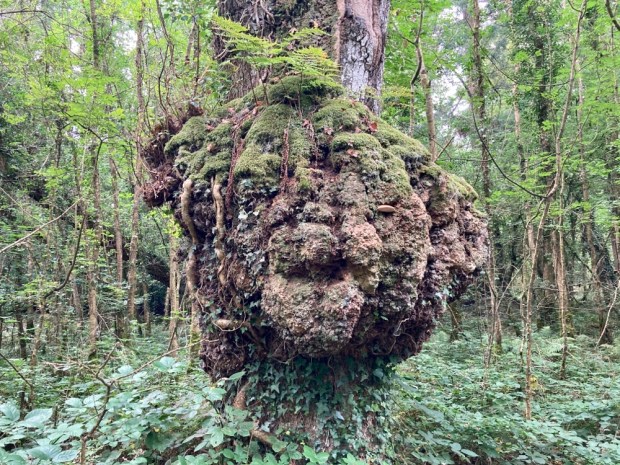
The arboreal senior citizens sported some huge burrs that masked hidden wonders for a wood turner.

At the end of the drive we passed through an entrance to the castle itself, built over 14 years from 1798, the year of the crushed rebellion, and designed as a neo gothic statement of power. The round towers were supposedly positioned on the crossing point of key lines and create a powerful energy in the tower rooms. Reported to be full of hauntings the castle hosts overnight paranormal investigations.

Uninhabited from 1912 it fell in disrepair but was saved from ruin by the work of volunteers and supporters from 1970’s and the creation in 1994 of the Charleville Castle Heritage Trust. In 2006 the first small scale Castle Palooza festival was held, raising money for the continuing restoration, increasing in size to 5000 over the coming years.

Skirting the castle we followed the track over a stream and past a wide assortment of mature trees- mighty chestnut, ash and sycamore. There is a planting of yew here in the shape of the union flag, impossible to determine from the ground. We continued our walk down through an avenue of limes from the farmyard and out onto open pasture.

Out through a gate onto the Lynally road and we carried on northwards through farmland that although productive seemed somewhat of a mishmash with abandoned old cottages and sheds alongside brutish new development.

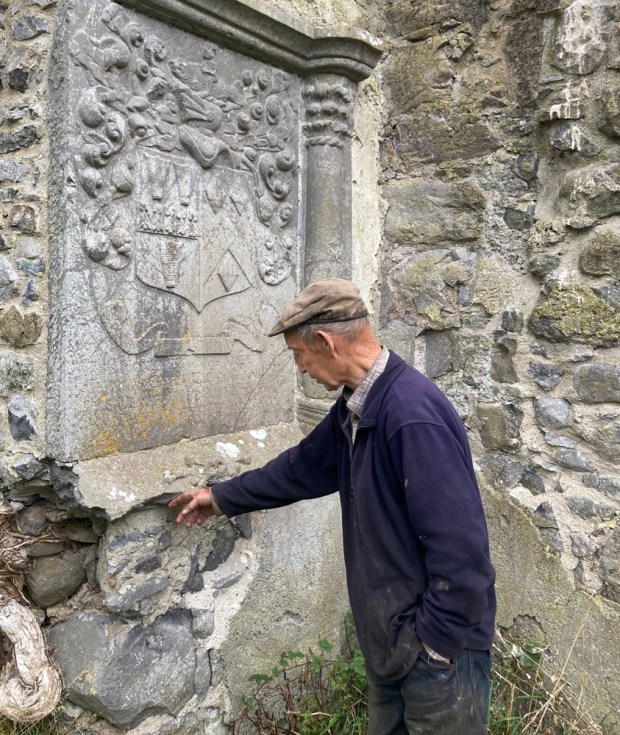
This area was part of a major ecclesiastical centre for centuries when the monastic site founded by St Colman Elo in 590 grew into an important place of faith and learning. The ancient oak woods of Charleville were part of the settlement back in the day and we stopped for a picnic lunch at the atmospheric ruins, kindly shown around by the knowledgeable owner of the land, Mr Mooney.

An unofficial caretaker of this OPW site he had protected it from much official vandalism and seen a partial improvement with the removal of damaging ivy by the county council a few years ago. When I asked him if his family had been here for a long time he replied, No they’d only come in 1668 from another part of the county. “A blow in so”, I replied, ” have the locals accepted you yet?”

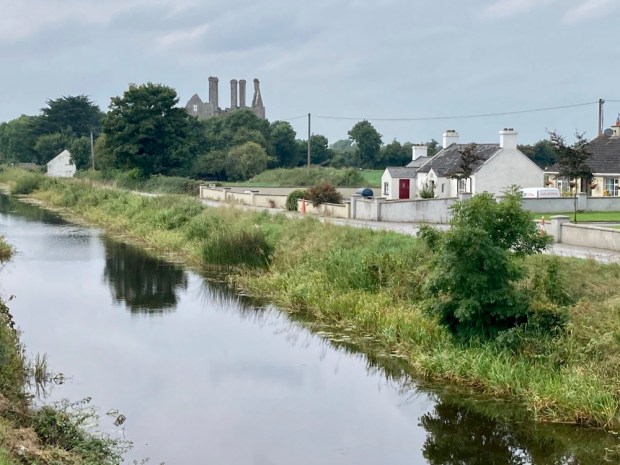
A mine of historical info and a welcoming custodian, he left us to tend to his farm and we carried on up the road another couple of km to join the Grand Canal at Ballycowan castle whose grouping of its 6 chimneys led it to be known locally as the 3-2-1.

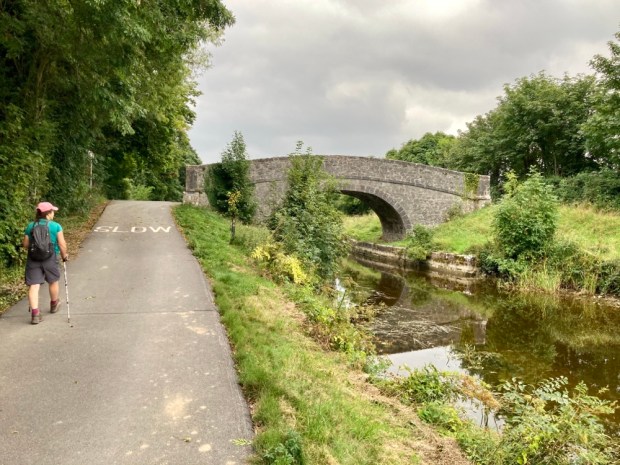
We’d walked the Grand canal from Dublin to the Shannon about 15 years ago and had mixed feelings about the Greenway “improvements” that saw the grassy tow path converted into a tarmac cycle and walkway. It was still pleasant to meander along beside the reedy water towards Tullamore but we crossed over from the official surfaced route to the south bank over Srah bridge to take our chances on the rougher grass bank.

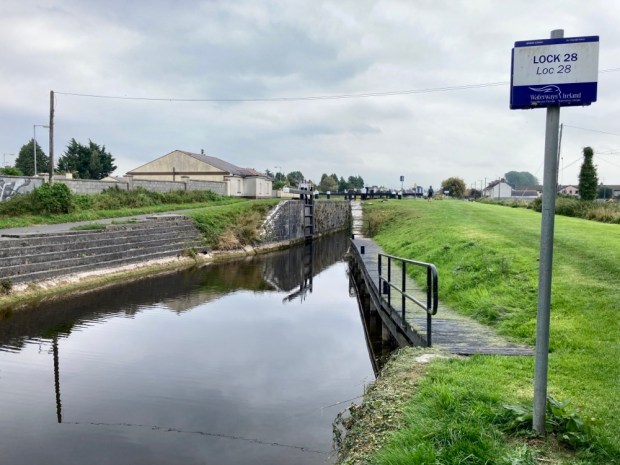
Passing Srah Castle, the 1588 defensive tower house of English settler John Briscoe we were soon passed the traveller halting site,( with adjacent sewerage plant), and into the 28th lock on the edge of town.

The 14km loop hadn’t taken as long as thought so we had time for tea in town reflecting on the pleasures of a walk on the mild side before returning to the station for the train home.